Showing posts with label conspiracies. Show all posts

Tuesday, October 17, 2023

Veterinarians face pet owners who reject vaccinations; research shows fewer vaccinations could be dangerous

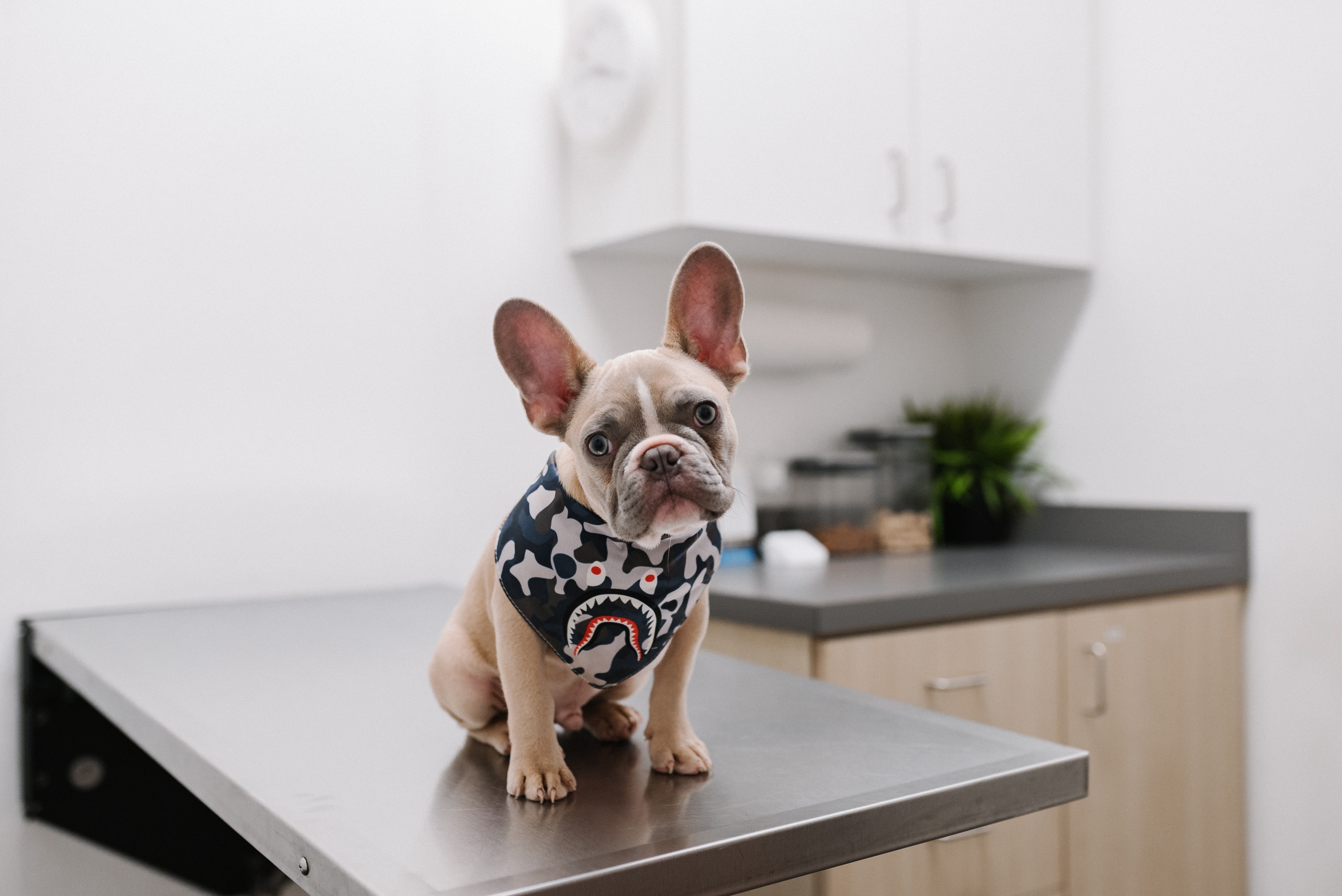
Forty percent of dog owners distrust vaccines, new research
shows. (Photo by Karsten Winegeart, Unsplash)


New research shows that more pet owners are resisting traditional vaccines, which could cause disease outbreaks in animals and people. "Researchers who have studied vaccine hesitancy since the onset of the Covid-19 pandemic say a growing body of evidence shows a surprisingly high level of mistrust among pet owners over vaccines for cats and dogs," reports Stephanie Armour of The Wall Street Journal. "Almost 40% of dog owners believe that canine vaccines are unsafe, more than 20% believe these vaccines are ineffective and 30% consider them to be medically unnecessary, according to a new study published in the journal Vaccine."

Commenting on the study's anti-vax skew, its lead author, Matthew Motta, an assistant professor of health law, policy and management at Boston University, told Armour, "We were shocked. In a world where mandates are being dialed back, and more pets go unvaccinated. . . .That’s a threat to our pets but also a public health threat to you and me.”

If fewer animals are vaccinated, the chance for previously controlled diseases such as rabies to return dramatically increases. Rena Carlson, a veterinarian and president of the American Veterinary Medical Association, told Armour, "We’re going to see more and more disease as we see vaccine compliance drop. . . . Vaccines can really prevent severe disease.” Armour reports, "Seventy percent of dogs in a population should be vaccinated against rabies to prevent outbreaks, according to the World Health Organization."

Social media postings about the potential harm vaccines "could do" has contributed to the anti-vaccine movement. Armour writes, "A pet owner in California with a Chihuahua said she always takes her dogs 'off the system' because she said vaccines can cause cancer, seizures or death. . . . Misinformation and misperceptions are driving a lot of the skepticism, veterinarians say. Thirty-seven percent of dog owners believe vaccines could cause cognitive problems such as autism, according to the study in Vaccine. No scientific data exists that validates the risk for people or animals."

Tuesday, September 26, 2023

Election official turnover is nearly 40% in some states, new report shows. Workers quit to avoid 2024 conflicts.

Election official have left their jobs to avoid 2024
conspiracies. (Photo by Elliott Stallion, Unsplash)
Underpaid, overworked, and sometimes threatened or harassed, many election officials have left their jobs rather than face the 2024 election cycle. Some states face a dramatic shift of experienced workers leaving and taking their expertise with them. "In some battleground states, more than half of the local election administrators will be new since the last presidential race, according to a new report from the democracy-focused advocacy group Issue One," reports Miles Parks of NPR. 

Overall election official turnover is "notoriously hard to come by — but experts have been saying for years that they worried about a mass exodus driven by the polarized environment," Parks reports. The Issue One report focused on 11 western states and "found that the problem of voting official turnover is particularly acute in the region's swing states, where conspiracies have flourished. . . . More than 160 chief local election officials — nearly 40% of the region's officials — have left their positions. Experts say they expect to see a similar trend in other states as well, as recent polling and NPR's own reporting have indicated many people in these roles fear for their or their colleagues' safety."

Marine veteran Josh Daniels, a Republican who became an election official in Utah County, Utah, in 2019, "grew to love the complex minutiae that went into running an election. . . . But when the time came to decide whether to run for reelection in 2022, Daniels decided against it. Voting conspiracies had become too much to take." Daniels told Parks: "It was just exhausting. It really was like "The Twilight Zone" of government service. "Groundhog Day". . . every day you wake up, and it's the same thing over and over again. It doesn't matter how much information and data you share; it doesn't matter how many concerns you answer. There will just be a new group of critics to again dish out the new conspiracy of the day."

With so much knowledge walking out the door and inexperienced officials filling the gap, a new problem surfaces -- the number of human errors new employees make while learning their roles. "Issue One found that the officials who left took with them more than 1,800 years of experience. . . . New voting officials make more mistakes than seasoned ones. So the exodus brought on by election conspiracies may beget more conspiracies, as first-time honest mistakes are treated like evidence of malfeasance."

Wednesday, September 13, 2023

Rural election voting processes have improved since 2020; the election denial movement could pose a threat

As the country gears up for November voting as well as a future presidential election, experts are voicing concern over the election denial movement, which threatens to disrupt improvements in how votes are cast, counted and reported in rural America, reports Claire Carlson of The Daily Yonder. "Civics experts say rural communities have the most to lose from the pressures of the election denial movement. . . . Rural America already has lower voter turnout rates, which some researchers argue is due to inadequate election infrastructure. One 2022 study found that voting-by-mail restrictions hurt rural voters the most because there are fewer rural polling locations than urban ones, increasing the distance a person must travel to cast a vote."

U.S. voter engagement has trended steadily upward, "The 2020 presidential election saw the highest turnout in the 21st century with 66.8% of citizens age 18 or older casting a vote, according to the Census Bureau," Carlson writes. "Former President Donald Trump's unfounded attacks on the U.S. election system and the resulting election-denial movement put these gains in jeopardy."
La Plata County Clerk Tiffany Lee in the county elections
office (Photo by Ilana Newman via The Yonder)

The election-denier movement focuses its suspicion on rigged voting machines, for which the only antidote is  manual counts. Carlson reports, "[There are a] growing number of counties–rural, suburban, and urban–where election deniers have successfully urged local governments to recount election results or throw out electronic voting machines altogether." Justin Grimmer, a political science professor at Stanford University who studies election denialism, told Carlson, "We're at this period that I think should be being celebrated as a sort of high point of participation in American democracy." Carlson reports, "reversing improved election infrastructure – the use of equipment that more accurately counts votes and ensuring better access to voting through absentee and mail-in ballots, for example – could set back civic participation."

Carlson reports, "After Trump left office, the election denial movement morphed into a "core group of 'influencers. . . .These influencers have made it a full-time job traveling the country to spread the election denial movement's primary message: elections are being stolen, and it's the government's fault."

Charles H. Stewart, a professor of political science at the Massachusetts Institute of Technology, published research earlier this year exploring election-denial roots. He told Carlson, "The thing that we're seeing in 2020 that we didn't see in 2016, or in 2012, or other times when these sorts of [election integrity] questions arose, is that we now have about a half-dozen of these traveling road shows." Carlson reports, "In La Plata County, Colorado, an influx of open records requests have poured in since 2020, challenging the county's election tools, including Dominion Voting Systems, an electronic voting hardware and software company, and mail-in ballots. The county has relied on mail-in ballots since 1992." La Plata County Clerk Tiffany Lee told Carlson: "What's happened to us is people from the outside and different organizations that don't have anything to do with our local communities are attacking us because ‘Oh my gosh, you have Dominion or you use mail ballots, and we don’t trust you.'"

Friday, January 20, 2023

Opinion: Instead of dissing them, hug those election deniers

Before you feel annoyed and then dismiss the next election denier you hear, think about all the deniers you know, some of whom you love. Reach out in kinship and ask that denier for a hug, graphics columnist Sergio Pecanha shares an opinion piece in The Washington Post.

Pecanha, a citizen of the U.S. and Brazil, begins with Jan. 6, 2021, which he says wasn't the beginning, but a pinnacle Americans can recall: "Americans know the feeling: It’s hard to believe the sight of a capital vandalized by a mob of people who won’t accept the result of an election because their side didn’t win. It’s our country — our democracy, ourselves — under attack." Pencanha looks to the Jan, 8 mob action in Brazil's capital and sees the similarities, "How bizarre to hear election deniers halfway down the planet expressing, in another language, the same sentiments felt two years earlier by American rioters. 'We invaded what is ours — by right,' one Bolsonarista said in a video posted online. . . . It’s as though the rioters come from another planet."

If only that were true. "But that oversimplification hurts us. Many of those involved in the attacks on democracy in the United States and Brazil were led to believe that their elections were stolen," Pencanha writes. "That they were standing up for freedom. That we are the aliens. We shouldn’t ignore them. Brazil and the United States are still democracies — the people who hold these beliefs have the right to vote, too. . . . Besides, who among us these days doesn’t have an acquaintance, a sibling, a cousin or an otherwise lovely whatever-in-law who fell for the conspiracy theories?"

Pencanha says of them, "They are decent people (mostly). People we love (mostly). Maybe people who have become so detached from reality that we prefer to just avoid them. We don’t choose our relatives. Among my friends, it was different — not one supported Bolsonaro. But this is another sign of trouble: the information bubbles we live in. . . . We need to pop these bubbles."

Why? "It is only because I know and love many of those inside the other bubbles that I can empathize and make the effort to try to understand them. I invite you to do the same," Pencanha implores. "Maybe you think this is in vain, because you know you won’t change their minds. That might be true. But that’s not the only good thing that can happen."

What else? "It is not new for voters to feel anger, sadness, disillusion, confusion. Nor are these emotions unique to Brazil or the United States. But it has become so easy to spread lies to take advantage of the people who feel these things," he notes. "It is natural to want to brush off those who fall for the kind of lies spread by the Bolsonaros and Trumps of the world. It’s an understandable defense, but it won’t make the problem go away."

Pencanha suggests, "What if, instead, we pull them in closer? Draw them to us. Look them in eye." And offer them love.

Monday, November 21, 2022

Some rural areas reject federal money, citing overreach of federal agency and government mistrust

Elko County (Wikipedia)
Elko County, Nevada, has not had a public health department for more than 15 years, but county commissioners rejected a $500,000 grant from the Centers for Disease Control and Prevention "citing concerns about government overreach. Commissioners and members who opposed the grant said Elko didn’t need more public health resources or a health district or department. They said they were concerned about giving up local autonomy and growing bureaucracy. They also expressed mistrust of the CDC," reports Jazmin Orozco Rodriguez of Kaiser Health News.

Elko County wasn’t the only one who refused to pursue federal aid. "Experts say they were surprised and concerned to see the rare local or state leader, swayed by political partisanship, dismiss funding opportunities for historically limited public health systems," Rodriguez writes. "Officials in Idaho, Iowa, and New Hampshire rejected Covid relief money, their decisions often accompanied by political pronouncements about federal government overreach. . . . A survey of local governments in 15 states conducted by the National League of Cities found more than 200 small governments declined pandemic relief funds."

The Elko County commissioners received letters from health officials and pleas from residents at public meetings asking them to accept the federal money. "Other local leaders saw the need for increased public health resources amid the pandemic. The Elko City Council wrote a letter of support for the CDC grant the day before the commission rejected it," Rodriguez reports.

“Partisan politics has poisoned the well to a point that we’re willing to sacrifice the health of our citizens,” said Brian Castrucci, president and CEO of the de Beaumont Foundation, a national nonprofit that advocates for public health policy. “Is the political grandstanding worth it?”

Adriane Casalotti, chief of government and public affairs for the National Association of County and City Health Officials, told Rodriguez, "Communities across the country have generally clamored for increased funding during the pandemic, which strained already underfunded and understaffed public health infrastructure. In recent months, I’d say, we’ve heard of a handful of health departments that either would not apply for or couldn’t accept … specific grants."

Polarization remains an obstacle, Castrucci told Rodriguez: "This has become a holy war, this has become a war of right and wrong. I don’t know how to get through that to a place where we are prioritizing the health of our nation.”

Monday, October 10, 2022

Across the country, election workers prepare for possible clashes with aggressive, conspiracy-driven poll watchers

A Republican election challenger watches over 
election inspectors in Michigan in 2020.
(David Goldman/AP Photo)
Election workers across the country are preparing for potentially confrontational volunteer poll watchers as many Republican-supporting groups, still skeptical about the results of the 2020 election, are recruiting and training volunteers to search for irregularities at precincts in November, report Hannah Schoenbaum and Nicholas Riccardi for The Associated Press. In North Carolina, aggressive poll watchers in the spring's primary election brought a tense atmosphere to some precincts and election officials had to ask poll watchers to back off at times. 

"It becomes complete babysitting," Anne Risku, the election director in North Carolina's Wayne County told AP. "The back and forth for the precinct officials, having somebody constantly on you for every little thing that you do — not because you’re doing it wrong, but because they don’t agree with what you’re doing." During the primary, Risku said that in her county there were issues with poll workers from both parties, but the 13 incidents she reported back all involved Republicans. 

Laws governing poll watchers vary in every state; their role is to generally observe and question deviations from required procedure, Schoenbaum and Riccardi report. But officials "fear that a surge of conspiracy believers are signing up for those positions this year and are being trained by others who have propagated the lie spread by former President Donald Trump and his allies that the 2020 presidential election was riddled with fraud."

The Republican Party in Brown County, Wisconsin, has recruited over 100 poll watchers, reports Alexa Corse for The Wall Street Journal. Ken Glowacki, a 70-year-old retiree who signed up to be a poll watcher because he was unsure about the results of the 2020 election, told Corse that he thought Democrats used the pandemic as excuse to change election rules. Nationally, Democrats have accused Republicans of recruiting partisan poll watchers to intimidate at the precincts. Republicans have rejected the notion, saying they want to increase transparency and increase confidence in elections. Jim Fitzgerald, chairman of the Brown County Republican Party said they "wanted to be a partner in restoring the integrity of the ballot box."


Thursday, March 10, 2022

How should reporters at meetings of public agencies deal with misinformation from speakers? Here's some advice

School-board meetings have become increasingly contentious as parents bring up political wedge issues such as masking, coronavirus vaccination, critical race theory, transgender student athletes, and more. Opinions on many of these issues are predicated on misinformation and conspiracy theories. Reporters covering such meetings must figure out how to report on misinformation without spreading it themselves, Julia Métraux and Sophie Hurwitz report for Poynter.

The dangers of repeating misinformation without context are clear. For instance, last summer at least two video clips went viral that showed doctors making false claims about coronavirus vaccines at school board meetings. Thousands shared the clips on social media as proof that doctors didn't trust coronavirus vaccinations. But both clips were full of misinformation, and both doctors had iffy qualifications at best: one of the doctors appeared not to be board-certified, and the other had a PhD in education, not medicine.

"For reporters covering school board meetings, deciding how to contextualize decisions and conversations in coverage can be complex," Métraux and Hurwitz report. "Not mentioning the perpetuation of misinformation and disinformation about critical race theory, transgender students and Covid-19 at these meetings is also not a solution — this misinformation still harms people in their community."

They have some suggestions gleaned from various experts:
  • Reporters could choose not to quote factually incorrect claims. To do so for shock value could do more harm than good, especially when such claims don't represent a significant portion of local sentiment.
  • Different issues may require different handling. Critical race theory, for example, has become a catch-all bugaboo, so defining it as originally intended may not be context enough.
  • Don't repeat racist, anti-transgender, or antisemitic language (for example), since that could help normalize such language, which can make students feel unsafe. 
  • Include at least one outside perspective or fact that wasn't raised in a meeting to make articles more useful to readers. One expert said, as an example, that reporters writing about a conversation about why pandemic safety protocols matter might include a Centers for Disease Control and Prevention study about how children are at a higher risk of developing diabetes after being infected with the coronavirus. 

States consider protections for threatened local election officials; if they quit, partisan officials could fill the vacuum

Election officials across the country "have faced violent threats and harassment since the 2020 presidential election, as [Donald] Trump and his allies continue to perpetuate repeatedly disproven myths about voter fraud," Matt Vasilogambros reports for Stateline. "This pressure, meant to exhaust and scare local officials into resigning, could usher in new election personnel who seek to skew results, election experts say."

Tina Peters is an example of what that kind of local interference could look like. The rural Colorado county clerk made headlines last year for embracing debunked conspiracies. She was recently indicted, making her "the first elections official to face criminal charges related to conspiracy theories surrounding the 2020 election, experts said," Emma Brown reports for The Washington Post. "She is accused not of fixing the election but of breaking the law as she sought to investigate whether someone else did." Specifically, she's accused of sneaking someone into the Mesa County elections offices to copy the hard drives of Dominion Voting Systems machines. 

"Peters’s alleged actions, along with efforts by other election deniers to seek public office, are contributing to concern among experts about possible escalating risk to the nation’s voting systems," Brown reports. "State or federal investigators have probed multiple alleged security breaches of election systems and equipment since Donald Trump lost the 2020 presidential race, including some thought to be aided by elections-office insiders or right-wing conspiracy theorists."

"Trump-aligned activists and lawmakers have worked to alter the traditional democratic process at many levels of government, from gutting local boards that certify election results to granting state legislatures unprecedented election powers that could ultimately let them change results. Partisan investigations in other states are sowing further doubt in the election system," Vasilogambros reports. "Seeing this crisis unfolding, lawmakers in at least 10, mostly Democratic-run states are considering legislation that would increase criminal penalties for those who threaten election officials. Some measures also would add new digital privacy protections for election officials."

Monday, September 27, 2021

Some local election officials buy into fraud-and-conspiracy theories; many election officials say they feel unsafe

America’s decentralized election system depends on the professionalism and integrity of local and state election officials. Now some worry that some of their colleagues have become a threat to the system.

In Grand Junction, Colo., Mesa County Clerk and Recorder Tina Peters and her top deputy have allegedly embraced debunked right-wing conspiracy theories about elections. In April she required her employees to attend an after-hours gathering and listen to a speech by well-known conspiracist Douglas Frank. Also: "Over the course of the past month, in a lawsuit filed by the state’s top elections official, Peters and her deputy have been accused of sneaking someone into the county elections offices to copy the hard drives of Dominion Voting Systems machines," Emma Brown reports for The Washington Post. "Those copies later surfaced online and in the hands of election deniers. The local district attorney, state prosecutors and the FBI are investigating whether criminal charges are warranted."

UPDATE, Oct. 14: Peters and her deputy "cannot be involved in the administration of her county’s November election, a judge ruled Wednesday," Alex Burness of The Denver Post reports. "This means that former Republican Secretary of State Wayne Williams will oversee Mesa County elections this year. He was appointed by the Mesa County commissioners, under a temporary agreement that pays him $180 an hour. The commissioners supported Griswold’s suit."

Now that the audit of Arizona's Maricopa County ballots has failed to turn up evidence of fraud, conspiracists are looking to Peters' report, which she says she commissioned because it proves election irregularities. "The report, which Peters’ attorney, Scott Gessler, also included as part of defending her and Deputy Clerk Belinda Knisley [from state efforts] to block the two from overseeing the fall elections, alleges that nearly 29,000 election files were deleted during a routine upgrade of the county’s now-decertified election equipment," Charles Ashby reports for Grand Junction's Daily Sentinel.

"I’ve always worried, working in this space, about people who want to harm our elections or sabotage them from the outside — the foreign actors trying to hack elections," Mike Beasley, a lobbyist for the Colorado County Clerks Association, told Brown. "I’ve never until now had to worry about what goes on on the inside. And now we’ve crossed that threshold."

Recent polling from The Brennan Center for Justice found that one in three election officials feel unsafe in their job, and one in five are worried about death threats. In recent months, Donald Trump "has endorsed several proponents of the 'big lie' to become secretaries of state in key battlegrounds. And experienced election administrators at the local level have been fleeing their jobs amid skyrocketing stress and threats to their personal safety," Brown reports.

Friday, September 03, 2021

Quick hits: Meatpackers rely more on special-visa workers; pastor's book calls for different thinking about rural churches

Here's a roundup of stories with rural resonance; if you do or see similar work that should be shared on The Rural Blog, email heather.chapman@uky.edu.

A pastor's new book challenges readers to change the way they think about rural churches: "Look at the assets of rural churches and encourage congregations to build on them on their own terms, not on the terms imposed by others." Read more here.

Prison populations have long been used to artificially bump up rural population counts (which increases their political power and sometimes brings in more state and federal spending). Before the 2020 census, only two states (Maryland and New York) outlawed the practice. But now seven other states have joined them. That could have big implications as state legislatures begin redrawing political maps. Read more here.

A new fall foliage prediction map will help you plan your leaf-peeping. Read more here.

"It's been a slow death": Guests on CBS's "60 Minutes" describe cutting ties with parents and siblings over QAnon conspiracy theories. Read more here.

Meatpacking plants have long relied on immigrant labor. Now, some are turning to foreign workers with visas. Read more here.

From his porch in rural Missouri, a Congressional aide is helping interpreters escape Afghanistan. Read more here.

The Agriculture Department is giving up to $200 million in pandemic assistance to timber harvesters and haulers. Read more here.


Friday, June 04, 2021

Quick hits: A.I. could churn out next generation of fake news; rural Americans less confident about economy . . .

Here's a roundup of stories with rural resonance; if you do or see similar work that should be shared on The Rural Blog, email heather.chapman@uky.edu.

The Daily Yonder has home-security tips for rural residents, ranging from the mainstream (Ring electronic doorbells with remote-access video) to the offbeat (peacocks). Read more here.

Most Americans are optimistic about the economy, but rural Americans are less so, according to a recent nationwide survey. Read more here.

Registration is now open for Agri-Pulse's 2021 Food & Ag Policy Summit West, which will take place July 12 online and in Sacramento. Read more here.

One in six Americans stay in a job they hate in order to keep health insurance, a recent poll found. Read more here.

A report shows how artificial intelligence could amplify future disinformation campaigns by churning out compelling fake "news" stories. Read more here.

Thanks to high demand for American-grown corn, soybeans and wheat, the Agriculture Department predicts U.S. farm exports will hit a record $164 billion in 2021. Read more here.

The USDA has rejected a pork industry request to increase the line speeds at slaughterhouses, and says it will uphold a March court decision striking down a Trump administration move to lift maximum line speeds. The USDA said in a statement that pork plants should revert to previous maximum line speeds as of June 30. Read more here.

Tuesday, June 01, 2021

Covid roundup: Many rural health-care workers wary of vaccination; some states ban schools from requiring masks

Here's a roundup of recent news about the pandemic and immunization efforts:

A survey finds many rural health-care providers are hesitant about vaccination. Read more here.

According to a new survey, the two biggest factors that affect a person's willingness to get the coronavirus vaccination are the convenience of getting a shot and whether or not a vaccine will be required for everyday activities. Read more here.

A New York law firm closely tied to the anti-vaccine movement has bolstered local efforts across the nation to fight coronavirus immunization mandates. Read more here.

Moderna says clinical trial data shows its coronavirus vaccine strongly protects kids as young as 12. The company will submit the data to the Food and Drug Administration and other regulators early next month in an effort to obtain emergency authorization to administer its vaccine to 12-to-17-year-olds. Read more here.

The Centers for Disease Control and Prevention is investigating many reports of youths who had mild heart problems after vaccination. It's unclear whether the vaccine(s) caused the heart problem, called myocarditis, which is mostly mild and tends to go away on its own. Read more here.

CDC data shows that only about 10,000 Americans were infected with the coronavirus after being fully vaccinated, and only 2% of those died. Over 130 Americans are fully vaccinated against the coronavirus. Read more here.

Little-known illnesses are turning up in Covid-19 long-haulers. Read more here.

A rural church choir in Washington state tries to regroup more than a year after experiencing one of the pandemic's first super-spreader events. Read more here.

A package explores how local nonprofits tried to combat anti-vaccine conspiracies running rampant among farmworkers in northern California's wine country. Read more here.

Outer Cape Cod vaccination efforts focus on vulnerable groups and making the tourist season safer. Read more here.

A doctor from rural New York says he feels "tired but inspired" as the pandemic slows down, and also feels cautiously optimistic about the Biden administration's attention to rural needs. Read more here. 

Republicans in Michigan's Senate advanced a bill last week that would bar state or local health officials from requiring coronavirus vaccinations for children, though the officials say no such mandate is being considered. In recent months, Michigan has had some of the highest new rural coronavirus infection rates in the nation. Read more here.

Iowa and Texas have banned school districts from requiring students to wear masks on campus, and other states and communities are considering similar moves. Read more here.

The Daily Yonder looks back at Grant County, Washington, one of the first places in rural America to have a major encounter with the coronavirus. Read more here.

The Yonder also has a piece about a rural county at a far reach of Minnesota that has had no Covid-19 deaths as of May 24. Read more here.

Schools across the nation are trying tactics such as pep rallies and free prom tickets to get students vaccinated. Read more here.

The Department of Health and Human Services announced recently that it will allocate $4.8 billion for coronavirus testing for uninsured Americans. Read more here.

Friday, April 23, 2021

Quick hits: Idaho Senate approves bill to kill 90% of state's wolves; federal pandemic aid isn't reaching some of the poor

Here's a roundup of stories with rural resonance; if you do or see similar work that should be shared on The Rural Blog, email us at heather.chapman@uky.edu.

A Black high school baseball team in rural Virginia won the state championship in 1969, but their hometown didn't celebrate their victory. But last weekend county officials made sure they got their dues—and championship rings—over 50 years later. Read more here.

A study investigates severe lung injury among e-cigarette users in rural Appalachia. Read more here.

The Idaho Senate has approved a bill to kill 90% of the state's wolves. Read more here.

In a recent survey, nearly half of Americans who plan to move said climate change and associated issues like wildfires and rising sea levels were a factor in deciding where to move, and that they wouldn't relocate to an area with more climate risk even if it were more affordable. Read more here.

Though the federal government is expanding the social safety net, the funds aren't reaching many impoverished Americans. Read more here.

An increasing number of Americans believe in conspiracies, partly because of decreased trust in the news media and criticism of the news media from prominent figures, according to a recent poll. Read more here.

Rural migration during the pandemic may accelerate a trend of e-commerce expansion into rural America. Read more here.

A rural South Dakota high school rodeo club canceled its annual 'slave auction' fundraiser after local pushback about its name. Read more here.

Monday, April 19, 2021

Covid roundup: Alaska courts literal vaccine tourists; rural Colorado providers work to vaccinate homebound locals

Here's a roundup of recent news about the pandemic and vaccination efforts:

It can be difficult for people who are homebound or lack transportation to get a coronavirus vaccine. Medical providers in one Colorado town created a network to get vaccines to them. Read more here.

Tennessee tries out messaging that might overcome rural vaccine reluctance. Read more here.

New coronavirus infections drove up hospital admissions rates in 38 states last week. Read more here.

The most popular Facebook post about the Johnson & Johnson vaccine last week was from a conspiracy theorist. Read more here.

Covid-19 cases are surging in rural Oregon despite the availability of vaccines. Read more here.

Residents in an Oklahoma town hit hard by the pandemic are helping those in need with "giving walls" at restaurants. Read more here. 

Over half of U.S. adults have received at least one coronavirus vaccine. How does that compare with your local vaccination rate? Read more here.

In the race between coronavirus vaccines and the virus, hesitancy gives dangerous variants a leg up, says the surgeon general. Read more here.

Alaska is courting literal vaccine tourists: Starting June 1, the state will offer a coronavirus vaccine to out-of-state tourists at its four biggest airports. Rural areas elsewhere that depend on a tourism economy could do the same. Read more here.

More young people are being hospitalized as more contagious variants spread. Read more here and here.

Medicare payers and providers are clashing over reimbursements for telehealth, an increasingly popular avenue of treatment during the pandemic, as Congress mulls changes. Read more here.

Wednesday, February 24, 2021

Health-care workers promote positive messaging about vaccines through social-media campaign

A new social-media campaign aims to fight misinformation and promote positive messaging about the coronavirus vaccine through a network of more than 25,000 health-care workers nationwide. Founded by Atul Nakhasi, a 33-year-old doctor in Los Angeles, #ThisIsOurShot hopes to influence the public conversation through "collective impact," Allyson Chiu reports for The Washington Post.

Like many other health-care workers, Nakhasi spends a considerable amount of time on social media fighting misinformation. "You wrap up your day, and you’re hoping the fight ends," Nakhasi told Chiu. "You’re fighting for lives that whole day … keeping people here to the next morning. And then you get home and you feel like the fight never stopped. It just changed turf. The landscape just changed."

Jennifer Bacani McKenney, a county health officer and family medicine doctor in Fredonia, Kansas (pop. 2,500), "responds to a daily flood of pandemic-related texts and social media messages while running her clinic and taking emergency room shifts," Chiu reports.

McKenney told Chiu that the misinformation is "one of our worst enemies" and said it was "almost worse than the virus itself . . . We have strategies to deal with the virus. There’s not a great strategy to deal with the random memes, or the stuff that’s presented as data that’s not actual data, or the bogus YouTube videos or whatever that look like they’re scientific and there’s no basis. It’s amazing the people that believe it and share it, and there’s not a strategy against that."

Saturday, February 06, 2021

U.S. Rep. Marjorie Taylor Greene's conspiracy theory about big wildfires wasn't the first

Rural wildfires have been topics of wild conspiracy theories before Marjorie Taylor Greene, now a U.S. representative from northwest Georgia, "theorized that a space-based solar generator, used in a clean-energy experiment with the goal of replacing coal and oil, could have beamed the sun’s energy back to Earth and started the fire" that destroyed Paradise, Calif., the Los Angeles Times reports.

"California wildfires have been ripe for conspiracy for years, but Greene’s comments surface at a time when a sizable segment of the American population is treating false conjecture as fact," write reporters Hailey Branson-Potts, Joseph Serna and Alejandra Reyes-Velarde. Branson-Potts knows wildfires; she's from Perry, Okla., north of Oklahoma City.

The Camp fire that destroyed Paradise was sparked by equipment of Pacific Gas & Electric Co., "some of which was nearly 100 years old," the reporters note. "The company pleaded guilty to 84 counts of involuntary manslaughter last June."

That didn't stop theories like the one Greene espoused in a 2018 post that has since been deleted but was found by Media Matters for America. The House took her off committees by a party-line vote Thursday after "unprecedented punishment that Democrats said she’d earned by spreading hateful and violent conspiracy theories," The Associated Press reports. "Greene tried to dissociate herself from her 'words of the past' . . . but she didn’t explicitly apologize for supportive online remarks she’s made [such as] the possibility of Jewish-controlled space rays causing wildfires."

Conspiracy theories can be hatched when people seek explanations for events that seem so strange they defy traditional explanations. "When fires are extreme or wind-driven, their burn patterns can seem completely illogical to the uninitiated, and thus ripe for conspiracy as people try to make sense of what happened, said Jack Cohen, a wildfire expert and retired U.S. Forest Service firefighter," the Times reports. "Cohen said he first started hearing conspiracy theories about space-based directed-energy weapons after high-definition drone images showed the Camp fire’s pattern of destruction. People he said, are 'obscenely obsessed' with what causes wildfires and fill in the blanks when they can’t explain them."

Sometimes, theories can turn into action that is harmful or dangerous. "Last year, firefighting crews in Oregon encountered groups of people who were convinced that wildfires burning there were started by antifa," the Times reports. "The people were stopping residents from moving on local roads and, in at least one case, prohibited firefighters from going onto their property to help set up a defensive position for oncoming flames." Fact-checkers, including USA Today, debunked the claims.

Here is Greene's Facebook post about the California fire:


Friday, January 29, 2021

Pandemic roundup: Biden to boost vaccine supply; rural areas get creative with vaccine efforts with fewer resources

The Biden administration will boost the coronavirus vaccine supply amid shortages. Read more here.

Anti-vaccine activists are peddling stories with misinterpreted and faulty data or fake deaths and injuries to discredit the coronavirus vaccine. Read more here.

Rural health care providers are getting creative with coronavirus vaccine delivery but are suffering from a lack of supplies. Read more here.

Public health workers, stranded on a snowy highway in rural Oregon, administered the vaccine to other drivers so as not to waste the shots. Read more here.

A public-health official discusses how vaccinations are going in Central Appalachia. Read more here.

Some health-care workers are refusing the vaccine. Read more here.

Rural America tackles vaccine distribution with fewer resources. Read more here.

Many in the rural San Joaquin Valley don't understand the seriousness of the pandemic nor the effectiveness and safety of the vaccine, medical professionals worry. Read more here.

How a rural hospital launched a coronavirus vaccine program in just one week. Read more here.

In rural Colorado, vaccines help nursing homes open their doors to limited visitors again, to lonely residents' relief. Read more here.

A video shows how clinics in rural Montana and Texas take on the tough task of distributing the coronavirus vaccine. Read more here.

A rural county in Washington state shares its secret for distributing the vaccine without wasting a single dose. Read more here.

Monday, January 25, 2021

National News Literacy Week runs from today through Jan. 29; here's how your newsroom can participate

Today is the start of National News Literacy Week, an initiative that the News Literacy Project and E.W. Scripps Co. designed to raise awareness of the importance of news literacy for students and the general public.

The observance comes at a critical time, as misinformation and conspiracies have driven public unrest over the recent presidential election. To that end, the NNLW website has created a new online-learning unit called "Conspiratorial Thinking." The lesson, available for the general public, helps people understand the factors that allow conspiracies to gain a toehold and flourish. It also shows people the key components of conspiratorial thinking, the tricks such a mindset can play on people's brains and what makes people vulnerable to it.

The website includes links to social-media campaigns, lesson plans for educators and the general public, and ideas for how newsrooms can participate in the initiative. Click here for more information.

Wednesday, November 25, 2020

Artificial-intelligence tool can smell a conspiracy, but it can be gamed, which shows the lasting value of good journalism

As social media become more popular and more siloed, misinformation (all false info) and disinformation (false info spread with the intent to mislead) become an increasing threat. A new artificial-intelligence tool shows promise in weeding out conspiracy theories, but its developer notes that it can be gamed. The bottom line? There's still no substitute for a reporter with a good nose.

A culture analytics group at the University of California has developed an A.I. tool that determines when social-media conversations have the hallmarks of conspiracy theories. "We have applied these methods successfully to the study of Pizzagate, the COVID-19 pandemic and anti-vaccination movements. We’re currently using these methods to study QAnon," Timothy Tangherlini, who co-leads the group, writes for The Conversation. He acknowledges that, if the tool were to be widely used, conspiracy theorists familiar with it might deliberately design their posts to stay off its radar.

However, social-media platforms would have to be willing to employ such a tool in the first place, and it's not clear that they would. Such platforms have long struggled with how much to tamp down on misinformation, but at Facebook, for example, "the company’s aspirations of improving the world are often at odds with its desire for dominance," Kevin Roose, Mike Isaac and Sheera Frenkel report for The New York Times.

Facebook changed the site's news-feed algorithm just after the election to boost the visibility of more trustworthy news outlets. Employees hoped that burying more extreme partisan sites such as Breitbart or Occupy Democrats for a few days would slow the spread of false and misleading claims that the election had been rigged.

Some employees lobbied for the news algorithm to always be configured that way, but others feared that playing down partisan sources "could hurt Facebook’s growth, or provoke a political backlash that leads to painful regulation," the Times reports.

In any case, Facebook's efforts were no match for the disinformation pushed by the Trump campaign and its surrogates: President Trump's "false claims of voter fraud have been picked up by many state and local Republican officials across the country, and polls now show that more than two-thirds of GOP voters believe the 2020 election was neither free nor fair," Matt Vasilogambros reports for Stateline.

Regardless of how well the A.I. tool works out, journalists still have their work cut out for them.

Friday, November 13, 2020

Quick hits: Rural Oregon threatens to join Idaho . . .

Here's a roundup of stories with rural resonance; if you do or see similar work that should be shared on The Rural Blog, email us at heather.chapman@uky.edu.

QAnon won big in the recent election. Read more here.

The latest rural secession threat comes from rural Oregon counties that want to join Idaho. They have their eyes on some in California, too. Read more here.

The tiny community of Rabbit Hash, Kentucky, traditionally elects a dog as its mayor. Meet the new one.

Rural registered nurses share stories of caring for their communities. Read more here.

Free social-media platform for farmers releases new features aimed at helping members share advice more easily. Read more here.

When one rural Colorado doctor caught the coronavirus, the repercussions extended far beyond his own health. Read more here.