Showing posts with label bears. Show all posts

Tuesday, December 16, 2025

Opinion: Bear camp illuminates wildlife and wild politics in this purple state

The American black bear is one of the largest and most
elusive animals in Pennsylvania. (Pennsylvania Game photo)
In Potter County, Pennsylvania, the resurgence of the state's black bear population and the legal means to hunt them helped build the region's reputation as a hunting mecca since the 1980s. The county became home to "bear camp," which serves to tell a deeper story about politics and life in this wildly purple state," writes Salena Zito in her opinion for The Washington Post.


"Bear camp is about much more than hunting, and for anyone trying to understand Pennsylvania politics, it’s essential," Zito explains. "It sits at the crossroads of rural and urban, illuminating Pennsylvanians’ sense of place and their traditions that transcend profession and party."

Bear camp is emblematic of how Pennsylvania folk see themselves — it isn't predictable, and "the core principles animating bear camp are not political," Zito writes. "Democrats, Republicans and independents can all gather at one camp — and not only get along but also work toward a common goal."

Bear camp participants come from a wide range of ages, professions and educational backgrounds. "When they arrive, they bond as a community to hunt the American black bear," Zito explains. "Keeping the camp thriving and attracting younger hunters is a testament to their unwillingness to let this tradition slide as so many others have in the digital age. For 40 years, this camp has not only survived, it has grown and prospered."

David Cunningham, one of Bear camp's founders, told Zito, "A lot of times, we don’t realize that our traditions — like the bonds that are formed here — shape us more than what is consuming the rest of the world in politics."

Collaboration, camaraderie and adaptation are hallmarks of Bear camp. When a bear is harvested, it is processed from "nose to tail," Zito writes. Little goes to waste, and family pantries are filled.

Pennsylvanians' resourcefulness and ability to shift to meet shared goals and uphold traditions are alive at bear camp. The state's swing-vote history speaks to a region and a people that aren't predictable — just like an election and just like a hunt.

Friday, October 03, 2025

Flora & Fauna: Chunk, the Fat Bear Week winner; learning bird songs; deterring wolves; nabbing feral pigs

Chunk's broken jaw didn't stop him from feasting on sockeye salmon and gaining hundreds of pounds this summer. 
(Photo by Christine Loberg, NPS)

During this year's Fat Bear Week, many Alaskan brown bears made the salmon run at Brooks Falls in Katmai National Park the place where they packed on the pounds eating as much sockeye salmon as possible. But there was one bear that was more dedicated to getting his unfair share of salmon: Chunk. "A bear weighing in at over 1,200 pounds — with a broken (but healing) jaw — is the 2025 Fat Bear Week champion," reports Ava White of NPR. "It’s the first time number 32, or as he’s aptly nicknamed Chunk, has been dubbed the fattest bear in Katmai National Park and Preserve."

An unlikely union between two plants created the potato, affectionately known as the spud. "The origin of the potato has long puzzled scientists. Genetically, it is a close relative of the tomato. But in appearance, it resembles three potato-like species found in South America known as Etuberosum," reports Aylin Woodward of The Wall Street Journal. "The problem is, Etuberosum don’t have tubers — the parts of the potato plant that grow underground, and that we eat baked, mashed or fried. . . . An examination of these DNA sequences revealed that between eight million and nine million years ago, Etuberosum and an ancient tomato exchanged genes." And today's spud was born.

Watching and listening to birds is a delightful hobby that can be enhanced by learning to identify birds by their songs. "Learning bird songs is the difference between 'hearing' and 'listening,'" writes ornithologist Chris Lituma for The Conversation. "Listening requires full attention and limiting distractions. It means using your ears to pick up different patterns in the sounds that birds make. Every person has the capacity to listen and learn patterns in sound." Read all of Lituma's tips for learning bird songs and sounds here.

In this remote arctic town, it's too cold for trees, but strawberries grow by the dozens. "A high-tech greenhouse brings fresh produce to Gjoa Haven, an Inuit hamlet in Canada’s Arctic whose residents have little experience growing plants," reports Norimitsu Onishi of The New York Times. "The greenhouse, researchers hope, will eventually provide an alternative to perishable goods flown in at great cost from southern Canadian cities — and a healthier diet for the Inuit, the only people who have lived in Canada’s Arctic for centuries."

The wolves have learned to associate the drones
with people. (Illustration by A. Dixon, Offrange)

In most states, gray wolves are protected, which means livestock owners have had to find creative ways to keep wolves from preying on their cattle. While human presence and voices remain the most effective wolf deterrent, it's often not feasible, so some ranchers are experimenting with drones combined with human voices from speakers to deter wolves from grazing cattle, reports Rose Garrett for Offrange. Dustin Ranglack, predator project leader for the National Wildlife Research Center, told Garrett, "The wolves in this area have had exposure to the drone, and they will often already be moving away when we approach them. They’ve already come to associate the drone with people, and we’re not necessarily having to use the human voice."

When feral pigs invade the countryside, they go hog wild, eating farm crops, tearing up the ground, prolifically reproducing and spreading diseases. States have been under pressure to find ways to oust unwanted swine, but few have been as successful as Missouri. "Alan Leary, the feral hog coordinator with the Missouri Department of Conservation, says since 2016 the state’s population of feral hogs has dropped 80%," reports Chris Six of Farm Progress. The state formed a multi-agency partnership that "uses traps, drones, helicopters and more to find and eliminate the feral hogs."

Tuesday, September 23, 2025

Fat Bear Week has arrived: Fans can vote daily, and the website provides materials for classrooms


What's big, brown, hungry and loves salmon? Alaskan brown bears in Katmai National Park, Alaska. The bears and their voting minions are gearing up for Fat Bear Week, beginning Tuesday, Sept. 23 and chowing down through Sept. 30.

Wait, what? "With the help of this playful competition, Fat Bear Week aims to bring Katmai National Park and Alaska’s brown bears closer to the people who may not be able to visit the park in person," reports Emese Maczko for Forbes. "Anyone can vote daily for which bear advances in the bracket to determine the eventual champion, Katmai's bulkiest brown bear."

Bulk is the aim, and salmon is their game. "To make it into the bracket, bears must first be visibly fat and appear at Brooks River in both early summer and fall, criteria that not all of the park’s bears meet," Maczko explains. "Bears in the brackets often have a compelling storyline that showcases the challenges of survival in Katmai."
No need to vote to join the fat bear fandom. "Voters can follow eight bear cams that provide live video feeds from different locations around the Brooks Camp area of Katmai National Park, Maczko adds. "Anyone can join the live chat, where Mike Fitz, resident naturalist at Explore.org, Christine Kliesrath, ranger at Katmai National Park and Naomi Boak from Katmai Conservancy will answer all questions."

The bears are here to eat and teach. "Classrooms can bring Katmai directly to their students. Teachers may request a virtual program with a park ranger to discuss the bears, the park and Fat Bear Week," Maczko writes. "The park also offers numerous free printable materials for classroom use, available online."

Friday, September 27, 2024

Flora & Fauna: Celebrity goat; pest-resistant tomatoes; eye-popping foliage; grizzlies on the move; pawpaw popularity

Crisco hasn't let stardom go to his head. He enjoys hiking
and roaming just like not-famous goats. (Facebook photo)
For people needing novel bucket-list items, adding a visit to see Crisco, the roaming goat turned celebrity, might be an excursion. "For nearly a decade, Crisco, who escaped a roundup, has ruled the bluffs overlooking this reservoir straddling Arkansas and Missouri," reports Jim Carlton of The Wall Street Journal. "His legend exploded after a Facebook page began chronicling his exploits three years ago. Now some 14,000 followers eagerly await Crisco updates."

It may seem unbelievable, but after 30 years of lab work, "Researchers finally completed a new line of tomatoes, bred with natural pest-resistant qualities, reports Shea Swenson for Ambrook Research. "Plant breeder and geneticist Martha Mutschler-Chu is about to successfully hand off new lines of pest-resistant tomatoes to any interested seed company, where they can ultimately be bred for commercial sales. . . . As far as Mutschler-Chu’s tomato is concerned, the process of creating it is considered traditional cross-breeding, not genetic modification."

The Midwest is predicted to have 'electric' fall colors. (Adobe Stock photo)

Fall is leaf-viewing season, and the country's heartland is the place to gawk. "Some of the most colorful displays could be in the Midwest. AccuWeather, the commercial forecasting service, said in early September that it expects especially vibrant foliage in states such as Michigan and Illinois," reports Patrick Whittle of The Associated Press. "The service also said powerful, popping colors are expected in upstate New York and parts of Pennsylvania, while New England will follow a more typical color pattern."

Ambrook map, from ArcGIS data,
click to enlarge

Grizzly bears haven't lived on British Columbia’s Vancouver Island for 10,000 years, but that may be about to change. Brian Payton of Hakai magazine writes, "There they were. . . a grizzly sow and two cubs browsing in the grass. As the cubs rose onto their hind legs, Joyce Ellis raised her camera, capturing a portrait of a family poised to change the course of natural history."

Fall bird migrations are in full swing and while there are lots of ways to follow favorite feathered friends, Birdcast has some incredible tracking tools, including real-time predictions of bird migrations, a migration dashboard and local bird migration alerts. To show birds more love, CornellLab offers seven simple actions to help birds thrive.

The charming hoiho (A.S. photo)
Delightful, shy and a little bit stinky, the "hoiho," or yellow-eyed penguin won New Zealand's 2024 Bird of the Year election," reports The Associated Press. Although the country's avian elections are "fiercely fought," there's little talk of "interference scandals and cheating controversies of past polls," instead campaigners start "meme wars, seek celebrity endorsements and some even [get] tattoos to prove their loyalty. . . . Hoiho supporters hope that recognition from its victory might prompt a revival of the endangered bird."
The pawpaw’s green skin, and its 'custardy'
interior (Photo by Kat Arazawa, Civil Eats)

For farmers and fans, September means a delicious trip to the pawpaw patch. "Pawpaws are America’s largest edible native fruit, and their ineffable mystique will bring thousands of visitors to the farm’s annual pawpaw festival in late September," reports Ben Seal of Civil Eats. "Festivals in several states give people a chance to taste the fruit for the first time. . . a blend of banana, mango, and pineapple, so soft it’s eaten with a spoon. . . . Research and plant breeding efforts are underway to explore and expand its potential as a sustainable low-input, high-value crop that could figure into the future of small farms throughout the eastern U.S."

Tuesday, December 12, 2023

Flora & Fauna: A threatened tree and its bird; bear hunting; the expensive loss of seed breeders; broadband for turkeys

Clark's nutcracker
(Photo by Emilie Chen, Flickr)
"The unlikely love story of an endangered tree and the little bird who eats its seeds," is an interesting article by Matt Simmons, a Local Journalism Initiative Reporter for The Narwhal. "Alana Clason studies mountain ecosystems and leads an extensive, complex restoration project in northwest British Columbia focused on protecting whitebark pine, an endangered tree species. . . . Whitebark has been in decline for over a century. . . . Studying the bird — a member of the corvid family called Clark's nutcracker — is one part of figuring out how to keep the tree around for generations to come." Clason told Simmons, "The nutcracker is the only dispersal agent for whitebark."

Floridians have had enough and are putting the squeeze on their problematic python population. "Though Florida is a hot spot for invasive species, pythons are particularly tricky — a January study by the U.S. Geological Survey called them 'one of the most intractable invasive-species management issues across the globe," writes Rachel Fobar of National Geographic. "Over the last few decades, these gigantic reptiles have wrought havoc on the state's ecosystems. . . . Certain data shows that killing the pythons one by one is the best option compared with trapping, using dogs, luring snakes using pheromones, and other methods."

A different three bears.
(Photo by Parth Panchal via Lancaster Farming)
Some people go on bear hunts to harvest a bear, but Stephanie Speicher of Lancaster Farming went on her hunt to see one in the wild and bask in the Apex predator's majesty. "When our friend came walking into our cabin saying someone got a bear, I thought he was pulling my leg," Speicher writes. "Later that night, we took a walk down the road to see the bear (a dead bear still doesn't count in my quest, by the way). . . . He was about 200 pounds and was a beautiful animal. . . . I might never get so close to a bear again, so I took the opportunity to give him a little pet on the head. Bears have very soft ears for anyone wondering."

The U.S. is losing its public seed breeders while corporations work on consolidation. "Public plant breeders — often academics at land grant universities — are typically focused on creating plant and seed types that remain in the public domain, meaning the final product is available to any interested researcher or farmer. But public breeders are becoming all the more rare," reports Shea Swenson of Ambrook Research. "The companies control major seed-breeding programs, which then patent and restrict other breeders from access to the crops' genetics — resulting in fewer and more expensive options for row crop farmers."

Photo by Jake Hilton, Hakai
This hurdle-climbing baby green sea turtle can be a poignant reminder, "Even with good intentions, humans can still cause harm," writes Jake Hilton for Hakai magazine. "Hatchlings must make a perilous journey from nest to ocean. . . . this little hatchling was struggling to navigate through sandy footprints that onlookers had left in its path. . . . The spectators were innocently observing the newborns and inadvertently created an extremely difficult terrain for the turtles—slowing them down, making them more vulnerable to birds, and tiring them out more than nature intended. This would put them at greater risk of being preyed on by marine species once they entered the ocean."

Turkey farmers in Minnesota think better broadband could help farmers raise healthier chicks and fight bird flu, reports Christopher Vondracek of the Star Tribune. Poor internet connection can cause farmers "a range of problems," but seeing birds in person or on a camera is the best way to detect possible illness. "The addition of cameras could help give producers the ability to remotely monitor their animals for concerning signs — from a school event or even at the house during supper."
Smokey Bear's message has been the same for
80 years. (Photo by Jeenah Moon, AP)

After 80 years of fire prevention teaching, Smokey Bear needs "to get with the times," writes Sammy Roth of the Los Angeles Times. "Can't Smokey do more than advise us on campfire safety and backyard debris burning? . . . I'm hardly the first person to wonder if Smokey's message could expand. . . . Former Forest Service smokejumper Sarah Berns made a similar argument, writing that Smokey 'needs to become an unfiltered, microphone-wielding, unmuzzled spokesbear' capable of deeper public education. . . . Maybe Smokey could warn people against living in the wildland-urban interface?"

Wednesday, October 25, 2023

The return of the mighty grizzly has Westerners seeking guardians and defense strategies

A stuffed cub and female grizzly bear at a Montana Fish and
Wildlife station. (Photo by John Stember, The New York Times)
In states where the grizzly bear population is increasing, residents are finding strategies to cope with the fierce predator's return. "Grizzly bears are a daily concern for residents in the northern Rockies. The bears no longer live only in the remote high country, in parks, wilderness and surrounding areas," reports Jim Robbins of The New York Times. "Instead, they have increasingly moved into the valleys and prairies to reclaim portions of their old realm."

Known as rugged livestock protectors, Anatolian shepherds
have been adopted by many Westerners. (AKC photo)
One option Westerners have turned to is owning Anatolian shepherds, a breed known for its watchful, protective nature paired with a muscular, agile body, which makes it a formidable match for any predator -- even grizzlies. Natalie Thurman, owner of Apex Anatolians, "markets the dogs primarily to people who raise livestock, [but] she also sells them to people with children," Robbins writes. Thurman told him: "We have gray wolves, grizzly and black bears here. . . . We just had a grizzly bear in the creek a hundred yards from here. . . .[Anatolian owners] take them on hikes, they take them camping. . . .They tell you when a bear is coming. I can replace livestock, but you can't replace a human child."

Active grizzly populations can be deadly and destructive. "They wander onto golf courses, break into homes, stalk chicken coops and raid cornfields," Robbins explains. "Montana and Wyoming are home to about 2,100 grizzlies, by far the most in the lower 48 states, with a much smaller population in Idaho."

In general, black bears avoid people. Grizzlies are
another story. (Photo by Roadsendnaturalist)
Black bears are also common in the West, but their response to humans is different than grizzlies. "They are generally bigger and more defensive, especially when surprised or when their cubs seem threatened," Robbins adds. "A black bear will usually scramble off, but a grizzly will more often stand its ground."

In response to the added threat of grizzly encounters, "Sales of bear spray, which contains capsaicin, the chemical that gives peppers their spicy heat, are booming," Robbins reports. "Many hikers, picnickers, ranchers and hunters — just about anyone who spends time outdoors in bear habitats — pack bear spray these days." Awareness of bear activity is also a defense. "Fall is when the possibility of conflicts peaks. Bears become especially ravenous — a period called hyperphagia — when they are driven to eat far more than they do the rest of the year, to bulk up fat reserves to live on during several months of hibernation."

"And so a grand experiment is underway to manage the human world in such a way that an apex predator and people in a large urban and suburban complex surrounded by large swaths of public land can coexist with few conflicts," Robbins writes. "The future of the bear is at stake, experts say. Although there is a lot of support for bears in the region, attacks on livestock and people can undermine it."

Friday, July 14, 2023

Flora and fauna: Golden milk; pickin' up pawpaws; the fearsome grizzly returns; meet a big island's only elk . . .

Guernseys graze in East Earl, Pa. (Photo by Art Petrosemolo)
Not your average glass of milk. This one is golden. "Decades ago, the Guernsey breed was the gold standard of the dairy world thanks to its uniquely colored milk," Art Petrosemolo reports for Lancaster Farming. "As the focus shifted toward production . . . Guernsey cattle took a backseat. But several breeders are optimistic the Guernsey can rise again, banking on the benefits of its distinctive milk. . . . People love the rich taste and the nutritional components that include beta carotene."

The grizzly bear has returned to the contiguous U.S., stirring awe and fear in "one of America's unlikeliest comeback stories," reports Gloria Dickie for High Country News. "The bears are among the slowest-reproducing mammals in North America; they require vast tracts of habitat (an adult male grizzly can have a home range of 600 square miles); and they kill people. Bringing back the grizzly required humans to overcome their fear of predators and champion the return of a known man-eater. . . . And as grizzlies expand into places they haven't inhabited in more than a century, they are crossing not only geographical and political boundaries but thresholds of tolerance."

Pawpaws look odd, but they are delicious.
(Photo by Wendell Smith, Flickr/Creative Commons)
To nab a sweet fruit with an equally sweet theme song, go "Way down yonder in the pawpaw patch" and plop some pawpaws in your pockets. (They're not at stores; they don't keep well.) "Some folks swear pawpaws taste like bananas; the highly nutritious, creamy fruits, rich in vitamins, minerals and amino acids, can be eaten raw or used in any recipe calling for bananas," Jessica Damiano reports for The Associated Press. "Pawpaws are easy to grow and exotically delicious."

What matters to bees? Flowers. But bee survival is much more complicated than making sure blossoms are plentiful. "Some of the most important sources of the global food supply — pollinators — are in decline, but work is underway in Wisconsin that could reverse that trend," reports Gaby Vinick of Wisconsin Public Radio. Conservation biologists and researchers are using state funds "toward increasing pollinator habitat at seven state parks, as part of the 'Pollinator in the Parks' program. . . . [At] Governor Dodge State Park, there was a documented sighting of the rusty patched bumblebee, a federally endangered listed species."

Photo by Ralph Downes via The Seattle Times
This elk decided to go for a swim, and he just kept swimming until he landed on 169-square-mile Whidbey Island in Puget Sound. "Meet Bruiser, the only elk on the island, with no other bulls or predators to deal with," reports Geoff Ziezulewicz for The Seattle Times. "He also was alone, the only elk on Whidbey. Life is choices. And today, ensconced in the island's bounty, Bruiser just might be America's loneliest elk. Does he even care?"

Designer bags, clothes, sunglasses and now, seeds. "In the future, the food you eat could be grown from seeds developed with gene editing tools," reports Mike Moen of Public News Service. "Mark Watne, president of the North Dakota Farmers Union, thinks the products will be on the scene soon, adding they could bring stronger yields for farmers, along with healthier crops to sell. . . . Watne argued there should also be strong 'truth-in-labeling' policies so consumers know exactly what they are getting. He added a robust approach could help meet future demand for food."

Wednesday, June 28, 2023

Threatened homeowners killed three bears in one Kentucky county last week; a bear killed a man in Arizona last week

Greg Hawkins with the spear that killed a bear
(Mountain Eagle photo by Sam Adams)
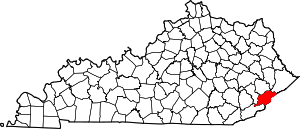
Appalachian states have so many bears they have hunting seasons for them, but that's not the only time they can be legally killed. In Letcher County, Kentucky, last week, three bears were killed by threatened homeowners, Sam Adams reports for The Mountain Eagle of Whitesburg.

One, Greg Hawkins, "tried to scare the bear away from his dog, and when it wouldn’t leave the dog, he grabbed a bow and arrow and shot it," Adams reports. “That just made it madder,” said Hawkins, who ran the bear through with "a spear he’d been throwing at targets," Adams writes.

A state Department of Fish and Wildlife officer "said Kentucky law on hunting bears probably wouldn’t apply if the bear was genuinely threatening him or damaging his property," Adams reports. "Other Fish and Wildlife officials also said there is no way they would ever tell someone not to kill a bear that is threatening them or attacking their dog, but said if a bear is running away, that’s not a threat and it’s not allowable to kill one out of season and without a license and bear permit."

June is high time for bears, Adams notes: "Mother bears have cubs once every two years and start kicking those cubs out on their own when they’re about a year and a half old. The bear mating season here is from June to mid-July and male bears, called boars, will travel for miles to find a sow. Generally, black bears are not very aggressive toward humans, but . . . a man was killed and partly eaten by a black bear in Arizona a little more than a week ago while the man was sitting at a table outdoors drinking coffee, but such attacks are extremely rare. That was the first known fatal attack by a black bear since July 1, 2021, when a woman was killed by a female black bear in Canada."

Letcher County (Wikipedia map)
The bear at Hawkins' home "had a broken tooth and its jaw was swollen with infection, a condition that could have contributed to its demeanor," Adams reports. "But a necropsy of the bear that killed the man in Arizona showed no injuries or illness to explain its aggressive behavior. . . . Bear experts recommend making yourself look bigger by waving your arms over your head and yelling at the bear while slowly backing away. Never run from a bear because it can trigger their instinct to chase. Climbing a tree doesn’t work because black bears can climb. Hawkins, of Mayking, who said he often collects plaster casts of bear tracks for a Forest Service biologist, said he never carries a gun into the woods, but does try to have an umbrella handy to scare bears away." He said, “You open it up and flap it and it scares the crap out of them.”

Friday, September 24, 2021

Vote to crown the fattest of them all during Fat Bear Week, Sept. 29-Oct. 5; vote for Fat Bear Junior today

Fat Bear Week champion from 2020 (National Park Service photo)
Park rangers at Alaska's Katmai National Park and Preserve are gearing up for this year's Fat Bear Week, which goes Sept. 29 through Oct. 6.

They'll create a March Madness-style bracket pitting individual bears against each other, then the public votes to see who advances to the next round until one bear is crowned the fattest of them all. The annual contest is meant to celebrate Katmai's healthy ecosystem, since fat equals winter survival for bears. Last year the contest received more than 640,000 votes.

"In addition to voting during this week-long tournament, there will be a series of online chats on explore.org featuring Mike Fitz, explore.org's resident naturalist, and rangers from Katmai to learn more about the individual bears and Katmai's healthy ecosystem," according to the event website. "Throughout the season, you can also tune in to the explore.org bear cams which offer unprecedented access to the lives the bears of Brooks River. There are also special live events on a variety of topics hosted weekly as well."

And, there's a new wrinkle this year: the Fat Bear Junior competition. Voting began Sept. 23, but you can still vote today until 9 p.m. ET. We're rooting for the admirably chunky 132's Spring Cub.

Click here for more information or to vote.

Wednesday, December 02, 2020

Trump administration to protect whitebark pine trees due to climate change, beetles and lethal fungus infection

A dead whitebark pine tree near Jackson Hole, Wyo. (Associated Press photo by Mead Gruver)

"Climate change, voracious beetles and [a lethal fungal] disease are imperiling the long-term survival of a high-elevation pine tree that’s a key source of food for some grizzly bears and found across the West, U.S. officials said Tuesday," Matthew Brown reports for The Associated Press. The Fish and Wildlife Service will publish a proposal in the Federal Register today to protect the whitebark pine tree as a threatened species under the Endangered Species Act.

The whitebark pine's habitat spans more than 80 million acres across seven Western states and Canada, the largest geographic area of any other tree listed as an endangered species. But more than half of all standing whitebark pines are already dead, according to a 2018 Forest Service Study, Dino Grandoni reports for The Washington Post

"The decision to declare the tree endangered due to climate change is an unusual one for an administration that often dismisses that threat," Grandoni reports. And, the listing may have "implications for loggers who would have to work around the protected pine on U.S. Forest Service land. About 88 percent of the tree’s range in the United States is on land managed by the federal government."

Fish and Wildlife isn't protecting specific habitats as necessary to the tree's survival because the agency argues the fungus is the threat, not habitat decline.

Tuesday, November 17, 2020

New tourists, prompted by the pandemic, caused increases in trash and bear activity at Lake Tahoe

A bear roots through trash at a Lake Tahoe vacation property in October.
(Photo by Cimmaron Correy of the Clean Tahoe Program)

"Most summers, visitors to Lake Tahoe respect its beauty and its bears. This summer, however was different, resulting in an increase in trash and bear activity, and protests from some of the locals," Erika Mailman reports for The Washington Post. "Many tourism officials and business owners had feared Tahoe would take a major hit because of the coronavirus pandemic, not to mention the poor air quality from the California wildfires. Instead, the famously blue lake that straddles the state line between California and Nevada saw a boost in visitors."

The increase in visitors came after stay-at-home mandates were eased, according to Carol Chaplin, president and CEO of the Lake Tahoe Visitors Authority. "But the vacationers who arrived in droves were not Tahoe’s typical tourists, observers say. Some seemed unfamiliar with wilderness protocols, which include packing out trash, protecting pristine natural elements such as trees and boulders, and not feeding the bears," Mailman reports.

Part of the problem is that many of the new visitors were day-trippers or people who were stopping briefly on their way to other destinations. When visitors stay longer, there's time to warn them about the bears and give them tips on how to stay safe and keep the area less attractive to bears, Mailman reports. Ann Bryant, head of the BEAR League, a 24-hour call center for bear issues, said calls skyrocketed this summer. She said that some tourists didn't know there are bears. Others deliberately left out food to attract bears so they could take pictures, but that makes trouble for the next visitor when the bear comes back for more food, she told Mailman.

Bears weren't the only problem the new tourists brought, Bryant said. She said many visitors lacked "proper forest etiquette" and were responsible for a surge in vandalism and littering. "Trees and ancient boulders were spray-painted, sometimes with obscenities," Mailman reports. "Locals protested with several rallies in August, holding signs that read 'tourists go away' and 'don’t trash Tahoe.'"

Chaplin said the animosity was unfortunate, since tourism is the area's main source of income.

Thursday, February 27, 2020

'Bear Whisperer' protects a California forest town from bears, sometimes with unconventional methods

Steve Searles patrols the woods near Mammoth Lakes, California. (Los Anegles Times photo by Brian van der Brug)
Mammoth Lakes, California, is a small ski town near the Nevada border, surrounded by forests. That means plenty of bears that could scare off tourists. Some towns seek to control the bear population by killing them, but Mammoth Lakes' wildlife specialist, Steve Searles, has found non-violent ways of containing them, Chris Erskine reports for the Los Angeles Times.

His unorthodox methods, which include stern voice commands and making sure locals don't give the bears any food, have brought down the bear population and earned Searles an Animal Planet show, Erskine reports. Read more here.

Tuesday, April 04, 2017

Scientists say grizzly bears are expanding their habitat around Yellowstone

Map by Interagency Grizzly Bear Study Team
Scientists say grizzly bears are expanding their habitat in Wyoming, Montana and Idaho, Mike Koshmrl reports for the Jackson Hole Daily in Jackson, Wyo. "Since the population crashed in the 1970s and the animal earned the protection of the Endangered Species Act, grizzlies’ occupied habitat has steadily expanded outward from the population’s core in Yellowstone National Park. That spread has continued at a considerable clip since 2015."

The Interagency Grizzly Bear Study Team, a group of scientists and biologists formed in 1973 by the Department of the Interior responsible for long-term monitoring and research efforts on grizzly bears in the Greater Yellowstone ecosystem, said they have seen an 11 percent change in increasing range of grizzlies in the past few years, Koshmrl writes.

Frank van Manen, head scientist for the group, "attributed the highest-ever numbers of grizzlies dying in 2015 (61 mortalities) and 2016 (58) to the expansion outward from wilderness areas and national parks and into working landscapes,"  Koshmrl writes. Van Manen told reporters, “Bears are simply entering a landscape where the potential for conflict is greater.”

The population of grizzlies within the monitoring area has fallen for two consecutive years, from about 750 animals to 690, reports The Associated Press. "Twenty-seven percent of grizzly range within the region is now outside a 'demographic monitoring area' where bear numbers are assessed annually."

Monday, February 20, 2017

Maryland lawmakers push bill to make it self-defense to kill bears threatening bee colonies

Maryland lawmakers are pushing a bill that would allow bears to be killed if they threaten bee populations, Michael Dresser reports for The Baltimore Sun. They want to extend the same level of protection to bees that the state "now gives calves, goats, chickens and other animals. A person defending himself, other people or livestock is exempt from a state law that makes shooting a black bear without a permit punishable by a $1,500 fine and six months in jail for a first offense."

Black bears are mostly located in Western Maryland
Black bears are largely found in the state's four westernmost counties—Garrett, Allegany, Washington and Frederick, Dresser writes. The Maryland Department of Natural Resources says bears are responsible for about six attacks per year on bee colonies. Some lawmakers say that's too many. Beekeepers say once a bear finds a source of honey they will attack until it is depleted. Lawmakers say the "legislation would not lead to unsustainable losses in a state bear population estimated at 2,000 adults."

Friday, December 02, 2016

Humans blamed for rising grizzly bear deaths at Yellowstone National Park

Humans are being blamed for an unusually high number of grizzly bear deaths in Yellowstone National Park, Laura Zuckerman reports for Reuters. This year 55 grizzly-bear carcasses have been found, with wildlife advocates expecting the number of dead to grow to at least 61 by the end of the year, compared to 28 in 2014 and 29 in 2013.

"Nearly half the grizzlies were killed by government bear managers for preying on cattle, sheep and the like," Zuckerman writes, but the increase in deaths is being blamed on a "growing number of the bruins harming livestock or challenging hunters over freshly killed game. ... The uptick in bear deaths comes as the Obama administration says the population of roughly 690 bears in and around Yellowstone has come back from the brink of extinction and should be stripped of U.S. Endangered Species Act protections. The plan, proposed by the U.S. Fish and Wildlife Service earlier this year, opens the way for hunting in Wyoming, Montana and Idaho, the Northern Rocky Mountain states that border the park."

Sportsmen and ranchers support the plan, claiming "the number of conflicts will diminish by targeting bears that bounce hunters off freshly shot game or which harm livestock," Zuckerman writes, Conservationists and Native Americans, who consider the grizzly to be sacred, oppose removing the bears from endangered status. (Read more)

Thursday, September 29, 2016

U.S., Canadian tribes to sign joint treaty to block hunting of grizzly bears in Yellowstone area

National Park Service map shows bear range
Tribal leaders from the U.S. and Canada will sign Friday a joint treaty "aimed at blocking the proposed hunting of grizzly bears in Idaho, Montana and Wyoming," Rob Hotakeainen reports for McClatchy Newspapers. Tribal leaders, who consider the grizzly bear a sacred animal, are angry that the U.S. Fish and Wildlife Service in March proposed removing the grizzly bear from the federal endangered species list from the area in and around Yellowstone National Park, which would let the three states manage the bears and allow hunting.

"Tribal officials said the new treaty will be only the third cross-border treaty between U.S. and Canadian tribes to be signed in more than 150 years," Hotakeainen writes. "More than 50 federally recognized tribes have lobbied President Barack Obama to intervene. They’re backed by The Assembly of First Nations, a national advocacy organization representing the more than 900,000 First Nation citizens living in Canada."

Ranchers and state officials have argued for delisting of grizzly bears, saying numbers are up and "they constitute a threat to public safety," Hotakeainen writes. Numbers were estimated at as low as 136 in 1975, but are now estimated at more than 700. (Read more)

Thursday, May 12, 2016

Taking 'endangered' tag from Yellowstone-area grizzlies could damage the species, critics say

Environmentalists and Native Americans have been vocal critics of the U.S. government's plan "to lift Endangered Species Act protection of the grizzly bear in and around Yellowstone National Park," Laura Zuckerman reports for Reuters. "The U.S. Fish and Wildlife Service formally proposed in March that grizzlies in the Yellowstone area—spanning parts of Wyoming, Montana and Idaho—be removed from the list of threatened species, citing data showing their numbers have rebounded to healthy levels." The public comment period for the proposal ended on Wednesday.

"Much of the discontent has focused on the prospect of grizzlies in the region becoming open to trophy hunting under state management plans put in place once federal safeguards are removed," Zuckerman writes. There are about 700 grizzly bears in the Yellowstone area, "up from as few as 136 bears when they were listed as threatened throughout the Lower 48 states in 1975, after decades of being hunted, trapped and poisoned to near-extinction."

"Sportsmen and ranchers, who wield considerable political clout in the region, point to growing bear-human conflicts as grizzlies expand their territories in search of food," Zuckerman writes. "Environmentalists argue grizzlies' recovery could falter if they are forced to contend with new pressures posed by hunting of the species outside the park. They caution that grizzlies already face a decline in a key food source, whitebark pine nuts, due to climate change."

Friday, March 04, 2016

Fish and Wildlife Service wants to lift endangered-species protection for Yellowstone-area grizzlies

The U.S. Fish and Wildlife Service on Thursday proposed removing Endangered Species Act protections from grizzly bears in the area in and around Yellowstone National Park (National Park Service map), saying the bruins' numbers "have rebounded sufficiently in recent decades," Ruffin Prevost reports for Reuters. Grizzly-bear populations in the region are estimated at 700 or more, compared to "as few as 136 bears in 1975 when they were formally listed as a threatened species throughout the Lower 48 states. ... Its current estimated population well exceeds the government's minimum recovery goal of 500 animals in the region."

"Hunters and ranchers, who make up a powerful political constituency in Western states, have strongly advocated de-listing grizzlies, arguing that their increasing numbers pose a threat to humans, livestock and big-game animals such as elk," Prevost writes. "Environmentalists have raised concerns that while grizzlies have made a comeback, their recovery could falter if federal safeguards are lifted, a move that would open the animals to public hunting outside the national park boundaries. Native American tribes, which revere the grizzly, also have voiced skepticism about removing its threatened status." (Read more)

Monday, November 16, 2015

Go west, young bear! Or east, as Md. town finds out

Black bears are becoming a common sight for many western Appalachian towns, as the species continues its comeback and spreads out, largely via younger males. But bears are also heading east, as the 1,500 residents of Hancock (Best Places map) have discovered, reports the Herald-Mail in Hagerstown.

Reporter Tamela Baker writes that Pete Jayne, associate director for game management for the state Department of Natural Resources, "said there is a resident bear population in Washington County, and it's becoming a little less unusual for one of them to stray into traffic. Three such incidents were reported in 2012, four in 2013 and six last year, he said."

Herald-Mail photo illustration
"Each year, the state permits a brief bear-hunting season in the two westernmost counties—Garrett and Allegany—to help control the population," Baker reports. "During this year's season, which ran Oct. 26 to 29, hunters harvested a record 95 black bears. Expanding the hunt to include Washington County has been discussed, but no decision has been made to do it, Jayne said."

Meanwhile, Jayne said residents are being told to learn to "get along with bears," reports Herald-Mail. Jayne said, "We tell them to be ‘bear aware’ and to make sure they're not creating attractions. They're crazy about bird seed. If you feed birds in fall or summer, you can attract them. We tell people to wait until December" when the bears are hibernating. (Read more)

Wednesday, September 23, 2015

Poachers killing black bears in Great Lakes region; the animal is a delicacy in some Asian cultures


Overseas demand for black bear organs has led to poaching in the Great Lakes region. Four people were arrested in Michigan in August for illegally purchasing and selling black bear parts, Courtney Bourgoin reports for Great Lakes Echo, a project of the journalism department at Michigan State University. The Michigan House was expected to vote this week on stricter bear poaching bills. (National Park Service photo by Neal Herbert)

"The World Wildlife Fund says that bile from bear gallbladders provides an active ingredient for traditional medicines used in Asian cultures," Bourgoin writes. "Those who follow the practices believe it aids colds, inflammation and liver-related diseases." Bear paw soup is also "a cultural delicacy in countries like China, North Korea, South Korea and Japan."

Michigan United Conservation Clubs, a coalition of outdoor groups, is pushing for stricter punishment and "supports state legislation to increase restitution to the state from $1,500 to $2,000 per animal," Bourgoin writes. "Hunting license suspensions would increase from three to five years under bills sponsored by Sens. Phil Pavlov (R-St. Clair Township) and Dale Zorn (R-Ida.)." (Read more)