Showing posts with label corporations. Show all posts

Friday, December 20, 2024

A little-known pharmaceutical company that made billions selling opioids 'escapes' billions in fines and IRS payments

Endo began in 1920 as "Intravenous Products of America." Its website does not mention opioids;
instead it highlights the company's "past successes and history of expertise." (Endo photo)

A lesser-known pharmaceutical company named Endo made billions of dollars during the U.S. prescription opioid crisis by marketing its flagship opioid, Opana ER, as safe and non-addictive.

Despite whistleblower suits from Endo employees, the U.S. Department of Justice failed to pursue Endo, even as it vigorously prosecuted Purdue Pharma for its part in the opioid crisis, report Bob Fernandez of ProPublica and Craig R. McCoy of The Philadelphia Inquirer. The DOJ's investigative delay and the company's clever bankruptcy exit strategy allowed Endo to "escape $1.5 billion in fines and forfeitures" it owed and billions more "officials said it owed the U.S. government."

When the DOJ finally moved to prosecute Endo for its part in the opioid crisis, the company was bankrupt. "In what amounted to a liability fire sale by the Justice Department, the company’s woes with the federal government would all be resolved by a $200 million payment," Fernandez and McCoy explain. "In sentencing Endo in federal court Judge Linda Parker wondered how the amount paid to the U.S. could be so low. Parker said, 'I just don’t understand how it went from $1 billion to $200 million.' Federal prosecutor Benjamin Cornfeld explained: Endo was broke."

While Endo's 2024 financial troubles were real, a deeper look at the DOJ's delay after winning a criminal case against Endo in 2014, revealed how in those intervening years allowed Endo "vastly expanded its narcotic-pill empire before executing a corporate escape plan," Fernandez and McCoy write. "The plan allowed Endo to restructure its debt to retain control of the company and hand out $95 million in executive bonuses before seeking protection in bankruptcy."

DOJ's settlement with Endo concluded some of the company's financial troubles and "also mostly erased claims of another $1.5 billion for false health care billing and Medicare costs generated by the opioid crisis." In addition, "Endo paid a tiny fraction — three pennies on the dollar — of the $7 billion that officials said it owed the U.S. government, including $4 billion in taxes," Fernandez and McCoy explain. "Hundreds of lawyers, paralegals and financial advisers litigated Endo’s bankruptcy, billing more than $350 million. . . . Individual opioid victims didn’t fare as well. They got just $40 million from Endo — a sum that works out to about $1,000 per victim."

Tuesday, March 12, 2024

In East Palestine, Ohio, residents and officials now know the 'controlled burn' was not neccesary

Vinyl chloride is used to make
PVC piping. (Wikipedia photo)
More than a year has passed since the Norfolk Southern train derailment in East Palestine, Ohio, which left the community of 5,000 facing the aftermath of a chemical explosion followed by a "controlled chemical burn" of vinyl chloride that at the time was presented as the "least bad" of two options. However, area residents and Congress discovered last week that Ohio decision-makers didn't have all the facts needed to avoid the burn.

"The decision to blow open five tank cars and burn the toxic chemical inside them after a freight train derailed in Eastern Ohio last year wasn't justified, the head of the National Transportation Safety Board told Congress," reports Josh Funk of The Associated Press. "But she said the key decision-makers who feared those tank cars were going to explode three days after the crash never had the information they needed."

The East Palestine train derailment.
(Wikipedia photo)
The company Oxy Vinyl made the vinyl chloride inside the five cars, and its experts told "contractors hired by Norfolk Southern railroad that they believed that no dangerous chemical reaction was happening, NTSB Chair Jennifer Homendy said. But Oxy Vinyls was left out of the command center," Funk explains. While vinyl chloride is a flammable gas, it needs a specific combination of heat, air, light, and a contact catalyst to start a fire or explode. Homendy testified that the Oxy Vinyl's experts did not believe this combination or "polymerization" was occurring. "However, that information was never relayed to Ohio Gov. Mike DeWine and the first responders in charge, she said."

DeWine's spokesperson, Dan Tierney, said a lack of information made the burn seem like the only safe option. He told Funk: "The only two scenarios that were ever brought up were a catastrophic explosion occurring, where shrapnel would be thrust in all directions to a one-mile radius, or averting that through a controlled vent and burn. Nobody ever brought up a scenario where if you just did nothing, it wouldn't explode."

East Palestine is in Columbiana
County, Ohio. (Wikipedia)
Area residents now face the heartbreak of knowing the burn was not needed, and some suspect Norfolk Southern pushed for the burn versus waiting for the cars to cool so that more costly delays could be avoided. Funk reports, "Misti Allison, who lives with her family about a mile away from the derailment site, said the findings reaffirm what she believed to be true all along: that the vent and burn did not need to happen." She told Funk, "Norfolk Southern was putting profits over people to get the train tracks up and running as fast as possible and to destroy whatever evidence was left."

Vinyl chloride does not occur naturally and is a category 1A carcinogen. The National Cancer Institute notes that "vinyl chloride exposure is associated with an increased risk of a rare form of liver cancer (hepatic angiosarcoma), as well as primary liver cancer (hepatocellular carcinoma), brain and lung cancers, lymphoma, and leukemia." 

Monday, November 06, 2023

When it comes to the economy, many rural Americans feel left out of the conversation, study groups suggest

When it comes to the economy, rural Americans tend to
feel unheard. (The Daily Yonder photo)
When news outlets claim the U.S. economy has shown "surprising resilience" or robust job growth, their analysis often neglects rural Americans, leaving people feeling more marginalized and unheard, The Daily Yonder polling found. Daily Yonder Publisher Dee Davis outlines their research efforts and gives voice to some rural experiences and needs. Below is a condensed version of his commentary based on the polling and discussions with rural residents.

"For the last couple of years, we have been working with groups around the country to get a sense of what rural communities were feeling about the economy. Are country people hurting? Are they optimistic? Is it the same old up one day and down the next? As part of our research, we have commissioned polling, conducted eight focus groups in four states, and shared what we have found with policy professionals and political analysts. As the fog begins to lift, here is what I see.

"My uncle used to tell me he was too poor to pay attention. News that the economy is rip-roaring, with crashing unemployment and rising wages, is lost on most rural Americans we surveyed right now, even with those who say they are better off than before. The price of things — a gallon of gas, a dozen of eggs — has knocked rural communities off course and money is not what it used to be.

"And a measurable part of the rural population is pissed. They have had it with oil companies, drug makers, and distant corporations who care not a whit what country people are going through. Rural people are of two minds about government in that, one, they want it out of the way, and two, they want it to intervene to create new jobs in rural America.

The following are comments made by participants in the focus group sessions. "Focus group participant from Wisconsin: 'It's really difficult not to fall into the trap . . . where you really do start to internalize it and think 'Well I must be a failure, because I don't have what my parents had. I certainly don't have what my grandparents had.'. . . A participant from Kentucky: 'I'm in survival mode every day.'. . . Participant from Ohio: "I'm really worried about the kids because it's way worse than a lot of people realize. Like so many of them are depressed and anxious and don't know what to do. Losing hope, being suicidal. I mean children, like little children even, we are not even talking teenagers. And they need hope. They need to see something get better. Some reason to become an adult.'

"Our analysis of these rural focus groups showed us:
  • People want to share their stories and be heard, but they often feel ignored: misunderstood and maligned by the media.
  • People are struggling with loss — loss of status, wealth, a valued role — but they try not to give in to despair.
  • People will act out of hope in situations where they can receive and offer community support. Being of service to others is a valued purpose.
  • People in our groups want to push back against partisan politics and culture war rhetoric."

Go here to read the about the complete polling analysis.

Report: Former Meta employee says Instagram executives knew their platform hurt children. Now he's telling Congress.

Meta ignored its own research and continued business
as usual. (Image by Taylor Callery, WSJ)
Instagram executives knew their platform was dangerous to children and young adults, especially teen girls, long before whistleblowers came forward. "When a Meta security expert Arturo Bejar told Mark Zuckerberg that Instagram's approach to protecting teens wasn't working, the CEO didn't reply," reports Jeff Horwitz of The Wall Street Journal. "Now the former insider is set to tell Congress about the predatory behavior."

As an employee and a consultant, Bejar had a long history with Facebook, now Meta. He started with the company in 2009, and he left Facebook in 2015 for personal reasons. By then, Instagram was a powerful audience engagement arm for the company. When Bejar's 14-year-old daughter shared a vulgar Instagram posting she received, that's when "The trouble began," Horwitz writes. Bejar's daughter reported the comment to Instagram. "A few days later, the platform got back to her: The insult didn't violate its community guidelines."

"Bejar was floored — all the more so when he learned that virtually all of his daughter's friends had been subjected to similar harassment," Horwitz reports, "Instagram acted so rarely on reports of such behavior that the girls no longer bothered reporting them. Bejar began peppering his former colleagues at Facebook with questions about what they were doing to address such misbehavior. The company responded by offering him a two-year consulting gig."

Back on the company's campus, Bejar described its approach to addressing harassment complaints as almost entirely automated and "while users could still flag things that upset them, Meta shifted resources away from reviewing them," Horwitz explains. "To discourage users from filing reports, internal documents from 2019 show, Meta added steps to the reporting process. . . . statistics rules were written narrowly enough to ban only unambiguously vile material. Meta's rules didn't clearly prohibit adults from flooding the comments section on a teenager's posts with kiss emojis or posting pictures of kids in their underwear, inviting their followers to 'see more' in a private Facebook Messenger group."

Bejar was tasked with addressing some of these issues. His team "built a new questionnaire called BEEF, short for 'Bad Emotional Experience Feedback.' A recurring survey of issues 238,000 users had experienced over the past seven days, the effort identified problems with prevalence from the start: Users were 100 times more likely to tell Instagram they'd witnessed bullying in the last week than Meta's bullying-prevalence statistics indicated they should," Horwitz reports. "Among users under the age of 16, 26% recalled having a bad experience in the last week due to witnessing hostility against someone based on their race, religion or identity. More than a fifth felt worse about themselves after viewing others' posts, and 13% had experienced unwanted sexual advances in the past seven days."

Bejar was under a time crutch, "With just weeks left at the company, Bejar emailed Zuckerberg, Chief Operating Officer Sheryl Sandberg. . . . Blending the findings from BEEF with highly personal examples of how the company was letting down users like his own daughter," Horwitz notes. "In response to Bejar's email, Sandberg sent a note to Bejar only, not the other executives. . . . He says he never heard back from Zuckerberg."

Bejar left Meta in 2021. He told the Journal, that any effort to change Meta "would have to come from the outside. He began consulting with a coalition of state attorneys general who filed suit against the company, alleging that the company had built its products to maximize engagement at the expense of young users' physical and mental health," Horwitz adds. "Bejar also got in touch with members of Congress about where he believes the company's user-safety efforts fell short." He's scheduled to testify in front of a Senate subcommittee on Tuesday.

Tuesday, October 17, 2023

Newly released data reveals a 'virtual opioid belt' developed over about 15 years in West Virginia, Virginia and Kentucky

Average number of pills distributed per person per year, ranked by county from 2006 to 2019. White is equal to zero pills and scarlet is 120+ pills; shades of pink are ranges between those two. (Post via Openmap, with DEA Automation report data)

America's battle with pain-pill prescriptions might be tapering off, but deaths spawned by its spin-offs, heroin and fentanyl, have increased, and deeply affected regions are still clawing toward a recovery.

A database maintained by the Drug Enforcement Administration shows how the use of pain pills increased dramatically, particularly in Appalachian counties. The database "tracks every single pain pill sold in the United States, tracing the path from manufacturers and distributors to pharmacies in every town and city," reports Steven Rich, Paige Moody and Kevin Schaul of The Washington Post. "These records provide an unprecedented look at the surge of legal pain pills. . . which resulted in more than 210,000 overdose deaths during the 14-year time frame ending in 2019. It also sparked waves of an ongoing and raging opioid crisis first fueled by heroin and then illicit fentanyl."

The information can help people "understand the impact of years of prescription pill shipments on their communities," the Post reports. "A county-level analysis shows where the most oxycodone and hydrocodone pills were distributed across the country over that time — more than 145 billion in all."

The DEA's database, known as ARCHOs, was not willingly shared with the public. The Post and HD Media, which publishes the Charleston Gazette-Mail in West Virginia, "waged a year-long legal battle for access to the database, which the government and the drug industry had sought to keep secret," Rich, Moody and Shaw add. "The initial release of data covered 2006 to 2012, and was later updated through 2014. . . . The Post analysis shows that the volumes of the pills handled by the companies climbed as the epidemic surged, increasing by 52 percent from 8.4 billion in 2006 to 12.8 billion in 2011."

Appalachian counties have maintained that their regions were targeted by pharmaceutical companies' greed. The maps show how those areas suffered more than other areas of the country. The Post reports, "Comparing county-level maps of prescription opioid overdose deaths and pill shipments reveal a virtual opioid belt of more than 90 counties stretching southwest from Webster County, W.Va., through southern Virginia and ending in Monroe County, Ky. This swath includes 18 of the top 20 counties ranked by per-capita prescription opioid deaths nationwide and 15 of the top 20 counties for opioid pills distributed per capita."

The maps show a 'virtual opioid belt' through Appalachia. (Post map, from DEA and CDC data)

Friday, June 10, 2022

Series on agribusiness donations to Midwestern university ag programs is a finalist for investigative reporting award

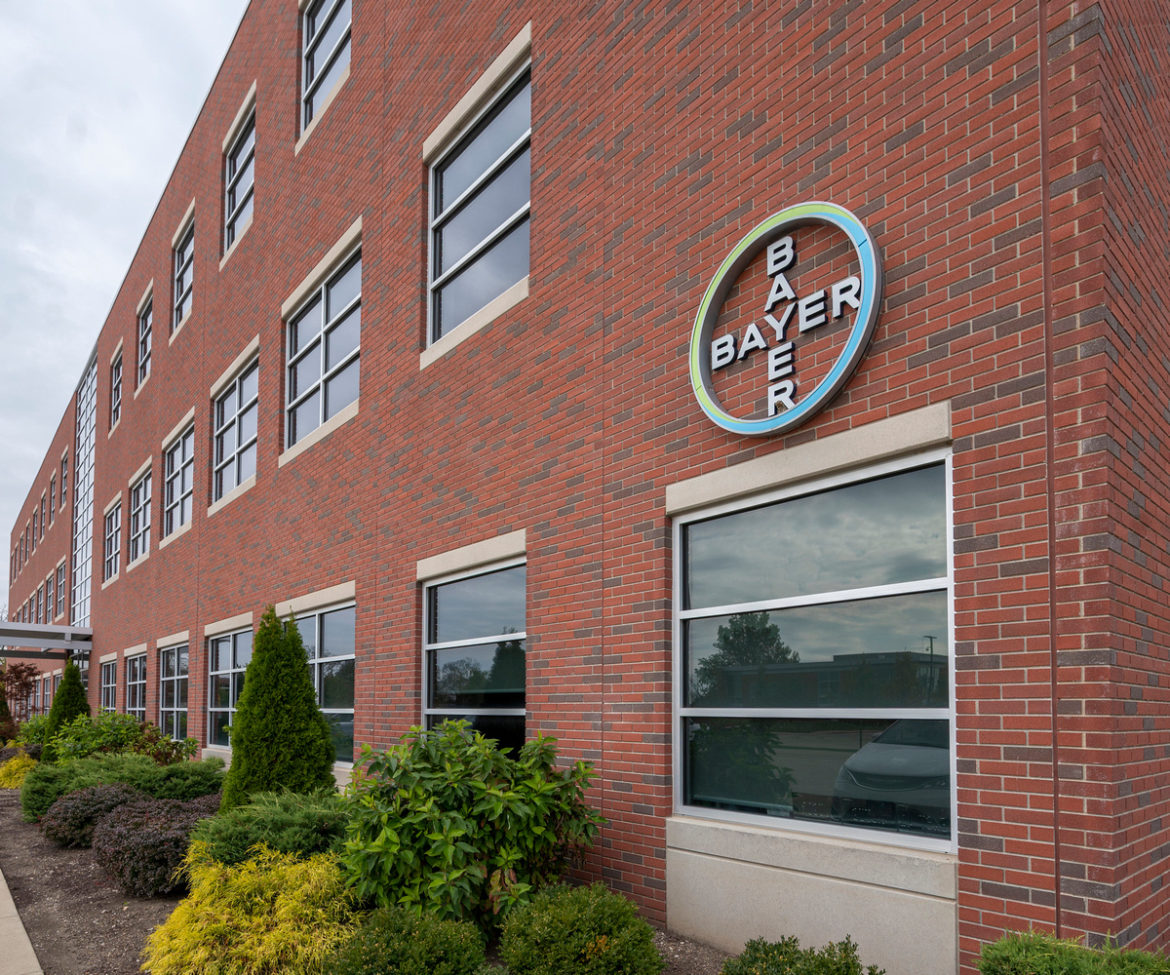
Bayer Crop Science Innovation Center, University of Illinois
UPDATE, June 23: The series won first prize in the category.

"Big Ag U", a series last year by Investigate Midwest and Harvest Public Media, has been named a finalist in the 2022 Richard H. Driehaus Foundation Awards for Investigative Reporting by small newsrooms. The series looked at the money major agribusinesses had given four major university agriculture programs and the influence it bought. Public universities "have cultivated powerful agricultural corporations as donors while public funding has stagnated," they reported.

From 2010 to 2022, the corporations have given at least $170 million to ag programs at the University of Illinois, Iowa State University, Oklahoma State University and the University of Missouri. The reporters said they couldn't get records from several other universities, which cited state privacy laws.

"That corporate money has paid for research centers and specific studies at universities," they reported. "For decades, the federal government funded much of the research and development into agriculture, and not just on campuses. But that changed around the 2008 financial crisis. Soon after, the private sector became the dominant spender," according to the U.S. Department of Agriculture. "USDA noted private research tends to focus on things that boost revenues over developments that could help the public at large."

Donors' influence could limit the scope of university research, said Gabrielle Roesch-McNally, who advocates for women’s ownership with the American Farmland Trust. The University of Illinois said it believes “strongly in researchers conducting and sharing their work without influence from internal or external entities.” The series reported on complaints that Monsanto, a major donor now owned by Bayer, made about individual researchers at Illinois; administrators defended the researchers and won the company's support for an expended research center, now named for Bayer.

Investigate Midwest says its mission is to expose "dangerous and costly practices of influential agricultural corporations and institutions." The Driehaus Foundation is based in Chicago and focuses on the quality of the built environment but also promotes arts and culture, economic opportunity for the working poor and investigative journalism for government accountability.

Tuesday, February 27, 2018

Oxycontin maker quietly but repeatedly tried to weaken laws that can help send corporate executives to jail

It's well known that Purdue Pharma made Oxycontin a popular drug through aggressive and misleading marketing tactics, which led to today's opioid epidemic. "What has not been previously revealed is that as the death toll mounted, officials at the company attempted to work behind the scenes to make it less likely that they could ever be successfully prosecuted for the carnage opioids were unleashing," Lee Fang reports for The Intercept.

Purdue quietly helped finance efforts to weaken the Responsible Corporate Office doctrine, a liability standard used to prosecute executives and directors of companies that affect public health and safety. Under the RCO doctrine, federal prosecutors could go after Purdue's higher-ups for their role in the opioid epidemic without having to prove they had knowledge of or motivation for wrongdoing. That happened in 2007, when three Purdue executives pleaded guilty in federal court to charges that the company had misled doctors and patients about the addictive nature of Oxycontin, and agreed to pay $634.5 million in civil fines.

"Purdue didn’t attach its name to the recent effort to weaken the Responsible Corporate Officer Doctrine," Fang reports. "Instead, the company provided funding to the Washington Legal Foundation, a legal nonprofit that litigates in support of business interests, to petition the Supreme Court last year to accept a case that would give it the opportunity to weaken the RCO doctrine. The foundation closely protects the names of its donors and the drugmakers’ ties to the group were unclear until recently."

The case is DeCoster v. United States, a suit that challenged the conviction of executives at Iowa-based Quality Egg LLC, who were found guilty after 56,000 people were sickened by salmonella-tainted eggs. In its petition, the foundation argued that an executive could be imprisoned for little more than being a supervisor, and urged the Supreme Court to revisit the RCO doctrine. The court declined to hear the case.

The foundation also went to bat for Purdue in 2014, when it petitioned the court to support the company in a bid to chip away protections for corporate whistleblowers under the False Claims Act, and "helped Purdue Pharma attempt to block the Centers for Disease Control and Prevention from issuing voluntary guidelines to discourage the over-prescription of opioid narcotics," Fang reports. The foundation, which routinely filed briefs in support of cigarette maker Philip Morris USA in the 1990s, has been accused of being a nonprofit legal front for corporations seeking to weaken public health and safety standards.

Wednesday, February 15, 2017

Privatized fishing rights mean the industry has less economic benefit for coastal towns

A national push to make seafood more sustainable is forcing small and independent fishing operations to compete with wealthy investors and large corporations, Kai Ryssdal and Daisy Palacios report for the radio program Marketplace. The problem is that the U.S. policy of "catch share," which limits how many fish can come out of the ocean, has become privatized. That means that having deep pockets buys you the rights to more pounds of fish.

Ryssdal, host of Marketplace, interviewed Lee van der Voo, whose book, The Fish Market: Inside the Big-Money Battle for the Ocean and Your Dinner Plate, details the issue. Van der Voo told Ryssdal, "The idea was give fishermen a stake in the ocean, and they'll become conservationists. But it was a bit of a gamble. It was like giving 100 people houses and betting everybody's going to cut their grass; you just don't really know. And the effect has been kind of mixed. Some people became the good stewards that conservationists envisioned when they pushed this policy in America, and a lot of people just became landlords."

Van der Voo told Ryssdal, "There are a lot of ways to enforce caps on the ocean, and I would say that private property rights have not been the best way to do it . . . It used to be, that if you were a fisherman and you wanted to grow in your industry, you would just get better at it. And you would, over time, be able to afford your own boat, afford your own equipment, afford the licenses to go fishing. Now you have to be able to afford the access to the ocean, which is tremendously expensive. And so, the next logical inheritor of the resource is no longer the fishermen, it’s investors, it’s corporations, it’s entities that are moving the economic benefits of fishing further and further away from coastal towns."

Van der Voo said, "People care about what they eat. Maybe not so much about the person that brings it to them, but maybe they should. You know, this is a pretty significant trend here in this nation. We've seen a lot in the last election, people talk an awful lot about what has happened to workers in the heartland, but we're not really talking about what's happening to workers in coastal communities. Right now, that halibut that's costing $28 to $30 a pound in the Whole Foods case, the guy that goes and catches that is paying up to 75 percent of the revenue of that trip to a landlord. That's a problem."

Monday, January 23, 2017

RFD-TV founder says Trump's win was not Republican vs. Democrat, but rural vs. urban

Still from an RFD-TV show
The way Donald Trump and Hillary Clinton utilized, or failed to utilize, RFD-TV, which specializes in rural-interest programming and is available in more than 46 million homes, may have been the difference in the presdential election, Cynthia Littleton reports for Variety. Patrick Gottsch, founder and president of RFD-TV, said "in the final two weeks before Election Day, Trump’s team spent $150,000 to buy every available advertising spot on Nashville-based RFD-TV." Clinton didn't by any advertising.

Gottsch told Littleton, “You could really see it turning in the last couple of weeks. I couldn’t find a woman in rural America who was going to vote for Secretary Clinton, and I found that odd.” Gottsch said he doesn't think it even mattered which party Trump belonged to, telling Littleton, “He could have run as a Democrat and won. It was the fact that he was so independent, and the fact that he was willing to tell everyone—Democrats and Republicans—to go to hell. Every time some [Republican] refused to endorse him, people went, ‘Oh good.’ ”

Gottsch, who said his two daughters were Clinton supporters, "chalks the loss up to her lack of outreach in rural areas, in addition to general economic frustration, and the belief that the status quo is 'rigged' against the little guy," Littleton writes. "Despite Trump’s 1 percent status and New York City pedigree, he gained favor because of his image as a maverick billionaire willing to shake up business as usual in Washington."

"In Gottsch’s view, the key to overcoming prejudice on both sides of the urban-rural divide is communication and a better understanding of one another’s worlds," Littleton writes. He told her, “We are not all a bunch of ‘Hee Haw’ hicks. We cannot exist as the U.S. if there is a wall between urban and rural America. We think that our job is to do more to connect city and country again. If we just keep doing ‘Duck Dynasty’ and that kind of thing, we are never going to get to a better understanding of who we are.”

Monday, August 29, 2016

Federal appeals-court ruling OKs state laws blocking extraterritorial municipal broadband

Rural residents in some states could soon lose their opportunity for broadband access via nearby towns, Cecilia Kang reports for The New York Times. "This month, the United States Court of Appeals for the Sixth Circuit upheld restrictive laws in North Carolina and Tennessee that will halt the growth" of municipal broadband networks, "which are city-run internet providers that have increased competition in the broadband market by serving residents where commercial networks have been unwilling to go."

"While the decision directly affects only those two states, it has cast a shadow over dozens of city-run broadband projects started nationwide in recent years to help solve the digital divide," Kang writes. "In siding with the states, the court hobbled the boldest effort by federal officials to support municipal broadband networks. While the court agreed that municipal networks were valuable, it disagreed with the Federal Communication Commission's legal arguments to pre-empt state laws."

That has led towns in about 20 states "to fear they have little protection from laws like those that curb municipal broadband efforts and favor traditional cable and telecom firms," Kang writes. "City officials say cable and telecom companies that have lobbied for state restrictions will be encouraged to fight for even more draconian laws, potentially squashing competition that could lead to lower prices and better speeds to access the web."

"Some lawmakers and free-market-oriented think tanks say public broadband projects should be carefully scrutinized by local regulators because they are costly and, if unsuccessful, can be a financial burden on taxpayers," Kang writes. "In addition, FCC cannot intervene in state laws, they said." An FCC spokesman said the agency has no plans to appeal the decision. "That means municipalities that want to keep expanding their municipal broadband networks will have to fight to overturn state laws on their own," Kang reports.

Wednesday, August 24, 2016

Farmers, rural technicians fighting for open access to parts, repair information from manufacturers

Farmers and rural technicians are often hampered by an inability to make repairs to technology, farming and medical equipment, because manufacturers are not required to make parts and repair information available to customers and independent repair people, Sarah Breitenbach reports for Stateline. Lobbyists in several states have tried unsuccessfully to require manufacturers "to open access to the manuals, parts, tools, diagnostic equipment and permanent software that is almost exclusively available to their own employees and authorized dealers."

Electronics manufacturers claim that opening access could lead to counterfeiting and liability risks, Breitenbach writes. Supporters of open access disagree. Gay Gordon-Byrne, who heads the Repair Association, a group that advocates for the right of customers to make digital repairs, "said that allowing manufacturers and dealers to retain a monopoly on repair means they can make it hard to fix products and charge so much for repairs that consumers are all but required to buy new devices."

The Repair Association "is asking for a technological about-face," Breitenbach writes. "It essentially wants to go back to a time when manufacturers offered schematic diagrams to help diagnose problems, and corner repair shops could order the parts to fix most household appliances." Gordon-Byrne told Breitenbach, “You knew what was connected to what. If you wanted to take your TV or look at the schematic and say, ‘I think this [part] is fried,’ you could go down to the local TV repair shop and buy a part.”

Farmers say a lack of technicians available in rural areas makes it difficult to get equipment fixed, Breitenbach writes. "The Repair Association—whose members include farmers—says manufacturers are limiting farmers’ ability to fix equipment themselves, adding that a decline in dealers and mechanics in rural areas means farmers often lose valuable time waiting for repairs." Often, a qualified repair shop is more than 100 miles away, said John Hansen, president of the Nebraska Farmers Union. (Read more)

Monday, August 22, 2016

Small-time loggers struggle to keep up with changes in technology, rising costs

Technology and global trade has remade the logging industry, forcing many small operations to go deep into debt to keep up, Sarah Schweitzer reports for The Boston Globe. Schweitzer details the struggles of Vermont logger Dave Goodhouse to keep his business running while facing competition from larger companies and from countries such as Brazil, Canada and Russia. Goodhouse, 53, has been logging since he was 19. (Globe photo by Jessica Rinaldi: Dave Goodhouse looks at a tree that’s been tagged to be cut in Reading, Vt.)

The biggest hardships are expenses, with fuel costs rising 400 percent in the last decade, labor costs increasing 67 percent, equipment costs up 112 percent and trucking costs rising 41 percent, Schweitzer writes. "Meanwhile, money earned from cut wood had risen just 37.5 percent."

A job that could once be done with tools such as a chainsaw and a skidder now needs constant upgrades and upkeep of more efficient equipment to increase productivity, Schweitzer writes. But that means increased costs, which is tough for someone like Goodhouse, who is already "on the hook for $1.2 million for his trucks and heavy equipment" and has bank loan repayments of $15,000 per month, 40 percent of what he brings in.

Add in continued upkeep on current equipment, such as the $400,000 it would cost to replace a forwarder that's close to breaking down and Goodhouse would need to increase productivity to make bank payments, Schweitzer writes. Another problem is that he has no legacy, with his only child choosing to go into another field, telling him, “I’ve watched you suffer and I don’t want to suffer like that." (Read more)

Monday, August 15, 2016

Feds ask states to deny permits to coal companies that self-bond for reclamation

The Office of Surface Mining, Reclamation and Enforcement last week asked states to deny permits to companies that self-bond to guarantee that mined land will be reclaimed, Ken Silverstein reports for Environmental Leader. The reason is that many financial strapped companies—Alpha Natural Resources, Arch Coal and Peabody Energy have all recently declared bankruptcy—are in no position to cover the insurance necessary to guarantee they clean up the sites when they are done, meaning taxpayers end up footing the bill.

The Natural Resources Defense Council says "almost $3.6 billion in self-bonds are outstanding from Alpha Natural Resources, Arch Coal, Cloud PeakEnergy and Peabody Energy,"  Silverstein writes. "Altogether, the U.S. has been working to clean up more than 500,000 acres that were abandoned before the bonding law took effect in 1977 at a cumulative cost of potentially $12 billion."

Monday, August 08, 2016

Hog-farm runoff polluting Illinois waterways; state agencies have limited roles and a light hand

Four years after runoff from Hopkins Ridge Farms, a large-scale hog farm in Illinois, polluted more than 20 miles of Beaver Creek, wiping out at least 148,283 fish and 17,563 freshwater mussels, the creek's aquatic life is only now beginning to recover, David Jackson and Gary Marx report for the Chicago Tribune as part of an investigative series. "Authorities also have yet to collect penalties and cleanup costs from the confinement's influential owners—agribusiness executives who operate facilities in Illinois and Indiana that house tens of thousands of pigs. They deny responsibility." (To view the interactive map click here)

As hog confinements like Hopkins Ridge, which has more than 8,000 pigs, "spring up across Illinois, producing massive amounts of manure, a new pollution threat has emerged: spills that blacken creeks and destroy fish, damaging the quality of life in rural communities," Jackson and Marx write. "The lagoons that hold pig manure until farms can use it as fertilizer sometimes crumble or overflow. Leaks gush from the hoses and pipes that carry waste to the fields. And in some instances, state investigators found polluting was simply 'willful' as confinement operators dumped thousands of gallons of manure they couldn't use or sell as fertilizer."

The Tribune, which analyzed "thousands of pages from state agencies including the Environmental Protection Agency, the Department of Natural Resources and the attorney general's office, found that pollution incidents from hog confinements killed at least 492,000 fish from 2005 through 2014—nearly half of the 1 million fish killed in water pollution incidents statewide during that period," Jackson and Marx write. "Pig waste impaired 67 miles of the state's rivers, creeks and waterways over that time. Using either measure, no other industry came close to causing the same amount of damage."

"Confinements with multimillion-dollar annual revenues often paid just a few thousand dollars in fines after causing massive fish kills," Jackson and Marx write. "Many went to court to challenge authorities; since 2005, the state attorney general has filed or resolved at least 26 pollution lawsuits against swine confinements. Some operators polluted repeatedly. And the multistate pork producers who supply the pigs and profit from the confinements were rarely held accountable, the Tribune found."

"The state agencies responsible for protecting waterways and aquatic life—the EPA and DNR—play limited roles in determining where new confinements can be located or assessing their potential pollution risks," Jackson and Marx write. "Instead, Illinois livestock confinements are granted permits solely by the Illinois Department of Agriculture, whose mission is to promote livestock agriculture as well as regulate it. Under state law, the department cannot consider a confinement owner's environmental record when reviewing an application to build a new site, and officials have issued numerous new permits to operators with multiple infractions." (Read more)

Thursday, August 04, 2016

Illinois fails to protect rural communities from massive hog farms that exploit laws, Tribune says

An investigative report by the Chicago Tribune found that Illinois, the nation's fourth-largest seller of pigs, fails to protect rural communities from massive hog farms that take advantage of weak state expansion laws, David Jackson reports for the Tribune. The report also found that hog farms are creating environmental hazards and decreasing real estate property values because of foul odors.

The Illinois Department of Agriculture, "which is charged with promoting livestock production as well as regulating it, often brushed aside opposition from local officials to issue about 900 swine confinement permits in the last 20 years," Jackson writes. "Pig waste flowing into rural waterways from leaks and spills destroyed more than 490,000 fish in 67 miles of rivers over a 10-year span. No other industry came close to causing that amount of damage, the Tribune found. Many operators faced only minor consequences; some multimillion-dollar confinements paid small penalties while polluting repeatedly." (Tribune graphic)
"The state also does little to investigate allegations of animal cruelty submitted by whistleblowing employees who work for some of Illinois' most prominent pork producers," Jackson notes. "Inspectors dismissed one complaint, state files show, after simply telephoning executives to ask if it was true that their workers were beating pigs with metal bars."

"Some of the sharpest opposition to hog confinements in Illinois comes not from animal welfare activists or environmental groups but from lifelong farmers, small-town residents and rural township commissioners," Jackson writes. Their only outlet to question pork producers and government authorities about proposed operations are county-level hearings overseen by the state Agriculture Department. "To trigger a hearing, the new confinement must house more than 2,500 hogs weighing more than 55 pounds or at least 10,000 piglets below that weight. Hearings are held if the local county board requests it or if at least 75 citizens petition." Many who attended meetings told the Tribune they felt their concerns were ignored or ridiculed.

Friday, July 22, 2016

Walmart begins selling damaged apples at Florida stores, says it wants to cut food waste

Walmart, the largest grocery store chain in the U.S. with more than 4,000 stores, this week began a pilot program selling imperfect apples, so-called "ugly fruit," at 300 stores in Florida, in what says is an effort to cut food waste.

"Ugly fruits and vegetables are a fact of life on the farm," Maria Godoy reports for NPR. "Sometimes the dents and scars are so minor that you wouldn't think twice about buying them. They're perfectly edible, delicious and just as nutritious as their unmarred brethren—or perhaps even more so. But their cosmetic challenges (think hail-pocked apples or curvy leeks) have traditionally kept them out of retail stores."

Imperfect produce often ends up in landfills, Godoy writes. Statistics are not kept on how much is thrown out, but JoAnne Berkenkamp, a senior advocate for food and agriculture at the Natural Resources Defense Council, said about 20 percent of production is thrown out each year. Walmart, which calls the apples "I'm perfect," has already been selling imperfect potatoes, called "Spuglies," in Texas. (Read more)

Thursday, July 07, 2016

Coal groups say conviction of former Massey Energy CEO wrongly puts execs at risk of criminal liability

Coal trade groups in Illinois, Ohio and West Virginia say the conviction and one-year prison sentence of former Massey Energy CEO Don Blankenship "wrongly puts any coal executive at risk of criminal liability," Ken Ward Jr. reports for the Charleston Gazette-Mail. Blankenship was convicted in December of conspiring to violate mine safety and health standards at Massey’s Upper Big Branch Mine, where 29 miners died in an April 2010 explosion. (Gazette-Mail photo: Don Blankenship leaving the Charleston, W.Va. courthouse last year)

"Attorneys for the West Virginia Coal Association, the Illinois Coal Association and the Ohio Coal Association said in a 40-page brief: "Operating a coal mine is a difficult venture that presents tough decisions for its managers, who are required to navigate a regulatory minefield in order to operate a successful company. ... Those decisions, especially with respect to production, safety, and regulatory compliance, may at times be imperfect, prone to second-guessing, and, despite the best intentions, even incorrect. However, those decisions should not lead to criminal liability unless it is proven beyond a reasonable doubt that the individual possessed the 'evil purpose' necessary to establish that the conduct was illegal, not just general knowledge of the effects of broad regulatory involvement.”

The lawyers "suggest that Blankenship’s conviction, if upheld, could lead top coal executives to avoid becoming closely involved in safety and health decisions at their mines to avoid the potential for criminal prosecution," Ward writes. The brief states: “As such, it is imperative to clearly and definitively distinguish between legal and acceptable business practices for the lawful production of coal and willful criminal behavior. Without that distinction, one person may face serious criminal exposure for setting certain production goals while another may choose to insulate him or herself from receiving important information regarding safety and MSHA compliance for fear that such knowledge may subject them to criminal prosecution.” (Read more)

Wednesday, June 15, 2016

North Dakota voters easily shoot down measure to lift Depression-era ban on corporate farming

Three-fourths of North Dakota voters supported continuation of the state's 84-year-old ban on corporate farming in a referendum. On Tuesday, 76 percent of voters cast ballots to oppose Measure 1, which "would have affirmed legislation from last session, providing exemptions to allow for corporate dairy and swine operations of at least 50 cows or 500 hogs on a farm of up to 640 acres," Jessica Holdman reports for The Bismarck Tribune.

"The legislation was introduced in an effort to save the state’s dwindling pork and dairy industries by allowing non-family members to form corporations and share in investments," Holdman writes. "Opponents said the law was an invitation for big, out-of-state corporations to set up operations in the state, threatening family-owned farms." Sen. Terry Wanzek, R-Jamestown, who introduced the legislation, told Holdman, "All I saw was opportunity, and the opposition—all they see is fear. If I felt it had threatened (family farms), I never would have supported it.”

In 1932 North Dakota "barred non-family corporations from owning farmland or operating farms," Mikkel Pates reports for Agweek. "The exception would have allowed large, corporately-owned dairy and swine farms to own as many as 640 acres." The North Dakota Farmers Union, which led an effort to force the vote, made  90,000 phone calls and 5,000 home visits. NDFU President Mark Watne told Pates, “We always believed that the people of North Dakota would agree that the family farm structure is best for our state’s economy and our communities. The results tonight are a strong message that the people don’t want corporate farming in North Dakota.” (Read more)

Monday, June 13, 2016

Big ag's monopoly of seeds and chemicals bad for farmers, Missouri Farmers Union president writes

A handful of agriculture corporations are monopolizing the seed and chemical business, leading to too little market competition, Missouri Farmers Union President Richard Oswald writes for the Daily Yonder. "For as long as agriculture has relied on chemical pesticides and fertilizers, we’ve been equally dependent on chemical companies to supply those needs. But competition among a number of chemical companies traditionally has been reduced or eliminated over the years as one consolidated company hooks up with another."

"Then, thanks to laws that allowed them to patent genes, Monsanto got into one of the most disjointed, independent agricultural industries: seeds. There were once hundreds of small seed companies across the Midwest that sprang up to serve the needs of farmers for public varieties of everything from corn, wheat, and soybeans, to alfalfa," Oswald writes. "These small companies were easy picking for a patent-wielding pro like Monsanto. Monsanto is now the largest seed-selling corporation in the world."
Bayer is looking to acquire Monsanto, Chem China is acquiring Sygenta and DuPont and Dow are merging, meaning that three companies will own half of all global seed sales.

"Bayer wants to buy Monsanto for all the reasons Monsanto used when it bought out its own competition—because they say the world needs a more productive agriculture to meet the needs of a growing population," Oswald writes. "In truth, the real reason is most likely that corporations see a clear path to higher profits through acquisition."

"Those big companies at the head of the problem won’t reduce prices because they don’t have to," Oswald writes. "They control access and the markets where those inputs are sold. Even though seeds are really just grain, and pesticides and fertilizer are many times just petroleum-related products. Lower grain and oil prices don’t translate into savings for farmers. The only way these companies will reduce their prices is if farmers stop buying from them. And the only way that would happen is if farmers had the choice to purchase from a competitor. Or because the farmers went broke." (Read more)

Monday, May 02, 2016

Outspoken Murray Energy CEO leads coal's charge against Obama, environmental regulations

Robert E. Murray, CEO and owner of Murray Energy Corp., the largest independent coal producer in the U.S., is no stranger to controversy, or to saying what's on his mind, Jad Mouawad reports for The New York Times. With the rapid decline of coal, and natural gas expected to take over coal this year as the nation's most dominant source of power (NYT graphic), Murray has been directing much of his focus, and criticism, at President Obama and stopping the Environmental Protection Agency's Clean Power Plan.

Murray "has filed more than a half dozen lawsuits against the administration, including several challenging its landmark policy to curb greenhouse gas emissions from coal-fired power plants." Mouawad writes. "In February, he scored a big victory when the Supreme Court temporarily blocked the administration’s plan until an appeals court can consider an expedited challenge this summer. The expansion of its mining business at a time of deep industry disillusionment, coupled with an activist agenda, has made Murray Energy one of the leading forces combating environmental regulations. And it has made Murray a galvanizing champion of a once dominant industry fallen on hard times."

Robert Murray
Murray has made news for a long time. Last year he was accused of threatening to fire employees for reporting safety violations, and was later ordered by a judge to personally tell miners their rights. In 2012 he was accused of forcing employees to donate to Republicans. Also that year Murray Energy agreed to pay the third largest penalty for violations related to coal mine deaths, at his Utah mine.

"For him, any attempt to regulate pollution from power plants is a plot not only to destroy coal producers in the U.S. but also to take control of the nation’s electrical supply," Mouawad writes. "He blames regulators in Washington intent on accumulating power and handpicking winners and losers. 'What it is is a political power grab of America’s power grid to change our country in a diabolical, if not evil, way,' he says. 'Thank you, Obama!' As the nation struggles to come to terms with greenhouse gas emissions, climate change and mining’s environmental toll, Murray stands at the center of the economic, social and political debate. His life goal is to see that coal production in America remains vibrant—even as his critics say he is waging a doomed, rear-guard battle against inevitability."

Murray has repeatedly held firm that humans are not responsible for global warming, Mouawad writes. Murray said, "This is a human issue for me. It kills me. Lives are being destroyed deliberately by some and by the ignorance of most. The coal industry is being destroyed. And it’s scary to me because electricity is a staple of life—like potatoes were to the Irish. And Obama has largely destroyed reliable, low-cost, affordable electricity in America.” (Read more)