Showing posts with label awards. Show all posts

Thursday, July 09, 2026

8 rural-related stories win Sigma Delta Chi awards, including reports on ICE, inequalities, firefighters, environment, etc.

Illustration from ProPublica story about Hurricane Helene and Yancey County, North Carolina

Eight rural-related stories were among winners of Sigma Delta Chi Awards for 2025, announced Thursday night by the Society of Professional Journalists (formerly Sigma Delta Chi) and the SPJ Foundation.

Investigate TV+, a unit of Gray Television, and KFF Health News won the award for broadcast coverage of inequalities in society with a package of three stories called "Dead Zone," explaining that millions of Americans "live sicker, shorter lives in hundreds of rural counties where doctor shortages are the worst and poor internet connections mean little or no access to telehealth services."

The award for public-service radio reporting in small markets went to North Country Public Radio of upstate New York for its report on the ICE raid on a dairy farm, which led to the release of a motherf and three children who were in a detention center awating deportation. "This issue is one that's forcing dairy farmers to sell their herds," the judges wrote. Here's the summary of the coverage and reaction.

Jennifer Berry Hawes, Cassandra Garibay and Mollie Simon of ProPublica won for "Helene's Unheard Warnings" in the category of non-deadline reporting in a publication with a print circulation of more than 40,000 or an online-only piublication. Their package of stories spotlighted the lack of evacuation orders, the hurricane's devastation and survival stories in Yancey County, North Carolina.

Hannah Dreier of The New York Times won the Public Service in Journalism award for her stories on the suffering of firefighters sent into fires by the U.S. Forest Service without warnings of toxic smoke and gases, and with a ban on wearing masks.

Dave Biscobing of KNXV in Phoenix won the large-market TV feature reporting award for his investigation of the sheriff in Prescott, Ariz., pop. 46,000, and "one man’s fight to prove self-defense against a top small-town fire official," as the report describes it.

The award for TV feature in small markets went to Kevin Kelly of KLRT in Little Rock for his story about a family in Vilonia, Ark., who saw their home and classic-car collection devastated by a tornado that killed nine people and injured dozens more in the town of 4,500. They restored the four cars a second time.  

Elise Plunk of the Louisiana Illuminator, Eva Tesfaye of WWNO in New Orleans and Chas Sisk of the Mississippi River Basin Ag and Water Desk won an award for a story on how an accidental delta taught scientists how to rebuilt wetlands. They won in the category for science or environment reporting in a publication with a print circulation up to 40,000 or an affiliated website.

The broadcast award in that category also went to a Louisiana story, "The True Cost of Fertilizer,"
by Garrett Hazelwood and Eric Schmid of "Sea Change" at WRKF in Baton Rouge and WWNO, with support from the Mississippi River Basin Ag and Water Desk, based at the University of Missouri.

The awards program also included announcement of the top Mark of Excellence Award for College Journalism, which went to a rural story: "Broadband’s broken promise: How federal failures and funding fights keep Native and Black farmers offline," done by Melissa Dai of Northwestern University during her summer internship with Investgate Midwest. The story had won the MOE award for investigative reporting, then was judged to be the top piece of college journalism in 2025.

Wednesday, May 27, 2026

The cat's out of the bag now: Kentucky is home to one of journalism's rising stars

Grant Gerstner after being presented first place in print reporting 
at the CFINR annual awards ceremony. (Photo via the Era)
Grant Gerstner, the editor of The Oldham Era and the Henry County Local for Paxton Media, won "one of the nation’s most prestigious journalism awards during a May 19 ceremony in Washington, D.C., when he received first place in the print reporting category during the Center for Integrity in News Reporting’s annual awards ceremony," reports the Oldham staff.

Gerstner's award-winning series followed the path of a controversial data center build planned in Oldham County. He succeeded in out-writing competition from "major publications, including The New York Times, The Washington Post and others," they add. He is the first Kentucky-based reporter to win the award, which comes with a $25,000 prize.

The CFINR judges praised Gerstner's reporting as remarkably fair and thorough. The Era reports, "The judges singled out the work for what is often hardest in small-market reporting: covering a contested local issue from start to finish without taking a side, and trusting the reader to understand the trade-offs."

Era and Local Publisher Jane Ashley Pace praised Gerstner's work as an example of the important part media can play in a community, saying, "Grant's coverage became a trusted source of information and proves why local newspapers like the Era are so important."

Gerstner graduated from South Oldham High School in 2019,  the Era reports. "He later joined the Era and Local in 2024 after graduating from the University of Louisville."

Gerstner told reporters, "Winning this award is the honor of a lifetime, and it is made all the sweeter by the fact that my reporting followed one of the largest issues in the history of my hometown."

Tuesday, May 19, 2026

Nominations sought for the Tom and Pat Gish Award for courage, integrity and tenacity in rural journalism by June 15

Tom and Pat Gish
Each year the Institute for Rural Journalism and Community Issues presents the national Tom and Pat Gish Award for courage, tenacity and integrity in rural journalism, named for the couple who exemplified those qualities as publishers of The Mountain Eagle in Whitesburg, Ky., for 52 years.

Nominations for the Gish Award may be made at any time, but the deadline for new nominations to be considered for this year's award is Monday, June 15. The winner will receive the award at an event in Lexington, Ky., on Oct. 22.

To make a nomination, please send a detailed letter explaining how the nominee shows the kind of courage, tenacity and integrity that Tom and Pat Gish demonstrated at their weekly newspaper in the Central Appalachian coalfield. They withstood advertiser boycotts, business competition, declining population, personal attacks, and even the burning of their office to give their readers the kind of journalism often lacking in rural areas, and were the first winners of the award named for them. Tom died in 2008 and Pat in 2014. Their son, Ben, is the editor and publisher of the Eagle and serves on the award selection committee.

Additional documentation may be submitted after the nomination, and may be requested or required. Send your nominating letter, initial documentation and any questions to Institute Director Benjy Hamm at benjy.hamm@uky.edu.

The Institute seeks nominations that measure up, at least in major respects, to the records of the Gishes and other previous winners. Other winners have been the Ezzell family of The Canadian Record in the Texas panhandle; Jim Prince and Stanley Dearman, current and late publishers of The Neshoba Democrat in Philadelphia, Miss.; Samantha Swindler of The Oregonian for her work at The Times-Tribune in Corbin, Ky., and Jacksonville Daily Progress in Texas; Stanley Nelson and the Concordia Sentinel in Ferriday, La.; Jonathan and Susan Austin of the Yancey County News in North Carolina; the late Landon Wills of the McLean County News in Kentucky; the Trapp family of the Rio Grande Sun in northern New Mexico; Ivan Foley of the Platte County Landmark in northwestern Missouri; the Cullen family of the Storm Lake Times-Pilot in northwest Iowa; and Les Zaitz of the Malheur Enterprise in eastern Oregon. In 2019, the award went to three reporters whose outstanding careers revealed much about the coal industry in Central Appalachia: Howard Berkes, retired from NPR; Ken Ward Jr., then with the Charleston Gazette-Mail; and his mentor at the Gazette, the late Paul Nyden. In 2020 the award went to the late Tim Crews of the Sacramento Valley Mirror; in 2021 to the Thompson-High Family of The News Reporter and the Border Belt Independent in Whiteville, N.C.; in 2022 to Ellen Kreth and the Madison County Record of Huntsville, Ark.; in 2023 to Craig Garnett of the Uvalde Leader-News in Texas; in 2024 to Eric Meyer and the Marion County Record in Kansas; and in 2025 to Lisa Stayton and The Mountain Citizen of Inez, Kentucky.

The Institute for Rural Journalism and Community Issues, based at the University of Kentucky, is focused on helping sustain journalism in rural communities in the United States through information, expertise, training, outreach and other programs.

Tuesday, May 12, 2026

June 1 is deadline for nominations for the Al Smith Award for public service through community journalism

Al Smith
The Bluegrass Chapter of the Society of Professional Journalists and the Institute for Rural Journalism and Community Issues at the University of Kentucky seek nominations for the Al Smith Award by Monday, June 1. This honor is given annually for public service through community journalism over a lifetime by a native or resident of Kentucky, or someone who has spent a significant portion of his or her career in the state.

The award is named for its first recipient: Albert P. Smith Jr., who owned weekly newspapers in Kentucky and Tennessee and was the founding host of KET’s “Comment on Kentucky” and the main co-founder of the Institute for Rural Journalism and Community Issues. He was chairman emeritus of its national advisory board when he died in 2021.

The award is based on news coverage and editorial leadership that serve community needs. Preference is given to journalists in smaller markets, to recognize restrictions that market size can place on the ability to provide outstanding public service through journalism. If a publisher or station owner is nominated, the judges may consider his or her civic service and the successful management of conflicts that can arise between journalistic, managerial, ownership, and civic roles.

Past winners of the Al Smith Award have been Bill Estep of the Lexington Herald-Leader; Bobbie Foust, a longtime fixture in West Kentucky journalism; Ben Gish and Sam Adams of The Mountain Eagle; Chris and Allison Evans of The Crittenden Press; WKMS News at Murray State University; Becky Barnes of the Cynthiana Democrat; David Thompson of the Kentucky Press Association; Stevie Lowery of The Lebanon Enterprise; Ryan Craig of the Todd County Standard and his late uncle Larry Craig of the Green River Republican; Sharon Burton of the Adair County Community Voice and The Farmer’s Pride; the late Carl West of The State Journal; Bill Bishop and Julie Ardery of the Daily Yonder; John Nelson and the late Max Heath of Landmark Community Newspapers, Jennifer P. Brown of Hoptown Chronicle; and Smith. More details can be found here. 

The award will be presented at the annual Al Smith Awards Dinner Oct. 22 at The Campbell House in Lexington. Nominations, supporting letters and sufficient documentation should be sent by Monday, June 1 to:

Al Smith Award SPJ Bluegrass Chapter 
123 West Todd Street 
Frankfort KY 40601-2825

Nominations may also be sent electronically to al.cross@uky.edu. For more information about Al Smith and the award see www.ruraljournalism.org or call Bluegrass SPJ Secretary Al Cross at 502-682-2848.

Tuesday, September 30, 2025

Reporter Bill Estep wins Al Smith Award for community journalism, recognizing 40 years of Appalachian stories

Bill Estep
Bill Estep, who chronicled the stories of Appalachian Kentucky and its communities for more than 40 years, is the 2025 winner of the Al Smith Award for public service through community journalism by a Kentuckian, given by the Bluegrass Chapter of the Society of Professional Journalists and the Institute for Rural Journalism at the University of Kentucky.

Estep retired this summer from the Lexington Herald-Leader, which he joined in 1985 after working at the Tri-City News in Cumberland and the Commonwealth-Journal in his hometown of Somerset. He spent most of his career covering Appalachian Kentucky, but was also a projects reporter and Frankfort Bureau chief. He worked on the Herald-Leader series “Cheating Our Children,” which helped lead to the Kentucky Education Reform Act; “Prescription for Pain,” which led to stronger anti-drug efforts in Appalachian Kentucky; and “Fifty Years of Night,” a 2012 look at the region in the 50 years since Harry M. Caudill published "Night Comes to the Cumberlands." 

The Herald-Leader’s Linda Blackford, who worked with Estep and John Cheves on the “Night” series, noted “Bill’s kind, patient, laconic way of asking questions, and truly listening to the answers. Thousands of Kentuckians trusted him with those stories because they recognized he was one of them.” His work also won praise from Gov. Andy Beshear, who said “Bill dedicated his storied career to lifting up the voices of his neighbors.” State Senate President Robert Stivers of Manchester praised his fair, factual reporting and said, “I consider him the Walter Cronkite of Kentucky.”

The Al Smith Award is named for the late Albert P. Smith Jr., who was the driving force for creation of the Institute for Rural Journalism, headed its advisory board and was its chair emeritus until his death in 2021. He published newspapers in Western Kentucky and Middle Tennessee, was founding producer and host of KET’s “Comment on Kentucky,” and federal co-chair of the Appalachian Regional Commission. He was the first winner of the award in 2011.

SPJ Bluegrass Chapter Secretary Al Cross said many journalists might not think a reporter for a metropolitan newspaper could be a community journalist, but Estep was. “Community journalism has been called ‘relationship journalism,’ in which you rely on closer ties to subjects and sources than the typical practitioner of metropolitan journalism,” said Cross, who was founding director of the Institute for Rural Journalism and a regional and political reporter for the Louisville Courier-Journal. “You may not be a resident of their communities, but you want to be seen as a friendly neighbor, or at least a friendly acquaintance. You care about them, their communities, and their reactions to your reporting, writing and presentation in much the same way as their local community journalists do – if you are doing the job right. Bill is the best I’ve ever known at that.”

Institute Director Benjy Hamm said, "For decades, Bill Estep incorporated the best qualities of a community journalist into his work at the Herald-Leader. His powerful reporting has changed laws, lives and communities – all for the better."

“He’s been the voice for a community of communities that is often overlooked or even ignored nationally,” said Peter Baniak, former executive editor of the Herald-Leader. “He’s told stories that matter for an entire region and its people, and he’s told them with great care, empathy and honesty that news coverage – especially national news coverage – of the region often lacks. Time and again over the course of 40 years, his thoughtful, fearless on-the ground reporting in this region has made a difference and led to change. And his care, compassion and passion in doing his job has earned the trust of both readers and the people he’s covered, regardless of their politics or position in life.”

Herald-Leader Editor Rick Green, a former editor of the Courier-Journal, said of Estep, “He was a journalistic treasure, someone who knew the heartbeat of the commonwealth didn't emanate from the large cities of Lexington or Louisville.”

Estep, 65, still lives in his native Pulaski County. He is a 1982 journalism graduate of Western Kentucky University. When he retired, he said that he had seen many changes in journalism, but “What hasn’t changed is the mission. I see that as finding good stories, helping people understand what’s happening in their world, including what their government is doing for and to them, and holding power accountable — and doing all of it fairly, accurately and thoroughly.”

Estep will be honored at the annual Al Smith Awards Dinner Nov. 13 at The Campbell House in Lexington. He will be joined by Lisa Stayton of Inez, owner and co-publisher of The Mountain Citizen, the 2025 winner of the Institute’s national Tom and Pat Gish Award for courage, tenacity and integrity in rural journalism, along with winners of chapter scholarships. The keynote speaker will be Dee Davis, president of the Whitesburg-based Center for Rural Strategies.

Besides Smith, previous winners of the Smith Award, and their affiliations at the time, are:

2012: Jennifer P. Brown, Kentucky New Era; and Max Heath, Landmark Community Newspapers
2013: John Nelson, Danville Advocate-Messenger
2014: Bill Bishop and Julie Ardery, The Daily Yonder 
2015: Carl West, The (Frankfort) State Journal 
2016: Sharon Burton, Adair County Community Voice and The Farmer’s Pride 
2017: Ryan Craig, Todd County Standard, and the late Larry Craig, Green River Republican 
2018: Stevie Lowery, The Lebanon Enterprise 
2019: David Thompson, Kentucky Press Association 
2020: Becky Barnes, The Cynthiana Democrat 
2021: WKMS News, Murray State University 
2022: Chris and Allison Evans, The Crittenden Press 
2023: Ben Gish and Sam Adams, The Mountain Eagle 
2024: Bobbie Foust, The Lake News, Calvert City 

Friday, September 12, 2025

The Mountain Citizen of Inez, Ky., wins the 2025 Tom and Pat Gish Award for courage, integrity and tenacity in rural journalism

A scrappy little newspaper that has fought for more than 30 years for clean water and open government in its Appalachian county is the winner of the 2025 Tom and Pat Gish Award for courage, integrity and tenacity in rural journalism.

The Mountain Citizen is a weekly paper serving the 11,000 people of Martin County, 231 square miles along Kentucky’s northeastern border with West Virginia. For decades, the Citizen has been the key watchdog on the local water district, which has long had problems providing clean and adequate supply, and on coal companies and local government.

Tap water in Martin County often runs brown, and the Citizen’s efforts prompted state Public Service Commission investigations of the Martin County Water District in 2002, 2006 and 2016. This year, the paper revealed that a state agency had failed to correctly calculate Martin County’s scores in a water-funding competition for poor and underserved counties, and that in 2018 the county’s water was some of the most corrosive in the nation, more so than in Flint, Michigan, in 2015.

“The Mountain Citizen has spent decades overcoming obstacles and opposition to inform its community about serious problems with its water supply and other important issues,” said Benjy Hamm, director of the Institute for Rural Journalism. “Its work represents the best of rural journalism and everything the Gish Award was established to honor – courage, integrity and tenacity.”

In recounting the paper’s water work, owner Lisa Stayton wrote, “When you live here and see your neighbors carrying bottled water into their kitchens, you understand this is about survival. And you worry because you know that many of your neighbors can’t afford to buy bottled water and are drinking tap water that you wouldn’t drink yourself.”

The paper’s water reporting began in 1993, when it revealed that a coal company had so badly cracked the bed of a creek that it had to put a plastic liner in the creek to keep its water out of an underground mine. The paper reported several coal-slurry spills, then got an important scoop in 2000 when it obtained and published maps of a defunct mine that was the conduit for a massive spill from a surface-mine pond, which polluted streams and valleys with an estimated 250 million tons of waste.

When the Citizen forgot to renew its corporate charter in 2000, its corporate name was legally claimed by the water district’s board chairman, who had been the subject of critical reporting by the newspaper. The paper kept using its name, defying a court order, and was fined for contempt of court, but after two years the state Court of Appeals threw out the charge and the fine.

Though the paper’s future was in jeopardy, then-Editor Gary Ball, a former coal miner, continued its strong stances. When the state attorney general’s office announced it would have investigators in the field for the 2002 general election, he told the Lexington Herald-Leader that they were “paper tigers” who were six weeks late, since the groundwork for vote fraud is laid well before an election.

In 2003, the Citizen reported that the county schools spent nearly $250,000 on travel over four years, including airfare for spouses of board members, prompting the schools to refuse complimentary copies that the newspaper had sent to all classrooms. In 2012, the paper challenged the school board’s private discussion of the superintendent’s contract and was upheld by a binding opinion from the state attorney general. In the same year the attorney general ruled the paper was entitled to child-abuse records withheld by the state.

The Citizen was founded in 1990 as a consolidation of the Martin County Mercury and The Martin Countian, a newspaper that had won national attention for the crusading reporting and editorial stances of owner-publisher Homer Marcum. The Citizen took similar approaches; when the school system was no longer required to publish the names and salaries of teachers, the paper did that on its own. It withstood competition from other newspapers and by 2001 was the county’s sole paper.

The award is named for Tom and Pat Gish, who published The Mountain Eagle in Whitesburg, Kentucky, for more than 50 years. Their son and successor, Ben Gish, is on the award selection committee. “I read The Mountain Citizen regularly (we trade subscriptions),” he wrote. “They do a really good job.”

Stayton and the Citizen will receive the Gish Award Nov. 13 in Lexington, Ky., at the annual Al Smith Awards Dinner of the Institute for Rural Journalism. The dinner will also include presentation of the Al Smith Award for public service through community journalism by Kentuckians to Bill Estep, who recently retired from the Lexington Herald-Leader after chronicling the stories of Appalachian Kentucky for more than 40 years.
 
The keynote speaker will be Dee Davis, president of the Center for Rural Strategies.

Other Gish Award winners have been the Ezzell family of The Canadian Record in the Texas panhandle; Jim Prince and Stanley Dearman, current and late publishers of The Neshoba Democrat in Philadelphia, Miss.; Samantha Swindler of The Oregonian for her work at The Times-Tribune in Corbin, Ky., and Jacksonville Daily Progress in Texas; Stanley Nelson and the Concordia Sentinel in Ferriday, La.; Jonathan and Susan Austin of the Yancey County News in North Carolina; the late Landon Wills of the McLean County News in Kentucky; the Trapp family of the Rio Grande Sun in northern New Mexico; Ivan Foley of the Platte County Landmark in northwestern Missouri; the Cullen family of the Storm Lake Times-Pilot in northwest Iowa; and Les Zaitz of the Malheur Enterprise in eastern Oregon.

In 2019, the award went to three reporters whose outstanding careers revealed much about the coal industry in Central Appalachia: Howard Berkes, retired from NPR; Ken Ward Jr., then with the Charleston Gazette-Mail; and his mentor at the Gazette, the late Paul Nyden. In 2020 the award went to the late Tim Crews of the Sacramento Valley Mirror; in 2021 to the Thompson-High family of The News Reporter and the Border Belt Independent in Whiteville, N.C.; in 2022 to Ellen Kreth and the Madison County Record of Huntsville, Ark.; in 2023 to Craig Garnett of the Uvalde Leader-News in Texas; and in 2024 to Eric Meyer and the Marion County Record in Kansas.

Tuesday, July 22, 2025

Nominations sought for the Tom and Pat Gish Award for courage, integrity and tenacity in rural journalism by Aug. 11

Each year the Institute for Rural Journalism and Community Issues presents the Tom and Pat Gish Award for courage, tenacity and integrity in rural journalism, named for the couple who exemplified those qualities as publishers of The Mountain Eagle in Whitesburg, Ky., for 52 years.

Nominations for the Gish Award may be made at any time, but the deadline for new nominations to be considered for this year's award is Monday, Aug. 11. The winner will receive the award at an event in Lexington, KY, on Nov. 13. 

Eric Meyer and the Marion County Record in Kansas received the award in 2024. 

To make a nomination, please send a detailed letter with some documentation explaining how the nominee shows the kind of courage, tenacity and integrity that Tom and Pat Gish demonstrated at their weekly newspaper in the Central Appalachian coalfield. They withstood advertiser boycotts, business competition, declining population, personal attacks, and even the burning of their office to give their readers the kind of journalism often lacking in rural areas, and were the first winners of the award named for them. Tom died in 2008 and Pat in 2014. Their son, Ben, is editor and publisher of the Eagle and serves on the award selection committee.

Additional documentation may be submitted after the nomination, and may be requested or required. Send your nominating letter, initial documentation and any questions to Institute Director Benjy Hamm at benjy.hamm@uky.edu.

The Institute seeks nominations that measure up, at least in major respects, to the records of the Gishes and other previous winners. Other winners have been the Ezzell family of The Canadian Record in the Texas panhandle; Jim Prince and Stanley Dearman, current and late publishers of The Neshoba Democrat in Philadelphia, Miss.; Samantha Swindler of The Oregonian for her work at The Times-Tribune in Corbin, Ky., and Jacksonville Daily Progress in Texas; Stanley Nelson and the Concordia Sentinel in Ferriday, La.; Jonathan and Susan Austin of the Yancey County News in North Carolina; the late Landon Wills of the McLean County News in Kentucky; the Trapp family of the Rio Grande Sun in northern New Mexico; Ivan Foley of the Platte County Landmark in northwestern Missouri; the Cullen family of the Storm Lake Times-Pilot in northwest Iowa; and Les Zaitz of the Malheur Enterprise in eastern Oregon. In 2019, the award went to three reporters whose outstanding careers revealed much about the coal industry in Central Appalachia: Howard Berkes, retired from NPR; Ken Ward Jr., then with the Charleston Gazette-Mail; and his mentor at the Gazette, the late Paul Nyden. In 2020 the award went to the late Tim Crews of the Sacramento Valley Mirror; in 2021 to the Thompson-High Family of The News Reporter and the Border Belt Independent in Whiteville, N.C.; in 2022 to Ellen Kreth and the Madison County Record of Huntsville, Ark.; in 2023 to Craig Garnett of the Uvalde Leader-News in Texas; and in 2024 to Eric Meyer and the Marion County Record in Kansas.

The Institute for Rural Journalism and Community Issues, which is based at the University of Kentucky, is focused on helping to sustain journalism in rural communities in the United States, through information, expertise, training, outreach and other programs.

Tuesday, January 28, 2025

Hillman Prizes honor reporting that leads to public policy changes; deadline to enter is Jan. 30

Since 1950, the Sidney Hillman Foundation has honored journalists who pursue investigative reporting and deep storytelling in service of the common good. (Hillman Foundation photo)

Journalists can enter a national contest that honors “the excellence in investigative journalism and commentary in service of the common good.”

The Hillman Prizes celebrate print, digital and broadcast reporting and commentary in the public interest that exposes injustice and leads to meaningful public policy change.

The deadline to enter is Jan. 30, and winners will receive a $5,000 honorarium at an event in New York City on May 13. There is no fee to enter.

The 2025 Hillman Prizes includes awards for:
  • Newspaper Reporting (story/series/multimedia — may include photo, video, graphics)
  • Magazine Reporting (longform; print/online)
  • Broadcast Journalism (TV, radio, podcast; at least 20 minutes in total package length)
  • Opinion and Analysis Journalism (commentary and analysis in any medium)
Entries must have been published or broadcast in 2024 and made widely available to a U.S audience. Submit nominated material and a cover letter here.

For more information, visit hillmanfoundation.org

Friday, July 26, 2024

Kentucky Hall of Fame journalist retires from UK, leaving a legacy of good journalism for rural folks and beyond

Dr. Jennifer Greer presenting the 2023 Polaris Award to Al Cross.
(Photo by Sydney Turner, UK College of Communications)
By Jenni Glendenning
Institute for Rural Journalism, University of Kentucky

After almost 20 years advocating for rural and community journalism in the College of Communication and Information, Al Cross is leaving the University of Kentucky as the Director Emeritus of the Institute for Rural Journalism (IRJ). Cross, who also served as an extension professor for the School of Journalism and Media, officially retires July 31.

Cross may be handing in his UK office keys, but he won’t be stepping away from journalism altogether. After all, as Cross told a colleague recently, “there is no such thing as a former journalist.”

Cross’ 27-page CV doesn’t do justice to his achievements. He graduated from Western Kentucky University and has covered every Kentucky legislative session since 1980. Right out of college, Cross edited and managed weekly newspapers in Monticello, Russellville and Leitchfield.

He then became a reporter for the Louisville Courier-Journal for 26 years, including more than 15 years as a political writer (1989-2004). In 1989, he shared a Pulitzer Prize with the Courier-Journal staff, and in 2001-02 he was national president of the Society of Professional Journalists. In 2010, he was inducted into the Kentucky Journalism Hall of Fame.

The Institute was co-founded in 2004 by Cross and Al Smith. Cross worked for Smith in Russellville and Leitchfield, and their relationship made Cross the longest-running panelist on “Comment on Kentucky” before Cross became an election-night analyst for KET.

Patti and Al Cross at the 2023 Al Smith Awards Dinner.
(Photo by Sydney Turner, UK College of Communications)
Al’s wife, Patti Hodges Cross, is from Grayson County and is an independent designer and editor of various publications. In addition to design work, Patti is treasurer and former president of the Franklin County Fair and Horse Show in Frankfort and volunteers for numerous other philanthropic events. Al and Patti have been married for more than 48 years.

Patti Cross said she looks forward to the two of them spending time in the river house they are building in Clinton County. “It will serve as a getaway place on the Cumberland River where we can entertain friends and family,” she said.

Patti Cross said they also plan to travel. “Al has been to 48 states and only needs North Dakota and Hawaii to complete his bucket list," she said.

The couple hopes to visit Germany, the place of some of Cross’ ancestors, with his brother and sister-in-law. She would also like to travel to the Mediterranean or take a European river cruise but said they won't take any major trips until after Cross finishes his book on Kentucky politician Earle Clements.

Cross’ successor at the IRJ, Benjy Hamm, joined the University of Kentucky in 2023.

“I could not think of a better successor than Benjy Hamm,” Cross said. “His career has given him a deep, broad understanding of rural journalism and its challenges.”

Hamm said that for 20 years, and across the country, Cross has been the institute's name and face.

“When I’m at different events with people, and you say you're with the Institute for Rural Journalism, they’ll say, ‘Oh, is that Al Cross?’ because that’s how he’s become identified."

Throughout Cross’ “significant and outstanding journalism career, he was able to take this institute and make it into something that has helped countless journalists and news organizations across the country,” Hamm said.

“Al has been very gracious to me to make sure that my focus is on the Institute and making it go forward for the future,” Hamm said. “He understands that it will change with subsequent directors, and over the course of years, it will change, and he is wholeheartedly in support of that… He’s not someone who thinks that the Institute should stay the same as it was 10 or 20 years ago.”

Al Cross and Benjy Hamm host a workshop panel at the National Summit
on Journalism in Rural America, July 2023. (Photo by Heather Close, IRJ)
Cross and Hamm have known one another for more than 20 years. Hamm was the editorial director of Landmark Community Newspapers, which had a division in Shelbyville, Ky., where he and Cross interacted quite frequently since Landmark, at the time, owned the most newspapers in the state.

“The institute is integral to the service and outreach missions of our college and UK,” said Jennifer Greer, dean of the College of Communication and Information. “The work that Al Cross and his team do supports local journalists and rural communities throughout the nation at a time when the need for accurate and trusted information is needed more than ever. We are thrilled to have Benjy carry on this important work.”

The Institute's Administrative Coordinator and rural blog writer, Heather Close, called working with Cross a “journey of learning and discovery.”

“I have never read so many things in all my life or looked at so many maps,” Close said. “Al pushed me to look at writing more critically and opened my eyes to resources I never knew existed. I'm grateful for the lessons. I hope he enjoys retirement, but I know we'll be seeing him at this year's Al Smith Awards Dinner.”

Cross leaves a legacy of achievement through the IRJ.

“Our overall aim is to help life in rural America and rural Kentucky,” Cross said. “We operate under the proposition that rural Americans deserve good journalism as much as anybody else in America.”

When Cross received the new Al Smith Polaris Award in 2023, recognizing distinguished service to community journalism, an audience member called him “a kind of North Star for the field of rural editors.”

Although those at UK might not see Cross striding through the halls, all will still see his name in the media as he continues to advocate for newspaper readership and good journalism in Kentucky.

Cross said he is looking forward to writing books and the occasional column.

Cross has dedicated his life to serving his community and reporting, so it was no surprise to anyone who knows him – or knows of him – that even in his retirement, he won’t stop doing what he loves.

Jenni Glendenning
Author’s personal note: I had the pleasure of serving as the David Hawpe fellow for the Institute during 2024, Cross’ last summer at the University of Kentucky. The knowledge and information I gained from this man in three short months were invaluable to my academic career and personal development. Al and Patti are true exemplars of everything Kentuckians strive to be: Kind, caring, compassionate, and brilliant. I will undoubtedly miss my daily communication with Cross. I cannot wait to read his books! All the best to Al and his family. 


Friday, May 10, 2024

Bobbie Foust, still reporting at 90, wins Al Smith Award for public service through community journalism in Kentucky

Bobbie Foust
Bobbie Foust, for decades a fixture in West Kentucky journalism, is the winner of the 2024 Al Smith Award for public service through community journalism by a Kentuckian, presented by the Institute for Rural Journalism at the University of Kentucky and the Bluegrass Chapter of the Society of Professional Journalists.

Foust has edited three newspapers in the region and reported for others, and though she just turned 90, she is still covering city council meetings according to her decades-old approach: “Be honest, be accurate; be open with people, be kind when I can, but perform the journalistic function: report the facts and let the results fall where they may.”

In semi-retirement Foust is also writing historical articles about the region, and continuing her community service. In 2018, she served as the news-media liaison and adviser for a group of Marshall County High School students who sought gun-control measures after a mass shooting at the school in the pro-gun county. One of the parents, Gloria Hollifield, said in an award nomination, “She has the tenacity and the courage to stand for what is right, regardless of the backlash she undoubtedly faced.”

While Foust was not acting as a journalist in that role, she was using her journalism experience and skills to perform a public service, said Al Cross, director emeritus of the rural-journalism institute and secretary of the SPJ chapter. “In community journalism, journalists are by definition members of the community they serve, sometimes in ways other than journalism,” he said. “Bobbie has made clear since supposedly retiring eight years ago that she will continue to help her neighbors with journalism and other community service.”

Foust retired from the Herald-Ledger in Eddyville in January 2016, but has continued to write for The Paducah Sun and The Lake News in Calvert City, and cover the Calvert City council for the Benton Tribune-Courier, which she edited twice. She also edited the Marshall County Messenger and was editor of the Eddyville paper in her first stint there.

She has interviewed Bill Clinton, Jesse Jackson and Billy Graham; covered executions at the Kentucky State Penitentiary; and has long followed the evolution and devolution of Land Between the Lakes, the recreation area created on 170,000 acres that the Tennessee Valley Authority took from people living between Kentucky Lake and Lake Barkley. As TVA prepared to give up the LBL to the Forest Service, and Foust tried to hold officials’ feet to the fire, TVA Board Chair “Craven [Crowell] got to where he wouldn’t talk to me,” Foust recalled, adding that in her career, “That has been the continuing story that I feel like may have benefited the citizenry.”

Foust began her career at Calvert City’s first newspaper, the Valley Sun, in 1961. The newspaper closed the next year, but Foust said she freelanced as she dealt with “four little curtain-climbers” that she brought into the world from 1956 to 1959. In 1968 she joined The Calvert News and then its parent paper, the Benton Tribune-Democrat, and then its successor, the Tribune Courier. She joined the startup Marshall County Messenger as editor in 1977 and returned to the Tribune Courier in 1979, becoming editor in 1980.

Foust made the Tribune Courier a National Blue Ribbon Newspaper, an award given by the National Newspaper Foundation, and won many awards from the Kentucky Press Association, including Freedom of Information, Community Service, news and sports reporting, and photography. But she fell out with the paper’s owner, Walt Dear, and went to work with her friend Frances Baccus at the Eddyville paper, where she was editor. When it sold three and a half years later, she joined The Paducah Sun, the regional daily, and stayed seven years, until she turned 65.

She and her husband Ray Foust traveled widely, but she also helped with special projects at the Sun, and in 2001 Editor Jim Paxton made her editor of the Tribune Courier, which his family media company had purchased. She left 20 months later when her husband suffered a terminal illness, but after his death again she joined the Herald Ledger, by then also a Paxton paper, as a reporter. Even after she left the job in 2016, she kept doing journalism “because I love it,” she says. “I will probably write something the day that I die. . . . I’m curious about what’s going on; I love interaction with people.”

Institute for Rural Journalism Director Benjy Hamm said, “Few journalists in Kentucky history can match the longevity and level of service that Bobbie Foust has provided as a reporter and editor to numerous communities in the commonwealth since 1961. She exhibits many of the qualities of Al Smith – including a lifetime of service – and is a worthy recipient of the award named for him.”

Bluegrass SPJ President Casey Parker-Bell of KET, a fellow native of the Jackson Purchase, said, “Bobbie Foust’s story exemplifies the type of journalism that Kentucky needs. She has the tenacity and courage all journalists should strive for, and is deserving of this year’s Al Smith Award.”

The award is named for the late Albert P. Smith Jr., who was the driving force for creation of the Institute for Rural Journalism, headed its advisory board and was its chair emeritus until his death in 2021. He published newspapers in Western Kentucky and Middle Tennessee, was founding producer and host of KET’s “Comment on Kentucky,” and federal co-chair of the Appalachian Regional Commission. He was the first winner of the award, in 2011.

Foust will be honored at the Al Smith Awards Dinner Oct. 10 at the Embassy Suites Lexington on Newtown Pike, near Interstate 64/75. She will be joined by Eric Meyer, editor-publisher of the Marion County Record in Kansas, the 2024 winner of the Institute’s national Tom and Pat Gish Award for courage, tenacity and integrity in rural journalism, along with winners of chapter scholarships. The guest speaker will be Campbell Robertson, who covers Kentucky and other states for The New York Times. For updates see www.RuralJournalism.org.

Besides Smith, previous winners of the Smith Award, and their affiliations at the time, are:
2012: Jennifer P. Brown, Kentucky New Era; and Max Heath, Landmark Community Newspapers
2013: John Nelson, Danville Advocate-Messenger
2014: Bill Bishop and Julie Ardery, The Daily Yonder
2015: Carl West, The State Journal, Frankfort
2016: Sharon Burton, Adair County Community Voice and The Farmer’s Pride
2017: Ryan Craig, Todd County Standard, and the late Larry Craig, Green River Republican
2018: Stevie Lowery, The Lebanon Enterprise
2019: David Thompson, Kentucky Press Association
2020: Becky Barnes, The Cynthiana Democrat
2021: WKMS News, Murray State University
2022: Chris and Allison Evans, The Crittenden Press, Marion
2023: Ben Gish and Sam Adams, The Mountain Eagle, Whitesburg

Eric Meyer and Marion County Record, Kansas paper raided by police chief it was investigating, win Tom and Pat Gish Award for courage, integrity and tenacity in rural journalism

Eric Meyer with his weekly newspaper
Eric Meyer and the staff of the Marion County Record in Marion, Kansas, are the winners of the 2024 Tom and Pat Gish Award for courage, integrity and tenacity in rural journalism, presented by the Institute for Rural Journalism at the University of Kentucky.

Meyer and his weekly newspaper have become a touchstone for freedom of the press since August 2023, when local police raided his office and his home and confiscated computers, reporters’ notes and cell phones, ostensibly investigating charges of identity theft and illegal use of a computer. It didn’t take long for some motives to be apparent: city officials’ desire to punish the newspaper for its investigation of the police chief’s questionable employment background and its reporting on the mayor’s alleged ethics violations and other activities. A few weeks later, the chief was suspended, and three days later, he resigned.

Five days after the raid, the county attorney withdrew the warrants signed by a local judge, saying they were “legally insufficient,” and the confiscated items were returned. But in the meantime, Meyer’s 98-year-old mother, Joan Meyer, collapsed and died after telling journalists that she was upset and stressed by the raid of her home and the paper where she had worked for 50 years. She said, “These are Hitler tactics, and something has to be done.”

The raid, perhaps unprecedented, sparked international outrage at a time when local newspapers are struggling. Eric Meyer said soon after the raid, “If we don’t fight back, and we don’t win in fighting back, it’s going to silence everybody.” Since then, he and his staff have continued to show the courage, tenacity and integrity often required to deliver good journalism in rural areas. The Record “is uncommonly aggressive for its size,” The New York Times reported. “Meyer said that the newspaper, which has seven employees, has stoked the ire of some local leaders for its vigorous reporting on Marion County officials.”

That profile fits those of other Gish Award winners, including the first winners and the award’s namesakes: Tom and Pat Gish, who published The Mountain Eagle in Whitesburg, Kentucky, for more than 50 years. Their son and successor, Ben Gish, is on the award selection committee. He said of Meyer, “Given today’s political climate, what happened to him in Kansas almost certainly will happen at some other small-town paper when another unfit person wins that county's sheriff’s race.”

Meyer’s family bought the Marion County Record in 1998 to keep it from being sold to a chain. His father, Editor Bill Meyer, had worked there since 1948, and won the Eugene Cervi Award of the International Society of Weekly Newspaper Editors in 2002. Eric Meyer returned to his hometown to run the paper during the Covid-19 pandemic after working as a reporter for the Milwaukee Journal and teaching journalism at the University of Illinois.

"Eric Meyer and other journalists at the Marion County Record covered their community with courage, tenacity and integrity long before a shocking police raid brought them international attention,” said Benjy Hamm, director of the Institute for Rural Journalism. “But the raid and its aftermath revealed to a much larger audience that the Marion County Record could not be intimidated, denied or defeated in its pursuit of the truth."

Meyer will receive the Gish Award Oct. 10 in Lexington, Ky., at the annual Al Smith Awards Dinner of the Institute for Rural Journalism. The keynote speaker will be Campbell Robertson, who covers Kentucky, Ohio, Pennsylvania, Delaware, Maryland and Virginia for The New York Times and is based in its Washington Bureau. For updates see RuralJournalism.org.

Other Gish Award winners have been the Ezzell family of The Canadian Record in the Texas panhandle; Jim Prince and Stanley Dearman, current and late publishers of The Neshoba Democrat in Philadelphia, Miss.; Samantha Swindler of The Oregonian for her work at The Times-Tribune in Corbin, Ky., and Jacksonville Daily Progress in Texas; Stanley Nelson and the Concordia Sentinel in Ferriday, La.; Jonathan and Susan Austin of the Yancey County News in North Carolina; the late Landon Wills of the McLean County News in Kentucky; the Trapp family of the Rio Grande Sun in northern New Mexico; Ivan Foley of the Platte County Landmark in northwestern Missouri; the Cullen family of the Storm Lake Times-Pilot in northwest Iowa; and Les Zaitz of the Malheur Enterprise in eastern Oregon. In 2019, the award went to three reporters whose outstanding careers revealed much about the coal industry in Central Appalachia: Howard Berkes of NPR; Ken Ward Jr., then with the Charleston Gazette-Mail; and his mentor at the Gazette, the late Paul Nyden. In 2020 the award went to the late Tim Crews of the Sacramento Valley Mirror; in 2021 to the Thompson-High family of The News Reporter and the Border Belt Independent in Whiteville, N.C.; in 2022 to Ellen Kreth and the Madison County Record of Huntsville, Ark.; and in 2023 to Craig Garnett of the Uvalde Leader-News in Texas.

Friday, March 22, 2024

Nominations sought for the Tom and Pat Gish Award for courage, integrity and tenacity in rural journalism by April 15

Tom and Pat Gish, about 20 years ago
Each year the Institute for Rural Journalism and Community Issues, publisher of The Rural Blog, presents the Tom and Pat Gish Award for courage, tenacity and integrity in rural journalism, named for the couple who exemplified those qualities as publishers of The Mountain Eagle in Whitesburg, Ky., for 52 years.

Nominations for the Gish Award may be made at any time, but the deadline for new nominations to be considered for this year's award is April 15. To make a nomination, send a detailed letter with some documentation explaining how the nominee shows the kind of courage, tenacity and integrity that Tom and Pat Gish demonstrated at their weekly newspaper in the Central Appalachian coalfield. They withstood advertiser boycotts, business competition, declining population, personal attacks, and even the burning of their office to give their readers the kind of journalism often lacking in rural areas, and were the first winners of the award named for them. Tom died in 2008 and Pat in 2014; their son Ben is editor and publisher of the Eagle and serves on the award selection committee.

Additional documentation may be submitted after the nomination, and may be requested or required. Send your nominating letter, initial documentation and any questions to Institute Director Benjy Hamm at benjy.hamm@uky.edu.

The Institute seeks nominations that measure up, at least in major respects, to the records of the Gishes and other previous winners. Other winners have been the Ezzell family of The Canadian Record in the Texas panhandle; Jim Prince and Stanley Dearman, current and late publishers of The Neshoba Democrat in Philadelphia, Miss.; Samantha Swindler of The Oregonian for her work at The Times-Tribune in Corbin, Ky., and Jacksonville Daily Progress in Texas; Stanley Nelson and the Concordia Sentinel in Ferriday, La.; Jonathan and Susan Austin of the Yancey County News in North Carolina; the late Landon Wills of the McLean County News in Kentucky; the Trapp family of the Rio Grande Sun in northern New Mexico; Ivan Foley of the Platte County Landmark in northwestern Missouri; the Cullen family of the Storm Lake Times-Pilot in northwest Iowa; and Les Zaitz of the Malheur Enterprise in eastern Oregon. In 2019, the award went to three reporters whose outstanding careers revealed much about the coal industry in Central Appalachia: Howard Berkes, retired from NPR; Ken Ward Jr., then with the Charleston Gazette-Mail; and his mentor at the Gazette, the late Paul Nyden. In 2020 the award went to the late Tim Crews of the Sacramento Valley Mirror; in 2021 to the Thompson-High Family of The News Reporter and the Border Belt Independent in Whiteville, N.C.; in 2022 to Ellen Kreth and the Madison County Record of Huntsville, Ark.; and in 2023 to Craig Garnett of the Uvalde Leader-News in Texas.

Monday, October 30, 2023

Rural journalists 'knit communities together', have answers for problems in journalism, says USA Today's Susan Page

Susan Page listens to a question as moderator Benjy Hamm, director
of the Institute for Rural Journalism, listens. (Photo by Patti Cross)
"Rural journalism has some of the answers for all sorts of journalism, lessons on covering the news, and earning trust from our readers and viewers," Susan Page of USA Today told 175 people gathered Thursday night for the annual Al Smith Awards Dinner in Lexington, Ky.

"Local news is more trusted than national news," Page noted, citing the latest Gallup poll that found only 7 percent of Americans "have a great deal of trust in what we report and write? . . . Why? You are connected to your communities. You cover the news that matters most to your readers. If you get something wrong, you’re going to hear about it from your next-door neighbor. That really increases the pressure to get things right, and to correct them when you don’t. Those are qualities that every news organization ought to aspire to as well. That’s the lesson of the Institute for Rural Journalism and Community Issues."

The institute, which publishes The Rural Blog, holds the dinner with the Bluegrass Chapter of the Society of Professional Journalists to present student scholarships and the Al Smith Award for public service through community journalism by Kentuckians, named for the late publisher who co-founded the institute at the University of Kentucky.

"I’m honored to share the stage with the scholarship winners and with Ben Gish and Sam Adams of The Mountain Eagle" in Whitesburg, Ky., said Page, USA Today's Washington Bureau chief. "Congratulations for your coverage, so crucial to your community, of last year’s historic flood in southeastern Kentucky, which cost 45 people their lives."

The dinner also heard video remarks from Craig Garnett, editor-publisher of the Uvalde Leader-News in Texas, winner of the 2023 Tom and Pat Gish Award for courage, integrity and tenacity in rural journalism. He couldn't attend but will receive the award at an event in Texas this winter. Page praised him for "holding to account officials in the aftermath of that terrible school shooting -- well, it takes your breath away. He stood up for those 19 kids and two teachers" who died in May 2022.

Page cited other recent examples of courage in rural journalism: "This summer in Marion, Kansas, my home state, the police chief was so worried about a story that the Marion County Record was working on -- a story about him -- that he got a subpoena and raided their offices. They seized computers and phones in what was a violation of federal law, not to mention the First Amendment. In the aftermath, the police chief has been suspended, and the Marion County Record has gotten its equipment back. And this spring in Idabel, Oklahoma, the McCurtain Gazette-News recorded top county officials discussing wanting to kill one of the newspaper’s reporters while remembering fondly the days when a sheriff could, quote, take a 'black guy, throw him in a cell and beat him.' The sheriff was suspended; the jail administrator was put on leave; one of the county commissioners resigned, and the state attorney general opened an investigation.

"This is what journalists do. This is what journalism does. We also do more. We help readers understand how to file for federal disaster aid after their town is flooded. We track high-school sports. (Does anything attract more readers?) We warn readers when a local bridge has been condemned. We tell them where to go to get the best pizza in town. We knit communities together."

Thursday, October 19, 2023

Berkshire Eagle, Seven Days, Vermont Standard, Nantucket paper big rural winners in New England newspaper awards

Slide from awards presentation

The Berkshire Eagle
scored big in the New England Newspaper and Press Association awards, which were announced Thursday during the group's semiannual online conference.

The Eagle, of Pittsfield, Mass., was judged the best small daily (less than 9,000 print circulation), with The Keene Sentinel of New Hampshire and the Record Journal of Meriden, Conn., as runners-up. 

The Eagle was judged to have the best editorial, "chastising the Catholic diocese in western Massachusetts for trying to subpoena a reporter's notes which would reveal confidential sources" and calling on legislators to pass a shield law like most other states have to protect reporters. 

And the Eagle won two of NENPA's Publick Occurrences awards, named for America's first newspaper and honoring 13 pieces that were judged to be the best in New England journalism in the past year. The rural or rural-impact winners included the Eagle's reports on nursing homes and hazardous-materials shipments on trains that go through its region; projects by Seven Days of Burlington, Vermont, on child care and the pandemic's impact on housing in the largely rural state; the Lewiston Sun Journal's "Homeless in Maine" series; the Concord Monitor's series on police spending and policies all over New Hampshire; and CT Mirror's "Elder Care Reckoning" series that prompted reforms in Connecticut.

The best small weekly newspaper in New England was judged to be the Vermont Standard of Woodstock, with runners-up the Milton Times of Massachusetts and the St. Albans Messenger of Vermont. The best large weekly (over 4,000 circ.) was the Inquirer and Mirror of Nantucket, Mass.; runners-up were the Martha's Vineyard Times and sister papers in Maine, the Mt. Desert Islander of Bar Harbor the Ellsworth American. The best mid-size daily (circ. 9,000-20,000) was The Day of New London, Conn., with Massachusetts' Daily Hampshire Gazette of Northampton and the Greenfield Recorder runners-up. The Concord Monitor was judged best small Sunday paper.

Sunday, October 01, 2023

Democracy depends on newspapers, and the big threat is outside metro areas, newspaper chain executive warns

Bill Ketter with his Wells Key award from SPJ and fellow CNHI
executives Matt Gray, left, and Jim Zachary (Photo by Al Cross)
By Al Cross
Director emeritus, Institute for Rural Journalism, University of Kentucky

LAS VEGAS, Nev. – The future of democracy depends on newspapers, and “The greatest threat to democracy is in the small towns and cities of America,” the top news executive of one of the country's largest newspaper chains said Saturday in accepting the Society of Professional Journalists’ top award.

William Ketter, CNHI’s senior vice president for news, was awarded the Wells Key for service to SPJ, of which he has been a member for 62 years, since he was a student at the University of North Dakota.

“Newspapers and democracy go hand in glove,” said Ketter, who guided the Lawrence Eagle-Tribune of Massachusetts to the 2003 Pulitzer Prize for breaking news reporting and was president of the American Society of Newspaper Editors in 1995.

“Democracy is dying. It is absolutely dying,” Ketter declared, saying that school boards and local governments are being taken over by “far right” activists, largely unchallenged. He said many local newspapers, weakened by the loss of advertising and circulation, can’t handle “some of the anti-press attitudes that are being fostered in America.”

Ketter decried the efforts of local governments to get state legislatures to weaken laws that require local governments and other entities to run paid public-notice advertisements in local papers. “Those notices are what help small-town newspapers, and in small cities, survive,” because they can no longer depend on retail advertising, Ketter said, noting that in some places, governments have stopped placing the ads in newspapers whose coverage they don’t like.

“It’s not just about newspapers, it’s about democracy,” Ketter said. “The two are tied together.”

Ketter said he was glad to see the SPJ Foundation exploring an effort to see how it might funnel contributions to community news media or otherwise help them. He is on the foundation's board.

Like other speakers at SPJ’s annual awards banquet, Ketter said he was inspired by others who were recognized, including the late Jeff German, a Las Vegas Review-Journal reporter who was murdered – allegedly by a public official he was investigating. The official is now on trial. Outgoing SPJ President Claire Regan said it was “the first time in modern American history that a sitting public official was charged with the murder of a journalist over news coverage.”

Pulitzer winner Dana Priest of the University of Maryland and The Washington Post, one of the newest SPJ fellows, said “I can’t tell you how inspired I have been to be here,” away from “the East Coast media bubble. . . . You guys are heroes because you keep government on their toes.”

Wednesday, August 30, 2023

Call for proposals focusing on 'Strengthening Community News' from Intl. Society of Weekly Newspaper Editors

The International Society of Weekly Newspaper Editors is accepting proposals for its 2024 ISWNE/Huck Boyd Competition focused on “Strengthening Community News.” Proposals should provide "insight and guidance on general issues and/or everyday problems that confront community newspapers and their newsrooms, with particular reference to weekly general-interest publications with circulations under 10,000." Proposal submissions are due via email on Nov. 2. 

This competition builds on the Huck Boyd Center’s former “Newspapers and Community-Building Symposium,” co-sponsored for 20 years by the National Newspaper Association and its foundation. According to information from ISWNE and the Huck Boyd Center, "the competition’s ultimate goal is to engage academicians and community newspaper journalists in productive conversations about community journalism.”

ISWNE hotline access is available for society members and non-members. Non-members may request temporary access by contacting Executive Director Chad Stebbins at stebbins-c@mssu.edu. Hotline discussions feature topics of interest to weekly newsrooms and could be used to focus potential proposals.

Possible topics "could include legal, political, or ethical issues; alternative print/digital integration models; or surveys to determine successful techniques for staff recruitment/retention, for boosting online presence, or to elicit best practices for special editions," according to the ISWNE and Huck Boyd Center information. 

One paper will be selected by a panel of working and retired community journalists for presentation at the 2024 ISWNE conference scheduled for June or July 2024 in Toronto, Canada.  ISWNE and the ISWNE Foundation will provide the author with a complementary conference registration and a partial subsidy for travel. 

Thursday, August 03, 2023

'We often stopped bad things from happening . . . not because we're so powerful. Information is powerful.'

Canadian Record Publisher Laurie Ezell Brown talked with Judy Woodruff of PBS. (PBS image)
By Al Cross
Director and Professor, Institute for Rural Journalism and Community Issues, University of Kentucky

One of the best broadcast reports about the struggles of rural news media appeared Wednesday night on the PBS NewsHour, as senior correspondent Judy Woodruff used The Canadian Record of Texas as her object example. The 13½-minute story provided an update on Publisher Laurie Ezzell Brown's efforts to keep the paper alive after she stopped printing in March, but more importantly, it delivered some deep, often personal insights into the value of reliable local news.

On its website and Facebook, the Record "is a shell of what it was . . . something residents say had held them together through good times and bad," Woodruff reports. Brown told Woodruff, "We're sort of checking that pulse, I think, trying to decide what's the best way to communcate. That said, it's not a great revenue model, and I've got people working here who are not getting paychecks right now. I'm not getting a paycheck."

But as Brown keeps looking for a new owner, doing local journalism is no longer about making money, if it ever was: "Information is the key to our democracy: facts, truth, good information. And also just that conversation that we, I think, enable. It's essential. So I worry all the time about it. I want deeply to continue the life of The Canadian Record. I am just not sure how to do it."

The story doesn't mention the Record's investigative reporting that has won it awards, other than this quote from Brown: "We have sometimes helped good things happen and we often stopped bad things from happening. And it's not because we're so powerful. It's because information is powerful."

The testimonials of the newspaper's readers say, explicitly and implicitly, what has been lost. Rancher Steve Rader told Woodruff, "It's almost like a death in the family. We don't talk about it a lot. . . . They celebrated our successes and our tough times." Rader choked up as he said that, then told Woodruff that he didn't always agree with Brown's editorials, but "She always made me think. . . . We need to have other opinions. That's our strength of America. Thank God for that."

City Council Member Wendie Cook noted that Canadian, population 2,300, is about to have a referendum on a bond issue, and "I have a concern about who is telling the critical pieces of information. . . . Without The Canadian Record, I fear that our voter information is coming from our stuffed mailboxes, from candidates or from PACs, who by their very nature are providing biased material."

Water-well driller John Julian put the lie to the notion that in a county of 3,400 people, everyone knows everyone else: "If there's a name pops up on the ballot for one of the elections, and you don't know them, you really don't have a means of finding out. . . . I don't like to be in that position. If I make a vote, I want it to be an informed, educated vote." He said that Hemphill County, without the Record, "It's just got kind of a hole in it, kind of a vacancy right now."

Woodruff got national perspective from Johanna Dunaway, director of the Institute for Democracy, Journalism and Citizenship at Syracuse University, who told her, "Local news is sort of what reminds people what they have in common, both their challenges and their shared identities, their shared culture, their shared community."

Brown said at last month's National Summit on Journalism in Rural America that she doesn't really like Facebook, but "We've gotten more and more requests from businesses to advertise, to put ads on our web page and Facebook page, because they see the traffic it's getting," and the limited publication is filling a need: "Things happen. There have been storms here and tornadoes and events like that that you just can't ignore. They're happening. We need to cover them. People look to us for information."

The Record published its annual high-school graduation edition, with photos of graduates, as a PDF. But news comes in "shorter stories, less artfully written, with sparser detail," Brown said. "Our reach grows daily and kind of startlingly, but we turn out news with less substance and with far less satisfaction." She said residents are "getting the essential news. What they're not getting is the heart and soul of a newspaper, and they miss it, and I don't know how to fill that void right now." Brown said at the June 7 summit that she had written only one online-only editorial, soon after she stopped printing, and "I have some things to say. We also find that we're pretty busy just cobbling together the news right now." For more on the Record, click here.

Tuesday, August 01, 2023

Uvalde Leader-News Publisher Craig Garnett wins Gish Award for courage, integrity and tenacity in rural journalism

Uvalde Leader-News Publisher Craig Garnett (OPA photo)
Craig Garnett, publisher of the Uvalde Leader-News in southwest Texas, is the winner of the 2023 Tom and Pat Gish Award presented by the Institute for Rural Journalism and Community Issues at the University of Kentucky.

Garnett owns the twice-weekly newspaper that continues to cover, and contend with, the aftermath of the May 2022 school shooting in which 19 children and two teachers died.

“The award recognizes not only Craig’s courageous coverage and commentary about the tragedy, but his longtime willingness to tell hard truths about things that matter in Uvalde County,” said Al Cross, director of the Institute and extension professor of journalism.
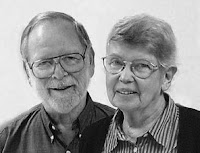
Tom and Pat Gish
The award is named for the couple who published The Mountain Eagle in Whitesburg, Kentucky, for more than 50 years. Their son and successor, Ben Gish, is on the award selection committee. He said of Garnett and the Leader-News, “It’s one thing to read national news accounts about law enforcement not moving quickly enough to save the lives of many of the victims, but it’s entirely something else to read the local newspaper’s far deeper accounts of that continuing controversy. . . . The Leader-News does not hesitate when it comes to letting family members of the victims have their say, nor does it shy away from printing the responses of those whose actions, or lack thereof, are being questioned.”

In a column shortly after the shooting, Garnett wrote that a regional police official "could not answer why it took an hour to end the attack" and quoted him: "It is a complex situation. They are measuring; they are measuring." He wrote, "The question is how much measuring is permissible, while children are being murdered. Or perhaps they were already gone. It pains to write these words of criticism about law enforcement, but parents and the community have the right to know. They must be told why police, whom parents at the scene begged to go in and save their children, failed to act. They have to know, to ever begin to heal."

He concluded, "There is a final question that no one will ever adequately answer. It came on Thursday in the form of a text message from our reporter, Kimberly Rubio, whose fourth-grader Lexi did not come home that day: 'Why would someone hurt my baby, Craig?'"

Rubio, now in the newspaper’s advertising department, praised Garnett for the paper’s family atmosphere and encouraging environment: “He is gifted in seeing a person’s potential. He is a teacher, able to guide us as we harness that potential. He believes in us, and we learn to believe in ourselves. I have the same faith in him and his writing staff.”

Garnett spent hours “sitting with families who lost children, siblings, friends; interviewing survivors, teachers and students, about their experience,” Leader-News Managing Editor Meghann Garcia said in nominating him. She said he has made a “dogged pursuit to learn how so many things went wrong that day, how every single fail-safe failed. . . . He has done all of this without a break from the office, from the work.”

In an editorial a month after the shooting, Garnett named names and was blunt: “No mass school shooting in the United States has ended with such glaring failures in both the law enforcement response and school district security. . . . Neither [school] Police Chief Pete Arredondo, acting city chief Mariano Pargas, Uvalde County Sheriff Ruben Nolasco nor any state or federal officer among the 376 responders to the scene was willing to take the helm of what was clearly a rudderless ship cast into a hurricane.”

A week later, another Garnett piece endorsing more gun control concluded: “I am not about to surrender my guns, and they are many, but I challenge you to give me one good reason (and please not the “slippery slope” argument that did not come to pass when assault weapons were banned) why a teenager should have the firepower to stand down 376 lawmen. If disturbed young men are going to commit horrific crimes with firearms, why not take the most devastating amplifier out of the mass shooting equation?”
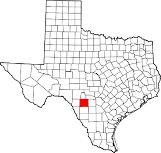
Uvalde County (Wikipedia map)
Criticism of local law enforcement and support for more gun control didn’t sit well with some people in the town of 15,000 and county of 25,000. Garnett said at a meeting of the newspaper association in Oklahoma, his native state, that by the end of the day of the shooting, “The school and police agencies that the newspaper had a good relationship with all clammed up. A year later we still can’t get answers. We have filed about 10 to 15 requests with the school district and still can’t get any answers.”

Garcia began her nomination of Garnett with the story of a call from a reader who objected to a picture of “a local pediatrician, outspoken in the shooting aftermath, at the White House, in a commanding photo with President Joe Biden and Vice President Kamala Harris.” The caller said Garnett had “better not acknowledge Biden's presidency again if he wanted to keep the caller's subscription,” Garcia wrote. “The call was mild compared to what the newspaper staff had fielded over previous weeks . . . . Craig immediately turned to his typewriter to work on a subscription refund check and your-wish-is-now-granted letter.”

Garcia continued, “It wasn't the first time our coverage, or Craig's politics, went against the grain.” Garnett had editorialized against the Iraq War, and opposed “a water pipeline that would take local water, dearly needed for agriculture, a mainstay of the area economy, and funnel it to San Antonio,” she wrote. And four years before the shooting, he opposed the idea of a separate school police force, which botched the response to the shooting. The next year, the paper a guest-written series of stories about the local Ku Klux Klan chapter of 100 years before.

“Craig has never been afraid of taking a stand or telling the news, despite how unpopular it might be with subscribers and advertisers, who are also often his friends,” Garcia wrote. And he has used his own family’s troubling experience as an example to give hope to others.

His wife, Melissa Garnett, told the Gish Award selection committee, “One of his best columns was about our son’s process of recovery from drugs and alcohol. That took courage. He must have hit all the right notes, as the response was great – he had taken the bold step of using his pain of an addicted child to remove the stigma of talking about addiction.”

The column celebrated their son’s year-plus of sobriety and concluded, “Far too many addicts today, especially those in thrall to opioids, don’t get Logan’s chance at recovery. The steps that will lead them from a world of pain and failure remain stubbornly distant and daily receding until hope is lost. We should do all we can to help them discover a path because inside every addict lives someone’s treasured child, father, husband, brother or friend.”

Garnett “and his paper have been a continuing source of strength in that community and beyond,” said selection committee member Bill Bishop, founding editor of The Daily Yonder, a national rural-news publication and a former weekly editor in Bastrop, Texas, and columnist for the Austin American-Statesman.

Garnett, who earned an economics degree from Southern Methodist University, joined the Fort Worth Star-Telegram in 1977, moved to the Kansas City Star in 1978, became general manager of the Leader-News in 1982 and owner and publisher in 1989. Under his ownership, the newspaper has won many awards.

“I am extremely honored to receive the Gish Award,” Garnett said. “And I am deeply humbled by the support from coworkers and friends in the industry who thought my work worthy of such recognition.”

The Institute for Rural Journalism (publisher of The Rural Blog) will present the Gish Award to Craig Garnett in Texas, at a time and place to be determined. UPDATE, Dec. 17: The award will be presented Feb. 29 at the University of Texas during a symposium, "Courage, Tenacity, Integrity and Innovation in Rural Journalism," sponsored by the Institute, the Texas Center for Community Journalism at Tarleton State University and The Center for Ethical Leadership in Media in the UT School of Journalism and Media.

Garnett will be recognized Oct. 26 in Lexington, Ky., at the Institute’s annual Al Smith Awards Dinner, with USA Today Washington Bureau Chief Susan Page as the keynote speaker. At that event, Ben Gish and Mountain Eagle reporter Sam Adams will receive the Al Smith Award for public service through community journalism by Kentuckians.