Showing posts with label college. Show all posts

Tuesday, January 13, 2026

Analysis: College degrees remain good investments, but universities need to foster job preparedness and creativity

On average, college graduates earn $30,000 more salary per year than
high school graduates. (Getty Images photo via The Conversation CC)
Even as more Americans believe that earning a college degree isn't worth the time and expense, research shows that college degrees still offer multiple benefits, including higher lifetime earnings and greater job security.

In her newly released book, Invent Ed, professor and global strategist, Caroline Field Levander argues that "people have lost sight of two factors that made universities great to begin with: invention and creativity," writes Amy Lieberman, an education editor, at The Conversation U.S.

Lieberman asked Levander to share her breakdown on why graduating from an American college or university still benefits degree earners throughout their lifetime. An edited version of Lieberman's Q & A with Levander is shared below.

Lieberman: How can we measure the value of a college degree?
Levander: The average high school graduate over a 40-year career earns $1.6 million, according to 2021 findings by Georgetown University. The average college graduate earns $2.8 million over this same 40-year period. That $1.2 million difference amounts to around $30,000 more salary per year.

Levander points out that U.S. college graduates tend to remain employed and replace a lost job more quickly than high school graduates. "The unemployment rate for people with a high school degree was 4.2% in 2024, according to the U.S. Bureau of Labor Statistics. By contrast, 2.5% of people with a bachelor’s degree and 2.2% of people with a master’s degree were unemployed in 2024."

Lieberman: Do any of these benefits extend beyond individual students?
Levander: Colleges and universities are major employers in their communities – and not just professors and administrators. Higher education institutions employ every trade and kind of worker.

Lieberman:
Some people are questioning the value of a degree. What role can universities play in reassuring them of their relevance?
Levander: I believe universities need to teach something else [beyond job force preparation] that is equally valuable: They also need to build creative capacity and an inventive mindset into undergraduate education, as a fundamental return on the investment in education. . . . Employers report that creativity is the top job skill needed today."

Lieberman: What can faculty and students easily do to encourage creativity and innovation?
Levander: Professors can build what I call a 'growth mindset' in the classroom by focusing on success over time, rather than the quick correct answer. . . . Students could also consider committing to trying new courses in areas where they haven’t already been successful. They could approach their college experience with the idea that grades aren’t the only marker of success.

Friday, October 04, 2024

College student voters are 'propelled by concerns that directly affect them,' such as the economy, global warming

College students working to get youth registered to
vote. (Photo by Yunuen Bonaparte, Hechinger Report)
This year's election issues have energized college student voters to weigh in on state and national issues. "Students had a decisive impact in several battleground states in 2022," reports Jon Marcus for The Hechinger Report, which covers education. "And they want to do it again."

Whereas college voters have typically had lower election turnout numbers, state and national debates over big topics have inspired more younger voters to engage. "Young people say that they’re propelled by concerns that directly affect them, such as global warming, the economy, reproductive rights," Marcus writes. "More than half of Americans ages 18 to 24 turned out for the 2020 general election."

Heated partisanship has led younger voters to get involved. College student activist Andrew LoMonte, told Marcus, "What people are realizing is that the issues the candidates are talking about actually matter to us. . . . You’d think the dysfunction would scare people off, but it’s a motivator."

The younger vote matters most in swing states where winning margins can be razor-thin. "Young voters had “a decisive impact” on Senate races in 2022 in battleground states including Wisconsin, Nevada, Georgia and Pennsylvania. . . . Sixty-six percent of college students voted in 2020, up 14 percentage points from 2016. Younger students ages 18 to 21 voted at the highest rates of all."

States with abortion-related referendums have seen big jumps in youth voting registration. "College students were widely credited last year with helping elect a liberal candidate to the Wisconsin state Supreme Court, which is due to take up two major abortion cases," Marus adds. "They have also registered and voted at high rates in several swing states."

Increases in youth voting registrations do not necessarily mean "that high youth voter turnout in November is assured. The proportion of college students who voted in the 2022 midterms was down from the record set in 2018," Marcus notes. "Not all groups of students vote in equally high numbers. . . . [In 2020] students majoring in education, social sciences, history, and agricultural and natural resources turned out at the highest rates; those in engineering and technical fields, at the lowest."

Tuesday, April 16, 2024

Eye-popping college costs vs. what students actually pay; research report looks at higher education comparisons

Brookings graph, from Department of Education data
Younger generations may be bypassing college due to its eye-popping costs, but research shows that few students pay the "listed" price. "Public discussions regarding rising college costs typically focus on the listed cost of attendance (COA), or 'sticker price.' High and rising college sticker prices are the subject of considerable attention, reports Phillip Levine for Brookings. But the sticker price isn't what families pay. "The average amount students actually pay (the 'net price') has recently stabilized and even fallen in the last few years."

Levine's research concluded that "sticker price is an increasingly poor indicator of college prices for all students, regardless of family income. . . . The growing use of merit-based aid at both public and private institutions accounts for this. At public institutions, the vast majority (79%) of those higher-income students paid the full sticker price in 1995-1996. That share dropped to 47% in 2019-2020."

While the net price for a student attending a public institution has risen, "This upward drift in net prices at public 4-year institutions indicates that they are becoming increasingly more expensive over time for students at all levels of the income distribution. The increase for higher-income families was larger in dollar terms but roughly similar in percentage terms," Levine writes. "That maximum net price is often lower than the sticker price because of the extensive use of merit awards." Net price at private institutions is "consistently higher than at public institutions."

While net prices have increased for all students across all income levels, those increases are smaller than the stated hikes in sticker prices. Levine reports, "Adjusted for inflation, net prices paid by students today at public institutions across the income distribution are similar to those they would have paid at private institutions in the mid-1990s."

Levine adds, "This analysis yields several implications for policy discussions regarding college pricing. First, the nearly universal focus on the sticker price in public discourse is detrimental to our understanding of college costs. It is the easiest measure to track, but it is a misleading statistic that a small and declining number of students pay. Even many higher-income families do not pay the full sticker price."

Thursday, September 08, 2022

Consumer finances in rural Appalachia have fallen even farther behind the rest of the nation in the last 20 years

A new report from the Consumer Financial Protection Bureau examines the financial challenges faced by residents of rural counties in Appalachia. "On average, rural Appalachians earn less than other rural people across the country and significantly less than non-rural consumers," CFPB says.

Strikingly, the income gap is growing: "While the median rural Appalachian household income was 89% of the national median in 1999, it was only 69% of the national median in 2020." 

A possible contributing factor: "The share of rural Appalachians attending at least some college lies far below the national average—53% compared to 67% nationally."

Appalachians also have far less access to high-speed internet, says the report: "Only 76% of households in rural Appalachia have access to broadband, compared to 85% of households nationally. Eighteen counties—overwhelmingly in rural areas—lag with rates below 60%."

Consumer Financial Protection Bureau map, adapted by The Rural Blog
Credit-card statistics suggest that Appalachians from the poorest rural counties, those classified as "persistent poverty counties," are less likely to qualify for a card, and that those who do have a card are less likely to be able to pay it off, even though they tend to have lower than average balances on their cards. Appalachians in persistent-poverty counties were less likely to have a credit card and carried a lower average credit card balance than other rural Appalachians, other rural non-Appalachians, or the nationwide average. But those in rural persistent-poverty counties who did have a credit card were more likely to use it than those in other groups, and were more more likely to have delinquent debt on at least one credit card.

"Rural Appalachians are more likely to have a subprime or deep subprime credit score compared to all consumers nationally and consumers in the rest of rural America, which typically leads to a higher cost of credit," the report says. "Rural Appalachians are also more likely than consumers in other parts of the country to have medical debt collections on their credit record."

Tuesday, May 10, 2022

Lincoln College, an HBCU in rural Illinois, will be the first U.S. college to close because of a ransomware attack

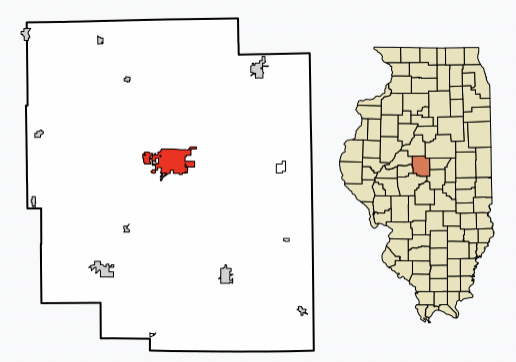
Lincoln, the seat of Logan County
(Wikipedia map)
Lincoln College
in rural Lincoln, Illinois, is set to close its doors Friday, making it the the first institution of higher learning in the U.S. to shutter because of a ransomware attack. "A goodbye note posted to the school’s website said that it survived both World Wars, the Spanish flu and the Great Depression, but was unable to handle the combination of the Covid pandemic and a severe ransomware attack in December that took months to remedy," Kevin Collier reports for NBC News.

The local economy will no doubt feel the loss of the college keenly, since staff and students make up nearly 900 of the community's more than 13,000 residents. Colleges can be a significant economic draw in general for rural towns in general.

The loss goes beyond the economic toll. Lincoln College, which broke ground on namesake Abraham Lincoln's birthday in 1865, "is one of only a handful of rural American colleges that qualify as predominantly Black institutions by the Department of Education," Collier notes. It is also the only college to be named after Lincoln while he was alive, and the town is the only one named for him before he became president; he was a lawyer for the railroad that founded it.

Ransomware attacks are an increasing threat to the security and finances of businesses, governments and schools nationwide, especially in rural areas that often lack the time, funding and expertise to fend off such attacks. Smaller schools are often especially attractive to hackers, owing to their smaller cybersecurity budget.

At least 14 colleges and universities have been hit with ransomware attacks this year. "Ransomware attacks against colleges come from a number of known, distinct cybercriminal gangs, and they don’t appear to have any particular pattern with what kind of college they target, and instead simply go after any victim where they can find a cybersecurity vulnerability," Collier reports. "Many ransomware hackers who attack American targets are based in Russia or other former Soviet countries. But even in cases where U.S. authorities know their identities, few of them have ever been arrested in conjunction with American law enforcement efforts."

Friday, June 25, 2021

Quick hits: Rural libraries could become telehealth hubs; book details Black Appalachians' coal camp experiences

Here's a roundup of stories with rural resonance; if you do or see similar work that should be shared on The Rural Blog, email heather.chapman@uky.edu.

A new book details the overlooked experience of Black Appalachians in coal camps. Read more here.

Commentary: Rural libraries could use newly available funding opportunities and technologies to become a major player in providing telehealth access. Read more here.

Many rural high-school students want to take Advanced Placement courses, which can award college credit, but school staffing, budgets, and broadband access can make that difficult. Read more here.

More states are considering and passing bills to grant overtime pay to farmworkers. Read more here.

Wednesday, March 31, 2021

Rural community college enrollment has tanked

Community college enrollment nationwide plummeted an average of 9.5 percent since last March, according to a recently published study by the National Student Clearinghouse Research Center.

"Although college enrollment decreased across the board by an average of 4.5% across all types of institutions, decreases were most pronounced for rural community colleges (-9.9%) and urban community colleges (-10.3%)," Anya Slepyan reports for The Daily Yonder. "Data also suggests that the pandemic has had a disproportionate impact on rural students. Last December, the National College Attainment Network reported that the number of rural students who filled out the FAFSA (Free Application for Federal Student Aid), an important indicator of students’ intentions to go to college, dropped by more than 18%, 2 percentage points lower than urban students."

The decline in rural enrollment is likely because the pandemic has made it more difficult for many types of students who make up a large portion of rural community colleges' enrollment. That includes high school students in dual-credit programs and students with children, Slepyan reports. The trend contrasts with the last time the economy crashed, during the Great Recession, when community-college enrollment rose by 33% from 2006 to 2011.

"In a report by the Association of Community College Trustees, Rachel Rush-Marlowe outlined several of the reasons rural students are less likely to attend college than their urban and suburban peers. These include financial barriers; household incomes in rural areas were 20% lower than those in non-rural areas prior to the Covid-19 pandemic, according to a 2017 report from the U.S. Department of Agriculture's Economic Research Service. This economic disparity has likely grown even greater over the last year, as many small rural businesses have closed and rural unemployment rates exceeded the national average," Slepyan reports. "Rural students are also more likely to be first-generation college students and are less likely to perceive a college degree as a high priority." 

Also, "attending college often is seen as a barrier to working full time, and those going to school may be seen as selfish, a burden to their families, or shirking real responsibility," Rush-Marlowe wrote in the report. And, she wrote, "going to college can also be associated with leaving the community, a decision that carries with it its own set of economic and social implications."

Wednesday, January 27, 2021

Employment rates are dropping for Americans without a college degree; they are disproportionately rural residents

Change in employment compared to same month in 2019 (Washington Post map; click on the image to enlarge it)
Though employment for all types of workers has tanked in the pandemic, jobs for college-educated workers have grown steadily since April 2019. But for non-military workers over age 25 with a high-school diploma or less (more common in rural areas), employment began dropping again in November. 

"These workers tend to be concentrated in the sort of industries that are most directly affected by government restrictions in response to Covid-19, such as eating and drinking places, construction and hotels," Alyssa Fowers reports for The Washington Post. "Such restrictions became more common over the winter. In November and December, 13 states and the District of Columbia closed or restricted nonessential businesses, according to data from the Kaiser Family Foundation. Seven states and D.C. closed indoor dining in the same time period." 

Among the three previously mentioned sectors—construction, eating and drinking, and hotels and motels—overall employment was down more than a million jobs in December 2020, compared to December 2019, Fowers reports. But even lower-education workers who kept their jobs are having a harder time than their college-educated counterparts: wages tend to start lower and stay lower, and such workers are less likely to have paid leave, health care, and other benefits.

"To assist these workers, experts point to economic measures already proposed by the Biden administration, like eviction moratoriums and increases in the minimum wage and nutrition benefits," Fowers reports. "These could help low-education workers get through the immediate crisis. But a full economic recovery for workers with a high school education or less depends on ending the global pandemic."

Pamela Loprest, an economist at the Urban Institute, told Fowers that policymakers must also fix longtime challenges lower-education workers face with measures such as raising the minimum wage, implementing paid leave laws, making education more accessible, and helping workers move where their skills are in greater demand and they can get paid more.

Thursday, November 12, 2020

Racial, ethnic disparities persist in rural education levels

Educational attainment rates for racial and ethnic minorities have improved over the past two decades, but large gaps persist for rural nonwhites. Rural Hispanics, Blacks, Native Americans and Alaska Natives were only half as likely as their white counterparts to have a bachelor's degree or higher in 2018, the most recent year of data available. That's according to a newly published study by the U.S. Department of Agriculture's Economic Research Service.

Among all rural residents 25 and older, "the percentage who had completed a bachelor’s degree or higher rose from 15% in 2000 to 20% in 2018. Conversely, the share of that population without a high school degree or equivalent dropped from 24% in 2000 to 13% in 2018," Tracey Farrigan reports. "Among racial and ethnic groups in rural America, Hispanics continued to have the highest percentage (35 percent) without a high school degree, despite significant gains in high school and higher educational attainment rates between 2000 and 2018.

Meanwhile, African Americans "had the largest decrease (20 percentage points) of rural individuals without a high school degree," Farrigan writes. "This change eliminated the gap between the shares of Blacks/African Americans and Whites who had graduated from high school but had not completed a bachelor’s degree. Nevertheless, the share of Blacks without a high school degree remained nearly double that of whites in 2018."

Thursday, October 29, 2020

Fact-checking the presidential campaigns in the final stretch

With less than a week before Election Day, both presidential campaigns are scrambling to win over undecided voters—sometimes with less-than-truthful claims. Here's our weekly fact-check round-up:

President Trump has made repeated false and misleading claims about the coronavirus pandemic. He has also responded with denials and attacks when journalists fact-checked his claims on-camera, and has told crowds at rallies that media coverage of the pandemic is meant to damage him politically and should violate election laws, Salvador Rizzo reports for The Washington Post's Fact Checker. 

Though cases are spiking across the nation, especially in rural areas, Trump insists "We're rounding the corner." He also says numbers are rising because we do more testing than other nations, but health experts say it's because the U.S. has not controlled the spread of the disease as much as most other countries, Rizzo reports. Trump has claimed that Republican-governed states such as Arizona, Florida and Texas are weathering the virus successfully, while Democrat-governed states are faring worse, partly because of more stringent shut-down orders. That's false; read the article for more details.

At an Oct. 27 rally in Omaha, Trump insinuated that the news media began reporting that coronavirus immunity only lasts four months, not for a lifetime, only after he became infected. That's false, Rizzo reports. Public-health experts are still learning how long post-infection immunity lasts. 

In Oct. 27 in remarks to reporters, Trump said counting ballots for weeks after Election Day "is totally inappropriate, and I don't believe that's by our laws." He is wrong. "Time after Election Day to count absentee ballots, overseas military ballots, and provisional ballots is enshrined in both federal and state law,"  Louis Jacobson reports for Politifact. "In fact, federal law allows states until more than a month after the election to finalize their results before the casting of electoral votes."

Democratic challenger Joe Biden misspoke twice in the past week about his plan to pay for free community college through the corporate minimum tax. The plan is iffy in the first place: several independent tax groups say the move would raise half of what the Biden campaign estimates, at most. "But on two occasions in the last week, Biden has muddied things even further by flubbing the campaign’s talking point on how much the tax would raise, and how much his higher education proposal would cost," Robert Farley reports for FactCheck.org.

In a "60 Minutes" interview on CBS Oct. 25, Biden "grossly underestimated" how much it would cost to provide free community college; his campaign later said Biden misspoke. And at an Oct. 24 rally, Biden muddled the numbers again, this time mistakenly saying that a 15% corporate minimum tax would raise $40 billion. The plan on Biden's website estimates that the move would raise $400 billion.

Trump made repeated false and misleading claims at three Oct. 26 rallies about ballots and voting fraud, including a claim that the Democratic governor of Pennsylvania is responsible for counting mail-in ballots. Under state law, county election boards investigate possible fraud, count ballots, and certify the results. The governor has no such authority, FactCheck.org reports

Politifact also has an excellent roundup of various social media memes and rumors. Click here.

Friday, July 31, 2020

Quick hits: movement seeks to increase number of young Black farmers; hope outlasts prosperity in oil-bust town

Here's a roundup of stories with rural resonance; if you do or see similar work that should be shared on The Rural Blog, email us at heather.chapman@uky.edu.

Movement seeks to increase number of young Black farmers. Read more here.

Smaller specialty flour companies are helping revitalize local economies; could other industries copy their model? Read more here.

Hope outlasts prosperity in N.D. town flattened by oil bust. Read more here.

Could pandemic make it even harder for rural students to go to college? Read more here.

The Environmental Protection Agency has canceled its paid subscription to Energy & Environment News, one of the largest publications dedicated to covering the EPA. That ends EPA employees' free access to coverage about the agency, including reporting on EPA's "union-busting" actions. Read more here.

Thursday, May 07, 2020

Retired Kansas farmer who sent Gov. Cuomo an N-95 mask granted bachelor's degree from KSU

Dennis Ruhnke (AP photo by Charlie Riedel)
They say one good turn deserves another, and that's exactly what's happening to a retired Kansas farmer who tried to do his small part to help an area hit hard by the covid-19 pandemic, Christina Walker reports for CNN.

Dennis Ruhnke, who lives near Troy, Kansas, sent an N-95 mask to New York's Gov. Andrew Cuomo in late March along with a letter asking him to pass the mask along to a nurse or doctor who could use it. Cuomo mentioned the letter during one of his daily briefings: "It's that love, that courage, that generosity of spirit that makes this country so beautiful."

Now Ruhnke has been awarded with a college degree, a goal he sought when younger but wasn't able to achieve. He was two credits shy of graduating in 1971 when his father died, but he decided to leave school to look after his mother and run the family farm, Walker reports.

Kansas Gov. Laura Kelly wrote in a Facebook post: "Dennis' kindness and lifelong career in agriculture make him more than qualified to receive a degree."

"Kelly and Kansas State University President Richard Myers presented Ruhnke with the degree Tuesday during a ceremony," Walker reports.

Thursday, March 05, 2020

New study links poor internet connections with lower grades and SAT scores for students in rural Michigan

A slow internet connection or limited access from home can put rural students behind academically, according to a newly published study from Michigan State University.

Researchers found that students in rural Michigan with no home internet access and those who depend on a cell phone for their only access had grade-point averages about half a point lower, on average, than those with fast access. Such students were also less likely to say they were planning to attend college. Students with greater home internet access tended to have better overall technology skills, and that was correlated with a higher SAT score.

The gaps existed even after the researchers controlled for income, race, ethnicity, and parental education. Though the sample size was limited to nearly 3,300 teens in 15 school districts, the results are likely applicable elsewhere in the U.S.

Wednesday, December 04, 2019

Fewer rural students apply to, or get into, medical schools

The number of students from the rural U.S. who enrolled in medical school dropped 28 percent from 2002 to 2017, according to a newly published study in Health Affairs; it's the first study to examine long-term trends in rural student enrollment in medical school.

"The findings, published Tuesday from staff at the Association of American Medical Colleges, come as the nation faces a physician shortage in rural communities," Maria Castellucci reports for Modern Healthcare. A frequently cited 2010 study from the University of Washington School of Medicine found only 11.4% of physicians practice in rural settings although 19.2% of the population lives in those areas."

The study's authors said they were interested in the trend because research shows that doctors who grew up in rural areas are more likely to practice in a rural area after medical school. So, fewer rural med students could be one reason rural areas are seeing a shortage of physicians, Castellucci reports.

"In addition to finding that the number of students from rural areas enrolled in medical school has declined, the study also found the number of applicants from a rural background dropped during the same period," Castellucci reports. "Just 2,032 people from rural areas applied to medical school in 2017, down by 18% from 2002, when 2,479 applied."

The study didn't explore the reason for the drop in applications and attendance, but co-author Scott Shipman speculated on several reasons. Fewer rural students may apply for med school because they haven't seen the diversity of medical careers that are available, they don't feel high school prepared them academically, they don't want to take on so much debt, and/or may not want to travel far from home, he told Castellucci.

Shipman said enrollment might have declined because rural students aren't as competitive as urban candidates. Though rural students applying to med schools had higher grade-point averages than urban students, they had lower average scores on the MCAT, the exam required for medical-school entry, Castellucci reports. Rural students also tended to have fewer extracurricular activities on their transcript to improve their competitiveness.

When isolated from other factors, rural residents were more likely to be accepted to medical school than urban residents. Shipman said that shows that rurality, by itself, can work in an applicant's favor, but other factors are weighing more heavily. "Shipman and his co-authors recommend several changes to increase the number of rural applicants and enrollees to medical school such as pipeline programs for high school students in rural areas to expose them to medicine as a profession early," Castellucci reports.