Showing posts with label tornadoes. Show all posts

Friday, September 05, 2025

Disaster-experienced rural towns offer a guide for successful recovery

The Greensburg, Kan., memorial quilt represents how 
residents pieced the town back together. (Yonder photo) 
While no rural community wants to become a blueprint for successful natural disaster recovery, smaller regions that have survived and rebuilt after a catastrophic event have developed adaptable plans and key insights that can help towns in similar situations.

When Greensburg, Kansas, was devastated by an EF5 tornado in May 2007, it inadvertently became a leader in recovery systems. "Greensburg has been rebuilt for a future that is energy efficient and disaster prepared. Its population of 750 souls is smaller than it was in 2007, but also younger on average than it was before the storm," reports Anne Vilen of The Daily Yonder.

Greensburg Mayor Matt Christenson has developed a clear outline of disaster recovery stages that span from the initial aftermath to decades later. He told Vilen, "The first stage is rescue and recovery, trying to minimize loss of life. Then, after that, it’s assessing the damage. . . . A couple of years in. . . you get onto permanent construction. . . . Never stay where you’re at. Always aim for better.”

Swannanoa, N.C., was battered by Hurricane Helene in 2024, but the town has rallied to rebuild, and its residents echo much of Greensburg's advice. Local leaders from Greensburg and Sawnnanoa agree that the "most important ingredient in disaster recovery is trusting, listening to, and helping neighbors connect with one another," Vilen writes.

Another insight both regions share is ensuring that residents know their vital needs, such as food, lodging, and medical care, will be addressed. Vilen reports, "It’s essential to provide the things that residents will need in order to stay and continue to be part of the recovery effort."

Residents working through disaster recovery deal with a host of unfamiliar noises and messes that can be likened to living in a construction zone. Town leaders from Swannanoa say that keeping some town traditions alive during long periods of recovery offer the community time to celebrate successes together, as well as comfort in the familiar.

Both regions emphasize that for sustained recovery to occur, towns must hire and pay people to design and execute rebuilding plans. Vilen reports, "Volunteers burn out. Long-term systems and positions that sustain effective work over time are essential for long-term recovery."

Friday, July 11, 2025

American emergency alert systems continue to face challenges in reaching everyone in harm's way

Tornado sirens are designed to warn people outside to take cover. 
 (Photo by G. Johnson, Unsplash)
Despite significant improvements in American emergency alert technology, the country often fails to broadcast warnings that reach people in time. "Federal, state and local authorities share responsibility for alerting citizens that they are in danger," report Drew FitzGerald, Josie Reich and Caitlin Ostroff of The Wall Street Journal. "But the country’s patchwork of digital and physical emergency-alert tools is often a step behind Mother Nature, with deadly consequences."

The tragic July 4th flooding, where, in Kerr County alone, there were more than 90 confirmed fatalities, offers a sobering picture of how much can go wrong. "There were repeated flash flooding warnings in Kerr County, as rain moved in and the Guadalupe River surged at the start of the July 4 weekend," the Journal reports. "Those alerts never reached some of the campers and residents who lacked cellphone service, silenced notifications or didn’t have phones with them, and outdoor sirens were considered but never built."

Texas is not alone. Human errors during the January Los Angeles wildfires caused some text alerts to be delayed, with some even sent to the wrong areas. During Maui's deadly wildfires, cellphone networks failed, leaving some residents who would have received text warnings unaware and unable to seek safety in time.

Besides Mother Nature's stealth, human error and the unpredictability of first-time disasters, what else is going wrong? "The Federal Emergency Management Agency’s internet-based alert system has made it easier for local authorities to reach residents," they write. "But industry experts say some rural officials often lack the funding, expertise or permission from state authorities to push their own alerts through broadcasters and cellphones."

Too many alerts "can cause cellphone users to shut off notifications that become bothersome or irrelevant. A menu of warnings for floods, fires, missing children and more have caused 'alert fatigue' in some areas," the Journal reports. "The FCC is working on changes that would let authorities send muted or vibrate-only notifications in less-dire situations. Those changes won’t go into effect until 2028."

Rural communities can provide ways for vulnerable senior residents to recover after natural disasters

Community support can help older adults recover from disasters. 
(Photo by Ross Harried, Getty Images via The Conversation, CC)
When extreme weather hits a rural community, elderly residents often struggle the most to recover. To help prepare for a natural disaster, smaller towns need to understand their residents' needs and capitalize on their strong community ties to overcome challenges. Lori Hunter, a sociologist who studies rural issues at the University of Colorado, offers tips on how communities can support their senior residents after the storm has passed.

Understanding your town's population makeup and preparation is key. "Rural areas have higher percentages of older adults, a group that is more likely to have chronic health problems that make experiencing natural disasters especially dangerous," Hunter explains. "Friends, family and neighbors in rural areas can help [seniors] develop disaster response plans to ensure older residents have access to medications and medical treatment and that they have an evacuation plan."

Rural communities tend to have stronger social ties that can help older residents work through recovery demands. "Those social connections can help reduce older adults’ vulnerability when disasters strike," Hunter adds. "Following severe flooding in Colorado in 2013, social connections helped older adults navigate the maze of paperwork required for disaster aid, and some even provided personal loans."

Supporting overall health for rural seniors can also mitigate a disaster's long-term impact. "Rural communities and local groups can also help build up older adults’ mental and physical health before and after storms by developing educational, social and exercise programs," Hunter writes. "Better health and social connections can improve resilience, including older adults’ ability to respond to alerts and recover after disasters."

Tuesday, April 08, 2025

Extreme rain, flooding and tornadoes hit the Midwest and South. Many swollen rivers have yet to crest.

Tornadoes tore through parts of the South and Midwest.
(Adobe Stock photo)
As storm after storm hammered the Midwest and South with torrential rain and flash floods over the weekend, thousands of Americans now face homes, businesses, roads and bridges that are destroyed or underwater. "The storm is expected to move out to sea by Tuesday, leaving behind enough fallen rain to keep rivers and streams swelling for days to come," reports Patrick J. Lyons of The New York Times.

Continuous rainfall left areas unable to manage the extreme runoff. "The area around Benton, in western Kentucky, recorded more than 15 inches of rain from Tuesday morning to Sunday afternoon, according to the National Weather Service," Lyons writes. Marlene Lenthang and Kathryn Prociv of NBC News report, "Meanwhile, in Dawson Springs, Kentucky, rising waters reached a substation, causing authorities to cut power."

Much of the damage "has been caused by floodwaters that overtopped riverbanks and levees, surged through streets and inundated the basements and ground floors of buildings," Lyons reports. "Some streams and rivers were not expected to crest for several more days. Stranded residents were rescued across the region."

The storm system spawned dozens of tornadoes, which stretched across southern Arkansas all the way into northern Indiana. Lyons writes, "There were so many reports of tornadoes that some Weather Service offices delayed confirming them. . . . At least 23 deaths had been attributed to the storm system as of Sunday evening."

Tuesday, July 16, 2024

Flooding, broken dams and Hurricane Beryl damage prompt discussions on how rural places can protect themselves

Tornadoes can rip across farmland and homes
in rural places. (Photo by N. Noonan Unsplash)
Extreme weather is often associated with flooded, wind-flattened or burned-to-the-ground homes and businesses. Rural areas have an added exposure to big losses that other areas don't have -- crops, animals and farm equipment can be damaged or annihilated during weather events.

Given those significant exposures, rural areas need to work on building or replacing support mechanisms and buckle down on wild weather preparedness, reports Chris Clayton of Progressive Farmer. "Rural America is learning the hard way that more investment is needed to protect rural infrastructure from catastrophic storms. . . . That includes Iowa, which is now coping with catastrophic damage in the northwestern part of the state following two April tornadoes that also ripped through communities." More recently, Vermont's Winooski River flooded roads, train tracks and homes after Hurricane Beryl's extreme rains filled it to bursting.

Kevin Paap, a commissioner for Blue Earth County, Minnesota, "testified at last week's U.S. Senate hearing for the National Association of Counties. Paap's county was on the national news during last month's flooding as the 100-year-old Rapidan Dam failed," Clayton explains. "Recovery is harder for small towns that don't have the funds for cost-share or even to write grants to help receive aid dollars, said Ted Brady, executive director of the Vermont League of Cities and Towns. Most towns simply don't have the professional staff to help recover quickly."

In Iowa, flooding completely submerged some crops, and other farms were ravaged by tornadoes. Government officials "rolled out a series of new disaster programs -- including a low-interest loan program for farmers -- as communities grapple with at least 2,000 destroyed homes and another 3,000 damaged," Clayton explains. "In some towns, nearly every single downtown business was wiped out, along with an estimated $130 million in damaged public infrastructure to the state."

The Federal Emergency Management Agency is changing some of its requirements to prevent extreme weather damage. "FEMA announced that public infrastructure rebuilt with FEMA money will have to be built to be more resilient from flooding," Clayton reports. "In the Senate hearing, Paap and others called for a more rapid response to help rural areas." Town mayors are calling for more financial flexibility "to ensure communities can spend disaster money in ways that will help mitigate long-term flood risks."

Tuesday, June 18, 2024

Where tornadoes develop has shifted more to the East; Southern and Midwestern states are now at greater risk.

With the right elements, tornadoes are possible
in all 50 states. (Adobe Stock photo)
Over the past 50 years, where tornadoes develop has shifted from the Great Plain's infamous "Tornado Alley" to Midwestern and Southeastern states, a new study published in the Journal of Applied Meteorology and Climatology finds. The recent research "confirms the legitimacy of this shift and highlights a change in when tornadoes are likely to occur," reports Matthew Cappucci of The Washington Post. "The results spell problems for residents of the Midwest and Southeast, where a higher population density and a greater prevalence of mobile homes lead to a more serious vulnerability to tornadoes."

Researchers don't know why tornado prevalence has shifted East, but their findings show an increased tornado risk across the South, with lower risk in the Plains. "Researchers not involved in the study said the reported trends are convincing but pointed out some limitations in the analysis," Cappucci explains. Karen Kosiba, a tornado researcher at the Center for Severe Weather Research, said "the greater population density in the Southeast compared with that in the Plains exposes it to more damage. That may be part of why twisters in Alabama and Mississippi appear to be on the ground for longer compared with their Plains counterparts."

The study confirms what many social scientists and meteorologists had feared. "The South, where tornado vulnerability is particularly high because of its dense population and concentration of mobile homes, may now be subject to an even greater risk," Cappucci reports. "It remains unclear whether this apparent eastward shift in tornado incidence is something that will reverse or become more pronounced. . . . Researchers hesitate to say what will happen next."

Victor Gensini, a leading researcher on tornado trends in the United States, "isn't persuaded that the shift is enduring," Cappucci adds. "Because twister hot spots jump around so much, Gensini and other researchers have expressed a general dislike for the term, 'Tornado Alley.'" Gensini told him: "We need to stop using tornado alley to describe a specific region. The reality is that tornadoes can occur in all 50 states on any calendar day if the ingredients are present."

Reporting on tornado protocols and resources can help your community be safer should a twister touch down

Tornadoes in Pender, Nebraska, pop. 1,100, on June 16, 2014.
(Photo by Brent Koops/NOAA, Flickr CC via SEJ)
More than 100 tornadoes touched down across the Great Plains and Midwest in April, leaving swaths of wreckage and some fatalities in their wake.

With continued severe weather still possible, journalists can help keep their communities informed on tornado protocols and what to do if a touchdown is imminent. "With preparedness, many fatalities and injuries can be prevented or minimized," reports Joseph A. Davis for the Society of Environmental Journalists. "Public awareness of how to improve safety can be made better with media coverage." The best time for journalists to ask themselves what they can do to ensure their community is ready should disaster strike is before an emergency. Below are some edited story tips from Davis:

  • What is the historical record of tornadoes in your state? What are the most recent trends? Ask researchers at local universities.
  • Does your community have Doppler radar coverage? Researchers have found "radar gaps," which leave some communities less protected.
  • Ask local meteorologists how they get their tornado information.
  • How (and how well) does the emergency notification system work in your area? Who runs it? Who cooperates? What technology platform does it use? Is it effective at warning people? Is there a big siren? How does it work in remote areas?
  • Is your community hooked into the federal Emergency Alert System? Does it have "reverse 911"? Do people know how to get alerts on their phones?
  • Do people in your community have tornado-safe shelters such as storm cellars? Do people typically have basements?
  • Does your community have mobile home parks, nursing homes, schools or daycare facilities? Talk to the managers and residents of these especially vulnerable facilities about whether/how they are prepared to handle tornado emergencies.

Weather reporting tools:

Standard tornado-preparedness advice: The Federal Emergency Management Agency, National Weather Service, and the American Red Cross provide many easy-to-use summaries of good advice on safety in tornadoes.

Thursday, November 09, 2023

Opinion: FEMA needs rescuing if it's going to give Americans the help it promises

A tornado whips across Wyoming.
(Photo by N. Noonan, Unsplash)
Eighty-five weather events costing billions of dollars have unfolded across the United States since 2020, leaving flooded, burned and wind-flattened communities in their path. Disaster-torn Americans have sought help from the Federal Emergency Management Agency, but the agency itself is such a wreck that it's failing the people who need it most, writes Samantha Montano in her opinion for The New York Times. "The help Americans receive after disasters isn't just inadequate; it's complicated to navigate and painfully slow to arrive. From the amount of time it takes to complete recovery — measured in years, not months — to the labyrinth of policies, regulations, false promises and lawsuits, the reward for surviving a disaster is being forced into a system so cruel it constitutes a second disaster."

Many survivors end up homeless or on the edge of it for years after an event, and others "continue living in their mold-filled homes," Montano says. "The emotional toll of recovery is breaking people. Researchers have found that the circumstances of disaster recovery help to explain increases in domestic violence, a range of mental health issues, worsening physical health in people with pre-existing conditions and suicide.

Paired with insurance, FEMA was designed to be a safety net, but the number of costly extreme weather events has altered that balance. "From North Carolina to California, major insurers are placing new limits on the kinds of hazards they cover — or leaving altogether. Government is far from ready to make up the difference," Motano adds. "But it needs to find a way to keep up — and get significantly more money in survivors' hands."

Right now, that assistance is not happening. "Between 2010 and 2019, for example, amid disasters that devastated communities and destroyed homes, the average amount of FEMA assistance to individuals was $3,522. This year's maximum award is $41,000, which only about 1 percent of applicants receive. Some payments arrive quickly, but others only after months of exhausting appeals."

Congress is responsible for funding FEMA to respond to emergencies, but this year, payments were stopped due to a lack of funding. There are solutions. "Broader reforms to emergency management, like passing the FEMA Independence Act to move the agency out of the Department of Homeland Security and restore it to its pre-9/11 status as an independent, cabinet-level entity, would minimize the bureaucracy it has to operate within," Montano suggests. "Creating a National Disaster Safety Board, modeled after the National Transportation Safety Board, would serve as an independent investigator of the nation's crises and be a starting point to address the federal government's failure to make effective changes after disasters."

Friday, March 17, 2023

Flora/fauna quickies: Dancing honeybees; brown widows attack black widows; bringing birds back to the farm . . .

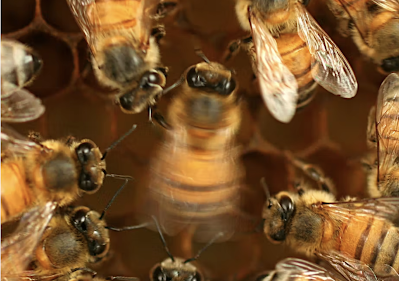
The center bee does the waggle dance. (Photo by Heather Broccard-Bell, CC BY-ND)
They've got a waggle dancer, waggle dance groupies and distance dialects. It's not a rural string band, Black Velvet line dancing, or even "Hey! . . .Ho!" by the Lumineers. It's how honeybees tell each other "where to find resources such as food, water or nest sites," reports James C. Nieh for The Conversation, a platform for journalism by academics. Nieh studied how many "waggle skills" bees are born with and how many they learn from older bees, and reports, "In addition, each colony has a 'dance floor,' or the space where bees dance, with complex terrain that the dancers may learn to better navigate over time or by following in the footsteps of older dancers."

The connection between humans and whales has been so strong that a humpback whale song was included on NASA's Golden Records, launched into space on the Voyager spacecrafts as a representation of life on earth, reports Kiley Bense of Inside Climate News. "After decades of conservation efforts to protect whales, two recent books shed light on why they're still threatened—and how we might change that. . . . Tom Mustill's book, How to Speak Whale, offers one possible means of altering whales' fate: technology."
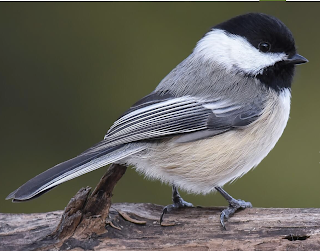
Black-capped chickadee (Photo by Scott Martin, Cornell Lab)
That's for the birds! What? Bugs. In California, the Wild Farm Alliance is working to bring birds back to the farm as natural pest control, reports Twilight Greenaway of Civil Eats. WFA Executive director Jo Ann Baumgartner told Greenaway, "There are so many beneficial things that birds do related to pest control, and different kinds of birds offer different kinds of pest control." Who are the best insectivorous birds? "Tree swallows, which are aerial foragers, meaning they're cruising around in the air and catching moths, flies, and flying insects," Greenaway shares. "There's chickadees, titmice, ash-throated flycatchers, violet-green swallows, and various kinds of wrens and nuthatches."

Mention Canada, and many people will think of mountains, beauty, Mounties, etc. One thing people don't think about is tornadoes. Canada has the second-highest number of tornadoes each year, reports Oliver Whang for The New York Times. Another surprise, Canada's tornadoes are hard to count. "Canada is vast. . . . Canadian tornadoes end up touching down in areas with no [human] witnesses. . . . The Northern Tornadoes Project in London, Ontario, has been seeking to address this. . . . Using social media and eyewitness reports, satellite imagery, drone footage and fallen trees, the group has tracked more Canadian tornadoes than ever before."

Left: Black widow spider. Right: Brown widow spider.
(Photos by Louis Coticchio, The New York Times)
Deadly, feared, found in song lyrics and old sneakers, black widow spiders have fearsome reputations. "But throughout the South, the bulbous arachnids with red hourglasses on their bellies are engaged in a lethal competition with the brown widow, a relative from abroad — and they're losing," reports Asher Albein of The New York Times. "Brown widows tend to be bold, investigating nearby webs and attacking spiders that don't resist. . . . The shy, retiring black widows generally try to escape, fighting back only as a last resort."

Found an egg in your pocket? Well, that's worth quite a bit. "For the first time in human history, the care and keeping of 11 hens all winter to receive one egg a day is now a pretty good deal," reports Eliza Blue of The Daily Yonder. "Imagine my delight then when the very next morning I arrived at the coop to discover not one, not two, but four eggs! It felt like I had won the egg lottery now that I knew how much they were worth. I complimented every single one of the hens since I couldn't be sure who had actually laid the eggs. . . . It also was a wonderful reminder that we've tipped toward spring and spring's abundance as hens increase their laying with the return of the light."

In some states, insects are not considered wildlife. They are left unprotected, and yet . . . "Bees, butterflies and beetles pollinate plants, enrich soils and provide a critical protein source for species up the food chain. The U.S. Forest Service says, 'Without pollinators, the human race and all of earth's terrestrial ecosystems would not survive,'" reports Catrin Einhorm of The New York Times. "Conservation officials in at least 12 states have their hands tied, legally speaking, when it comes to protecting insects. The creatures are simply left out of state conservation statutes, or their situation is ambiguous."

Monday, March 28, 2022

Rural Ky. paper perseveres after Dec. 10 tornado decimates town, demonstrating unique service of a local news outlet

Taylor West, the sole reporter for the Mayfield Messenger, reacts after walking into the Mayfield First United Methodist Church for the first time after the Dec. 10 tornado. (Courier Journal photo by Matt Stone)
Tessa Duvall of the Louisville Courier Journal has a profile of the sole reporter at the twice-weekly Mayfield Messenger and what it's been like for her and her colleagues to keep the newspaper going in the aftermath of a Dec. 10 tornado in her hometown in far Western Kentucky.

The disaster was a baptism by fire for Taylor Shea West, 23. This was her first full-time journalism job, and she was just finishing her second week when the tornado hit the community of 10,000. She and general manager Areia Hathcock (the paper's only other staffer) "face a herculean task: Serving as the eyes and ears of a community desperate for information and good news — even as they cope personally with the aftermath of the destruction," Duvall reports. "They were there when journalists from around the country descended . . . to put newly houseless residents on camera and captured awe-inspiring photos of the rubble. The difference is, they still remain long after other media have gone, telling the stories of a community still trying to chart its course of recovery."

The staff faced incredible difficultiesin the aftermath, especially since the newspaper's building had also been destroyed in the storm, and most of the town had no electricity, cellular, or internet service. But they knew it was important to put the paper out, both online and in print. "My main worry, and Areia’s main worry, was trying to get out what people needed," West told Duvall. "Because no one had internet or power, so our paper was all that people had."

"Their Paxton Media Group sister publications — The Paducah Sun and the local NBC affiliate, WPSD Local 6 — had to handle posting everything online," Duvall reports. Meanwhile, "For the first four issues after the storm, the Messenger, which typically prints about 3,000 copies, added an extra 2,000 and made them available for free around town. The staff wanted those issues, full of information about donation centers and where to get a hot meal, to be accessible to anyone who needed them."

In the first weeks after the tornado, West chose to focus coverage more on facts and resources for survivors and less on telling personal stories of loss. "I think me being local and native, I’ve been able to put my foot down on my work brain and be like, these are people, and a lot of the times, we forget that," West told Duvall. "If someone starts crying and breaking down during an interview, I’m fine with stopping. … No story is worth me having to push you to relive through that."

West made the right call, said Al Cross, director of the Institute for Rural Journalism and Community Issues at the University of Kentucky. Though outside news outlets often tell stories about the breadth of the devastation and the challenges that follow, the local paper "has to be more focused on service journalism, giving people the information that they need," he told Duvall. "You know, when something like that hits, a lot of the old standard business rules don't apply. Journalism is a public service business, and when something like this happens, the public service has to take priority. I think that it's good business in the long run because people appreciate it."

Friday, March 25, 2022

Tornadoes shift to Southeast, where they tend to be deadlier because of timing (night), geography and population density

Northern Illinois University map; click on it to enlarge
"Tuesday night’s deadly tornado that struck the New Orleans area is the ideal example of what experts say is the 21st century problem with twisters: Killer tornadoes have shifted a bit out of the vast emptiness of the Great Plains, more into the Southeast where there are more people to hit, poorer populations and more trees to obscure twisters from view," Seth Borenstein reports for The Associated Press. "Since 2000, nearly 89% of the 1,653 Americans killed by tornadoes — not counting this week’s victims — lived east of the Dakotas, Nebraska, Kansas, Oklahoma and Texas, according to an Associated Press analysis of National Oceanic and Atmospheric Administration data."

These tornadoes aren't necessarily more powerful than the ones that hit the Great Plains; they're just hitting more densely populated areas. Twisters in Tornado Alley, in contrast, can go for miles without hitting much, Borenstein reports.

Climate change plays a major part in why tornado frequency is shifting east to "tornado fatality alley in the Mid-South, according to a 2018 study by Victor Genseni, a Northern Illinois University meteorology professor who specializes in severe storms, and Harold Brooks, a senior scientist at NOAA’s National Severe Storms Laboratory. "What’s likely happening is that the West is getting drier because of human-caused climate change, which makes it harder for the air to become moist and unstable, which is crucial for tornado formation, they said," Borenstein reports. "The Southeast is getting warmer air, which holds more water vapor, which creates that important instability."

Southeastern tornadoes also tend to be deadlier because they're more prone to happen at night. "About three-quarters of the tornadoes that hit Oklahoma and other Great Plains states occur between 5 and 9 p.m. so people know when to expect them and its more daylight, Brooks said. But in the Southeast they can hit any time, which means more often at night than in Oklahoma, making them more dangerous," Borenstein reports. "Another reason they happen more at night in the Southeast is because they happen more in the springtime and there are just fewer daylight hours, Gensini said. Spring storms are juicier and stronger than summer ones so they don’t need the sun’s daytime heat to add that extra kick of energy to spur tornadoes, he said."

The Southeast also has more trees, hills, and buildings that can block people's sight lines and keep them from seeing a twister coming; that can make them less likely to heed a tornado warning, Borenstein reports. But, "The one advantage tornadoes in the Southeast have is that they are easier for meteorologists to forecast the conditions ripe for bad outbreaks much earlier."

Friday, January 07, 2022

Quick hits: Get used to winter tornadoes; U.S. beats Canada in first trade case under USMCA, over dairy subsidies . . .

Here's a roundup of stories with rural resonance; if you do or see similar work that should be shared on The Rural Blog, email heather.chapman@uky.edu.

An international trade dispute panel ruled for the United States in a conflict over Canada's dairy import limits, the first trade dispute brought under the United States-Mexico-Canada Agreement. The panel agreed with the U.S. that Canada isn't meeting its commitments under the treaty because it set up tariff-rate quotas for dairy products in such a way that only helped Canadian processors. Read more here.

A study says winter tornadoes are going to become more frequent and more powerful. Read more here.

Women in rural areas are less likely to be treated for certain cancers, a study shows. Read more here.

Climate change is making it harder to provide clean drinking water in farm country. Read more here.

The Rural Health Information Hub will host a free webinar Thursday, Jan. 13, to discuss a newly expanded program that allows rural medical providers to qualify for loan repayment. Read more here.

Climate change is a big factor in the increasingly large and deadly wildfires, but a century of poor forest-management policies didn't help. Government and non-profit organizations have been studying fire behavior to improve such policies, and they have some recommendations. Read more here.

A growing movement of LGBTQ+ farmers is working to build community and support in rural spaces. Read more here.

Thursday, December 16, 2021

Western Kentucky radio station keeps locals informed, helps community heal after last week's deadly tornadoes

WPKY station owner Beth Mann helps keep Princeton locals informed in the aftermath of last week's deadly storms. (Poynter Institute photo by Al Tompkins)

When deadly tornadoes ripped through Western Kentucky last week, local newsrooms were lauded for their coverage. And as nationwide media begins trickling out, local news is still here to keep people informed and help the community heal. 

In Princeton, a community of 6,329 and the seat of Caldwell County, locals rely on WPKY-AM for updates and more, Princeton native Al Tompkins reports for the Poynter Institute for Media Studies. When morning host Tess Cowan emerged from the storm shelter after the tornado had passed, her first thought was to get to the station and begin broadcasting.

Princeton in Caldwell County (Wikipedia)
Station owner Beth Mann said the station plays a vital role in Princeton and nearby towns. "When everyone else is gone, we are still here," she told Tompkins. "We are community stewards. It is our job to connect the dots for people, to help them find the help they will need. And we will be key to building back the economic base of this town. It will be more important than ever for us to stress that we all have to support our local businesses."

And as Cowan noted, their drive to serve their community is about more than professional responsibility. "This is home and these are my neighbors that I am talking to," she told Tompkins. "Two people who work for the station lost their homes."

Tuesday, June 15, 2021

Why it's so hard to predict tornadoes

The ingredients for Tornado Alley (Wikipedia map by Dan Craggs)
Tornadoes
are notoriously difficult to predict and people often get warnings only minutes in advance, especially those in rural areas who tend to be less-covered by weather radars.

"As of 2011, the average lead time for tornado warnings was just around 13 minutes. But as The Washington Post has reported, lead times have been getting worse in recent years, dropping to 8.4 minutes between 2012 and 2020. Some people have even less warning," Brian Resnik reports for Vox. When tornado warnings do come, an actual twister may not follow. The vast majority of tornado warnings issued by the National Weather Service prove to be false alarms; in some years, the false alarm rate can be as high as 70 to 80 percent. Tornado forecasting hasn’t improved much since the 2011 tornado disaster in Joplin, Missouri, killed 162 people."

One big problem is that tornadoes are harder for scientists to observe than other natural phenomena such as hurricanes: They're so short-lived and often so violent that it's difficult to gather data about them. They may disperse before scientists can drop instruments in the area, and tornadoes often destroy scientific equipment. Click here for an in-depth explainer (including a video) of how tornadoes form and why it's so difficult to predict them.

Thursday, April 23, 2020

Pandemic complicates disaster-response tactics

After a rash of tornadoes killed dozens in the South this week, "officials from Texas to South Carolina were left to grapple with an urgent question: How do we respond to natural disasters during a pandemic without exposing even more people to a deadly virus?" Tara Law reports for Time.

Mississippi Gov. Tate Reeves acknowledged the conundrum: "The fact that the coronavirus exists is complicating the recovery from the tornado, while the tornadoes are complicating our efforts to make sure that we do everything in our power to stop the spread of the virus."

Many emergency management services were already under-supplied before the pandemic; finding enough supplies now to respond to natural disasters could be difficult, said Samantha Montano, an assistant professor of emergency management and disaster science at the University of Nebraska, Omaha. Another problem, she told Law, is that disaster-response efforts often require people to violate social-distancing protocols, actions that can further spread the virus.

The virus is affecting other disaster responses. Federal and state officials are trying to figure out how to fight wildfires. "With the 2020 fire season poised to be severe, numerous questions remain unanswered about how large crews of firefighters will move around the country when some states require quarantines, and how firefighters will be housed when fighting large blazes," Bobby Magill reports for Bloomberg Law.

Firefighters are often housed in camps of more than 1,000 when fighting big fires, but officials aren't sure how to test or quarantine those units if a firefighter falls ill with covid-19. However, it's clear that traditional firefighting strategies will need adjustment. "Plans for how federal and state agencies will fight fires amid the pandemic are scheduled to be finalized by the end of April, according to an April 9 National Multi-Agency Coordinating Group memo," Magill reports. "The group coordinates wildfire fighting strategy among Interior Department agencies, the U.S. Forest Service, the Federal Emergency Management Agency and members of the National Association of State Foresters."

Tuesday, September 10, 2019

Signups for farm disaster aid begin Wednesday

Starting Wednesday, farmers hit by natural disasters in 2018 or this year will be able to sign up for aid at their local U.S. Department of Agriculture offices, as long as they live in counties where a disaster was declared. The aid is being offered under the Wildfire and Hurricane Indemnity Program Plus, and covers damage caused by hurricanes, floods, tornadoes, snowstorms, and wildfires (as well as typhoons and volcanoes), Chris Clayton reports for DTN/The Progressive Farmer. WHIP+ will pay a maximum of $125,000 per individual per year, but the limit could increase to $250,000 if at least 75 percent of a farmer's income is from farm production.

"The WHIP+ focuses only on crops and does not include livestock losses. The program will provide aid for production losses and cover from 75% to 95% of losses, depending on crop insurance coverage or Noninsured Crop Disaster Assistance policies," Clayton reports. "Farmers who did not insure crops will receive 70% of the expected value of the crop."

The program also covers prevented planting for some uninsured farmers. It will also compensate losses of crops or hay stored on farms under the On-Farm Storage Loss Program. Heavy flooding and snowstorms destroyed some of the crops farmers had stored on their land this spring; many farmers stored their crops (especially soybeans) after they couldn't sell last year because of the trade war. 

The WHIP+ aid is in addition to the $3 billion for livestock and crops allocated in the disaster-aid bill passed in June, but there are some caveats to the new aid because of the overlap. "Farmers who were affected by 2018 disasters, such as hurricanes Florence and Michael, as well as California wildfires, will be eligible for 100% of their payments," Clayton reports. "Yet, WHIP+ payments for 2019 disasters will be limited to an initial 50% of their value with the possibility of receiving the other 50% of their payments after Jan. 1, 2020, 'if sufficient funding remains,' USDA stated."

USDA Farm Service Agency Administrator Richard Fordyce said they limited that reimbursement to 50% in case more disasters happen later this year. "The 50% for 2019 just allows us to manage the funds' availability of the program. We don't know what's yet to come," Fordyce told Clayton.

Thursday, October 18, 2018

Parts of the Southeast are in a new 'Tornado Alley'

Northern Illinois University map
Everyone knows about Tornado Alley, the area stretching from Minnesota to Texas where such storms are most frequent. But a new study shows that tornado activity over the past 40 years has decreased in Tornado Alley and increased in the Midwest and Southeast, giving rise to hotbeds dubbed Dixie Alley, Hoosier Alley and Carolina Alley.

"Although Tornado Alley still remains the top U.S. area for tornadoes, areas to the east are catching up, based on data from 1979 to 2017. That includes portions of Mississippi, Alabama, Arkansas, Missouri, Illinois, Indiana, Tennessee and Kentucky," Doyle Rice reports for USA Today.

Those areas are feeling the financial pain of increased storms: "Severe thunderstorms accompanied by tornadoes, hail and damaging winds cause an average of $5.4 billion of damage each year across the United States, and 10 billion-dollar events are no longer uncommon," according to the Northern Illinois University study, which was just published in the journal Climate and Atmospheric Science. The human toll is considerable too. An average of 40 people in the Southeast die each year from tornadoes, Rice reports. More than 70 people nationwide are killed on average from tornadoes, about 10 in Texas, Oklahoma and Kansas.

The study predicted that tornado activity will increase, and that a swath of the Mid-South, with Memphis in the center, has the greatest potential for increased tornadoes by the end of the century.

Friday, May 05, 2017

Rural Kansas town devastated by 2007 tornado has come together as a community to survive

Greensburg, Kan. (Best Places map)
Ten years after an EF-5 tornado turned homes in rural Greensburg, Kan. to dust, killing 13 people in the area, the town and region has managed to survive, largely by coming together as a community, Roy Wenzl reports for The Wichita Eagle. The town, which had between 1,400 to 1,500 residents at the time of the tornado, which struck May 4, 2007, now has between 800 to 900.

After the tornado, the town no longer had "a grade school, a high school, a City Hall, a hospital, a water tower, a fire station, a business district or a main street," Wenzl notes, referring to an Eagle story from 2007. "We also could have said there were no longer dentists, doctor’s offices, eye doctors, car repair shops and all other things a small town needs to keep from dying. Greensburg could easily have become only a memory and not a town."

Darin Headrick, who was superintendent of schools at the time of the tornado, told Wenzl, “The tornado opened all our eyes. People were living scattered everywhere; no one was living in Greensburg anymore. We’d all lost everything, but what we all found that we missed the most were friendships, neighborhoods, the daily interactions. We realized we’d lost relationships." Headrick said one of the keys to rebuilding was to ensure that the town had schools rebuilt inside city limits by the time the fall semester began on Aug. 15.

Marvin Lawson in what used to be his home
in Greensburg, Kan. in May 2007 (Eagle photo)
To do that, Headrick and Greensburg High School principal Randy Fulton "built relationships—with displaced students, with parents," Wenzl writes. Headrick told Wenzl, “We got back 96 percent of the high school students, 50 percent of the grade school kids.” Headrick said they didn’t just replace the school, "they built with future school consolidation in mind, hoping to attract children from neighboring towns such as Haviland and Mullinville."

Headrick "forged new relationships with people from Mullinville and Haviland. People from those towns had raced to help Greensburg, he said. Now he tried to help them. That laid the groundwork for when school consolidation happened after the tornado. But he knew Greensburg needed to give up something to get cooperation. So that meant telling Greensburg residents they had to give up some of their decades-long identity."

That meant giving up school colors and mascots to make sure students from other schools weren't being forced to accept the Greensburg High School identity, Wenzl writes. So Greensburg High School became Kiowa County High School, the Greensburg Rangers were now the Kiowa County Mavericks and the colors went from red and blue to burnt-orange and white.

Thursday, January 22, 2015

County-level maps detail all federally declared disasters from 1964-2014

Disasters are more likely to occur in California and Oklahoma, but no U.S. county is immune to them, according to county-level data of disasters declared by the Federal Emergency Management Agency from 1964-2014, Christopher Ingraham reports for The Washington Post. (Post map: to view county-level data, click here)
The map above details disasters in which a state governor requests a federal disaster declaration applying to one or more counties and the president approves it following review, Ingraham writes. Disasters consist of: Severe storm, flood, hurricane, snow, fire, ice tornado, drought, coastal storm, freeze, typhoon, earthquake, volcano, fish kill, tsunami, mudslide, chemicals, toxic waste, human-caused, terrorism and dam break. Severe storms, fire and flood are the most commonly declared disasters. (Federally declared severe storm disasters from 1964-2014)
Los Angeles County, California, has had the most declared disasters since 1964, at 53, Ingraham writes. San Bernadino County, California, has had 45, followed by Riverside County, California (44), Oklahoma County, Oklahoma (39), San Diego County, California (36), McClain County, Oklahoma (35), Essex County, Massachusetts (34), Ventura County, California (34), Collier County, Florida (34) and Delaware County, New York (33).

Monday, November 25, 2013

Feds: Standards for construction, communications, shelter needed for protection from tornadoes

Federal officials say national standards for building construction, storm shelters and emergency communications would decrease tornado-related deaths and damage, Greenwire reports.

According to the National Institute of Standards and Technology, 135 of 161 deaths caused by the 2011 tornado that hit Joplin, Mo., resulted from building failures. The tornado damaged more than 8,000 homes and buildings, and "People died in commercial, retail and residential structures due to lack of emergency shelters and basements," Kevin Murphy reports for Reuters. 

Model building codes used in many states protect homes and public buildings from hurricanes, floods and earthquakes—but not from tornadoes, because of their extraordinary wind speeds, Murphy writes. "Officials recommended 16 code and regulation changes that could be implemented on the federal, state and local levels," Greenwire reports.

"The time is right to develop and implement codes and standards that better protect our citizens and help communities recover more quickly from these powerful, but not invincible, natural forces," said Eric Letvin, director of disaster and failure studies at NIST. Letvin approximated that the upgrades required to make building more tornado-resistant would add between 5 and 15 percent to the cost of a new home—and more for a commercial structure, Murphy reports.

"The release of the agency's reports comes in the wake of tornadoes that have hit the Midwest this week, causing $1 billion in damage and killing eight people," Greenwire reports (subscription required).