A digest of events, trends, issues, ideas and journalism from and about rural America, by the Institute for Rural Journalism, based at the University of Kentucky. Links may expire, require subscription or go behind pay walls. Please send news and knowledge you think would be useful to benjy.hamm@uky.edu.
Friday, September 12, 2025
Scientists 'drill, baby, drill,' and find freshwater deep beneath the ocean floor off the North Atlantic coast
Fast forward to this summer, when researchers were following up on the past discovery. "A first-of-its-kind global research expedition [is] drilling for fresh water under the salt water off Cape Cod," AP reports. Researchers pulled thousands of water samples from what is now "thought to be a massive, hidden aquifer stretching from New Jersey as far north as Maine."
Do these freshwater troves exist in coastal areas around the globe? Scientists agree that it's likely that the aquifers exist in shallow salt waters around the world. Even so, the "secret fresh water" comes with a litany of challenges, from how to get it to the surface without harming surrounding marine life to questions about who owns it.
As data centers and record heat in some areas rapidly slurp up fresh water, researchers and world leaders are motivated to finance a different kind of drilling. AP reports, "No one globally had drilled systematically into the seabed on a mission to find freshwater."
Under-ocean water samples are being analyzed to discover where they came from, how old they are and what microorganisms thrive in water hidden under the ocean. The discovery and sampling are so dramatic that some scientists are ecstatic. Geophysicist Rob Evans, whose 2015 expedition helped point the way, told AP, “There’s a ton of excitement that finally they’ve got samples.”
Friday, February 07, 2025
Beachcombers find their treasure in washed-up items from the sea. Items include rubber ducks and diamond rings.
| Man looks out over the shoreline. (Unsplash photo) |
Beachcombing for the majority of his life, “[Anderson] has curated 46 years’ of pickings in John’s Beachcombing Museum, a two-level warehouse on his Forks property (open summers only) that memorializes a family pastime he has taken to the extreme,” reports Elliott Almond at The Seattle Times.
Every time a ship goes down or a container goes overboard, its contents have to end up somewhere. Many things lost at sea eventually make their way to the Pacific coastline, carried by currents and in this case the North Pacific subtropical gyre, which according to Almond, is a vast circular system of ocean currents.
“The sandy, rocky outposts are a beachcomber’s paradise because the marine mosaic creates a natural seine to trap whatever happens to float past,” Almond said.
Some of the items spilled at sea include 28,800 bath toys and rubber ducks, 34,000 ice hockey gloves and 61,000 pairs of Nikes. Beachcombers found some of these items, as well as six diamond rings found by kids on a school trip, an 1896 silver dollar, the center spinner cone from a Boeing 747 jet engine, and remnants from tsunamis that hit Japan.
Deacon Ritterbush, who authored a book about beachcombing, told Almond, “It [beachcombing] is a portal to everything wonderful in life… It costs nothing, and you wear junk clothes. You’re just slopping it in nature.”
Beachcombing Washington’s 2,337 mile coastline isn’t always fun and games. Almond reports that Anderson has sustained multiple injuries trekking to and from the coast with his pack of treasures.
Anderson told Almond, “People always ask, ‘How many miles do you walk?’... I don’t count miles. I count two rebuilt ankles, two new hips and a back surgery.”
Friday, November 22, 2024
The U.S. is developing wave energy, and its success could help remote areas with no access to electricity
![]() |
| Waves could be a constant source of clean energy. (Photo by Todd Diemer, Unsplash) |
In the simplest of terms, waves are energy moving through water. Given their existence as flowing energy, it's surprising that up until the past two decades, waves were untapped as a possible U.S. electricity source.
"At a moment when large offshore wind projects are encountering public resistance, a nascent ocean industry is showing promise: wave energy," reports Sarah Raza of The Washington Post. Off the coast of Newport, Oregon, "a $100 million effort with funding from the Energy Department aims to convert the power of waves into energy. . . . PacWave, a project of Oregon State University, represents a necessary step for commercializing wave energy."
Located about seven miles from shore, PacWave's site spans 2.65 square miles of ocean, where most testing is done underwater and unseen by Newport's residents. Raza explains, "Subsea connectors are waiting to be plugged in like extension cords to wave energy converters. . . . With deep-sea offshore testing, companies will see how much power these energy converters can produce, whether they can hold up in rough ocean conditions, what environmental impacts they might have and how the devices will interact with each other."
Once the technology undergoes more experimentation and decision-making by scientists, its potential success could be a "game-changer." Raza writes, "There’s enough energy in the waves off America’s coasts to power one-third of all the nation’s homes, said Matthew Grosso, the Energy Department’s director of the water power technologies office."
Wave energy could be particularly appealing for rural areas with high energy costs and little to no access to electricity. "In small, remote communities that depend on more expensive diesel fuel, wave power could ease energy woes," Raza reports. PacWave Director Dan Helli told Raza, "There are remote communities in Alaska where everyone is running on diesel generators, they’re not on the grid, they have no electrical system."
Friday, October 04, 2024
Simply adding ground limestone to rivers and oceans could decrease global warming, but the challenges are many
![]() |
Rivers naturally deliver carbon to the ocean, preventing it from entering the atmosphere. (CarbonRun graphic) |
Oceans already play a big part in removing carbon dioxide from the atmosphere. "By speeding up that process, scientists believe even more carbon could be packed into those watery depths," the Times reports. "One idea is known as alkalinity enhancement, which involves adding limestone, magnesium oxide or another alkaline substance to rivers and oceans, changing their chemistry in a way that makes them soak up more carbon dioxide."
The company, CarbonRun, is putting the new science to the test, with its first limestone silo under construction in Nova Scotia. Later this year, "the machine will grind up limestone inside a tall green silo and release the powder into the nearby West River Pictou, creating a chalky plume that should dissolve within minutes," Plumer and Zhong explain. With the addition of powdered limestone, the water will do the rest. "Scientists estimate that similar methods deployed in oceans could remove billions of tons per year."
Despite its promise, the technology faces challenges from nature and unanswered questions. While dumping ground limestone in a river may be successful, full-scale drops into oceans would be more complex and require massive amounts of ground limestone. The Times reports, "toying with ocean chemistry also carries unknown risks. Some environmental groups worry that even early experiments with these techniques could threaten fish and other aquatic life."
To mitigate environmental pushback, CarbonRun’s founders are "proving that adding limestone to rivers doesn’t just take carbon out of the air — it can also safely benefit local ecosystems," Plumer and Zhong add. "It’s relatively straightforward for CarbonRun to show that adding limestone to rivers converts some carbon dioxide into a stable bicarbonate. . . .The harder part is mining and moving the limestone cheaply."
Tuesday, May 28, 2024
Flora & Fauna: Considering Waygu cattle; bot swims like a fish; maple syrup debates
![]() |
| Mallie Shuster checks on his Wagyu cow-calf herd. (Eleven Oaks Farm photo via Lancaster Farming) |
The cinnamon in morning oatmeal, rolls and any number of baked treats is not true cinnamon. Instead, most cinnamon on U.S. grocery store shelves comes from a cheaper source -- the cassia tree. "Ceylon cinnamon is often called 'true' cinnamon and is native to Sri Lanka. Today, some 80% of Ceylon cinnamon is produced on the island," reports Olivia Peluso of Ambrook Research. "Cassia [cinnamon] is a ground, reddish-brown powder with a strong, spicy-sweet flavor. . . . While the Food and Drug Administration acknowledges them as distinct substances, it doesn't require they be packaged as such."
![]() |
| This clownfish bot looks and swims like a fish as it collects water research. (Aquaai photo via CNN) |
The world's water sources face so many stresses from climate change, multiple pollutants and urbanization that they can't rebalance their ecosystems. Water research offers a path to explore how humans can help these precious resources recover. The technology company Aquaai has developed a fishlike drone to "collect data from underwater environments," reports Amy Gunia of CNN. "Powered by batteries, they are designed to look and swim like fish, with a body and tail that swish from side-to-side as they cruise through the water. With their orange, white, and black neoprene skin, they resemble the clownfish star Nemo."
While Quebec dominates the global maple syrup market, determining which region makes the best-tasting syrup is a stickier dispute with Vermont. "Vermont is about 9,600 square miles and boasts more than six million sugar maple and red maple trees on tap. Quebec is a 595,000-square-mile province. . . hosts a maple syrup cartel. Its 50 million syrup-producing maple trees yield around 72% of the world's supply," reports Vipal Monga of The Wall Street Journal. "Without much argument, Quebec is known as the Saudi Arabia of maple syrup. Vermonter Pat Leclaire isn't particularly impressed. . ."
![]() |
| Tomatoes and pumpkins are packed with nutrition. (Adobe Stock photo) |
Pumpkin: "Pumpkin is rich in beta-carotene, which is also a carotenoid (plant pigment). It gets converted into vitamin A in the body and is used in the production of antibodies that fight infection. It's also needed to maintain the integrity of cells in eyes, skin, lungs and the gut."
Mushrooms and oats also top Collins's list. Click here to learn what benefits fungi and oats have to offer.
Thursday, November 30, 2023
Nature bits 'n bites: Unearthly fish; plant memories; forest tardigrades; gray wolves return; a very hungry beetle
![]() |
| (Photo by Dante Fenolio, Science Photo Library via Hakai) |
Plants aren't normally considered "learners," but maybe they should be. "In the study of the plant kingdom, a slow revolution is under way. Scientists are beginning to understand that plants have abilities, previously unnoticed and unimagined, that we've only ever associated with animals. In their own ways, plants can see, smell, feel, hear, and know where they are in the world," reports Sarah Laskow for Atlas Obscura. "Of the possible plant talents that have gone under-recognized, memory is one of the most intriguing."
Do dairy calves need more love to keep them from unhealthy oral habits? A new Florida study suggests that more pets can keep young calves happier and less likely to chew on everything out of boredom or frustration, reports Shea Swenson for Ambrook Research. "The presence of somebody scratching and having some contact with them reduced the duration of those pen-directed sucking behaviors, particularly for the individual housed calves."
![]() |
| Tardigrades are part of a forest's dynamic life forms. (Photo by Oliver Meckes and Nicole Ottowa, Nat Geo) |
Next month, Colorado will begin its planned reintroduction of gray wolves, with the release of about 50 wolves captured in Oregon, reports Trevor Hughes of USA Today. "The exact [release] locations will be kept secret, but the wolves will generally be released on state or private land in a rural area of west-central Colorado. . . . Backers of Colorado's reintroduction plan say that wolves are a natural and important part of the ecosystem. . . . They argue that safety concerns are wildly overblown, and that ranchers and farmers who lose livestock will be fairly compensated by taxpayers. . . . But farmers and ranchers consider wolves a dangerous threat to wildlife and stock alike."
![]() |
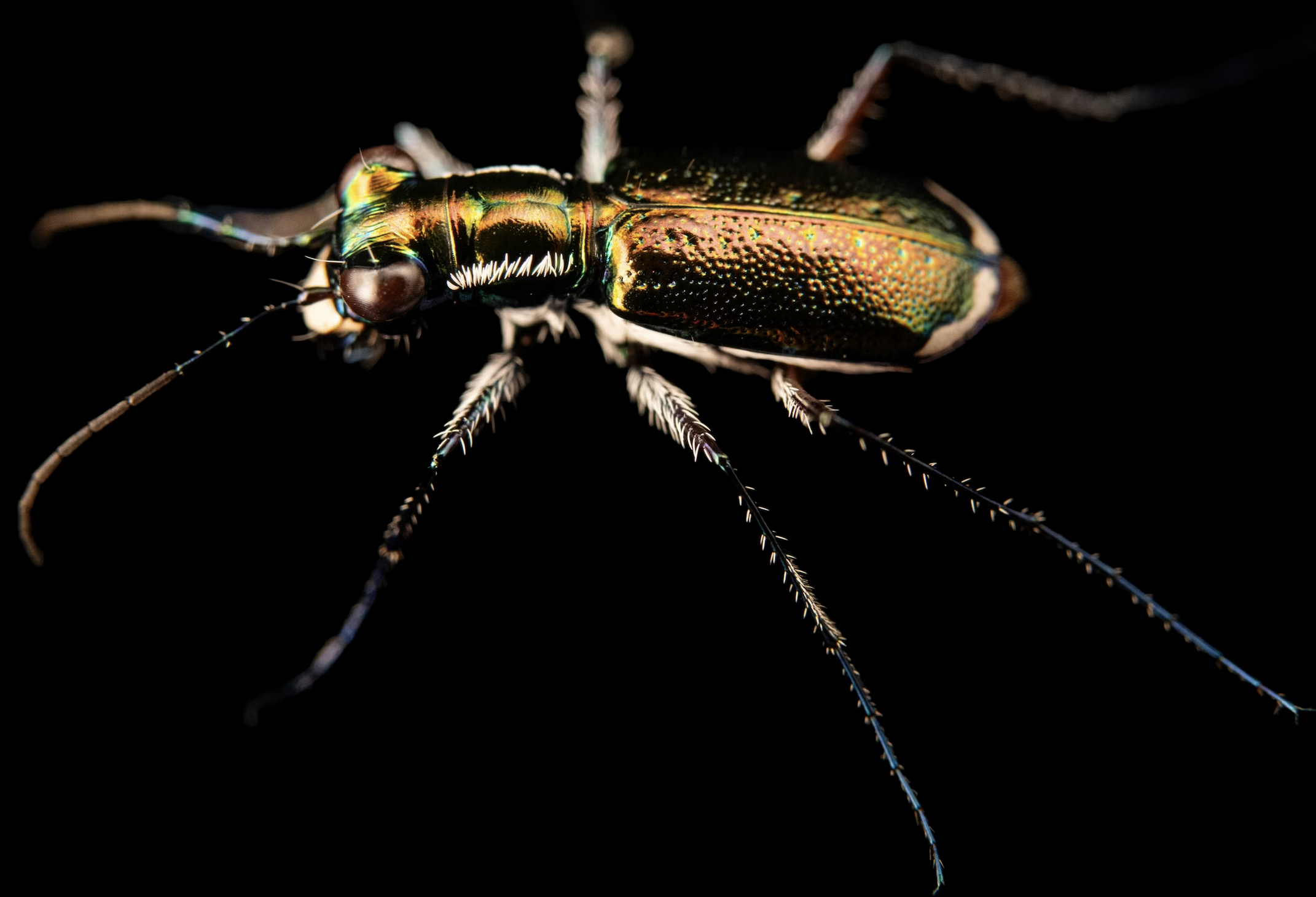
| The Miami tiger beetle has 'big, serrated mandibles.' (Photo by Joel Sartore, National Geographic, Photo Ark) |
Tuesday, November 21, 2023
The Earth is getting saltier, which threatens freshwater supplies, a new study shows
![]() |
| On icy roads, avoiding rock-salt helps keep fresh water safe. Wisconsin is experimenting with cheese brine. (Illustration via Modern Farmer ) |
Among their findings, "Researchers in Maryland and four other states found that 2.5 billion acres of soil around the world have gotten saltier, an area roughly the size of the entire United States, and it’s stressing out plants," Yoder explains. "Salt is even getting kicked up into the air: In arid regions, 'lakes are drying up and sending plumes of saline dust into the atmosphere,' such as the Aral Sea in Central Asia," the study says.
While all living things on Earth require water, more than 100,000 species, including humans, need fresh water. Yoder reports, "Salt pollution presents an 'existential threat to our freshwater supplies,' according to the study. It can corrode drinking water pipes, exacerbating lead pollution in water supplies, as it did in Flint, Michigan. Salinization has been supercharged by a host of factors: irrigation, deicing roads, mining, wastewater treatment, and even the use of salt-laden household items like detergent. . . . . Researchers found so much of it, they worried that salt could cause 'serious or irreversible damage across Earth systems.'"
Water sources along the coast face unique threats. "Sea-level rise can send salty ocean waters into the groundwater, making it undrinkable," Yoder reports. "It only takes 2 or 3 percent seawater to make the groundwater undrinkable, and removing salt from water is difficult and expensive."
Western states that rely on snowpack melt for fresh water can face problems from saline dust. Yoder notes, "Since salt can alter the freezing temperature of water, this salt-rich dust could accelerate snowmelt."
Road salt does the most harm. "That salt helps make roads less icy, but it eventually runs off and contaminates streams and drinking water," Yoder writes. "There are methods available to lessen the environmental impact while helping prevent cars from skidding across roads. . . . Wisconsin, playing to character, has incorporated cheese brine, preferably from provolone and mozzarella, into its efforts to deice roads with less salt."
Friday, November 03, 2023
Finally Friday quick hits: Top rural restaurants, the 70-ingredient sandwich; farmer side hustles, Snoopy therapy
![]() |
| Amano’s in Caldwell, Idaho. L.A. Birria Tacos, left, (braised beef & quesillo); right: Chef Salvador Alamilla |
To help fill in money gaps, many farmers find creative ways to bring in additional income. "Many turn to the online resale market to buy items for cheaper prices or a place to sell quality items for extra money when economic times are uncertain," reports Marion Kirkpatrick of RFD-TV News, which covers rural America. "While it takes hard work and dedication to pick up this 'side hustle,' it can be a great outlet for farmers and rural Americans to help make ends meet." Here are six things farmers can sell online.
While research into beef consumption isn't always encouraging for meat eaters, it can be good to stay informed on what science is telling us now. Even if we're still going to have steak tonight.
![]() |
| Illustration by TCD, Prod.DB, Alamy via The Atlantic |
If you're overwhelmed by extreme weather, war, corruption, elections and life in general, reading Snoopy can help, advises Elise Hannum of The Atlantic. "Snoopy can’t help but feel overwhelmed in a tumultuous world. Sound familiar?"
As the world’s beaches and oceans have become one giant ashtray, research has accelerated on what many are calling a global crisis: cigarette butts, reports Jude Isabella of Hakai magazine. "Researchers have published a number of studies in 2023 on the problem of cigarette butt littering, from a review of studies on environmental contamination to a global analysis of the crisis. In fact, the number of studies is on the rise, with researchers publishing twice as many in 2022 compared with 2021."
![]() |
| Yes, it’s back. It always comes back. (McDonald's photo) |
Wednesday, September 20, 2023
Flora and fauna: Terrier sniffs out turtles; mow less and pick more flowers; vultures threaten livestock; snap-pea science
![]() |
Dory searches a leatherback nesting site for the exact location of eggs. (Walt Disney World Resort courtesy photo via National Geographic) |
One terrier can sniff out turtles in a single bound. She "identified 560 sea turtle nests from three species," reports Elizabeth Ann Brown of National Geographic. Named "Dory," this pup's success rate is considered "shocking. . . and could be a game changer." Dory has joined the ranks of "'conservation sniffers' who help scientists get a more complete picture of sea turtle nesting habits."
Did you know that the snap pea was invented? "You'd be forgiven for thinking that sugar snap peas have occurred naturally forever," reports Korsha Wilson of Saveur. "But this specific breed was invented by Dr. Lamborn in 1979, after years of trying to create a commercially viable snow pea with a smoother, straighter pod."
![]() |
| Wildflowers attract insects and butterflies. (Courtesy photo, Natalie Gilliard via The Washington Post) |
Over the past few decades, the eastern monarch population "has dropped precipitously." What were once vast butterfly flocks have dwindled -- "at least somewhat connected to the loss of milkweed plants, where the butterflies lay their eggs," reports Ethan Freedman of Ambrook Research. "The benefits of new habitats planted near agricultural fields might outweigh the risk of pesticide exposure in monarch butterflies — but don't assume that's true for all insects."
![]() |
| Scarabaeus viette (Wikipedia) |
![]() |
| Black vultures will kill and eat newborn livestock. (Photo by Noppadol Paothong, Mo. Dept. of Conservation) |
Monday, September 11, 2023
Scourge of invasive plants and animals is an 'extinction event on par with the asteroid that killed the dinosaurs'
![]() |
| Brown tree snakes were accidentally introduced in Guam. It ate many native birds into extinction. (Photo by David Clode, Unsplash) |
Continental globe-trotting "is one of the main causes of Earth's ongoing biodiversity crisis, an extinction event on par with the asteroid that killed the dinosaurs," Grandoni explains. Invasive species are playing a role in 60 percent of extinctions, according to the report, which was created by the Intergovernmental Science-Policy Platform on Biodiversity and Ecosystem Services, a body made up of more than 140 countries that provide policymakers with scientific assessments to help protect Earth's biodiversity and prevent extinctions. AnÃbal Pauchard, a professor at the University of Concepción in Chile who co-chaired the group behind the report, told Grandoni: "It's normal that species move. It's not normal that a species crosses the Atlantic. . . . Not normal that it goes from Australia to Chile."
The report names the black rat as "most widespread invasive animal, which spread by stowing away on ships and scurried its way not only into dense cities but onto far-flung islands as well, where it has decimated ground-nesting seabirds and other animals," Gradoni reports. "The impact of land-dwelling rats on islands is so profound that even nearby reef fish can feel it after the rodents alter the flow of nutrients into the ocean. . . . . On the island of Guam, the voracious brown tree snake has already driven several native birds to extinction."
![]() |
| An innocent-looking water hyacinth floats in a pond at the Memphis Zoo, Tenn. (Photo by Joshua J. Cotten, Unsplash) |
Aquatic systems are facing epic invasions with dire outcomes. "In the Caribbean, venomous lionfish are driving down the numbers of native fish. In the Great Lakes, zebra mussels are clogging the intake pipes of drinking water systems and power plants," Grandino writes. "But one of the most devastating aquatic invaders is a delicate-looking flower," a free-floating plant that spreads so aggressively, "it can cover entire ponds and lakes, leaving a matted mess that impedes boat traffic and fishing. . . . The plants suck up so much water that they render lakes dry and leave communities without drinking water. The report lists the water hyacinth, "which is popping up everywhere from Africa to Australia, the most widespread invasive plant on Earth."
Researchers list prevention as the best solution "through border monitoring and import control," Grandino reports. "In December, nations agreed to try to reduce the spread of harmful invasive species by at least half by 2030 as part of an international agreement."
Wednesday, August 02, 2023
Chumash tribe's marine sanctuary proposal is progressing
![]() |
| Part of the California coast seen from Tajiguas. (Photo by Karla Gachet, The Washington Post) |
![]() |
| The proposed boundary used to initiate the designation process. (Map by Szu Yu Chen, The Washington Post, from NOAA data) |
Should the proposal be approved, "NOAA could begin bringing the sanctuary to life in the next couple of years. That would come with increased government resources for ecological research, public education and outreach, and operating a visitors' center to teach the public about the importance of conserving ocean waters, said Paul Michel, regional policy coordinator for NOAA sanctuaries' West Coast region," Foster-Frau adds. "NOAA is also looking for unique ways to incorporate the tribe into its efforts, he said, including having Chumash translations on sanctuary signage and including tribal history in educational programming.The significance of the proposed sanctuary would be told 'through the eyes of the stewards of this coast for 10,000 years,' Michel said. 'You put it in that perspective, and it gets people's attention.'"
Wednesday, June 21, 2023
Fur/feather/fin quick hits: Red knots gain from crab-harvest ban; overfishing hurts sharks; rabbits eat gardens and trees
![]() |
| Red knots are shorebirds that like to eat crabs and shrimp. (Joe Austin Photography, Alamy, via The New York Times) |
"Red knots are plump, neatly proportioned sandpipers that in summer sport brilliant terracotta-orange underparts and intricate gold, buff, rufous, and black upperparts," Cornell University's bird lab says. The species took a population nosedive, but seems to be recovering, reports Jon Hurdle of The New York Times: "The count, by land and boat, tallied about 22,000 of the robin-sized birds, an encouraging sign for a shorebird that is listed as federally threatened . . . a sharp increase from a record low of 6,880 in 2021. . . . Crab harvesting bans were partly credited for the rise."
![]() |
| A tiger shark is a type of reef shark. (Photo by Gerald Schömbs, Unsplashed) |
Seaweed may be a climate-saving game-changer, reports Bridget Huber of National Geographic. "A bold experiment to use seaweed as part of a solution to climate change is underway in Iceland, where millions of small buoys made of wood and limestone, some bearing seaweed, will be dropped into the ocean in the coming months. . . . [A system will] sink the buoys, festooned with long locks of seaweed, to the deep ocean floor, where the carbon they contain will remain sequestered for 800 years or more."
![]() |
| Photo by John Tlumacki, The Boston Globe |
![]() |
| Container gardens grow neatly on trellises. (Photo by Vaivirga via Lancaster Farming) |
Don't have time for a garden this year? Try this site to plan next year's garden.
Another wonderful fresh food option is visiting a local farmers' market.
Wednesday, May 24, 2023
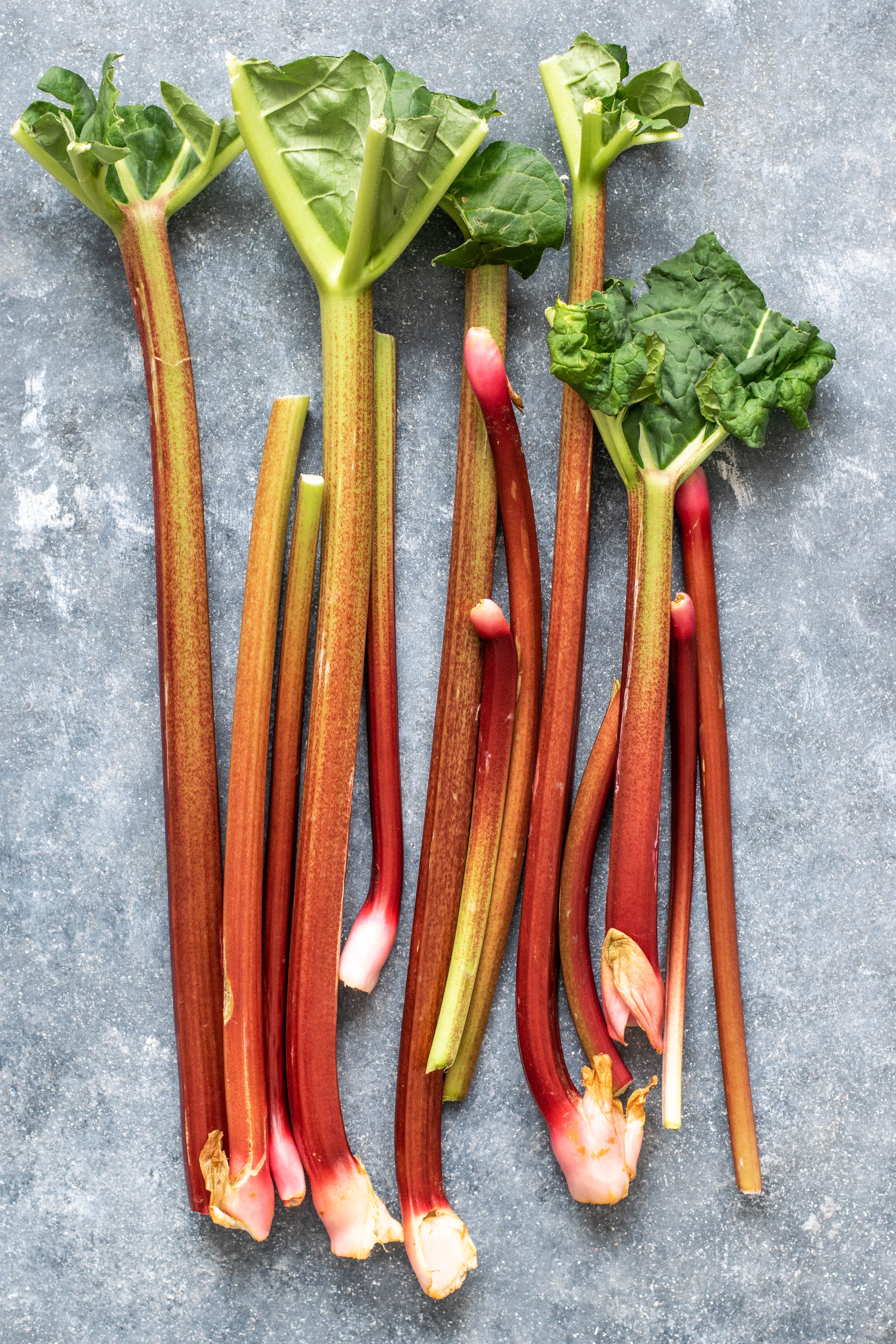
Flora/fauna nibbles: Time to bake with rhubarb; bison hunters; it's okay to feed the birds; eat more beans
![]() |
| Photo by Monika Grabkowska, Unsplash |
Turtles can be tricky. "We thought we knew turtles, but this newfound behavior may offer a clue to how these reptiles will respond to a warming planet," reports Jessica Taylor Price of National Geographic. "On a warm spring night . . .two scientists settled into a canoe . . . they made their way through the water. . . . . They noticed something odd: Krefft's river turtles basking in the moonlight, just as they do during the day. But when they asked around after that evening in 2017, they found that other scientists hadn't heard of turtles basking at night, and there were no studies on the behavior."
![]() |
| A crab (Mississippi Dept. of Marine Resources image) |
Would you like a used crab trap? Not really. "Derelict crab traps harm wildlife and disrupt other fishers, especially shrimpers. Bulky crab traps get caught in shrimping nets, tearing them open or blocking them from catching shrimp. Frustrated shrimpers, with nowhere to put the smelly traps, generally just throw them back, continuing the cycle," reports Ilima Loomis of Haiki magazine. "A group in Mississippi has found a solution: paying shrimpers a U.S. $5 bounty to collect and recycle derelict crab traps. In just three years, the program has removed almost 3,000 crab traps from Mississippi waters."
Beans can be the last thing left on a child's plate and the brunt of jokes, but they pack nutritional power. "Beans are high in protein, efficient to grow, and can even improve soil health. They cost less than conventional or new plant-based meats, and they're increasingly getting attention among foodies," reports Julieta Cardenas for Vox. "As one global campaign to double bean consumption by 2028 frames it, the answer to the question of how we can get inexpensive protein without sacrificing animals or the planet is simple: 'Beans is how.'"
Summer heat is coming, and along with it comes an increased likelihood of walking by a pet stuck in a heating car. The feeling of worry and then stress over your next move has a solution, "See a dog locked in a hot car? Here's what you can do," reports Rachel Fobar of National Geographic. "Several U.S. states allow bystanders to intervene when animals are trapped inside hot vehicles."
![]() |
| Photo by Louis Johns, The Washington Post |
![]() |
| Photo by Julian Avery for The Conversation |
Wednesday, April 19, 2023
As offshore wind sails forward, fish habitats will suffer, and fishers fear getting 'squeezed out' of their livelihoods
![]() |
| A construction area for Vineyard Wind in New Bedford, Mass. (Photo by Tony Luong, ProPublica) |
Government authorities who determine building licensing and environmental concerns overlap. The Light explains, "Federal scientists, the commercial fishing industry and industry regulators each have sounded the alarm about potential harm to fish spawning habits and the lack of compensation for losses suffered by fishermen. . . . The Interior Department has ignored or downplayed those warnings. . . . The Bureau of Ocean Energy Management, which is part of the Interior Department, and the National Marine Fisheries Service, which is part of the Commerce Department, have conflicting authority over the same stretches of federal waters. BOEM oversees permitting and leasing for offshore wind development, from which the federal government reaped more than $5 billion last year. NMFS is supposed to protect marine habitat and ensure the fishing industry is sustainable and economically viable."
The Light reports, "'We are very concerned about the cumulative impacts of multiple wind energy projects on the fisheries we manage,' directors of three federally established regional councils that advise NMFS wrote last fall to Amanda Lefton, then the head of BOEM. . . . Lefton said last October that she wants to ensure that 'not only can the commercial fishing industry and offshore wind coexist but that both industries can thrive." Case and point for the revolving door: "In January, Lefton left BOEM to join Foley Hoag, a law firm that has represented Vineyard Wind. There, she said in a press release, she will 'leverage' her 'experience in policy and regulation at the state and federal levels with the private sector to help businesses get projects built.'"
"The components to build turbines for Vineyard Wind, which started offshore construction last November, will be shipped from the Port of New Bedford, which is also the top-earning commercial fishing port in the nation," the Light reports. "It supports almost 15,000 jobs and moves between 390 and 544 million pounds of seafood a year from its waterfront to consumers around the world." Scott Lang, a former mayor of New Bedford and an attorney who has represented many of the city's commercial fishermen for four decades, told the Light, "The great majority of the people who rely on going out to fish will be squeezed out of the industry. This is going to be the final nail."
Another wind farm, South Fork Wind, has received a green light to build off New York's coast. "BOEM approved the projects despite repeated warnings from the NMFS about damage to the environment and the fishing industry," the Light explains, "Environmental laws require BOEM to consult with the fisheries service on projects taking place in 'essential fish habitat,' which encompasses all offshore wind projects within 200 miles of the coast. . . . Fisheries regulators have been warning BOEM since 2018 about the impact of offshore wind projects. . . . The three regional fishery councils on the East Coast wrote in last summer’s letter to the head of BOEM. They added that the 'effects will increase in magnitude as more projects are built.'"
Wednesday, February 22, 2023
Oil and gas industry has failed to keep pledges to limit methane emissions; 'There's no excuse,' world agency says
![]() |
| Screen grab from thermographic video shows what appears to be methane leaking from stacks. (James Turitto, Clean Air Task Force handout) |
Methane is the main component of natural gas, so if captured it can be sold as fuel. "The IEA said methane emissions from oil and gas alone could be reduced by three-quarters with existing technologies and modest investment of less than 3% of the $4 trillion windfall income gained by oil and gas companies worldwide last year," Reuters reports. "The economic incentives to make those reductions were huge last year," IEA's Chief Energy Economist Tim Gould told Reuters. "We had record natural-gas prices in many markets around the world. There was an extremely strong economic incentive to bring methane to market."
Over 100 companies "have pledged to cut global methane emissions by at least 30% from 2020 levels by the end of this decade . . . although major emitters, including China and Russia, have not," Reuters notes. "Dozens of oil companies have also voluntarily committed to reduce emissions." Georges Tijbosch, CEO of MIQ, which offers a methane-emissions certification standard, told Reuters, "There are a lot of pledges around, but what you need is a forcing mechanism."
"National Oceanic and Atmospheric Administration physical scientist Lori Bruhwiler said rapid cuts to methane emissions are important, but deep carbon dioxide emission reductions must accompany them if the world is to avoid global warming exceeding 1.5 Celsius (2.7 Fahrenheit) and unleashing more severe impacts," Reuters reports. Should the industry fails to address methane release, Bruhwiler added, "Will this make it tougher for us to meet 1.5? Absolutely."


.jpg)