Showing posts with label labor unions. Show all posts

Friday, April 17, 2026

Ag round-up: Nearly 70% of farmers can't afford fertilizer; union and JBS reach deal; real help for stressed farmers

Share of farmers unable to afford all required fertilizer. (American Farm Bureau Federation graph)

Nearly 70% of American farmers report they can't afford all the fertilizer they need this season because of increased input prices due to the war in Iran and an already stressed farm economy, according to an April survey of 5,700 farmers by the American Farm Bureau Federation. "Farmers in the Southern region reported the greatest difficulty securing fertilizer, with 78% unable to afford all needed inputs this season," reports Faith Parum of AFBF. "Producers in the Northeast and West also reported significant challenges, with 69% and 66%, respectively, unable to afford all required fertilizer, compared to 48% in the Midwest.”

In an effort to drill down into why fertilizer prices have increased so dramatically since 2021, the U.S. Department of Agriculture is "working with the Department of Justice and the Federal Trade Commission on ongoing investigations into fertilizer and other agricultural input costs," reports Chris Clayton of Progressive Farmer. USDA Deputy Secretary Stephen Vaden has "continued his criticisms about concentration in the fertilizer industry, calling out The Mosaic Company for announcing it will close phosphorus mines in Brazil. . . . Vaden argued the global market is signaling a need for more supply -- not less. He questioned why a major producer would scale back output under those conditions."
The Greeley plant can process roughly 6,000
cattle per day. (Photo by L. Angharad) 

The local union representing roughly 3,800 beef plant workers in Greeley, Colorado, and meatpacking giant JBS announced a new labor contract agreement early this week, reports Patrick Thomas of The Wall Street Journal. Beef plant workers went on strike on March 16, "seeking higher wages and other workplace changes. . . . The Colorado plant can slaughter about 6,000 cattle a day, representing roughly 5% of U.S. beef-processing capacity." The new agreement includes worker wage increases through 2027 and protects employees from having to pay for their own required protective equipment. The last slaughterhouse strike happened at a Minnesota Hormel plant in 1985. 

Despite the multiple pain points for American soybean farmers in 2026, some of the rising input costs and sinking soybean prices have evolved over the past several years -- only to be exacerbated by tariff levies and the war with Iran, report Eric Ferkenhoff of Lee Enterprises and Josh Kelety of The Associated Press. "Costs, such as equipment, have crept up over time while soybean prices have stayed low." Doug Bartek, a fifth-generation farmer, told reporters, "Our biggest struggles are our inputs, be it fertilizer, seed, chemical or parts. There has been so much drastic markup in all of these. And I just kind of feel like the farmer’s kind of painted in the corner." Many Midwest soybean producers share Bartek’s worries.

Real Farmer Care wants to give farmers the means to
care for themselves. (Graphic by A. Dixon, Offrange)
Are you a farmer in need of some downtime? Do you know a stressed-out farmer who might be forgetting to care for themselves because they're tending to everything else? If either answer is yes, consider nominating yourself or another farmer-in-need-of-care for one of Real Farmer Care's $200 microgrants, writes Nicole Caruth for Offrange. "Think a stress-relieving massage, a pair of sturdy work boots, or just a dinner outing with friends. The grants are small, but can potentially have a big impact." From squeezing tariffs to eye-popping fertilizer costs, U.S. farmers are having a rough year. The brief nomination form is here. 

Tuesday, September 17, 2024

The sale of U.S. Steel to Nippon Steel has politicians up in arms, but some workers think sale might save their jobs

Wikipedia map
The fear of foreign control and the possible loss of jobs has many U.S. politicians and United Steelworkers’ leaders stoking opposition against the sale of U.S. Steel to Japanese-based Nippon Steel, but many of the industry's workers see the sale differently.

"Outside Pittsburgh, in Monongahela River valley towns where steel is still made, some workers and officials say the rhetoric is disconnected from what is happening on the ground," report Kris Maher, Bob Tita and Aaron Zitner of The Wall Street Journal. "Some say fears of foreign ownership are overblown and that the deal with deep-pocketed Nippon Steel offers the best chance to keep steel industry jobs in the region, and communities from being erased."

The voices against the $14.1 billion sale are big names, including President Joe Biden, both presidential candidates and "all four senators from Pennsylvania and Ohio, including Sen. John Fetterman," the Journal reports. However, West Mifflin Mayor Chris Kelly told the Journal: "I would bet that none of the national politicians have seen what I’ve seen and have not talked to these local workers. . . . This is nothing but politics." West Mifflin's U.S. Steel mill employs about 800 workers.

Both sides have cranked up their lobbying machines. "Kelly and other local officials are asking Pennsylvania Gov. Josh Shapiro to get the Biden administration to hear their concerns. . . . A spokesman said the governor said his priority is protecting Pennsylvania workers," the Journal reports "Nippon Vice Chairman Takahiro Mori recently met with U.S. regulators. Ads running in Pittsburgh urge they 'keep steel jobs in steel city.'"

In Braddock, the Edgar Thomson plant "is among the world’s oldest mills, producing steel from liquid iron heated in blast furnaces. Active since 1875, it hums day and night," Maher, Tita and Zitner write.
"Braddock Mayor Delia Lennon-Winstead backs the deal and said presidential candidates who oppose it should provide another solution. 'Do they actually walk these streets and live in this area?” she said. 'Do they know the devastation of closing the mill, what it would do to this area?'"

Thursday, August 22, 2024

Canadian rail strike leaves U.S. commodities unable to move; agricultural interests push for a resolution

Rail-traffic has stopped at U.S.-Canadian
border. (Denley Photography, Unsplash)
As U.S. farmers prepare for expected bumper crops of corn and soybeans, the shutdown of Canada's two largest railways threatens a chunk of their incomes. The fallout from Canada's unresolved rail closures stretches beyond agriculture. It could have "dire consequences for North America’s economy, threatening deliveries of cars, timber and petroleum products," reports Lauren Kaori Gurley of The Washington Post. "The U.S. railway Union Pacific has said a shutdown would sideline more than 2,500 railcars that normally cross the U.S.-Canada border each day."

The two Canadian railways, the Canadian Pacific Kansas City railroad and the Canadian National Railway have been unable to strike a deal with Teamsters Canada "despite days of heated negotiations," Gurley writes. "The Teamsters say the railways are requesting that the union make concessions 'on crew scheduling, rail safety, and fatigue management' — echoing union concerns at the heart of a threatened 2022 rail strike in the United States." The two railroads insist they have offered "significant pay increases and addressed concerns about scheduling."

U.S. agricultural interests are pushing hard for a resolution. Gurley reports, "In a letter addressed to President Joe Biden as well as other U.S. and Canadian officials, dozens of trade associations, including the American Farm Bureau Federation and the National Cotton Council, said a rail shutdown would trigger 'harmful consequences for Canadian and American agricultural producers, the agricultural industry, and both domestic and global food security.'”

Earlier this week, U.S. companies worked to slow the flow of goods to the U.S. Canadian border, which means "that massive flow of goods has screeched to a complete halt," Gurley explains. But the problems go both ways. "Murad Al-Katib, chief executive of AGT Foods, one of the world’s largest suppliers of staple foods such as beans and wheat, said food supply chains would be 'immediately disrupted,' noting that many commodities — such as peas, lentils, chickpeas and durum wheat used for pasta — travel across the Canadian border to U.S. processing and packaging facilities."

Meanwhile, Teamsters Canada said that it won't agree to the rail companies' "grueling schedules," and in turn, both railway companies said "they’ve made generous offers to the union," Gurley writes. "The Canadian government has rejected calls to intervene, but Canadian Prime Minister Justin Trudeau urged parties to 'get to a resolution.'"

Tuesday, January 30, 2024

The U.S. needs 7 million more houses, but who will build them? The construction industry needs trained laborers.

Photo by Arron Coi, Unsplash
As the construction industry struggles to meet the demand for new housing, it faces big obstacles, including a shortage of trained labor. Robbie Sequeira of Stateline reports, "The U.S. construction industry lost nearly 30% of its workforce during the Great Recession of 2008 and had barely recovered before the Covid-19 pandemic hit it again, as outlined by a study shared last spring by economists at the University of Utah and the University of Wisconsin. . . . However, the authors attributed much of the shortage to the federal Secure Communities immigration crackdown of the Obama administration."

An estimated 7 million more homes are needed, so the industry must find more trained workers to meet demand. "Employment isn't growing fast enough, said Erika Walter, director of media relations for Associated Builders and Contractors, a national industry group," Sequiera writes. "An analysis released earlier this month by the group found that at the end of November, there were about 459,000 job openings in the industry. The 5.4% job opening rate was the highest since 2000."

To attract new labor, the industry needs to address its hiring practices. Sequeira reports, "According to a 2022 Department of Labor report, many apprentice programs for construction and trade-based skills often have sponsors who do not recruit or hire individuals from underrepresented groups — and may not even be aware of how to recruit members of those groups."

If recruitment and training shortages aren't managed, the shortage will intensify as aging workers retire. Sequiera notes, "More than 1 in 5 construction workers are 55 and older, and much of the workforce will be retiring in the coming decade, according to the Bureau of Labor Statistics." Karl Eckhart, vice president of intergovernmental affairs for the National Association of Home Builders, told Sequiera, "We need to expedite the [recruitment and training] process so we can at least get shovels under the ground."

Several states are intervening to assist in training a new construction workforce, including Montana, New York, Ohio and Maryland. "Ohio Republican Gov. Mike DeWine announced that 35 Ohio high school programs would receive almost $200 million in grant money to expand training facilities in areas including the electrical trades, welding and carpentry," Sequiera reports. 

Tuesday, September 26, 2023

Upset over unexpected wage cuts, some rural postal carriers want to decertify their union

Many rural carrier took an unexpected cut in pay.
(Photo by Victória Kubiaki, Unsplash)
Vexed with substantial pay decreases since May, many rural mail carriers are frustrated with their union, with some carriers pushing for de-unionization from the National Rural Letter Carriers' Association, reports Jarod Facundo of The American Prospect. "The U.S. Postal Service adopted a new payment system known as the Rural Route Evaluated Compensation System, reducing base pay for almost two-thirds of rural letter carriers. . . . Angered by what they view as the NRLCA's inability to protect their interests, a growing number of rural letter carriers inside the union are running a signature collection campaign to decertify the NRLCA's status. . . . They call themselves 'Decertify NRLCA.'"

Part of the frustration is what carriers were told the new system would mean versus what actually happened. Jamie King, a rural letter carrier from Florida, told Facundo, "I took a $15,000 pay cut overnight. King described how the NRLCA made initial predictions of. . . .route changes that downplayed the true total number of hours that would be cut for most rural letter carriers. . . ." and that "the implementation was worse than what they were led to believe."

The new pay system was negotiated through binding arbitration, which means decertification "faces legal challenges and unclear hopes about what would come next," Facundo reports. "But it is an expression of discontent with the union leadership's handling of the pay cuts, which has led some to question the value of the organization."

The NRLCA's leadership has "seized upon the legal ambiguity of whether decertification is feasible. In a late-August Facebook post, the NRLCA told its membership: … We take any and all attacks against this union seriously, and we will not sit idly by to see what happens,'" Facundo reports. "The NRLCA's countereffort has appeared to quell the Decertify movement's momentum. According to King, the most frustrating aspect has been how the NRLCA has responded to decertification threats." He told Facundo: "Instead of addressing our concerns and offering empathy and a solution, [the NRLCA is] only telling members what they will lose if they decertify the union. They have offered no solutions and instead lie and downplay the matter."

Tuesday, July 18, 2023

National Labor Relations Board judge tells Dollar General to stop messing with worker efforts to win union representation

Shellie Parsons rests after sweeping trash in the store
parking lot. (Photo: Sophie Park, The Washington Post)

Six workers at a Dollar General store in Winsted, Conn., tried to form a union, "and failed in what is now an off-kilter win," reports Jessica Kuruthukulangara of Seeking Alpha, an investors' newsletter. "The discount retailer was found to have interfered, coerced and restrained its employees from union organizing . . . National Labor Relations Board Judge Arthur Amchan wrote, 'The unfair labor practices involve individuals at the highest levels of management. . . .These practices were also committed pursuant to a corporate policy as to how to deal with organizing efforts by employees.'"

The story begins with one employee, Shellie Parsons, who witnessed management's aggressive tactics and worried about losing her job. With few options, she sought union protection, reports Greg Jaffe of The Washington Post. She called Local 371 of the United Food and Commercial Workers. "The workers wanted more job security. They wanted a process to ensure that their complaints weren't ignored. They wanted to know that their labor was valued and that they were respected. . . . Most of [the Winsted workers] were making minimum wage or just slightly above it."

Dollar General, which closed its only successfully unionized store in Auxvasse, Mo., responded to the employees' efforts by hiring "five anti-union consultants, each of whom was paid $2,700 a day, according to documents filed with the Labor Department. It dispatched three out-of-state executives to the store who shadowed the employees for the month, working alongside them. Sometimes executives talked baseball, hunting or music with the store employees," Jaffe writes. "Other times, they warned them about the union, which they said would make them pay costly dues and ruin their relationship with their store manager, whom they liked and admired."

In the weeks leading up to the Winsted store's representation election, employee Jake Serafini was fired for cursing, Jaffe reports. "The dismissal shook some of Serafini's co-workers, who were convinced that he was fired because he was pro-union . . . Parsons said that a Dollar General executive had warned [another employee] about the closing of the Auxvasse store and suggested that the same thing could happen in Connecticut. . . . Dollar General, in response to questions from the Post, said that no threats were made to close the Connecticut store."

The union lost the vote, but Parson "believed that the election hadn't been fair, that Dollar General had 'polluted' her colleagues' minds with falsehoods and fear," Jaffe writes and the NLRB judge agreed "that Dollar General had violated labor laws and used 'blatant unfair' practices to discourage unionization. . . Amchan directed Dollar General to cease and desist from these labor practices and reinstate the fired activist employee."

Thursday, March 23, 2023

Several states put the brakes on autonomous vehicles; Teamsters back bill that would require a safety driver

Tractor-trailers stacked up on the shoulder of Interstate 70 near
Aurora, Colo. (Photo by David Zalubowski, The Associated Press)
Get ready for a bumpy ride. Several states are looking at entirely driverless autonomous vehicles "to consider legislation backed by the Teamsters union to require that a safety driver always is on board," reports Austin Jenkins of Pluribus News. "Amid the prevailing trend of nearly two dozen states explicitly allowing the testing and deployment of driverless vehicles. So-called driver-in legislation has been introduced in California, Illinois, Indiana, Nebraska, New Mexico and Texas."

California may have the most contentious battle. "Teamsters are backing a bill that would prohibit medium- and heavy-duty vehicles weighing 10,000 pounds or more from operating on public roads without a human safety driver. The bipartisan bill, which boasts more than 20 coauthors, cleared its first committee this week with strong support," Jenkins reports. "If approved, the law would preempt the California Department of Motor Vehicles from issuing rules allowing heavier autonomous vehicles to ply the roads without a driver. California currently allows driverless light-duty vehicles under certain circumstances."

Jenkins reports, "In January, the DMV held a workshop with their Highway Patrol that signaled what the agency calls a 'starting point for the potential development of heavy-duty autonomous vehicle regulations.'" Teamster Jason Rabinowitz told Jenkins, "We don't want the DMV to make this decision. A decision of this magnitude should be made by the legislature." Commenting on the Teamsters efforts, Jeff Farrah, executive director of the Autonomous Vehicle Industry Association, told Jenkins, "Trying to wedge these driver-only bills into these state capitols is something that we think is not the right way to do it."

On the one hand, "Backers say the bill is about protecting public safety and jobs," Jenkins writes. "The prime author of the bill, Assembly-member Cecilia Aguiar-Curry, cited experience with light-duty driverless vehicles. . . . She pointed to incidents where the vehicles have blocked intersections and impeded emergency vehicles, among other issues. She argued that trucks, because of their size and weight, pose an 'exponentially greater threat to the public.'"

One the other hand, "The bill has drawn the opposition of more than 40 companies and business organizations who say autonomous trucks offer the promise of safer roads, more reliable supply chain efficiency and new career opportunities," Jenkins writes. "Farrah countered that the AV industry has a 'remarkable safety record' and said the industry offers a path to dramatically reducing the nearly 40,000 motor vehicle fatalities each year in the U.S., including those involving trucks."

While California lawmakers remain positive "about the future of AVs and their ability to ultimately make the roads safer, but they also expressed concern about moving too quickly to deploy the technology without adequate safeguards," Jenkins reports. Transportation Committee Chair Laura Friedman told Jenkins, "Putting 80,000-pound vehicles on the road without a driver would happen sometime after we all feel really, really good about the state of single-passenger autonomous vehicles."

Wednesday, March 01, 2023

America doesn't have enough truck drivers; the is job lonely, stressful and dangerous, so few of them stick with it

Truck drivers roll through swaths of lonely countryside.
(Photo by George Etheredge, The New York Times)
In his song "All I Do Is Drive," Johnny Cash sums up a lot of why there's a shortage of truck drivers: "All I do is drive, drive, drive/Try to stay alive/And keep my mind on my load/Keep my eye upon the road."

"In a world contending with the unrelenting impact of the Great Supply Chain Disruption, a shortage of truck drivers is frequently cited as an explanation for shortages of many other things — from construction supplies to electronics to clothing," reports Peter S. Goodman of The New York Times. "Last year, trucking companies in the United States suffered a record deficit of 80,000 drivers, according to the American Trucking Association, a trade association. Given that trucks move 72 percent of American freight, a lack of drivers spells substantial disruption."

To investigate truck driver life, Goodman joined seasoned truck driver Stephan Graves for three days riding shotgun, from Kansas City, Mo., to Fort Worth, Texas and back. Graves told Goodman, “The lifestyle probably is the first thing that smacks people in the face. You know what it does to you. You’re thinking about it all the time. We’re tired. Our bodies are starting to go. Our bladders have been put to the test. And no exercise. We end up with all types of heart and other health ailments. You can’t truly fathom what it’s done to you.” Goodman writes, "He is prone to rhapsodizing about the open road. But he does not struggle to explain why his industry is perpetually bemoaning a shortage of drivers. . . . It is a job full of stress, physical deprivation and loneliness."

Are there not enough workers, or is it something else? "Some experts counter that the very notion of too few drivers is bogus," Goodman reports. "The average trucking company has a turnover rate of roughly 95 percent. . . . As the trucking association itself noted, more than 10 million Americans held commercial driver’s licenses in 2019. That was nearly triple the 3.7 million trucks that required a driver holding that certification."

Steve Viscelli, a University of Pennsylvania labor expert who once worked as a truck driver, told Goodman, “There is no shortage of truck drivers. These are just really bad jobs. . . . Until the 1980s, truck driving was a lucrative pursuit in which one union — the Teamsters — wielded enough power to ensure favorable working conditions, Mr. Viscelli recounts in his book The Big Rig. But the Carter administration deregulated the industry in the name of fostering competition, clearing the way for an influx of new trucking companies that diminished pay and increased demands on truckers."

Goodman writes, "Graves is satisfied with his employer. . . . He earns what he describes as 'a comfortable living.' . . . He and his fellow drivers are now enjoying the upper hand. Trucking fleets are handing out across-the-board raises to retain drivers while offering $10,000 cash bonuses in a frantic effort to court new hires. . . . Still, a three-day run in Graves’s vehicle — from Kansas City, Mo., to Fort Worth and back — reveals the inherent pressures of a relentlessly stressful job. . . . Here is a life spent navigating the hazards of piloting a truck weighing 26,000 pounds and pulling a 53-foot trailer, while balancing the need to ingest caffeine against the imperative to limit bathroom breaks. . . . The hours pass, the towns recede, while the gnawing loneliness of the road is constant." 

As an over-the-road driver, "Graves typically does not make it home by nightfall. He drives roughly 9,000 miles a month, spending two and three weeks on the road at a time, before returning home to his condo in Kingsport, Tenn. . . This is Day 10 of a 19-day trip that has taken him from Texarkana, Ark., to Texarkana, Texas, with three separate runs through Chicago, a stop in Indianapolis and a drop in Spartanburg, S.C., before bringing him to Kansas City. . . . Mostly, he rolls through vast stretches of emptiness, the flat, largely treeless plains punctuated by distant herds of cattle. . . .One of the primary reasons young people tend not to stick as truck drivers, Graves explains, is the challenge of maintaining ties to the rest of the world."

Wednesday, February 15, 2023

Lee Enterprises requiring most employees to take 2-week furloughs or salary reductions; some go public with gripes

Map from Lee website, adapted by The Rural Blog
Newspaper publisher Lee Enterprises, one of the last big independents in the industry, is requiring most of its employees "to take a two-week, unpaid furlough or accept a salary reduction, according to an internal memo," Axios reports.

"Since thwarting a hostile takeover from Alden Global Capital last year, Lee's struggles have deepened, prompting some Lee staffers to wonder if hedge fund ownership would have been better," Kerry Flynn and Sara Fischer write. Alden, "an investment firm known for slashing costs at local papers, dropped its bid for Lee Enterprises last year following a bitter legal battle. Lee laid off hundreds of employees across its local papers and at the corporate level amid the takeover drama."

"Nearly three years into the new regime, it's becoming apparent that it might as well have been Alden, as Lee Enterprises is following the same playbook," wrote Jim Heaney, a reporter with the Investigative Post in western New York and a former investigative reporter with The Buffalo News, a Lee property.

Lincoln Journal Star reporter Chris Dunker told Axios, "The size of our news staff at the Journal Star is now less than half of what it was when I started in 2014, even though the issues and people we are covering are increasingly complex and nuanced. The loss in wages adds insult to injury as many haven't received a pay raise in years and are now dealing with inflation the same as everyone else," Dunker says. "We want to serve readers and cover our communities with depth and sensitivity, but [this] corporate model ... is making that almost impossible."

The furloughs do not appear to have reached Lee's relatively few unionized newsrooms, where the move would have to go through the union, Axios reports. Lee's website says it has "nearly 350 weekly and specialty publications serving 77 markets in 26 states." The 2022 State of Local News report from Northwestern University says it has 152 newspapers, third most in the U.S. It's based in Davenport, Iowa.

Friday, January 20, 2023

Quick hits: Wikipedia gets a makeover, unions' share keeps falling, religion is changing, best ideas do come in showers

Wikipedia's subtle makeover includes an updated
table of contents section
. (Image by Wikipedia)
Wikipedia is one of the world’s top 10 most visited websites, and a resource used by billions every month, is getting its first desktop makeover in more than a decade, TechCrunch reports.

The share of American workers in a labor union in 2022 was 10.1 percent, the lowest figure since the Bureau of Labor Statistics began tracking it almost 40 years ago. In 2021 the figures was 10.3 percent. The decline "comes despite the highest labor union approval rate — 71 percent, according to Gallup — since 1965," Politico Nightly notes.

A Waterloo, Iowa, sports reporter who doesn't like filling in on the weather beat returns to it reluctantly, after a viral rant: ‘It’s pandesnownium!’

Insights on seven common farm shop tools include this: Created by engineers who never actually assembled or disassembled anything.

Engrossing photo essay in The Daily Yonder of Jace Charger, land defender. The piece documents a sage harvest on the Cheyenne River Sioux Reservation, a critical form of self-care for them and their Indigenous community.

Climate change and dairy cows' stomachs: A climate solution is gurgling in there somewhere. A new partnership will work to reduce methane emissions from production of milk around the world.

Although routines can be magical, there is no magic routine. Using a little science can help.

1.6 million acres of U.S. corn is missing. Where did it go?

Ailing Earle, Ark., elected an 18-year-old mayor. Residents hope that Jaylen Smith’s youthful energy and sense of purpose can improve their fortunes. First goal: getting a town supermarket.

Orange you glad you're buying bananas? Here's the juice on orange prices.

You do get your best ideas in the shower. The science of shower thoughts teaches us the importance of mind-wandering for creativity.

American religion is not dead. It's changing. Traditional worship may be in decline but meaningful growth can be found, Wendy Cadge and Elan Babchuck write for The Atlantic.

The 411 on electric tractors, is John Deere pushing them? AgWeb has an exclusive interview with Jahmy Hindman, the company's chief technology officer.

Ready for a reset? 13 tips to make your job less stressful.

Thursday, October 13, 2022

America's longest ongoing strike, by UMWA coal miners in central Alabama, has lasted more than 18 months

United Mine Workers during a protest outside BlackRock
offices in New York. (Angus Mordant/Bloomberg)
Coal miners in central Alabama, carrying on America's largest and longest current strike, continue to resist calls to settle, reports Ericka Willis for Labor Notes. The strike, the result of a dispute between the workers and Warrior Met Coal, involves about 900 miners and began 18 months ago in April 2021, writes Willis, who is a professor in the University of Wisconsin's School for Workers. 

The roots of the strike go back to 2016 when Walter Energy, the previous owners of the Brookwood, Ala., mine, filed for bankruptcy. At the time, the miners' union agreed to a 20% wage and benefits cut until profitability could be achieved by the new owning entity Warrior Met — which is funded by a group of private equity firms, Willis writes. The mine posted record profits and large returns for shareholders in recent years but did not reverse the wage cuts, prompting the strike by the United Mine Workers of America. Not long into the strike, the union voted down a tentative proposal for a new contract from Warrior Met. A year into the strike, the firm BlackRock — the largest shareholder throughout the strike — released a public statement "calling for a labor agreement and questioning Warrior Met executives’ choices in protracting the strike," Willis reports.

The strike is believed to be the longest in Alabama history, William Thornton reported for AL.com in a September story that asked American labor historians how it might end. Gabriel Winant, a history professor at the University of Chicago, said the length of the strike was "certainly not the norm. It   typically tells you the employer has really dug in their heels for one reason or another." The length of the strike is also likely due to the size of the company and the number of workers on strike, both not large enough to likely involve government intervention, Thornton writes citing Winant. 

Warrior Met told AL.com that it had proposed eight contracts to the union, offering a 10-12% raise. The union said the eight proposed contracts were "virtually indistinguishable" from the tentative proposal they voted down at the beginning of the strike, Thornton writes.

Friday, March 04, 2022

Postal reform set for Senate vote, indicating likely passage; would keep 6-day delivery and give rural papers a boon

A postal reform bill that would help rural communities and their newspapers and shore up the flagging finances of the U.S. Postal Service appears headed for passage in the Senate next week, after a decade of wrangling that may not quite be over.

Major package-delivery companies still don't like a major part of the bill, but being scheduled for Senate debate indicates that it will pass in bipartisan fashion, just as it did in the House.

The bill would continue the legal guarantee of six-day delivery, an important point for rural USPS customers, and give rural newspapers that depend on the mail a powerful device to shore up their circulation and thus their advertising, which still generates most of their income.

The bill would allow newspapers to mail many more sample copies to non-subscribers in their home counties at the same rate they pay the Postal Service to deliver papers to subscribers. The current limit is 10 percent of annual home-county circulation, enacted more than a century ago. The bill would make it 50%, which would only enable more sample-copy subscription appeals but provide total market coverage for advertisers that don't normally advertise in newspapers.

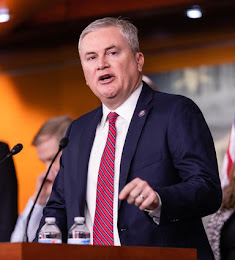
U.S. Rep. James Comer, R-Kentucky
The provision was pushed by the bill's main Republican co-sponsor, Rep. James Comer of Kentucky, at the behest of rural journalism interests in the state and the National Newspaper Association, the lobbying group for the nation's weeklies. The prime sponsor is Rep. Carolyn Maloney of New York, chair of the House Committee on Oversight and Reform, on which Comer is the top-ranking Republican. "It was a long, long process," Maloney told Siobahn Hughes of The Wall Street Journal.

Postmaster General Louis DeJoy didn't like the 50% provision, but went along to get the bill through the House. Still unhappy are delivery companies FedEx and United Parcel Service, which "oppose a section of the bill that would require the Postal Service to set up an integrated network to deliver packages and other so-called competitive products, worrying that would keep rates artificially low for shippers like Amazon," Hughes reports. "Sen. Rick Scott, R-Fla., slowed progress on the Senate floor last month, saying that he was worried about costs being shifted to Medicare." The bill would remove the costly law that makes USPS pre-fund its retiree costs and require retirees to sign up for Medicare at 65.

"Comer said that the turning point [in the House] came when postal unions, which tend to align with Democrats, went to committee Democrats to say that legislation was needed and that Mr. Comer would be a sincere partner," Hughes reports. "A person close to the postal unions said that they spoke to Democratic lawmakers and staff to say that Mr. Comer was serious about wanting to get a deal done. It was an important statement at a moment when some feared Mr. Comer would pull away from talks because of his outrage at the treatment of Mr. DeJoy."

Comer said he told Democrats, “They’re going to kill this bill if they continue to say they’re going to get rid of DeJoy. Not because the Republicans are married to DeJoy, but here’s a guy that’s trying to come up with a reform plan.”

"Comer said he also argued to fellow Republicans that rural areas dominated by the GOP depended on a reliable postal service, and that privatization, as Donald Trump had proposed, was no substitute, given that delivery is less lucrative in sprawling rural areas."

Another key Republican was Rep. Virginia Foxx of North Carolina, "a longtime oversight committee member who had opposed previous overhaul attempts," Hughes reports. "In part, she said, she was backing it because she trusted Mr. DeJoy, who is well-known in state GOP circles and whose 10-year plan would be incorporated in the bill. She also said she wanted to avoid a taxpayer bailout."

Thursday, August 05, 2021

Trumka, who mined Pa. coal, then became a UMW lawyer and the labor leader of all labor leaders, dies suddenly at 72

Rich Trumka spoke to the International Brotherhood
of Boilermakers convention in 2016. (IBB photo)
Richard Trumka, who went from mining coal in rural Pennsylvania to the presidency of the United Mine Workers of America and the AFL-CIO labor federation, has died. He was 72.

Trumka's death was announced on the Senate floor by Majority Leader Chuck Schumer, "his voice breaking as he patted the lectern to compose himself," CNN reports. "The working people of America have lost a fierce warrior at a time when we needed him most," Schumer said.

Trumka was born in Nemacolin, Pa., originally a coal camp, and became a third-generation miner in 1968. After getting a law degree, he was a UMW staff attorney, and became president of the union in 1982. His high point there was a successful nine-month strike against Pittston Coal Co.,"which became a symbol of resistance against employer cutbacks and retrenchment for the entire labor movement, Wikipedia says. He became AFL-CIO secretary-treasurer in 1995 and president of the federation in 2009.

"President Biden called Trumka a 'very close' friend and said he was more than head of AFL-CIO,' in brief remarks to reporters," The Washington Post reports. "The president added that Trumka had died during a camping trip with family members." Sen. Joe Manchin of West Virginia, who grew up less than an hour away from Trumka, said of him, “He never forgot where he came from. He dedicated the rest of his career to fighting for America’s working men and women. He was a fierce advocate for working people, and a truly decent man.”

Wednesday, April 21, 2021

UMWA backs Biden plan to shift from coal to renewable energy, but only if former miners get job transition training

The United Mine Workers of America "said Monday it would accept President Joe Biden’s plan to move away from coal and other fossil fuels in exchange for a 'true energy transition' that includes thousands of jobs in renewable energy and spending on technology to make coal cleaner," Matthew Daly reports for The Associated Press. UMW President Cecil Roberts "said ensuring jobs for displaced miners — including 7,000 coal workers who lost their jobs last year — is crucial to any infrastructure bill taken up by Congress." Sen. Joe Manchin, D-W.Va., appeared with Roberts at a recent event supporting the idea.

The union put out a plan for "significant expansion of tax incentives for renewable energy and preference in hiring for dislocated miners; full funding for programs to plug old oil and gas wells and clean up abandoned mines; and continued incentives to develop so-called carbon capture and storage technology that traps carbon dioxide produced by burning fossil fuels and stores it underground," Daly reports. "The union proposal, and Manchin’s endorsement, comes as Congress is considering Biden’s $2.3 trillion infrastructure package to rebuild the nation’s roads, bridges and power grid, promote electric cars and boost clean energy such as solar and wind power. A bipartisan group of lawmakers met with Biden Monday to discuss the plan."

Tuesday, January 12, 2021

Slow vaccine rollout will be explored in Thu. webinar with reps of Walgreens, nursing homes, workers and advocates

The slow rollout of coronavirus vaccines is in large part attributable to delays at long-term-care facilities being serviced by CVS Health and Walgreens under a federal contract. This is a local story in any place that has such a facility, and a webinar Thursday could help journalists cover the issue.

"A Shot in the Arm For Long-Term Care Facilities? Early Lessons from the Covid-19 Vaccine Rollout to High-Priority Populations" will be held at noon ET Thursday by the Kaiser Family Foundation.

"People in nursing homes and other long-term care settings account for 6 percent of cases but 38% of deaths from Covid-19, a share that has remained largely consistent throughout the pandemic," the foundation says. Priya Chidambaram, a senior policy analyst at the foundation, will provide the latest data on cases and deaths in long-term care facilities. A panel discussion will follow, offering perspectives from patients, nursing-home operators, and pharmacy providers:
  • Rina Shah, vice president of pharmacy operations and services at Walgreens
  • Nicole Howell, executive director of Ombudsman Services of Contra Costa and Solano Counties in California, an advocate for long-term-care residents
  • Matthew Yarnell, nursing-home chair of the Service Employees International Union, which represents many nursing-home workers
  • Mark Parkinson, president and CEO of the American Health Care Association, which represents over 14,000 skilled-nursing facilities and assisted-living centers
The event is open to the public, and will include a question-and-answer session. Questions about it event can be addressed to webbriefings@kff.org. 

The Kaiser Family Foundation has a Covid-19 Vaccine Monitor, that tracks "the public’s evolving views about and experiences with" the vaccines, it says.

Friday, October 23, 2020

Meatpacking workers say company policies force them to work or risk being fired when they have covid-19 symptoms

Some meatpacking workers say company attendance policies have forced them to go to work or risk being fired for absenteeism when they have covid-19 symptoms. Meatpacking plants are a major source of outbreaks in rural counties, Heather Schlitz reports in a collaboration between the Midwest Center for Investigative Reporting and USA Today, funded by the Pulitzer Center on Crisis Reporting.

Most major meatpackers use a point system in which workers receive a points for missing work. After a certain number, they get fired. "For a few months earlier this year, as case counts swelled, Tyson Foods suspended its point system, and Smithfield Foods said it has halted its version for the time being," Schlitz reports. "However, the point system has endured at Tyson and JBS plants throughout the pandemic, and it has continued to coerce people with potential covid-19 symptoms into showing up to work, said plant employees, their family members, activists and researchers."

As one worker told Schlitz: "If they see that you can walk, they’ll tell you to keep working . . . If you can’t stand on your own, they’ll send you home." Spokespeople for Tyson and JBS, the nation's two largest meatpackers, told Schlitz that they encourage employees to stay home while sick. A JBS spokesperson said the company has never taken points from a worker for a documented illness during the pandemic.

However, a worker may display symptoms long before receiving a confirmed coronavirus diagnosis, due to testing delays. The point system has likely contributed to the spread of the virus, Jose Oliva, co-founder of HEAL Food Alliance, a non-profit that organizes food industry workers, told Schlitz.

Wednesday, October 21, 2020

Weekly fact check: Trump's long history with conspiracy theories, and Biden's misleading union endorsement claim

With just a few weeks to go before Election Day and both presidential campaigns turning up the heat, fact-checking is more important than ever. Here's some of the latest:

During his Oct. 15 town hall, President Trump defended retweeting a conspiracy theory that accused Joe Biden of murder. "The theory, which has no basis in fact, specifically claimed Biden had members of SEAL Team 6 killed to cover up a purportedly failed assassination of Osama bin Laden in 2011. Trump retweeted a post spreading the theory, therefore amplifying the message to his 87 million followers," Angela Fichera and Saranac Hale Spencer report for FactCheck.org. "At the same event, Trump also declined to condemn QAnon — the widespread conspiracy theory movement that baselessly suggests Trump is dismantling an elite child sex trafficking ring involving high-profile Democrats. He claimed he knows 'nothing about' it.

"During a campaign rally, President Donald Trump said that once he came down with covid-19, people for partisan reasons shifted from saying immunity was lifelong to saying it lasted only a few months," Jessica McDonald reports for FactCheck. "Experts, however, haven’t changed their estimates for immunity duration, which remains unknown — but unlikely to be lifelong."

Meanwhile, during Biden's Oct. 15 town hall, Biden said the International Brotherhood of Boilermakers had endorsed him. But that's misleading, Jessica Calefati reports for PolitiFact. The Pittsburgh-area local did endorse Biden, but the organization as a whole, which represents 50,000 industry workers nationwide, did not.

Also during that town hall, Biden insinuated that Republicans eliminated funding for a community policing program. But that's false, Lou Jacobson reports for Politfact. Funding for the Community Oriented Policing Services program, which Biden spearheaded as part of a 1994 crime bill, was not eliminated. "Biden’s campaign told PolitiFact that he was referring to Trump’s fiscal 2019 budget proposal, which would have halved funding for the community policing program. But this proposal wasn’t enacted, and it did not amount to an 'elimination,'" Jacobson reports. "The program is smaller than it was in its early years, when its budget ranged between $1.2 billion and $1.6 billion, and crime rates were higher. But funding was never zeroed out."

Friday, October 16, 2020

Quick hits: China's corn buying; rural poverty that created Dolly Parton; how coal miners helped shape labor laws . . .

Here's a roundup of stories with rural resonance; if you do or see similar work that should be shared on The Rural Blog, email us at heather.chapman@uky.edu.

China is by far the top customer for U.S. corn six weeks into the marketing year. Read more here.

In Appalachia, people watch covid-19, race issues from afar. Read more here.

The rural poverty that created Dolly Parton. Read more here.

A look back at how coal miners helped shape U.S. labor laws. Read more here.

Tuesday, September 15, 2020

Smithfield and JBS face federal fines for failing to protect slaughterhouse workers from pandemic

"The U.S. Labor Department has cited Smithfield Foods and JBS for failing to protect employees from the coronavirus, making them the first two major meatpackers to face a federal fine after outbreaks at slaughterhouses infected thousands of workers," Tom Polansek and P.J. Huffstutter report for Reuters. The Labor Department's Occupational Safety and Health Administration proposed fining Smithfield $13,494 and JBS $15,615."

Specifically, Smithfield's plant in Sioux Falls was cited for "failing to provide a workplace free from recognized hazards that can cause death or serious harm," OSHA's complaint said. At least 1,294 plant workers were sickened and four died from the coronavirus this spring, Polansek and Huffstutter report.

OSHA cited JBS's plant in Greeley, Colorado, where six workers have died from the virus and 290 have tested positive. According to the complaint, employees were unable to remain socially distant at work. JBS has already been fined twice for coronavirus-related safety violations at Minnesota plants: $28,000 for four violations a Pilgrim's Pride chicken processing plant in Cold Spring, and another $29,400 for five violations at a pork plant in Worthington, Polansek and Huffstutter reports.

Both companies said the citations were undeserved. They have until about the end of the month to respond and put safety measures in place, Polansek and Huffstutter report. The citations "did little to quiet complaints from labor unions and safety advocates, who said the Trump administration needs to do more to protect workers critical to the nation's food supply," they report. David Michaels, a George Washington University environmental and occupational health professor, who was the assistant labor for OSHA in the Obama administration, said the fines are "not even a slap on the wrist."

Monday, August 31, 2020

Biden virtual roundtable with farmers and ranchers slams Trump administration on ethanol, trade deals and more

Joe Biden's presidential campaign signaled a continued resolve to woo rural voters last week, with a virtual roundtable involving farmers, lawmakers and farm-union leaders.

"Rural America, and farmers in particular, voted overwhelmingly for President Trump in 2016 but have suffered rather than benefited from it, said speakers," Chuck Abbott reports for the Food & Environmental Reporting Network. They "criticized Trump for using agriculture as a pawn in the Sino-U.S. trade war and labeled him weak on ethanol."

Trump remains popular among farmers even though many have fared poorly during his administration, Abbott reports. Pennsylvania farmer Rick Telesz said during the roundtable that neighbors would tell him that the past two or three years have been the toughest they can remember, but "the next sentence, they're saying, 'I'm voting for Trump.'"

Biden is unlikely to win the overall rural vote, but narrowing the Republican margin in battleground states could make all the difference, Abbott reports.

In addition to the trade war and the clash between oil and ethanol interests, speakers discussed the misfortunes of the dairy industry, African swine fever, and the impact of the coronavirus pandemic on agriculture, Matthew Weaver reports for the Capital Press in Salem, Ore.

"Darin Von Ruden, president of the Wisconsin Farmers Union, said his state has lost two dairy farms per day — 25 percent of all of his state's dairy farms — during Trump's presidency," Weaver reports. "The rate of loss is similar across the country, he said." Von Ruden also said dairy farmers such as himself do not believe they benefited from the trade war with China or the new trade deal with Mexico and Canada.