Showing posts with label pork. Show all posts

Friday, February 20, 2026

Smithfield Foods plans $1.3 billion investment in a new pork processing facility in Sioux Falls, S.D.

Smithfield's parent company, WH Group,
is based in China.
Smithfield Foods announced plans to invest $1.3 billion to build a new pork processing plant in Sioux Falls, S.D. "When in operation, the plant is expected to employ about 3,000 workers and be able to slaughter about 20,000 hogs a day," reports Patrick Thomas of The Wall Street Journal. "The new project replaces Smithfield’s existing, more than 100-year-old facility in the city."

The announcement comes as some U.S. lawmakers and officials have questioned Smithfield's ties to its Chinese parent company, WH Group, which took over the U.S.-owned company in 2013. Thomas writes, "The company has said it is investing in the U.S. and denied accusations that its decisions are influenced by the Chinese government."

Building a new slaughterhouse is expensive and rare in today's competitive market, where meat packers have struggled to glean profits. "Tyson Foods closed one of its largest beef processing plants, in Lexington, Neb., which employed 3,200 people, and cut production at a Texas facility in half."

Compared to 2023 margins, today's pork processors are making a profit. "Over the past year, JBS, the world’s largest meatpacker and Smithfield’s top pork rival, has said it is expanding its pork operations in response to Americans’ growing appetite for protein," Thomas explains.

The company's building plans feature "advanced automation technology and a streamlined design," Thomas adds. "The company said the plant will source about all of its hogs from nearby farmers in South Dakota, Iowa and Minnesota."

Friday, August 15, 2025

Quick hits: More bacon; thriving town-owned grocery store; shocking fertilizer prices; drones for rural duties?

Five-month-old pigs from the latest breeding line Smithfield 
has developed. (Smithfield Foods photo via WSJ)
Just like lots of people, pork companies would like more bacon. For pigs to produce more bacon, they need bigger bellies, a trait pork industry breeders have been developing for years. "Today, slaughtered hogs weigh about 285 pounds on average, a 30-pound increase since the late 1990s," reports Patrick Thomas of The Wall Street Journal. "The increase in hog weight coincided with the explosion in popularity of bacon as more than just a breakfast item." With bacon in demand and razor-thin profit margins, the pork industry is using breeding programs to "build a better pig." 

St. Paul, Kansas, hadn't had a local grocery store for more than two decades, but in 2005, the town's new mayor challenged his community to use municipal support to plan and build a grocery store. St. Paul residents embraced the challenge and the St. Paul Area Community Development Corporation stepped in to help with planning and financial legwork, reports Kansas State University. In 2008, the St. Paul Supermarket opened, and it continues to thrive as a town-supported grocery store. Its motto is "the friendly store." Read its success blueprint here.

Fertilizer costs are high in the currency of corn. (Krista Swanson, National Corn Growers Association )

With alarmingly high fertilizer costs and falling commodity prices, U.S. farmers are grappling with how to stay afloat in today's market. "Farmers are in the middle of calling input suppliers to get quotes for fall fertilizer, and the prices are shocking," reports Tyne Morgan of Farm Journal. "The corn price to fertilizer price ratio on inputs such as phosphate is now the highest on record, and as corn prices continue to slide, it’s creating financial hurt on farmers. . . . An unnamed farmer asked U.S. Farm Report, 'How are we going to survive at these prices?'" 

After severe storms damaged crops and farming equipment across Nebraska, the state used drones to help mitigate the aftermath. "Using drones to help with disaster response shows the role they now play in the state’s economy, after years of investment and research from the state government," reports Chris Teale of Route Fifty. "Officials in the state are looking at ways drones can be used, especially to help those in rural areas. Delivery of food, medical supplies and other resources is one use case receiving a lot of attention."
A Maine roadway.
(C. Banks photo)

Among all the states, Maine remains one of the most rural and wild. "Greater Portland, Lewiston, Auburn, Bangor, and other populous areas make up just a small slice of Maine’s pie," writes Chris Sedenka in his opinion for WBLM radio in Portland, Maine. "It’s fascinating just how much of the state remains truly remote and untouched. . . . We still have territories named T2R9, you’re not going to find that in every state. . . . According to the data, Maine’s rural population makes up 61.5% of the total. That is an absolutely huge number. . . .The majority of the state is basically just pine trees and wildlife."

Living a long life could partially depend on geography. Some counties just seem to support populations who keep on keeping on. 

The map above shows which U.S. counties have an overall life expectancy above 80 years.
(Map via Brilliant Maps)

Tuesday, July 30, 2024

Wild pigs are a seemingly unstoppable pestilence, but their threat could become exponentially more dangerous

Feral pigs eat crops and degrade water quality wherever
they invade. (Photo by Adam Dixon, Ambrook Research)
When feral pigs invade the countryside, they go hog wild eating farm crops, tearing up the ground, prolifically reproducing and spreading diseases to other animals and humans. As if that scourge wasn't enough, federal officials are preparing for the possible arrival of African Swine Fever in wild hogs and its possible spread to domestic pigs and maybe even humans. The concern is so viable that officials and stakeholders have completed simulations to prepare for ASF, reports Michael Crowe of Ambrook Research. "For two days, groups discussed the ins and outs of emerging pig diseases like African Swine Fever and the potential for feral hogs to help spread them."

Highly contagious and deadly for all pig breeds, ASF cannot spread to humans yet, but its travels across the globe make it a human health and pork industry concern. "Researchers have warned the animals can serve as a reservoir that can spill over into domesticated herds. This makes feral pigs not just a damage concern, but a food security issue," Crowe writes. "It’s one of the top threats to U.S. pork production, which exported $7.7 billion of product in 2022."

Should ASF be detected in the United States, the protocol is simple: shut all pig operations down. Crowe explains, "A single infected domestic or wild pig could lead the Department of Agriculture to pause all live pig and semen shipments for 72 hours to try and contain it, a massive stoppage considering we have a million hogs on U.S. roads every day. And being shut out of international trade, even temporarily, is a serious concern."

Kevin Morgan from the Office of Health Security, part of the Department of Homeland Security, told Crowe, "We need to get better at shared awareness across borders because these types of emerging pathogens — there’s no line on a map that they respect. . . . We need to be on the same page on surveillance and early warning." Crowe reports, "Beyond building connections, officials are also looking to help producers protect their herds at a local level."

Currently, the USDA’s Animal & Plant Health Inspection Service is "running active ASF surveillance across 12 states — the entire U.S./Mexico border and the Florida Gulf Coast," Crowe reports. But there is no way for officials or scientists to predict how people will react. 

Consumer response to eating beef during the mad cow disease crisis serves as an example. Pig farmer Paul Klingeman Jr. asked Crowe, "How many people are going to think they might get this if they eat pork?"

Tuesday, May 28, 2024

Rural veterinarians have an unusually tough and unpredictable job; the shortage requires multiple solutions

Ongoing U.S. rural vet shortages can threaten U.S.
food supplies. (Adobe Stock photo)
Rural veterinarian's perfect daydream: Cows never slam their bodies into you. Goats don't dig their horns into the back of your legs while you try to draw blood. And bunnies don't die of fright from routine procedures. Most "patients" get a little treat afterward. . . There's even time for lunch.

Rural vet reality: You work 10 out of 14 days and are on call during off-hours. You're treating colicky horses who require IV sedation alongside ungrateful cows with colds. Your back thighs are bruised and sore because Farmer Joe's goats hate blood draws, and you have to explain to your neighbor's 10-year-old daughter that even indoor bunnies can die of fright.

Given the overall toughness of rural veterinarian practice, it's no wonder the nation is experiencing a significant rural vet shortage. "Speak to anyone in the industry, and they will cite everything from poor mental health outcomes, high levels of student debt, long, often unpredictable hours, physical demands, and difficult clients," reports Lewis Kendall of Ambrook Research. "A recent industry survey found that more than 700 counties across all 50 states are experiencing potential large animal veterinarian shortages."

The shortage has multiple causes and requires varied approaches to be effectively addressed. Oklahoma State University's College of Veterinary Medicine is "piloting a new program that it hopes will help better understand the scale of the issue and offer practical solutions," Kendall writes. "Known as the Center for Rural Veterinary Medicine, the program takes a three-pronged approach: academic research, education, and training for student vets specific to rural environments."

Explaining OSU's philosophy, Martin Furr, assistant dean of clinical programs at the College of Veterinary Medicine, told Kendall, "We need to approach this problem of the rural veterinary shortage in the same way: a scholarly approach, understanding the problems, the dynamics, what is going on, and then developing a strategy to fix it. . . . I would hope that this would be a model for how other universities start to think about the problem and develop their own approaches."

Sarah Wagner spent five years as a large animal veterinarian in rural Virginia before moving into academics, where she is now an assistant dean and a professor of pharmacology at Texas Tech University’s School of Veterinary Medicine. "Wagner has spent a lot of time thinking about the plethora of issues currently plaguing her field," Kendall reports. "She noted that as women make up the vast majority of veterinarians in the U.S., institutional problems like sexism — particularly in rural areas — and the gender pay gap have become increasingly prevalent."

Despite industry organizations working to decrease veterinarians' student debts, rural veterinarian medicine requires grit and dedication that can be tough to find. "Earl Brady, who owns a large animal practice in northern Vermont, told Kendall: "When you’re in school, and you have $300,000 of student debt, you have the option to go work for a small animal clinic and make $120,000 working four days a week with no on-call. Or you go to rural Vermont and start at maybe $85,000 and work 10 days out of a 14-day period and you’re on-call and you’re putting prolapses in in negative degree weather and chasing horses with colic around. It’s kind of a hard sell.”

The rural vet shortage has potential impacts for U.S. food supplies and supply chains. Read Kendall's full article here

Friday, February 23, 2024

All creatures: Thousands of boar hybrids; loss for Cajun cooking; the better animal spy; is too much bacon possible?

A herd of boars roaming through a forest.
(Photo by Rolf Scmidbauer, Unsplash)
With thick fur to guard against stifling cold, keen minds and tusks as sharp "as steak knives," wild boar hybrids are "raising hell on the Canadian prairies," reports The Economist. "It seemed like a good idea at the time. When Canadian pig farmers were told in the 1980s that their animals' gene pool was thin, they turned to wild boars from Britain for fortification. . . . In 2001, the boar-meat market plunged. Some farmers, unable to sell their stock, simply released their hybrid pigs into the wild. . . .Today, those pigs' descendants roam the Canadian prairie provinces, a horde some 62,000 strong."

From East Texas to Louisiana's Acadiana region beats the heart of Cajun cooking, where recipes are usually chockablock full of boiled crawfish. But this year, Procambarus clarkii, also known as the red swamp crawfish, crayfish, mudbugs or crawdads, is not affordable for most. Its price is up nearly 500%. "Drought and last winter's hard freeze forced crawfish spawn die-offs ahead of their ongoing harvest time," reports Xander Peters of National Geographic. "The shock felt throughout the U.S. crawfish market is absorbed by its blue-collar producers and restaurant owners, as well as folks working in processing plants, deshelling crawfish, and delivery-truck drivers."

Photo by Marco Ugarte, AP
Crawfish aren't the only species having a hard time surviving extreme weather. The annual survey of monarch butterflies "found the second-lowest number of monarchs on record," reports Jenny Peek of Wisconsin Public Radio. "Monarch populations are extremely sensitive to high heat and drought — both of which are becoming more common with climate change. Habitat loss is also a major contributing factor to the species' decline."


Understanding chicken life and egg cartons
can be perplexing. (Unsplash photo)
Do happier chickens mean better eggs? Maybe. Read here to find out what kind of "wide open spaces" chickens like and what "label" is the best chicken environment. Still, even with that information, you may need help deciphering the egg carton. Read here to decode egg carton descriptions.

We have too much bacon. Whaattt? Bacon fans might be shocked, but talk to a U.S. pork producer, who will confirm that the nation has more pork than it can eat. "From giant processors to the farmers, they've made production so efficient that demand can’t keep up with supply," reports Patrick Thomas of The Wall Street Journal. "In search of solutions, farmers and processors are looking at everything from new overseas markets to fattier, tastier pigs."

Pigeons are better spies.
(Photo by
Rorhof via NG)
Not all spies are Jason Bourne or Ethan Hunt. Some have fur, and others have feathers. But which is better? "Amid the high stakes and desperation of the Cold War, the U.S. Central Intelligence Agency faced a perpetual espionage challenge: access," writes Christian Elliott of National Geographic. "How do you get a spy inside the secure inner sanctum of a foreign head of state. . . .You send in a feline spy. The CIA called the operation 'Acoustic Kitty.'" Spying kitties didn't share the CIA's agenda. "To find a more promising animal secret agent candidate, the CIA needed look no further than Acoustic Kitty's natural enemy: birds. Specifically, the humble pigeon." 


Human actors might learn a trick or two from this smart, charismatic group.
(Anheuser-Busch photo, AP via The Wall Street Journal)
The Super Bowl might be over, but this herd still deserves applause for elegance, a spot-on performance, and getting beer delivered to a small town in need. It's the famous Budweiser Clydesdale horses. "Less known is their reputation as perhaps the most consummate professionals on the advertising circuit," reports Katie Deighton of The Wall Street Journal. "Industry veterans who shoot commercials consider working with the horses a career pinnacle, like a movie director who finally gets to direct Meryl Streep." 

Friday, November 03, 2023

Finally Friday quick hits: Top rural restaurants, the 70-ingredient sandwich; farmer side hustles, Snoopy therapy

Amano’s in Caldwell, Idaho. L.A. Birria Tacos, left,
(braised beef & quesillo); right: Chef Salvador Alamilla
What's for dinner tonight? Consider one of these gems, or take a peek at their menus for inspiration. Here's the 13 Best Restaurants in Rural America 2023.

To help fill in money gaps, many farmers find creative ways to bring in additional income. "Many turn to the online resale market to buy items for cheaper prices or a place to sell quality items for extra money when economic times are uncertain," reports Marion Kirkpatrick of RFD-TV News, which covers rural America. "While it takes hard work and dedication to pick up this 'side hustle,' it can be a great outlet for farmers and rural Americans to help make ends meet." Here are six things farmers can sell online.

While research into beef consumption isn't always encouraging for meat eaters, it can be good to stay informed on what science is telling us now. Even if we're still going to have steak tonight.
Illustration by TCD, Prod.DB, Alamy via The Atlantic

If you're overwhelmed by extreme weather, war, corruption, elections and life in general, reading Snoopy can help, advises Elise Hannum of The Atlantic. "Snoopy can’t help but feel overwhelmed in a tumultuous world. Sound familiar?"

As the world’s beaches and oceans have become one giant ashtray, research has accelerated on what many are calling a global crisis: cigarette butts, reports Jude Isabella of Hakai magazine. "Researchers have published a number of studies in 2023 on the problem of cigarette butt littering, from a review of studies on environmental contamination to a global analysis of the crisis. In fact, the number of studies is on the rise, with researchers publishing twice as many in 2022 compared with 2021."

Yes, it’s back. It always comes back. (McDonald's photo)
The strange and surprising journey of McDonald's McRib begins in a Nebraska lab and ends with a 70-ingredient sandwich. "Roger Mandigo is an emeritus University of Nebraska animal science professor credited with the technology that made the McRib possible," reports Peggy Lowe of NPR. "And here's its story, straight from the meat scientist's mouth." For fans, the McRib is coming back to select restaurants in November 2023, reports Mary Walrath-Holdridge of USA Today.

Wednesday, October 25, 2023

Smithfield Foods, which has been owned by a Chinese company since 2013, might be listed on stock market again

WH pork plant in China. Sales from U.S. and Mexico made up
56% of its 2022 revenue. (Photo by Dominique Patton, Reuters)

Roughly a decade since its purchase, Smithfield Foods may go public again. Its Chinese parent company, WH Group, is working with banks to "list its shares as early as next year, according to people familiar with the matter. Deliberations are ongoing, and the timing could change," report David Sebastian, Patrick Thomas and Ben Dummett of The Wall Street Journal.

In 2013, WH purchased Smithfield for $4.7 billion, which was "one of the biggest takeovers of an American business by a Chinese company at the time and resulted in the delisting of Smithfield, which used to trade on the New York Stock Exchange," the Journal reports. "The combined company became the world's largest hog farmer and pork producer." WH Group said the Smithfield acquisition was "partly aimed at importing technology and expertise from Smithfield to improve WH's operations, especially in China."

A U.S. listing could help bolster the sector, which has been working to balance an "oversupply of pork from flat demand domestically and an industrywide drop in exports," the Journal reports. WH Group isn't the only company reviving plans for a public offering. "Brazil's JBS said during the summer that it plans to restart its yearslong effort to list its shares publicly in the U.S. JBS is the world's largest meatpacker and has a sizable U.S. pork business that competes with Smithfield."

GH's sales are spread throughout China, the United States, Mexico and some European markets; however, sales in the U.S. and Mexico "contributed 56% of the company's revenue in 2022, while its China business made up 34%," the Journal reports. "It employed about 104,000 employees globally at the end of last year, including roughly 40,000 in the U.S. and Mexico."

Monday, October 16, 2023

Flora and Fauna: Meishan pigs; goats for hire; new rules for an insecticide; clam gardens; how do you like them apples?

Meishan piglets in their pen at Blue Hill Acres in Tower
City, Pa. (Photo by S. Spreicher, Lancaster Farming)
This little piggy is for dinner. "With a squishy face and long ears, the Meishan pig certainly has a unique look. The pig's disposition and meat quality add to its specialty," Stephanie Spreicher of Lancaster Farming reports. "But you can't find too many Meishans around. . . . Meishans have more fat than typical pork breeds. While breeding for leaner pigs has been common in the pork industry, [Meishan owners] see a demand for fattier cuts."

To protect 78 threatened and endangered species, the Environmental Protection Agency modified its rules on using malathion, a common insecticide used to eradicate mosquitos, boll weevils and fruit flies, reports the Food and Environment Reporting Network. The skunk-smelling spray can damage habitats critical to at-risk species.

Did you know that more than half of the apples available for U.S. consumption are used in juices? Thirty-four percent are gobbled up in lunch boxes, pies, cobblers and crisps. The Department of Agriculture even tracts all the ways apples are sliced, diced and devoured.

Medicinal plants can offer healing, but the practice takes know-how. Mimi Prunella Hernandez has spent years garnering herbal knowledge and has created a book to help others put it to use, reports National Geographic. Andrographis "is rich in flavonoid compounds, which may help ease allergies and alleviate congestion. . .taken as a tonic, goldenrod can remarkably boost resistance to allergens by strengthening the integrity of leaky mucus membranes."

Goats aid in fire prevention by munching up noxious weeds.
(Photo by Dave Marston, Writers on the Range)
When it comes to fire prevention and eating, goats are here to help. "Unlike a horse or cow that leaves noxious weeds behind, goats eat the whole menu of pesky weeds, bushes and small trees. That means goats can be one of the answers to the growing problem of tinder-dry, highly flammable forests," reports Dave Marston for Writers on the Range. "In northwestern Montana, former journalist David Reese has a business called Montana Goat. His herd moves daily, and once the animals strip leaves off small trees and gobble up the cheatgrass and knapweed, he said, it's quick work to chainsaw small trees and dead branches."

The American clam garden is about to make a comeback! The what? Clam garden. The Swinomish Tribe in western Washington state is "reviving the ancient practice," reports John Ryan of KUOW in Seattle. "It's believed that a clam garden — a traditional, Indigenous way of boosting shellfish production — hasn't been built in the United States for close to 200 years. . . . Clam gardens grow four times more butter clams and twice as many littleneck clams as unterraced beaches do, according to a study of dozens of ancient clam gardens around Quadra Island, British Columbia. Young littleneck clams planted in the centuries-old terraces grew nearly twice as fast, making more local protein available to shellfish harvesters."

Monday, September 25, 2023

Opinion: Keeping meat plants running can hurt small towns' failing water systems; residents end up paying unfair share

Art Cullen
Meat processing plants use tremendous amounts of water, and in rural towns where water systems need an overhaul, that's a problem. When the Federal Emergency Management Agency doesn't have the funding to intervene, residents have to cover an unfair share of the water bill, Iowa editor Art Cullen writes in his Storm Lake Times Pilot opinion, "Storm Lake gets sucked dry so the world gets cheap meat."

"For the second time in two years, the city's application to the FEMA to rescue our failing water system was rejected," Cullen writes. "That means Storm Lakers are likely to pay a disproportionate share of more than $80 million in improvements — including a $15 million water line that runs to Tyson Foods' pork plant.

"Tyson just signed a water service agreement with Storm Lake under which it will pay for a new water tower. Other capital improvements, like that water main, will be shared by everyone. Residential users already pay a higher rate than industrial consumers. The city is hiking rates 7% on all classes, but the compounding effect is greater on the higher rate payers — the folks who take a shower after work.

"Storm Lake has huge water needs for a town its size. That's because it's a protein center for the world. The pork plant is one of the Top 10 in America. The turkey plant draws from three states. Our little town is expected to float the boat so the world gets cheap pork and abundant deli meat. . . . This summer, when RAGBRAI (Register's Annual Great Bike Ride Across Iowa) rolled through with 40,000 thirsty bikers, two of our wells failed.

"FEMA says it's out of cash from mounting climate casualties. Storm Lake is out in the cold. That's what it boils down to. FEMA is strapped — Maui is expensive. So is Florida. We get that. You would think that one of the helpful folks at the regional office in Kansas City could hook us up with someone friendly at the Department of Agriculture, where there might be some of that climate-smart ag money that could be routed through Tyson. We already are routing millions of climate-smart ag funds through Tyson so it can address the water needs of the beef industry. How about Storm Lake gets a little piece of that pie?

"All the money flows out of Storm Lake while we local yokels are expected to pull ourselves up by the bootstraps and not drink so much water. We will pay higher and higher rates . . . to feed the agri-industry. Could we get a thank-you, at least?"

Tuesday, August 15, 2023

Farm Bill will be late; neither party has presented their version of it as Congress focuses on the federal budget

The omnibus Farm Bill has a lot of proverbial eggs in
its basket. (Photo by Autumn Mott Rodeheaver, Unsplash)

 
House Agriculture Committee Chairman Glenn Thompson (R-Pa.) confirmed that this year's Farm Bill has been delayed to the point that Congress will need to extend the 2018 Farm Bill, reports Chuck Abbott of Successful Farming: "It was the first direct acknowledgment by one of the 'four corners' of farm policy — the House and Senate Agriculture committees leaders — that the 2023 Farm Bill would be late."

"Congress often misses its Farm Bill deadlines, sometimes by a year or more, despite early vows to move with due speed and complete work on time," notes AgInsider of the Food and Environment Reporting Network. The last two bills have been delayed by Republican efforts to expand work requirements in the Supplemental Nutrition Assistance Program, formerly known as food stamps. This year's Farm Bill looks to be another battleground for SNAP, among other items. Abbott reports, "The 2023 Farm Bill is expected to be the most expensive ever, with chapters on commodity subsidies, SNAP, ag research, rural development, crop insurance, food aid, export promotion, farm credit, forestry, and land stewardship. Conservative Republicans are expected to propose limits on access to SNAP."

"The chairwoman, Debbie Stabenow, is continuing to work toward a bipartisan bill that can be signed into law by the end of the year," a Senate Agriculture Committee spokesman told Abbott, who notes, "Several farm-state lawmakers have used similar language, framing the goal as presidential enactment this year rather than by Sept. 30, when provisions of the 2018 law begin to expire. Dairy would be the first commodity to be affected, on Jan. 1."

Congress is working on this year's federal budget, which is supposed to start Oct. 1, and "The Farm Bill would take secondary importance," Abbott writes. Neither the House nor Senate have presented their "first-round Farm Bill draft. . . .Thompson said he would unveil his version of the bill and seek a committee vote when GOP House leaders reserve a week for floor debate of the legislation." Thompson told Abbott: “The whole sequence is driven when leadership gives me a week, and maybe that will be in September. Maybe it won’t. I don’t know.”

Wednesday, July 05, 2023

Calif. law giving sows more room takes effect; state delays enforcement until Jan. 1; U.S. pork industry must adjust

Piglets and a sow in a farrowing crate on a farm in Walsh, Illinois, that meets
California’s new standards. 
(Photo by Jeff Roberson, The Associated Press)
"It seemed for a while that California’s controversial pork law would take effect only when pigs fly," but went into effect Saturday, July 1, and will have an impact far beyond the state's borders, reports Noah Goldberg of the Los Angeles Times.

Now, pork sold in California must have come from pigs raised in farrowing crates that have at least 24 square feet of floor space, "allowing them to fully turn around in their living area," Goldberg notes. The law, passed in a 2018 referendum and cleared May 11 by the U.S. Supreme Court, "targeted the practice among some farmers of keeping sows in cramped stalls separate from other pigs. . . . While the law went into effect Saturday, the state allowed for pork killed before that date to be sold in California through the end of the year."

As the court case proceeded, the Biden administration sided with pork producers, who "argued that California, which consumes around 15% of pork nationwide but only produces a marginal amount, should not be allowed to dictate the rules of pig farming to farmers outside of the state. Opponents of the law said it would be a massive burden on producers and that the costs of the changes would be passed on to consumers." They also warned of a slippery slope in regulation of animal agriculture.

Wednesday, June 14, 2023

Stagnant demand, lower exports, higher production costs create 'worst financial times for pork producers in 25 years'

Storm Lake Times Pilot photo
Overproduction and high costs are tanking the pork industry, but "the glut of pork on the market has yet to translate into lower prices for consumers," reports Patrick Thomas of The Wall Street Journal. "Hog farmers in the U.S. are being squeezed and even driven out of business as they lose money at their worst rate in decades. Meatpacking companies, including Smithfield Foods, Tyson Foods and BSJ, said pork profits are shrinking, leading some in the industry to scale back operations ranging from hog farms to processing plants."

Tom Cullen of the Storm Lake Times Pilot in Iowa reports, "Hog prices at all levels have decreased. Prices for pigs six to eight weeks old have slumped by 80% since last fall, suggesting a contraction is on the horizon. Production costs have increased 50% in two years. . . . California's Proposition 12 could force producers to invest millions into new confinements, creating space for sows that previously couldn't stand up, turn around and extend their limbs. The state law is expected to take effect July 1." Lee Schulz, an Iowa State University Extension livestock economist, told Cullen that these are "the worst financial times for pork producers in 25 years."

Dwight Mogler, an Iowa family farmer with "more than 200,000 hogs, told Cullen his operation 'won't exist' if market conditions persist." Cullen writes, "Mogler is losing $30 to $40 per head on each hog he sends to market. He believes he will sell half as many hogs in 2024 as this year. Mogler told Cullen: "This could very well be the biggest event of consecutive month-to-month losses the industry has seen. And there's no light at the end of the tunnel. . . . We will not exist as a farm if this doesn't get remedied."

The problem has built up over several years, and the remedy will take some time. In 2018, China's pigs were "devastated by an African swine fever outbreak. . . . Exports from the U.S. hit a record 7.3 billion pounds in 2020, according to federal data. In 2022, U.S. pork export volumes fell 10% from the year before as China began rebuilding its hog population," Thomas reports. "With less U.S. pork shipped overseas, more remains at home, where demand has stagnated. . . . Shane Smith, chief executive of Smithfield, the biggest U.S. pork producer, said the end of pandemic-era food-stamp benefits earlier this year also has cut into U.S. shoppers' pork purchases."

"As companies up and down the supply chain grapple with lowering demand, production costs will remain the same. Wages at meatpacking plants have increased substantially since the Covid-19 pandemic," Cullen reports. "Feed costs, which are derived from commodity prices, have increased. Fuel costs are also up." Schultz told Cullen: "The costs for producers . . . they're here to stay. You account for labor, interest rates, fuel, feed, and production (costs) will remain relatively high."

Proposition 12 will change the pork industry. Cullen writes, "Prices inside California, the largest consumer of U.S. pork, are expected to rise while decreasing in every other state. . . The long-term implications of the law cannot be estimated. Schulz said producers that can afford to make the shift to comply with Proposition 12 will be paid a premium for what is perceived as best animal-welfare practices. The question is whether those premiums can pay for new investments amortized over 15 to 25 years."

Friday, May 19, 2023

Iowa editor reminds pork producers: 'The customer comes first' and Calif. voters say sows need room to turn around

By Art Cullen
Storm Lake (Iowa) Times Pilot

The U.S. Supreme Court cut sows some slack last week, which caused a lot of squealing around Iowa where we forget that the customer comes first.

The high court on a 5-4 vote last Thursday upheld Proposition 12, a 2018 California ballot initiative that drew 63% voter support, demanding that gestating sows be allowed room to turn around. Prop. 12 also called for cage-free poultry production and more space for veal calves.

The lawsuit was brought by the American Farm Bureau Federation and the National Pork Producers Council of Ankeny. They said they would evaluate their next steps.

Next steps should be getting with the program and responding to consumer concerns. . . . The poultry industry largely adapted to cage-free production years ago when McDonald’s demanded it based on consumer preference. The pork industry failed to heed the warnings and chose instead to fight the will of the people of California.

Art Cullen
Iowa is the leading purveyor of pork in the giant California market. The pork complex generally claims the costs of 24-foot gestation stalls will be catastrophic. Meatpackers were somewhat restrained. Hormel, for one, reported that complying with California production standards will have no material effect on the company’s bottom line. Tyson said it will comply.

The California electorate is not 63% liberal. It is a bellwether because of the sheer size of the Golden State economy. Voters were well aware potentially higher pork costs, and they were equally cognizant of threats to animal and human health from piling more livestock on top of more livestock.

Iowans are similarly aware, consistently voting for cleaner water while being rebuffed by legislators and agri-industry. The legislature continues to pass "ag gag" laws because they don’t like the picture of hogs jammed into confinement. They know what their nose tells them — that this is about enough, already. Yet more hogs keep coming.

The court’s ruling will require retrofitting of old sow facilities and will reduce throughput at the margins. It will not put swine feeders on the rocks. It will force the industry to change with consumer demand. We were told that we needed consistent, lean hogs of a certain structure because of consumer taste, when in fact it was to standardize the carcass for more efficient processing.

This is real consumer action at the ballot box. The court challenges the notion that the livestock industry can sneer at regulations and rationalize its excesses.

Not a single independent pork producer will be affected. Whatever is left of them. They did not depend on locking a sow down. They performed husbandry in the farrowing house. That costs more. Lord forbid that a producer with 30 sows might gain a foothold. . . .

Eventually, when the industry gets off its arrogance hangover, it will figure out that the customer is always right. Or, at least, that the Supreme Court has ruled. Let’s get on with raising hogs the way our customers actually want.

Friday, May 12, 2023

By 5-4, Supreme Court OKs Calif. ban on tight confinement of sows; ruling has broad implications for animal agriculture

Sows in gestation crates that are illegal in California
(Photo by vinsenssandy/Shutterstock)
The U.S. Supreme Court has "preserved a California law banning the sale of pork in America's most populous state from pigs kept in tightly confined spaces, rejecting an industry challenge claiming that the voter-backed animal welfare measure impermissibly regulates out-of-state farmers," reports Nate Raymond of Reuters. Pork producers contended that California's Proposition 12 tells out-of-state pork producers that if they want to tap into California's pork market, California voters can indirectly tell them how to raise their pigs. And that might not be all. The decision "was met with disappointment by many in U.S. agriculture, claiming it sets a dangerous precedent for animal agriculture moving forward," Morning AgClips reports.

"The justices voted 5-4 to uphold a lower court's dismissal of a lawsuit by the National Pork Producers Council and the American Farm Bureau Federation seeking to invalidate the law," Raymond reports. The lobbies argued that the Constitution's commerce clause, which gives the federal government the power to regulate interstate commerce, keeps the states from doing so in this case. NPPC President Scott Hays of Missouri told Raymond, "Allowing state overreach will increase prices for consumers and drive small farms out of business, leading to more consolidation."

Conservative Justice Neil Gorsuch, wrote in the decision, "While the Constitution addresses many weighty issues, the type of pork chops California merchants may sell is not on that list." Chief Justice John Roberts and fellow conservatives Samuel Alito and Brett Kavanaugh, and liberal Justice Ketanji Brown Jackson, "said they would have allowed the challengers to the California law to pursue their claim in the lower courts," Raymond reports.

"California farms collectively are only a small part of the $26 billion-a-year U.S. pork industry. The size of cages used at American pig farms is humane and necessary for animal safety, according to the industry, which asserts that California's law gives the state unwarranted influence over the pork sector. President Joe Biden's administration sided with the pork producers in the case, saying that states cannot ban products that pose no threat to public health or safety due to philosophical objections."

Wednesday, May 03, 2023

Court axes regulatory exception for mid-sized factory farms; hundreds of them will need environmental assessments

A beef-cattle feedlot (Photo via Northern Ag Network)
A federal court has thrown out an environmental examption for some concentrated animal feeding operations. "Medium-sized CAFOs receiving Department of Agriculture loans will be required to have an environmental assessment after a federal court vacated part of a 2016 Farm Service Agency rule," reports Todd Neeley of Progressive Farmer. "The court's ruling is likely to affect hundreds of CAFOs across the country. . . . FSA adopted a rule in 2016 that exempted from environmental review livestock facilities that confine up to 2,500 pigs, 1,000 beef cattle, 700 dairy cows, 125,000 chickens or 55,000 turkeys."

FSA's 2016 exemption sped up USDA loan approvals, which one individual called an "onerous impediment to obtaining financing for operations that will often include young or beginning farmers," Needley reports. Judge Colleen Kollar-Kotelly of the District Court for the District of Columbia said the FSA had violated the National Environmental Policy Act. "USDA admitted the FSA failed to provide notice and comment before creating the exemption," Neeley notes. "During the five years that the case has been pending, the agency failed to offer mechanisms for community feedback or evidence that medium-sized CAFOs lack environmental impact."

Poor environmental outcomes and insufficient evidence supporting the exemption have made factory farms controversial. "CAFOs have been a point of contention between the livestock industry and environmental activists since they began to proliferate in the 1990s, overtaking small, pasture-feeding operations as the dominant form of animal agriculture in the U.S.," reports Madison McVan of the Midwest Center for Investigative Reporting. "One large CAFO can easily produce more than one million tons of manure per year — more than the yearly waste of a large city." 

An exact count of how many CAFOs will be affected is not available, but the animal-welfare groups that filed the lawsuit found through the Freedom of Information Act that "The FSA made 130 direct loans of more than $100,000 or guaranteed loans of more than $300,000 each to animal facilities in Indiana alone from August 2016 to August 2018," Neeley reports. "The FSA did a review of its loan decisions for 2010 and 2011, finding there were more than 650 loans issued to broiler chicken medium-sized CAFOs alone."

"The ruling makes no mention of the economic impact, including shortages and price increases that might result from the newly added environmental hurdles," reports Dan Flynn of the Food Safety Network. However, the judge's opinion noted, "Although FSA admitted error in September 2019, to date, it appears that FSA has taken no action to correct its error . . . More importantly, however, there is nothing in the record to confirm FSA's insistence that it will be able to substantiate the challenged (exemption) on remand."

Thursday, April 06, 2023

Feral swine from Canada threaten Minn., No. 2 pork state; in Georgia, landowners start trapping them in corrals

Feral swine can be attracted to a feeder, which can then be moved
to a corral where they can be shot. (Photo from The Oglethorpe Echo)
Feral swine have come to Minnesota, and in Georgia, landowners are starting to trap them in corrals so many more can be shot and killed at one time.

"Minnesota has long enjoyed its status as a state free of wild pigs, avoiding the billions of dollars of damages suffered each year by other states from invasive feral swine," reports Madison McVan of Investigate Midwest. "Now, Canadian 'super pigs' are threatening the state, and pork producers and regulators are concerned about the destruction and disease the animals could bring if they were to establish a population in Minnesota."

Wild swine are smart and hearty. "They have no natural predators besides humans. . . . The Department of Agriculture's Animal and Plant Health Inspection Service estimates that feral hogs cause up to $2.5 billion in damages nationwide per year," McVan writes. "The animals consume crops, destroy fencing, transmit diseases and parasites, and contaminate bodies of water by wallowing and defecating. . . . Once feral pigs take over a territory, it's nearly impossible to eradicate them, said Eric Nelson, wildlife damage program supervisor at the Minnesota Department of Natural Resources."

The swine from Canada are descendants of hybrids created by breeding domestic pigs with wild boars for more hardiness. "In some cases, farmers released them from fences due to economic hardship during Canada's droughts of 2001 and 2002," McVan reports. "There is a very legitimate risk and concern about them coming straight into Minnesota," second-largest pig producer in the U.S. The Minnesota Pork Producers Association worries about diseases spread by feral swine, "especially African swine fever," which has no vaccine or treatment. "Farmers can lose entire herds to the disease, and countries often pause imports" from nations where the disease is spreading.

In Georgia, Morgan Quinn and Jack Rhodes of The Oglethorpe Echo are covering the feral-swine problem, and report that vegetable farmer Kendall Strickland has concluded that the best way to reduce the population is attractign them into corrals where they can be trapped and disposed of. “If you just shoot one or two at a time, you’re not really getting ahead of the problem in any type of way,” Strickland told the Echo. Here's a guide to how it's done in Scotland.

Thursday, March 09, 2023

Flora/fauna quickies: Holding a baby goat can cheer you; corvid birds can 'ponder the content of their own minds'

Baby goats (Photo by Rachel Schlegel)
"Holding a baby goat is very therapeutic. It calms you and brings you so much joy. It does wonders for coping with anxiety and depression.,” says Friends of the Pennsylvania Farm Show Foundation. And baby goats aren’t cranky and stubborn like their elders!

To the south, pigs "play in the mud, run around the large field they’re sectioned off in, and enjoy the nutritious food given to them daily. Eventually, they will be sold to fine dining restaurants and artisan butcher houses throughout the D.C., Maryland and Virginia area," reports Paula Phounsavath of The News Virginian of Waynesboro, where "a family-owned pig farm has created a sustainable pork production."

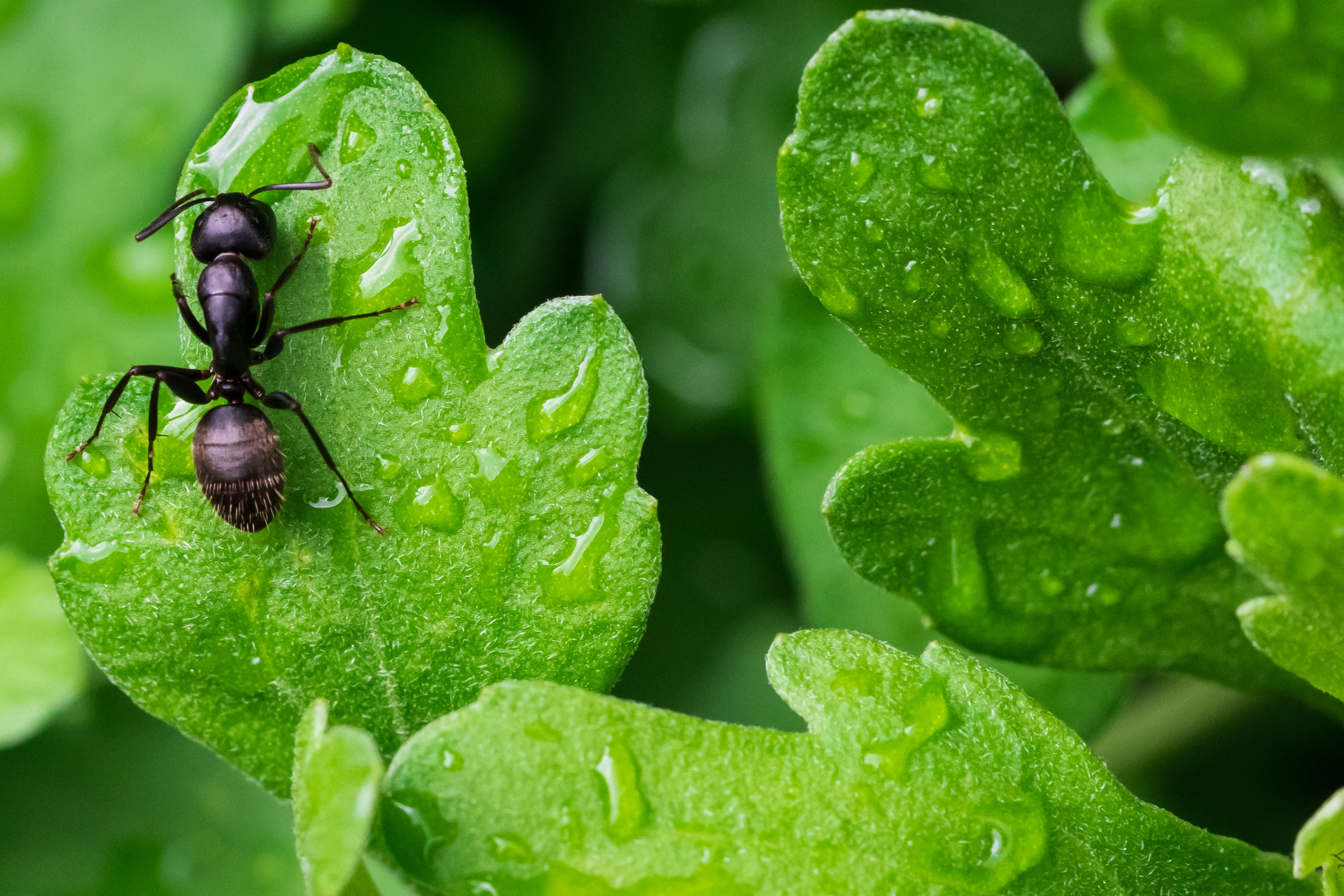
An ant at work (Photo by Shannon Potter, Unsplash)
Dogs, worms and ants have an amazing thing in common: They can be trained to detect markers of illness, from Covid-19 to tuberculosis. "Next time you’re irritated that ants have gotten into your kitchen, you might take a moment to consider their extraordinary powers of perception," reports Liz Langley of National Geographic.

What can bring your hope for humanity back? A horse show. The Horse World Expo returned to Pennsylvania for nickers, neighs and whole lot of horsing around.

Time to cook cabbage. Rumor is that cauliflower and Brussels sprouts may have been ousted. "Cooked the right way, cabbage can more than rise to the occasion." We agree.

Virginia is expecting its best oyster harvest in 35 years, the Richmond Times-Dispatch reports.

The rare Steller's sea eagle has returned to Maine.
(Photo by Zachary Holderby, The Associated Press)
Enjoy the Great Backyard Bird Count? Here's some more fun. "A rare Steller’s sea eagle native to the eastern coast of Asia, which caused a birding frenzy last winter, has returned to Maine. . . . If you're taking a specific trip, like to Japan in the winter, going out on a boat to some ice floes, that’s kind of your only chance to see one . . . But now, it’s just hanging out in Midcoast Maine.”

Of woods and men. Sounds more exciting than mice. The Conversation discusses the reintroduction of wolves in Colorado. "Aldo Leopold, the famed conservationist and professor of game management at the University of Wisconsin, believed that moral beliefs evolve over time to become more inclusive of the natural world. And what’s happening in Colorado suggests Leopold was right."

Crows are more intelligent than we thought. "New research shows that crows and other corvids "know what they know and can ponder the content of their own minds . . . This is considered a cornerstone of self-awareness and shared by just a handful of animal species besides humans."

With extra work and a little green thumb, you can make money from your garden. Consider growing perennial crops as a side hustle.

The glorious night sky! Eleven fantastic things to write on your calendar. "In the coming year, planetary alignments, perfectly timed meteor showers, and a pair of solar eclipses will delight stargazers around the world."

Friday, November 25, 2022

Nature nips: Ode to a maple; one horse saved; series on hog production summarized; wild turkeys rule New England

Darlyn Brewer Hoffstott's maple (Photo: Kristian Thacker, NYT)
In an ode to a huge, dying maple tree in Pennsylvania, Daryln Brewer Hoffstot writes for The New York Times, "'Standing people' is what the Cherokee called trees. I feel as if I am losing a member of the family."

Ever wondered how that jellied cranberry sauce is made? The Times tells us.

A horse won races, was retired and sold to farmers who sent him to a kill pen when he wore out. Donors to animal sanctuary in New York saved him, Rural Intelligence reports.

Madison McVan of Investigate Midwest has summarized the four-part series he did this fall about changes in hog production.

In New England, wild turkeys "were once hunted nearly to extinction; now they’re swarming the streets like they own the place," The New Yorker reports. "Sometimes turnabout is fowl play."