Showing posts with label caves. Show all posts

Friday, September 12, 2025

Quick hits: Newspaper sitcom; free child care; inspiring cave cleanup; soybean field discovery; dark sky ruminating


Can a sitcom about journalism capture its 'grit, humanity, and relentless optimism'?

Keeping a local newspaper alive is one thing, but revitalizing one staffed with employees who list texting and tweeting as their most recent writing ventures is an entirely different story. Meet Peacock's new mockumentary, "The Paper," which depicts the life and times of the struggling Toledo Truth Teller newspaper and its quirky staff. "Members of the news community weren’t sure whether to laugh or cry," writes Gretchen A. Peck of E&P Magazine. "For publishers and editors. . . the [show] raises big questions: can a sitcom capture the grit, humanity, and relentless optimism of real journalism?" The trailer is here.

New Mexico will be the first state in the union to offer free child care to all its families, regardless of income. "The state has been working to lower child care care costs since 2019, when it created the Early Childhood Education and Care Department," reports Chabeli Carrazana of The 19th. The new policy rollout in November will allow all families access to the state’s child care assistance program without meeting eligibility criteria and will remove any copay requirements. Families are expected to save an average of $12,000 per child.

Hidden River Cave's kaleidoscope-like Sunset
Dome is a popular tourist attraction.
What was once a heavily polluted cave in Horse Cave, Ky., is now a point of community pride and a tourism draw. "For generations, the cave was all but lost to the town on top of it. Miles of caverns and waterways brimmed with sewage that sent a putrid stench up from the depths and across downtown," reports Hiroko Tabuchi of The New York Times. "The restoration of Hidden River Cave is one of the most remarkable examples of a cave cleanup. . . . Last year, 30,000 people, more than 10 times the town’s population, toured the cave."

Some ranchers prefer the beaverslide for stacking hay.
(Photo by Linda Teahon, Offrange)
No need to purchase fancy machinery to stack hay bales -- a beaverslide is much cheaper and simpler to own. "The haystacking device consists of a wide, sliding fork at the base of a ramp and a cable pulley system rigged to the ramp’s underside," explains Katie Hill for Offrange. "Ranchers use a team of horses or a motorized vehicle to pull one of the cables perpendicular to the beaverslide, which in turn hoists the fork up the ramp, bringing a giant pile of hay up with it. . . .At the top of the ramp, the hay falls to the other side, forming three-story piles that can reach 25 tons in weight."

It hadn't been seen or touched by humans for 2,000 years, but this summer, artifact hunter Ben McGhee unearthed the discovery of a lifetime: "A hoard of 51 Native American blades buried in a Missouri soybean field," writes Chris Bennett of Farm Journal. "Based on the location, and the lack of percussion flakes or hammer stones within immediate proximity, McGhee believes the cache was transported to its present location, close to the water’s edge, for trade access." Native Americans traded the blades, which could be more precisely carved into arrowheads.
Glacier National Park is an International Dark Sky Sanctuary. Visitors can see the Milky Way from St. Mary’s Glacier, pictured here. (Photo by Ray Stinson, National Park Service)

In places where the cover of night is treasured, skies filled with stars, glowing planets and the Earth's solitary moon light the way. For many people, dark skies offer a window into thoughtfulness and mystery. "There is a feeling of possibility, timelessness, and, potentially, of fear, in the night sky," writes Sarah Melotte of The Daily Yonder. Some rural places "claim the preservation of dark skies as a core value. They protect a visitor’s experience of wonder and mystery. . . There are 152 dark sky 'places' in the continental United States." Find dark skies here

Tuesday, March 19, 2024

Natural wonders: Mt. Rainer's glaciers; wacky animals decline; the little bat that could; repurposing waste wool

Mt. Rainer is an active volcano. (Photo by Tiffany Von Arnim
via the National Park Service, CC image)
At 14,410 feet, Mount Rainier is the highest volcanic peak in the contiguous United States. It boasts the largest alpine glacial system outside of Alaska and contains the world's largest volcanic glacier cave system. It is the Mount's unearthly "frozen labyrinth tucked within the majestic volcano's east crater" that scientists are now daring to explore, reports Rebecca Dzombak of National Geographic. "The glaciers atop Mount Rainer, which towers to the southeast of Seattle, Washington, contains clues about the volcano, the inner workings of glaciers, and even icy worlds far from Earth."

In 2002, America's wacky animals -- think the great American llama, ostriches and emus -- flourished in the lower 48 states, Alaska and even Hawaii. Today that is no longer the case. All our "looney" animal populations have collapsed while other farm animals continue to thrive, reports Andrew Van Dam of The Washington Post. "From 2002 to 2022, we lost 83 percent of our ostriches, 79 percent of our llamas, 74 percent of our emus and 63 percent of our elk. Over that period, cattle were down just 8 percent, poultry was up 16 percent, and hogs were up 22 percent." The farms in Alaska and Hawaii no longer exist.

Little brown bat weigh less than 10 grams.
(Photo by Michael Code, Ambrook Research)
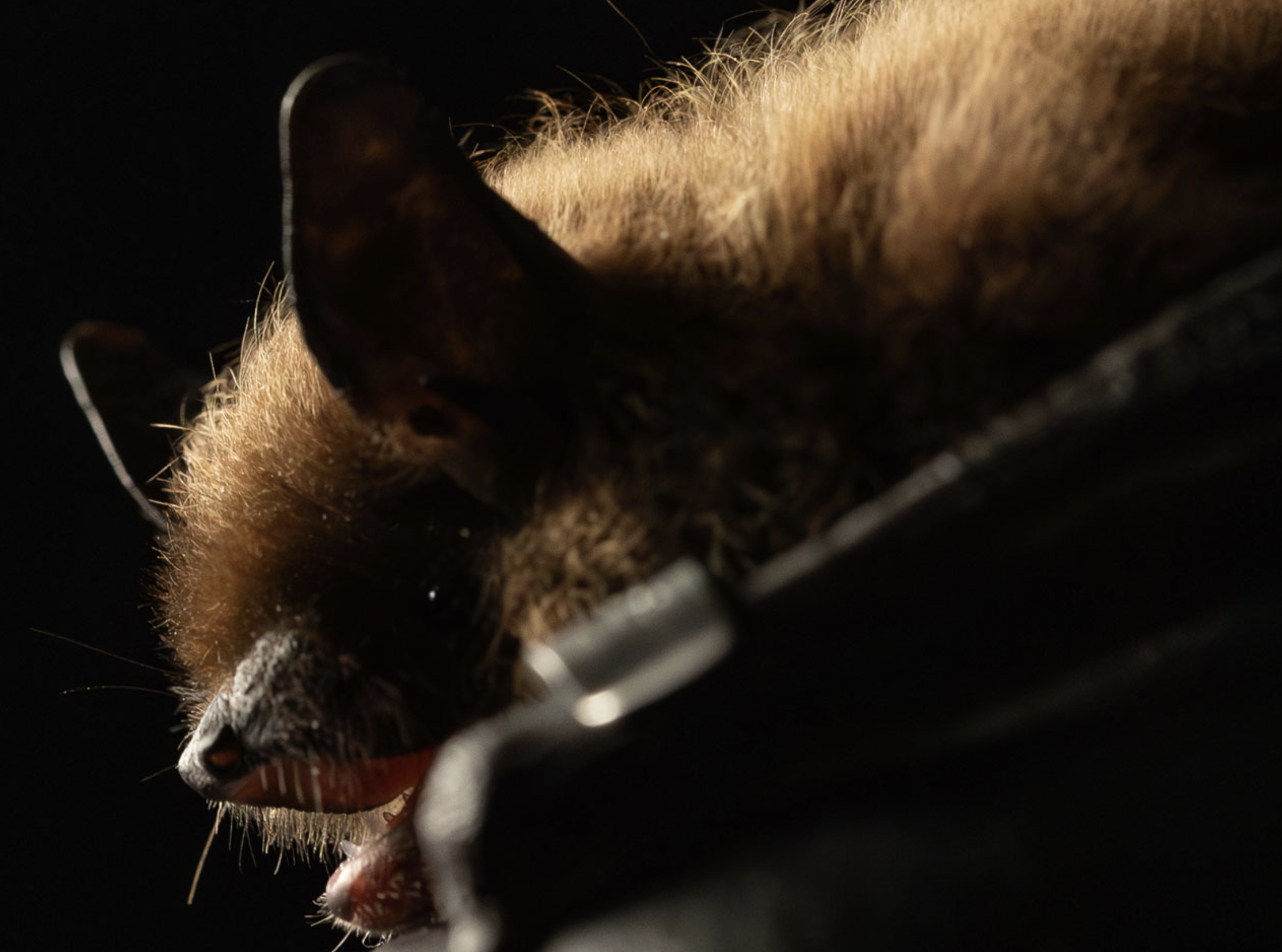
Cute as a button and confounding to scientists, Alaska's little brown bats have escaped white-nose syndrome. Can their "niche" in nature save them? "Meet Myotis lucifugus, commonly referred to as the little brown bat," reports Trina Moyles for Hakai magazine. Or, as chiropterologist (bat researcher) Jesika Reimer fondly calls it, 'the flying brown bear.'. . . Scientists know little about where [these bats] live at this far northern margin of the species' range."

Across North America, stands of trees of all different species are struggling to survive climate change. In response, scientists from the Cutfoot Experimental Forest are introducing some southern tree species to more northern regions, reports John H. Tibbetts of Knowable Magazine for Inverse. The survival of a grove of bitternut hickory trees, common to Illinois but transplanted to north-central Minnesota, is an example. "Normally, if a southern-adapted seedling is planted in an unsuitably cold climate like this one, it can risk frost damage, and its survival is threatened. . . . Today [scientists]can see the success of almost all the southern trees they planted."
Not all wool is usable for textiles, but it can make
'sweaters for the soil.' (Photo by Sam Carter, Unsplash)
Sheep farmers have developed a new way to repurpose coarser wool or "waste wool" that would have been thrown away by using a wool pelleting machine, reports Elise Konig for Ambrook Research. "A pelleting machine transforms the fleece’s long strands into cylinders that can more easily be handled. The pellets are then sold as soil amendments, providing water retention, nutrient recycling, and soil aeration."

Are you ready to clean, prune, test your soil, pick the plants and snuggle them in some soil? March is get-ready to garden month, and there's lots to do. "If you’ve been itching to get out and get gardening, we’re on the cusp of the season. This is the time to get organized and get ready because by the time we talk again in April, we will be in it, writes Amanda Blum for Lifehacker. From tidying the garden to splitting bulbs to fertilizing shrubs, Blum has a list of all the jobs to do before planting begins.

Friday, September 01, 2017

Budget could cut white-nose syndrome research

Bat with white-nose syndrome (New York Dept. of Environmental Conservation photo)
The fight to eradicate white-nose syndrome in bats may suffer a setback if proposed federal budget cuts become a reality. Scientists estimate that more than 6 million U.S. bats died from the syndrome between 2006 and 2012, and many more have died since then, Michael Doyle reports for Environment & Energy News. Bats occupy an important place in the ecosystem, as predators of mosquitoes and insects that harm crops, so scientists are scrambling to find a way to combat the disease. One way the federal government has done that is by awarding grants to promising research into methods of killing the disease without killing the bats, as well as to scientists doing general research on bats.

The latest round of Fish and Wildlife Service grant funding came from the agency's "Science Support" fund, which the Trump administration has proposed eliminating in the Interior Department's 2018 budget, Doyle reports. FWS distributed more than $1 million in bat-related research grants last month to scientists in 37 states and the District of Columbia. Research is also conducted by the wildlife program of the U.S. Geological Survey, but the administration is proposing a 22 percent cut in that fund for next year. The USGS has contributed valuable information to the battle against white-nose syndrome; several weeks ago its researchers found that the fungus that causes it can spread in warm as well as cool weather. The administration is proposing an 11 percent cut in funding for the National Science Foundation, which funds research grants on white-nose syndrome. An NSF summary says University of Georgia researchers are using "computational tools from mathematics, computer science, epidemiology and ecology to understand and predict the spread of [the] devastating disease," Doyle reports.

Congress has ignored some of President Trump's previous attempts to cut science funding, but the affected government agencies aren't taking any chances. In response to the threat of reduced or eliminated funding, some of the agencies are pooling research funds with each other and seeking contributions from private entities. The Bats for the Future Fund was established and mostly funded by FWS and the National Fish and Wildlife Foundation, but has also received funding from the U.S. Forest Service and Shell Oil Co. Research project funding is to be announced Sept. 22.

Tuesday, May 26, 2015

Scientists, conservationists say they have successfully treated bats with white-nose syndrome

Scientists and conservationists say they have successfully treated and cured bats afflicted with white-nose syndrome, reports The Nature Conservancy. The disease, which is a white fungus that appears on the noses of hibernating bats, has killed an estimated 5.7 million bats in the eastern U.S. and Canada. It also forced the Fish and Wildlife Service to list the northern long-eared bat as threatened. (A bat that was released after being treated for white-nose syndrome)

Last week 150 bats successfully treated for white-nose syndrome were released into the Mark Twain Cave Complex in Hannibal, Mo., according to The Nature Conservancy. "In 2012, Dr. Christopher Cornelison and several colleagues at Georgia State University found that a common North America bacterium, Rhodococcus rhodochrous, had the ability to inhibit the growth of some fungi. They found in the lab that R. rhodochrous, without directly touching the Pd, could nonetheless strongly inhibit its growth." Scientists said they are cautiously optimistic that the treatment is an effective cure for white-nose syndrome. (Read more)

Thursday, April 02, 2015

Northern long-eared bats earn 'threatened' status

A dramatic decline in the northern long-eared bat (FWS photo) population due to millions of deaths from white-nose syndrome has earned the species "threatened" status from the U.S. Fish and Wildlife Service
effective May 4, Whitney Forman-Cook reports for Agri-Pulse, a Washington newsletter. The bats are found in 37 states, Washington D.C. and 13 Canadian provinces.

FWS Director Dan Ashe told Forman-Cook, “Bats are a critical component of our nation's ecology and economy, maintaining a fragile predator-prey balance; we lose them at our peril. Without bats, insect populations can rise dramatically, with the potential for devastating losses for our crop farmers and foresters. The alternative to bats is greater pesticide use, which brings with it another set of ecological concerns.” (Read more)

Thursday, June 20, 2013

California man turning old Kansas limestone mine into doomsday survival shelter

Californian Robert Vicino is preparing for the end of the world by making plans to turn a limestone cave in rural Kansas into a survival shelter. The cave is a former Army storage facility on the southeast edge of Atchison, about 50 miles northwest of Kansas City, Mo., reports Bill Draper for The Associated Press. The caverns, which are 100 to 150 feet below the surface, and have a constant temperature, were created by limestone mining operations that started in the late 1880s. (AP photo by Orlin Wagner)

Investor Coby Cullins bought the property for $510,000 and leased the 45-acre west cave to Vicino, who plans to call it Vivos Shelter and Resort, reports Draper. Cullins is marketing the 25-acre eastern cave to local businesses. Vicino's shelter will "have enough space for more than 1,000 RVs and up to about 5,000 people." The shelter, though, will be members only, and will require a steep fee to occupy. Vicino also owns other shelters, including one in Indiana, but won't say where "because he fears there would be anarchy in the event of a world-changing catastrophe." (Read more)

Wednesday, June 12, 2013

Some worry Texas housing development could displace world's largest bat colony

For 10,000 years Mexican free-tail bats have spent the spring and summer in Bracken Cave in rural Texas just north of San Antonio. The popular tourist destination is home to the world's largest bat colony, with an estimated 10 to 20 million bats emerging from the cave every night to blacken the skies with their vast numbers. But developers are planning to build a 1,545-acre, 2,500-home subdivision near the cave, a move that many feel could threaten the existence of the bats, and put residents in harms way, reports Colin McDonald for San Antonio Express-News. (Express-News photo by Bill Calzada: Millions of bats emerge from the cave)

Bat Conservation International, which owns the cave, said the bats can carry rabies, but they also eat several million pounds of insects every night, benefiting farmers whose crops could be damaged by the insects if the cave is forced to be sealed, notes McDonald. Plus, there is concern about where the bats might migrate if they could no longer use the cave. As a result, state representatives are trying to slow down development with a proposed bill that would "put a moratorium on development within five miles of the 697-acre preserve that surrounds the cave." (Read more)

Thursday, May 09, 2013

Forest Service plans to re-open Western caves that it closed in fear of bat-killing fungus

The U.S. Forest Service is planning to reopen caves in the West that have been closed due to the spread of white-nose syndrome, a fungus blamed for the death of 6 million bats in the East and South, reports Sarah Jane Keller for High Country News. In 2010, the agency closed all caves and abandoned mines in its Rocky Mountain region, which includes Colorado, Nebraska, Kansas and most of Wyoming and South Dakota. (Fish and Wildlife Service photo: Brown bat with white-nose syndrome in Vermont)

Caves in the region's national forests and grasslands (see the Forest Service website) will re-open Aug. 1, under a management plan that "includes various restrictions, depending on where bats hibernate and how close the caves are to outbreaks of white-nose syndrome. Environmental groups call the decision shortsighted," Keller reports. "Some scientists think that the disease might not take hold in the West, because Western caves may be too warm and dry for the cold-loving fungus, and hibernation colonies tend to be small and far apart." The fungus has been reported in Oklahoma.

Last week, the fungus was discovered in Daniel Boone National Forest in Kentucky, reports the Lexington Herald-Leader, and we reported in March that the disease has been found in 22 states. Bats contracting the disease have a mortality rate of 70 to 100 percent. The disease does not appear to affect humans.

Monday, September 17, 2012

Researchers hope artificial bat cave will give clues to fight deadly white-nose syndrome

AP photo by Allison Smith
Conservationists have built an artificial cave near Clarksville, Tenn., in an effort to save bats from the fungus of white-nose syndrome, which has killed millions of bats across the U.S. The Nature Conservancy-built cave is thought to be the first man-made hibernating structure for bats in the wild, which control insects and help pollinate some crops.

The cave is built from concrete with textured ceilings so bats can cling to it, and is about the size of a single-wide mobile home. It was covered with 4 feet of soil, leaving only the air intake, right, that serves as the bat entrance visible from the surface, The Associated Press reports. It is located near a natural cave with an established hibernating population of gray bats, which are to be lured to the artificial cave by ultra-sonic bat calls emitted by loudspeakers.

White-nose syndrome has killed more than 5.7 million bats since it was first detected in 2006. It causes bats to wake from hibernation and search for food in the winter, eventually succumbing to weather or starvation. Scientists have been trying to determine its cause and how to prevent it. During its first two years in a cave, white-nose fungus develops slowly, but spikes in the third, making cleaning of the artificial cave essential so the disease doesn't reach lethal levels. It will be cleaned every spring with Formula 409 when hibernation stops. (Read more)

Tuesday, May 22, 2012

Enviros sue Forest Service for data on how it will keep white-nose syndrome out of Northern Rockies

The Center for Biological Diversity is suing the U.S. Forest Service to get documents about how the agency plans to keep white-nose syndrome from reaching bats in the northern Rocky Mountains, reports Matt Volz of The Associated Press. The environmental group says the agency has taken no action to prevent spread of the disease into Montana, Idaho, Washington, and North and South Dakota.

The center's Mollie Matteson said action must be taken now to prevent spread of the disease into the Northern Rockies even though it's not yet been documented there. "We don’t know when white-nose syndrome might show up in the West, but it behooves all land managers to take all the steps they can to make sure it doesn’t happen," Matteson said. Volz reports caves and old mines have been closed in parts of Colorado, Wyoming, Kansas, Nebraska an South Dakota to prevent spread of the disease to those areas, but nothing has been closed in the Northern Rockies.

Forest Service media coordinator Phil Sammon said the agency could not comment on pending litigation, but added several measures to stave disease spread are pending in the northern region. None of the measures have been approved yet.

Researchers and scientists now know that the disease hitchhiked from Europe into the U.S. Humans can't contract the disease, but they can spread it by spores attached to their clothes or shoes. It's estimated the disease has killed about 7 million bats in the eastern U.S. so far by waking bats from hibernation and forcing them to search for food in winter. They die when they find no food. (Read more)

Thursday, May 05, 2011

Cave expert Thomas C. Barr Jr. dead at 79

Zoologist Thomas C. Barr Jr. died from a heart attack this week at the age of 79. Barr, a professor emeritus at the University of Kentucky, was known for the "scores of scientific papers, discoveries and a book" about caves in Tennessee and neighboring states, Anne Paine of The Tennessean reports. (Nashville Grotto photo)

Barr's "passion for the world underground began at age 7 when his parents took him to Mammoth Cave," Paine writes. His writings on ecology, taxonomy, cave evolution and beetles inspired a generation of cavers throughout the region; he was a founding member of the Nashville and Boston grottos of the National Speleological Society.

Barr wrote the book Caves of Tennessee while he was in his 20s. His research was funded by the state, and he and Roy Davis, operator of Cumberland Caverns, "eventually disclosed more than 700 caves," Paine reports.

Barr's caving expeditions led to his descriptions of "over one hundred species of cave beetles, many of which were previously unknown," Paine writes. "At the time of his death, he was collaborating on a paper for a newly discovered species of ground beetle, carabide, to be published by the Carnegie Museum of Natural History. (Read more)

Thursday, April 14, 2011

Deadly bat disease found in Western Ky. cave

The fatal bat disease that has decimated bat populations across the eastern U.S. has been confirmed in Kentucky for the first time. "White-nose syndrome was confirmed in a little brown bat from a cave in Trigg County in Western Kentucky, about 30 miles southeast of Paducah," Greg Kocher of the Lexington Herald-Leader reports. The disease was first located in New York in 2006 and has killed an estimated 1 million cave-dwelling bats in 16 U.S. states and three Canadian provinces. "This is likely the most significant disease threat to wildlife Kentucky has ever seen," Jonathan Gassett, commissioner of the Kentucky Department of Fish and Wildlife Resources, said in a news release.

Kentucky was the first state to develop a comprehensive response plan for the disease in 2009 when it "increased education on decontamination procedures, surveillance, monitoring, and cave closures on private, state and federal lands," Kocher writes. Officials found no other cases in a 16-mile radius of the Trigg County cave. Gassett said his department will not sit idle against the disease, which has a near 100 percent mortality rate in affected caves, noting "We plan to aggressively manage this threat ... as it occurs in Kentucky in order to protect and conserve our bat populations." (Read more)

Monday, April 04, 2011

Scientists at a loss for solutions, fear ecological impacts, as white-nose syndrome moves west

Since white-nose syndrome was first discovered in New York bats four years ago it has spread as far west as Oklahoma and killed an estimated 1 million bats. "A majority of the dead were little brown bats, which have lost an estimated 20 percent of their population in the northeastern United States over the last four years," Louis Sahagun of the Los Angeles Times reports. "The fungus seems to prefer the 25 species of hibernating bats, but each of the 45 species of bats in the United States and Canada may be susceptible to white-nose syndrome." A similar fungal growth has long been observed on bats in Europe.

"It is unbelievably sad and disheartening, and we can't seem to move fast enough to get ahead of it," said U.S. Geological Survey wildlife biologist LeAnn White. "We may be looking at phenomenal losses across the country with unknown ecological consequences." The loss of bats may have severe economic implications; a recent study published in Science estimated the value of pest control provided by bats was at least $3.7 billion nationwide, Sahagun writes.

With the disease continuing its westward march, Thomas Kunz and Jonathan Reichard of Boston University's Center for Ecology and Conservation Biology are urging the U.S. Fish and Wildlife Service to list the little brown bat as endangered. Solutions to curb the spread may bring about even worse complications. "Scientists have considered using fungicides, but studies have shown they could kill other microbes in caves," Sahagun writes. Placing heaters in the caves could raise the bats' body temperatures to a level that might prevent the growth of the fungus but would disrupt their hibernation.

"Killing infected animals would slow the spread of the disease but would not eliminate it because of the complexity of bat life," Sahagun writes. Tom Hallam of National Institute for Mathematical and Biological Synthesis at the University of Tennessee explained, "It would be all but impossible to find and kill every infected bat. Yet, because of the size of bat colonies and the many arenas in which they interact — reproduction, hibernation, swarming, mother and pup activities — it would only take one infected bat to start it all over again." (Read more) (Times video)
 

Thursday, February 10, 2011

Deadly bat disease discovered in N.C. caves

The deadly disease decimating bat populations across the Eastern United States has reached North Carolina, wildlife officials said yesterday. White-nose syndrome "has been documented at a closed mine in Avery County and in a cave at Grandfather Mountain State Park," Bruce Henderson of the Charlotte Observer reports. The disease had been found in neighboring Virginia and Tennessee. "This discovery marks the arrival of one of the most devastating threats to bat conservation in our time," Gabrielle Graeter, an N.C. Wildlife Resources Commission biologist, told Henderson. (NY Department of Environmental Conservation photo of white-nose infected bats in New York by Nancy Heaslip)

"Scientists believe the disease is caused by a newly discovered fungus that often grows into white tufts on the muzzles of infected bats," Henderson writes. "The fungus was first identified in New York state in 2006 and has spread into Canada and south to Tennessee." Sue Cameron, an endangered-species biologist with the U.S. Fish and Wildlife Service, noted, "The discovery does not bode well for the future of many species of bats in Western North Carolina." The infected bats were found during FWS-funded investigations at mines and caves across Western North Carolina this winter. (Read more)

Monday, October 11, 2010

Deadly bat disease appears to be on Colorado's doorstep

In July we reported Western U.S. parks were considering closing caves to prevent the spread of the mysterious white-nose syndrome killing bat populations in the eastern half of the country. "Trying to buy time for researchers to find a solution, Denver-based U.S. Forest Service officials have ordered the closure to visitors of hundreds of caves and 30,000 abandoned mines in Colorado, Wyoming, Kansas, Nebraska and South Dakota," Bruce Finley of The Denver Post reports. The disease has been found as far west as Oklahoma this summer. (Photo by Judy DeHaas, Denver Post)

If the disease reaches Colorado, locals should expect an explosion of flies, beetles, moths and mosquitoes, said Rick Adams, a biologist at the University of Northern Colorado and a bat expert. "You're going to feel the effects of this," he told Finley. "You're going to get bitten by a lot more other things that are actually likely to bite you, like mosquitoes. If you are a farmer, it's going to cost you a lot more for pesticides to protect your crops." The fungus attacks bats through the mouth or nose and prevents them from sleeping. Bats generally starve or freeze to death after burning up body fat reserves while looking for food when they normally would be hibernating from November to April.

"The threat of White-Nose Syndrome to the bat populations in this region is on our doorstep," Tony Dixon, the Forest Service's acting regional director, told Finley. "With White-Nose Syndrome killing from 80 to 100 percent of infected populations, the ecological consequences are too severe to risk the human spread of this deadly disease." A study from Boston University ecologist Thomas Kunz estimated demise of bat populations would cost farmers between $750,000 to $1.2 million from applying additional pesticides. "The only thing that could be done — it's going to take manpower and money — is to develop a vaccine to protect survivors," Kunz said. "Inject them with some kind of vaccine. That's years away. We're likely going to end up with large numbers of bats dying." (Read more)

Friday, July 23, 2010

Forest Service considering closing Western caves to slow spread of bat-killing disease

Federal and state agencies in the Eastern U.S. have been closing caves in an effort to slow the spread of mysterious white-nose syndrome killing bat populations; now Western U.S. parks are considering similar closures, though the syndrome still appears to be hundreds of miles away. "The closures would limit human access to caves on Forest Service lands in Colorado, Kansas, Nebraska and most of Wyoming and South Dakota in hopes of stemming white-nose syndrome, which scientists believe people can transport on clothing, boots, caving gear and other equipment," Eryn Gable reports for Environment & Energy Daily.

"It is something we are considering, but we are yet to make the final decision," Janelle Smith, a spokeswoman for the service's Rocky Mountain region, told Gable. The closure issue could be announced in the next couple of weeks and is expected to last for 12 months, Gable writes. The order could also limit access to some trails that lead to caves. Karen Carter, the agency's spokeswoman for the Southwest region, told Gable the agency is expected to make a decision on its response to the disease, including cave closures, in the next few weeks.

White-nose syndrome was first discovered in a cave in upstate New York in early 2006 and has since been discovered in 14 states and two Canadian provinces with bats throughout much of the affected area now dying at extremely high rates. Cave closures have shaken the caving community as officials look to fight the spread of the disease. Colorado Cave Survey chairman David Lambert told Gable the decision to close caves in that state was "difficult and controversial" and "a bitter pill," but his organization supported the closures. "Cavers rightfully consider themselves to be stewards of the underground world," he told Gable. "Across the West, our claim to that identity will be measured to some extent by our support for these closures." (Read more, subscription required)

Monday, June 14, 2010

Mammoth Cave prepares for inevitability of ailment that is killing bats by the millions

Officials at Kentucky's Mammoth Cave, the world's longest known cave system, have feared the spread of white-nose syndrome among U.S. bat populations, and tensions are high as the disease moves closer. The syndrome, which has killed more than 1 million bats since 2006, was recently found in Dunbar Cave near Clarksville, Tenn., 80 miles southwest of Mammoth Cave National Park in Southern Kentucky, Laurel Wilson of the Lexington Herald-Leader reports.

Traci Hemberger, a wildlife biologist for the Kentucky Department of Fish and Wildlife Resources, said white-nose syndrome reaching the Bluegrass State is inevitable now, especially since it has been found in Tennessee. "We've been on alert for a number of years," Mammoth Cave public information officer Vickie Carson told Wilson. Park officials are "drafting a response plan that will help keep the disease from arriving as well as outline how to minimize the spread if it does make an appearance," Wilson writes. (Read more) You can see our most recent white-nose item here.

Monday, June 07, 2010

State and federal agencies closing caves to slow the spread of bat-killing disease

We've been following the spread of the mysterious white-nose syndrome affecting bat populations across the eastern U.S., most recently here, and now state and federal agencies across the country are closing caves in hopes of stopping the spread. "Wildlife agencies in 17 states have issued cave closings, saying that people may be contributing to the spread of the disease by tracking the fungus on shoes and other equipment," Oren Dorell of USA Today reports. "Caves are popular destinations for Boy Scouts, mineral clubs and 'cave junkies' who try to visit as many caves as possible in one day."

The disease was first detected in Upstate New York in 2006 and has been detected as far south as Virginia and as far west as Missouri. "Caver Peter Haberland, of New York, said caving groups should not object to the closings," Dorell writes. "For a period of a year, most people can deal with that," he said. Peter Youngbaer of the National Speleological Society, a group of cave enthusiasts, told Dorell that widespread cave closings are counterproductive because organized cavers who get the message may follow the ban, but casual cavers are "not in the loop."

NSS "says that bats are spreading the disease on their own and that closing caves prevents responsible cavers from learning more about the disease," Dorell writes. Jeremy Coleman, the national white-nose coordinator for the Fish and Wildlife Service, told Dorell while no one has found proof that people are spreading the disease, "nobody has been able to prove they haven't." Despite closings in some states, the disease has been found in New York, New England, Virginia, Tennessee, Missouri and most recently in western Oklahoma. (Read more)

Thursday, April 22, 2010

Deadly bat disease moves into Great Smokies

Despite the Great Smoky Mountains National Park's decision to close all caves to public entry a year ago to prevent the spread of deadly white-nose syndrome among bats, the disease has reached the park. The National Park Service announced Monday that "One little brown bat taken from hibernation at White Oaks Blowhole Cave tested positive for white-nose syndrome," The Associated Press reports.  The disease has killed over one million northeast bats since 2006.

"We closed all of the park’s 17 caves and two mine complexes to any public entry a year ago to prevent the possible importation of the WNS pathogen on visitor’s clothing or gear, but scientists have confirmed that bat-to-bat transmission of the fungus occurs," Bill Stiver, a wildlife biologist at the park, told AP. "We take this very seriously because national parks are often the primary refuge that endangered species can count on for protection." We reported in February that the disease had been found in Tennessee, but this week's news is a significant blow to the hope that its spread could be contained, since the White Oaks Blowhole Cave is home to the state's largest known hibernating colony of endangered Indiana bats, AP reports. (Read more)

Thursday, February 18, 2010

Deadly bat disease reaches Tennessee, raising prospect of more insects, disease and pesticides

UPDATE, Feb. 22: Reporter Morgan Simmons and photographer Adam Brimer of the Knoxville News-Sentinel took a trip with Tennessee Wildlife Resources Agency field biologist Sterling Daniels, left, and Nature Conservancy cave specialist Cory Holliday to a cave near the Kentucky border to look for white noses. They didn't find any, but came back with a story, photos and video. The crew had to decontaminate all their clothing and equipment to avoid bringing into the cave whatever causes the disease. That's a cautionary note that should be included in stories on the subject, because stories about caves can encourage amateurs to go spelunking without taking proper precautions.

In November we reported the mysterious white-nose syndrome affecting bats in the Northeast might be moving south. Now those fears have been confirmed. Two bats that died during hibernation in Worley's Cave in Sullivan County in northeast Tennessee have tested positive for the highly contagious disease, Anne Paine of The Tennessean reports. The cave is near Virginia, the southernmost state where the disease had been recorded.

Tennessee officials fear bat losses in their state from the disease could match the entire losses in the Northeast because the state has more than 9,600 caves, some of which host colonies of up to 100,000 bats during the winter, Paine reports. "If we lose these guys, we're going to end up with a lot more insects flying around destroying agricultural crops and forest trees and defoliating them," Thomas Kunz, professor of biology and director of the Center for Ecology and Conservation Biology at Boston University, told Paine. The 1 million bats killed by the disease in the northeast since 2006 "would have eaten an estimated 694 tons of insects over the warm months," Paine writes.

Increased pesticide use is one option for combating the increased insect population. "That has adverse consequences on human health and other things," Kunz told Paine. "Keystone species keep things in balance — the balance of nature. They hold up the arch that is the ecosystem. When you remove a keystone species, the ecosystem collapses." Many think the disease is spread by human cavers on their equipment. State-owned caves in Tennessee have been closed to try and combat the spread, but the white-nose cases occurred in a privately owned cave. Most caves are privately owned. (Read more)