Showing posts with label fruit. Show all posts

Tuesday, January 13, 2026

Southern Florida orange farmers turn to other tropical fruit trees to diversify crops

U.S. grown mangoes may taste better.
(Graphic by Adam Dixon, Offrange)
Florida's famed orange production started in the 1830s, when farmers began shipping their citrus nationwide by rail. The state's orange industry continued to flourish until the mid-2000s, when Huanglongbing, a bacterial disease, decimated groves throughout the state. Since then, orange growers have been working to diversify their crops by replacing orange trees with other tropical fruits that thrive in the region's hot, humid climate.

The work of botanists at the University of Florida's Tropical Research and Education Center (TREC) is helping citrus growers go beyond oranges by teaching farmers how to grow other tree crops. "South Florida can support the kinds of fruits usually only found in the tropics," reports Diana Kruzman for Offrange. Consumer interest and advances in plant breeding have the region's tropical fruit business "booming."

Even with the steep dip in crop yields, oranges remain Florida's top fruit crop, but the "tropical fruit industry, which consists of higher-value crops like avocados and mangoes, as well as more niche fruits like starfruit and guava, isn’t far behind," Kruzman explains. TREC researchers are "working to introduce other varieties of tropical fruits, such as papayas and dragonfruit."

Meanwhile, farmers are tasked with developing bigger consumer markets for their growing list of exotic fruits. "So far, many customers have come from immigrant communities around the U.S. who already know about niche tropical fruits and are willing to pay a premium to ship them quickly," Kruzman adds. 

Domestic mango growers already have one marketing advantage -- their mangoes are likely to taste better because they aren't subject to USDA fruit screenings. Kruzman explains, "All mangoes shipped into the U.S. must be disinfected to prevent foreign pests or diseases from entering the country. . . .That process involves either boiling the fruit or zapping it with radiation, which tends to leach out nearly all of its flavor."

Friday, January 31, 2025

Since the Paleolithic era, honey bees pollinated apple trees and humans picked the apples. That's about to change.

A robot inspects apple blossoms for possible pollination.
(Washington State University photo via WSJ)
Human apple harvesters must scale ladders, fend off bugs, balance on branches and twist stretchy stems to get the job done. For farmers, hiring experienced apple pickers is difficult and expensive, which is why several "universities and startups are developing specialized robots for each stage of apple production," reports Jackie Snow of The Wall Street Journal. The bots will handle everything from "pollinating the trees to fertilizing them, pruning them and harvesting the fruit."

In areas where there aren't enough honey bees to pollinate apple blossoms, "researchers have developed robotic pollinators," Snow explains. Cameras help robots find apple blossoms, and then "a mechanical arm moves in close and releases a precise burst of pollen through a nozzle. Early results are promising."

Robots used to fertilize apple orchards base their application on individual tree's needs. Snow writes, "They consider multiple indicators, including trunk diameter, canopy growth patterns and fall leaf-color changes, and use AI models to determine precise nitrogen requirements. . . . Researchers believe precisely targeting individual trees could significantly reduce overall fertilizer."

Researchers are working on robots that can also prune. "The robots must evaluate the entire structure of each tree, analyzing branch length, angles, thickness and spacing to determine which cuts will promote ideal growth patterns."

To harvest apples, robots need to be gentle and nimble. "Researchers at Washington State are testing inexpensive, fabric-based robots that have three silicone fingers that close around apples," Snow explains. So far, their research has been in a lab "with fake trees and fruit. . . The system will face its first orchard trials during the next harvest season, in the fall."

Friday, November 01, 2024

Flora & Fauna: Muppets ponder the Electoral College; a new wildlife corridor; fall in love with moths; banana battle

Most muppets didn't "vote" for the Electoral College.
(Muppet Wiki photo)
Elmo took it upon himself, along with several other muppets who were voting, to try and understand how the U.S. Electoral College works. "Elmo just did some math and Elmo is worried," writes Alexandra Petri of The Washington Post. At first, the Count loved how the College worked, but then he said, "I love counting, but the Electoral College is not about counting! It is about making things not count! The Electoral College belongs in the trash!" Oscar the Grouch had some feelings about that. . .

A critical wildlife pathway that began with "a handful of frustrated hunters and 20 deer imported from South Carolina," is now a reality writes Dan Chapman for the U.S. Fish and Wildlife Service. "A burgeoning wildlife corridor stretches from Atlanta’s western suburbs to the Talladega National Forest in Alabama, a 30-mile stretch of public and private lands where deer, bear, at-risk bats, and federally endangered fish have more room to roam, and more chances to survive." Read about the corridor's unique beginnings here.

Sugar maples can live to be 300 to 400 years old.
(Adobe Stock photo)
In a forest, all flora and fauna eventually die, but in the case of an old and beloved sugar maple, life went on as saws and woodworking turned the tree into bowls that could be held, used and treasured, writes Daryln Brewer Hoffstot for The New York Times. Tree "turner," Corey Snyder, "presented me with three beautiful, honey-colored bowls: one for our son, one for our daughter, and one for us. . . . One has light streaks of green because of mineral deposits. They are different shapes, sizes and thicknesses. I asked him how he chose what form the bowls should take. 'I let the piece of wood dictate,' he said. . . .The old maple had spoken."

There are roughly 180,000 known moth and
butterfly species
. (Princeton U Press graphic)
The world of moths is mysterious and vast. For all of us, there is much to learn and fall in love with. "As humans drop off to sleep, the invisible world of moths comes to life. Across the planet, billions of the insects take flight on their nocturnal errands," report Michael J. Coren and Alice Li of The Washington Post. "Over two nights in the desert, I discovered just how easy it is to fall in love with an unloved insect. And why 'mothing' may be the best way to discover the miracle of biodiversity in your own backyard."

As bananas battle for survival, scientists are working to save them from extinction. "Two diseases threaten to wipe out the banana as we know it, and scientists are racing to breed a fruit of the future," reports H. Claire Brown of The Wall Street Journal. "Chiquita Brands International last month said it bred a new banana called the Yelloway 1 that is resistant to one of the major diseases and shows promise in resisting the second. . . . Using a genetic bank of about 150 banana varieties, the Chiquita team has focused on breeding an edible, disease-resistant banana."

NOAA plans to consider expanding the new Chumash Heritage Marine Sanctuary in the years
ahead, after new infrastructure is built for offshore wind farms. (NOAA photo via NPR)

A new national marine sanctuary isn't just a win for sea creatures and sea lovers, it's the first such designation led by Indigenous people, reports Lauren Sommer of NPR. "More than 4,500 square miles of ocean will soon be protected by the federal government off the Central California coast. The Biden administration is creating a new national marine sanctuary, which will be the third largest in the U.S. . . . The new Chumash Heritage National Marine Sanctuary will be managed in partnership with tribes and Indigenous groups in the area, who will advise the federal government."

Tuesday, July 16, 2024

Flora & Fauna: Delightful fireflies may decline; a donkey's tale; cats chose people; still time to plant; reuniting horses

Fireflies can make an evening forest magical.
(Photo by Tony Phan, Unsplash)
One of the most beguiling insects in the United States very well might be the firefly. Bright, blinking and full of light, the males put on a show hoping to win a mate. For humans, the creatures' harmless nature and luminous joy make them irresistibly charming. But their existence is threatened. "Researchers found that climate change is among the most serious threats to firefly populations in the United States," reports Kiley Bense for Inside Climate News. Darin McNeil, the study’s lead investigator, told Bense, "What we were really surprised to find is it’s also long-term weather patterns, like averages and things that are expected to change with climate change, that are actually the number one drivers of firefly populations." Bense adds, "As some places become hotter and drier, their firefly populations could disappear."

Once upon a time, Diesel the Donkey ran away from home and joined an elk herd in Northern California. He had always longed to live free. "Diesel’s story has made headlines for years. It first did so in 2019, when he ran away from Terrie and her husband, Dave, who after months of searching for their new pet, gave him up for dead," reports Jonathan Edwards of The Washington Post. "Five years later, a video of Diesel roving the California wilderness as a fully enmeshed member of an elk herd [surfaced]. . . . The video, taken by a hunter, shows Diesel turning, trotting and running with his more graceful-looking herd mates." Some of us are born to be wild. Watch the video here.

Driscoll's has worked for years to breed the
perfect berries. (Photo by Maksim Shutov, Unsplash)
Sumptuous and sweet -- it's hard to resist the delights of fresh berries. From the lush decadence of strawberries and cream to the perky freshness of a juicy blueberry in a warm muffin, America's berries have never tasted so good, reports Ben Cohen of The Wall Street Journal. "Driscoll’s had to figure out how to breed, produce and sell its most flavorful strawberries and raspberries. . . . [It's] is now selling those ultraflavorful strawberries, blueberries, raspberries and blackberries under a fitting label: "Sweetest Batch." . . . They’re expensive and available only in limited quantities. . . but Americans are stretching their berry budgets to buy them."

Why cats decided to befriend humans isn't clear.
Maybe it's the beds. (Photo by K.S. Matheson, Unsplash)

In terms of evolution, people didn't choose to hang out with other people. Instead, survival mandated that humans stay together in groups. That's not true for felines. Solitary and smart, cats decided to live among people, "domesticate themselves," and even fine-tune their meows to communicate with humans, writes Grace Carroll for The Conversation, a journalist platform for academics. "Originally, cats were solitary creatures. Most of their social behavior was restricted to mother-kitten interactions. Outside of this relationship, cats rarely meow at each other. . . . However, as cats began to live alongside humans, these vocalizations took on new meanings. . . . Over time, cats have evolved to use vocal signals that resonate with our nurturing instincts."

In the American West, many wild mustang herds are rounded up each year to be divided and sold at auction. Clare Staples is working through her sanctuary to return horses to their long-lost herds, reports Cathy Free of The Washington Post. "Staples began purchasing the horses and working to reunite as many of them as possible with members of their original herds at her 9,000-acre ranch in Bend, Ore. She also rescued wild donkeys from kill pens and took in horses that had been relinquished to other animal rescue agencies."

Carrots can be grown the in the spring and fall.
(Photo by Julian Hochgesang, Unsplash)
It may be mid-July, but there's still time to grow your own produce or herbs. "It is never too late to start a garden," writes Nicole Burke, owner of the Gardenary. "Don't believe me? I'll explain. First, let's talk about what your first frost date means (and doesn't mean) because most of us have the completely wrong idea about the 'end' of gardening season. . . . You can absolutely continue to garden after your first frost date in the fall or winter and then begin to plant before your last frost date in the late winter or spring. The only thing your first frost date tells you is when your warm season ends and your cool season begins." Hoping to plant this month or in the fall? Click here.

Tuesday, May 28, 2024

Flora & Fauna: Considering Waygu cattle; bot swims like a fish; maple syrup debates

Mallie Shuster checks on his Wagyu cow-calf herd.
(Eleven Oaks Farm photo via Lancaster Farming)
Want a better steak or burger? Cattleman Mallie Shuster recommends filling your wallet with cash and choosing a restaurant with Waygu beef. "Shuster remembers how he got the idea to raise Wagyu cattle. He was out to dinner with friends and ordered a cut from this Japanese breed known for producing highly marbled, uniquely flavored beef," reports Dave Lefever for Lancaster Farming. "But it wasn't the flavor that got his attention." It was the price tag. Read how Shuster convinced his father to raise Waygu cattle to add to their company's bottom line.

The cinnamon in morning oatmeal, rolls and any number of baked treats is not true cinnamon. Instead, most cinnamon on U.S. grocery store shelves comes from a cheaper source -- the cassia tree. "Ceylon cinnamon is often called 'true' cinnamon and is native to Sri Lanka. Today, some 80% of Ceylon cinnamon is produced on the island," reports Olivia Peluso of Ambrook Research. "Cassia [cinnamon] is a ground, reddish-brown powder with a strong, spicy-sweet flavor. . . . While the Food and Drug Administration acknowledges them as distinct substances, it doesn't require they be packaged as such."
This clownfish bot looks and swims like a fish as it
collects water research. (Aquaai photo via CNN)

The world's water sources face so many stresses from climate change, multiple pollutants and urbanization that they can't rebalance their ecosystems. Water research offers a path to explore how humans can help these precious resources recover. The technology company Aquaai has developed a fishlike drone to "collect data from underwater environments," reports Amy Gunia of CNN. "Powered by batteries, they are designed to look and swim like fish, with a body and tail that swish from side-to-side as they cruise through the water. With their orange, white, and black neoprene skin, they resemble the clownfish star Nemo."

While Quebec dominates the global maple syrup market, determining which region makes the best-tasting syrup is a stickier dispute with Vermont. "Vermont is about 9,600 square miles and boasts more than six million sugar maple and red maple trees on tap. Quebec is a 595,000-square-mile province. . . hosts a maple syrup cartel. Its 50 million syrup-producing maple trees yield around 72% of the world's supply," reports Vipal Monga of The Wall Street Journal. "Without much argument, Quebec is known as the Saudi Arabia of maple syrup. Vermonter Pat Leclaire isn't particularly impressed. . ." 

As summer farmer's markets and local gardens start to produce luscious fruits and vegetables, consumers can rejoice in all the options but then wonder which ones are the best. Laureate professor in nutrition and dietetics Clare Collins shares in The Conversation her top four plant-based foods to eat.

Tomatoes and pumpkins are packed with nutrition.
(Adobe Stock photo)
Tomatoes:
"A review of six trials asked people to consume tomato products equivalent to 1-1.5 large tomatoes or 1-1.5 cups of tomato juice daily for about six weeks. . . . Researchers found people who did this had reduced blood levels of triglycerides (a type of fat in your blood that increases heart disease risk), as well as lower total and 'bad' cholesterol levels. . . .These people also had increased levels of 'good cholesterol".

Pumpkin: "Pumpkin is rich in beta-carotene, which is also a carotenoid (plant pigment). It gets converted into vitamin A in the body and is used in the production of antibodies that fight infection. It's also needed to maintain the integrity of cells in eyes, skin, lungs and the gut."

Mushrooms and oats also top Collins's list. Click here to learn what benefits fungi and oats have to offer.

Friday, April 19, 2024

Produce is getting a makeover: Branded veggies and fruit hit grocery store shelves and e-commerce sites

Even apples were sent to the 'stylist's chair.'
(Yes! Apples photo via The Wall Street Journal)
What's better than the most perfectly shaped, webbed, orange-spotted fresh watermelon? The same watermelon in splashy packaging. "More farmers and produce companies are now moving to a business model they've seen work in other product categories: differentiate even the plainest products with fun packaging and an interesting back story, gain customers' loyalty and sell more units at higher margins," reports Katie Deighton of The Wall Street Journal. "Branding the previously unbranded helps companies use marketing tools that had been unavailable."

Is it possible to pick out bananas and look trendy? Maybe. Across the United States, branded fruits and veggies are popping up on e-commerce sites and grocery store shelves wrapped in fresh marketing designs that "promote their provenance and sustainable credentials," Deighton writes. Previously, most fruits and veggies were marketed based on price and quality.

This shift has occurred partly because Americans started taking a closer look at where their groceries came from, particularly in the produce aisles. Online grocery sales also increased, as "buyers can't examine the products in person, making brand names a more useful signal of consistency," Deighton reports.

"[Shoppers] also showed a growing tendency to shell out for cool food brands that say something about their lifestyles and tastes, even during a time of food price sensitivity."

So far, produce marketing is growing more slowly than other sectors because its product changes from year to year. Michael Perdigao, president of advertising and corporate communications for the Wonderful Company, told Deighton, "We don't know from year to year how big the crop is going to be. We may have committed to a media buy or bought in the upfront market or something and then don't need it."

Tuesday, December 19, 2023

Flora and fauna: Shoes for a chicken; cats can eat more than 2,000 species; the decline of snowbirds

Nubz in his reindeer slippers
(Photo by Meesh Davignon via WP)

A tiny chicken missing some toes inspired fans to send him over 60 pairs of chicken shoes. The chicken, lovingly named Nubz, began his shoe journey with "a tiny pair of dog slippers decorated with reindeer" intended for a Chihuahua, reports Cathy Free of The Washington Post. Nubz's owner, Meesh Davignon, created a TikTok page and posted a "video she'd taken of him learning to walk in his reindeer slippers. . . . People loved it, and some wanted to add to Nubz's shoe wardrobe and give him more variety."

As your kitty heads outdoors, they could be hunting any number of creatures to call dinner. "Now, researchers have documented the breadth of cats' global buffet. A study published in the journal Nature Communications found that free-ranging domestic cats (including feral ones) eat more than 2,000 species, raising renewed concerns about the ecological fallout," reports Catrin Einhorn of The New York Times. "It's not the cats' fault they're bad for wildlife. Cats are carnivores. Their talent for preying on rodents is a big reason their ancestors and ours started hanging around together in the first place."

Juncos thrive in the cold.
(Photo by P. Trail via WTR)
National bird populations have declined; snowbirds such as the chill-loving junco are no exception. "Juncos are among the West's most familiar birds, reliable companions on summer hikes and winter days, writes Pepper Trail for Writer on the Range. "Juncos are also in sharp decline. According to the Breeding Bird Survey, a decades-long monitoring study of the nation's birds, junco populations are down by 42% since the surveys began in the late 1960s. . . . But here is the peculiar part: There is no obvious reason for this loss of millions of birds. What seems to be killing juncos is simply . . . everything."

"Have you ever wanted a strawberry so shiny and red that your field looks like it's full of Christmas lights? OK, maybe you haven't thought about it in those terms, but a new, shiny strawberry variety promises to kick off your season with traits growers want," reports Philip Gruber of Lancaster Farming. Kim Lewers, a strawberry research plant geneticist at the USDA's Beltsville Agricultural Research Center, told Gruber, "It was like the Holy Grail was a big, early, sweet strawberry, right? So now I finally have one." Meet the "Lumina" strawberry.

Judging by appearances, it doesn't look like oysters are extraordinarily talented, but looks can be deceiving. "Oysters stabilize shorelines, trap carbon-rich sediment, and help marshes grow," reports Emily Jones for Grist. "And researchers are now studying how creating new oyster reefs could help fight climate change by sequestering carbon."

Blue pigment adds an icy hue to a poplar branch's cellular
structure. (Photo by Robert Berdan, National Geographic)
What do plants look like from the inside? Photographer Robert Berdan aimed to find out: "With his camera-mounted microscope, Berdan zooms in to the cellular level to capture the hidden beauty of poplars, pine cones, and dandelions," reports Annie Roth of National Geographic. "His technique, known as photomicrography, involves photographing dyed specimens under a microscope fitted with a DSLR camera."


Thursday, November 09, 2023

N.C. apple hunter has 'unearthed more than 1,200 varieties' -- including many that were close to extinction

Brown at the Blue Ridge Folklife Festival in Virginia.
(Tom Brown Courtesy photo via The Washington Post)
There are more than 7,500 listed apple varieties, many of which were considered extinct. But one man with a penchant for fruit investigation has set out to recover some of those missing gems. "Tom Brown is an apple hunter. He doesn't have a use for the Red Delicious, the Honeycrisp or the Pink Lady. He's not impressed by a Fuji or a McIntosh," reports Sydney Page of The Washington Post. "If you want to talk with him about a Harper's Seedling, however, his eyes light up. Brown, 82, searched for the rare apple for 16 years before he found the elusive fruit."

Among apples available for munching, there are trendy apples that orchards regularly ply to the public, and there are multiple antique varieties that some orchards specialize in. But Brown's blushed quarry is a more precious find: missing antique, also known as "historic," apples. He has "been up and down Appalachia searching out rare types of his beloved pome, many of which were nearly extinct," Page writes. "'These apples were going to be soon lost if I didn't get busy and try to save them,'" said Brown, a retired chemical engineer who lives on a 10-acre apple orchard in Clemmons, N.C. . . . Some of his big triumphs include finding the Aunt Sally, the Butter Cup, the Big Boy, the Black Ammit and the Striped Virginia Beauty."

The Aunt Sally apple was sold in N.C.
from 1875 to 1902. (State of N.C. photo)
Page reports, "Over the course of his decades-long expedition, Brown has unearthed more than 1,200 varieties — which he has compiled into a robust list on his website, applesearch.org. . . . Many of them come from the apple bible, the 1905 edition of the Department of Agriculture's Nomenclature of the Apple, — a catalog containing information about the more than 7,500 apple varieties."

Brown's hobby began at a farmer's market and has grown into a bit of an obsession. He has also connected with other "forgotten fruit enthusiasts" and has found cultivars that are not the USDA's apple bible. Page writes, "In his searches, he visits farmers, old orchards and homeowners with apple trees on their properties. He found historic apple trees that were abundant at the start of the 20th century before the modern era of commercial fruit production took hold. . . . His most fruitful destination, he said, has been Wilkes County, N.C., where he has found the 'mother lode' of aged apple varieties, including American Beauty, Big Limb and Golden Twig."

In his own orchard, Brown grows more than 700 varieties of apples, which is both rewarding and tricky since "apple seeds do not always produce the same variety of apple they came from," Page adds. Brown sells his antique apple trees for $20 to encourage others to grow rarer varieties. He told Page, "I'm trying to get as many of the trees as possible growing."

To read how science is helping some historic apples make a comeback, click here.

Monday, October 16, 2023

Flora and Fauna: Meishan pigs; goats for hire; new rules for an insecticide; clam gardens; how do you like them apples?

Meishan piglets in their pen at Blue Hill Acres in Tower
City, Pa. (Photo by S. Spreicher, Lancaster Farming)
This little piggy is for dinner. "With a squishy face and long ears, the Meishan pig certainly has a unique look. The pig's disposition and meat quality add to its specialty," Stephanie Spreicher of Lancaster Farming reports. "But you can't find too many Meishans around. . . . Meishans have more fat than typical pork breeds. While breeding for leaner pigs has been common in the pork industry, [Meishan owners] see a demand for fattier cuts."

To protect 78 threatened and endangered species, the Environmental Protection Agency modified its rules on using malathion, a common insecticide used to eradicate mosquitos, boll weevils and fruit flies, reports the Food and Environment Reporting Network. The skunk-smelling spray can damage habitats critical to at-risk species.

Did you know that more than half of the apples available for U.S. consumption are used in juices? Thirty-four percent are gobbled up in lunch boxes, pies, cobblers and crisps. The Department of Agriculture even tracts all the ways apples are sliced, diced and devoured.

Medicinal plants can offer healing, but the practice takes know-how. Mimi Prunella Hernandez has spent years garnering herbal knowledge and has created a book to help others put it to use, reports National Geographic. Andrographis "is rich in flavonoid compounds, which may help ease allergies and alleviate congestion. . .taken as a tonic, goldenrod can remarkably boost resistance to allergens by strengthening the integrity of leaky mucus membranes."

Goats aid in fire prevention by munching up noxious weeds.
(Photo by Dave Marston, Writers on the Range)
When it comes to fire prevention and eating, goats are here to help. "Unlike a horse or cow that leaves noxious weeds behind, goats eat the whole menu of pesky weeds, bushes and small trees. That means goats can be one of the answers to the growing problem of tinder-dry, highly flammable forests," reports Dave Marston for Writers on the Range. "In northwestern Montana, former journalist David Reese has a business called Montana Goat. His herd moves daily, and once the animals strip leaves off small trees and gobble up the cheatgrass and knapweed, he said, it's quick work to chainsaw small trees and dead branches."

The American clam garden is about to make a comeback! The what? Clam garden. The Swinomish Tribe in western Washington state is "reviving the ancient practice," reports John Ryan of KUOW in Seattle. "It's believed that a clam garden — a traditional, Indigenous way of boosting shellfish production — hasn't been built in the United States for close to 200 years. . . . Clam gardens grow four times more butter clams and twice as many littleneck clams as unterraced beaches do, according to a study of dozens of ancient clam gardens around Quadra Island, British Columbia. Young littleneck clams planted in the centuries-old terraces grew nearly twice as fast, making more local protein available to shellfish harvesters."

Friday, July 14, 2023

Flora and fauna: Golden milk; pickin' up pawpaws; the fearsome grizzly returns; meet a big island's only elk . . .

Guernseys graze in East Earl, Pa. (Photo by Art Petrosemolo)
Not your average glass of milk. This one is golden. "Decades ago, the Guernsey breed was the gold standard of the dairy world thanks to its uniquely colored milk," Art Petrosemolo reports for Lancaster Farming. "As the focus shifted toward production . . . Guernsey cattle took a backseat. But several breeders are optimistic the Guernsey can rise again, banking on the benefits of its distinctive milk. . . . People love the rich taste and the nutritional components that include beta carotene."

The grizzly bear has returned to the contiguous U.S., stirring awe and fear in "one of America's unlikeliest comeback stories," reports Gloria Dickie for High Country News. "The bears are among the slowest-reproducing mammals in North America; they require vast tracts of habitat (an adult male grizzly can have a home range of 600 square miles); and they kill people. Bringing back the grizzly required humans to overcome their fear of predators and champion the return of a known man-eater. . . . And as grizzlies expand into places they haven't inhabited in more than a century, they are crossing not only geographical and political boundaries but thresholds of tolerance."

Pawpaws look odd, but they are delicious.
(Photo by Wendell Smith, Flickr/Creative Commons)
To nab a sweet fruit with an equally sweet theme song, go "Way down yonder in the pawpaw patch" and plop some pawpaws in your pockets. (They're not at stores; they don't keep well.) "Some folks swear pawpaws taste like bananas; the highly nutritious, creamy fruits, rich in vitamins, minerals and amino acids, can be eaten raw or used in any recipe calling for bananas," Jessica Damiano reports for The Associated Press. "Pawpaws are easy to grow and exotically delicious."

What matters to bees? Flowers. But bee survival is much more complicated than making sure blossoms are plentiful. "Some of the most important sources of the global food supply — pollinators — are in decline, but work is underway in Wisconsin that could reverse that trend," reports Gaby Vinick of Wisconsin Public Radio. Conservation biologists and researchers are using state funds "toward increasing pollinator habitat at seven state parks, as part of the 'Pollinator in the Parks' program. . . . [At] Governor Dodge State Park, there was a documented sighting of the rusty patched bumblebee, a federally endangered listed species."

Photo by Ralph Downes via The Seattle Times
This elk decided to go for a swim, and he just kept swimming until he landed on 169-square-mile Whidbey Island in Puget Sound. "Meet Bruiser, the only elk on the island, with no other bulls or predators to deal with," reports Geoff Ziezulewicz for The Seattle Times. "He also was alone, the only elk on Whidbey. Life is choices. And today, ensconced in the island's bounty, Bruiser just might be America's loneliest elk. Does he even care?"

Designer bags, clothes, sunglasses and now, seeds. "In the future, the food you eat could be grown from seeds developed with gene editing tools," reports Mike Moen of Public News Service. "Mark Watne, president of the North Dakota Farmers Union, thinks the products will be on the scene soon, adding they could bring stronger yields for farmers, along with healthier crops to sell. . . . Watne argued there should also be strong 'truth-in-labeling' policies so consumers know exactly what they are getting. He added a robust approach could help meet future demand for food."

Wednesday, May 24, 2023

Flora/fauna nibbles: Time to bake with rhubarb; bison hunters; it's okay to feed the birds; eat more beans

Photo by Monika Grabkowska, Unsplash
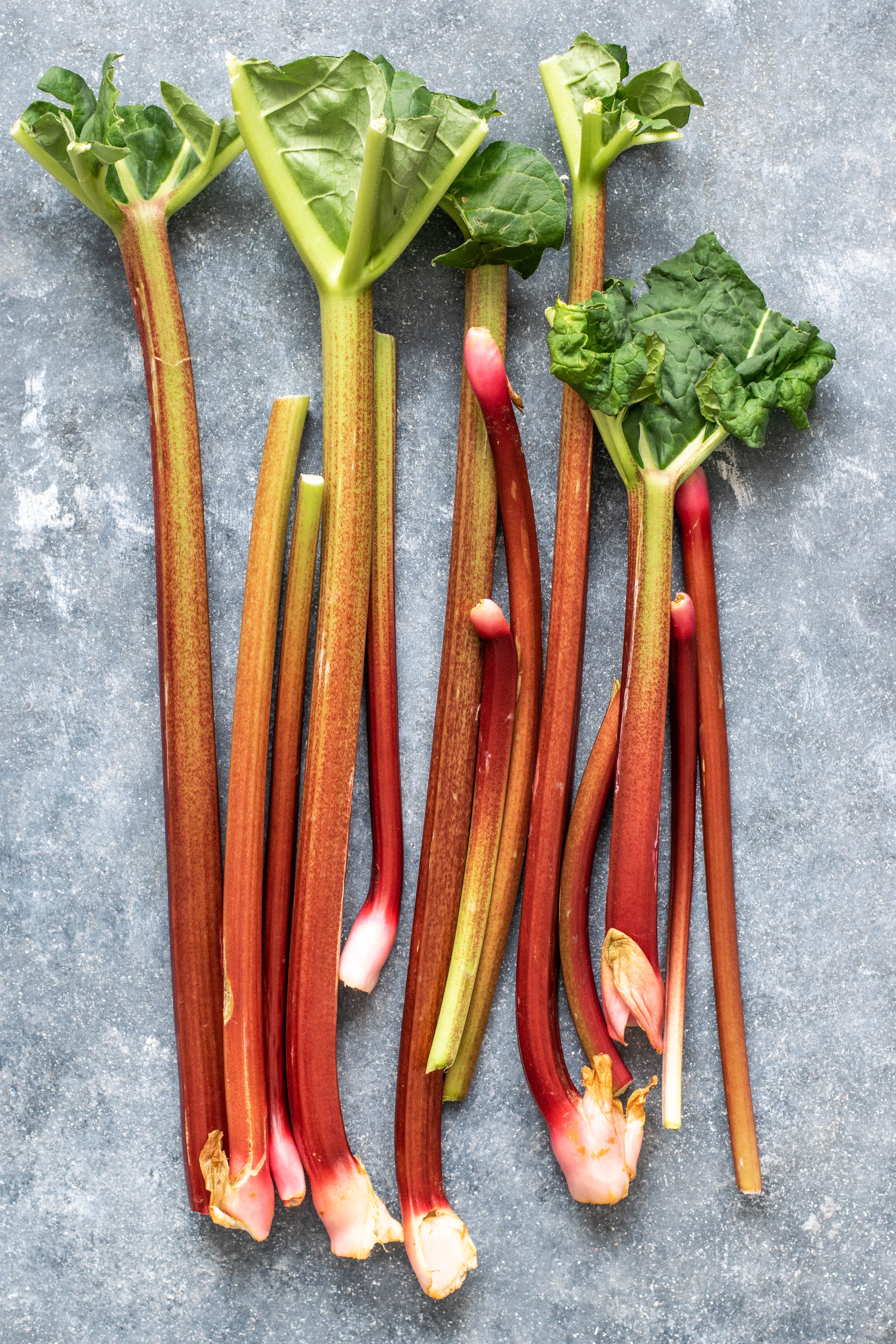
Spring produce is here, and it's time to celebrate that tart, celery-like stalk that blends with strawberries and apples like they're best friends. Chopped and sugared into delicious jam, pie or puddings. . . . go to the market or out into your yard and gather some rhubarb! Here are 10 recipes to get your sweet and sour taste buds singing.

Turtles can be tricky. "We thought we knew turtles, but this newfound behavior may offer a clue to how these reptiles will respond to a warming planet," reports Jessica Taylor Price of National Geographic. "On a warm spring night . . .two scientists settled into a canoe . . . they made their way through the water. . . . . They noticed something odd: Krefft's river turtles basking in the moonlight, just as they do during the day. But when they asked around after that evening in 2017, they found that other scientists hadn't heard of turtles basking at night, and there were no studies on the behavior."

A crab (Mississippi Dept. of Marine Resources image)

Would you like a used crab trap? Not really. "Derelict crab traps harm wildlife and disrupt other fishers, especially shrimpers. Bulky crab traps get caught in shrimping nets, tearing them open or blocking them from catching shrimp. Frustrated shrimpers, with nowhere to put the smelly traps, generally just throw them back, continuing the cycle," reports Ilima Loomis of Haiki magazine. "A group in Mississippi has found a solution: paying shrimpers a U.S. $5 bounty to collect and recycle derelict crab traps. In just three years, the program has removed almost 3,000 crab traps from Mississippi waters."

Beans can be the last thing left on a child's plate and the brunt of jokes, but they pack nutritional power. "Beans are high in protein, efficient to grow, and can even improve soil health. They cost less than conventional or new plant-based meats, and they're increasingly getting attention among foodies," reports Julieta Cardenas for Vox. "As one global campaign to double bean consumption by 2028 frames it, the answer to the question of how we can get inexpensive protein without sacrificing animals or the planet is simple: 'Beans is how.'"

Summer heat is coming, and along with it comes an increased likelihood of walking by a pet stuck in a heating car. The feeling of worry and then stress over your next move has a solution, "See a dog locked in a hot car? Here's what you can do," reports Rachel Fobar of National Geographic. "Several U.S. states allow bystanders to intervene when animals are trapped inside hot vehicles."

Photo by Louis Johns, The Washington Post
"A group of Yakama hunters gave us a rare glimpse into their yearly ritual. . . . Deer and elk were no problem for Kashius Gleason. The 19-year-old member of the Yakama Nation had hunted plenty. . . Standing in freezing temperatures at the doorstep of Yellowstone at daybreak, he was nervous as a herd of bison trekked out of the park. He had driven 16 hours with his family to get to this snowy basin and didn't want to miss. . . . Now Gleason's people are among a handful of tribes hunting bison again. By exercising hunting rights enumerated in an 1855 treaty, the Yakama are able to maintain an ancient cultural relationship with the animals," reports Dino Grandoni of The Washington Post.

Do North Atlantic right whales sniff out their meals? Maybe. Elizabeth Preston of Hakai magazine reports, "Right whales are baleen whales, which means they fuel their massive bodies with minute crustaceans that they filter from gulps of seawater. We know what they eat, says David Wiley, a marine ecologist." He told Preston, "We don't really know how whales find their food." Preston explains, "Wiley says his preliminary data from this and other recent experiments show that right whales—as well as another species called sei whales—are more likely to turn up in areas with higher DMS [molecule made by phytoplankton], suggesting they sniff the chemical out.

Photo by Julian Avery for The Conversation
"Millions of Americans feed wild birds, especially in winter and spring. Studies show that this can influence birds' health and behavior in surprising ways," reports Julian Avery for The Conversation, a platform for journalism by academics. "There is still much to learn about the risks and benefits of feeding birds, particularly through large integrated national citizen science networks like Project FeederWatch. But we now have enough information to promote healthy interactions that can inspire future generations to care about conservation." 

Tuesday, December 27, 2022

Appalachian greenhouse-farming firm re-engineers its finances but needs more cash flow, and maybe political help

UPDATE, Feb. 16: The company netted $37.1 million by selling 40 million shares at $1 per share, Rick Childress of the Lexington Herald-Leader reports. It issued a prospectus saying, “We believe that net proceeds from this offering, together with our current cash and cash equivalents and other potential sources of financing, will be sufficient to enable us to fund our operating expenses and capital expenditure requirements through the end of calendar year 2023.”
The AppHarvest 15-acre farm just north of Berea, Ky., grows salad greens. (Photo from AppHarvest Facebook page)
AppHarvest, a publicly traded startup that is trying to bring commercial farming back to the Appalachian foothills on a huge scale, sold one of its hydroponic greenhouse farms this week and leased it back to its marketing and distribution partner, "freeing up more funds for the financially struggling fruit and vegetable grower," reports John Cheves of the Lexington Herald-Leader.

The company also announced the opening of its fourth farm, all in Kentucky, and said it is "focused on operations to ramp up production and revenue." That is an existential challenge, according to its earnings report for the third quarter of 2022, which said, “Absent additional sources of financing, we expect that our existing cash and cash equivalents will only allow us to continue our planned operations into the first quarter of 2023.”

The sale-and-leaseback deal of the 15-acre farm near Berea, the company's smallest, provides cash, but it has production problems. "AppHarvest’s chief financial officer, said that the low numbers were due to crop health issues," Liz Carey reports for The Daily Yonder. The company will change the tomatoes it raises to varieties that bring higher prices, a spokesman told Carey.

But James Branscome, a Yonder supporter who started as an Appalachian journalist and ended up evaluating companies for S&P Global, has issues with the firm's business model: “The best high tech in agriculture will not overcome a bad business model based on selling a commodity product – tomatoes – in a highly competitive market,” he told Carey. “AppHarvest does use the highest tech in greenhouse production from the Netherlands, and its commitment to Appalachian Kentucky has rightfully given it a very high profile. The strategy of moving beyond the tomato market to vegetables and berries is a good business strategy; however, the company is in a race against the oldest challenge in business: Can it execute that strategy when the business cash flow is so dismally poor?”

Branscome seems to think not: “At this point their future depends more on financial engineering than agricultural engineering,” he said. “There is value in what they have constructed, but the cash flow from operations is so small that there is no way sales can bail them out over the next few years.”

There could also be some political engineering. Company founder and CEO Jonathan Webb said at the groundbreaking for the firm's 30-acre berry farm in Somerset in July, "Where AppHarvest goes from here is going to be dependent largely on the communities around us." Gesturing to Democratic Gov. Andy Beshear and Republican U.S. Rep. Hal Rogers, he said, "Where we take it from here, I turn to our political leaders, I turn to our community leaders, I turn to our university leaders; we want to partner with you."

Holiday roundup: Blizzard creates a temporary community of travelers; an enchanted garden also cultivates people

The Alabama Hotel in Basom, N.Y., hosted more than 100 people in the storm. (Photo by Joe Bradt)

When the big blizzard closed the New York State Thruway (I-90) west of Batavia, some travelers headed north on NY 77 and found refuge in the hamlet of Alabama, specifically the Alabama Hotel. "The restaurant was founded in 1840 as a hotel/bar, but it hadn't welcomed overnight visits for decades," Tracey Drury reports for Buffalo Business First. Owner Joe Bradt told CNN some thought from online searches that the inn had rooms to rent, but they had to stay in its 70-seat dining room. Bradt said the guests "came together; they were cooking, they were washing disches, they were busing tables; it was a sight like no other."

The youngest daughter of Donna Reed, who plays Jimmy Stewart's wife in "It's a Wonderful Life," has made it her mission to ensure that small-town theaters can show the classic 1946 film, which was more difficult this year, Ann Hornaday of The Washington Post reports.

The Post's Sydney Page has another nice holiday feature, about a 100-year-old woman in an assisted-living facility in Lexington, Va., who makes custom jackets by hand and gives them away!

Woodlake, California (Google map)
At the foot of the Sierra Nevada east of Visalia, Calif., "where square acre after square acre of industrial farmland is planted in precise rows, an unusual garden grows and climbs and spirals, writes Diana Marcum of the Los Angeles Times. "Papaya, bananas, jujube, three types of guava — fruits that speak of faraway homelands — flourish at the 13-acre Woodlake Botanical Garden . . . No chemicals are used here. Visitors are welcome to pick any fruit they see and to sit in spots so deeply shaded they stay cool in the summer heat and dry in the rains that don’t come often enough." And there's a flock of pelicans in Bravo Lake, in one of many nice photos by Tomas Ovalle. But Manuel and Olga Jimenez also cultivate people. Nice story.

Tuesday, December 13, 2022

USDA funds 71 climate-related projects at less than $5 million, many of them to 'figure out what works,' Vilsack says

The Department of Agriculture has funded 71 more five-year "projects to develop climate-smart commodities and a money-making market for them," reports Chuck Abbott of Successful Farming. The $325 million is the second round of funding in its Partnerships for Climate-Smart Commodities program, which now totals 141 projects and $3.1 billion, a USDA press release said.

The latest round of grants were for less than $5 million each, to focus on "small and under-served producers and work by minority-serving institutions to measure, monitor, report, and verify the results of climate-smart practices," Abbott reports. Agriculture Secretary Tom Vilsack said, "We believe that this program will allow us to figure out what works and, frankly, what doesn't work. . . . There are some amazing projects here." For a list of the first- and second-round projects, click here.

"Republicans in Congress say the White House exceeded its authority in creating such a large program on its own, and some critics in the scientific community say more detail is needed to judge the value of the projects," Abbott notes. Republicans don't like that the money comes from "a $30 billion reserve at USDA that also pays for crop subsidies," the Commodity Credit Corp. "Vilsack tripled the size of the program in September after USDA was deluged with proposals, all of which promised private-sector funding."

The 71 projects include agroforestry in New York, hemp in Tennessee, organic eggs in Ohio and Kentucky, specialty crops in California, cattle in Virginia and West Virginia, removing nuisance seaweed from Puget Sound for use as fertilizer, and cover crops for orchards in and near food deserts. There is also "a test of buffalo to mitigate global warming and to market buffalo meat as a climate-smart food," involving 79 tribes and 20,000 head of bison, Abbott reports. "They are the original climate regulator," said Troy Heinert of the InterTribal Buffalo Council. The grant's "funding ceiling," USDA says, is $4,950,000.

Vilsack announced the grants at Tuskegee Institute in Alabama, which will get a grant with a funding ceiling of $4,999,999 "to support small-scale and other under-served producers . . . transform their traditional production into a multi-pronged agroforestry-based climate-smart, sustainable production system," USDA says. Identical amounts were allocated to the University of Illinois, which will work with Tuskegee and other partners "to scale up robotic cover crop planting and verification of soil carbon" in Alabama, Illinois, Indiana, Missouri and Iowa; University of Maryland Eastern Shore to "promote climate-smart cover crops as a feedstock" for anaerobic digesters that process chicken litter; Foodshed Inc. and other partners for "incentives to small and socially disadvantaged specialty crop farmers in San Diego County" in California; the University of Guam "to market climate-smart commodities and achieve greenhouse gas emission reductions in Pacific Island agriculture and forestry systems while improving affordable food and nutrition security of disadvantaged, at-risk, island communities;" and Whitaker Grain "to provide a market platform for rice growers producing premium rice that is certified sustainably grown" in Arkansas.

Getting an allocation of $2 less than those, The Nature Conservancy is in line for $4,999,997 to "grow a set of climate-adapted tree species resilient to the projected climate futures of Minnesota’s Midwest Broadleaf Forest." Other grants near the limit: $4,999,900 to the Coalition for Food Security "to implement climate-smart practices related to indoor hydroponic vertical farming;" the same amount to Regeneration International; the Regenerative Agriculture Alliance to support poultry producers who follow diversified regenerative climate-smart grain production methods" in the Midwest; the same to Working Landscapes and other North Carolina partners to promote climate-smart practices "among small and underserved producers, including tribal producers, principally by equipping food hubs to finance and advise on-farm climate-smart practice implementation and marketing to wholesale and direct-to-consumer channels;" $4,999,800 to Chico State University to launch a "food hub for climate-smart agriculture" in the northern Sacramento River valley; and the same to Western Landowners Alliance "to empower New Mexico Latino and under-served beef and pork producers and their trusted partners to collectively develop, implement, monitor, quantify and broker climate-smart livestock projects."

Monday, May 02, 2022

Scientists say modern farming methods and climate change have made modern produce and grains less nutritious

The advent of modern farming methods has caused fruits, vegetables and grains become less nutritious over the past 70 years, Stacey Colino reports for National Geographic. Multiple scientific studies show that many current crops have "less protein, calcium, phosphorus, iron, riboflavin, and vitamin C than those that were grown decades ago," Colino writes.

Climate change and rising carbon-dioxide levels are partly to blame, but the biggest problem is "modern agricultural processes that increase crop yields but disturb soil health," Colino reports. "These include irrigation, fertilization, and harvesting methods that also disrupt essential interactions between plants and soil fungi, which reduces absorption of nutrients from the soil."

Nutritional decline could make it harder for people to get the nutrients they need to fight off chronic illnesses, said David R. Montgomery, a professor of geomorphology at the University of Washington and co-author with Anne Biklé of What Your Food Ate. It's increasingly important to grow nutritionally dense foods, he told Colino: "We can’t afford to lose arable land as population grows. We need to prevent further damage and work to restore fertility to already degraded lands."

Montgomery and other experts still encourage people to eat more fresh produce and less-processed foods, but told Colino they hope this knowledge will inspire more people to care about how their food is grown.

Monday, April 11, 2022

The Economist asks: Do farm subsidies sustain the decline of rural America, by encouraging larger and larger farms?

Nearly a decade of high crop prices and record farm subsidies from taxpayers isn't necessarily good news for rural America, says The Economist, a London-based global magazine that still calls itself a newspaper.

"Despite all this cash, rural America is in deep decline," says The Economist, which generally doesn't name its reporter/writers. "Two-thirds of rural counties lost population from 2010 to 2020, and the total population of rural America fell for the first time in history. The counties that grew were mostly not farming ones but pretty places where people go to retire, near mountains or the ocean, or those with lots of oil. The Midwestern areas which grow most of America’s food are shrinking fastest."

The population is shrinking, but the farms are not. As they are sold or merged into larger operations driven by mechanization, fewer people are needed to tend them. "Just 6 percent of jobs in rural areas are directly linked to farming, and "Most farms, even small ones, 'are highly capitalized agribusinesses growing one or two commodity crops and employing very few people'," says Anne Schechinger, an agricultural economist for the Environmental Working Group," a research-and-lobbying group that dislikes farm subsidies.

"Subsidies, largely in the form of crop insurance, help to ensure the food supply continues, and protect farmers from going bust during downturns," The Economist notes. " But they also determine what America farms—incentivizing farmers to grow vast amounts of soybeans and corn, as well as wheat, which is mostly exported. . . . Fresh fruit and vegetables, which Americans ought to eat more of, are more expensive to grow, and require more labor, but farmers receive almost no subsidies for them."

As farmers get wealthier, "The communities they live in are not," the Economist says, using as its object example North Dakota wheat farmer Phillip Volk, who "says that when he went to school, there were 40 children on his school bus. Today his youngest son goes on the bus with fewer than 10 classmates. His eldest son is likely to take over the farm, but future children may have to go to a boarding school. It is harder to find people to serve as voluntary officials on the school board and county government. Many young people end up moving to places where the job opportunities are more exciting, if not necessarily more profitable. Over half of the churches that used to serve the community have closed. . . . Helping out farmers is politically popular, not least because rural communities are over-represented in Congress. Yet the subsidies may in fact be sustaining the decline of rural America."

Thursday, August 19, 2021

EPA to ban chlorpyrifos (Lorsban), pesticide linked to brain damage in children, from most agricultural use

The Environmental Protection Agency announced Wednesday a ban on the use of chlorpyrifos, a pesticide that has been linked to neurological damage in children, on food and feed crops. 

The new rule, which will take effect in six months, follows an order in April by the Ninth Circuit Court of Appeals that directed the EPA to halt the agricultural use of the chemical unless it could demonstrate its safety," Coral Davenport reports for The New York Times. "Labor and environmental advocacy groups estimate that the decision will eliminate more than 90 percent of chlorpyrifos use in the country."

Chlorpyrifos has been widely used since 1965, under the brand name Lorsban, but increasing safety concerns and state-level bans have made it much less so in recent years and its leading manufacturer, Corteva, stopped manufacturing it last year. Advocates for farm workers, health, and the environment have long called for a ban after studies linked exposure to the pesticide with developmental problems in children such as low birth weight, reduced intelligence, and more. "The Obama administration began the process of revoking all uses of the pesticide in 2015 but, in 2020, the Trump administration ignored the recommendations of EPA scientists and kept chlorpyrifos on the market. That set off a wave of legal challenges," Davenport reports. In April, a federal court ordered the EPA to either ban the use of chlorpyrifos on food crops or prove that it doesn't hurt children by Aug. 20. The EPA beat the deadline by two days.

"In an unusual move, the new chlorpyrifos policy will not be put in place via the standard regulatory process, under which the EPA first publishes a draft rule, then takes public comment before publishing a final rule," Davenport reports. "Rather, in compliance with the court order, which noted that the science linking chlorpyrifos to brain damage is over a decade old, the rule will be published in final form, without a draft or public comment period."

Agricultural groups such as the Agricultural Retailers Association and the American Farm Bureau Federation criticized the decision, saying the EPA is taking away an important pest-control tool, and should have followed normal regulatory procedures.

It's unclear whether imported foods treated with chlorpyrifos will also be banned.