Showing posts with label journalism education. Show all posts

Tuesday, November 21, 2023

The old pipeline from journalism schools to rural weeklies is drying up, so it’s time to turn local residents into journalists

Graphic via Arkansas Press Association; click to enlarge
By Joey Young

The path into journalism has historically been fairly set in stone: university, J-school degree and then working your way up into the industry. In the past, many started at small community weeklies to get experience and then found their way up, eventually working for the best papers in the country.

For years, that system worked for all involved. The community weeklies got freshly trained college graduates to cut their teeth at their rural newsrooms, and the larger papers were able to weed out candidates and use the rural weeklies to train up basic skills you didn't get in college.

That system is dead. No longer do college students consider rural weekly newspapers as a part of their journalism path.

Much like everything else in our industry, the old ways are going away, and new ones are forging ahead. Not everyone is thrilled about it, but all of us are going to have to get used to it, regardless.

Simply put, a combination of low pay, high debt and minimal entertainment options are making it difficult for new college graduates to consider weekly newsrooms, even if they wanted to.

Many fresh faces aren't interested in working in a community of 2,500 people with no good bar while being six figures in debt to their university and making $25,000 a year with no benefits, if they are even lucky enough to make that.

We aren't a good value proposition anymore—not when you can go into any number of other fields and live in a larger city with more things to do and better pay and benefits.

This has left our industry with a huge problem and a need for a mindset shift with employment.

Joey and Lindsey Young
Lindsey and I think there is a better way, and we aren't just preaching this, we practice it as well.

In 2022, we developed a program for the Kansas Press Association called Earn Your Press Pass. This program was created to give basic concepts of journalism and training to people who already live in a community so they can help fill gaps in the newsroom.

No longer are you left praying a recent graduate will see your ad and view your community worthy. You can recruit people who already see your community as worthy and want to help make it better in your newsroom.

Earn Your Press Pass gives what amounts to high-school level journalism training in an on-demand video format that, in its first year, has been deployed by over 20 state press associations.

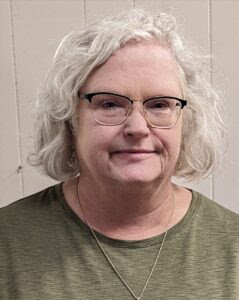
Shifting our focus to recruiting people who already live in town allows us to change the value proposition, like we did with Tammy, someone we recruited from a life of retail work and was super excited to change professions with training.

Tammy read the paper, was engaged in the community, and had both her kids already in the school system, so she knew the players in town and interacted with them. What she lacked in journalism training she had in knowledge about the community and connections within it.

We just filled in the gaps. Now, she is a fabulous reporter who is happy to no longer be in retail. She went from a path that did not—and could not—include a journalism degree to being a great community journalist.

This recruitment strategy could be used with baristas, bartenders, wait staff, and any number of people who live in your community but are looking for a career that is viewed as more professional.

Our newsroom suffers from very little turnover as a result of this strategy. Recruiting full-time, part-time, and freelance people from the community and offering on-demand training means you have people who already live in town and want to stay.

Journalism is important, and to maintain this incredibly important institution in rural and disadvantaged communities, we have to change the variables. Earn Your Press Pass and a willingness to see someone different as a solution to an opening in your newsroom is just one way we can maintain this incredibly important fixture in democracy.

Joey and Lindsey Young are the majority owners of Kansas Publishing Ventures, which publishes three weekly newspapers in south central Kansas. They also developed the Earn Your Press Pass training platform being used all over the country as a training and recruitment solution for the industry.

Friday, July 28, 2023

One 'needle sewing the thread binding Rural America together': a weekly paper run by a College of Journalism

This week's Echo; for a larger version, click on it.
When a journalism school takes over a rural weekly newspaper, it's not just about preserving local news coverage and giving students real-world experience. It's also about sustaining the enterprise, adjusting to the digital environment and overcoming suspicion of outsiders at the local paper.

That's the unspoken message in what University of Georgia faculty member Amanda Bright calls "the first snapshot of what building a news-academic partnership to avert a news desert looks like," in her report for NiemanLab at Harvard University.

Bright is, in effect, the publisher of The Oglethorpe Echo, which was going to close 18 months ago until Oglethorpe County resident, newspaper-chain co-owner and Georgia alum Dink NeSmith put it into a nonprofit and got Charles Davis, dean of the Grady College of Journalism and Mass Communication, to staff it with journalism students.

With 20 students writing at least 10 bylined stories a week, coverage has improved and subscriptions have doubled, Bright reports: "A website, audio and video reporting, a weekly email newsletter, and regular posts on Facebook and Instagram have aided that growth, too. These products alone reach 4,500 each week, nearly a third of the county’s population. On the flip side, our Twitter and YouTube have languished, and our website’s high bounce rate shows that our paywall rarely leads to conversions. However, we plan to implement digital advertising and sponsorships in the next six months or so, which will change that paywall strategy significantly."

A survey of 75 Echo readers by the school's Kyser Lough provided encouragement and caution. "It’s possible to build trust when new to a community, but it’s nearly impossible to escape the perception of bias," Bright writes. "However humble and intentional our approach, there’s a gap revealed through perceived bias and occasional errors. Just 42% of our community felt strongly that the Echo was not biased at all in its reporting. . . . One error can undo months of good-faith effort. Our editor, Andy Johnston, has handled complaints transparently, inviting those who say we got it wrong into dialogue. But, it’s hard, especially in a community where missteps travel fast (usually in Facebook groups). In the end, though, the data is encouraging; 82% said they feel some level of trust in our coverage."

Bright says the survey also found some readers unhappy with "journalistic editing" of material from local residents, and removal of "long, unsubstantiated police-report narratives." But some said the reports "create suspicions" and wecomed their replacement by bullet-point arrest reports.

The county seat of Lexington is 15 miles from
Athens and the university. (Wikipedia, adapted)
Some also said they appreciated the Echo's effort to "intentionally pursue stories from a variety of demographics" in a county that is 79% white, 16% Black, and 7% Hispanic or Latino, Bright reports. "One long-time subscriber mentioned he didn’t remember seeing any photos of Black community members on the front page before we took over. It was a record we were happy to break."

And the survey of readers elicited at least one comment that resonates far beyond the borders of Oglethorpe County and Georgia. One of them wrote, “I believe printed news is the needle sewing the thread binding Rural America together. More publications such as the Echo are needed in today’s times.”

Saturday, July 22, 2023

In 'Children of Poverty' series, Malheur Enterprise shows how a rural weekly can plumb a big issue, with student help

A mother checks stock at a food pantry in Adrian, Oregon, population 177. A food bank
closed in May because it lost its space. (Malheur Enterprise photo by Andie Kalinowski)
With the help of journalism students, a weekly newspaper in rural eastern Oregon has told the story of local children who live in poverty. The Malheur Enterprise got help from the Annenberg School of Communication at the University of Southern California because "We wanted the community to understand what it means when Malheur County is ranked as having among the worst child poverty rates in Oregon. That ranking has been in place for years," Editor-Publisher Les Zaitz writes.

Two USC professors had worked up a course on rural reporting, and reached out to the Enterprise, which is widely known as a paper that punches above its weight -- thanks to Zaitz, who has been an investigative reporter and editor in Oregon for 50 years. He gave the professors and the five students they selected a detailed memo outling key questions that needed answering. They reported first from Los Angeles, reaching out to state agencies and experts at Oregon universities, then made a two-week reporting trip to Malheur County, Zaitz writes.

"I had identified key sources for them among government agencies, nonprofit agencies and schools across Malheur County. I reached out ahead of time to key leaders to alert them to expect contact and ask their help. Without fail, those leaders cooperated, proving invaluable," with help such as ride-alongs with police. . . . The team conducted more than 70 interviews. Most were recorded. Some were filmed, resulting in powerful videos," which are on the paper's website.

The students are Christina Chkarboul, Andie Kalinowski, Shane Dimapanet, Suejin Lim and Venice Tang. The professors are Rebecca Haggerty, associate director of undergraduate journalism, and Judy Muller, professor emerita of journalism, former ABC correspondent and author of Emus Loose in Egnar, a book about courageous rural journalists. Here are the stories:

Sunday, July 09, 2023

Yale student wins photography competition in rural Kentucky with his essay on the theme 'Picking Up the Pieces'

Tommy Fryman on his scavenging route through Cynthiana, Kentucky (Photos by Lukas Flippo)

From the inside out: Fryman hunts through a trash bin.
Lukas Flippo of Yale University was judged to have the best photo essay in the Dusk to Dusk 24-Hour Student Photojournalism Challenge in Harrison County, Kentucky, this weekend. The event was held by Boyd's Station, a local nonprofit arts-and-journalism residency with a gallery in the county seat of Cynthiana. Ten students pursued the theme "Picking Up the Pieces," assigned shortly before the contest began. The runner-up was Annie Barker of Michigan State University, who also won for best single image, and Abigail Pittman of the University of North Carolina was third.

Here's how Flippo described his subject: "We start with a partial inventory of what's in Tommy Fryman’s shopping cart, drenched in rain on this stormy Saturday in downtown Cynthiana: over a hundred crushed soda cans, a new pack of diapers, a new window blind, a pool noodle, and 4 pizza pans. Oh, and the chief offenders, two metal pipes. Even with the rope tied around them, they are too big for the cart, extending over a foot over the railing of each side of the cart.

Fryman gets paid at the recycling center.
"Fryman’s life is a numbers game. 24 cans a pound, 50 cents for a pound of aluminum at Randy’s Odd Jobs Recycling Center. Seven days a week, Fryman walks around town, averaging 10 miles a day, to pick up cans and other goods to sell at Randy’s Odd Jobs Recycling Center to supplement his disability check, which he receives for epilepsy. Cynthiana has no recycling system, and Randy’s business helps Tommy make the ends meet.

"Fryman is well known in the community. People stop their cars on the road to give him cans and businesses leave them by their dumpsters. No one bats an eye when Fryman bends over a trash can. The task gets harder everyday. Fryman gets short of breath, and legs frequently buckle and give out. But that won’t deter him from his mission: to clean the streets of Cynthiana and make some honest cash."

“Not many people have a heart like I do,” Fryman said. “And I won’t give up, not until God calls me home.”
Flippo's photo essay included five other pictures.

Wednesday, June 21, 2023

Universities in Ohio step up to provide local news reported by students; just four of over 100 such efforts in the U.S.

Reporters for the Midway Messenger, which was a 14-year University of Kentucky School of Journalism and Media project, now run by The Woodford Sun with student help, interviewed city officials after a meeting. (Photo by Al Cross, instructor)

By Richard Watts and Justin Trombly in The Daily Yonder

If you want to see the latest way people are helping keep rural journalism healthy, look at Ohio.

When Gannett Co. closed the community paper in the town of Oxford, faculty at Miami University saw an opportunity to enlist their students in a hands-on learning experience providing local news. 
They started the Oxford Observer, a weekly newspaper staffed by Miami students and professors.

“It’s a community relationship, but it definitely benefits the students,” said Sacha DeVroomen Bellman, the journalism instructor who leads a class that acts as the paper’s newsroom. “This is a way they can get professional work.”

About 145 miles away, students at Ohio University are providing stories to the Athens County Independent, a digital start-up founded after its editor was unjustly fired from the area’s only daily paper. And faculty member Hans Meyer plans to keep ramping up stories from students.

To the north, at Kent State University, two faculty members lead the Ohio Newslab with a focus on providing stories to rural areas. The lab partners with four community news outlets that run stories from advanced reporting classes. The faculty have raised funds to pay students and an editor who works with the classes to shape up stories and mentor students.

“We are covering some of the more sparsely populated sections of Ohio that don’t get much media attention,” said Susan Kirkman Zake, who coordinates the program with fellow faculty member Jacqueline Marino. “I really think that’s a good news niche for us to explore, both for students and the media landscape in Ohio, because media companies are really concentrated in cities.”

And in the center of the state sits Denison University, which is revamping its journalism curriculum to empower student coverage of rural Licking County. Those stories, published through The Reporting Project, are available for local media to pick up. When Intel announced the construction of a $20 billion chip plant in the city of New Albany, Denison’s project was the only media outlet to cover the project’s influence on its neighbors.

“We went and sat with Danny and Barbara Vanhoose, who have lived on Green Chapel Road for 50 years, right across the road from where Intel’s front door is going to be,” said Alan Miller, a Denison journalism professor who spent three decades at the Columbus Dispatch and covered the story with faculty member Jack Shuler and student Thu Nguyen. “We just went and visited with them while they watched and got their reaction and had an outside-the-fence view, literally, of a very big news event that everybody else was covering from inside the fence.”

Those examples showcase a trend extending far beyond Ohio. Across the nation, student reporters and their colleges are stepping in as local news outlets disappear. At the Center for Community News, our team documents partnerships between local media and colleges, and in the last year we’ve found more than 120 — many focused on bolstering news in rural areas that have been neglected as big conglomerates eat up local dailies and whittle staffs to skeleton crews.

The University of Vermont, where the center is housed, also runs a student reporting program that works with local media. In the last year, it has provided close to 300 stories for free to community papers and other local outlets.

These programs are not internships in the traditional sense. Students of course can get great experiences interning directly with newsrooms, but many of those internships have disappeared, and beleaguered editors can’t be expected to dive deep with their rookies on each and every story.

But colleges can. In university-led reporting programs, experienced former journalists vet and assign and edit student work and work with local news outlets to assign stories that otherwise would go uncovered. It’s a win-win. Papers get content and students get experience.

Richard Watts is the director of the University of Vermont’s Center for Community News, which documents and brings together university-led reporting projects. Justin Trombly is the editor of the Community News Service, the university’s academic-media partnership.

Sunday, June 18, 2023

24-hour Student Photojournalism Challenge July 7-8 in Ky.; also open to college graduates from the past two years

Harrison County (Wikipedia map)
Next month Boyd's Station, a nonprofit arts and journalism residency program in Harrison County, Kentucky, will host the 2023 Dusk to Dusk 24-Hour Student Photojournalism Challenge, in which photographers will document and interpret a competition theme that will be announced on the Boyd's Station website and social media sites at 3 p.m. Friday, July 7.

The challenge will begin three hours later, at 6 p.m. July 7, and end at dusk July 8. Judging will begin immediately at the Boyd's Station Gallery in the couty seat of Cynthiana, with winners announced that evening. The awards for photo essays will be $400 for first, $200 for second and $50 for third. The best single image will win $100. The awards are sponsored by Think Tank Photo.

On Sunday, July 9, at noon, a lighting workshop  will be presented by Nick Henry of Roberts Camera at the Boyd's Station Gallery. At 2 p.m., New York Times staff photographer and two-time Pulitzer honoree Stephen Crowley will give a talk.

Students competing in the Dusk to Dusk 24-Hour Student Photojournalism Challenge must be students in high school or college, or college graduates in the past two years. For more information contact Jack Gruber at jack@boydsstation.org.

Friday, June 16, 2023

CherryRoad Media CEO Jeremy Gulban added to program of rural journalism summit; hotel deadline is next Friday


Speakers are still being added to the program of the third National Summit on Journalism in Rural America, to be held July 7 in Lexington, Ky., and online. Registration is required, but is free, here.

The latest addition is Jeremy Gulban, CEO of CherryRoad Media, which started in 2020 but already owns almost 80 newspapers, most of them bought from Gannett Co., which "had really run them into the ground," so much that it's proving hard to build circulation and reveue, he told us this week. Gulban said he will talk about experiments he is starting next week in some of his markets.

Gulban will join a wide range of news-industry professionals, academic researchers and instructors, journalism funders, and community developers who realize that communities need local journalism. The program includes:
  • A discussion of journalism innovation and alternative revenue, by Jack Rooney, managing editor for audience development of The Keene Sentinel, a small daily in New Hampshire, and David Woronoff, publisher of The Pilot, a twice-weekly in Southern Pines, N.C.;
  • The latest figures on news deserts and ghost newspapers, with a rural angle, from Zachary Metzger, a researcher at the Medill School at Northwestern University;
  • Presentation of research about community engagement and an experiment in new business models for local journalism by Nick Mathews of the University of Missouri;
  • A publisher's perspective on that ongoing experiment in engagement and new business models, from Joey Young of Kansas Publishing Ventures in Hillsboro, Kan.;
  • A discussion of how to use citizens as news correspondents, including Lynne Campbell of the Community News Brief in Macomb, Ill., and Lindsey Young of KPV, developer of the training program "Earn Your Press Pass;"
  • A discussion of philanthropy for rural journalism, led by Duc Luu, journalism officer of the John S. and James L. Knight Foundation;
  • The latest on advocacy of government policies at the state level to help sustain local journalism, from Anna Brugmann of the Rebuild Local News Coalition;
  • A presentation on community building and engagement from the Community Strategies Group of The Aspen Institute;
  • Debra Tobin, owner and editor of the Logan-Hocking Times in southeast Ohio, which has a business model that may be unique: an online startup that added a free weekly print edition to serve residents of rural Hocking County who aren't online.
  • What it's like to stop printing a newspaper and move it to Facebook, from two award-winning rural publishers who felt they had to do that: Laurie Brown of The Canadian Record in Texas and Ryan Craig of the Todd County Standard in Kentucky;
  • A discussion of how university journalism programs can fill gaps in local news coverage, led by Richard Watts of the Center for Community News at the University of Vermont, with Alan Miller of Denison University in Ohio and Chris Drew of Louisiana State University;
  • A presentation from Melissa Cassutt of the Solutions Journalism Network and one of its partners, Casper Star-Tribune government reporter Mary Steurer; 
  • Reports on rural start-ups, including Jennifer P. Brown of the Hoptown Chronicle in Hopkinsville, Ky., and Nicole DeCriscio Bowe, who has local foundation support for her start-up in Spencer, Ind.;
  • A discussion of broader rural news coverage, from The Daily Yonder and Alana Rocha of the Institute for Nonprofit News's Rural News Network;
  • A concluding roundtable led by Benjy Hamm, incoming director of the Institute for Rural Journalism and Community Issues, sponsor of the Summit (and publisher of The Rural Blog).
The institute's research question for this year's Summit is the same as last year's, "How do rural communities sustain local journalism that supports democracy?" We expect more answers!

The Summit will be held at The Campbell House Curio hotel on US 68 in Lexington, the same highway that took attendees to the second Summit last June, but this time much closer to Blue Grass Airport. A limited block of rooms is available at $139 per night, through next Friday, June 23. For registration and hotel information, click here.

Friday, June 09, 2023

National Summit on Journalism in Rural America, set for July 7, is still adding presenters; hotel deadline is June 23


How do rural communities sustain local journalism that supports democracy?

That is the central question of the third National Summit on Journalism in Rural America, to be held July 7 in Lexington, Ky., and online. Registration is required, but is free, at this link

The Institute for Rural Journalism and Community Issues (publisher of The Rural Blog) is still adding presenters, such as Debra Tobin, owner and editor of the Logan-Hocking Times in southeast Ohio, which has a business model that may be unique: an online startup that added a free weekly print edition to serve residents of rural Hocking County who aren't online.

A wide range of news-industry professionals, academic researchers and instructors, journalism funders, and community developers who realize that communities need local journalism are on the program, which includes:
  • A discussion of journalism innovation and alternative revenue, by Jack Rooney, managing editor for audience development of The Keene Sentinel, a small daily in New Hampshire, and David Woronoff, publisher of The Pilot, a twice-weekly in Southern Pines, N.C.;
  • The latest figures on news deserts and ghost newspapers, with a rural angle, from Zachary Metzger, a researcher at the Medill School at Northwestern University;
  • Presentation of research about community engagement and an experiment in new business models for local journalism by Nick Mathews of the University of Missouri;
  • A publisher's perspective on that ongoing experiment in engagement and new business models, from Joey Young of Kansas Publishing Ventures in Hillsboro, Kan.;
  • A discussion of how to use citizens as news correspondents, including Lynne Campbell of the Community News Brief in Macomb, Ill., and Lindsey Young of KPV, developer of the training program "Earn Your Press Pass;"
  • A discussion of philanthropy for rural journalism, led by Duc Luu of the John S. and James L. Knight Foundation;
  • The latest on advocacy of government policies at the state level to help sustain local journalism, from Anna Brugmann of the Rebuild Local News Coalition;
  • A presentation on community building and engagement from the Community Strategies Group of The Aspen Institute;
  • What it's like to stop printing a newspaper and move it to Facebook, from two award-winning rural publishers who felt they had to do that: Laurie Brown of The Canadian Record in Texas and Ryan Craig of the Todd County Standard in Kentucky;
  • A discussion of how university journalism programs can fill gaps in local news coverage, led by Richard Watts of the Center for Community News at the University of Vermont;
  • A presentation from Melissa Cassutt of the Solutions Journalism Network and one of its partners, Casper Star-Tribune government reporter Mary Steurer; 
  • Reports on rural start-ups, including Jennifer P. Brown of the Hoptown Chronicle in Hopkinsville, Ky., and Nicole DeCriscio Bowe, who has local foundation support for her start-up in Spencer, Ind.;
  • A discussion of broader rural news coverage, from The Daily Yonder and Alana Rocha of the Institute for Nonprofit News's Rural News Network;
  • Other presenters, to be announced, and a concluding roundtable.
The Summit will be held at The Campbell House Curio hotel on US 68 in Lexington, the same highway that took attendees to the second Summit last June, but this time much closer to Blue Grass Airport. A limited block of rooms is available at $139 per night, through June 23. For registration and hotel information, click here.

Friday, May 12, 2023

News-media roundup: Washington state helps local media; States Newsroom opens its 33rd outlet there . . .

Rob Manch of WFMZ-TV in Allentown, Pa., investigated a coal-mine fire. See below. (WFMZ image via Poynter)

Washington’s legislature has approved $2.4 million over two years to support eight journalists a year, paid $55,000 each, through a fellowship program to be run by Washington State University," Rebuild Local News reports. "Half of the fellows will be graduates of the university. Crucial program details on how the fellowships and participating newsrooms will be chosen, and by whom, are still being drafted. Gov. Jay Inslee also signed a provision eliminating the “the business and operations” tax for newspapers for 10 years. The bill did not benefit digital-only news sites unless they once printed a newspaper."
States Newsroom, the largest network of state-based nonprofit news outlets, has launched the Washington State Standard as its 33rd outlet. It has content-sharing agreements with independent newsrooms in 10 additional states. The editor in chief will be Bill Lucia, former executive editor of Route Fifty, an online news journal that covers trends, challenges and emerging issues in states and localities.
America's Newspapers, a trade association, has released what it calls "the first national research project dedicated to how readers consume local news and advertising in nearly a decade." Among the findings: Only 22% of readers are 65 or older, and 71% have lived in the community for more than five years. Length of residency has long been a predictor of newspaper readership.
Amaris Castillo of The Poynter Institute reports how Rob Manch and Kaylee Lindenmuth of WFMZ-TV in Allentown, Pennsylvania, investigated and reported on one of the state's many underground coal-mine fires. “Towns like Shenandoah and Centralia tend to get forgotten in the state, and in the national discourse,” Manch told Castillo. “And someone’s gotta be their voice, right? Someone’s got to talk about things that affect them.”
A recent survey from More in Common and the American Press Institute 
Accentuate the positive: "U.K.-based newsletter The Know has 50,000 subscribers, mainly women, with a 46% open rate and an audience that is growing 10% each month," the American Press Institute reports. "Chief executive Lynn Anderson Clark says her goal with the daily newsletter is to combat news avoidance. Each email starts with a positive news story, followed by coverage of top stories written in a way that won’t leave readers despondent. For example, when covering the February earthquake in Syria and Turkey, the newsletter focused on how the world rallied around to help instead of death tolls. The Know also has a referral rewards program that awards increasingly generous gifts the more a reader invites friends."
Florida Gov. Ron DeSantis' "push to rewrite defamation law and challenge press rights failed to advance beyond a committee vote" in the Florida Legislature, The Washington Post reports. "Opposition came from an unexpected sector: conservative media and lawmakers. When it came to backing what First Amendment experts and journalists called a radical rewriting of press freedom laws, DeSantis-friendly outlets responded with a rare show of resistance from media companies that by and large support the governor’s agenda."

Wednesday, May 03, 2023

Roundup for World Press Freedom Day: Americans think news media hurt democracy; journalists concerned about press freedoms; site picked for Fallen Journalists Memorial

Associated Press chart refers to "the news media" as singular, which is not helpful. --Al Cross, Institute for Rural Journalism

Most Americans think the news media are hurting democracy and driving political polarization in the United States, according to a poll by The Associated Press-NORC Center for Public Affairs Research. "Four in 10 say the press is doing more to hurt American democracy, while only about 2 in 10 say the press is doing more to protect it," AP reports. "Nearly three-quarters of U.S. adults say the news media is increasing political polarization in this country, and just under half say they have little to no trust in the media’s ability to report the news fairly and accurately. . . . That breakdown in trust may prompt many Americans to reject the mainstream news media, often in favor of social media and unreliable websites that spread misleading claims and that can become partisan echo chambers, leading to further polarization."

AP's David Klepper adds, "The survey reveals the complicated relationship many Americans have with the media: A majority rate in-depth and investigative reporting as very helpful or extremely helpful for understanding the issues they care about, but they are more likely to say they regularly scan the headlines than read an in-depth investigative article. And while overall trust in the media is low, a majority of respondents say the media is doing at least somewhat well in covering issues they care about." The poll of 1,002 adults was conducted March 30 through April 3 using a sample from NORC’s probability-based AmeriSpeak Panel, which is designed to be representative of the U.S. population. NORC stands for the former name of the National Opinion Research Center.

On the eve of World Press Freedom Day, May 3, United Nations Secretary-General Antonio Guterres warned that the news media are under attack all over the world and "urged all nations to stop the targeting of truth and those who report it," AP reports. "Guterres said the collapse of the media industry, which has led to closures of local news outlets and consolidation of media 'into the hands of the few' is threatening freedom of expression." World Press Freedom Day was first proclaimed by the U.N. General Assembly in December 1993.

Pew Research Center graph
"Most journalists in the United States are concerned about the future of press freedoms in the country, according to a 2022 Pew Research Center survey of nearly 12,000 working U.S.-based journalists," Pew reports. "These concerns come at a time when the U.S. ranks 42nd in the world in press freedom, according to a 2022 analysis by Reporters Without Borders, and as some journalists face harassment or threats of arrest." The poll found that concern increases with age and with experience in journalism.

A site on the National Mall in Washington, D.C., has been approved for "the capital’s first memorial dedicated to journalists who have died while reporting the news and to the role of the free press in a democracy," The Washington Post reports. The Fallen Journalists Memorial will be be built between the National Museum of the American Indian and the Voice of America building, at Independence and Maryland avenues and Third Street SW. "The site, which has a direct view of the Capitol, was chosen to evoke journalists’ role as government watchdogs," the Post reports. "The memorial is projected to open in 2028 and will cost as much as $50 million, which will be entirely funded by private donations. Officials said they have commitments to cover 40 percent of the cost so far."

Media mogul Robert Allbritton says he has committed $20 million to launch a non-profit educational newsroom that will train reporters in fact-based, non-partisan journalism on government and politics. The Allbritton Journalism Institute will offer a free, two-year fellowship, starting in September, and fellows will be paid $60,000 per year as they work with reporters and editors to produce a digital news publication launching this fall, a press release said. Allbritton, the founder of Politico, said “The path to a strong republic flows through reliable news and information, and that starts with the way journalists are recruited and trained.” AJI's executive director is Tim Grieve, the founding editor of Politico Pro and Protocol; editors include Richard Just, the former editor of The Washington Post Magazine, National Journal magazine and The New Republic. Instructors and mentors include Tim Alberta, a staff writer for The Atlantic and author of American Carnage: On the Front Lines of the Republican Civil War and the Rise of President Trump. Applicants may apply on the Institute’s website, www.aji.org. The deadline is May 31. Professional journalists interested in working with AJI should contact Grieve at tim@aji.org.

Sunday, April 16, 2023

Student reporters are filling gaps in statehouse coverage

Statehouse press corps have shriveled with the newspapers that mainly employed them, but "Under professional direction, student reporters are producing important state-government stories across the country," reports Richard Watts of the University of Vermont, who runs a program that places student reporters in small communities and is tracking university programs that provide local news.

"At the University of Missouri, student stories on lack of high-speed internet service in rural areas in 2018 built momentum for lawmakers to pass new legislation that has provided millions of additional dollars to increase access to broadband," Watts writes. "In early 2023, the University of Florida’s statehouse team broke the story of a $300,000 private swimming pool being built at the mansion occupied free of cost by the university president just before Ben Sasse, a former U.S. senator, assumed that role."

Louisiana State University’s statehouse reporters have seen their stories in 92 publications, Watts reports. "In a companion effort, called the Cold Case Project, students dive deeply into racist murders from the state’s past. In late 2022, a series of stories about the police killing of two students at Southern University led to a public apology by Gov. John Bel Edwards," a Democrat.

A Montana student "wrote a probing story in early 2023 questioning spending in a state fund" for substance-abuse and behavioral-health programs, Watts reports. "The story was republished widely, including in small papers like the Ekalaka Eagle, serving a town of 400 people, as well as the statewide news outlet the Montana Free Press. A week later, [Republican] Gov. Greg Gianforte announced $2.1 million in new spending on universal mental-health screening from the fund."

Watts's Community News Service joined the statehouse beat this spring, with a program in which three students each receive six hours of course credit and a $1,000 stipend. They've published at least 23 stories on a wide range of issues. "Students get experience, media outlets get content and the university meets its public-service mission," Watts writes. Private colleges "are largely missing" from the movement, he reports, but in Indiana, "students at tiny Franklin College staff the Statehouse File, producing stories like a deep dive into the KKK’s effects on the state and an examination of pregnancy-related deaths due to new abortion laws."

Friday, March 17, 2023

News-media roundup: A.I. journalism arrives; a Sunshine Week victory; hope for the future in a volunteer writer . . .

Community journalism produced by artificial intelligence has arrived, and it's scary, warns Reed Anfinson of Minnesota's Swift Coutny Monitor-News. He cites a Poynter Institute article by Alex Mahadevan and writes, "Deceiving the reader is going to become A.I.-assisted child’s play. Where does that leave citizens of a representative democracy who depend on trusted information to assess those elected to serve their needs?"

The Trust Project announces that its seal of approval has been added to several more news sites "as need for trustworthy news reaches crisis." They include its first tribal-nation site, Osage News; its first entirely health-focused site, MindSite News, which focuses on mental health; and Eye on Ohio, Investigate Midwest and the Texas Tribune.

Kirsten Lane
When high-school junior Kirsten Lane volunteered to write for the weekly Hickman County Times in Centerville, Tenn., Editor and Publisher Brad Martin welcomed her, "because folks who like to write are few." He reports that Lane "is polite, a good speller, writes clean sentences, can ask a question, makes focused photographs, meets deadline requirements and offers to go above and beyond. . . . Even if she doesn't go into a writing field, she will know about newspaper writing ... a cousin to efficiency, attentiveness and the ability to analyze. You may not think those abilities are important, and that this nation's future will simply develop on the sentence-by-sentence creations entered into hand-held devices every few seconds. I must say, good luck with that."

Sunshine Week, the annual promotion of open government, saw "a huge victory" in Arkansas, reports Arkansas Publisher Weekly, from the Arkansas Press Association. A bill to ease less-than-quorum meetings of boards "was rejected in a voice vote at the end of an all-day hearing," before and after the House's floor session. "After testimony from eight FOIA advocates representing APA, the Arkansas FOIA Coalition, the legislature-appointed FOIA Task Force and other groups and individuals, several lawmakers asked [the sponsor] to pull the bill down and negotiate an agreement with the APA and other FOIA groups. She adamantly refused, and the House panel rejected the measure as several FOIA advocates cheered." The Arkansas Advocate has details.

Editor Tammy Shaw
When Paxton Media Group eliminated a reporter's position at The Sentinel-News in Shelbyville, Ky., James Mulcahy quit as editor and reporter Tammy Shaw was named to replace him. In her first column as editor, she writes, "Last week I talked to an official at a local meeting, and they asked if the company was winding down the paper, one employee at a time. Not in the least. . . . This paper is more than one or two people, no matter how great the loss. It has lasted a very long time and will continue as long as there is support in the community."

Muckrack's "State of Journalism 2023" reports after surveying more than 2,200 journalists: Two-thirds say their work has been affected by economic uncertainty; about half considered leaving Twitter, but only 28% say they plan to spend less time on the social network this year; they also say they plan to spend more time on YouTube, LinkedIn and TikTok.

Tuesday, March 14, 2023

Center for Community News gives $1,000 each to faculty, $6,000 to four schools working on local-news partnerships

The Center for Community News at the University of Vermont is funding "faculty champions" at 33 universities and colleges in 21 states who are starting and growing local-news partnerships.

Fifteen of the faculty members work at "minority-serving institutions where student populations are majority non-white," the center said in a news release. Thirty faculty are getting $1,000 each, and four schools are getting $6,000 each; Claflin University, Lane College, Florida Agricultural & Mechanical University and North Carolina Agricultural & Technical University. Total funding is $54,000. The list of champions and programs is here.

“At the core of these local-news partnerships are innovative and creative faculty,” said Richard Watts, director of the center. “This program seeks to recognize them and support their work in connecting and creating more such partnerships.” Watts, who is a senior lecturer in the university's College of Arts and Sciences and the founder of its Community News Service, also said, “This is a time to engage our students and colleges in doing local reporting. Universities have a responsibility to lead and students want to do real things.”

The center is funded by a $200,000 grant from the John S. and James L. Knight Foundation and matching funds from the university. Watts said the grants are funded by private donors.

Tuesday, January 24, 2023

College students and 2023 grads have until Feb. 20 to apply for Rural News Network internships at nonprofit newsrooms

College students and 2023 college graduates can apply until Feb. 20 for paid internships available at nine nonprofit newsrooms in the Rural News Network of thhe Institute for Nonprofit News.

The Scripps Howard Fund created the internship program in partnership with INN, to give students of diverse backgrounds high quality, hands-on experience, at no cost to the newsroom.

Six internships will last 10 weeks and three will last 20 weeks. The nine news organizations will host and hire the interns.

The 20-week internships will be at The Daily YonderCarolina Public Press and Indian Country Today. The 10-week internships will be at KOSU (Oklahoma State University), South Dakota News WatchLower Cape Community Access TV in Massachusetts, Oklahoma WatchThe Conversation US and the Wisconsin Center for Investigative Journalism.

The application is here. Details about compensation are here.

Wednesday, September 14, 2022

'How do we ensure the sustainability of local news?' will be topic of online discussion at noon ET Friday, Sept. 16

The first of four virtual, national conversations among journalism academics and professionals about community news and its sustainability is scheduled for noon ET Friday, Sept. 16. Register here.

The series is sponsored by the Center for Community News at the University of Vermont and the Community Journalism Interest Group of the Association for Education in Journalism and Mass Communication. The meta-question for Friday's session is "How do we ensure the sustainability of local news?" More specifically, "What are some of the innovative for-profit and public funding models? What do we mean by sustainability?" The group will "explore some private and public funding approaches," says Richard Watts, director of the center. 

Participants will include Mike Rispoli, senior director of journalism policy at the Free Press/Free Press Action Fund, which recently helped win $3 million in public funding for news outlets in New Jersey, and Michael Shapiro, founder of TAPinto, a for-profit franchise model for local news that has a network of 86 local news sites in New Jersey, plus sites in Pennsylvania, Florida and New York.

The discussion will be moderated by Erica Beshears Perel, director of the Center for Innovation and Sustainability in Local Media at the University of North Carolina Hussman School of Journalism and Media. Other sessions are scheduled for Oct. 21, Nov. 18 and Dec. 15.

Thursday, July 28, 2022

Knight Foundation, University of Vermont donors fund center to support local news media and help colleges do likewise

The University of Vermont is launching the Center for Community News, an effort to support local news media and help colleges do likewise. The $400,000 in funding comes from the John S. and James L. Knight Foundation and donors to the university's College of Arts & Sciences.

The project "builds on the successful Community News model in Vermont, which brings students together with professional editors to provide news reporting at no cost to local news outlets," a university news release said. The center's mission "is to inspire and enable collaborations between local media outlets and students." to do that, it plans to:
  • Building and maintain a comprehensive database of academic-news collaborations in the U.S. Academics, administrators and journalists who are involved in such programs are invited to fill out this form to be included and potentially get involved in future efforts.
  • Give direct support to academic and news institutions, creating case studies and advisory materials for organizations that want to launch or expand news partnerships.
  • Keep innovating the Community News model, exploring ways to grow it with new partners and a statewide content-sharing tool.
  • Keep training citizen reporters in the ethics, mechanics, and skills of responsible local journalism. The Community News Service recently graduated its third class of citizen reporters, in partnership with the Nackey S. Loeb School of Communications in New Hampshire.
  • In coordination with the Knight Foundation, identify regions where it will focus its efforts.
David Goodman of VT Digger recently interviewed Richard Watts, coordinator of the news service and director of the center; Lisa Scagliotti, founder and editor of Waterbury Roundabout, a new community news outlet; and Dom Minadeo, a university senior, assistant editor of The Winooski News and a reporter for the news service. The 30-minute podcast is here.

Thursday, June 09, 2022

Some university professors and journalism programs are helping rural newspapers; one prof says it's about time

Fourth in a series of reports on the National Summit on Journalism in Rural America, held June 3-4 by the Institute for Rural Journalism and Community Issues and the College of Communication and Information at the University of Kentucky. Summit sessions can be viewed on YouTube.

As more higher-education journalism programs try to serve community journalism, one professor who started a newspaper with her students, is doing hands-on research and testing a new business model at two weekly papers says the efforts are long overdue.

Teri Finneman
The state of journalism and the news business "is a colossal failure of higher education," Teri Finneman, an associate professor of journalism at the University of Kansas, said at the National Summit on Journalism in Rural America Saturday afternoon.

"Where the hell has the ivory tower been the last 20 years?" Finneman asked. "We are the ones who should have been leading the research, working with the industry, to avoid this mess that we are in right now. . . . It is time for the ivory tower to step up and support our counterparts in the industry."

Finneman is a researcher of journalism history, but she has launched into doing journalism with her students, as publisher of the Eudora Times in a small town nine miles from her journalism school, which will host "News Desert U." Oct 21-22 for journalism educators to address the crisis. "It is time for universities to step up, finally, and do something about this," she said.

This summer, Finneman is testing a new business model for community papers at Harvey County Now in Newton, Kan., and the Hillsboro Free Press, which will get $10,000 to participate. The model aims to get more revenue from the audience with e-newsletters, events and two tiers of memberships. Kansas Publishing Ventures, which owns the papers, is keeping detailed minutes of its weekly meetings on the project, to help develop an information packet for community papers across the nation, Finneman said.

The model is based on surveys that Finneman and other researches did in Oklahoma, Kansas, Nebraska and the Dakotas, which found that newspaper readers are much more willing to support their papers with money beyond subscriptions that newspaper publishers think they are. In North Dakota, the only state where she has released her results, 40 percent said they were likely or very likely to donate.

Finneman said she and her colleagues were "taken aback" at the attitude of publishers in focus groups who felt that asking for voluntary support would be admitting failure or showing personal weakness. "They very much saw themselves as a business, as opposed to an unreplaceable civic community organization that a newspaper is," while "leaving free money on the table."

She said publishers cited the lack of time and resources for business-model experimentation, but "Overall, there was very much this underlying fear, the fear of doing something different."

M. Clay Carey
In a session on what sort of research journalism schools could do to help rural news outlets, Clay Carey of Samford University in Alabama said research projects need to have social value, not just economic and journalistic value. "We all know the future of rural news outlets is tied to the future of rural places," he said, so "stories of places that are struggling" could he helpful.

The summit's "research question" was "How can rural communities sustain local journalism that supports local democracy?" Carey said we need research that is centered on the idea of democratic practice, and the essential role of agency: the ability to act on information. He said research has focused on information at the expense of focus on agency, which many people feel they don't have, and suggested more specific research questions" How can journalistic organizations equip people to be civically engaged? How can they encourage and empower them? Perhaps by "inviting people to participate in sharing their story," he said.

More broadly, he said universities should ask, "How can news organizations facilitate collaboration that creates a sense of community and creates positive change?" and think about facilitating collaboration among local newspapers, national and regional organizations, and local entities such as libraries. He said universities can help create frameworks, and reduce risk and risk aversion. And all the while, do research that is "accessible to people outside the academy. . . . It's easy for research to be an extractive industry, in the same way that journalism can be an extractive industry."

Bill Reader
Bill Reader of Ohio University, a longtime community journalism scholar, said "The academy has not been a friend of the cause, overall," but "Industry leaders have ignored the research of the past, and they are ignoring the research of the present." He said research needs to take on the knowledge gap between "haves and have-nots" in rural communities. "Helping people become full-fledged members of the community builds support for the newspaper, long-haul."

Beyond research, some university journalism programs are trying to help individual papers and the industry at large. University of Georgia students staff The Oglethorpe Echo, a nearby paper that was going to close until retired chain publisher Dink NeSmith created a nonprofit and got the university involved (he described the process in the first Saturday afternoon session); and West Virginia University has the NewStart program to train the next generation of community newspaper owners. Its director, Jim Iovino, reported that the University of Texas is sending someone to see how it can emulate the effort. In both states, newspaper associations asked universities for help because newspaper owners could not find acceptable buyers for their papers.

Further reports on the National Summit on Journalism in Rural America will appear later. Topics will include support from philanthropies and editorial approaches. Previous articles were on the state of rural journalism, the Summit-driven effort for sustainability in rural journalism and nonprofit models.

Thursday, May 12, 2022

Friday webinar will teach you how to use free Google Tools to punch up your business and data reporting and graphics

A hands-on digital workshop on Friday, May 13, aims to teach journalists how to use free Google Tools to strengthen your reporting. The workshop goes from 10 a.m. to 3 p.m. ET and costs $10. It's presented by a partnership of the Society of Professional Journalists and the Google News Initiative and is sponsored by the Mid-America Press Institute. Click here for more information or to register.

From the website: "In this hands-on workshop, SPJ Google News Lab trainer Mike Reilley will show you how to use free Google tools that can help your newsroom build interactive charts, maps, visualizations and more. Tools we’ll cover: Google Flourish, Google Dataset Search, Google Fact Check Explorer, Google Trends, MapChecking.com, Google Earth Studio, Earth Engine Timelapse, Public Data Explorer, advanced search, data scraping with Google Sheets and Google Flourish. Prior to the session, set up a free account at http://flourish.studio. Participants will receive handouts with exercises, links to tools and more."

Using those programs, Reilley will teach participants easier ways to scrape data from websites or PDFs and turn it into graphics (some interactive); how to scrape and track both real-time and historic stock-market data; and how to tell visual stories with satellite data, maps, and more.

IMPORTANT NOTE: Set up a free Google Earth Studio account as soon as possible, since Google must approve applications before granting access.