Showing posts with label vaccination. Show all posts

Tuesday, February 10, 2026

Measles is one of the most contagious diseases on the planet, and it's spreading in the U.S.

Measles is one of the most contagious diseases in the world. 
(koto_feja/iSotck via Getty Images Plus, CC)
With its spiking fevers, extreme fatigue, watery eyes, diarrhea, photo-sensitivity, and possible lifelong complications or death paired with its high contagion rate, measles has been likened to the "flu on steroids." Alla Katsnelson, the associate health editor for The Conversation, shares a brief on measles, reviews its renewed spread in the U.S. and discusses the measles vaccination.

As one of the world's most contagious diseases, measles is "far more contagious than more familiar infectious illnesses such as flu, Covid-19 and chickenpox," Katsnelson explains. Beyond its ability to spread, the disease can cause severe lung problems, pneumonia or brain swelling, which usually require a hospital inpatient stay. 

Since early last year, the U.S. has had an increasing number of measles cases. Katsnelson writes, "The measles outbreak in South Carolina reached 876 cases on Feb. 3. That number surpasses the 2025 outbreak in Texas and hits the unfortunate milestone of being the largest outbreak in the U.S. since 2000, when the disease was declared eliminated here."

Measles has spread more easily in communities with overall vaccination rates below 93 to 95%, which is considered the threshold for herd immunity. Katsnelson adds, "A striking – though unsurprising – feature of the South Carolina outbreak is that at least 800 of the reported cases occurred in people who weren’t vaccinated."

The vaccine mimics what catching measles does without the long-term risks. The vaccine, when given according to the recommended 2-dose regimen, is 97% effective in preventing measles infection. Daniel Pastula, an infectious disease specialist at the University of Colorado, told Katsnelson, "The immunity from a vaccine is effectively the same immunity you get from having measles itself – but vastly safer than encountering the wild virus unprotected."

Why have some parents refused to have their children vaccinated against measles? Few people, including medical providers, have ever known anyone with measles or treated someone with it. Many parents who have lived in the U.S., where there has been herd immunity for decades, "have decided that vaccinating their children, which does pose some amount of risk from rare complications, is the better choice," Katsnelson writes. However, when enough families decline vaccination, herd immunity no longer protects against the disease.

Dr. Mehmet Oz, the administrator of the Centers for Medicare & Medicaid Services, recommended that Americans get the measles vaccine. He told Dana Bash of CNN, "Take the vaccine, please. We have a solution for our problem."

Tuesday, August 12, 2025

Measles made its way back into the U.S., but new ways to prevent the disease may be on the horizon.

Illustration of infectious diseases under a microscope
(Adobe Stock)
Once thought to be eliminated in the U.S., measles has returned, leaving its unpleasant symptoms and tell-tale itchy rash in its wake. With more people contracting and spreading the disease, ways to avoid or treat it have revived. "As vaccination rates fall and infections rise, scientists are racing to develop drugs they say could prevent or treat the disease in vulnerable and unvaccinated people," reports Dominique Mosbergen of The Wall Street Journal.

A little over 20 years ago, looking for ways to treat measles wasn't a consideration, but now some biotech companies and universities are working on measles prevention without the typical MMR vaccination. Mosbergen writes, "The drugs are still a ways from becoming available to patients but could offer alternatives to people who are immunocompromised, don’t respond to the measles vaccine or are vaccine skeptics."

Not all medical professionals see new measles treatments as a positive development because they could "further drive the drop in vaccination. Nationally, 92.5% of kindergartners received the measles, mumps and rubella . . . shot in the 2024-25 school year," the Journal reports. "In 2019-20, the vaccination rate was over 95%, which is the rate encouraged by health authorities to prevent community transmission of measles."

Invivyd, one of the companies working on a new measles treatment, uses measles "antibodies that are lab-made versions that can be delivered intravenously or as an injection and boost immunity immediately," Mosbergen explains. "They could benefit newborns and immunocompromised people who can’t be vaccinated, as well as the minority of people who don’t respond to the vaccine or whose immunity has waned."

Scientists haven't studied the measles virus as much as other communicable diseases because the vaccine was so effective, but to develop new treatments, researchers have "been forced to better understand measles," Mosbergen reports. "The body’s immune response to measles, for instance, hadn’t been well understood."

Tuesday, May 13, 2025

Opinion: The ongoing measles outbreak was 'avoidable.' Now what?

Map by Sarah Milotte, The Rural Index via The Daily Yonder

As measles cases in the U.S. top more than 1,000 diagnosed infections, medical experts Richard Hughes and Anna Larson call the ongoing outbreak "an avoidable public health failure," in their opinion for MedPage Today.

Measles was declared "eliminated" in the United States in 2000, but its status is evolving. The most recent eruption of the highly contagious disease began in rural Texas and "continues to unfold with additional deaths in Texas and New Mexico, an exposure at a major U.S. airport following an identified case in Maryland, and expanding to over half of U.S. states," Hughes and Larson write.

The newly appointed Secretary of Health and Human Services, Robert F. Kennedy Jr., has added to the confusion about the measles, mumps and rubella (MMR) vaccine by endorsing "unproven treatments for measles and emphasizing vaccination as a personal choice rather than a public good," they write. When "he finally recommended measles vaccination to address the snowballing case count, he then ordered the search for new measles treatments instead of promoting vaccination."

Searching for a new measles "cure" won't stop the continuing spread of the disease, but beefing up MMR vaccine rates could. Instead, the administration "has canceled research related to vaccine hesitancy and misinformation," Hughes and Larson add, "and announced a requirement that all new vaccine products undergo placebo-controlled clinical trials prior to licensure."

What is likely to happen? "We can expect vaccination challenges to compound, immunization rates to decline, and vaccine-preventable diseases to rise," Hughes and Larson write. "A comprehensive U.S. approach to shore up our measles defenses and preserve elimination status is imperative, but unlikely."

What can be done to slow the current measles outbreak down? "Consistent application of proven public health measures -- expanded vaccine access, particularly in underserved populations, and improved disease and vaccine surveillance systems," according to Hughes and Larson. "The need to combat misinformation and instill public trust in vaccines is obvious, but bears repeating. . . . Now is not the time for complacency; it's time for action."

Tuesday, April 15, 2025

Measles is continuing to spread through unvaccinated communities, confirming experts' fears

Measles has no direct cure and
can spread easily.
(Photo by Kristine Wook, Unsplash)
The number of confirmed measles cases in the United States so far this year has reached 712, according to the Centers for Disease Control and Prevention (CDC).

The resurgence of the virus is cause for concern as “it is preventable … and has been considered eliminated from the U.S. since 2000,” according to Devi Shastri in an article for the Associated Press.

Measles is a viral infection that has no direct treatment. The illness can be indicated by a fever, runny nose, cough, watery eyes and a rash.

While Texas has the majority of cases at 505, there have been reports of measles in 25 states, according to the CDC.

“The multi-state outbreak confirms health experts’ fears that the virus will take hold in other U.S. communities with low vaccination rates and that the spread could stretch on for a year,” wrote Shastri.

According to Shastri's report, cases spread easily in communities with low vaccination rates and that the best way to avoid measles is to get vaccinated.

Even though the disease doesn’t have a direct cure, the article explains that most children do recover. However, “infection can lead to dangerous complications such as pneumonia, blindness, brain swelling and death.”

So far, three people have died from measles this year, according to the CDC.

Friday, March 07, 2025

National vaccination rates may continue to slump as states relax vaccination mandates

Child vaccination rates continue to decline.
(CDC photo, Unsplash)
Sliding vaccine rates could become a national trend as several states relax vaccine requirements and reduce promotion efforts, reports Shalina Chatlani of States Newsroom. "Vaccination rates are lower than they were before the pandemic."

Even with a growing measles outbreak in Texas, many Americans continue to reject or remain uncertain about vaccination requirements. "Public health experts worry that the confirmation of vaccine skeptic Robert F. Kennedy Jr. as secretary of the U.S. Department of Health and Human Services could add fuel to such efforts, leading to the resurgence of long-tamed infectious diseases," Chatlani explains. "Kennedy has made numerous baseless or false claims about vaccines."

Before the pandemic, most Americans accepted vaccination mandates as a medical directive based on scientific expertise, but that has changed. Al Cross, director emeritus of the Institute for Rural Journalism at the University of Kentucky, explained the shift, "Public health was once about doctors and nurses, and when it became defined in the public mind as coming from politicians, trust in it eroded quickly."

Without that trust, more parents have sought vaccination exemptions for their children. Chatlani reports, "Changing attitudes have had an impact: Vaccination rates among children born in 2020 and 2021 declined by between 1.3 and 7.8 percentage points for recommended shots, compared with children born in 2018 and 2019, according to a September report by the federal Centers for Disease Control and Prevention."

The accepted reasons parents can use to avoid state vaccination requirements are also likely to increase. "Republican officials in more than a dozen states have introduced legislation to loosen vaccine rules or otherwise reduce their use," Chatlani adds. An Idaho Senate panel recently considered a bill "that would ban mRNA vaccines, including Covid-19 vaccines, for a decade. Montana and Mississippi lawmakers considered but defeated similar proposals."

Tuesday, March 04, 2025

Despite the death of an unvaccinated child from measles, many community members continue to resist vaccinations

Measles can spread with 'extraordinary efficiency, hanging in the air for hours even after a carrier leaves a room.' (NPR graphic from The Lancet created by Alice Design from The Noun Project)

Despite a measles outbreak, including the death of an unvaccinated child in Gaines County, Texas, anti-vaccination proponents in Seminole, Texas, a small town just 80 miles from Lubbock, resist the measles vaccine for adults or children.

"The life-threatening measles outbreak in West Texas starkly illustrates the stakes of slipping immunization rates and the ascension of vaccine skeptics," report Fenit Nirappil and Elana Gordon of The Washington Post. "And it has revealed how fear and the scientifically false claims of the anti-vaccine movement have seeped into communities. . .hardening attitudes about vaccines. . . in the face of a dangerous, preventable disease."

The measles outbreak in Texas is the state's "worst measles eruption in three decades, which has surged to 146 known cases, with the true toll likely much higher, exposing how under-vaccinated communities are unnecessarily vulnerable to one of the world’s most contagious diseases," the Post reports. The child that died was "6 years old and otherwise healthy."

The initial outbreak began in West Texas and rapidly spread from there. Nirappil and Gordon explain, "It spread across nine West Texas counties and crossed the border into New Mexico. . . . The outbreak spurred hundreds in the region to vaccinate themselves and their children as the threat of the virus became immediate. But it has made others dig in their heels, arguing that measles is no worse than chicken pox or the flu."

Even though science does not support the belief, anti-vaccination advocates believe immunization reactions are more dangerous than the diseases the shots prevent. The Post reports, "Medical experts and the Centers for Disease Control and Prevention say harm from vaccines is rare and is vastly outweighed by the risk of preventable disease. Two doses of the measles vaccine are 97% effective against the virus."

And while many children readily recover from a case of measles, it can have dire outcomes. "As many as 1 in 20 develop pneumonia, according to the CDC. One in 1,000 experience swelling of the brain, which can leave a child deaf or with an intellectual disability," Nirappil and Gordon add. "For every 1,000 children with measles, one or two die."

Measles can spread with "extraordinary efficiency, hanging in the air for hours even after a carrier leaves a room," the Post reports. "If it infiltrates a community with pockets of unvaccinated people, it’s like throwing a torch into a parched forest and igniting a wildfire."  

Tuesday, November 19, 2024

Some public schools continue to increase the number of vaccination exemptions given to kindergartners

Graph by Kavya Beheraj, Axios, from CDC data
Even before the pandemic years, the number of vaccination exemptions issued for kindergartners entering public schools was on the rise. According to estimates from the Centers for Disease Control and Prevention, when allowances from school years ending in 2012 to 2022 were tallied, the "nationwide median rate of kindergartners with vaccine exemptions nearly doubled," report Alex Fitzpatrick and Kavya Beheraj of Axios. The political debate over Covid-19 vaccinations could be adding to "vaccine skepticism among a relatively small but growing number of parents."

Schoolchildren are vaccinated to "reduce the spread of childhood illnesses — some potentially fatal — that once plagued the country, such as polio," Fitzpatrick and Beheraj explain. To be admitted to public school, children are required to have several vaccinations; however, "exemptions can be given for both medical and non-medical reasons." Some studies have "found an increased risk of infection from vaccine-preventable diseases among exempt children."

The number of exemptions public schools give varies by state, and the primary push to question vaccination requirements is driven by Republicans. Axios reports, "As of 2022, Idaho (9.8%), Utah (7.4%) and Oregon (7%) had the highest median kindergarten vaccination exemption rates. Mississippi, New York and West Virginia were tied for the lowest, at 0.1%. . . .with 85% of Democrats agreeing with such a requirement compared to 57% of Republicans. . . .While Democratic support for vaccine requirements held steady between pre- and post-pandemic years, Republican support took a remarkable nosedive, falling from 79% in 2019."

Despite the increase in parents seeking vaccination exemptions for their children, the number of students who aren't vaccinated remains relatively low. The nationwide median kindergarten vaccine exemption rate has "stayed at 2.5% or higher since 2020, coming in at 2.7% in 2022, the latest year for which data is available," Fitzpatrick and Beheraj write.

Most Americans support the national childhood vaccination program. A Pew Research Center survey revealed that "when it comes to the measles, mumps and rubella shot, 88% of Americans said the benefits outweigh the risks, compared to 10% who feel the opposite," Axios reports. "The share expressing confidence in the value of MMR vaccines is identical to the share who said this in 2019, before the coronavirus outbreak."

Friday, May 31, 2024

The U.S. and Europe are considering bird flu vaccinations for high-risk citizens; preparations are underway

Countries are considering bird flu vaccinations for
high-risk of exposure professions. (Adobe Stock photo)
As avian flu travels around the globe, infecting birds, wildlife, cows and people, some countries are considering vaccines for citizens in high-risk professions. Julie Steenhuysen and Jennifer Rigby of Reuters report, "The United States and Europe are taking steps to acquire or manufacture H5N1 bird flu vaccines that could be used to protect at-risk poultry and dairy workers, veterinarians and lab technicians . . .  moves influenza experts say could curb the threat of a pandemic."

The U.S. is "moving bulk vaccine from CSL Seqirus that closely matches the current virus into finished shots that could provide 4.8 million doses of vaccine," Steenhuysen and Rigby write. "European health officials told Reuters they were in talks to acquire CSL's pre-pandemic vaccine." Canada and the United Kingdom are also meeting with their vaccine suppliers to plan for pre-pandemic vaccines.

The newest strain of bird flu, also called H5N1, belonging to clade 2.3.4.4b, was detected in late 2020 and "caused unprecedented numbers of deaths among wild birds and domestic poultry and has begun infecting many mammal species," Reuters reports. "In March, U.S. officials reported the first outbreak of the virus in dairy cattle. . . .The Food and Drug Administration has estimated that 20% of the U.S. milk supply shows signs of the virus, indicating a wider spread is likely."

As more humans are exposed to H5N1, the chance that it may mutate and be able to spread more aggressively in human populations increases. Matthew Miller, co-director of the Canadian Pandemic Preparedness Hub at McMaster University, told Reuters, "All of our efforts need to be focused on preventing those events from happening. Once we have widespread human infections, we're in big trouble."

Reuters reports. "Dr. Richard Webby, a St. Jude Children's Research Hospital virologist who studies flu in animals and birds for the World Health Organization, said the situation in dairy cattle merits vaccine use." He told Reuters, "If we look at the exposure levels that some of these farmers are getting, it's high."

Tuesday, November 14, 2023

Opinion: An agriculture columnist reviews reader reactions to his four most controversial stances

The value of Covid-19 vaccines is still controversial topic
for journalists to discuss. (The Forum News Service photo)

Public distrust, newsroom layoffs, 24/7 work cycles and frequent online updates are just a few of the daunting challenges journalists face. In the case of controversial stories, public responses can double the pressure. Farm Journal columnist Jonathan Knutson writes, "I dislike the handful of profanity-laden emails and phone calls from readers who disagree with my column. To be clear, the vast majority of emails and phone calls from disagreeing readers are polite and use appropriate language, and I welcome their feedback." Knutson revisited his four most "difference-filled" stories.

Knutson covered GMOs and "The column noted the strong consensus of U.S. experts that GMOs are safe for humans to eat. That's good enough for me. . . Especially since GMOs increase food production in a world in which far too many people are hungry. . . . A few readers thanked me, but most respondents disagreed. They correctly pointed out that the majority of GMO-knowledgeable scientists in some parts of the world say GMOs aren't safe for humans. . . . My response then and now: I don't have a good answer for the foreign scientists' stance."

Knutson wrote on free trade's relationship to agriculture. "Most U.S. ag groups support freer trade. They say — and statistics and obvious real-world observations agree — that freer trade increases U.S. ag exports, which in turn increases grain prices and farmers' profit. . . . But my column criticizing former President Trump's trade-distorting, ag-harming trade policies drew angry responses from a number of his supporters, as well as a few officials from U.S. economic sectors hurt by freer trade. . . . My response then and now: Freer trade isn't perfect; the column noted that some U.S. workers are hurt by it. But freer trade helps American farmers, farm communities, ag-heavy states and the national economy overall."

What about human activities and their relationship to climate change? Knutson had been a skeptic for years, but around 2002, his opinion shifted. "I learned that 97% of climate scientists believe climate change is real and human activity contributes to it. I talked at length with a climate scientist who patiently answered my many questions.

"My column, which said that climate change is real and human activity contributes to it, drew angry responses from a number of readers. Their main argument was that climate scientists must support the climate-change-is-real position or lose their federal funding. . . . However, I also received positive responses from several respondents. One wrote: 'It's ironic that so many in ag praise the courage of GMO experts who tell them what they want to hear while they rip climate scientists who tell them what they don't want to hear.' . . . My take then and now: 97% of climate scientists say climate change is real, and I respect their overall professionalism and integrity."

Knudson tackled the Covid-19 vaccination debate and received angry and supportive responses. "Again, I'll stick with the vast majority of experts who say vaccinations are both safe and needed. . . . The takeaway: It's easy to praise experts who say what we want to hear and vilify experts who don't. And it's altogether too easy to accept dubious, dangerous internet 'facts' that lead to muddled minds and fanatical faith in bizarro-world conspiracy theories. Established science isn't perfect, but it's still the best bet available."

Friday, September 15, 2023

Reflecting on the pandemic as Covid-19 comes back, Iowa editor writes: 'This is a lot for any nation to absorb'

Art Cullen
As U.S. pharmacies roll out updated Covid-19 booster vaccines, it might be a good time to look at how much the pandemic still alters daily life around the planet. The trauma and changes brought on by Covid-19 still cast a long shadow, Iowa editor Art Cullen writes for his Storm Lake Times Pilot.

"It's impossible to forget: I was on the phone one dank morning in the spring of 2020 with brother John, who lives just a block east. We were isolating at home, trying to figure out what to do with the newspaper. Should we just shut it down? . . . We decided we couldn't quit. . . . . We're okay now, but the thought of it still traumatizes me. . . . People were dying every week. Some businesses never came back.

"We're still living it. The latest iteration of Covid spreads as classes resume. The psychological trauma persists. Friendships eroded through isolation and political extremity. Eating habits changed from dine-in to carry-out. Church attendance dropped even farther. . . . Shocks to the food system continue to ripple. . . The pork and poultry industries are beset by trouble as supply chains work out the huge whipsaws of the past four years. Food prices have moderated but continue to fire inflation sparked by the pandemic shutdown.

Cullen writes that changes go well beyond the United States. "The pandemic rewired world trade. China is reeling. Brazil has become the most-favored soybean trader with Asia. . . . These are huge changes that have not been fully digested. . . . 

"This is a lot for any nation to absorb. We are still working through it. . . . Early polling that confirms a general angst over everything — call it the blues or clinical depression. . . . The pandemic casts a shadow over our personal lives, our communities and politics. Supply shocks, inflation, rewriting world trade, and unkinking food supply chain links all are moving parts in this complex machinery. . . . American resilience is amazing. Democracy and justice have prevailed so far," Cullen writes.

"Still, we are not post-pandemic. It colors everything. Gov. [Kim] Reynolds last week rejected the idea of any more lockdowns. 'My answer—not on my watch,' she said. Not that anybody in Iowa was actually suggesting another shutdown. It just shows how the trauma of it still animates us."

Monday, February 06, 2023

Covid-19 death rates in rural and urban America seem to be reaching 'tentative equilibrium', Daily Yonder reports

Percentage difference between rural and urban death rates, by week
(Graph by The Daily Yonder)

As the pandemic moves into its fourth year, its ultimate impact on rural America seems to be leveling off.  "Weekly death rates are still higher in rural America than in metropolitan America, but the difference is nothing like it was in earlier phases of the pandemic," reports Sarah Melotte of The Daily Yonder. "Rural America has borne a disproportionately large share of the Covid-19 deaths. . . . But after years of sharply divergent death rates, rural and urban America have reached a tentative equilibrium."

In rural areas, surges of infection were often to blame for "the large gap between the cumulative death rates in rural and urban areas," Melotte writes. "Earlier in the pandemic, the weekly rural death rate was more than two times higher than the urban rate for months. In the last year, however, the gap – while still significant – has stabilized. . . . . Health experts say, the smaller gap between urban and rural death rates is reassuring because it means the nationwide death rate is relatively stable."

The cumulative impact of Covid in rural America tells a story. "By the first week of December 2020, rural and metropolitan counties had about the same number of cumulative deaths proportionately. . . . Since the initial coronavirus surge, which concentrated in New York, the rural death rate has been higher than the metro death rate during every single surge, including the current small surge."

That's explained partly by lower vaccination rates, Melotte reports: "Only 56% of rural residents are fully vaccinated today, compared to 67% of their urban counterparts. . . . Rural areas are, on average, poorer, older, and sicker than their urban counterparts."

Dr. Randy Wykoff, dean of the College of Public Health at East Tennessee State University, told Melotte: “For two years we saw massive spikes. But for the last 10 months, we haven’t. The question everybody is asking is, are we going to keep seeing the spikes?" Wykoff noted the prospect of annual vaccinations "that are targeted at the currently dominant strains of the coronavirus, similar to the way flu vaccines are developed," Melotte reports.

Thursday, February 02, 2023

Expert opinion: 'The new normal cannot fall back to a pre-Covid normal; we must be bigger, better and smarter'

By Katelyn Jetelina
Your Local Epidemiologist

On Monday the World Health Organization’s Emergency Committee gave official word that they voted to renew the Public Health Emergency of International Concern. They are likely teeing up for “the end” in 2023. The U.S. is far more confident in “the end” of the national emergency. On Monday, the White House announced that they are ending it in mid-May.

An inflection point is clearly on the horizon, albeit with uncertainty. This leads to legitimate questions: Are we still in an emergency? What will the future hold? What happens next?

Are we still in an emergency? There is no “level of disease” that defines a pandemic or emergency. Even if there was an objective metric, the reality is that this isn’t determined through epidemiology alone. Where we, as a society, place SARS-CoV-2 in our repertoire of threats is a collective decision—a psychological, cultural, and political decision. Every day we consciously (or subconsciously) decide how much risk and suffering we are willing to accept: How many people get the booster? How many people wear a mask? How many people order free antigen tests? How many deaths, and among whom, are we willing to accept?

This has sparked an intense tug-of-war among scientists, leaders, and the public throughout the pandemic: a push towards “normalcy” from some and push back towards “urgency” from others. All individuals and societies fit somewhere on this spectrum. And one’s position may (and perhaps should) change with time.

How did winter play out? How we fared this winter gives us a good idea as to whether we are still in “emergency” phase in the U.S. We essentially had two tests:

How well did our immunity hold up against a constantly changing Omicron? According to varying hospitalization models from early fall, the 2022-23 winter played out as a best-case scenario for Covid-19. Even the best-case scenario, though, led to a peak of 48,000 hospitalizations.
Projections of hospitalizations, from CDC's Advisory Committee on Immunization Practices meeting on Sept. 1, 2022

Could our hospital systems handle the stress of a novel virus on top of the “normal” respiratory viruses? We hadn’t previously seen the impact of all of them at the same time. In addition, health-care workers are increasingly burnt out, and hospitals are increasingly understaffed. Given all of this, hospitals did okay this winter. Pediatricians were drowning, particularly because of a massive RSV wave. Emergency rooms were overcrowded with sickness. But a Covid-19 emergency declaration wouldn’t necessarily help with either of these. Hospitals were not overwhelmed with adults because of our immunity wall, and I’m increasingly convinced there was viral to viral interaction—in other words, we didn’t see all three viruses peak at the same time.

Given this, I agree that we are not in an emergency phase in the U.S. An emergency declaration was appropriate when we had rational hope that transmission could be interrupted on a population level and when we needed extreme measures to prevent collapse of healthcare systems. We are past this. Continuing the emergency would not be constructive given public sentiment and lack of funding anyway. As one epidemiologist told me, “If it’s always an emergency, nothing’s an emergency.”
What will the future hold?

If we end the emergency, it begs the question: What phase are we in?

I don’t believe we are in an endemic phase— a state of predictability. I think we are on our way, and Covid-19 will eventually fall into seasonal patterns. But this will likely take years. Until then, we will be in an awkward space between pandemic and endemic. Epidemiologists don’t have an official word for this phase. WHO flu risk management people would probably call this the “transition” phase.
Graph from World Health Organization pandemic risk management guide

We will continue to see the virus ebb and flow—it will mutate, we will get waves, people will continue to miss work and daycare, and people will continue to be hospitalized and die, particularly those over 65 years and immunocompromised. The end of an emergency does not mean the end of disruption or suffering.
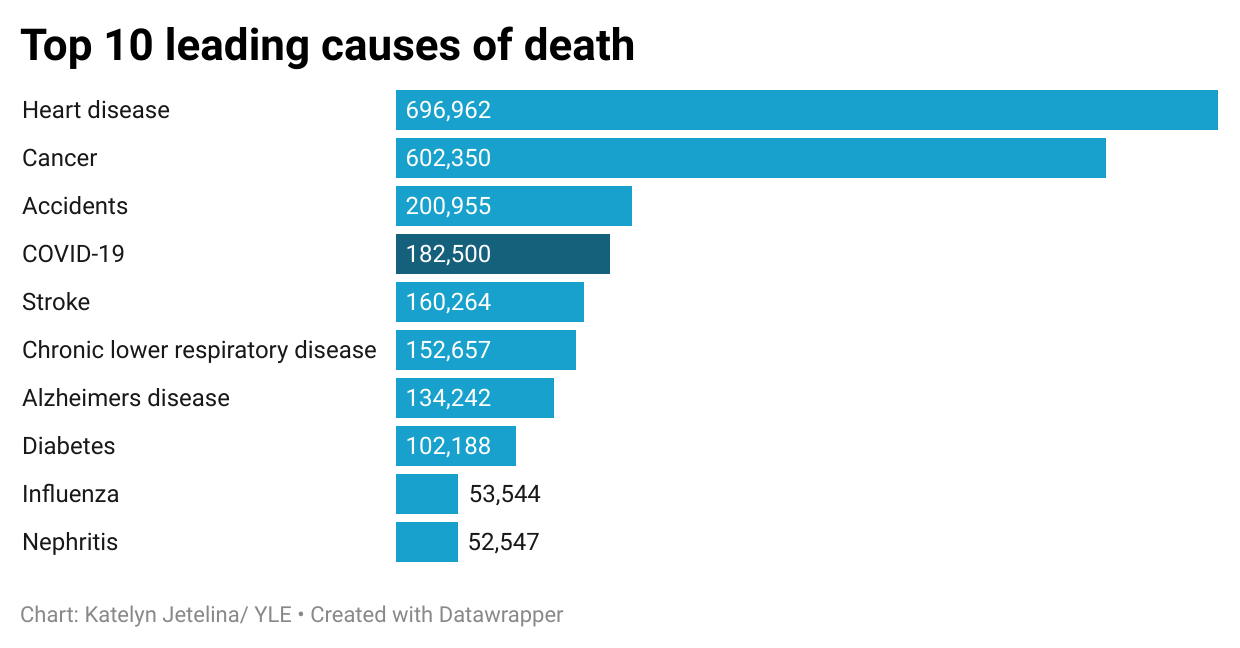
Deaths from Covid-19 are projected for 2023; data from CDC, here

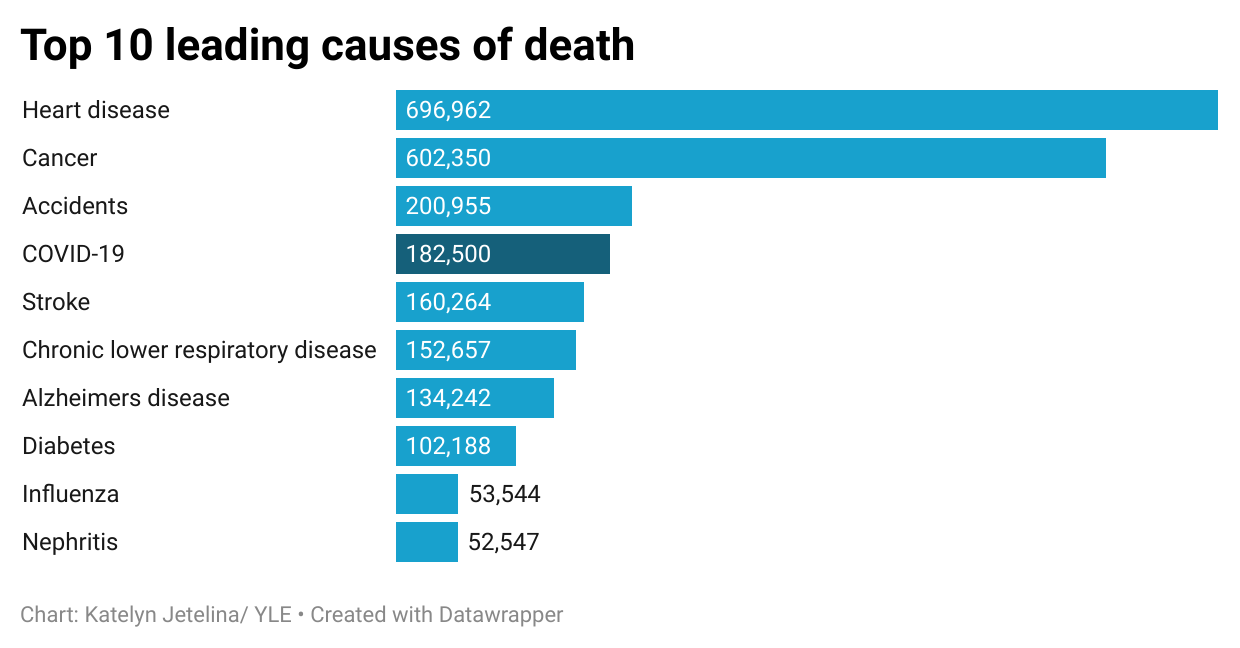
Today, roughly 500 Americans are dying each day from Covid-19. At this rate, SARS-CoV-2 will be the fourth leading cause of death in the U.S. in 2023—about triple the threat of influenza.

What happens next?

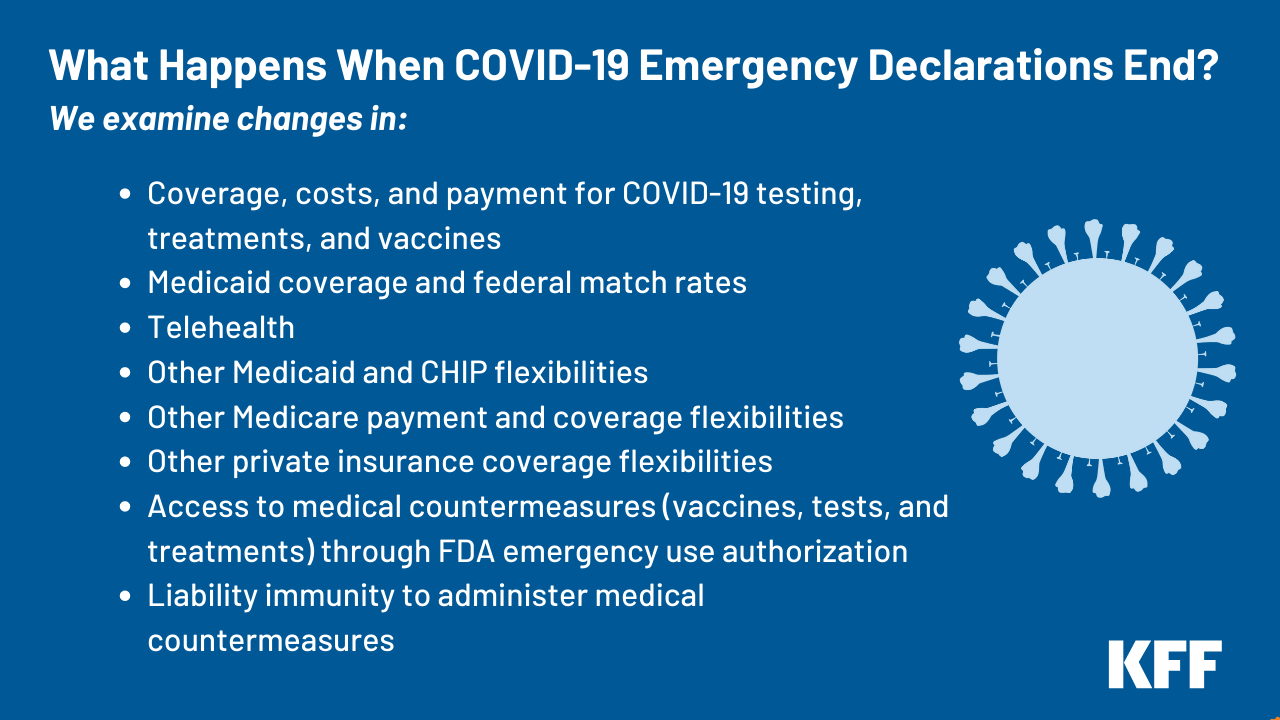
Unraveling the public-health emergency may get messy. It will certainly take time (hence the 3 month lag time). The Kaiser Family Foundation outlined the implications nicely:
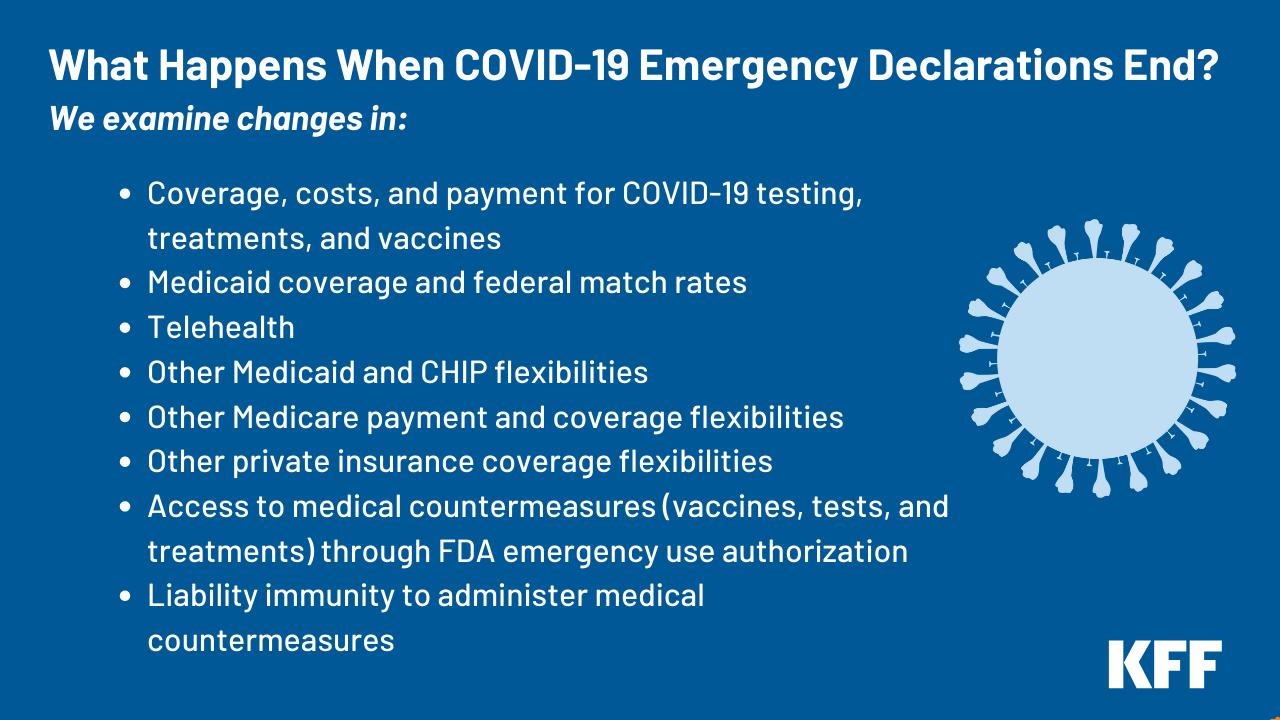

This does not impact the Emergency Use Authorization of vaccines and therapeutics from the FDA. In other words, these will still be available.

HOWEVER, the ending of funding for testing and vaccines is a real cause for concern. Once our free supply is out, everything will be privatized. Pfizer announced its vaccine will cost $130 per dose. Insurance will have to cover it, like the flu vaccine. This will, no doubt, fuel deep inequities in the U.S. And it is part of a much larger, deeply flawed system of pharmaceutical profiteering that this country hasn’t got the ethical fortitude to address yet.

Our work is not done: Most importantly, the end of the emergency doesn’t mean our work is done. There is no infectious disease more insidious or with greater impact on global mortality, morbidity, and health care systems than Covid-19.

As individuals, we still need to get vaccinated. We still need to leverage antigen tests. We need to invest in better filtration and ventilation. We still need to protect the most vulnerable.

As public-health officials, we must decide the minimum structure needed moving forward. Invest in wastewater monitoring. Continue to report hospitalizations (and get better at it). Commit to transparent and effective communication. Vaccine innovation is needed.

As a society, we MUST put real energy, innovation, and investment into repairing and strengthening our health and public health systems. The new normal cannot fall back to a pre-Covid normal. We must be bigger, better, and smarter. This means the very notion of for-profit healthcare needs to be fixed. In public health, we must figure out how to get out of the cycle of panic and neglect through preparation. We are LESS prepared for the next pandemic, given loss of trust, polarization, changing information echo-systems, and mis/disinformation.

Sadly, I’m starting to see denial and wishful thinking. I hope this changes as it will definitely not be another 100 years before the next pandemic emerges to grip the globe in a choke hold.

Bottom line: In the U.S., the end of the emergency is coming. I agree with this decision, but this certainly isn’t the end of Covid-19 or public health threats. In fact, this end is the beginning. We have our work cut out for us.

Katelyn Jetelina is a California epidemiologist and biostatistician who says she writes her newsletter on Substack as a way to translate public-health science for everyday use, helping people to make evidence-based decisions. She is a consultant to several organizations, including the CDC.

Thursday, September 29, 2022

Rural America, lagging in Covid-19 booster vaccinations, faces higher death rates from the disease than urban areas


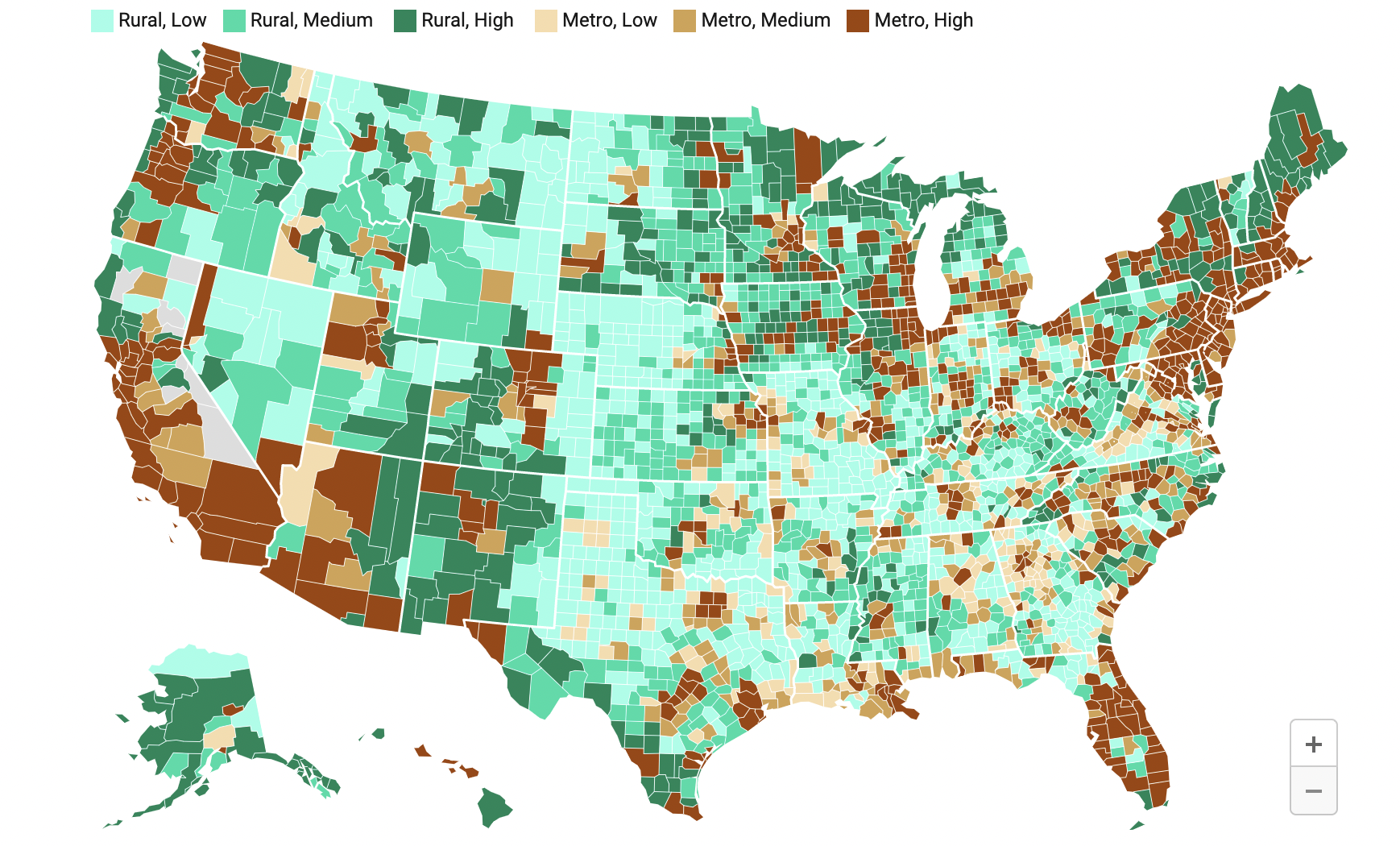
Percentage of county population with Covid-19 booster vaccination
(Map by Daily Yonder; click to enlarge. For the interactive version, with data, click here.)

Covid-19 booster rates are lower in America's rural counties than in metropolitan counties, reports Tim Marena of the Daily Yonder. Fewer than a third of rural Americans are boosted. That fact, combined with other health disparities, has meant that death rates from the disease continue to be  higher in rural areas; last week, cumulative rural death rates for the pandemic were 36 percent higher.

Carrie Henning-Smith, the deputy director of the Rural Health Research Center at the University of Minnesota, told Marena that those health disparities "include an older age structure, reduced access to health care, and more underlying health conditions among the population."

Vaccination rates vary greatly by region. "Half of the adult residents of rural Maine and 43% of rural Minnesotans have received at least one booster, Marena reports, citing CDC data. Garfield County, Nebraska, boasts the highest rural booster rate with 84% of the adult population having received a dose. Rates in the South are generally lower.

With much of the vaccine rollout and signups happening online, a lack of internet access could "disenfranchise people who … might not have access to reliable broadband internet,” said Henning-Smith. Those who live in poverty in rural area may also lack the transportation necessary to get to a health clinic, plus 40% of the 103 rural hospital closures between 2010 and 2021 occurred in counties with high poverty.

Wednesday, August 31, 2022

FDA authorizes coronavirus booster shots that target Omicron subvariants; here's what you need to know

Today the Food and Drug Administration "authorized the first redesign of coronavirus vaccines since they were rolled out in late 2020, setting up millions of Americans to receive new booster doses targeting Omicron subvariants as soon as next week," report Noah Weiland and Sharon LaFraniere of The New York Times. "The agency cleared two options aimed at the BA.5 variant of Omicron that is now dominant: one made by Pfizer and its German partner BioNTech for use in people as young as 12, and the other by Moderna, for those 18 and older." The boosters also target the BA.4 subvariant.

People are eligible for the new booster only if they are fully vaccinated, and if it's been at least two months since they got their latest booster or finished the initial two-shot series. Older formulations of the booster will no longer be authorized for people aged 12 and over, the Times reports. The new boosters are now being shipped out and could be available locally as soon as this week.

Fewer and fewer people take advantage of boosters each time a new one is offered, perhaps out of weariness over the pandemic or because they feel sufficiently protected by the initial vaccination. However, FDA officials say the booster could help curb infections and deaths during the winter months, when numbers tend to be higher, the Times reports.

"An average of about 90,000 infections and 475 deaths are recorded every day around the United States, almost three years into a pandemic that has killed more than a million Americans and driven a historic drop in life expectancy," the Times reports. "But there are also hopeful signs. Even with high case counts, fewer than 40,000 people are currently hospitalized with the virus, a decrease of 10 percent since early August and far fewer than during the Delta-driven surge last summer or the Omicron-fueled wave last winter. Deaths have also remained somewhat flat in recent weeks, a sign that vaccines are helping to prevent the worst outcomes of Covid-19."

Thursday, July 14, 2022

Pandemic roundup: 10 states sue to overturn vaccine mandate for health-care workers, citing rural challenges

Here's a roundup of recent news stories about the pandemic and vaccination efforts:

Citing rural workforce challenges, 10 states with large rural populations have filed a lawsuit against the Biden administration challenging the federal mandate that health-care workers be vaccinated against the coronavirus in order for their employers to participate in Medicaid and Medicare, Dave Muoio reports for Fierce Healthcare. The states filing suit are Alaska, Arkansas, Iowa, Kansas, Missouri, Nebraska, New Hampshire, North Dakota, South Dakota and Wyoming.

Some rural hospital administrators say they're skeptical about the Rural Emergency Hospital program, a proposed rule meant to help struggling rural hospitals stay afloat by no longer requiring them to maintain expensive in-patient beds in order to participate in Medicare and Medicaid. Read more here.

The Food and Drug Administration has authorized the Novavax coronavirus vaccine. Because it's not a messenger RNA vaccine, some who objected to the newer technology might be persuaded to take the more traditional vaccine. Read more here.

Thursday, July 07, 2022

Think-tank VP returns to rural Ohio hometown, finds growing wariness of Trump but continued support of his policies

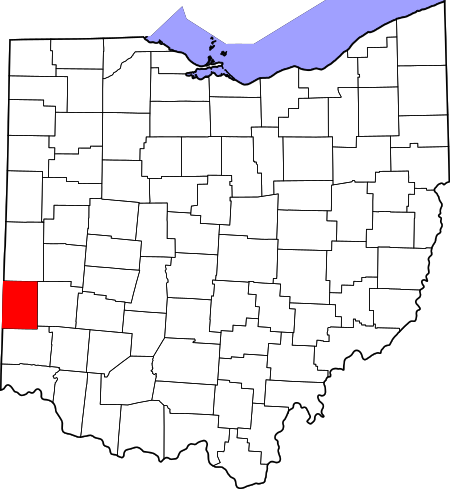
Darrell West, vice president of the Brookings Institution, a Washington, D.C., think tank, grew up in Eaton, Ohio, a town of 8,400 in Preble County, pop. 42,000, west of Dayton. He returned recently for his 50-year high-school class reunion and reports that he found in this place with "conservative tenor" a growing wariness about Donald Trump, who won 78 percent of the county's vote in 2020.

Darrell West
"Many of the people I encountered had voted for Trump in 2020 but displayed surprising hesitancy about his possible 2024 candidacy," West writes. "On the one hand, nearly all of them liked his policy agenda. They openly scorned what they saw as the Democrats’ turn to the left and Biden’s ineffectiveness in dealing with inflation, Covid, foreign policy, and border security. They wanted someone who would keep government spending in check, slow the speed of the pandemic (without mask mandates or mandatory vaccinations), and stop the flow of immigrants across our southern border.

"Yet on the other hand, they didn’t like Trump’s abrasiveness, wondered what to make of the Jan. 6, 2021 insurrection, and preferred someone who would follow Trump’s line but not antagonize so many people. Their ideal candidate seemed to be someone who supported Trumpism but with a nicer persona. In general, many of them told me they hoped Trump would not run, but that someone with his policy views would become the GOP nominee. This is consistent with data compiled by the Brookings Primaries Project based on an analysis of 2022 congressional primary candidates."

The lesson for Republicans, West writes, is "A nicer version of Trump, at least from a personality and public presentation standpoint, clearly would be the strongest GOP nominee for heartland voters. If Trump is the nominee, some Republican voters fear that campaign could reelect Joe Biden."

Preble County (Wikipedia map)
West says most of his Ohio acquaintances hope Biden doesn't run because he is too old, but he worries what might happen then: "The party could end up with a progressive candidate who would harness the anger unleashed by the court decision, mobilize mass voters, and make 2024 completely unlike 2020. Of course, that would fuel sentiment in the heartland that the Democratic Party has been taken over by extremists and raise the level of conflict and antipathy between the two sides. The only safe prediction in that situation is a high-stakes election, record turnout from both sides, and political adversaries who neither trust nor like the opposition. If you think America is highly polarized now, it actually could get a lot worse and turn violent in ways that would shock both Americans and foreigners."

That relates to the big issue of the day, the Supreme Court's removal of the right to abortion, West writes: "While most of the people I knew in D.C. bemoaned the decision as a betrayal of promises made during Senate confirmation hearings and a tragic rollback of women’s rights, a number of acquaintances in rural Ohio applauded the decision. Some of my hometown folks had spent decades organizing the grassroots, rallying churchgoers, running for local office, and supporting pro-life candidates financially. For them, the court decision represented the culmination of a life’s work and evidence of how their political activities over several decades had paid off. . . . Although Republicans were pleased with the court decision, several recognized the new abortion decision would further divide the country, generate a massive counter-offensive from progressives, and pit state against state in a dangerous manner. They wondered what it would mean for other issues such as same-sex marriage. Despite their general conservatism, they recognized that same-sex marriage had become broadly accepted in many places around the country and that conservatives did not have the same ethical ground on that topic as they did when it came to life and death debates over fetuses."

Saturday, June 04, 2022

Rural Covid-19 vaccination rate grew little in April and May

Coronavirus vaccination rates as of May 26, compared to national average and adjusted to account for vaccinations not assigned to a county. Map by The Daily Yonder; click the image to enlarge it or click here for the interactive version.

The rate of new coronavirus vaccinations in rural counties "grew by 0.4 percentage points from the last week of April to the last week of May. The rate grew by about that same amount from March to April," Tim Murphy and Tim Marema report for The Daily Yonder. "The pace of new vaccinations has slowed in both rural and metropolitan counties over the past several months. From December 2021 to January 2022, the rural vaccination rate grew by nearly 1.7 percentage points and the metropolitan rate grew by 2.2 points. As of May 26, 51% of the total rural population was completely vaccinated against Covid-19. In metropolitan counties, that rate is 65.4%."

Only 23.2% of people in rural U.S. counties have had at least one coronavirus booster shot, compared to 30.7% of the metro population, Murphy and Marema report.

Wednesday, May 11, 2022

Covid-19 roundup: Millions of Americans could lose Medicaid coverage when federal pandemic subsidies end

Here's a roundup of recent news stories about the pandemic and vaccination efforts:

Between 5 million and 14 million Americans could lose Medicaid coverage when federal subsidies end, a new analysis has found. Read more here.

Covid could lead to higher rates of erectile dysfunction among men, some studies have found. Read more here.

The share of Americans who refuse to get vaccinated against the coronavirus has barely wavered in the past year. That population is far more likely to be rural, Republican, white, and evangelical Christian. Read more here.

Covid misinformation is causing more people to die from the infection, and contributing to lower nationwide life expectancy, said Food and Drug Administration commissioner Robert Califf. Read more here.

A recent survey of adults and teens in rural Illinois in February found that most people said they feel overwhelmed by conflicting information and weren't sure what to believe. But local health-care providers were the most-trusted source of coronavirus vaccine information. The survey was commissioned by the National Rural Health Organization and the Centers for Disease Control and PreventionRead more here.

Covid-19 deaths are no longer overwhelmingly among the unvaccinated as the death toll among senior citizens grows. Read more here.

The Trump administration muzzled the CDC on its pandemic safety guidance for churches, emails show. Read more here.

Arizona is the only state where rural vaccination rates have outpaced the urban rate. Native Americans are mostly the reason for that. Read more here.

Misinformation about coronavirus vaccinations likely played a role in falling rates of routine childhood vaccinations, according to a newly published data analysis. Read more here.

Children can get long Covid, and it can show up in unexpected ways. Read more here.

Thursday, April 28, 2022

Rural seniors least likely to be vaccinated against Covid-19

Respondents polled between January and March 2022; fully vaccinated individuals are those who got either a single Johnson & Johnson shot or the two-shot sequence from Moderna or Pfizer. (Covid States Project chart)

Full vaccination against Covid-19 with a booster shot is one of the surest ways to protect oneself against severe outcomes from the coronavirus, especially among senior citizens, who tend to be more vulnerable to infection. Seniors who are totally unvaccinated and unboosted are disproportionately likely to be less-educated, lower-income, rural, and Republican. So says a new report by the Covid States Project, a consortium of Northeastern University, Harvard University and its medical school, Rutgers University and Northwestern University

Asked why they were unvaccinated, seniors mainly cited worries about side effects and a lack of trust in the process by which the vaccines were developed, researchers found. Many who had been vaccinated but who had not yet gotten a booster indicated they were open to it, but either did not feel it was urgent or cited obstacles such as transportation that kept them from doing so.

The Covid States Project looked into the question of seniors' coronavirus vaccination rates because they say the data from the Centers for Disease Control and Prevention is "significantly flawed" because it relies on poor record-keeping. Read more here.

Tuesday, April 26, 2022

General anti-vaccine sentiment gaining new momentum amid opposition to coronavirus vaccination for children

Opposition to requiring coronavirus vaccines for children has breathed new life into a movement to eliminate all childhood vaccine mandates, or at least limit the application of such requirements.

More than 65 bills to limit or eliminate mandatory childhood vaccinations have been introduced in 25 states this year. "In Missouri, for example, legislators are considering a measure exempting private school students from vaccine requirements. In Louisiana, a bill in the House would prohibit vaccinations on school property and at school-sponsored events," Sandy West reports for Kaiser Health News. "All states require specific childhood vaccinations for illnesses such as polio, measles, and mumps, but exemptions vary. They all allow exemptions for people with medical concerns, 44 states allow religious exemptions, and 15 allow philosophical exemptions, according to 2021 data from the National Conference of State Legislatures."

Anti-vaccine activism isn't new, but public-health experts say the movement has gained ground amid fears surrounding the coronavirus vaccine. Anti-vaccine sentiment once relied on long-debunked theories that vaccines cause autism, but in recent years "the movement began to shift its focus to align more with the populist ideology of 'individual freedoms' put forward by Second Amendment advocates and the tea party," West reports.

That dovetails with a rising tide of conservative activists who have sought to influence policy in libraries, county governments and school boards to statehouses, under the banner of liberty.

However, general anti-vaccine efforts aren't entirely grassroots. The similarity of anti-vaccine bills from state to state "raises red flags to vaccine advocates because it suggests that a coordinated effort to dismantle vaccine requirements and public-health infrastructure is underway," one expert told West.

It's unclear how much traction anti-vaccine-mandate bills will get. Most people support childhood vaccine mandates, but the issue is increasingly getting tangled up in the political minefield surrounding coronavirus vaccinations. Some politicians say they're hoping cooler heads will prevail.

Kansas state Rep. John Eplee, a Republican and family physician, said he voted against a state mask mandate in hope of defusing tensions, but supports childhood vaccination mandates. "While Eplee hopes the 'passions' inflamed by Covid die down with distance from the early days of the pandemic, he’s concerned that voters have forgotten the damage done by vaccine-controllable diseases, making them susceptible to disinformation from determined anti-vaccine activists and the politicians among their ranks," West reports.

"I hate to see human nature play out like that," Eplee told West. "But if people are vocal enough and loud enough, they can swing enough votes to change the world in a not-so-good way for public health and vaccinations."