Showing posts with label hazardous waste. Show all posts

Thursday, December 14, 2023

Transforming wastewater directly into drinking water might sound 'yucky,' but experts say it could work well

A wastewater purification system.
(Photo by Matt Vasilogambros, Stateline)
Toilet water repurposed as drinking water has one major challenge -- the 'yuck' factor. "After an Orange County resident flushes her toilet, the water flows through the Southern California community's sewer system, meanders its way to the sanitation plant, has its solids removed, is piped to a wastewater recycling facility next door and undergoes three different purification processes until it is clean enough to drink," report Matt Vasilogambros and Kevin Hardy of Stateline. After some sips from the sampling station, Mehul Patel, executive director of operations for the Orange County Water District's project, told Stateline, "It tastes like water. . . . It's just like any other water, but it's gone through a lot. People shouldn't judge where it came from, but where it is now."

Patel's sanitized water is not being sent as drinking water to any customers. "No large community in the U.S. is taking water from toilets and transforming it directly into clean drinking water right now," Vasilogambros and Hardy explain. "But the demonstration might offer a glimpse of the future, as states and communities across the country design new plants that will do just that, giving communities more control over their water supply as the climate gets drier. . . . And officials face some pushback from skeptics concerned about the high costs of advanced purification systems and from a public not used to the idea of drinking what was once their own waste."

The town of Castle Rock, Colorado, which lies east of the Rocky Mountains, has been using the technology and is on a path to sending it to consumers. "Directly recycling wastewater into drinking water will eventually allow residents to hold onto more of their precious water supply. . . . The town will be able to recycle its municipal water over and over at a water treatment plant that was upgraded in 2021," Stateline reports. "While the plant already has the capability, it's not sending treated wastewater directly to customers yet; it will likely take three to five years to meet new regulations on potable reuse announced by the state in January. The rules include a full year of water quality monitoring and a community awareness campaign before implementation."

In parched Kansas, the idea may take a while to gain traction. Jason Solomon, a technical assistant at the Kansas Rural Water Association, thinks "direct wastewater recycling is likely a ways off in Kansas given its stigma and costs," Stateline reports. "But [he thinks] it's an idea worth considering with recent droughts threatening drinking water supplies even in the traditionally wettest part of the state." He said, "Why don't we just take it directly from the wastewater plant? Why would we put it back in the river? It's going to get dirtier in the river."

Monday, October 02, 2023

New dairy industry lawsuit has state farmers worried about tainted water; a lot of the problem is from ag activities

CAFOs produce tremendous waste.
(Photo by Amber Kipp, Unsplash)
Where there are cows, there's plenty of manure. And in Wisconsin, residents, including many farmers, don't want animal waste in their water systems. "Farmers are worried for statewide water quality and public health after the dairy industry filed a lawsuit to eliminate the only protection that Wisconsin has against contamination" from concentrated animal feeding operations (CAFOs),  reports Ahna Renee Fleming of The Daily Yonder. "Some CAFOs can produce as much waste as a small city, but without comparable waste management infrastructure, rural communities face health, economic, and environmental hazards."

Wisconsin CAFOs must get a permit before disposing of manure and waste. "The lawsuit argues that the Department of Natural Resources exceeds their statutory authority by regulating CAFOs and their potential waste discharges rather than the actual amount of waste discharged," Fleming writes. "The Wisconsin Farmers Union released a statement in opposition, saying that this lawsuit could eliminate the 'primary source of environmental oversight of CAFOs in Wisconsin.'"

CAFOs are massive operations that produce tremendous waste. Adam Voskuil, lead agricultural attorney at Midwest Environmental Advocates, told Fleming, "I don't know that people always understand or appreciate the size of some of these things." Zach Raff, an economist at the Department of Agriculture, told Fleming: "A dairy operation that has 1,200 cows produces the same amount of waste as a city with about 46-47,000 people. . . .The difference is that cities have wastewater treatment plants, where there are filtration systems and health measures put in place to make sure that contaminants aren't reaching water bodies. That doesn't happen at CAFOs."

"According to a report by the National Association of Local Boards of Health, CAFO manure contains plant nutrients like nitrogen and phosphorus, but it also contains pathogens like E. coli, growth hormones, antibiotics, chemicals added to the manure or used to clean equipment, animal blood, silage leachate from corn feed, and copper sulfate used in footbaths for cows," Fleming reports. "The contaminants – nitrates and bacteria in particular – seep down to the groundwater. And when it rains, the contaminants run off directly into the surface water."

When ground and surface water get contaminated, the negative consequences for rural communities are profound, and Wisconsinites are particularly vulnerable. Voskuil told Fleming: "Wisconsin residents and communities rely on groundwater to a much higher level than most other states. . . . MEA receives calls regularly from folks around the state who are dealing with really dire circumstances as a result of these extractive industries. . . . The Wisconsin DNR has a Groundwater Coordinating Council that puts out a report. . . . [The report] has noted that nitrate contamination in groundwater is increasing in severity and frequency across the state. About 90%, maybe a bit more of it, is caused by agriculture in the state."

Thursday, March 16, 2023

Tips from the Society of Environmental Journalists for tracking hazardous-materials shipments along rail lines

Lac-Mégantic, Quebec, on July 6, 2013, after an oil-tanker train derailed
in the town center. (Photo from Sûreté du Québec, Wikimedia Commons)
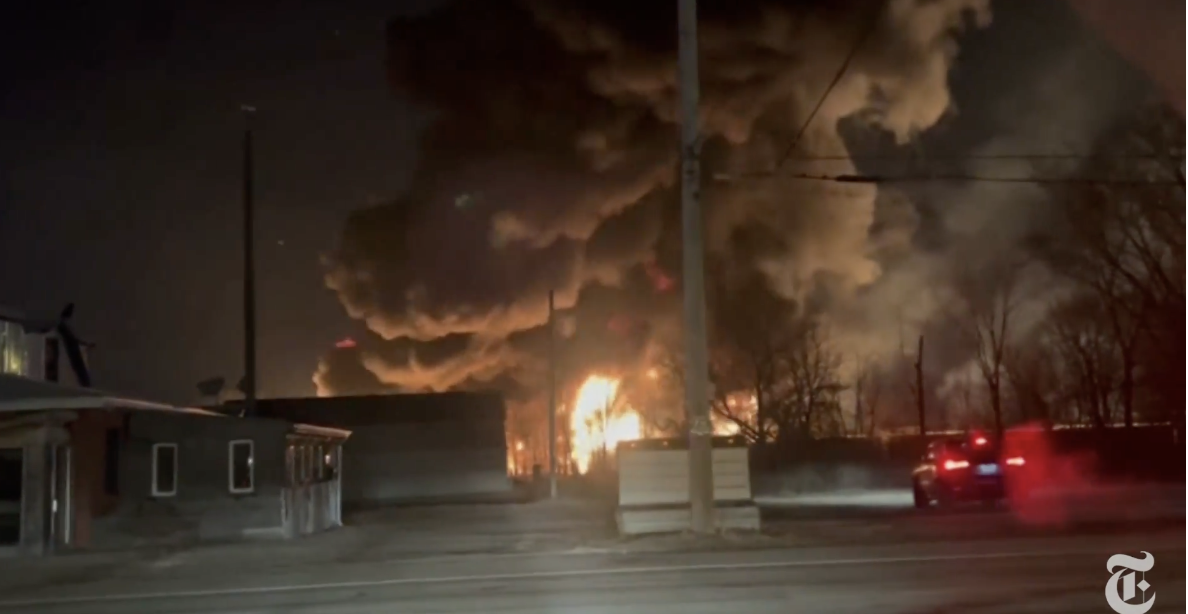
Before last month's train derailment and explosions in East Palestine, Ohio, why didn't the town's residents know there were hazardous materials on the train? Easy. "The public is not allowed to know," reports Joseph A. Davis for the Society of Environmental Journalists. "That’s the effect of 2008 federal regulations. . . . Those rules let states decide to keep the routing of trains carrying hazmat secret — although they require the federal government to inform the states. . . . Under existing rules, the train that derailed in Ohio wasn’t enough of a potential hazard to merit routing disclosure to anyone. . . . A few states do disclose some of the info. That’s not enough."

Finding rail hazmat routes begins with knowing what you're looking for: "There are many kinds of hazardous materials carried by rail. Crude oil is hazardous, but it may not be the most hazardous thing rolling through your community," Davis writes. "Because public concern was focused on oil trains, the Department of Transportation created a category called high-hazard flammable trains, and focused regulatory action on that. The train that derailed in Ohio was not an HHFT."

Davis notes, "In response to the Ohio spill, several Congress members have already introduced bills to tighten up rail hazmat regulations. But none make it easier for the public to know about hazmat cargoes or routing in advance."

Davis gives these tips to uncover hazmat cargo that may threaten your community:

Find the main freight line(s). This is not hard because many main freight lines run right through towns and cities, or right next to them. The biggest are called Class 1 freight railroads.

Stake out the line(s) that may be of concern. Visit at different times of day. Use binoculars and a long-lens camera to learn the contents of cars by looking at the diamond-shaped placards. Bring your press card. Sometimes you can focus on rail yards or industrial facilities.

Identify potentially hazardous cargo by looking up the UN numbers on the cars (especially tank cars). These numbers identify hazardous cargo. You may have to do the lookup back at the office. Then you need to sift through and find the most worrisome, frequent or voluminous ones.

Figure out where trains are coming from — and going to — if you can. Are you near a source of oil or chemicals? A place that uses them?

Try to build a list of train accidents near your area. Here’s one starting point. The FRA Office of Safety Analysis data portal provides another.

Now learn all you can about the health consequences of a spill of cargoes of concern.

Go back to the maps and your knowledge of the community to figure out what vulnerable facilities or populations are near possible accident sites (i.e., near the tracks). Schools? Nursing homes? Apartment buildings? Population centers? Lakes, streams or wetlands?

Talk to the first responders who might be called to an incident. It could be the police department, the sheriff, the firefighters, the ambulance service — or even the emergency room of your local hospital.

Ask questions to help your community prepare. Does your local fire department have a hazmat unit? Ask about their plans for dealing with a big hazmat incident. Talk to your local (or tribal) emergency planning committee, an entity required under federal law to plan for such blow-ups. To find yours, you may have to go through your state emergency response commission. Contact information is listed by state. Some places have agencies called 'multi-hazard' agencies; that’s likely who you want."

Consider using these other reporting resources:
National Association of SARA Title III Program Officials: A professional organization of people from government agencies and private industry who deal with hazmat incidents for a living.
EPA regional offices: The U.S. Environmental Protection Agency’s regional office may have staff who can help with information about a hazmat event.
UN Number reference guides: Apps are available for Android or Apple. You can also find lookups on the web, for example here.
Pipeline and Hazardous Materials Safety Administration: Check out the phone app that carries its Emergency Response Guidebook (ERG2020).
CAMEO Chemicals software: A suite of tools meant for emergency responders. here.

Thursday, March 02, 2023

Derailments and explosions aren't only worries for railroads' neighbors; noise and vibrations can cause health issues

Train tracks in Newberg, Oregon (Photo by David Herron, Unsplash)
The train explosion and controlled burn of hazardous materials in East Palestine, Ohio, reminded us that living near a railroad can be hazardous to your health and safety. But some health threats from rail are more chronic and unseen, "and while fiery crashes with towering smoke clouds make for lots of headlines, studies suggest trains carry health costs even when they don’t derail," reports Jason Bittel of National Geographic. "Noise pollution and vibrations are some of the biggest concerns, particularly for people who live within one-third of a mile of railroads or railyards, says Natalia Caldeira Loss Vincens, an expert in public health at the University of Gothenburg in Sweden."

“These exposures to noise and other things” are stressful, and chronic stress can lead to “a cascade of pathophysiological changes,” including inflammation, and changes in appetite or a person’s insulin sensitivity. "In a 2022 study in the journal Environmental Research, Vincens found a link between railway noise and incidences of diabetes, even when accounting for variables such as sociodemographic and lifestyle factors," Bittel reports.

Luca Fredianelli, an acoustic technician with the Italian National Council of Research, told Bittel, "If the sounds are quite stable, in the end, we do not perceive it at all." Bittel elaborates: "It’s the less intense but more unpredictable noises, such as squeals, whistles, and grinding brakes, that really bother people, since they’re difficult to acclimate to, he said."

Friday, February 24, 2023

Rail-borne hazardous materials moving through American communities are 'often invisible' until they leak or explode

East Palestine, Ohio (Photo by Gene J. Puskar, The Associated Press)
What do crude oil, ethanol, vinyl chloride or methane have in common? They are hazardous chemicals moving coast to coast on U.S. railroads. On the heels of the early-February train derailment in East Palestine, Ohio, "Communities alongside rail lines had two more close calls this week as freight trains carrying hazardous materials derailed in Houston and Detroit," reports Saul Elbein of The Hill. "Where this week’s wrecks took place, the damage was less severe than symbolic: a reminder of the importance of rail-borne hazardous materials to every part of the economy just after the crash in Ohio."

The additional derailments amplify "the risk posed by hazardous materials moving through the nation’s towns and cities. . . . That is a risk that is often invisible until, suddenly, it explodes." Elbein writes. "Last year also saw a spill of 19,300 gallons of hydrochloric acid from a derailment in Oklahoma and 20,000 gallons of nervous system-distorting methyl methacrylate monomer. Since 2015, the U.S. rail system has been responsible for 106 derailments in which hazardous materials were released, according to Federal Railway Administration data analyzed by The Hill."

“Local communities don’t know what’s in these trains,” said Kristen Boyle, an attorney with public interest law firm Earthjustice, told Elbein. “Local communities can’t find out. They can’t stop the trains from going through, and they have been unable to get safety regulations. . . . And then they’re the ones left with, you know, the explosion."

The potential for problems is large. "Trains also carry far more cargo than trucks — making the risks of a spill far more severe. And the sheer volume of U.S. rail travel means that even a failure rate of 0.1 percent can lead to a lot of damage," Elbein reports. "For example, about 20,000 rail shipments of vinyl chloride — the highly explosive and carcinogenic chemical that Norfolk Southern contractors poured in a ditch and burned off in East Palestine — cross the country each year, according to the American Chemical Society. . . . That 99.5 percent success rate would still allow for 100 possible releases of a hazardous chemical — such as crude oil, ethanol, vinyl chloride or methane." 

Wednesday, March 27, 2019

EPA says Missouri plan to regulate coal-ash ponds too weak

The Environmental Protection Agency has been criticized for lax regulation under the Trump administration, but it recently told the Missouri Department of Natural Resources that the state's plan for disposing of toxic waste from coal-ash ponds isn't strong enough to protect the environment or the health of residents. Coal ash includes hazardous substances that could leach into groundwater or streams if not contained and disposed of correctly. Missouri is home to two major coal companies, Peabody Energy and Arch Coal.

EPA noted that several parts of the plan are weaker than the 2015 federal coal-ash rule. Some allow the state "to waive requirements for utility companies to clean up groundwater contamination or even monitor groundwater for toxic chemicals if they can show that it doesn’t affect drinking-water supplies or harm the environment," Eli Chen reports for NPR. "The state agency also could suspend requirements to monitor groundwater if the utility can demonstrate that the disposal site doesn’t pose a risk to human health or the environment."

Trey Davis, president of the Missouri Energy Development Association, argued that the state's proposed rule protects health and the environment as well as the federal rule, and said state regulations didn't have to match their federal counterparts, Chen reports.

"Researchers from the Washington University Interdisciplinary Environmental Law Clinic recently found excessive levels of arsenic, boron and other harmful chemicals near all ponds that are receiving coal ash waste," Chen reports. "The MDNR is taking feedback on its plan until March 28 and expects that the state regulations will be effective by the end of September."

Wednesday, January 02, 2019

Camp Fire clean-up stalls amid local disagreements over where to dump rubble from demolished town of Paradise

Over a month after the deadly Camp Fire in Northern California, clean-up efforts in the devastated town of Paradise have stalled because of local disagreements over where to dump the rubble.

The Federal Emergency Management Agency and state officials first planned to put the concrete and metal rubble in a 100-acre temporary scrapyard next to a residential site in nearby Chico, but residents and town officials objected and persuaded the government to look elsewhere, Dale Kasler reports for The Sacramento Bee. But the alternative, a 200-acre former industrial site in nearby Oroville, is also unpopular with locals. "Although the decision is out of Oroville officials’ hands, about 100 residents showed up for a town hall meeting last week to protest the location, largely over their fears that the project would stir up toxic chemicals still in the soil. Federal officials say the site is safe," Kasler reports.

At the meeting, "along with the same complaints in Chico, including air quality, traffic, and narrow roads, Oroville residents told of their months dealing with the state Department of Water Resources after the Oroville Dam spillway crisis last year," Laura Urseny reports for the Oroville Mercury-Register. "Even worse were the memories from the days the Koppers plant operated: chemically treated wood, leaving toxins in the soil, followed by several fires that left the site an EPA Superfund site. Several speakers said they knew people who had died because of cancer they said was linked to the contamination."

An Oroville City Council member said she thought debris from Paradise would be "toxic-laden stuff" like the World Trade Center debris from 9/11 that sickened first responders. "State and federal officials insist, however, that the debris from Paradise would be cleansed of hazardous materials long before reaching Oroville," Kasler reports. "The Oroville location would be used to process up to 4 million tons of concrete and metal, rinsed clean of hazardous materials before leaving Paradise by truck. Once the debris arrives, it will be sorted, crushed and shipped elsewhere by rail. The yard would be open for at least a year." The nearest home is 2,500 feet from the proposed site.

State and federal officials hope to begin clearing the town of rubble by mid-January, but local opposition may keep them from meeting that goal. Once that happens, Paradise residents can put travel trailers on their properties and resume living there, Kelly Huston of the California Office of Emergency Services told Kasler.

Incoming mayor Chuck Reynolds told Kasler he understands why many locals are reluctant, but he thinks the site could bring more jobs to Oroville and believes small-town neighborliness is important. "This has to be done, they have to do it somewhere," he said. "We need to help our neighbors, especially in the face of tragedy."

Friday, November 16, 2018

EPA's inspector general says processed sewage sludge used as fertilizer might not be safe

The treated sewage sludge that many farmers use as fertilizer might not be safe because not enough is known about hundreds of pollutants found in the stuff, according to a newly published report by the Environmental Protection Agency's inspector general.

"The treated sewage known as biosolids is chock full of nutrients, which is what makes it so good at enriching soil. But it also can be chock full of pollutants, from heavy metals such as mercury and arsenic to pharmaceutical compounds, flame retardants and disease-carrying organisms," Jennifer Dlouhy reports for Bloomberg Quint.

The biosolids are the residue left over after wastewater goes through treatment plants. About half the sludge created annually is incinerated or sent to landfills. The other half is used as fertilizer after undergoing extra treatment to remove more pollutants and make it less appetizing to pests. Fertilizer sludge is tested for pathogens, pollutants that may need to be regulated, and nine heavy metals, including arsenic and mercury. "Although the EPA has consistently monitored biosolids for those nine regulated substances, the agency lacks the data or tools needed to determine the safety of hundreds of other pollutants found in the material, the inspector general found. And while the EPA is reviewing additional pollutants, the agency hasn’t always completed those assessments in a timely manner, the watchdog said," Dlouhy reports.

At least 352 pollutants found in biosolids haven't been fully vetted for safety by the EPA, though at least 61 of them have already been declared hazardous by another federal authority, Dlouhy reports. EPA officials responded to the report with a reminder that the pollutants are not necessarily a threat to public health or the environment.

Friday, May 18, 2018

EPA sued for not requiring mining companies to prove they have the money to clean hazardous waste spills

"Six environmental groups on Wednesday filed a lawsuit against U.S. Environmental Protection Agency chief Scott Pruitt for abandoning a rule that would have forced hard-rock mining companies to prove they have enough money up front to clean up hazardous substances released at mine sites," Reuters reports. 

The groups, including Earthjustice, Earthworks, and the Sierra Club, filed the lawsuit in the District of Columbia Circuit Court. Many abandoned former mines in the U.S. West are still polluted and harm public health, the groups argued. When mining companies go bankrupt, taxpayers have to pay millions or even billions in cleanup. The EPA estimates the current backlog of cleanup costs for hard-rock mines in the U.S. is anywhere from $20 billion to $54 billion. 

"In December, the EPA decided to abandon the rulemaking process after determining that modern industry practices already address risks from operating hard-rock mining facilities," Reuters reports. Pruitt said at the time that the rule would impose an "undue burden on this important sector of the American economy and rural America, where most of these mining jobs are based."

Tuesday, July 18, 2017

Utilities may try to sidestep EPA regulations using law that grants states control over coal-ash disposal

Coal ash at the Tennessee Valley Authority's
Gallatin Fossil Plant (Associated Press)
A 2016 law that granted states oversight authority over disposal of coal ash from power plants was meant to let them tailor disposal approaches to local conditions, but it may also serve as a way for states and industries to challenge Enivronmental Protection Agency regulations they find financially burdensome, Sean Reilly reports for Environment & Energy News.

The Utility Solid Waste Activities Group, an informal consortium of about 80 utility companies, cited the 2016 law, called the Water Infrastructure Improvements for the Nation Act, in a recent rulemaking petition asking EPA to reconsider or delay enforcing extensive regulations passed in 2015. "The rationale: Because states now have the leeway to craft their own coal ash permitting programs — conditioned on an EPA finding that those programs are at least as protective as the federal standards — they can tailor more flexible 'risk-based' provisions around conditions at individual sites," the petition said.

Environmental groups say the industry is trying to take advantage of the Trump administration's dislike for environmental regulations. They note the USWAG petition's allusion to recently adopted administration policies. "Those include an executive order intended in part to promote the use of fossil fuels and EPA's recent decision to postpone implementation of effluent limitations guidelines. The future of coal-fired power production is at risk, the petition warned, 'if there is no economical option for managing the residuals from its use,'" Reilly notes.

Friday, July 14, 2017

Duke Energy wants customers to help pay for coal ash cleanup

Duke Energy dug up toxic coal residue from a spill from its
Dan Rivervpower plant in Eden, N.C.(Associated Press photo)
Duke Energy Corp. wants to increase electricity bills an average of 15 percent for 1.3 million North Carolina customers to pay for cleaning up the toxic byproducts of burning coal to generate power, Emery Dalesio reports for The Associated Press. People who live near the power plants were already unhappy, since they've been living on bottled water since toxic chemicals appeared in their wells. Charles Walker Jr. of the western North Carolina town of Allen says the company's profits should paying for the disposal. "In my opinion, if you’re going to be negligent, if you made a mistake, you need to feel the sting. Don’t just pass it on,” Walker said in an interview. “If a septic company comes to my house and accidentally spills sewage all over my property, are they going to send me the bill for that?”

The request for the rate increase from Duke Energy Progress was filed in June and is the first time Duke has tried to get North Carolina consumers to pay for part of the estimated $5.1 billion it will cost to clean up the waste there and in South Carolina. The increase would generate an extra $477 million per year. "The bulk of that would cover ongoing costs of replacing coal-burning plants with natural gas and storm repairs," reports Dalesio. "But it also includes $66 million already spent to deal with coal ash, and $129 million more in future clean-up costs." Duke Energy Carolinas is the holding company's other North Carolina subsidiary, and will likely request a similar rate increase for its 2.5 million customers in coming months.

Duke produces an average of 150 pounds of coal ash a year per household, but says it is disposing of it appropriately and coal-ash storage basins are not allowing toxic chemicals to seep into the surrounding groundwater, and that cleaning up the coal ash is a routine expense.

Wednesday, October 26, 2016

Criminal prosecutions from EPA investigations lowest in 20 years; water pollution tops list

Criminal prosecutions in fiscal year 2016 from Environmental Protection Agency investigations are the lowest in 20 years, says a report released Tuesday by Transactional Records Access Clearinghouse, a research center at Syracuse University. Through the first 11 months of the fiscal year there have been 81 prosecutions, which is on pace for 88 for the year, down 20 percent from last year and down from 182 five years ago. (TRAC graphic: prosecutions by fiscal year)
Criminal prosecutions resulting from EPA referrals to federal prosecutors peaked at 198 during FY 1998 when President Clinton was in office and reached 196 during President George W. Bush's first year in office, researchers said. "The decline in prosecutions has been driven largely by the decline in EPA criminal referrals. During the Obama administration federal prosecutors filed criminal charges in 43.1 percent of EPA referrals, compared with 40.2 percent during the prior Bush administration."

Of this year's investigations 63 led to convictions, with 61 pleading guilty, researchers found. Of the 63 convictions, 19 involved water pollution, eight were for air pollution and six for hazardous waste management. Of the 63 convictions, 22 received prison time. The longest sentence was 121 months (10 years) and the average sentence was 12 months. (Read more)

Thursday, April 07, 2016

W.Va. fracking wastewater contaminates New River with compounds harmful to fish, study says

A study published Wednesday in the journal Science of the Total Environment found that water around and downstream from a hydraulic-fracturing wastewater-disposal facility in Fayetteville, W.Va., contains high levels of compounds that may harm the endocrine systems of fish, Brian Bienkowski reports for Environmental Health News. "Contamination seems to affect the reproductive development of some fish species, which can lead to threatened populations. In recent years researchers are finding more 'intersex' fish—male fish with some female reproductive parts—and believe the culprit is endocrine-disrupting chemicals in water."

"Researchers collected water upstream, downstream and around a wastewater facility that has a disposal well, holding ponds and storage tanks—all used to house excess wastewater from drilling," Bienkowski writes. "There is a small stream flowing through the site, which flows into Wolf Creek. Wolf Creek flows into the New River, which is used for some people’s drinking water. Samples near the site and downstream had 'considerably higher' activity for a number of hormones, including estrogen, androgen and thyroid receptors, than reference samples in the watershed far from any disposal sites."

Industry officials criticized the study, "saying that the concentrations of compounds found do not warrant health concerns," Bienkowski writes. Seth Whitehead, a researcher at Energy In Depth, an outreach program launched by the Independent Petroleum Association of America, told Bienkowski that endocrine-disrupting chemicals “are found in just about everything we use on a day-to-day basis, including dyes, perfumes, plastics, personal care products, detergents and cleaning agents. Concentration level is far more relevant than merely detecting EDCs." (Read more)

Monday, March 07, 2016

Was oil and gas radioactive waste dumped in Ky.? Officials say state lacks budget for new regulations

Environmental advocates fear that Kentucky has been a dumping ground for radioactive waste from an oil and natural gas boom in Ohio, Pennsylvania and West Virginia, James Bruggers reports for The Courier-Journal of Louisville: "Kentucky does not require any radiation screening at landfills. Landfill operators count on haulers to honestly describe the wastes they bring for disposal." But representatives at a east-central Kentucky landfilly "say they were duped and not told that sludge from West Virginia was dangerously radioactive, as state officials believe." Illegal dumping was believed to have occurred in two Eastern Kentucky counties.

Kentucky's leading environmental lawyer, Tom FitzGerald, told Bruggers that a working group charged with making recommendations to modernize state oversight of oil and gas drilling needs to resume its deliberations.

Kentucky Energy and Environment Secretary Charles Snavely, a former coal company executive recently appointed by newly elected Republican Gov. Matt Bevin, "said that group will begin work again and is being charged with evaluating potential remedies for harmful substances," Bruggers reports. Snavely told him, “If our current rules and procedures require modification, we’ll make those modifications.” Snavely previously "expressed skepticism about any new oil and gas drilling regulations, noting the impact of pending budget cuts." He told the advsory Environmental Quality Commission, "My question is where is the money going to come from to do the regulating?" Bevin has called for a 9 percent budget cut to shore up state pensions.

Friday, December 18, 2015

Feds pledge stronger enforcement of worker-safety and environmental laws for agriculture and mining

The Department of Justice and the Department of Labor say they will more vigorously enforce environmental and worker safety laws next year, Stephen Davies reports for Agri-Pulse.

On an average day in the U.S., 13 workers die on the job, thousands are injured and 150 contract diseases from exposure to carcinogens and other toxic and hazardous substances, according to a statement from the Justice Department. "Under the new plan, the Justice Department’s Environment and Natural Resources Division and the U.S. attorneys’ offices will work with the Department of Labor’s Occupational Safety and Health Administration , Mine Safety and Health Administration and Wage and Hour Division to investigate and prosecute worker endangerment violations."

In a memo sent to all 93 U.S. attorneys, "Deputy Attorney General Yates urged federal prosecutors to work with the Environmental Crimes Section in pursuing worker-endangerment violations," the statement says. "The worker safety statutes generally provide for only misdemeanor penalties. However, prosecutors have now been encouraged to consider utilizing Title 18 and environmental offenses, which often occur in conjunction with worker safety crimes, to enhance penalties and increase deterrence."

"In addition to prosecuting environmental crimes, the Environment and Natural Resources Division has also been strengthening its efforts to pursue civil cases that involve worker safety violations under statutes such as the Clean Air Act, Clean Water Act, Resource Conservation and Recovery Act and the Toxic Substances Control Act," the statement says. "Violations of a number of provisions under these statutes can have a direct impact on workers tasked with handling dangerous chemicals and other materials, cleaning up spills and responding to hazardous releases."

Tuesday, May 05, 2015

White foam in Pennsylvania drinking water linked to Marcellus Shale gas well sites

White foam found in drinking water in three homes in Bradford County, Pennsylvania, (Family Search map) was likely caused by Marcellus Shale gas well sites, said a study by researchers at Penn State University and Appalachia Hydrogeologic and Environmental Consulting published on Monday in the journal Proceedings of the National Academy of Sciences, Laura Legere reports for the Pittsburgh Post-Gazette.

"Test results from commercial laboratories during investigations at the sites had not picked up on what was causing the foaming—they reported no unsafe levels of compounds other than natural gas in the water, while other compounds, like glycols and surfactants, had appeared inconsistently or at barely detectable levels," Legere writes. "The same or similar organic compounds that the researchers traced in the water, including 2-n-Butoxyethanol, or 2-BE, are known to be used in drilling and hydraulic fracturing additives or to appear in waste fluids from oil and gas operations."

"Researchers said it is impossible to 'prove unambiguously' that the contaminants in the water came from shale gas-related activities because they were unable to secure samples of fluids that were used at or near the well site," Legere writes. "But they said that multiple strands of evidence, including timing, well construction problems and the presence of matching compounds in both shale fluids and the water wells, make shale activity 'the most probable source.'”

A spokesman for the Marcellus Shale Coalition "said that significant technological advancements and stronger regulations have been developed in recent years to protect groundwater, 'which is a top industry priority,'” Legere writes.

Thursday, April 16, 2015

Fracking waste treated as non-hazardous but can lead to cancer, environmental group says

Fracking waste puts people at risk of exposure to chemicals known to cause cancer, but states are allowed to treat oil and gas waste as non-hazardous and dispose of it with little regard to safety, says a study by the environmental organization Earthworks, David Hasemyer reports for InsideClimate News.

A 1988 Environmental Protection Agency rule "exempted the waste from the stricter disposal requirements required of hazardous substances and allowed the states to establish their own disposal standards," Hasemyer writes. Earthworks, which is often criticized by the oil and gas industry as being consistently biased, "concludes the EPA was wrong when it applied the non-hazardous label to oil-and-gas waste."

The study, which focused on the Marcellus and Utica shale regions, found that in Pennsylvania fracking operations are allowed to store waste in open air pits and spread waste on roads and open land, Hasemyer writes. In West Virginia, solid oil-and-gas waste "does not have to be disposed of in specialized facilities; it can be dumped in municipal landfills."

"In Ohio, Earthworks found no public information available on the number, location or use of oil-and-gas waste pits and impoundments,"  Hasemyer writes. "The state doesn't have specific requirements for the construction and use of pits and impoundments." (Read more)

Friday, January 09, 2015

Series examines the impact of fracking on rural areas in the Marcellus region

About one mile from the center of the small town of Vienna, Ohio, five injection wells accepted and deposited 350,000 barrels of waste—more than 14 million gallons—from Pennsylvania during the first half of 2014, reports John Finnerty, Community Newspaper Holdings, Inc. state reporter in Pennsylvania as part of a three-part series about the impact of fracking in the Marcellus region. (Finnerty photo: Safety on rural roads is a concern in areas where fracking takes place)

"The Vienna wells—and more than 200 others like them across Ohio—figure prominently into the natural gas industry’s growth in neighboring Pennsylvania over the past six years," Finnerty writes. "While drillers treat and reuse 90 percent of their liquid leftovers, according to industry estimates, the remaining 10 percent that gets sent to injection wells adds up. And it’s far easier to dispose of it in the Buckeye State than over the border—so much that last year Pennsylvania exported enough drilling wastewater to this state to fill 200 Olympic-sized pools."

While drilling companies recycle their own wastewater in 90 percent of cases, environmentalists are concerned "that as companies increasingly skip off-site treatment and instead reuse their own liquids by diluting them or treating them on-site" the water used for fracking might not be as clean as originally thought, Finnerty writes in another story.

Mark Szybist, a lawyer for the watchdog group PennFuture, told Finnerty, “There’s no good way to confirm that drillers have in fact recycled what they say they’ve recycled because Pennsylvania has no cradle-to-grave wastewater tracking system. You could argue that this exemption doesn’t make sense. But it’s not the only exemption given to the oil and gas industry that doesn’t make sense.”

Finnerty writes, "The problem takes on greater significance in light of the discovery by the Pittsburgh Post-Gazette that landfills reported receiving more solid waste from drilling companies than the drillers reported sending to the dump."

Craig Konkle, energy development emergency services coordinator for Lycoming County, said that while many fear the environmental impact of fracking, its single greatest threat in rural Pennsylvania is to public safety on roads, Finnerty writes in another story.

"One of the first things a firefighter or police officer must know when rushing to a heavy truck crash in the heart of Marcellus Shale country: Don’t believe what it says on side of the truck," Finnerty writes. Konkle told him, “We’ve had accidents where it said 'fresh water' on the side of the truck. But when it started leaking black liquid, we knew we weren’t dealing with fresh water.”

Tuesday, September 30, 2014

EPA audit says agency not taking enough action to protect water sources from hazardous materials

A watchdog report by the Environmental Protection Agency says the agency needs to take more action to protect water sources from unmonitored hazardous chemicals. The report, released on Monday by EPA’s Office of Inspector General, said "management controls put in place by the EPA to regulate and control hazardous chemical discharges from sewage treatment plants to water resources have limited effectiveness."

"The EPA regulates hazardous chemical discharges to and from sewage treatment plants, but these regulations are not effective in controlling the discharge of hundreds of hazardous chemicals to surface waters such as lakes and streams," the report said. The report also said sewage plant staff do not monitor for hazardous chemicals discharged by industrial users, mostly because the Clean Water Act hasn't been updated since 1981. (EPA graphic: Whole effluent toxicity tests)

The outdated Clean Water Act fails to regulate all chemicals, Timothy Cama reports for The Hill. The report "said the agency uses the Clean Water Act to regulate only 126 toxic chemicals that could flow to sewage plants, leaving about 300 chemicals that are considered hazardous under the Resource Conservation and Recovery Act."

"Auditors also found that the EPA may not be consistently enforcing the requirement that industrial polluters file reports on the chemicals they discharge to sewage plants," Cama writes. "The OIG found regional variations in the chemicals that industries had to report to the EPA or states and that programs to monitor chemical treatments and permitting sometimes do not coordinate."

"Auditors suggested that the EPA reevaluate which chemicals it regulates in sewage systems," Cama writes. "They also recommended that the agency improve communications internally and externally and boost its compliance monitoring, among other changes." (Read more)

Wednesday, September 24, 2014

Crews say trains leaving stations with hazardous materials that are not mentioned on cargo list

Railroad union members in Minnesota say BNSF Railway trains are hauling hazardous waste materials that are not listed on the train's cargo list, which violates federal regulations and puts communities at risk because emergency personnel responding to an accident would not be fully informed of the dangers involved, Dan Gunderson reports for Minnesota Public Radio. At least 18 times over the past three years trains left Minneapolis with hazardous cargo not listed on the manifest, train crews said in complaints filed with the Federal Railroad Administration.

"In one case, a train traveled more than 20 miles through the western suburbs with six carloads of anhydrous ammonia, a toxic corrosive gas used as a farm fertilizer, before the train crew knew the chemical was on the train, a complaint said," Gunderson writes. "In another, a complaint said a train traveled about 90 miles west to Willmar before its cargo list was corrected to show an extra car of ammonia." (MPR map)

Dave Christianson, senior rail planner for the  Minnesota Department of Transportation calls the train manifest "the Bible" for first responders, Gunderson writes. He told Gunderson that an inaccurate manifest "basically nullifies any preparation that has ever been done to protect the public and to respond to a catastrophic incident. That document is the key to how emergency responders react to the accident." (Read more)