Showing posts with label photojournalism. Show all posts

Tuesday, July 08, 2025

Quick hits: Kentucky history in photos; rural SNAP use; world's biggest telescope; gloomy toy tariffs; radishes!

South Fork of the Kentucky River, Breathitt County, Kentucky, 1940. 
(Photo by Marion Post Wolcott, Farm Security Administration)


Even one photo of an event or a person during a historical era can add rich nuance to a story. Sometimes, photos can even be the story. "Imagine looking at a state in forty-year intervals. Documenting Kentucky: Three Photographic Surveys, does just that in a new show at the Frazier History Museum in Louisville, Kentucky," reports Ted Wathen for The Daily Yonder." From loading cut tobacco leaves to a handful of newly hatched guinea chicks to horse-led recliners, the photographs tell quite a story.

Far fewer rural families currently use the federal Supplemental Nutrition Assistance Program, known as SNAP, than they did in 2015. "SNAP use has declined in nearly every state," reports John McCracken of Investigate Midwest. "Rural states have seen major drops in the number of households using the program, with Iowa, Mississippi, Arkansas and Tennessee seeing the most significant declines." The recently passed "One Big Beautiful Bill Act" will reduce federal SNAP spending by $290 billion over the next decade.

A small section of the observatory’s total view of the Virgo cluster. Bright stars in the Milky Way galaxy shine in the foreground, and many distant galaxies are in the background. (NSF-DOE photo)

Outer space can be a shared adventure as the world's largest telescope starts taking pictures. "The Vera C. Rubin Observatory is poised to discover billions of new astronomical objects, revolutionizing understanding of everything from the history of the solar system to the workings of dark energy," reports Jay Bennett for Wired. "The telescope will create a decade-long, high-resolution movie of the universe. It will generate about 20 terabytes of data per day, the equivalent of three years streaming Netflix."

While Santa Claus hasn't commented on the subject, the U.S. toy industry is hurting from high tariffs on Chinese goods. "The cost of toys and games is rising at a record rate as the industry begins to feel the impact of President Donald Trump’s tariffs on China," reports Rhian Lubin of The Independent. "Nearly 80% of the toys sold in the U.S. are sourced from China, according to The Toy Association, and the industry is bracing itself. . . . Last month Mattel, the creator of Barbie, Hot Wheels, Uno, American Girl and more, was threatened by Trump for refusing to move its production to the U.S. – the ultimate goal of the president’s tariffs."

Radishes come in a wide variety of flavors, colors
and shapes. (Photo by Philippe Collard, Unsplash)
For some people, summer's glory is summed up in a trip to the garden or a local farmer's market, where a variety of colors and flavors await to be tossed together into a delectable meal. Some visitors love fresh sweet corn, while some are rhubarb aficionados, but others love root crops -- especially radishes. "Of all the root crops known to humankind, my favorite is the humble radish," writes Jerry Nelson of Successful Farming. "Radishes are a good source of vitamin C, minerals, and bad breath. But their benefits don’t end there. They don’t even begin there. . . ."

Despite all their flaws, people are remarkably adaptable and creative beings. "Humans are the only animal that lives in virtually every possible environment, from rain forests to deserts to tundra," reports Christina Larson of The Associated Press. "This adaptability is a skill that long predates the modern age. According to a new study published in Nature, ancient Homo sapiens developed the flexibility to survive by finding food and other resources in a wide variety of difficult habitats." In other words, we were born food foragers and farmers!

Tuesday, July 30, 2024

A look at how a local newspaper in Pennsylvania covered Trump's rally and the attempted assassination

When Donald Trump went to Butler to deliver his election message to the state's western supporters, journalists from the local newspaper, the Butler Eagle, were prepared to cover a political rally, but they ended up reporting on a shocking attempted assassination.

Covering a national event with a small newspaper's resources is a tall order for any newsgroup, and journalists at The Associated Press wondered how the Eagle would manage the reporting and scrutiny. To discover how it all went down at the Eagle, AP photographer Matt Slocum, media reporter David Bauder and video journalist Joe Frederick traveled to Butler to interview the paper's journalists, managers and staff. AP's perspective looks at a tragic event in a small town through the eyes of the local newspaper working to cover it. 

When AP explored the Eagle's newsroom responses, another story came to light. "It revealed not only the news organization’s professionalism but the emotional toll the story was taking on young staffers," AP reports. "One was moved to tears as she recounted how the crowd turned on her after the shooting. But, she said, the story taught her that in being a journalist, she had made the right choice."

AP's approach "enabled them to interlock strong human stories and look at the American local news industry as a whole. Particularly noteworthy was how this story managed the 'ladder of abstraction' and represented a strong crossover story that could appeal to multiple audiences — those looking for political news, local news, media news and simply a human story about the faces behind the journalism," AP reports. "The story offered a compelling on-the-ground tale that also linked it up with the struggles that newspapers and local news are having."

To dig into this coverage, watch the video here.

Thursday, November 30, 2023

Nature bits 'n bites: Unearthly fish; plant memories; forest tardigrades; gray wolves return; a very hungry beetle

(Photo by Dante Fenolio,
Science Photo Library via Hakai)
Creatures that dwell in the deep ocean may look like inedible Star Wars characters, but fish industry experts are looking into their potential. Scientists are also studying these fish in an attempt to protect them. "Mesopelagic fish are not yet commercially exploited, though projects are underway to investigate the marketability of the species and the best methods for harvesting them," reports Moira Donovan for Hakai magazine. "Scientists working in this area are, therefore, in the rare position of being able to assess potential impacts from fishing before they happen. But with so many unknowns, the question remains: can they do it in time — for the fish's sake and our own?" The telescopefish, above right,  has large tubular eyes to maximize light collection and a highly extensible jaw with needle-sharp teeth that ensure a firm grip on prey.

Plants aren't normally considered "learners," but maybe they should be. "In the study of the plant kingdom, a slow revolution is under way. Scientists are beginning to understand that plants have abilities, previously unnoticed and unimagined, that we've only ever associated with animals. In their own ways, plants can see, smell, feel, hear, and know where they are in the world," reports Sarah Laskow for Atlas Obscura. "Of the possible plant talents that have gone under-recognized, memory is one of the most intriguing."

Do dairy calves need more love to keep them from unhealthy oral habits? A new Florida study suggests that more pets can keep young calves happier and less likely to chew on everything out of boredom or frustration, reports Shea Swenson for Ambrook Research. "The presence of somebody scratching and having some contact with them reduced the duration of those pen-directed sucking behaviors, particularly for the individual housed calves."

Tardigrades are part of a forest's dynamic life forms.
(
Photo by Oliver Meckes and Nicole Ottowa, Nat Geo)
Mary, Mary, quite contrary, what makes a forest grow? Tardigrades! "A photographer and biologist put microscopic fungi, roots, and slime molds from Germany's Black Forest under a scanning electron microscope—and found creatures like this astounding tardigrade among the forest's essential, and often overlooked, life forms," report Oliver Meckes and Nicole Ottowa for National Geographic. "This discovery in the moss on a tree trunk, magnified 2,400 times, marked a newfound species among the 1,300 known types of tardigrades."

Next month, Colorado will begin its planned reintroduction of gray wolves, with the release of about 50 wolves captured in Oregon, reports Trevor Hughes of USA Today. "The exact [release] locations will be kept secret, but the wolves will generally be released on state or private land in a rural area of west-central Colorado. . . . Backers of Colorado's reintroduction plan say that wolves are a natural and important part of the ecosystem. . . . They argue that safety concerns are wildly overblown, and that ranchers and farmers who lose livestock will be fairly compensated by taxpayers. . . . But farmers and ranchers consider wolves a dangerous threat to wildlife and stock alike."

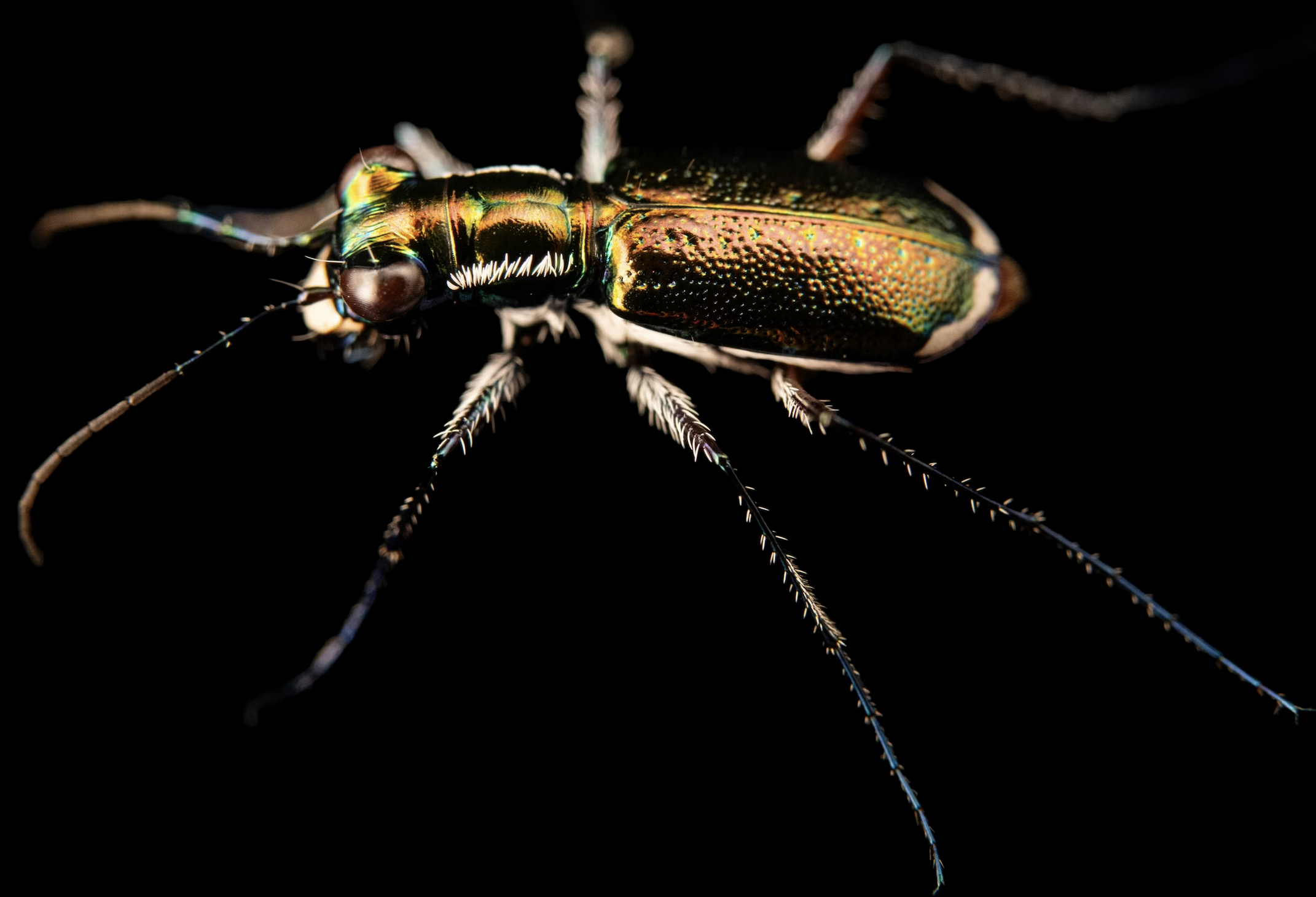
The Miami tiger beetle has 'big, serrated mandibles.'
(Photo by Joel Sartore, National Geographic, Photo Ark)
Meet the Miami tiger beetle, named for its 'highly voracious predatory behaviors, it's the 15,000th species in National Geographic's Photo Ark. "The beetle was rediscovered in 2007 after a more than 60-year absence," reports Rachel Fobar. "With its iridescent blue-green exterior and round, expressive eyes, some would call the Miami tiger beetle beautiful. . . . But when photographer Joel Sartore looks at one, he also sees carnage. . ."


Wednesday, November 15, 2023

Wednesday quick hits: Oreo scandal; dead solar panels; photos of the year; the nurse shortage; food inflation dips

Is there less creme filling?
(Wall Street Journal photo)
Sometimes less is more, but sometimes less is just less, especially if you're talking about less filling in your delightfully creamed Oreo. "Oreo fans think there's less filing, but the Snack maker says it hasn't tinkered with creme ratio," reports Jesse Newman of The Wall Street Journal. "But suspicious consumers are on high alert."

Inquiring minds want to know: Where do dead solar panels end up? "The majority end up in landfills," reports Izzy Ross of Grist. "But there are no federal requirements for recycling solar panels, and states have different regulations for what to do with them. Panels can also contain small amounts of heavy metals like lead, which makes getting rid of them more complicated. The vast majority of panels are thrown away in landfills — only about 10 percent are recycled."

Photo by Louie Palu, National Geographic
It's finally time for the National Geographic photos of the year. A diverse and beautiful world awaits. In the photo, left, Finnish and U.S. soldiers train for winter warfare by navigating an obstacle course while on skis. The exercise took place two months before Finland — which shares an 800-mile border with Russia — joined NATO. The training was arranged in response to the war in Ukraine.

Is there a nursing shortage? That depends. "In 2022, the American Hospital Association quoted an estimate that half a million nurses would leave the field by the end of that year, bringing the total shortage to 1.1 million," reports Brittany Trang of STAT. "At the same time, National Nurses United insists there isn't a nurse shortage at all. There are plenty enough nurses for the country, they say — merely a shortage of nurses who want to work under current conditions."

Bill Watterson comic via
Mental Floss

When life gets too heavy, lift yourself up with some comics like Calvin and Hobbes. The wacky duo gets up to all kinds of shenanigans. The cartoon strip's artist was also a bit of a card himself.

After two years of stubborn food inflation, Americans can expect a slow drop in at-home food costs. "According to economists with the Department of Agriculture, while food prices are expected to remain higher in 2024, the rampant inflation rates experienced in 2022 and 2023 are anticipated to return to more 'normal' levels in the upcoming fiscal year, reports Charlsie McKay, RFD-TV News, which covers rural America.

Photo by M. Zilses, Unsplash
As the the holiday season approaches, it's time to consider how to eat all the treats you love without looking like you ate all the things you love. "What if the best way to curb sugar cravings is just to eat as much as you want? That is the core of an idea gaining traction among dietitians," reports Alina Dizik of The Wall Street Journal. "Who say that letting ourselves graze unfettered on a cache of Halloween fun-size Snickers can reduce our sugar lust in the long run."

Sunday, July 09, 2023

Yale student wins photography competition in rural Kentucky with his essay on the theme 'Picking Up the Pieces'

Tommy Fryman on his scavenging route through Cynthiana, Kentucky (Photos by Lukas Flippo)

From the inside out: Fryman hunts through a trash bin.
Lukas Flippo of Yale University was judged to have the best photo essay in the Dusk to Dusk 24-Hour Student Photojournalism Challenge in Harrison County, Kentucky, this weekend. The event was held by Boyd's Station, a local nonprofit arts-and-journalism residency with a gallery in the county seat of Cynthiana. Ten students pursued the theme "Picking Up the Pieces," assigned shortly before the contest began. The runner-up was Annie Barker of Michigan State University, who also won for best single image, and Abigail Pittman of the University of North Carolina was third.

Here's how Flippo described his subject: "We start with a partial inventory of what's in Tommy Fryman’s shopping cart, drenched in rain on this stormy Saturday in downtown Cynthiana: over a hundred crushed soda cans, a new pack of diapers, a new window blind, a pool noodle, and 4 pizza pans. Oh, and the chief offenders, two metal pipes. Even with the rope tied around them, they are too big for the cart, extending over a foot over the railing of each side of the cart.

Fryman gets paid at the recycling center.
"Fryman’s life is a numbers game. 24 cans a pound, 50 cents for a pound of aluminum at Randy’s Odd Jobs Recycling Center. Seven days a week, Fryman walks around town, averaging 10 miles a day, to pick up cans and other goods to sell at Randy’s Odd Jobs Recycling Center to supplement his disability check, which he receives for epilepsy. Cynthiana has no recycling system, and Randy’s business helps Tommy make the ends meet.

"Fryman is well known in the community. People stop their cars on the road to give him cans and businesses leave them by their dumpsters. No one bats an eye when Fryman bends over a trash can. The task gets harder everyday. Fryman gets short of breath, and legs frequently buckle and give out. But that won’t deter him from his mission: to clean the streets of Cynthiana and make some honest cash."

“Not many people have a heart like I do,” Fryman said. “And I won’t give up, not until God calls me home.”
Flippo's photo essay included five other pictures.

Sunday, June 18, 2023

24-hour Student Photojournalism Challenge July 7-8 in Ky.; also open to college graduates from the past two years

Harrison County (Wikipedia map)
Next month Boyd's Station, a nonprofit arts and journalism residency program in Harrison County, Kentucky, will host the 2023 Dusk to Dusk 24-Hour Student Photojournalism Challenge, in which photographers will document and interpret a competition theme that will be announced on the Boyd's Station website and social media sites at 3 p.m. Friday, July 7.

The challenge will begin three hours later, at 6 p.m. July 7, and end at dusk July 8. Judging will begin immediately at the Boyd's Station Gallery in the couty seat of Cynthiana, with winners announced that evening. The awards for photo essays will be $400 for first, $200 for second and $50 for third. The best single image will win $100. The awards are sponsored by Think Tank Photo.

On Sunday, July 9, at noon, a lighting workshop  will be presented by Nick Henry of Roberts Camera at the Boyd's Station Gallery. At 2 p.m., New York Times staff photographer and two-time Pulitzer honoree Stephen Crowley will give a talk.

Students competing in the Dusk to Dusk 24-Hour Student Photojournalism Challenge must be students in high school or college, or college graduates in the past two years. For more information contact Jack Gruber at jack@boydsstation.org.

Thursday, February 09, 2023

A photographer searches for democracy in rural America and tries to tell us 'what's lost when newspapers close'

Former home of the newspaper in Dodge City, Kansas (Photos by Jonathan Ariaz,, Fourth Estate project)
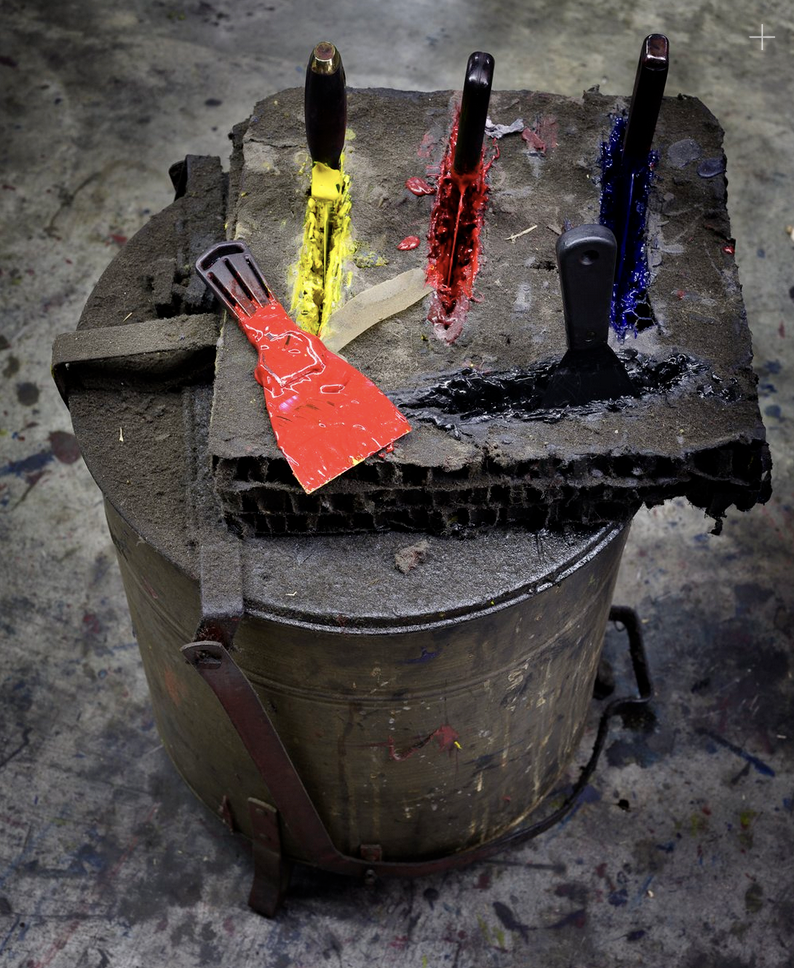
Ink knives at the Russell County News, Russell, Kan.
In the United States, credible news sources, such as newspapers, function to safeguard democracy by: promoting inclusion and participation, informing the electorate, supporting basic rights and helping citizens manage the agenda. Within that framework, it makes sense that "Leading up to the 2020 presidential election, photographer Jeremiah Ariaz, who wanted to make images that showed what democracy looked like in rural America traveled across the country . . . . visiting campaign offices, main streets, protest sites and sometimes, newspapers," reports Kristen Hare of The Poynter Institute, a nonprofit that supports media literacy and journalism ethics.

Ariaz's first stop was "Main Street in Sublette, Kansas. He was standing with his camera and tripod when a man approached him, asked what he was doing, and invited the photographer to stop by his office," Hare writes. "The man thought he had something Ariaz might be interested in." Ariaz told Hare, “It ended up being the local newspaper office.”

Hare writes: "Kenneth Bell showed Ariaz the newspaper’s archives and the newsroom’s abandoned darkroom. Immediately, Ariaz realized how what he was seeing in the Haskell County Monitor-Chief tied in with the bigger questions he had about democracy and rural America. . . . In 2022, Ariaz took a sabbatical from his full-time job as a professor of art and headed back to his native Kansas. He visited 115 newspapers – closed, moved and still publishing."

Paper rolls at The Morning Sun, Pittsburg, Kansas
Ariaz's tour helped him track and illustrate the history of local newspapers. Noting that the U.S. is losing about two newspapers a week, Hare writes, "While we’ve seen growth in some of the local for-and nonprofit online newsrooms working to fill the gaps left when newspapers close, Ariaz’s project, titled Fourth Estate, offers a different frame for what’s lost when newspapers close."

“I have to feel that something is missing when that ability for a citizen to engage is lost,” Ariaz told Hare. Newspapers that were still alive "were very much a part of the community in both the physical way in their presence but also their ability to engage with the public."

Ariaz's traveled to "publications that were still open and explained what he was trying to capture. Most invited him in. Many worried about what would happen to their archives and the community’s history if they closed," Hare writes. "Ariaz tried to visit bigger newspapers in bigger Kansas towns, but he couldn’t get ahold of anyone inside the newsrooms or inside the buildings themselves. Ariaz said that it felt like the people who own and run them were far away and unconcerned with the communities they were supposed to be serving." In many cases his photos reflect the fact that the newspapers no longer have pressrooms but hang on to their relics.

Tuesday, February 07, 2023

Rural Montanans were the first civilians to report the Chinese spy balloon; why are such balloons still used?

One of Larry Mayer's photos for the Gazette
Rural Americans were the first civilians to spy China's "weather balloon" escapade. "The president of the United States knew about the presence of the Chinese spy balloon for several days before it was spotted drifting over Montana. But the White House wanted to keep it secret fearing news of the surveillance balloon would sabotage Secretary of State Antony Blinken’s planned diplomatic trip to China, Bloomberg News reported. . .That changed when on Feb. 1 when Billings Gazette photographer Larry Mayer, responding to vague reports that the airspace around Billings had been closed, photographed an odd glowing orb high in the sky," the Gazette reports.

"Using a large telephoto lens, Mayer discovered it was a high-altitude balloon powered by a large solar array. ... The Gazette’s publication of those photos, connecting them to the closed airspace and the fighter jets being scrambled to track the balloon, was quickly picked up by other media around the world — and the White House," the Gazette notes. "The White House was especially alarmed the balloon was hovering over a part of Montana that houses intercontinental nuclear missile silos."

Thank you, curious Montanans. So, what is a spy balloon? "A spy balloon is literally a gas-filled balloon that is flying quite high in the sky . . . It has some sophisticated cameras and imaging technology on it, and it’s pointing all of those instruments down at the ground. It’s collecting information through photography and other imaging of whatever is going on down on the ground below it," reports Iain Boyd of The Conversation, an independent source of news and views from the academic and research community.

How and why do spy balloons work? Spying satellites give us clues, but have built-in disadvantages. In low Earth orbit, Boyd writes, "It takes them about 90 minutes to do one orbit around the Earth. That's pretty fast to take clear photographs." In geosynchronous orbit, satellites stay in one place above the ground to capture images continuously but are much farther away. "A balloon in some ways gets the best of those. These balloons are much, much closer to the ground than satellites, so they can see even more clearly. The balloons are moving, but they’re moving relatively slowly, so they also have a degree of persistence."

What was it doing up there? "It’s likely to be different kinds of cameras collecting different types of information," Boyd writes. "The broad interest in this incident illustrates its unusual nature. Few people would expect any country to be actively using spy balloons these days." UPDATE: The Washington Post reports that the balloon is part of "a vast aerial surveilance program" that "has for years collected information on military assets in several countries, U.S. officials said."


Wednesday, November 30, 2022

Photo essay: A bypassed town tries to keep going

The big road in Crab Orchard, Kentucky, is US 150, which began as the northwest leg of the Wilderness Road blazed by Daniel Boone and others. But now the federal route bypasses the town of 700-plus, leaving KY 39 as Main Street.
Story and photos by Richard Yarmy

Kentucky Route 39 is a two-track strip of pavement running out of horse country near Lancaster, Ky., that cuts right through the heart of Crab Orchard — one of the bypassed villages scattered all across the country.

There's still a place to eat, on the former US 150 (now KY 2750).
No Trader Joe’s, no Sam’s Club or Costco — just an abandoned movie house, and some closed cinder block storefronts. I’ve passed by several times, but decided to stop the other day.

I was kneeling in the middle of the highway, framing the movie house when a car pulled up behind me. It was a police cruiser. The window came down and the officer said: “Did you get your shot?” I said I did, and he said: “OK, I thought you might want me to stop traffic while you worked.”

He was the first car I had seen in the 20 minutes I had been there.

Later when focusing on a faded wall with a Coca-Cola sign rapidly disappearing, another gentleman stopped by in an older pick-up.

“Whatcha doin’?”
The theater still advertises its last movies. To enlarge any image, click on it.

“I’m documenting the town, “ I said.

“Well, if you need anything, let me know, I’m on the town council and I can show you around.”

I told him about meeting the police officer.

He said: You didn’t meet an officer — you met the entire Crab Orchard police force.

Nice people, nice town. Glad I stopped.

I hope they get the funds to restore the theater. I will send a check.

Crab Orchard is in Lincoln County, where the Bluegrass gives way to Appalachia. Yarmy told The Rural Blog, "Little adventures like this one is what I think is meant by the cliché 'stop and smell the roses'." More photos from his sojourn in Crab Orchard are at https://www.flickr.com/photos/140962699@N06/albums/72177720304074291.

Monday, July 11, 2022

Profiles of nursing-home residents by student-run Georgia weekly illustrate a bedrock community-journalism principle

Excerpt from the Echo's recent package
The Oglethorpe Echo
in Macon County, Georgia, recently published a package featuring seniors at a local nursing home, with a photo and a paragraph with interesting tidbits from their lives. It's a powerful and simple but original idea that illustrates a basic principle of community journalism: People are interested in people, and in reading about them. 

Former Echo visual journalist and University of Georgia journalism student Julia Walkup interviewed and photographed the seniors earlier this year as part of a UGA photojournalism weekend workshop that encourages students to capture in-depth portraits of community members. 

UGA students and faculty have staffed the Echo since last fall, when local resident Dink NeSmith, retired co-owner of a community newspaper chain, kept the owner from closing the 148-year-old weekly by turning it into a non-profit and getting the university involved.

Friday, August 13, 2021

Quick hits: Tips for using drones in journalism; book shows how urban-based news leaves rural residents behind

Here's a roundup of stories with rural resonance; if you do or see similar work that should be shared on The Rural Blog, email heather.chapman@uky.edu.

Most journalists for nationwide publications work in large cities and produce news with similar audiences in mind. Media scholar Nikki Usher writes about how that alienates rural audiences in her new book News for the Rich, White, and Blue: How Place and Power Distort American Journalism (Columbia University Press, $30). Read more here.

Why the South is the epicenter of anti-abortion sentiment. Read more here.

Housing was already scarce in the Lake Tahoe-area town of Truckee, California; the pandemic-driven remote worker boom made it worse. Read more here.

Here's some tips on using drones for multimedia journalism. Read more here.

Noted Appalachian author Gurney Norman sat down for a chat with Dee Davis of The Daily Yonder after learning that a Kentucky town is naming a new neighborhood after him. Read more here.

A "cookie cutter" nationwide plan to reach Democratic voters won't help rural Democrats, writes a rural political strategist. Read more here.

New Agriculture Department market reports could help cattle producers make more money. Read more here.

For the first time, the average pay for supermarket and restaurant workers nationwide tops $15 an hour, but not everywhere. As competition for workers heats up, large retailers and other major employers are boosting their starting wages. That could help rural employees, where wages tend to be lower, but could hurt smaller local competitors who will feel obliged to follow suit. Read more here.

A soon-to-be-released documentary tells the story of hunger in rural Wisconsin during the first year of the pandemic through the eyes and voices of five rural food pantry directors. Read more here.

Monday, May 24, 2021

News photographers' group will teach police, other first responders about journalists' right to record them at work

The National Press Photographers Association will instruct police, other first responders and journalists across the country about the right to record police and other officials carrying out their public duties. “At this moment in history it is crucial that the press be allowed to perform its obligation to better inform the public,” NPPA President Katie Schoolov said in a press release.

The program is funded by a three-year, $150,000 grant from the John S. and James L. Knight Foundation and a one-year matching grant of $50,000 from the Press Freedom Defense Fund of First Look Media. It builds on an earlier grant from the Society of Professional Journalists.
   
Knight Foundation journalism director Paul Cheung said, “The laws that protect the rights of journalists and other citizens to record public police work are clear, but they aren’t universally known. The NPPA training will help visual journalists do their jobs safely and without interference, while protecting the public’s right to know.”

The annual grant will allow NPPA General Counsel Mickey Osterreicher to provide education and training about photographers’ rights to law-enforcement agencies and journalists. He said it  “will ensure the continuation of NPPA’s critical work that raises awareness of First Amendment rights, so that journalists can continue to provide essential information to their communities, enabling informed choices in support of our democracy.”

Tuesday, January 12, 2021

Police demands for unpublished images of riots at Capitol and elsewhere could put journalists in a difficult position

A door at the U.S. Capitol after Wednesday's riot. Getty Images.
Law enforcement agencies investigating last week's riot at the U.S. Capitol will likely demand that news organizations and individual journalists who covered the event turn over their unpublished photos and videos. That may put journalists in a sticky spot, especially since there is no shield law at the federal level, Poynter Institute senior faculty member Al Tompkins writes. And in states without shield laws, local protests could pose issues for journalists.

National Press Photographers Association General Counsel Mickey Osterreicher said journalists may face backlash for fighting to hold onto unpublished media. The public may not understand why journalists would resist such a demand, but Osterreicher noted that compliance could endanger journalists as a whole. "Police and prosecutors do not get to see our notes or our unpublished work. We do not want to be seen as an arm of law enforcement," he told Tompkins. "It puts journalists in a dangerous position when police wanted to see photos of protestors. It puts journalists in an even more dangerous position than just covering a dangerous story. If protestors think the journalists are creating evidence for the police, protestors target the journalist." That could apply to protests at the state and local level as well.

Still, Osterreicher noted that journalists he's spoken to agree it's important to identify the rioters in order to hold them accountable and to explore allegations that the rioters were infiltrated by left-wing or anarchist organizations. Many news organizations are voluntarily publishing extra images and videos to help others identify rioters, from USA Today to local newsrooms and networks. "Local news organizations and networks have also begun identifying rioters who have local ties," Tompkins reports.

The NPAA board of directors published a memo on Friday asking prosecutors to go after rioters who attacked journalists on Wednesday: "To do our jobs, photojournalists must be on the front lines to record the news. The threats, violence and aggression toward visual journalists are unconscionable acts that erode our democracy and our country’s First Amendment rights."

Thursday, November 26, 2020

Emotional battle over wild horses on federal lands in the West continues as their numbers double every four years

Wild horses in the Nevada desert (Photographs by Melissa Farlow for The Washington Post)

The saga of wild horses and burros on federal land in the West has rarely been told as well as it was recently for The Washington Post by reporter Britta Lokting and photographer Melissa Farlow. Several real-life examples are wrapped around this description of the problem:

A mare named Shoshone, in South Dakota
"The question of what to do with America’s wild horses is an emotional battle over livelihood, freedoms and how humans view animals. Many ranchers see the mustangs as an overpopulated invasive species that competes for the public land their livestock grazes. Animal rights activists see an icon of the American West that deserves better protection.

"There are over 100,000 wild horses and burros on 26.9 million acres of Bureau of Land Management land, according to the agency. This doesn’t include mustangs on Native American reservations, national parks, several U.S. Forest Service territories and lands managed by the U.S. Fish and Wildlife Service. The BLM has failed to keep populations at what it considers a sustainable level. To deal with the so-called excess horses, the agency rounds them up, usually using helicopters, puts them in short-term holding pens, tries to adopt them out, and then sends the unwanted ones — currently over 47,000 — to private, grassy pastures in the Midwest.

A herd of wild horses on the move in the Nevada desert
"With unchecked herds doubling every four years, the program is now in crisis mode. 'We’re at a point that we’ve never been before,' says Jenny Lesieutre, a spokeswoman for wild horse and burro issues at the bureau’s Nevada office. “It’s more than three times what the land can sustainably support in the long term, and we are a multiuse agency. That land is shared by all kinds of wildlife and plants.”

"It’s illegal for the bureau to euthanize healthy horses, though it euthanizes ones that have such ailments as blindness or club feet. Officials also can’t ship horses to slaughter or sell them to someone who intends to ship them to slaughter. (Though widely taboo, eating horsemeat is technically legal federally; some consider it a cheap source of protein.) The agency is at a standstill, partly because options like euthanasia or slaughter face intense backlash. . . . The BLM has been interested in spaying wild mares for at least a decade, but various approaches have failed or been blocked by wild-horse activists in court. Two attempts in recent years were met with such public outcry that the agency’s university research partners backed out of studies."

Tuesday, December 03, 2019

Report for America touts 'the single biggest hiring announcement of journalists in recent memory,' many rural

Report for America will place a record 250 emerging journalists in 164 local newsrooms in 46 states and Puerto Rico in 2020; that's more than four times larger than the 2019 class and marks the single largest hiring announcement of journalists in recent memory, its website says. A considerable number of the winning newsrooms pitched projects with a rural angle (list below).

Though the newsrooms have been chosen, the journalists who will fill those slots have not. Applications for reporting slots are being accepted until Jan. 31, and will be chosen through a national competition. Click here to apply. The selected journalists and their newsroom pairings will be announced in April, and the journalists will begin work in June. About 50 RFA reporters will continue their work from last year.

Report for America is a national service program that places emerging journalists into local newsrooms for one to two years. An initiative of The GroundTruth Project, RFA was created as a direct response to the expansion of news deserts that leave communities uninformed on local issues.

Here are some RFA winners that pitched projects with a rural angle:
  • The Associated Press in Frankfort, Ky,: State legislature, especially issues affecting Appalachia (54 of the state's 120 counties).
  • Lexington Herald-Leader: 1) Health care in Appalachian Kentucky and watchdog reporting in Eastern Kentucky (filled by a current corps member); 2) a photojournalist for rural communities.
  • WFAE 90.7 FM, the Charlotte Mecklenburg Library, and the Digital Public Library of America, all in Charlotte, N.C.: a partnership using radio and Wikipedia to fill news deserts.
  • KOSU 91.7 FM in Oklahoma City: Agriculture and rural issues in Oklahoma.
  • Rappahannock News & Foothills Forum in Washington, Va.: The changing nature of public services.
  • 100 Days in Appalachia in Morgantown, W.Va.: White supremacy groups in Appalachia.
  • Charleston Gazette-Mail: In addition to four other beats, coverage of poverty in southern West Virginia (filled by current corps member).
  • West Virginia Public Broadcasting: State government and southern West Virginia (filled by a current corps member).
  • The Victoria Advocate in Victoria, Texas: 1) rural counties surrounding Victoria; 2) rural health care (filled by current corps member).
  • KUER 90.1 FM in Salt Lake City: Indigenous issues in southern Utah (filled by current corps member).
  • The Spectrum in St. George, Utah: National parks.
  • Southern Illinois Local Media Group (Randolph County Herald Tribune): Town of Chester.
  • Kansas City PBS: Rural issues in Missouri.
  • The Columbus Dispatch: Rural issues in central Ohio.
  • WKSU 89.7 FM in Kent, Ohio: Rural health care.
  • The Berkshire Eagle in Pittsfield, Mass.: Legislative coverage affecting rural western Massachusetts.
  • New Hampshire Union Leader and Sunday News in Manchester: Northern New Hampshire.
  • Valley News in West Lebanon, N.H., and White River Junction, Vt.: 1) Environment and climate in the Upper Connecticut Valley; 2) photojournalism in northern New Hampshire.
  • Vermont Public Radio in Colchester: The Northeast Kingdom.
  • VTDigger.org in Montpelier: Southern Vermont.
  • The Cordova Times on the southern Alaska coast: Native communities.
  • The Desert Sun in Palm Springs, Calif.: Native American issues in the Coachella Valley.
  • The Mendocino Voice in Booneville, Calif.: The effect of environmental regulation on salmon runs, wildfires, the economy and other issues.
  • Ouray County Plaindealer, a weekly in Ridgway, Colo.: North-central Ouray County.
  • KIVI-TV, Nampa, Idaho: Agriculture and rural issues, including immigration and effects of climate change.
  • Post Register in Idaho Falls, Idaho: Rural health care.
  • Herald and News in Klamath Falls, Oregon: Endangered species, water rights and issues associated with a dam removal.
  • Malheur Enterprise, a weekly in Vale, Oregon: Latino communities in eastern Oregon (filled by current corps member).
  • South Dakota Public Broadcasting in Vermillion, S.D.: Ethnic communities, including Native Americans.
  • Casper Star-Tribune in Wyoming: Native American Issues on the Wind River Reservation (filled by current corps member).

Wednesday, November 27, 2019

Retired editor says saving local news means jettisoning nostalgia, focusing on three core values of journalism

In order to save local journalism, we have to let go of nostalgia and focus on three core values, writes retired editor and newspaper-association manager Dennis Hetzel.

The first, and most important, he writes, is that you shouldn't try to choose between quality and quantity of local news; you have to have both. "Here's my hypothesis: Outlets with 'lots of local news' do better with audience growth and retention and probably financially," Hetzel writes. "Alisa Cromer of Local Media Insider has been examining the traits of successful papers. Beyond geographic and demographic advantages, she found this commonality: 'For the super-healthy newspapers, exclusive local news is more than a product; it is their superpower.'"

Dennis Hetzel
Hetzel believes publications should put a higher priority on finding the best ways to harness artificial intelligence, social media, reader submissions, staff structures, partnerships with other organizations or publications, and other strategies that generate more local content but leave reporters time to report in-depth stories.

The second core value is mentoring and training new journalists, Hetzel writes. Young reporters have a harder time finding mentors these days because reporters and editors are often stretched thin and don't have the time. Also, publications generally have smaller training and travel budgets for professional development. Young reporters are passionate about what they do, but they can be lured to other professions with higher pay and better support. So news outlets, universities, press associations and news nonprofits must do a better job of nurturing young talent.

The third core value: great visuals and smart storytelling. Audiences love great photography and multimedia, but photography budget cuts have shifted the task to reporters with smartphones. "Sometimes that's good enough, but certainly not always," Hetzel writes.

Hetzel has been a reporter, editor, general manager and publisher at newspapers in Madison, Wis.; York, Pa.; and Cincinnati. In his 13 years as editor and publisher of the York Daily Record, the paper won awards from the Scripps Howard Foundation a Robert F. Kennedy Journalism Award.

Tuesday, July 09, 2019

Tracking readers' online news habits is difficult; analysis of news sites' recent Facebook trends helps a little

Local News Resource Center chart; click to enlarge it.
If you want your news organization to be a big hit on Facebook, post more photos. That's the key takeaway from a recent analysis of local newspaper and news sites' Facebook pages. 

The Local News Resource Center of the Local Media Association pulled public metrics from the Facebook pages of 2,678 local newspapers and news sites (but not broadcasters) from May 1-30, 2019 to gather a snapshot of online behavior and trends. They divided publishers into tiers based on the number of page likes, then analyzed posting frequency, what kind of content was posted (links, photos, videos, plain text, etc.) and the interaction rate, which is the number of post engagements— i.e, likes, shares, or comments— divided by the number of page likes, reports Emilie Lutostanski of the LNRC.

They found that the biggest Facebook pages, all major metro publishers, posted an average of 34 times per day, and that the pages with the fewest followers posted an average of twice a day. The majority of posts— 83 percent— were links, followed by 11% photos, 2.6% statuses and owned video, 0.6% shared video, and 0.3% other video. But photos got the highest median interaction rate, at 0.27%, followed by 0.26% for links, 0.22% for Facebook videos, 0.15% statuses, and 0.8% for other videos, Lutostanski reports.

The analysis is one way of trying to crack a tough nut. Identifying how Americans get news online and interpreting survey respondents' answers about their online news habits has been a longtime problem in measuring online news use, Elisa Shearer reports for the Pew Research Center.
Pew Research Center chart; click on the image to enlarge it.
Many online news sources don't fit neatly into survey categories, and as news organizations have expanded their online presence, pollsters have added more and more survey categories. That makes it hard to track apples-to-apples data over the past 20 years, Shearer reports.

Also, it can be difficult to parse just how a survey respondent thinks about news. "For example, when a respondent is getting news from nytimes.com, does she primarily remember getting news online or getting news from The New York Times newspaper brand, whose flagship product is a print newspaper?" Shearer reports.

Regardless of how Pew pollsters phrase their questions, it's clear that the internet is approaching primacy. More Americans get their news from social media than print newspapers, and the share of Americans who get their news online is approaching the share who get it from TV.

Wednesday, September 26, 2018

Inland Press Association contest winners announced

The Inland Press Association has announced the winners of its 2018 news and photography contests. Each contest was co-sponsored and judged by a university school of journalism. Here are some of the winners and finalists with a rural angle:

The Community Leadership Award recognizes newspapers that use their resources to make their communities better places in which to live and work. All circulation categories were combined during judging for this year's contest, which was sponsored and judged by the School of Journalism at the University of Missouri.

The staff at the Victoria Advocate in Texas won the top award for its "Understanding Harvey" series. After Hurricane Harvey hit Victoria, the Advocate staff covered not only the storm's impact on the town, but published watchdog stories that showed "the unpreparedness of the Red Cross and exposed those who claimed to be doing good but were taking advantage," one judge notes. Mounting public pressure after the stories and editorials were published led to elected officials finally releasing the town's secret 900-page emergency plan, which is now being updated. "The Advocate staff did what journalists do best. They thoroughly covered the disaster. They exposed wrongdoing. They provided community leadership. They opened records. They helped Victoria become a better place to live," the judge writes.

The General Excellence Award for newspapers with a circulation of under 50,000 went to The Daily Gazette in Schenectady, N.Y. "The paper did an excellent job covering breaking news with a mix of on the ground reporting, stark photographs and mix of social media. The clean design and layout makes it easy to read," a judge wrote. Second place went to Farm and Dairy in Salem, Ohio. In late 2017 the paper put out an impressive three-part series on the rural opioid epidemic that featured a special website with stories and information with audio and video. 

The Digital Journalism Award for Best Online Innovation (all circulation sizes) went to The News-Gazette in Champaign, Ill., home of the University of Illinois, for its "UI at 150" package. A judge commented: "Innovative, interesting and inspired this creative multimedia project was also engaging, enlightening and fascinating. The depth in multimedia was unmatched in the category with more than 100 videos of first-person accounts and more than 1500 memories from distinguished representatives. The illustrations of famous and favorite spots added fun and dimension to an already comprehensive story. The robust and detailed reporting and data gathering in partnership with a print companions could be a model for future special projects.

The Editorial Excellence Award was sponsored and judged by the William Allen White School of Journalism and Mass Communications at the University of Kansas. In the "Under 10,000 Circulation" category, first place went to Brian Martin of the Wyoming Tribune Eagle in Cheyenne. The paper's editorials "provided concrete research — whether through quotes, financials or context — to support bold and unrelenting arguments about statewide or local issues," a judge commented.
Second place in that category went to Douglas Burns, who co-owns the Carroll Daily Times Herald in Iowa. Burns is known as an outspoken advocate for rural Iowa.

In the "10,000 to 49,999 Circulation" category of the Editorial Excellence Award, Corey Friedman of The Wilson Times in North Carolina claimed first place. "The Wilson Times stood out here for unearthing conflicts seldom (perhaps never?) covered elsewhere — while also leading the community towards solutions," a judge notes.

The Local News Writing Awards were sponsored and judged by the School of Journalism and Telecommunications at the University of Kentucky. For the Explanatory Reporting Award in the "Less than 10,000 Circulation" category, first place went to the Beloit Daily News in Wisconsin for Hillary Gavan's "Classrooms at a Crossroads" package. Second place went to the Index-Journal in Greenwood, South Carolina, for Adam Benson's "Oakland to Parkland" package. Third place went to the Wyoming Tribune Eagle in Cheyenne for Sarah Zoellick's "Wyoming Boot Camp: A path to success or a pipeline to prison?"

In the "10,000 to 49,999 Circulation" category of Explanatory Reporting, Farm and Dairy took first for their "Addiction: A Rural Reality" package. The Times-Tribune in Scranton, Pennsylvania came in second for "Outlook 2018: Change in store". And third place went to The Journal Gazette in Fort Wayne, Indiana, for their "Special Education" package.

In the "Under 10,000 Circulation" category of the Investigative Reporting Award, first place went to the Southeast Missourian in Cape Girardeau for Bob Miller's "Life Without." Second place also went to the Southeast Missourian for Mark Bliss and Bob Miller's "Pursuit of Proof: The Mischelle Lawless Murder." The Index-Journal in South Carolina took home third place for Damian Dominguez's "This chapter is closed."

In the "10,000 to 49,999 Circulation" category of the Investigative Reporting Award, The Times-Tribune in Scranton took first for its "Sign here" package.

Thursday, September 06, 2018

Author is touring rural America for a book to show how it is hurt by lack of broadband; first stop: Staunton, Va.

Many Staunton homes need a satellite dish to stay connected.
(Brookings photo by Mark Williams-Hoelscher)
In rural areas and small towns like Staunton, Virginia (pop. 23,746) the lack of reliable high-speed internet hurts businesses and exacerbates "economic, social and political marginalization" of the poor, the elderly, immigrants and people of color, Nicol Turner-Lee reports for The Brookings Institution. The problem is widespread; of the 55 million Americans who lack broadband access, 14 million live in rural areas.

Turner-Lee, a fellow in the Center for Technology Innovation at Brookings, made Staunton (pronounced "Stanton") the first stop on a 10-city tour in advance of her book Digitally Invisible: How the Internet is Creating the New Underclass, which explores how the lack of broadband hurts rural America and how more flexible and creative public policies and private initiatives can increase access. You can follow her tour on Twitter or Instagram; the book, with extensive photographs, will be released in 2019.

Staunton, Va. (Brookings Institution map)
"This photo essay confirms that rural areas like Staunton are in critical need of high-speed broadband networks for economic and talent development, especially as access to technology has become the lever to avert the expected outcomes of poverty and social isolation, at least for vulnerable populations," Turner-Lee reports. "The Federal Communications Commission, which oversees the deployment of broadband nationwide, reports that it would cost $40 billion to bring broadband access to 98 percent of the country. Expanding broadband access to rural areas would be even more expensive, given the vast topography and far proximity from telecommunications facilities."