Showing posts with label drought. Show all posts

Friday, May 15, 2026

Rye is the little grain that could, and it's helping to protect land and increase cash for farmers

While San Luis Valley makes up only a tiny percentage of Colorado's population, the region
contributes roughly 39% of the state's total agricultural economy. (Rye Resurgence Project image)

For farmers grappling with water scarcity in southwestern Colorado, growing rye offers multiple benefits, reports Ilana Newman of The Daily Yonder. "Rye is having something of a renaissance in the San Luis Valley, thanks to its remarkable drought-tolerance, and two women behind the Rye Resurgence Project."

Growing and promoting rye as an aquifer-saving initiative for the San Luis Valley began with Sarah Jones, Heather Dutton and a major dust storm that hit the Valley in 2023, Newman explains. Both women had already started using rye as a cover crop to protect the soil over the winter months, but traditionally, many farms left their soil bare.

After the 2023 duststorm ripped precious topsoil from farmland across the Valley, farmers began looking for ways to save their topsoil. Jones and Dutton offered growing rye as a viable solution, and the Rye Resurgence Project began to take shape.

While rye is a hearty cereal grain similar to wheat and barley, it requires "significantly less water than other common rotational winter crops," Newman explains. For instance, barley requires 18-20 inches of water per acre, while rye requires a mere 10-12 inches. "That’s a huge water savings when multiplied across a standard 120-acre field."

But to get more farmers to plant rye as a cash and cover crop, Dutton and Jones needed businesses to purchase it, which meant overcoming rye's reputation as a strong-flavored grain. "To that end, Jones said they had to do some 'rye reputation rehabilitation,'" Newman reports. 

In fact, rye's flavor is fairly mild, and it "works well in most baked goods, from brownies to pizza to bread," Newman reports. "It also has lower gluten and higher fiber content than wheat."

To date, the project has realized tangible successes. "Heather Dutton said that farmers are now growing 3,000-5,000 acres of rye a year," Newman writes. "And the project has helped them sell 771,409 pounds of rye at an average rate of $0.62 per pound, more than they were aiming for initially." 

Dutton and Jones are working to develop partnerships with bakeries, distilleries, and millers who will purchase rye or use rye flour, Newman reports. They are also sharing the story of how planting or purchasing rye can help the entire state support water conservation and its farming communities. To see a snip of their in-production documentary, click here

Tuesday, November 04, 2025

Pilot program that pays irrigating farmers for their water rights helps Nevada aquifers recover from overuse

Retiring groundwater rights helps depleted aquifers 
recover from overuse. (The Nature Conservancy map)
After years of battling water overuse by irrigating farmers, Nevada officials decided to use $25 million in federal funding to launch a pilot program that paid farmers for their water rights," reports Daniel Rothberg of The Daily Yonder. Once the state compensated irrigators for their groundwater rights, the state would retire the rights and no longer allow irrigation from that land, thereby conserving water.

Launched in 2023, the program has proved to be an effective way to protect some of the state's threatened aquifers. In fact, Nevada has used "federal funds to retire about 22,500 acre-feet of water, roughly the same amount of water Nevada was required to cut from its Colorado River allocation last year," Rothberg explains.

State water officials have been pleasantly surprised at how popular the pay-for-groundwater-rights option has become. Rothberg reports, "There was so much demand that two bills, passed unanimously by the Democratic-controlled Legislature and signed by Republican Gov. Joe Lombardo in 2025, allow for the expansion of the program."

After asking lots of questions, alfalfa farmer Denise Moyle decided to sell some of her groundwater rights to the state. Moyle shared the thought process she and many area farmers consider when debating groundwater rights sales: "If I sell a little bit of water and I pay off debt, do I have to farm as hard? Do I have to pump as hard? Do I have to go for three (alfalfa) cuttings? Can I just do two cuttings?"

Meanwhile, state water officials and conservationists are considering how to keep the program going, which could lean on donations and federal funding. "A donation could target a specific area or ecosystem in need of protection from groundwater overuse," Rothberg explains. "But state funding would help to raise matching federal dollars and maximize the program’s value."

Friday, September 12, 2025

Scientists 'drill, baby, drill,' and find freshwater deep beneath the ocean floor off the North Atlantic coast

The U.S. already faces a freshwater crisis, brought on by drought, higher temperatures, overuse and pollution. But a scientific dig into the North Atlantic seafloor more than 50 years ago could offer a surprising solution. "It found, of all things. . . fresh water," report Calvin Woodward, Carolyn Kaster and Rodrique Ngowi of The Associated Press

Fast forward to this summer, when researchers were following up on the past discovery. "A first-of-its-kind global research expedition [is] drilling for fresh water under the salt water off Cape Cod," AP reports. Researchers pulled thousands of water samples from what is now "thought to be a massive, hidden aquifer stretching from New Jersey as far north as Maine."

Do these freshwater troves exist in coastal areas around the globe? Scientists agree that it's likely that the aquifers exist in shallow salt waters around the world. Even so, the "secret fresh water" comes with a litany of challenges, from how to get it to the surface without harming surrounding marine life to questions about who owns it.

As data centers and record heat in some areas rapidly slurp up fresh water, researchers and world leaders are motivated to finance a different kind of drilling. AP reports, "No one globally had drilled systematically into the seabed on a mission to find freshwater."

Under-ocean water samples are being analyzed to discover where they came from, how old they are and what microorganisms thrive in water hidden under the ocean. The discovery and sampling are so dramatic that some scientists are ecstatic. Geophysicist Rob Evans, whose 2015 expedition helped point the way, told AP, “There’s a ton of excitement that finally they’ve got samples.”

Friday, May 09, 2025

Ag updates: Celebrate Beef Month; handling farm stressors; 'regenerative' farming limits; what is 'acequia' irrigation?

"Round-up scenes in Belle Fouche" by John C. H. Grabill. (Library of Congress photo via Ag Clips)

May is National Beef Month, and possibly the best time to look back at the country's short but impactful cattle drive history, which began around 1866 and ended in the 1890s. "The biggest legacy of the cattle drives exists in popular culture. The cattle drives occurred in a time when the United States was shifting from an agrarian-based society to a more industrial and urban society," reports Morning Ag Clips. "Because of this shift, the cowboys and ranch life were looked on with nostalgia as 'simpler times,' and they became a popular subject for stories and songs."

With tariffs, weather, bird flu and hi-input costs, U.S. farmers are unsurprisingly stressed. Burnout and depression can easily follow emotions run ragged by an ever-changing commodities landscape. "This sort of chronic stress complicates decision-making and other aspects of managing a farm or ranch," reports Raylene Nickel for Successful Farming. "If you recognize signs of stress and burnout, do these six things to help yourself cope or recover: Take care of your physical self, surround yourself with good people, take charge of your thoughts, build spiritual capital, find ways to reduce stress, seek help. 

In a letter to Ford President and CEO Jim Farley, a coalition of U.S. corn growers asked Farley to reconsider the company's move away from flex fuel vehicle production and to "reengage in advancing renewable fuel technologies that support rural America," reports Jesse Allen for American Ag Network. "The letter highlights the critical role American-grown ethanol plays in reducing greenhouse gas emissions, strengthening energy independence, and supporting local economies."

Regenerative farming may not be as
"green" as it sounds. (New Lede photo)
"Regenerative" agriculture may be healthy farming's new buzzword, but food producers and buyers should be aware of the label's limitations. "Proponents of regenerative farming say the practice can mitigate harmful climate change, reduce water pollution, and make foods more nutritious as farmers focus on improving the health of soil, water, and ecosystems," reports Carey Gillam for The New Lede. "That momentum comes with a dirty dark side, according to a new report [that] asserts regenerative programs, which generally allow for the use of weedkillers and other chemicals, are being used to 'greenwash' routine use of several dangerous pesticides on farm fields. . . .Corporations that sell such pesticides are entwined with the movement. . ."

An illustration of how acequias work.
(Drawing by Jerold Widdison via Civil Eats)

Southwestern farmers grappling with arid conditions brought on by climate change revived the ancient 'acequia' irrigation system to address water shortage problems. "Time-tested solutions like this one could hold the key to mitigating the worst impacts of climate change, especially in rural communities," reports Samuel Gilbert for Civil Eats. "In the San Luis Valley, in south-central Colorado, 130 gravity-flow ditches irrigated 30,000 acres of farmland and 10,000 acres of wetlands." Devon Peña, founder of The Acequia Institute, told Gilbert, "This is an incredibly productive, resilient, and sustainable system."

Tuesday, April 08, 2025

EPA cuts may leave rural towns with even fewer resources to combat extreme weather

Hills Creek Valley in Oakridge, Ore. EPA funds were
earmarked for wildfire smoke management. (Adobe Stock photo)

The Environmental Protection Agency cut $1.5 billion in DEI and Environmental Justice grants intended to help rural western communities combat ongoing extreme weather such as flooding, smog, drought and melting permafrost. Joshua Partlow and Amudalat Ajasa of The Washington Post report, "Residents and local organizations in these communities say the funding cuts undermine what little defense there is against growing climate threats."

The EPA initiated the cuts after President Trump "issued an executive order calling for federal grants to be terminated if they provide funding for programs that 'promote or take part in diversity, equity and inclusion initiatives' or 'environmental justice initiatives,'" Partlow and Ajasa explain. "The recipients include nonprofit organizations, Native American tribes, cities, counties and universities across the country."

Each community planned to use the funds to address a unique set of environmental challenges. Some Alaskan villages sought funding to deal with ongoing coastal flooding brought on by melting permafrost, while Native American tribes needed dollars to address pollution, and mountain towns in the Pacific Northwest looked to use the money to assist with wildfire smoke problems. The lost support means all of these regions will have fewer resources to plan for and work through climate events.

Sarah Altemus-Pope, executive director of South Willamette Solutions, a nonprofit that helps communities with forest management, told the Post, "These were dollars that were going to really make a difference to people who are financially without the means to do this work to protect their health."

South Willamette Solutions held part of a $1 million EPA grant that would have helped seal homes against wildfire smoke in tiny Oakridge, Oregon, but the grant money was terminated. The Post reports, "The money, stemming from the Inflation Reduction Act, was intended for work on about 30 homes. The work included installing grates on attic vents to keep embers out and sealing doors and windows to keep out smoke."

Tuesday, November 12, 2024

Going against the current, Utah works to change an old western water rights rule to encourage conservation

Utah Department of Agriculture and Food photo
Many western states apply the "use it or lose it" rule to water rights, which penalizes land owners for using less water.  But Utah is working to reward conservation, reports Nina Elkadi of Grist. "Amid climate change, drought, and increased demands for water, Utah is trying to change the system, bucking one of the oldest water rules in the western U.S."

In the West, water rights come down to the 'beneficial use' principle that "declares that water rights holders must use their water for beneficial purposes, such as agriculture, or give up those rights," Elkadi explains. "In Utah, though, the state legislature has passed multiple statutes that are attempting to encourage farmers to use less water without losing rights to it."

Even as the federal government works with western states to reorganize the Colorado River Compact, Utah is doing its own water resource management. Utah wants "to encourage farmers to conserve water without punishing them for it," Elkadi reports. "It's tackling the problem through its Agricultural Water Optimization Program, which awards farmers funding to become more efficient with their water use. . . . [It's] meant to address stress and uncertainty for farmers. And aims to thwart, or at least delay, catastrophic water shortages in the region."

Utah's Agricultural Water Optimization Program provides support to farmers through grants "to improve water practices," Elkadi writes. "Farmers can also file a 'change application' to lease out any 'saved water' through a water marketplace. Utah's State Engineer Teresa Wilhelmsen told Elkadi, "It kind of gives an incentive to save that consumptive use and potentially be able to lease it or do something else with it."

Despite its benefits, some farmers have avoided participation. Wilhelmsen told Elkadi, “As you can imagine, there’s a fear of the state engineer with some folks." Elkadi adds, "This is why she is trying to frame these programs as opportunities to 'tune up your water rights.'"

While the state's water optimization program is a start, "some believe more needs to be done. Burdette Barker, an irrigation expert at Utah State University, thinks efficiency is not the only issue that needs to be addressed; adaptation needs to be at the forefront, too," Elkadi reports. Barker asked her, “Will [the optimization program] alone meet the objectives that the state and others have? Probably not. Will it allow farmers to adapt better as tighter crunches come? I think so. They will help provide farmers with tools to cope or adjust.”

Friday, November 08, 2024

Forty-eight states face moderate drought, which affects groundwater supplies, agriculture and river transportation

Drought caused this sunflower crop to fail.
(Adobe Stock photo)
This summer's scorching heat may be over, but across the United States a lack of soil-absorbed rainfall has left most states facing drought conditions. "More than 150 million people in the country – and 149.8 million in the 48 contiguous states – are in a drought this week. That is about a 34% increase since last week and an over 150% increase since last month," reports Marina Dunbar of The Guardian. Drought is present in every state except Alaska and Kentucky, in fact, this is the greatest number of states in drought in U.S. Drought Monitor history.

Drought conditions aren't just about lack of rainfall, they "are driven and exacerbated by abnormally high temperatures that can quickly suck moisture from the atmosphere and the earth," Dunbar explains. "Droughts can occur even when there is slightly more rain than usual, depending on the frequency of rainfall. If there is a lot of rain all at once, it’s difficult for the water to be properly absorbed into the ground."

National Integrated Drought Information System data

When droughts occur, groundwater supplies get tapped, which can take weeks, months or centuries to replenish. "According to the National Integrated Drought Information System, droughts will increase an area’s reliance on groundwater. Groundwater provides more than 40% of the water used for U.S. agriculture and domestic water supplies. Increased pumping during droughts can reduce the future availability of those supplies."

Meanwhile, dry conditions have a domino effect on water sources, agriculture production and commodities trading. "Low water levels on rivers and other waterways [can cause] ports and other water-borne transportation to become limited due to a reduction in available routes and cargo-carrying capacity, which increases transportation costs. . . That cost increase is ultimately transferred to consumers, who see it in the form of higher-priced products, groceries and other commodities."

Friday, November 01, 2024

Will this winter be as mild as last winter? Experts give national 2024-2025 outlook predictions.

The 2024-2025 winter outlook map shows the greatest chances for cooler conditions
in the Pacific Northwest. (NOAA map via Dovers)

In most parts of the country, last year's winter was mild. So mild, in fact, Wisconsin snowmobile enthusiasts dubbed it the "lost winter" because there was so little snowfall, reports Cheyenne Kramer of Drovers. "But according to Eric Snodgrass, senior science fellow at Nutrien Ag Solutions, the consensus is that the months ahead are going to look a lot different."

Snodgrass believes that "this winter brings about a 75% chance for La Niña to develop, which is when the trade winds across the equatorial Pacific are strong. With La Niña in the forecast, the National Oceanic and Atmospheric Administration is predicting wet conditions in the north and dry, warm weather in the south," Kramer adds. "Department of Agriculture meteorologist Brad Rippey says La Niña can also bring chances for extreme cold events."

One of the gains agribusiness advocates hope to see this winter is enough moisture to balance regional droughts. Snodgrass told Kramer, "The best winters for agriculture are the ones we hate and remember as being terrible — we get good, hard freezes and plenty of moisture comes in. If we don’t see that, we get into a situation where we become very dependent on spring rains and may have a conversation about 2025 drought risk.”

The 2024-2025 winter outlook map for precipitation shows wetter-than-average conditions
likely across the Great Lakes region (NOAA map via Drovers)

The increase in droughts across southern U.S. tiers is worrisome, and this winter may not improve that problem. Northern areas are predicted to receive more moisture. Rippey told Kramer, "While much of the north will have the opportunity for relief from this growing drought. . . . We are expecting a generally warmer- and drier-than-normal winter across the entire southern tier of the United States. . . . That does include important winter wheat production areas in the southern Great Plains. There’s not much reserve right now in terms of soil moisture."

If rain and snowfall are to help drought regions, timing is everything. Rippey told Kramer, "It’s important to start getting moisture before it gets too cold. When you go into a cool season like this with limited soil moisture, if the cold air comes in too quickly, you freeze the soils before you get moisture, which can limit the absorption of rain and snow into those soils." Kramer adds, "the timing of when La Niña really starts to take effect will be important as well."

Friday, September 20, 2024

Drought causes transportation headaches along the Mississippi River for the third year in a row

Bridge near Vicksburg, Miss., and a pusher tug headed up
the Mississippi River. (Photo by Justin Wilkens, Unsplash)
A drying Mississippi River is causing transportation headaches and delays for the third year running in what scientists suggest could be a long-lasting change. "Extreme drought conditions in the Midwest are drawing down water levels on the Mississippi River, raising prices for companies that transport goods downstream and forcing governments and business owners to seek alternative solutions," reports Kristoffer Tigue of Inside Climate News. "The situation could signal an emerging reality for the region, scientists say, as climate change alters the planet’s weather patterns."

Despite Hurricane Francine's water dump in the Ohio Valley, Mississippi River levels have dipped since mid-July, which slows traffic. "Load restrictions force barge operators to limit their hauls, which squeezes their profit margin," Tigue explains. "Barge rates from St. Louis reached $24.62 a ton in late August and $27.49 per ton by the following week, according to the Department of Agriculture."

Moving cargo via the Mississippi River is more "efficient pound for pound than ground transportation, business groups say, and gives the U.S. an edge in a competitive global market," Tigue reports. "According to the Waterways Council, a trade association for businesses that use the Mississippi River, a standard 15-barge load is equivalent to 1,050 semi trucks or 216 train cars—meaning domestic farmers and other producers can save significant time and money moving their goods by boat."

Too much rainfall or not enough causes river transportation backups, and over the past several years, weather fluctuations in the Midwest have swung between the two. Drought conditions at harvest time are particularly troublesome. Tigue writes, "While it’s typical for water levels on the Mississippi to drop during the fall months, Mike Steenhoek, executive director of the Soy Transportation Coalition, said the recent years of drought have been a real wake-up call for farmers to diversify their supply chains."

If there's a little good news, it's that this year's drought headaches are not as extreme as those from 2023, when the Mississippi dipped to record lows. Tigue reports, "Deb Calhoun, senior vice president of the Waterways Council, chalks that up to proactive efforts this year by companies and federal agencies, like the Army Corps of Engineers, to mitigate transportation disruptions."

Friday, June 14, 2024

Quick hits: The resilient Mississippi River; pizza and sunscreen's shared ingredient; food costs; a new ice cream

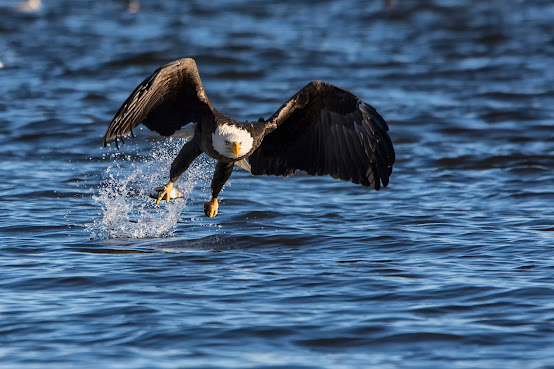
 American Bald Eagle snatches its prey from the mighty Mississippi.  (Adobe Stock photo)
In the fall of 2022, the Mississippi River was drying up and commodity shipping was an expensive struggle. "Dropping water levels in the Mississippi River have caused shipping costs to rise just as harvest season approaches for many Midwestern soybean and corn farmers," reported Keely Brewer in a story for the Daily Memphian." By 2023, things had not improved. "Historic low flows turned the Mississippi River into a construction area in 2023 as the U.S. Army Corps of Engineers dredged huge quantities of sand to keep the channel open for barge traffic," reports Chloe Johnson of the Minneapolis Star Tribune. Earlier this year, "The U.S. Army Corps of Engineers announced that the drought that plagued the Mississippi River basin since 2022 was officially over." Despite this glorious improvement, here's how to keep caring for the mighty Mississippi

On a dairy farm where not everyone speaks the same language, confusion and frustration can impede good animal care. "Great animal welfare is only achievable when a dairy has a strong employee welfare focus," writes Dr. Kaitlyn Lutz for Lancaster Farming. "Consider these practical ideas to improve management as a step toward a culture of care for your employees and cows: 1. Use WhatsApp -- Your Hispanic workers are using it. If you're not, you miss a huge opportunity to connect. 2. Connect over family -- Ask employees about their families. Language barrier? Check out the PONS Translate app's conversation mode. Or, share pictures. 3. Build trust -- Trust is built through small and consistent actions over time."

Titanium dioxide is found in sunscreen and pizza.
Yuck. (Adobe Stock photo)
Adding sunscreen to your frozen pizza sounds disgusting. And yet, "If you have heard of titanium dioxide at all, you probably know it as an ingredient in sunscreen. But it is also used in lots of foods, from pizza and salsa to frosting and candy—and now, there is growing concern about the potential health risks of eating it," reports Andrea Petersen of The Wall Street Journal. "Some research, mainly in animals, has suggested that eating it might be linked to immune system problems, inflammation and DNA damage that could lead to cancer. . . . The European Union has banned titanium dioxide in food since 2022."

U.S. families continue to balance needs with costs.
(Adobe Stock photo)

U.S. consumers continue to grapple with high grocery prices, which drain their budgets and leave some families struggling to make ends meet. "Results from the most recent wave of the Gardner Food and Agricultural Policy Survey demonstrate that consumers perceive inflation and high food prices to be persistent problems," reports Brenna Ellison for Farmdocdaily. "Consistent with this, a recent Gallup poll found that 41% of households identified inflation as the most important financial problem they are currently facing. . . . Some retailers like Target, Walmart, Amazon, and Walgreens have announced they will be cutting prices on thousands of items."

Crop insurance helps provide income stability for food and animal producers who must make a living despite unpredictable weather, hungry pests and insidious weeds. This year marks the biggest acreage for U.S. crop insurance coverage. "Farmers and ranchers bought crop insurance policies on more than 500 million acres of land last year, the largest amount ever, driven by the surging popularity of forage policies," reports Successful Farming. "Overall enrollment in crop insurance was up 85% in the seven years from 2016, according to Department of Agriculture data."

No-melt ice cream could help some humans stay
cleaner. (Adobe Stock photo)
A creamy, cool, delicious ice cream cone is one of summer's simple delights -- until your dip starts dripping and your cone starts crumpling. Then the slurp and smear battle ensues. Could there be a less-melty way? "Cameron Wicks, a student at the University of Wisconsin, is working on a new technology that adds naturally occurring compounds [polyphenols] to ice cream," reports Elise Mahon for University of Wisconsin News. Wicks told Mahon, "We learned that adding polyphenols to ice cream can create a product that holds its shape for over four hours at room temperature. That's pretty close to a no-melt ice cream."

Tuesday, March 19, 2024

U.S. beef herd hits a dramatic low as ranchers face repeated droughts and extreme weather

Graph by John McCracken, Investigate Midwest,
from USDA data

More prolonged periods of drought paired with extreme weather swings have reduced U.S. beef cattle herds to their lowest numbers since 1963. "Droughts starting in 2020 are a contributing factor in the nation's historically low beef inventory, according to Department of Agriculture research," reports John McCracken of Investigate Midwest. "Nebraska and Missouri — two of the top 10 beef-producing states — experienced the largest decline in the quality of June pastureland since 2020 compared to the other top states, according to an Investigate Midwest analysis of USDA data."

Since 1975, the decrease in U.S. beef herd numbers were attributed to "increased global beef production and cattle imports," McCracken explains. However, more recent shifts in livestock numbers have been partly caused by beef producers' response to a lack of water and grazable pasture. During droughts, livestock ranchers are more likely to wean calves off milk earlier than usual, "a common practice in dry years, but one that can also put young cattle at higher risk of dying." Ranchers also cull more cattle and spend more money on feed.

Higher costs to raise a beef herd end in fewer cattle on the market and higher beef prices. "Currently, cattle market experts report that the price paid by meatpackers to beef cattle ranchers is expected to be an all-time high," McCracken reports. "Food industry experts told various media outlets in late 2023 that this price increase would translate into sticker shock for consumers. . . . At the end of last year, the price of beef per pound peaked at $5.35, a 40-year high."

Midwestern agriculture depends on rain and groundwater. Dennis Todey, climatologist and director of the USDA's Midwest Climate Hub, noted how much "climate change has complicated the region's drought realities," McCracken reports. "Livestock producers now deal with weather whiplash — the result of climate change — of severely wet years, followed by intense, dry seasons." This past winter's snowfall across the Midwest is "expected to bring relief from the recent run of drought years," McCracken reports. "Despite forecasts of reduced drought levels for 2024, ranchers will continue to recover from previous drought years."

Thursday, January 11, 2024

Farmers in a California region created a system to address water scarcity; it could be a national conservation model

Pajaro Valley lost its precious strawberry crops
40 years ago. (Photo by Nathan Weyland, NYT)
As groundwater becomes more challenging to source, farmers are pressured to find ways to supply and reduce water for valuable crops. A community along a 10-mile stretch of California's central coast known as Pajaro Valley may have some water preservation answers for the rest of the country, reports Soumya Karlamangla of The New York Times. "Farmers must pay for the precious resource through a system that creates an incentive to conserve water, and that also raises revenue that goes toward recycling water to use on crops. . . .The system has reduced groundwater usage in the valley by 20 percent".

Pajaro Valley farmers designed the system, which experts believe could serve as a national water conservation model. Coral Davenport of The New York Times has covered the unique system including new supporting research. Karlamangla interviewed Davenport for her insights. A brief version of their Q&A is below.

Wikipedia map
Why are people looking to the Pajaro Valley right now?
For one, Pajaro Valley already faced its groundwater debacle "when the groundwater levels fell so low that its famous strawberry crops were destroyed by saltwater intrusion. . . . Farmers there banded together and came up with a solution that isn't perfect and has cost a lot of money and legal battles, but in the long run has saved the aquifer and the agricultural economy of the region. So a lot of experts and executives say it could offer a road map to avert the coming crises elsewhere."

Why hasn't this model spread more? "Politics. The politics of compelling American farmers to pay a tax on groundwater — a resource that has been free basically forever — are incredibly difficult. One thing I learned from reporting this story is that many farmers don't even want the government to put groundwater meters on their land just to measure the amount that they're using. Overcoming these deeply held political views is a huge challenge."

What consequences could charging for water in more places have on farmers and shoppers? "Experts said that pricing groundwater for agriculture across the country could profoundly change American agriculture. In some places, adding a charge for water would increase the cost of the crops and thus of the food or textiles produced by the crops — or it could cause farmers to change what they grow."

Read Davenport's full story here.

Read the case study here.

Monday, December 18, 2023

Frequently dredging the Mississippi River helps to keep cargo moving, but places to 'stash' sand are in short supply

The Mississippi River near Wabasha, Minn., is a dredging
hotspot. (Photo by Elizabeth Flores, Star Tribune)
Frequent dredging kept cargo moving along the Mississippi this year, but moving sand from here to there has its own complications. "Historic low flows turned the Mississippi River into a construction area in 2023 as the U.S. Army Corps of Engineers dredged huge quantities of sand to keep the channel open for barge traffic," reports Chloe Johnson of the Minneapolis Star Tribune. "Massive machines like the Dredge Goetz, a 225-foot-long vessel with a suction pipe nearly two feet wide, were moving through the river constantly to keep it clear. . . . From May to July, 'day in and day out, we were digging,'" said Tom Heinold, chief of operations for the Rock Island District of the Army Corps of Engineers.

Extreme weather fluctuations make preparing waterways more difficult. Johnson explains: "A sudden drop in flow means the water in the river loses velocity, and all the sand flowing with it drops to the bottom." This year's snowmelt and sudden drought caused that scenario to unfold, with sand blocking up many expected "choke points" and clogging some unexpected areas.

Constant dredging is expensive and leaves the corps searching for places to "stash the sand." Johnson reports. "It's expensive work for the corps and the taxpayers who fund it – between surveying potential dredging areas, sucking the sand up and moving it into storage areas. The dredging program on the Upper Mississippi cost an average of $45.4 million a year between 2014 and 2023. . . . As the corps seeks new places to dump sand in the future, Sabrina Chandler, manager of the Upper Mississippi River National Fish and Wildlife Refuge, told Johnson, "I'm not sure that it's going to be a very simple fix."

While environmental advocates push for wildlife protections, the river's ability to ship remains the top concern. "It's a challenge to tease out all the impacts of dredging and sand placement. The upper Mississippi has already been chopped into 29 pools, each ending in a lock and dam to keep water high enough for shipping navigation. Since Congress required the 9-foot shipping channel in 1930, that navigation mission remains first and foremost for the corps on the river," Johnson writes. "Wildlife managers who bargain with the corps on sand placement are left looking for the least harmful scenario in a river system that has already been massively changed by human intervention across 145 years."

Wednesday, November 01, 2023

Seeking more affordable housing, some rural families live with 'water scarcity' -- even hauling water to their homes

Pagosa Springs, Colorado; Aspen Springs
is 10 miles west. (Wikipedia map, adapted)
Even as U.S. water supplies are decreasing, demand is increasing, and for residents in more arid regions that means working to solve problems in places where housing and land prices are cheaper, but water is scarce. "Some of the most affordable land and housing in Archuleta County can be found in Aspen Springs, Colorado," reports Christi Bode of Rocky Mountain Community Radio. "By definition, Aspen Springs is considered one of the largest subdivisions in the United States. It is also one of the most rural. There is no central water system in this nine-square-mile area, located 10 miles west of downtown Pagosa Springs. . . . Functional roads, utilities, running water, and sewer services were never considered in the original development plans."

Aspen Springs was developed in the 1970s, but 50 years later, the area "still lacks the infrastructure to provide domestic water utilities," Bode explains. "To make living here feasible, a few households have sunk wells to tap into groundwater despite poor water quality and costly drilling fees. While it's hard to pinpoint the number of lots occupied due to the sparse, unregulated nature of the community, it is presumed most households haul water and manually fill a cistern. These large containers hold thousands of gallons of water and are typically stored underground and then pumped through the home's plumbing system."

Many Aspen Springs' families fetch their own water.
(Photo by Christi Bode, KSUT)
Bode reports on one family, Jordan and Kalie Caler, who purchased a home in Aspen Springs, knowing they would have to fetch their water. Kalie told her: "At first, we didn't have a truck to haul water, so that was one thing we definitely had to change quickly when we first moved here. We are pretty fortunate for how close we are to the water-filling stations. Some families do it every day just to stay on top of it so that they don't ever have to worry about running out, especially if you have a bigger family. For us, being a smaller family, we can get by just fine hauling it every week and a half, two weeks."

The water filling stations, as well as all the residential hook-ups in Archuleta County, rely "solely on surface water, or annual precipitation, in the form of snow from the Upper San Juan watershed," Bote adds. Their reliance on the watershed leaves water resources limited. "Growing population demands and a finite water supply, paired with aging infrastructure and new regulations, make it challenging to maintain the water system."

For now, the Calers always keep water conservation in mind. Kalie told Bode: "It just sits in the back of your mind, no matter what you're doing. It affects how you think about your surroundings around the house. We may never get a big lush garden here because of our land, but it definitely makes you think about the seasons, how the water's being used, and where it's going."

Thursday, October 12, 2023

Farmers are adapting to extreme weather; it takes time and planning

The Larsen farm has been in the family for seven generations.
(Photo by Martin Larsen via Successful Farming)
Extreme winds, pummeling rain, popcorn-sized hail and drought. Farmers have to work out a way in all those conditions to grow food and make a profit. Extreme weather brought on by climate change has added another twist, which has forced farmers to adapt. "If they don't, they may lose their land — and their livelihoods — forever," report Chelsea Dinterman and Alex Gray of Successful Farming.

Justin Gilsan, Iowa's state climatologist, told Successful Farming that the potential for run-off events caused by heavy rains has more than tripled. Minnesota farmer Martin Larsen from Byron, Minnesota, told Dinterman and Gray, "The continued loss of fertile soil from farmland will decrease its future productivity, and unfortunately make the land less able to soak up the increasing amounts of heavy rains." 

"The difference between climate and weather is simple: Weather is the highly variable day-to-day environment involving temperature, precipitation, and wind speed. Climate is the average of those weather patterns, commonly broken into 30-year periods for study," Successful Farming reports. Gilsan said: "That 30-year average is what we call climatology, and it is important because it gives us a baseline to rank events.."

Those trends point to climate change, no matter the politics. "Increased greenhouse gases in the atmosphere raise temperatures," Dinterman and Gray write. "Rising atmospheric temperatures allow the atmosphere to hold more water vapor. In turn, more water vapor needs to build for a rainfall event, making those events more intense and increasing the length of time between them."

For farmers like Martin Larsen, diversifying crops and changing tilling practices has helped him combat continuing bouts of drought followed by torrential rains. "Adding drought-resistant small grains to his operation has helped diversify that risk, allowing him to maintain profitability through unpredictable extreme weather. . . . Larsen adopted no-till practices over the course of three years, starting in 2013, to reduce the amount of soil shifted in rain events. Now, small grains and legume cover crops provide a strong root system to protect the soil."

Working together, area farmers can share solutions and support one another with a goal of protecting the land and their livelihoods. Successful Farming reports, "Larsen is part of a network of about 75 local farmers, representing roughly 25,000 to 30,000 total acres in the Byron area, who share knowledge about no-till, cover crops, diversifying crops, nitrate, water quality, and carbon sequestration with the goal of building farm resiliency."

Tuesday, October 10, 2023

Some aquifers are drying up; a scientist explains how understanding groundwater changes could help

James Dennedy-Frank is a hydrologist
researching groundwater recharge.
Can we solve America's groundwater crisis? That depends on a lot of things, but scientists like James Dennedy-Frank, an assistant professor of marine and environmental sciences and civil and environmental engineering at Northeastern University in Boston, are working on understanding the multi-faceted issue and finding solutions. In this condensed version of his Q & A with Tanner Stening of Northeastern Global News, Dennedy-Frank explains some of the groundwater crisis highlighted by the recent The New York Times' investigation and details how his research can help.

What is going on with our groundwater, and what prompted the Times investigation?

"The problem is we know that reliable water resources are a critical need, and we’re seeing a lot of places where water resources are becoming less reliable. The Times put together a whole new database of declining water levels nationwide. As we are experiencing more severe drought in lots of places. . . . We’re seeing groundwater levels drop everywhere.

"And that has all kinds of effects. It has effects on the availability of water. A lot of rivers and streams are supported by groundwater, especially through dry seasons. So those rivers and streams are getting lower and flowing less. . . . As a result, [they're] getting warmer because you have less of that cold groundwater flowing in. . . . There’s a whole set of effects here — and this isn’t only happening in the 'arid' West, where you tend to hear about it. . . . I’ll say one thing about groundwater, which is that where there are permits, they’re not usually well enforced, and in many places there aren’t even things like permits, so there are very loose regulations."

How can your research help find solutions?
"I am a hydrologist, and I primarily do watershed simulations. I use computers to represent these watersheds, with the goal of trying to better understand how we can more sustainably manage them.
Most recently, a lot of the work we’ve been doing looks at how groundwater is being recharged, and how rain and snow are related to the streamflow and evapotranspiration — so the water coming through the rivers, and the water being used by vegetation.

"We found that what most recharged the groundwater [water added to the aquifer through the unsaturated zone after infiltration and percolation following any storm rainfall event] in our model of this California watershed is actually the snow from less severe storms. So these really big severe storms recharge that groundwater a lot less. That has important implications as the climate shifts. . ."

Where do you think we’ll be in a decade’s time on this problem?

"Moving forward, our abilities to simulate and better understand these systems are improving, and I think the hope is that people in management roles and government are using these tools and working with academics to better plan and manage the water resources for those hard-hit areas, and thus push towards a more sustainable future."

Thursday, September 28, 2023

A solution for increasingly arid lands? Taking advantage of the water cycle process alongside soil regeneration.

Water cycle restoration is key to creating water on parched land. (Photo by Daniel Sinoca, Unsplash)

When scientists talk about solutions for depleted water supplies or drought, they're talking about a lot more than high temperatures or insufficient rainfall. Some scientists are using water cycle actions to reverse desertified land and help communities find water solutions in their dirt.

For decades, journalist Judith D. Schwartz has watched "the climate crisis conversation follow a steady, linear path, the message being that climate change puts added stress on water sources," reports Caroline Tremblay of The Daily Yonder. Schwartz told her: "But if we understand how the earth manages heat, it's mostly through water phase changes. . . . By working with the water cycle, we can enhance climate regulation." Tremblay adds, "That's when she decided her book, Water in Plain Sight: Hope for a Thirsty World, would focus on water as a verb, not a noun."

As Schwartz completed research hours at conferences and listened to expert opinions, "She realized so much information about how we can do better is already on the table," Tremblay writes. "But getting people to act — together — remains the biggest challenge. For instance, we've all heard stories of rural and urban communities within proximity vying for water resources while both (had) different needs and obstacles."

Schwartz highlights a workshop she attended in rural New Mexico led by Jeff Goebel, an expert in community consensus building for sustainable solutions. "In a setting she described as 'really the Wild West,' she observed townspeople, ranchers, and the Bureau of Land Management, who had been in a legal tangle over water access," Trembley explains. Schwartz told her: "[The community] went from suspicion, sabotage, and gunfire to committing to work together to restore long-held community relationships and the land. . . . [In places] where people are saying: 'We have no water; there is no hope.' He helped them see where they have agency."

"Schwartz and many others engaged in the climate conversation have become invested in a global movement being led by Savory, an organization facilitating the regeneration of grasslands that are key to this puzzle," Trembley reports. "Schwartz detailed the astounding outcomes of Savory's approach on the ground in ecologically devastated parts of the world, like Zimbabwe. Over 15 years, land there has been revived, wildlife has returned, and erosion has been halted."

Trembley adds, "Schwartz has found similarly noteworthy examples of environmental wins within the United States, from water cycle restoration training to condensation catchment systems." Schwartz told her: "It's time to get real about appreciating that water is at once a force that drives ecological processes and a product of them."

Wednesday, September 27, 2023

A group of 10 states wants to create a compact to protect the Mississippi River

Aerial view of the Mississippi River near Guttenberg, Iowa.
(Photo by Drake White-Bergey, Wisconsin Watch via WWNO)

The Mississippi River, one of the biggest jewels in America's geography crown, has provided many of the country's commerce and water needs for centuries. Now, the river is stressed by weather extremes and is being considered by drought-stricken Western states as a possible solution for their water shortages.

Historically, the Mississippi has lacked a governance, but given its vital importance to trade and dams, some states are working to create a new framework. "A coalition of Mississippi River mayors wants a 10-state compact that would establish collective management of the waterway," reports Keely Brewer, WWNO, which serves New Orleans. "At the Mississippi River Cities and Towns Initiative's annual meeting, about 30 mayors unanimously voted in favor of pursuing a compact that would span more than 2,300 miles of river. It's the first step of what could be a lengthy process."

The group would provide an "overall management structure." MRCTI's executive director, Colin Wellenkamp, said, "A compact among the core states bordering the river would be a way to think about river management at the watershed scale, from the headwaters in Minnesota to the Gulf of Mexico, and coordinate during events affecting the whole river, like drought and flooding," Brewer writes. "A compact could provide legal protections for Mississippi River resources, such as the vast amount of water the river drains from 31 states and two Canadian provinces."

Mark Davis is the director of Tulane University's Institute on Water Resources Law and Policy in New Orleans, which studies Mississippi River management issues. Brewer reports, "Davis likened the water in the Mississippi River to a baton in a relay race; management changes with each of the 10 states it flows past, not including the other 21 states that feed into the river. . . . As parched states in the West grapple with drought and water scarcity, there have been renewed efforts to pump Mississippi River water west. But Wellenkamp said their concern lies with 'anyone that wants to put a straw in the Mississippi,' not just western states."

"The mayors are looking to the Great Lakes Compact as a model. In that region, eight states and two Canadian provinces established principles for water management and a requirement to notify and consult other members before diverting large amounts of water.” Getting the Great Lakes states to agree to a "shared vision" has presented a challenge, but Davis said "They agreed on something fundamental: they didn't want their water sent to just anyone with a checkbook," Brewer adds. 

"Wellenkamp said a Mississippi River compact would be similar to the Great Lakes agreement in terms of geographic scope, and he likes that it isn't overly prescriptive. But he said there's a key difference: they're trying to develop a Mississippi River compact in the face of severe climate threats." Davis told Brewer: "We are highly motivated by recent disasters and highly motivated by recent climate impacts that the Great Lakes did not have."

Friday, September 15, 2023

How low will it go? Farmers worry over Mississippi River levels and fear repeat of last year's crop-transportation crisis

Towboats line the shore near Cairo, Illinois, where the Ohio
flows into the Mississippi. (Photo by Chris Kenning, USA Today)
As the Midwest grain harvest nears, farmers are hoping for higher water levels on the Mississippi River. But as time goes on, that does not look likely, and farmers fear a repeat of last year's expensive crisis. "Last fall, drought led to about 40 days of critically low water in parts of the Mississippi that hadn't seen it in years –grounding barges, stalling traffic, blocking river ports at the height of harvest season and causing an estimated $20 billion in losses, according to AccuWeather," reports Chris Kenning of USA Today. "As this year's harvest approaches, the river is again on the decline."

How far the river will drop is uncertain, but "Mississippi water levels have been falling since June. The Ohio River, which usually has more volume than the Mississippi at their confluence, "dropped almost 10 feet in the last two weeks of August. Levels are predicted to fall farther in the coming weeks," Kenning writes. Margy Eckelkamp of Farm Journal reports, "Most notably, fewer barges are being connected to form a single unit. And barges are being loaded to lighter weight." Soy Transportation Coalition Executive Director Mike Steenhoek told Eckelkamp: "When you start diminishing both the depths that barges can sink to and the number of barges you can put together, that changes the economics of barge transportation, which certainly impacts our competitiveness. . . . It's a movie sequel that none of us wanted to watch."

"With 61% of the Midwest classified as abnormally dry or in drought as of late August, most of the Mississippi is expected to face low water in September that will most likely affect industry and navigation, according to the National Integrated Drought Information System," Kenning reports. "That's worrying farmers who ship grains such as soybeans on the river to New Orleans and, from there, around the globe – relying on lower costs that help keep it competitive for the global export market. They fear another year of backups and spiking costs that eat into profits."

The forecast doesn't look hopeful. David Welch, a National Weather Service hydrologist at the Lower Mississippi River Forecast Center, told Kenning, "Right now, there's no rainfall in sight that will turn things around." Kenning notes that nearly 60% of U.S. grain exports use barges, which are "less expensive than trains, can each carry 70 semi-trucks worth of grain. Industry officials said it's a key reason U.S. soybeans are globally competitive. Last year, stymied barge traffic meant nearby granaries filled up, leaving some farmers scrambling for more expensive or distant storage options."

Tuesday, September 05, 2023

Drought-stricken lands leave farmers and ranchers to plow under crops and sell off herds

Drought conditions have forced farmers to plow existing crops under.
(Photo by Richard Bell, Unsplash)
Summer’s drought has hit farmers and cattle ranchers hard, leaving them to destroy drying crops and orchard trees and sell off livestock, reports Vanessa Yurkevich, CNN Business. “Nearly three-quarters of U.S. farmers say this year’s drought is hurting their harvest–with significant crop and income loss, according to a new survey by the American Farm Bureau Federation, a lobbying group that represents agricultural interests. . . . Thirty-seven percent of farmers said they are plowing through and killing existing crops that won’t reach maturity because of dry conditions." According to the survey, that’s a jump from 24% last year.

Zippy Duvall, AFBF president, told Yurkevich, "The effects of this drought will be felt for years to come, not just by farmers and ranchers but also by consumers. Many farmers have had to make the devastating decision to sell off livestock they have spent years raising or destroy orchard trees that have grown for decades." Yurkevich reports, "July was the third-hottest on record for the U.S., and ranked in the top 10 for every state in the West except for Montana, according to the National Centers for Environmental Information.”

Cattle ranchers in states such as Texas face hurdles beyond drought-induced herd water shortages. "High inflation makes it harder for ranchers to salvage their land. The cost of diesel is falling but is still high, making it significantly more expensive to truck in additional water than in years past," Yurkevich writes. "The price of fertilizer for grass and crops and feed for animals also remains expensive." David Anderson, a professor of Agricultural Economics at Texas A&M, told Yurkevich: "We haven’t had this kind of movement of cows to market in a decade, since 2011, which was our last really big drought."

U.S. consumers will likely see across-the-board price increases for produce. "Fruits, nuts, and vegetables overwhelmingly come from states with high levels of drought," Yurkevich adds. "But farmers have been forced to forgo planting or destroy orchards. This will 'will likely result in American consumers paying more for these goods and either partially relying on foreign supplies or shrinking the diversity of items they buy at the store,' the report states. . . . The Bureau of Labor Statistics’s August inflation report shows U.S. consumers are spending 9.3% more on fruits and vegetables from a year ago."