Showing posts with label pigs. Show all posts

Friday, August 15, 2025

Quick hits: More bacon; thriving town-owned grocery store; shocking fertilizer prices; drones for rural duties?

Five-month-old pigs from the latest breeding line Smithfield 
has developed. (Smithfield Foods photo via WSJ)
Just like lots of people, pork companies would like more bacon. For pigs to produce more bacon, they need bigger bellies, a trait pork industry breeders have been developing for years. "Today, slaughtered hogs weigh about 285 pounds on average, a 30-pound increase since the late 1990s," reports Patrick Thomas of The Wall Street Journal. "The increase in hog weight coincided with the explosion in popularity of bacon as more than just a breakfast item." With bacon in demand and razor-thin profit margins, the pork industry is using breeding programs to "build a better pig." 

St. Paul, Kansas, hadn't had a local grocery store for more than two decades, but in 2005, the town's new mayor challenged his community to use municipal support to plan and build a grocery store. St. Paul residents embraced the challenge and the St. Paul Area Community Development Corporation stepped in to help with planning and financial legwork, reports Kansas State University. In 2008, the St. Paul Supermarket opened, and it continues to thrive as a town-supported grocery store. Its motto is "the friendly store." Read its success blueprint here.

Fertilizer costs are high in the currency of corn. (Krista Swanson, National Corn Growers Association )

With alarmingly high fertilizer costs and falling commodity prices, U.S. farmers are grappling with how to stay afloat in today's market. "Farmers are in the middle of calling input suppliers to get quotes for fall fertilizer, and the prices are shocking," reports Tyne Morgan of Farm Journal. "The corn price to fertilizer price ratio on inputs such as phosphate is now the highest on record, and as corn prices continue to slide, it’s creating financial hurt on farmers. . . . An unnamed farmer asked U.S. Farm Report, 'How are we going to survive at these prices?'" 

After severe storms damaged crops and farming equipment across Nebraska, the state used drones to help mitigate the aftermath. "Using drones to help with disaster response shows the role they now play in the state’s economy, after years of investment and research from the state government," reports Chris Teale of Route Fifty. "Officials in the state are looking at ways drones can be used, especially to help those in rural areas. Delivery of food, medical supplies and other resources is one use case receiving a lot of attention."
A Maine roadway.
(C. Banks photo)

Among all the states, Maine remains one of the most rural and wild. "Greater Portland, Lewiston, Auburn, Bangor, and other populous areas make up just a small slice of Maine’s pie," writes Chris Sedenka in his opinion for WBLM radio in Portland, Maine. "It’s fascinating just how much of the state remains truly remote and untouched. . . . We still have territories named T2R9, you’re not going to find that in every state. . . . According to the data, Maine’s rural population makes up 61.5% of the total. That is an absolutely huge number. . . .The majority of the state is basically just pine trees and wildlife."

Living a long life could partially depend on geography. Some counties just seem to support populations who keep on keeping on. 

The map above shows which U.S. counties have an overall life expectancy above 80 years.
(Map via Brilliant Maps)

Tuesday, August 20, 2024

Iowa family of farmers is working to create a midwestern 'blueprint;' they've swapped out pigs for mushrooms

The Faaborg family is working to build a farming blueprint for the Midwest.
(1100 Farm photo)

The Faaborg family made the bulk of their living from running a concentrated animal feeding operation, or CAFO, for hogs on the family's Iowa farm. While the undertaking was profitable, over time it left owners Rand and Tammy wanting to leave industrial farming, but the couple was unsure how they could make their farm's ends meet without pigs," reports Cara Buckley of The New York Times. "But this summer, with help from a nonprofit group and a leap of faith. . . . The Faaborgs have traded hogs for mushrooms in an effort to restore balance to the land, and their lives."

But Rand and Tammy aren't the ones leading the charge to change the family farm's product portfolio -- their second son, Tanner, is too. "He hopes to make his family’s farm a blueprint in the Midwest, to show how people can leave industrial farming, grow environmentally friendly and profitable food, and, in turn, help rebuild hollowed-out communities," Buckley writes. 'I want to make rural America a place where people want to live and grow up in,' Tanner Faaborg said. Absent significant changes, he said, the heartland will end up becoming one big manufacturing plant.'"

The switch to mushrooms was one idea the Transfarmation Project shared with Tanner. "The initiative is run by the farm-animal welfare charity Mercy for Animals that helps people transition out of industrial animal agriculture and into growing specialty crops," Buckley explains. "Tanner Faaborg seized on mushrooms, intrigued by their potential to heal ailments and serve as a superfood."

It took time for Tanner to convince his parents and his older brother, Tyler, to commit to leaving the CAFO behind. The Transfarmation Project helped him make the case. Buckley reports, "Tyler Whitley, the director of the Transfarmation Project, describes himself as a 'farmer social worker.' His group talks to farmers, learn about their equipment and buildings and whether it’s tied to debt, explores what plant-based alternatives might work, and matches them with resources."

To get started, the Faaborgs received a $15,000 grant from the Transfarmation Project for "a pilot project cultivating reishi, lion’s mane and oyster mushrooms," Buckley writes, "It provided another $200,000 toward redesigning one of the Faaborgs’ hog barns. . . The last of their hogs shipped out in the fall of 2022. Mushrooms for medicinal tinctures and a coffee blend are now being grown in an outbuilding, and a hog barn [will] grow specialty mushrooms. Elsewhere on the land, hundreds of native trees have been planted and a pollinator-friendly field has been sown."

The Faaborg homestead now produces mushrooms "under the name 1100 Farm, a nod to the number of hogs each barn once held," Buckley reports. "If all goes well, the profits from mushrooms could exceed what the farm was generating from hogs during the best of times, without the backbreaking work and sounds and smells from the hog barns and waste pit."

Tuesday, July 30, 2024

Wild pigs are a seemingly unstoppable pestilence, but their threat could become exponentially more dangerous

Feral pigs eat crops and degrade water quality wherever
they invade. (Photo by Adam Dixon, Ambrook Research)
When feral pigs invade the countryside, they go hog wild eating farm crops, tearing up the ground, prolifically reproducing and spreading diseases to other animals and humans. As if that scourge wasn't enough, federal officials are preparing for the possible arrival of African Swine Fever in wild hogs and its possible spread to domestic pigs and maybe even humans. The concern is so viable that officials and stakeholders have completed simulations to prepare for ASF, reports Michael Crowe of Ambrook Research. "For two days, groups discussed the ins and outs of emerging pig diseases like African Swine Fever and the potential for feral hogs to help spread them."

Highly contagious and deadly for all pig breeds, ASF cannot spread to humans yet, but its travels across the globe make it a human health and pork industry concern. "Researchers have warned the animals can serve as a reservoir that can spill over into domesticated herds. This makes feral pigs not just a damage concern, but a food security issue," Crowe writes. "It’s one of the top threats to U.S. pork production, which exported $7.7 billion of product in 2022."

Should ASF be detected in the United States, the protocol is simple: shut all pig operations down. Crowe explains, "A single infected domestic or wild pig could lead the Department of Agriculture to pause all live pig and semen shipments for 72 hours to try and contain it, a massive stoppage considering we have a million hogs on U.S. roads every day. And being shut out of international trade, even temporarily, is a serious concern."

Kevin Morgan from the Office of Health Security, part of the Department of Homeland Security, told Crowe, "We need to get better at shared awareness across borders because these types of emerging pathogens — there’s no line on a map that they respect. . . . We need to be on the same page on surveillance and early warning." Crowe reports, "Beyond building connections, officials are also looking to help producers protect their herds at a local level."

Currently, the USDA’s Animal & Plant Health Inspection Service is "running active ASF surveillance across 12 states — the entire U.S./Mexico border and the Florida Gulf Coast," Crowe reports. But there is no way for officials or scientists to predict how people will react. 

Consumer response to eating beef during the mad cow disease crisis serves as an example. Pig farmer Paul Klingeman Jr. asked Crowe, "How many people are going to think they might get this if they eat pork?"

Friday, February 23, 2024

All creatures: Thousands of boar hybrids; loss for Cajun cooking; the better animal spy; is too much bacon possible?

A herd of boars roaming through a forest.
(Photo by Rolf Scmidbauer, Unsplash)
With thick fur to guard against stifling cold, keen minds and tusks as sharp "as steak knives," wild boar hybrids are "raising hell on the Canadian prairies," reports The Economist. "It seemed like a good idea at the time. When Canadian pig farmers were told in the 1980s that their animals' gene pool was thin, they turned to wild boars from Britain for fortification. . . . In 2001, the boar-meat market plunged. Some farmers, unable to sell their stock, simply released their hybrid pigs into the wild. . . .Today, those pigs' descendants roam the Canadian prairie provinces, a horde some 62,000 strong."

From East Texas to Louisiana's Acadiana region beats the heart of Cajun cooking, where recipes are usually chockablock full of boiled crawfish. But this year, Procambarus clarkii, also known as the red swamp crawfish, crayfish, mudbugs or crawdads, is not affordable for most. Its price is up nearly 500%. "Drought and last winter's hard freeze forced crawfish spawn die-offs ahead of their ongoing harvest time," reports Xander Peters of National Geographic. "The shock felt throughout the U.S. crawfish market is absorbed by its blue-collar producers and restaurant owners, as well as folks working in processing plants, deshelling crawfish, and delivery-truck drivers."

Photo by Marco Ugarte, AP
Crawfish aren't the only species having a hard time surviving extreme weather. The annual survey of monarch butterflies "found the second-lowest number of monarchs on record," reports Jenny Peek of Wisconsin Public Radio. "Monarch populations are extremely sensitive to high heat and drought — both of which are becoming more common with climate change. Habitat loss is also a major contributing factor to the species' decline."


Understanding chicken life and egg cartons
can be perplexing. (Unsplash photo)
Do happier chickens mean better eggs? Maybe. Read here to find out what kind of "wide open spaces" chickens like and what "label" is the best chicken environment. Still, even with that information, you may need help deciphering the egg carton. Read here to decode egg carton descriptions.

We have too much bacon. Whaattt? Bacon fans might be shocked, but talk to a U.S. pork producer, who will confirm that the nation has more pork than it can eat. "From giant processors to the farmers, they've made production so efficient that demand can’t keep up with supply," reports Patrick Thomas of The Wall Street Journal. "In search of solutions, farmers and processors are looking at everything from new overseas markets to fattier, tastier pigs."

Pigeons are better spies.
(Photo by
Rorhof via NG)
Not all spies are Jason Bourne or Ethan Hunt. Some have fur, and others have feathers. But which is better? "Amid the high stakes and desperation of the Cold War, the U.S. Central Intelligence Agency faced a perpetual espionage challenge: access," writes Christian Elliott of National Geographic. "How do you get a spy inside the secure inner sanctum of a foreign head of state. . . .You send in a feline spy. The CIA called the operation 'Acoustic Kitty.'" Spying kitties didn't share the CIA's agenda. "To find a more promising animal secret agent candidate, the CIA needed look no further than Acoustic Kitty's natural enemy: birds. Specifically, the humble pigeon." 


Human actors might learn a trick or two from this smart, charismatic group.
(Anheuser-Busch photo, AP via The Wall Street Journal)
The Super Bowl might be over, but this herd still deserves applause for elegance, a spot-on performance, and getting beer delivered to a small town in need. It's the famous Budweiser Clydesdale horses. "Less known is their reputation as perhaps the most consummate professionals on the advertising circuit," reports Katie Deighton of The Wall Street Journal. "Industry veterans who shoot commercials consider working with the horses a career pinnacle, like a movie director who finally gets to direct Meryl Streep." 

Wednesday, October 25, 2023

Smithfield Foods, which has been owned by a Chinese company since 2013, might be listed on stock market again

WH pork plant in China. Sales from U.S. and Mexico made up
56% of its 2022 revenue. (Photo by Dominique Patton, Reuters)

Roughly a decade since its purchase, Smithfield Foods may go public again. Its Chinese parent company, WH Group, is working with banks to "list its shares as early as next year, according to people familiar with the matter. Deliberations are ongoing, and the timing could change," report David Sebastian, Patrick Thomas and Ben Dummett of The Wall Street Journal.

In 2013, WH purchased Smithfield for $4.7 billion, which was "one of the biggest takeovers of an American business by a Chinese company at the time and resulted in the delisting of Smithfield, which used to trade on the New York Stock Exchange," the Journal reports. "The combined company became the world's largest hog farmer and pork producer." WH Group said the Smithfield acquisition was "partly aimed at importing technology and expertise from Smithfield to improve WH's operations, especially in China."

A U.S. listing could help bolster the sector, which has been working to balance an "oversupply of pork from flat demand domestically and an industrywide drop in exports," the Journal reports. WH Group isn't the only company reviving plans for a public offering. "Brazil's JBS said during the summer that it plans to restart its yearslong effort to list its shares publicly in the U.S. JBS is the world's largest meatpacker and has a sizable U.S. pork business that competes with Smithfield."

GH's sales are spread throughout China, the United States, Mexico and some European markets; however, sales in the U.S. and Mexico "contributed 56% of the company's revenue in 2022, while its China business made up 34%," the Journal reports. "It employed about 104,000 employees globally at the end of last year, including roughly 40,000 in the U.S. and Mexico."

Monday, October 16, 2023

Flora and Fauna: Meishan pigs; goats for hire; new rules for an insecticide; clam gardens; how do you like them apples?

Meishan piglets in their pen at Blue Hill Acres in Tower
City, Pa. (Photo by S. Spreicher, Lancaster Farming)
This little piggy is for dinner. "With a squishy face and long ears, the Meishan pig certainly has a unique look. The pig's disposition and meat quality add to its specialty," Stephanie Spreicher of Lancaster Farming reports. "But you can't find too many Meishans around. . . . Meishans have more fat than typical pork breeds. While breeding for leaner pigs has been common in the pork industry, [Meishan owners] see a demand for fattier cuts."

To protect 78 threatened and endangered species, the Environmental Protection Agency modified its rules on using malathion, a common insecticide used to eradicate mosquitos, boll weevils and fruit flies, reports the Food and Environment Reporting Network. The skunk-smelling spray can damage habitats critical to at-risk species.

Did you know that more than half of the apples available for U.S. consumption are used in juices? Thirty-four percent are gobbled up in lunch boxes, pies, cobblers and crisps. The Department of Agriculture even tracts all the ways apples are sliced, diced and devoured.

Medicinal plants can offer healing, but the practice takes know-how. Mimi Prunella Hernandez has spent years garnering herbal knowledge and has created a book to help others put it to use, reports National Geographic. Andrographis "is rich in flavonoid compounds, which may help ease allergies and alleviate congestion. . .taken as a tonic, goldenrod can remarkably boost resistance to allergens by strengthening the integrity of leaky mucus membranes."

Goats aid in fire prevention by munching up noxious weeds.
(Photo by Dave Marston, Writers on the Range)
When it comes to fire prevention and eating, goats are here to help. "Unlike a horse or cow that leaves noxious weeds behind, goats eat the whole menu of pesky weeds, bushes and small trees. That means goats can be one of the answers to the growing problem of tinder-dry, highly flammable forests," reports Dave Marston for Writers on the Range. "In northwestern Montana, former journalist David Reese has a business called Montana Goat. His herd moves daily, and once the animals strip leaves off small trees and gobble up the cheatgrass and knapweed, he said, it's quick work to chainsaw small trees and dead branches."

The American clam garden is about to make a comeback! The what? Clam garden. The Swinomish Tribe in western Washington state is "reviving the ancient practice," reports John Ryan of KUOW in Seattle. "It's believed that a clam garden — a traditional, Indigenous way of boosting shellfish production — hasn't been built in the United States for close to 200 years. . . . Clam gardens grow four times more butter clams and twice as many littleneck clams as unterraced beaches do, according to a study of dozens of ancient clam gardens around Quadra Island, British Columbia. Young littleneck clams planted in the centuries-old terraces grew nearly twice as fast, making more local protein available to shellfish harvesters."

Tuesday, August 01, 2023

Flora and fauna: Cat is a shepherd; your fruit is sweeter; the American Serengeti; wild boar for dinner; Vt. prefers cats

Bodacious loves his sheep.
(Photo by Jesse Hirsch, Modern Farmer)
You heard it here first. A cat in Ireland is a shepherd. "If you've ever owned (or met) a cat, the idea of using one like a sheepdog is absurd. Cats hate to be bossed, they're too puny to scare a sheep, and they'd much rather take a sunshine nap than run around doing farmwork. Even though they have evolved to recognize their owner's voices, studies say that they just don't care," yarns Jesse Hirsch for Modern Farmer. "Still, as cat shepherds go, Bodacious is at the top of his field. He's assisted in lamb births, barbed wire sheep rescues and hypothermia resuscitations, to name a few. His owner, Irish farmer Suzanna Crampton, says she could not function without him."

Do your "cotton candy" grapes taste as sweet as cotton candy? Is fruit sweeter now? "Yes, though the longer answer is more complicated. Some of the most powerful evidence that fruit is sweeter than before comes from zoos," reports Bee Wilson of The Wall Street Journal. "In 2018, it was reported that Melbourne Zoo in Australia had stopped giving fruit to most of its animals because cultivated fruit was now so sweet that it was causing tooth decay and weight gain. . . . Among fruit breeders, the word 'quality' is now routinely used as a synonym for 'high in sugar.'"

Where the buffalo roam: Charles M. Russell National Wildlife Refuge.
(Photo by Katie Butts, Fish and Wildlife Service, via the Revelator)
Efforts to bring back the American version of Africa's Serengeti Plain are underway. The project is "a call to protect and restore the northern Great Plains and the biodiversity it once held in great numbers. That includes swift foxes, beavers, river otters, bison, elk, pronghorn, black-footed ferrets, grizzly bears, wolves and numerous species of grassland birds," reports Tara Lohan of The Revelator. "In 2002, Curtis Freese helped launch the nonprofit American Prairie, which aims to establish a preserve of 3.2 million acres in northeast Montana. . . .The group's about halfway to its goal."

Wild hogs in a swamp near Slidell, Louisiana.
(Photo by Laura Prieto, Alamy via The Guardian)
Tired of wild boar committing rampant land destruction? Warm up the golden pipes, sing the ultimate Christmas carol, and then get ready for a feast. Here it goes: The boar's head in hand bring I, Bedeck'd with bays and rosemary. And I pray you, my masters, be merry, Quot estis in convivio ("As many as are at the feast"). "Some chefs, farmers and meat purveyors in southern wild-boar hotspots are bringing feral hogs into the food chain," reports Sara Ventiera of The Guardian. "They're transforming a nuisance species into a sustainable protein for human consumption. Chef Jesse Griffiths, co-owner of Dai Due and author of James Beard-winning The Hog Book and Afield, is one of the hospitality industry's biggest advocates for consuming wild hog." Menu ideas here.

It's raining cats and dogs. Well, maybe not raining, but there's a lot of 'em. "In most states, the percentage of households with pets is higher than the percentage of voters who voted in the last election. Dogs hold the lead in every state but Vermont," reports State Legislatures News. "And the percentages of cats and dogs don’t add up to 100% in any state due to the ownership of other pets that are neither feline nor canine. All those pets cost money, to the tune of $136.8 billion in 2022, according to the American Pet Products Association. Click meow to get the map.

Monday, July 31, 2023

Next pandemic could come from pigs at county or state fair

A researcher takes a 'snout out' sample at a fair.
(Photo by Maddie McGarvey, The New York Times)
A state or county fair can be all sorts of fun, but when there are pig shows, there's often swine flu, and the next pandemic could start there. "But there is real risk in our own backyards — and barnyards. Since 2011, there have been more confirmed human cases of swine flu in the United States than anywhere else in the world," reports Emily Anthes of The New York Times. "Outbreaks of zoonotic diseases, which can spread between animals and humans, have become more frequent in recent decades, and animal pathogens will continue spilling over into human populations in the years ahead. . . . Most have been linked to agricultural shows and fairs."

Americans often see pandemics as something that comes into the country and not something that happens here. But considering the number of swine cases in the U.S., the next pandemic could as easily come from within. "Although flu is often mild in pigs, the animals are renowned for giving rise to novel flu variants. In 2009, one of these new variants, which originated in pigs in Mexico, set off a pandemic that killed at least 150,000 people, according to estimates from the Centers for Disease Control and Prevention," Anthes writes. "Dr. Andrew Bowman, a molecular epidemiologist at Ohio State University and his colleagues have been documenting the dangers and seeking ways to make swine shows safer. Meaningfully reducing the risks will require looking past the pigs to creatures on the other side of the spillover equation. What needs to change, Dr. Bowman said, 'is an awful lot of human behavior.'”

Anthes notes, "Pigs play a key role in the evolution of influenza. They can be infected by swine, bird and human flu viruses simultaneously, serving as mixing vessels in which different strains can reshuffle their genetic material, yielding new versions of the virus. When the 2009 swine flu pandemic hit, influenza surveillance in pigs was limited. [Bowman] began swabbing pigs at swine shows, ultimately uncovering a national network of events that resulted in human infections in a predictable annual cycle. Starting every spring, regional and national 'jackpot' shows, which attract serious swine competitors, bring together pigs from far-flung farms, causing new flu variants to spread across the country."

"Over the years that followed, the researchers worked to identify what made these shows risky. They found that although most fairs had hand-sanitation stations, few had signs explaining how to use them — and almost no one did," Anthes writes. Researchers also found that fair "line-ups" where pigs are one behind speeds transmission. "The researchers, who have shared their findings with show organizers and health officials, say they have seen some changes, with many shows moving away from mandatory mass weigh-in. . . . Still, some health recommendations, such as the advice to avoid eating or drinking around the animals, have been a tough sell. For many families, some of whom bring crockpots into the barn with them, sharing a meal at a show is a way of building community. . . . It is hard to determine how effective the team’s efforts have been overall; the surveillance is still fairly new, and some flu seasons are naturally worse than others." Bowman told Anthes: “But I think we have moved the needle. . . .There is change happening.”

Wednesday, June 14, 2023

Stagnant demand, lower exports, higher production costs create 'worst financial times for pork producers in 25 years'

Storm Lake Times Pilot photo
Overproduction and high costs are tanking the pork industry, but "the glut of pork on the market has yet to translate into lower prices for consumers," reports Patrick Thomas of The Wall Street Journal. "Hog farmers in the U.S. are being squeezed and even driven out of business as they lose money at their worst rate in decades. Meatpacking companies, including Smithfield Foods, Tyson Foods and BSJ, said pork profits are shrinking, leading some in the industry to scale back operations ranging from hog farms to processing plants."

Tom Cullen of the Storm Lake Times Pilot in Iowa reports, "Hog prices at all levels have decreased. Prices for pigs six to eight weeks old have slumped by 80% since last fall, suggesting a contraction is on the horizon. Production costs have increased 50% in two years. . . . California's Proposition 12 could force producers to invest millions into new confinements, creating space for sows that previously couldn't stand up, turn around and extend their limbs. The state law is expected to take effect July 1." Lee Schulz, an Iowa State University Extension livestock economist, told Cullen that these are "the worst financial times for pork producers in 25 years."

Dwight Mogler, an Iowa family farmer with "more than 200,000 hogs, told Cullen his operation 'won't exist' if market conditions persist." Cullen writes, "Mogler is losing $30 to $40 per head on each hog he sends to market. He believes he will sell half as many hogs in 2024 as this year. Mogler told Cullen: "This could very well be the biggest event of consecutive month-to-month losses the industry has seen. And there's no light at the end of the tunnel. . . . We will not exist as a farm if this doesn't get remedied."

The problem has built up over several years, and the remedy will take some time. In 2018, China's pigs were "devastated by an African swine fever outbreak. . . . Exports from the U.S. hit a record 7.3 billion pounds in 2020, according to federal data. In 2022, U.S. pork export volumes fell 10% from the year before as China began rebuilding its hog population," Thomas reports. "With less U.S. pork shipped overseas, more remains at home, where demand has stagnated. . . . Shane Smith, chief executive of Smithfield, the biggest U.S. pork producer, said the end of pandemic-era food-stamp benefits earlier this year also has cut into U.S. shoppers' pork purchases."

"As companies up and down the supply chain grapple with lowering demand, production costs will remain the same. Wages at meatpacking plants have increased substantially since the Covid-19 pandemic," Cullen reports. "Feed costs, which are derived from commodity prices, have increased. Fuel costs are also up." Schultz told Cullen: "The costs for producers . . . they're here to stay. You account for labor, interest rates, fuel, feed, and production (costs) will remain relatively high."

Proposition 12 will change the pork industry. Cullen writes, "Prices inside California, the largest consumer of U.S. pork, are expected to rise while decreasing in every other state. . . The long-term implications of the law cannot be estimated. Schulz said producers that can afford to make the shift to comply with Proposition 12 will be paid a premium for what is perceived as best animal-welfare practices. The question is whether those premiums can pay for new investments amortized over 15 to 25 years."

Friday, May 12, 2023

By 5-4, Supreme Court OKs Calif. ban on tight confinement of sows; ruling has broad implications for animal agriculture

Sows in gestation crates that are illegal in California
(Photo by vinsenssandy/Shutterstock)
The U.S. Supreme Court has "preserved a California law banning the sale of pork in America's most populous state from pigs kept in tightly confined spaces, rejecting an industry challenge claiming that the voter-backed animal welfare measure impermissibly regulates out-of-state farmers," reports Nate Raymond of Reuters. Pork producers contended that California's Proposition 12 tells out-of-state pork producers that if they want to tap into California's pork market, California voters can indirectly tell them how to raise their pigs. And that might not be all. The decision "was met with disappointment by many in U.S. agriculture, claiming it sets a dangerous precedent for animal agriculture moving forward," Morning AgClips reports.

"The justices voted 5-4 to uphold a lower court's dismissal of a lawsuit by the National Pork Producers Council and the American Farm Bureau Federation seeking to invalidate the law," Raymond reports. The lobbies argued that the Constitution's commerce clause, which gives the federal government the power to regulate interstate commerce, keeps the states from doing so in this case. NPPC President Scott Hays of Missouri told Raymond, "Allowing state overreach will increase prices for consumers and drive small farms out of business, leading to more consolidation."

Conservative Justice Neil Gorsuch, wrote in the decision, "While the Constitution addresses many weighty issues, the type of pork chops California merchants may sell is not on that list." Chief Justice John Roberts and fellow conservatives Samuel Alito and Brett Kavanaugh, and liberal Justice Ketanji Brown Jackson, "said they would have allowed the challengers to the California law to pursue their claim in the lower courts," Raymond reports.

"California farms collectively are only a small part of the $26 billion-a-year U.S. pork industry. The size of cages used at American pig farms is humane and necessary for animal safety, according to the industry, which asserts that California's law gives the state unwarranted influence over the pork sector. President Joe Biden's administration sided with the pork producers in the case, saying that states cannot ban products that pose no threat to public health or safety due to philosophical objections."

Thursday, March 09, 2023

Flora/fauna quickies: Holding a baby goat can cheer you; corvid birds can 'ponder the content of their own minds'

Baby goats (Photo by Rachel Schlegel)
"Holding a baby goat is very therapeutic. It calms you and brings you so much joy. It does wonders for coping with anxiety and depression.,” says Friends of the Pennsylvania Farm Show Foundation. And baby goats aren’t cranky and stubborn like their elders!

To the south, pigs "play in the mud, run around the large field they’re sectioned off in, and enjoy the nutritious food given to them daily. Eventually, they will be sold to fine dining restaurants and artisan butcher houses throughout the D.C., Maryland and Virginia area," reports Paula Phounsavath of The News Virginian of Waynesboro, where "a family-owned pig farm has created a sustainable pork production."

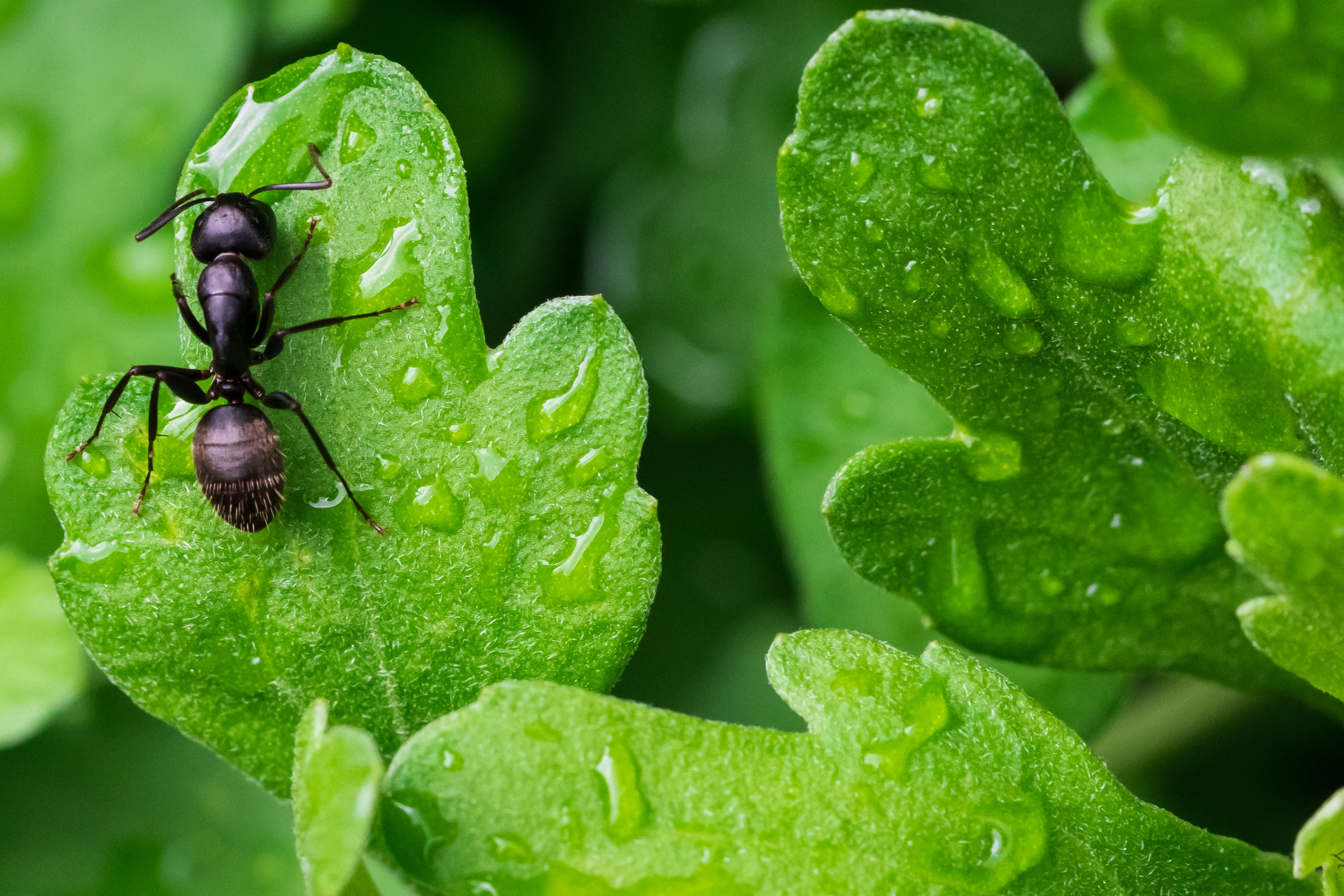
An ant at work (Photo by Shannon Potter, Unsplash)
Dogs, worms and ants have an amazing thing in common: They can be trained to detect markers of illness, from Covid-19 to tuberculosis. "Next time you’re irritated that ants have gotten into your kitchen, you might take a moment to consider their extraordinary powers of perception," reports Liz Langley of National Geographic.

What can bring your hope for humanity back? A horse show. The Horse World Expo returned to Pennsylvania for nickers, neighs and whole lot of horsing around.

Time to cook cabbage. Rumor is that cauliflower and Brussels sprouts may have been ousted. "Cooked the right way, cabbage can more than rise to the occasion." We agree.

Virginia is expecting its best oyster harvest in 35 years, the Richmond Times-Dispatch reports.

The rare Steller's sea eagle has returned to Maine.
(Photo by Zachary Holderby, The Associated Press)
Enjoy the Great Backyard Bird Count? Here's some more fun. "A rare Steller’s sea eagle native to the eastern coast of Asia, which caused a birding frenzy last winter, has returned to Maine. . . . If you're taking a specific trip, like to Japan in the winter, going out on a boat to some ice floes, that’s kind of your only chance to see one . . . But now, it’s just hanging out in Midcoast Maine.”

Of woods and men. Sounds more exciting than mice. The Conversation discusses the reintroduction of wolves in Colorado. "Aldo Leopold, the famed conservationist and professor of game management at the University of Wisconsin, believed that moral beliefs evolve over time to become more inclusive of the natural world. And what’s happening in Colorado suggests Leopold was right."

Crows are more intelligent than we thought. "New research shows that crows and other corvids "know what they know and can ponder the content of their own minds . . . This is considered a cornerstone of self-awareness and shared by just a handful of animal species besides humans."

With extra work and a little green thumb, you can make money from your garden. Consider growing perennial crops as a side hustle.

The glorious night sky! Eleven fantastic things to write on your calendar. "In the coming year, planetary alignments, perfectly timed meteor showers, and a pair of solar eclipses will delight stargazers around the world."

Monday, January 25, 2021

China's 2020 Phase One agriculture purchases well below target, but back up to 2017 levels

In 2020, China purchased just 58 percent of the U.S. exports promised in the Trump administration's Phase One trade deal. That includes only $23.6 billion of agricultural products, compared with an expected $36.6 billion, according to an extensive round-up by Keith Good at the University of IllinoisFarm Policy News. Some of the highlights:

  • It's unclear whether the Biden administration will seek to enforce the trade deal or negotiate a new one. 
  • China's soybean imports from the U.S. in 2020 rose by 52.8% from 2019. That includes 25.89 million tonnes of oilseed from the U.S., up from 16.94 million tonnes in 2019.
  • China was the world's top soybean buyer in 2020 and the U.S. was its second-largest supplier.
  • Soybean import levels improved as China's pig herds grew after being decimated by African swine fever in 2018 and 2019.
  • Two new strains of African swine fever could hurt China's pig herds again though. The new strains don't kill pigs, but they cause a chronic condition that reduces the number of healthy piglets born.
  • China's grain imports rose to record highs in 2020.
  • China imported a record 11.3 million tonnes of corn in 2020, with 2.25 million tonnes of that in December alone.
  • China imported a record 8.38 million tonnes of wheat in 2020, just short of a quota of 9.64 million tonnes. 

Friday, August 28, 2020

Agribusinesses got 1.5% of Paycheck Protection Program's forgivable loans; among them, dairy was the top sector

The 10 agribusiness sectors that got the most PPP funding. (Part of a Midwest Center for Investigative Reporting chart; click the image to enlarge it or click here for the complete and interactive version.)
"A very small percentage of businesses in the agriculture industry received Paycheck Protection Program, or PPP, loans, which were intended to help keep people employed as the economy convulsed during the coronavirus pandemic," Samuel Trilling and Pramod Acharya report for the Midwest Center for Investigative Reporting. "Of the agricultural companies that did receive loans, dairies received the most."

But even though the dairy sector won out among agribusinesses with the PPP, agribusinesses received only 1.5% of PPP funds. About half of the program's loans went to four industries: construction (13%); health care and social assistance (12.7%); professional, scientific, and technical services (12.7%); and manufacturing (10.4%), Trilling and Acharya report after analyzing federal data released in July.

Monday, March 09, 2020

USDA announces African swine fever plan

The U.S. Department of Agriculture announced Friday a plan to deal with African swine fever if the fatal disease shows up in the United States. If a hogs in the U.S. tests positive for the disease, the USDA will halt all hogs shipments for at least three days, according to a press release. That would prevent farmers from delivering hogs to slaughterhouses.

The U.S. government is trying to "avoid the type of devastation seen in China, where the disease has reduced the herd by more than 40 percent and pushed pork prices to record highs. Since the China outbreak, African swine fever has broken out in 10 countries in Asia," Tom Polansek reports for Reuters. An outbreak could devastate the nation's $7 billion pork export market, especially when it's poised to become the largest export to China.

If an infected hog is detected, the USDA will lead a coordinated effort with state governments and the pork industry to contain the spread of the disease. If a farmer has an infected hog, the USDA recommends slaughtering it, then burying or composting it. "To reduce paperwork, USDA plans to pay for virus elimination at a uniform, flat rate, based on the size of affected premises," according to the press release.

Thursday, December 19, 2019

The 2019 agricultural year in review

'Tis the season for articles looking back on the year behind us. Here's one discussing agriculture in 2019 and conjecturing where things could go next.

The biggest story of the year is likely the U.S.-China trade war, which continued to roil ag markets in 2019. "China occasionally decided to waive ag tariffs and import some goods, but by and large, the ag trade between these two countries ground to a halt," Brent Gloy and David Widmar report for Agricultural Economic Insights. "Then, an early Christmas present arrived as word came out that a partial phase-one agreement appears to be moving forward. For agriculture, the package is the big shiny box under the tree, but we will have to wait a bit to find out exactly what’s in it."

The spread of African Swine Fever is arguably the second-biggest story of the year, Gloy and Widmar write. China generally accounts for a bit under half of the world's production and consumption of pork, but the U.S. Department of Agriculture estimates that Chinese pork production dropped 14 percent from 2018 to 2019 and predicts it will fall another 25% next year. The disease is spreading across Asia and threatening other nations, which is impacting other nations' meat markets.

The article rates other important agriculture issues such as trade bailout payments, farm bankruptcies and the overall farming economy, record wet weather, and the impending U.S.-Mexico-Canada trade deal. Click here to read more.

Friday, October 18, 2019

U.S. authorities guarding against African swine fever

African swine fever has killed as many as half of China's 300 million pigs over the past 13 months, and the disease, which has spread to more than 50 countries, is now advancing throughout southeastern Asia. 

"With these developments, the American pork industry has begun mobilizing. Experts say the risk of a domestic outbreak of African swine fever is increasing," Laura Reiley reports for The Washington Post. "The Agriculture Department’s Animal and Plant Health Inspection Service led several functional exercises and drills late last month, working off a scenario of an outbreak of the virus in Mississippi that traveled across state lines before it was discovered. Fourteen states participated in the drill." Between 85% and 95% of pigs that catch it die within two weeks. Humans can't catch it, though. 

If the disease spreads to the U.S., the pork industry could suffer billions of dollars in losses, but the damage wouldn't end there. "Widespread loss of pigs could devastate the corn and soy industries, which are primary feed sources, and industries such as beef could be affected by a loss in consumer confidence," Reiley reports.

There is no vaccine or treatment of the disease, and the virus that causes it can live for weeks on tainted slaughtered meat, animal feed, or animal feed additives. That's one reason American authorities are alarmed. "There is insufficient American organic soy, so hog farmers wishing to feed their animals organic soy often import it from China," Reiley reports. "And there are feed ingredients — B vitamins and trace minerals — that are manufactured only in China. The virus can survive for up to a month on these products, so they must be quarantined and heated to kill the virus." The disease could also spread via humans illegally smuggling meat or other infected food into the U.S.

Friday, September 13, 2019

China says it will exempt American soybeans and pork from latest round of higher tariffs

China's state news agency said today that the Chinese government will exempt American soybeans and pork from its latest round of tariffs.

"China’s official Xinhua News Agency said the government would support purchases of U.S. agricultural products by Chinese companies and waive the tariffs that Beijing has imposed as trade tensions have flared," Chao Deng and Lucy Craymer report for The Wall Street Journal. "The report didn’t specify the amount of products affected by the measure, which was attributed to the country’s Commerce Ministry and its main economic planning agency, the National Development and Reform Commission."

The move comes as U.S. and Chinese negotiators prepare for a new round of trade talks in early October. The U.S. has made overtures as well: "On Wednesday, President Trump delayed a new round of tariff increases on $250 billion of imports from China that would have taken effect Oct. 1, the 70th anniversary of Communist Chinese rule—an apparent concession that the state-media report cited in justifying the lifting of tariffs on U.S. agricultural goods."

There might be more than goodwill behind the announcement though: African swine fever has decimated China's hog population, and the government has been struggling recently to meet domestic need, Deng and Craymer report.

The news is "likely to be cheered by U.S. farmers growing soybeans in Illinois, raising cattle in Texas and feeding hogs in North Carolina, all of whom have seen business suffer and prices fall as a result of tariffs that Chinese officials began implementing last year," Deng and Craymer report. 

Thursday, September 05, 2019

How feral pigs threaten wildlife, habitats, and crops

Last month, the phrase "30 to 50 feral hogs" became a meme sensation after a Twitter user cited the beasts as a legitimate reason for civilians to own AR-15 semiautomatic rifles and similar military-style firearms. But there's a grain of truth in there; feral pigs are among the most damaging invasive species in North America, as shown by a recent Mississippi State University study.

The researchers found that forest areas with feral pigs had 26 percent less diverse mammal and bird communities than other forests, partly because the voracious ominvores eat plants, animals and fungi, and out-compete other animals for food. In other words, "Wild pigs are a serious threat to biodiversity," Marcus Lashley writes for The Conversation. Lashley is an assistant professor of wildlife ecology at Mississippi State and the lead author of the study.

All that adds up to a lot of expense. In the early 2000's it was estimated that feral hogs caused $1.5 billion in damage each year in the U.S. Their population has grown by 30% and their territory has grown by 40% since then, so their economic impact has likely increased. Since the 1980s, feral pig populations have nearly tripled and have expanded from 18 to 35 states, Lashley notes.

"Another major concern is feral pigs’ potential to spread disease. They carry numerous pathogens, including brucellosis and tuberculosis, Lashley writes. "However, little ecological research has been done on this issue, and scientists have not yet demonstrated that increasing abundance of feral pigs reduces the abundance of native wildlife via disease transmission."

Here's a Farm Bureau video of farmers and scientists describing damage from feral pigs in Missouri:

Friday, January 25, 2019

Plan to cover hog-manure lagoons could spur biogas development, especially in North Carolina

A plan to cover hog-manure lagoons could generate new energy opportunities while reducing greenhouse gases, Greg Barnes reports for North Carolina Health News.

Smithfield, the world's largest hog producer, unveiled the plan last October, saying that it would install lagoon covers and anaerobic digesters on 90 percent of its hog-finishing farms in North Carolina, Missouri and Utah within the next 10 years. The covers will capture 85,000 tons of methane each year to convert it into biogas, Barnes reports.

"Smithfield spokeswoman Lisa Martin said the pork producer and Dominion Energy will pay for the infrastructure, including piping, transportation, gas cleaning and equipment to inject the gas into pipelines," Barnes reports. "Farmers will pay for the digesters and lagoon covers if they choose to participate, Martin said."

In North Carolina alone, the move could help bring 19,000 jobs per year through 2030, according to a 2016 report by the nonprofit American Jobs Project. Duke University has said it wants to use hog-sourced biofuel instead of natural gas to fuel its steam plants, Barnes reports.

North Carolina is the third-richest biogas resource state in the nation, "but some neighbors to big hog farms who have lived with odors and coped with the consequences of hog waste disposal for years say harvesting energy at these farms is not enough to decrease their environmental health impacts," Barnes reports. They want government and industry to ensure that changes made at concentrated animal feeding operations to produce bioenergy "also reduce risks of air, soil and water pollution."

Tuesday, January 08, 2019

Supreme Court rejects fast-track challenges to livestock-confinement laws in California and Massachusetts

"Two groups of state attorneys general were blocked Monday from bringing a challenge in the U.S. Supreme Court against California and Massachusetts laws that set standards for the treatment of farm animals raised to produce eggs and some meats sold in those states," Bill Lucia reports for Route Fifty. "The attorneys general were asking the Supreme Court to allow their lawsuits to proceed directly to high court, without going through lower federal courts first."

Indiana Attorney General Curtis Hill led a group of other attorneys general opposing the Massachusetts law and Missouri Attorney General Joshua Hawley led mostly the same group of AGs to oppose California's laws: those of Alabama, Arkansas, Indiana, Iowa, Louisiana, Nebraska, Nevada, North Dakota, Oklahoma, Texas, Utah and Wisconsin. "Those involved in the effort against the Massachusetts law were from mostly the same states. But South Carolina and West Virginia’s attorneys general also took part and Nevada and Iowa’s attorneys general did not," Lucia reports.

The Massachusetts and California laws are meant to improve confined farm animals' welfare by giving them more room to move. The California law, which went into effect in 2015, protects egg-laying hens. The Massachusetts law, passed more than two years ago and scheduled to go fully into effect on Jan. 1, 2022, centers on egg-layers, veal calves and pigs. Sales of such animal products will be prohibited if they come from operations the state considers excessively confined, Lucia reports.

"The attorneys general behind the current cases suggest the California and Massachusetts laws run afoul of federal law and are in violation of the U.S. Constitution’s Commerce Clause, which prohibits state laws that discriminate against, or significantly impede interstate commerce," Lucia reports.