Showing posts with label opinion. Show all posts

Friday, August 25, 2023

Rural commentators on PBS, from right and left, agree Haley had strongest peformance in Republican debate

Gary Abernathy and Sarah Smarsh (PBS image)
The commentary section of "PBS NewsHour" Friday night was all rural, as former southern Ohio editor Gary Abernathy and Kansas author and freelance journalist Sarah Smarsh filled in for their conservative and liberal counterparts, respectively. They agreed on most things, including a belief that former South Carolina Gov. Nikki Haley did best in the first presidential debate, among eight Republicans,

After a clip of Haley telling Mike Pence that a federal abortion ban won't fly because of the Senate, Abernathy said, "Republicans have overstepped on abortion. I think the Supreme Court was right to send it bach to the states. Nikki Haley was right . . . I felt she was the strongest in that debate."

Smarsh agreed. Noting last year's Kansas referendum in favor of abortion rights, she said Democrats are "reclaiming the notion of freedom or liberty and applying that to bodily automony. . . . The post-Roe landscape seems to have affected voter behavior in ways pre-Roe models can't necessarily predict."

Butg that hasn't changed how GOP candidates approach the issue in their race, Abernathy said: "You can't be too pro-life for the Republican electorate."

When host Geoff Bennett played Ohio biotech entrepreneur Vivek Ramaswamy's declaration that "The climate-change agenda is a hoax" and said "Climate change is settled science," Abernathy said, "It's not settled among Republicans, Geoff. . . . Ramaswamy was playing right to that base."

Asked about the Atlanta booking of former president Donald Trump. Smarsh said, "Millions of Americans are aghast that this person facing all these indictments and criminal charges is still the eminent front-runner." Abernathy, describing the widely circulated mug shot, said "That's a portrait Trump may have commissioned and sat for himself, the way it turned out."

Tuesday, August 01, 2023

Uvalde Leader-News Publisher Craig Garnett wins Gish Award for courage, integrity and tenacity in rural journalism

Uvalde Leader-News Publisher Craig Garnett (OPA photo)
Craig Garnett, publisher of the Uvalde Leader-News in southwest Texas, is the winner of the 2023 Tom and Pat Gish Award presented by the Institute for Rural Journalism and Community Issues at the University of Kentucky.

Garnett owns the twice-weekly newspaper that continues to cover, and contend with, the aftermath of the May 2022 school shooting in which 19 children and two teachers died.

“The award recognizes not only Craig’s courageous coverage and commentary about the tragedy, but his longtime willingness to tell hard truths about things that matter in Uvalde County,” said Al Cross, director of the Institute and extension professor of journalism.
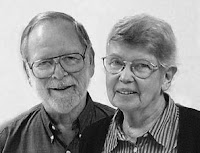
Tom and Pat Gish
The award is named for the couple who published The Mountain Eagle in Whitesburg, Kentucky, for more than 50 years. Their son and successor, Ben Gish, is on the award selection committee. He said of Garnett and the Leader-News, “It’s one thing to read national news accounts about law enforcement not moving quickly enough to save the lives of many of the victims, but it’s entirely something else to read the local newspaper’s far deeper accounts of that continuing controversy. . . . The Leader-News does not hesitate when it comes to letting family members of the victims have their say, nor does it shy away from printing the responses of those whose actions, or lack thereof, are being questioned.”

In a column shortly after the shooting, Garnett wrote that a regional police official "could not answer why it took an hour to end the attack" and quoted him: "It is a complex situation. They are measuring; they are measuring." He wrote, "The question is how much measuring is permissible, while children are being murdered. Or perhaps they were already gone. It pains to write these words of criticism about law enforcement, but parents and the community have the right to know. They must be told why police, whom parents at the scene begged to go in and save their children, failed to act. They have to know, to ever begin to heal."

He concluded, "There is a final question that no one will ever adequately answer. It came on Thursday in the form of a text message from our reporter, Kimberly Rubio, whose fourth-grader Lexi did not come home that day: 'Why would someone hurt my baby, Craig?'"

Rubio, now in the newspaper’s advertising department, praised Garnett for the paper’s family atmosphere and encouraging environment: “He is gifted in seeing a person’s potential. He is a teacher, able to guide us as we harness that potential. He believes in us, and we learn to believe in ourselves. I have the same faith in him and his writing staff.”

Garnett spent hours “sitting with families who lost children, siblings, friends; interviewing survivors, teachers and students, about their experience,” Leader-News Managing Editor Meghann Garcia said in nominating him. She said he has made a “dogged pursuit to learn how so many things went wrong that day, how every single fail-safe failed. . . . He has done all of this without a break from the office, from the work.”

In an editorial a month after the shooting, Garnett named names and was blunt: “No mass school shooting in the United States has ended with such glaring failures in both the law enforcement response and school district security. . . . Neither [school] Police Chief Pete Arredondo, acting city chief Mariano Pargas, Uvalde County Sheriff Ruben Nolasco nor any state or federal officer among the 376 responders to the scene was willing to take the helm of what was clearly a rudderless ship cast into a hurricane.”

A week later, another Garnett piece endorsing more gun control concluded: “I am not about to surrender my guns, and they are many, but I challenge you to give me one good reason (and please not the “slippery slope” argument that did not come to pass when assault weapons were banned) why a teenager should have the firepower to stand down 376 lawmen. If disturbed young men are going to commit horrific crimes with firearms, why not take the most devastating amplifier out of the mass shooting equation?”

Uvalde County (Wikipedia map)
Criticism of local law enforcement and support for more gun control didn’t sit well with some people in the town of 15,000 and county of 25,000. Garnett said at a meeting of the newspaper association in Oklahoma, his native state, that by the end of the day of the shooting, “The school and police agencies that the newspaper had a good relationship with all clammed up. A year later we still can’t get answers. We have filed about 10 to 15 requests with the school district and still can’t get any answers.”

Garcia began her nomination of Garnett with the story of a call from a reader who objected to a picture of “a local pediatrician, outspoken in the shooting aftermath, at the White House, in a commanding photo with President Joe Biden and Vice President Kamala Harris.” The caller said Garnett had “better not acknowledge Biden's presidency again if he wanted to keep the caller's subscription,” Garcia wrote. “The call was mild compared to what the newspaper staff had fielded over previous weeks . . . . Craig immediately turned to his typewriter to work on a subscription refund check and your-wish-is-now-granted letter.”

Garcia continued, “It wasn't the first time our coverage, or Craig's politics, went against the grain.” Garnett had editorialized against the Iraq War, and opposed “a water pipeline that would take local water, dearly needed for agriculture, a mainstay of the area economy, and funnel it to San Antonio,” she wrote. And four years before the shooting, he opposed the idea of a separate school police force, which botched the response to the shooting. The next year, the paper a guest-written series of stories about the local Ku Klux Klan chapter of 100 years before.

“Craig has never been afraid of taking a stand or telling the news, despite how unpopular it might be with subscribers and advertisers, who are also often his friends,” Garcia wrote. And he has used his own family’s troubling experience as an example to give hope to others.

His wife, Melissa Garnett, told the Gish Award selection committee, “One of his best columns was about our son’s process of recovery from drugs and alcohol. That took courage. He must have hit all the right notes, as the response was great – he had taken the bold step of using his pain of an addicted child to remove the stigma of talking about addiction.”

The column celebrated their son’s year-plus of sobriety and concluded, “Far too many addicts today, especially those in thrall to opioids, don’t get Logan’s chance at recovery. The steps that will lead them from a world of pain and failure remain stubbornly distant and daily receding until hope is lost. We should do all we can to help them discover a path because inside every addict lives someone’s treasured child, father, husband, brother or friend.”

Garnett “and his paper have been a continuing source of strength in that community and beyond,” said selection committee member Bill Bishop, founding editor of The Daily Yonder, a national rural-news publication and a former weekly editor in Bastrop, Texas, and columnist for the Austin American-Statesman.

Garnett, who earned an economics degree from Southern Methodist University, joined the Fort Worth Star-Telegram in 1977, moved to the Kansas City Star in 1978, became general manager of the Leader-News in 1982 and owner and publisher in 1989. Under his ownership, the newspaper has won many awards.

“I am extremely honored to receive the Gish Award,” Garnett said. “And I am deeply humbled by the support from coworkers and friends in the industry who thought my work worthy of such recognition.”

The Institute for Rural Journalism (publisher of The Rural Blog) will present the Gish Award to Craig Garnett in Texas, at a time and place to be determined. UPDATE, Dec. 17: The award will be presented Feb. 29 at the University of Texas during a symposium, "Courage, Tenacity, Integrity and Innovation in Rural Journalism," sponsored by the Institute, the Texas Center for Community Journalism at Tarleton State University and The Center for Ethical Leadership in Media in the UT School of Journalism and Media.

Garnett will be recognized Oct. 26 in Lexington, Ky., at the Institute’s annual Al Smith Awards Dinner, with USA Today Washington Bureau Chief Susan Page as the keynote speaker. At that event, Ben Gish and Mountain Eagle reporter Sam Adams will receive the Al Smith Award for public service through community journalism by Kentuckians.

Friday, July 28, 2023

News-media roundup: AL.com keeps winning prizes for police probe and commentary; latest on Aspen paper war ...

The winners of this year's Frank A. Blethen Award for Local Accountability Reporting from the News Leaders Association are John Archibald, Ashley Remkus and Ramsey Archibald of AL.com, for “The Rise and Fall of a Predatory Police Force” in an Alabama town, and Michael Stavola of the Wichita Eagle for “Secret Messages,” an expose about racist messages openly shared among law-enforcement officers. The judges said AL.com "took what everyone in a community knew to be true about a local police department and brought reporting depth and a clarity of writing that is too often hard to come by." It said Stavola "local newsroom had widespread impact that tremendously benefited the community and shocked even its highest-ranking officials." Kyle Whitmire of AL.com won the Mike Royko Award for Commentary and Column Writing, for “State of Denial: How 150 years of whitewashed history poisons Alabama today.” Whitmire's work and the police series also won Pulitzer Prizes this year. AL.com is owned by the Newhouse family's Advance Publications, which stopped printing its newspapers in Birmigham, Mobile and Huntsville this year. Those are the NLA winners with rural resonance; the rest are here.

FEDERAL ADS: The Senate bill to fund health and human services would direct agencies to prioritize advertising in "local media in small or rural markets." The provison was added by Sens. Jeff Merkley, D-Oregon, and Cindy Hyde-Smith, R-Miss., after lobbying by the National Newspaper Association.

LOCAL LEGALS: The city council in Aspen, Colo., has moved its public-notice advertising from the Aspen Times to the Aspen Daily News, reports Corey Hutchins of Inside the News in Colorado. The Daily News became Pitkin County's paper of record a year ago "to punish the Aspen Times over how the newspaper handled a lawsuit from a billionaire developer," Hutchins writes, but "deliberation among city leaders was prosaic. Staff and council members kept their reasoning limited to a 'clear set of criteria' between the two rival papers including experience, efficiencies, and cost." The Daily News is locally owned and has the motto “If you don’t want it printed, don’t let it happen;” the Times is owned by Ogden Newspapers. Hutchins notes, "Aspen is one of the few cities left in the United States with two daily newspapers." It has 7,000 people; the county has about 17,500.

Google map, adapted; click to enlarge
PRINT SITES: Hutchins also reports that the shuttering of the press at The Pueblo Chieftain "has put at least one newspaper out of business," the Eastern Colorado Plainsman in Hugo. It's the paper of record for Lincoln County; that status is likely to go to its sister paper, the Limon Leader, which says it is increasing prices and moving its printing to CherryRoad Media in Hutchinson, Kansas. That's a five-hour drive from Limon, but such hauls are becoming more common as newspaper chains consolidate their printing locations.

Friday, May 19, 2023

Iowa editor reminds pork producers: 'The customer comes first' and Calif. voters say sows need room to turn around

By Art Cullen
Storm Lake (Iowa) Times Pilot

The U.S. Supreme Court cut sows some slack last week, which caused a lot of squealing around Iowa where we forget that the customer comes first.

The high court on a 5-4 vote last Thursday upheld Proposition 12, a 2018 California ballot initiative that drew 63% voter support, demanding that gestating sows be allowed room to turn around. Prop. 12 also called for cage-free poultry production and more space for veal calves.

The lawsuit was brought by the American Farm Bureau Federation and the National Pork Producers Council of Ankeny. They said they would evaluate their next steps.

Next steps should be getting with the program and responding to consumer concerns. . . . The poultry industry largely adapted to cage-free production years ago when McDonald’s demanded it based on consumer preference. The pork industry failed to heed the warnings and chose instead to fight the will of the people of California.

Art Cullen
Iowa is the leading purveyor of pork in the giant California market. The pork complex generally claims the costs of 24-foot gestation stalls will be catastrophic. Meatpackers were somewhat restrained. Hormel, for one, reported that complying with California production standards will have no material effect on the company’s bottom line. Tyson said it will comply.

The California electorate is not 63% liberal. It is a bellwether because of the sheer size of the Golden State economy. Voters were well aware potentially higher pork costs, and they were equally cognizant of threats to animal and human health from piling more livestock on top of more livestock.

Iowans are similarly aware, consistently voting for cleaner water while being rebuffed by legislators and agri-industry. The legislature continues to pass "ag gag" laws because they don’t like the picture of hogs jammed into confinement. They know what their nose tells them — that this is about enough, already. Yet more hogs keep coming.

The court’s ruling will require retrofitting of old sow facilities and will reduce throughput at the margins. It will not put swine feeders on the rocks. It will force the industry to change with consumer demand. We were told that we needed consistent, lean hogs of a certain structure because of consumer taste, when in fact it was to standardize the carcass for more efficient processing.

This is real consumer action at the ballot box. The court challenges the notion that the livestock industry can sneer at regulations and rationalize its excesses.

Not a single independent pork producer will be affected. Whatever is left of them. They did not depend on locking a sow down. They performed husbandry in the farrowing house. That costs more. Lord forbid that a producer with 30 sows might gain a foothold. . . .

Eventually, when the industry gets off its arrogance hangover, it will figure out that the customer is always right. Or, at least, that the Supreme Court has ruled. Let’s get on with raising hogs the way our customers actually want.

Saturday, March 18, 2023

In battle to keep public notices, Iowa editor warns 'Without legal notices, you simply will not know what’s going on.'

What has become an annual battle in many state legislatures has higher stakes than ever for newspapers. They "are facing the loss of a key source of cash that many need to survive: legal notices," notes Ray Schultz, a columnist for MediaPost. "Newspapers, their very survival at stake in some cases, are condemning such bills." Here's an example from Iowa:

Art Cullen
By Art Cullen

Storm Lake Times Pilot

Politicians who flourish in darkness are set on undermining a strong and independent network of community journalism by eliminating paid public notices in Iowa newspapers.

A Senate subcommittee on March 8 voted along party lines, with majority Republicans in support, to advance a bill that would allow public notices to be published on a website hosted by the secretary of state and forego posting them in community newspapers.

They tell the public that they want to save money. In private, a senator told one of our folks in the capitol that the backers want to “cancel newspapers.”

Indeed they will if this bill passes. My friends in the Iowa Newspaper Association believe that a third of our nearly 300 community newspapers will fold if paid legal notices — council minutes, school board claims, probate notices and the like — are eliminated.

One of them will be the Aurelia Star, which we operate. The loss of public notices will deal a huge body blow to the Cherokee Chronicle Times and the Storm Lake Times Pilot. We will have to find more than $100,000 per year to make it up. Last year we showed a profit of $2,900 — Brother John is paid nothing and I am paid $900 per month. Maybe we’re bad managers, but we are still here against all odds and supporting 20 employees. But enough about us. Republicans said it’s not their job to make our payroll. (Although they shell out hundreds of millions in subsidies for Apple, Microsoft, Amazon and Wells Fargo.)

Okay, we’ll take our lumps, but what about the public? What about you?

This bill will put public notices online at a state website for a couple weeks. After that, forget about finding out how much a county supervisor got paid for hotel expenses. The state will charge to post the public notice. If you think about it, and really want to find out what happened at the Alta-Aurelia School Board meeting, you can start searching the Internet. Currently, you can browse the Times Pilot and see that your spinster aunt’s probate is on file. Nearly 80% of Iowans read public notices in community newspapers.

Without legal notices, you simply will not know what’s going on.

This is not just an Iowa thing. It’s a national push to blot out newspapers and create news deserts where no local source of factual information exists. That vacuum gets filled by social media and political sites posing as legitimate news sources. Where newspapers die, government spending and tax rates rise. So does crime and corruption according to research from the University of Notre Dame and the University of North Carolina. . . . 

The community newspaper is your proxy. People call to ask why, after reading the list of claims, is the street department buying a new snow plow when they got one last year? They walk into the office with a clipping in the wallet they pull out of the front pocket of their bibs of a drainage notice that they think will flood out their low spots. They would not have known were it not for the legal notice. It’s not easy finding out this stuff now — the Iowa court system charges us a fee to look at criminal information online.

You will know even less when a third of Iowa’s newspapers sink.

That’s the way they want it. Keep people in the dark. Resist the audit that shines a light on tax increment financing or the Hawkeye athletic department, which may embarrass a lot of people. Cancel newspapers and live in blissful ignorance. That’s what’s going on.

We’ll get by somehow. They can’t kill us yet. They think we’re cockroaches and we will prove it by refusing to be eradicated. Not as long as you demand that we walk together in the sunshine. Information builds community, secrecy and lies destroy great republics and eat at freedom. We have our opinions but we keep them on this page. We hew to the facts on the front page. Some people can’t handle the truth and are doing their level best to knock us out. Never give up on democracy. We need each other.

Friday, March 10, 2023

Opinion: Legislators' columns have become more partisan, and newspapers should apply certain standards to them

By Al Cross
Director and Professor, Institute for Rural Journalism and Community Issues

With legislative activity ramping up in most states, there may be news in those columns that legislators send to newspapers in their districts. But there may also be invective and partisanship, and that makes them opinion, which should have a higher threshold for publication. Editors and legislators can take some lessons from the latest column by Reed Anfinson, publisher of the Swift County Monitor-News and two other weeklies in western Minnesota.

Reed Anfinson
Such columns "can be essential sources on legislation," lawmakers' personalities, and even reveal how they work with their colleagues, Anfinson writes, but in recent years the pieces "have become more about tearing down the opposing party and its members than informing constituents. . . . What we find strange with some of the columns we receive is they don’t reflect the character of people we’ve gotten to know."

Perhaps that's because such columns are often if not usually generated by staffs of party leadership offices and often get little if any editing from the legislators whose names are on them. If you really know your legislator, that may be easy to tell.

"We understand a politician’s column is an opinion piece," Anfinson writes. "However, there is a difference between explaining why you support or oppose specific legislation and writing with the sole purpose of vilifying its supporters, stoking fear and resentment. With the coarsening of political debate, we increase the potential for angry confrontations and violence against those whose beliefs don’t align with ours. We’ve seen the consequences in rising death threats against school boards, election workers, journalists, and opposing party members."

Anfinson quotes the late Mark Shields, a political reporter and commentator: “In every discussion, the person on the other side probably loves their country as much as you love our country; cares about their children’s and grandchildren’s future as much as you do; treasures the truth as much as you do,” so “You don’t demonize somebody on the other side.” Or you shouldn't.

"Community newspapers aren’t the mouthpiece for political action committees or political caucuses," Anfinson writes. "We sell advertising space for partisan promotion of political talking points. When we receive columns that grossly distort the truth, and are more interested in driving fear and anger, we won’t print them." He offers advice for legislators and letter writers:
  • Communicate, don’t alienate.
  • Respect all your readers, not just your political base or allies.
  • Don’t give us only political-party talking points but also provide us with your ideas for strengthening our rural communities, protecting our health, and providing sound government financial management.
That's good advice. What about election time? My advice is that as elections approach, the hurdles to publication should be higher. When a legislator files for re-election, newsworthiness of a column should be the sole standard for publication. Accordingly, it may be better to write a news story about a legislator's stance than run the opinion piece. And I'd like to see newspapers set a dead period, perhaps within 60 days of an election, during which no such columns will be published. They're an easy way to fill an editorial page, but a newspaper shouldn't be an easy vessel for self-serving messages. Unless they're in an ad.

Thursday, March 02, 2023

Fox News hosts seem to make the case that they acted with malice, Mississippi Press Association executive opines

By Layne Bruce

The first time I recall hearing the phrase “absence of malice” was from a film of that title released in 1981 starring Paul Newman and Sally Field.

Newman plays a liquor wholesaler falsely accused in the disappearance of a local union leader and whose life is wrecked when the news hits the papers. Field is the reporter who’s manipulated by a corrupt district attorney who wants to squeeze Newman for information about another case.

It’s a convoluted work of fiction, but it’s one of my favorite movies about journalism and what can go wrong when people motivated by careerism forget that their actions can have very real and dramatic consequences for many people around them.

Layne Bruce
After studying journalism in college, I came to understand “absence of malice” as a legal term that also represents an incredibly high burden of proof that must be met by litigants who claim they’ve been defamed by the press.

When a plaintiff sues a media outlet for defamation, they must prove that whatever inaccuracies the outlet reported were borne of actual malicious intent. In other words, the defendants in such cases must act intentionally and spread false information knowingly.

That must be provable. It’s difficult to do, and it’s one of the cornerstone protections of freedom of the press in this country.

But if we were going to write a screenplay based on the defamation lawsuit filed against Fox News by Dominion Voting Systems for the reporting of false claims of fraud in the 2020 presidential election, it wouldn’t be a drama; it would have to be a farce. It seems like a black comedy of lies, hubris, and gaslighting.

A cursory review of text messages entered into the record and recently made public between Fox News personnel leaves little doubt the producers and hosts knew claims against Dominion that aired repeatedly on the network and sister channel Fox Business were bogus.

Marquee hosts Tucker Carlson, Sean Hannity, Laura Ingraham, and others engaged in numerous conversations about the veracity of the claims against Dominion and even the sanity of the lawyers pressing the conspiracy theories on air and in daily press conferences.

“No serious lawyer could believe what they were saying,” Ingraham says in the text messages. “Sidney Powell is a bit nuts,” she wrote in another. That did not keep the network from repeatedly putting Powell, a key lawyer at the center of the scandal, on air to regurgitate nonsense about alleged fraud, krakens, and other incoherent conspiracy theories.

That Fox News allowed this, and in so doing spread the toxicity to millions of viewers daily, goes a long way to addressing a heretofore almost unattainable bar of proving malice.

And by putting their private thoughts into texts while engaging in the apparent fiction of “just asking questions” on air, the hosts have exposed the network to a potentially landmark—and hugely expensive—judgment against it.

They’ve single-handedly lowered the bar for proving malice.

Wall Street Journal columnist Bill Galston on The Bulwark’s “Beg to Differ” podcast laid out four points necessary to prove malicious intent and reckless disregard to a jury:
  • A false statement purported to be fact. The text messages prove network personnel knew the claims of voter fraud by Dominion were bogus.
  • Publication or communication of the false statement to a third party. Fox hosts did this nightly for weeks to viewers numbering in the millions.
  • Fault amounting to “at least negligence.” Galston contends the repetition of falsehoods over network air was not just reckless disregard, but a “deliberate lie” motivated by fear the network would alienate its audience if it debunked the conspiracies.
  • Damages must be sustained to the reputation of the plaintiff. This may the easiest claim to prove. How many of us had heard of Dominion as a company before it was dragged into the contrived effort to throw the 2020 election results into doubt?
“If this isn’t a slam dunk case after the revelations that came out because of the (disclosure of the text messages), I don’t know what is,” Galston concluded.

This is by no means the first time Fox News’ dirty laundry has been aired in public. But it is for sure the first time the network has been so nakedly exposed to potential damages that might have a lasting effect on its business practices.

If malice has not been proven in this case, I’m with Galston—I’m not sure it could ever be proved. Whatever the ultimate decision, the case will be taught in future media law classes.

And I can’t wait to see the movie.

Layne Bruce, a former journalist, is executive director of the Mississippi Press Association. His email address is lbruce@mspress.org.

Tuesday, February 07, 2023

Opinion: Ignoring celebrities and giving 'reality of personal relationships' a chance could help heal communities

Prior to tonight's State of the Union address, a top-down sort of thing, Andy Stanton-Henry of Mt. Gilead, Ohio, argues in The Daily Yonder: "We are going to have to flip the conventional wisdom of top-down change and give bottom-up another try."

Stanton-Henry, a community navigator for a United Way, begins by looking at how we pick our leaders: "Don’t meet your heroes, we are told. It’s not the worst advice, since they so often let us down. Interreacting with anyone is a humanizing act, and meeting our heroes reveals that they are human just like us. And that’s not always a pleasant experience. But most of the time, we don’t have to meet our heroes to be disappointed by them. We only have to watch what they do and listen to what they say. . . . They should be held accountable and we deserve leaders with integrity and courage. But, if we are honest, it’s partly our fault. We have placed too much hope in celebrities."

Rural Americans can also fall for celebrity glitz, Stanton-Henry warns: "Rural folks like to think we are not susceptible to celebrity, but recent national elections have reminded us that this is not always the case. We value self-reliance and local community but sometimes we turn to 'strong man' leaders who promise to save us. . . . The truth is, however, no politician can 'make America great again.'"

What can leaders do, and what can average Americans do? "They can lead by example, work to pass helpful legislation, and inspire the nation by word and deed," Stanton-Henry writes. "But none of those, by themselves, are enough to heal our communities or create pathways out of poverty. The work of repair and rebuilding that our historical moment requires includes all of us. We can’t do it by ourselves but neither can it be done without us."

Stanton-Henry theorizes: "Maybe part of the problem is our fixation on charismatic leaders coming to save us. If we are going to heal and if our communities have a chance at thriving, we are going to have to rethink some things. To do this, we are going to have to disinvest our hope in powerful, public heroes and reinvest it in hidden ones. . . . I’ve come to believe that most real heroes are hidden. Most saints are unseen. You probably know some. You may even be one of them. Whether our communities fail or thrive has a lot to do with sustaining and celebrating the work of hidden heroes and unseen saint."

Thomas Merton (Christian Book photo)
He offers a rural example: "Kentucky writer and monk Thomas Merton wrote a letter to peace activists telling them to 'not depend on the hope of results.' They were bound to be let down by conventional definitions of 'success' and 'effectiveness.' Instead, he suggested they find fulfillment in the rightness of the work itself. When they let go of their hope in results, they would 'gradually struggle less and less for an idea and more and more for specific people. In the end, it is the reality of personal relationship that saves everything.'"

He reminds us again that rural Americans know how to apply Merton's teachings. "At our best, rural and small-town folks model this principle. We don’t get caught up in the topics and trends that make national news. We don’t obsess over traditional metrics of success. Instead, we focus on doing our work well, loving our families and neighbors well, and leaving a legacy for our kids or community. Country life is all about 'the reality of personal relationship.' But I fear that many of us have forgotten or neglected this. Some of us have even outright rejected this. It’s time to remember and reclaim it." 

Friday, January 20, 2023

Opinion: Instead of dissing them, hug those election deniers

Before you feel annoyed and then dismiss the next election denier you hear, think about all the deniers you know, some of whom you love. Reach out in kinship and ask that denier for a hug, graphics columnist Sergio Pecanha shares an opinion piece in The Washington Post.

Pecanha, a citizen of the U.S. and Brazil, begins with Jan. 6, 2021, which he says wasn't the beginning, but a pinnacle Americans can recall: "Americans know the feeling: It’s hard to believe the sight of a capital vandalized by a mob of people who won’t accept the result of an election because their side didn’t win. It’s our country — our democracy, ourselves — under attack." Pencanha looks to the Jan, 8 mob action in Brazil's capital and sees the similarities, "How bizarre to hear election deniers halfway down the planet expressing, in another language, the same sentiments felt two years earlier by American rioters. 'We invaded what is ours — by right,' one Bolsonarista said in a video posted online. . . . It’s as though the rioters come from another planet."

If only that were true. "But that oversimplification hurts us. Many of those involved in the attacks on democracy in the United States and Brazil were led to believe that their elections were stolen," Pencanha writes. "That they were standing up for freedom. That we are the aliens. We shouldn’t ignore them. Brazil and the United States are still democracies — the people who hold these beliefs have the right to vote, too. . . . Besides, who among us these days doesn’t have an acquaintance, a sibling, a cousin or an otherwise lovely whatever-in-law who fell for the conspiracy theories?"

Pencanha says of them, "They are decent people (mostly). People we love (mostly). Maybe people who have become so detached from reality that we prefer to just avoid them. We don’t choose our relatives. Among my friends, it was different — not one supported Bolsonaro. But this is another sign of trouble: the information bubbles we live in. . . . We need to pop these bubbles."

Why? "It is only because I know and love many of those inside the other bubbles that I can empathize and make the effort to try to understand them. I invite you to do the same," Pencanha implores. "Maybe you think this is in vain, because you know you won’t change their minds. That might be true. But that’s not the only good thing that can happen."

What else? "It is not new for voters to feel anger, sadness, disillusion, confusion. Nor are these emotions unique to Brazil or the United States. But it has become so easy to spread lies to take advantage of the people who feel these things," he notes. "It is natural to want to brush off those who fall for the kind of lies spread by the Bolsonaros and Trumps of the world. It’s an understandable defense, but it won’t make the problem go away."

Pencanha suggests, "What if, instead, we pull them in closer? Draw them to us. Look them in eye." And offer them love.

Monday, January 09, 2023

Rural editor dreads writing her column, because 'The world has become an ugly place for us to exchange ideas and thoughts,' with 'baseless cynicism and unwillingness to think'

By Sharon Burton
"One Voice" column, Adair County Community Voice, Columbia, Ky.

I’ve been a journalist for several decades now, and I’m honored to have won my share of awards over the years. When it comes to annual newspaper contests, the ones I’ve been most proud of were awards for writing this column.

I’m proud to say I’ve won first place more than once, and there was a time when that encouraged me to bravely share my thoughts on this page, hoping that readers would take the journey with me as I called out elected officials when I believed it was needed, when I shared words of wisdom I had learned from life’s experiences, or even when I shared a warm story about family.

I often heard from readers who either loved what I have written or really, really didn’t like it, and either way, I knew I had encouraged others to spend at least a moment in thought about something important.

Sharon Burton
Today, the part of my week I dread the most is sitting down and writing this column. I leave it until I can no longer avoid it, and this page is often the last one to make it to the printers.

Our world has changed – no, we say, the world, but in all honesty, people have changed. Because people have changed, the world has become an ugly place for us to exchange ideas and thoughts. So many people no longer value the voice of others, and it breaks my heart every week when I realize that I no longer feel encouraged to share ideas with hope that we can all learn together.

When I would write something others might disagree with, I enjoyed the calls or visits from them as we talked about our disagreements. I learned from a better journalist than myself to use the opportunity to ask for letters to the editor – to even offer to type them up so that the person who disagrees with me can share his or her opinion on the very same page where I express mine.

Those have always been my favorite conversations, the ones with the people who disagree with me. I didn’t always change my mind, although sometimes I did, but mostly it helped me view the world from a different perspective, and I think we all become better people when we can do that. I don’t have to agree with someone to empathize with a countering viewpoint; I only have to respect that person as another human with ideas, emotions, thoughts and experiences of his or her own.

I wanted to write this week about the past year and my hopes for 2023, but to be honest, I don’t feel like sharing. While newsprint doesn’t give readers the chance to write nasty little comments below the article, the free-flowing river of hate and trolling we are bombarded with daily on social media has cost us more than we realize. It has cost us accountability.

We embrace the free flow of opinion without expecting any forethought or, heaven forbid, some research or thorough reading. In the past, I always knew I better do my homework before writing about a subject on this page. Readers expected me to be informed, and I did not want to disappoint.

We used to be a community where we stood side by side with the very people we considered different from ourselves. Now, we can’t even have a winter storm that people aren’t ridiculing others because they do or don’t believe in global warming, because they think electric vehicles do or don’t make sense, or whatever the latest thing is that most people have done very little research on but hold a very strong opinion about.

It’s not even the lack of being informed that bothers me the most. It’s the attacking attitude toward others with a different opinion that boggles my mind. Why be so mean?

Don’t misunderstand – I can handle mean. I’ve had someone come into my office and rip the newspaper up in front of me (or attempt it; newsprint does not tear easily). I’ve had the paper slung across my desk in anger. I’ve had phone calls where some very nasty words were used, and I’ve had my Christianity questioned more than once. It’s all part of the job.

But I understood that those people were invested in the topic I had written about. An article didn’t sit well with their values; an elected official didn’t get his way; a family member made the news for breaking a law and they wanted me to cover it up. Those tirades I can handle.

It’s the baseless cynicism and unwillingness to THINK that has me discouraged about mankind. It’s the blind support of viewpoints with no interest whatsoever of exchanging thoughts and ideas. It’s the inability to think there is more out there for you to learn.

It takes the fun out of being right, and it certainly takes the fun out of being wrong. In the past, I’ve used this spot to share my thoughts, knowing it could go either way. I knew my readers were looking out for me, letting me know when I said something that made an impression on them and having my back when I missed the mark.

While the awards have been fun, in truth, my favorite response to “One Voice” has always been, “I don’t always agree with you, but I enjoy reading your column.”

When did we stop enjoying the people with whom we disagree?

If I were to pick out my hopes for 2023, it would be that we become a kinder, gentler world, that we see and embrace the imperfections of one another, that we seek knowledge, and we view the world through the lens of grace.

We can only better ourselves when we allow ourselves to be imperfect in front of one another. It’s through that experience that we learn, and we still have a lot to learn.

Friday, January 06, 2023

Quick hits: E-bikes, 'old-time socialism', phases of the moon, your brain on music, a pain in the neck and more . . .

Electric bikes are awesome! Until . . .
(Illustration by Anna Haifisch, The New Yorker)
The wind whooshes through your hair,
As nature goes zooming past.
Until the fatal moment,
When your E-bike runs out of gas.

Iowa editor Art Cullen shows us how Americans might be able to get on a plane and actually arrive at their destination without becoming Cuba in his piece "Gimme some of that old-time socialism" in the Storm Lake Times Pilot.

Learn about the phases of the moon, and discover what a murmuration of starlings looks like as it flies over a waxing crescent moon at dusk.

Still working on 2023 resolutions? Oliver Burkeman, author of Four Thousand Weeks: Time Management for Mere Mortals, has some ideas. Here's his interview with Caroline Mimbs Nyce of The Atlantic.

Dumbledore's thoughts on music: “Ah, music," he said, wiping his eyes. "A magic beyond all we do here!” ― J.K. Rowling, Harry Potter and the Sorcerer's Stone. Learn more about your brain on music.

Khan, the rescued ocelot (Photo via Amazon video)
Returning a "most ridiculously cute" ocelot to its home in the Peruvian Amazon.

It's a pain in the neck. That describes a lot of things. This article addresses the actual pain.

Reading is the answer. Here are some New York Times picks.

February is around the bend. Don't get caught without a Groundhog Day celebration plan.

Are you monumentally busy, or just profoundly disorganized? (If that feels like a personal attack, read this.)


Thursday, December 22, 2022

News-media roundup: 2022 opinion and research gems, predictions and advice for journalism; Alaska weeklies die

Nieman Reports has picked its five best opinion pieces of 2022: Gilbert Gaul on the need to cover land-use decisions that worsen disasters, and how arduous rebuilding after a disaster really is; Isaac Bailey's argument that objectivity is less important than transparency, accuracy and fairness; Gary Langer on the need for better vetting of poll data; Anne Garrels on the courage of Ukrainian journalists; and the argument by Mardi Link of the Traverse City Record-Eagle that media coverage of adoption (especially in the context of abortion) lacks voices of adoptees: “Adoption is a parenting decision and abortion is a reproductive decision,” wrote Link, an adoptee herself. “For reporters to equate one as a solution for the other provides nothing of value to readers and perpetuates a false equivalency.” NR also gives its 10 most-read stories of 2022.

NiemanLab collected several predictions and advice for journalism in 2023, including: Sarabeth Berman of the American Journalism Project says nonprofit news can work in smaller markets with a network model; Sue Cross of the Institute for Nonprofit News predicts more collective action among varied interests to "save the news;" Lisa Heyamoto of LION Publishers says the "independent news industry" has a roadmap to sustainability; Pia Frey and Torsten Schlegel of Opinionary say publishers should ask more questions of users as cookies die out; Kerri Hoffman of PRX says podcasting is going local; Ayala Panievsky of the University of Cambridge says "It's time for PR for journalism;" and Julia Beizer of Bloomberg says news and subscription fatigue should make publishers "focus on the value we provide our users. We must learn everything we can about who they are and what they need. And then we provide it through journalism that helps them navigate their world."

The Reuters Institute for the Study of Journalism at the University of Oxford, which does research in the U.K, the U.S. and other countries, says 22 of the findings from its research in 2022 are still relevant for 2023. They include: Many people see misinformation and harassment as big problems for digital platforms; they make snap judgments about trustworthiness of sources; people who know more about the news media use social media differently; young people increasingly use TikTok for news; and newsroom leaders are still betting on more revenue from readers.

Citing losses, Wick Communications has stopped printing the Anchorage Press and two other area weeklies, The Arctic Warrior and the Chugach Times. The anchoragepress.com website will continue, as will the Mat-Su Valley Frontiersman, a big weekly in an area north of Anchorage.

Entries sought for Hillman Prizes for 'investigative journalism and commentary in service of the common good'

The Sidney Hillman Foundation is accepting entries until Jan. 30 for the 2023 Hillman Prizes honoring excellence in investigative journalism and commentary in service of the common good.

The prizes celebrate investigative reporting and deep storytelling that exposes social and economic injustice and leads to meaningful public policy change. They are awarded in these categories:
Book (nonfiction)
Newspaper Reporting (print/online)
Magazine Reporting (print/online)
Broadcast Journalism (story/series/documentary, with at least 20 minutes in total package length)
Web Journalism (story, series or multimedia project, which appeared online and may include text, photo, video, graphics); and
Opinion and Analysis Journalism (commentary and analysis in any medium)

Entries must have been published or broadcast in 2022 and have been made widely available to a U.S audience. Your material and a cover letter explaining how the entry meets the requirements can be submitted here. There is no fee to enter.

Winners will receive a $5,000 honorarium and a certificate at an event to be held in New York City, on May 9. The judges are Jamelle Bouie, columnist, The New York Times; Maria Carrillo, former enterprise editor, Tampa Bay Times and Houston Chronicle; Ta-Nehisi Coates, bestselling author and former national correspondent, The Atlantic; Alix Freedman, global editor for ethics and standards, Reuters; Harold Meyerson, editor at large, The American Prospect; and Katrina vanden Heuvel, editorial director and publisher, The Nation.

“The Hillman Prizes go to watchdog journalists who bring us the stories of the marginalized and voiceless and hold power to account,” said Alexandra Lescaze, executive director of the Sidney Hillman Foundation. “Investigative journalism is a cornerstone of a well-functioning democracy and has the potential to initiate the public policy changes that move societies forward. The Hillman Prize is an acknowledgment and a token of gratitude for their essential work.”

Since 1950, the Sidney Hillman Foundation has honored journalists, writers and public figures who pursue investigative journalism and public policy for the common good. Sidney Hillman was the founding president of the Amalgamated Clothing and Textile Workers Union, a predecessor of the Service Employees International Union. An architect of the New Deal, Hillman fought to build a vibrant union movement extending beyond the shop floor to all aspects of working people’s lives.

Wednesday, December 21, 2022

Put that phone down. You're missing something. Be present.

By Zonelle Rainbolt
Executive Editor, Wesner Publications, Cordell, Okla.

At a recent celebratory gathering of young, middle-aged and older adults, I was interested to watch as the different groups interacted. One of the most surprising things I noticed was one man who was constantly on his cell phone. He wasn’t one of the younger set; as a matter of fact, he was one of the oldest ones in attendance. He wasn’t talking or texting, he was mostly reading, occasionally pausing to click on a few keys. I suspect he was going over emails, but the work day was long over and the party was just before a major holiday, so I can’t think there was anything so urgent it should take precedence over a celebration he was hosting.

Zonelle Rainbolt
At one point, he took an empty chair beside me, but we never exchanged a word, as he didn’t once look up from his screen. I so wish I had tapped him on the arm and said, “Be present.” He was actively missing a milestone event in the life of someone very important to him. My guess is the next morning he couldn’t recall who had been at the party, or maybe even what was so important in his “In” box. And those were moments and memories he wasn’t going to get back.

Our jobs in the ever-changing, often chaotic world of news reporting keep us hyper-aware there is quite likely something going on in the world that could, legitimately, claim our attention. It is so easy to think we can just take a quick glimpse at our email, text or social media and see what is happening, then get back to being with our family and friends. That is frequently a trap, however, as that quick glimpse often turns into a time-consuming trip through multiple online resources that draw us away from the moment.

It has happened to all of us at one time or another, yet, thinking back, it is hard to pinpoint a time when the public wouldn’t have been as well served if I had waited a bit later to do my work. Although the work we do is vital, we all need to consciously “Be Present” when we have time to be with friends and loved ones. I know that is easier said than done, and I have often been the poster child for putting family on simmer while I work just a little bit longer, go in a little bit earlier, stay a little bit later. And like the man at the party, those are moments and memories I won’t get back.

So, as we celebrate the Christmas season and race toward the start of a new year, I urge all of you to “Be Present” at every opportunity you have with those you love — and even with those you like and maybe even with those you are pretty sure you aren’t crazy about. What we are living right now is the real thing — not a dress rehearsal — and the moments we lose are gone forever. I promise, if you follow my advice, you will thank me later.

Rainbolt is president of the Oklahoma Press Association, which originally published this article.

Thursday, December 15, 2022

With luck and help, this Appalachian finished college and is moving up; he outlines ways others could be helped

OPINION By David L. Adams

Growing up, I often heard from my parents that I needed to “get out of here.” And I did get out, from Ohio’s Appalachian foothills to a university near Cincinnati. Not far in terms of miles, but light-years in lifestyle. My trajectory from a trailer park in a small town to a two-story house in a subdivision was tenuous, but ultimately successful. For many students in Appalachia, though, college is an impossible dream.

The rate of bachelor’s degree attainment or higher in rural, Appalachian Ohio is 18.6 percent, compared to 31 percent for non-Appalachian Ohio. This trend reflects the national dynamic between rural students and college-going.

Yet this is in an era when demand for college graduates is soaring. While many factors play into this relative lack of rural postsecondary education, there are concrete, common-sense policies that school districts can put in place to change it, including increasing high school rigor and providing more Advance Placement and dual-enrollment courses.

My own journey was difficult. I wasn’t prepared. Even though I scored well on the ACT exam and took the most advanced courses my high school offered, in my first semester of college I was placed on academic probation. In addition to the academic challenges, managing the financial burdens of living independently left me with limited time to catch up.

I did make it through to graduation, though, and went on to graduate school. The reason? Luck. I got a union job that offered consistent hours and benefits. I found a landlord who gave me a discount on rent and had a family member near the college that supported me financially and emotionally. Remove any one of those girders and I would have ended up in a much different place.

In other areas of Ohio, having the academic readiness and supports to persist in college is not based on luck. It’s systemic. My home county is one of five in Appalachian Ohio designated as “economically distressed,” meaning that we have significantly higher rates of poverty and unemployment and a lower median family income relative to U.S. averages.

Among the 22 school districts within these five counties, less than half had any level of student participation in AP courses. Of those, most had AP participation rates near or below 10 percent of the student body. This matters because AP course participation and completion with a score of 3 or higher on an AP exam is positively correlated with college persistence. Similarly, many of these districts also have a low percentage of the student body that is ready for college as measured by the ACT’s “remediation free” cut score.

These facts mean that college readiness remains an enormous challenge for Appalachian Ohio, an observation supported by research. In my own experience, also echoed by research, completion of college is associated with many social and economic benefits. Moreover, there are immediate societal impacts.

Opportunity Nation, a campaign by Child Trends and the Forum for Youth Investment, created the Opportunity Index, a measure of economic and educational opportunities for communities across America. A key metric in the index is the percentage of disconnected youth — neither working nor enrolled in school or college — between the ages of 16 and 24.

Let’s be clear, not everyone needs to go to college. But we must not kid ourselves that “pathways” policies are somehow offering “choice” or “flexibility.” They are reducing many students’ choices by ensuring that they are not prepared to succeed in college should they later choose to attend.

School districts can take steps to improve college readiness, such as providing a more rigorous high school curriculum that emphasizes AP courses. It’s not a cure-all, but other Appalachian areas have shown positive results with such policies — especially when paired with professional development for teachers that helps them add that academic rigor and trains them to teach AP courses. Fortunately, such professional development courses already exist and need not be created from scratch. What is needed is a district-level emphasis to make such training and courses a priority. And the funding is there: Appalachian Ohio has access to grants through the Appalachian Regional Commission as part of the workforce ecosystems investment priority.

Some people assume that the reason for lower college education rates in Appalachian Ohio is simply that there is less need for a college degree there. Mining and farming are the most common industries associated with the area. But while these industries are more prevalent in Appalachia than in the rest of the U.S., they make up a small fraction of the region’s total industry. Further, the proportion of service industry jobs in Appalachia, including professional and technical services, is nearly equal to that in the rest of the U.S. — just over one third of all jobs.

This is not a problem of economics; it’s a problem of expectations.

My college education was a ticket out of poverty, one that too many students in Appalachian Ohio find impossible to obtain. I often wonder where I would have ended up without it. Among the 20 percent not working and not in college? Or among the hundreds who’ve died of overdoses in the region?

I can put names to those statistics. I’ve seen the consequences of a lack of opportunity. We must do better.

David L. Adams is a school psychologist and Ph.D. student at the University of Cincinnati, where he researches impacts of education policy on Appalachia. This was published by The Hechinger Report, a nonprofit, independent newsroom focused on inequality and innovation in education.

Friday, November 18, 2022

A column for deer season: Lessons learned from hunting

Chris Hardie takes a sip from his grandfather’s Thermos.
Hunting season is upon us. For some, it's time to fill the freezer with venison. For many hunters, it's also a time for reflection. "Life is measured by the passage of time and the season of deer hunting gives me plenty of moments to reflect on past memories," writes Chris Hardie for the Wisconsin Newspaper Association.

"This is my 47th year of gun deer hunting," Hardie writes, "and there is no place I’d rather be on the opening morning than sitting in the woods with my back against a tree. I’m carrying on a tradition started by my grandfather and carried on by my father."

Hardie misses his father and grandpa as friends and hunting partners, "but I feel their presence in the silence of the woods and learned hunting from both of them. . . . Grandpa had a fantastic hunting spot that overlooked an open valley between the woods where deer always crossed. . . . Dad taught me patience – sitting in a good spot and waiting for the deer to come could be very productive. But it took me a few years to learn that lesson, as I would easily get cold or bored as a teenager."

Grandpa had "an old butter knife that he jabbed into a punky log on his deer stand. He’d pull that knife out from the log, wipe it on his pants and butter up the lefse," a soft Norwegian flatbread. Years after his grandpa's death, Hardie found that old knife on the forest floor. "I still have the knife, as well as the Thermos that Grandpa used and one of his old flannel shirts. I wear the shirt the day before the hunting opener and carry the Thermos into the woods every year."

Hardie concludes, "Last year I had the good fortune of harvesting a big buck. Whether I pull the trigger this year is really not that important to me anymore," Hardie shares. "It’s a time of solitude and reflection. . . .Hunting has helped teach me some humility, the virtue of patience and a deep appreciation for creation, bundled with the value of tradition and family. And I still have some lessons to learn."

Monday, October 24, 2022

How to build trust and engagement, even with community members who don't trust the news media

By the American Press Institute

Trust-building is a slow and intense process, and it can’t be achieved over an election cycle that promises increased partisanship, divisiveness and continuing erosion of democracy. It can be even more challenging to engage communities with low trust in mainstream media.

How do you interview people who believe conspiracy theories, righteously share misinformation and profess to hate the media? Can you frame questions in a way that avoids loaded words? And what if no one in the community will talk to you?

“It all starts with authentic efforts to listen to members of your community,” said Letrell Crittenden, API director of inclusion and audience growth. “Put down the notepads, the phones, and start simply listening to the concerns people have. If they have criticism, listen to that too. In many cases, news teams have caused real harm in communities, either through poor reporting practices or neglect. Just like you have to put in time, effort and humility to rebuild a struggling personal relationship you need to do the same with your community members. It’s not going to be easy, but it is necessary for democracy to thrive.” Here's more advice:

✅ If you begin with questions that acknowledge the lack of trust in media (“What do journalists often get wrong about you or things in your life?”) you can gradually build to the issue you’re there to cover. Check out this list of questions from Trusting News on guiding tense, complicated conversations.

✅ Don’t come off as dismissive when you encounter someone with a firm belief in a conspiracy theory. Instead, consider why the person believes in something that seems nonsensical to you. As much as you may want to ignore conspiracies, it would be irresponsible to do so. Here’s how to responsibly cover those false beliefs.

✅ Avoid labeling issues and actions as “red” and “blue” because they’re often more nuanced than that. And don’t hesitate to point out intra-party disagreements where they exist — on abortion rights, the Jan. 6 investigation or whether a past president can store confidential records in his home.

✅ Ensure your journalism isn’t extractive when reporting on vulnerable or underserved communities by following this list of rules developed at the University of Wisconsin’s Center for Journalism Ethics.

✅ Prioritize local voices. Media researchers have made a case for local-only opinion pages that include reader-submitted letters and regular local guest columnists. Here’s how to start.

More resources: