Showing posts with label gardening. Show all posts

Tuesday, July 08, 2025

Quick hits: Kentucky history in photos; rural SNAP use; world's biggest telescope; gloomy toy tariffs; radishes!

South Fork of the Kentucky River, Breathitt County, Kentucky, 1940. 
(Photo by Marion Post Wolcott, Farm Security Administration)


Even one photo of an event or a person during a historical era can add rich nuance to a story. Sometimes, photos can even be the story. "Imagine looking at a state in forty-year intervals. Documenting Kentucky: Three Photographic Surveys, does just that in a new show at the Frazier History Museum in Louisville, Kentucky," reports Ted Wathen for The Daily Yonder." From loading cut tobacco leaves to a handful of newly hatched guinea chicks to horse-led recliners, the photographs tell quite a story.

Far fewer rural families currently use the federal Supplemental Nutrition Assistance Program, known as SNAP, than they did in 2015. "SNAP use has declined in nearly every state," reports John McCracken of Investigate Midwest. "Rural states have seen major drops in the number of households using the program, with Iowa, Mississippi, Arkansas and Tennessee seeing the most significant declines." The recently passed "One Big Beautiful Bill Act" will reduce federal SNAP spending by $290 billion over the next decade.

A small section of the observatory’s total view of the Virgo cluster. Bright stars in the Milky Way galaxy shine in the foreground, and many distant galaxies are in the background. (NSF-DOE photo)

Outer space can be a shared adventure as the world's largest telescope starts taking pictures. "The Vera C. Rubin Observatory is poised to discover billions of new astronomical objects, revolutionizing understanding of everything from the history of the solar system to the workings of dark energy," reports Jay Bennett for Wired. "The telescope will create a decade-long, high-resolution movie of the universe. It will generate about 20 terabytes of data per day, the equivalent of three years streaming Netflix."

While Santa Claus hasn't commented on the subject, the U.S. toy industry is hurting from high tariffs on Chinese goods. "The cost of toys and games is rising at a record rate as the industry begins to feel the impact of President Donald Trump’s tariffs on China," reports Rhian Lubin of The Independent. "Nearly 80% of the toys sold in the U.S. are sourced from China, according to The Toy Association, and the industry is bracing itself. . . . Last month Mattel, the creator of Barbie, Hot Wheels, Uno, American Girl and more, was threatened by Trump for refusing to move its production to the U.S. – the ultimate goal of the president’s tariffs."

Radishes come in a wide variety of flavors, colors
and shapes. (Photo by Philippe Collard, Unsplash)
For some people, summer's glory is summed up in a trip to the garden or a local farmer's market, where a variety of colors and flavors await to be tossed together into a delectable meal. Some visitors love fresh sweet corn, while some are rhubarb aficionados, but others love root crops -- especially radishes. "Of all the root crops known to humankind, my favorite is the humble radish," writes Jerry Nelson of Successful Farming. "Radishes are a good source of vitamin C, minerals, and bad breath. But their benefits don’t end there. They don’t even begin there. . . ."

Despite all their flaws, people are remarkably adaptable and creative beings. "Humans are the only animal that lives in virtually every possible environment, from rain forests to deserts to tundra," reports Christina Larson of The Associated Press. "This adaptability is a skill that long predates the modern age. According to a new study published in Nature, ancient Homo sapiens developed the flexibility to survive by finding food and other resources in a wide variety of difficult habitats." In other words, we were born food foragers and farmers!

Friday, September 27, 2024

Flora & Fauna: Celebrity goat; pest-resistant tomatoes; eye-popping foliage; grizzlies on the move; pawpaw popularity

Crisco hasn't let stardom go to his head. He enjoys hiking
and roaming just like not-famous goats. (Facebook photo)
For people needing novel bucket-list items, adding a visit to see Crisco, the roaming goat turned celebrity, might be an excursion. "For nearly a decade, Crisco, who escaped a roundup, has ruled the bluffs overlooking this reservoir straddling Arkansas and Missouri," reports Jim Carlton of The Wall Street Journal. "His legend exploded after a Facebook page began chronicling his exploits three years ago. Now some 14,000 followers eagerly await Crisco updates."

It may seem unbelievable, but after 30 years of lab work, "Researchers finally completed a new line of tomatoes, bred with natural pest-resistant qualities, reports Shea Swenson for Ambrook Research. "Plant breeder and geneticist Martha Mutschler-Chu is about to successfully hand off new lines of pest-resistant tomatoes to any interested seed company, where they can ultimately be bred for commercial sales. . . . As far as Mutschler-Chu’s tomato is concerned, the process of creating it is considered traditional cross-breeding, not genetic modification."

The Midwest is predicted to have 'electric' fall colors. (Adobe Stock photo)

Fall is leaf-viewing season, and the country's heartland is the place to gawk. "Some of the most colorful displays could be in the Midwest. AccuWeather, the commercial forecasting service, said in early September that it expects especially vibrant foliage in states such as Michigan and Illinois," reports Patrick Whittle of The Associated Press. "The service also said powerful, popping colors are expected in upstate New York and parts of Pennsylvania, while New England will follow a more typical color pattern."

Ambrook map, from ArcGIS data,
click to enlarge

Grizzly bears haven't lived on British Columbia’s Vancouver Island for 10,000 years, but that may be about to change. Brian Payton of Hakai magazine writes, "There they were. . . a grizzly sow and two cubs browsing in the grass. As the cubs rose onto their hind legs, Joyce Ellis raised her camera, capturing a portrait of a family poised to change the course of natural history."

Fall bird migrations are in full swing and while there are lots of ways to follow favorite feathered friends, Birdcast has some incredible tracking tools, including real-time predictions of bird migrations, a migration dashboard and local bird migration alerts. To show birds more love, CornellLab offers seven simple actions to help birds thrive.

The charming hoiho (A.S. photo)
Delightful, shy and a little bit stinky, the "hoiho," or yellow-eyed penguin won New Zealand's 2024 Bird of the Year election," reports The Associated Press. Although the country's avian elections are "fiercely fought," there's little talk of "interference scandals and cheating controversies of past polls," instead campaigners start "meme wars, seek celebrity endorsements and some even [get] tattoos to prove their loyalty. . . . Hoiho supporters hope that recognition from its victory might prompt a revival of the endangered bird."
The pawpaw’s green skin, and its 'custardy'
interior (Photo by Kat Arazawa, Civil Eats)

For farmers and fans, September means a delicious trip to the pawpaw patch. "Pawpaws are America’s largest edible native fruit, and their ineffable mystique will bring thousands of visitors to the farm’s annual pawpaw festival in late September," reports Ben Seal of Civil Eats. "Festivals in several states give people a chance to taste the fruit for the first time. . . a blend of banana, mango, and pineapple, so soft it’s eaten with a spoon. . . . Research and plant breeding efforts are underway to explore and expand its potential as a sustainable low-input, high-value crop that could figure into the future of small farms throughout the eastern U.S."

Tuesday, July 16, 2024

Flora & Fauna: Delightful fireflies may decline; a donkey's tale; cats chose people; still time to plant; reuniting horses

Fireflies can make an evening forest magical.
(Photo by Tony Phan, Unsplash)
One of the most beguiling insects in the United States very well might be the firefly. Bright, blinking and full of light, the males put on a show hoping to win a mate. For humans, the creatures' harmless nature and luminous joy make them irresistibly charming. But their existence is threatened. "Researchers found that climate change is among the most serious threats to firefly populations in the United States," reports Kiley Bense for Inside Climate News. Darin McNeil, the study’s lead investigator, told Bense, "What we were really surprised to find is it’s also long-term weather patterns, like averages and things that are expected to change with climate change, that are actually the number one drivers of firefly populations." Bense adds, "As some places become hotter and drier, their firefly populations could disappear."

Once upon a time, Diesel the Donkey ran away from home and joined an elk herd in Northern California. He had always longed to live free. "Diesel’s story has made headlines for years. It first did so in 2019, when he ran away from Terrie and her husband, Dave, who after months of searching for their new pet, gave him up for dead," reports Jonathan Edwards of The Washington Post. "Five years later, a video of Diesel roving the California wilderness as a fully enmeshed member of an elk herd [surfaced]. . . . The video, taken by a hunter, shows Diesel turning, trotting and running with his more graceful-looking herd mates." Some of us are born to be wild. Watch the video here.

Driscoll's has worked for years to breed the
perfect berries. (Photo by Maksim Shutov, Unsplash)
Sumptuous and sweet -- it's hard to resist the delights of fresh berries. From the lush decadence of strawberries and cream to the perky freshness of a juicy blueberry in a warm muffin, America's berries have never tasted so good, reports Ben Cohen of The Wall Street Journal. "Driscoll’s had to figure out how to breed, produce and sell its most flavorful strawberries and raspberries. . . . [It's] is now selling those ultraflavorful strawberries, blueberries, raspberries and blackberries under a fitting label: "Sweetest Batch." . . . They’re expensive and available only in limited quantities. . . but Americans are stretching their berry budgets to buy them."

Why cats decided to befriend humans isn't clear.
Maybe it's the beds. (Photo by K.S. Matheson, Unsplash)

In terms of evolution, people didn't choose to hang out with other people. Instead, survival mandated that humans stay together in groups. That's not true for felines. Solitary and smart, cats decided to live among people, "domesticate themselves," and even fine-tune their meows to communicate with humans, writes Grace Carroll for The Conversation, a journalist platform for academics. "Originally, cats were solitary creatures. Most of their social behavior was restricted to mother-kitten interactions. Outside of this relationship, cats rarely meow at each other. . . . However, as cats began to live alongside humans, these vocalizations took on new meanings. . . . Over time, cats have evolved to use vocal signals that resonate with our nurturing instincts."

In the American West, many wild mustang herds are rounded up each year to be divided and sold at auction. Clare Staples is working through her sanctuary to return horses to their long-lost herds, reports Cathy Free of The Washington Post. "Staples began purchasing the horses and working to reunite as many of them as possible with members of their original herds at her 9,000-acre ranch in Bend, Ore. She also rescued wild donkeys from kill pens and took in horses that had been relinquished to other animal rescue agencies."

Carrots can be grown the in the spring and fall.
(Photo by Julian Hochgesang, Unsplash)
It may be mid-July, but there's still time to grow your own produce or herbs. "It is never too late to start a garden," writes Nicole Burke, owner of the Gardenary. "Don't believe me? I'll explain. First, let's talk about what your first frost date means (and doesn't mean) because most of us have the completely wrong idea about the 'end' of gardening season. . . . You can absolutely continue to garden after your first frost date in the fall or winter and then begin to plant before your last frost date in the late winter or spring. The only thing your first frost date tells you is when your warm season ends and your cool season begins." Hoping to plant this month or in the fall? Click here.

Tuesday, June 25, 2024

Flora & Fauna: Canine pals help veterans with PTSD; finding rice paddies in Appalachia; welcoming bats; go fish!

Psychiatric service dogs can help veterans cope with
PTSD. (Adobe Stock photo)
U.S. veterans or military workers who have post-traumatic stress disorder (PTSD) can feel and function better with the help of a psychiatric service dog, according to a study published in JAMA Network Open. Veterans with a canine pal "endured less severe symptoms and experienced significantly less depression and anxiety." This is the first NIH-funded study — and the largest ever — to focus on service dogs for military-related PTSD. It’s also the first study on this topic to use blind ratings, meaning that clinicians who assessed patients’ outcomes didn’t know whether they had a dog or not." Read the study and findings here.

Colorful, savory and full of history are a few ways to describe this heritage rice. "Black shell, red, purple, white and green. The Laotian rice that thrives in the North Carolina foothills is a treasure to Hmong farmers – and a revelation to others," writes Sheri Castle for The Bitter Southerner. "I never figured I’d be in a rice paddy at all, much less one in the Appalachian foothills of Western North Carolina. I was about an hour from where I’d grown up, but a world away. It was like finding a pearl in a potato."

When you go fishing, you can make memories and dinner. Having fun while snagging fish is what the group "Let's Go Fishing" aims to do through fishing boat tours for seniors, veterans, disabled adults and children. "We’re always looking for new communities to serve. If there’s a lake, we can help you put a pontoon on it and bring the joy of fishing to more people." Find out about starting a chapter.

Purple coneflowers are now common in
home gardens. (Adode Stock photo)
Once called weeds, native prairie plants are returning to their natural habitats through gardening education. "We find ourselves in the age of the pollinator plant, and the pollinator garden, and interest keeps growing. But it wasn’t always so," reports Margaret Roach of The New York Times. Expert gardener Neil Diboll remembers when purple coneflowers weren't welcome, but around 1989, sentiment changed. Diboll told Roach, “Purple coneflower was elevated from wildflower to quote-unquote perennial, and it was allowed inside the garden gate. . . . It paved the way for other native flowers and grasses to enter."

Hedge parsley is sometimes called
'Burn it.' (Nativetexaspark photo)
Gardening delight can go sour when it turns out those lovely white buds are invaders. "Torilis arvensis, known as hedge parsley has reedy stalks with tops that explode in tiny white flowers come springtime. It grows quickly and can be found in most regions of Texas, but it’s not native to the state or even the country," reports Amanda O’Donnell for Texas Monthly. "The plant has seeds that present as minuscule, stubborn burrs after a bloom, notorious for embedding themselves in clothes, animal fur, leg hair, and absolutely anything else that can aid in their proliferation." Hedge parsley isn't the only invader. "Many Texans have added bastard cabbage, or Rapistrum rugosum, to their list of vegetal enemies." To read how to remove or burn these interlopers, click here.

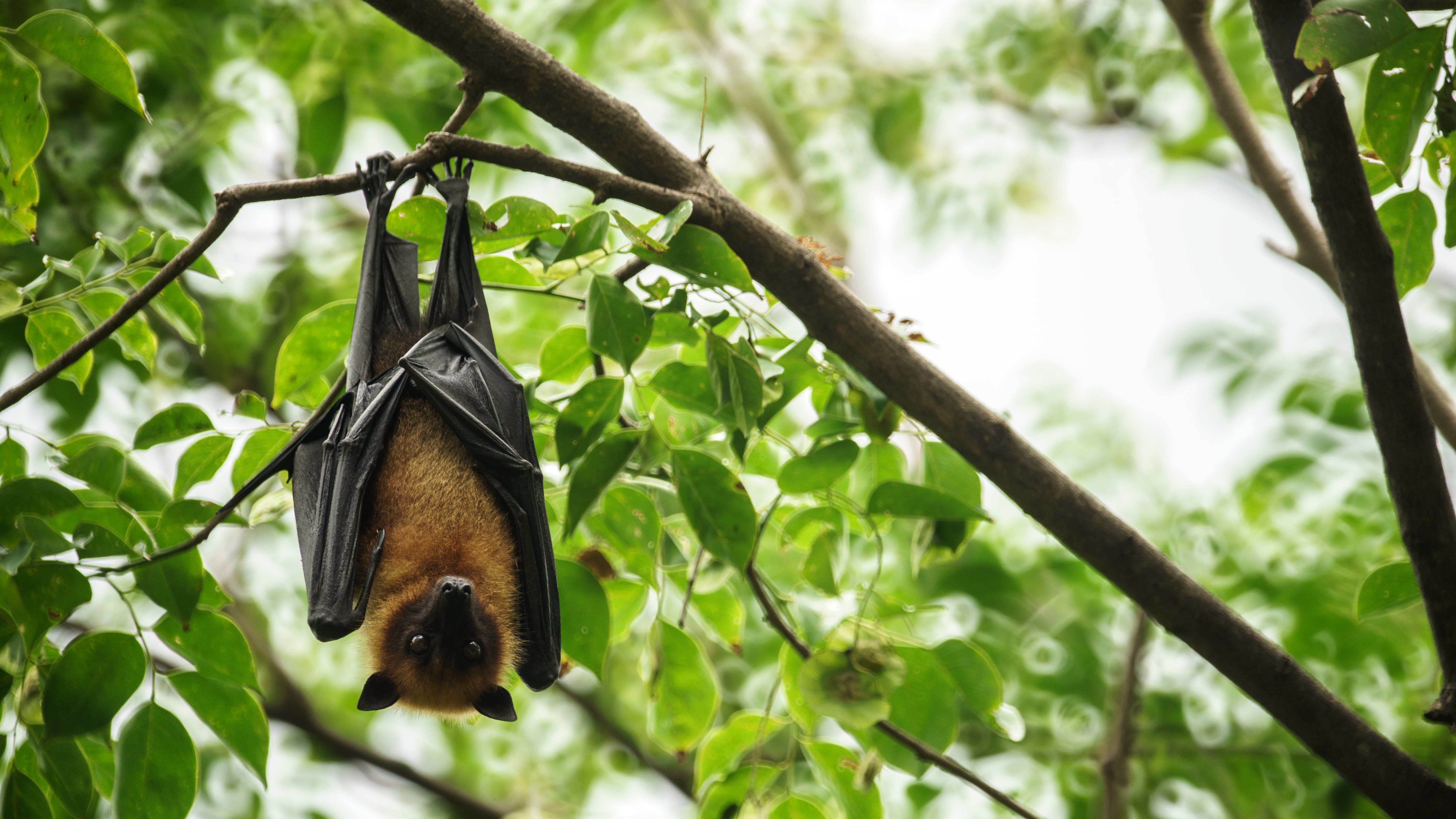
Bats are picky about their real estate options.
(Adobe Stock photo)

Bats are a farmer's best friend when eradicating crop-destroying bugs such as codling moth larvae -- but there's a catch. "Scientists have discovered significant effectiveness of bats for orchard pests. But the nighttime hunters are fickle about where they settle down," reports Sarah Derouin of Ambrook Research. To get bats to live and breed in an orchard area means creating spaces that are as bat-friendly as possible. "Agroforestry practices of incorporating trees into agricultural landscapes can go a long way for farm biodiversity and bat support. Treelines or patches of trees can provide bats with alternate places to forage while different cycles of pests emerge throughout the season."

Friday, April 26, 2024

Learning practices and knowledge from Native Americans can help support nature, farming and more

Native Americans have worked with nature to support themselves and the land for centuries. "These time-honored practices work with the natural world’s rhythms," reports Samuel Gilbert of The Washington Post. "Some might even hold the key to a more resilient future." Below are five of Gilbert's indigenous practices that can help humans tend to Mother Nature while caring for their communities.
Zuni waffle gardens look like an 'earthen waffle.'
(Photo by Curtis Quam via Civil Eats)
Zuni waffle gardens
are made with rows of sunken squares "surrounded by adobe walls that catch and hold water like pools of syrup in a massive earthen waffle," Gilbert writes. "The sustainable design protects crops from wind, reduces erosion and conserves water."

Controlled or "cultural burns" were used by Indigenous people "to improve soil quality, spur the growth of particular plants," Gilbert adds. "Prescribed burning has returned as state and federal agencies recognize the importance of fire in managing forests."

The use of acequias, which are ancient irrigation systems dating back to the 1600s. "The name can refer to both the gravity-fed ditches filled with water and the farmers who collectively manage water," Gilbert explains. "The earthen ditches mimic seasonal streams and expand riparian habitats for numerous native species."

Learn from dryland farmers. "The Hopi nation in Arizona receives an average of 10 inches of rain per year — a third of what crop scientists say is necessary to grow corn successfully," Gilbert adds. "Yet Hopi farmers have been cultivating corn and other traditional crops without irrigation for millennia, relying on traditional ecological knowledge rooted in life in the high desert."

Some seeds are 'arid-adapted.'
(Adobe Stock photo)

Find and cherish diverse, resilient seeds
. Gilbert writes, "Aaron Lowden, a seed keeper and traditional farmer from the Acoma Pueblo, a village west of Albuquerque, has successfully returned dozens of varieties of traditional arid-adapted seeds such as Acoma blue corn, Acoma pumpkin, Acoma melon and other crops to his pueblo."

To read Gilbert's additional suggestions, which include clam gardens and jaw-dropping indigenous architecture, click here.

Tuesday, March 19, 2024

Natural wonders: Mt. Rainer's glaciers; wacky animals decline; the little bat that could; repurposing waste wool

Mt. Rainer is an active volcano. (Photo by Tiffany Von Arnim
via the National Park Service, CC image)
At 14,410 feet, Mount Rainier is the highest volcanic peak in the contiguous United States. It boasts the largest alpine glacial system outside of Alaska and contains the world's largest volcanic glacier cave system. It is the Mount's unearthly "frozen labyrinth tucked within the majestic volcano's east crater" that scientists are now daring to explore, reports Rebecca Dzombak of National Geographic. "The glaciers atop Mount Rainer, which towers to the southeast of Seattle, Washington, contains clues about the volcano, the inner workings of glaciers, and even icy worlds far from Earth."

In 2002, America's wacky animals -- think the great American llama, ostriches and emus -- flourished in the lower 48 states, Alaska and even Hawaii. Today that is no longer the case. All our "looney" animal populations have collapsed while other farm animals continue to thrive, reports Andrew Van Dam of The Washington Post. "From 2002 to 2022, we lost 83 percent of our ostriches, 79 percent of our llamas, 74 percent of our emus and 63 percent of our elk. Over that period, cattle were down just 8 percent, poultry was up 16 percent, and hogs were up 22 percent." The farms in Alaska and Hawaii no longer exist.

Little brown bat weigh less than 10 grams.
(Photo by Michael Code, Ambrook Research)
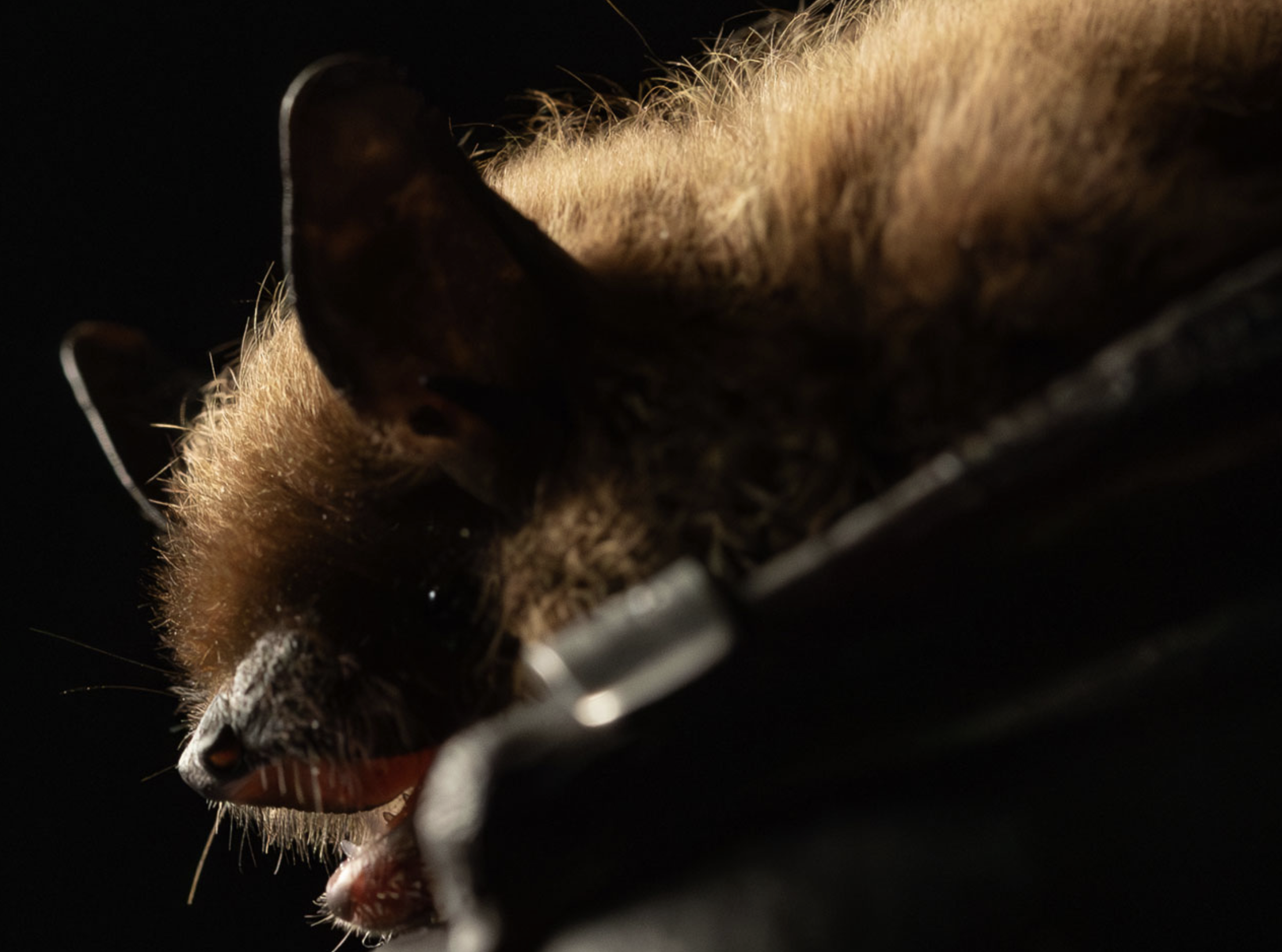
Cute as a button and confounding to scientists, Alaska's little brown bats have escaped white-nose syndrome. Can their "niche" in nature save them? "Meet Myotis lucifugus, commonly referred to as the little brown bat," reports Trina Moyles for Hakai magazine. Or, as chiropterologist (bat researcher) Jesika Reimer fondly calls it, 'the flying brown bear.'. . . Scientists know little about where [these bats] live at this far northern margin of the species' range."

Across North America, stands of trees of all different species are struggling to survive climate change. In response, scientists from the Cutfoot Experimental Forest are introducing some southern tree species to more northern regions, reports John H. Tibbetts of Knowable Magazine for Inverse. The survival of a grove of bitternut hickory trees, common to Illinois but transplanted to north-central Minnesota, is an example. "Normally, if a southern-adapted seedling is planted in an unsuitably cold climate like this one, it can risk frost damage, and its survival is threatened. . . . Today [scientists]can see the success of almost all the southern trees they planted."
Not all wool is usable for textiles, but it can make
'sweaters for the soil.' (Photo by Sam Carter, Unsplash)
Sheep farmers have developed a new way to repurpose coarser wool or "waste wool" that would have been thrown away by using a wool pelleting machine, reports Elise Konig for Ambrook Research. "A pelleting machine transforms the fleece’s long strands into cylinders that can more easily be handled. The pellets are then sold as soil amendments, providing water retention, nutrient recycling, and soil aeration."

Are you ready to clean, prune, test your soil, pick the plants and snuggle them in some soil? March is get-ready to garden month, and there's lots to do. "If you’ve been itching to get out and get gardening, we’re on the cusp of the season. This is the time to get organized and get ready because by the time we talk again in April, we will be in it, writes Amanda Blum for Lifehacker. From tidying the garden to splitting bulbs to fertilizing shrubs, Blum has a list of all the jobs to do before planting begins.

Tuesday, January 23, 2024

Flora and Fauna: A working mouse; this hasn't happened since 1803; 'Wicked' the amazing dog

Welsh Tidy Mouse is reporting for the night shift.
(Photo by Rodney Holbrook, Animal News Agency via WP)
A clean shed is a happy shed. At least Welsh Tidy Mouse thinks so. He has been organizing everything from nails to cable ties in 75-year-old Rodney Holbrook's outdoor shed, reports Jennifer Hassan of The Washington Post. "Most of the time, the rodent works alone, though sometimes it has accomplices, Holbrook said. In one clip, he spotted two other mice joining the nightly cleanup."

How can animals survive in an ever-warming world? Adaptation is one way, but can they do it fast enough? "Maybe," writes Brian Owens for Hakai magazine. "Research conducted over the past couple of decades has shown that evolution can occur on timescales similar to those of climate change. . . .There are things animals can do to stack their decks — and people can help."
Cicadas' vibrating noise can reach 100
 decibels. (Photo by B. Nino, Unsplash)

What genus of this insect is exclusive to North America, spends 99.5% of its life underground and becomes one of nature's loudest bugs once it emerges above ground? Magicicada -- also known as periodical cicadas. This spring, much of the eastern United States will experience a cicada extravaganza as "two cicada broods erupt in states from Virginia to Illinois come late April through June," reports Clare Marie Schneider of NPR. "Periodical cicadas have the longest known insect life cycle. . . . The last time the two broods — Brood XIX and Brood XIII — emerged simultaneously was in 1803."

With family grocery bills often topping off at more than $1,000 a month, this spring is a great time to consider growing a garden. "Because we humans developed into thriving species (well... somewhat thriving) when we learned how to grow our own food," writes Nicole Burke of Grow Yourself Podcast. "I'm about to convince you that growing some of your own food is not that hard to do." Don't have the energy or room to plant? Many plants can "breathe" life into indoor living spaces, Janece Maze and Christopher Michel of Country Living report. "The best part of houseplants? The weather's always fine."

Cartoon by Marina Wang, Hakai

How do penguins tell each other apart when they all have the same outfit on? By their spots! "African penguins develop a distinct constellation of spots on their chests, which remain the same throughout their lives," reports Marina Wang for Hakai magazine. "Zookeepers often use these spots to identify individuals. . . To find out if the birds do the same, Luigi Baciadonna, a psychologist at the University of Turin in Italy, and his colleagues designed an experimental series."

Once common in the West, the whitebark pine tree is struggling to survive. "Warmer temperatures, a fungal disease called white pine blister rust, and swarms of mountain pine beetles have killed hundreds of millions of whitebark pines across the West," reports Jim Robbins of Yale Environment360. "Wildfires are taking an increasing toll, and other conifer species are moving upslope in the rapidly changing environment, outcompeting the whitebark for nutrients and moisture."

Wicked is calm, cool and commanding.
(Photo by Stephaniellen Photography, AKC)
Wicked isn't just the name of a blockbuster musical. It's also is the name of a rock-star-quality dog. "Meet Wicked, a three-year-old Doberman Pinscher who clinched the win for the American Kennel Club's 2023 Working Group competition last month," reports Liz Langley of National Geographic. "Exactly the opposite of what her name might suggest, Wicked has a calm but commanding presence. Even when she won Best of Breed earlier in the day, which put her in the Working Group competition, Wicked seemed to be a crowd favorite — every ounce of her compact, muscular body brimmed with energy."


Thursday, September 21, 2023

Emulating nature, gardeners enjoy blooms throughout winter months; it's not that hard to do

N. romieuxii, a miniature Narcissus, is an early favorite.
(Page Dickey courtesy photo via The New York Times)
As fall turns to winter, many people will long for fresh air, warm breezes and the blooming flowers of spring long before Old Man Winter releases his grasp. One solution to winter's fog is learning to force some bulbs to bloom out of season, reports Margaret Roach of The New York Times.

Page Dickey, a garden writer and designer alongside Francis Bosco Schell, a retired book editor and lifelong gardener, provides Roach with their ways of enjoying blooms. First, some bulbs are more easily convinced to bloom out of season than others. Dickey perused bulb catalogs "carefully noting any varieties whose descriptions hint at their adaptability to forcing — or being coaxed into extra-early bloom."

Bulbs also need a chill period before planting and in cooler regions that is more easily created. The cooler temperatures "trick" bulbs into thinking it's winter. White Flower Farm's website advises, "Pot the bulbs in any well-draining potting mix, water them, and set them aside in a cool dark spot for the required minimum time." Roach reports, "The goal is to put the pots in a protected place where they won't freeze, but will stay very cold — above 32 degrees, but below 50. Somewhere from 40 to 45 degrees is probably ideal."

"Dickey has learned some of what she knows by researching, but most of it by trial and error, she said, and she finds that most varieties want about 12 to 14 weeks' chill," Roach reports. "The earliest in-ground bloomers will need fewer weeks of cold when forced, before they are ready to start flowering — meaning, a crocus blooms faster than a daffodil. And because the bulbs would normally be underground, where no light reaches them, we chill our pots in darkness."

Cold frames are key to coaxing early blooms.
(Page Dickey courtesy photo via The New York Times)
The best ally for off-seasonal blooms is the "cold frame. . . . Generally, a prefabricated model will be about 18 inches tall on the highest side, its lid slanting downward to a foot or lower," Roach adds. They can be built relatively easily. "Whatever the dimensions of your cold frame, there's one caveat: Never leave the lid all the way open when pots are inside, or a storm could soak them. Also, position the frames where they can get good sun. Ideally, the low end should face south or west." Dickey goes through a process of "emulating" Mother Nature's dormant period for bulbs within the cold frames.

Once October comes, the bulbs are planted, and throughout winter, Dickey pulls pots out to warm them and beckons their blooms to come forth. Although it's a step-by-step process, none of it is hard. "Crocus and Iris reticulata will be the first pots she pulls out, in late January or so, transitioning them gradually to increasingly warmer spots indoors," Roach writes. "A few weeks later, they’ll be the first to bloom. Eventually, the latest-blooming forced pots will overlap with the start of the main bulb displays out in the garden."

Tuesday, September 12, 2023

Quick hits: Burning Man's footprint; affluence and affordability; adaptive gardening; books to read on child-welfare system

Photo via The Daily Yonder
"As a retired child-welfare professional, I no longer spend my days working with abused and neglected children, but they are never far from my mind. Certainly not after the three excellent books that I've read recently," recounts Charlie Baker for The Daily Yonder. "The Pulitzer Prize-winning Demon Copperhead is a novel set in southwest Virginia. Lucky Turtle is a love story that begins in a wilderness reform camp in Montana. And Invisible Child, also a Pulitzer winner, is a nonfiction account of 'poverty, survival, and hope in an American city.'"

The Burning Man ends up burning the equivalent of a lot of fossil fuels. What began as a movement for climate change might leave much more "than a trace" behind, reports Zoya Teirstein of Grist. "The festival generates around 100,000 tons of carbon dioxide every year, the equivalent of burning over 100 million pounds of coal."
Matt Scheer bought a house 11 years ago when the price was
more affordable. (Photo by Joanna Kulesza, The Post)

Places that are attractive to live are also getting to be pricey. "The outdoorsy lifestyle of Colorado mountain towns has become a magnet for the new remote-worker class, upending life for those already rooted there," reports Talmon Joseph Smith of The Washington Post. "Job growth has severely outpaced the stock of shelter throughout Colorado. Median rent in Frisco—which a decade ago was considered a modest 'bedroom community' for commuting employees—is about $4,000 a month, according to Zillow, and 90 percent above the national median."

If you call 911, your first point of contact is a dispatcher who will stay with you through your call, answer your questions, and help keep you calm. But what about those dispatchers? How many calls have they taken? Have they been up all night? "Through long days and mentally taxing calls, dispatchers work to maintain a helpful demeanor that keeps citizens calm and engaged on the line as they work with complex tracking and dispatching technology," report Mike Brewer and Steve Cover of Route 50. "Recognizing the toll the position can take on mental and physical health, Jeffcom911 in Jefferson County, Colorado, has invested in technology to ease workloads on emergency dispatchers by reducing the number of non-emergency calls they receive."

America is struggling with a divisive culture. In his essay for The Atlantic, George Packer writes that the country has split not two ways but four. "People in the United States no longer agree on the nation's purpose, values, history, or meaning. Is reconciliation possible?"

Illustration by Sonaksh, The Washington Post

Gardening can bring joy, fresh food and healing. "For Rosemary McDonnell-Horita, a 29-year-old with multiple disabilities, gardening gave her an opportunity to be a caregiver rather than a care receiver. Taking care of plants shifted the way she thought about her own body," reports Amanda Morris for The Washington Post. McDonnell-Horita told her: "Over the years, gardening has made me feel more confident in every aspect of my life. I'm planting what I want to grow, and there's a lot of power in that."


Thursday, September 07, 2023

Is learning to garden a way to prevent food insecurity?

A youngster in Letcher County, Ky. enjoys the family garden.
(Photo by Silas Walker, Lexington Herald-Leader)
Many rural Kentuckians struggle with food insecurity, but teaching residents how to garden might be one answer to the problem, reports Rick Childress of the Lexington Herald-Leader. "Rising food prices and a sudden cut off of Covid-related federal benefits have made it harder for many in Eastern Kentucky and other rural areas of the state to access healthy, nutritious foods. While local pantries work to bridge the access gap by providing food, other nonprofits and researchers are trying to provide more ways for folks to grow or buy more of their own produce locally."

Gardening as a way of life predates the "region's decades of coal booms," Childress writes. "Jason Brashear, interim director of the Pine Mountain Settlement School said, 'Before coal, many people in the mountains survived and thrived on subsistence farming.'" Brashear told Childress: "If we go back in our history 75 years ago, everybody gardened. Everybody had some sort of a farmstead that they produced the majority of the food that they ate in the year." As coal jobs, money and local grocery stores entered the region, the popularity and knowledge of gardening dwindled.

Childress reports, "One program that has helped many 'return back to gardening' is Grow Appalachia, Brashear said. For over 13 years, the Berea College strategic initiative has partnered with nonprofits in multiple states to provide seeds and other gardening supplies needed to make an organic garden, as well as the education on how to grow and preserve that produce." Candace Mullins, the executive director of Grow Appalachia, told Childress: "Having the resources is a huge barrier to learning how to garden. It's expensive to buy hose, seeds, fertilizer, plants — I mean, you could easily spend $1,000 trying to get a garden going for a new gardener." Childress adds, "Since Grow Appalachia started, over 7,000 families have participated and harvested nearly 7 million pounds of produce, Mullins said."

"The Pine Mountain Settlement School has been a Grow Appalachia partner since 2010 and so far this growing season, they have 45 families involved in the program who have produced over 14,000 pounds of produce. Along with receiving supplies, they also participate in educational meetings at the school. Being able to access fresh food is perhaps just as big of an obstacle as affording it," Childress reports. 

Once food is grown and harvested, it has to be prepared, which takes learning. "A University of Kentucky research project, called Laurel HARVEST, aims to educate Laurel County residents on how to cook nutritious meals," Childress writes. "Kathryn Cardarelli, a UK faculty member in the College of Public Health leading the project, said the multi-year study offers a blend of in-person and Zoom sessions on topics like preparing food, eating healthy on a budget, and reading labels."

Friday, July 28, 2023

Flora and fauna: Ladybugs; mushrooms and fires; wolves and ranchers; tomatoes; animal senses; Vermont loons

Painting by Ed Steed, The New Yorker

Aphid eaters and adorable, ladybugs, or Coccinellidae, are like little summertime friends. A "swarm of ladybugs is collectively called a loveliness," Françoise Mouly writes for The New Yorker. Mouly interviewed artist Ed Steed, who decked out the magazine's June ladybug cover, about "the joy of painting, an affection for the little things, and the luck of the ladybugs." Mouly asked him if each ladybug had its own personality. He told her: "That's the good thing about painting by hand. No matter how hard you try to make things look the same, each comes out unique. So each one ends up having its own character. Just like in real life, no two of anything can be the same."

Mushrooms could be an answer to megafire prevention. "Slash piles are an increasingly common sight in the American West, as land managers work to thin out unnaturally dense sections of forests. . . [The piles] have inadvertently increased the risk of devastating megafires," reports Stephen Robert Miller of The Washington Post. Hauling the slash piles out of the woods has been one solution. Letting mushrooms do the job is another. "Like a flame, saprophytic fungi break organic material into carbon compounds. Mycelium, the often unseen, root-like structure of the fungi, secretes digestive enzymes that release nutrients from the substrate it consumes. . . Whereas a flame destroys nearly all organic nitrogen, mycelium can fortify nitrogen where it's needed in the forest floor."

Gray wolves in California, where they are a recovering
endangered species. (Shutterstock photo)

In areas where ranchers and gray wolves must coexist, some states compensate ranchers for predator damages, reports Shea Swensen of Ambrook Research. "To aid the ranchers who deal with the impacts of wolf presence, states like New Mexico, Oregon, and California started programs that pay them back for the financial burdens of losing their animals. The programs offer reimbursement for direct livestock loss due to wolves or non-lethal on-ranch tools — like fences, guard dogs, or even extra staff."

Pink Pounder hybrid tomatoes
(Garden Plants online photo)
With names like Beefsteak, Big Beef, Bucking Bronco or Pink Pounder Hybrid, summer tomatoes are fun, but more importantly, they are delectable. Try out these meaty varieties. Rejoice in learning how to make all the best tomato recipes. Find out about the infamous Southern tomato sandwich. Enjoy!

Sometimes it can be hard for humans to grapple with the tremendous gifts other animals have. They don't go to school, YouTube it or read how-to manuals. "Pit vipers have infrared vision, bees can view ultraviolet light, and electric eels use their zaps to 'see' through the murky waters of the Amazon," reports Jason Bittel of Popular Science. He adds five animals that can sense things humans can't. They are just born that way.

A parenting loon gives the chicks a ride. Male and
female loons co-parent. (Shutterstock photo)


Vermont's oldest loon, known as "Neward Pond Male," died at age 31. For the past 45 years, The Loon Conservation Project "has helped bring the common loon back to lakes across the state and made huge strides in research, education and advocacy, reports Hannah Cho of the Valley News of West Lebanon, N.H., and White River Junction, Vt. "When Newark Pond Male was banded, the loon was still on Vermont's endangered species list (it wouldn't come off until 2005), but the population had already begun to rise."

Wednesday, June 21, 2023

Fur/feather/fin quick hits: Red knots gain from crab-harvest ban; overfishing hurts sharks; rabbits eat gardens and trees

Red knots are shorebirds that like to eat crabs and shrimp.
(Joe Austin Photography, Alamy, via The New York Times)

"Red knots are plump, neatly proportioned sandpipers that in summer sport brilliant terracotta-orange underparts and intricate gold, buff, rufous, and black upperparts," Cornell  University's bird lab says. The species took a population nosedive, but seems to be recovering, reports Jon Hurdle of The New York Times: "The count, by land and boat, tallied about 22,000 of the robin-sized birds, an encouraging sign for a shorebird that is listed as federally threatened . . . a sharp increase from a record low of 6,880 in 2021. . . . Crab harvesting bans were partly credited for the rise."

A tiger shark is a type of reef shark.
(Photo by Gerald Schömbs, Unsplashed)
"Sharks have been around for hundreds of millions of years, appearing in the fossil record before trees even existed," reports Josh Davis for The Natural History Museum in London. They even survived five mass extinctions, but may not survive the Anthropocene Epoch. Dino Grandoni of The Washington Post reports, "A massive new survey of nearly 400 coral reefs around the world reveals sharks once common in those waters are vanishing, a troubling sign that the fearsome fish are at a much greater risk of going extinct than previously thought. . . . The ocean, simply put, isn't as healthy without sharks. . . . The culprit behind the declines, the researchers say, is rampant overfishing."

Seaweed may be a climate-saving game-changer, reports Bridget Huber of National Geographic. "A bold experiment to use seaweed as part of a solution to climate change is underway in Iceland, where millions of small buoys made of wood and limestone, some bearing seaweed, will be dropped into the ocean in the coming months. . . . [A system will] sink the buoys, festooned with long locks of seaweed, to the deep ocean floor, where the carbon they contain will remain sequestered for 800 years or more."

Photo by John Tlumacki, The Boston Globe
Gardeners and tree lovers, beware of bunnies. In Boston, they are nibbling down flowers and mowing through veggie rows, reports Alex Koller for The Boston Globe: Massachusetts bunnies "have an appetite for the entire menu: from beans and lettuce to kale and cabbage. Even onions." Mary Lahr Schier, a Minnesota gardener, noted their area's bunnies spent the winter munching on trees and bushes, and now some people wonder if their "tree can be saved?" She gives some helpful "rabbit prevention" advice for all.
 
Container gardens grow neatly on trellises.
(Photo by Vaivirga via Lancaster Farming)
Sometimes there isn't space or the time for a full garden. Container gardening can help. "As long as you have a big enough container and a sunny spot, it's possible to grow almost any vegetable," writes Therese Ciesinski of Lancaster Farming. "Between the hundreds of regular-sized varieties and the growing number of dwarf offerings, you'll have more choices than you have pots." It might be mid-June, but considering starter plants are often available, there's still time to plant in many regions of the U.S. And thne there are fall crops!

Don't have time for a garden this year? Try this site to plan next year's garden.

Another wonderful fresh food option is visiting a local farmers' market.