Showing posts with label Midwest. Show all posts

Tuesday, April 28, 2026

Rural communities battle over massive solar installations on privately owned farmland

Massive solar installations have some rural communities
in an uproar. (Photo by Andres Siimon, Unsplash)
Some farmers believe leasing crop land for solar panel installations is a way to secure a steady income in a profession marked by unpredictability. But other farmers, landowners and community members see long stretches of solar panels on rich farmland as a wasteful tragedy worth fighting over.

In Richland, Michigan, more than 2,200 acres of farmland were leased to Consumers Energy by Liberty Farms without a word of input from the community, writes Chris Bennett of Farm Journal. But once neighbors were informed, an uproar ensued, and many community members are actively working to prevent the project from moving forward.

Kate Smit's farm sits adjacent to the land Liberty Farms leased to Consumers for its 461,000-solar-panel installation. She told Bennett, "We want to stall the Consumers’ solar project until we can get a bill passed in our state senate, so that townships and counties have to vote if a solar panel company wants in." 

Smit told Farm Journal that she believes that massive solar leases like the one she's fighting in Kalamazoo County are happening all over Michigan and the Midwest.

Bill Peter, who lives two miles from Smit, doesn't consider solar installations to be earth-friendly. He told Bennett, "There’s nothing green about this green energy. I’m not sitting quietly while 450,000 solar panels permanently replace the best farm soil around.”

For many residents in rural communities, resistance to industrial solar installations persists, despite their strong beliefs in private property rights. Ed Yelton, a cattle producer in Dearborn County, Indiana, said solar and AI data center projects belong in a separate category.

Consumers' proposed installation in Richland isn't a done deal yet. Bennett explains, "The Richland Township planning commission has not yet approved Consumer Energy’s application."

Tuesday, October 08, 2024

Flora & Fauna: Flightless eagle mystery solved; beware of black-legged ticks; secret lives of plants; Pesto the Penguin

Bald eagle that was captured and believed to be ill. (Photo by
Wilson's Creek National Battlefield via The Guardian)
People thought this raptor was wounded because he couldn't fly. As luck would have it, this bird was not ill, but he had gobbled up his Thanksgiving dinner early. "Wildlife officials in Missouri rescued what they thought was an injured and flightless bald eagle, only to discover it had gorged itself on a roadkill raccoon and was 'too fat to fly,'" reports Richard Luscombe of The Guardian. "The eagle was released, completely healthy and full of energy, after a short period of 'rehabilitation' at the zoo’s wildlife hospital."
 
Among stretches of corn and beans in Midwestern Iowa, swaths of pollinator-loving plants and flowers grow. These "prairie strips" were sown by farmers and "they are part of a growing movement to reduce the environmental harms of farming and help draw down greenhouse gas emissions," reports Cara Buckley of The New York Times. "While giving fauna a much-needed boost and helping to restore the land. . . .The aim is to reduce nutrient runoff from cropland, and help birds and bees."

Black-legged ticks are small, wingless, bloodsucking arthropods that spread diseases, such as lyme and babesiosis, by latching onto wildlife or human hosts. "Lyme is the most commonly reported illness spread by ticks," reports Kevin Loria of The Washington Post. "But it is far from the only one: The black-legged ticks that carry Lyme can spread at least six different illnesses. Babesiosis is a parasitic illness, spread by Babesia microti parasites, which can live inside black-legged ticks. . . . It can be serious, especially for people who are immunocompromised."
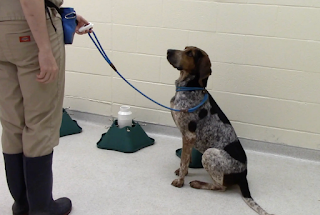
Runnels the hound dog, reporting for duty.
(Texas A&M photo via Ambrook Research)
Livestock can die from bovine respiratory disease, which is notoriously difficult to detect. To help farmers avoid the pain and expense of losing cattle, scientists are exploring how canines can help identify BRD. "At Texas A&M University, a cross-discipline pilot study set out to discover whether working dogs, with their superior olfactory senses, could be used as early BRD detectors," reports Jesse Hirsch of Ambrook Research. "After many trials. . . researchers got up to 82% accuracy with one dog, and 65% with the other. But. . . the dogs didn’t fare nearly as well when given only two chances to distinguish between a BRD-infected swab and a clean one." 

Kate McCulloh
Flora have secret lives of their own. Although they can't ambulate, they find ways to move, morph and adapt to everything humans and Mother Nature "hurl their way," writes Kate McCulloh, an associate professor of botany at the University of Wisconsin. "Their complex physiology responds to each of these threats in often quite subtle ways. The solutions that plants employ differ among species, varying with the climate in which those species evolved."

Colorado mountain lions should be protected from hunts, writes Dan Ashe, a former director of the U.S. Fish and Wildlife Service, in his opinion for Writers on the Range. "Emerging science tells us that these apex predators aren’t the enemy, they’re allies. They are likely providing an important ecosystem service in checking the spread of chronic wasting disease, CWD, an existential threat to healthy deer and elk populations, by targeting animals weakened by the disease." Mountain lions should be left alone to "do their job as predators."
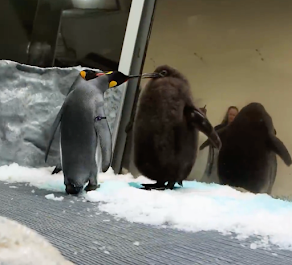
Pesto and his "short" parents. (Sea Life
Melbourne Aquarium photo via CNN News)

Taller and decidedly fluffier than his parents, "Pesto" the baby king penguin is adorable and famous. "Photos of Pesto – who is 90 centimeters tall (about three feet) – towering over his parents have gone viral online. He has also provided opportunities for people to learn more about penguins," reports Lilit Marcus of CNN News. "Although most people recognize the adult black-and-white birds, king penguins are born covered in brown feathers. Once they learn how to swim, they will begin shedding those feathers – a process known as fledging. . . . Pesto’s biological father, Blake, is one of the aquarium’s oldest and largest penguins. But he’s being raised by Tango and Hudson, younger penguins whom Sea Life keepers wanted to try out as parents."

Thursday, August 22, 2024

Rural Minnesota town will be 'guinea pig' for long-duration solar batteries. It's a big change for this community.

Upon completion, Sherco will be the biggest solar farm
in the Upper Midwest. (Photo by APPA, Unsplash)
Becker, Minnesota, is covered with viny potato fields and endless rows of corn that go as far as the eye can see. But in this small community of 5,000 residents, solar panels by the thousands are about to be added, replacing three of the town's coal mines in a test of long-duration batteries, reports Ivan Penn of The New York Times. "Becker is also one of two sites where Xcel Energy is installing demonstration battery systems from Form Energy, a Massachusetts company. The systems — using readily available materials like water, air and iron — can store solar and wind-generated energy as a backup, with a capacity to power 2,000 homes for up to five days."

The Sherburne County Generating Station, known as Sherco, is a massive example of what Minnesotans are doing to meet the state's goal of "100 percent carbon-free electricity by 2040," Penn writes. "And it tests how the energy transition could unfold on a nationwide scale for jobs at decades-old fossil fuel facilities, local tax revenues and agricultural businesses. . . . Sherco will stand as the largest solar farm in the Upper Midwest — replacing three coal units in Becker with three solar sites on the town’s outskirts along the Mississippi River."

Becker is in Sherburne County, Minn.
(Wikipedia map)
The closing of the coal plants has been met with distrust and some past-employee grumblings. "Among skeptics of the energy transition, suspicion about solar runs as deep as the town’s cornfields are long. . . . Xcel [has] promises no layoffs," Penn reports. "'We are the guinea pig for the whole group,' said Tracy Bertram, the mayor of Becker, acknowledging the anxiety some have felt about the loss of an economic anchor. 'People don’t like change. It’s the unknown.'"

Despite the positives that Xcel's development offers, some Becker residents are sad to see coal go. Rob Miller, a journeyman who has worked at the Sherco [coal] plant for 20 years, told Penn, “There’s a lot of pride, blood, sweat that has gone in here. It’s sad to see it coming to an end.”

Tuesday, August 20, 2024

Disagreement, diversity and a look that 'reflects the face of America better' give the Midwest political power


Candidates from the Midwest 'often bring a kind of approachable, average-American feel to a national ticket.' (Wikipedia and Election press photo)

What makes the nation's upper Midwest different is what makes it an election-year game-changer. "While many other parts of the country have sorted into neat red and blue columns, the big upper Midwestern states continue to sit on the dividing line between the two parties," reports Gerald F. Seib of The Wall Street Journal. "The upper Midwest reflects the face of America better than any other region of the country. . . . And it is populous enough to be decisive in the Electoral College, making it political ground zero."

Midwestern balance and diversity have made some of its regions political "power brokers," Seib explains. "In the latest Wall Street Journal poll, the Midwest overall was the most evenly balanced region of the country, with the two parties essentially tied there in both the presidential race and preferences for control of Congress. . . .The region is much more complicated, demographically and economically than is often assumed."

Politicians who've found success in Midwestern elections have always had to walk a keen tightrope between urban and rural needs while facing a gamut of diversity among other constituents. "At a time when the political split between urban and rural areas has become one of the starkest in the nation, [Midwestern] leaders have to be able to bridge that difficult divide," Seib reports. Candidates who "have successfully navigated the complexity of a big Midwestern state are well prepared to do the same nationally."

On the campaign trail, a Midwestern running mate can make a presidential pairing feel more down-to-earth for voters. Seib writes, "Candidates from the Midwest often bring a kind of approachable, average-American feel to a national ticket. . . . 'They look like and sound like a lot of America,' says Democratic pollster John Anzalone. In this year’s race, that means Vance and Walz nicely offset Trump the New Yorker and Harris of San Francisco."

Tuesday, August 13, 2024

Opinion: Walz is a hunter, a former soldier, and a 'rural for real' man on the Democratic ticket

Art Cullen
This opinion piece by Art Cullen, editor of the Storm Lake Times Pilot in Iowa, has been gently edited for Rural Blog brevity.


"Kamala Harris and the Democrats do well to have Minnesota Gov. Tim Walz on their national ticket as the vice-presidential nominee. He’s rural, for real. Walz has broad appeal in Upper Midwest battleground states, is well-versed in the you-betcha vernacular, and is well-suited in Carhartt with a camo cap. . . . Somehow Walz figured out a way to win a congressional seat in a red district around Mankato and ultimately the governorship.

"Republicans will have a hard time defining the former master sergeant in the Army National Guard as an out-of-control elite liberal. He is an expert marksman, claims he is a better pheasant shooter than his counterpart JD Vance, and suggests that vegetarians should eat turkey since it is not really meat. He hails from West Point, Neb., from whence you can almost see South Dakota, and once got popped for drunk driving as a young school teacher and coach. [He] gave up on drinking under his wife’s advice.

"Walz subscribes to the standard Democratic orthodoxy — pro-choice, supports gay rights, believes in feeding children at school, champions a living wage and backs labor unions. . . Walz favors some gun controls, as Ronald Reagan did. . . . [He's] pretty much your White Midwestern dad dude who coached Mankato West to a state football title.

"As a congressman, Walz was a staunch advocate for ethanol and biodiesel, which creates immense water quality problems in southern Minnesota and Iowa. As governor, he made way for pipelines supported by union pipefitting brethren. As vice president, he could focus attention on rural areas left behind by the bicoastal economic expansion. He could make a difference in trying to reorient agriculture toward a more diverse production system that is resilient against economic and climatic extremes.

"Rural America is more than resentful people in red caps. It’s the complicated challenge of feeding the hungry while not despoiling the richest land in the world. It’s people with ambition and ideas held down for generations by corporate power with little regard for community. Walz gets it. That could be a powerful antidote to the decline of political choice . . .

"Rural communities struggling to survive need an alternative, something other than simply more tax cuts and lousy roads and rivers choking in toxins. . . . The Harris campaign will task Walz with campaigning in Wisconsin, Michigan and western Pennsylvania. . . . Simply having a candidate on the national ticket who actually baled hay under the Nebraska sun should buck us up."

Tuesday, June 25, 2024

Flora & Fauna: Canine pals help veterans with PTSD; finding rice paddies in Appalachia; welcoming bats; go fish!

Psychiatric service dogs can help veterans cope with
PTSD. (Adobe Stock photo)
U.S. veterans or military workers who have post-traumatic stress disorder (PTSD) can feel and function better with the help of a psychiatric service dog, according to a study published in JAMA Network Open. Veterans with a canine pal "endured less severe symptoms and experienced significantly less depression and anxiety." This is the first NIH-funded study — and the largest ever — to focus on service dogs for military-related PTSD. It’s also the first study on this topic to use blind ratings, meaning that clinicians who assessed patients’ outcomes didn’t know whether they had a dog or not." Read the study and findings here.

Colorful, savory and full of history are a few ways to describe this heritage rice. "Black shell, red, purple, white and green. The Laotian rice that thrives in the North Carolina foothills is a treasure to Hmong farmers – and a revelation to others," writes Sheri Castle for The Bitter Southerner. "I never figured I’d be in a rice paddy at all, much less one in the Appalachian foothills of Western North Carolina. I was about an hour from where I’d grown up, but a world away. It was like finding a pearl in a potato."

When you go fishing, you can make memories and dinner. Having fun while snagging fish is what the group "Let's Go Fishing" aims to do through fishing boat tours for seniors, veterans, disabled adults and children. "We’re always looking for new communities to serve. If there’s a lake, we can help you put a pontoon on it and bring the joy of fishing to more people." Find out about starting a chapter.

Purple coneflowers are now common in
home gardens. (Adode Stock photo)
Once called weeds, native prairie plants are returning to their natural habitats through gardening education. "We find ourselves in the age of the pollinator plant, and the pollinator garden, and interest keeps growing. But it wasn’t always so," reports Margaret Roach of The New York Times. Expert gardener Neil Diboll remembers when purple coneflowers weren't welcome, but around 1989, sentiment changed. Diboll told Roach, “Purple coneflower was elevated from wildflower to quote-unquote perennial, and it was allowed inside the garden gate. . . . It paved the way for other native flowers and grasses to enter."

Hedge parsley is sometimes called
'Burn it.' (Nativetexaspark photo)
Gardening delight can go sour when it turns out those lovely white buds are invaders. "Torilis arvensis, known as hedge parsley has reedy stalks with tops that explode in tiny white flowers come springtime. It grows quickly and can be found in most regions of Texas, but it’s not native to the state or even the country," reports Amanda O’Donnell for Texas Monthly. "The plant has seeds that present as minuscule, stubborn burrs after a bloom, notorious for embedding themselves in clothes, animal fur, leg hair, and absolutely anything else that can aid in their proliferation." Hedge parsley isn't the only invader. "Many Texans have added bastard cabbage, or Rapistrum rugosum, to their list of vegetal enemies." To read how to remove or burn these interlopers, click here.

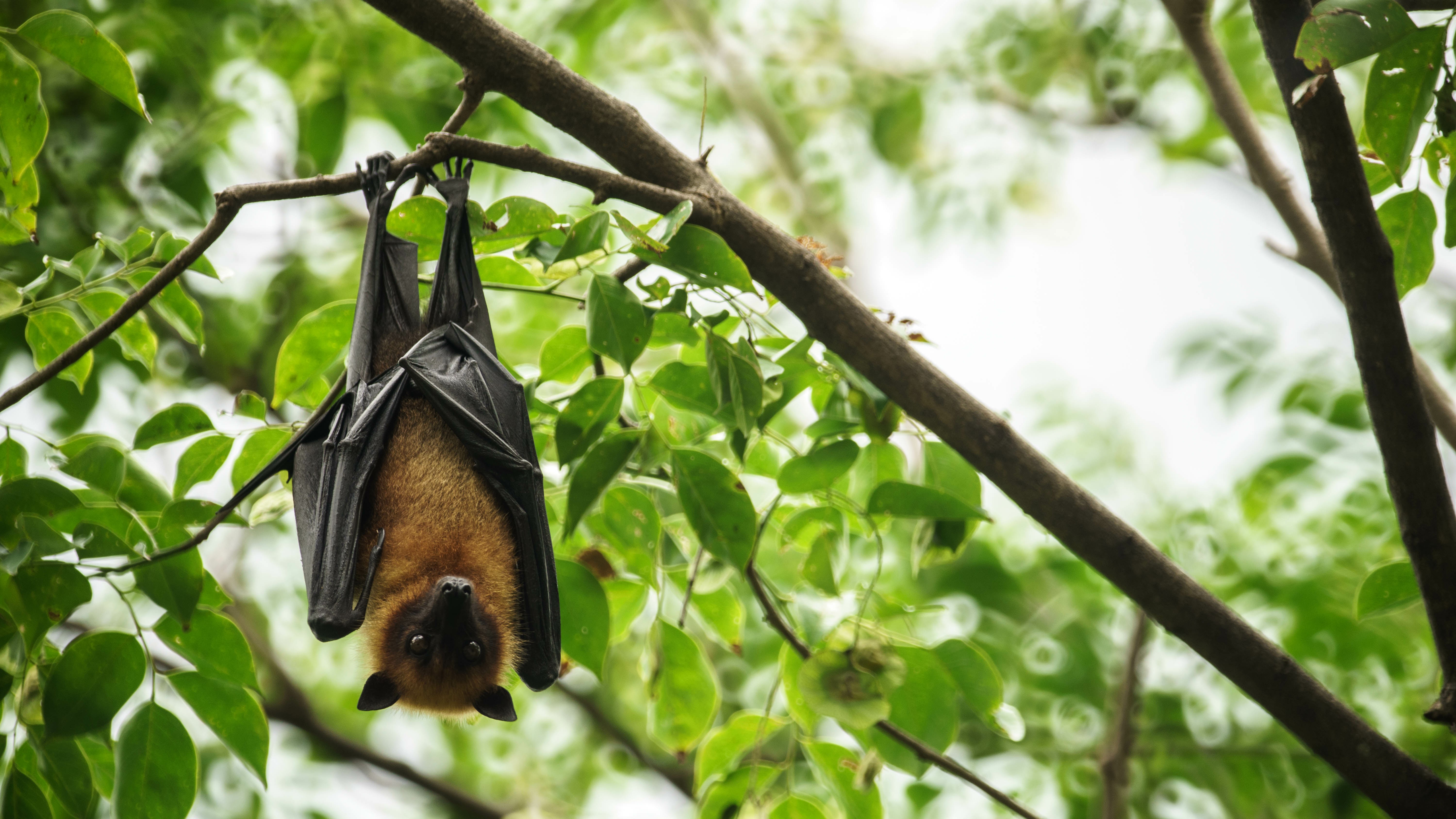
Bats are picky about their real estate options.
(Adobe Stock photo)

Bats are a farmer's best friend when eradicating crop-destroying bugs such as codling moth larvae -- but there's a catch. "Scientists have discovered significant effectiveness of bats for orchard pests. But the nighttime hunters are fickle about where they settle down," reports Sarah Derouin of Ambrook Research. To get bats to live and breed in an orchard area means creating spaces that are as bat-friendly as possible. "Agroforestry practices of incorporating trees into agricultural landscapes can go a long way for farm biodiversity and bat support. Treelines or patches of trees can provide bats with alternate places to forage while different cycles of pests emerge throughout the season."

Friday, April 05, 2024

Quick hits: Wayne County murals showcase 'Walldogs'; a Midwestern state of mind; the eclipse capital is in Illinois

Willie Nelson singing at the first Farm Aid concert in 1985.
(Wayne Walldogs photo via Successful Farming)
Murals in Wayne County, Iowa, stand as a testament to the region's dynamic and resilient history. "Wayne County, a part of the Mormon Trail, where Brigham Young led his followers from Illinois to Utah in 1846, is also known for its excellent hunting opportunities, large Amish community, and well-appointed historical museum," reports Lisa Prater Froust of Successful Farming. "Last year, these historical events and figures were vividly brought to life in 16 murals painted during the five-day Wayne County Walldogs Festival." Not sure what 'walldog' is? Click here.

The Midwestern United States 
(Wikipedia map, from Census Bureau data)
Think you're a Midwesterner? For most residents, the answer depends on geography, but some people have other ideas. "Everyone knows places such as Ohio and Minnesota are solidly in the Midwest. But a recent poll finds that the Midwest is more a state of mind than just a place you can point to on a map," report Ben Kesling and Jennifer Levitz of The Wall Street Journal. "People from Colorado (42%), Oklahoma (66%) and even Wyoming (54%) think they live in the Midwest. . . . Some locals are baffled: 'Who ARE you people?'"

Pluto was demoted to one of dozens of dwarf
planets. (NASA photo via Nat Geo)
In 1930, a farm boy turned astronomer from Streator, Illinois, Clyde William Tombaug, discovered Pluto, which was designated our solar system's ninth planet, but then in 2006, Pluto got demoted. "Mike Brown, CalTech professor of astronomy and author of How I Killed Pluto and Why it Had it Coming, crashed the party and took away Pluto's planetary classification," reports Eric Alt of National Geographic. "Ever since the worlds of science and pop culture have debated Pluto's fate. . . . the matter seems far from settled."

Some news sources say the U.S. economy is recovering from the dark days of the pandemic, with most measures reporting a healthy rebound despite inflation's hold on grocery and housing costs. That's one picture. Talk to a local pawnbroker, and you'll hear a different report. "Accumulating pawnshop inventory means fewer buyers than sellers – a sign that for the lowest-income Americans, times remain tough," reports Lauren Villagran of USA Today. "Some Americans – people with retirement plans, savings and stock holdings – may gripe about inflation and the economy, but they're doing all right. Others are surviving pawn to pawn."

Location of Mikanda in Jackson
County, Illinois. (Wikipedia map)
 
The U.S. eclipse capital is the unassuming southern Illinois town of Mikanda, Illinois, pop. 500. It has been "blessed by the cosmos for the second time in under 10 years," reports Hunter Bassler of KSDK in St. Louis, Missouri. "Mikanda is the exact intersection for both the 2017 and 2024 eclipses, an astronomical wonder that rarely ever happens in such a short time span, according to NASA. . . . Village officials are preparing for bigger crowds this year."

Rainbow over Cheesebox Butte. Cheesebox Canyon is a popular Bear Ears hiking trail.
(Photo by Stephen Trimble, Writers on the Range)

Without knowing the region's history, Bear Ears National Monument evokes thoughts of strength, softness, and beauty. Dive deeper into the story of this 1.36 million-acre site in southeast Utah, and a timeline of battles, historical power dynamics and unresolved conflict emerges. "The political tussle over this stunning expanse of red rock canyons exemplifies all the cultural dissonance in the rural West," writes Stephen Trimble in his opinion for Writers on the Range. "White residents never envisioned challenges to their political power. But in 2009, the feds came down hard on generations of casual pothunting by local white families. Then, after a century of oppressing their Indigenous neighbors, lawsuits strengthened Native voting rights."

Friday, December 08, 2023

Finally Friday quick hits: 'Secret Santa' history; few Covid shots this year; hunters and drones; Museum on Main Street

Illustration by James Yang, The Wall Street Journal
Secret Santa exchanges are a long-held tradition, but how did these sneaky exchanges get started, muses Ben Zimmer of The Wall Street Journal. "There's a secret history behind 'Secret Santa.'. . . The phrase 'secret Santa' didn't appear in U.S. newspapers until the early 20th century, and when it did, it could simply refer to an anonymous benefactor . . . . One early breeding ground was Nebraska."

Many midwesterners are choosing to skip this year's Covid-19 booster. "Nearly 60 percent of Americans living in the Midwest and surrounding states say they will not get the new Covid-19 vaccine this year, according to a survey from Emerson College Polling," reports Alejandra O'Connell-Domenech of The Hill. "Americans in Minnesota, Illinois, Colorado and Iowa aligned with national attitudes toward the new shot — with about half of the residents in each state saying they would probably forgo the new vaccine."

It has been just over a year since more than 40,000 customers lost power in Moore County, N.C. At first, the blackout's cause was unknown, but as Duke Energy officials "surveyed the damage to the infrastructure at their local substation, it became evident that an expert shooter had intentionally cut power to the area," reports Danielle Battagliaand of The Herald Sun. U.S. Rep. Richard Hudson, a Republican representing Moore and nearby counties, "has toured a substation, held congressional meetings and proposed legislation in an attempt to prevent another community from being crippled by an attack." Hudson discussed future attack prevention planning and what he feels the federal government still needs to do.

Drone recovery and drone hunting are different.
(Mike Yoder courtesy photo via Lancaster Farming)
If you're a hunter who needs to find your downed deer, a drone could come in handy, but many states prohibit their use. "The Pennsylvania Game Commission prohibits using drones to locate wounded deer, but the owner of a deer recovery business says the agency is confusing the practice with hunting," reports Tom Venesky of Lancaster Farming. Mike Yoder founded Drone Deer Recovery, which is based in Ohio. Yoder and other trained pilots use thermal drones to locate downed deer, essentially doing the tracking for the hunter. Yoder believes the Game Commission regulation prohibiting drones for deer recovery is too broad. He told Venesky, "They're confusing drone hunting with drone recovery."

Severe farming accidents can be a reminder of the profession's dangers. Whitelaw, Wisconsin farmer Bruce Klemm was run over by a Vermeer 12000 Trencher-Backho and survived, but his story serves as a precautionary tale.

The Smithsonian's traveling exhibit entitled Spark! Places of Innovation, in Sauk County, Wis., above, highlighted the connection between land and people. (Wormfarm courtesy photo, Yonder)

Guess what's coming to town besides Santa's sleigh -- the traveling Smithsonian! "The prestigious institution's Museum on Main Street exhibits travel to rural communities, highlighting local stories and inspiring new homegrown installations," reports Kim Kobersmith of The Daily Yonder. "Museum on Main Street (MoMS) is the Smithsonian’s premier program for small towns. For almost 30 years, MoMS has brought rural communities high-quality museum exhibits in partnership with the Federation of State Humanities Councils. The 14 themed exhibits have toured more than 1,900 communities in all 50 states and the territory of Guam."

Thursday, November 30, 2023

A live call-in radio show aims to give the Midwest a 'place at the table' in national conversation about issues facing U.S.

Jeremy Hobson with Cynthia Wang during The Middle’s
first episode. (The Middle courtesy photo)
The voices of middle Americans can sometimes go unheard in discussions about problems and opportunities facing the United States. But Jeremy Hobson, a former NPR host, has found a way to highlight those voices. He's the producer and host of a live-caller radio show aptly named The Middle, which highlights midwestern opinions, reports Corbin Bolies of the Daily Beast. "Each episode of The Middle, which airs live on Thursdays on nearly 400 radio stations across the U.S., revolves around a singular topic, with Hobson, two expert panelists, a journalist-turned-DJ — and hundreds of live callers — weighing in with their perspectives."

An Illinois native, Hobson felt that most radio shows "rarely considered those who lived where he was born — residents whose states’ electoral politics often shift presidential elections," Bolies writes. Hobson told him, "I’ve been in public media for over 25 years. What I have seen, and I grew up in central Illinois, I feel like these voices need to have a part in our national conversation. . . . That’s what we’re trying to do. So it’s about bringing these voices in that are not typically heard, allowing listeners to take part.”

Stephanie Curtis, the content director of Minnesota Public Radio, told Bolies: “I thought it’d be more of a program where, like, ‘What are those people in the middle of the country thinking?’ But it isn’t. It sounds like it’s led with real curiosity. It’s about the biggest issues that are facing the U.S., but then highlighting the voices of people from the Central Time Zone, from Middle America.”

The Middle began with a "series of self-funded pilot episodes that aired just before the 2022 midterm elections — and a yearlong, individual pitching process to radio stations nationwide. Hobson officially launched the show in September out of WILL-FM, the Illinois Public Media station in Urbana, Illinois," Bolies reports. "It currently airs across 380 public radio stations nationwide. Hobson believes it is the only national public radio program in the U.S. that takes live calls."

Hobson aims for The Middle to give the Midwest a voice that genuinely reflects the region. He told Bolies: "One of the things we’re trying to do here is to dispel the stereotypes of the geographic middle and say no, actually, it’s incredibly diverse, it’s incredibly dynamic, it’s incredibly interesting, economically and in so many other ways. . . . It’s a time that people from all walks of life in the middle have a place at the table and the national conversation.”