A digest of events, trends, issues, ideas and journalism from and about rural America, by the Institute for Rural Journalism, based at the University of Kentucky. Links may expire, require subscription or go behind pay walls. Please send news and knowledge you think would be useful to benjy.hamm@uky.edu.
Monday, February 07, 2022
USDA using $1 billion from Commodity Credit Corp. for pilot conservation projects related to climate change
At least 499 U.S. counties have seen above-average temperature increases over the past century
| Change in average temperature from 1895 to 2021 Map by The Guardian; click the image to enlarge it or click here for the interactive version. |
"More than a third of the American population is currently experiencing rapid, above-average rates of temperature increase, with 499 counties already breaching 1.5C (2.7F) of heating," Oliver Milman reports for The Guardian. "The U.S. as a whole has heated up over the past century due to the release of planet-warming gases from burning fossil fuels, and swathes of the US west, northeast and upper midwest – representing more than 124.6 million people – have recorded soaring increases since federal government temperature records began in 1895."
Friday, February 04, 2022
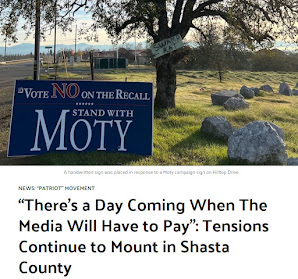
Militia appears to have won Northern California county in recall vote; one leader threatened journalists on podcast
| Screenshot from Shasta Scout story about militia podcast |
Militia members recently collected enough signatures to force a recall vote Tuesday for three supervisors, and apparently enough votes to out Supervisor Leonard Moty, a lifelong Republican and former Redding police chief. "With all 23 precincts reporting Tuesday night, recall supporters had 52.78% of the 'Yes' vote, while 47.22% of voters cast ballots against the effort to remove Moty from office. The tally remained unchanged on Wednesday," Benda and Arthur report.
As of Thursday evening, nearly 2,000 votes remained uncounted, and the elections office said it will continue receiving ballots from the post office through next Tuesday. "Moty is expected to continue serving as chair of the Board of Supervisors at next Tuesday's meeting, as elections workers continue to count mail-in ballots," Benda and Arthur report. Moty said in a statement that the recall was funded by "an out-of-state millionaire who is seeking revenge against the county" and that it had "done nothing more than sow hate and division in our community."
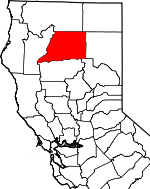
| Shasta County (Wikipedia map) |
The photo, which Facebook labeled false, actually shows Nazi war criminals being hung in Ukraine, Reuters reports. The Holocaust Encyclopedia reports that the Nuremberg defendants included the head of the radio division of the German propaganda ministry and the editor of a racist, anti-Semitic newspaper, who was the only "media" member executed, Agence France-Presse reports.
Alden ramps up efforts to take over Lee Enterprises; in last quarter, subscription revenue slipped but digital rose 65%
"Hedge fund Alden Global Capital’s attempt at a hostile takeover of Lee Enterprises is heating up again," Rick Edmonds reports for Poynter. There are four new developments:
Alden had nominated sympathetic people for Lee's board of directors slots but Lee rejected the nominations. On Feb. 7, a trial begins in Delaware (where the company is incorporated) to decide whether the nominations were valid. "Unless the court sides with Alden, its effort to gain leverage on Lee’s board appears stymied for now," Edmonds reports.
On Jan. 27, Alden issued a statement to Lee shareholders badmouthing the holders of the two seats it's now seeking (the third candidate dropped out). The statement said that former CEO Mary Junck and Herbert Moloney III "are past 70, entrenched for more than 20 years and unwilling to consider alternatives for running the company," Edmonds reports.
Lee has slated its annual meeting for March 10, and issued its own statement seeking shareholders' approval of its slate of nominees.
Lee announced its fourth-quarter 2021 financials Thursday, which Edmonds noted was not directly related to the takeover fight, but would show whether Lee is making rapid progress on digital transformation as management has claimed. Lee reported that total operating revenue increased for the second consecutive quarter. And, though total subscription revenue decreased 1.6% from the previous year, digital-only subscriptions at the end of the quarter totaled 402,000, a 65% increase from last year.
If Alden bought out Lee, a "clear majority" of U.S. dailies would be owned by hedge funds, Sara Fischer reports for Axios. Moreover, it would "essentially create a local news duopoly between Alden and Gannett/Gatehouse," which was created by the two huge chains' merger in 2019.
Quick hits: Church sues town over new limits on days for feeding hungry; new resources on rural hunger for journalists
Here's a roundup of stories with rural resonance; if you do or see similar work that should be shared on The Rural Blog, email heather.chapman@uky.edu.
A church in rural Oregon is suing the town over a new local ordinance restricting how many times a week the church can give free meals to the needy. Read more here.
The Rural Health Information Hub has updated its resource guide for journalists for rural hunger and access to healthy food. Read more here.
The chief justice of the Iowa Supreme Court says she'd like to see more programs encouraging lawyers to live and practice in rural Iowa. Student loan debt is an impediment to that, she noted. Read more here.
Mayfield, Ky., faces long-term psychological damage from the recent tornado. Read more here.
Rural adults are more likely to be pessimistic about cancer and feel overwhelmed by information about cancer prevention, a new study shows. Read more here.
Coal expected to remain significant global power source until at least 2050, but demand shifting from U.S. to Asia
Thursday, February 03, 2022
Sunshine Week is March 13-19; if you're doing something for it, the News Leaders Association wants to know — now
By the News Leaders Association
Sunshine Week is a non-partisan, non-profit national initiative begun in 2005 by the American Society of News Editors — now the News Leaders Association — to promote a dialogue about the importance of open government and freedom of information. Participants have included news media, civic groups, libraries, nonprofit organizations, schools and individuals concerned about the public's right to know.
To mark Sunshine Week, organizations and nonprofits pressing for greater transparency have held forums addressing specific open government issues, presented research reports focusing on secrecy problems, and surveyed state compliance with open records laws and the incompleteness of local government websites, showing increasing citizen distrust spawned by government opaqueness.
News media have produced special reports and series for print, online and broadcast that featured not only the information gleaned by open records access, but also the process that they had to undergo to get the information.
Public officials have taken notice of Sunshine Week by issuing open-government proclamations, introducing laws, ordinances and policy changes designed to increase transparency, and by announcing website improvements that expanded the public’s access to government information.
If your organization is holding an event to highlight this year’s Sunshine Week, and you would like to have it considered for submission on our events calendar, click here.
News Organizations: If you would like to submit stories, editorials, columns, cartoons or graphics for public use during Sunshine Week, email your content links to sunshineweek@newsleaders.org. Please include a brief description and/or headlines suitable for posting on the Sunshine Week website.
We invite you to join the News Leaders Association in this annual nationwide celebration of access to public information and what it means for you and your community. It’s your right to know.
When should vaccination status of Covid-19 victims be reported? Consider relevance, context; show compassion
Before seatbelt laws were the standard, many reporters used to disclose whether a person who died in a car wreck had been wearing a seatbelt. Not out of a desire to shame the victims, as many families felt, but because it was relevant. Today the same debate rages about whether to disclose the vaccination status of someone who died from Covid-19. "In addition to family members being offended at perceived shaming and blaming, citizen vigilantes are now harassing the relatives of unvaccinated Covid-19 victims. That is forcing standards editors in newsrooms around the country to think through when and how to reveal that particular detail," Kelly McBride reports for Poynter.
McBride surveyed a few standards editors this week on the issue. None had come up with a formal guideline, but all were aware of the issue. "In general, journalists are leaning on the value of relevance as they decide whether to include vaccination status. It’s also helpful to think about like cases around public-health matters that might be relevant when reporting on a death," McBride reports.
"Clearly, the public is interested in the vaccination status of those who have died of Covid-19 because they seek to answer both noble and not-so-noble questions," McBride reports. "Given that journalists have no control over which mindset consumers carry as they approach a story about a person who had died of Covid-19, the best tool storytellers have is context."
She suggests several considerations in deciding whether or not to disclose, including the person's local prominence, the availability of data to illustrate a trend, and compassion.
Rural Covid-19 vaccination rate nears 50%; up 1¼% in Jan.
| Vaccination rates as of Jan. 27, compared to national average and adjusted to account for vaccinations not assigned to a county. Map by The Daily Yonder; click the image to enlarge it or click here for the interactive version. |
About 585,000 rural Americans—1.25 percent of the rural population—completed their coronavirus vaccinations in the second half of January, bringing the rural vaccination rate to 49% as of Jan. 27, Tim Murphy and Tim Marema report for The Daily Yonder. In contrast, 62.5% of the metropolitan population is fully vaccinated."Six states have vaccinated more than two-thirds of their rural population. These are Massachusetts (79.1%), Arizona (74.1%), Connecticut (73.8%), Maine (69.6%), Hawaii (66.7%), and New Hampshire (66.5%)," Murphy and Marema report. And in four states, rural vaccination rates are higher than the metro rate: Alaska, Arizona, Massachusetts, and New Hampshire.
Senate subcommittee clashes over bill to waive antitrust laws to let publishers negotiate with Google and Facebook
Bill would give farmers right to repair their own equipment
President Biden issued an executive order last year supporting Americans' right to repair items themselves instead of having to pay for time-consuming, expensive repairs from the manufacturer. "Now, Sen. Jon Tester, D-Mont., wants legislative action to address the situation. His Agriculture Right to Repair Act will guarantee farmers the right to repair their own equipment and end current restrictions on the repair market," Jacqui Fatka reports for FarmProgress.
"I’ve been a farmer my whole life, and I’ve seen the unfair practices of equipment manufacturers make it harder and harder for folks to work on their tractors themselves—forcing them to go to an authorized mechanic and pay an arm and a leg for necessary repairs," Tester said in a statement. "Manufacturers have prevented producers from fixing their own machines in order to bolster corporate profits, and they’ve done it at the expense of family farmers and ranchers, who work hard every day to harvest the food that feeds families across the country."- Make available any documentation, part, software, or tool required to diagnose, maintain, or repair their equipment.
- Provide means to disable and re-enable an electronic security lock or other security-related function to effect diagnostics, repair, or maintenance.
- Permit third party software to provide interoperability with other parts/tools, and to protect both the farmer’s data and equipment from hackers.
- Ensure that when a manufacturer no longer produces documentation, parts, software, or tools for its equipment that the relevant copyrights and patents are placed in the public domain.
- Ensure parts are replaceable using commonly available tools without causing damage to the equipment, or provide specialized tools to owners or independent providers on fair and reasonable terms.
- Return data ownership to farmers. Manufacturers currently collect and sell all the data generated by farmers, and this data is the farmers’ “secret sauce” for how they conduct their business.
Rural Midwestern air has fewer, but more potent, pollutants
Wednesday, February 02, 2022
Over 400 Native American tribes agree to $665 million opioid deal with Johnson & Johnson, other drug companies
Two studies aim to expand understanding of rural colleges and the challenges they face
The first step in helping rural colleges and universities is figuring out how which schools count as rural, but rurality is complicated; definitions can conflict. Two new reports aim to provide clarity. Essentially, the first report focused on identifying and mapping rural schools, while the second report focused on schools that may not be located in a rural area but serve a significant number of rural students commuting.
"Both studies received funding from Ascendium Education Group. Though it might seem like the mapping projects would overlap, researchers say they are complementary, like salt and pepper," Josh Moody reports for Inside Higher Ed.
The first report, released in December by the University of Wisconsin, "Mapping Rural Colleges and Their Communities," discovered some rural institutions were not reflected as such in the commonly-used Integrated Postsecondary Education Data System. Education professor Nicholas Hillman and his team cross-referenced schools on that list with those on the Database of Accredited Postsecondary Institutions and Programs, which contains more detailed information, and "turned up programs in far-flung corners of the U.S. as well as educational partnerships serving students in unexpected locations, such as hotels and conference centers," Moody reports.
Civilian Climate Corps could help provide a brighter future for American youth, writes policy analyst
Many disadvantaged American youth face a rocky economic future, in terms of employment and increasingly disruptive and expensive natural disasters fueled by climate change. "The economic and climate challenges young adults face may not seem related, but one program could address both: the Civilian Climate Corps, which would put young people to work addressing a range of environmental problems while also offering structure and a paycheck," senior fellow Martha Ross writes for the Brookings Institution. "The need for a Civilian Climate Corps at this crucial moment could not be clearer. Science shows that we need to take action now to address climate change. Meanwhile, for decades, the United States has profoundly failed to provide sufficient guidance and support to millions of young people transitioning to adulthood, leaving them with two bad choices: an expensive, confusing postsecondary landscape or a labor market largely offering low-wage jobs."
The Civilian Climate Corps, part of President Bidne's "Build Back Better" bill that is stalled in the Senate, is modeled on the Civilian Conservation Corps, which employed 3 million disproportionately rural young men during the the Great Depression. "As part of the CCC, young people would work on a range of projects, earn a decent wage, and get valuable opportunities to build their skills and networks," Ross reports. "Corps members could work in urban, rural, and suburban settings on projects such as trail maintenance, forest management, home weatherizing, electronic waste recycling, green infrastructure to reduce stormwater runoff and flooding, and more."
The program—or some sort of economic intervention—is badly needed, Ross writes. A soon-to-be-released analysis from Brookings and Child Trends shows that one-third of disadvantaged teens in recent decades went on to make only $19,000 a year at age 30. Even more teens will someday be in the same boat because of the economic disruptions brought on by the coronavirus pandemic, Ross writes: "At the end of 2021, the unemployment rate among 20- to 24-year-olds was double that of 25- to 54-year-olds (7.1% and 3.5%, respectively). Remote learning has led to serious learning loss among K-12 students, and college enrollment is down sharply, especially at community colleges. Teachers note they have not been able to provide the same level of college and career readiness counseling as before the pandemic, and many recent high school graduates report overwhelming levels of uncertainty, anxiety, and confusion about their future."
The CCC could help the most at-risk youth prepare for good jobs later in life, help them develop supportive relationships with adults, and provide support to help them stay on track, Ross writes.
New rural Covid-19 infections fell slightly as deaths surged
| New cases of the coronavirus, in ranges by county, Jan. 23-29 Map by The Daily Yonder; click the image to enlarge it or click here for the interactive version. |
New coronavirus cases in rural counties fell slightly Jan. 23-29 after several weeks of record highs, indicating the surge has peaked. But deaths, a trailing indicator, jumped 20 percent in rural America last week and are 17% higher than the metropolitan rate, Tim Marema reports for The Daily Yonder.
In raw figures, rural counties reported 640,000 new infections last week, down about 14,000, or 2%, from the previous week. Meanwhile, rural counties reported 2,567 Covid-19-related deaths, up 431 from the previous week and bringing the total number of rural Covid deaths to 150,400. New infections in metropolitan counties fell 16% over the past week, while Covid-related deaths increased 12%.
Click here for more charts, regional analysis, and county-level interactive maps from the Yonder.Hackers targeted smaller schools in 2021; towns say they need help scoring federal funds to boost cybersecurity
Cyberattacks are a growing threat to schools, "and the coronavirus pandemic has compounded their effects: More money has been demanded, and more schools have had to shut down as they scramble to recover data or even manually wipe all laptops," Cedar Attanasio reports for The Associated Press.
Schools are a tempting target for hackers: they often have limited budgets for cybersecurity, and the increasing trend of virtual learning during the pandemic has made them all the more dependent on technology and vulnerable to extortion, according to Doug Levin, director of school cybersecurity nonprofit K12 Security Information Exchange. "Levin’s group has tracked well over 1,200 cyber security incidents since 2016 at public school districts across the country," Attanasio reports. "They included 209 ransomware attacks, when hackers lock data up and charge to unlock it; 53 'denial of service' attacks, where attackers sabotage or slow a network by faking server requests; 156 'Zoombombing' incidents, where an unauthorized person intrudes on a video call; and more than 110 phishing attacks, where a deceptive message tricks a user to let a hacker into their network."
In 2021, ransomware gangs tended to target smaller school districts than in 2020. One threat analyst said that may be because larger districts are spending more on cybersecurity, while smaller districts remain vulnerable, Attanasio reports.
"In October, President Joe Biden signed the K-12 Cybersecurity Act, which calls for the federal cyber security agency to make recommendations about how to help school systems better protect themselves," Attanasio reports. And the infrastructure bill dedicated $1 billion for federal cybersecurity grant systems. But smaller city and county governments worry they'll miss out on the money because they don't have the resources or expertise to create proposals.
Tuesday, February 01, 2022
Extremist positions enter political mainstream; Calif. official in recall vote today says he barely recognizes his town
Oregon publisher who shows good journalism is good business is selling; prospective buyers must write an essay
| Most of the front page of a recent edition of the Enterprise |
Zaitz says he and Scotta Callister, his partner in life and in journalism, are "seeking new owners who will personally manage and develop the Vale operation. There is no intention to sell to a chain or newspaper group. . . . Financing to fit the operation’s ability to pay will be part of the deal. The entry cost will be manageable, to preserve capital for a new owner to operate successfully. And there will be consulting, especially on the business side, so those with journalism but not business experience can feel comfortable stepping in."
| Les Zaitz with some of his awards (Quill magazine photo) |
Rural Tenn. advocate says, don't paint locals with a broad brush; support our fight against book banning, she writes
"Do they think we’re not outraged, too, here in East Tennessee? Do they think we can’t speak up and respond for ourselves? Because let me tell you, I lay awake the night before the CNN interview indulging my own outrage and constructing a commentary that would eviscerate all book ban supporters and signal to the rest of the world that I, too, am pissed off. It would feel good to give into the outrage, the indignation, the snark," Coe writes. "But I let the outrage pass over and through me because I live here. We live here. These are our people, our schools, our kids. We spend our days relying on the trust and goodwill of our neighbors to make a life here. Neil Gaiman doesn’t shop at the Food City downtown. Trevor Noah doesn’t volunteer with the local United Way. CNN isn’t interested in solutions journalism and outrage is where relationships go to die."
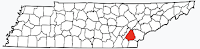
| McMinn County, Tenn. (Wikipedia map) |
She also notes that book banning, or attempts to do so, are not limited to Tennessee. "The American Library Association says the number of attempts to ban school library books was 67% higher in September 2021 than in September 2020, fueled in large part by conservative activists organizing at a national level with an eye toward influencing local politics," Coe writes. "This isn’t a McMinn County problem or a rural problem. We aren’t a novelty. We sure as hell shouldn’t be the scapegoats for deeper rifts in our national and global fabric."
Coe is vice president of is vice president of national programs for the Center for Rural Strategies, which publishes the Daily Yonder. She also directs the Rural Assembly, a national coalition that supports better policy and more opportunity for rural Americans.
Home generator sales are booming; if you want one, here's what to consider, including essential safety precuations
Expanded Medicaid may save many rural hospitals in South
Rural hospitals, especially in the South, have closed in alarming numbers in recent decades, but pandemic funding slowed the trend. Pandemic funding will end, but expanding Medicaid in states that haven't done so could bring in the funding to save many hospitals. That's part of Democrats' "Build Back Better" bill that has an uncertain future in Congress.
"The coronavirus pandemic devastated rural hospitals in the South initially, with 13 of them closing in 2020 alone. But federal pandemic relief sustained hospitals in rural communities last year. No rural hospitals in the South closed in 2021, and only two closed nationwide," Elisha Brown reports for Facing South. "However, special pandemic funding for hospitals in rural communities is running out and some is expected to expire at the end of this year. Meanwhile, the Omicron surge is worsening the medical industry's staffing shortages. Health care advocates say expanding Medicaid in the region could help rural hospitals stay afloat and provide needed care. To date, 38 states and Washington, D.C., have expanded Medicaid under the Affordable Care Act and 12 states have not, with eight of the non-expansion states in the South. The non-expansion states have seen more rural hospital closures."Monday, January 31, 2022
Friday webinar to discuss USDA Farm Income Forecast; profits could fall because of less federal aid, higher costs
Non-dailies can enter weekly editors' society's Golden Quill contest for opinion writing by Tuesday, Feb. 1
Research suggests local journalists quote local experts, not Fauci et al., when discussing pandemic health guidelines
Rural journalists are charged with keeping readers informed about the coronavirus pandemic, but widespread skepticism of government-endorsed public-health measures makes it difficult (as rural Minnesota publisher-editor Reed Anfinson can attest; see this story from last week).
Soon-to-be-published research suggests a solid approach to making public-health information seem more trustworthy to readers: Quote local sources such as doctors or health-department administrators instead of "elite" sources such as Dr. Anthony Fauci, Austin Fitzgerald reports for the University of Missouri's Donald W. Reynolds Journalism Institute. So advise Associate Professors Monique Luisi and Ben Warner, who analyzed the results of a survey of more than 3,000 adults about attitudes concerning coronavirus vaccines, politics, and trust in public-health recommendations.
The findings "were striking. While demographic factors — such as age and race — and partisanship explained some variance in views about vaccination and public health recommendations, anti-elitism accounted for more than a third of this variance," Fitzgerald reports. "Though partisanship has been seen as an important factor in the divide between the vaccinated and unvaccinated, this finding indicates the story is more nuanced, especially given that the media — one of the primary purveyors of public health information — is itself considered 'elite' by many who hold anti-elitist values."
So, local newsrooms are likely best served by quoting local sources and citing local impact. "When people hear about the burden the virus is creating in their community or learn about what their local health department is doing, they are more receptive," Luisi told Fitzgerald. "And a more receptive audience could mean more lives saved."
Federal laws likely undercount foreign farmland ownership
Foreign companies own more than 10 million acres of American farmland, but the real number is likely higher. "Despite a federal law requiring foreign transactions of agricultural land be reported to and recorded by the federal government, the U.S. Department of Agriculture’s database appears to be missing significant acres of land," Jamie Grey, Emily Featherston, Lee Zurik, Jon Decker and Cory Johnson report for Gray Television's Investigate TV. "Records of who owns what don’t match. Reconciling federal, state and county records on land ownership is all but impossible. It is unclear whether the discrepancies originate from the companies’ reporting, the forms or the USDA’s recording of the land."
The Agriculture Foreign Investment Disclosure Act, passed in 1978, required the USDA to track foreign ownership of farmland, but the data collected under that law appears to be incomplete. Foreign companies or individuals that buy American farmland are supposed to fill out a form reporting it to the USDA, but Investigate TV found numerous discrepancies when they tried matching federal data with county assessors' records.
"In recent decades, no federal legislation to drastically change the tracking or sale of farmland has passed," Investigate TV reports. "State and federal lawmakers from both sides of the aisle have pushed for changes – from locking down the sale of agricultural land to foreign entities to forcing increased transparency and mandating more accurate record-keeping."
Another reason it's hard to reconcile the database with county records: USDA's definitions for some data fields are sometimes incorrectly identified or inconsistent with county definitions. "When InvestigateTV asked the USDA to provide data definitions to help clarify the discrepancies, an agency spokesperson provided two, un-dated data fields keys, which in some cases either contain fields not included in the data sets, or are missing fields," Investigate TV reports. "When asked which data fields correspond to Farm Services Administration Form-153, the document farms use to report foreign ownership and is the source for the AFIDA database, the spokesperson provided a 'rough' breakdown, but said: 'We don’t have anything specific to identify which sections of the form correspond to the data fields in the database.'"
FCC announces over $1.2 billion for rural broadband, and a new program to make sure it's spent properly
"The Federal Communications Commission is ready to authorize more than $1.2 billion in funding through the Rural Digital Opportunity Fund. Announced in 2019, the 10-year program seeks to expand broadband internet access across rural America. In an announcement spotted by The Verge, the FCC says the funding wave will see 23 broadband providers bring internet service to more than 1 million locations across 32 states," I. Bonifacic reports for Engadget. "Additionally, and maybe even more importantly, the FCC also announced the Rural Broadband Accountability Plan, a program to ensure recipients of the Rural Digital Opportunity Fund are properly spending the funding they receive from the public."
"The commission announced in July 2021 that it wanted to "clean up" the Rural Digital Opportunity Fund after it discovered that internet service providers had accepted funds to deploy broadband in urban areas or in places where high-speed internet was already available. Those companies were told to either justify their bids or withdraw their funding requests," Nathaniel Mott reports for PC.
The program aims to increase oversight for broadband funding recipients by doing twice as many audits as last year and doing more on-site audits (especially for large or "high-risk" recipients), Mott reports. Also, for the first time, the results of verifications, audits, and speed and latency performance testing will be publicly available online.
Friday, January 28, 2022
Differing definitions of rurality mean some communities can lose out on badly needed federal and state funding
"There are lots of grants and proposals promising to help rural America. But the definition of 'rural' isn't always clear, and where a town falls in the pecking order can decide its access to funds," Jonathan Ahl reports for St. Louis Public Radio. "The definition of rural can take into account population, population density, distance from a big city and even the percentage of people that travel into a metro area to work. But there is no standardization, and that frustrates and perplexes some towns and counties."
For example, Houston, Mo., a community of about 2,500 surrounded by farmland, needs broadband funding, but city administrator Scott Avery told Ahl the town didn't qualify for one federal grant because the program defines "rural" as being more than 100 miles from a metro area. The closest metro area—Springfield—is nearly two hours away on the highway, but only 90 miles as the crow flies.
But, as one rural advocate told Ahl, the variety of definitions isn't totally bad; if there were only one definition, some places would never qualify for funding. "That's cold comfort" for Avery, Ahl reports. "While he does sometimes get grants targeted for rural America, he and his staff of two don't have the resources to chase after opportunities, only to find his small town far off the beaten path isn't rural enough."
First-of-their-kind studies link air pollution from fracking and very small particles to early deaths among rural seniors
Two recent Harvard University studies highlight the dangers seniors face from air pollution.
The first study is the first to link early deaths among seniors to air pollution from nearby hydraulic fracturing operations. "Published in the peer reviewed scientific journal Nature Energy, the team of researchers from the Harvard T.H. Chan School of Public Health blames a mix of airborne contaminants associated with what is known as unconventional oil and gas development. That is when companies use horizontal drilling and liquids under pressure to fracture underground rock to release the fossil fuels through a process known as hydraulic fracturing, or fracking," James Bruggers reports for Inside Climate News. "The closer people 65 and older lived to wells, the greater their risk of premature mortality, the study found. Those senior citizens who lived closest to wells had an early death risk 2.5 percent higher than people who did not live close to the wells, the researchers found."
The second study, published by the Health Effects Institute, examined the effect of air pollution as a whole on seniors' health. In a nutshell, "Older Americans who regularly breathe even low levels of pollution from smokestacks, automobile exhaust, wildfires and other sources face a greater chance of dying early," Lisa Friedman reports for The New York Times. "The new study is the first in the United States to document deadly effects of the particulate matter known as PM 2.5 (because its width is 2.5 microns or less) on people who live in rural areas and towns with little industry."
Quick hits: Farm dog of year; convenience stores say they want charging stations for EVs; rural-urban divide nuances
| Fit with her owner Cindy Deak (AFBF photo) |
A 5-year-old Border Collie named Fit has been chosen as the American Farm Bureau Federation's 2022 Farm Dog of the Year. She has been helping her owners move sheep on their Florida farm since she was a puppy. Click here to read more about Fit, as well as the four runners-up and the People's Choice Pup, all of whom are Very Good Dogs.
A recent webinar had information about the Rural Emergency Hospital, a new hospital type established in 2021 to help restore emergency services to rural areas amid hospital closures. Click here for a recording of the webinar.
The Agriculture Department's Rural Development Rural Utilities Service will host a 90-minute webinar on Feb. 2 for Native American tribes and tribal entities interested in applying for the ReConnect broadband program. Read more here.
Convenience store representatives told Congress they want to make electric vehicles more feasible in rural America by putting more charging stations alongside their gas pumps. Read more here.
Retiring Texas Tribune co-founder Evan Smith deserves credit for helping pave the way for other digital nonprofit newsrooms, writes The Washington Post's Margaret Sullivan. Read more here.
Neighborhoods with more opioid overdoses may be hotspots for child maltreatment, a new study shows. Read more here.
The SAT is going all-digital soon. Previous plans to do so were scrapped, partly because of spotty rural broadband access. But the College Board has addressed this by ensuring the new SAT autosaves so that students won't lose work or time if their internet connection falters. Read more here.
An opinion piece argues that more nuance is needed when talking about the rural-urban divide. Read more here.
National Press Foundation has webinars for journalists on data management, FOIA requests, and more
The National Press Foundation has a host of training videos for journalists with general how-tos and guides to covering subjects such as aging and retirement, business, criminal justice, opioids, public health, and more. Here are a few of the most recent ones:
Veteran data journalist Adam Marton shows how online graphics tools such as Datawrapper can help any reporter add snappy visuals to their coverage. Read more here.
ESPN investigative reporter Tisha Thompson discusses how you can make numbers come alive in your reporting. Read more here.
Government and journalism experts talk about best practices in tracking government spending for statehouse reporters. Read more here.
Pandemic roundup: Hospital sues to keep workers from getting higher-paying jobs elsewhere . . .
Here's a roundup of recent news stories about the pandemic and vaccination efforts:
The federal government has halted distribution of two monoclonal-antibody therapies after data showed they were ineffective against the Omicron variant of the coronavirus. Read more here.
Some rural hospitals continue to have difficulty transferring critical patients to larger hospitals because of the glut of Covid-19 patients. Read more here.
Workers at a Wisconsin hospital left for higher-paying jobs, but the hospital successfully sued to stop them from leaving. Read more here.
Hospital staffing shortages in Kansas lead to rural patients dying at record rates. Read more here.
A new study pinpoints where and how you are most likely to get infected. Read more here.
A fascinating Twitter thread from a biologist discusses the parallels between Covid and cholera, especially regarding trust in government and scientists, the role of the news media, and people's concerns and reactions to outbreaks. Read more here.
The Washington Post zooms in on the pandemic with the story of a rural Michigan man's death from Covid-19 and the fallout in his community. Read more here.
Small towns with small work forces are often hard-pressed to keep business operating as usual when workers are sickened with Covid-19. Read more here.
Thursday, January 27, 2022
Rural weekly catches hell, even from a Lutheran pastor, for publishing Covid-19 facts that some people don't believe
| Reed Anfinson with a copy of his Swift County Monitor-News (Associated Press photo by David Goldman) |
The headline in the Swift County Monitor-News was perhaps alarming, but nothing unusual in a global pandemic: “Covid-19 cases straining rural clinics, hospitals, staff,” over a story in which health officials urged residents of the western Minnesota county, population 9,838, to protect themselves by getting vaccinated.
"But ask around Benson, stroll its three-block business district, and some would tell a different story," reports Tim Sullivan of The Associated Press. The 136-year-old weekly "is not telling the truth," they say. "The vaccine is untested, they say, dangerous. And some will go further: People, they’ll tell you, are being killed by Covid-19 vaccinations."
"One little town. Three thousand people. Two starkly different realities," Sullivan writes. "It’s another measure of how, in an America increasingly split by warring visions of itself, division doesn’t just play out on cable television, or in mayhem at the U.S. Capitol. It has seeped into the American fabric, all the way to Benson’s 12th Street, where two neighbors -- each in his own well-kept, century-old home -- can live in different worlds."
Sullivan continues, "In one house is Reed Anfinson, publisher, editor, photographer and reporter for the Monitor-News. Most weeks, he writes every story on the paper’s front page. He wrote that story on clinics struggling with Covid-19. He’s not the most popular man in the county. Lots of people disagree with his politics. He deals with the occasional veiled threat. Sometimes, he grudgingly worries about his safety. While his editorials lean left, he works hard to report the news straight. But in an America of competing visions, some here say he has taken sides."
One of Anfinson's neighbors (they still watch each other's homes when one's away) is Jason Wolter, a pastor in the conservative Missouri Synod of the Lutheran Church, "who reads widely and measures his words carefully. He also suspects Democrats are using the coronavirus pandemic as a political tool, doubts President Joe Biden was legitimately elected and is certain that Covid-19 vaccines kill people. He hasn’t seen the death certificates and hasn’t contacted health authorities, but he’s sure the vaccine deaths occurred: 'I just know that I’m doing their funerals.' He’s also certain that information 'will never make it into the newspaper.'"
Anfinson, 67, told Sullivan, “The easy part is speaking truth to power. The hard part is speaking truth to your community. That can cost you advertisers. That can cost you subscribers.” The paper's circulation is 2,000. He told Sullivan that he won’t consider following the example of some other rural publishers who have cut back on opinion pages or even eliminated them. Sullivan writes, "He says it’s his duty to expose people to new ideas, even unpopular ideas like stricter gun control. The editorial page is, he says 'the soul of a newspaper in a way. . . . I would be a traitor to the cause of journalism, of community newspapers. I would be cowardly.'"
Anfinson "mourns how some people see him as an enemy," Sullivan writes. "His newspaper should bind people together, he says. Instead, America and Benson are growing angrier. Contentious midterm elections loom."
“It’s kind of sad,” he told Sullivan. “But it would be foolish of me not to be aware of (my safety) with the sentiments out there.” Asked if he carries a weapon, he said he doesn't: “But I know where one is if I need it.”
| For a larger version of the image, click on it. |
Pandemic has worsened rural child-care crisis; researchers who looked at two N.C. counties propose solutions
| Daily Yonder map shows two counties studied. |
Decent, affordable childcare is critical for millions of families. Without it, a parent (almost always the mother) must stay home, hurting families' budgets and local economies. Rural areas have long faced childcare shortages, but the pandemic has exacerbated it, as the researchers found in those North Carolina counties. "The mandatory shutdown of the U.S. economy idled many workers with young children, eliminating in the process their need for childcare services," Johnson and Bonds report. "This in turn forced some childcare facilities to furlough workers and close; and others to lay-off workers and close permanently. In our rural counties, low vaccination rates combined with the closures has eliminated more than 90% of the available childcare providers."
Most permanent childcare closures have been small, in-home businesses, mostly in low-income areas. The vast majority didn't apply for Paycheck Protection Program loans because the paperwork was overwhelming, or they worried they'd have to pay it back. The remaining facilities must figure out how to remain open and pay workers while dealing with enhanced health and safety protocols and lower teacher-child ratios that improve childcare quality but reduce revenue, Johnson and Bonds report. Parents struggling with poverty themselves can't pay more for childcare, especially since the expanded Child Tax Credit has lapsed.
Essentially, daycares have nowhere to cut the fat, budget-wise, and most childcare workers live on poverty wages as it is. A recent poll found that, of the nearly 1 million childcare workers in the U.S., just over 31% reported being food-insecure in 2020, which is 8 to 20 points higher than the national average, Colin Page McGinnis reports for The Conversation.
Daycare facilities that remain open also take a financial hit from mandatory quarantines when children or staff become infected with the coronavirus. "About 1 in 6 parents told pollsters they had experienced either a school or a day care shutdown in the past few weeks, in a national poll from Axios and Ipsos released on Jan. 11," Anya Kamenetz reports for NPR.
The quarantines hurt working parents, too. "Even as schools and daycares have attempted to return to in-person learning, working women have found it difficult to either return to work or maintain employment because any randomly occurring infection outbreak in a school requires mandated at-home quarantine for all exposed children," Johnson and Bonds report. "And a child in quarantine requires adult supervision, which makes maintaining a job very difficult, if not impossible, for women who are the sole or primary caregiver." Some women are able to parlay experience into home-based businesses, but broadband disparities mean rural women are less likely to be able to do so.
State and federal funding can help childcare facilities stay open, but the U.S. spends far less on childcare than most other developed nations and even some developing countries. "Because of inadequate investments, far too many American youth enter elementary school ill-prepared to learn—a situation that, unfortunately, has long-term negative consequences for their overall health and wellbeing," Johnson and Bonds report. "Nowhere is this more evident than in rural counties where funding for services is jeopardized by population loss and an aging population on fixed incomes unable to pay for improvements."
The American Rescue Plan Act authorized $39 billion for childcare, but that money expires in 2024, and childcare providers and advocates warn that such infusions "won’t solve the industry’s fundamental, long-term challenge: how to provide quality services and pay workers a competitive wage while keeping prices affordable," Sophie Quinton reports for Stateline.
Johnson and Bonds recommend a raft of policy changes to address the rural childcare crisis, based on their study. Those include:
- Encourage family-friendly business policies that support employees with children.
- At all levels of government and the economy, frame childcare as a "business imperative."
- Lobby the federal government to guarantee universal preschool.
- Invest in childcare entrepreneurs.
- Call for more and better continuing education for childcare workers, which will help them provide better care to children.
- Advocate for childcare workers to receive a living wage.