Friday, April 22, 2022

Pandemic roundup: Seniors, diabetics, and loved ones left behind reflect on disease that has killed 1 million in U.S.

Here's a roundup of recent news stories about the pandemic and vaccination efforts:

Older Americans reflect on what the pandemic has taken from them. Read more here.

According to the Centers for Disease Control and Prevention, 87% of U.S. children who were hospitalized with Covid-19 during the Omicron surge were unvaccinated. Read more here.

The long-term consequences of the coronavirus pandemic are starting to become clearer, writes the former editor of DTN/The Progressive Farmer. Read more here.

The U.S. death toll from Covid-19 will soon surpass 1 million if it hasn't already. The Atlantic's Ed Yong writes about how many Americans who have lost someone feel their grief has been "intensified, prolonged, and even denied by the politics of the pandemic." Read more here.

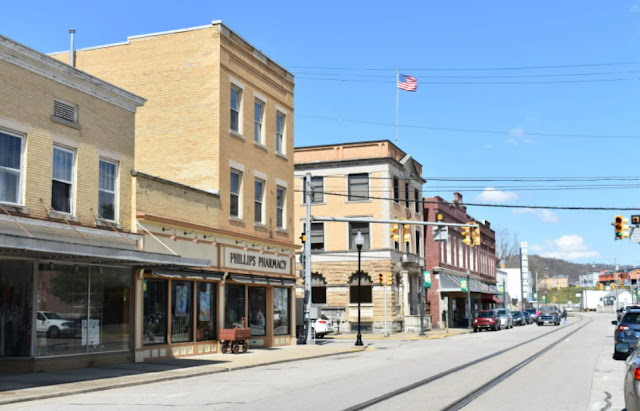
Kaiser Health News takes a snapshot of a rural Pennsylvania county with one of the highest Covid-19 death rates in the nation. Read more here.

Diabetics have been one of the hardest-hit groups by the coronavirus. Experts hope policymakers will notice and increase efforts to address the nation's diabetes crisis. Read more here.

The Food and Drug Administration has authorized the first breath test to detect the coronavirus. Read more here.

The recent ruling that vacated the Biden administration's mask mandate for public transportation has dealt another blow to the dozens of small mask factories scattered across the country. Read more here.

Quick hits: Texas town split by murder charges in alleged abortion; why food prices are up and farmer profits aren't

Here's a roundup of stories with rural resonance; if you do or see similar work that should be shared on The Rural Blog, email us at heather.chapman@uky.edu.

Montana ranchers live right next to a nuclear missile silo—a thought that has been much on their minds during the Russian invasion of Ukraine. The Washington Post talks with them about what that's like. Read more here.

Texas passed an anti-abortion law last year that empowered citizens to enforce it via lawsuits against abortion providers or those who help them. But recently a woman in a small town was arrested on murder charges for an alleged abortion (though she was soon released and the charges dropped). The controversy split her community. Read more here.

In a recent video, the Michigan Farm Bureau discussed why food prices have been increasing but not farmer profits. Watch the video here.

It's not just chickens and turkeys that are dying from the bird flu pandemic. Bald eagles in 14 states have died too. Read more here.

Just in time for Earth Day, here's a list of America's most endangered rivers. Read more here.

Decades after a Ukrainian teen spent a year in rural Kentucky as a foreign exchange student, the same small town welcomed her back again, this time as a refugee along with her children. Read more here.

Rural Texans who met Vladimir Putin in 2001 reflect on Russia's invasion of Ukraine. Read more here.

The University of Kentucky has received a $1.5 million gift from an African American who grew up on his family's farm in the Bluegrass region, meant to encourage Black and other underrepresented students to pursue farming and other natural resources careers. Read more here.

Georgia has the latest "Freedom to Farm" bill, meant to protect farmers from nuisance lawsuits filed by neighbors. Read more here.

Consumer Financial Protection Bureau says rural areas face unique difficulties accessing banking services

The Consumer Financial Protection Bureau, an independent agency Congress created during the Great Recesssion, launched an initiative last month to focus on financial issues rural Americans disproportionately face. This week, CFPB issued a follow-up report detailing the banking disparities rural Americans often contend with.

"The report highlights that many of these communities lack access to physical bank branches, are more likely to seek credit from nonbanks, and are heavily affected by medical bills. The CFPB will be expanding its efforts to address these and other challenges facing the people and families of rural America," CFPB reports. "Local financial institutions, such as community banks and credit unions, often offer products and services that fit the local economic terrain. However, rural communities are experiencing a fast-paced exodus of in-person banking services, with rural communities 10 times more likely than urban communities to be located in banking deserts. In fact, the Federal Reserve has identified more than 2,100 existing and potential banking deserts across the country with more than 1,500 located in rural areas."

Other key findings of the report:

  • Rural Americans are more likely to depend on brick-and-mortar bank branches and smaller banks.
  • Rural Americans are less likely to have a credit history (i.e., have held and used a credit card). Lack of a credit card, or the credit history to get one, makes it more difficult to address short-term financial emergencies, seek new opportunities (such as moving or starting a business), or fill short-term income gaps.
  • Unpaid medical bills affect rural access to credit, housing, and unemployment. Also, health-care and insurance costs tend to be higher in rural communities than in suburban or urban areas.
As part of its Rural Initiative, CFPB is conducting more research to figure out root causes of rural financial disparities, and plans to conduct roundtables with rural stakeholders across the country, as well as work with federal partners to improve rural financial policy. Rural residents are encouraged to use the CFPB's complaint tool to bring attention to shady, inadequate or inaccessible financial services.

Thursday, April 21, 2022

Firearms top cause of death for children, up 29.5% in 2020; drug deaths up 84%; how and why do rural kids carry guns?

Chart from New England Journal of Medicine also shows 84% rise in deaths from drug overdose and poisoning.

Firearms surpassed car accidents as the top cause of death among children and teens, according to an analysis of federal data recently published in The New England Journal of Medicine. Data from the Centers for Disease Control and Prevention showed that firearm-related deaths for people aged 1 to 19 increased 29.5 percent from 2019 to 2020, the first year of the pandemic, University of Michigan researchers found. That's more than twice the rate of increase in the general population. In raw numbers, that's about 4,300 minors who died in 2020 from all causes of firearm-related deaths.

The increase, and those in some other causes, appeared to be pandemic-related. "Drug overdose and poisoning increased by 83.6%," making it the No. 3 cause of death in children, the researchers write. "This change is largely explained by the 110.6% increase in unintentional poisonings from 2019 to 2020. The rates for other leading causes of death have remained relatively stable since the previous analysis, which suggests that changes in mortality trends among children and adolescents during the early Covid-19 pandemic were specific to firearm-related injuries and drug poisoning."

The gun-death rise was seen across most demographics and types of firearm death. However, gun deaths increased much more than gun related suicides, among minors as well as in the population overall, the researchers found. The university launched a $10 million Firearm Injury Prevention Research initiative in 2019 to overcome the lack of federal funding for such research.

A recent University of Washington study, meanwhile, looked at youth ages 12 to 26 in rural areas who carry handguns, and found six distinct patterns in the age of initiation, duration, and frequency of when they carry guns. The researchers used self-reported data from youth and young adults in 12 rural communities across seven states. Though most rural youth rarely or never carried, the likelihood of handgun carrying tended to increase steadily with age, with no peak through age 26. Among urban youth, in contrast, youth were most likely to carry at age 21, and likelihood declined after that. Overall, researchers said their findings suggest that rural communities should begin promoting handgun safety early, and that safety programs need to be tailored to rural contexts.

Family behind Columbia Sportswear expands philanthropic efforts to help rural and tribal communities in Oregon

Columbia Sportswear, based in Portland, Oregon, is a $5.5 billion outdoor-clothing juggernaut, and the family that owns it is passionate about philanthropy. The extended family's Roundhouse Foundation, launched in 2002, initially focused on supporting arts projects with grants, but in the past few years has become more involved in creative problem-solving in the state's rural and tribal communities, Ade Adeniji reports for Inside Philanthropy.

When Gert Boyle, the daughter and heir of founder Paul Lamfrom, passed away in 2019, she left a large sum to the foundation that her daughter Kathy Deggendorfer says triggered "an explosion of growth," Adeniji reports. Deggendorfer, husband Frank and daughter Erin Borla now run the foundation; they sat down with Adeniji to talk about "how Gert envisioned the family’s philanthropy, how grantmaking has grown to tackle creative placemaking in underfunded rural communities, and now, on the heels of a huge bequest, where the family plans on taking their philanthropy next." 

Wikipedia locator map, adapted
The family began thinking about ways to support rural economies in the early 2000s. It was only natural, since they live in Sisters, a community of about 2,600 near Bend in central Oregon. And it's more important than ever, since 14% of Americans are rural, but only about 7% of all grants go to rural areas. When Deggendorfer received a portion of her inheritance, she decided to formalize her support by creating the Roundhouse Foundation. At first she was distributing about $12,000 in grants each year and working from her home office, but the foundation continued growing. "Just a few years ago, Roundhouse Foundation was giving away six figures annually and held around $22.5 million in assets (fiscal year 2018)," Adeniji reports. "Two years later, the foundation held nearly $142 million in assets and gave away more than $1 million. And in 2021, the foundation granted around $11 million." These days the foundation has 17 staffers and trustees.

One of them is Deggendorfer's daughter. Borla worked for local non-profits and events after college and joined the foundation's board of trustees in 2014. "I came back from school and knew I wanted to live in this rural space and work in economic development and creative space," Borla told Adeniji. She advocated for using public-school libraries as mental-health spaces for students.

The foundation now "focuses its work on four areas that it believes are fundamental to thriving rural communities — arts and culture, environmental stewardship, social services, and education," Adeniji reports. "Creative placemaking, a popular concept in the philanthrosphere these days, is central to the foundation’s work. Its flagship program, Pine Meadow Ranch Center for Arts and Agriculture, is an artist residency on a 260-acre working ranch, which also engages in agricultural and ecological projects. Roundhouse purchased and retooled the property in 2017, driven by [Deggendorfer's] vision." Some of those projects include regenerative agriculture and the development and conservation of watersheds.

Until 2019, the foundation focused mainly on communities in the Deschutes River Basin in Central Oregon, but the recent flood of new funds allowed its focus to expand to rural areas across the state. "This led to a deluge of calls. But it also forced Roundhouse to get out on the road and grow relationships in every corner of the state," Adeniji reports. "While 'trust-based philanthropy' is a buzzword these days, [Borla] describes part of that trust as simply showing up, meeting people in their own communities and trying to foster an authentic connection. Sometimes these conversations don’t even result in Roundhouse Foundation giving a grant. But rather, the foundation serves as a catalyst, where a vital connection allows an organization to move forward with a project without direct funds from Roundhouse."

Weekly newspaper in Iowa wouldn't have survived without gifts, including small ones, Pulitzer-winning editor says

Art Cullen (Photo by Clay Masters, Iowa Public Radio)
The Storm Lake Times Pilot of northwest Iowa is freshy robust, having bought its in-town competitor and a weekly in the next county, thanks to a big gift from a California philanthropist. But the Storm Lake Times would have died without smaller, earlier, gifts, Pulitzer Prize-winning Editor Art Cullen told Iowa Public Radio last week.

"This newspaper war was killing both newspapers," Cullen told Ben Kiefer. "We were losing gobs of money. Something had to change." Cullen and his brother John had both gone off the payroll after going on Social Security. With other papers they formed a foundation that helped keep them afloat. "We couldn't have done this without philanthropy, and we couldn't do the journalism we're doing," Art said. "We wouldn't exist. We would have closed last year. And I bet the [Storm Lake] Pilot-Tribune was pretty close to it; I don't know."

One of the givers to the foundation was John Tu, a Taiwanese American billionaire who had donated after hearing Art on Terry Gross's "Fresh Air" show on NPR. Art reached out to him when another newspaper owner said he was willing to buy some local papers, including the Cullens' competitor, and sell it and another to the Cullens. "We said, 'Sure, but we don't have any money.' We're broke, and we couldn't even make a downstroke," Art recalled. "So, I emailed this person who'd given us money. He was a California technology guy. His name was John, too, and he pledged to support us. And if he hadn't done that, we couldn't have bought these newspapers. … We wanted to make sure that our employees had health insurance, and that they were paid a decent wage. Those are the only things he cares about. He just wants to make sure that Storm Lake has a strong newspaper. And it's just incredible. It's like he's an angel. He's never been to Iowa, I don't think, but he really cares about democracy.

"We couldn't have done this without philanthropy, and we couldn't do the journalism we're doing. We wouldn't exist. We would have closed last year. And I bet the Pilot-Tribune was pretty close to it, I don't know. But we wouldn't be here if it weren't for the Western Iowa Journalism Foundation, which is a nonprofit foundation to support independent, family-owned newspapers in Iowa. And, uh, so we really need philanthropy, I think, for the next five years until we can build these digital products that can sustain themselves."

Rural coronavirus cases are on the rise even as Kansas and Missouri declare it 'endemic' and reduce data reporting

New coronavirus infections, in ranges by county, April 11-17
Map by The Daily Yonder; click on the image to enlarge it or click here for the interactive version.

Rural counties reported nearly 18,2000 new coronavirus cases during the week of April 11-17, a 9 percent increase from the week before. The uptick, concentrated in New England, marks the end of an 11-week downward trend in new rural cases, Tim Marema reports for The Daily Yonder. New metro cases fell by about 2%. However, data on cases and deaths is skewed — and will likely stay skewed — because some states have stopped regularly reporting data.

Rural deaths related to Covid-19 fell by about 12% from the week before, while Covid deaths in metropolitan areas fell by about 5% in the same time period. The weekly death rate was about 40% higher than the metro rate, and has been higher than the metro rate for almost a year, Marema reports.

"The cumulative death toll from the pandemic is also higher in rural counties than metropolitan ones. Since the start of the pandemic, 172,000 rural Americans have died from Covid-19, which equates to about one death for every 267 rural residents," Marema reports. "Metropolitan counties have recorded 771,290 Covid-related deaths, which equates to about one death for every 366 metropolitan residents."

There are likely more cases and deaths than the map reflects, since Kansas reported no data for last week. Because of falling case numbers, state governments in Kansas and Missouri announced at the end of March that the coronavirus is now considered "endemic," Natalie Wallington reports for The Kansas City Star. Those states will now treat the virus much like the seasonal flu, and will no longer have access to some emergency measures that gave priority and funding to fighting the disease. They will also only update case and death totals once a week, and Missouri will no longer report death totals by county. However, regardless of official declarations, the coronavirus can still mutate and cause future surges in cases and deaths, Wallington notes. Cases in the Kansas City area and across the state began creeping up again last week, according to local station WDAF-TV, but the lack of official data and the increasing prevalence of at-home testing make it difficult to assess the true numbers.

AP expands election coverage to include a democracy news editor; its big vote-fraud probe remains available to weeklies

The Associated Press announced Wednesday what it calls "a significant expansion of AP’s approach to politics, democracy and elections coverage," which will "include everything from elections and campaigns to threats to democracy, voter attitudes, misinformation, how elections are administered and the impact of new voting laws. Crucially, this team will connect its reporting to people across the country, particularly to historically marginalized communities who face new hurdles to the American right to vote – and have their votes be counted. This is a new approach for AP, but one that amplifies the AP’s long-standing commitment to fact-based reporting on elections, politics and public opinion. That remains the core of our mission."

The plan includes two new posts, a national political reporter and a an editor with a title not seen before: "The democracy news editor will lead our coverage of the mechanics of the American democracy and the challenges it faces, including voting rights and access, election administration, misinformation and much more. This editor will work with beat reporters in Washington and across the U.S. to identify legislation, court cases, election misinformation and political influence that impacts election outcomes." They will answer to Steven Sloan, the new deputy Washington bureau chief for politics and elections.

If you're at a weekly newspaper that doesn't subscribe to AP, why should you care? Because AP sets the standard for evenhanded, accurate coverage, and that's all the more important at a time when millions of Americans have lost faith in the news media and the electoral system. Also, AP has shown a willingness to help non-subscribers who want to provide coverage that gives necessary facts. In December, at the request of the Institute for Rural Journalism and Community Issues, publisher of The Rural Blog, it made available to non-subscribing weekly newspapers its comprehensive investigation that debunked claims of widespread vote fraud in the six states that decided the 2020 presidential election. With millions of Americans still believing "the big lie" about that election, the story is still highly relevant.

OPINION: Earth Day and the news media's point of view

By Mark Hertsgaard and Kyle Pope

On the first Earth Day, in 1970, America’s TV networks were not shy about taking a position on the news of the day. CBS News produced a special titled “Earth Day, A Question of Survival,” which opened its flagship evening broadcast showing biologist Barry Commoner telling a crowd, “This planet is threatened with destruction…. We are in a crisis of survival.” Anchorman Walter Cronkite then reiterated the theme, declaring this a “unique day in American history, dedicated to mankind seeking its own survival.” ABC News titled its own special report, “Earth Day: An SOS for Survival.” Anchorman Frank Reynolds’ first sentence congratulated activists for speaking out, crediting “millions of Americans” with taking “the first step to survival.”

CBS and ABC devoted virtually their entire broadcasts to the Earth Day story, with correspondents emphasizing the scourges of air and water pollution in reports from New York, Boston, Washington, Chicago, Denver, Albuquerque, and St. Louis. NBC’s coverage was less extensive but featured one item that, viewed from today, sounds eerily prescient. Anchorman Frank Blair reported that “a government scientist” had told colleagues at the American Geophysical Union that “over-pollution, unless checked, could so warm the earth in 200 years as to create a greenhouse effect, melting the Arctic ice cap and flooding vast areas of the world.”

At the time, network television was approaching the height of its power to influence public opinion. So when the evening newscasts lavished so much attention on Earth Day, and made their support for tackling pollution so clear, the effects were profound. Richard Nixon, not yet halfway through his first term as U.S. president, took the hint. Memoirs of top White House aides later revealed that the outpouring of public sentiment on Earth Day—some accounts estimated that 20 million people took part, a collective that drew supporters from all parts of society, not just long-haired radicals—convinced Nixon that his re-election chances in 1972 required taking the environment issue away from his opponents. Before long, Nixon had created the Environmental Protection Agency and signed the Clean Air Act, the Clean Water Act, and other legislation that to this day rank among the strongest environmental laws on earth.
 
Which brings us to this Earth Day. By all scientific accounts, the environmental crisis that activists highlighted more than half a century ago is much more dire today, and the need for far-reaching action more urgent. And yet those network news anchors from 1970, dismissed as anachronisms in our digital era, were in many ways ahead of where journalists are now. Just imagine each of America’s big three networks leading their broadcasts with the recent UN climate report, packaged under headlines like “A Question of Survival,” and then spending the entire program explaining the problem and exploring solutions.

It is tragic that, until very recently, the media’s treatment of the environment story has gone backward from 50 years ago in every conceivable metric: less urgency, less space, fewer minutes on the air. The fact that journalism is finally beginning to give the story the attention it deserves probably says more about the state of the weather than it does about a newfound media commitment to chronicle what’s happening. As U.S. Rep. Jamie Raskin, Democrat of Maryland, said in an interview published this week by members of the global media collaboration Covering Climate Now, “If we were smarter as an animal, humans would be working on nothing other than climate change.”

A big part of the problem has been the sense among journalists—again, until very recently—that aggressive coverage of the climate story is somehow activism, and that covering the activists pushing for change is a partisan act. But when you go back and watch the coverage from 1970, you see none of that hesitancy from the very sober, very straight-laced anchors of the day. “Act or die,” was how Cronkite summarized the message of that first Earth Day. Imagine reading the same headline today in the news pages of The New York Times.

Those inaugural Earth Day reports illustrate an enduring journalistic truism: all news coverage has a point of view. Every news story, every home page, every TV or radio program reflects a point of view, if only implicitly. That point of view is defined by which subjects get covered and which do not; which facts are reported and which are not; which voices are quoted and which are not. Accuracy and fairness remain essential to honest journalism, but there is no escaping a point of view. “In a battle for facts, in a battle for truth, journalism is activism,” said Philippine journalist Maria Ressa, winner of the Nobel Prize, who has been repeatedly targeted and arrested for her decision to report truthfully about her homeland.

Reporting with a point of view has a storied place in journalistic history. The reporters in Vietnam chronicling the lies about how many people were dying in the war were reporting with a point of view, as were the TV cameras documenting the civil rights movement. More recently, coverage of the war in Ukraine has portrayed Russia’s invasion as a brutal and unwarranted act that has criminally targeted civilians. Coverage of Covid-19 likewise portrayed the pandemic as a public-health emergency that requires vaccines, face masks, and physical distancing to overcome.

This Earth Day, newsrooms everywhere should resolve to apply this same kind of journalistic attention and judgment to the climate crisis. If a point of view is inevitable in journalism, let ours be one that favors defusing this catastrophic threat to our planetary home. That should not be a difficult choice to make, for journalists or anyone else.

Mark Hertsgaard and Kyle Pope are co-founders of Covering Climate Now. Hertsgaard is its executive director, and the environment correspondent of The Nation. Pope is editor and publisher of Columbia Journalism Review.

Wednesday, April 20, 2022

Library flap in Texas reflects increased local efforts to censor content; 37% of challenges to books in U.S. are in libraries

One of the March front pages of The Llano News
Conservative citizens and politicians are increasingly mounting efforts to remove from school and public libraries books they deem objectionable, as well as working to gain control of library boards to have more say. In Llano Cunty, a community of about 21,000 in the center of the Texas, Bonnie Wallace, a 54-year-old church volunteer, emailed administrative County Judge Ron Cunningham a list of 60 books she called "pornographic filth" and urged him to move the books to the adult section of the county's public libraries, Annie Gowen reports for The Washington Post.

Wallace stopped short of recommending the books be yanked entirely because she worried liberals would counter by censoring books such as the Bible. The list made its way to the county's chief librarian, who told Suzette Baker, head of one of the town's three branches, to consider putting the books behind the counter. Baker said that was censorship, created a display of banned books such as To Kill a Mockingbird, and was fired. Cunningham questioned in an email to Wallace whether public libraries were even necessary, and noted that the county wasn't required to provide one. 

Llano has since "taken works as seemingly innocuous as the popular children’s picture book In the Night Kitchen by Maurice Sendak off the shelves, closed library board meetings to the public and named Wallace the vice chair of a new library board stacked with conservative appointees — some of whom did not even have library cards," Gowen reports. "With these actions, Llano joins a growing number of communities across America where conservatives have mounted challenges to books and other content related to race, sex, gender and other subjects they deem inappropriate. A movement that started in schools has rapidly expanded to public libraries, accounting for 37 percent of book challenges last year, according to the American Library Association. Conservative activists in several states, including Texas, Montana and Louisiana have joined forces with like-minded officials to dissolve libraries’ governing bodies, rewrite or delete censorship protections, and remove books outside of official challenge procedures."

Nationwide political action committee EveryLibrary said there have been "dozens of new attacks" on libraries in 2022. "In some cases, the challengers are being assisted by growing national networks such as the parental rights group Moms for Liberty or spurred on by conservative public policy organizations like Heritage Action for America, the ALA has said," Gowen reports.

In Llano, the library board voted to suspend the county's e-book lending system on the grounds that it didn't have sufficient parental controls, and also closed the libraries for several days before Christmas to review and organize youth books. One board member asked in an email for continued prayers for the librarians' discernment and said the library closure would be "entirely devoted to removing books that contain pornographic content," Gowen reports.

Some books were apparently removed for ideological reasons, such as one about systemic racism by Pulitzer Prize-winning author and journalist Isabel Wilkerson. Wallace's initial list of books she wanted removed was heavily populated with books concerning racism, homosexuality, and other themes unpopular with conservatives.

The new library board, which is overwhelmingly white, female and Republican (a local man was denied a seat on the board despite the fact that he has a master's degree in library science) voted to close meetings to the public. The county says that doesn't violate the state open-meetings law because the board, which now must approve all new library book purchases, is operating in an "advisory capacity." However, legal experts say that if Cunningham and the county commission consistently rubber-stamps the board's recommendations, a case could be made for the board falling under the law.

On his website The Bulwark, conservative commentator Charlie Sykes characterized the nationwide trend as "smut-hunting illiterati across the country [who] have risen up against public libraries." But, he wrote, some liberal Americans have also favored censorship with efforts to "cancel" authors such as J.K. Rowling for her anti-transgender views.

Weakened coal industry piles up environmental violations at surface mines in Kentucky and perhaps other states

Permits and violations at surface coal mines in Kentucky, 2013-February 2022
(Inside Climate News graph from Ky. Energy and Environment Cabinet data)
"As the coal industry has collapsed in Kentucky, companies have racked up a rising number of violations at surface mines, and state regulators have failed to bring a record number of them into compliance, internal documents show," James Bruggers reports for Inside Climate News.

"Environmental advocates fear lax enforcement could also be happening in other coal mining states, such as West Virginia, Virginia and Pennsylvania, due to similar pressures on the industry and regulators, despite a recent uptick in coal mining," Bruggers reports. "And they are calling on federal regulators to make sure slowed, idled or bankrupt mines are not left to deteriorate."

Kentucky enforcement data from 2013 through February and recent internal emails "reveal an agency struggling to enforce regulations designed to protect the public and the environment from some of the industry’s most destructive practices amid mining company bankruptcies and an overall industry decline that has also seen the shedding of thousands of coal mining jobs in the state," Bruggers writes.

The data show there are many "zombie mines" that are no longer operating but have not been reclaimed as the law requires. "In one Dec. 15 email, a state official noted that the number of notices of noncompliance with surface-mining regulations statewide had reached a record high of 810 the previous month," Bruggers reports. "The increase came even though the number of active mining permits had declined 28 percent since 2013, a year when there were roughly half as many unresolved violations despite more mining activity."

Courtney Skaggs, a senior environmental scientist in the state Department for Natural Resources, warned a state official in a December email that the zombie-mine situation is "completely out of control" and will "blow up in someone's face." In another email to an official in the state Energy and Environment Cabinet, which oversees environmental regulations, Skaggs said the state was not addressing the problems and warned: "Something has to give/change before we have a major problem on our hands." A department spokesperson told Bruggers the enforcement lag was because of "an unprecedented number of bankruptcies caused by market forces in the coal industry that are outside of the control of (the cabinet)."

More than half the unresolved violations in Kentucky are for mines operated by companies that have gone bankrupt. The violation notices kept piling up after December, hitting 1,219 by the end of February. An attorney who represents a landowner affected by an unreclaimed mine told Bruggers he believes the agency doesn't have much power over mining companies that are going bankrupt or not expanding much. That's because the state's main enforcement power is to deny new mining permits; if mining companies aren't seeking new permits, they might not care much.

Appalachian Leadership Institute, 6 seminars in 9 months, accepting applications for 2022-23 class until June 1

The Appalachian Regional Commission is accepting applications for the fourth class of the Appalachian Leadership Institute, a free leadership and economic development training opportunity for people living and/or working in one of ARC’s 13 Appalachian states. ARC says the institute is "an all-inclusive, nine-month program focusing on skill-building, seminars, best practice reviews, mentoring, and networking to equip passionate Appalachian leaders with the skills, vision, and connections needed to help their communities thrive."

The program includes six multi-day seminars across the region, from October 2022 through July 2023. ARC says the program will prepare fellows to:
  • Design effective economic development project proposals
  • Integrate community assets into long-term economic development strategies
  • Identify resources available to spark economic and community development
  • Locate and access investment capital from a variety of public and private sources
  • Prepare competitive applications for public grant opportunities
  • Use expanded connections and leadership skills to create strong regional coalitions
The institute is limited to 40 fellows, "drawn from a variety of Appalachia’s public, private, and nonprofit industry sectors," ARC says. "Each class includes a diverse network of leaders to reflect the Appalachian region’s wide diversity of economic development challenges, opportunities, and strategies." 

Applications will be accepted until June 1. To learn more about the program and apply, visit: www.arc.gov/leadership. Here's a page about the current class of fellows.

USDA staffers going to Ariz., Ga., Ky., Miss. and N.M. to help communities apply for economic-development aid

"The Biden administration announced Wednesday it will deploy U.S. Department of Agriculture staff into at least 25 rural areas in five states to help local communities with accessing federal economic development dollars, Covid recovery aid and infrastructure funding," Kerry Murakami reports for Route Fifty. "What’s being dubbed the Rural Partners Network will initially work with selected communities and tribes in five states: Arizona, Georgia, Kentucky, Mississippi and New Mexico."

Here's the full list of communities that will initially receive assistance; they include three tribes in Arizona, groups of counties in the other states, plus two localities in Georgia, one in far western Kentucky and the public housing authority in Doña Ana County, New Mexico.

Many rural areas have difficulty figuring out what grants they're eligible for and may not have the tech know-how, time or staff to apply for them, a senior official told reporters. "USDA’s Rural Development division is leading the initiative, working along with 16 federal agencies and regional commissions," Murakami reports. "While staff for the program—who are trained in community development—will come from USDA, they will help communities navigate the complex federal funding process for all agencies."

The communities in the pilot program "were selected based on factors like economic distress and the readiness of local stakeholders to participate in the effort," Murakami reports. "The Biden administration has plans for the program to expand to Nevada, North Carolina, Puerto Rico, West Virginia, Wisconsin and Tribal communities in Alaska by the end of August, officials said. It could later spread to all 50 states, but that would depend on congressional approval of funding in the fiscal 2023 budget."

Wind generated more electricity than coal or nuclear for first day in U.S. on March 29, amid favorable spring weather

"Winds of March, we welcome you; there is work for you to do . . . " --Unknown author

More wind turbines are being built offshore.
(National Renewable Energy Laboratory photo)
On March 29, wind power was the second-biggest source of power generation in the U.S. for the first time ever, surpassing coal and nuclear power, says the Energy Information Administration. Natural gas remained in the top spot that day, accounting for 31 percent of power generation.

"Wind turbines in the continental U.S. produced 2,017 gigawatthours of electricity on the 29th, according to data from the EIA. While there have been days in the past when wind generation separately outpaced coal and nuclear generation, the 29th marked the first day that it surpassed both power sources," Zack Budryk reports for The Hill. "The milestone comes a little more than two years after nationwide wind capacity outstripped nuclear capacity in September 2019. This did not immediately result in higher wind power output than nuclear, because wind generators are designed to run at lower capacity than nuclear generators."

The ascension was brief, and influenced strongly by seasonal forces: Wind speeds are generally high in the spring and weather is temperate; that means wind power is often at its annual peak just as nuclear and coal reduce output, Budryk reports. EIA does not forecast that wind will pass up coal or nuclear for a full month anytime in the next two years.

Still, the milestone is a harbinger of greater reliance on wind power. "The Biden administration has made increased wind-power installations a central part of its agenda to reduce U.S. carbon emissions by half by the end of the decade," Budryk reports. "The Interior Department has signed off on a number of offshore wind projects, including most recently the first wind power lease off the Carolinas in late March. The Biden administration has set a goal of leasing 30 gigawatts’ worth of offshore wind power."

Tuesday, April 19, 2022

Eating disorders spiked during the pandemic, but in rural areas, treatment options are often sparse

"Eating disorders, including anorexia, bulimia, and binge-eating disorder, are some of the most fatal mental illnesses. Yet treatment options are sparse, particularly in rural states," Carly Graf reports for Kaiser Health News. "Emergency-department visits for teenage girls dealing with eating disorders doubled nationwide during the pandemic, according to a study from the Centers for Disease Control and Prevention. The same report notes that the uptick could be linked to reduced access to mental-health services, a hurdle even more acute in rural states."

Patients with more severe cases may need inpatient or residential treatment, but such programs are far and few between in rural areas, often forcing patients to drive hours away or even leave their state — and supportive family — to get help, Graf reports.

There are gender and racial disparities in who gets treatment for eating disorders, too: "A third of people with eating disorders are men, a group that is underdiagnosed and undertreated. Although Black, indigenous, and other people of color are no less likely to develop an eating disorder, they are half as likely to be diagnosed or receive treatment," Graf reports.

Increasing access to telehealth may help more rural patients access care, but cost is still a common barrier in rural areas, Graf reports.

Groundbreaking USA Today investigation rates every nursing home in the nation on its Covid-19 response

More than 140,000 U.S. nursing-home residents have died from Covid-19, including 71,000 in last winter's surge. At more than one-third of the nursing homes that reported outbreaks during the surge, no one died, but the performance of some others was much worse, USA Today reports.

In a year-long, first-of-its-kind analysis of the nation's more than 15,000 nursing homes, USA Today investigated questions of corporate responsibility left unanswered by government regulators or research papers, and revealed webs of nursing-home ownership previously invisible to consumers. They also interviewed nursing-home workers, families of the dead, government officials and industry experts. Armed with in-depth data, they scored the performance of every nursing home in the country.

Here's the main page for the multimedia package, which includes a deep dive into the unusually high death count among residents at a chain of Midwestern nursing homes, video interviews with family members of those who died, pointers on how to choose the right nursing home for your loved ones, an interactive database where you can look up how local nursing homes have fared, and more.

The investigation of Trilogy Health Services is a highlight of the package. USA Today reports that residents at the company's 115 nursing homes died of Covid-19 last winter at more than twice the national average rate for nursing homes (Trilogy disputes this) and government regulators missed such chain-wide trends because they focused on individual facilities. Trilogy, which was acquired in 2015 by a real-estate investment trust that plans to go public later this year, went further than any other business in cutting staff to generate more profit. The acquisition was unusual because the REIT purchased not only Trilogy's properties, but also the health-care operations inside the buildings.

Earth Day is Thursday; here are resources for reporting on it

Thursday, April 22, is Earth Day; here are resources for observing it:

  • The official Earth Day website includes news stories and resources. Some have rural resonance, such as the one about reducing farming emissions with regenerative agriculture or an e-book that highlights the reverence for the Earth all religions share.
  • This year's theme is "Invest in Our Planet". One article explains: "This year, EarthDay.org wants to draw everyone’s attention to the ROI of investing in the Earth. Instead of focusing on the 37,000 jobs that will disappear with the American coal industry, they want people to notice that solar power already employs 250,000 workers and is growing five times faster than the overall job growth rate in the U.S. A worldwide commitment to sustainability could revolutionize the global economy just as the space race spurred the rapid transition from an analog to a digital world in the 20th century, and industrialization introduced the modern era in the 19th."
  • Search this map for Earth Day events in your area, or plan and register one yourself. As the map shows, many events are in rural areas.
  • A recent study discusses rural Americans' attitudes toward the environment and conservation. In summary, rural Americans tend to support natural resource conservation but are often less supportive of environmental regulations.

Republican states send back millions in federal housing aid, leaving some rural renters at higher risk of eviction

The federal government sent $46 billion in pandemic housing aid to states, preventing an estimated 1.3 million evictions, but much has been left unspent by Republican-controlled state and local governments. That has put rural renters at a higher risk of losing their homes.

"Now, after repeated warnings from the Treasury for states to act quickly or risk losing funds, the Biden administration is yanking some of the unused money back and sending it to more populous states that are eager for it," Pranav Baskar reports for The Boston Globe. "In March, the Treasury reclaimed $377 million in rental aid, including $11 million from Nebraska, $45.3 million from Montana, and more than $39 million from West Virginia. North Dakota returned nearly half its funds. The federal government then sent that money to New York, California, and New Jersey — states that clamored for more help to weather a severe housing crisis."

Some housing experts believe the government gave rural states more aid money than they needed, but some advocates say it's not that rural areas don't need the money, just that politics and poor infrastructure kept the money from being distributed, Baskar reports. Republican Gov. Pete Ricketts of Nebraska "has declined to spend $120 million in federal housing assistance funds, claiming the aid risks turning Nebraska into 'a welfare state'," Baskar reports.

The National Low-Income Housing Coalition told Baskar that most states have used most of the first round of funds, but "Fifteen states are still sitting on big piles of money: Republican-controlled Ohio and Georgia have approved a little more than one-third of their first round of funding, and have yet to dip into the second. In South Dakota, only 10 percent of the first batch of $120 million in rental assistance reached households," Baskar reports. "Congress is unlikely to replenish the program. So Treasury officials are telling states to put other federal funds from the trillions in Covid aid that’s been disbursed in recent years toward affordable housing and eviction prevention. But advocates doubt state officials would redirect the funds to other housing efforts if they’re opposed to using them for eviction prevention."

Thursday webinar will discuss how microgrids can promote rural energy resilience, with help of state policies

A free webinar at 3 p.m. ET Thursday, April 21, will discuss how states and utilities are using promoting energy resilience by using microgrids, which are groups of interconnected loads and distributed energy resources that act as a single entity connected to the national electric grid.

From the website: "As states work to enhance energy resilience in the face of human and natural threats, microgrids are a growing topic of interest due to their ability to serve customers with power even when grid outages occur. However, the unique nature of microgrids—which are designed to operate in tandem with the electric grid during normal conditions—often leaves them in regulatory and financial limbo in many states. This webinar will look at how certain states have developed policies to provide certainty to utilities and developers to promote and encourage microgrid development and enhance resilience."

This is the second in a series from the National Conference of State Legislatures that can help you bone up on policy issues that could affect your readers. If you can't attend, a recording of the webinar will be available later. Click here for more information or to register. Daniel Shea, NCSL's program principal on energy, will moderate a panel with:
  • Sam Cramer, senior program director, National Association of State Energy Officials
  • Leuwam Tesfai, chef of staff and legal advisor to Commissioner Genevieve Shiroma, California Public Utilities Commission
  • Donald Wingate, vice president of utility and microgrid solutions at Schneider Electric

Monday, April 18, 2022

An Appalachian county illustrates how higher gas prices are hitting rural communities hard, from work to groceries

Owsley County, Kentucky
(Wikipedia map)
High gasoline prices are hurting Americans of all stripes, but rural residents are having a particularly tough time.

In southeastern Kentucky, "The surge in prices has rippled throughout the region, where people already have to drive far to commute to work or school, visit family and run their businesses," Corinne Boyer reports from Owsley County, one of the nation's poorest, for Eastern Kentucky University's WEKU-FM.

Fuel distributor Bob Riley, who serves Owsley County's gas stations, told Boyer the higher costs mean stations hit their credit limit sooner and can't buy as much gas from him. Riley hits his own credit limit sooner, restricting the amount of supply he can have on hand.

Increased fuel prices drive up prices on goods, too, Riley told Boyer: "It also has a big effect on that hot dog you just brought at Kroger's and the produce, all your goods because everything's—at some point in the distribution chain—carried by a truck."

Commuting for college or work has become more prevalent "as population and investment declines in rural parts of the country," Boyer reports. Some people have had to cut back on work hours because they can't afford to drive far away to work at a low-wage job.

Megan Warner, who works at the Owsley County Library, said many city dwellers may not understand what it's like to live in a rural area where jobs don't pay well and housing is limited. "People tell you a lot, too, that you just need to get out there and work hard," Warner told Boyer. "It's hard to work hard when they basically just push you down with all these high prices that probably aren't going to get any lower anytime soon."

Dee Davis, president and founder of the Whitesburg-based Center for Rural Strategies, suggested ways policymakers could help rural communities if gas prices remain high: "Minimum wage can go up. It has been too low, too long. And we can make earned income tax credits permanent."

Two weeks ago, President Biden announced the release of a million barrels of oil per day from the nation's Strategic Petroleum Reserve. Last week, he announced that E15 fuel, which contains more ethanol, will be available for sale this summer.

Ex-census overseer: Skewed 2020 census meant 6 states wrongly lost a House seat, 6 more rural states gained one

The 2020 census was underfunded, understaffed, and cut short. This apparently affected some rural areas, but widespread undercounts of Blacks and Hispanics and overcounts of whites and Asians caused a malapportionment of U.S. House seats that benefited more rural states, Robert Shapiro writes for The Washington Monthly. Shapiro oversaw the 2000 census as President Clinton's commerce undersecretary for economic affairs, and chairs the economic policy think tank Sonecon.

"The large-scale errors in the census cost New York, Texas, Florida, Arizona, California, and New Jersey one seat each, and resulted in an extra representative for Minnesota, Pennsylvania, Oregon, Montana, Wisconsin, and Indiana," Shapiro writes. "Those wide-ranging errors are matters of public record, because the professionals at the Census Bureau obligingly report the decennial census undercount and overcount rates by race and ethnicity. Compared to 2010, undercounts in 2020 jumped from 2.06 to 3.3 percent for Blacks, from 1.54% to 4.99% for Hispanics, and from 0.15% to 0.91% for Native Americans on reservations and Alaskan Natives. Overcounts also shot up, increasing from 0.83% to 1.64% for whites and from virtually zero to 2.62% for Asians." Shapiro's crew calculated the effect on apportionment by applying the error rates to each state's racial and ethnic makeup.

"The debasement of the 2020 census did not have clear partisan effects. The more diverse states that lost out—states in which Black and Hispanic people account for between 33 percent and 52 percent of the population—include not only blue New York, California, and New Jersey but also red Texas and Florida and purple Arizona," Shapiro writes. "Similarly, the unwitting winners include not only red Montana and Indiana but also blue Minnesota and Oregon and purple Pennsylvania and Wisconsin—all states with populations that are 80 to 87 percent white and Asian."

Shapiro says the Trump administration didn't skew the census by overtly manipulating the results but by simply making it easier for serious errors to occur.

Journalists used pamphlets to get broader audience for story about landfill causing pollution and health issues

A reporter's efforts to make locals aware of air pollution from a nearby landfill show that community journalism doesn't have to be published online or in a newspaper, Karen Maniraho writes for Columbia Journalism Review.

Sarah Wade began working at the Bristol Herald Courier in 2020. The city, which straddles the Tennessee-Virginia border, has a landfill that smells terrible and has allegedly caused many locals to experience headaches, eye and nose irritation and nausea. Wade published several stories and stayed on the topic after becoming a freelancer. In August she published a 3,000-word treatment in the nonprofit digital news outlet Southerly. It detailed repeated delays to fix the problem, including "recordkeeping failures and poor communication between city staff and consultants," Maniraho reports.

After the piece was published, a Southerly community listening session revealed that many in Bristol, especially elderly, low-income, and Black residents, didn't have internet access or weren't on social media, Maniraho reports. So Wade and Southerly turned to what is has been called America's first social media: pamphlets. They boiled down the essence of the article into a pamphlet and distributed copies around Bristol. Even now, locals are still passing it around and keeping the heat on local officials.

Wade found the project revelatory. "You know, reporting can look like a big long investigative feature," she told Maniharo. "And it can also look like the kind of pamphlet you normally associate with, like, the YMCA."

Interior opens federal land for new drilling but raises fees

"The Interior Department announced on Friday plans to hold its first onshore oil and gas lease sales since President Biden took office," Anna Phillips reports for The Washington Post. "The department said it plans to open roughly 144,000 acres up for lease next week and will charge oil and gas companies higher royalties to drill on federal land, raising the fees for the first time. Under the plans unveiled Friday, royalty rates would increase to 18.75 percent from 12.5 percent for oil and gas lease sales. The long-awaited announcement follows a report the department issued last fall, which called for royalty fees to be more in line with the higher rates charged by most private landowners and major oil- and gas-producing states."

Matthew Brown reports for The Associated Press, "Friday’s announcement comes amid pressure for Biden to expand U.S. crude production as the pandemic and war in Ukraine roil the global economy and fuel prices have spiked. The Democrat faces calls from within his own party to do more to curb emissions from fossil fuels that are driving climate change."
 
The announcement angered climate activists and violates a campaign promise not to allow any more drilling on federal lands. Biden tried to follow through on that promise, and suspended new leasing a week after taking office to give Interior time to create a report on the state of the leasing programs. But a federal judge in Louisiana ordered the administration to resume the sales, Brown reports.

"In opening new land for drilling, while at the same time requiring companies to pay more to drill, Biden appears to be trying to walk a line between trying to both lower gas prices and fight climate change," Coral Davenport reports for The New York Times. "While Biden came into office with the most ambitious climate-change agenda of any president in history, his climate policies have been largely stalled, stymied by inaction in Congress."

Kentucky’s burgeoning electric vehicle industry is no laughing matter, rural reporter tells social-media skeptics

Kentucky is about to gain thousands of good-paying manufacturing jobs making electric-vehicle components, but some conservative Kentuckians are treating the notion of EVs with contempt on social media, reports C. Josh Givens, a reporter for The Hancock Clarion in Hawesville, Ky.. He writes that was confused, since two recently announced battery-manufacturing projects represent the two largest economic-development projects in state history. Last week Envision AESC, a Japanese firm, announced a $2 billion investment to build a power-cell and module facility in Bowling Green. In 2021, Ford Motor Co. announced it would build two battery facilities near Elizabethtown.

"One would think such huge projects would be celebrated all across the Commonwealth of Kentucky, and certainly they are celebrated in some circles, but don’t tell that to the cheerleaders of fossil fuels for vehicles and energy production," Givens writes. "Kentuckians have a choice here: either embrace this burgeoning economic shift in our state or get left on the outside looking in. The plants will be built, workers will be hired, and the economic landscape will be altered. Kentuckians must accept that all things change, and many times those changes are for the better and transform our lives in exciting ways. And no amount of laughter, vitriol or putting your head in the sand is going to stop that."

Webinar at 2:30 p.m. ET Tuesday on how rural communities can better prepare for, and recover from, disasters

Rural communities can get left out of preparing for disasters and have a harder time recovering from them. A webinar from 2:30 to 4 p.m. ET Tuesday will discuss on how to improve disaster supports for rural communities. Speakers from the rural Midwest, South, West, and Native lands will examine the impacts of extreme weather events and showcase examples of successful planning, response, and recovery initiatives and highlight policy and program changes that can help rural communities get back on their feet faster.

Register here. Speakers at the event will be:
  • Kimiko Barrett, community planning assistance manager for wildfire, Headwaters Economics
  • Nikki Cooley, co-manager, Institute for Tribal Environmental Professionals' Tribal Climate Change Program, Northern Arizona University
  • Alison Davis, H. B. Price Professor of Agricultural Economics and executive director of the Community and Economic Development Initiative of Kentucky, University of Kentucky
  • Farah Ahmad, chief of staff for Rural Development, U.S. Department of Agriculture
  • Xochitl Torres Small, USDA undersecretary for Rural Development
  • Ines Polonius, CEO, Communities Unlimited, sponsor of the event
  • Corianne Payton Scally, senior fellow, the Urban Institute
  • Sarah Rosen Wartell, president, the Urban Institute


Friday, April 15, 2022

News nonprofits with statewide missions can provide local news in places where philanthropy is less likely to play

Mountain State Spotlight looked at the future of St. Mary's, W.Va. (Photo by Doug Soule) 
By Al Cross, Director and Professor
Institute for Rural Journalism and Community Issues, University of Kentucky

While we worry that philanthropy for journalism won't find its way into rural news outlets as extensively as it is in metropolitan areas, at least two nonprofit news organizations with statewide missions are showing that they can provide more local reporting.

This week's big news on that front was the announcement by the Texas Tribune that it would station its first news bureaus outside the megastate's major metropolitan areas and far-flung El Paso: in the Panhandle-South Plains, East Texas, the Rio Grande Valley, and the Permian Basin of West Texas, with a regional editor to oversee coverage.

“There’s a whole debate right now about the Washington-centric nature of political news in America, Editor-in-Chief Sewell Chan told Nieman Lab. “When everything is refracted through the one powerful capital, what distortions does that produce? I think in Texas, we have a similar challenge on a different scale. If all news is refracted through the perspective of Austin’s lawmakers, regulators, lobbyists — all of whom have immense power — does that mean that we’re not getting the diversity of perspective from the various parts of the state?”

Of course it does, when Austin and the major metros are politically progressive and culturally liberal and the rest of the state is opposite. In our tribalized political era, it will be important for the reporters in places like Lubbock to become part of the community so they can accurately reflect and represent their coverage region to the Tribune's audience, which is metro-centric but likes to think it has an appreciation for all things Texas. They might take some cues from editor-publishers like Laurie Ezzell Brown in the Panhandle town of Canadian; she take progressive stances in The Canadian Record but has the support of conservative readers because they know she respects their views and values.

And they should be careful about viewing too much through a political lens. In his Breaking the News letter on Substack, James Fallows notes a Twitter post from The Washington Post seeking a "reporter to document life in red-state America and develop a new beat mapping the culture, public policies and politics in a region shaped by conservative ideology." Fallows, who once lived in Texas, questions "the assumption that an assemblage of nearly 30 million people, in the fastest-growing and second-most populous state, can usefully be classified as 'red-state America.' And that for journalistic purposes, the area can be understood as 'a region shaped by conservative ideology.' These views are connected to the larger flattening impulse of thinking that the real 'news' in most developments is their political impact. That is something many people in journalism and government naturally think, and that most other people do not." 

The news from Texas also made me think of another friend, Ken Ward Jr. and his Mountain State Spotlight, which covers West Virginia. I'll bet Ken visited every one of the state's 55 counties when he worked for the Charleston Gazette (now the Gazette-Mail), and he knows where to send reporters for good local stories that have statewide resonance but aren't being done by local papers.

The latest example of that is Douglas Soule's story and photos from Pleasants County, one of the state's smallest, about what the closure of the local coal-fired power plant will mean for the Ohio River county. "It’s not just plant employees and their families that would be affected by a closure," Soule writes. "When such an economic engine sputters out, it has a domino effect, and the whole community loses."

Soule reports a specific example: "Next fiscal year, the Pleasants County school system is projected to collect around $6.7 million in taxes. Superintendent Michael Wells said if the plant closes, the system could lose $1.3 million of that tax revenue annually, only some of which could be made up." We don't know if that information has been in the weekly Pleasants County Leader; it's not online.

Statewide nonprofits can't provide regular coverage of local governments and institutions; that's up to local news media. But many of those news outlets are unwilling or unable to provide journalism that provides accountability and context, and that's where nonprofits can help from time to time.

Lee Enterprises fought off Alden Global Capital, but now faces pressure from another hedge fund, Cannell Capital

"Newspaper publisher Lee Enterprises is facing renewed pressure from a hedge fund to speed up its transition to digital publishing and consider adding new digital-savvy leaders to its board after successfully fighting off a hostile takeover from a different hedge fund," Josh Funk reports for The Associated Press. "Lee’s largest shareholder, Cannell Capital, this week disclosed buying nearly 20,000 more of the company’s shares, giving it a 9.1 percent stake. The fund’s head, Carlo Cannell, said he thinks Lee needs new board members and executives with experience running a digital publishing business."

Carlo Cannell said he had some, but "not a lot" of confidence in Lee's management. "His company and another hedge fund that owns a large stake in Lee, Praetorian Capital, also questioned the amount Lee spent on advisers as it was fending off a $24-per-share takeover offer from another fund, Alden Global Capital. But the investor who leads Praetorian, Harris Kupperman, has indicated that he is more comfortable with the company’s current direction," Funk reports. "Cannell Capital has been prodding Lee to make changes for several years. That includes running a 2019 campaign encouraging shareholders to vote against three board members, including Lee Chairman Mary Junck, and announcing last September that it planned to vote against all incumbent Lee board members."

Tim Franklin, senior associate dean of Northwestern University’s Medill School of Journalism and former president of The Poynter Institute, said Lee's troubles with hedge funds won't likely be over any time soon. "He noted hedge funds aren’t known for their patience in waiting for companies to grow their stock prices or profit margins," Funk reports. But many news organizations will see market turbulence as they make the transition from print to digital, Franklin told Funk.

Arkansas weekly, started in 2018 after GateHouse Media shut down paper in Hope, is still thriving after pandemic

Mark Keith
In September 2018, GateHouse Media shut down The Hope Star, an 89-year-old twice-weekly paper in Hempstead County, Arkansas, the birthplace of Bill Clinton. Local furniture store owner and radio host/ad salesman Mark Keith and his friend, local businessman Wendell Hoover, wanted to keep local news alive in their town, and founded the weekly Hope-Prescott News. The paper is thriving these days, according to the Arkansas Press Association's Arkansas Publisher Weekly, and the duo has even opened up a sister weekly, the Little River Journal in nearby Ashdown.

Their success is no small feat. The News is a free-circulation paper entirely supported by advertisers, a task made far more difficult as ad sales tanked nationwide during the pandemic. But Keith said they never lost advertisers, and perhaps even gained ad money because there were so many employment ads.

Nonetheless, the pandemic has still been difficult for the papers' staff, from the logistical challenges of printing and reporting while some were sick or quarantined, to the pain of writing obituaries for beloved friends. Read more here.

New project seeks journalists to help test drive newsroom strategies to increase reader trust; apply by April 25

A project that seeks to increase trust between newsrooms and readers is inviting journalists to help test strategies for the enterprise.

Trusting News
, a collaboration of the Donald W. Reynolds Journalism Institute and the American Press Institute, will explore five questions through its new Pluralism Network. Stipends for three of the projects are funded by George Mason University's Mercatus Center and cross-disciplinary, cross-idealogical collaborative the New Pluralists. From the project's website:
  • What strategies or tools could help editors assess whether individual stories are contributing to complexity and curiosity rather than overgeneralizations and polarization? Read more about our anti-polarization checklist, which comes with a $2,000 stipend for participating newsrooms.
  • How can newsrooms adopt practices around national wire-service content that help audiences differentiate it from local news? And what resources would be helpful for journalists writing headlines on those stories to avoid triggering polarized reactions and feedback? Read more about our wire news project, which comes with a $2,000 stipend for participating newsrooms.
  • How can newsrooms incorporate outreach efforts with maximum impact and efficiency to learn about the needs and perceptions of people with low trust in news? Read more about our outreach and listening project, which comes with a $500 stipend for individual participating journalists.
  • How can hiring editors and human-resources teams update interview practices to learn more about the "dimensions of difference" that job candidates could add to their staffs? Read more about our hiring project.
  • How can newsrooms talk to their audiences about their election coverage in a way that highlights shared goals and taps into a collective desire for understanding and curiosity? Read more about our election coverage messaging project.
Trusting News will publish what it's learned this summer, just in time for the midterm elections. In the meantime, participating journalists can share what they're learning with each other via a Slack channel. Apply here for priority consideration by April 25.

Quick hits: U.S. gets 2nd dark-sky reserve; USDA names more state chiefs; Google can show your town since 1985

Here's a roundup of stories with rural resonance; if you do or see similar work that should be shared on The Rural Blog, email us at heather.chapman@uky.edu.

Medical coding can have an oddly large impact on rural health-care inequalities. Read more here.

A musicology professor reflects on the sage songwriting of fellow West Virginian Bill Withers. Read more here.

Rural Texans who met Putin almost 21 years ago reflect. Read more here.

Just days after The Post and Courier in South Carolina reported that a Greenwood judge Curtis Clark's family improperly profited from real estate auctions that he ran, the state's chief justice stripped Clark of his job overseeing foreclosures. Read more here.

Thursday, April 14, 2022

Census data show an exodus from big cities in 2020-21; pandemic, living cost, remote work, politics all played roles

Net domestic migration per 1,000 residents from July 1, 2020 to June 30, 2021
Business Insider map using Census Bureau data; click the image to enlarge it or click here for the interactive version.

Newly released Census Bureau data show a mass exodus from the largest U.S. cities in the year that ended June 30, 2021. "At the same time, smaller metro areas, as a group, experienced higher population growth than in each of the previous two years, while non-metropolitan America showed the greatest annual population gain in more than a decade," William H. Frey reports for Brookings Institution. "The demographic shifts revealed by the latest census population estimates are not just a continuation of past trends. The sharp domestic out-migration from the nation’s major metro areas and urban core counties in the 2020-21 pandemic year was unusually large, even when compared with the previous year and the modest growth declines in the last half of the 2010s. As a result of out-migration from these areas, many smaller metro areas and rural counties experienced higher growth than in previous years."

Americans' reasons for moving during the pandemic varied, and it was often a combination of factors; some wanted to take advantage of remote work opportunities and get out of crowded, expensive cities they perceived as more vulnerable to the coronavirus, and some felt the pandemic was a wake-up call to pursue a slower, more meaningful life, Madison Hoff reports for Business Insider.

Politics may have motivated some to move. "America is growing more geographically polarized — red ZIP codes are getting redder and blue ZIP codes are becoming bluer. People appear to be sorting," John Burnett reports for NPR. "Residents have been fleeing states like California with high taxes, expensive real estate and school mask mandates and heading to conservative strongholds like Idaho, Tennessee and Texas." Bill Bishop first spotlighted this trend in his 2008 book The Big Sort: Why the Clustering of Like-minded America is Tearing Us Apart.

Pricey egg prices leading into Easter may be more because of market worries, pandemic stock shortages than bird flu

We're paying more for Easter eggs this year, but it's not because of the highly pathogenic bird flu that's taken out nearly 25 million commercial and backyard birds in the U.S. (most of them egg layers), according to a new American Farm Bureau Federation analysis.

In fact, egg inventory is 38 percent higher now than it was during the last major bird flu outbreak in 2014-2015. But inflation-adjusted egg prices are still almost 15% higher now than they were then, according to the Agriculture Department's Agricultural Marketing Service, Chris Clayton reports for DTN/The Progressive Farmer.

Consumer and trader worries about the bird flu may be partly responsible for the higher egg prices. "Today's pricing suggests that the market doesn't necessarily believe the industry has HPAI contained quite yet," AFBF noted in the report. Another issue, a recent CoBank report found: egg producers have had a hard time keeping up with consumer demand during the pandemic. "Typically, the industry increases demand ahead of Easter and scales back in the summer when demand wanes, CoBank stated. But the number of egg layers was already down about 7 million hens compared to 2020 and prior years before the pandemic hit," Clayton reports.