![]() |
| Brook trout have been outcompeting native trout for years. (NPL photo by Nick Hawkins) |
A digest of events, trends, issues, ideas and journalism from and about rural America, by the Institute for Rural Journalism, based at the University of Kentucky. Links may expire, require subscription or go behind pay walls. Please send news and knowledge you think would be useful to benjy.hamm@uky.edu.
Friday, April 29, 2022
Quick hits: Sterile super-Romeo trout may help curb invasive species; tools for rural electric co-ops transitioning to renewable energy; federal aid fuels pickleball boom
Thursday, April 28, 2022
As you plant your garden this year, beware of invasive Asian jumping worms that are spreading across the U.S.
"The species is harming ecosystems. The jumping worms can devour organic matter more rapidly than their counterparts, robbing forests of the layer critical for seedlings and wildflowers. In areas of heavy infestation, native plants, soil invertebrates, salamanders, birds and other animals may decline, scientists warn," Andre Claudio reports for Route Fifty.
The worms were first seen in Wisconsin around 2013, but these days "can be found from Long Island, New York to Ontario, Canada," Claudio reports. "Besides New York, they have been spotted in Missouri, Illinois, Wisconsin, Iowa, Kansas, Nebraska, Oklahoma, Texas, Louisiana, Indiana, Minnesota, Indiana, Kentucky, Tennessee and Ohio."
They look a lot like the nightcrawlers you might use for fish bait, and in fact, scientist believe that's why they were first brought here, but you can tell them apart. The easiest way is by the clitellum, the thick band about two-thirds of the way down the worm's body. In a regular earthworm the clitellum is pink or reddish and slightly raised, but an Asian jumping worm's clitellum is lighter and flush with the body.
Scientists are still working on how to best control the worms, but in the meantime, there are a few things you can do to help slow the spread, such as: only buy compost, mulch or other organic matter that's been heated to at least 104°F, since jumping-worm egg casings can't survive that temperature, Claudio reports. The University of New Hampshire's Extension Service has even more tips, including this one: Report any you see to your local Extension office.
Local resistance to utility-scale renewable-energy projects appears to be driven by worries about loss of farmland
![]() |
| Part of a utility-scale solar farm (Photo from Farm and Energy Initiative) |
"The United States is experiencing a boom in utility-scale renewable energy projects, as solar and wind prices continue to fall and the Biden administration pushes for a fossil fuel-free electricity sector by 2035," Diana Kruzman reports for Grist. "Throughout the process, developers seeking vast expanses of cheap land for utility-scale facilities have faced pushback from the likes of Massachusetts fishermen, coal plant supporters, and environmental groups concerned about desert tortoises. Now, rural communities around the Midwest are mobilizing to restrict or ban large renewable energy projects. Experts say that some residents have been swayed by misinformation about the health impacts of solar and wind. But for most, the issue is tied to concerns about the loss of agricultural land in a region long-defined by its farming roots.
USDA predicts grocery prices will rise 5.5% this year, largest hike since 2008 and third straight year above 2% average
Applications open for Farm Bureau Farm Dog of the Year
![]() |
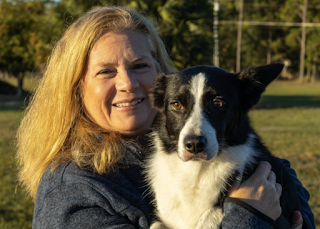
| Fit, the 2022 Farm Bureau Farm Dog of the Year, with her owner Cindy Deak (Farm Bureau photo) |
Entrants can also vie for the coveted People's Choice Pup award, on which the public votes, beginning in October. The winning pooch will get bragging rights and a year's worth of Purina dog food.
Click here for more information or to enter, along with footage of the current Farm Dog of the Year: a 5-year-old border collie named Fit who helps her owners move sheep on their Florida farm.
Rural seniors least likely to be vaccinated against Covid-19
Wednesday, April 27, 2022
Woes of the pandemic prompt more states to require financial-literacy classes for high-school graduation
"The Covid-19 pandemic, which revealed how many American adults live on the financial edge, has boosted ongoing efforts to make financial literacy lessons a school requirement," Elaine S. Povich reports for Stateline, a news service of the Pew Charitable Trusts.
Seven states require a stand-alone financial-literacy course to graduate from high school, "and five additional states' requirements take effect in the next year or two," Povich reports. "About 25 mandate at least some financial training, sometimes as part of an existing course. This year, another 20 states or so have considered setting or expanding similar rules."Opponents of such required courses say they are well motivated but "infringe on limited time available for other high school electives and would impose costly teacher training or hiring requirements," Povich reports. Some opponents of mandates say it should be a local decision. However, support for required courses is "remarkably bipartisan," Povich reports, noting bills signed by Republican Gov. Ron DeSantis of Florida and Democratic Gov. Dan McKee of Rhode Island.
"About 16% of 15-year-old U.S. students surveyed in 2018 did not reach the baseline level of financial literacy proficiency, according to the Organization for Economic Cooperation and Development," a multinational agency, Povich reports.
Rural Texans file federal lawsuit against Hill Country county that banned books and fired a librarian
As The Rural Blog recently shared, a rural Texas county has been in an uproar since last fall, when conservative activists got local leaders to censor library books and fire a librarian who objected to it. What happened next illustrates how similar efforts to ban books could go.
"A citizens group in Llano County, Tex., has filed a lawsuit in federal court alleging that county officials violated their constitutional rights when they unilaterally removed 'award-winning books' from the public libraries 'because they disagree with the ideas within them,'" Annie Gowen reports for The Washington Post. "In the 31-page filing in U.S. District Court for the Western District of Texas in San Antonio, a group of anti-censorship activists say that county officials violated the First Amendment when they removed the books, and that they did so again when they 'permanently terminated access to over 17,000 digital books' they could not censor, affecting the elderly and people with disabilities who find it hard to travel to the physical library. Commissioners also voted to close library board meetings to the public, a move that also denied these citizens equal protection under the law, the suit argues."Housing shortage triggers skyrocketing rents, but construction costs slow affordable housing projects
A housing shortage is fueling skyrocketing housing costs in rural areas and elsewhere. But rising construction costs—especially for lumber and petroleum-based products such as asphalt—make it difficult to build more housing and ease the crunch, and federal laws make it hard to apply pandemic aid to the problem, Kristian Hernandez reports for Stateline.
"For developers of market-rate apartments, [cost increases mean] charging higher rents. For those building rent-restricted projects using tax credits or other government aid, the rising costs could quash an entire project. And the construction slowdown is coming at a time when there is a desperate need to increase the nation’s supply of affordable housing," Hernandez reports. "The stock of low-cost rentals has been shrinking for some time: In 2019, there were 3.9 million fewer units renting for less than $600 than there were in 2011, according to the Joint Center for Housing Studies at Harvard University. The overall rental vacancy rate in the fourth quarter of 2021 was just 5.6%—the lowest figure since the mid-1980s—evidence that there is an extremely tight supply."
Average rents have gone up more than 17% in the past year, and tenants' income hasn't kept pace, and neither have government housing programs, Hernandez reports. About half of the nation's renters are paying more than the recommended limit of 30% of their income in rent, but government rental assistance has remained essentially flat for the past 20 years, according to Ingrid Ellen, director of New York University's Furman Center for Real Estate and Urban Policy.
Though the federal government has allotted billions in aid for the pandemic, its rules bar the money from being used for the Low-Income Housing Tax Credit program. LIHTC is the largest source of affordable housing financing, and has an outsized impact in poverty-stricken rural areas. "The problem is that, under the current rules, recovery funds must be spent by the end of 2026. That means the money can’t be used for long-term loans to help finance LIHTC developments," Hernandez reports. "Some state housing agencies have found a way around the restriction by mixing federal coronavirus aid and other funds ... Some agencies have been able to use recovery funds to cover up to 75% of the cost of a loan with these workarounds, but the process is complicated and adds costs to a project." A bipartisan bill would let states loan pandemic aid for LIHTC sites.
Pandemic roundup: Shots could have prevented 234K Covid-19 deaths; decade of public preschool gains erased
Tuesday, April 26, 2022
Landowners' growing interest in conserving their land ignites debate over property rights of heirs who might want to sell
Conservation land-trust groups across the U.S. have seen a spike in interest from landowners who want to preserve their farms and other lands from development, "but the growing interest in preserving privately held land has sparked a fierce debate between supporters who say such efforts guarantee environmental protections and critics who say they take away individual property rights," Alex Brown reports for Stateline. "A handful of states are considering expanding their conservation easement programs, which offer tax breaks to landowners in exchange for giving up development rights to their farms and natural lands. In many cases, those easements last in perpetuity, offering durable protection even when the property changes ownership."
However, "Lawmakers in several states have pushed to give officials veto power over conservation easements or to require expiration dates for the agreements. They argue that the contracts block future generations from making their own decisions about the land," Brown reports. "Other opponents argue that public money should not be used to fund conservation on private land. They claim that efforts to protect natural spaces will cause housing shortages in fast-growing communities and limit tax revenues for local governments. Both sides see the others’ efforts as something of a land grab. How states respond could determine the fate of tens of millions of acres."
General anti-vaccine sentiment gaining new momentum amid opposition to coronavirus vaccination for children
Opposition to requiring coronavirus vaccines for children has breathed new life into a movement to eliminate all childhood vaccine mandates, or at least limit the application of such requirements.
More than 65 bills to limit or eliminate mandatory childhood vaccinations have been introduced in 25 states this year. "In Missouri, for example, legislators are considering a measure exempting private school students from vaccine requirements. In Louisiana, a bill in the House would prohibit vaccinations on school property and at school-sponsored events," Sandy West reports for Kaiser Health News. "All states require specific childhood vaccinations for illnesses such as polio, measles, and mumps, but exemptions vary. They all allow exemptions for people with medical concerns, 44 states allow religious exemptions, and 15 allow philosophical exemptions, according to 2021 data from the National Conference of State Legislatures."
Anti-vaccine activism isn't new, but public-health experts say the movement has gained ground amid fears surrounding the coronavirus vaccine. Anti-vaccine sentiment once relied on long-debunked theories that vaccines cause autism, but in recent years "the movement began to shift its focus to align more with the populist ideology of 'individual freedoms' put forward by Second Amendment advocates and the tea party," West reports.
That dovetails with a rising tide of conservative activists who have sought to influence policy in libraries, county governments and school boards to statehouses, under the banner of liberty.
However, general anti-vaccine efforts aren't entirely grassroots. The similarity of anti-vaccine bills from state to state "raises red flags to vaccine advocates because it suggests that a coordinated effort to dismantle vaccine requirements and public-health infrastructure is underway," one expert told West.
It's unclear how much traction anti-vaccine-mandate bills will get. Most people support childhood vaccine mandates, but the issue is increasingly getting tangled up in the political minefield surrounding coronavirus vaccinations. Some politicians say they're hoping cooler heads will prevail.
Kansas state Rep. John Eplee, a Republican and family physician, said he voted against a state mask mandate in hope of defusing tensions, but supports childhood vaccination mandates. "While Eplee hopes the 'passions' inflamed by Covid die down with distance from the early days of the pandemic, he’s concerned that voters have forgotten the damage done by vaccine-controllable diseases, making them susceptible to disinformation from determined anti-vaccine activists and the politicians among their ranks," West reports.
"I hate to see human nature play out like that," Eplee told West. "But if people are vocal enough and loud enough, they can swing enough votes to change the world in a not-so-good way for public health and vaccinations."
Registration is open for free virtual conference May 23-24 on rural placemaking, which improves community structure
- Initiating Place
- Public Spaces & Gathering Places
- Community Cultural Planning & Assessments
- Cross-Sector Engagement
Friday webinar will discuss the accuracy of the 2020 census, an issue in many rural areas, and how to best use its data
From the website: "With the 2020 census results out, many are eager to use the data—and to assess its accuracy. The U.S. Census Bureau has begun releasing its own data-quality evaluations, with national results from the 2020 Post-Enumeration Survey and the 2020 Demographic Analysis estimates. Data users outside the bureau are looking at quality, too. In this webinar, we’ll discuss this decade’s census data quality and how it compares with that of previous decades, what additional analyses are coming from inside and outside the bureau, and what questions remain."
- Tim Kennel, assistant division chief for statistical methods, Census Bureau
- Teresa Sullivan, chair, National Academies of Sciences, Engineering and Medicine’s Panel to Evaluate the Quality of the 2020 Census
- Dr. William O'Hare, president, O'Hare Data and Demographic Services LLC
Rural Iowa journalist opines that Biden and the Democrats have done much for rural America and should say so
President Biden's name is mud in much of rural America, but he has done more for such places in two years than former President Trump did in four, writes one journalist in rural Iowa. "The rural economy is stronger, wages are higher and infrastructure projects are popping up all over," Iowa radio news director Robert Leonard writes in The New York Times. "Biden and his fellow Democrats are responsible for many of the improvements and for bringing back a sense of stability. For the midterms, they should run on these successes — the American Rescue Plan, the infrastructure bill. And they should run on why they have worked: Democrats should run on Democratic values."
The recent infrastructure bill made a point of directing funding to rural areas, and it's "so obviously beneficial to the communities that even Republicans who voted against it are taking credit," Leonard writes. He lists other things the administration has done (or undone) to help rural areas, such as promoting competition among meatpackers.
But all that seems unlikely to generate enough goodwill to help Democrats this fall. "When it comes to the midterms, the problem is not really about Mr. Biden himself but about long-running trends, and the only way to alter those trends is to change the perception of Democrats on the national level," Leonard writes. "Too often, Democrats leave it to Republicans to set the agenda and frame issues, or blame conservative media."
Instead, he writes, "Democrats should be proud of what the party has been and is — the party of Social Security, Medicare and Obamacare, of greater opportunity for more and more Americans — and what it is and what it stands for, and their values: for smart government being part of the solution, not the problem; for health care as a right, not a privilege; for clean water and air and effective climate solutions; for taxation that doesn’t favor the rich; for equal opportunity for all; for life chances and opportunities that aren’t determined by one’s ZIP code, race, gender, faith, sexual orientation or gender identity. These are Democratic values. They can play everywhere, including in rural America. Run on those."
Leonard is news director of KNIA and KRLS, serving Knoxville, Pella and Indianola, and author of Deep Midwest: Midwestern Explorations.
Monday, April 25, 2022
School probe wins Arkansas weekly Taylor Family Award for Fairness in Journalism from Harvard's Nieman Foundation
![]() |
| Madison County Record photo by Shannon Hahn |
Wall Street Journal video explains many reasons why fertilizer prices are so high and might go higher in 2023
Bitcoin mining booms in some rural areas, thanks to ban on it in China, but locals complain about noise, few jobs
![]() |
| Blockware Mining's cryptocurrency mine at Paducah, Kentucky (Lexington Herald-Leader photo by Ryan C. Hermens) |
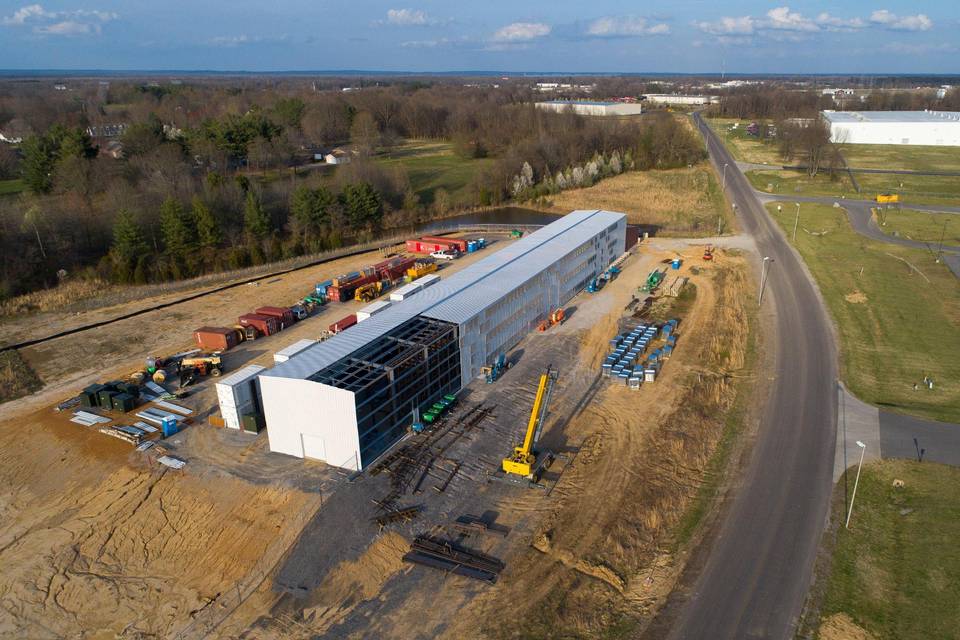
In the past year or so, "Companies have moved thousands of specialized computers into Kentucky to 'mine' for bitcoin, a cryptocurrency — or virtual currency — sometimes referred to as digital gold. Critics say it’s bad for the environment and produces few jobs," rural Kentucky reporter Bill Estep reports for the Lexington Herald-Leader.
Here is a more in-depth primer about bitcoin mining, but essentially, shoe box-sized computers "earn" bitcoin by being the first to find the correct answer to complex calculations, which are aimed at preventing counterfeiting and stealing. But all that "mining" computation, and the massive fans needed to keep computers from overheating, is noisy and takes a lot of electricity. An official in southeastern Kentucky's Harlan County, for example, told Estep that a local project will use as much power as eight Walmart supercenters.
Cheap electricity in Kentucky, about 10% lower than the national average, has made the state attractive to bitcoin miners. "Kentucky had 18.7 percent of the collective computing power in the U.S devoted to bitcoin mining as of last October, according to Foundry, a company that operates a large bitcoin mining pool, CNBC said in a story. That was second only to New York, with 19.9 percent of the computing power. Georgia was next at 17.3 percent and Texas was home to 14 percent of the computing power, called hashrate," Estep reports. "Companies have set up racks of mining rigs on shelves in industrial buildings in the western end of the state, at sites left empty when coal mines shut down in Eastern Kentucky, even in shipping containers to get up and running as quickly as possible."
Kentucky legislators passed two tax breaks in 2021 meant to attract bitcoin miners, but the industry is controversial: "Some people don’t like the idea of forgoing tax revenue from cryptocurrency miners — or other companies, for that matter — while other needs in Kentucky aren’t well-funded; others see echoes of coal mining in cryptocurrency mining, with the profits going to out-of-state corporations," Estep reports. Also, though bitcoin mining creates construction and set-up jobs, the operations only provide a handful of permanent jobs after the mine is up and running.
One example in East Tennessee shows what happens when the noise of bitcoin mining inspires buyer's remorse, Kevin Williams reports for The Washington Post. In the rural community of Limestone, a bitcoin mining plant opened up last April. The town initially welcomed the plant and hoped for more jobs and an economic boost. Now residents and local officials say the mine is sometimes as loud as a jet engine. The county has filed suit against the company and the local electricity provider that owns the land the mine sits on, and county commissioners have blocked attempts to open a second mine.
"Objections from local residents have complicated prospects for cryptocurrency mining in Appalachia — despite cheap land, plentiful power and utility companies hungry for additional revenue streams to replace the manufacturing customers that have been leaving for decades," Williams reports.About two-thirds of the world's bitcoin mines were in China until its government banned it last year, citing bitcoin's price volatility as a threat to citizens' assets and the nation's overall financial stability, Estep reports. Similar concerns prompted President Biden to order a review of the cryptocurrency industry, but in the meantime bitcoin mining operations have been increasingly popular in the U.S.
Rural Midwestern bankers say local economies thrive, but predict economic downturn with little impact from E15 sales
![]() |
| Creighton University chart compares current month to last month and year ago; click here to download it and chart below. |
An April survey of rural bankers in 10 Midwestern states that rely on agriculture and energy showed still-growing local economies amid deepening concerns about the near future. The index surveys bankers in about 200 rural communities with an average population of 1,300 in Colorado, Illinois, Iowa, Kansas, Minnesota, Missouri, Nebraska, North Dakota, South Dakota and Wyoming.
Thursday, April 28 webinar will show how to read USDA's baseline agricultural projections for the next decade
"The USDA Interagency Agricultural Projections Committee develops long-term agricultural projections, also referred to as 'baseline' projections, that provide a scenario for the U.S. farm sector and global trade for the next 10 years. Projections cover agricultural commodities, agricultural trade, and aggregate indicators of each sector (such as farm income). The projections identify major forces and uncertainties affecting future agricultural markets; prospects for global long-term economic growth, consumption, and trade; and future price trends and trade flows of major farm commodities. In this webinar, ERS agricultural economist Matthew Miller will discuss how the projections are made and used, provide highlights from the recent projections, and demonstrate how to find the data on the ERS website.
Friday, April 22, 2022
Hard-nosed N.M. weekly sold to execs with GOP, energy ties; they suggest it's better sold to in-staters than to a chain
![]() |
| Robert B. Trapp |
![]() |
| Española, N.M., in Rio Arriba County (Wikipedia map) |
Medical care for miners with black-lung disease will be the topic of a webinar at 11 a.m. ET Monday, April 25
The Black Lung Association will hold a free webinar at 11 a.m. ET Monday, April 25, to discuss the medical care needed by miners with black-lung disease.
From the website: "Incidents of black lung have increased sharply over the past 20 years, especially in Appalachia. Caring for the miners afflicted with this progressive and deadly disease is challenging, meaningful, and very necessary work. Join us in April to learn from an expert panel about how the disease is contracted, how it affects the body, how it is diagnosed and treated, and how you can support ailing miners professionally and personally."
A recent study found that black-lung disease is becoming more common and more severe among younger miners in Central Appalachia because of industry shifts that have increased exposure to silica dust. At the same time, the federal Black Lung Disability Trust Fund, which helps pay for many miners' medical care, is at risk of insolvency.
The panel will feature:
- Jerry Coleman, coal-miner and president of West Virginia's Kanawha County Black Lung Association
- Leonard Go, pulmonologist with the University of Illinois at Chicago and Northwestern University
- Susie Criss, black lung claims counselor at Cabin Creek Health
- Debbie Johnson, licensed practical nurse and black-lung program director at Bluestone Health
- Brenda Halsey Marion, registered nurse, long-time Black Lung Association organizer, and former director of New River Breathing Center
Pandemic roundup: Seniors, diabetics, and loved ones left behind reflect on disease that has killed 1 million in U.S.
Here's a roundup of recent news stories about the pandemic and vaccination efforts:
Older Americans reflect on what the pandemic has taken from them. Read more here.
According to the Centers for Disease Control and Prevention, 87% of U.S. children who were hospitalized with Covid-19 during the Omicron surge were unvaccinated. Read more here.
The long-term consequences of the coronavirus pandemic are starting to become clearer, writes the former editor of DTN/The Progressive Farmer. Read more here.
The U.S. death toll from Covid-19 will soon surpass 1 million if it hasn't already. The Atlantic's Ed Yong writes about how many Americans who have lost someone feel their grief has been "intensified, prolonged, and even denied by the politics of the pandemic." Read more here.
Kaiser Health News takes a snapshot of a rural Pennsylvania county with one of the highest Covid-19 death rates in the nation. Read more here.
Diabetics have been one of the hardest-hit groups by the coronavirus. Experts hope policymakers will notice and increase efforts to address the nation's diabetes crisis. Read more here.
The Food and Drug Administration has authorized the first breath test to detect the coronavirus. Read more here.
The recent ruling that vacated the Biden administration's mask mandate for public transportation has dealt another blow to the dozens of small mask factories scattered across the country. Read more here.
Quick hits: Texas town split by murder charges in alleged abortion; why food prices are up and farmer profits aren't
Consumer Financial Protection Bureau says rural areas face unique difficulties accessing banking services
The Consumer Financial Protection Bureau, an independent agency Congress created during the Great Recesssion, launched an initiative last month to focus on financial issues rural Americans disproportionately face. This week, CFPB issued a follow-up report detailing the banking disparities rural Americans often contend with.
"The report highlights that many of these communities lack access to physical bank branches, are more likely to seek credit from nonbanks, and are heavily affected by medical bills. The CFPB will be expanding its efforts to address these and other challenges facing the people and families of rural America," CFPB reports. "Local financial institutions, such as community banks and credit unions, often offer products and services that fit the local economic terrain. However, rural communities are experiencing a fast-paced exodus of in-person banking services, with rural communities 10 times more likely than urban communities to be located in banking deserts. In fact, the Federal Reserve has identified more than 2,100 existing and potential banking deserts across the country with more than 1,500 located in rural areas."
Other key findings of the report:
- Rural Americans are more likely to depend on brick-and-mortar bank branches and smaller banks.
- Rural Americans are less likely to have a credit history (i.e., have held and used a credit card). Lack of a credit card, or the credit history to get one, makes it more difficult to address short-term financial emergencies, seek new opportunities (such as moving or starting a business), or fill short-term income gaps.
- Unpaid medical bills affect rural access to credit, housing, and unemployment. Also, health-care and insurance costs tend to be higher in rural communities than in suburban or urban areas.
Thursday, April 21, 2022
Firearms top cause of death for children, up 29.5% in 2020; drug deaths up 84%; how and why do rural kids carry guns?
| Chart from New England Journal of Medicine also shows 84% rise in deaths from drug overdose and poisoning. |
Firearms surpassed car accidents as the top cause of death among children and teens, according to an analysis of federal data recently published in The New England Journal of Medicine. Data from the Centers for Disease Control and Prevention showed that firearm-related deaths for people aged 1 to 19 increased 29.5 percent from 2019 to 2020, the first year of the pandemic, University of Michigan researchers found. That's more than twice the rate of increase in the general population. In raw numbers, that's about 4,300 minors who died in 2020 from all causes of firearm-related deaths.
The gun-death rise was seen across most demographics and types of firearm death. However, gun deaths increased much more than gun related suicides, among minors as well as in the population overall, the researchers found. The university launched a $10 million Firearm Injury Prevention Research initiative in 2019 to overcome the lack of federal funding for such research.
A recent University of Washington study, meanwhile, looked at youth ages 12 to 26 in rural areas who carry handguns, and found six distinct patterns in the age of initiation, duration, and frequency of when they carry guns. The researchers used self-reported data from youth and young adults in 12 rural communities across seven states. Though most rural youth rarely or never carried, the likelihood of handgun carrying tended to increase steadily with age, with no peak through age 26. Among urban youth, in contrast, youth were most likely to carry at age 21, and likelihood declined after that. Overall, researchers said their findings suggest that rural communities should begin promoting handgun safety early, and that safety programs need to be tailored to rural contexts.
Family behind Columbia Sportswear expands philanthropic efforts to help rural and tribal communities in Oregon
Columbia Sportswear, based in Portland, Oregon, is a $5.5 billion outdoor-clothing juggernaut, and the family that owns it is passionate about philanthropy. The extended family's Roundhouse Foundation, launched in 2002, initially focused on supporting arts projects with grants, but in the past few years has become more involved in creative problem-solving in the state's rural and tribal communities, Ade Adeniji reports for Inside Philanthropy.
When Gert Boyle, the daughter and heir of founder Paul Lamfrom, passed away in 2019, she left a large sum to the foundation that her daughter Kathy Deggendorfer says triggered "an explosion of growth," Adeniji reports. Deggendorfer, husband Frank and daughter Erin Borla now run the foundation; they sat down with Adeniji to talk about "how Gert envisioned the family’s philanthropy, how grantmaking has grown to tackle creative placemaking in underfunded rural communities, and now, on the heels of a huge bequest, where the family plans on taking their philanthropy next."
| Wikipedia locator map, adapted |
Weekly newspaper in Iowa wouldn't have survived without gifts, including small ones, Pulitzer-winning editor says
![]() |
| Art Cullen (Photo by Clay Masters, Iowa Public Radio) |
"This newspaper war was killing both newspapers," Cullen told Ben Kiefer. "We were losing gobs of money. Something had to change." Cullen and his brother John had both gone off the payroll after going on Social Security. With other papers they formed a foundation that helped keep them afloat. "We couldn't have done this without philanthropy, and we couldn't do the journalism we're doing," Art said. "We wouldn't exist. We would have closed last year. And I bet the [Storm Lake] Pilot-Tribune was pretty close to it; I don't know."
"We couldn't have done this without philanthropy, and we couldn't do the journalism we're doing. We wouldn't exist. We would have closed last year. And I bet the Pilot-Tribune was pretty close to it, I don't know. But we wouldn't be here if it weren't for the Western Iowa Journalism Foundation, which is a nonprofit foundation to support independent, family-owned newspapers in Iowa. And, uh, so we really need philanthropy, I think, for the next five years until we can build these digital products that can sustain themselves."
Rural coronavirus cases are on the rise even as Kansas and Missouri declare it 'endemic' and reduce data reporting
![]() |
| New coronavirus infections, in ranges by county, April 11-17 Map by The Daily Yonder; click on the image to enlarge it or click here for the interactive version. |
Rural counties reported nearly 18,2000 new coronavirus cases during the week of April 11-17, a 9 percent increase from the week before. The uptick, concentrated in New England, marks the end of an 11-week downward trend in new rural cases, Tim Marema reports for The Daily Yonder. New metro cases fell by about 2%. However, data on cases and deaths is skewed — and will likely stay skewed — because some states have stopped regularly reporting data.
Rural deaths related to Covid-19 fell by about 12% from the week before, while Covid deaths in metropolitan areas fell by about 5% in the same time period. The weekly death rate was about 40% higher than the metro rate, and has been higher than the metro rate for almost a year, Marema reports.
"The cumulative death toll from the pandemic is also higher in rural counties than metropolitan ones. Since the start of the pandemic, 172,000 rural Americans have died from Covid-19, which equates to about one death for every 267 rural residents," Marema reports. "Metropolitan counties have recorded 771,290 Covid-related deaths, which equates to about one death for every 366 metropolitan residents."AP expands election coverage to include a democracy news editor; its big vote-fraud probe remains available to weeklies
The Associated Press announced Wednesday what it calls "a significant expansion of AP’s approach to politics, democracy and elections coverage," which will "include everything from elections and campaigns to threats to democracy, voter attitudes, misinformation, how elections are administered and the impact of new voting laws. Crucially, this team will connect its reporting to people across the country, particularly to historically marginalized communities who face new hurdles to the American right to vote – and have their votes be counted. This is a new approach for AP, but one that amplifies the AP’s long-standing commitment to fact-based reporting on elections, politics and public opinion. That remains the core of our mission."
The plan includes two new posts, a national political reporter and a an editor with a title not seen before: "The democracy news editor will lead our coverage of the mechanics of the American democracy and the challenges it faces, including voting rights and access, election administration, misinformation and much more. This editor will work with beat reporters in Washington and across the U.S. to identify legislation, court cases, election misinformation and political influence that impacts election outcomes." They will answer to Steven Sloan, the new deputy Washington bureau chief for politics and elections.
If you're at a weekly newspaper that doesn't subscribe to AP, why should you care? Because AP sets the standard for evenhanded, accurate coverage, and that's all the more important at a time when millions of Americans have lost faith in the news media and the electoral system. Also, AP has shown a willingness to help non-subscribers who want to provide coverage that gives necessary facts. In December, at the request of the Institute for Rural Journalism and Community Issues, publisher of The Rural Blog, it made available to non-subscribing weekly newspapers its comprehensive investigation that debunked claims of widespread vote fraud in the six states that decided the 2020 presidential election. With millions of Americans still believing "the big lie" about that election, the story is still highly relevant.
OPINION: Earth Day and the news media's point of view
On the first Earth Day, in 1970, America’s TV networks were not shy about taking a position on the news of the day. CBS News produced a special titled “Earth Day, A Question of Survival,” which opened its flagship evening broadcast showing biologist Barry Commoner telling a crowd, “This planet is threatened with destruction…. We are in a crisis of survival.” Anchorman Walter Cronkite then reiterated the theme, declaring this a “unique day in American history, dedicated to mankind seeking its own survival.” ABC News titled its own special report, “Earth Day: An SOS for Survival.” Anchorman Frank Reynolds’ first sentence congratulated activists for speaking out, crediting “millions of Americans” with taking “the first step to survival.”
CBS and ABC devoted virtually their entire broadcasts to the Earth Day story, with correspondents emphasizing the scourges of air and water pollution in reports from New York, Boston, Washington, Chicago, Denver, Albuquerque, and St. Louis. NBC’s coverage was less extensive but featured one item that, viewed from today, sounds eerily prescient. Anchorman Frank Blair reported that “a government scientist” had told colleagues at the American Geophysical Union that “over-pollution, unless checked, could so warm the earth in 200 years as to create a greenhouse effect, melting the Arctic ice cap and flooding vast areas of the world.”
At the time, network television was approaching the height of its power to influence public opinion. So when the evening newscasts lavished so much attention on Earth Day, and made their support for tackling pollution so clear, the effects were profound. Richard Nixon, not yet halfway through his first term as U.S. president, took the hint. Memoirs of top White House aides later revealed that the outpouring of public sentiment on Earth Day—some accounts estimated that 20 million people took part, a collective that drew supporters from all parts of society, not just long-haired radicals—convinced Nixon that his re-election chances in 1972 required taking the environment issue away from his opponents. Before long, Nixon had created the Environmental Protection Agency and signed the Clean Air Act, the Clean Water Act, and other legislation that to this day rank among the strongest environmental laws on earth.
Which brings us to this Earth Day. By all scientific accounts, the environmental crisis that activists highlighted more than half a century ago is much more dire today, and the need for far-reaching action more urgent. And yet those network news anchors from 1970, dismissed as anachronisms in our digital era, were in many ways ahead of where journalists are now. Just imagine each of America’s big three networks leading their broadcasts with the recent UN climate report, packaged under headlines like “A Question of Survival,” and then spending the entire program explaining the problem and exploring solutions.
It is tragic that, until very recently, the media’s treatment of the environment story has gone backward from 50 years ago in every conceivable metric: less urgency, less space, fewer minutes on the air. The fact that journalism is finally beginning to give the story the attention it deserves probably says more about the state of the weather than it does about a newfound media commitment to chronicle what’s happening. As U.S. Rep. Jamie Raskin, Democrat of Maryland, said in an interview published this week by members of the global media collaboration Covering Climate Now, “If we were smarter as an animal, humans would be working on nothing other than climate change.”
A big part of the problem has been the sense among journalists—again, until very recently—that aggressive coverage of the climate story is somehow activism, and that covering the activists pushing for change is a partisan act. But when you go back and watch the coverage from 1970, you see none of that hesitancy from the very sober, very straight-laced anchors of the day. “Act or die,” was how Cronkite summarized the message of that first Earth Day. Imagine reading the same headline today in the news pages of The New York Times.
Those inaugural Earth Day reports illustrate an enduring journalistic truism: all news coverage has a point of view. Every news story, every home page, every TV or radio program reflects a point of view, if only implicitly. That point of view is defined by which subjects get covered and which do not; which facts are reported and which are not; which voices are quoted and which are not. Accuracy and fairness remain essential to honest journalism, but there is no escaping a point of view. “In a battle for facts, in a battle for truth, journalism is activism,” said Philippine journalist Maria Ressa, winner of the Nobel Prize, who has been repeatedly targeted and arrested for her decision to report truthfully about her homeland.
Reporting with a point of view has a storied place in journalistic history. The reporters in Vietnam chronicling the lies about how many people were dying in the war were reporting with a point of view, as were the TV cameras documenting the civil rights movement. More recently, coverage of the war in Ukraine has portrayed Russia’s invasion as a brutal and unwarranted act that has criminally targeted civilians. Coverage of Covid-19 likewise portrayed the pandemic as a public-health emergency that requires vaccines, face masks, and physical distancing to overcome.
This Earth Day, newsrooms everywhere should resolve to apply this same kind of journalistic attention and judgment to the climate crisis. If a point of view is inevitable in journalism, let ours be one that favors defusing this catastrophic threat to our planetary home. That should not be a difficult choice to make, for journalists or anyone else.
Mark Hertsgaard and Kyle Pope are co-founders of Covering Climate Now. Hertsgaard is its executive director, and the environment correspondent of The Nation. Pope is editor and publisher of Columbia Journalism Review.