Friday, June 10, 2022

Goats increasingly used to prevent wildfire by eating the fuel

Goats at work near Glendale, Calif.
(Getty Images photo by Robyn Beck)
As the risk of wildfire increases, land managers are increasingly turning to goats to eat plants that fuel the fires, Chris Iovenko reports for National Geographic.

"Deploying goats to clear land of vegetation is an age-old practice, but as wildfires worsen worldwide, places as diverse as Greece, Australia, and other parts of the U.S., such as Arizona and Colorado are embracing the herbivores as important tools for wildfire prevention," especially in steep and rocky terrain, Iovenko writes from southern California, a state that lost over 2 million acres to wildfire last year.

“Grazing is the most widespread vegetation management we have in California,” Lynn Huntsinger, professor of rangeland ecology and management at the University of California, Berkeley, told Iovenko.

"Prior to fire seasons in the past, land managers traditionally relied on herbicide and human labor to thin plants and brush to reduce fuel load, the amount of flammable material that can burn in a fire," Iovenko writes. "But access to mountain terrain in southern California can be challenging, and such traditional clearing practices can leave behind seeds that germinate the next year."

“When goats eat the seed, it goes through their digestive tract, and it becomes nonviable. It doesn't grow after it comes out the other end, which is really amazing,” said Alissa Cope, owner of Sage Environmental Group, one of about a dozen goat suppliers in southern California.

"One of the oldest domesticated animals, goats are adventurous and curious eaters with iron-clad stomachs," Iovenko notes. "They can eat plants toxic to other kinds of livestock. They also are hardy and can climb steep hillsides and terrain inaccessible to other animals." But they also need goatherds because “Goats are like an indiscriminate brush cutter; they will chew on any vegetation that they like,” Jutta C. Burger, science program director for the California Invasive Plant Council, told Iovenko.

One of their big targets is black mustard, an invasive plant that "outcompetes native vegetation because it grows profusely and its roots generate biochemicals that stop the seeds of other plants from germinating," Ivenko reports. "Its growing season makes it a particular menace: It thrives in the spring and can grow to eight feet high, only to die and turn to dangerous tinder by early summer."

Thursday, June 09, 2022

Some university professors and journalism programs are helping rural newspapers; one prof says it's about time

Fourth in a series of reports on the National Summit on Journalism in Rural America, held June 3-4 by the Institute for Rural Journalism and Community Issues and the College of Communication and Information at the University of Kentucky. Summit sessions can be viewed on YouTube.

As more higher-education journalism programs try to serve community journalism, one professor who started a newspaper with her students, is doing hands-on research and testing a new business model at two weekly papers says the efforts are long overdue.

Teri Finneman
The state of journalism and the news business "is a colossal failure of higher education," Teri Finneman, an associate professor of journalism at the University of Kansas, said at the National Summit on Journalism in Rural America Saturday afternoon.

"Where the hell has the ivory tower been the last 20 years?" Finneman asked. "We are the ones who should have been leading the research, working with the industry, to avoid this mess that we are in right now. . . . It is time for the ivory tower to step up and support our counterparts in the industry."

Finneman is a researcher of journalism history, but she has launched into doing journalism with her students, as publisher of the Eudora Times in a small town nine miles from her journalism school, which will host "News Desert U." Oct 21-22 for journalism educators to address the crisis. "It is time for universities to step up, finally, and do something about this," she said.

This summer, Finneman is testing a new business model for community papers at Harvey County Now in Newton, Kan., and the Hillsboro Free Press, which will get $10,000 to participate. The model aims to get more revenue from the audience with e-newsletters, events and two tiers of memberships. Kansas Publishing Ventures, which owns the papers, is keeping detailed minutes of its weekly meetings on the project, to help develop an information packet for community papers across the nation, Finneman said.

The model is based on surveys that Finneman and other researches did in Oklahoma, Kansas, Nebraska and the Dakotas, which found that newspaper readers are much more willing to support their papers with money beyond subscriptions that newspaper publishers think they are. In North Dakota, the only state where she has released her results, 40 percent said they were likely or very likely to donate.

Finneman said she and her colleagues were "taken aback" at the attitude of publishers in focus groups who felt that asking for voluntary support would be admitting failure or showing personal weakness. "They very much saw themselves as a business, as opposed to an unreplaceable civic community organization that a newspaper is," while "leaving free money on the table."

She said publishers cited the lack of time and resources for business-model experimentation, but "Overall, there was very much this underlying fear, the fear of doing something different."

M. Clay Carey
In a session on what sort of research journalism schools could do to help rural news outlets, Clay Carey of Samford University in Alabama said research projects need to have social value, not just economic and journalistic value. "We all know the future of rural news outlets is tied to the future of rural places," he said, so "stories of places that are struggling" could he helpful.

The summit's "research question" was "How can rural communities sustain local journalism that supports local democracy?" Carey said we need research that is centered on the idea of democratic practice, and the essential role of agency: the ability to act on information. He said research has focused on information at the expense of focus on agency, which many people feel they don't have, and suggested more specific research questions" How can journalistic organizations equip people to be civically engaged? How can they encourage and empower them? Perhaps by "inviting people to participate in sharing their story," he said.

More broadly, he said universities should ask, "How can news organizations facilitate collaboration that creates a sense of community and creates positive change?" and think about facilitating collaboration among local newspapers, national and regional organizations, and local entities such as libraries. He said universities can help create frameworks, and reduce risk and risk aversion. And all the while, do research that is "accessible to people outside the academy. . . . It's easy for research to be an extractive industry, in the same way that journalism can be an extractive industry."

Bill Reader
Bill Reader of Ohio University, a longtime community journalism scholar, said "The academy has not been a friend of the cause, overall," but "Industry leaders have ignored the research of the past, and they are ignoring the research of the present." He said research needs to take on the knowledge gap between "haves and have-nots" in rural communities. "Helping people become full-fledged members of the community builds support for the newspaper, long-haul."

Beyond research, some university journalism programs are trying to help individual papers and the industry at large. University of Georgia students staff The Oglethorpe Echo, a nearby paper that was going to close until retired chain publisher Dink NeSmith created a nonprofit and got the university involved (he described the process in the first Saturday afternoon session); and West Virginia University has the NewStart program to train the next generation of community newspaper owners. Its director, Jim Iovino, reported that the University of Texas is sending someone to see how it can emulate the effort. In both states, newspaper associations asked universities for help because newspaper owners could not find acceptable buyers for their papers.

Further reports on the National Summit on Journalism in Rural America will appear later. Topics will include support from philanthropies and editorial approaches. Previous articles were on the state of rural journalism, the Summit-driven effort for sustainability in rural journalism and nonprofit models.

Immigrants could revitalize rural America, Iowan argues

In Storm Lake, Iowa, last month, Ali Noorani, president and CEO of the National Immigration Forum, a nonpartisan organization working with faith, law enforcement and business leaders to promote the value of immigrants and immigration, participate in a forum on his book Crossing Borders, the Storm Lake Times-Pilot reports. (Photo from the Times-Pilot)

Revitalization of rural America depends on immigrants, radio news director Robert Leonard of Knoxville, Iowa, writes in an opinion piece in Time magazine.

Leonard begins his piece by describing his encounter with a group of Ukrainian refugees and writes, "My rural Iowa county, population about 33,000, and other rural counties across America, are positioned to do what we can to help not only Ukrainian refugees, but others. It’s a stain on America that while we are willing to help Ukrainian refugees, because they look like the majority of our population, but aren’t as welcoming to Syrian, African, and those coming from south of the border because they don’t. We should help and welcome refugees because we can, but also, if you need a cold-hearted economic reason, because we need them."

Noting that more than 100,000 jobs are available in Iowa, which has 59,500 people unemployed, Leonard argues, "Inviting immigrants, and having the support system in place to help them as they arrive, isn’t a cost, it’s an investment. The story is the same in many parts of rural America, where most of America’s domestic production of food, fuel, and fibers such as cotton and wool, comes from. Much of this labor is seasonal. Without labor, companies die. While the entire country is suffering from a labor shortage, rural America is particularly hard hit, in part because many rural Americans are moving to larger metropolitan areas. We need immigrants. Every rural manufacturing leader I have spoken with, regardless of party affiliation, wants immigration reform. They know immigrants can help solve their labor problems."

However, "immigration troubles at our southern border" undermine "all immigration efforts," Leonard writes. "It’s not clear that many Republicans actually want the border to be secure, because an insecure border is too valuable for them politically. In fact, some Republican attempts at immigration reform only work to make the problem worse. . . . The politics need to be taken out of it. The contemporary math of immigration is that we have jobs, and refugees and asylum seekers want to fill them. Our labor crisis can be solved by helping those caught up in political and environmental crises around the world. Many are already here, showing that they can be contributing citizens to society. Approximately 73% of farmworkers are immigrants, and they are coming vaccinated."

As for the argument that immigrants take jobs from Americans, Leonard says "Dave Swenson, an economist at Iowa State University, tells me that most immigrants take jobs that most Americans don’t want to do, mainly because of language and training obstacles. In 2020, foreign-born workers were more likely than native-born workers to be employed in service occupations, natural resources, construction, maintenance, production, transportation, and material moving occupations. Foreign-born workers were less likely than native-born workers to be employed in management, professional, and related occupations. Industries that rely the most on immigrants are now facing some of the biggest labor shortages."

Northern California county is 'a Democratic bobbing alone in a sea of red,' writes political reporter who went to see why

Alpine County in California (Wikipedia)
Alpine County, California, pop. 1,200, "is as rural as rural California gets," writes Los Angeles Times political reporter Mark Z. Barabak. But it votes "along the same lines as Los Angeles, Sacramento, San Francisco and other urbanized blue bastions," making it "a Democratic speck bobbing alone in sea of red."

To find out why, Barabak went to the county just before the recent primary election. He found several answers, including: It's a lightly populated place (California's least populous county) that became popular with "back to nature" migrants ("With so few people, it didn’t take much beyond word of mouth to help turn Alpine from red to blue"); it has a significant number of Native Americans; and perhaps "Democrats moving in and Republicans moving out as people seek to live among like-minded partisans," a phenomenon described in the 2008 book The Big Sort: Why the clustering of like-minded America is tearing us apart.

And what about the economy, often a determiner of a place's politics? "There is a bit of cattle ranching. There was once some logging. But that dried up long ago, just like the silver mines," Barabak reports. "So there was never the raging battle over natural resources that took place in other rural California counties, turning many residents against the Democratic Party and others foes derided as tree-huggers."

'Reshaping the economic narrative around America’s rural communities' will hear from practitioners in diverse places

The Brookings Institution will hold a webinar, "Reshaping the economic narrative around America’s rural communities," Wednesday, June 15, from 2:30 to 4 p.m. EDT. RSVP to watch.

Brookings says, "Persistent narratives of population loss and poverty have shaped the stereotype of rural America as decaying communities rooted in decline for decades. This dominant narrative evokes powerful charitable emotions that stimulate billions of dollars in anti-poverty investments to support their survival. Unfortunately, these critical investments come at the expense of rural America's identity, which is now mired in a thick narrative of disempowerment and urban dependence. This portrayal underappreciates the durability and ingenuity of these communities."

The webinar "will host practitioners from diverse rural minority communities to explore ways to reverse the paradox of rural disempowerment and investment and expand the narrative about the places that 46 million Americans call home," Brookings says. "Panelists will discuss policy solutions to enable economic growth in these poorly understood communities."

Brookings Governance Studies fellow Makada Henry-Nickie will moderate a "fireside chat" with
Queen Quet, Chieftess of the Gullah/Geechee Nation, then moderate a panel with Olugbenga "Gbenga" Ajilore, Office of the Undersecretary for Rural Development, USDA; Teresa Burnett, executive director of the Monahans (Texas) Chamber of Commerce, Jamie Gloshay, (Navajo, White Mountain Apache, Kiowa) with Native Women Lead; Jennifer Grassham, president of the Economic Development Corp. of Lea County, New Mexico, and David Jimenez, CEO of the Leaco Rural Telephone Cooperative of southeastern New Mexico.

Online viewers can submit questions for the speakers via e-mail to events@brookings.edu or on Twitter @BrookingsGov using #InclusiveOpportunity.

Wednesday, June 08, 2022

Registration deadline Wed., June 15, for annual conference in Ky. of International Society of Weekly Newspaper Editors

By Al Cross
Director and professor, Institute for Rural Journalism and Community Issues, University of Kentucky

Editorial critique session at an ISWNE conference
The annual conference of the International Society of Weekly Newspaper Editors, July 20-23 at the University of Kentucky, will have programs on national politics becoming local, dealing with the evils of social media, new business models for weeklies, governments’ role in the news business, university help for community newspapers, a visit from a news-media leader from Mongolia, newspapers’ and libraries’ common interests, and the hallmark of the conference: editors' critiques of other members' editorials and editorial pages.

Those sessions are on the schedule for Friday and Saturday, July 22 and 23. As usual, the professional-development programming will be preceded by two days of tours in the area; the itinerary includes a historic newspaper, an iconic horse farm, a bourbon distillery, and a community that is headquarters to a big cannabis company and for 14 years was home to a newspaper created by UK students and their professor (this writer). For a detailed schedule, click here.

Attendees will stay in a university dormitory, and private rooms are available. The conference fee is $600 per person, and there's a three-day, $300 option. ISWNE membership is $50 a year. The registration form is here. The deadline is Wednesday, June 15. Questions? Email al.cross@uky.edu.

Friday’s opening session will examine the common interests of newspapers and public libraries. “Libraries and newspapers share the front lines in the battle for intellectual freedom,” says AnnaMarie Cornett, chief of staff at the Lexington Public Library, who will join with other leaders of the library to talk about their approaches to neutrality and challenged materials, and how libraries and newspapers can work together in the fight against censorship.

Next up will be a session on navigating the increasingly contentious political landscape. My informal survey of ISWNE members last year found that editors are becoming more cautious because the national divisiveness has made local public discourse more contentious, and I have heard likewise from other editors. I’ll present what I have heard, then lead a group discussion so we can learn more and help guide paths forward.

Allison Frisch of Ithaca College and Gina Gayle of Emerson College will discuss their research paper about the ways higher-education journalism programs can help community newspapers. They found that such partnerships can increase civic engagement, create new local media channels, and strengthen civic literacy, engagement, and democracy. They also can give students real-world experience covering a wide range of issues, and help newspapers in need of more resources.

After lunch and ISWNE's annual Associated Press Stylebook quiz, we will have a discussion with Bradley Martin, editor and publisher of the Hickman County Times in Centerville, Tenn., about dealing with the evils of social media, and when it’s necessary to dip into the cesspool. Brad has an object example of a social media mess that had a serious impact on a school, a student and his family. I’ll be you have some examples to discuss, too.

Should government help the news media, and if so, how? Canada has taken steps to help newspapers that would be off-limits in the U.S., where the newspaper industry is fighting battles in Congress and state legislatures. Gordon Cameron, group managing editor of Hamilton Community News in Ontario, will give a report from Canada, where government help hasn’t set well with some rural editors. I will discuss battles in the states over public-notice advertising, and efforts in Congress to help news media recover some of the revenue they have lost to digital platforms – efforts that are better suited to community papers than they were at the start, but U.S. editors and publishers are still debating what role government should play in sustaining local journalism. I’ll also discuss newspapers’ biggest victory in Congress lately, the great expansion of the ability to send sample copies to non-subscribers in their home counties.

What are the ethics of seeking public-notice ads and other support for local journalism from public officials whom you may have to cover and comment on? That will be the point of departure for a roundtable session about tough ethical calls, often a challenge in rural communities.

To wrap up Friday's discussions, we will have a session looking at new business models for community newspapers, drawing in part on our recent National Summit on Journalism in Rural America, where speakers talked about taking their newspapers into nonprofit status, working with a local community foundation to put philanthropy into their business model, and using e-newsletters and membership models to raise more revenue from readers. (For another Summit story, on the state of rural journalism, click here.)


On Saturday, after the editorial critiques, we plan to hear from a very special visitor: Enkhbat Tsend, chairman of the Press Institute of Mongolia and CEO of Control Media LLC. Mongolia ranks 90th on the World Press Freedom Index of Reporters Without Borders, but that is higher than most nations near it. The index says Mongolia “broadly respects the principles of freedom and media pluralism, though its regulation still lacks basic legal protection for the confidentiality of sources and imperfect defamation laws encourage abusive lawsuits against journalists, stirring self-censorship.”

So, the conference will reach from your county courthouse and city hall to state legislatures and Congress and to other nations, just as an ISWNE conference should do. Please join us.

National Summit on Journalism in Rural America looks at nonprofit models for newspapers, some recent examples

Elisabeth Hansen Shapiro of the National Trust for Local News, second from right, poses with other partners in the Colorado News Conservancy, a nonprofit created to take over and run 24 community newspapers in the Denver area.

Third in a series of reports on the National Summit on Journalism in Rural America, held June 3-4 by the Institute for Rural Journalism and Community Issues and the College of Communication and Information at the University of Kentucky. Summit sessions can be viewed on YouTube.

A nonprofit business model is an increasingly attractive alternative for newspapers that have seen their profit margins fall into single digits and want to be able to get grants and tax-deductible contributions. The potential of the nonprofit model for rural papers was the topic of a Friday session and a Saturday panel discussion at the National Summit on Journalism in Rural America.

"We see nonprofit local news . . . as a real bright spot," said Jason Alcorn, vice president of learning and impact at the American Journalism Project, which makes grants to nonprofit news organizations, partners with communities to launch new ones, and coaches their leaders.

Publishers who are interested in the nonprofit model can explore it with the help of the Institute for Nonprofit News, which has more than 400 nonprofit, nonpartisan publishers doing 400,000 stories a year, said Jonathan Kealing, the organization's chief network officer.

INN publishes a conversion guide, developed with the Salt Lake Tribune, which recently went nonprofit, and a guide for nonprofit startups. It also provides advice for its members.

Alcorn and Kealing appeared with Elizabeth Hansen Shapiro of Columbia University, co-founder of the National Trust for Local News, which aims to keep local news in local hands. Last year, it used philanthropic support to buy a chain of 24 community newspapers and put them in a nonprofit. Now, she says the Trust is asking, "How can we bring rural papers together under common nonprofit ownership to share resources and increase the chances of long-term service and sustainability?"

A fundamental difference between the profit and nonprofit models is that the former is about making money and the latter is about providing public service. "Nonprofits are by law community assets" that can't be sold, and their boards are charged with acting for the benefit of the community, not the benefit of the organization, Kealing said.

A nonprofit can still make money; it just re-invests profits rather than distributing them to owners. "Nonprofit does not mean non-commercial," Alcorn noted.

Friday afternoon, summiteers heard about the latest move of a group of newspapers to a nonprofit. Liz and Steve Parker of the New Jersey Hills Media Group said they went nonprofit because their 14 weeklies had been making a small profit but declining ad revenue prevented investments needed for growth, and they didn't want to sell to any of the chains that were willing to buy it. 

"The options for selling we so unattractive," Steve Parker said. His sister said most of the buyers were "bottom feeders" who would have ruined the papers, so they created the Corporation for New Jersey Local Media, using the model of the Lenfest Institute, which owns the Philadelphia Inquirer: a social benefit corporation ("B corp") that allows the papers to keep publishing editorials and anything else a paper can do, including events. The CNJLM can also take grants and tax-deductible contributions.

It can also acquire other papers, becoming an umbrella for independently operated news organizations. Amanda Richardson, executive director of the nonprofit, said it has been approached by another paper that may become part of the enterprise.

Liz Parker said the model is sort of like the people of Green Bay, Wis., owning the Packers, but there is no reason that it can't work "across the country." Her detailed PowerPoint presentation can be read and downloaded here. Shapiro's presentation is here.

Further reports on the National Summit on Journalism in Rural America will appear later. Topics will include support from philanthropies and universities, and editorial approaches. Previous articles were on the state of rural journalism and the Summit-driven effort for sustainability in rural journalism.

Monthly survey of farmer sentiment continues to plummet

Purdue University graph
A monthly survey of 400 U.S. farmers has found "the weakest farmer sentiment reading since April 2020," Purdue University reports on its latest Ag Economy Barometer, done with CME Group.

"The May 2022 barometer reading marked just the ninth time since data collection began in fall 2015 that the overall measure of farmer sentiment fell below 100," Purdue reports. "Agricultural producers’ perceptions regarding current conditions on their farms, as well as their future expectations, both weakened this month. The Index of Current Conditions fell 26 points to a reading of 94, while the Index of Future Expectations declined 21 points to 101 in May. Notably, this month saw a rise in the percentage of respondents who feel their farm is worse off financially now than a year earlier, an indication that escalating production costs are troubling producers."

The survey of 400 U.S. agricultural producers is conducted by telephone each month. The latest survey was conducted May 16-20.

Rural America gets its jobs back, but urban areas gain more

Employment gain or loss, April 2019 to April 2022, by counties' rural-urban status
(Map by The Daily Yonder using Datawrapper; for a larger version, click on it.)

"Rural and urban America have more jobs today than in April 2019," but "job growth in the last year has been much faster in urban counties," reports Bill Bishop of The Daily Yonder.

"More than two years after a rampaging pandemic created widespread unemployment, the number of jobs in the country is essentially back to pre-Covid-19 levels," Bishop writes after analyzing data from the Bureau of Labor Statistics. He used April 2019 to avoid the pandemic downturn.

Since 2020, "Major metro areas have had the strongest job growth," Bishop reports. "Rural America has lagged. In the last year, jobs in rural America grew by just 0.2%. In the major metros, jobs grew by 1.8%."

Bishop cautions against painting with a broad brush: "Job growth and decline are largely local or regional issues. Some places have boomed since 2019, despite the pandemic. Other places are lagging. . . . The rural Mountain West has seen a jobs boom while the oil and gas counties of Texas and North Dakota still have not caught up with 2019 levels."

Gannett cuts back on editorials and editorial pages, vows more local content; pauses planned cuts in print editions

UPDATE, June 9: The Washington Post quotes an internal memo from a committee of Gannett editors, “Readers don’t want us to tell them what to think,” the editors, who come from Gannett newsrooms across the country, declared in an internal presentation. “They don’t believe we have the expertise to tell anyone what to think on most issues. They perceive us as having a biased agenda.”

Editorials were already getting scarce at the newspapers of Gannett Co., and now that applies to the papers' editorial pages, too. "The 250-title chain is cutting back opinion pages to a few days a week while refocusing what opinion is still published to community dialogue," Rick Edmonds reports for The Poynter Institute. Meanwhile, the company has paused a planned cutback in print editions.

Amalie Nash, Gannett's senior vice president for local news and audience development, told Edmonds that reader surveys and an editors' task force "persuaded her and other executives to recommend a new chain-wide pattern as part of Gannett’s push to make digital content its focus. . . . Routine editorials, point-of-view syndicated columns and many commissioned guest essays consistently turn up as the most poorly read articles online. Readers can find a range of opinions on hot national issues on the internet — so replicating that sort of content locally is a waste of time, space and budget." Also, "In the digital space, readers may not easily distinguish opinion pieces from straight news reports."

Nash told Edmonds that the new approach is a strong suggestion, not an edict, to local editors. "Nor is the approach a first step to phasing out editorials entirely, Nash said. Quick response, a strongly expressed position and front-page play will be appropriate at times, she said," adding that an emphatic institutional voice of the paper “resonates more” if done selectively.

In Louisville, where local editorials are a rarity, the change to two editorial pages a week was obliquely announced in the first subhead ("Changes to opinion section in print edition") of a column from Opinion Editor Bonnie Feldkamp, headlined "The Courier Journal is adding more opinion content online and welcomes advisory board."

Asheville Citizen-Times columnist John Boyle objected to the disappearance of weekday editorial pages without an explanation. “I also feel strongly that as a community newspaper that’s all about clear communication and transparency in government, we should have done a better job communicating the change. For that, I apologize to you readers.”

"More objections came from groups representing editorial cartoonists," Edmonds writes. One wrote, “What I wanna know is what does a newspaper become without an editorial page? #pennysaver.”

Edmonds concludes, "My own take is that well-crafted editorials and opinion columns need not come off as lectures, can indicate respect for different viewpoints and always have a strong underpinning of evidence and original reporting. But I get that there probably is a generational divide at play. Older readers, who have stuck with print or e-editions, may — like the retired editors I heard from — view editorial pages as an essential (however much the material is read)."

Meanwhile, Columbia Daily Tribune Editor Kevin Graeler told his Missouri readers Sunday that "all changes to the number of print editions published per week are being paused while the company analyzes new data and takes into consideration valuable input from our subscribers." The Tribune had announced that its print edition would be reduced to three days a week from seven.

Journalists and a grieving community can find it hard to coexist, especially if the town's police force is in question

This is not an uncommon sight in Uvalde, Texas, this month. (Associated Press photo by Jae C. Hong)

The Associated Press reports from Uvalde, Texas: "As a knot of journalists stood across from a mortuary witnessing a funeral for a child killed in the Uvalde school massacre, some people passing by didn’t disguise their anger. 'Y’all are the scum of the Earth,' said one woman, surveying the cameras."

"When tragedy comes to town in the 21st century, the media follows, focusing the world’s eyes on a community during its most difficult hours," AP media reporter David Bauder writes. "Journalists are called upon to explain what happened, and sometimes to ask uncomfortable questions in places where many people want to be left alone to grieve. Is it possible to do it better, to co-exist within a moment no one wants to be part of?

"Tempers have flared in Uvalde. One female journalist was told, 'I hope your entire family dies in a massacre.' Some are threatened with arrest for trespassing while on public property. A group called 'Guardians of the Children' blocked camera views, often with the encouragement of police."

That sort of thing has happened at other school-shooting sites, but tensions are higher in Uvalde. Bauder notes, "Questions raised about the police response to the shooting have lengthened the time the shooting has lingered in the news and increased hostility toward journalists." Guillermo Contereras, a senior writer at the nearby San Antonio Express-News, told AP,  “You have people who are supportive of law enforcement,” Contreras said. “It’s a small town; people know each other. All of a sudden people are pointing fingers at the officers you know, so there’s a division.”

Monsignor Robert Weiss of the town’s St. Rose of Lima Parish "said he found the press respectful and has come to understand the importance of its role," Bauder reports, quoting him: “We needed to get the story out there and we needed to keep this story out there. Because in 10 years, what has changed? If anything, it has gotten worse.”

AP journalists Acacia Coronado, Jae C. Hong, Adriana Gomez Licon, Jay Reeves and Eliot Spagat in Uvalde contributed to Bauder's story from Uvalde.

In rural areas, speaking truth to power, eye to eye and face to face, can come at a personal cost, outspoken writer says

Speaking truth to power can bring a personal cost, columnist Teri Carter of Lawrenceburg, Ky., writes from personal experience for the Lexington Herald-Leader and the Louisville Courier Journal.

Teri Carter
Carter says she was nearly evicted from the Anderson County school board meeting in March because she exceeded the time limit as she read "letters from frustrated teachers who desperately wanted our board to understand the untenable reality of life in the classroom." She reminded the chairman "of the man who often spoke at length in these meetings and was always allowed to finish, a man who was recently banned for wearing a gun in this room." But a deputy sheriff appeared, and she sat down.

Rather than ranting on social media, Carter confronts: "I openly question the actions and intent of public officials in my town. And here is what I can tell you: it comes at a personal cost. Maybe it works differently in urban America, in big, crowded cities where it is easier to feel as anonymous in person as you do online. But I live in small-town, rural Kentucky where it is not only seen as an impolite, personal affront to confront or question someone in power, but in a place deeply rooted in gun culture where many of the people you are criticizing, and the group that agrees with them, are likely carrying guns."

The day after the school board meeting, "I extended my hand in good faith," emailing the superintendent and board members "offering to talk to them privately about the teachers’ letters/concerns. The superintendent responded with an email that began, 'I have spoken with the board attorney.' There would be no more talking. We have not spoken since."

Carter concludes, "The tragedy in Uvalde is overwhelming. We remain furious. We want to scream at cowards like Sen. [Ted] Cruz, but the reality is that we won’t. The cost is too high. So, what ARE we going to do? What is our plan, your plan? How are we going to get guns out of the hands of men who not only kill our kids, but silence the rest of us with the knowledge that they are the ones with the guns?"

Tuesday, June 07, 2022

The state of rural journalism: Buyers are needed, news deserts are expanding, and social division can be a problem

Second in a series of reports on the National Summit on Journalism in Rural America, held June 3-4 by the Institute for Rural Journalism and Community Issues and the College of Communication and Information at the University of Kentucky. Summit sessions can be viewed on YouTube.

The challenges of rural journalism are mainly the challenges of the communities it tries to serve, and many of those challenges are daunting. But they are not dispositive. That was made clear at the National Summit on Journalism in Rural America by some sharp, innovative and courageous editors, publishers, academics and other journalism supporters.

"Community newspapers are still trusted" more than other news media, said Lynne Lance, executive director of the National Newspaper Association, citing at Friday's opening session the recent survey done for NNA in its the markets of its members, mainly weeklies and small dailies.

But more broadly, when you ask how America's rural newspapers are doing, you also need to ask, and answer, this question: "How is rural America doing?" said longtime Georgia publisher Robert M. Williams Jr.. "It's hard for any newspaper to ever rise above the quality of the community it operates in," but there are exceptions, he said Friday.

Tony Baranowski
The biggest problem in most rural communities is shrinking population, and that's a problem for their news media, as well as the shift of retail business to big-box stores that advertise little, Tony Baranowski, co-publisher of the Times Citizen in Iowa Falls, Iowa, said Saturday morning.

For many older newspaper owners in small towns, the biggest problem is finding an acceptable buyer for their newspaper.

"What we see are thousands of independent owners across the country who want to leave their legacy but don't have someone to buy their paper," Elizabeth Hansen Shapiro of Columbia University said Saturday morning. She is founder of the National Trust for Local News, which tries to keep local news media in local hands, rather than profit-motivated chains or politically motivated buyers.

Sharon Burton
Sharon Burton, editor-publisher of the Adair County Community Voice in Columbia, Ky., said Saturday morning, "I make money so I can be in the newspaper business. I'm not in the newspaper business to make money," like most recent buyers. "It's obvious by the quality of what they're doing that they're not in it because they love newspapering. I think they're part of our problem, because they hurt our reputation."

Some owners who don't want to sell to such buyers just close their papers, and some such buyers eventually merge or close them, or strip them down so much they create what Penny Abernathy of Northwestern University calls a news desert: a community "with limited access to the sort of credible news and information that feeds democracy at the grassroots level and helps residents make wise decisions about issues that will affect their quality of life and that of future generations."

In some cases, that means a "ghost newspaper." In others, it means no paper at all. Abernathy, who has tracked the trend for years, said Friday that the recent rate of mergers and closures is double what she expected, and they are now being seen in affluent communities. She is in the midst of writing an update of her research.

Oregon has lost a fourth of its newspapers since 2004, Jody Lawrence-Turner, executive director of the Fund for Oregon Rural Journalism, said Friday. She said half the incorporated cities in the state lack a local news source: "Nobody is watching them."
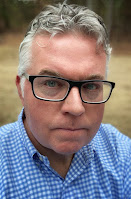
Bill Horner III
Social and political divisions are a growing problem for rural communities and their newspapers. Bill Horner, publisher of the Chatham News+Record in North Carolina, said is county is do divided along racial and political lines that it made him and his partners question whether it was still a place for a general-interest newspaper.

Horner said his twice-weekly lost its largest single-copy vendor (three stores, 200 papers) because his sports editor told the owner that the paper was doing a story on the history of lynching in Chatham County. But he said he continues outreach to Blacks and Hispanics, each 12 to 13 percent of the county's population, because sustainability relies on engagement and helping audiences solve their  problems. He said one recent success is a parenting newsletter, because most people are parents, and that crosses the social and political divides.

Baranowski said, "We have to embrace immigration, refugees, wherever they're coming from." His PowerPoint presentation said, "These are facts that are difficult for many of our overwhelmingly white communities to embrace, but we have to illustrate the successes" of embracing immigrants and refugees. He said "The community is not embracing their stories," one exception being an Afghan who was an interpreter for the American military. "Never underestimate the value of people being proud of lifting up an underdog," he said.

Dink NeSmith, a newspaper chain co-owner who came out of retirement to save The Oglethorpe Echo in northeast Georgia and made it a nonprofit staffed by University of Georgia students, said Saturday, "We began to cover the Black community for the first time," The county is 17% Black. He said a Black truck driver was appreciative, and donated $500.

Further reports on the National Summit on Journalism in Rural America will appear later. Topics will include nonprofit status, philanthropy, help from universities, and editorial approaches.

Higher housing costs hit residents of mobile-home parks

A mobile home park near Greeneville, Tenn. (Photo by Michael Williamson, The Washington Post)

"Surging home prices and rents are cascading down to the country’s mobile home parks, where heightened demand, low supply and an increase in corporate owners is driving up monthly costs for low-income residents with few alternatives. At the same time, private-equity firms and developers are often circling nearby, looking to buy up such properties and turn them into more lucrative ventures, including timeshare resorts, wedding venues and condominiums," reports Abha Bhattarai of The Washington Post.

The average price of mobile and other manufactured homes has risen by nearly half during the pandemic, from $82,900 to $123,200, according to the Census Bureau. "Average new home prices rose 22 percent in that period," Bhattarai notes. "However, less is known about how much mobile homeowners pay to rent the land under their homes. Lot rents typically rise between 4 and 6 percent a year, according to industry sources, though there is little data on exact costs or price increases. That lack of transparency is complicated by the fact few cities or states have rules governing rent increases at mobile home parks."

And a mobile home may not be very mobile. "Moving a mobile home — if it is new enough to be moved at all — can cost as much as $15,000, which means residents are often beholden to the parks where they live," Bhattarai reports.

Rents are rising with land prices and a shortage of affordable housing, Casey Dawkins, a professor of urban studies and planning at the University of Maryland, told the Post. Also, home parks are facing higher costs for utilities, workers and property taxes, John Pawlowski, managing director at real estate research firm Green Street Advisors, told Bhattarai.

Sometimes-impolitic editor-publisher in Minnesota is giving away his newspaper so he can help children in Ukraine

Lee Zion at his paper (Guardian photo by Matthew Cantor)
Another weekly newspaper editor-publisher has given his paper away, but he says it's not for business or journalistic reasons; he says his energies will be put to better use helping children in Ukraine.
 
“How could I sit comfortably at my desk while Ukrainian children die?” Lee Zion of the Lafayette Nicollet Ledger in Lafayette, Minn., asked Matthew Cantor of The Guardian. “If they want me as a teacher, I’ll be a teacher. If they want me as a guy driving a truck, delivering supplies, I will deliver supplies. If they need help with cleanup efforts in Bucha and other cities, I will assist with the cleanup.”

After unsuccessfully trying to sell the paper, Zion ran an ad saying he wanted to leave it “in good hands.” He said it was “financially solvent” but “The next owner must show that he or she has the knowledge, experience and the drive to take on the challenge.” Enter Robert Lawson, 37, a resident of Lafayette and former editor of another paper in the area, who told Cantor the opportunity “was just kind of perfect.”

"One element of his predecessor’s work Lawson may not pursue is his editorials, which have occasionally landed him in hot water," Cantor writes. "In 2019, Zion wrote a piece on declining fertility rates in which he suggested a remedy: women could 'have sex with me.' It also suggested increasing immigration, noting that this might bother some people because it could 'make America less white,' referencing Donald Trump’s 'Make America great again' slogan."
 
“There was a huge outcry,” Zion recalled. “Some people really, really loved that piece. And others hated it. Hated it with a passion. . . . One of them said, I will never advertise in this paper, so long as Lee Zion is in charge. Now that I’m done, a new person can probably win this guy back.”

Zion, a native of Brooklyn, N.Y., who has spent his adult life in newspapers, moved to Lafayette in 2018 to buy the Ledger for $35,000. Now he says he will stay in Ukraine “for as long as they’ll have me. And who knows? There’s a Jewish community in Ukraine. I could find a home among the Jewish community.” Cantor writes, "He hopes his plans inspire others to take similar action."

Climate has changed most in the West, the North and Florida; state-by-state figures may indicate local examples

National Oceanic and Atmospheric Administration data; Axios map, adapted by The Rural Blog

"Climate change is often cast as a global issue. But in reality, it's already affecting each of us in our backyards," write Andrew Freedman and Michael Graff of Axios. "The more people see the impact on their own lives, the more likely it is that they'll look for things they can do about it — from the candidates and policies they support to the personal changes they can make." Washington state just hired its first climate epidemiologist, Crosscut reports. Meanwhile, the amount of carbon dioxide in the atmosphere broke a record in May, The New York Times reports.

Local climate impacts include weather problems of farmers and "the fire ant and its march through North Carolina," Axios reports. "The non-native species with the unforgettable sting was first discovered in Brunswick County, North Carolina, in the farthest southeastern corner of the state along the South Carolina line, in the 1950s, about 20 years after it arrived in the U.S. from South America. Now 78 of North Carolina's 100 counties are under fire ant quarantine area designations, according to a North Carolina Agriculture report from January. The fire ants aren't migrating simply because the temperature is warming farther inland. They also float as colonies around their queen, hitching rides inland on floods from more frequent and intense rainfall events."

Some effects aren't quite so apparent, until they are. "Climate change unfolds in the margins day to day until it becomes impossible to avoid," Graff and Freedman write. "Perhaps one morning you realize the place you live experiences totally different weather conditions than when you first arrived there, or that your community has seen three so-called 100-year floods in the past two years. . . . Heavy precipitation events have become more frequent across the country, especially in the Midwest and Northeast. When Climate Central studied rainfall at 150 U.S. weather stations, it found that hourly rainfall intensity has increased since 1970 at 90 percent of them."

Inflation makes it harder for food banks to meet rising need

Robert Walton loads food from the Foodbank of Southeastern
Virginia and the Eastern Shore
. (NPR photo by Eze Amos)
Food has been hit with some of the highest inflation in  year40s, driving many Americans to food banks this year. But that same inflation has made it harder for food banks to stock enough food to meet their needs, especially higher-cost items like meat, Jennifer Ludden reports for NPR."Inflation is hitting both food banks and their clients in other ways: cost increases for fuel, for example, increase the cost of living in numerous ways for lower-income households that can ill afford extra expenses," Ludden reports. "Food is one of the items worst hit by the highest inflation in four decades. And the cost of food and other essentials, such as gas and rent, fall hardest on lower-income households" who are the main users of food banks.

An Urban Institute survey in December, before the food-price spike, "found that one in six adults relied on charitable food, a share that was still above pre-pandemic levels," Ludden writes. "It found Black and Hispanic adults were nearly three times as likely as white adults to use food pantries, with no significant decline since the first year of the pandemic."

Aspen Institute's Community Strategies Group to hold virtual meeting on rural environmental justice Friday

The Aspen Institute's Community Strategies Group will hold a virtual meeting about rural environmental justice from 1 to 3 p.m. Friday, June 3. To register, click here.

Aspen CSG says, "Rural America’s majesty derives from vast expanses of natural landscapes and ecosystems that produce value and benefit for our country and the entire world. However, inequitable practices and policies based on race, place, and class have too often burdened the most vulnerable rural communities with negative environmental and social consequences of an extractive global economy. Today, new rural and tribal efforts focused on environmental justice, just transitions, corporate stakeholder engagement, scientific conservation efforts, and Indigenous wisdom are helping balance natural ecosystems and strengthen local communities."

The meeting will include an optional meet-and-greet for peer networking, then the whole group will be in a discussion moderated by Bonita Robertson-Hardy, Aspen CSG’s co-executive director.

Monday, June 06, 2022

National summit sparks a continuing effort for innovation and sustainability in rural journalism; here's an initial report

Penny Abernathy of Northwestern University was the first presenter at the rural journalism summit.
By Al Cross
Director and Professor, Institute for Rural Journalism and Community Issues, University of Kentucky

"I leave hopeful for community newspapers," one attendee said as she left the National Summit on Journalism in Rural America, which concluded Saturday. And there were reasons to have hope.

At a time when newspapers must get more revenue from their audiences, who won't pay good money for bad journalism, there's plenty of evidence that good journalism is good business, even if you're not the only paper in your market. "It's still possible to run a successful small-town newspaper, if you do it right," said Marshall Helmberger, co-publisher of the Timberjay in Tower, Minn.

His co-presenter, Sharon Burton, won applause when she said "I wish people in this business would stop writing our obituary." Burton publishes the Adair County Community Voice in Columbia, Ky. She said the county's top elected official told her that she keeps the official from doing wrong.

That fit a statement from the Summit's first presenter, Penny Abernathy of Northwestern University: "A strong news organization build democracy and it builds community." To sustain such organizations, "There's not going to be one business model, there are going to be many," Abernathy said. "It just depends on what kind of community you're in."

The Summit had a research question: How do rural communities sustain local journalism that supports local democracy? The question was based on the increased need for community support for newspapers or any other form of news media, in an environment where people are "bombarded with information," as Burton described it.

Many local news media are getting more support from their communities with membership models that give subscribers extra benefits, but many publishers are reluctant to ask their readers for more. At least in the Great Plains, that attitude is off base, said Teri Finneman of the University of Kansas, reporting on her team's recent survey of publishers and readers in Oklahoma, Kansas, Nebraska and the Dakotas.

Finneman found that 40 percent of readers said they are likely or very likely to donate to their local paper to keep it going. She and Kansas Publishing Ventures, which publishes four weeklies, are testing that by implementing such a model later this month. "This is live, ongoing research," which should produce its first report this fall, she said.

At the close of the Summit, I observed that we are in a fast-moving environment in which news publishers and people who want to help them need to remain in contact, so the Institute for Rural Journalism and Community Issues will create a platform for Summit attendees and others to share information, questions and answers. And we will hold another Summit via Zoom in a few months, again focused on innovation and sustainability.

The Summit was held at the Shaker Village of Pleasant Hill in Kentucky, where the first summit was held 15 years ago. "It was a once-thriving community that faced oblivion only to be saved by a collaborative effort. Shaker Village, now Kentucky's largest National Historic Landmark, was a fitting setting for the rural journalism question that we need to keep asking," wrote Tom Silvestri of The Relevance Project of the Newspaper Association Managers. "A jam-packed agenda covered a lot of ground, from the state of community journalism, to groups working to uplift the industry, to the roles of philanthropy and national funders, to newspapers being run as non-profit organizations, to examples of journalism adapting to change, innovating and responding to coverage needs, to the research needed to help community journalism, and to new business models that can be viable options based on dynamic data."

Watch The Rural Blog for more details on discussions, questions and answers from the Summit.

Boy Scouts selling camps to pay settlements; open-space advocates scramble to keep developers from getting some

Deer Lake Boy Scout Reservation in Connecticut (AP photo)
"As the financially struggling Boy Scouts [of America] sell off a number of campgrounds, conservationists, government officials and others are scrambling to find ways to preserve them as open space," reports Pat Eaton-Robb of The Associated Press. "A $2.6 billion proposed bankruptcy settlement designed to pay thousands of victims of child sexual abuse has added pressure to an organization beset by years of declining enrollment, and the Scouts and their local councils have been cashing in on their extensive holdings, including properties where some of the abuse took place. Developers have bought up some. Preservation groups hope others can be protected and some legislators have taken notice."

U.S. Sen. Richard Blumenthal (D-Conn.) is trying to get Congress to provide money to preserve the properties, often called "reservations." In his state, the BSA's Yankee Council is considering developers' $4.6 million offer for the 252-acre Deer Lake Boy Scout Reservation near Long Island Sound. "The council has rejected offers from two conservation groups but is negotiating with one of them that offered a revised bid," Eaton-Robb reports. Also on the block is 96 acres on one of the Finger Lakes in western New York. Fifteen tracts have already been sold in Michigan, said the leader of a conservation group there.

“Unfortunately, local Boy Scout councils are selling to the highest bidder,” Blumenthal told AP. “So, I think it is a national challenge, but it goes to the core of what scouting means and the ethos and ethic of scouting, which they may be betraying.”

Because the councils hold title to the properties, "It’s unclear exactly how much land across the United States belongs to the Boy Scouts," AP reports. "But evidence in the bankruptcy trial indicated the local councils own close to 2,000 properties that could be worth between $8 billion and $10 billion, said Timothy Kosnoff, an attorney who represents more than 12,000 claimants in the bankruptcy."

Mass shootings 'have become a circuit of sorts,' Washington Post says; local editor-publisher decries 'media circus'

News-media trucks dwarf the memorial at Robb Elementary School. (Photo by Sarah Voisin, The Washington Post)

Karin Brulliard of The Washington Post writes from Uvalde, Texas: "The cowboy drove 1,213 miles from his Ohio farm and erected a blue tent and sign asking, 'NEED TALK?' on an empty corner lot. The Dallas artist painted a mural on tall canvas set up across the street from Robb Elementary School. The parents of a mass shooting victim flew down from Buffalo, advising new members of the terrible brotherhood created by yet another rampage. As this small town grieves for 19 children and two teachers slain at school by a gunman, it has also swelled, becoming a pilgrimage site for mourners, relief workers, therapists, proselytizers and voyeurs. . . .

"There are hordes of media, of course, with tents and cameras and vans and bright lights. But other outsiders came, too. Police vehicles from other Texas towns — Cactus City, Irving, Amarillo — cruise the streets, filling in for a local force facing intense scrutiny over its delayed response to the shooting. Whataburger employees from other store locations arrive each day so the Uvalde outlet’s staff can take time off. The Billy Graham Rapid Response bus, the American Red Cross, Christian bikers, San Antonio mariachi musicians and Florida therapy dogs have pitched up at makeshift memorials. The scene highlights an unusually American reality. Mass shootings happen so often here that their locations have become a circuit of sorts, the kind of place where regulars see familiar faces, and lament over the latest tragedy."

Mayor Don McLaughlin told Brulliard that news media have been intrusive and frustrating “to no end,” but counselors and spiritual leaders are a “blessing” because “Not only will these families need help … you’ve got as many citizens that are traumatized by this.”

Uvalde Leader-News Editor and Publisher Craig Garnett's latest column is about the "media circus" and how the twice-weekly paper is handling it. His conclusion begins with Pete Luna, his general manager and photographer, whose "heart-pounding images of children being rescued from Robb school have flown around the world. But he wants no part of being painted with the same brush as the global media." He quotes Luna: “When I carry my camera, I now try to hide it. I don’t want people to think that I am one of them.”

After Friday, he made sure to wear a shirt with Uvalde Leader-News stitched across the pocket," Garnett writes. "The circus has, for the most part, struck its big tent and departed. And despite what Anderson Cooper of CNN said about no one being left to inform the town after the funerals ended and CNN’s cameras were gone, we will be here. We are here for the long haul, standing with Uvaldeans to help with healing for the victims and this little town that we all love." In an editorial, Garnett writes that the delay in response to the shooting "surely will become Uvalde's darkest hour." 

Roundup (glyphosate) seriously damages wild bees' ability to keep their colonies at the right temperature, study finds

Photo by Susan Walker, Getty Images
Researchers have found that the weed killer glyphosate, typically sold as Roundup, seriously damages "the critical ability of wild bumblebees to keep their colonies at the right temperature, reports Damian Carrington, environment editor of The Guardian.

"The harm to bumblebees – vital pollinators – was not identified in regulatory risk assessments, which only test whether a pesticide rapidly kills healthy, individual bees," Carrington writes. "However, the collective failure to regulate colony temperature could have a massive impact on its ability to produce the next generation, the scientists said."

The study found damage "when the colonies were running short of food. This is common in farming regions, where wildflowers can be killed directly by glyphosate," Carrington reports. "The research is the first on wild bees, of which there are 20,000 species, though glyphosate had already been shown to harm honeybees by damaging larvae and the senses of adults. . . . Standard risk assessments are performed on well-fed, parasite-free bees, not affected by the many stresses they encounter in the real world."

EPA makes Renewable Fuels Mandate highest yet, says more ethanol in fuel supply will help consumers

The Environmental Protection Agency has set the Renewable Fuels Mandate for refiners to its highest level yet, including 15.25 billion gallons of corn-derived ethanol this year. "Ethanol is cheaper than gasoline at present, so biofuel backers said consumers would benefit at the fuel pump with more ethanol in the gasoline supply," reports Chuck Abbott of Successful Farming.

“At EPA, we are laser-focused on providing more options for consumers at the pump, and today we are taking steps to increase the availability of homegrown biofuels,” EPA Administrator Michael Regan said Friday. “Today’s actions will help to reduce our reliance on oil and put the RFS program back on track after years of challenges and mismanagement.”

"Trade groups for corn growers and ethanol makers applauded the EPA announcement," while the American Petroleum Institute complained, Abbott notes. "At 15.25 billion gallons, corn ethanol would provide the bulk of the 20.88 billion gallons in the RFS for this year. . . . Next-generation 'advanced' biofuels were set at 5.63 billion gallons in this year’s RFS, down slightly from EPA’s initial proposal. Biomass-based biodiesel would account for nearly half of it, at 2.76 billion gallons. Advanced biofuels, such as ethanol made from grasses and woody plants, have been slow to come to the market despite hopes for development of fuels that did not compete with food crops for feedstocks.

Along with setting the RFS for this year, the EPA adjusted the 2020 RFS to 18.84 billion gallons, an increase of 320 million gallons from its proposal last Dec. 7, to reflect actual ethanol use for that year. It also finalized a regulatory framework to include so-called biointermediates in the RFS. Biointermediates are feedstocks that are partially converted in one facility and processed into a RFS-eligible biofuels at another facility. Earlier this year, the EPA proposed a regulation to admit renewable diesel and other biofuels made from canola oil into the RFS.

The EPA also said it would deny a set of previously pending requests by small refineries for exemptions from the RFS at various points from 2016-2021, and proposed alternative ways from small refineries to comply with the RFS in 2016, 2017, 2018 and 2020.