Wednesday, June 15, 2022

Omicron wave, twice as deadly in unvaccinated people as its predecessors, hit rural areas harder, killing many people

The omicron variant of the coronavirus, which cause a wave of the Covid-19 infections in late 2021 and early 2022, "spread like a grass fire in America’s densely populated cities, but led to higher rates of death in rural counties where vaccinations are lagging," reports the University of Cincinnati, home to one researcher in a group who recently published a study on the phenomenon.

Their report, in the journal Frontiers in Medicine, "revealed striking disparities in health care between urban and rural America," Michael Miller writes for the university. Researchers "found that counties with vaccination rates of less than 40% had far higher mortality rates than counties with vaccination rates of 60% or more. The study recommended that health policymakers continue to make vaccination coverage a priority."

Looking forward, rural counties "face a higher probability of developing chronic illness from long Covid," said study co-author Claudia Moreno of the University of Washington. She also voiced concern that health officials are less able to track Covid-19 infections because fewer people are reporting new cases: "In the early part of the pandemic, people knew exactly what the infection rates in their counties were day to day—like the weather. And now we have peaks in case loads that are so much higher, but there is less public awareness."

A relative moderate with rural roots is elected president of the Southern Baptist Convention, by a wide margin

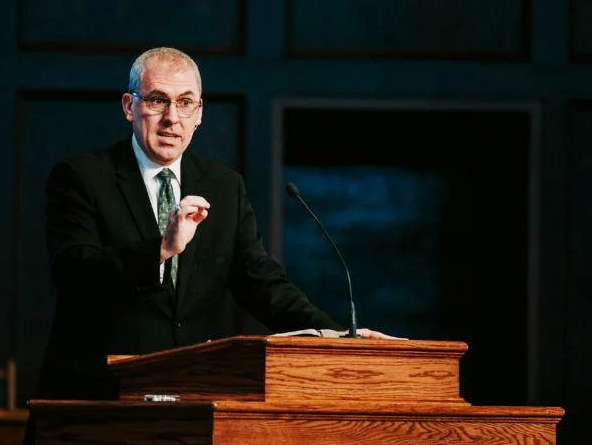
Pastor Bart Barber (Baptist Press photo via Kentucky Today)
An exurban pastor with rural roots and a relatively moderate stance on issues facing the Southern Baptist Convention was elected president of the nation's largest Protestant denomination Tuesday night.

Bart Barber is pastor of First Baptist Church in Farmersville, Texas, population 3,612, an exurb of Dallas. He is from Lake City, Ark., pop. 2,326, just east of Jonesboro.

Barber, who strongly supported conclusions of the SBC's Sexual Abuse Task Force, was elected on the second ballot, defeating Pastor Tom Ascol of Grace Baptist Church in Cape Coral, Fla., by 61 to 39 percent. Barber got almost 48% on the first ballot. Other candidates were "former foreign missionary Robin Hadaway of Oceanside, Calif., and Pastor Frank Cox of North Metro Baptist Church near Atlanta, a last-minute entrant into the race," reports Frank Lockwood of the Arkansas Democrat-Gazette.

"Ascol, favored by Baptists who want to move their denomination further to the right, had adopted the campaign theme 'change the direction.' Barber, on the other hand, urged fellow Baptists to set their differences aside and focus on the gospel, calling on 'an army of peacemakers' to help unify the 13.7 million-member body."

Lockwood gives Barber's Baptist bio: "Barber was 5 years old when he responded to the altar call at Bethabara Baptist Church, a small congregation on the east side of the St. Francis River, roughly four miles north of Lake City. He was 11 when he first felt the call to ministry, a call that was confirmed while attending summer church camp three years later. While still in high school, he was 'licensed to preach the Gospel' by First Baptist Church in Lake City. Barber preached his first sermon while in high school and soon was asked to serve as interim pastor at New Hope Baptist Church near Black Oak, according to [Traci] Smith, his sister. Barber went to Texas to attend Baylor University, preaching at a small country church on the weekends. He's been ministering ever since." For more bio, from Baptist Press, click here.

Association of Health Care Journalists resumes in-person Rural Health Workshops; next one in Chattanooga July 14

The pandemic has kept the Association of Health Care Journalists from having its annual Rural Health Workshop, until now. One will be held July 14 in Chattanooga, Tenn., and registration is open and free.

ACHJ says journalists can get answers at the workshop to such important questions as, "What does it take to keep a rural hospital open in the state with the highest rural hospital closure rate in the country?" It says the health-care and policy experts and researchers at the workshop will include Stephanie Boynton, vice president and CEO of hospitals in North Carolina Hospital and Tennessee, who "will talk about how a hospital just days away from closing its doors found a path to survival and what that has meant to a community."

The program, which may be updated, will also include sessions on finding and interrogating data, judging the quality of programs that will receive opioid settlement funds from state and local governments, and what it takes to build the rural health care pipeline, among others.

To register, go here or call 423-756-5150. Use this link to book your hotel room. Watch AHCJ’s website and social media platforms for important program announcements and updates.

What’s happened to nuts and bolts of public-safety news?

By Jim Pumarlo

Crime and public safety are garnering more headlines across the country. Law enforcement and racial disparities in the criminal justice system are under increasing scrutiny. Newspapers play a key role in examining the dynamics in their own communities.

But what’s happened to police logs, the most basic of public safety reporting? Where are the regular records of traffic citations, thefts, property damage, burglaries and much more?

Police logs easily generated the most calls during my tenure as editor of the Red Wing (Minn.) Republican Eagle. Traffic citations probably topped the list. Nobody likes being linked to a police report, whether it’s something as common as speeding or a citation that carries greater stigma, such as a DWI.

We regularly connected with local law enforcement. We routinely reviewed all initial complaint reports. The documentation was part of the menu of public records that readers expected to see in our newspaper.

We also believed the information was valuable to readers in terms of public safety. Is a neighborhood experiencing a rash of vandalism? Are DWIs on the rise? Should residents be on the lookout for another scam artist? Are certain crosswalks particularly dangerous? Has a neighborhood become a haven for narcotics? Is there a pattern to a rash of business burglaries?

No doubt, traffic citations are among the most worrisome and embarrassing to the violators. A youth is afraid he’ll lose his job. A teacher is concerned how she can explain a speeding ticket to students. An elderly woman is flustered by her first-ever ticket. A coach dreads facing his players after getting ticketed for a DWI.

Adding to the frustration – and often anger – of the accused is the lag time between when a ticket is issued and when the court disposes of a case. The delay can be weeks, or even months, depending on circumstances.

We believed both reports were newsworthy. For example, police might break up a neighborhood disturbance and issue several tickets. The community should be apprised immediately. It’s equally newsworthy to follow a case to see what penalties are assessed.

With the increased level of crime across the country, it’s discouraging to see many newspapers put fewer resources – or, at minimum, less effort – into monitoring police logs. For those reports that are published, one must ask in many instances: What’s the value?

Some newspapers simply copy and paste an agency’s computer printout. It may provide a glimpse of a department’s activity – but little else. No names. No addresses. The reasons for a call are nondescript: driving complaint, narcotics, domestic, traffic stop, noise, suspicious. No indication if arrests were made.

Some newspapers will translate the logs into their own reports, but the vagueness is alarming. A bike theft on Bush Street. A local business reports a padlock broken and items stolen. An employee theft on the 14000 block of Dellwood Drive. Again, what’s the value?

Most glaring is the anonymity of the reports – the lack of the five Ws and H of basic journalism. Reports are meaningless and do nothing to alerting a neighborhood, a community to public-safety issues.

Law enforcement undoubtedly is spoon-feeding information, selectively deciding what they believe is in the best interests of the public. They give little attention to the fact that most of the nuts and bolts of police reports – names, addresses, specifics of call – is classified as public by law. Their rationale? Adhering to their own rules makes their jobs easier; they won’t get the angry phone calls asking why they released the information to the newspaper.

Even more discouraging is that many editors apparently share a similar sentiment. They don’t press for substantive details. Their rationale? "Let’s keep the reports vague and not rile readers."

The dangers to this lack of aggressive reporting are obvious.

First, computer logs likely are transmitted electronically with little or no contact with anyone at the newspaper. Reporters do not develop any relationship with folks at the cop shop. They miss the opportunity to pick up and follow up on spot news, in-depth reports, feature stories and other substantive content for the newspaper.

Second, law enforcement will soon consider it standard operating procedure: Give the newspaper as scant reports as possible. That unfortunately is what many departments are taught. I well recall an officer in my hometown who became the primary contact on our daily rounds. He had just returned from training at the FBI Academy at Quantico, Va. His marching orders were very clear, as he was proud to tell us: Give the newspaper only the information he believed should be shared. We regularly challenged him, reminded him what the law dictated, and we eventually got the information – but it was an ongoing struggle.

Readers frequently asked that a public record be withheld. It might be a marriage license, divorce proceeding or ambulance run, but tickets were most commonly the concern. Some reasons were had more merit than others.

In the end, though, each person was seeking special treatment. Each was asking the impossible because our policy was that we could not pick and choose. Going down that path would place us in the position of being judge and jury – to determine that one person’s plea was more worthy than another’s. And we’d never know all the facts.

The simplest and fairest policy is to treat all public records as just that – public – in the belief that openness serves the greater number of people over the greatest period of time. At its foundation, police logs provide a pulse of public safety in a community.

Jim Pumarlo writes, speaks and provides training on community newsroom success strategies. He is author of Journalism Primer: A Guide to Community News Coverage; Votes and Quotes: A Guide to Outstanding Election Coverage; and Bad News and Good Judgment: A Guide to Reporting on Sensitive Issues in Small-Town Newspapers. He can be reached at www.pumarlo.com and welcomes comments and questions at jim@pumarlo.com.

Armadillos keep moving north; now they're in Virginia

Map shows proven and potential range of armadillos and location of the first one photographed in Virginia.

A nine-banded armadillo (Adobe Stock Photo)
The march of the armadillo, perhaps driven in part by climate change, continues. In Buchanan County, Virginia, which borders Kentucky and West Virginia, Ruby Osborne wondered what had been digging up her flower beds until she saw an armadillo standing on its hind legs, which she called “plumb comical,” reports Carrie Arnold of National Geographic. That was in 2019; several months later wildlife officials finally got their hands on one, killed by a dog near the North Carolina border. Several others have been confirmed.

The nine-banded armadillo, the state animal of Texas, has been in Kentucky so long that it is now considered a native species, Dave Shuffett reports for Kentucky Living magazine: "Its exposed underbelly makes the animal sensitive to harsh winters. Scientists say the northward and eastward expansion will have to stop at some point but they’re not sure where, given climate and habitat changes." Arnold reports: "Several studies suggest that armadillos, which prefer hot weather, could one day thrive as far north as New Jersey and Pennsylvania, aided in part by warmer winters."

Tuesday, June 14, 2022

Many rural counties are still reeling from pandemic-driven increases in murder and other violent crimes

A Searcy, Ark., cemetery. In 10 weeks, six people were killed in White County. (Photo: Andrea Morales, Wall Street Journal) 

Murder rates in rural America "have soared during the pandemic," report Dan Frosch, Kris Maher and Zusha Elinson of The Wall Street Journal. Rebecca McCoy, prosecutor in White County, Arkansas, told the newspaper, “It was like people lost their ever-lovin’ minds.” The county hadn't had a homicide in two years when the pandemic began; in 10 weeks, it had six; by the end of 2020, it had 11.

Homicide rates in non-metropolitan counties rose 25 percent, according to the Centers for Disease Control and Prevention. "It was the largest rural increase since the agency began tracking such data in 1999," the Journal reports. "The rise came close to the 30% spike in homicide rates in metropolitan areas in 2020. The CDC hasn’t analyzed 2021 homicide data yet. In some rural counties, murder rates remained high last year, while in others they have begun to recede along with Covid, data from local law-enforcement agencies shows." But the courts remain burdened: "Small-town prosecutors, unaccustomed to handling numerous homicides cases, find themselves overwhelmed with them."

What drove the increase? Local officials "speculate that the breakdown of deeply rooted social connections that bind together many small communities, coupled with the stress of the pandemic, played a role," the Journal reports. "Pastors point to the suspension of rituals such as in-person church services, town gatherings and everyday exchanges between neighbors. Such interactions can serve as guardrails, helping to prevent conflicts from turning violent."

Also, The psychological and financial stress due to isolation and job loss were especially pronounced in remote areas, where social services were limited even before Covid-19 struck, local leaders say. As the pandemic took hold in the spring of 2020, fights between family members, acquaintances and even strangers escalated more frequently into deadly confrontations, authorities in some rural counties said."

And that kind of violence is harder to prevent, said Brian Wallace, sheriff of Marion County, South Carolina: “It’s not like you got gang members dealing drugs, and you can get boots on the ground, and undercover buys and prosecutions.” The Journal story has many examples of specific cases.

Army Corps starting program to help repair unsafe dams

Eight years ago, Congress created a fund for federally backed loans to repair risky dams. This month, the Army Corps of Engineers finally published proposed regulations for the program, reports David A. Lieb of The Associated Press.

"The Corps’ National Inventory of Dams lists more than 92,000 structures across the U.S., most of which are privately owned," Lieb notes. "The safety of the nation’s dams has garnered increased public scrutiny in recent years, in part because of high-profile failures that forced the evacuation of thousands of residents in Michigan and California."

Lieb notes AP's recent census of more than 2,200 dams in poor or unsatisfactory condition that are classified as high-hazard, meaning failure "likely would unleash a flood killing at least one person," he writes. "That figure was up substantially from a similar AP analysis three years earlier."

The average U.S. dam is 61 years old, and many pose more risk than when they were build because of downstream development. Also, "A changing climate with intense rainstorms has strained some dams beyond their original designs," Lieb reports. "Maintenance also has been deferred, often because dam owners lack the money to pay for it. The Association of State Dam Safety Officials estimates it could cost nearly $76 billion to rehabilitate the almost 89,000 dams owned by individuals, companies, community associations, states, local governments and other entities besides the U.S. government.

The new federal loan program, which makes more than $7 billion in guarantees available, “puts a pretty good dent in the existing need,” Aaron Snyder, interim director of the Corps’ Water Infrastructure Financing Program, told Lieb, who notes, "Most states don’t have grant or loan programs specifically targeted for repairing dams." Congress authorized the Corps program in 2014 but didn't fund it until December 2020, Lieb reports: "It got a big funding boost from the Infrastructure Investment and Jobs Act signed by President Joe Biden last November."

Rural schools adopt four-day week to help recruit teachers

Maps by the Columbia Missourian, part of the Missouri Business Alert consortium

Rural school districts in Missouri are rapidly adopting a four-day week for classes, saying it helps them recruit badly needed teachers, reports DC Benincasa of Missouri Business Alert.

Since 2010, 119 Missouri districts have switched to the four-day week, and at least 18 more are planning to in the next academic year, "adding up to 25% of all districts in Missouri," Benincasa reports. "Some experts argue the policy won’t be enough to solve a teacher shortage problem. . . . The state ranks second to last in the country in teachers’ average starting salary of $33,234 a year, according to a report from the National Education Association."

Last month, the legislature raised the pay to $38,000. "The state is slated to pay for 70% of the wage increase with local funds making up the rest," Benincasa notes. Missouri State University professor Jon Turner "said rural communities might struggle to raise the funds because they don’t have the business-tax revenue that other areas in the state have."

Rural schools face other obstacles recruiting teachers. Sarah Low, a professor of regional economics at the University of Missouri, "said the number of businesses in rural Missouri have shrunk because of significant population declines in rural areas," Benincasa reports. "When there are fewer businesses in rural areas, it makes it harder to find a job if you’re the spouse of a teacher. Low also said while rural areas often provide enough housing to meet demand, the quality of housing isn’t high enough to attract white-collar professionals. ... Missouri’s rural communities also often don’t have the gathering places and opportunities for social interaction compared to suburban and urban areas."

Ellen Weimer, a high-school math teacher in Keytesville, which went to a four-day week in 2019, told Benincasa that was a big reason she's there: “The extra day has been so beneficial for me to work on all the things that a seasoned teacher doesn’t have to do as much because they’re used to it.”

Rising newsprint prices hurt papers' role in local democracy

A press The Seattle Times shut down in 2020 (Photo by Mike Siegel)
The "local journalism crisis is exacerbated by a global plunge in newsprint production. That’s leading to soaring costs for remaining newspapers that are generally hanging on by a thread," writes Brier Dudley, editor of The Seattle Times. "Combined with high fuel prices and delivery labor shortages, this will lead to further cutbacks in distribution, the size of newspapers and potentially newsroom employment."

Dudley reports that newsprint prices have risen more than 30% in the last two years, and "A major factor is mills closing or converting production to packaging materials used by e-commerce companies such as Amazon." Francois Chastanet, director of graphic papers at Numera Analytics, a Montreal research firm affiliated with the Pulp and Paper Products Council, told Dudley, “Mills have been shutting down pretty much everywhere — it’s really a global situation that has been a bit worsened by the pandemic.” Chastanet said North America's newsprint production capacity declined 28% in 2020 and 18% last year, as demand fell 26% in 2020, 6.6% in 2021 and 5.3% in the first four months of 2022.

Noting many newspapers' cutbacks in the number of weekly print editions, Dudley reports on the situation in Washington: "Executives at the state’s largest independent dailies all told me newsprint prices may force cutbacks. Their price increases vary, as each negotiates separately and costs vary by factors such as volume and proximity to mills."

Newsprint prices were once an industry-insider subject, but now they are hurting the effectiveness of newspapers' role in local democracy, Dudley writes: "At a time when democracy is threatened from within and without, one of the last things America needs is to lose even more of its independent, local free press system. Congress has much to do this summer. But it must also recognize this crisis, agree that local journalism is a civic necessity and help the industry stabilize before it’s too late."

Why rural weekly newspapers should care about the Big Lie

By Al Cross
Director and Professor, Institute for Rural Journalism and Community Issues, University of Kentucky

The second hearing of the House committee investigating the Jan. 6 attack on the Capitol focused on the origins, progression, use, and impact of what the panel and a lot of other people call "the Big Lie," the false assertion by Donald Trump that the 2020 election was stolen from him. How Trump developed the tale, how he used it and what it caused are important questions. But so is the persistence of the lie in the minds of millions of Americans.

It remains to be seen whether hearings on national television, even on the Fox News Channel, will dislodge the Big Lie. People are naturally reluctant to acknowledge that they've been conned, many just want to move on, and many more just don't care, especially at a time of economic stress. Most of their local newspapers don't seem to care, either. Some do but don't show it because they have found national politics to be toxic, even dangerous, and certainly too much of a headache and a business risk.

The old maxim "All politics is local" has been turned on its head by Trump's presidency, his domination of news cycles and social media, and the decline of local news media, creating vacuums filled by social media and national news media. Now, our neighbors increasingly are defined by party or attitude toward Trump, and partisan politics is being injected into elections for nonpartisan office, so it is beginning to seem like all politics is national.

From The North Scott Press, May 19, 2021

This is a huge sea change in our country, and too many local newspapers are afraid to say anything about it. More need to follow the example of The North Scott Press in Eldridge, Iowa, where Publisher Bill Tubbs regularly stands up for the truth, national and local. As the hearing was going on Monday, I came across a couple of editorial columns that Bill sent me last year. They are examples of the sort of editorial leadership we need. 

One, written more than a year ago, after House Republicans stripped Rep. Liz Cheney of her leadership position, quoted Cheney's rejection of the Big Lie ("Remaining silent and ignoring the lie, emboldens the liar; I will not participate in this"), recounted Tubbs' difficulty in getting comment from his own congresswoman, asked a good question and delivered a bracing answer:

So why is a country editor writing about this when there is so much else to write about? Simply stated, because I believe the Big Lie will continue to divide this nation I love until it is rooted out at the core. If democracy is stolen based on a lie and I did not speak, I would feel forever shamed. The antiseptic, as always, is truth. Give credit to Rep. Cheney and Republicans like Adam Kinzinger of Illinois, who had the courage to speak truth to power – come where it will, cost what it may. To them, the unity of the nation is more important than the unity of any party. That's why I am disappointed that my congresswoman, Mariannette Miller-Meeks, voted otherwise. I've met her and visited with her on more than one occasion, and expected better. Oh, I understand. She is new and wants to get along with her party. . . . The propaganda machine has been more effective than the voices of scribes like me. Still, I must speak. . . . The peculiar phenomenon of the Big Lie, as I see it, is that members of Congress who buy into Trump's "Stop the Steal" were elected on the very same ballots. Funny they don't question their own victories – even by six votes, which was the case for Rep. Miller-Meeks.

As Liz Cheney said, we can't ignore lies. As Bill Tubbs said, this one must be rooted out, and that has to happen at the grass roots -- from the bottom up, not just the top down. More than 100 winners of Republican primaries this year support Trump's false claims, The Washington Post reports. The Big Lie is built on distrust of elites and the governments they influence, but it so greatly deepens that distrust that citizens feel disconnected from their democratic republic. That can be the beginning of the end of that republic. We all have a duty to keep it going, especially journalists.

Monday, June 13, 2022

In search of 2020 voter fraud: There's not much there, there

By FactCheck.org
A service of the Annenberg Public Policy Center, University of Pennsylvania

As the House committee investigating the Jan. 6, 2021, attack on the U.S. Capitol began its hearings, Deputy Managing Editor Robert Farley did a deep dive on "2000 Mules," a film by conservative activist Dinesh D’Souza.

The film, which is playing in select theaters around the country, uses cell phone data and surveillance video in an attempt to show that there was “coordinated, systematic fraud" in five key states in the 2020 presidential election -- perpetrated by "mules" who allegedly collected and dropped off illegal mail ballots in drop boxes.

But, as Rob explains, the supposed evidence is speculative and does not provide the proof that the filmmakers claim.

So far, the Georgia Board of Elections has investigated and dismissed three cases brought to the board by the filmmakers. In all three cases, the so-called "mules" were dropping off legitimate ballots for immediate family members who live in the same household. That's legal under Georgia's law.

As we have written many times before, election fraud is rare. And as we heard this week, even former President Donald Trump's own attorney general, William Barr, said he doesn't believe the claims of widespread fraud.

In taped testimony played at the committee's June 9 hearing, Barr recalled his conversations with Trump in late 2020: "I did not agree with the idea of saying the election was stolen and putting out this stuff, which I told the President was bullshit. And, you know, I didn't want to be a part of it. And that's one of the reasons that went into me deciding to leave when I did."

For more about the film, see "Evidence Gaps in '2000 Mules'."

A revenue-raising tale of two rural community newspapers from the National Summit on Journalism in Rural America

Sixth in a series of reports on the National Summit on Journalism in Rural America, held June 3-4 by the Institute for Rural Journalism and Community Issues and the College of Communication and Information at the University of Kentucky. Previous articles were on the state of rural journalism, the Summit-driven effort for sustainability in rural journalism, nonprofit modelshelp from higher-education journalism programs and philanthropic support for rural news media.

At the National Summit on Journalism in Rural America, journalism educator and researcher Clay Carey of Samford University said one way journalists in academia can help the news business is case studies of news outlets. For two and a half years, Buck Ryan of the University of Kentucky has been doing what he calls a "participatory case study" of the Chatham News+Record, a weekly paper in central North Carolina; at the summit, he moderated a discussion between Editor-Publisher Bill Horner and another innovative rural publisher, Terrence Williams of The Keene Sentinel, a daily in southwest New Hampshire. They have the same print circulation: 3,800.

In a report for The Rural Blog, Ryan notes that both are participants in the Knight-Lenfest Table Stakes program to master “the new essentials of sustainable journalism” and the Facebook Membership Accelerator grant program. "They generated ideas for changes in strategy, user experience ('UX'), product development and, mostly, increasing revenues," Ryan reports. "At the Sentinel, to reduce subscriber churn, staff members write letters thanking subscribers for their support and explaining how the paper published stories to help the community."

CHATHAM NEWS-RECORD REVENUE CHART
Horner's and Williams' presentations at the Summit showed some significant differences in the papers and their communities. Chatham County's population is up 17% since 2010 and is more than one-fourth minority; Cheshire County's went down about 1,000. The News+Record's revenue is dominated by advertising, with only 21% from circulation, while the Sentinel gets almost half its revenue from its audience.
KEENE SENTINEL REVENUE CHART

In a written Q and A with Ryan, Horner said his paper will "have to focus on new revenue streams and be reader-driven." It is raising prices and getting "blowback from some readers and even dealers, but it’s a value proposition: sometimes you support the value of your work with higher pricing."

A chronic problem with audience revenue is "churn," the constant addition and departure of subscribers. Williams said requiring six-month commitments and recurring credit-card payments for all new subscription starts that are part of a discount or gift program "significantly cut churn and increased print and digital reader revenue. Our percentage of these EZ-pay subscribers grew from 30% print in 2018 to more than 50% today; and from less than 10% online in 2018 to 82% today. Revenue growth that came with the resulting increased retention rate has been significant."

Asked what partnership has been the most lucrative or profitable, Horner said the News+Record's promotion of nonprofits helped prompt the local Council on Aging, "which is really a county department but mostly funded privately," to use two pandemic-relief grants "to give us $10,000 to provide subscriptions to senior citizens they serve who didn’t subscribe. We also got $18,000 in financial support from Mountaire Farms, a poultry processing company with Spanish-speaking employees, for our La Voz project to bring a Spanish-language publication, La Voz de Chatham (Voice of Chatham), to the community."

Williams noted the Sentinel's partnership with the local Hannah Grimes Center for Entrepreneurship on Radically Rural, a multi-track community development symposium that includes a track on community journalism. The other tracks are entrepreneurship, downtowns, land and community, arts and culture, clean energy and health care. "It has been profitable for both partners and a boost to the local community," Williams wrote We have won numerous regional and national awards for Radically Rural, including third place for Virtual Events from the Local Media Association in 2020. Feel free to join us Sept. 21 and 22, 2022, either virtually or in person."

Ryan's final question: "Now that you’ve gotten to know each other, what’s the best idea you plan to steal from your new friend?" Horner said of Williams, "I particularly like the direct personal appeals he and his staff do by email to readers and contacts; we have already built a plan to replicate that. And I loved his Community Impact Report. What a great way to tell your own story and demonstrate your value to your audience." Williams said, "Bill’s team produces a handsome, helpful community resource guide (Chatham 411) that is heavily supported by advertising. We are looking at producing something similar for our market, and Chatham News+Record’s product is an excellent model for us. It’s very well done."

Sunday, June 12, 2022

Movement started by Trump has created a sort of parallel U.S., where suspicion rules and trust is for the like-minded

Angela Rubino with the shredded records she retrieved
(Photo by Michael S. Williamson, The Washington Post) 
After describing a northwest Georgia activist's dumpster dive for shredded records in search of the elusive villain of voter fraud, Stephanie McCrummen of The Washington Post writes:

"Six years into the grass-roots movement unleashed by Donald Trump in his first presidential campaign, Angela Rubino is a case study in what that movement is becoming. Suspicious of almost everything, trusting of almost nothing, believing in almost no one other than those who share her unease, she has in many ways become a citizen of a parallel America — not just red America, but another America entirely, one she believes to be awash in domestic enemies, stolen elections, immigrant invaders, sexual predators, the machinations of a global elite and other fresh nightmares revealed by the minute on her social media scrolls. She is known online as 'Burnitdown.'

"She is also among the people across the country willing to do whatever they can to ensure that the imagined enemies of the United States are defeated in the 2022 midterm elections and beyond. From school boards to state houses to Congress, their goal is to take political territory, and for evidence that this is possible, they look to northwest Georgia Rep. Marjorie Taylor Greene, whose first-time candidacy two years ago defined the fringe of the Republican Party and who is now running for reelection as one of its standard bearers."

There are people like Angela Rubino in your county. Are you writing about them? Might be a good idea. So far Rubino has "managed to rally enough people to get the county election board ousted, replacing its members with those who believed that the 2020 election was stolen. She was part of a group called the Domestically Terrorized Moms that was pressing the local school board to get rid of a curriculum they believed to be grooming children for sexual predators."

McCrummen spent a lot of time with Angela Rubino, and her story is a deep dive into places many would rather not go. Ignore them at your peril. --Al Cross, Institute for Rural Journalism and Community Issues

Uvalde paper calls for 'sensible' gun laws, publishes testimony of reporter who lost a daughter in the shooting

The day before senators announced a deal in principle to respond the shooting of students and teachers in Uvalde, Texas, the local newspaper declared, "In its timidity to act, Congress guarantees the suffering will continue."

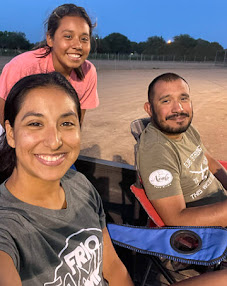
Lexi Rubio with her parents, Kimberly and Felix
The twice-weekly Uvalde Leader-News also published the testimony of Kimberly Mata-Rubio, its former News assistant editor and current staff writer, to the U.S. House Committee on Oversight and Reform. She was the mother of one of the murdered children. Mata-Rubio recalled what she went through the day of the shooting, including attending an awards ceremony for her daughter and other students shortly before the gunman arrived. The she made her case:

"Today, we stand for Lexi, and, as her voice, we demand action. We seek a ban on assault rifles and high-capacity magazines. We understand that for some reason, to some people, to people with money, to people who fund political campaigns, that guns are more important than children, so at this moment we ask for progress. We seek to raise the age to purchase these weapons from 18 to 21 years of age. We seek red flag laws, stronger background checks. We also want to repeal gun manufacturers liability immunity. . . . I’m a reporter, a student, a mom, a runner. I’ve read to my children since they were in the womb. My husband is a law enforcement officer, an Iraq War veteran. He loves fishing, and our babies. Somewhere out there, a mom is hearing our testimony and thinking to herself, 'I can’t even imagine their pain,' not knowing that our reality will one day be hers, unless we act now."

In its editorial, the newspaper urged mothers to "heed this prophetic warning" and said "Americans want responsible gun ownership. . . No single measure lawmakers adopt will put an end to the violence. we are a nation born to it. . . . But with sensible laws, we can reduce the body count." It also published endorsements of further gun control by local doctor Roy Guerrero and actor Matthew McConaughey, a native of Uvalde.

The newspaper's approach shows the importance of local newsrooms in such cases, CNN media reporter Oliver Darcy said on the channel's "Reliable Sources" program Sunday. Meanwhile, Nora Lopez, executive editor of the San Antonio Express-News, talked with Amaris Castillo of NPR for a Poynter Institute story about obstacles the daily paper is encountering to its coverage in Uvalde.

Saturday, June 11, 2022

Campaigns find success in decreasing the stigma around substance abuse, which is greatest in rural communities

A campaign to reduce stigma associated with substance-use disorders has shown it can change attitudes and beliefs about people with drug addictions and increase support for harm-reduction strategies.

The campaign, "Life Unites Us," also found a need to target the campaign to health care workers who are often the first line of contact to offer treatment for substance-use disorder. 

The campaign in Pennsylvania is led by Shatterproof, a national nonprofit focused on ending the nation's SUD epidemic, The company has partnered with Kentucky officials on a similar campaign.

Findings from the first year of the Pennsylvania campaign, which started in 2020, were presented at the Rx and Illicit Drug Summit in Atlanta; Tom Valentino, digital managing editor for Addiction Professional, writes about some of those findings. 

The campaign was driven by Shatterproof's research that found seven of the nine main drivers of SUDs are driven by stigma, either entirely or at least in part, Valentino reports. 

The need to decrease stigma about SUD is especially important in rural areas, where research has found higher levels of stigma toward people who use opioids for nonmedical reasons, including a study by Oak Ridge Associated Universities.

The researchers measured the impact of their campaign in several ways, including statewide surveys and scheduled focus groups.

Shatterproof CEO Gary Mendell told Valentino that the survey found a willingness to live with someone with an opioid-use disorder or to continue a relationship with a friend struggling with an OUD; a higher willingness to provide the overdose-defeating drug naloxone to friends and family; and an openness to having treatment centers near their homes.

In addition, those who had viewed the campaign more often agreed that the opioid epidemic was a serious problem in their community, that medication assisted treatments for OUD are effective; and that they were more supported harm reduction strategies. 

Asked what they learned in the first year of the campaign, Mendell talked about the need to address stigma among health-care professionals.

"One thing we learned was that there was a need to target medical personnel and health-care providers, as they are often the first people a victim of an overdose will see," he told Valentino. "By better informing these health-care workers on the stigma that exists and the importance of encouraging treatment, we open the doors for an individual to get the help they need." Mendell said the campaign differs from others in that it prioritized including the recovery community in the decision-making; allowed for flexibility as the campaign evolved; and provided tools and resources for its participants to use to further reduce stigma in their local communities.

Shatterproof conducted the campaign in partnership with The Public Good Projects, the Pennsylvania Department of Drug and Alcohol Programs and Penn State. 

In partnership with Shatterproof, the Kentucky Opioid Response Effort of state government is doing a communications and behavior-change intervention aimed at reducing addiction-related stigma. It's called "Unshame KY."  

“Much like diabetes or heart disease, addiction is a chronic illness,” Eric Friedlander, secretary of the Cabinet for Health and Family Services, said in an e-mail. “Sadly, addiction often is looked upon as a moral failure and those suffering from the disease are labeled in ways that affect the way the public sees them, the way they see themselves, and their ability to seek care. 

"To change the course of the opioid epidemic in Kentucky, we must first eradicate the stigmas associated with addiction so that more individuals can move beyond these feelings of shame or hopelessness and toward a path that leads to longer, healthier lives.”

Research has found that addiction stigma is significantly reduced when individuals can put a face to the disease of addiction and also hear their stories of healing, remission, and recovery and that's what Kentucky's program is designed to do via social media and community outreach.

'Dopesick' movie wins a Peabody; author of book says her next one, about solutions to opioid crisis, will be out Aug. 15

"Dopesick" co-writers Ben Rubin, left, and Eoghan O’Donnell,
right, with star Michael Keaton and book author Beth Macy
"Dopesick," the streaming-video series starring Michael Keaton and based on the novel by Beth Macy of Roanoke, won the first Peabody Award announced this week the University of Georgia.

In accepting, Keaton said “Tackling such an important issue as the opioid crisis in America was not only daunting but well worth it. “To address the devastation that has been brought on by the Sackler family and big Pharma, and still honor the people in Appalachia, which in this case is what we chose as the location, and still show enormous respect for these people, all this is really gratifying for me.”

Meanwhile, Macy tells her readers via email, "My fourth book, Raising Lazarus: Hope, Justice, and the Future of America’s Overdose Crisis, will publish on Aug. 16, and it’s available for pre-order now. . . . If Dopesick was about the origins of the overdose crisis, Raising Lazarus is about the solutions—some of them quite surprising. The book features a fascinating chorus, from gritty activists willing to risk arrest to creative treatment providers, harm reductionists and peer specialists who are flat-out miracle workers. "

OPINION: Cattle farmer says 'corporate special interests' write the rules he has to follow and are planning his demise

By Darvin Bentlage

I love farming and have been doing it all my life, but I told my kids not to come back to the farm, because there’s no future in it. That’s the sad truth.

Over the last year on Capitol Hill, there have been multiple hearings and bills and even an executive order to address what is going on out here in rural America, but little to nothing is getting done. For the last three decades, roughly 40 U.S. family cattle operations have gone out of business every day. It’s time to end the talk and campaigning and actually fix the problem.

Darvin Bentlage
I’m 66, and a fourth-generation cattle and grain farmer from southwest Missouri. Even though it’s sometimes difficult and dangerous work, I’ve always loved raising cattle and crops and making the land better for the next generation — and better for my kids and grandkids to come back to.

But, things have changed, and not for the better. They aren’t changing because of inevitability or technological efficiency. There’s a very large “elephant in the room” that’s making it worse for all of us.

The predominant system of agriculture I am working in now has been intentionally set up against me and current and future farming generations. Today’s corporate controlled system is bad for farmers, bad for consumers, bad for rural and urban communities and economies, bad for our environment and our climate, and bad for democracy.

We are in this position because the rules (laws, policies and regulations) have been written, and lobbied and paid for by corporate special interests. We are in this position because of corporate-written, bad Farm Bills and bad trade agreements (the main drivers of our farm and food system).

We are here because many of our elected “representatives” don’t really represent us, their constituents or the vast majority of Americans. We’re here because we have a democratic process controlled by that “elephant in the room” – billion dollar multinational corporations.

They are planning and implementing our demise. It’s their business model. Without competition, they can push everyone else out of the market, then they win and take all the wealth (and land).

Some of the results: In 30 years, the U.S. has 25% fewer cattle farmers. In 30 years, nearly 90% of U.S. hog farmers were put out of business. And, the average age of a farmer is nearing 60.

We’re importing billions of pounds of beef from around the world, and consumers are paying record high prices, while cattle farmers struggle. In 2021, the U.S. imported 3.35 billion pounds (with a “b”) of beef and 1.8 million live cattle.

Here are a few glaring results of corporate agriculture’s stranglehold on farmers, consumers, our food system, economies and democratic process: In 2021, JBS’s (a Brazilian corporation and the world’s biggest meatpacker) net revenue was $71 billion and their U.S. beef division reported a net revenue of $27.18 billion; Tyson had a net profit of $3.05 billion, up $1 billion from 2020; Cargill reported its biggest profit in its 156-year history, netting almost $5 billion; the WH Group, the Chinese corporation that owns Smithfield Foods, reported $27.29 billion in revenue, up 6.7%.

The fact is, during these challenging and unprecedented times, the few corporations that control our food system are raking in record profits. Consumers are paying record high prices, inflation is raging, family farmers are struggling to stay in business, and our economies (urban and rural) are becoming more and more impoverished.

What can we do? We need to demand that our elected representatives and our democracy represent us and not corporate special interests.

Within our food system, we need to demand laws that: decentralize control of our food, curb the undue economic and political power of multinational agribusiness corporations that aim to replace independent family farms with industrial factory farms, strengthen and enforce antitrust laws, stop public taxpayer dollars from funding corporate factory farms, restore supply management programs, grain reserves and price floors set at the cost of production, and ban meatpacker ownership of livestock and their use of “captive supplies.”

A food system controlled by us, farmers and consumers, would not be putting multinational corporate profits over people, the environment and our national security. We’d be able to respond and help when things get hard, instead of seeing pandemics and war as opportunities for corporations to get rich.

We can and must do better — for farmers, rural communities, consumers and our country.

Darvin Bentlage is a fourth-generation cattle and grain farmer from Barton County, Missouri, and a member of the Missouri Rural Crisis Center.

U.S. mine-safety agency says it will ramp up enforcement of limits on silica; another Labor Dept. unit calls for lower limit

The U.S. Mine Safety and Health Administration says it will inspect underground mines more frequently for silica dust and make them reduce its levels below federal limits while it keeps working on a new standard for silica.

Research has shown that prolonged exposure to silica dust causes pneumoconiosis, or black lung disease. Exposure to silica has increased as thinner coal seams are mined, raising the ratio of silica to coal dust in the process, especially in Central Appalachia.

MSHA said it would make spot inspections at mines with histories of miners being repeatedly overexposed to silica, and if mines have not "timely abated" the hazard, they will be shut down.

“For coal mines, the agency will encourage changes to dust control and ventilation plans to address known health hazards,” MSHA said in a press release. It said it will “focus on sampling during periods of the mining process that present the highest risk of silica exposure for miners.”

"Mine safety advocates want MSHA to cut the amount of silica dust allowed in mines in half, to match what the Occupational Safety and Health Administration allows in other workplaces," notes Curtis Tate of West Virginia Public Broadcasting. The change has been recommended by the Office of Inspector General in the Labor Department, which includes OSHA and MSHA.

"An NPR investigation in 2018 found that exposure to high amounts of silica dust put miners, especially younger ones, at increased risk of developing black lung disease and dying of it," Tate notes.

Friday, June 10, 2022

Summit on rural journalism explores ways philanthropy can support local news media, individually and collectively

Fifh in a series of reports on the National Summit on Journalism in Rural America, held June 3-4 by the Institute for Rural Journalism and Community Issues and the College of Communication and Information at the University of Kentucky. Previous articles were on the state of rural journalism, the Summit-driven effort for sustainability in rural journalism, nonprofit models and help from higher-education journalism programs

By Al Cross
Director and professor, Institute for Rural Journalism and Community Issues, University of Kentucky

Philanthropy is becoming part of the business model at many American newspapers, but not so much among rural weeklies and dailies. Rural philanthropy has always been something of an oxymoron, with most of the big money staying in big places. The National Summit on Journalism in Rural America explored how philanthropy can help rural news outlets.

Editors and publishers at chain-owned rural papers may think that their ownership model precludes asking for philanthropic help from individuals and institutions, but one of the better examples of philanthropy helping a non-metropolitan paper is at the Traverse City Record-Eagle in Michigan, a daily owned by Community Newspaper Holdings Inc. 

Nathan Payne
Nathan Payne, who recently moved from the editorship of the Record-Eagle to be the rural team editor for Kaiser Health News, discussed at the Summit how he raised support through the local community foundation, a type of philanthropy that is becoming more common in rural areas. 

When Payne needed matching money to get a reporter from Report for America two years ago, he got more and different help than he expected from the Grand Traverse Regional Community Foundation. He said people in Traverse City see the value of "20 professional skeptics all over the community, turning over rocks" but they didn't really know the state of local journalism. He said involving the community foundation added a trust factor to a chain paper asking for money.

The philanthropy has put $10,000 into a community news fund that helps the Record-Eagle, but that hasn’t meant as much as the help it has given the paper with fund-raising. Payne and Publisher Paul Heidbreder got guidance and support from a retired journalist in the community who was interested in the paper’s future, and their meetings with the foundation's executive director helped Payne frame his case for financial support from others. Last year, he ran a crowdfunding campaign that raised about $8,500 and an end-of-year email campaign that produced $5,550. This year, the paper has $15,000 from foundations, and it has expanded its coverage area to include more rural counties, a rarity today.

An RFA report said some foundation board members were reluctant to fund journalism or a for-profit business, but Executive Director Dave Mengebier said he persuaded the board and the local funding community that “If you want to have healthy, resilient, thriving communities, which is part of our vision statement, then there are certain institutions that are really important to exist in your community. This includes having a newspaper, you know, along with things like having a community library, and, and a vibrant arts-and-culture community.”

Dennis Brack
A similarly enlightened community is Rappahannock County, Virginia, pop. 7,400, where the weekly Rappahannock News has added muscle to its newsroom with the help of Foothills Forum, a local philanthropy that was created specifically to help the independently owned paper. The county "has tradition of deep civic engagement," Publisher Dennis Brack said at the Summit. He acknowledged later that its proximity to Washington, D.C., 90 miles to the east, and the presence of many retirees from D.C., also help.

The first funded project was a poll of the county, to which 42 percent of residents responded. "The findings themselves made news," Brack said; residents said what mattered most to them was privacy, beauty, family farms, and internet and cell service. So the next funded project, using freelance journalists, was on the "digital dilemma;" the second was on land use, always a major issue in exurban counties, then housing. In the pandemic, the News produced a daily newsletter.

Brack said the paper and Foothills Forum are independently operated, with an operating agreement that is public, along with the names of donors, but are "highly collaborative." The only direct subsidies have been sharing the match for RFA reporter and picking up the pay for a part-timer during the pandemic.

Jody Lawrence-Turner
At least one philanthropy has been created specifically for rural news: the Fund for Oregon Rural Journalism, headed by Jody Lawrence-Turner, who is also project editor at The Bulletin in Bend, whose owners founded the philanthropy. She said it was created to help rural news organizations adapt and adjust their business models, with strategic advice on digital revenue and other topics, partnerships on stories, micro-grants, talent recruitment and development.

FORJ's first big pilot project addresses a growing complaint of rural editors and publishers: They can't find qualified people who want to work in local news. One solution often suggested is developing interest and talent among students in high school or even middle school. FORJ's Future Journalists of America pilot at four high schools in Bend newsrooms hosts a lab with sessions taught by professionals in a semester-long curriculum: media literacy, professional craft, doing assignments with news staffers, a digital, district-wide publication, and exploration of sustainable business models. The overall goal is to sell "a career with a purpose, ensuring the continuation of a free democracy," Lawrence-Turner said.

The Summit session on "Putting Philanthropy in Your Business Model" is on YouTube, here.

Philanthropy was mentioned in other sessions. Elizabeth Hansen Shapiro of the National Trust for Local News discussed how the Trust and philanthropic partners bought a chain of 24 community papers in Colorado and put them into a nonprofit, creating an umbrella model for other places.

The Trust, the Institute for Nonprofit News, the Kentucky Press Association and the Institute for Rural Journalism and Community Issues (sponsor of the Summit) have conducted a survey of newspaper owners in Appalachian Kentucky with the Mountain Association, an Appalachian Kentucky development organization that wants to keep the papers in local hands, perhaps using a nonprofit umbrella for those in distressed counties where for-profit buyers either wouldn't be interested or could damage the papers.

Philanthropy would be needed to fund such a model, but that challenge could also be an opportunity. If an umbrella nonprofit was also committed to improving coverage of regional issues, across the county lines that typically define rural newspaper markets, that could attract funders. "Successful papers don't think geographically" but are "breaking out of geographic jail," Penny Abernathy of Northwestern University said at the Summit's opening session, which is here on YouTube, along with other sessions.

Local Journalism Sustainability Act is a 5-year measure 'to help newspapers at a critical time,' industry advocate says

Dean Ridings
By Dean Ridings
, Chief Executive Officer, America's Newspapers

Congress has an opportunity to pass legislation that benefits all local citizens, businesses and even protects our democracy. The Local Journalism Sustainability Act, LJSA for short, should be included as part of any upcoming reconciliation bill that Congress is considering. The LJSA is a well-thought-out bill that would provide needed support to local news organizations, including local newspapers, to ensure their viability as they continue to make progress toward a digital future.

Many members of Congress have seen what happens when a newspaper closes in their district, and they see the impact it has on the community. That is why many of our leaders, including Senators Cantwell, Schumer, Manchin, Wyden and others have stepped up in support of the LJSA. And while others in Congress may not have signed on as co-sponsors of the bill yet, many recognize the importance and the need to maintain strong local news organizations in their communities.

To understand what the LJSA is, it is important to understand what it is not. This is a temporary measure to help newspapers at this critical time, and it sunsets after five years. The LJSA won’t help national news organizations, but it will support local news organizations and help them invest in their newsrooms in order to continue to cover the issues that impact local cities and towns. The result is a bill that provides a bridge for local newspapers as they continue to evolve their business models.

So why is it so critical for Congress to pass the LJSA now? Quite simply, the future of local newspapers in many areas of the country hangs in the balance. In the past 15 years, more than a quarter of all newspapers have disappeared, and many more have been forced to make staff reductions that have diminished the coverage of topics that impact local citizens. The way people get their information and advertise their local businesses is quickly moving to digital, and local newspapers continue to be impacted by the Big Tech companies that use their original content without fair compensation. To make matters worse, newspapers, like many other industries, were financially impacted by the pandemic, even though the coverage provided by local newspapers was more vital than ever.

The current economic challenges have only hastened the need for Congress to act on the LJSA quickly. As inflation is impacting everyone, it has made the environment for local newspapers even more challenging. The cost of retaining employees has gone up. The cost of newsprint has increased 30% over last year, and the cost of gas used to deliver the newspaper is up more than 50% in the past two years. Many newspaper carriers drive hundreds and even thousands of miles each week. These increases have driven many local newspapers closer to making further reductions or even ceasing operations.

Who wins with the passage of the Local Journalism Sustainability Act? Clearly, local newspapers win by obtaining the support needed to continue their investments in reporting on local news. But the real winners are the communities that keep their local newspaper. From watching the actions of local government, reporting on the state of local schools, tracking local health trends or providing the latest restaurant reviews and sales information, local newspapers keep a community connected and informed.

We encourage everyone to reach out to their representatives in Congress and ask them to support local journalism. Whether it is inclusion of the LJSA in the budget reconciliation bill, or a stand-alone bill, the time for action is now. It’s a rare opportunity for government to act on something that benefits us all.

America’s Newspapers is the trade association for thousands of newspapers across the United States.

4 states get first broadband allocations from pandemic fund; money from infrastructure bill awaiting new FCC maps

Louisiana, New Hampshire, Virginia and West Virginia are the first states to get money from a $10 billion capital projects fund in last year's pandemic-relief bill, "which is expected to bring internet service to 200,000 homes and businesses" in those states, The Associated Press reports.

“There has never been anything like the pandemic to create a national teaching moment that we cannot have equal economic and educational opportunity unless all Americans and all regions, from urban to rural America, have access to high-speed affordable internet service,” Gene Sperling, a senior advisor to Biden, told reporters.

Virginia will get $219.8 million, with $176.7 million going to Louisiana, $136.3 million to West Virginia and $50 million to New Hampshire. Other states must send the Treasury Department by Sept. 24 their plans by "demonstrating how funding could fill critical needs," AP reports.

U.S. Sen. Joe Manchin, D-W.Va., said the money will make a “tremendous dent” in the broadband deployment needed in his rural state, AP reports. The Federal Communications Commission estimates there are more than 250,000 of the fewer than 2 million people in West Virginia lack broadband access, and Manchin said even more people are likely unconnected.

“We can’t help folks recover from the pandemic or encourage new economic development in areas like West Virginia if we don’t have connectivity — it’s that simple,” said Manchin, a former governor.

"The first wave of federal broadband funding to states, territories and tribal governments requires that the service providers building out their networks offer discounts to customers and provide service at download and upload speeds of at least 100 megabytes per second," AP reports. "Providers must participate in the FCC’s new Affordable Connectivity Program," which makes households with incomes at or below 200% of the federal poverty threshold eligible for discounts of up to $30 per month, or up to $75 a month on tribal lands.

"The money isn’t the only recent federal allocation for broadband — billions more were approved as part of the American Rescue Plan and the bipartisan infrastructure law," AP notes. "And more than 100 federal programs — administered by 15 agencies — already have some capacity to expand internet access." The number of programs “has led to a fragmented, overlapping patchwork of funding,” a Government Accountability Office report said last month.

“I’m not sure we fully used all our federal dollars well,” said Sen. Mark Warner, D-Va., noting that reliable internet access is a promise the government began making in the 1990s. “Candidly, in our country, we’ve done not a very good job of making that a reality.” He said federal efforts in the last 30 years have been “kind of hamstrung,” with some networks being partially built. "Faulty FCC maps that relied on self-reporting by the companies overstated coverage and hindered efforts to subsidize internet service in underserved rural areas," AP reports.

The FCC is required to issue new broadband maps before the National Telecommunications and Information Administration can allocate money from the new infrastructure bill, but legislators and broadband stakeholders "disagree on whether third-party maps should be used to supplement FCC’s maps," reports Cara Smith of Inside Health Policy. The first drafts of the maps are not expected until fall, Smith reports from a June 9 hearing at which "Lawmakers expressed renewed distrust in the FCC’s and NTIA’s ability to create accurate broadband maps and distribute funding properly to unserved and underserved communities."

Series on agribusiness donations to Midwestern university ag programs is a finalist for investigative reporting award

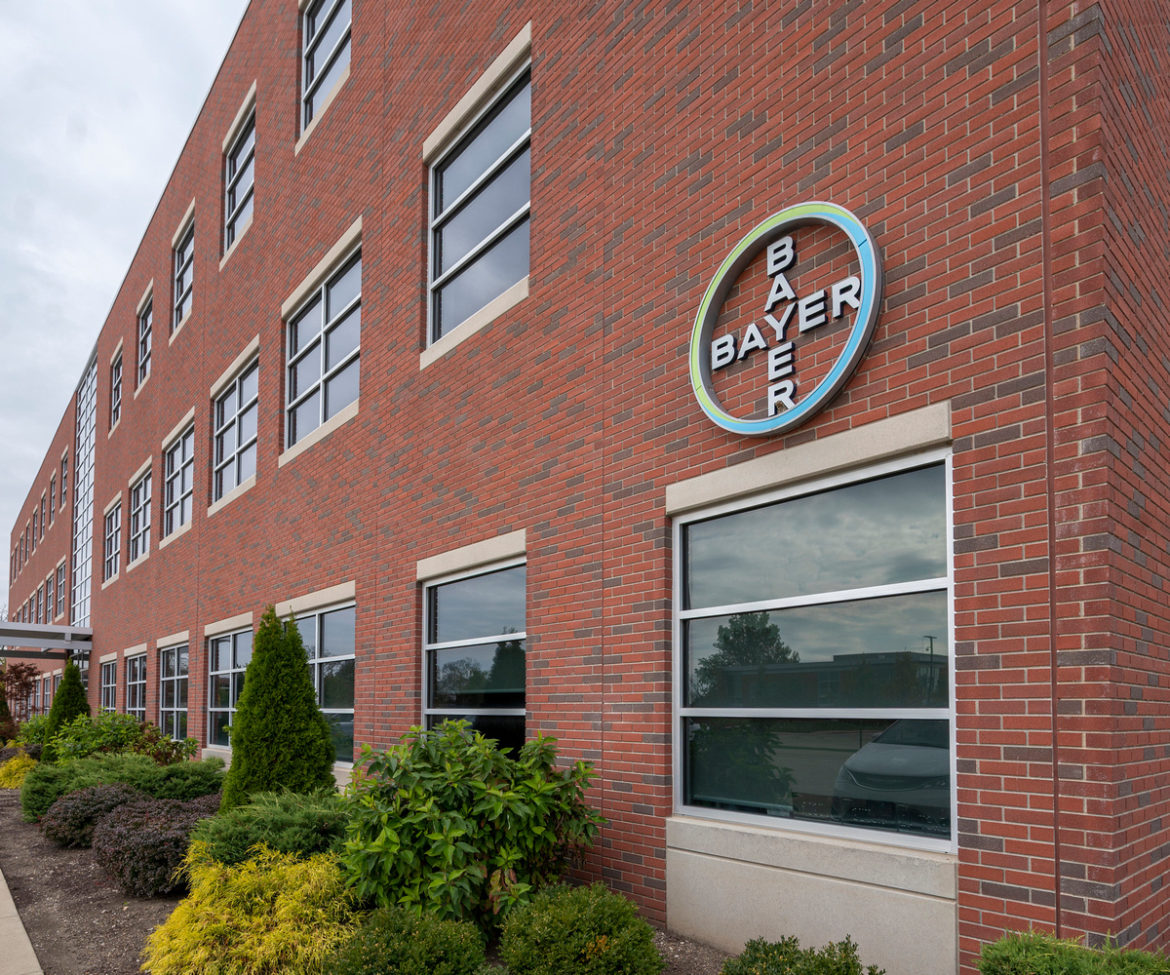
Bayer Crop Science Innovation Center, University of Illinois
UPDATE, June 23: The series won first prize in the category.

"Big Ag U", a series last year by Investigate Midwest and Harvest Public Media, has been named a finalist in the 2022 Richard H. Driehaus Foundation Awards for Investigative Reporting by small newsrooms. The series looked at the money major agribusinesses had given four major university agriculture programs and the influence it bought. Public universities "have cultivated powerful agricultural corporations as donors while public funding has stagnated," they reported.

From 2010 to 2022, the corporations have given at least $170 million to ag programs at the University of Illinois, Iowa State University, Oklahoma State University and the University of Missouri. The reporters said they couldn't get records from several other universities, which cited state privacy laws.

"That corporate money has paid for research centers and specific studies at universities," they reported. "For decades, the federal government funded much of the research and development into agriculture, and not just on campuses. But that changed around the 2008 financial crisis. Soon after, the private sector became the dominant spender," according to the U.S. Department of Agriculture. "USDA noted private research tends to focus on things that boost revenues over developments that could help the public at large."

Donors' influence could limit the scope of university research, said Gabrielle Roesch-McNally, who advocates for women’s ownership with the American Farmland Trust. The University of Illinois said it believes “strongly in researchers conducting and sharing their work without influence from internal or external entities.” The series reported on complaints that Monsanto, a major donor now owned by Bayer, made about individual researchers at Illinois; administrators defended the researchers and won the company's support for an expended research center, now named for Bayer.

Investigate Midwest says its mission is to expose "dangerous and costly practices of influential agricultural corporations and institutions." The Driehaus Foundation is based in Chicago and focuses on the quality of the built environment but also promotes arts and culture, economic opportunity for the working poor and investigative journalism for government accountability.