Tuesday, January 10, 2023

Iowa farmers want year-round raccoon hunting to lessen gnawed-down crops; population has tripled since 2006

(Photo by Peter Nuij, Unsplash)
Ethan Crow is an Iowa farmer with a gripe: raccoons. "Shine a light at any of the buildings on Ethan Crow’s central Iowa farm at night and you are likely to see several pairs of eyes staring back," Crow told Joe Barrett of The Wall Street Journal. "And piles of scat covering the floor—signs of what farmers are calling an out-of-control raccoon problem."

Crow told Barrett that he loses several thousand dollars in sweet corn to raccoon raids every year. “We do some trapping when we can. Otherwise, I mean legally, there’s not a lot that we are supposed to do.” The fine for hunting or trapping a raccoon outside the early-November-through-January season can be as much as $335, Barrett notes.

Farmers want year-round raccoon hunting, and the Iowa Department of Natural Resources, isplanning hearings on it. DNR biologist Vince Evelsizer noted that Iowa's raccoon population has tripled since 2006, and raccoons love sweet corn and grain corn, which both vital to Iowa agriculture.

Year-round hunting "won’t solve the problem overnight,” Evelsizer told Barrett. “But it will give people more flexibility to deal with nuisance situations.” He said the department would keep supporting nonlethal means of dealing with raccoons, such as putting electric wire around sweet-corn patches, installing a metal mesh to keep raccoons out of homes, and relocating problem raccoons.

Barrett writes, "Many farmers have clearly had enough of the crafty mammals, which typically weigh about 8 to 20 pounds, have distinctive bandit-mask facial markings, keen eyes, human-like forepaws that make them excellent climbers and a bushy, ringed tail."

Dean Fisher, a Republican Iowa state representative, told Barrett: “They may be cute and cuddly, but not here in farm country. They’re vermin and a nuisance.” Barrett reports, "Last year Fisher introduced a bill to extend raccoon hunting, which passed both chambers but was never reconciled," Fisher said he is waiting to decide whether to reintroduce his bill based on what happens with the state proposal.

Monday, January 09, 2023

Rural editor dreads writing her column, because 'The world has become an ugly place for us to exchange ideas and thoughts,' with 'baseless cynicism and unwillingness to think'

By Sharon Burton
"One Voice" column, Adair County Community Voice, Columbia, Ky.

I’ve been a journalist for several decades now, and I’m honored to have won my share of awards over the years. When it comes to annual newspaper contests, the ones I’ve been most proud of were awards for writing this column.

I’m proud to say I’ve won first place more than once, and there was a time when that encouraged me to bravely share my thoughts on this page, hoping that readers would take the journey with me as I called out elected officials when I believed it was needed, when I shared words of wisdom I had learned from life’s experiences, or even when I shared a warm story about family.

I often heard from readers who either loved what I have written or really, really didn’t like it, and either way, I knew I had encouraged others to spend at least a moment in thought about something important.

Sharon Burton
Today, the part of my week I dread the most is sitting down and writing this column. I leave it until I can no longer avoid it, and this page is often the last one to make it to the printers.

Our world has changed – no, we say, the world, but in all honesty, people have changed. Because people have changed, the world has become an ugly place for us to exchange ideas and thoughts. So many people no longer value the voice of others, and it breaks my heart every week when I realize that I no longer feel encouraged to share ideas with hope that we can all learn together.

When I would write something others might disagree with, I enjoyed the calls or visits from them as we talked about our disagreements. I learned from a better journalist than myself to use the opportunity to ask for letters to the editor – to even offer to type them up so that the person who disagrees with me can share his or her opinion on the very same page where I express mine.

Those have always been my favorite conversations, the ones with the people who disagree with me. I didn’t always change my mind, although sometimes I did, but mostly it helped me view the world from a different perspective, and I think we all become better people when we can do that. I don’t have to agree with someone to empathize with a countering viewpoint; I only have to respect that person as another human with ideas, emotions, thoughts and experiences of his or her own.

I wanted to write this week about the past year and my hopes for 2023, but to be honest, I don’t feel like sharing. While newsprint doesn’t give readers the chance to write nasty little comments below the article, the free-flowing river of hate and trolling we are bombarded with daily on social media has cost us more than we realize. It has cost us accountability.

We embrace the free flow of opinion without expecting any forethought or, heaven forbid, some research or thorough reading. In the past, I always knew I better do my homework before writing about a subject on this page. Readers expected me to be informed, and I did not want to disappoint.

We used to be a community where we stood side by side with the very people we considered different from ourselves. Now, we can’t even have a winter storm that people aren’t ridiculing others because they do or don’t believe in global warming, because they think electric vehicles do or don’t make sense, or whatever the latest thing is that most people have done very little research on but hold a very strong opinion about.

It’s not even the lack of being informed that bothers me the most. It’s the attacking attitude toward others with a different opinion that boggles my mind. Why be so mean?

Don’t misunderstand – I can handle mean. I’ve had someone come into my office and rip the newspaper up in front of me (or attempt it; newsprint does not tear easily). I’ve had the paper slung across my desk in anger. I’ve had phone calls where some very nasty words were used, and I’ve had my Christianity questioned more than once. It’s all part of the job.

But I understood that those people were invested in the topic I had written about. An article didn’t sit well with their values; an elected official didn’t get his way; a family member made the news for breaking a law and they wanted me to cover it up. Those tirades I can handle.

It’s the baseless cynicism and unwillingness to THINK that has me discouraged about mankind. It’s the blind support of viewpoints with no interest whatsoever of exchanging thoughts and ideas. It’s the inability to think there is more out there for you to learn.

It takes the fun out of being right, and it certainly takes the fun out of being wrong. In the past, I’ve used this spot to share my thoughts, knowing it could go either way. I knew my readers were looking out for me, letting me know when I said something that made an impression on them and having my back when I missed the mark.

While the awards have been fun, in truth, my favorite response to “One Voice” has always been, “I don’t always agree with you, but I enjoy reading your column.”

When did we stop enjoying the people with whom we disagree?

If I were to pick out my hopes for 2023, it would be that we become a kinder, gentler world, that we see and embrace the imperfections of one another, that we seek knowledge, and we view the world through the lens of grace.

We can only better ourselves when we allow ourselves to be imperfect in front of one another. It’s through that experience that we learn, and we still have a lot to learn.

Emergency briefing: Great Salt Lake has 5 more years without 'extreme intervention' for water conservation

Dust blows through Antelope Island and the Great Salt Lake.
(Photo by Trent Nelson, The Salt Lake Tribune)
The Great Salt Lake is the largest saltwater lake in the Western Hemisphere and the eighth-largest terminal lake in the world. Experts are warning that without extreme intervention, the lake will be gone in five years due to "excessive water use" in the lake's basin, reports Leia Larsen of The Salt Lake Tribune.

Released as an emergency briefing to the state legislature, the warning outlines the "'unprecedented danger to Utah’s public health, environment and economy if the lake does not receive a 'dramatic' influx of water by 2024," Larsen writes. "The lake has already hit record-low elevations for two years in a row, exposing 60% of its lakebed which continues to dry into a toxic source of dust pollution."

Ben Abbott, a professor of aquatic ecology at Brigham Young University and lead author of the briefing, said in a news release, “The decisions we make in the coming few months will affect our community and ecosystems across the hemisphere."

In response, "The Utah Legislature took some of its biggest conservation measures to date last session in an effort to save the Great Salt Lake. They took a helicopter tour of its massive exposed lakebed and approved a $40 million trust to secure water rights and improve habitat for the lake," Larsen reports. "They funneled millions toward mandatory secondary water metering. They revised the state’s pioneer-era water laws to allow farmers to lease their water rights and use them to benefit environmental interests like the Great Salt Lake. . . . But lake researchers and advocates say it’s not enough."

As the clock ticks, "The Great Salt Lake’s collapse has begun. High salinity levels have all but wiped out brine flies, which support millions of migrating birds. Microbialite colonies that serve as the foundation of the lake’s food web have surfaced and died," Larsen writes. "The lake’s multimillion-dollar mineral extraction industries can’t reach the brine they need, marinas are dry and the lucrative aquaculture industry could go bust next year if rising salinity wipes out the lake’s brine shrimp."

Lynn de Freitas, executive director of Friends of Great Salt Lake, told Larsen, "In the face of this [crisis], we need our state leadership to say, ‘Not on my watch,’ and "do whatever it takes to pull the lake back from the edge.”

Larsen reports: "Human consumption is mostly to blame for the Great Salt Lake’s desiccation. The lake has lost more than 1 million acre-feet each year since 2020, according to the report, which is 'much more' than models predicted. . . . According to the report, "Conservation is the only way to provide adequate water in time to save Great Salt Lake. Conservation is also the most cost-effective and resilient response."

Cost of living and child care are at the heart of rural family concerns, survey by Save the Children shows

They survey asked respondents to name one or two top issues.
(Graph by Save the Children Action Network)
A rural-voter survey sponsored by the political arm of Save the Children, "shows that rural residents are facing several challenges, including worries about the ability to feed their children and access to good and affordable child care," reports Kristi Eaton of The Daily Yonder. According to the survey: “Rural voters deem inflation to be the greatest challenge facing rural families. In an open-ended question about the biggest problems facing families in rural areas, respondents are most apt to volunteer gas prices and inflation. When asked about specific problems in their area, 68% say children not having enough to eat is a serious problem.”

When it came to opinions on childcare, "More than half (55%) said that high-quality and affordable child care has become less accessible since the pandemic," Eaton reports. "Additionally, a majority (54%) of rural voters said there are only some or very few high-quality, affordable early education programs in their area."

Christy Gleason, executive director of Save the Children Action Network, told Eaton: "Congress and state legislatures have taken incremental steps to provide relief on child care and hunger but more must be done to address the scale of the crisis we see in these numbers. From boosting rural development in the farm bill to reviving the expanded child tax credit and increasing state and federal investments, rural families want to see bold leadership from their elected representatives in the new year.”

A bipartisan team of pollsters and staff from Save the Children will brief Congress on the findings of the survey Jan. 18, Eaton reports.

Use of force in Pa. jails common with mentally compromised inmates; 2/3 of people in U.S. jails are just awaiting trial

(Mixed media by Tom Downing, WITF)
In its investigation into Pennsylvania's county jails, WITF, the state's public television station, found that "One in three uses of force from 25 jails during the last three months of 2021 involved a person who was having a mental health crisis or who had a diagnosed mental illness," Brett Sholtis reports. "The situation brings risks ranging from lasting psychological trauma to death."

In the U.S., "two-thirds of people in jails are there pre-trial — meaning they haven’t been convicted of a crime. Most are there on nonviolent charges such as parole violation, theft, drunkenness and drug possession," Sholtis reports. "Though their time in jail may be relatively short, those who fail to adapt can pay a heavy price."

One story Sholtis provided: "When police found Ishmail Thompson, he was standing naked outside a Dauphin County hotel, where he had just punched a man. A mental-health specialist working with the county prison said Thompson should be sent to a hospital for psychiatric care. But at the hospital, a doctor ran some tests and cleared him to return to jail. At the jail, when corrections officers tried to strip-search Thompson, he ran into a shower where he was 'wetting himself down,' prison records show. An officer pepper-sprayed him in the face and tried to take him to the ground. Thompson fought back. Staff flooded the area, handcuffing and shackling him. . . . About 20 minutes later, an officer saw that Thompson was taking 'short, abnormal breaths.' Five days later, Thompson died. The district attorney said no criminal charges would be filed."

Sholtis writes, "Most uses of force don’t lead to death — and the coroner did not determine whether Thompson’s death was due to being pepper-sprayed and restrained. But the practices corrections officers employ every day in Pennsylvania county jails can put prisoners and staff at risk of injury and can hurt vulnerable people who may be scheduled to return to society within months."

Craig Haney, a psychology professor at the University of California Santa Cruz, who specializes in prison conditions told Sholtis, "Some mentally ill prisoners are so traumatized by the abuse that they never recover, some are driven to suicide, and others are deterred from bringing attention to their mental health problems because reporting these issues often results in harsher treatment." While use of force is needed "for officers to prevent violence against others. However, records obtained by WITF show that a significant number of uses of force are against people who are not hurting anyone else," Sholtis reports. "WITF found that one in five uses of force — 88 incidents — involve a prisoner who was either attempting suicide, hurting themselves or threatening self-harm. Common responses by prison staff included what was used on Thompson — a restraint chair and pepper-spray. In some cases, officers used electroshock devices such as stun guns."

Native Americans' fight for salmon rights continues; and they're subject to more discipline in New Mexico schools

In New Mexico, a detailed analysis of state records reveals that "Native American students are expelled far more often than any other group and at least four times as often as white students," reports Bryant Furlow of New Mexico In Depth and ProPublica. "Gallup-McKinley County Schools are responsible for most of the disparity. The district has a quarter of New Mexico’s Native students, but it accounted for at least three-quarters of Native student expulsions in the state during the four school years ending in 2020."

Furlow reports, "The state education department requires school districts to report all disciplinary incidents. Gallup-McKinley reported at least 211 expulsions over the four school years, an annual rate of 4.6 per 1,000 students. That’s at least 10 times as high as the rest of the state. The disparities persisted from elementary through high school."

A spokesperson for New Mexico Attorney General-elect Raúl Torrez called the news outlets’ findings 'alarming' but told Furlow that the office doesn’t have the authority to investigate civil-rights abuses by school districts or other public bodies.

Gina Laura Gullo, assistant director of education services at the Pennsylvania State Education Association, who did her Ph.D. dissertation on unconscious bias in school discipline, told Furlow she found that school administrators who scored higher on measures of implicit racial bias assigned harsher discipline to students of color than white pupils: "Infractions that are more subjective in nature such as disorderly conduct, insubordination, classroom disturbance and the like, are those that are specifically subject to more implicit bias.”

Salmon rights: The classroom isn't the only rocky battleground for Native Americas. Tribal fishing rights are also a fight for justice. Randy Settler is a member of the Yakama Nation, a tribe that has spent generations fishing along the Columbia River. He is fighting for his tribe's right to harvest salmon, reports Tom Schick for Oregon Public Broadcasting: "They had fought for their right to fish, a right the U.S. government promised to honor more than 150 years ago and then violated generation after generation through laws, policies and flat-out discrimination. He inherited that fight. Now, with climate change threatening the remaining salmon runs, he thinks about the legacy they left for him, the one he’ll pass down to his nephew, George, and to George’s 10-year-old daughter."

Columbia River watershed (American Rivers map)
The past 50 years have been marked with "many disputes over the federal government’s actions toward salmon and tribes," Schick writes. "Settler summed up the tribal position in his testimony before Congress at the time. Fish runs are in terrible condition, he told them: 'The United States is not living up to its commitments in the Treaty of 1855.'"

There have been some positive discussions that may help the Columbia River tribes including the White House recommendation that dams along the Snake River be removed and funding for the reintroduction of salmon of be provided.


Want to keep those fresh eggs coming during cold weather? More light and attention to diet can help hens produce

(Photo via Successful Farming)
For chicken owners who love their fresh eggs, winter can pose a challenge: "Many hens stop or slow down egg production during the fall and winter. The lack of daylight and cooler temperatures tell their bodies to rest," notes Successful Farming. "If you keep the chickens comfy with light and warmth, they'll reward you with more eggs."

Extension Poultry Specialist Jesse Lyons of the University of Missouri told Successful Farming: "It takes about 12 hours of day length to get the birds stimulated to where they start laying. Up to about 16 to 17 hours or so, somewhere in there, is probably the maximum day length that will stimulate the birds."

To add heat and light to a hen house, Lyons said, "Many poultry houses use the relatively inexpensive incandescent light. One light bulb would keep 15 or 20 chickens happy to where they can see, and walk around and eat, and be stimulated by the light . . . You can also use an infrared heat lamp for a couple of hours to warm them up. . . . You can use some of the fluorescent lights, but in cold environments, some of these lights will not come on."

A balanced feed plan can also help, Successful Farming advises: "Provide a diet that is balanced for protein and calcium. More feed may be required to give them the extra energy they need for maintaining body heat and egg laying."

David Frame, an extension poultry specialist at Utah State Universitytold Jodi Henke of Successful Farming that free-range chickens find plenty to eat other times of the year, but you have to help them with their diet during the winter: "Offer them some table scraps from your salads, or as you trim them. Save those carrot peels and save the ends of the lettuce and the spinach, and things like that. Throw out there, let them peck around at them, and get some greenery. Another idea that works pretty well is to cut a pumpkin or a squash open and just let them peck around at that. Those squash-type plants are very rich in vitamin-A, plus it gives them something to do."

Friday, January 06, 2023

Santos story illustrates demise of local news ecosystem; lots of commentary, but 'No one is ... being paid to run down tips'

The fact that a Long Island weekly's revealing coverage of congressional candidate and now Rep.-elect George Santos wasn't picked up by other news outlets until after the election illustrates the demise of the local news ecosystem, writes Steven Waldman of the Rebuild Local News Coalition.

“If this had run 25 years ago, it would have been gobbled up,” Grant Lally, the publisher and owner of the North Shore Leader, told Waldman. “There’d have been 20 follow ups from Newsday and other publications and the weeklies.” But the weeklies that once served Long Island towns have "mostly merged into larger chains, and many don’t even have editorial offices in the covered towns anymore," Waldman reports. "Another part of this case, though, is the attention economy."

Steven Waldman
Waldman explains, "Succeeding in media today requires doing good journalism and then building your own audience for it, and the North Shore Leader didn’t successfully disseminate their scoop. They didn’t mention their story on their Facebook or Instagram accounts (not updated since 2021), nor did they tweet about it, though that stems more from them not having a Twitter account. Which isn’t really surprising since the paper doesn’t have anyone working social media hard—in part because they’ve shrunk." Lally told him, “We lost half our advertising during Covid and most of it really hasn’t come back.”

Because "the local media ecosystem is compromised, even when someone manages to get a good story, the rest of the system can’t amplify it or pursue it," Waldman writes. "If a small paper broke a story, it would be picked up by a bigger paper, or The Associated Press, which would prompt the TV stations and radio stations to dive in. Now the hyperlocal small newsrooms rarely do investigative work, and when they do, the bigger players don’t pay attention. And in smaller communities, the weekly papers are the entire foodchain, so their demise is even more consequential."

There are stil more than 6,000 weeklies, but many of them, and some dailies, are “ghost newspapers . . . slim papers full of wire copy, press releases and ads," Waldman notes. "One consequence of this hollowing out is that voters have little to no information on which to base their choices in local elections. This would seem to be a fairly significant problem for, you know, democracy. And ironically, the more local the election, the worse the coverage is likely to be. But the harm goes much deeper. Other studies show that areas with less local news have more corruption, fewer competitive elections, less resident involvement in PTAs, and even lower bond ratings. . . . There’s now evidence that the decline of local news exacerbates polarization, too. Studies show, for instance, that in areas with less coverage, voters are less likely to split their tickets. That’s because the vacuums created by the contraction of local news are filled largely by national cable TV, radio, and social media. The contraction of local news accelerates the nationalization of politics while at the same time, we have less of the kinds of information that binds together communities—everything from obituaries to high-school sports. And as "many communities have moved from good information, to no information, to deceptive information, a new wave of “pink slime” sites—often set up by political activists—to impersonate traditional news sites while actively promoting particular candidates or businesses."

Waldman, who runs Report for America, notes the book, News Hole, by media scholars Danny Hayes and Jennifer Lawless, who wrote that most discussions about the problems of democracy “don’t account for the most dramatic change in the civic life U.S. communities have experienced in the last 20 years: the decimation of the local news media.” He promotes his coalition's main cause, the proposed Local Journalism Sustainability Act, which would give tax credits to newsrooms to pay local journalists, to small businesses that advertise in local news outlets and to consumers who purchase local news: "Perhaps Rep. Santos could co-sponsor the bill."

Screenshot from CNN
UPDATE, Jan. 7:
On his Saturday morning CNN program, Michael Smerconish said "mythomanic" Santos also benefited from a late redistricting that turned the formerly Democratic district into a marginally Republican one and left little time for other Republicans to organize a primary campaign. But his six-minuite segment is mainly about the "systemic failure that is only getting worse" in local news. He concluded, “George Santos is what you get when everyone with a laptop is a wannabe journalist, but no one is left being paid to run down tips, and that should make all of us nervous. The next time you hear about the closure of a newspaper, or the scaling back of a newsroom, think about George Santos and how many more like him might be getting away with something.”

264 of 304 persistent high-poverty counties are rural: Black Belt, Delta, Appalachia, Ozarks, Rio Grande, Native lands

Map by Economic Research Service, United States Department of Agriculture

A fresh review of data from the Economic Research Service of the U.S. Department of Agriculture shows counties with continuous high poverty since 1960 are largely rural, reports Jody Heemstra of Dakota Radio Group News

President Lyndon Johnson's War on Poverty and the Economic Opportunity Act of 1964 helped move many counties out of high-poverty status, but in more than 300 counties, most of them rural, high poverty has persisted: "In 1960, 78 percent of U.S. counties had poverty rates of 20 percent or more. Among them, 28 percent continued to have high poverty through 1980," Heemstra reports. "As of 2019, there were 304 counties—13 percent of the counties with high poverty in 1960—that consistently had poverty rates of 20 percent or more over the last 60 years."

Heemstra writes, "The majority—264 counties—are rural counties and are clustered in the Appalachian states; the Black Belt in the South; the Mississippi Delta; the Ozarks region of Missouri, Arkansas, Oklahoma, and southeast Kansas; the Southwest; and in counties with large American Indian and Alaska Native populations."

From 'rural' Star Wars to a cocaine bear, a mystically rural book series and more, rural entertainment has it all

Prey, Andor, and Cocaine Bear (Image, 20th Century Studios, Disney Media, and Universal Pictures)

A year ago, The Daily Yonder started a project featuring "movies, television series, books, and more, all through a rural lens." Below is a little explanation and recommendations to keep rural minds busy.

"When we first began this project, there was a small bit of doubt to overcome," writes Adam B. Giorgi. "The first question was, would there be enough 'rural' entertainment on offer to keep us going strong on a regular schedule? As it turns out, our shelves were plenty stocked, and there were even more things to write about than what we had time and space to cover."

Among all items rural, is "Star Wars." Giorgi writes: "I’ve already made the case that "Star Wars" is an inherently rural story and that its many iterations are at their best when they remember that. The franchise’s newest series, 'Andor,' might be the best "Star Wars" has ever been. There are some memorable rural settings . . But across the board, 'Andor' is an expertly plotted and richly layered political drama, focused on the rigors of cultivating a revolutionary movement and the realities of living under an emerging totalitarian state."

The blockbuster “Prey” is rural and original: "'Prey' stood out as one of the best," Giorgi writes. "It took the action back to the Great Plains of 1719 and replaced the original story’s modern military commandos with a tribe of Comanche warriors. . . The sweeping plains, the compelling Indigenous cast, and the tightly choreographed action scenes all would have thrived on a movie theater screen."

Anya Slepyan, also from The Daily Yonder, recommends a richly rural book series: "This recommendation is not so much for one book as it is for a series of seven books — first the four-book  Raven Cycle, followed by The Dreamer Trilogy — but the last book, Greywaren, came out this year. Both series are centered in the fictional rural town of Henrietta, Virginia . . . The series contains psychics, farmers, hit men, industrial sabotage."

The film "Cocaine Bear" will be released in February 2023, and is said to be a don't miss, "true(ish) story," Giorgi yarns. And “Asteroid City," which is set to be released in June 2023, "is said to take place in a small desert town and follow a series of unexpected events at a Junior Stargazer convention . . . dark skies and rural stargazing is a great match for filmmaker Wes Anderson’s quirky, endearing sensibilities. Plus, the film boasts a ridiculously stacked ensemble cast."

Quick hits: E-bikes, 'old-time socialism', phases of the moon, your brain on music, a pain in the neck and more . . .

Electric bikes are awesome! Until . . .
(Illustration by Anna Haifisch, The New Yorker)
The wind whooshes through your hair,
As nature goes zooming past.
Until the fatal moment,
When your E-bike runs out of gas.

Iowa editor Art Cullen shows us how Americans might be able to get on a plane and actually arrive at their destination without becoming Cuba in his piece "Gimme some of that old-time socialism" in the Storm Lake Times Pilot.

Learn about the phases of the moon, and discover what a murmuration of starlings looks like as it flies over a waxing crescent moon at dusk.

Still working on 2023 resolutions? Oliver Burkeman, author of Four Thousand Weeks: Time Management for Mere Mortals, has some ideas. Here's his interview with Caroline Mimbs Nyce of The Atlantic.

Dumbledore's thoughts on music: “Ah, music," he said, wiping his eyes. "A magic beyond all we do here!” ― J.K. Rowling, Harry Potter and the Sorcerer's Stone. Learn more about your brain on music.

Khan, the rescued ocelot (Photo via Amazon video)
Returning a "most ridiculously cute" ocelot to its home in the Peruvian Amazon.

It's a pain in the neck. That describes a lot of things. This article addresses the actual pain.

Reading is the answer. Here are some New York Times picks.

February is around the bend. Don't get caught without a Groundhog Day celebration plan.

Are you monumentally busy, or just profoundly disorganized? (If that feels like a personal attack, read this.)


Ageism is one form of bigotry that doesn't seem to get old

OPINION by Gary Abernathy, for The Washington Post

Because of my online Post photo — which I try to keep current — it has become increasingly common for people annoyed by my views to respond not by addressing the merits, but by simply calling me an “old white guy,” as if that made their point. Just recently, a reader emailed and referred to me as “an elderly white boy.” Elderly? Yikes.

Gary Abernathy (PBS image)
In fact, I’m thrilled to be the age I am. I’ve never enjoyed life more. Society’s change in attitude toward me — based strictly on the passage of time — is noticeable and striking, but not too personally disturbing. I’m glad I was young when I was and not now; I worry about my children and grandchildren navigating their way through this contentious world.

I realize that while I’m more fortunate than many — still able to pursue a career and enjoy a rewarding life with loving family and friends — in too many cases, the United States, compared with other cultures, holds its aging population in contempt. Too often, “old people” here are regarded as useless, helpless or a nuisance, left to wind down the clock as they stare out the window, a lifetime of experiences, work, achievement and sacrifice forgotten.

While we rightly ostracize, deplatform or even “cancel” people for their racism, antisemitism, xenophobia, homophobia and other prejudices, ageism is openly practiced, and ageist stereotypes thrive. Examples in the news abound. A TV crime story from April involving a 74-year-old North Carolina woman reported that “a grandmother” was the victim of a carjacking and also referred to her as “elderly.” In a more tragic case, ABC News recently reported on the fatal stabbing of an Atlanta woman whom it pegged as a “77-year-old grandmother.”

Both women most likely adored their grandchildren, but in neither case were those offspring part of the story. Maybe these women could have been defined by other, more pertinent life achievements. But because they were over a certain age and apparently their children had borne children, their status as “grandmothers” became their primary identifier.

Many of the most common insults leveled against President Biden are age-related. Granted, as president his mental acuity will be scrutinized, as was that of other older presidents such as Donald Trump and Ronald Reagan. But the mocking tone underscoring many of the jokes and memes is nothing short of cruel.

How should we respectfully refer to old people? I’ve seen people 60-plus still refer to themselves as “middle aged,” but let’s be a little more realistic and cut that off at least by 59. The word “old,” however, is such a pejorative that it should not be used alone. “Older person” is preferable. I hesitate to use “elderly” at all, which implies not just old age but a feeble condition. I’ve always despised “senior citizen” and references to the “golden years.” How ‘bout “best people ever?” That’s good.

But more important than terminology is how we regard older Americans in general. We should all be able to take a good-natured joke, whether about our age, our appearance, our background or our beliefs. But the rampant practice of ageist bigotry should join all the other “isms” and “phobias” as unacceptable, especially when it crosses the line from friendly ribbing to cruel attacks.

I’m going to add that to my list of causes. Right now, though, this 66-year-old grandfather is going to hit the couch for an afternoon nap — an “old person” stereotype I happily embrace.

Gary Abernathy is a retired rural newspaper editor from southern Ohio.

Thursday, January 05, 2023

GAO report on economic viability of local journalism ignores state-based issue of public-notice advertising in newspapers

Chart from Government Accountability Office report shows some revenue options for local journalism. 

By Al Cross

Director and Professor, Institute for Rural Journalism and Community Issues, University of Kentucky

Thursday's Government Accountability Office report on local journalism is a welcome document. It is a recognition by the nonpartisan investigative arm of Congress that threats to the economic viability of local journalism are a collective threat to local democracy in the United States. The 88-page report is a valuable compilation of the issues and potential solutions, such as philanthropy, tax incentives, direct public funding and federal advertising. It should raise the issue on policymakers' radar and help guide their responses.

But the report misses a key point, especially for rural newspapers. Perhaps because it is from one federal agency to another, the Federal Communications Commission, which requested the report, it does not mention an increasingly important revenue source that is under threat in most states: public-notice advertising by local and state governments.

GAO is not unaware of the issue. I mentioned it as one of the 40 participants in a two-day workshop that the agency held last February to explore the threats to the viability of local journalism. I pointed out that as goods-and-services advertising has moved from local newspapers to digital platforms, public notices (which many still call "the legal ads") have become a much more important part of newspaper revenue, especially in rural areas, where retail display advertising has largely disappeared. Some publisher say they account for more than 20 percent of revenue, the difference in profiit and loss.

As newspapers increasingly depend on government advertising that is required by law, that revenue is in jeopardy in most state legislatures, where local officials and their lobbyists argue that public notices would be better placed on government websites. Some states, most notably Florida, have given local governments that option. It saves a very small share of a local budget, but makes for great reduction in the reach of the notices. Surveys have shown that citizens are highly unlikely to look for notices on government websites and would prefer to kepe them in local newspapers. Most states already require papers to post public notices on freely accessible websites, usually run by state newspaper associations.

Beyond newspaper revenue, public notices are increasingly important for public information, because newspapers are less able to cover government activities. Even journalists sometimes forget that public-notice ads are one leg of the three-legged stool of open government, along with open-records and open-meetings laws. "The legals" are often sources for stories; the Public Notice Resource Center gives an annual award for the best story that sprang from a public-notice ad.

In some states, public-notice laws lack objective standards, letting local officials play favorites with their advertising, as writer Susan Chandler reported a few months ago in a story for the Local News Initiative at Northwestern University's Medill School of Journalism. But state newspaper associations are often reluctant to ask legislators for better standards, for fear that any public-notice legislation would become a vehicle for damaging measures.

This is largely a state-by-state fight, but it has become an existential one for newspapers, especially those in rural America. It needs to be remembered in the national discussion about the sustainability of local journalism.

Farmers still don't have the right to fix much of their own equipment, but N.Y. 'right to repair' law could show the way

Photo by Liz Hafalia, San Francisco
Chronicle
, via Getty Images
New York's Digital Fair Repair Act was signed into law last week, strengthening Americans' ongoing fight with equipment manufacturers from John Deere to Apple. "The law has been heralded as the nation’s first comprehensive 'right to repair' law," reports Austin Jenkins of Pluribus News. "It requires original equipment manufacturers to provide diagnostic and repair information to product owners and to independent repair shops even if they are not preferred or authorized vendors."

The law gives New York consumers, most notably farmers, a solid foothold to demand right-to-repair concessions from manufacturers of original equipment. Repair provisions for farmers have been an ongoing pursuit for the Biden administration, but the proposed Agriculture Right to Repair Act has not passed.

"Proponents quickly touted the new law as a significant victory in an ongoing, multi-state fight to pass right-to-repair laws," Jenkins reports. "TechNet, a tech industry trade group, had a positive response about changes made to the law before it was signed." Those include deletion of a proposal that manufacturers provide “passwords, security codes or materials to override security features” and addition of one allowing manufacturers to provide assembled parts rather than individual components “when the risk of improper installation heightens the risk of injury.”

Weekly editors seek entries in editorial contest by Feb. 1; top prize is scholarship to June 21-25 conference in Reno

The International Society of Weekly Newspaper Editors is accepting nominations for its 62nd annual Golden Quill Award for editiorial writing. Entries must be postmarked by Feb. 1.

The contest honors outstanding editorials or staff-written opinion pieces from less-than-daily publications that were published in 2022 and identify local issues of concern, offer an opinion, and support a course of action. Syndicated columns are not eligible; online-only newsrooms are eligible as long as they are community news sites.

Each newspaper may enter up to four editorials or signed opinion pieces; with a limit of two entries per person. The awards are for individual editorials. The entry fee is $10 for each editorial or column for ISWNE members, $15 for non-ISWNE members, and $5 for students. For more instructions and an entry form, click here. For last year's winners, click here.

The 12 best editorials will be published in the Summer 2023 issue of ISWNE's biannual journal, Grassroots Editor. The top winner will receive the Golden Quill, a scholarship to attend ISWNE's annual conference in Reno, Nevada, June 21-25, and travel expenses of up to $500.

Many rural families squeezed hard by child-care shortage

Many of the families who need child care the most
can’t get it. (Photo by Andrii Zorii, Getty Images)
The lack of available and affordable child care continues to be painful for rural families who are trapped with a single income because the second parent needs to stay home with younger children, reports Megan Leonhardt for Fortune Well. "Nearly one in three rural Americans (31%), including 75% of parents, have personally faced at least one type of child-care challenge, and 11% have had to leave the workforce as a result according to a new survey conducted by the Save the Children Action Network (SCAN), a bipartisan political advocacy group for children, that polled 1,006 respondents living in rural areas or small towns."

The dilemma is a circle of frustration and financial struggle. Breanna Dietrich, a stay-at-home parent from Wheeling, W.Va, pop. 27, 0000, told Leonhardt that she put her now 17-month-old on a daycare waiting list before she was born, and a slot has yet to open: “I’m a mom of five, and my husband works, and he works out of town a lot of times, too. So it’s just me. And I am financially not able to work, which sounds crazy.”

Without child care, "the family has relied solely on the income her husband earns as a utility-pole inspector, but they have struggled with rent, food, and bills—especially amid high inflation and the formula shortage earlier this year," Leonhardt reports. "But many of these parents not only struggle to find available child-care options, they struggle to afford it."

Christy Gleason, the executive director of SCAN, told Leonhardt, “The more we can make affordable child care available to families, then the more they’re able to look at their budget in a different way, because childcare is such a huge cost driver for families across this country, including in rural communities." Dietrich told Leonhardt, "Most people in our area, I will tell you right now, cannot afford $700 or $800 a week [for child care]. That’s more than my husband makes."

The 2023 federal budget includes "$2.8 billion in new, additional funding for federal early learning and childcare programs, including a 30% increase in Child Care and Development Block Grant program funding, according to an analysis by nonprofit First Five Years Fund," reports Leonhardt. "The CCDBG program is set to receive $8 billion (a $1.8 billion increase over FY 2022), while Head Start and Early Head Start and the Preschool Development Grant Birth Through Five programs get more modest funding increases, but will have budgets of approximately $12 billion and $315 million for FY 2023, respectively."

While child-care shortages and affordability will not be solved through 2023 funding or current government programs, some communities have outlined their own way to reach longer-term solutions.

Feds, faculty seek symbiotic 'Reese's Cup' mix of farms, solar; Pa. creates a solar guide for farming communities

A combine harvests soybeans under hanging solar panels on an agrivoltaic site in France. The federal government hopes to inspire similar projects in the United States. (Photo by Patrick Hertzog, Agence France-Presse via Getty Images)

"Your solar panel shaded my corn!" "Your corn shaded my solar panel." "Wait! This could be the beginning of an incredible relationship." So might go a 21st century version of the 50-year-old Reese's Cup myth of magical beginnings.

For clean energy, some "Reese" options are being considered, report Daniel Moore and Maeve Sheehey of Bloomberg Law: "Developers are often eyeing fields of wheat, corn, and hay; ranches roamed by cattle and sheep; and plots bursting with berries and lettuce. If built there, solar panels can level farms that feed the country. Yet federal energy officials and university researchers believe there’s no conflict. The Energy Department is scaling up the emerging field of 'agrivoltaics,' which seeks innovations in both solar technology and farming techniques that can produce clean energy and food at the same time, on the same plot of land."

The department, which has been researching the topic since 2015, "announced $8 million for another six research projects that plan to assess issues like soil health, grazing methods, and outreach to minority farmers," Bloomberg reports. "Farming can also help solar panels. Arid land around solar installations can be a problem, blowing dust and hurting farmers next door. Planting crops like broccoli keeps the back of panels cool while conserving water—a win-win for plants and solar productivity, and especially important in the drought-plagued West."

The story's candy angle came from Andrea Gerlak, director of the University of Arizona’s Udall Center for Studies in Public Policy, who said, “It’s like a Reese’s peanut butter cup. You want to bring the chocolate and the peanut butter together." Michele Boyd, who leads DOE's agrivoltaics portfolio, told Bloomberg that the pairing "needs to work economically for the farmer, and it needs to work economically for the solar industry—that’s the sweet spot. Otherwise, why would they do it?”

Meanwhile, Pennsylvania, a state with little solar regulation, has released a community guide for solar projects, reports Philip Gruber of Lancaster Farming: "The document has no regulatory force, but it provides a set of principles designed to balance renewable energy, food production and environmental protection. . . . A key point is solar companies should do their best to ensure farming can continue within the solar array. This could involve elevating the panels or spacing them widely, using livestock to manage vegetation, and designing the project so that a farmer who rents the land can continue to do so."

North Carolina sheriff quits again, before allegations heard

Columbus County Sheriff Jody Greene enters a courtroom for 
 his removal hearing. (Photo by Grant Merritt, The News Reporter)
An embattled sheriff in rural North Carolina has again resigned, this time after being re-elected but facing renewed charges.

Columbus County Sheriff Jody Greene quit "just moments after the start of a second court hearing to remove him from office," report Tyler Dukes and Carli Brosseau of The Charlotte Observer. "A superior court judge Wednesday said the announcement effectively ended District Attorney Jon David’s effort to remove Greene from office over wide-ranging misconduct allegations. But the court left unanswered whether Greene should be disqualified from the post, which would prevent him from running or serving again."

"Greene previously resigned from the final weeks of his first term during an October removal hearing into the then-suspended sheriff’s alleged words and actions in office," The News Reporter of Whiteville recounts. "Those included threatening to fire Black sheriff’s-office employees and intimidating public officials. With Greene no longer in office, the court then dismissed its removal hearing against him, but Greene continued to seek and would later win re-election."

Columbus County (Wikipedia map)
Almost immediately after he was sworn in Dec. 29, David "filed a petition in court seeking — for the second time — to have Greene permanently removed from office, the Durham Herald-Sun reported that day. Greene's swearing-in was "delayed by post-election protests and clouded by state and federal investigations," noted The News Reporter, which published the DA's petition. After Greene's resignation, the weekly published a video in which Publisher Justin Smith debriefed reporter Joesph Williams, who covered the hearing.

Beginning in the fall of 2022, "Greene’s leadership of the Columbus County Sheriff’s Office has been under fire when a local TV news station revealed recordings of Greene referring to deputies in his department as 'Black bastards' and 'snakes,'" Dukes and Brosseau report. "With Greene’s resignation, Chief Deputy Kevin Norris will take over as interim sheriff until the Columbus County Board of Commissioners appoints a replacement."

At this time, David plans to continue his inquiry. “Nothing about Jody Greene’s resignation today changes the fact that there is a comprehensive investigation which is ongoing and will persist into the future not just against Sheriff Greene, but into the deputies under his command,” David told the Observer, adding that his office "will also undertake a 'systematic review' of cases to ensure investigations by the Columbus County Sheriff’s Office 'rest on firm foundations'."

Tips to localize climate coverage, rebuild trust with readers

Joe Davis of the Society of Environmental Journalists offers tips for localizing the climate-change story, along with reporting resources. Most are questions, including these:
  • Does your locality have laws, rules or policies that push electrification of heating and cooking in new homes? Does your state have laws that forbid localities from doing this?
  • You probably have one or more solid waste facilities (typically, regulated landfills) taking wastes from your area. Landfills emit a lot of methane, a major greenhouse gas. How do your landfills manage methane — if they do at all?
  • Is your state or locality friendly or unfriendly toward nonfossil sources of energy? The answer may be complex. For example, Texas, which loves oil and gas, is also a leader in wind energy. What is your state’s stance toward wind, solar, geothermal and other sources?
  • What do your state and local governments (or public utilities commission) do to encourage rooftop solar? So-called feed-in tariffs pay homeowners for the excess electricity they put back into the grid. Are the rules and rates encouraging or discouraging to homeowners?
  • Regional electricity grids do a lot to encourage or discourage green energy. What limits does your regional grid place (purposely or otherwise) on nonfossil electricity?
Rebuilding trust: Writing for What's New In Publishing, Peter Houston notes that news-media headlines "have grown significantly more negative over the past two decades. Research conducted by library journal PLoS One showed headlines expressing anger were up 104% since the year 2000; fear, 150% and sadness 54%. Feeding the outrage engine with emotive headlines in pursuit of short-term traffic gains is having a negative long-term impact on the media’s ability to engage with audiences. It is also adding to the polarization that has defined public debate recently." Houston passes along suggestions from Nic Newman, lead author of the 2022 Digital News Report from the Reuters Institute for the Study of Journalism:
  • Make news content more accessible. Newman recommends avoiding jargon, offering more explanations and asking for and answering audience questions.
  • Tell stories differently. Newman suggests finding more ways to cover difficult stories, providing hope or giving audiences ‘a sense of agency’ around stories like climate change. He says this may mean the adoption of solutions journalism as part of a mix of formats and content styles.
  • Label opinion and avoid sensationalism. 

Nonprofit startups restore local journalism in some places; can it work if audience is poorer and sparsely populated?

Jenn Paluzzi is editor of The Concord (Mass.) Bridge. (Photo by Alice Kaufman)
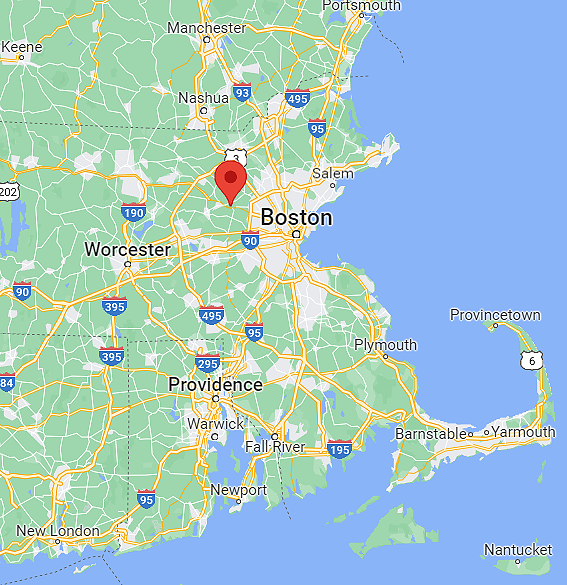
Local journalism is "stampeding back, town by town," says a founder of one of several nonoproft newspapers that have restored coverage of community news in towns near Boston. But is The Concord Bridge, which fills a vacuum left by the devolution of Gannett Co.'s Concord Journal, an example that can be replicated in rural areas with less money? Concord, which has about 18,000 people, has a median household income of about $160,000, more than double the U.S. average of $71,000. At the end of her story for the Poynter Institute, Mariya Manzhos asks Jonathan Kealing, chief network officer of the Institute for Nonprofit News, the question: "How can less affluent communities achieve sustainability in their nonprofit newsrooms?"

"Launching similar nonprofit newsrooms in historically marginalized communities with low wealth is possible, but it may require a different strategy, said Kealing, like focusing on institutional funders and underscoring the value of serving a particular community as opposed to soliciting money from that community," Manzhos reports. "Nearly 50% of INN members make their primary mission of serving a historically excluded or marginalized community." But her examples are urban, not rural.

Concord is pinpointed. New Bedford is at the I-195
sign on the coast (Buzzards Bay). (Google map)
That said, “Local nonprofit startups are growing so much faster than any other segment of the nonprofit news sector,” Kealing told Manzhos. They are about a third of INN's 400-plus members, and Kealing predicts there will be 600 of them by 2025. His organization provides support for nonprofits, and the Boston Institute for Nonprofit Journalism does likewise for The Concord Bridge and several other nonprofits in eastern Massachusetts. "The New Bedford Light, launched last year, has done some groundbreaking reporting on the city’s fishing industry, health, and environmental issues," Manzhos reports; the city has 100,000 people.

In Concord, the Bridge began with 100 people at a forum held "to gather feedback from residents about their vision for local news," Manzhos reports. "The town was hungry for a local news source, both print and digital, with stories on key issues in Concord, as well as police logs and obituaries. . . . Responding to what they saw as an overwhelming need, the group embarked on a project to launch a hyperlocal newspaper and website." They raised $900,000, enough to run a weekly for two years. It launched in October and is delivered free to all 8,700 households and businesses in the town of 17,000.

Kealing cautions that the nonprofit model has special challenges of revenue and audience. “It takes time and effort and skill to build up the individual, institutional donor and supporter base that allows organizations to survive and thrive,” he told Manzhos. “There is so much competition for people’s time and attention in the world we live in, so these nonprofit news organizations have to prove their value every day.” Co-founder and board member Kate Stout said, “The worry about whether the people have given once and will never give again could be a worry. But what we’ve gotta do is give them a product that they can’t say no to.” In other words, they won't pay good money for bad journalism.

Wednesday, January 04, 2023

On this Friday, Jan. 6, it might be good to remember a speech on another Jan. 6 that defined America's purpose

Friday, Jan. 6, is the second anniversary of the greatest attack on American democracy since the Civil War. Some apparently want to forget about it, but the news media have a moral obligation to remind them and to explain its importance, Michael Bugeja writes for The Poynter Institute.

Michael Bugeja
Bugeja, distinguished professor of journalism and former communications dean at Iowa State University, notes that a year ago, The Associated Press reported that “about 4 in 10 Republicans recall the attack — in which five people died — as violent, while 9 in 10 Democrats do,” and that The Washington Post said in an editorial last May that Jan. 6 “should have been a turning point in our politics.”

"It hasn't," Bugeja writes, reminding us of another Jan. 6, in 1941, when "President Franklin D. Roosevelt reminded Congress about its obligation to uphold democracy. The United States at the time was isolationist, even during Nazi attacks in the Battle of Britain. As the FDR Library notes, Roosevelt wanted to alert citizens that fascism not only threatened Europe but also our moral values. In helping Britain defend itself, America was advocating for universal freedoms everywhere.

"Excerpts from Roosevelt’s speech are eerily reminiscent of the dangers we face today, from emergent sectarianism in the U.S.; to the billionaire class of the privileged few; to dictatorial regimes of Russia, China and North Korea; and, finally, to the criminal desolation of the Ukrainian war. Democracy was being assailed, Roosevelt said, “either by arms, or by secret spreading of poisonous propaganda by those who seek to destroy unity and promote discord.” Bugeja notes that Donald Trump raised about $250 million "to 'Stop the Steal' and combat election fraud, but the bulk of that reportedly was diverted to other uses, including $40 million to Make America Great Again Inc., a super PAC allied with Trump’s election bid.

Roosevelt's State of the Union address is best known for the Four Freedoms that he said the U.S. wanted to see all over the world: the freedoms of expression the worship, and freedom from want and fear of military aggression. "This is how Jan. 6 should be commemorated, a day when journalists remind the public about the greatness of democratic ideals and the necessary commitment required from the electorate to sustain them," Bugeja writes. "On Jan. 6, 2021, America lost its moral order and nearly its democracy. Unless journalists remind the world about our 'unity of purpose' — in commentary, articles, documentaries, podcasts and more — fears about 'the forgotten episode' will come true."

U.S. renewable-energy goals may depend on land-use decisions in rural areas about wind farms, which are divisive

The 10th of 19 meetings in Piatt County, Illinois, about a proposed
wind farm. (Photo by Mustafa Hussain,The New York Times)
The scramble to prevent further global warming has been labeled "a slog," "a matted hairball," "snake-bitten" and even "a fight to the death." Rarely is it described as "a rural decision," but that's what it could boil down to: "While policymakers may set lofty goals, the future of the American power grid is in fact being determined in town halls, county courthouses and community buildings across the country. . . . The only way ambitious goals will be met is if rural communities, which have large tracts of land necessary for commercial wind and solar farms, can be persuaded to embrace renewable energy projects. Lots of them," reports David Gelles of The New York Times.

One example is Piatt County, Illinois, pop. 16,000, which scheduled 19 nights of meetings to debate the Goose Creek Wind farm proposal. In Monticello, "Depressed property values. Flickering shadows. Falling ice. One by one, a real estate appraiser rattled off what he said were the deleterious effects of wind farms as a crowd in an agricultural community in central Illinois hung on his every word," Gelles reports. "It was the tenth night of hearings by the Piatt County zoning board, as a tiny town debated the merits of a proposed industrial wind farm that would see dozens of enormous turbines rise from the nearby soybean and corn fields."

Monticello residents' reasons for opposing the wind farm include everything from "ugliness" to how it could alter soil drainage to the intrusion of corporate American into rural life, Gelles writes.

The federal government is "pumping a record $370 billion into clean energy, President Biden wants the nation’s electricity to be 100 percent carbon-free by 2035, and many states and utilities plan to ramp up wind and solar power," Gelles writes. "According to an analysis by the National Renewable Energy Laboratory, the United States would need to construct more than 6,000 projects like the Monticello one in order to run the economy on solar, wind, nuclear or other forms of nonpolluting energy."

The linchpin for wind power's success is land. Sarah Banas Mills, a lecturer at the school for environment and sustainability at the University of Michigan, who has studied renewable development in the Midwest, told Gilles,"Projects have been getting more contentious. The low-hanging-fruit places have been taken."