Wednesday, February 02, 2022

Hackers targeted smaller schools in 2021; towns say they need help scoring federal funds to boost cybersecurity

Cyberattacks are a growing threat to schools, "and the coronavirus pandemic has compounded their effects: More money has been demanded, and more schools have had to shut down as they scramble to recover data or even manually wipe all laptops," Cedar Attanasio reports for The Associated Press.

Schools are a tempting target for hackers: they often have limited budgets for cybersecurity, and the increasing trend of virtual learning during the pandemic has made them all the more dependent on technology and vulnerable to extortion, according to Doug Levin, director of school cybersecurity nonprofit K12 Security Information Exchange. "Levin’s group has tracked well over 1,200 cyber security incidents since 2016 at public school districts across the country," Attanasio reports. "They included 209 ransomware attacks, when hackers lock data up and charge to unlock it; 53 'denial of service' attacks, where attackers sabotage or slow a network by faking server requests; 156 'Zoombombing' incidents, where an unauthorized person intrudes on a video call; and more than 110 phishing attacks, where a deceptive message tricks a user to let a hacker into their network."

In 2021, ransomware gangs tended to target smaller school districts than in 2020. One threat analyst said that may be because larger districts are spending more on cybersecurity, while smaller districts remain vulnerable, Attanasio reports.

"In October, President Joe Biden signed the K-12 Cybersecurity Act, which calls for the federal cyber security agency to make recommendations about how to help school systems better protect themselves," Attanasio reports. And the infrastructure bill dedicated $1 billion for federal cybersecurity grant systems. But smaller city and county governments worry they'll miss out on the money because they don't have the resources or expertise to create proposals.

Tuesday, February 01, 2022

Extremist positions enter political mainstream; Calif. official in recall vote today says he barely recognizes his town

"Candidates for political office and sitting politicians across the country are increasingly embracing extremist talking points, endorsing hateful campaigns and promoting conspiracy theories, according to two recent studies and experts who research extremist movements," USA Today reports.

The first report, last week from the Anti-Defamation League, "showed that candidates for local, state and federal offices have parroted white-supremacist propaganda, expressed support for conspiracy theories including QAnon, and spread lies about election fraud," Will Carless reports. Another study from the voting rights advocacy organization Public Wise identified more than 220 officials or candidates who participated in or "directly supported: the Jan. 6 Capitol insurrection, "either by spreading disinformation about the election before the riot or by expressing support for the rioters." Some politicians take extremist viewpoints because they hope to attract supporters of former president Donald Trump, Oren Segal, vice-president of the ADL's Center on Extremism, told Carless.

Or, politicians may simply hope to appease such voters. A recall election in a rural California county shows how far to the right some conservatives have moved, and what can happen when politicians don't cater to extremist beliefs, Scott Shafer reports for KQED in Northern California.

Militia members, led by former Marine Carlos Zapata, have packed Shasta County supervisor meetings since 2020, warning supervisors not to enforce pandemic health rules. Recently, they collected enough signatures to force a recall election for Supervisor Leonard Moty today. Moty, a lifelong Republican and former police chief, told Shafer that he barely recognizes the town he's lived in his whole life: "It's very alarming and shocking to me. They try to shout you down and beat you up with their lies and information until subsequently you just give up."

Zapata said at a 2020 meeting that, though he wasn't threatening violence, Shasta County was "not going to be peaceful much longer . . . I'm not a criminal. I've never been a criminal. But I'm telling you that good citizens are going to turn into real concerned and revolutionary citizens real soon." It may not be empty words: A recent survey from The Covid States Project found that independent and Republican men were the most likely of any party or gender to say that violent protest against the government is justifiable right now.

GOP consultant Mike Madrid told Shafer the recall shows how extreme the Republican Party has become in the state: "We're witnessing really what is probably the first attempt in the nation for a militia-backed organization to unseat Trump-supporting Republicans simply because they're trying to make government work and government function." The militia has a podcast for like-minded listeners across the country, and says the recall is a blueprint for conservatives in other states, Shafer reports.

Oregon publisher who shows good journalism is good business is selling; prospective buyers must write an essay

Most of the front page of a recent edition of the Enterprise
Since 2015 Les Zaitz has turned his family's Malheur Enterprise into a newspaper that shows good journalism is good business. Now he's leaving the business, and looking for the right buyer.

The Enterprise is in Vale, Oregon, seat of Malheur County, which has another paper, but it can't keep up with Zaitz, who won a long string of awards as an investigative reporter for The Oregonian in Portland. His work with the Enterprise won him the Tom and Pat Gish Award from the Institute for Rural Journalism and Community Issues, publisher of The Rural Blog, in 2018.

Zaitz posted his notice via the email list of the NewStart Alliance of West Virginia University, which recruits and trains prospective owners of community newspapers. He writes, "This is the right journalistic enterprise and business for someone looking to escape big-city life and corporate machinations and put skills and ideas to work for a community that appreciates quality local news."

Zaitz says he and Scotta Callister, his partner in life and in journalism, are "seeking new owners who will personally manage and develop the Vale operation. There is no intention to sell to a chain or newspaper group. . . . Financing to fit the operation’s ability to pay will be part of the deal. The entry cost will be manageable, to preserve capital for a new owner to operate successfully. And there will be consulting, especially on the business side, so those with journalism but not business experience can feel comfortable stepping in."

Les Zaitz with some of his awards (Quill magazine photo)
But there's a qualifying threshold, due March 1: "A confidential essay on your background, your ambitions, and what you learn independently about the Enterprise that makes you interested. Describe in general terms your financial strength. . . . The essays and supporting information will be reviewed and top candidates will be invited to execute a nondisclosure agreement to proceed. We want a new buyer to dream and let us help make the dream happen." The full notice is posted here.

Zaitz told Angela Fu of The Poynter Institute, “I’m not going to just hand the keys to someone and all they’re going to see is my taillights. We’ll be there as a support system to give them every opportunity to build on what we’ve done and to be a success.” He told The Rural Blog, “I really want to help someone with ambition and drive and zeal for local news take over in a way that doesn't crush them with debt, gives them a safety net of consulting as needed, and is ready to embrace the changes that continue to develop in local news.

"One last word," Les writes. "It’s axiomatic that journalism is in trouble in the U.S. The fact, however, is that local journalism, well done and keenly focused by engaged practitioners, is successful. The Malheur Enterprise may be just the place for you to put your own ambitions, ideas and energy to work."

Rural Tenn. advocate says, don't paint locals with a broad brush; support our fight against book banning, she writes

McMinn County, Tennessee, is in the nationwide spotlight after the local school board voted to ban "Maus", a Pulitzer Prize-winning graphic novel about the Holocaust. The school board has been broadly denounced, but so too has the county as a whole. That's unjust, since many locals also object to the ban and are trying to reverse it, writes lifelong McMinn County resident Whitney Kimball Coe for The Daily Yonder. Social media and the mainstream media jumped on the issue after the Jan. 26 vote, and Coe gave an interview with CNN. expressing how many locals were angry about the decision. But many posts still painted Tennesseans with a broad brush.

"Do they think we’re not outraged, too, here in East Tennessee? Do they think we can’t speak up and respond for ourselves? Because let me tell you, I lay awake the night before the CNN interview indulging my own outrage and constructing a commentary that would eviscerate all book ban supporters and signal to the rest of the world that I, too, am pissed off. It would feel good to give into the outrage, the indignation, the snark," Coe writes. "But I let the outrage pass over and through me because I live here. We live here. These are our people, our schools, our kids. We spend our days relying on the trust and goodwill of our neighbors to make a life here. Neil Gaiman doesn’t shop at the Food City downtown. Trevor Noah doesn’t volunteer with the local United Way. CNN isn’t interested in solutions journalism and outrage is where relationships go to die."

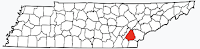
McMinn County, Tenn.
(Wikipedia map)
Opportunistic commentary only alienates Tennesseans and makes them more likely to dig their heels in, Coe writes. "If you must write about us, at least give a damn about us. Outrage is the quick and easy response if you’re not committed to the sum of us; that is, if you’re only committed to signaling which side you’re on and don’t really care about communities outside your bubble."

She also notes that book banning, or attempts to do so, are not limited to Tennessee. "The American Library Association says the number of attempts to ban school library books was 67% higher in September 2021 than in September 2020, fueled in large part by conservative activists organizing at a national level with an eye toward influencing local politics," Coe writes. "This isn’t a McMinn County problem or a rural problem. We aren’t a novelty. We sure as hell shouldn’t be the scapegoats for deeper rifts in our national and global fabric."

Coe is vice president of is vice president of national programs for the Center for Rural Strategies, which publishes the Daily Yonder. She also directs the Rural Assembly, a national coalition that supports better policy and more opportunity for rural Americans.

Home generator sales are booming; if you want one, here's what to consider, including essential safety precuations

Home generator sales are booming as increasingly extreme weather and wildfires lead to more power outages. Major generator maker Generac Power Systems saw a nearly 50 percent jump in revenue in 2021. But "buying a generator can be a big investment with a lot to consider. It's important to know what kind of generator would work best for your situation and how to use it safely," Jeff Brady reports for NPR. With a major winter storm expected to hit much of the central U.S. starting tomorrow night, it's a good time to review the topic and safety precautions.

The first option is a home standby generator, which usually runs off natural gas or propane and can automatically start up when the power goes out. These units can power an entire house, but they have a price tag to match—upwards of $10,000 for a medium-sized house, after installation—so they make up only 5% of the market, Brady reports.

Most people instead buy portable generators that run on gasoline. "Portable generators cost as little as a few hundred dollars, but they come with limits. Most won't power an entire house, like a permanently mounted model will, so you have to choose what gets plugged in during an outage," Brady reports. Paul Hope, home and garden editor at Consumer Reports, said an electrician can connect a portable generator to a house's circuit breaker box, then the homeowner can manually transfer power to the generator when the power goes out.

Instead of wiring a generator to the house, some people choose to run extension cords out to a generator. If you go that route, be careful. "The U.S. Consumer Product Safety Commission estimates that about 70 people die each year from carbon monoxide poisoning from portable generators," Brady reports. "The agency says the machine must be at least 20 feet from a house, with the exhaust directed away from the home and other buildings where people go. The CPSC says you should never operate a portable generator inside a home, garage, basement, crawl space or shed — or even on a porch." Hope advises people to make sure they have a generator and plenty of long, heavy-duty, outdoor-rated extension cords so the generator can be located at least 20 feet away from the house.

"Another thing to consider is how much gasoline needs to be stored to run a portable generator during an extended outage," Brady reports. "Some burn up to 20 gallons of gas a day. Hope says to make sure to store gas in approved containers and add fuel stabilizer to boost the life of the gas up to two years. If you still haven't used it by then, you can burn the gas in your car."

If you don't want to deal with a generator, Hope notes that there are a few other options. If you just need a little juice to charge, say, your phone, some lights and a hotplate, you can get a battery-powered portable power station for about $1,000, but it won't keep your refrigerator and freezer cold for long unless it's one of the much higher-end models. Solar panels are also an option, Hope told Brady, but acknowledges they're as expensive as a home standby generator and can't store much power unless you invest in a considerable home battery storage.

Expanded Medicaid may save many rural hospitals in South

Rural hospitals, especially in the South, have closed in alarming numbers in recent decades, but pandemic funding slowed the trend. Pandemic funding will end, but expanding Medicaid in states that haven't done so could bring in the funding to save many hospitals. That's part of Democrats' "Build Back Better" bill that has an uncertain future in Congress.

"The coronavirus pandemic devastated rural hospitals in the South initially, with 13 of them closing in 2020 alone. But federal pandemic relief sustained hospitals in rural communities last year. No rural hospitals in the South closed in 2021, and only two closed nationwide," Elisha Brown reports for Facing South. "However, special pandemic funding for hospitals in rural communities is running out and some is expected to expire at the end of this year. Meanwhile, the Omicron surge is worsening the medical industry's staffing shortages. Health care advocates say expanding Medicaid in the region could help rural hospitals stay afloat and provide needed care. To date, 38 states and Washington, D.C., have expanded Medicaid under the Affordable Care Act and 12 states have not, with eight of the non-expansion states in the South. The non-expansion states have seen more rural hospital closures."

Medicaid expansion has had a "tremendous positive impact" on rural hospitals, Alan Morgan, CEO of the National Rural Health Association, told Brown.

Monday, January 31, 2022

Friday webinar to discuss USDA Farm Income Forecast; profits could fall because of less federal aid, higher costs

On Friday, Feb. 4, the Agriculture Department's Economic Research Service will release the first of three financial forecasts of farm income for 2022. At 1 p.m. ET Friday, ERS economist Carrie Litkowski will present the forecast's top findings in a free webinar.

ERS releases three such forecasts a year—typically in February, August and November—with core statistical indicators on the farming economy. Click here for more information or to register, and click here for the latest forecast from December (the new report will be released on this page as well).

Predictions for this year? "After reaching an eight-year high thanks to massive pandemic payments in 2021, net farm income — USDA’s gauge of profitability — is expected to fall precipitously this year," Chuck Abbott reports for the Food & Environment Reporting Network. "Income would fall in the face of higher costs of production and federal payments that will be a fraction of last year’s $27 billion, according to analysts. Commodity prices and ag exports would remain strong but not high enough to offset the expiration of pandemic relief programs."

Non-dailies can enter weekly editors' society's Golden Quill contest for opinion writing by Tuesday, Feb. 1

The International Society of Weekly Newspaper Editors is still accepting nominations for the 62nd annual Gold Quill Award, but hurry: entries must be postmarked by tomorrow, Feb. 1.

The Golden Quill Award contest honors outstanding editorial or staff-written opinion pieces from less-than-daily publications that identify local issues of concern, offer an opinion, and support a course of action. Syndicated columns are not eligible, and entries must have been published between Jan. 1 and Dec. 31, 2021. Online-only newsrooms are eligible as long as they tare considered community news sites.

You may enter up to four of the best editorials of opinion pieces from your newspaper; each individual is limited to two entries. The entry fee is $10 for each editorial or column for ISWNE members, $15 for non-ISWNE members, and $5 for students.

The 12 best editorials will be published in the Summer 2022 issue of ISWNE's biannual journal, Grassroots Editor. The overall winner will be invited to attend ISWNE's annual conference in Lexington, Ky., July 20-24, and will receive a conference scholarship and travel expenses up to $500.

Last year's award went to Melissa Hale-Spencer of The Altamont Enterprise in New York for her piece that was central to a campaign that ensured fairness for an incapacitated subscriber and preservation of historic structures on her 87-acre property near the Hudson River.

Click here for more information or to enter the contest.

Research suggests local journalists quote local experts, not Fauci et al., when discussing pandemic health guidelines

Rural journalists are charged with keeping readers informed about the coronavirus pandemic, but widespread skepticism of government-endorsed public-health measures makes it difficult (as rural Minnesota publisher-editor Reed Anfinson can attest; see this story from last week).

Soon-to-be-published research suggests a solid approach to making public-health information seem more trustworthy to readers: Quote local sources such as doctors or health-department administrators instead of "elite" sources such as Dr. Anthony Fauci, Austin Fitzgerald reports for the University of Missouri's Donald W. Reynolds Journalism Institute. So advise Associate Professors Monique Luisi and Ben Warner, who analyzed the results of a survey of more than 3,000 adults about attitudes concerning coronavirus vaccines, politics, and trust in public-health recommendations.

The findings "were striking. While demographic factors — such as age and race — and partisanship explained some variance in views about vaccination and public health recommendations, anti-elitism accounted for more than a third of this variance," Fitzgerald reports. "Though partisanship has been seen as an important factor in the divide between the vaccinated and unvaccinated, this finding indicates the story is more nuanced, especially given that the media — one of the primary purveyors of public health information — is itself considered 'elite' by many who hold anti-elitist values."

So, local newsrooms are likely best served by quoting local sources and citing local impact. "When people hear about the burden the virus is creating in their community or learn about what their local health department is doing, they are more receptive," Luisi told Fitzgerald. "And a more receptive audience could mean more lives saved."

Federal laws likely undercount foreign farmland ownership

Foreign companies own more than 10 million acres of American farmland, but the real number is likely higher. "Despite a federal law requiring foreign transactions of agricultural land be reported to and recorded by the federal government, the U.S. Department of Agriculture’s database appears to be missing significant acres of land," Jamie Grey, Emily Featherston, Lee Zurik, Jon Decker and Cory Johnson report for Gray Television's Investigate TV. "Records of who owns what don’t match. Reconciling federal, state and county records on land ownership is all but impossible. It is unclear whether the discrepancies originate from the companies’ reporting, the forms or the USDA’s recording of the land."

The Agriculture Foreign Investment Disclosure Act, passed in 1978, required the USDA to track foreign ownership of farmland, but the data collected under that law appears to be incomplete. Foreign companies or individuals that buy American farmland are supposed to fill out a form reporting it to the USDA, but Investigate TV found numerous discrepancies when they tried matching federal data with county assessors' records.

"In recent decades, no federal legislation to drastically change the tracking or sale of farmland has passed," Investigate TV reports. "State and federal lawmakers from both sides of the aisle have pushed for changes – from locking down the sale of agricultural land to foreign entities to forcing increased transparency and mandating more accurate record-keeping."

Another reason it's hard to reconcile the database with county records: USDA's definitions for some data fields are sometimes incorrectly identified or inconsistent with county definitions. "When InvestigateTV asked the USDA to provide data definitions to help clarify the discrepancies, an agency spokesperson provided two, un-dated data fields keys, which in some cases either contain fields not included in the data sets, or are missing fields," Investigate TV reports. "When asked which data fields correspond to Farm Services Administration Form-153, the document farms use to report foreign ownership and is the source for the AFIDA database, the spokesperson provided a 'rough' breakdown, but said: 'We don’t have anything specific to identify which sections of the form correspond to the data fields in the database.'"

FCC announces over $1.2 billion for rural broadband, and a new program to make sure it's spent properly

"The Federal Communications Commission is ready to authorize more than $1.2 billion in funding through the Rural Digital Opportunity Fund. Announced in 2019, the 10-year program seeks to expand broadband internet access across rural America. In an announcement spotted by The Verge, the FCC says the funding wave will see 23 broadband providers bring internet service to more than 1 million locations across 32 states," I. Bonifacic reports for Engadget. "Additionally, and maybe even more importantly, the FCC also announced the Rural Broadband Accountability Plan, a program to ensure recipients of the Rural Digital Opportunity Fund are properly spending the funding they receive from the public."

"The commission announced in July 2021 that it wanted to "clean up" the Rural Digital Opportunity Fund after it discovered that internet service providers had accepted funds to deploy broadband in urban areas or in places where high-speed internet was already available. Those companies were told to either justify their bids or withdraw their funding requests," Nathaniel Mott reports for PC.

The program aims to increase oversight for broadband funding recipients by doing twice as many audits as last year and doing more on-site audits (especially for large or "high-risk" recipients), Mott reports. Also, for the first time, the results of verifications, audits, and speed and latency performance testing will be publicly available online.

Friday, January 28, 2022

Differing definitions of rurality mean some communities can lose out on badly needed federal and state funding

"There are lots of grants and proposals promising to help rural America. But the definition of 'rural' isn't always clear, and where a town falls in the pecking order can decide its access to funds," Jonathan Ahl reports for St. Louis Public Radio. "The definition of rural can take into account population, population density, distance from a big city and even the percentage of people that travel into a metro area to work. But there is no standardization, and that frustrates and perplexes some towns and counties."

For example, Houston, Mo., a community of about 2,500 surrounded by farmland, needs broadband funding, but city administrator Scott Avery told Ahl the town didn't qualify for one federal grant because the program defines "rural" as being more than 100 miles from a metro area. The closest metro area—Springfield—is nearly two hours away on the highway, but only 90 miles as the crow flies. 

But, as one rural advocate told Ahl, the variety of definitions isn't totally bad; if there were only one definition, some places would never qualify for funding. "That's cold comfort" for Avery, Ahl reports. "While he does sometimes get grants targeted for rural America, he and his staff of two don't have the resources to chase after opportunities, only to find his small town far off the beaten path isn't rural enough."

First-of-their-kind studies link air pollution from fracking and very small particles to early deaths among rural seniors

Two recent Harvard University studies highlight the dangers seniors face from air pollution.

The first study is the first to link early deaths among seniors to air pollution from nearby hydraulic fracturing operations. "Published in the peer reviewed scientific journal Nature Energy, the team of researchers from the Harvard T.H. Chan School of Public Health blames a mix of airborne contaminants associated with what is known as unconventional oil and gas development. That is when companies use horizontal drilling and liquids under pressure to fracture underground rock to release the fossil fuels through a process known as hydraulic fracturing, or fracking," James Bruggers reports for Inside Climate News. "The closer people 65 and older lived to wells, the greater their risk of premature mortality, the study found. Those senior citizens who lived closest to wells had an early death risk 2.5 percent higher than people who did not live close to the wells, the researchers found."

The second study, published by the Health Effects Institute, examined the effect of air pollution as a whole on seniors' health. In a nutshell, "Older Americans who regularly breathe even low levels of pollution from smokestacks, automobile exhaust, wildfires and other sources face a greater chance of dying early," Lisa Friedman reports for The New York Times. "The new study is the first in the United States to document deadly effects of the particulate matter known as PM 2.5 (because its width is 2.5 microns or less) on people who live in rural areas and towns with little industry."


Quick hits: Farm dog of year; convenience stores say they want charging stations for EVs; rural-urban divide nuances

Fit with her owner Cindy Deak (AFBF photo)
Here's a roundup of stories with rural resonance; if you do or see similar work that should be shared on The Rural Blog, email heather.chapman@uky.edu.

A 5-year-old Border Collie named Fit has been chosen as the American Farm Bureau Federation's 2022 Farm Dog of the Year. She has been helping her owners move sheep on their Florida farm since she was a puppy. Click here to read more about Fit, as well as the four runners-up and the People's Choice Pup, all of whom are Very Good Dogs.

A recent webinar had information about the Rural Emergency Hospital, a new hospital type established in 2021 to help restore emergency services to rural areas amid hospital closures. Click here for a recording of the webinar.

The Agriculture Department's Rural Development Rural Utilities Service will host a 90-minute webinar on Feb. 2 for Native American tribes and tribal entities interested in applying for the ReConnect broadband program. Read more here.

Convenience store representatives told Congress they want to make electric vehicles more feasible in rural America by putting more charging stations alongside their gas pumps. Read more here.

Retiring Texas Tribune co-founder Evan Smith deserves credit for helping pave the way for other digital nonprofit newsrooms, writes The Washington Post's Margaret Sullivan. Read more here.

Neighborhoods with more opioid overdoses may be hotspots for child maltreatment, a new study shows. Read more here.

The SAT is going all-digital soon. Previous plans to do so were scrapped, partly because of spotty rural broadband access. But the College Board has addressed this by ensuring the new SAT autosaves so that students won't lose work or time if their internet connection falters. Read more here.

An opinion piece argues that more nuance is needed when talking about the rural-urban divide. Read more here.

National Press Foundation has webinars for journalists on data management, FOIA requests, and more

The National Press Foundation has a host of training videos for journalists with general how-tos and guides to covering subjects such as aging and retirement, business, criminal justice, opioids, public health, and more. Here are a few of the most recent ones:

Veteran data journalist Adam Marton shows how online graphics tools such as Datawrapper can help any reporter add snappy visuals to their coverage. Read more here.

ESPN investigative reporter Tisha Thompson discusses how you can make numbers come alive in your reporting. Read more here.

Government and journalism experts talk about best practices in tracking government spending for statehouse reporters. Read more here.

Pandemic roundup: Hospital sues to keep workers from getting higher-paying jobs elsewhere . . .

Here's a roundup of recent news stories about the pandemic and vaccination efforts:

The federal government has halted distribution of two monoclonal-antibody therapies after data showed they were ineffective against the Omicron variant of the coronavirus. Read more here.

Some rural hospitals continue to have difficulty transferring critical patients to larger hospitals because of the glut of Covid-19 patients. Read more here.

Workers at a Wisconsin hospital left for higher-paying jobs, but the hospital successfully sued to stop them from leaving. Read more here.

Hospital staffing shortages in Kansas lead to rural patients dying at record rates. Read more here.

A new study pinpoints where and how you are most likely to get infected. Read more here.

A fascinating Twitter thread from a biologist discusses the parallels between Covid and cholera, especially regarding trust in government and scientists, the role of the news media, and people's concerns and reactions to outbreaks. Read more here.

The Washington Post zooms in on the pandemic with the story of a rural Michigan man's death from Covid-19 and the fallout in his community. Read more here.

Small towns with small work forces are often hard-pressed to keep business operating as usual when workers are sickened with Covid-19. Read more here.

Thursday, January 27, 2022

Rural weekly catches hell, even from a Lutheran pastor, for publishing Covid-19 facts that some people don't believe

Reed Anfinson with a copy of his Swift County Monitor-News (Associated Press photo by David Goldman)

The headline in the Swift County Monitor-News was perhaps alarming, but nothing unusual in a global pandemic: “Covid-19 cases straining rural clinics, hospitals, staff,” over a story in which health officials urged residents of the western Minnesota county, population 9,838, to protect themselves by getting vaccinated.

"But ask around Benson, stroll its three-block business district, and some would tell a different story," reports Tim Sullivan of The Associated Press. The 136-year-old weekly "is not telling the truth," they say. "The vaccine is untested, they say, dangerous. And some will go further: People, they’ll tell you, are being killed by Covid-19 vaccinations."

"One little town. Three thousand people. Two starkly different realities," Sullivan writes. "It’s another measure of how, in an America increasingly split by warring visions of itself, division doesn’t just play out on cable television, or in mayhem at the U.S. Capitol. It has seeped into the American fabric, all the way to Benson’s 12th Street, where two neighbors -- each in his own well-kept, century-old home -- can live in different worlds."

Sullivan continues, "In one house is Reed Anfinson, publisher, editor, photographer and reporter for the Monitor-News. Most weeks, he writes every story on the paper’s front page. He wrote that story on clinics struggling with Covid-19. He’s not the most popular man in the county. Lots of people disagree with his politics. He deals with the occasional veiled threat. Sometimes, he grudgingly worries about his safety. While his editorials lean left, he works hard to report the news straight. But in an America of competing visions, some here say he has taken sides."

One of Anfinson's neighbors (they still watch each other's homes when one's away) is Jason Wolter, a pastor in the conservative Missouri Synod of the Lutheran Church, "who reads widely and measures his words carefully. He also suspects Democrats are using the coronavirus pandemic as a political tool, doubts President Joe Biden was legitimately elected and is certain that Covid-19 vaccines kill people. He hasn’t seen the death certificates and hasn’t contacted health authorities, but he’s sure the vaccine deaths occurred: 'I just know that I’m doing their funerals.' He’s also certain that information 'will never make it into the newspaper.'"

Anfinson, 67, told Sullivan, “The easy part is speaking truth to power. The hard part is speaking truth to your community. That can cost you advertisers. That can cost you subscribers.” The paper's circulation is 2,000.  He told Sullivan that he won’t consider following the example of some other rural publishers who have cut back on opinion pages or even eliminated them. Sullivan writes, "He says it’s his duty to expose people to new ideas, even unpopular ideas like stricter gun control. The editorial page is, he says 'the soul of a newspaper in a way. . . . I would be a traitor to the cause of journalism, of community newspapers. I would be cowardly.'"

Sullivan's story is not just about a courageous rural newspaper, but about the fact that national politics are causing local divisions. But it's mainly about Reed Anfinson, and partly about his wife Shelly, "a pro-life Republican who voted for Trump, at least the first time. It annoys her when news outlets talk down to conservatives. She worries that there are too few Republican journalists," Sulilivan reports. "She is often torn between support for Reed and worries over subscriber loss. Still, she’s been pressing him to tone down the politics."

“It is a struggle,” she told Sullivan. “I can tell these things to my business partner. It’s harder to tell them to my husband.”

Anfinson "mourns how some people see him as an enemy," Sullivan writes. "His newspaper should bind people together, he says. Instead, America and Benson are growing angrier. Contentious midterm elections loom."

“It’s kind of sad,” he told Sullivan. “But it would be foolish of me not to be aware of (my safety) with the sentiments out there.” Asked if he carries a weapon, he said he doesn't: “But I know where one is if I need it.”

UPDATE, Feb. 8: Sullivan tells Chip Scanlan for NiemanStoryBoard that he wishes he could have found an workable way to include some supporters of Anfinson and the Monitor-News in the story. Scanlan's story is followed by an annotated version of the story, in which he asks questions about the reporting and writing, and Sullivan answers.

UPDATE, Feb. 23: Anfinson received much supportive correspondence, and shared it with the International Society of Weekly Newspaper Editors, which shared it in its February newsletter:
For a larger version of the image, click on it.


Pandemic has worsened rural child-care crisis; researchers who looked at two N.C. counties propose solutions

Daily Yonder map shows two counties studied.
A study of two North Carolina counties puts a spotlight on how the pandemic has exacerbated the rural childcare crisis. In 2020, the William R. Kenan Jr. Charitable Trust challenged the professional schools at the University of North Carolina at Chapel Hill to do a "deep dive" on Edgecombe and Robeson counties, where rural-urban disparities—including childcare availability—have hurt the local economies, James H. Johnson Jr. and Jeanne Milliken Bonds report for The Daily Yonder. Johnson and Bonds co-lead the Whole Community Health Initiative at UNC-Chapel Hill with support from the trust, an initiative that seeks to improve childcare access in those counties using the results of their study.

Decent, affordable childcare is critical for millions of families. Without it, a parent (almost always the mother) must stay home, hurting families' budgets and local economies. Rural areas have long faced childcare shortages, but the pandemic has exacerbated it, as the researchers found in those North Carolina counties. "The mandatory shutdown of the U.S. economy idled many workers with young children, eliminating in the process their need for childcare services," Johnson and Bonds report. "This in turn forced some childcare facilities to furlough workers and close; and others to lay-off workers and close permanently. In our rural counties, low vaccination rates combined with the closures has eliminated more than 90% of the available childcare providers."

Most permanent childcare closures have been small, in-home businesses, mostly in low-income areas. The vast majority didn't apply for Paycheck Protection Program loans because the paperwork was overwhelming, or they worried they'd have to pay it back. The remaining facilities must figure out how to remain open and pay workers while dealing with enhanced health and safety protocols and lower teacher-child ratios that improve childcare quality but reduce revenue, Johnson and Bonds report. Parents struggling with poverty themselves can't pay more for childcare, especially since the expanded Child Tax Credit has lapsed. 

Essentially, daycares have nowhere to cut the fat, budget-wise, and most childcare workers live on poverty wages as it is. A recent poll found that, of the nearly 1 million childcare workers in the U.S., just over 31% reported being food-insecure in 2020, which is 8 to 20 points higher than the national average, Colin Page McGinnis reports for The Conversation.

Daycare facilities that remain open also take a financial hit from mandatory quarantines when children or staff become infected with the coronavirus. "About 1 in 6 parents told pollsters they had experienced either a school or a day care shutdown in the past few weeks, in a national poll from Axios and Ipsos released on Jan. 11," Anya Kamenetz reports for NPR.

The quarantines hurt working parents, too. "Even as schools and daycares have attempted to return to in-person learning, working women have found it difficult to either return to work or maintain employment because any randomly occurring infection outbreak in a school requires mandated at-home quarantine for all exposed children," Johnson and Bonds report. "And a child in quarantine requires adult supervision, which makes maintaining a job very difficult, if not impossible, for women who are the sole or primary caregiver." Some women are able to parlay experience into home-based businesses, but broadband disparities mean rural women are less likely to be able to do so.

State and federal funding can help childcare facilities stay open, but the U.S. spends far less on childcare than most other developed nations and even some developing countries. "Because of inadequate investments, far too many American youth enter elementary school ill-prepared to learn—a situation that, unfortunately, has long-term negative consequences for their overall health and wellbeing," Johnson and Bonds report. "Nowhere is this more evident than in rural counties where funding for services is jeopardized by population loss and an aging population on fixed incomes unable to pay for improvements."

The American Rescue Plan Act authorized $39 billion for childcare, but that money expires in 2024, and childcare providers and advocates warn that such infusions "won’t solve the industry’s fundamental, long-term challenge: how to provide quality services and pay workers a competitive wage while keeping prices affordable," Sophie Quinton reports for Stateline.

Johnson and Bonds recommend a raft of policy changes to address the rural childcare crisis, based on their study. Those include:

  • Encourage family-friendly business policies that support employees with children.
  • At all levels of government and the economy, frame childcare as a "business imperative."
  • Lobby the federal government to guarantee universal preschool.
  • Invest in childcare entrepreneurs. 
  • Call for more and better continuing education for childcare workers, which will help them provide better care to children.
  • Advocate for childcare workers to receive a living wage.
Through their Whole Community Health Initiative, Johnson and Bonds are implementing interventions in Edgecombe and Robeson counties: "The three-pronged strategy includes a Child Care Business Accelerator to equip existing and aspiring childcare entrepreneurs with business acumen and skills; a Childhood Equity Fellows Program to train childcare workers in the best “whole community health” child development practices; and a Child Care Wage Accelerator that will use cash transfers as a means of compensating childcare workers and addressing the low wage conundrum." If it proves successful, they'll try to scale it up and roll it out statewide.

California Rep. Ro Khanna advocates for rural tech jobs, criticizes social-media giants for prioritizing traffic over truth

Information-technology jobs in Silicon Valley make Rep. Ro Khanna's Northern California district one of the nation's wealthiest, but the Democrat is a longtime champion of rural economies and rural newspapers, and wants rural areas to get a piece of the tech economy.

In his new book, Dignity in a Digital Age, Khanna "proposes sweeping fixes for what, in his view, ails America: too much wealth concentrated in too few hands, and too many digital jobs crowded into a handful of tech hubs. He wants to decentralize those opportunities so that places like Paintsville, Ky., or Jefferson, Iowa, can also thrive," Blake Hounshell and Leah Askarinam report for The New York Times.

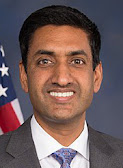
Rep. Ro Khanna
He conceived the book after veteran Republican Rep. Hal Rogers invited him to visit his southeastern Kentucky district, perhaps the nation's poorest. Khanna saw the devastation brought by the coal industry's slow demise, and met former blue-collar workers who, thanks to Louisville tech start-up Interapt, have launched second careers as software developers, Hounshell and Askarinam report. He realized that remote tech jobs could transform rural economies and wants to make sure they can capitalize on the increasing normalization of remote work.

The federal government could encourage rural tech jobs with a host of initiatives, including "building 'digital grant colleges' inside the country’s 112 land-grant universities to teach applied technology skills, underwriting apprenticeship programs at tech companies, [and] creating a 'national digital corps' as a kind of Peace Corps for rural America," Hounshell and Askarinam report. "What if the government required, say, software companies that wanted federal contracts to employ at least 10 percent of their workers in rural areas?"

Khanna hopes boosting rural economies through tech jobs would also reduce political polarization, noting that it's often a product of resource inequality. But Silicon Valley can do more than provide jobs, he believes; Khanna criticizes tech companies in his home district, especially Facebook, for algorithms that drive users to false and inflammatory content: "I think Silicon Valley overall is an extraordinary place of innovation, of entrepreneurship, of high achievement. But I don’t think it has lived up yet to its responsibilities in a democratic society."

Redistricting could reshape House Agriculture Committee

"At least six members of the House Agriculture Committee face tough reelections under new Ccongressional maps approved by 26 states, while four have plans to leave the House and several more depend on maps that have not yet been approved," Noah Wicks reports for Agri-Pulse. "Under the newly drawn districts, two Illinois Republicans — Mary Miller and Rodney Davis — will battle for control of a seat; Virginia Democrat Abigail Spanberger must navigate her way through a largely unfamiliar district; and Arizona Democrat Tom O'Halleran will need to win the votes of a Republican-leaning constituency. Iowa Democrat Cindy Axne and Nebraska Republican Don Bacon will continue to sit in highly competitive swing districts."

Congressional districts are redrawn after each census to equalize their population. A few states create new maps through independent commissions, but most leave it to state legislatures. "Republicans are counting on redistricting to help them wrest control of the House, which would put [Pennsylvania Rep. Glenn] Thompson in line to become the committee's chairman," Wicks reports. "Democrats currently control the House 221-212, with two vacancies." Agri-Pulse takes a deep dive into how redistricting is playing out for each Agriculture Committee member. Read more here.

Kaiser Health News opening a rural reporting desk for Midwest and Mountain West, supported by $3.9 million grant

Kaiser Health News is establishing a rural health reporting desk to cover the Midwest and Mountain West, planning to hire journalists and social-media experts to cover Iowa, Minnesota, Montana, Nebraska, Nevada, North Dakota, South Dakota, and Wyoming.

KHN's parent organization, the Kaiser Family Foundation, is able to fund the expansion through a $3.9 million grant from the Leona M. and Harry B. Helmsley Charitable Trust., which aims to improve lives by promoting health- and place-based initiatives.

"The team of journalists will provide unbiased, accurate, and trusted reporting on a wide range of complex issues, including the ongoing pandemic, access to health coverage and care, the burden of health care costs on consumers, housing and education, the opioid epidemic, mental health, hospital closures, the lack of critical lifesaving equipment, and burgeoning changes in telehealth and medicine. KHN will partner with local media throughout the region to produce deeply sourced stories that shed light on underreported issues," according to the press release. "As with all its journalism, KHN stories produced by the Rural Health Desk will be made freely available for publication by media outlets across the country, published on khn.org and distributed through KHN’s social media platforms."

Public librarians are the latest pandemic 'frontline workers,' dispensing masks and coronavirus tests

"As public libraries across the nation begin handing out Covid-19 testing kits and N95 masks, librarians have become the latest frontline workers,"Andrew Claudio reports for Route Fifty.

Libraries enjoy a unique position of public trust, Public Library Association Melanie Huggins told Claudio: "Libraries are one of the most-trusted entities and organizations in communities since we're accessible, friendly, welcoming and all the things that you would want people to be during this crisis. ... I think that it is a positive thing, and people are noticing how critical libraries are to responding to crises."

Public libraries have long been a major resource in rural communities, and during the pandemic many have stepped up to facilitate telehealth in areas where many don't have broadband access. So perhaps it was only natural that many have begun handing out coronavirus testing kits and masks.

"Although passing out at-home tests in libraries has caused some librarians to be overwhelmed with the added workload, Huggins said libraries are willing-and-able partners to combat crises in communities, and they are doing the best they can under the circumstances," Claudio reports.

Wednesday, January 26, 2022

Study finds these factors bring college grads back to rural hometowns: schools, friends, rurality, fewer degree holders

"Many academics and journalists have written about rural 'brain drain,' the migration of talented and bright young people who leave their communities, usually in search of better economic opportunities. Now Iowa State University researchers "have identified three significant factors that draw people back to their hometowns a decade or two after leaving: public schools, population density and other college-degree-holders in the community," says an ISU press release.

The study, recently published in Rural Sociology, found that college graduates between 34 and 43 were more likely to return to their rural hometowns after graduation if they had a strong attachment to their public K-12 school, felt like their teachers cared about them or that they were part of their school's community, and/or had close friends there. 

The researchers also found that grads were more likely to come back to hometowns with lower population density and fewer postsecondary degree holders. They speculated that grads felt they could have a bigger impact in such a town, through employment, volunteering, and local leadership.

The findings are an interesting counterpoint to conventional wisdom that pins brain drain on economic factors. While those are surely a factor—a rocket scientist has to go where there are rocket scientist jobs—the study highlights the importance of community and social relationships.

High court reconsiders 'significant nexus' ruling on wetlands

Here's the latest development in a longstanding debate over how much power the government has to regulate water on private land: The Supreme Court has agreed to decide whether Michael and Chantell Sackett can build a house on their northern Idaho property that has a disputed connection to wetlands. In considering the case, the Supreme Court said it would decide whether the Ninth Circuit Court of Appeals used the proper test to determine whether wetlands are 'waters of the United States'," and thus subject to federal regulation, Chuck Abbott reports for the Food & Environment Reporting Network.

The conservative nonprofit Pacific Legal Foundation, which represents the Sacketts, "said the case would give the Supreme Court the opportunity to revisit a 2006 ruling that said that if a wetland has a 'significant nexus' with navigable waters, it is covered by the Clean Water Act. There have been repeated arguments over how to identify that connection," Abbott reports. Pacific Legal attorney Damien Schiff said the Sacketts' property lacks a surface water connection to any body of water and shouldn't be subject to federal regulation.

This isn't the Sacketts' first trip to the Supreme Court over the 0.5-acre plot near Priest Lake. When they bought the property in 2004, they were told it had wetlands so they would need federal permits before building on it. "The Supreme Court ruled unanimously in 2012 that the Sacketts had the right as landowners to challenge the EPA’s wetlands determinations. The Pacific Legal Foundation represented them in that case, too," Abbott reports.

Vilsack to speak at webinar Monday on the supply-chain crisis in U.S. agriculture exports and how to fix it

Agri-Pulse will host a free webinar at 1 p.m. ET Monday, Jan. 31 to discuss how supply-chain problems are hurting American agriculture exports and what can be done about it.

The webinar includes two discussion panels: one featuring policy experts and one featuring industry experts. Krysta Harden, president and CEO of the U.S. Dairy Export Council, which Vilsack headed between stints as USDA secretary, will moderate a panel featuring the following policy experts:
  • Agriculture Secretary Tom Vilsack
  • White House Ports Czar John Porcari
  • Rep. John Garamendi, D-Calif.
  • Rep. Dusty Johnson, R-S.D.
Jaime Castaneda, executive vice president of policy development and strategy at the National Milk Producer Federation will moderate an industry panel featuring the following guests:
  • Mike Durkin, president and CEO of Leprino Foods
  • Andrew Hwang, manager of business development and international marketing at the Port of Oakland in California
  • Jon Eisen, director of the Intermodal Motor Carriers Conference at the American Trucking Association
The event is sponsored by the National Milk Producers Federation and the U.S. Dairy Export Council. Click here for more information or to register.

New coronavirus infections jumped 20% in rural counties last week, to record, as infections in metro counties fell 8%

New coronavirus infections, in ranges by county, Jan. 16-22
Map by The Daily Yonder; click the image to enlarge it or click here for the interactive version.
Rural counties reported a record 654,000 new coronavirus infections from Jan. 16-22, a 20 percent increase from the previous week, while metropolitan counties fell by about 8% to just under 4 million. The coronavirus "is now spreading in rural counties faster than in metropolitan areas for the first time since the start of the Omicron surge in mid-December," Tim Marema reports for The Daily Yonder.

Covid-related deaths in rural counties rose 2% to 2,136 last week while metropolitan deaths increased nearly 20%. "The rural death rate remained slightly higher than the urban death rate, but the gap has narrowed during the Omicron surge," Marema reports. "The rural rate was about two times that of metropolitan areas before December. Currently the rural death rate is just 9% higher than the metropolitan rate."

Click here for more charts, regional analysis, and county-level interactive maps from the Yonder.

Tuesday, January 25, 2022

In a small, rural community, you can hold a position of influence and service without ever running for office

Another death of an informal leader in a small community in Clinton County, Kentucky, population 10,000, prompted a local attorney (and brother of The Rural Blog's editor and publisher) to write this essay for the weekly Clinton County News.

By David Cross

Sometimes people achieve a position in life based solely on who they really are. Not because they’ve asked anybody, or not because they made a conscious effort to be in that position, but just because they were the one that people trusted and went to for help.

Larry Hurst was 77.
Larry Hurst died last week. Larry lived all of his adult life in the Cave Springs community, where he was once just known as “Anthel Riddle’s son-in-law.” By the time he died, he had long stood tall, on his own.

Larry was born at Browns Crossroads, and as a young man married Edalene Riddle, the first of Anthel and Wilma Riddle’s four girls, in 1964. They had three children of their own. Larry farmed for a living. He milked cows for over 40 years, but when the milk business started playing out, he converted to a beef cattle operation, as every dairyman in Clinton County has had to do.

But Larry wasn’t known for being a farmer. He was known as an “All A” guy. By “All A” we mean advice, assistance and accommodation.

Larry has given more advice to young (and not so young) men in Clinton County than most preachers – and some of the things he advised them on, they weren’t too comfortable talking to the preacher about anyway. He was an encourager, and if you were his friend, he would stand by you and try to get you through whatever problem you had.

If you needed to borrow a piece of farm equipment in that country, you called Larry Hurst. No charge. If you were down and needed help getting a crop in, you didn’t have to call. Larry was there. Again, no charge. If you were stuck and needed pulled out of a ditch (physically or otherwise) Larry was there. Again, no charge. Many times Larry would forget about his own work to help a neighbor in need.

He and Edalene helped more people in that part of the county than any two people in their neighborhood. That’s just the way they were. They were members of the Cave Springs Baptist Church - but they were church people seven days a week, not just on Sunday. Larry was one of those fellows that every community needs – a “go-to” person who people could get that advice, assistance and accommodation from.

Mike Owens (Mikki Simmons photo)
We lost another notable one of those men, Mike Owens, a few months back. Mike lived in the Irwin community, but his influence and advice exceeded anybody else we know in that entire part of the county. It’s not just that they gave advice when asked–their advice was sound. When people such as this pass, they are, at least for a time, irreplaceable.

We can go back in time and think of a handful other men who filled that role in their community over the years, all now gone – Roscoe York of Cartwright. Howard Maupin in Guinn Valley. Eugene Groce on Speck Ridge. There were others, of course, and we can think of a couple of outstanding men in the county today who would certainly fit in that exceptional category.

Clinton County in Kentucky (Google map, adapted)
These fellows all had one thing in common – none ever held public office. Eugene was the only one to try it one time, lost, and returned to the farm. They were all good to people because that’s just what you’re supposed to do.

These men were the folk that didn’t ask for anything in return when you needed something from them (This would not apply to money – some of them would occasionally make loans in the community, as was the common custom, and they did expect to be paid back). All they wanted you to do was make good decisions and do the right thing.

The position that Larry Hurst and Mike Owens held in their community wasn’t anything that you ran for. But to have that status in the eyes of your neighbors is a better position than any elected office ever can be.

Study: Rural hospitals that closed had 3 common factors; no surprises, but it helps to know what to look or ask for

Rural hospitals are often the lifeblood of their communities, in terms of jobs provided and lives saved, but hundreds have shuttered in recent decades and the pandemic has accelerated that trend. A recently published study found three common financial factors that most often heralded the 56 rural hospital closures between 2017 and 2020.

"In the year before their closure, most of the now-closed rural hospitals nationwide had low cash on hand, negative operating margins, and negative total margins, compared to rural hospitals that stayed open," Clarissa Donnelly-DeRoven reports for North Carolina Health News. Those last two factors means they lost money. Though buyouts from larger health systems and subsequent consolidation might be responsible for a few closures, the researchers found that the vast majority closed for financial reasons. Though this study didn't examine the role of Medicaid expansion in keeping rural hospitals open, a 2018 study out of Colorado found that it makes a big difference in keeping rural hospitals open.

The study was a collaboration between the North Carolina Rural Health Research Program and the Cecil G. Sheps Center for Health Services Research at the University of North Carolina Chapel Hill. UNC researcher George Pink, one of the authors, said the study is the first he's seen that analyzes a hospital's finances immediately before its closure, Donnelly-DeRoven reports. How does your local hospital score? If it won't tell you, trouble may be brewing.

Farm Bureau backs bipartisan cattle market reform bill but opposes making packers buy certain share on cash market

The American Farm Bureau Federation says it supports a bipartisan Senate bill that aims to increase price transparency in regional cattle markets, except for a key portion that would require meatpackers to buy slaughter cattle on the cash market.

"Two sponsors of the Senate bill, Republicans Deb Fischer of Nebraska and Chuck Grassley of Iowa, said the Farm Bureau supported the overall goals of the bill — more competition and fair prices — despite its call for revisions to, or even elimination of, the language allowing the USDA to set regional mandatory minimum thresholds for cash and related 'grid' purchases," Chuck Abbott reports for the Food & Environment Reporting Network. "Their bill, S 3229, also would create a cattle contract library and require packers to report how many cattle are scheduled for slaughter in each of the next 14 days. Backers say those provisions would help producers know if they are being offered fair terms for their stock and the best time to ship cattle to market." The bill would also increase fines for meatpackers that violate the Packers and Stockyards Act.

Delegates at the recent annual Farm Bureau convention voted to oppose government mandates that force meatpackers to buy a certain percentage of their slaughter cattle on the cash market. Farm Bureau President Zippy Duvall said in a statement Sunday that, while the organization appreciates the work being done to increase transparency, "we cannot support mandatory cash sales." However, Abbott reports, Grassley noted that "the market clearly isn't working."

The bill is a response to complaints from cattle farmers and their advocates that the major meat processors Cargill, JBS, Tyson Foods and National Beef, which control over 80 percent of the beef processed in the U.S., have colluded to raise meat prices by limiting supply. The Agriculture Department is investigating claims against the Big Four, and President Biden recently announced $800 million in support for smaller meatpackers in an effort to increase competition.

Pew study says pandemic hasn't boosted Americans' desire to live in rural areas, but has made suburbs more desirable

"A study from the Pew Research Center showed that the percentage of Americans who prefer to live in rural areas has remained virtually unchanged during the Covid-19 pandemic. This is in comparison to more people wanting to live in suburbs vs. cities, according to the research," Kristi Eaton reports for The Daily Yonder. "The report found that about one in five U.S. adults now express a preference for living in a city, down from about a quarter in 2018. The share of Americans who would like to live in the suburbs has increased from 42% to 46% during this time. Meanwhile, the preference for rural areas is virtually unchanged – 35% in 2021 compared to 36% in 2018."

The study also examined Americans' sentiments about the health and economic impacts of the pandemic. About 45% of urban residents say the economic impact of the pandemic is a major problem in their community, and 37% say the health impact is a major problem. "By comparison, 31% of those in the suburbs and 33% of rural dwellers say the economic impact of the pandemic is a major problem in their local area, and about a quarter each say the health impact is a major issue," Pew reports.

Across community types, Black and Hispanic Americans are more likely than White or Asian Americans to say the pandemic has a major effect on their local economy, and Black Americans are most likely of any ethnic group to say the pandemic has had a major effect on their community's health, Pew reports. Adults with lower incomes are more likely than other income brackets to say the pandemic has had a major impact on their community's health and economy.

About half of those surveyed (49%) say affordable housing is a major problem in their community, up 10 percentage points from 2018, Pew reports.

Cash aid to poor mothers benefits babies' brains, study finds

"A study that provided poor mothers with cash stipends for the first year of their children’s lives appears to have changed the babies’ brain activity in ways associated with stronger cognitive development, a finding with potential implications for safety net policy," Jason DeParle reports for The New York Times. "The differences were modest — researchers likened them in statistical magnitude to moving to the 75th position in a line of 100 from the 81st — and it remains to be seen if changes in brain patterns will translate to higher skills, as other research offers reason to expect. Still, evidence that a single year of subsidies could alter something as profound as brain functioning highlights the role that money may play in child development and comes as President Biden is pushing for a much larger program of subsidies for families with children."

Monday, January 24, 2022

Millions of rural properties seen to be at higher risk of severe flooding than FEMA estimates; see county-level maps

Hidden flood risk, estimated by county, 2020
(Map by Jeremy Ney, American Inequality; click image to enlarge or click here for the original.)

Many rural areas of the U.S. are at a far higher risk of severe flooding than Federal Emergency Management Agency maps reflect, according to the First Street Foundation, a nonprofit that charts property flooding risks. FEMA maps may be inaccurate because they don't adequately assess flood risk that comes from rainfall only. The Pacific Northwest and Central Appalachia in particular are hotbeds of hidden flood risk, which is "the discrepancy between how much flooding FEMA claims happens versus how much flooding actually happens," Alex Acquisto and Brian Simms report for the Lexington Herald-Leader.

Read the report with state-level data here, and see the Herald-Leader article about Eastern Ketucky for an interactive county-level map.

Practices of insurance companies, pharmacy benefit managers (middlemen) lead to closures of rural pharmacies

Rural residents depend on local pharmacies more than ever during the pandemic, seeking masks, home coronavirus tests and vaccinations. "But even with that increased business, retail pharmacies, big and small, are closing their doors ... straining small towns where options were already limited," April Ehrlich reports for NPR affiliate Oregon Public Broadcasting.

Two major factors are creating the trend, said Rick Chester, owner of Medicap Pharmacy in Talent, a town of 6,500 between the Cascades and the Coast Range near the California line. First, insurance companies are pushing people to get prescriptions by mail, taking business from already struggling rural pharmacies and, because of slower mail service, is often impractical for rural residents.

The other issue is profit-seeking policies from lightly regulated pharmacy benefit managers, the middlemen that stand between pharmacies and insurance companies. "Basically, when someone gets a prescription through an insurance or Medicare plan, the PBM is supposed to reimburse the pharmacy for the drug cost and some overhead. But in recent years, PBMs started decreasing the amount they reimburse when pharmacies don't meet certain sales markers," Ehrlich reports. "According to a report by the U.S. Centers for Medicare and Medicaid Services, PBMs have increased their fees for Medicare plans by more than 91,000% in the last two years. PBM reimbursements have gotten so low that sometimes pharmacies say they actually lose money when they fill prescriptions from certain insurers. And some pharmacies ... just can't make it work financially. The PBM Trade Association disputes that PBMs are the reason for rural pharmacy closures.

Some states, such as Kentucky, have cracked down on PBMs; one big one is owned by CVS Health, a pharmacy chain. Sen. Ron Wyden (D-Ore.) wants Congress to increase oversight of PBMs because he believes current laws are vague and inconsistent. "They can kind of decide, gee, we really weren't making enough money, but we'll say the pharmacy's inefficient and just throw some more costs at them," Wydeon told Ehrlich.

Meanwhile, rural residents are having a hard time getting pharmacy services, especially people with busy schedules or chronic illnesses. In Baker City, Ore., for example, one of the town's four pharmacies closed last year. The other three pharmacies are often overwhelmed now, with lines sometimes going out the door, Ehrlich reports. The lines are so long that some people bring dinner to eat in line, and store clerks bring out wheelchairs for old or sick people who can't stand in line for long.

Thursday webinar will discuss rural infrastructure policy

A free webinar at 1 p.m. CT Thursday, Jan. 27, will discuss rural infrastructure laws and policy. It's part of the Rural Reconciliation Project, a University of Nebraska College of Law initiative that seeks to cut through popular narratives on both sides of the rural/urban divide and assess the past, present and future of big structural issues in rural America. Previous sessions have addressed rural jobs and power. Upcoming sessions will address broadband and water.

In Thursday's webinar, University of Iowa law professor Greg Shill will examine questions about rural infrastructure policy including:

  • What were original infrastructure goals and choices?
  • Who benefited and who did not?
  • Were those goals met and why?
  • Where should we invest now?
Click here for more information or to register.

Nursing homes in crisis as many low-wage employees quit

"Frustration is surging among the low-wage workers who make up the backbone of the nursing-home industry, as tens of thousands of their colleagues call out sick with Covid-19, inflaming shortages that already were at crisis levels," Rebecca Tan reports for The Washington Post. "Hailed as 'heroes' during the early months of the pandemic, these workers, most of whom are women and people of color, say they’re facing untenable levels of pressure. Government support has failed to end the crisis, advocates say, allowing care for the elderly and the infirm to worsen, forcing facilities to limit admission or close entirely and clogging up hospital beds. According to the U.S. Bureau of Labor Statistics, the nursing-home industry has lost more than 420,000 jobs since the start of the pandemic, reducing its workforce to the size it was 15 years ago."

There are many reasons for the shortages. Many workers retired early rather than deal with the pandemic, and others quit for higher-paying jobs that nursing homes can't compete with. That has compounded the temporary shortages caused by staff illnesses and resulted in a pressure cooker of stress for remaining workers, Tan reports. The problem has become so bad that many nursing homes and hospitals are telling Covid-infected workers to come back even if they may still be contagious.

"Even as the Omicron variant retreats, the staffing crunch will persist, nursing home leaders and unions say," Tan reports. "At community colleges, interest in skilled nursing courses has plunged, with some class sizes dropping to half what they were before the pandemic. Of those training to become nursing assistants, many are avoiding nursing homes, where they would earn a median annual wage of $30,120, according to federal data, and are looking instead for jobs as travel nurses or home health aides." That's particularly concerning as more Baby Boomers require skilled nursing.

"This is a crisis on steroids," David Grabowski, a Harvard Medical School researcher who studies the economics of aging and long-term care, told Tan. "The long-standing issue of underinvesting and undervaluing this workforce is coming back to bite us."

Despite relaxed pandemic telehealth rules, rural patients still have difficulty getting medication for opioid-use disorder

Experts agree that medication-assisted treatment is the best way to treat opioid-use disorder, but only one in nine people with OUD receive such treatment. Telehealth can increase access to medication-assisted treatments such as buprenorphine, especially since the federal government relaxed telehealth regulations during the pandemic.

However, OUD patients in rural and other under-served areas still face many barriers to access. In an interview with Stateline, emergency medicine physician Elizabeth Samuels discusses those barriers, how pandemic-era policy changes have helped overcome them, and what policymakers must consider to further increase access to underserved areas. Read the interview here.