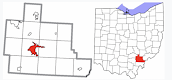
- Rep. Terri Sewell (D-Ala.), $700,000 for septic tank installations in Lowndes County, in the Black Belt.
- Rep. Ken Calvert (R-Calif.), $2.5 million for a sewer conversion project in Quail Valley.
- Rep. William Steube (R-Fla.), $3.2 million for a septic-to-sewer conversion project in Charlotte County.
- Sen. Angus King (I-Maine), $550,000 for a septic tank effluent pump system for the City of Presque Isle.
- Rep. Tim Walberg (R-Mich.), $185,000 for a septic system project in Clinton.
- Rep. Jack Bergman (R) and Sens. Gary Peters and Sen, Debbie Stabenow (D) of Michigan, $3.5 million for a septic-to-sewer expansion and modernization project for Tuscarora Township.
- Sen. Jeanne Shaheen (D-N.H.) for $900,000 for a septic receiving facility upgrade for Rochester.
- Sen. Maria Cantwell (D-Wash.) for $800,000 for a septic elimination program in the Clark Regional Wastewater District.
A digest of events, trends, issues, ideas and journalism from and about rural America, by the Institute for Rural Journalism, based at the University of Kentucky. Links may expire, require subscription or go behind pay walls. Please send news and knowledge you think would be useful to benjy.hamm@uky.edu.
Tuesday, March 15, 2022
Reader's query answered: Big spending bill, infrastructure package have money for rural septic systems and wells
New tool helps journalists more quickly sift through data dumps agencies send them in response to records requests
When journalists request documents from a government through the Freedom of Information Act or a state law, the data often arrive in huge, unorganized batches. Sorting through it can be a daunting task for any journalist, especially for smaller newspapers with fewer resources. A new tool could make the process easier, Paroma Soni reports for Columbia Journalism Review.
New York University journalism professor Hilke Schellmann teamed up with senior research scientist Mona Sloane, computer-science professor Julia Stoyanovich, and a team of graduate students at NYU’s Center for Data Science to develop Gumshoe, "an artificial-intelligence tool that uses natural language processing to sort through large caches of text documents and categorize them by relevance to the journalist’s main topic of investigation, reducing the time needed to sift through everything," Soni reports.
When users enter search terms, the tool can evaluate which documents or sections of documents are more likely to be relevant to the subject matter. "MuckRock, a nonprofit news site devoted to record requests, plans to integrate Gumshoe into its DocumentCloud platform, which is used by journalists for posting and reviewing public records," Soni reports. "The Gumshoe team developed the tool with an initial grant from the Center for Digital Humanities at NYU. A subsequent $200,000 grant, awarded last month by the Patrick J. McGovern Foundation, will enable the team to build out Gumshoe’s user interface and distribute the product widely. At the moment, the team is inviting journalists and newsrooms to test out the tool and help review/improve it."
MuckRock data and investigations editor Derek Kravitz told Soni that Gumshoe could be a critical resource for newsrooms: "Having this accessible when it’s needed might be the difference between some really important stories getting told and some stories never even being looked at."
Bipartisan efforts are needed to reduce the growing rural-urban gap in Covid-19 vaccinations, Oklahoma prof says
| CDC graph, adapted by The Rural Blog |
However, Adegbesan writes, "In President Joe Biden’s National Covid-19 Preparedness Plan there’s a glaring omission: efforts to improve on high levels of vaccine hesitancy in rural parts of the U.S. . . . While the administration says it has improved vaccine equity among adults of different races and ethnicity, particularly in rural areas, vaccination among children and adolescents remain alarmingly low.
"Motta says people might be more amenable to getting the vaccine if someone in their community who shares the same political beliefs encourages them to do so," Adegbesan reports.
Nature Conservancy says it will build six solar power plants on old coal-mine sites it owns in southwest Virginia
| Site of one of the proposed solar farms (Photo from the Nature Conservancy) |
Most of the project area is in Wise County, on the Kentucky border, The Coalfield Progress in Norton reported last year; some is in Dickenson County, to the northeast; some is Russell County, to the southeast. “We’re very proud to be an energy-producing community,” said Lou Wallace, chair of the Russell County Board of Supervisors. “This is helping us to reimagine how we produce the energy. So we’re still able to say we’re keeping the lights on somewhere.”
Monday, March 14, 2022
As some governments misinform, Sunshine Week is a better time than ever to advocate government openness, honesty
Adams Publishing Group fires editor who warned of ads she thought sketchy, sparking an exodus of other journalists
| Athens, in Athens County (Wikipedia map) |
The exodus began after Adams fired Corrine Colbert, editor of The Athens News, on Feb. 25. Colbert told Endale she and other editors repeatedly complained to management about Federated Mint collectible-coin ads that she believes to be scams (based on a Better Business Bureau 'F' rating and reader feedback), but said management told her they needed the revenue from the ads. On Feb. 23 she ran an editorial in the News and sister paper The Athens Messenger warning readers about the ads.
Two days later she was fired, allegedly for violating the company's social-media policies by posting unrelated political opinions on Twitter, Endale reports. In a Twitter thread about her firing, Colbert noted that the company had never cared about her political tweets before and believed it was an excuse to get rid of her for warning readers about the ads. Mark Cohen, president of APG Media of Ohio, told her that "our job is to protect APG" before her firing, she alleged on Twitter. But, she continued, her "first responsibility was to the people of Athens County."
Newspapers need money to function, but informing readers is the top priority, Colbert said in the Twitter thread. She said Athens readers haven't been well-served since APG, which bought the papers in 2014, drastically cut editorial and production staff, and she criticized APG for allowing people who don't live in Athens to make decisions about its papers. She said Cohen lives in Columbus, and the advertising staff for the papers is two counties away. "Local journalism thrives when the people in charge of it are personally invested in the community — and when those people understand that good journalism speaks truth to power regardless of who holds it," she wrote.
In a statement in the March 4 Messenger, Cohen defended the ads. He said Federated Mint had had an A rating with the BBB for more than five years, but it was lowered to an F last year "due to two ads that ran in a very small newspaper that contained wording not permitted in a previous agreement the company had with the BBB," Cohen wrote. "The wording was corrected and the company has had no additional occurrences since that incident on the matter." A Federated Mint spokesperson told a Messenger assistant editor that the company is experiencing longer shipping times than usual but is complying with the law on shipping dates, Cohen wrote. He protested Colbert's characterization of him as an outsider, noting that he lives only 30 minutes from the Athens County line, at a location that allows him to better reach the six newspapers he oversees.
Colbert's firing set off a chain reaction. Associate Editor Cole Behrens was the only reporter and employee left at the News after Colbert was fired; in five days, he resigned, Endale reports. Messenger Editor Alex Hulvachick resigned Feb. 24, mainly, she told Endale, because the workload was too much. But Hulvachick was one of several editors who raised concerns about the ads, according to former associate editor Dani Kington, who published a story about Colbert's firing on The New Political, a digital publication run by students of Ohio University, which is in Athens.
The departures could make local news harder to come by in the county of about 65,000, Endale reports, alluding to news deserts: "Hundreds of counties all over the country have the same issue, including Klamath County in Oregon. There, the Herald and News, another APG-owned newspaper, just lost its entire staff, according to Jefferson Public Radio."
Colbert launched a fundraiser seeking $15,000 to start a locally owned paper, tentatively called The Athens Independent. As of this writing on March 14, it had received $18,161 from 296 donors.
Rural Arizona district's senator cashes in on shift to the far right, becomes a face of her party's 'radicalized wing'
| Wendy Rogers (AP photo by Ross Franklin) |
State of Wyoming has an new app to claim roadkill
"Another purpose is to help people follow the rules," Gruver reports. "For safety reasons, roadkill in Wyoming may not be collected after dark, along interstate highways or in construction zones." And it helps collect data for the state: "By geotagging roadkill with their phones and documenting the species, app users will contribute to the data that help Wyoming wildlife biologists and highway officials decide where to install wildlife crossing signs and other ways of reducing critter deaths."
Omnibus has record funding to protect horses from soring, maintains ban on horse slaughter
The $1.5 trillion omnibus bill heading to President Biden's desk has record levels of funding for enforcing the Horse Protection Act, which prohibits sored horses from participating in shows, exhibitions, sales or auctions, according to a press release from lobbying group Animal Wellness Action. Soring, most often seen with Tennessee walking horses, is the practice of hurting the horses' feet or forelegs to make them adopt a more pronounced, exaggerated gait. But enforcement has been lax at times; in 2019 a trainer and rider was allowed to compete in the Tennessee Walking Horse World Championship even though he was about to begin a suspension for repeated HPA violations.
The bill has just over $3 million in funding for HPA enforcement, over $1 million more than last year's appropriation bill. The bill also maintains the current de facto ban on horse slaughter in the U.S., according to the press release.
Friday, March 11, 2022
TikTok, Facebook and YouTube project provides people worldwide with a view of the 'Real Appalachia'
| A TikTok video posted Thursday honors Appalachian women in music. |
Pop culture is rife with Appalachian stereotypes, and too many people don't seem to understand what Appalachia is really like. Melody West and Shane Simmons decided to do something about it. They launched a multi-platform social-media project called Real Appalachia, meant to introduce people all over the world to towns in the region, Shannon Smith reports for WBIR-TV in Knoxville.
It started six or seven years ago as The Appalachian Project, a Facebook page where Simmons documented the history of Appalachian towns. That page is still active, with more than 67,000 followers, but the project really started getting popular after Simmons launched a companion YouTube channel in 2020, Smith reports. They recently expanded to TikTok and now have almost 150,000 social media followers and subscribers who tune in for videos with town tours, interviews, stories, and interesting tidbits of history.
"We have viewers from all over the world," West told Smith. "And they don't know anything, really, but stereotypes. So we're showing real Appalachia and there's just interest in that, of the beauty and the history here that has just escaped so many people. And there's so many old towns that we go into that a few years later, the buildings are gone. And we want to document things as they are and how people remember them."
Apply by March 31 for $20,000 investigative reporting fellowship for community-based projects in news deserts
The Center for Media Innovation at Point Park University in Pittsburgh is now accepting applications for its $20,000 Doris O'Donnell Innovations in Investigative Journalism Fellowship. Click here for more information or to apply.
The fellowship, now in its third year, is designed for community-based journalists with investigative projects in news deserts. "Community-based journalism is disappearing across the country, and it is critical that we work to reverse that trend," center Director Andrew Conte said in a news release. "At a time when we have more tools than ever to access information, it is becoming increasingly difficult to support news at a local level."
The center will also award a second-place prize of $5,000 and a third-place prize of $2,500. The fellowship and runner-up prizes are possible through a three-year grant from the Allegheny Foundation. Applications are due March 31 and the winners will be announced in April.
Erica Hensley won the fellowship in 2020 for a project on unreported lead exposure in the Mississippi Delta and its impact on residents' health. Then an investigative reporter for Mississippi Today, she now covers health for global nonprofit The Fuller Project.
Sunnie Clahchischiligi, a contributing writer for Searchlight New Mexico, won the fellowship in 2021 for a project that exposed educational failures in Navajo Nation schools that allowed thousands of students to go missing from attendance rolls during the pandemic.
The fellowship is named for pioneering journalist Doris O'Donnell, who worked began her 50-year career at the Cleveland News in World War II, then went on to work for the Cleveland Plain Dealer and the Greensburg Tribune-Review.
Bipartisan Rural Prosperity Act aims to cut red tape, establish 'one-stop-shop' for federal funding for rural areas
Quick hits: Ginseng and Appalachia; why your brain likes forests more than cities; did you know about Manure Expo?
Here's a roundup of stories with rural resonance; if you do or see similar work that should be shared on The Rural Blog, email us at heather.chapman@uky.edu.
Registration is open for the North American Manure Expo, which will take place in Chambersburg, Pa., July 13-14. Registrants can enter a t-shirt contest for the Top 10 Rejected Manure Expo Slogans; a recent one suggested that attendees "be part of the movement." We want some of the official swag! Read more here.
On the 150th anniversary of Yellowstone National Park, a fifth of its wolves have been killed by hunters in the last six months. Read more here.
Thursday, March 10, 2022
New England's town meetings are 'an exercise in community-building' in contentious times
Local government meetings have been heating up as voters duke it out on contentious national wedge issues. At a time when Americans feel more fractured than ever, New England's unique town meetings might serve as an inspiration, Alex Hanson reports for the Valley News in West Lebanon, N.H., and White River Junction, Vt.
Town meetings are often much like the old days, with engaged local citizens participating in civil discussion to decide important matters. Valley News columnist Jim Kenyon writes that he saw evidence of that at the Town Meeting in Lyme, N.H. About 125 residents — around 10% of the local electorate — gathered in the school gym to vote on hot-button issues.
The meeting remained civil, and showcased why attending such meetings in person matters, Kenyon writes: "Along with an opportunity to speak their minds, residents can listen to neighbors and elected officials — often one and the same — explain their stances."
How should reporters at meetings of public agencies deal with misinformation from speakers? Here's some advice
School-board meetings have become increasingly contentious as parents bring up political wedge issues such as masking, coronavirus vaccination, critical race theory, transgender student athletes, and more. Opinions on many of these issues are predicated on misinformation and conspiracy theories. Reporters covering such meetings must figure out how to report on misinformation without spreading it themselves, Julia Métraux and Sophie Hurwitz report for Poynter.
The dangers of repeating misinformation without context are clear. For instance, last summer at least two video clips went viral that showed doctors making false claims about coronavirus vaccines at school board meetings. Thousands shared the clips on social media as proof that doctors didn't trust coronavirus vaccinations. But both clips were full of misinformation, and both doctors had iffy qualifications at best: one of the doctors appeared not to be board-certified, and the other had a PhD in education, not medicine.
"For reporters covering school board meetings, deciding how to contextualize decisions and conversations in coverage can be complex," Métraux and Hurwitz report. "Not mentioning the perpetuation of misinformation and disinformation about critical race theory, transgender students and Covid-19 at these meetings is also not a solution — this misinformation still harms people in their community."- Reporters could choose not to quote factually incorrect claims. To do so for shock value could do more harm than good, especially when such claims don't represent a significant portion of local sentiment.
- Different issues may require different handling. Critical race theory, for example, has become a catch-all bugaboo, so defining it as originally intended may not be context enough.
- Don't repeat racist, anti-transgender, or antisemitic language (for example), since that could help normalize such language, which can make students feel unsafe.
- Include at least one outside perspective or fact that wasn't raised in a meeting to make articles more useful to readers. One expert said, as an example, that reporters writing about a conversation about why pandemic safety protocols matter might include a Centers for Disease Control and Prevention study about how children are at a higher risk of developing diabetes after being infected with the coronavirus.
States consider protections for threatened local election officials; if they quit, partisan officials could fill the vacuum
New rural coronavirus infections down nearly 50% last week
| New coronavirus infections, in ranges by county, Feb. 27-March 5 Map by The Daily Yonder; click the image to enlarge it or click here for the interactive version. |
New coronavirus infections in rural counties fell by nearly 50% during the week of Feb. 27-March 5, to a level not seen in four months. Rural counties reported about 65,000 new cases last week, down from 120,000 the week before. "Since the peak of the Omicron surge in mid-January, rural infections have dropped by 90%," Tim Marema reports for The Daily Yonder.
Rural counties reported about 1,750 deaths last week, nearly one-third lower than the 2,600 reported the week before. Metropolitan counties reported 238,598 deaths last week, a little more than one-third less than the 369,026 deaths the week before, Marema reports.
The last few weeks have also seen a dramatic drop in the share of rural counties in the red zone, defined as counties with 100 or more new infections per 100,000 residents in a week. Three weeks ago, nearly all rural counties were in the red zone, but last week only about one-third of them were, Marema reports.
Click here for more charts, regional analysis, and county-level interactive maps from the Yonder.
Wednesday, March 09, 2022
States and schools across nation drop mask mandates, but concern remains about low vaccination rates among kids
Biden gets postal-reform bill that ensures six-day delivery and offers a lifeline to newspapers that depend on the mail
One feature of the long-debated bill would allow newspapers to mail sample copies to non-subscribers in their home counties at the same rate they pay for delivery to subscribers. The current limit is 10 percent of annual home-county circulation, enacted more than a century ago. The bill would make it 50%, which would only enable more sample-copy subscription appeals but provide total market coverage for advertisers that don't normally advertise in newspapers.
The bill "gives community newspapers a new ability to regain subscribers lost by the past few years of slow mail delivery," National Newspaper Association Chair Brett Wesner said in a press release. "It also offers USPS a new lease on life by relieving debt to the federal government. Now we look forward to a revision of postage rates by both USPS and the Postal Regulatory Commission, which have attempted to retire some of this debt with dramatically higher postage rates."
The bill also keeps a mandate for six-day delivery, important in rural areas, and "drops a mandate that the U.S. Postal Service prepay its retired employees’ health care benefits and requires future retirees to enroll in Medicare," Brassil reports. "It allows the agency to partner with state, local and tribal governments to provide services that are not related to mail, including to offer hunting, fishing and driver's licenses." It takes effect in January 2025.
The co-sponsors of the House bill were Reps. Carolyn Maloney, D-N.Y., and James Comer, R-Ky., chair and ranking minority member of the House Oversight and Reform Committee. The Kentucky Press Association lauded Comer in a news release, in which 2021 KPA President Sharon Burton said, “He faced backlash from his own party to get this done and it is a rare bipartisan effort. Imailt is very important for rural communities and has language specifically requested by our industry. He deserves a big thanks.”
Trucker shortage and Canadian blockade threaten newsprint supply, especially for smaller, rural newspapers
| Newsprint rolls (Photo by David Kasnic, The Washington Post) |
"A shortage of truckers and blockade bottlenecks have put a crimp on newsprint deliveries to the nation’s newspapers," Buck Ryan, associate professor of journalism at the University of Kentucky, reports for The Rural Blog.
“The newsprint situation is severe,” Brett Wesner, chair of the National Newspaper Association and publisher of 15 titles in Oklahoma, Texas and New Mexico, told Ryan.
The crunch appears to come from a backlog caused by the blockade by Canadian truckers to protest pandemic restrictions.
This week, Smithson told Ryan, “One supplier recently told us that they had lined up only 76 trucks and drivers for the 872 loads they had planned to ship. That illustrates the scope of the challenge.”
Nolan said small, rural papers are more threatened by the shortage because most of their printers are independently owned "or have newsprint agreements with only one or two mills," not the cooperative. "Some have limited storage capacity. As the paper market gets tighter, trucking delays make just-in-time delivery more problematic." He listed several contributing factors for the shortage, including:
- A decline in demand for newsprint caused mills to close or convert their machines to other types of paper. The pandemic further crushed demand as newspapers closed.
- With fewer mills making newsprint, producers are running near capacity.
- As the pandemic rose, Covid-19 diminished the ability of providers to fully staff remaining producing plants: “Classic supply/demand/production bottleneck.”
- Increased regulations have dramatically raised requirements and training for someone to get a Class A commercial driver's license, causing a national shortage of truck drivers. Gasoline price increases have hurt the trucking industry even further.
- Delays in getting produced paper picked up for shipment has filled mill warehouses and shipping docks to a saturation point.
Nolan is not optimistic the situation will improve soon. “Recently, I was told lack of storage capacity is now hampering production,” he said. “Also, mills are running at such high capacity level, maintenance is curtailed. Now, any breakdown of machinery pushed too hard stops production.”
For Ryan's full story, click here.
Farming group coalition sends Federal Trade Commission a mammoth right-to-repair complaint about John Deere
"A broad coalition of agriculture interests has filed a complaint with the Federal Trade Commission against John Deere, demanding the right to repair their own equipment, Jesse Hirsch reports for The Counter. The 43-page complaint was filed for the National Farmers Union, other advocacy organizations and state farmers unions in Iowa, Missouri, Montana, Nebraska, Ohio, and Wisconsin.
"Currently, when a piece of John Deere equipment breaks down on the job, its owner is expressly forbidden from making their own fixes—only authorized, company-employed technicians have those permissions," Hirsch reports. "And even if you attempted to conduct your own repairs, you’d find it next-to-impossible, particularly on newer, computer-driven models. Deere locks down its proprietary knowledge tightly, and without company-provided diagnostic software and equipment, even getting a sense of what’s broken is virtually out of reach."Huge but harmless spider species, a relative of garden spiders, is expected to spread up and down the East Coast
| A female Jorō spider in Hoschton, Ga. (Photo by Jeremy Howell) |
It's called a Jorō spider, an orb-weaver a little bigger than your palm. It looks a lot like a common garden spider, but can be distinguished by its flashy red butt. It's native to East Asia, but likely hitched a ride to the U.S. in a shipping container about a decade ago. Jorōs were first spotted in Georgia in 2013, and have expanded their territory rapidly since then, Mendoza reports.
The spiders will probably spread up and down the East Cost in the coming years, according to a newly published study in Physiological Entomology. University of Georgia scientists wanted to figure out the potential range of the Jorōs, so they compared the species to its close cousin, the golden silk spider, Mendoza reports. Golden silk spiders—also called banana spiders—spread throughout the Southeastern U.S. over 100 years ago but have spread no further because they can't tolerate cold weather.
"The scientists collected the two species and measured numerous physical traits as well as how they adapted to different environmental conditions, including brief periods of temperatures below freezing," Mendoza reports. "The results showed Jorō spiders, compared to their relative, had a metabolism twice as high, a 77% higher heart rate in low temperatures and they survived 74% of the time in the temperatures below freezing, while the golden silk spider survival rate was only 50%. Scientists also noticed the species does well in Japan, with some regions that have climates similar to the Northeast."Tuesday, March 08, 2022
Iowa publisher says '60 Minutes' brush was too broad: 'Many local community newspapers are flourishing'
| Peter Wagner, publisher |
"Even for the best and most committed of us, some circulation numbers have dropped and selling print advertising has become more difficult. But the same can be said of the big three traditional television networks, although they never find reason to report it on their news-magazine programs."
| Sheldon, in O'Brien County, Iowa (Wikipedia map) |
Map shows where biodiversity is most at risk; extinctions can make a big difference in fishing, farming and more
28 percent of nation's big farmers have poor or no internet
Among the nation's larger farmers, two out of seven can't effectively access the internet, according to Purdue University's most recent Ag Economy Barometer. "The gap in access exists at the same time the sector is embracing precision agriculture technology such as GPS guidance of tractors and combines," Chuck Abbott reports for the Food & Environment Reporting Network.
The Ag Barometer is a survey of farmers and ranchers with at least $500,000 in production per year. In its February survey, 12 percent said they had no internet access at all, 16% reported a poor-quality connection, 41% reported a moderate-quality connection, and 30% reported a high-quality connection. "Some 82% of farms across the country had internet access in 2021, up from 75% in 2019," Abbott reports. "Half of farms had a broadband connection and 70% used a cellular data plan for access. Two thirds of farms had a desktop or laptop computer and 77% had a smartphone."
Though the rural digital divide has narrowed since 2016, rural adults are still less likely than their suburban or urban peers to have home home broadband or to own a smartphone or computer, the Pew Research Center found. That matters when farms increasingly rely on broadband. According to a 2021 Agriculture Department report, "Half of the farmers in the biggest corn, soybean and wheat states and a quarter of farmers nationwide have embraced precision agriculture," Abbott writes. That includes tech using drones to monitor fields and livestock.
The recently signed infrastructure bill has $65 billion to improve internet services for rural and other underserved areas; most will be distributed to states in grants. "The White House says the USDA will issue a funding opportunity notice this year for nearly $2 billion through its ReConnect program for deployment of rural high-speed internet," Abbott reports.
Rural America faces challenges in adopting electric vehicles
Pandemic roundup: Long Covid explained; some Christians with weak immune systems worry about attending church
Coal giant Peabody touts big solar project in Illinois Basin
Peabody Energy is the world's largest private-sector coal producer, but it announced last week it's launching a renewable energy company called R3 Renewables. In the announcement, the company "touted its financial backing and 'extensive' land holdings, and said it would start with development of six sites on or near old coal mines in Indiana and Illinois," the Illinois Basin coalfield, Bryce Gray reports for the St. Louis Post-Dispatch. The move may be startling, since the St. Louis-based company has long been a staunch defender of the coal industry, but analysts say it makes sense.
"Old coal mines offer the land and available space that’s critical for renewable energy projects. And they’re already wired for heavy electrical use, with built-in access to the wider power grid, which could make it far cheaper to rewire them for solar. And grid access is so important some renewable energy developers value it even over especially sunny or windy sites," Gray notes. "Additionally, repurposing existing mines might provide Peabody with a way to alter reclamation obligations — hefty costs tied to the restoration of land after mines close down. Keeping the land in use, albeit for a different purpose, might change when and how the bills come due."Monday, March 07, 2022
Journalists who chronicled rural America by prop plane will tell the stories of towns transformed through local innovation
| Deborah and Jim Fallows |
USDA and EPA officials tour Black Belt county to see chronic sewage problems, a disproportionately rural issue
"On the eve of the Selma Jubilee, commemorating the 'Bloody Sunday' march that helped catalyze support for the Voting Rights Act 57 years ago, the head of the U.S. Environmental Protection Agency toured Alabama’s Black Belt to witness a different kind of struggle: the battle for clean water and basic sanitation," Dennis Pillion reports for AL.com. EPA Administrator Michael Regan, Agriculture Undersecretary for Rural Development Xochitl Torres Small and other EPA and USDA officials "went to three different properties in Lowndes County Saturday, seeing homes where malfunctioning septic systems discharged untreated sewage into backyards and in between mobile homes, and where some residents had nowhere to go to address their sewage issues."
Sunshine Week starts Sunday; time to remind your audience of the importance of openness in government
Sunshine Week starts Sunday, March 13, and runs through Saturday, March 19. The annual observance, coordinated by the News Leaders Association, celebrates the importance of open government and freedom of information, and an opportunity for news media to tout their role in both. Again this year, some federal agencies such as the National Archives and Records Administration are taking part.
Newsrooms can observe the week in a number of ways. The Sunshine Week website has a content toolkit with stories, editorials, columns, cartoons, and graphics that are free for use. You can engage in social media discussions, too (search for or use the hashtag #SunshineWeek to find them). And you can also find Sunshine Week events, or contribute your own event. Several state newspaper associations have websites with articles, editorials, illustrations and other tools, in addition to the NLA site.
Rural Democrats say they feel increasingly isolated
| Clearfield County (Wikipedia map) |
Bird flu now found in 21 domestic flocks in 12 states; first domestic cases in two years
Just as the coronavirus pandemic seems to be waning among humans, the bird flu is picking up.
"Highly pathogenic avian influenza was identified in three more states — Missouri, Maryland, and South Dakota — said the Agriculture Department. Since the first case was confirmed on February 8 on a turkey farm in southern Indiana, HPAI has been found in 21 domestic flocks in 12 states," Chuck Abbott reports for the Food & Environment Reporting Network. "Nearly 1.9 million birds, mostly chickens and turkeys, have died, either from the disease or from exterminations intended to prevent the spread of it. Agricultural officials act quickly and ruthlessly because 'high path' bird flu can wipe out a flock swiftly. This year’s outbreaks are the first appearance of HPAI in domestic flocks in two years."