Friday, February 16, 2024

Uvalde editor, honored for his work, wishes he had done more before tragedy struck

Craig Garnett will receive the Tom and Pat Gish
Award Feb. 29. (Oklahoma Press Association photo)
By Al Cross
Director Emeritus, Institute for Rural Journalism 

The town of Uvalde, Texas, pop. 15,000, and its same-named county of 25,000 were very unlucky in May 2022. That’s when an 18-year-old with an assault rifle at an elementary school killed 19 students and two teachers – a toll that probably would have been less had police not botched the response.

But Uvalde was also lucky – that it had a newspaper with an editor-publisher, Craig Garnett, who had long been willing to tell hard truths about things that matter, and who kept doing that in the aftermath of the tragedy.

The day after the shooting, the twice-weekly Leader-News published a black front page, with “MAY 24, 2022” in reverse type. The next front page had portraits of the 19 children and the start of a story with biographies of each one. Inside was a column from Garnett, addressing the police delay in confronting the shooter.

He said a regional police official "could not answer why it took an hour to end the attack," quoted him as saying police were “measuring," and wrote; "The question is how much measuring is permissible, while children are being murdered. Or perhaps they were already gone. It pains to write these words of criticism about law enforcement, but parents and the community have the right to know. They must be told why police, whom parents at the scene begged to go in and save their children, failed to act. They have to know, to ever begin to heal."

In an editorial a month later, Garnett named names and was blunt: “No mass school shooting in the United States has ended with such glaring failures in both the law enforcement response and school district security. . . . Neither [school] Police Chief Pete Arredondo, acting city chief Mariano Pargas, Uvalde County Sheriff Ruben Nolasco nor any state or federal officer among the 376 responders to the scene was willing to take the helm of what was clearly a rudderless ship cast into a hurricane.” That didn’t sit well with local law enforcers and their supporters, but Garnett’s initial reporting and commentary had already spoiled his good relationship with the school district and police agencies.

Meanwhile, Garnett spent much time “sitting with families who lost children, siblings, friends; interviewing survivors, teachers and students, about their experience,” Leader-News Managing Editor Meghann Garcia said in nominating him for the 2023 Tom and Pat Gish Award from the Institute for Rural Journalism at the University of Kentucky, which I ran at the time. Garnett wasn’t able to attend our awards banquet in October, but in a recorded video for it, he reflected on his experience – and offered some advice for community editors and publishers:

“What happened in Uvalde was crushing. It continues to be an enormous weight on many of our shoulders, especially the families of victims. And we have endeavored to cover every aspect of that shooting. We still are working for information, accountability from various institutions, particularly our city and our school district and our law enforcement officials. We plan to follow that to its conclusion, whatever time it may take.

“But being successful at that and community journalism, as most publishers know, depends on your people. And I happen to have a group of journalists who are beyond amazing. None of us graduated from elite universities, some of us don’t have college degrees, but after the tragedy on May 24, each one of them brought something extremely important to our coverage. And our grand total [is] five of us, so there wasn’t a lot. It didn’t take long to have our discussions with each other and to plan our day. And it’s true in most of the newsrooms across this country and community journalism. But it brings you together in a way that nothing else can, I don’t suppose, unless it would be a foxhole. We learned from that. And one of the things we’ve taken away from May 24 is that we didn’t do enough before.

“We have a wall full of plaques from the South Texas Press Association, the Texas Press Association, but we didn’t do enough. We didn’t ask enough questions. We didn’t hold people running for elected office to account like we should have. We didn’t question people who wanted to run our institutions closely enough. What motivated them? What experience do they have? What would they do in a crisis? And we certainly didn’t hold our law enforcement to a high enough standard, the people who swore to protect us.

“So, we will work harder in the future to do that, to make sure that we know as much as we can about people who intend to lead our community, especially in the aftermath of a tragedy. We want to know how they’ll react. It’s not entirely possible. There are all kinds of things that pop up that you can’t plan for, but you can get a sense of where people’s souls lie and what their commitment is to your community. And that’s what I would advise to my fellow publishers in small towns. Pay attention. Pay attention to everything, to those people who run institutions, to the kid who’s slipping between the cracks, who might one day become the same school shooter we had. Be invested beyond what you are now, if that’s possible. I know most of you work your hearts out. But if there’s one thing we would like to do better, it would’ve been that.”

Garnett will share more of his experiences and receive the Tom and Pat Gish Award Feb. 29 at the University of Texas during a symposium, “Courage, Tenacity, Integrity and Innovation in Rural Journalism,” sponsored by the Institute for Rural Journalism, the Texas Center for Community Journalism at Tarleton State University, and the Center for Ethical Leadership in Media in the University of Texas School of Journalism and Media. He will be joined by fellow Texans Laurie Ezzell Brown of The Canadian Record, Randy Keck of The Community News in Aledo, Tara Huff of The Eagle Press in Fritch, John Starkey of Rambler Texas Media and Daniel Walker of the Vernon Daily Record, the Burkburnett Informer Star and the Clay County Leader. For more information about the event, go to https://tccjtsu.com/community-journalists-will-talk-courage-tenacity-innovation-and-integrity-at-ut-austin-feb-29/. The event is free, but registration is required; here’s the link: http://tinyurl.com/4fpvwcwu.

Al Cross edited and managed rural newspapers before covering politics for the Louisville Courier Journal and serving as president of the Society of Professional Journalists. He is director emeritus of the Institute for Rural Journalism and a professor at the University of Kentucky.

Private equity-owned health care is guided by expansion and profits; many are calling for more regulation

As Americans age, the home health care sector will
continue to grow. (Photo by G.A. Pflueger, Unsplash)
Home health care businesses may go by nurturing names, such as "Senior Helpers" or "At Home Angels," but the much industry is funded by private equity investors looking to make hefty profits, reports Anna Claire Vollers of Stateline. "Proponents of private equity investment in health care say the infusion of capital helps smaller companies expand into new markets." But skeptics point to places where care companies suddenly pulled out of entire regions when profits waned, leaving elderly people at home with no care.

Private equity-owned health care companies exist to make money for investors. "Private equity firms pool investments from pension funds, endowments, sovereign wealth funds and wealthy individuals to buy controlling stakes in companies," Voller explains. "In health care, critics say, that business model can diminish the quality of care, increase costs and narrow access for patients — particularly in more lightly regulated industries such as home care and hospice care."

Home health care is an appealing business venture because it doesn't face the same level of scrutiny as hospitals and nursing homes, the profit margins are robust, and there's an aging population where "around 10,000 baby boomers turn 65 every day," Voller reports. There will be "millions of people who will need care in the coming years," which will guarantee strong business growth. Plus, insurance companies encourage their customers to use home health care, which again, bolsters profits.

Even with all those benefits, private equity firms tend to pile debt on their companies to fund expansion. "Private equity firms typically aim to acquire a company and boost profits before selling it within five to seven years," Voller reports. "They often purchase companies with borrowed money, using the company's assets as collateral for the loans."

Mary Bugbee, senior research and campaign coordinator for health care at the Private Equity Stakeholder Project, a research and advocacy group, told Voller, "We leave a lot to the whims of the market and allow private players to dictate access to and quality of health care."

State policy and lawmakers are looking at home health care companies as businesses needing more regulatory oversight. "Improving transparency, requiring certain health care staff-to-patient ratios and boosting wages for health care workers can also help protect patients and communities," Voller reports. 

Quick hits: Film explores Christian nationalism; human brain limits; sun activity and the eclipse; Marvel & HBO go rural

'Christianity is about the values of inclusion,' one of the
film's interviewees says. (God + Country photo)


A new documentary that explores the rise of American Christian nationalism and the threat its increasing influence poses to democracy has been released in select theaters, reports Russell Contreras of Axios. Directed by Robert Reiner, the film, "God + Country" features interviews with Black evangelicals, religious leaders and scholars, as well as Charlie Sykes of The Bulwark, a conservative anti-Trump website, and Russell Moore, a theologian who "resigned from the Southern Baptist Convention amid a backlash over his criticism of Trump." The film asks interviewees from all walks of life if/how the movement is based on Christian principles and what are the risks to the democratic process when Christianity becomes a political ideology.

For many Americans, maybe the post-pandemic "new normal" could be best described as "living with constant uncertainty," which is not a comfortable position for humans. "To stay motivated as we encounter unprecedented levels of uncertainty in every aspect of our lives, we should understand that the human brain simply was not built for this," report Heidi Grant and Tal Goldhamer of Harvard Business Review. "Knowing what your brain does well — and what it does surprisingly poorly — can give you a much clearer sense of the strategies you need not just to endure but to thrive." Read some comforting and helpful coping strategies here.

A NASA satellite captured this image
of sunspots. (NASA image via WP)
Greeting Earthlings! The sun is putting on some incredible shows this year. "Solar flares, eruptions on the sun's surface and sunspots are expected to multiply and intensify throughout this year, as our yellow star enters its most active period in two decades," reports Kasha Patel of The Washington Post. "That could lead to more beautiful dancing aurora far and wide, but also radio blackouts and satellite disruptions."

From outlawing gender discrimination in federally funded programs to bolstering cleaner air to reducing child poverty, the U.S. government has achieved some landmark policy successes, writes Darrell M. West in his opinion for Brookings. Read here for all 10 success stories.

The path of the total solar eclipse on April 8, 2024. (NASA Science Visualization Studio graphic via Mashable)
Unusual, dark and spectacular -- the solar eclipse is coming this spring. "Witnessing a total solar eclipse — wherein the moon completely blocks out the sun — is a rare opportunity," reports Mark Kaufman of Mashable. "But on April 8, 2024, millions of Americans will be in the 'path of totality,' allowing many to experience something that's at once astonishing, unsettling, and thrilling."

Alaqua Cox as Maya Lopez in 'Echo' (Photo
by Chuck Zlotnick, Marvel Studios via DY)
New films featuring remote places are getting noticed. Even Marvel Studios left New York City to stage its new mini-series "Echo" in Tamaha, Oklahoma, where a Choctaw Nation adventure unfolds. Adam B. Giorgi of The Daily Yonder writes, "It follows Maya Lopez, a closely held associate of a New York-based criminal magnate, as she returns to her Oklahoma hometown after a violent falling out with her boss."

Night Country detectives face
unending darkness. (HBO photo)


For those who love rural and seek darker twists, HBO's newest "True Detective" season, Night Country, is set in Alaskan's northernmost place, the North Slope Borough, which is 150 miles north of the Arctic Circle. The story "follows the disappearance of eight men from a research station and how it might be linked to the unsolved murder of an indigenous woman," reports Kristian Bert of NBC Today.

North Slope Borough, Alaska
(Wikipedia map)
"The show gets its name from the concept of a Polar Night, a phenomenon that occurs at the north and south poles, where night lasts all day during the winter."

The plot involves two detectives -- Liz Danvers (Jodie Foster) and Evangeline Navarro (Kali Reis) -- who must work together to solve the crimes without the help of Anchorage police.

Grist offers webinar for journalists who want to report on "land-grab" data involving universities in 14 states

Fourteen public universities were founded with land taken from
Indigenous nations. (Illustration by Marty Two Bulls Jr., Grist)
Grist is offering a free webinar on Feb. 21 for reporters who are interested in reporting on state trust land data involving public universities in 14 states. 

The webinar will be held from 1 to 2 p.m. Eastern time. Webinar participants will learn how to use Grist's "land grab" data set from Arizona, Colorado, Idaho, Minnesota, Montana, North Dakota, New Mexico, Oklahoma, South Dakota, Texas, Utah, Washington, Wisconsin and Wyoming to see how institutions got their land and money.

Using state data on land grant universities, Grist's data report examined how these entities established their provenance and how much revenue those lands produce for their associated colleges. The data shows how states use these lands in to generate income, such as timber harvesting, oil and gas extraction, and agriculture.

Grist's investigation explains how about 8.1 million acres of land, which produces income for 14 land-grant universities, was taken from 123 Indigenous nations through more than 100 violence-backed land cessions. Grist's editor at large Tristan Ahtone and spatial data analyst Maria Parazo Rose will explain how journalists can use the data for their own stories.

Tuesday, February 13, 2024

Nonprofit news outlets collaborate to produce series with localized stories about rural impact of nursing home rules

The Maine Monitor's package shows whether each nursing
home meets staffing standards or not. (Map adapted by TRB) 
By Alana Rocha
Editor, Rural News Network
Institute for Nonprofit News

Residents of some rural areas across the country have a more nuanced understanding of local nursing homes’ staffing struggles — and how proposed federal requirements may worsen them — thanks to a collaboration led by INN’s Rural News Network and other partners.

The project, “Falling Short: Rebuilding elderly care in rural America,” combined on-the-ground reporting from seven rural newsrooms with data analysis, support and visualizations from USA Today and Big Local News at Stanford University. Support from the National Institute for Health Care Management made the project possible.

If implemented, rural nursing homes across the country would have about two years to comply with proposed federal rules. But, as the “Falling Short” collaborators found, many of those facilities already struggle to recruit and retain skilled workers. Most are nowhere near able to comply with the new staffing minimums.

The collaboration provided essential resources for nuanced storytelling. Big Local News and USA Today investigative data reporter Jayme Fraser worked together to clean the data and developed a “story recipe” the journalists followed to write articles and get ideas for local sources.

Newsroom collaborations like this are a win-win, Sophia Paffenroth, community health reporter at Mississippi Today, said in a post-series survey: “For us, they generate more reach, offer some extra funding, and connect us to valuable networking and resources.”

Other nonprofit newsrooms in the project were the Barn Raiser in Kansas, Carolina Public Press, the Door County Knock in Wisconsin, JOLT (Journal of Olympia, Lacey and Tumwater) in Washington, and Maine Monitor.

Economic downturn and the opioid epidemic hurt this town, but it is growing again on its own terms

New restaurants and food trucks provide gathering
spaces in Hazard, Kentucky. (The Free Press photo)
In Hazard, Kentucky, opioid addictions ravage the town, which had once been part of Appalachia's bustling coal mining region. "After the collapse of coal mining and the rise of the opioid epidemic, Hazard, Kentucky, seemed finished. Then locals started to rescue it," reports Sam Quinones for The Free Press in Los Angeles. "In early 2020, Mandi Fugate Sheffel, 42, opened a tiny bookstore in her hometown of Hazard, in eastern Kentucky. Everyone thought she was crazy."

The Read Spotted Newt is a thriving
small business. (RPN logo)


Despite a complicated personal story and the area's economic stress, Sheffel saw a community worth lifting up. "She loved to read — particularly contemporary Appalachian authors like Silas House, James Still, and Gurney Norman, who told stories that felt real to her," Quinones writes. "She figured others in town were tired, like her, of driving two hours to Lexington to buy books. So, on January 30, she opened Read Spotted Newt in a 250-square-foot space — the size of a small bedroom."

Hazard had once been prosperous, but in the 1990s, coal declined, and as jobs and people left the region, the use of opioids spread in the region. Quinones reports, "About the only new local businesses were 'pill mills'—clinics that prescribed huge quantities of prescription painkillers."

"But then, weirdly and unexpectedly, at the same time that everything was falling apart, things started to get better — and that old world started, very tentatively, to build itself back up," Quinones writes. "In the past few years, some 43 businesses have opened in Hazard, creating 171 new jobs, said Bailey Richards, the town's coordinator of downtown development. . . In Hazard, about a quarter of the new jobs are held by recovering people with an addiction."
Despite the loss of coal, eastern Kentucky is growing in other ways.
(The Free Press photo)

Places like Hazard aren't waiting for big business or industry to save them. "In Prestonsburg, an hour north of Hazard, there are now five locally owned restaurants, all but one of which opened in the last five years," Quinones reports. "Instead of trying to lure massive out-of-state companies with tax incentives, [communities are] thinking about beautification projects and homeowners and places where people could congregate."

While drug problems are still real and regional progress ebbs and flows, "people here have stopped waiting for outsiders — coal companies, big-box retailers, Frankfort, Washington — to save them," Quinones writes. Stephanie Callahan, a former addict and current business owner in Hazard, told him: "When somebody gets clean, they want to change the world. . . . You do something just to prove you can do it."

Investigative report examines where fentanyl comes from, how it's made and how it is spread throughout the U.S.

Fentanyl ingredients travel thousands of miles before
crossing into the U.S. (El País graphic)
In trying to encapsulate how much harm fentanyl has done to Americans, the Spanish daily newspaper El País has produced a detailed report, "Fentanyl: The Portrait of a mass murderer," by Iker Seisdedos, David Marcial, Pérez Carlos Rosillo, and Guillermo Abril. Their investigation looks at where fentanyl ingredients come from, where it is made and how it enters the United States.

They write, "It's a big threat. A cheap, white powder — 50 times more powerful than heroin — which kills more than 70,000 people each year in the United States and countless others across the rest of the Western Hemisphere. El País, in a long-term investigation that spanned two continents and included interviews with anti-drug czars in the U.S. and China, visited the clandestine laboratories in Sinaloa, Mexico, where fentanyl is manufactured."

They use as an example how the crisis has affected people in Philadephia. El País reports, "Hundreds of people who are addicted to the powerful opioid live and die on these streets. . . .The fate of all of them begins about 2,500 miles away, next to a different set of train tracks: those that cross Culiacán, in the heart of Mexican drug trafficking territory."

State of Sinaloa within Mexico
(Wikipedia map)
In Culiacán, the capital of the Mexican state of Sinaloa, a drug cartel makes "cuts" of fentanyl, which is tested on human "guinea pigs" until it is deemed potent enough to ship to the U.S. But while a "cook" in Mexico has created the batch of fentanyl, its chief ingredients, called precursors, were made in China. "A kilo of Chinese precursors costs the cartel — about $800," El País reports. "From there, four kilos of fentanyl come out. The profit can be between 200 and 800 times what they paid. That is, from $160,000 to $640,000 per kilo."

El País reports, "Fentanyl that enters the United States from Mexico comes in powder or, increasingly, in the form of fake pills, which are camouflaged as commercial brands such as Xanax, Vicodin or OxyContin. Drug traffickers press them with machines that they also buy from China."

The point of entry is the hardest for fentanyl traffickers. "According to U.S. authorities, more than 90% of fentanyl enters the country via official ports of entry, hidden in private vehicles or cargo trucks, In 2018 — according to data from Customs and Border Protection — 600 kilos of the substance were intercepted. In 2022, the amount rose to 7,200 kilos."

To read more in-depth about how cartels infiltrate the U.S., and China's involvement in fentanyl trade, click here.

Federal court bans use of dicamba weedkiller on crops; ruling says EPA broke the law when it reapproved it in 2020

Dicamba can cause stunted growth and yield
reduction in plants. (Farm Progress photo)
Dicamba, a weedkiller used to eradicate broadleaf, brush, vines and woody plants in agricultural crops, was banned by an Arizona federal court, which ruled that "The Environmental Protection Agency broke the law in allowing them to be on the market," reports Johnathan Hettinger of The Guardian. "The ruling is specific to three dicamba-based weedkillers manufactured by Bayer (Monsanto), BASF and Syngenta, which have been blamed for millions of acres of crop damage and harm to endangered species and natural areas across the Midwest and South."

The three companies dominate the agrochemical sector, and this ruling is the second to outlaw their dicamba-based herbicides, which are sold on shelves as Banvel, Trimec, Vanquish and Q4 Plus. "In 2020, the Ninth Circuit Court of Appeals issued its own ban, but months later, the Trump administration re-approved the weedkilling products," Hettinger explains. "In this ruling, an Arizona federal court found the EPA "made a crucial error in re-approving dicamba, finding the agency did not post it for public notice and comment as required by law."

Dicamba was introduced in the United States in the late 1960s, but remained unpopular because of how the chemical interacts with the environment. For instance, it "can volatilize and move long distances when temperatures climb," Hettingger reports. "It is also prone to drifting on the wind far from where it is applied. And it can move into drainage ditches and bodies of water as runoff during rain events."

To address the chemical's harmful elements, "Monsanto, along with the chemical giant BASF, introduced new formulations of dicamba herbicides they said would not be as volatile, and they encouraged farmers to buy Monsanto's newly created dicamba-tolerant crops," Hettering notes. "The EPA first approved Monsanto and BASF versions of dicamba for the 2017 growing season. Since then, dicamba has caused millions of acres of crop damage and has been the subject of several lawsuits."

Rhonda Brooks reports for Farm Journal: The "EPA has not said when it will respond to the court's decision. The ruling, for now, means U.S. farmers will not be able to use dicamba for weed control this season."

Dude ranches offer guests 'authentic Western experiences' and support local communities

Dude ranches teach city folk about Western living and promote
land conservation. (Nine Quarter Circle Ranch photo)
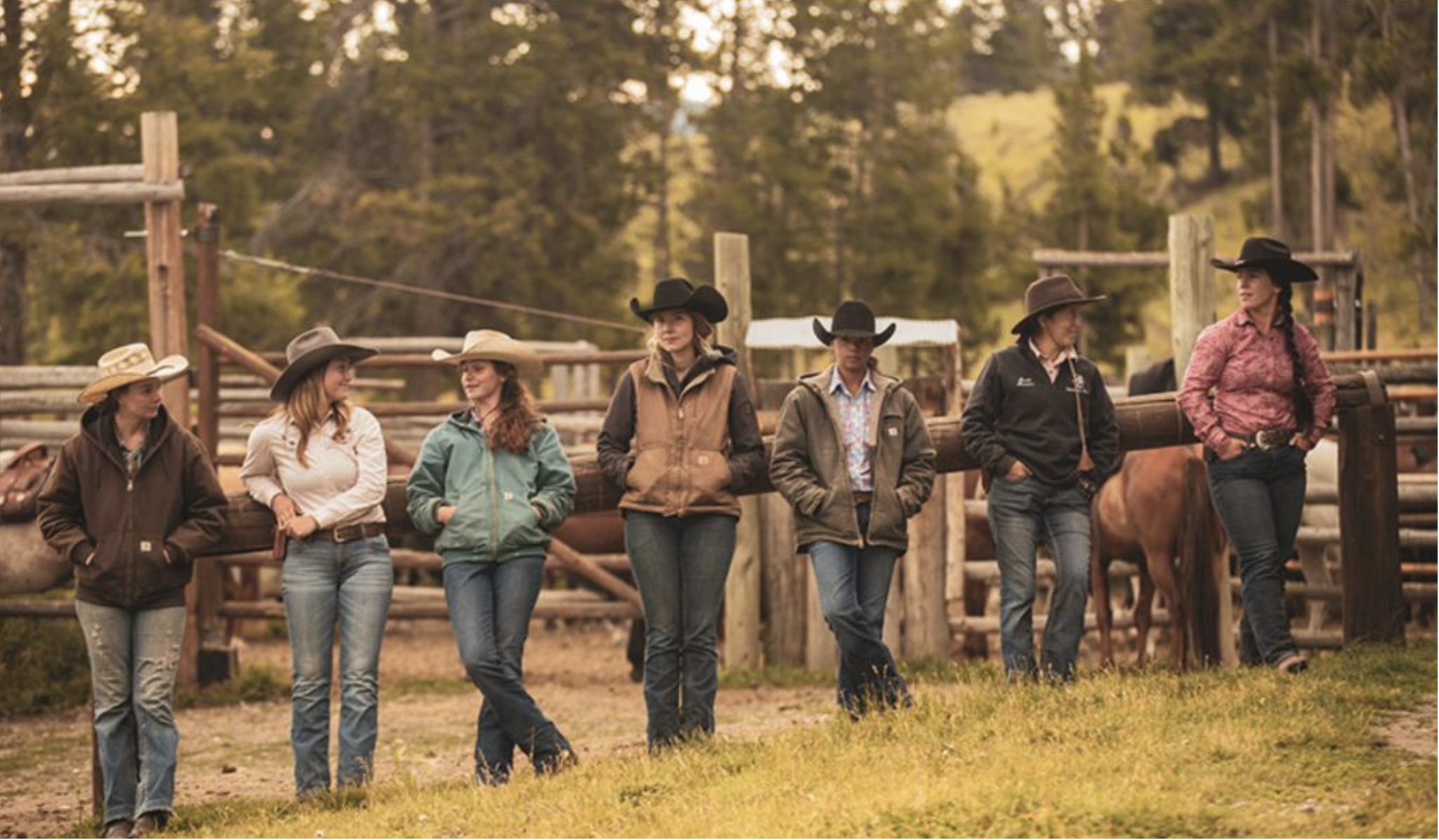
Windswept, vast and timeless, the American dude ranch is where guests learn to be cowboys and explore the  outdoors while supporting a Western business that has gained popularity over the past century.

"The very first 'dudes,' as visitors were called, were mostly folks from East Coast cities enamored with the Western lifestyle. They felt drawn to the romantic image of the cowboy, a figure somehow unchanged by the quickening urban sprawl of eastern cities," reports Graham Marema for Western Confluence. "While some forms of outdoor recreation balance negative and positive impacts on local systems by introducing something new — dude ranches contend with all three pillars of sustainability by embracing something old, traditional, and relatively unchanged."

Bryce Albright, director of the Dude Ranchers' Association, which provides membership to more than 90 dude ranches across the West, told Marema, "It's a different type of vacation. They're more of an authentic Western experience, which you can't get anywhere else. When people come out West, yes, you'll see the cowboys, and you'll see the rodeos, but until you get immersed in that kind of culture, you won't really have respect for it."

Dude ranch visitors come away with a different sense of why these parts are worth saving or may need protection. Sally Kelsey of Nine Quarter Circle Ranch, a Montana dude ranch near Yellowstone National Park, told Marema, "Something that is undervalued when it comes to our impact on conservation is our guests get to take rides in the country and learn to value a place that's very different from where they come from."

Over the past few decades, dude ranching has become a growing sector in ranching communities. Marema explains, "For some ranches, opening their doors to guests has provided an economically viable alternative or supplement to raising cattle. 'Agritourism,' which invites guests to vacation on farms and ranches, has grown in popularity among tourists and their hosts with revenue tripling in the U.S. between 2002 and 2017."

Marema writes, "Dude ranch guests spend most of their time on private land, partaking in low-impact activities like horseback riding or branding their initials into leather belts. They aren't as likely to leave trash on public trails or overburden the infrastructure of small mountain towns to the extent of other industries that rely on those towns to house, feed, and sustain their guests."

Thursday, February 08, 2024

Residents in Virginia spar over gravel or paved roads; some want progress, others want historic preservation

Sheep farming is a way of life for some Loudoun residents.
(Washington Post photo)
Their plan might be unorthodox and controversial, but some residents in western Loudoun County, Va., aim to save their "picturesque rural enclave" from suburban sprawl by "putting all of the roughly 250 miles of gravel roads that meander across the county on the National Register of Historic Places," report Justin Jouvenal, Bonnie Jo Mount and Jayne Orenstein of The Washington Post. "Some say protecting Loudoun's gravel roads will ensure its rustic soul and charm survive a suburban onslaught. But not everyone wants to go along for the ride."

Map by Tim Mek, WP, from
Loudoun County data
Some of Loudoun County has already been sub-urbanized by new homes, restaurants and thousands of residents who work in Washington, D.C. But in this slice of the county, some see that keeping unpaved roads will prevent a burbs takeover. "Supporters say the lanes evoke Loudoun's rural soul, history and charm," the Post reports. "Detractors see a quixotic quest to thwart the most basic steps into modernity. They complain of rattling rides to work and Starbucks that sometimes feel like sitting in the seat of a tractor."

The battle of unpaved vs. improved is so contentious that "Loudoun County Supervisor Caleb Kershner refers to it as the 'road wars.' Similar fights have played out in other localities across the country as the movement to preserve unpaved roads has gained traction in recent decades," Jouvenal, Mount and Orenstein write. "A network of roads is an atypical pick for the National Park Service's register. . . . Supporters say Loudoun's roads belong there because they span the sweep of American history."


Sheep have the right-of-way in Loudoun.
(Washington Post photo)
"The plan, spearheaded by a group called America’s Routes, is also a bid to hold on to something intangible — a kind of life that has all but disappeared in the pressure cooker of the nation’s capital," the Post reports. "But where some see character, others see a dirty track, as rutted as an old washboard, that grows less appealing with each flat tire and trip to the car wash."

The battle continues. "These competing visions erupted at a Board of Supervisors meeting in September, where residents clashed for over an hour over paving a handful of roads — including just 300 feet of one," according to the article. "The Virginia Department of Transportation launched a pilot project about six years ago that put a layer of concrete beneath the gravel to stabilize the road — a sort of middle ground between paving and not paving."


To read out about a hidden but pivotal piece of U.S. Civil War history that took place at Beaverdam Ford along Loudoun gravel roads, read the full story here.

What is milk? The heated debate between labeling animal and plant 'milk' continues with spoofs and a Muppet

'Got milk?' ad campaigns poke fun at their competitions'
claims. (California Milk Processor Board photo)
Got milk? The question is still a dairy ad slogan, but it's also a part of a contentious debate. "A flood of plant-based milk alternatives — almond, oat, coconut, rice, flax, hemp and soy — has set off an aggressive defense by dairy milk producers," reports Kristina Peterson of The Wall Street Journal. "Milk producers and their allies are lobbying to scrub 'milk' off the labels of plant-based rivals. Their position is: If it doesn't come from a lactating animal, it isn't milk."

As part of their campaign, animal milk producers have deployed an array of spoofs to point out what milk is. In one mockumentary-style video, an actress looks at a tree and asks, "Can I drink this?" Peterson writes, "As it turns out, the answer is yes, she says before taking a stomach-turning sip. The video, which collected 5.7 million views, is among several from the Milk Processor Education Program, an industry-funded group known as MilkPep."

Cookie Monster gives soy a try and declares it
'yumyumyum.' (Photo via PR Newswire)

Plant-based milk companies have their own arsenal of promoters, including one of America's most beloved snack lovers. Peterson reports, "Califia Farms recruited Cookie Monster, the blue-furred 'Sesame Street' Muppet, to try almond milk in his cereal for an ad. No surprise, the celebrity milk dunker liked it, calling himself a 'multifaceted individual.'"

Over the years, plant-based milk has chipped away at animal-based dairy profits, but both face stiff market competition. "Sales of plant-based milk, measured by dollars, have grown 48% since 2018 but edged down in the past year," Peterson explains. "The two rivals also face a tsunami of bottled-, canned- and boxed-water competitors — all vying to fill a limited niche."

Last year, the Food and Drug Administration proposed that "plant-based beverages could still be called milk but should carry labels that explain the nutritional differences with cow's milk," Peterson reports. Neither side was happy with the FDA's compromise. Almond growers growled that their customers weren't confused about the differences between the two products. The Almond Alliance, a trade group, told the FDA that "historians have traced almond milk to medieval times, dispelling any notion it originated in an artisanal coffee joint."

Animal dairy producers have asked lawmakers to intervene by "prohibiting any food made of nuts, seeds, plants or algae from using such dairy terms as milk or cheese," Peterson writes. Republican U.S. Rep. Mike Simpson of Idaho, a state where dairy dominates the agricultural sector, is a sponsor of the bill. Simpson told the Journal, "I'm not trying to restrict what you can drink. Just label it what it is. I got no problem with almond 'drink.'"

After at least 3 fentanyl deaths in 7 months, weekly in small Kentucky county alerts its readers to dangers, details

Most of this week's front page; click it to enlarge.
Photo illustration is based on a DEA image. 
After three fentanyl overdoses since June in Crittenden County, Kentucky, the first recorded in the county of 9,000 people, and another death in which fentanyl could have been a contributing factor, the local editor-publisher thought it was time to alert his readers to the danger.

"Considered by some as the grim reaper of recreational drugs, fentanyl has hit Crittenden County like a reaper’s scythe over last the few months," Chris Evans of The Crittenden Press began his story, which reported the deaths without the victims' names, noted that the county normally has about three overdoses of any drug in a year, then gave a rationale for the story and made it an implicit example to follow: "Observers say small communities like Marion should raise awareness or prepare to see more deaths in their neighborhoods."

Evans quotes local and state officials and writes, "Fentanyl is approximately 100 times stronger than morphine and 50 times more potent than heroin. Illegal manufacturers often lack understanding, ability and precision to make fentanyl. It’s not a forgiving drug. One minuscule mistake is irreversibly deadly."

Dr. Christopher Kiefer of the state medical examiner’s office told him, “High-school-age kids might be swapping pills. That’s not uncommon. They might think they’re getting a mild painkiller pressed in a lab. They might think it’s Oxycodone or Lortab, but it ends up being fentanyl. You don’t have to be using a needle to die of an overdose. . . . It is a dangerous time right now because people don’t know what they’re getting,”

Crittenden County (Wikipedia map)
Evans adds, "The doctor further explains that fentanyl made and distributed on the black market can be dressed or disguised as just about anything. Someone may think they’re getting a pill from a friend’s mom’s medicine cabinet when it’s something far more sinister and deadly." He quotes Marion Police Chief Bobby West as saying that families and friends of drug users can be the best preventers of overdoses, and “Conversations need to be had about this drug and how it can kill you.”

Evans concludes, "The stark reality of this drug is that it can creep undected into any corner of society and become an instant killer. Now, it’s in Marion." His package also includes sidebars about synthetic opioids (fentanyl is one) and a quick-look box giving street names for the drug, how it is used, what it does and what an overdose can look like: "Stupor, changes in pupil size, clammy skin, cyanosis, coma, and respiratory failure."

Evans has made this week's issue available online, here.

Hoarding disorders are more easily hidden in rural communities and getting treatment is more challenging

A hoarding disorder can be less visible in rural places.
(Photo via RHIHub)
Some people have a lot of stuff, but too many piles of too many things may be evidence of a hoarding disorder. For rural residents, who skew older and have more available storage space, hoarding can mean "unseen" health and safety risks," reports Gretel Kauffman for Rural Health Information Hub. "About 2% percent of the general population experiences hoarding disorder. Among older adults over 55, the prevalence rate jumps up to more than 6%, making people increasingly vulnerable to the disorder as they age."

Hoarding disorder is a relatively new diagnosis. It was added to Psychiatry's Diagnostic and Statistical Manual of Mental Disorders in 2013. The DSM defines hoarding disorder as "persistent difficulty discarding or parting with possessions, regardless of their actual value. . . due to a perceived need to save the items and to the distress associated with discarding them. . . . It causes clinically significant distress or impairment . . . including maintaining a safe environment for oneself or others."

Letting go of things can be emotionally charged, and as people age, they may become physically unable to move items from their homes, which can add to distress. "Left untreated, the disorder can lead to health risks, such as an increased risk of falling, fire hazards, food contamination, poor sanitary and hygienic conditions, trouble keeping track of medications, and infestations of mold, insects, or rodents. It may exacerbate other conditions such as depression and anxiety," Kauffman explains. "In rural settings, identifying and reaching people struggling to part with their possessions can be extra difficult . . . . And getting someone into treatment in the first place can be a challenge."

Because remote areas offer so many unique "homes" for saving things -- barns, smokehouses, sheds, unoccupied houses, and even corn cribs -- sometimes family and neighbors have no idea how much stuff is being hoarded. Catherine Ayers, a professor of psychiatry at the University of California, calls the diagnosis "unseen." She told Kauffman, "It's not bothering other people, because there's so much space. They don't have a neighbor that is having roaches or bedbugs come over, so there's no urgency yet."

It's important for family, friends and providers to keep in mind that a hoarding disorder is harmful. Kauffman adds, "To identify and treat hoarding disorder early on, Ayers recommends that primary care providers ask all of their patients a few simple, non-stigmatizing questions, such as, 'Does the number of possessions you have in your home make it difficult to use the rooms in the way they're intended?' or 'Have friends and family members complained that you have too many items in your home?'" For people seeking treatment in more remote areas, telehealth and remote learning can be treatment options.

Opinion: We were friends for years, but our different views about Donald Trump tore us apart

Art Cullen
This opinion piece by Art Cullen, editor of the Storm Lake Times Pilot in Iowa, was first published as a guest essay by The New York Times

I miss my friends. We lost one another somewhere along the way, through the pandemic and politics of the last few years, old boys who had known one another since Little League and caught boatloads of walleyes together on Storm Lake in Iowa.

We gathered around a pool table a couple of times a week for many years to see where the fish were biting, to learn who is putting up that building on the edge of town and to exaggerate exploits of days gone by. Our political discussions were limited to Hawkeyes (University of Iowa) versus Cyclones (Iowa State) football or how city hall don’t know siccum.

There were complaints that Barack Obama wanted to take our guns. And that those idlers ought to get a job and quit complaining. And that a little guy couldn’t compete in the trades anymore when the big outfits hired undocumented labor to underbid them on local jobs.

But it was mainly jokes shouted over classic rock. If things got too heavy, our resident sage, Rooster, would commandeer the discussion and suck all the oxygen from the room with a rant about how most of the world’s problems could be solved or at least avoided if weed were legal.

Illustration by Gabriel Carr, NYT
Not even Rooster could talk over Donald Trump. A would-be tyrant holed up at a Florida golf course with a bunch of sycophants changed the conversation in our metal shed. Its walls could not ward off the bombardment of propaganda, lies and false fears fostered by a half century of justifiable frustration wrought by consolidation, decline and loss.

The pandemic kept us away. I was lonely. I visited Rooster at his little bachelor shack and watched “Wagon Train” reruns. He wasn’t feeling the best. We got back to shooting pool, though it wasn’t long before Rooster laid down his guns and died. Cancer got him fast. It should have shaken us straight, but hell sort of broke loose. Arguments started over vaccines and masks and Mr. Trump. The rodeo clown was no longer there to distract the raging bull set loose by the bombardment.

So, I quit shooting.

One of my old friends, or shall I say acquaintances, recently said on Facebook that I lacked integrity after I posted an editorial from our newspaper complaining about Mr. Trump’s contempt for the democratic process and rule of law. I’ve been a community newspaper editor for decades and no stranger to controversy, having angered the agribusiness gods and endured their reprobation, but I have to say that barb stuck. Our mothers were good friends. They would not have spoken that way about each other, at least in public.

We’re old enough for Social Security and to recall scooping the loop in a jacked-up Chevelle waiting for “Beaker Street” to beam over the AM airwaves from Little Rock, Ark. Or how you used to bring your shotgun to Storm Lake High School and leave it in your locker so you could bag a pheasant in a freshly picked cornfield after school. Rush Limbaugh took over AM, and the shotgun gave way to the assault rifle.

You would think we could see around our differences. We can’t. We’ve been programmed by nonstop propaganda, especially those of us in Iowa besieged by presidential campaigns and the wedge issues they drill home. Instead of trying to hash things out, I just quit trying. My bad. I got tired.

Small-town hacks learn who their friends are. We publish uncomfortable facts of public interest and opinions that often go against the grain. Businesses stop advertising because you wrote about their lawsuit. That I get. It’s a hazard of the occupation that I regret every day. You pledge to do better even when you have done nothing wrong.

The ad hominem attacks have become the norm, especially since Mr. Trump took center stage and refused to exit. We went from Iowa Nice to Iowa Nasty. We’re stuck there whether Mr. Trump leaves or hangs around. That’s my lament.

You can’t just talk about the weather anymore, or how to smoke a trout, or compliment Solo on his pickled Polish sausage. You make new friends but they don’t necessarily replace the ones you lost right here in your hometown. I text my buddy in New York nearly every day, but I can’t shoot pool with him. I still shoot pool with Solo, our retired pressman, in the bubble of our former pressroom. He kind of liked Representative Steve King at one time because he took on the Establishment. I differed. We sweated a lot together, slinging ink, even bleeding a little, for the truth at 15,000 impressions per hour. That’s worth more than Steve King.

I know where I live. Northwest Iowa is a frozen slice of Texas, one of the most conservative places in the country. I guess I am what you call woke because I don’t think immigrants are the problem; I think income — lack of it — is the problem. All this talk about bathroom bills and book bans is one giant distraction from how global corporations have stolen our franchise. I am not the enemy of the people, dude — we were in Cub Scouts together.

Rooster would have pointed that out in an outrageous way, and he would have ridiculed us all for being that stupid and blind. We would have laughed and cracked another cold one, and grabbed some more of that trout. Those were the days.

Art Cullen is the editor of The Storm Lake Times Pilot and author of “Storm Lake: A Chronicle of Change, Resilience, and Hope From a Heartland Newspaper.”

Tuesday, February 06, 2024

Eagle Pass, Texas, continues to face an ongoing immigration feud between state and federal leaders

A family talks with the National Guard in Eagle Pass.
(Photo by Go Nakamura, Reuters via WP)
In Eagle Pass, Texas, the immigration battle between Texas Gov. Greg Abbott (R) and the federal government has ratcheted up area tensions as both sides seek to control the border.

In a move "invoking the state's right to defend itself against what he sees as an invasion," Abbot ordered the Texas National Guard to continue building a 2.5-mile blockage along the Rio Grande to prevent immigrants from "invading," reports Arelis R. Hernández of The Washington Post. Meanwhile, the U.S. Supreme Court has "ordered Abbott to allow Border Patrol agents to remove or cut wire to reach the river and aid migrants in distress. . . . Abbott's troops are installing even more wire. Twenty-five Republican governors recently signed a letter expressing their support for Abbott's rebellion."

The power struggle between Abbott and the Biden administration leaves Eagle Pass residents in the cross-hairs of a situation where compromise looks unlikely. The region's economic dependence on border crossing means many townspeople have their daily lives and incomes disrupted by the tensions. "Eagle Pass is the largest city in Maverick County, with nearly 30,000 residents, but it is isolated from most other U.S. border cities," Hernández writes. "Mexicans who cross legally make up nearly half of Eagle Pass's workforce; many U.S. residents also cross the river to work. . . ."

Eagle Pass high school track students can't use Shelby Park for practice because Abbott seized the park in January and the town's hotels remained packed with out-of-towners. Eagle Pass residents are shocked at the attention. Mike Garcia, a retired insurance salesman and active Chamber of Commerce member, told Hernández, "People now know where Eagle Pass is, but are we famous or infamous?"

For the foreseeable future, the feud will continue and locals will struggle to have their voices heard. Hernández explains, "The state's border with Mexico is an international boundary under the jurisdiction of federal authorities, but Abbott and his allies contend they have the right to intervene because the Biden administration hasn't done enough to stanch the record number of migrants trying to enter Texas illegally in recent months. . . . Locals here hold views on immigration that are as complicated as the stories of how their families became fronterizos, or borderlanders. . . . Residents said federal and state elected leaders routinely leave them out of the conversation."

A year after the East Palestine derailment, some residents have not returned home, and others report health problems

The site of the East Palestine train derailment.
(Photo by Cara Owsley, The Enquirer via USA Today)
More than a year has passed since the Norfolk Southern train derailment in East Palestine, Ohio, left the unsuspecting community of 5,000 living in the aftermath of a hazardous chemical explosion and its mitigating "controlled chemical burn." Many residents believe their lives are forever changed because of toxic exposure during and after the disaster.

Five days after the accident, Ohio officials announced that it was safe for residents to return home. "But five families who spoke to The Cincinnati Enquirer . . . just before the one-year anniversary say they're still dealing with health problems," reports Elizabeth B. Kim of The USA Today Network. Despite the lack of scientific studies tying the derailment's toxic spill to long-term health problems, "relocated families are still experiencing symptoms and foot many of their medical bills without help from the railroad or the government. They don't consider their East Palestine homes to be safe, and they're worried that moving back will worsen their symptoms."

Financial help from Norfolk Southern ends on Feb. 9 for families who relocated to other areas. "Some of the symptoms families say they face are chronic, and others are acute, appearing suddenly after a short period of time spent in one's home," Kim writes. "Christa Graves, 49, has had migraines before, but they increased in frequency from weekly to daily starting last February. . . . While Norfolk Southern offered to relocate people living within a mile of the derailment site, Graves lives 1.2 miles away. The railroad denied her request for relocation assistance, and her family has been unable to move out ever since."

Despite residents' reported health problems, the town's air and water have repeatedly passed quality testing. Anne Vogel, director of the Ohio EPA, said, "The agency is not planning to offer more residential air testing following those initial results," Kim reports. Ohio EPA "has also continued weekly sampling of the municipal water system since February 2023 and reported that no contaminants from the derailment have been detected."

Beyond ongoing health issues and expenses, families who have been unable to go home "described the crushing blow of losing their homes, sometimes passed down for generations," Kim reports. "Candy Kiehl still feels a strong connection to her East Palestine house despite feeling unconvinced that it's free of contamination." Kiehl told her: "That was my grandparents' house. That's where my mom passed away. That's where my dad passed away. But is it safe? I don't know."

A new way of evaluating food as healthy or unhealthy could improve diets but also cut profits for major companies

Gummy worms are ultra-processed.
(Photo by Karsten Winegeart, Unsplash)
What does ultra-processed food sound like? It sounds like the polyglycerol polyricinoleate in Hershey's chocolate or the tripotassium phosphate in Cheerios, or more broadly, the protein isolates or emulsifiers that "aren't normally found in a domestic kitchen," reports Carol Ryan of The Wall Street Journal. "Growing scrutiny of the peculiar ingredients in popular snack foods might be bad news for their makers."

Evaluating foods based on their ingredients vs. salt, sugar and fat content to determine if they are "ultra-processed" comes from "a way of classifying foods, called Nova, that emerged in Brazil over a decade ago," Ryan explains. "It is also a new way to think about diet. Nova groups foods based on how intensively processed they are. Some scientists think that industrial processing of food itself might be harmful and encourage overeating."

Nova's evidence is controversial, but "it is being taken seriously, including at policy level. The U.S. government will give Americans fresh diet advice in 2025 as part of a review that happens once every five years," Ryan reports. "For the first time, federal researchers and health experts will examine the relationship between ultra-processed foods and the risk of obesity. A scientific report is expected this year."

Meanwhile, big food companies are monitoring the debate, which could cut into revenues. "Ultra-processed snacks and meals are highly profitable. Major packaged food companies, including Kraft Heinz, General Mills and Nestlé, made an average operating margin of 17% over the past five years, according to FactSet data," Ryan writes. "Products that fall under Nova's UPF category make up roughly 57% of the average American and British diet and an even greater proportion for children."

Some ingredients in processed foods are there to give food a longer shelf life, prevent waste or lower costs. According to a Barclays analysis, "products containing the most common preservative, emulsifier and sweetener additives were 5% cheaper than their category average," Ryan reports. "Even foods that target health-conscious consumers — such as oat milk and plant-based meat — can be intensely processed, as manufacturers try to mimic the taste, texture and smell of animal products."

Quick hits: Elmo helps adults; schools sue social media; rural hearing loss; chatbot and climate deniers talk

Elmo told NBC Today reporters, "I'm really glad I asked."
(NBC News photo)
Feeling weary? You're not alone. "Thousands of people unloaded their life problems on Elmo last week after the red Muppet posed a casual question on X: 'How is everybody doing?' Not well, it seems," reports Angela Yang of NBC News. "The question opened the floodgates to a deluge of internet users eager to vent to the children's show character that had somehow signed himself up to be the internet's newest therapist." Sesame Street used Elmo's touching text to provide emotional health education for adults.

Last week, social media leaders took a grilling by a U.S. Senate committee for their role in helping sexual predators solicit and abuse children. But Congress isn't the only entity looking for social media accountability. "More than 200 school districts have now sued the major social media companies over the youth mental health crisis," reports Arianna Prothero for Education Weekly. "What started as a single lawsuit filed by the Seattle public schools one year ago has morphed into an all-out offensive against the social media platforms. . . . It is still the early stages of this legal saga, but experts say it could prove to be highly consequential for K-12 education — win, lose, or settle."

The world is learning to love cheese. (Canva photo)
Whether it's salty bites of chewy Mimolette or the stretchy delight of melted Gouda, cheese is among the few things many global citizens can agree on. "People can't get enough cheese, regardless of what continent they live on," reports Fran Howard of Dairy Herd. "Cheese has long been a staple in many countries' cuisine, and in those cultures where cheese has more recently been introduced, demand continues to rise." Sarina Sharp, an analyst with the Daily Dairy Report, told Howard: "Global cheese demand just keeps climbing."

Hearing loss is often more common in rural men.
(Photo by Jed Owens, Unsplash)
Along with stiff muscles and diminishing eyesight, aging often includes hearing loss, but rural men are more likely to experience it than others. "A new estimate shows hearing loss affects approximately 37.9 million Americans and is more common in rural areas than urban ones and in men than women," reports Devi Shastri of The Associated Press. "While the study could not explain the reason for the geographic divide, experts who treat hearing loss say there are two factors to consider: how loud noises are and how often people hear them."

Teacher by day and farmer by night, Marcia Ruff helped build her family's Circleville, Ohio, farm from the ground up. She teaches kindergarten during the week but spends most evenings and weekends working on the farm with her husband, Mark, and three children, reports Cheyenne Kramer of Farm Journal. Ruff told Kramer, "This is really the dream life I had envisioned. As a teacher, you educate children and prepare them for the world, but as a farmer, you feed the world." Kramer reports, "Ruff was the 2023 'Women in Ag' award winner. Read more about the Ruffs here.

Freepik photo
Some interesting things happen when humans discuss social issues with an AI chatbot. "In a study recently published in the journal Scientific Reports, researchers at the University of Wisconsin asked people to strike up a climate conversation with a GPT-3," reports Kate Yoder of Grist. "The study analyzed the bot’s interactions with more than 3,000 people, mostly in the United States, from across the political spectrum. Roughly a quarter of them came into the study with doubts about established climate science, and they tended to come away from their chatbot conversations a little more supportive of the scientific consensus."