Thursday, February 02, 2023

Expert opinion: 'The new normal cannot fall back to a pre-Covid normal; we must be bigger, better and smarter'

By Katelyn Jetelina
Your Local Epidemiologist

On Monday the World Health Organization’s Emergency Committee gave official word that they voted to renew the Public Health Emergency of International Concern. They are likely teeing up for “the end” in 2023. The U.S. is far more confident in “the end” of the national emergency. On Monday, the White House announced that they are ending it in mid-May.

An inflection point is clearly on the horizon, albeit with uncertainty. This leads to legitimate questions: Are we still in an emergency? What will the future hold? What happens next?

Are we still in an emergency? There is no “level of disease” that defines a pandemic or emergency. Even if there was an objective metric, the reality is that this isn’t determined through epidemiology alone. Where we, as a society, place SARS-CoV-2 in our repertoire of threats is a collective decision—a psychological, cultural, and political decision. Every day we consciously (or subconsciously) decide how much risk and suffering we are willing to accept: How many people get the booster? How many people wear a mask? How many people order free antigen tests? How many deaths, and among whom, are we willing to accept?

This has sparked an intense tug-of-war among scientists, leaders, and the public throughout the pandemic: a push towards “normalcy” from some and push back towards “urgency” from others. All individuals and societies fit somewhere on this spectrum. And one’s position may (and perhaps should) change with time.

How did winter play out? How we fared this winter gives us a good idea as to whether we are still in “emergency” phase in the U.S. We essentially had two tests:

How well did our immunity hold up against a constantly changing Omicron? According to varying hospitalization models from early fall, the 2022-23 winter played out as a best-case scenario for Covid-19. Even the best-case scenario, though, led to a peak of 48,000 hospitalizations.
Projections of hospitalizations, from CDC's Advisory Committee on Immunization Practices meeting on Sept. 1, 2022

Could our hospital systems handle the stress of a novel virus on top of the “normal” respiratory viruses? We hadn’t previously seen the impact of all of them at the same time. In addition, health-care workers are increasingly burnt out, and hospitals are increasingly understaffed. Given all of this, hospitals did okay this winter. Pediatricians were drowning, particularly because of a massive RSV wave. Emergency rooms were overcrowded with sickness. But a Covid-19 emergency declaration wouldn’t necessarily help with either of these. Hospitals were not overwhelmed with adults because of our immunity wall, and I’m increasingly convinced there was viral to viral interaction—in other words, we didn’t see all three viruses peak at the same time.

Given this, I agree that we are not in an emergency phase in the U.S. An emergency declaration was appropriate when we had rational hope that transmission could be interrupted on a population level and when we needed extreme measures to prevent collapse of healthcare systems. We are past this. Continuing the emergency would not be constructive given public sentiment and lack of funding anyway. As one epidemiologist told me, “If it’s always an emergency, nothing’s an emergency.”
What will the future hold?

If we end the emergency, it begs the question: What phase are we in?

I don’t believe we are in an endemic phase— a state of predictability. I think we are on our way, and Covid-19 will eventually fall into seasonal patterns. But this will likely take years. Until then, we will be in an awkward space between pandemic and endemic. Epidemiologists don’t have an official word for this phase. WHO flu risk management people would probably call this the “transition” phase.
Graph from World Health Organization pandemic risk management guide

We will continue to see the virus ebb and flow—it will mutate, we will get waves, people will continue to miss work and daycare, and people will continue to be hospitalized and die, particularly those over 65 years and immunocompromised. The end of an emergency does not mean the end of disruption or suffering.
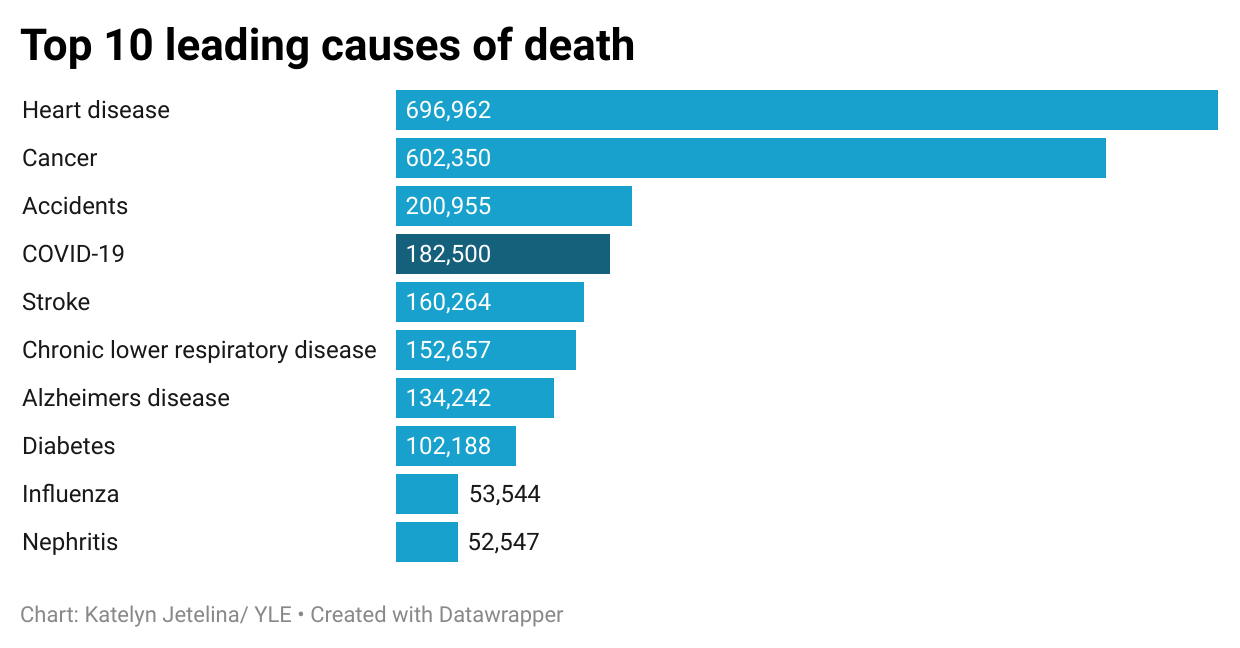
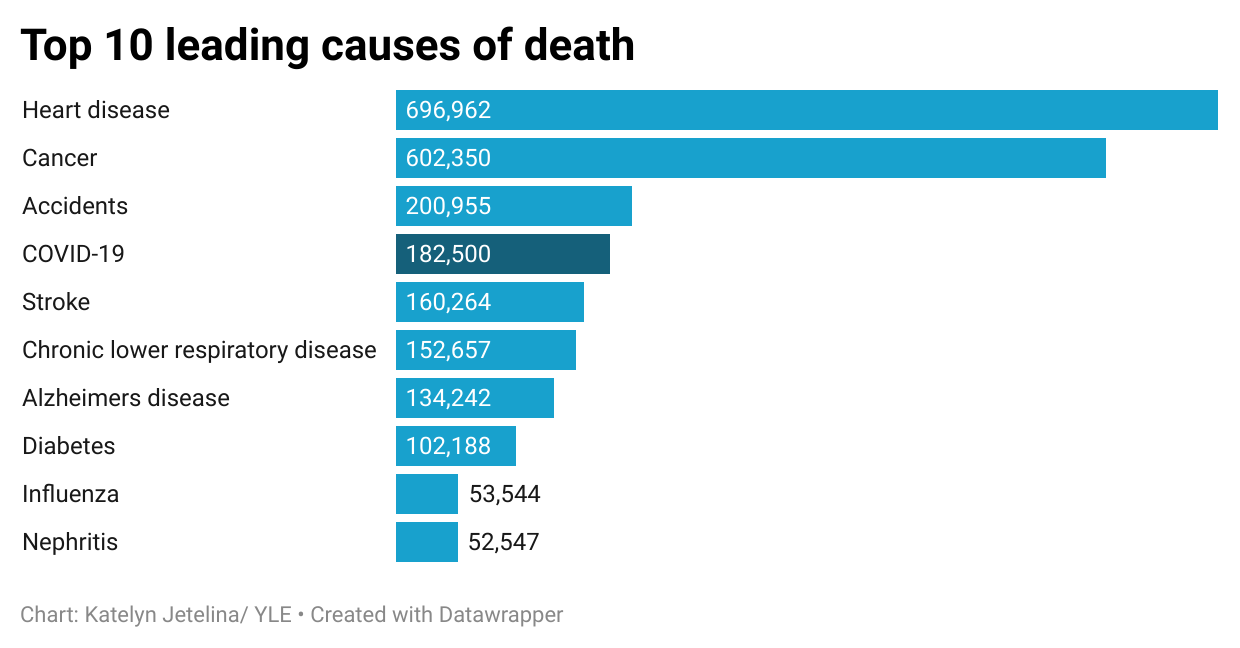
Deaths from Covid-19 are projected for 2023; data from CDC, here

Today, roughly 500 Americans are dying each day from Covid-19. At this rate, SARS-CoV-2 will be the fourth leading cause of death in the U.S. in 2023—about triple the threat of influenza.

What happens next?

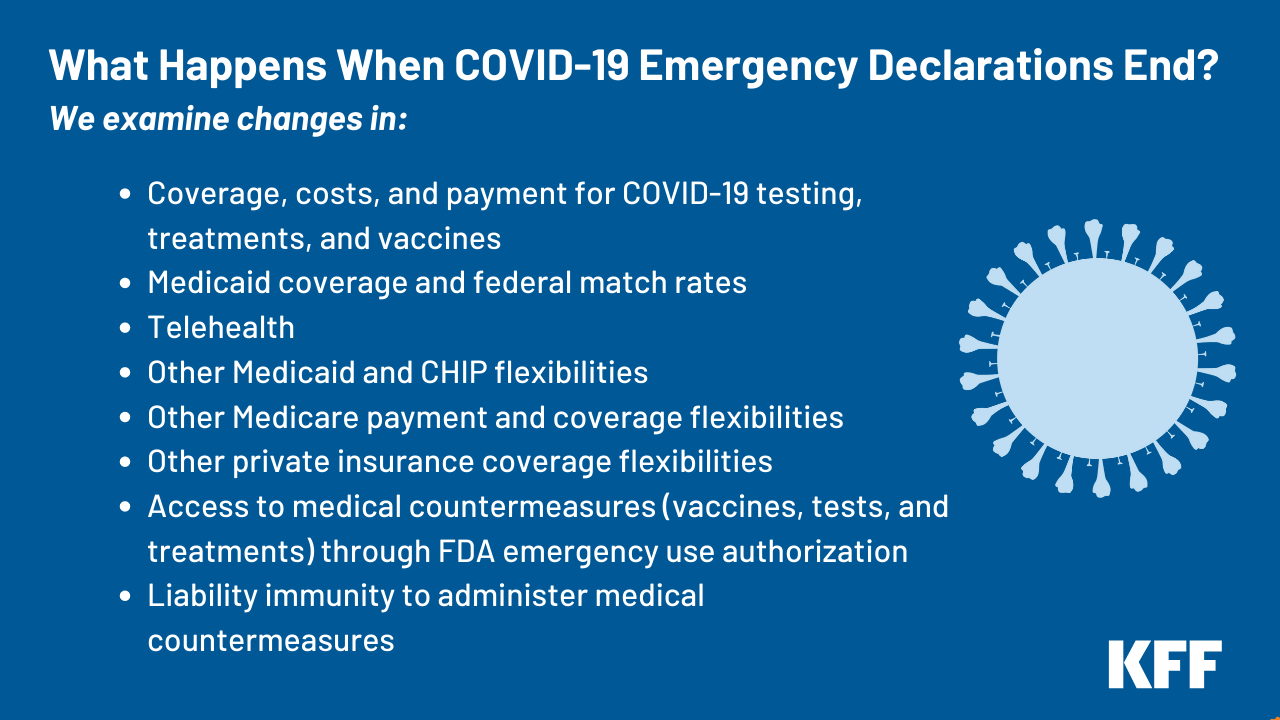
Unraveling the public-health emergency may get messy. It will certainly take time (hence the 3 month lag time). The Kaiser Family Foundation outlined the implications nicely:
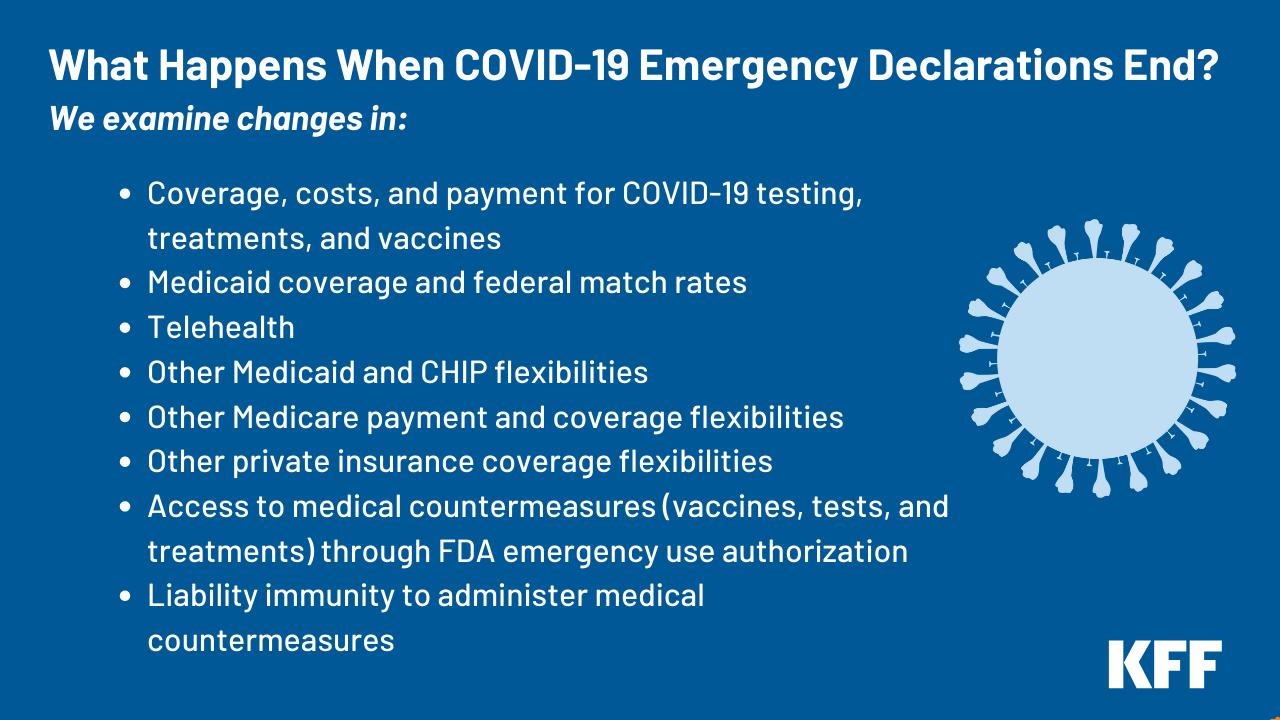

This does not impact the Emergency Use Authorization of vaccines and therapeutics from the FDA. In other words, these will still be available.

HOWEVER, the ending of funding for testing and vaccines is a real cause for concern. Once our free supply is out, everything will be privatized. Pfizer announced its vaccine will cost $130 per dose. Insurance will have to cover it, like the flu vaccine. This will, no doubt, fuel deep inequities in the U.S. And it is part of a much larger, deeply flawed system of pharmaceutical profiteering that this country hasn’t got the ethical fortitude to address yet.

Our work is not done: Most importantly, the end of the emergency doesn’t mean our work is done. There is no infectious disease more insidious or with greater impact on global mortality, morbidity, and health care systems than Covid-19.

As individuals, we still need to get vaccinated. We still need to leverage antigen tests. We need to invest in better filtration and ventilation. We still need to protect the most vulnerable.

As public-health officials, we must decide the minimum structure needed moving forward. Invest in wastewater monitoring. Continue to report hospitalizations (and get better at it). Commit to transparent and effective communication. Vaccine innovation is needed.

As a society, we MUST put real energy, innovation, and investment into repairing and strengthening our health and public health systems. The new normal cannot fall back to a pre-Covid normal. We must be bigger, better, and smarter. This means the very notion of for-profit healthcare needs to be fixed. In public health, we must figure out how to get out of the cycle of panic and neglect through preparation. We are LESS prepared for the next pandemic, given loss of trust, polarization, changing information echo-systems, and mis/disinformation.

Sadly, I’m starting to see denial and wishful thinking. I hope this changes as it will definitely not be another 100 years before the next pandemic emerges to grip the globe in a choke hold.

Bottom line: In the U.S., the end of the emergency is coming. I agree with this decision, but this certainly isn’t the end of Covid-19 or public health threats. In fact, this end is the beginning. We have our work cut out for us.

Katelyn Jetelina is a California epidemiologist and biostatistician who says she writes her newsletter on Substack as a way to translate public-health science for everyday use, helping people to make evidence-based decisions. She is a consultant to several organizations, including the CDC.

Wednesday, February 01, 2023

Heat pump might be the little machine that could save a lot of energy, but there are many obstacles; then there's Maine

A heat pump installation (Photo from DanFoss.com)
A heat pump is a simple machine with the potential to move America away from fossil fuels, Joan Fitzgerald writes for The American Prospect, a progressive public policy publication: "Electrification of buildings is a key climate strategy because space heating, cooling, and water heating comprise 46 percent of residential and commercial building emissions and more than 40 percent of the primary energy used. In addition, getting fossil fuels out of buildings has health and equity benefits."

The contraption is simple: "Heat pumps take heat from outside and move it into your home in the winter and take heat from inside in hot weather and move it outside. Some systems use ducts like hot-air furnaces and some are ductless," Fitzgerald reports. "Heat pumps offer considerable energy savings because the quantity of heat and cooling brought into your home is considerably greater than the quantity of electricity used to power the system. . . . every heat pump installed saves consumers $300 to $600 in heating costs annually."

The simplicity stops there. Installing heat pumps on a national level is more like MacGyvering green spaces than providing a tidy solution. According to Fitzgerald, here's why:

Regulatory and permit headaches: Local regulations and the permitting process are often confusing and difficult to navigate for both installers and customers. Heat pumps can violate local noise ordinances, particularly in towns with small lots. If the heat pump makes noise beyond the legal level, the contractor usually is responsible for rectifying it.

Confusing rebate processes: The requirements of rebate and subsidy programs are often confusing and contradictory to state climate goals. Some rebates require that homes be weatherized first—an expensive undertaking even with rebates.

Supply chain delays: It is not uncommon for the ideal unit for a particular home to be unavailable. The computer-chip shortage is partly responsible for limiting production, but there is almost no manufacturing of heat pumps in the U.S. Most are made by Japanese or German producers. The Department of Energy investment of $250 million to promote domestic heat pump manufacturing is much needed, Fitzgerald writes.

Inadequate workforce in skills and number: In many states, there are not enough contractors with the skills to install heat pumps. At the federal level, the DOE is exploring additional investment in workforce development for heat pump manufacturing and installation.  

Fitzgerakld writes, "The national leader in promoting wide installation of heat pumps is Maine," the second most rural state. "With 62 percent of its households heated by highly polluting fuel oil in 2019, Maine officials knew that heat pumps would have to be a big part of reaching the state’s goal of cutting greenhouse gas emissions 45 percent by 2030. The Efficiency Maine Trust, coordinates all the policy supports needed to ensure widespread heat pump adoption: offering information, advice, and rebate and loan programs. Most importantly, the Maine legislature has taken action to require utilities to do the grid improvement planning needed for a more electrified future."

Fitzgerald notes Maine is chipping away red tape by offering "easy-to-apply-for rebates. . . helping low- and moderate-income residents secure heat pumps . . taking action to ensure that the Maine utilities align pricing and planning for grid upgrades . . . acting to increase the supply of qualified installers."

As far as MacGyverisms, Maine has provided Swiss-army-knife rebate tactics and how to green duct-tape your grid as an example for other regions. Some other states are catching on "15 states and almost 100 cities and counties have policies to promote heat pump adoption," Fitzgerald reports. "Only four of them—California, Massachusetts, Maine, and New York—have set targets for the number of heat pumps to be installed."

It's Black History Month: Educator talks about teaching America's history, all 'the good, the bad, and the ugly'

DeWitt-King Barn in Vernon County, Wisconsin
(Painting by Patsy Alderson)
Would you like teach U.S. history to high school students? Many people would say "No." But veteran teacher Kevin Alderson and his wife Patsy, both rural Wisconsin natives, found a way: "Together, they are lifelong educators, and Kevin’s 30-year tenure teaching middle- and high-school history add to their credentials as stewards for their region’s history," reports Sara June Jo-Sæbo for The Daily Yonder. "Committed to uncovering and safeguarding the racial and ethnic diversity of rural Wisconsin, the Aldersons offer educational community programs to ensure that our inheritance with diverse American experiences isn’t lost."

Jo-Sæbo writes, "I wanted to talk to Kevin about ways he engaged high-school students in the classroom and to get his opinion about how teaching history has changed over the last 40 years. I also wanted to hear about how country schools and school consolidation affected rural students and racial diversity." Here are her questions and his answers:

As a history teacher, what did you observe in the classroom when students learned local history?
While my approach to teaching family and local history didn’t reach every student, for many of them, being able to connect national and world events with their families and local events – and seeing that they (the students) were part of the story – was the best method. It was about making a personal connection to that history.

Much of American history involves colonizing this continent through the use of impoverished Europeans and enslaved Africans. Our history also involves the persecution of Indigenous people. Does teaching about these traumatic experiences harm students? I accept the argument that we may not be responsible for what was done in the past because we weren’t alive then, but we are responsible for learning the truth about what happened. We fail when we don’t admit that this history happened and we fail when we don’t know the truth about what happened.  . . . If you’re truly trying to teach history – difficult history – you have to teach the greatness, the good, the bad, and the ugly. Unfortunately, the systemic tendency is to teach the great and the good and whitewash, or erase and ignore, the bad and the ugly. And there are a lot of people who have paid a heavy price for being overlooked.

Most people don’t know that Wisconsin has a substantial history of successful Black farmers who were also our earliest American pioneers. Tell me how you were exposed to Wisconsin’s African American history in your own childhood. I was not exposed to Wisconsin’s rural African-American history as a child. . . . Most of the rural Black history I’ve learned has been since I retired from teaching.

Vernon County, Wisconsin (Wikipedia map)
As an adult, what motivated you to help to preserve Wisconsin’s African-American and Indigenous history? This awareness of rural Black history in Wisconsin came to us through our interest in round barns. My wife, Patsy, is an artist who paints structures and landscapes. Of course, here in Vernon County we have the most round barns, as far as I know, in the nation. She began to make paintings of all the round barns that remained. I began researching the barns and, built upon what the Vernon County Historical Society had compiled, discovered the history of Wisconsin’s Black settlements.

Getting into the 1900s, what made it difficult for Wisconsin’s rural Black communities to remain in Southwest Wisconsin? Interestingly enough, a lot of the settlement faded away with the elimination of country schools. Instead of having your own little school and settlement – which were integrated Black, White and Native American – as soon as they were closing those schools as early as the 40’s and 50’s, they bussed those students to towns and any time new folks are brought into an environment – even from the country to the town – it often created an “us and them” situation.

How can educators teach this complicated story of American history? Intentionally or unintentionally, racism is systemic. There’s a conflict right now between recognizing the truth [of our American history with racism] and suppressing the truth. And how does an individual, or society, or nation move forward into something better if you don’t recognize the mistakes that have been made? Especially if you continue to perpetuate those mistakes. . . .We don’t have to attack our ancestors because it was a different day and a different age…. There are certain things in our history that were evil. Period. But there’s [also] a force of survival: looking for land and looking out for their families.

As a descendant of European settlers, why is it important to you to preserve the history of Black Americans who settled your home state of Wisconsin? Because the complete truth matters. I want to know the complete truth of all facets of American history. And, in fact, it goes beyond preservation. Most people are probably unaware of Black American settlement in Wisconsin during pioneer days. . . . History cannot be preserved if people don’t know it in the first place.

As quakes in West Texas increase, some oil-wastewater disposal has changed, but preparedness questions remain

The Permian Basin is a major oil production area. (Wikipedia map)
In 2017, the National Aeronautics and Space Administration said "Texas is ranked first in the U.S. in the variety and frequency of natural disasters. Flooding, wildfires, tornadoes, hurricanes . . . . Sometimes, even utilization of the state’s natural reserves of oil, gas, and water can lead to subsidence and earthquakes." It's that last part, earthquakes, that has been increasing in number, and raising concerns: "In 2022, the state recorded more than 220 earthquakes of 3.0 magnitude or higher, up from 26 recorded in 2017, when the Bureau of Economic Geology at the University of Texas began close monitoring," reports David Goodman of The New York Times.

In oil-rich West Texas, two earthquakes were felt in late 2022, one in Pecos and the second in December near Odessa and Midland, all in the Permian Basin. Goodman writes: "The [November] tremor registered as a 5.4-magnitude earthquake, among the largest ever recorded in the state. Then, a month later, another of similar magnitude struck not far away. . . . . The earthquakes, arriving in close succession, were the latest in what has been several years of surging seismic activity in Texas. . . . In 2022, the state recorded more than 220 earthquakes of 3.0 magnitude or higher, up from 26 recorded in 2017, when the Bureau of Economic Geology at the University of Texas began close monitoring."

The cause of the earthquakes is known. Goodman reports: "Dr. Peter Hennings, the principal investigator for the Center for Integrated Seismicity Research at the University of Texas, said that earthquakes can be induced through human activity: the injection of a large amount of water in a short period of time adds fluid pressure under the earth, which essentially decreases the 'clamping' between rocks along natural faults and allows them to slip, creating an earthquake. . . . seismologists have established a relationship between smaller earthquakes and larger ones, Dr. Hennings said: The more small earthquakes you have, the greater the likelihood of a bigger one." 

Many Texas earthquakes "have been concentrated in the highly productive oil fields of the Permian Basin, particularly those in Reeves County, north and west of the city of Pecos," Goodman writes. "Where oil and gas production has increasingly meant hydraulic fracturing, a process of extraction that produces, as a byproduct, a huge amount of wastewater. Some of that wastewater is reused in fracking operations, but most of it is injected back under the ground."

An oil field near Pecos; Texas only recently began its statewide program of
monitoring for earthquakes. (Photo by Paul Ratje, The New York Times)
And what about the quakes? Rod Ponton, a former Pecos city attorney, told Goodman, “In West Texas, you love the smell of the oil and gas patch because it’s the smell of money. If you have to have the ground shaking every two or three months to make sure you have a good paycheck coming in every month, you’re not going to think twice about it.” But the area has made some changes. Goodman writes: "To address earthquakes outside of Odessa and Midland, state regulators suspended permits for deep disposal wells. . . . For local officials the earthquakes have presented new and unforeseen concerns about the structural integrity of buildings and buried pipes, as well as basic questions, such as, what are you supposed to do in an earthquake?"

Odessa Mayor Javier Joven told Goodman, "The big popular discussion out here is: Did you feel it? Did you feel it? And everyone goes on Facebook: I felt it. I felt it.” Joven also noted that the city has yet to alter building safety codes to prepare for earthquakes.

'Old-fashioned newspaper war' begins in Oregon county of 225,000 that lost its printed daily in Sept. and fully in Jan.

Jackson County, Oregon (Google map; click to enlarge)
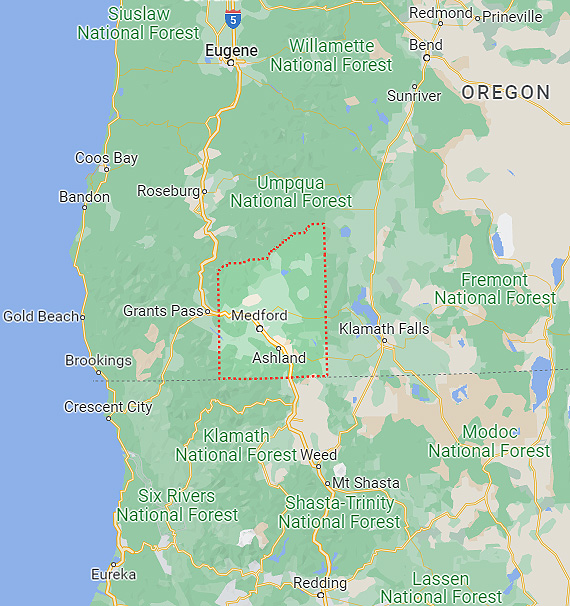
Even before the Medford Mail-Tribune closed last momth, the Daily Courier of Grants Pass, Oregon, had moved into Jackson County after the Mail-Tribune went online only in September. Now Salem-based EO Media Group, which has the Bend Bulletin and 17 other papers, is starting a thrice-weekly, the Rogue Valley Tribune, this month, Brier Dudley of The Seattle Times reports.

UPDATE, March 3: "EO Media Group has opted to change the name of its start-up newspaper in Medford, saying it faced legal threats from the former owner of the defunct Mail Tribune newspaper," reports The Oregonian's Jeff Manning. "The Rogue Valley Tribune on Wednesday became the Rogue Valley Times."

"Why will it succeed where another failed?" Dudley asks. EO President Steve Forrester "said it has a proven approach and journalistic mission." He said the Mail-Tribune, which had tried to add video content, “became a curious product,” with a confusing front page.

Now begins "an old-fashioned newspaper war," Dudley writes. "EO Media is hiring a newsroom staff of 14 in Medford, which is relatively big in the era of ghost newspapers owned by hedge funds," while the Daily Courier is adding three Medford reporters and counting on its more local ownership, five-day-a-week frequency and carrier delivery (the Tribune will be mailed) to win the battle. Forrester says EO will “have a longer time horizon than the publicly traded organization,” but both are family-owned.

"It’s rare for dailies to fail without at least merging with another paper or perhaps becoming a weekly," Dudley notes. "It’s also unheard of nowadays for multiple newspapers to replace them, according to Penelope Abernathy, the journalism professor who led research documenting America’s news deserts." Abernathy, a visiting professor at Northwestern University in Illinois, told him, “I’m not aware of any other situation like this, where you’ve had both a journalistic and business commitment made this swiftly, when a daily has closed.”

Tuesday, January 31, 2023

The rural Republican shift is a big deal, partly because it reflects a deep cultural divide and place-based resentment

"The anger and resentment felt by rural voters toward the Democratic Party are driving a regional realignment similar to the upheaval in the white South after Democrats, led by President Lyndon Johnson, won approval of the Civil Rights Act of 1964," retired reporter Thomas B. Edsall writes for The New York Times in his latest compilation of research about political trends. They go deep, to the point that rural and urban Americans sometimes seem to inhabit different nations.

Rural America's shift to the right "is one side of a two-part geographic transformation of the electorate," Edsall writes, citing a 2022 paper by Jacob R. Brown of Princeton University, Enrico Cantoni of the University of Bologna, Ryan D. Enos of Harvard University, Vincent Pons of Harvard Business School and Emilie Sartre of Brown University.

Thomas B. Edsall
Edsall notes the stagnant rural population and quotes Brown: "Rural Republican areas are becoming more Republican predominantly due to voters in these places switching their partisanship to Republican. This is in contrast to urban areas becoming increasingly more Democratic largely due to the high levels of Democratic partisanship in these areas among new voters entering the electorate. These new voters include young voters registering once they become eligible and other new voters registering for the first time."

The state providing the best example is Wisconsin, where Katherine Cramer of the University of Wisconsin has documented the rural resentment of urban and governing elites, which helped re-elect U.S. Sen. Ron Johnson last year. Cramer said, “It had three elements: (1) a belief that rural areas are ignored by decision makers, including policymakers, (2) a perception that rural areas do not get their fair share of resources and (3) a sense that rural folks have fundamentally distinct values and lifestyles, which are misunderstood and disrespected by city folks.”

Cultural and racial controversies that began in the late 1980s created the urban-rural partisan divide, says David Hopkins, a political scientist at Boston College, in his book Red Fighting Blue: How Geography and Electoral Rules Polarize American Politics. "These controversies included two Supreme Court abortion decisions . . . the 1989 appointment of Ralph Reed as executive director of the Christian Coalition; the fire-breathing speeches of Pat Robertson and Pat Buchanan at the 1992 Republican Convention (Buchanan: 'There is a religious war going on in this country. It is a cultural war for the soul of America'); and the 1993 debate about gays in the military, to name just a few," Edsall writes.

"Justin Gest, a political scientist at George Mason University whose research — presented in The White Working Class and Majority Minority — focuses on cultural and class tensions, has a different but complementary take, writing by email that the rising salience of cultural conflicts 'was accelerated when the Clinton administration embraced corporate neoliberalism, free trade and moved Democrats toward the economic center. Many differences persisted, but the so-called third way made it harder to distinguish between the economic approaches of Democrats and Republicans.'"

That fuzziness accentuated "the very cultural differences that Gingrich-era Republicans sought to emphasize — on issues like homosexuality, immigration, public religion, gun rights and minority politics. These issues are more galvanizing to the Upper Midwest regions adjacent to the South (West Virginia, Ohio and Indiana) — which are trending more conservative," Gest told Edsall. The Upper Midwest, he said, is "a region unto itself — defined by manufacturing, unions and social conservatism. As the manufacturing industry has moved offshore, union power declined, and one of the richest, most stable parts of America became uniquely precarious inside a single generation. It is now subject to severe depopulation and aging, as younger people who have upskilled are more likely to move to cities like Chicago or New York. They have total whiplash. And Trump’s nostalgic populism has resonated with the white population that remains."

Gest is also highly critical of Democrats' rural approach: "Democrats have effectively redlined rural America. In some corners of the Democratic Party, activists don’t even want rural and white working-class people in their coalition; they may even deride them. Rural and white working-class Americans sense this." And such place-based resentment is “only consistently predictive of vote choice for rural voters,” say Nicholas Jacobs and Kal Munis, political scientists at Colby College and Utah Valley University, in a 2022 paper Edsall cites.

As the "stark material divisions" between rural and urban increase, Jacobs and Munis write, "Individuals increasingly live in places that are politically homogeneous. A consequence of this is that, as Bill Bishop concludes, Americans 'have become so ideologically inbred that we don’t know, can’t understand and can barely conceive of "those people" who live just a few miles away.'"  James Gimpel, a political scientist at the University of Maryland, told Esdall, "The disrespect is felt most acutely by the fact that dominant cultural institutions, including mass media, are predominantly urban in location and orientation. Smaller towns and outlying areas see themselves as misunderstood and mischaracterized by these media, as well as dismissed as out of touch and retrograde by urban populations. There is a considerable amount of truth in their perceptions."

Edsall writes, "The belief that rural communities have a distinct set of values that are denigrated by urban dwellers" is a stronger electoral factor than economics, according to research by Kristin Lunz Trujillo, a postdoctoral research fellow at Harvard’s Kennedy School, and Zack Crowley, a Ph.D. candidate in political science at the University of Minnesota. That view is reinforced by Maria Kefalas, a sociologist at Saint Joseph’s University and co-author of Hollowing Out the Middle: The Rural Brain Drain and What It Means for America.

Kefalas told Edsall, "My best guess would be that it comes down to brain drain and college-educated voters. It has always been about the mobility of the college educated and the folks getting left behind without that college diploma. Not one high school dropout we encountered back when we wrote about Iowa managed to leave the county (unless they got sent to prison), and the kids with degrees were leaving in droves. . . . You see a striking concentration/segregation of folks on both sides who are just immersed in MAGA world or not. . . . People who live in rural America are surrounded by folks who play along with a particular worldview, yet my friends from Brooklyn and Boston will tell you they don’t know anyone who supports Trump or won’t get vaccinated. It’s not open warfare. It’s more like apartheid.”

That brings Edsall to a grim colclusion: "Urban-rural 'apartheid' further reinforces ideological and affective polarization. The geographic separation of Republicans and Democrats makes partisan crosscutting experiences at work, in friendships, in community gatherings, at school or in local government — all key to reducing polarization — increasingly unlikely to occur. Geographic barriers between Republicans and Democrats — of those holding traditional values and those choosing to reject or reinterpret those values — reinforce what scholars now call the calcification of difference. As conflict and hostility become embedded in the structure of where people live, the likelihood increases of seeing adversaries as less than fully human."

Advancing Democracy Fellowship applications due Feb. 14

Are you a journalist who wants to shift from conflict-focused coverage to stories that reflect the needs of people in your community and offer solutions to problems? You're invited to apply for the Advancing Democracy Fellowship through Feb. 14.

This joint initiative from Hearken, the Solutions Journalism Network and Trusting News is designed to "equip newsroom-based journalists to transform their coverage of democracy through solutions-focused reporting that builds trust and avoids polarization," SJN says.

This is the second year of the fellowship. SJN and Hearken say, "We are inviting 20 U.S.-based newsroom teams of at least one reporter and one editor to join this adventure. This fellowship is for U.S.-based newsrooms only and preference will be given to newsrooms in the Great Lakes region (Illinois, Indiana, Michigan, Minnesota, Ohio and Wisconsin), as well as those in Arizona, Florida, Georgia, Nevada, North Carolina, Pennsylvania and Texas. We anticipate newsrooms from outside of these states will also be chosen. Newsrooms serving and led by historically excluded communities are strongly encouraged to apply."

SJN says, "The program includes a modest stipend, along with training and resources that support innovative news coverage focused on promising responses to our democracy’s challenges in ways that build civic engagement, equity and healthy discourse."

You can apply here. To ask questions, contact Jaisal Noor at jaisal@solutionsjournalism.org.

SJN says it is "leading a global shift in journalism, focused on what the news misses most often: how people are trying to solve problems and what we can learn from their successes or failures. Since its founding in 2013, more than 600 news organizations and over 27,000 journalists worldwide have engaged with SJN’s in-person workshops, online resources, collaboratives, fellowships and cohorts.

"Hearken helps organizations embed stakeholder listening into their growth and operations to build more resilient companies and communities. Hearken has shown that listening leads to stronger relationships, deeper engagement and better decisions, and enables individuals to make an outsize positive impact in the world. In 2020, Hearken worked in collaboration with more than two dozen civic organizations (including SJN) to stand up and deliver Election SOS, which supported journalists in responding to critical election information needs.

"Trusting News learns how people decide what news to trust and turns that knowledge into actionable strategies for journalists. Its staff trains and empowers journalists to take responsibility for demonstrating credibility and actively earning trust through transparency and engagement. In a continual cycle of research, learning and sharing with the industry, Trusting News explores how to incorporate trust-building into journalism’s standards and practices."

U.S. partisan divide now runs along rural-urban lines, and that has worsened rural-urban conflict in state legislatures

"The relationships between big cities and rural-dominated legislatures have often been hostile. But a rift between Nashville and the Tennessee Legislature suggests the nation’s partisan divide is making things worse," and there are examples in other states, The New York Times reports.

Michael Wines writes, "For most of American history, the rivalry has played out in state politics more so as a matter of parochial divisions than national ones. Now, a dispute in Nashville raises the question of whether the nation’s barbed political divide — which splinters along the rural-urban axis as well — is infusing old local antagonisms with contemporary partisan acrimony. It’s not just in Tennessee. In Wisconsin, North Carolina, Kentucky and elsewhere, old city-country political tensions have taken on a harder edge as Democratic-leaning urban areas become ever more isolated islands in an ever-redder, rural-dominated sea."

Music City Center (John Greim/LightRocket via Getty Images)
In Tennessee, the Legislature split Nashville among three congressional districts, eliminating a Democratic seat. Then the city council's Democratic majority, citing security concerns, killed Republican leaders' bid to bring the party's 2024 national convention to Nashville, and the GOPers vowed revenge. The House floor leader has filed a bill to limit municipal legislaitve bodies to 20 members; only Nashville, with 40, exceeds the limit, and its voters rejected shrinkage seven years ago. The Senate president, Lt. Gov. Randy McNally, "is proposing to defund the largest civic project in the city's history," Nate Rau of Axios Nashville reports. His bill would repeal "tourism-related taxes dedicated for the $623 million Music City Center." A McNally spokesperson told Rau, "Metro has made it clear they are no longer interested in aggressively recruiting top-tier conventions to Nashville." Councilmember Bob Mendes, who opposed the convention, told Rau he expects the flogging will continue: "There's a massive culture war going on in this country, and the state of Tennessee's leadership doesn't like the culture of Nashville and is going to keep coming after us."

A 2020 study found that Tennessee "led the nation in overruling local laws and policies," Wines reports. "State laws that override city ordinances and policies have mushroomed over the last decade, especially in states where Republicans controlled both the governor’s office and the legislature." He cites examples, such as Missouri laws that keep St. Louis from banning plastic grocery bags and Kansas City from raising the minimum wage, the North Carolina House speaker's bid to block a local sales tax to finance mass transit in Charlotte and so-called "war on Louisville" laws in Kentucky "that sapped the authority of the elected board running the metro area’s 100,000-student public school system, weakened the ground rules of a city-county merger approved by voters two decades ago and limited the city’s mayor to two terms."

The study "found that such laws were more common in states with a Republican government, a strong conservative bent and a higher share of Black residents," Wines reports, quoting Professor Thad Kousser of the University of California, San Diego, who tracks the urban-rural divide: “A hundred or even fifty years ago, Democrats in Atlanta may have wanted different things than the Democrats who were governing the state of Georgia, but they were in the same party. Now they both have different legislative interests and different political interests, too.”

Wines notes, "The dynamic can work the opposite way, too: In New Mexico, the Democrat-controlled State Legislature has drafted legislation to overturn local ordinances passed in conservative towns that restrict access to abortion clinics and abortion pills. The state attorney general on Jan. 23 sued New Mexico cities and counties to overturn the ordinances."

On average, eating one wild fish or drinking a month's worth of tainted water is equally risky, national study finds

Photo by Michal Dziekonski, Unsplash
PFAS, dubbed "forever chemicals" for their apparently everlasting nature, keep showing up in America's water supply and food chains. New research found that "Eating one freshwater fish caught in a river or lake in the United States is the equivalent of drinking a month's worth of water contaminated with toxic 'forever chemicals,'" reports Daniel Lawler on Physics.org. The study was published in the journal Environmental Research.

Lawler explains: "To find out PFAS contamination in locally caught fish, a team of researchers analyzed more than 500 samples from rivers and lakes across the United States between 2013 and 2015. The median level of PFAS in the fish was 9,500 nanograms per kilogram. . . . Nearly three-quarters of the detected 'forever chemicals' was PFOS, one of the most common and hazardous of the thousands of PFAS. Eating just one freshwater fish equaled drinking water with PFOS at 48 parts per trillion for a month."

"I can no longer look at a fish without thinking about PFAS contamination," David Andrews, a senior scientist at the non-profit Environmental Working Group, a lobby that led the research, told Lawler. Andrews noted that the study's outcome was "particularly concerning due to the impact on disadvantaged communities that consume fish as a source protein or for social or cultural reasons. . . . This research makes me incredibly angry because companies that made and used PFAS contaminated the globe and have not been held responsible."

Patrick Byrne, a pollution researcher at Liverpool John Moores University, who was not involved in the research, told Lawler that PFAS are "probably the greatest chemical threat the human race is facing in the 21st century."

The harm PFAS do to humans is well documented, Lawler writes: "There have been growing calls for stricter regulation for PFAS, which have been linked to a range of serious health issues including liver damage, high cholesterol, reduced immune responses and several kinds of cancer . . . Andrews called for much more stringent regulation to bring an end to all non-essential uses of PFAS."

EPA effectively says no to Alaska's huge Pebble Mine, but the 'epic resource battle' is expected to continue in court

Sockeye salmon spawn. (Photo by Loren Holmes, Anchorage Daily News)
To mine
 or not to mine? That has been a 20-year question. Now the Environmental Protection Agency has once again "blocked development of the Pebble Mine project in a corner of the Bristol Bay watershed, a vast and pristine swath of southwest Alaska that sustains the greatest sockeye salmon runs on the planet," reports Hal Bernton of The Seattle Times. "A key portion of land surrounding the Pebble deposit [is now] off-limits for use as a disposal site. . . The decision follows years of legal jousting and regulatory twists and turns . . . in what emerged as an epic Alaska resource battle." And it is likely to continue in court.

Seattle Times maps by Mark Nowlin; top one shows disposal restrictions
"This is fantastic news,” Harry Moore, a lifelong Bristol Bay fisher, told Bernton. “Science prevailed. People prevailed and more importantly salmon prevailed.” Bernton notes, "Moore, largely raised in Seattle and residing in Alaska, joined in protests against the mine in a grassroots organizing effort."

Bernton writes, "The Pebble Limited Partnership, a subsidiary of Canada-based Northern Dynasty Ltd., calls the Bristol Bay deposit 'one of the greatest stores of mineral wealth ever discovered,' including gold, copper, silver and molybdenum. . . officials argued the mine could tap into mineral deposits needed for the transition to cleaner forms of energy, boosting the Alaska economy without harming salmon." CEO John Shively said, “This preemptive action against Pebble is not supported legally, technically or environmentally. As such, the next step will likely be to take legal action to fight against this injustice.”

But the Trump administration also rejected the plan, and “It’s hard for me to imagine a court [overturning] that kind of double shot,” said Bob Perciasepe, a former acting EPA administrator in the Obama administration and head of its air and water divisions in the Clinton administration. He told The Washington Post, “The amount of money that the company would have to continue to be able to put forward to keep the thing active seems difficult.”

The EPA based its decision "on a December recommendation from Seattle-based regional administrator Casey Sixkiller," Bernton reports. "The Seattle EPA regional office, in a document detailing the recommendation, stated that the mine discharges would result in losses and changes to 8.5 miles of streams used by salmon and another 91 miles of waterways that support the salmon streams as well as 2,108 acres of wetlands and other waters."

Appalachian nonprofit's sex education was too sexy for some; sort of harassment that stopped it is seen nationwide

Education group's logo
Sex education in Appalachia has traditionally focused on abstinence and when one group sought to change that approach, it had to stop hosting booths and workshops due to a harassment campaign, reports Maria Godoy of National Public Radio, who says the push against sexual educators is being felt nationwide.

In 2012, a sex-education group called Sexy sex ed began offering workshops to Appalachian youth that focused on a comprehensive sex-education approach. Godoy visited with an educator who was hosting a table at a community art festival in Big Stone Gap, Virginia, pop. 5,206. The table was filled with educational materials and condoms with the group's theme of "CONSENT" emboldened on products. The non-profit group touts a "cheeky, irreverent" approach to sex ed among young people. But this was Sexy sex ed's last event for the foreseeable future:

"The barrage of harassment started in March when conservative activist Christopher Rufo criticized the group on Twitter, among other platforms. He accused the group of offering summer workshop courses for children that discussed graphic sexual practices. Other conservative activists also weighed in." The educator, whom Godoy identified only as Shaylan, said those attacks misrepresented what they taught and to whom: "They put their own spin on it to make it seem as if we were posting an in-person summer camp with five-year-olds, when in reality, the summer camp was virtual. And nobody under the age of 16 attended the summer camp." 

Rufo told NPR in an email that the group was “doing something that was 'way outside the mainstream' and "Sixteen-year-olds are still minors and that the group has a very different definition of age appropriate than most parents."

Nora Gilperin of Advocates for Youth, a national health-rights nonprofit, told Goday that it has seen a surge in harassment and disinformation campaigns against sex education providers since last spring. Gilperin said, “One strategy is to take what is being taught out of context. . . Now many sex educators are afraid to share even basic information like where to get contraception."

Harvard University physician Rebecca Ralston, a native of Appalachian Tennessee who has studied sex education, told Ralston, "The more serious implications here are that people are not going to be using birth control appropriately or at all. . . so for those who do not want to become pregnant. . . they will have very few options."

Monday, January 30, 2023

Paxton Media Group tells at least some local papers to close their offices to the public; target date is Wednesday

One of the nation's leading rural newspaper chains is planning to close at least some of its papers' local offices to the public this week.

In an email to local and area managers, Paxton Media Group said, "To help streamline our efficiencies and processes, and to keep pace with changes in our own industry, we've decided it's best to eliminate our open office hours to the public completely, for the remaining publications in our group."

The meaning of "remaining publications in our group" was unclear. The memo seen by The Rural Blog was sent at least to managers of some papers in Kentucky and southern Indiana, and was a topic of discussion among Kentucky employees last week.

The memo was sent last week and gave a target date of Wednesday, Feb. 1. Paxton managers declined to comment or did not respond to requests for comment on such questions as possible layoffs.

The memo began, "As we all know, the newspaper industry has changed dramatically over the last several years, and especially since the Covid pandemic. Things that we used to see as normal business practices have developed into something completely. We are not unique, as industries all over the globe have changed how they do business."

In recent years Paxton, a family-owned firm based in Paducah, Ky., has become the fifth largest newspaper company in the U.S., in terms of the number of newspapers owned; it has about 125.

The memo anticipated unhappiness: "While we know there are going to be concerns over the inconveniences and perception this might create from a community standpoint, other offices within our company and other newspaper companies have already implemented this practice with nominal fallout, so we know it can be done successfully. Yes, this will be a different approach as to how we run our daily business, but the business world has changed how daily business is conducted."

It made an attempt to limit the fallout: "Ultimately, the community is going to channel the opinions of those in each office, so addressing frustrations internally while being positive externally will be crucial to a more seamless transition."

UPDATE, Feb. 1: The move appears to be the latest in a series. The Kentucky New Era, Paxton's daily in Hopkinsville, Ky., and The Paducah Sun, its headquarters paper, closed to the public during the pandemic and never reopened.

Former CEO of one of largest employee-owned corporations in U.S. dies at 81; business started with one rural grocery

Jimmie Gipson
Jimmie Gipson, who helped transform Kentucky's Houchens Industries from a rural grocery chain into a $3-billion-dollar conglomerate that is one of the largest employee-owned companies in the nation, died Saturday in Bowling Green. He was 81.

Gipson "spent 55 years with Houchens, the last 27 as the chief executive officer. He retired in March 2020, the Bowling Green Daily News reports. He was only the third CEO, following the nephew of the founder: "Ervin Houchens started the company in 1917 with a single grocery store."

Houchens offered stock to its employees long ago, when it was just a grocery chain, and since 1988 they have fully owned it. The company "owns over 25 operating companies in various industries including retail, manufacturing, construction, and insurance," its website says. Its most unusual purchase may have been in 2008, when it acquired the Louisville-based Hilliard Lyons brokerage firm and shared ownership with its employees until 2019.

“We never bought a company just to get bigger, and we never intended to buy a company that wasn’t run by good people,” Gipson told the Daily News in 2020. “If you do that, you’ll generally do well.” He called employee ownership “very gratifying. Years ago, we had a lady who worked in a Houchens store for 40 years. She had more than $480,000 in her retirement account. That’s life-changing for common people.”

Visitation for Gipson will be from 2 p.m. to 8 p.m. Wednesday at J.C. Kirby & Sons Lovers Lane Chapel, and from 10 a.m. to noon Thursday at Hillvue Heights Church, where the funeral will begin at noon. Entombment will follow at Bowling Green Gardens.

Inflation rates omit rural Americans, whom it may hurt more

Data from Bureau of Labor Statistics; chart by The Conversation (click it to enlarge)
This may surprise you: When the Federal Reserve Board meets this week to consider raising interest rates again to fight inflation, rural inflation will not be included in its analysis. "The main indicator of inflation, the Consumer Price Index, is compiled by looking at the changes in price specifically urban Americans pay for a set basket of goods. Those living in rural America are not surveyed," economists Stephan Weiler and Tessa Conroy report for The Conversation, a platform for journalistic writing by academics.

"We believe this poses a problem," Weiler and Conroy write. "People living outside America’s cities represent 14% of the U.S. population, or around 46 million people. They are likely to face different financial pressures and have different consumption habits than urbanites. . . . it may even be masking a rural-urban inflation gap." Weiler and Conroy did their own rural-urban inflation gap research, which outlined some distinctive differences:

Vehicle expenses: "Car ownership is integral to rural life, essential for getting from place to place . . .  Urban residents can more easily choose cheaper options like public transit, walking or bicycling. This has several implications for expenses in rural areas. . . . Longer journeys mean cars and trucks will wear out more quickly. As a result, rural residents have to devote more money to repairing and replacing cars and trucks. . . . Periods of high energy prices, such as the one the U.S. experienced through much of 2022, are likely to disproportionately affect rural residents given the necessity and greater distances of driving."

Food security: "Rural residents already spend a larger amount on eating at home, likely due in part to the slimmer choices available for eating out. This means they have less flexibility as food costs rise, particularly when it comes to essential grocery items for home preparation. And with the annual inflation of the price of groceries outpacing the cost eating out – 11.8% versus 8.3% – dining at home becomes comparably more expensive. . . . Rural Americans also do more driving to get groceries; the     median rural household travels 3.11 miles to go to the nearest grocery store, compared with 0.69 miles for city dwellers."

Health care: Rural residents trend older, "and older people spend more on health insurance and medical services. Medical services overall have been rising in cost too, so those older populations will be spending more for vital doctors visits. . . . On average, rural Americans travel 5 more miles to get to the nearest hospital than those living in cities. And specialists may be hundreds of miles away."

Home energy costs: "Poorer-quality housing leaves rural homeowners and renters vulnerable to rising heating and cooling costs, as well as additional maintenance costs."

Weiler and Conroy note, "While there is no conclusive official quantitative data that shows an urban-rural inflation gap, a review of rural life and consumption habits suggests that rural Americans suffer more as the cost of living goes up. . . . rural inflation may be more pernicious than urban inflation, with price increases likely lingering longer than in cities."

Rural residents, especially Black men, are at increased risk for heart failure, National Institute of Health study finds

Are rural populations at increased risk of heart failure? Yes, and for Black men it's worse. "Adults living in rural areas of the United States have a 19% higher risk of developing heart failure compared to their urban counterparts, and Black men living in rural areas have an especially higher risk – 34%, according to a large observational study supported by the National Institutes of Health," the NIH reports. "Even after adjustment for other cardiovascular risk factors and socioeconomic status."

"We did not expect to find a difference of this magnitude in heart failure among rural communities compared to urban communities, especially among rural-dwelling Black men," said Dr. Véronique L. Roger, the study’s corresponding author and a senior investigator. "This study makes it clear that we need tools or interventions specifically designed to prevent heart failure in rural populations, particularly among Black men living in these areas." Roger is in NIH's National Heart, Lung and Blood Institute.

Study co-author Sarah Turecamo, a fourth-year medical student at New York University Grossman School of Medicine agreed, saying, “It is much easier to prevent heart failure than to reduce its mortality once you have it."

The release outlines broader results: "The study showed white women living in rural areas had a 22% increased risk of heart failure compared to white women in urban areas, and Black women had an 18% higher risk compared to Black women in urban areas. No association was found between rural living and heart failure risk among white men. . . . . Roger, who is also a practicing cardiologist, noted one of the biggest contributors to heart failure is hypertension, or high blood pressure, which Black men experience at disproportionately high levels."

The study, "Rurality and heart failure: The Southern Community Cohort Study," was published in JAMA Cardiology, a publication of the American Medical Association.

Farmer who grew up dirt poor secretly paid for neighbors' prescriptions; he's gone, but legacy of giving is spreading

Hody Childress and daughter Tania Nix (Photo by Ronald Nix)
The kindness of strangers, it seems like a fable . . . or so croon the lyrics of an old Susan Ashton melody.

In Geraldine, Alabama, pop. 910, this fable came to life: "Every month for more than a decade, a local farmer, Hody Childress, had made anonymous cash donations to the pharmacy, Geraldine Drugs, aiming to help neighbors struggling to pay for prescription medication," reports Emily Schmall of The New York Times. "The wider community learned of his good deed only after he died at 80 in January. Now, his family and donors from across the United States have vowed to continue his legacy."

Schmall shares a recent example: "When the doctor saw what a hornet sting had done to Eli Schlageter, 15, causing his mouth and throat to swell, his advice to Eli’s parents was unequivocal: Get an EpiPen. . . . But they were stunned to learn that a single dose of the lifesaving drug cost $800 . . . So, to help the family, the pharmacist, Brooke Walker, turned to an envelope full of carefully folded hundred-dollar bills from an anonymous donor."

Childress's giving often made a difference. "Over the years, Dr. Walker said, the fund had helped at least two people a month who didn’t have insurance or whose benefits didn’t cover their prescription medicine," Schmall reports. Eli Schlageter's mother, Bree Schlageter, told Schmall, “What he doesn’t know, now that he’s in heaven, is that he helped a kid that works on a farm that he started. Look at that circle.”

Geraldine and DeKalb County (Wikipedia)
Now it spawns other circles. "Ms. Nix and her family and Dr. Walker have received calls and messages on social media from people across the United States wanting to donate," Schmall reports. "Last week, Dr. Walker received a check from someone in Tennessee. On Monday, a person called from Miami. He told her that unless she needed the money, he was going to approach his local pharmacy and start his own Hody Childress account."

Childress "grew up poor, surviving with his family on subsistence farming and by hunting small game," Schmall reports. His son said the house had no electricity until his father was about 7. His daughter, Tania Nix, said, “Giving that way, that just got on his heart and he felt like he needed to do it.”

UPDATE, Feb. 3: Nix and her brother told Steve Hartman of CBS that their father was "nearly broke" at his death because he had spent $10,000 or more helping people pay for prescription drugs.

Opinion: Organic farms are paying off as financiers provide the land and tenant farmers cultivate the crops

A twist on organic farming is blooming into profits, opines Peter Coy of The New York Times. The set-up looks like this: Garrett Mussi, a farmer in California's San Joaquin Valley, "doesn’t own any of the acres he tends so carefully. He is a tenant farmer. The owner of the land is Farmland L.P., an investment fund that buys farmland and readies it for certification as organic by the Department of Agriculture: using pesticides sparingly, and only the least harmful kinds; minimizing erosion; sequestering carbon in the soil; rotating crops regularly and providing habitats for butterflies, bees and other pollinators. Some organic farmers use ladybugs to eat aphids and owls to eat rodents. . . . What we have here is finance meeting farming and doing good, not evil."

NYT illustration; images by VectorGoods and Bablab/Getty Images
Federal crop insurance "incentivizes farmers to stick with one crop — typically industrial corn or soybeans — and make heavy use of fertilizers and pesticides," Coy writes. “Companies such as Farmland are thinking further ahead while still keeping financial principles and profit in mind. Farmland bought one 4,000-acre farm that grew mainly low-value alfalfa, feed corn and processing tomatoes, assessed the ideal uses for different sections based on soil conditions and other factors, and chose to go with blueberries, olives, nuts, garden vegetables and pasture in various areas — all grown without heavy-duty pesticides." Craig Wichner, the founder and managing partner of Farmland, told Coy: “At a very simple level, our business model is based on taking high-quality land that’s growing low-value crops and converting it to higher-value crops.”

Coy writes: "Going organic isn’t cheap. Farmland has to stop using industrial-strength pesticides and fertilizers on land for three years before it can meet the Department of Agriculture’s standard for organic farming. . . . The upside is that consumers are willing to pay more for organically grown food. . . . For organic farming to catch on, young people will have to embrace it. But most can’t afford to because of the sky-high cost of agricultural land. . . . It’s as if tech start-ups had to buy their own office buildings before they could go into business, Wichner told Coy. Investors in companies such as Farmland are essentially supplying farmers with the 'office buildings' they need to work their food-producing magic."

Saturday, January 28, 2023

Flora and fauna: Bear under a deck, ants to smell cancer, a vaccine for bees, a mini-horse for joy, Huron microbes . . .

L: Appearing to sport a headdress, a Polish rooster stands tall for his portrait. R: Show chickens like this Polish hen, are bred for external attributes, such as color patterns and feather shapes. (Photos: Alex Ten Napel for National Geographic)

A "totally unfazed" black bear dozes underneath a
comfy deck. (Photo by Vinny Dashukewich)
Why did the chicken cross the road? To get to the catwalk. Eggsperts agree, chickens have it all; and the photographers say the models are much more agreeable to work with than their fussy human counterparts.

When you find a black bear hibernating under your deck, what do you do? A family in Plainville, Connecticut, decided to let the bear snooze on.

Thundersnow is mysterious and rare. It's also being studied as a reliable indicator that a windfall of snow is coming.

What's better than a horse? A mini horse! This 33-inch mini Appaloosa brings joy to children with life-threatening illnesses from rural York County, Pennsylvania, to "anywhere people need a lift."

Gas exploration, cruise ships, and military operations have all made the ocean a lot louder for dolphins. Researches look at how dolphins attempt "shout" to communicate, but it doesn't always work out.

Researcher Rosa Vásquez Espinoza deep dives into oligotrophic Lake Huron to understand how life on Earth evolved through studying microscopic life. She believes this data "is the missing key to better conservation of Earth."

Sea lion, seals and Washington's endangered salmon: What can be done to help salmon return to its once robust numbers?

One day ants may able to replace expensive testing to sniff out cancer tumors. This new study puts the keen-nosed ant to the test with some surprising results.

American honey bee pollination supports more than $18 billion in U.S. crops each year, but bee hives have been struggling. In a bit of good news, a vaccine aimed at protecting honeybees from American foulbrood is being developed.

Thursday, January 26, 2023

The Rural Blog will not be updated tomorrow, unless . . .

. . . we run across a head-slapping, time-sensitive story. We'll be with our friends at the Kentucky Press Association convention. We plan to be at several other state news-media meetings this year! Below, Jay Nolan of Nolan Media Group stands with the display of front pages he produced.