Showing posts sorted by relevance for query "Gary Abernathy". Sort by date Show all posts

Friday, November 18, 2022

Editor who backed him says Trump's remarks confuse his voters, but naming of special counsel could help them stick

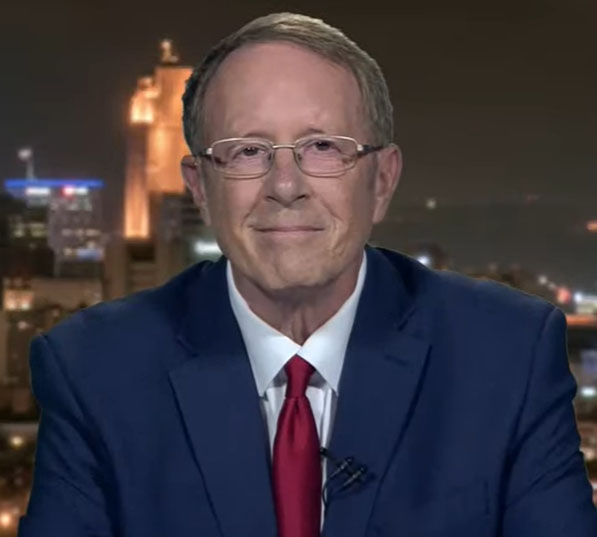
Gary Abernathy on "PBS NewsHour" Friday
One of the few newspaper editors who endorsed Donald Trump for president in 2016 says Trump proved this week that even his base voters can no longer trust him. But with Trump now the target of a Justice Department special counsel, Gary Abernathy wonders if that challenge might redound to his benefit.

Abernathy, now retired but still living in southern Ohio, wrote in The Washington Post that part of Trump's base sticks with him because, as comedian Dave Chappelle said on NBC's "Saturday Night Live," he is "an honest liar." Abernathy said Chappelle meant that "Trump’s appeal was admitting to the 'commoners' that their suspicions about how the rich play the system were true. 'We’re doing everything that you think we are doing,' he paraphrased Trump as acknowledging, like an insider sharing trade secrets with the masses."

But recently, "Trump seems to be turning his gifts for gaming the system against his allies — something that’s beginning to dawn on his voters," Abernathy wrote, citing Trump's remarks about potential rivals, Govs. Ron DeSantis of Florida and Glenn Youngkin of Virginia while taking credit for their elections. "Trump voters are understandably confused. . . . If Trump will turn on his proteges, his followers are realizing, he’ll turn on any of his acolytes. Even his base can’t trust him now. The separation is happening fast. The divorce will follow."

Those words were published Wednesday. On Friday, Attorney General Merrick Garland named a special counsel to pick up the investigations of Trump, and Abernathy was asked on "PBS NewsHour" if Trump should keep running for president if he is charged with a crime. "I don't know," he said, "but if there's a way to bring Trump's base back to him just at a moment when it seem like maybe they have a reason to separate, this is the type of thing that seems to do just that."

Asked if Republicans will stand by Trump as as the probe moves forward, Abernathy said, "I don't think Republican leaders will coalesce so much behind him. . . . It just seems like anytime Trump comes under attack, the base just wraps itself around him again, like a wall of protection."

Tuesday, June 13, 2017

Ohio editor, one of few who endorsed Trump, says president retains most support in that county

Gary Abernathy
The editor and publisher of a small daily newspaper in rural Ohio, one of the few in the nation that endorsed Donald Trump for president, reports that the conservatives and "rank-and-file Republicans" who voted for the candidate are "still with him . . . for the most part."

Gary Abernathy runs The Times-Gazette in Hillsboro, on the edge of the Appalachian foothills. The Civitas Media paper, circulation 6,600, makes a habit of editorial endorsements, unlike many small dailies, but its list of choices last fall was locally focused and the presidential section was straightforward and short: "Despite his obvious flaws as a candidate, Donald Trump best represents the drastic shakeup that Washington needs, and best reflects the conservative fiscal and social issue values that are important to the people of southern Ohio. His focus on securing America’s borders and defeating radical Islamic terrorism is the kind of decisive attitude needed in the White House."

Highland County, Ohio (emapsworld.com)
Trump won 75 percent of votes in Highland County, "which has voted for the Republican candidate for president for decades but was particularly enthusiastic about Trump," Abernathy writes. "Interestingly, the conservatives I speak with do not really consider Trump one of them. Rank-and-file Republicans tend to view Trump more as an independent who ran under the Republican banner. But for the most part, they’re still with him. They appreciate Trump’s “America first” agenda, not because they believe in isolationism, but because they believe the U.S. and its citizens should be the government’s top priority."

Trump's lack of accomplishment on health care, tax reform, the Islamic State or his pledge to "drain the swamp" in Washington "is largely blamed on overreaching courts and the open 'resistance' that appears dedicated to opposing anything Trump wants," Abernathy writes. "What Trump’s supporters also appreciate about him are the very attributes for which he is relentlessly criticized in the media. People here — a farming community supplemented by modest-paying retail jobs and a few factory opportunities — are frank and plain-spoken. They’re weary of politicians whose every statement seems carefully crafted to say nothing and offend no one. The negativity that permeates Trump coverage is a frequent subject of conversation here. Matters that are not frequently discussed here are James Comey, tax returns, the Paris climate accord and the Russians. Instead, we talk about the heroin-overdose epidemic ravaging our community."

Writing for The Washington Post, at its invitation, Abernathy said Hillsboro's rural, majority-white character "doesn’t mean its citizens or its Trump supporters are racist, homophobic or Islamaphobic. Last weekend, I covered the opening of an exhibit at our historical society that pays tribute to a school desegregation saga that unfolded here in the 1950s; the event honored surviving members of the African-American community who lived through a chapter in local history too long ignored. A big crowd, white and black, was on hand. Steps toward racial harmony happen even in Trump country."

Abernathy also had a message for big news media: "I’m an editor who is a conservative on most issues. But I’m not a conservative editor. I strive to practice and teach solid, unbiased reporting regardless of what we are covering, doing our best to demonstrate respect, accuracy and fairness to all sides. Our political leanings are reserved for the opinion page. I wish more of my liberal colleagues would acquit themselves similarly." In his latest column, Abernathy said it's fun to write for the Post, but "Some of the responses offer a reminder that thick skin remains a requirement in this business. I appreciate that the post is interested in broadening its opinion sources, so we'll see how it goes."

Friday, August 25, 2023

Rural commentators on PBS, from right and left, agree Haley had strongest peformance in Republican debate

Gary Abernathy and Sarah Smarsh (PBS image)
The commentary section of "PBS NewsHour" Friday night was all rural, as former southern Ohio editor Gary Abernathy and Kansas author and freelance journalist Sarah Smarsh filled in for their conservative and liberal counterparts, respectively. They agreed on most things, including a belief that former South Carolina Gov. Nikki Haley did best in the first presidential debate, among eight Republicans,

After a clip of Haley telling Mike Pence that a federal abortion ban won't fly because of the Senate, Abernathy said, "Republicans have overstepped on abortion. I think the Supreme Court was right to send it bach to the states. Nikki Haley was right . . . I felt she was the strongest in that debate."

Smarsh agreed. Noting last year's Kansas referendum in favor of abortion rights, she said Democrats are "reclaiming the notion of freedom or liberty and applying that to bodily automony. . . . The post-Roe landscape seems to have affected voter behavior in ways pre-Roe models can't necessarily predict."

Butg that hasn't changed how GOP candidates approach the issue in their race, Abernathy said: "You can't be too pro-life for the Republican electorate."

When host Geoff Bennett played Ohio biotech entrepreneur Vivek Ramaswamy's declaration that "The climate-change agenda is a hoax" and said "Climate change is settled science," Abernathy said, "It's not settled among Republicans, Geoff. . . . Ramaswamy was playing right to that base."

Asked about the Atlanta booking of former president Donald Trump. Smarsh said, "Millions of Americans are aghast that this person facing all these indictments and criminal charges is still the eminent front-runner." Abernathy, describing the widely circulated mug shot, said "That's a portrait Trump may have commissioned and sat for himself, the way it turned out."

Friday, January 06, 2023

Ageism is one form of bigotry that doesn't seem to get old

OPINION by Gary Abernathy, for The Washington Post

Because of my online Post photo — which I try to keep current — it has become increasingly common for people annoyed by my views to respond not by addressing the merits, but by simply calling me an “old white guy,” as if that made their point. Just recently, a reader emailed and referred to me as “an elderly white boy.” Elderly? Yikes.

Gary Abernathy (PBS image)
In fact, I’m thrilled to be the age I am. I’ve never enjoyed life more. Society’s change in attitude toward me — based strictly on the passage of time — is noticeable and striking, but not too personally disturbing. I’m glad I was young when I was and not now; I worry about my children and grandchildren navigating their way through this contentious world.

I realize that while I’m more fortunate than many — still able to pursue a career and enjoy a rewarding life with loving family and friends — in too many cases, the United States, compared with other cultures, holds its aging population in contempt. Too often, “old people” here are regarded as useless, helpless or a nuisance, left to wind down the clock as they stare out the window, a lifetime of experiences, work, achievement and sacrifice forgotten.

While we rightly ostracize, deplatform or even “cancel” people for their racism, antisemitism, xenophobia, homophobia and other prejudices, ageism is openly practiced, and ageist stereotypes thrive. Examples in the news abound. A TV crime story from April involving a 74-year-old North Carolina woman reported that “a grandmother” was the victim of a carjacking and also referred to her as “elderly.” In a more tragic case, ABC News recently reported on the fatal stabbing of an Atlanta woman whom it pegged as a “77-year-old grandmother.”

Both women most likely adored their grandchildren, but in neither case were those offspring part of the story. Maybe these women could have been defined by other, more pertinent life achievements. But because they were over a certain age and apparently their children had borne children, their status as “grandmothers” became their primary identifier.

Many of the most common insults leveled against President Biden are age-related. Granted, as president his mental acuity will be scrutinized, as was that of other older presidents such as Donald Trump and Ronald Reagan. But the mocking tone underscoring many of the jokes and memes is nothing short of cruel.

How should we respectfully refer to old people? I’ve seen people 60-plus still refer to themselves as “middle aged,” but let’s be a little more realistic and cut that off at least by 59. The word “old,” however, is such a pejorative that it should not be used alone. “Older person” is preferable. I hesitate to use “elderly” at all, which implies not just old age but a feeble condition. I’ve always despised “senior citizen” and references to the “golden years.” How ‘bout “best people ever?” That’s good.

But more important than terminology is how we regard older Americans in general. We should all be able to take a good-natured joke, whether about our age, our appearance, our background or our beliefs. But the rampant practice of ageist bigotry should join all the other “isms” and “phobias” as unacceptable, especially when it crosses the line from friendly ribbing to cruel attacks.

I’m going to add that to my list of causes. Right now, though, this 66-year-old grandfather is going to hit the couch for an afternoon nap — an “old person” stereotype I happily embrace.

Gary Abernathy is a retired rural newspaper editor from southern Ohio.

Sunday, July 23, 2017

Rural editor explains small-town papers, questions cable-news 'hysteria' about Trump and Russia

Gary Abernathy
Rural editor Gary Abernathy writes that he doesn't read many comments about his pieces in The Washington Post "because I’m an old-fashioned journalist who prefers signed letters to the editor, or even phone calls or emails. But friends and family told me that my last Post op-ed apparently inspired a lot of responses ridiculing me and, by extension, editors of small-town newspapers everywhere." So he offers to "explain a little more about small-town newspapers — which I have often said are the last newspapers practicing old-school, non-sensationalized journalism — and in so doing perhaps help the head-scratchers better understand Trump country."

"Small-town newspapers report hard news and local political controversies," writes Abernathy, editor and publisher of The Times-Gazette in Hillsboro, Ohio. "They do investigative reporting and in-depth analysis. They win awards from The Associated Press and other media organizations for their efforts." One commenter "surmised that for newspapers like ours," the biggest news is a dollar-store opening, he writes "We have done stories on dollar-store openings. In some tiny communities in southern Ohio, the opening of a dollar store is real news because it means that local residents no longer have to drive 30 minutes or more to buy some important household and grocery items. The reality of life in rural flyover country is lost on those who mock us."

Noting a recent Reuters story reporting that people in his area didn't seem concerned "about the Trump-Russia controversy," Abernathy explains, "One reason might be that they have more important things to do than sit glued to cable news. But in addition to the scarcity of grocery choices in some areas, broadband Internet has yet to reach many parts of southern Ohio. . . . The media’s Russia fixation may not be fake news in the way that Trump uses the phrase. But for millions of Americans, Trump’s claim strikes a chord because the Russia hysteria is not real news, either, not compared with the issues that impact their daily lives."

Monday, July 10, 2017

Rural Ohio editor writes in Washington Post: Opioid deaths are worse than a terrorist attack

The destruction caused by the opiod epidemic in Ohio is like a terrorist attack, writes Gary Abernathy, editor and publisher of The Times-Gazette in Hillsboro, Ohio, in a thought-provoking opinion piece for The Washington Post. The weapons are heroin and other opioid drugs, he says, and the terrorists are those who push them – not just by selling them on the street, but by inappropriately advertising or prescribing them. Opioid prescription rates increased in many rural areas and small towns from 2010-2015, though they fell elsewhere.

"Our vaunted 'war on drugs' has long represented little more than benign phraseology," Abernathy writes. "But it has become a real war, and the drug cartels and pushers here and abroad are enemy combatants. Until we respond as we would to any terrorist attack, the casualties will continue to mount."

In Abernathy's small town of Hillsboro alone, he notes that increasing overdoses are putting stress on local emergency responders and the foster care system. When parents are arrested for using drugs, their children must be placed in a foster home. But with only 15 foster families available in Highland County, the more than 100 local children in foster care sometimes must be placed in other counties at a higher cost.

Ohio leads the nation in deaths from opioid overdoses, with more than 4,149 Ohioans dying from it in 2016 -- more than died on Sept. 11, 2001. And that's a 36 percent increase from 2015, report Alan Johnson and Catherine Candinsky of the Columbus Dispatch. Ohio coroners say 2017 is on pace to outstrip 2016. Ohio Attorney General Mike DeWine recently sued pharmaceutical makers, alleging that they encouraged the problem with misleading marketing. And Highland County's prosecutor has been charging purveyors of fentanyl-laced heroin with involuntary manslaughter when it results in a death, instead of treating such incidents as accidental deaths, Abernathy reports.

Thursday, September 10, 2020

Rural commentators on PBS say revelations about Trump and the pandemic won't shake his supporters from him

President Trump's newly reported admission that he downplayed the threat of the novel coronavirus will cost him very little if any support among his followers in rural areas and smaller cities, two rural commentators said on the "PBS NewsHour" Wednesday night.

Heartland author Sarah Smarsh of Kansas and Gary Abernathy, a former newspaper editor in southern Ohio, were interviewed by anchor Judy Woodward.

"I don't know that there's a big contradiction like some people are saying," Abertnathy said. "He wanted to keep the economy open, he wanted to keep things rolling. . . . I think most people here who support him will say, yeah, we all kind of knew it was deadly ... but he was trying to keep people calm, he didn't want a panic across the country, he wanted things to remain as normal as possible."

Smarsh said she agreed that "supporters likely will not bail form the Trump ship over this."

Woodward asked how the virus issue is liked to Trump's economic messages.

"People weren't happy, where I lived, that everything was totally shut down to begin with," Abertahy said, and wanted "a more targeted approach" that would not have been as drastic in rural areas. He said Trump voters believe his policies have worked, "and if we can get things back up and running, they'll work again."

Smarsh said people's feeling about the pandemic "kind of predicts how they feel abut the economy and whether Trump is doing a good job or not."

Monday, March 12, 2018

Politicians at all levels take up 'fake news' smear; Ohio editor who backed Trump tells journos to look in mirror

Huffington Post graphic
President Trump's repeated attempts to discredit the news media with the term "fake news" have inspired conservative politicians all over the country to copy him.

"An Idaho state lawmaker urges her constituents to submit entries for her 'fake news awards.' The Kentucky governor tweets #FAKENEWS to dismiss questions about his purchase of a home from a supporter. An aide to the Texas land commissioner uses the phrase to downplay the significance of his boss receiving donations from employees of a company that landed a multimillion-dollar contract," Ryan J. Foley of The Associated Press reports.

Denouncing news stories as fake news helps politicians dodge uncomfortable questions in the short term, but experts on press and democracy say the tactic could cause long-term damage by undermining the news media's role as a governmental and political watchdog. The hostility toward the press has already turned violent on several occasions. "In the last year, at least three political figures have been implicated in physical assaults on reporters asking questions, while journalists have been attacked in dozens of other incidents by protesters, according to the U.S. Press Freedom Tracker," Foley reports.

The confusion sown by Trump and other conservative politicians is exacerbated by the proliferation of actual fake news on the internet. Public trust in the media is at an all-time low, especially among conservatives, and even small town newspapers are bearing the brunt of conservative outrage. Rebecca Baker, president of the Society of Professional Journalists, recommends that journalists respond to claims of "fake news" by increasing transparency as much as possible: sharing audio, video and documents that back up their stories.

This story is the first in a series produced by the AP as part of Sunshine Week, which celebrates government transparency and freedom of the news media in the service of democracy.

UPDATE: Editor-Publisher Gary Abernathy of The Times Gazette in Hillsboro, Ohio, finds fault: "It is telling that the story notes that the claim of bias comes from conservatives, which raises the question: Why don’t liberals complain as much about media bias? The obvious liberal slant to the media is typically ignored in favor of journalists adopting the mantle of victimhood. . . . I share the concern over the shaky position of newspapers today, but not for the same reason as many of my colleagues. The attacks by the president and others cannot hurt us. They are merely firing ammunition handed them by media outlets that have too often abandoned their “impartial and steady course” — as Carothers put it 200 years ago — in favor of point-of-view journalism and obvious agendas reflected in tabloid-style, click-bait headlines and sensationalized reporting."

Friday, June 21, 2019

Quick hits: Impossible Burger demand skyrockets; dangerous fungal disease hitting some California farmers

Here's a roundup of stories with rural resonance; if you do or see similar work that should be shared on The Rural Blog, email us at heather.chapman@uky.edu.
Sometimes deadly communicable disease, fueled by climate change, is hitting farmworkers hard in California's Central Valley, Twilight Greenaway reports for Civil Eats.

The plant-based Impossible Burger is so popular that the manufacturer is having a hard time meeting restaurants' demand, Neil Vigdor reports for The New York Times.

The interests of rural Americans are often underrepresented in state and national politics. One organizer has some ideas about how they can make their voices heard, Gary Abernathy writes for The Washington Post.

Rural physician Edwin Leap writes in MedPageToday about the difficulties rural residents encounter in seeking emergency care.

In a concession to the wet weather that has prevented many farmers from planting, the US Department of Agriculture has announced that farmers who plant cover crops on prevented planting acres will be able to hay or graze that land starting Sept. 1 without getting penalized on their crop insurance indemnity, Chris Clayton reports for DTN/The Progressive Farmer.