Thursday, May 05, 2022

New rural coronavirus infections up 50% in past two weeks

New coronavirus infections, in ranges by county, April 25-May 1
Map by The Daily Yonder; click on the image to enlarge it or click here for the interactive version.

The rate of new coronavirus infections in nonmetropolitan counties rose more than half over the past two weeks, "but the overall number of new infections remains nearly as low as it was last summer before the start of the Delta surge," Tim Marema reports for The Daily Yonder. Nonmetro counties reported almost 29,000 new infections from April 25 to May 1, up about 20% from the week before. Metro counties reported over 335,000 new infections, up 18%.

Meanwhile, "Last week’s death rate grew modestly in both rural and urban counties," Marema reports. "Covid-related deaths increased slightly last week in rural counties, climbing to 699 from 670 two weeks ago. The death rate in metropolitan counties decreased slightly last week ... The Covid death rate has been higher in rural counties than metropolitan ones for 86 out of the last 91 weeks. The cumulative rural death rate is about 36% higher than the metropolitan death rate."

Click here for more charts, regional analysis, and county-level interactive maps from the Yonder.

Wednesday, May 04, 2022

Source says Lee Enterprises could cut up to 10% of payroll this year; Lee confirms that more cuts are coming

UPDATE, May 6: Lee reported a $6.7 million loss in the second quarter while making progress on the digital front: a 9.3% gain in digital subscribers, ahead of its previously announced schedule to double them to 900,000 by 2026. It said growth in digital revenue more than made up for losses from print.

Lee Enterprises has laid off dozens of employees over the past two weeks, and is expected to lay off more than 400 employees this year, as much as 10 percent of its workforce, says an anonymous source familiar with the matter, report Sara Fischer and Kerry Flynn of Axios. The company, which recently staved off a hostile takeover bid from hedge fund Alden Global Capital, "is one of the last remaining independent local newspaper companies," they note. "With these drastic and ongoing cuts, journalists are left to wonder whether a hedge fund takeover could have been better than staying independent," 

Lee has already laid off at least 70 staffers—many of them in editorial—and implemented other cost-cutting measures such as furloughs during the pandemic. The predicted layoffs could come from at least 19 of Lee's 77 dailies and from its corporate offices, Fischer and Flynn report.

A company spokesperson didn't deny the cuts, and told Axios that they were necessary as the company continues its "print-centric" to "digital-first" transition. "These reductions are specifically tied to our legacy print business and in areas where we can become more efficient through business transformation," the spokesperson said, adding that the company isn't planning at this time to lay off any reporters or photographers.

However, many of the employees who were already laid off have been editors and editorial staffers. "Many of the roles that have been cut across those unionized newsrooms have been non-union employees. Many are middle managers," Fischer and Flynn report. "Sources describe scenarios where they are laid off, only to have their same role re-posted online for less money."

Poll worker writes about how redistricting affected her rural neighbors; local news media can help shed light on it

"Through most of the drama surrounding Wisconsin's contentious legislative redistricting process, attention has been focused on urban areas downstate. But redistricting also impacts other units of government – possibly even in your rural community," Donna Kallner writes for The Daily Yonder

Kallner, an election official in her community's sole polling site, said many didn't know they had been redistricted until they went to vote in the primaries. She breaks down how redistricting happens every 10 years at the national, state and local levels, and how rushed deadlines and other problems with the 2020 census may have made those counts less accurate (and thereby affected redistricting). 

The local newspaper mentioned that locals might see some changes in their voting district, but it didn't explain the process more fully, Kallner writes, and the minutes of the county board meeting where the new maps were adopted didn't shed much light on the reasoning, and that upset some people. 

Rural journalists elsewhere may consider reporting more on local redistricting, and seek to answer readers' questions about the process. 

Thursday NNA webinar will help community journalists cover elections; $20 for non-members, $5 for faculty, students

The National Newspaper Association will host a webinar at 4 p.m. ET Thursday, May 5, to help community newspapers cover this year's elections and discuss the critical role election coverage plays in preserving democracy. From the website: "Newspapers should view election coverage as the most fundamental element of their service to democracy in action. Solid coverage and commentary help voters elect better people to make decisions on their behalf. This webinar will address some of the overall issues that newsrooms face as they lay a foundation for substantive coverage of elections."

Jim Pumarlo
Lead presenter Jim Pumarlo is a newsroom trainer who worked for 27 years at dailies in rural Minnesota and served 16 years as the communications director at the Minnesota Chamber of Commerce. He is author of three books: "Bad News and Good Judgment: A Guide to Reporting on Sensitive Issues in a Small-Town Newspaper"; "Votes and Quotes: A Guide to Outstanding Election Campaign Coverage"; and "Journalism Primer: A Guide to Community News Coverage for Beginning Journalists."

Co-presenter Al Cross, who was editor and manager of rural newspapers and longtime political reporter for the Louisville Courier Journal, is the University of Kentucky's extension journalism professor and director of the Institute for Rural Journalism and Community Issues, which publishes The Rural Blog. "Election coverage is perhaps the best opportunity for newspapers to reassert their essential role in local democracy," he says, adding that new sample-copying power allows community papers to inform a wider audience.

The webinar is free for NNA members, $20 for non-member journalists, and $5 for students and professors. Click here for more information or to register.

EPA proposes scaling back most use of weedkiller diuron, citing risks to people and wildlife

The Environmental Protection Agency "has proposed to end the use of the weedkiller diuron on most food crops, citing cancer risks to people who are exposed as well as danger to bees and other wildlife," Marc Heller reports for Energy & Environment News. "The agency’s proposed interim decision is part of a regular registration review of pesticides and comes over objections from the Department of Agriculture and farm groups, as well as the chemical’s manufacturer. The proposal’s related documents are available in a public docket. EPA said it’s not endorsing a total ban on diuron, which has been used on farms, in orchards and in non-agricultural settings since the late 1960s. But human health and ecological risk assessments support the proposal to scale back its use, the agency said, adding that farmers have other choices for chemical weedkillers."

Tuesday, May 03, 2022

It's World Press Freedom Day; in U.S., public-notice ads have become much more important to newspapers' survival

Today is World Press Freedom Day, a global observance that is especially pertinent this year because of Russia's invasion of Ukraine and its denial of a free press to Russians, as well as the increasingly bad treatment of journalists and news media by authoritarian governments.

Public Notice Resource Center graphic
At every level of American government, journalists and their paymasters are fighting for open government and the sustainability of their operations. Open government in this country is a three-legged stool: open records, open meetings and public-notice laws that make government tell you what it's doing (spending your money) or might do (granting a permit).

That third leg is often forgotten in national debates about government transparency, but it's more important than ever because public-notice advertising has become a much more important part of the revenue of local newspapers, which are the main fact-finders in the U.S.  In nearly every state, local governments are asking state legislators to cut back on such advertising, and the Florida Legislature just passed a sweeping bill that could spell trouble for newspapers.

So, as we observe World Press Freedom Day, let's remember that someone has to pay for journalism. Increasingly, that is the audience rather than advertisers, since the digital era has destroyed old business models. But if the audience pays too much, it will become too narrow, so newspapers need public-notice advertising. And not just for the money, but for the information, which is harder to get because they have fewer reporters to dig it out. For more information, go to the Public Notice Resource Center.

And, if you want to help the Institute for Rural Journalism and Community Issues, which publishes The Rural Blog and helps rural journalists in other ways, you can donate by clicking here.

1/2 of methane emissions in U.S. come from low-producing oil and gas wells, which EPA may not regularly monitor

"Low-producing oil and gas wells are to blame for roughly half of the methane emitted from all U.S. well sites, despite making up 6 percent of the country’s total production, according to new research published this week," Carlos Anchondo reports for Energy & Environment News. "The study, published in Nature Communications, is the first comprehensive look at low-production well-site emissions nationwide, researchers said. The paper found that low-producing or 'marginal' wells emit methane at a rate 6 to 12 times higher than the national average — releasing some 4 million metric tons of the potent greenhouse gas a year."

But the draft methane rules released by the Environmental Protection Agency in November say smaller wells don't have to be regularly monitored. That's a mistake, according to lead author Mark Omara, a scientist with the Environmental Defense Fund. There are about half a million low-producing wells in the U.S., he said, and they have the same environmental impact as 88 coal-fired power plants. "Omara said methane emissions from low-producing well sites can come from sources that are common throughout oil and gas operations, including both intentional vented emissions as well as unintentional emissions like those from equipment malfunctions," Anchando reports. "Marginal wells produce less than 15 barrels of oil equivalent per day, according to the study."

Petroleum lobbyists and sympathetic regulators have protested that regulating marginal wells will be overburdensome to operators, but EDF says its research found that about 75 percent of marginal wells are owned by large companies with ample resources, Anchando reports.

Brunswick News reporter wins University of Ga. community journalism award for reporting on Ahmaud Arbery's death

Larry Hobbs accepts the Pete McCommons Award
at Grady College. (Photo by Sarah E. Freeman)
After three white men chased down and killed Black jogger Ahmaud Arbery in February 2020, local authorities in Glynn County, Georgia, failed to take meaningful action for months. But dogged attention from reporter Larry Hobbs of The Brunswick News kept the issue front and center in the community, and later, the nation. For that, he has won the 2020 Rollin M. "Pete" McCommons Award for Distinguished Community Journalism. The award, sponsored by Grady College, is given each year to a community journalist who displays outstanding leadership, innovation and entrepreneurism on the job.

"I am thrilled that Larry Hobbs is this year’s recipient of the local journalism award endowed in my name by Grady Thrasher and Kathy Prescott," Pete McCommons, the publisher and editor of Flagpole Magazine in Athens, said in a news release. "Larry is a great example of the local reporter who doggedly follows a difficult story in spite of all the other assignments that compete for his time and attention."

At the recent acceptance ceremony, Grady College Journalism Department Head Janice Hume noted the critical role Hobbs played in the case. "It was Mr. Hobbs’ attention to detail and dogged reporting that brought the story of Ahmaud Arbery’s murder first to local and then national attention," said Hume. "Without the work of a local journalist who understood and cared about his community, there would have been no justice for Mr. Arbery’s family. Local journalism matters, and Mr. Hobbs’ work is a fine example of why. We are grateful for his service to the Brunswick community and beyond."

Though Grady College is in Georgia, the McCommons Award is open to journalists nationwide, and the committee is seeking nominations for the 2021 award until Sept. 30. Click here for more information.

Biden administration to scrap blocked 'conscience rule' that allows health care workers to refuse services

"The Biden administration is preparing to scrap a Trump-era rule that allows medical workers to refuse to provide services that conflict with their religious or moral beliefs," according to three people familiar with the matter, Alice Miranda Ollstein and Adam Cancryn report for Politico. "A spokesperson for the Department of Health and Human Services confirmed that the policy change is underway."

The move comes as many Republican-led states are seeking to limit access to abortion and gender-affirming medical care, and just after a leaked draft majority opinion would have the Supreme Court overturning Roe v. Wade.

"The so-called conscience rule, unveiled in 2018 and finalized in 2019, was blocked by federal courts after dozens of states, cities and advocacy groups sued, and has never been implemented," Politico reports. "Had it gone forward, it would have allowed doctors, nurses, medical students, pharmacists and other health workers to refuse to provide abortions, contraception, gender-affirming care, HIV and STD services, vasectomies or any procedure to which they object."

The Office of Management and Budget is reviewing the proposed regulation, often the final step before one is unveiled to the public, Politico reports.

Colorado man tests positive for avian influenza, but CDC says the virus is still a low threat to humans

"Bird flu ranks as a low threat to public health, said the Centers for Disease Control and Prevention, after a Colorado correctional inmate tested positive for avian influenza after culling an infected flock. It was the first U.S. case and the second worldwide of human infection by the H5N1 viruses now circulating among birds globally," Chuck Abbott reports for the Food & Energy Reporting Network.

But, the agency says humans are still at very little risk of contracting the virus, and that the case is the only one they've seen after tracking the health of more than 2,500 people who had been exposed to infected birds. The patient, who is younger than 40, is tired but mostly asymptomatic, and repeated flu tests have come back negative, Abbott reports. The Colorado Department of Public Health theorized that, because the man was in close contact with infected birds, the virus may have been present in his nose without truly infecting him.

The only other recent bird flu case happened in England in December, and officials say the patient had "very close, regular contact with a large number of infected birds, which they kept in and around their home over a prolonged period of time," reported the BBC. Here's the CDC's guidance on how to minimize the risk of contracting avian influenza.

More than 36 million domestic birds, mostly chicken and poultry, have died from the bird flu or from cullings of infected flocks over the past three months. The Agriculture Department transferred $263 million to the Animal and Plant Health Inspection Service last week, in addition to $130 million in mid-March. "APHIS works with state and local officials to identify outbreaks and carry out response plans that include quarantines, cullings of birds, disposing of dead birds, and sanitizing infected premises," Abbott reports.

Monday, May 02, 2022

More than 1,300 small urban areas will be classified rural under new Census criteria; could affect federal funding

More than 1,300 urban areas will be reclassified as rural under the Census Bureau's new criteria; some worry rural areas could get less federal funding. "A revised list of urban areas won’t be released until later this year, but a third of the areas deemed urban a decade ago would be knocked into the rural category under the new criteria," reports Mike Schneider of The Associated Press.

The biggest change is that the bureau will count housing units instead of people to define urbanity and rurality. Under the old definition, a place with at 2,500 or more residents was considered urban, but many people considered that number, in use for more than a century, too low. Now, urban areas will be those with at least 2,000 housing units, which translates to a population of about 5,000.

"Some communities worry that the switch to housing units will cause some areas to be underestimated if the Census Bureau uses the U.S. average of 2.6 people per household for its calculations," Schneider reports. "A coalition of associations representing cities, counties, planners and transportation groups had objected to many of the proposed changes last year, saying the switch from people to housing units would miss variations in development and land-use patterns.

"The Census Bureau tried to address those concerns by creating three levels of urban-area definitions for census blocks, which are the nation’s smallest geographic unit and show rural areas inside counties that are part of metropolitan areas largely because of commuting patterns. Census blocks will be urban if they have 425 housing units per square mile, the equivalent of 1,105 people. Before the change, census blocks with at least 500 people per square mile were considered urban. The redesignation gives the bureau a way to distinguish between the 'urban nucleus' and less densely populated areas, typically on the fringes of urban areas."

Some stakeholders worry that rural areas could lose federal funding for health care, education, infrastructure and more. Though the bureau warns that the new criteria should be used for statistical purposes only, other federal agencies routinely use its classification system to determine who qualifies for funding, Schneider reports. So more rural areas means blanket funding would have to stretch further, and competition could increase for grants.

Scientists say modern farming methods and climate change have made modern produce and grains less nutritious

The advent of modern farming methods has caused fruits, vegetables and grains become less nutritious over the past 70 years, Stacey Colino reports for National Geographic. Multiple scientific studies show that many current crops have "less protein, calcium, phosphorus, iron, riboflavin, and vitamin C than those that were grown decades ago," Colino writes.

Climate change and rising carbon-dioxide levels are partly to blame, but the biggest problem is "modern agricultural processes that increase crop yields but disturb soil health," Colino reports. "These include irrigation, fertilization, and harvesting methods that also disrupt essential interactions between plants and soil fungi, which reduces absorption of nutrients from the soil."

Nutritional decline could make it harder for people to get the nutrients they need to fight off chronic illnesses, said David R. Montgomery, a professor of geomorphology at the University of Washington and co-author with Anne Biklé of What Your Food Ate. It's increasingly important to grow nutritionally dense foods, he told Colino: "We can’t afford to lose arable land as population grows. We need to prevent further damage and work to restore fertility to already degraded lands."

Montgomery and other experts still encourage people to eat more fresh produce and less-processed foods, but told Colino they hope this knowledge will inspire more people to care about how their food is grown.

Today is the deadline to apply for a project that will help journalists test-drive strategies to increase reader trust

Today is the deadline to apply for Trusting News' new Pluralism Network, a project in which journalists will learn and test new strategies to increase reader trust in the news media. Click here for more information and click here to apply.

Trusting News, a collaboration of the Donald W. Reynolds Journalism Institute and the American Press Institute, will explore five questions through the new Pluralism Network. Stipends for three of the projects are funded by George Mason University's Mercatus Center and cross-disciplinary, cross-idealogical collaborative the New Pluralists. From the project's website:
  • What strategies or tools could help editors assess whether individual stories are contributing to complexity and curiosity rather than overgeneralizations and polarization? Read more about our anti-polarization checklist, which comes with a $2,000 stipend for participating newsrooms.
  • How can newsrooms adopt practices around national wire-service content that help audiences differentiate it from local news? And what resources would be helpful for journalists writing headlines on those stories to avoid triggering polarized reactions and feedback? Read more about our wire news project, which comes with a $2,000 stipend for participating newsrooms.
  • How can newsrooms incorporate outreach efforts with maximum impact and efficiency to learn about the needs and perceptions of people with low trust in news? Read more about our outreach and listening project, which comes with a $500 stipend for individual participating journalists.
  • How can hiring editors and human-resources teams update interview practices to learn more about the "dimensions of difference" that job candidates could add to their staffs? Read more about our hiring project.
  • How can newsrooms talk to their audiences about their election coverage in a way that highlights shared goals and taps into a collective desire for understanding and curiosity? Read more about our election coverage messaging project.
Trusting News will publish what it's learned this summer, just in time for the midterm elections. In the meantime, participating journalists can share what they're learning with each other via a Slack channel. 

Sunday, May 01, 2022

At 'Nerd Prom,' a South Africa native looks at Ukraine and reminds us of the blessings of an unfettered, fearless press

The White House Correspondents Association Dinner, aka the Nerd Prom, is annually disparaged for eroding public confidence in journalists' ability to hold Washington, D.C., officials accountable. "Everyone in the room is in a tuxedo or gown; 'reporters' and government 'subjects' sit shoulder to shoulder at the dinner tables, raising glasses of wine and laughing at one another’s jokes; a general mood of 'we’re all in the club' prevails," James Fallows writes in Breaking the News on Substack. But Saturday night, Fallows was impressed by the very serious concluding remarks of comedian Trevor Noah, a native of South Africa, and so were we, so here they are:

“Whether you like it or not, [the press] is a bastion of democracy. And if you ever begin to doubt your responsibilities, if you ever begin to doubt how meaningful it is, look no further than what's happening in Ukraine. … You realize how amazing it is like in America you have the right to seek the truth and speak the truth. Even if it makes people in power uncomfortable even if it makes your viewers or your readers uncomfortable.

“Understand how amazing that is. I stood here tonight and I made fun of the President of the United States and I'm going to be fine. I'm going to be fine. Right? [Gestures to Biden, in a joking way. Biden claps.] Do you really understand what a blessing it is?…. Honestly, ask yourself this question: If Russian journalists who are losing their livelihoods and their freedom for daring to report on what the own government is doing… If they had the freedom to write any words, to show any stories, to ask any questions—if they had basically what you have—would they be using it in the same way that you do? Ask yourself that question every day.”

Friday, April 29, 2022

May 5 NNA webinar will help community journalists cover elections; $20 for non-members, $5 for faculty, students

The National Newspaper Association will host a webinar at 4 p.m. ET on Thursday, May 5 to discuss the critical role election coverage plays in preserving democracy, as well as overall issues newsrooms face in the process.

Featured speakers are Al Cross and Jim Pumarlo. Cross, a former editor of rural newspapers and longtime political reporter for the Louisville Courier Journal, is the University of Kentucky's extension journalism professor. He is also the director of the Institute for Rural Journalism and Community Issues, which publishes The Rural Blog.

Pumarlo is a newsroom trainer who worked for 27 years at dailies in rural Minnesota and served 16 years as the communications director at the Minnesota Chamber of Commerce. He is author of three books: "Bad News and Good Judgment: A Guide to Reporting on Sensitive Issues in a Small-Town Newspaper"; "Votes and Quotes: A Guide to Outstanding Election Campaign Coverage"; and "Journalism Primer: A Guide to Community News Coverage for Beginning Journalists."

The webinar is free for NNA members, $20 for non-member journalists, and $5 for students and professors. Click here for more information or to register.

Scientists: 1/3 of ocean species could die in 300 years; warming has helped extirpate at least 400 species on Earth

There have been five mass extinctions in Earth's history, and if humans don't curb their greenhouse-gas emissions, we're heading for a sixth, says a groundbreaking study in the journal Science. 

The study by Malin Pinsky and Alexa Fredston of Rutgers University says a third of all marine life could die off in the next 300 years. Those who don't live near the ocean might wonder why that matters, but Sarah Kaplan of The Washington Post points out that ecosystems are highly connected, and a die-off that large would send shockwaves throughout the planet, even on land. Billions of people depend on the ocean for food or work, and resource scarcity is often at the root of war and unrest. In other words, the warming climate is going to affect more than New England lobster fishermen.

"This climate-driven marine die-off is just one piece of a broader biodiversity crisis gripping the entire globe," Kaplan notes. "A recent report from the Intergovernmental Panel on Climate Change found that warming has already contributed to the disappearance of at least 400 species. A separate U.N. panel has found that about 1 million additional species are at risk of extinction as a result of overexploitation, habitat destruction, pollution and other human disruption of the natural world."

Meatpackers say they didn't collude to increase prices; oppose bill to make them buy part of supply in cash market

The chief executives of the nation's largest meat processors — JBS USA, Tyson Foods, Cargill, and National Beef — which control 85% of the nation's beef sales, "said on Wednesday that they were not the cause of surging meat prices at the grocery store, which are up by 15% in a year. And they told a skeptical House Agriculture chairman David Scott there was no pact to drive up profits at the expense of consumers or limit the meat supply for Americans," Chuck Abbott reports for the Food & Environment Reporting Network.

Scott said he has studied anti-trust cases and noted that packer margins—the difference between the price packers pay farmers and the price wholesalers pay for the meat after it leaves the plant—abruptly went up in 2015 and have stayed that way, a feat that "can't possibly happen in a competitive market."

The executives said meat prices have gone up because of "surprisingly strong consumer demand, disruptions in production due to outbreaks of Covid-19 at packing plants, rising feed costs, and warfare in Ukraine," Abbott reports. Two senior Republicans on the committee accused the Biden administration of trying to blame the meat industry for inflation.

National Beef CEO Tim Klein also denounced the bipartisan reform bill that would require meatpackers to buy some of their cattle on the cash market in order to increase price transparency in regional cash markets, Abbott reports. More cash trade wouldn't help cattle farmers, Klein said.

"Earlier in the day, Missouri cattle farmer Coy Young told the committee his family's farm cannot continue operating long term unless changes are made to the cattle markets to allow cattle producers to earn profits," Todd Neeley reports for DTN/The Progressive Farmer. "Young was featured in a December 2021 New York Times story on the cattle industry. The Times reported Young had considered suicide." Five cattle farmers who were supposed to testify on Tuesday and Wednesday backed out, saying they feared retribution, Neeley reports.

Steve Key, 'one of the most respected and accomplished newspaper-association leaders,' retires today in Indiana

Steve Key makes the case for Indiana newspapers.
Steve Key, who has helped Indiana's newspapers for 30 years, retires today as executive director  of the Hoosier State Press Association. He is "one of the most respected and accomplished newspaper association leaders. His counsel is wise, his passion for the industry is vibrant, his questions are smart and focused, and his humble collegiality is second to none," writes Tom Silvestri, director of The Relevance Project, a project of U.S. and Canadian newspaper associations.

Key started with HSPA as legislative counsel and director of government affairs and became the boss in 2010, succeeding the legendary Dick Cardwell. He says Indiana, California, Florida and Pennsylvania are the only state press groups that have a lawyer on staff, and that won't change; he is being succeeded by Amelia Dieter McClure, who has been HSPA legislative counsel.

Asked his proudest career moment, Key said "Perhaps the most impactful was successfully lobbying for the permanent creation of Indiana’s Public Access Counselor’s office. This position serves as an educator and mediator on questions of the state’s right to know what its government is doing through use of the Open Door Law and Access to Public Records Act. The office has reduced the number of lawsuits required by the public to file to two categories – questions of how the law should be interpreted and situations where state or local public officials have decided to ignore the law."

Key has a journalism degree from Butler University in Indianapolis. He worked at the Quincy Herald-Whig in Illinois, the now-defunct Kentucky Post in Covington, the Daily Journal in Franklin, Ind., and the Noblesville Daily Ledger, where he was managing editor. After a brief spell in utility public relations, he got a law degree. He told The Rural Blog, "I’ve had a job that I believe in and I think is important because of the impact it can have on legislation and the viability of newspapers, so I’ve been very fortunate to do that."

Amelia Dieter McClure (Photo via IBJ)
McClure told the Indianapolis Business Journal that for newspapers, "The biggest issue is obviously the progress into online—print versus online. I saw it a lot this session, actually. The appetite for news is there. People want to know things. We see that with the coverage of Covid, that local news got such an infusion because they were the ones that were delivering the information on Covid directly to people that didn’t have any other way to find out about it. … That was a really good reminder for people how important local news is, but I think there’s this misconception out there that newspapers … are old-fashioned, they’re not moving forward. And that’s really not true." McClure is the daughter of Mary Dieter, former Indiana statehouse reporter for the Louisville Courier Journal. "Steve Key likes to say it's in my blood," she said. 

Quick hits: Sterile super-Romeo trout may help curb invasive species; tools for rural electric co-ops transitioning to renewable energy; federal aid fuels pickleball boom

Brook trout have been outcompeting native trout for years.
(NPL photo by Nick Hawkins)
Here's a roundup of stories with rural resonance; if you do or see similar work that should be shared on The Rural Blog, email us at heather.chapman@uky.edu.

People of color and low-income communities are at a disproportionate risk of being harmed by pesticide exposure, according to a newly released study. Read more here.

A non-profit has a page full of tools and guidelines to help rural electric cooperatives transition to renewable energy. Read more here.

To save an underdog fish species out West, scientists are turning some invasive trout into sterile super-Romeos and setting them loose. Since they're taking the bulk of female trout's attention during mating season, that helps reduce births among the species. Read more here.

Federal Covid-19 aid is funding a pickleball court construction boom. Read more here.

Tick bites are causing an increasing number of people to become allergic to meat. Read more here.

Thursday, April 28, 2022

As you plant your garden this year, beware of invasive Asian jumping worms that are spreading across the U.S.

An invasive species called the Asian jumping worm is spreading across the United States and Canada, damaging plants, animals and forests in its wake.

"The species is harming ecosystems. The jumping worms can devour organic matter more rapidly than their counterparts, robbing forests of the layer critical for seedlings and wildflowers. In areas of heavy infestation, native plants, soil invertebrates, salamanders, birds and other animals may decline, scientists warn," Andre Claudio reports for Route Fifty.

The worms were first seen in Wisconsin around 2013, but these days "can be found from Long Island, New York to Ontario, Canada," Claudio reports. "Besides New York, they have been spotted in Missouri, Illinois, Wisconsin, Iowa, Kansas, Nebraska, Oklahoma, Texas, Louisiana, Indiana, Minnesota, Indiana, Kentucky, Tennessee and Ohio."

They look a lot like the nightcrawlers you might use for fish bait, and in fact, scientist believe that's why they were first brought here, but you can tell them apart. The easiest way is by the clitellum, the thick band about two-thirds of the way down the worm's body. In a regular earthworm the clitellum is pink or reddish and slightly raised, but an Asian jumping worm's clitellum is lighter and flush with the body.

Scientists are still working on how to best control the worms, but in the meantime, there are a few things you can do to help slow the spread, such as: only buy compost, mulch or other organic matter that's been heated to at least 104°F, since jumping-worm egg casings can't survive that temperature, Claudio reports. The University of New Hampshire's Extension Service has even more tips, including this one: Report any you see to your local Extension office.

Local resistance to utility-scale renewable-energy projects appears to be driven by worries about loss of farmland

Part of a utility-scale solar farm (Photo from Farm and Energy Initiative)

"The United States is experiencing a boom in utility-scale renewable energy projects, as solar and wind prices continue to fall and the Biden administration pushes for a fossil fuel-free electricity sector by 2035," Diana Kruzman reports for Grist. "Throughout the process, developers seeking vast expanses of cheap land for utility-scale facilities have faced pushback from the likes of Massachusetts fishermen, coal plant supporters, and environmental groups concerned about desert tortoises. Now, rural communities around the Midwest are mobilizing to restrict or ban large renewable energy projects. Experts say that some residents have been swayed by misinformation about the health impacts of solar and wind. But for most, the issue is tied to concerns about the loss of agricultural land in a region long-defined by its farming roots.

As of March, 121 local governments (about half in the Midwest) in 31 states have restricted new renewable energy projects, Columbia Law School researchers found. That's a 17.5% increase from six months prior. "Solar energy in particular has taken a lot of the heat, even in states that have long embraced wind. Iowa was the first state to generate more than 30 percent of its electricity from wind turbines, and has more wind energy installed than any other state except Texas," Kruzman reports. "But while farming can take place alongside wind turbines, solar farms typically take agricultural land out of large-scale production. In response, Iowa legislators introduced a bill earlier this year that would have prevented solar farms from being built on land that’s considered particularly good for farming — about two-thirds of the state’s counties. The bill would also require solar panel fields to be at least 1,250 feet away from the nearest neighboring landowner. Iowa law only requires oil and gas wells, by contrast, to be 330 feet from any nearby property."

Many rural residents support renewable energy projects because they bring in extra income. But some neighbors and suburban residents oppose it because they believe the solar panels or wind turbines might ruin beautiful views or reduce property values. "Behind a lot of this opposition are social media campaigns spreading conspiracy theories and misinformation, particularly about the health effects of wind and solar," Kruzman reports. "Fears about wind turbine noise causing birth defects or shadows from turbine blades inducing seizures – neither of which have scientific backing – permeate Facebook groups where residents organize against renewable projects, a report from National Public Radio found."

USDA predicts grocery prices will rise 5.5% this year, largest hike since 2008 and third straight year above 2% average

Grocery prices will rise an average of 5.5% this year, which would be the highest inflation at stores since 2008, \the Agriculture Department announced Monday. "The forecast was an abrupt 2 percentage point increase from last month and was spurred by three months of rapid rises in the prices of many foods," Chuck Abbott reports for the Food & Environment Reporting Network. That would mark the third straight year straight of above-average grocery prices increases; usually they go up about 2% per year.

The war in Ukraine is primarily to blame, and higher interest rates are expected to be a factor, too. Some foods will get pricier than others, according to USDA's monthly Food Price Outlook. "Prices for meat, the biggest item on the grocery list, were forecast to rise by 6% this year compared with average meat prices during 2021 — double the usual increase of 2.9% a year," Abbott reports. "Prices for dairy products were forecast to rise by 6.5%, fresh fruit by 6.5%, and cereals and bakery products by 6.5%. Fats and oils would climb by 8.5% this year, compared with the long-run average of 2.3% a year."

Applications open for Farm Bureau Farm Dog of the Year

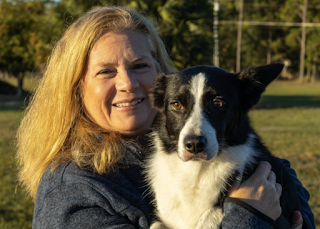
Fit, the 2022 Farm Bureau Farm Dog of the Year,
with her owner Cindy Deak (Farm Bureau photo)
The American Farm Bureau Federation is accepting entries in its annual Farm Dog of the Year contest until July 1. The grand prize winner will get a year's worth of Purina dog food and $5,000, and will be recognized at an award ceremony during AFBF's annual convention in January 2023. Four regional runners-up will each get $1,000. A panel of AFBF judges will pick the winners; desired traits are helpfulness to the farmer and their family, playfulness and obedience. "All entrants retain the title of Very Good Dog," Farm Bureau says.

Entrants can also vie for the coveted People's Choice Pup award, on which the public votes, beginning in October. The winning pooch will get bragging rights and a year's worth of Purina dog food. 

Click here for more information or to enter, along with footage of the current Farm Dog of the Year: a 5-year-old border collie named Fit who helps her owners move sheep on their Florida farm.

Rural seniors least likely to be vaccinated against Covid-19

Respondents polled between January and March 2022; fully vaccinated individuals are those who got either a single Johnson & Johnson shot or the two-shot sequence from Moderna or Pfizer. (Covid States Project chart)

Full vaccination against Covid-19 with a booster shot is one of the surest ways to protect oneself against severe outcomes from the coronavirus, especially among senior citizens, who tend to be more vulnerable to infection. Seniors who are totally unvaccinated and unboosted are disproportionately likely to be less-educated, lower-income, rural, and Republican. So says a new report by the Covid States Project, a consortium of Northeastern University, Harvard University and its medical school, Rutgers University and Northwestern University

Asked why they were unvaccinated, seniors mainly cited worries about side effects and a lack of trust in the process by which the vaccines were developed, researchers found. Many who had been vaccinated but who had not yet gotten a booster indicated they were open to it, but either did not feel it was urgent or cited obstacles such as transportation that kept them from doing so.

The Covid States Project looked into the question of seniors' coronavirus vaccination rates because they say the data from the Centers for Disease Control and Prevention is "significantly flawed" because it relies on poor record-keeping. Read more here.

Wednesday, April 27, 2022

Woes of the pandemic prompt more states to require financial-literacy classes for high-school graduation

"The Covid-19 pandemic, which revealed how many American adults live on the financial edge, has boosted ongoing efforts to make financial literacy lessons a school requirement," Elaine S. Povich reports for Stateline, a news service of the Pew Charitable Trusts.

Seven states require a stand-alone financial-literacy course to graduate from high school, "and five additional states' requirements take effect in the next year or two," Povich reports. "About 25 mandate at least some financial training, sometimes as part of an existing course. This year, another 20 states or so have considered setting or expanding similar rules."

Opponents of such required courses say they are well motivated but "infringe on limited time available for other high school electives and would impose costly teacher training or hiring requirements," Povich reports. Some opponents of mandates say it should be a local decision. However, support for required courses is "remarkably bipartisan," Povich reports, noting bills signed by Republican Gov. Ron DeSantis of Florida and Democratic Gov. Dan McKee of Rhode Island.

"About 16% of 15-year-old U.S. students surveyed in 2018 did not reach the baseline level of financial literacy proficiency, according to the Organization for Economic Cooperation and Development," a multinational agency, Povich reports. 

Rural Texans file federal lawsuit against Hill Country county that banned books and fired a librarian

As The Rural Blog recently shared, a rural Texas county has been in an uproar since last fall, when conservative activists got local leaders to censor library books and fire a librarian who objected to it. What happened next illustrates how similar efforts to ban books could go.

"A citizens group in Llano County, Tex., has filed a lawsuit in federal court alleging that county officials violated their constitutional rights when they unilaterally removed 'award-winning books' from the public libraries 'because they disagree with the ideas within them,'" Annie Gowen reports for The Washington Post. "In the 31-page filing in U.S. District Court for the Western District of Texas in San Antonio, a group of anti-censorship activists say that county officials violated the First Amendment when they removed the books, and that they did so again when they 'permanently terminated access to over 17,000 digital books' they could not censor, affecting the elderly and people with disabilities who find it hard to travel to the physical library. Commissioners also voted to close library board meetings to the public, a move that also denied these citizens equal protection under the law, the suit argues."

Experts say such lawsuits will likely happen in other places that have attempted to ban books on the basis of LGBTQ or racial content. Some rural residents may feel a lawsuit is the only recourse possible when other actions at the local level don't bring change. Leila Green Little, a board member for the Llano library system's fundraising group, told Gowen a lawsuit was necessary "because we had no other remaining avenue to pursue change. We attended meetings, made comments, wrote letters and pleaded with the county to stop the censorship, and they never changed course."

Housing shortage triggers skyrocketing rents, but construction costs slow affordable housing projects

A housing shortage is fueling skyrocketing housing costs in rural areas and elsewhere. But rising construction costs—especially for lumber and petroleum-based products such as asphalt—make it difficult to build more housing and ease the crunch, and federal laws make it hard to apply pandemic aid to the problem, Kristian Hernandez reports for Stateline.

"For developers of market-rate apartments, [cost increases mean] charging higher rents. For those building rent-restricted projects using tax credits or other government aid, the rising costs could quash an entire project. And the construction slowdown is coming at a time when there is a desperate need to increase the nation’s supply of affordable housing," Hernandez reports. "The stock of low-cost rentals has been shrinking for some time: In 2019, there were 3.9 million fewer units renting for less than $600 than there were in 2011, according to the Joint Center for Housing Studies at Harvard University. The overall rental vacancy rate in the fourth quarter of 2021 was just 5.6%—the lowest figure since the mid-1980s—evidence that there is an extremely tight supply."

Average rents have gone up more than 17% in the past year, and tenants' income hasn't kept pace, and neither have government housing programs, Hernandez reports. About half of the nation's renters are paying more than the recommended limit of 30% of their income in rent, but government rental assistance has remained essentially flat for the past 20 years, according to Ingrid Ellen, director of New York University's Furman Center for Real Estate and Urban Policy.

Though the federal government has allotted billions in aid for the pandemic, its rules bar the money from being used for the Low-Income Housing Tax Credit program. LIHTC is the largest source of affordable housing financing, and has an outsized impact in poverty-stricken rural areas. "The problem is that, under the current rules, recovery funds must be spent by the end of 2026. That means the money can’t be used for long-term loans to help finance LIHTC developments," Hernandez reports. "Some state housing agencies have found a way around the restriction by mixing federal coronavirus aid and other funds ... Some agencies have been able to use recovery funds to cover up to 75% of the cost of a loan with these workarounds, but the process is complicated and adds costs to a project." A bipartisan bill would let states loan pandemic aid for LIHTC sites.

Pandemic roundup: Shots could have prevented 234K Covid-19 deaths; decade of public preschool gains erased

Here's a roundup of recent news stories about the pandemic and vaccination efforts:

Before the Omicron surge began in December 2021, about one-third of Americans had been infected with the coronavirus at least once. By the time the Omicron surge had died down, that number had almost doubled, with 58% of Americans in a randomized sample showing antibodies indicating a prior infection, according to a new Centers for Disease Control and Prevention study. Among children ages 11 and under, 75% had infection-related antibodies, up from 44% before the surge. Read more here.

The deaths of about 234,000 American adults since June 2021 could have been prevented by timely vaccination against the coronavirus, according to a new CDC study. Nearly 1 million Americans have died from Covid-19. Read more here.

The pandemic erased a decade of gains in enrollment and state funding of public preschools, according to an annual review from Rutgers University's National Institute for Early Education Research. However, the report found that federal relief money filled the hole left by states' spending cuts during the 2020-2021 school year. Read more here.

For the past two years, Covid-19 has been the leading cause of death for American law enforcement officers. One police sergeant tells a reporter what it was like to spend 49 days in the hospital with Covid-19 and why he didn't get vaccinated. Read more here.

Tuesday, April 26, 2022

Landowners' growing interest in conserving their land ignites debate over property rights of heirs who might want to sell

Conservation land-trust groups across the U.S. have seen a spike in interest from landowners who want to preserve their farms and other lands from development, "but the growing interest in preserving privately held land has sparked a fierce debate between supporters who say such efforts guarantee environmental protections and critics who say they take away individual property rights," Alex Brown reports for Stateline. "A handful of states are considering expanding their conservation easement programs, which offer tax breaks to landowners in exchange for giving up development rights to their farms and natural lands. In many cases, those easements last in perpetuity, offering durable protection even when the property changes ownership."

However, "Lawmakers in several states have pushed to give officials veto power over conservation easements or to require expiration dates for the agreements. They argue that the contracts block future generations from making their own decisions about the land," Brown reports. "Other opponents argue that public money should not be used to fund conservation on private land. They claim that efforts to protect natural spaces will cause housing shortages in fast-growing communities and limit tax revenues for local governments. Both sides see the others’ efforts as something of a land grab. How states respond could determine the fate of tens of millions of acres."

General anti-vaccine sentiment gaining new momentum amid opposition to coronavirus vaccination for children

Opposition to requiring coronavirus vaccines for children has breathed new life into a movement to eliminate all childhood vaccine mandates, or at least limit the application of such requirements.

More than 65 bills to limit or eliminate mandatory childhood vaccinations have been introduced in 25 states this year. "In Missouri, for example, legislators are considering a measure exempting private school students from vaccine requirements. In Louisiana, a bill in the House would prohibit vaccinations on school property and at school-sponsored events," Sandy West reports for Kaiser Health News. "All states require specific childhood vaccinations for illnesses such as polio, measles, and mumps, but exemptions vary. They all allow exemptions for people with medical concerns, 44 states allow religious exemptions, and 15 allow philosophical exemptions, according to 2021 data from the National Conference of State Legislatures."

Anti-vaccine activism isn't new, but public-health experts say the movement has gained ground amid fears surrounding the coronavirus vaccine. Anti-vaccine sentiment once relied on long-debunked theories that vaccines cause autism, but in recent years "the movement began to shift its focus to align more with the populist ideology of 'individual freedoms' put forward by Second Amendment advocates and the tea party," West reports.

That dovetails with a rising tide of conservative activists who have sought to influence policy in libraries, county governments and school boards to statehouses, under the banner of liberty.

However, general anti-vaccine efforts aren't entirely grassroots. The similarity of anti-vaccine bills from state to state "raises red flags to vaccine advocates because it suggests that a coordinated effort to dismantle vaccine requirements and public-health infrastructure is underway," one expert told West.

It's unclear how much traction anti-vaccine-mandate bills will get. Most people support childhood vaccine mandates, but the issue is increasingly getting tangled up in the political minefield surrounding coronavirus vaccinations. Some politicians say they're hoping cooler heads will prevail.

Kansas state Rep. John Eplee, a Republican and family physician, said he voted against a state mask mandate in hope of defusing tensions, but supports childhood vaccination mandates. "While Eplee hopes the 'passions' inflamed by Covid die down with distance from the early days of the pandemic, he’s concerned that voters have forgotten the damage done by vaccine-controllable diseases, making them susceptible to disinformation from determined anti-vaccine activists and the politicians among their ranks," West reports.

"I hate to see human nature play out like that," Eplee told West. "But if people are vocal enough and loud enough, they can swing enough votes to change the world in a not-so-good way for public health and vaccinations."

Registration is open for free virtual conference May 23-24 on rural placemaking, which improves community structure

The Agriculture Department's Rural Development arm and the University of Kentucky's Community and Economic Development Initiative of Kentucky are inviting rural stakeholders all over the nation to Placemaking in Small & Rural Communities, a free virtual conference on May 23-24.

From the website: "Placemaking is a collaborative process among public, private, philanthropic and community partners to strategically improve the social, cultural, and economic structure of a community. The 2022 Rural Placemaking Conference aims to showcase effective placemaking strategies for rural areas, introduce attendees to placemaking resources and tools, and connect them to placemaking experts and potential funders."

The conference will offer online tracks on the following topics:
  • Initiating Place
  • Public Spaces & Gathering Places
  • Community Cultural Planning & Assessments
  • Cross-Sector Engagement
Xochitl Torres Small, USDA undersecretary for Rural Development, will be the keynote speaker. Click here for a complete list of speakers and click here for more information or to register.

Friday webinar will discuss the accuracy of the 2020 census, an issue in many rural areas, and how to best use its data

The National Conference of State Legislatures will host a free webinar at 2 p.m. ET Friday, April 29 to discuss how stakeholders can best use data from the 2020 census and to discuss its accuracy, which has implications for many rural areas.

From the website: "With the 2020 census results out, many are eager to use the data—and to assess its accuracy. The U.S. Census Bureau has begun releasing its own data-quality evaluations, with national results from the 2020 Post-Enumeration Survey and the 2020 Demographic Analysis estimates. Data users outside the bureau are looking at quality, too. In this webinar, we’ll discuss this decade’s census data quality and how it compares with that of previous decades, what additional analyses are coming from inside and outside the bureau, and what questions remain."

Wendy Underhill, NCSL's director of the elections and redistricting program, will moderate a panel of speakers that will include:
  • Tim Kennel, assistant division chief for statistical methods, Census Bureau
  • Teresa Sullivan, chair, National Academies of Sciences, Engineering and Medicine’s Panel to Evaluate the Quality of the 2020 Census
  • Dr. William O'Hare, president, O'Hare Data and Demographic Services LLC
Click here for more information or to register.

Rural Iowa journalist opines that Biden and the Democrats have done much for rural America and should say so

President Biden's name is mud in much of rural America, but he has done more for such places in two years than former President Trump did in four, writes one journalist in rural Iowa. "The rural economy is stronger, wages are higher and infrastructure projects are popping up all over," Iowa radio news director Robert Leonard writes in The New York Times. "Biden and his fellow Democrats are responsible for many of the improvements and for bringing back a sense of stability. For the midterms, they should run on these successes — the American Rescue Plan, the infrastructure bill. And they should run on why they have worked: Democrats should run on Democratic values."

The recent infrastructure bill made a point of directing funding to rural areas, and it's "so obviously beneficial to the communities that even Republicans who voted against it are taking credit," Leonard writes. He lists other things the administration has done (or undone) to help rural areas, such as promoting competition among meatpackers.

But all that seems unlikely to generate enough goodwill to help Democrats this fall. "When it comes to the midterms, the problem is not really about Mr. Biden himself but about long-running trends, and the only way to alter those trends is to change the perception of Democrats on the national level," Leonard writes. "Too often, Democrats leave it to Republicans to set the agenda and frame issues, or blame conservative media."

Instead, he writes, "Democrats should be proud of what the party has been and is — the party of Social Security, Medicare and Obamacare, of greater opportunity for more and more Americans — and what it is and what it stands for, and their values: for smart government being part of the solution, not the problem; for health care as a right, not a privilege; for clean water and air and effective climate solutions; for taxation that doesn’t favor the rich; for equal opportunity for all; for life chances and opportunities that aren’t determined by one’s ZIP code, race, gender, faith, sexual orientation or gender identity. These are Democratic values. They can play everywhere, including in rural America. Run on those."

Leonard is news director of KNIA and KRLS, serving Knoxville, Pella and Indianola, and author of Deep Midwest: Midwestern Explorations.

Monday, April 25, 2022

School probe wins Arkansas weekly Taylor Family Award for Fairness in Journalism from Harvard's Nieman Foundation

Madison County Record photo by Shannon Hahn
The Madison County Record
, a rural Arkansas weekly with a staff of five, beat out The Washington Post and a collaboration of the Miami Herald and ProPublica to win the 2021 Taylor Family Award for Fairness in Journalism from Harvard University's Nieman Foundation.

The Record won for its "unflinching investigation . . . into attempts by the Huntsville, Ark., school board to cover up sexual assault allegations by junior high school basketball players," said the award announcement. The paper, which has a circulation of 4,000, "found that the local school board members sought to conceal not only the assault allegations but also their decision to reduce the recommended punishment for some students and to throw out punishment for others."

The package is called "Title IX," after the federal civil-rights law that prohibits excluding Americans from educational programs on the basis of sex. The Record began its investigation after concerned parents shared Title IX documents with the paper because they worried the district wouldn't be transparent in its review of the assaults. The paper investigated via interviews and records requests, and turned down other papers' offers of partnership in order to protect sources' anonymity.

Huntsville in Madison County
(Wikipedia map)
When the school district tried to get a gag order to prevent sources from speaking to the paper, The Record hired legal counsel and got a favorable ruling. "The reporters persisted in their investigation despite public backlash, a loss of advertising, and letters and social media comments that questioned their integrity and attacked their decision to print the stories," the Nieman Foundation reports. "Due to the attention The Record’s reporting brought to the school board, in February 2022, 19 people filed to run for seven school board seats. In comparison, no one filed during the last school board election. The Huntsville School District also admitted to several FOIA violations and a district judge ordered board members to undergo FOIA training."

One Taylor Award judge, USA Today investigative reporter Pat Beall, praised The Record: "This small paper was punching far, far above its weight class, from its initial decision to publish stories critical of the community’s popular basketball team to its willingness to push back on violations of public-meeting laws. This strong, impactful series cannot be read outside the context of how the fairness and accuracy of these stories, published by a family-owned, third-generation newspaper in a small community where school basketball is king, would have been challenged in ways no national or major regional news organization would have experienced. These stories allowed the voices of young victims to eloquently rebut the adults’ attempts to dismiss the abuse."

Wall Street Journal video explains many reasons why fertilizer prices are so high and might go higher in 2023

The Wall Street Journal has a new video that clearly lays out the reasons for today's record fertilizer prices, how that affects agriculture and food prices worldwide, and why the cost could go higher.

An array of global supply-chain shortages have made it more difficult and expensive to manufacture fertilizer. In 2021, China halted exports of phosphate, a key ingredient. In December, the U.S. and the European Union imposed trade sanctions on Belarus, the world's third-largest potash producer, for alleged human-rights violations. Those and other trade restrictions involving Russia, Turkey, and Egypt slowed global exports. The U.S. imports nearly all of its potash—83% from Canada—but residents near at least one potential mining site in the U.S. have rebuffed the idea, Grist reports.

Recent trade sanctions on Russia have worsened the strain, since Russia is the world's largest fertilizer exporter and one of the top five potash producers. Even countries without sanctions against Russia must pay sky-high prices to insure the vessels carrying potash or fertilizer, since the war makes transportation much riskier. Meanwhile, "Rising natural gas prices have prompted some European factories to scale back fertilizer production," the WSJ reports. "Natural gas is another major Russian export and a key ingredient in making nitrogen-based fertilizer."

That all makes fertilizer nearly three times more expensive for American farmers as it was in early 2021, Joel Brinkmeyer, CEO of the Agribusiness Association of Iowa, told the WSJ. Farmers operate on tight profit margins, and fertilizer is already one of their biggest expenses. Higher costs get passed on to buyers such as grocery chains and animal-feed companies, and meat gets costlier.

Some farmers have delayed planting in hope fertilizer prices will fall, but later harvests could create more supply-chain snags. Some have cut back on fertilizer use; that could lower crop yields. Some are planting crops that need less fertilizer, such as soybeans, not corn. Some are considering alternatives to such as biologicals, natural fertilizers with microorganisms that boost soil fertility, but most aren't willing to alter such a basic production factor without good hope of better results.

The worst-case scenario, Brinkmeyer said, is that the shortage causes widespread shortages of crops and feed: "If we don't produce the crops, we can't probably produce the livestock and the poultry, and we get into actual food challenges in the U.S., and that would be a much, much greater concern than what we have today."

Bitcoin mining booms in some rural areas, thanks to ban on it in China, but locals complain about noise, few jobs

Blockware Mining's cryptocurrency mine at Paducah, Kentucky (Lexington Herald-Leader photo by Ryan C. Hermens)

In the past year or so, "Companies have moved thousands of specialized computers into Kentucky to 'mine' for bitcoin, a cryptocurrency — or virtual currency — sometimes referred to as digital gold. Critics say it’s bad for the environment and produces few jobs," rural Kentucky reporter Bill Estep reports for the Lexington Herald-Leader.

Here is a more in-depth primer about bitcoin mining, but essentially, shoe box-sized computers "earn" bitcoin by being the first to find the correct answer to complex calculations, which are aimed at preventing counterfeiting and stealing. But all that "mining" computation, and the massive fans needed to keep computers from overheating, is noisy and takes a lot of electricity. An official in southeastern Kentucky's Harlan County, for example, told Estep that a local project will use as much power as eight Walmart supercenters.

Cheap electricity in Kentucky, about 10% lower than the national average, has made the state attractive to bitcoin miners. "Kentucky had 18.7 percent of the collective computing power in the U.S devoted to bitcoin mining as of last October, according to Foundry, a company that operates a large bitcoin mining pool, CNBC said in a story. That was second only to New York, with 19.9 percent of the computing power. Georgia was next at 17.3 percent and Texas was home to 14 percent of the computing power, called hashrate," Estep reports. "Companies have set up racks of mining rigs on shelves in industrial buildings in the western end of the state, at sites left empty when coal mines shut down in Eastern Kentucky, even in shipping containers to get up and running as quickly as possible." 

Kentucky legislators passed two tax breaks in 2021 meant to attract bitcoin miners, but the industry is controversial: "Some people don’t like the idea of forgoing tax revenue from cryptocurrency miners — or other companies, for that matter — while other needs in Kentucky aren’t well-funded; others see echoes of coal mining in cryptocurrency mining, with the profits going to out-of-state corporations," Estep reports. Also, though bitcoin mining creates construction and set-up jobs, the operations only provide a handful of permanent jobs after the mine is up and running.

One example in East Tennessee shows what happens when the noise of bitcoin mining inspires buyer's remorse, Kevin Williams reports for The Washington Post. In the rural community of Limestone, a bitcoin mining plant opened up last April. The town initially welcomed the plant and hoped for more jobs and an economic boost. Now residents and local officials say the mine is sometimes as loud as a jet engine. The county has filed suit against the company and the local electricity provider that owns the land the mine sits on, and county commissioners have blocked attempts to open a second mine.

"Objections from local residents have complicated prospects for cryptocurrency mining in Appalachia — despite cheap land, plentiful power and utility companies hungry for additional revenue streams to replace the manufacturing customers that have been leaving for decades," Williams reports.

About two-thirds of the world's bitcoin mines were in China until its government banned it last year, citing bitcoin's price volatility as a threat to citizens' assets and the nation's overall financial stability, Estep reports. Similar concerns prompted President Biden to order a review of the cryptocurrency industry, but in the meantime bitcoin mining operations have been increasingly popular in the U.S.

Rural Midwestern bankers say local economies thrive, but predict economic downturn with little impact from E15 sales

Creighton University chart compares current month to last month and year ago; click here to download it and chart below.

An April survey of rural bankers in 10 Midwestern states that rely on agriculture and energy showed still-growing local economies amid deepening concerns about the near future. The index surveys bankers in about 200 rural communities with an average population of 1,300 in Colorado, Illinois, Iowa, Kansas, Minnesota, Missouri, Nebraska, North Dakota, South Dakota and Wyoming.

The overall area economic index fell to a still-positive 62.0 from 65.4 in March; above 50 is growth-positive. Farmland prices are still soaring, home sales are up, retail sales are growing and hiring is up, bankers said.

"The region recorded a 34% gain in farm commodity prices over the past 12 months, but low short-term interest rates and healthy farm income have underpinned the Rural Mainstreet Economy," writes Creighton University economist Ernie Goss, who compiles the index.

However, the loan-volume index fell from 61.9 in March to 51.9 in April, and the confidence index, which predicts the area economy six months from now, dropped from 54 in March to 39.1. Most bankers surveyed (56.5%) believed President Biden's decision to allow the sale of E15 fuel (which has more ethanol) this summer would have little or no impact on their economies, while 39.1% believed it would have a positive effect and 4.4% believed it would have a negative effect.

The vast majority of bankers (91.7%) predicted that the Federal Reserve's Open Market Committee will raise the interest rate by 0.5 percentage points at its next meeting, and 8.3% said the committee will raise the rate by 0.25 points. None predicted the rate would remain unchanged.

Thursday, April 28 webinar will show how to read USDA's baseline agricultural projections for the next decade

The Agriculture Department's Economic Research Service provides critical data products, from the Farm Income Forecast to international crop trade trends, to poverty and hunger data. A new series of training webinars will teach you how to find them, their significance, and how to use them. The next one, at 1 p.m. ET Thursday, April 28, covers how to interpret baseline agricultural projections. From its page:

"The USDA Interagency Agricultural Projections Committee develops long-term agricultural projections, also referred to as 'baseline' projections, that provide a scenario for the U.S. farm sector and global trade for the next 10 years. Projections cover agricultural commodities, agricultural trade, and aggregate indicators of each sector (such as farm income). The projections identify major forces and uncertainties affecting future agricultural markets; prospects for global long-term economic growth, consumption, and trade; and future price trends and trade flows of major farm commodities. In this webinar, ERS agricultural economist Matthew Miller will discuss how the projections are made and used, provide highlights from the recent projections, and demonstrate how to find the data on the ERS website.

Click here for more information or to register for the April 28 webinar; click here to learn more about future webinars in the series.