|
| New York Times maps, source credit adapted by The Rural Blog |
Because of its highly controversial nature, abortion isn't well-covered by many local news media, but now it has once again become central to our nation's political discourse, and people everywhere—including in rural America—have thoughts and feelings about it. And for some, the draft opinion of the U.S. Supreme Court has real-life impacts.
"Trigger laws" that would make abortion in 13 states illegal if Roe v. Wade is overturned would disproportionately affect rural women, who are more likely than their urban peers to be impoverished, less likely to have the time or money to drive long distances across state lines to obtain an abortion, and more likely to face stigma over the decision to end a pregnancy.
“As a former social worker, social work supervisor, college professor, and health department director, I feel very distraught. Old white Republican men telling all females of childbearing age that they better not have sex unless they can see themselves nine months away successfully having and supporting a family of at least two. Punish the woman, don’t allow her to have sex education in school, don’t give her birth control, don’t give her health care, don’t give her support or any services while pregnant and after birth; just tell her to only have sex for procreation because SHE alone is responsible. Her body must bear the consequences, the lifetime consequences of that weak moment, that rape, that incestuous attack, that failure to think ahead in what could have been a moment of passion. She suffers the societal impact, the disruption of her life through what could have been a lapse in judgement, a mistake, crime victimization. HE can sexually enjoy the moment and move on without a thought. What is fair, equal, and just about that? And don’t allow me the space to discuss the possible outcomes for the child, and the additional social problems for our society.”
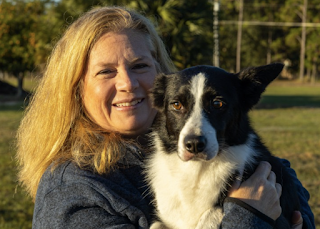
Abortion isn't often publicly discussed in rural areas, but it is widely felt, as indicated by a recent note to Al Cross, director of the Institute for Rural Journalism and Community Issues and publisher of The Rural Blog, by Bertie Salyer, retired health director in Magoffin County, in Appalachian Kentucky:
 |
| Bertie Salyer |
Many who oppose abortion rights are just as passionate, saying that all life is sacred and that it begins at conception. Though the topic has been a political football for decades, public sentiment hasn't changed much in the nearly 50 years since the Roe v. Wade ruling. "According to Gallup, 21 percent of Americans thought abortion should be illegal in all circumstances in 1975, compared with 19 percent in 2021," Michael Scherer reports for The Washington Post. "Twenty-two percent thought abortion should be legal under any circumstance in 1975, compared with 32 percent in 2021. Fifty-four percent in 1975 and 48 percent in 2021 said abortion should be legal under certain circumstances."
But in the 13 states with trigger laws, sentiment is decidedly different: "43 percent of adults on average say abortion should be legal in most or all cases, while 52 percent say it should be illegal in most or all cases," Nate Cohn reports for The New York Times.
For those covering abortion, The Associated Press has recently updated its Stylebook:
pregnant people
Phrasing like "pregnant people" or "people who seek an abortion" seeks to include people who have those experiences but do not identify as women, such as some transgender men and some nonbinary people. Such phrasing should be confined to stories that specifically address the experiences of people who do not identify as women. See gender, sex and sexual orientation.
abortion
Use the modifiers anti-abortion or abortion-rights; don't use pro-life, pro-choice or pro-abortion unless they are in quotes or proper names. Avoid abortionist, which connotes a person who performs clandestine abortions. Instead of pregnant women, use "pregnant people" or "people who seek an abortion" in stories that specifically address the experiences of people who can get pregnant but are not women. Such phrasing seeks to include people who have those experiences but do not identify as women, such as some transgender men and some nonbinary people.