Thursday, December 15, 2022

With luck and help, this Appalachian finished college and is moving up; he outlines ways others could be helped

OPINION By David L. Adams

Growing up, I often heard from my parents that I needed to “get out of here.” And I did get out, from Ohio’s Appalachian foothills to a university near Cincinnati. Not far in terms of miles, but light-years in lifestyle. My trajectory from a trailer park in a small town to a two-story house in a subdivision was tenuous, but ultimately successful. For many students in Appalachia, though, college is an impossible dream.

The rate of bachelor’s degree attainment or higher in rural, Appalachian Ohio is 18.6 percent, compared to 31 percent for non-Appalachian Ohio. This trend reflects the national dynamic between rural students and college-going.

Yet this is in an era when demand for college graduates is soaring. While many factors play into this relative lack of rural postsecondary education, there are concrete, common-sense policies that school districts can put in place to change it, including increasing high school rigor and providing more Advance Placement and dual-enrollment courses.

My own journey was difficult. I wasn’t prepared. Even though I scored well on the ACT exam and took the most advanced courses my high school offered, in my first semester of college I was placed on academic probation. In addition to the academic challenges, managing the financial burdens of living independently left me with limited time to catch up.

I did make it through to graduation, though, and went on to graduate school. The reason? Luck. I got a union job that offered consistent hours and benefits. I found a landlord who gave me a discount on rent and had a family member near the college that supported me financially and emotionally. Remove any one of those girders and I would have ended up in a much different place.
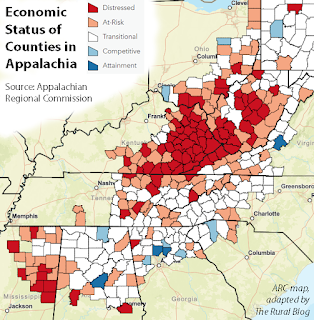
In other areas of Ohio, having the academic readiness and supports to persist in college is not based on luck. It’s systemic. My home county is one of five in Appalachian Ohio designated as “economically distressed,” meaning that we have significantly higher rates of poverty and unemployment and a lower median family income relative to U.S. averages.

Among the 22 school districts within these five counties, less than half had any level of student participation in AP courses. Of those, most had AP participation rates near or below 10 percent of the student body. This matters because AP course participation and completion with a score of 3 or higher on an AP exam is positively correlated with college persistence. Similarly, many of these districts also have a low percentage of the student body that is ready for college as measured by the ACT’s “remediation free” cut score.

These facts mean that college readiness remains an enormous challenge for Appalachian Ohio, an observation supported by research. In my own experience, also echoed by research, completion of college is associated with many social and economic benefits. Moreover, there are immediate societal impacts.

Opportunity Nation, a campaign by Child Trends and the Forum for Youth Investment, created the Opportunity Index, a measure of economic and educational opportunities for communities across America. A key metric in the index is the percentage of disconnected youth — neither working nor enrolled in school or college — between the ages of 16 and 24.

Let’s be clear, not everyone needs to go to college. But we must not kid ourselves that “pathways” policies are somehow offering “choice” or “flexibility.” They are reducing many students’ choices by ensuring that they are not prepared to succeed in college should they later choose to attend.

School districts can take steps to improve college readiness, such as providing a more rigorous high school curriculum that emphasizes AP courses. It’s not a cure-all, but other Appalachian areas have shown positive results with such policies — especially when paired with professional development for teachers that helps them add that academic rigor and trains them to teach AP courses. Fortunately, such professional development courses already exist and need not be created from scratch. What is needed is a district-level emphasis to make such training and courses a priority. And the funding is there: Appalachian Ohio has access to grants through the Appalachian Regional Commission as part of the workforce ecosystems investment priority.

Some people assume that the reason for lower college education rates in Appalachian Ohio is simply that there is less need for a college degree there. Mining and farming are the most common industries associated with the area. But while these industries are more prevalent in Appalachia than in the rest of the U.S., they make up a small fraction of the region’s total industry. Further, the proportion of service industry jobs in Appalachia, including professional and technical services, is nearly equal to that in the rest of the U.S. — just over one third of all jobs.

This is not a problem of economics; it’s a problem of expectations.

My college education was a ticket out of poverty, one that too many students in Appalachian Ohio find impossible to obtain. I often wonder where I would have ended up without it. Among the 20 percent not working and not in college? Or among the hundreds who’ve died of overdoses in the region?

I can put names to those statistics. I’ve seen the consequences of a lack of opportunity. We must do better.

David L. Adams is a school psychologist and Ph.D. student at the University of Cincinnati, where he researches impacts of education policy on Appalachia. This was published by The Hechinger Report, a nonprofit, independent newsroom focused on inequality and innovation in education.

To thwart overuse of animal antibiotics, farmers will need prescriptions or a legal relationship with a veterinarian

Livestock producers who need to use antimicrobals, a variety of antibiotics important to their industry, will be divided into "the haves and the have nots" by a Food and Drug Administration rule that takes effect June 12, 2023, Rhonda Brooks writes for Farm Journal's AgWeb.

"If you have a valid veterinary-client-patient relationship, you will be able to get a prescription from your veterinarian to purchase antimicrobials from them or a distributor and use them," Brooks reports. "If you don’t have a relationship with a licensed veterinarian, you won’t be able to purchase such products, many of which have long been available over the counter."

The rule applies to "injectables such as penicillin, sulfa-based drugs, boluses, intramammary mastitis tubes and some topical products," Brooks reports. Many other drugs were covered by a similar rule in 2017.

The rules are aimed to prevent overuse of the drugs, which can lead to resistance to them, said Sandra Stuttgen, a veterinarian and associate extension professor at the University of Wisconsin.

“Our survival rates on cancer and (other diseases) are great until a patient gets a secondary bacterial infection and there is not a drug to treat it,” Stuttgen said. “People die or have to have extended hospital stays then, and it becomes very expensive and very emotional. It's a huge social impact.”

Wednesday, December 14, 2022

Organized and influential, promoters and organizers of recent book bans seek influence over a lot more than books

Florida Freedom to Read Project members. The project opposes
restrictions on reading. (Photo by Todd Anderson, New York Times)
Rancorous conflicts over attempts to ban books in libraries are about a lot more than books, report Elizabeth A. Harris and Alexandra Alter of The New York Times. 

"Traditionally, debates over what books are appropriate for school libraries have taken place between a concerned parent and a librarian or administrator," they write. "But recently, the issue has been supercharged by a rapidly growing and increasingly influential constellation of conservative groups" that have "pursued their goals by becoming heavily involved in local and state politics. . . . They have created political action committees, funded campaigns, endorsed candidates and packed school boards, helping to fuel a surge in challenges to individual books and to drive changes in the rules governing what books are available to children."

The efforts seem to have have a social agenda. "The materials the groups object to are often described in policies and legislation as sensitive, inappropriate or pornographic," the Times reports. "In practice, the books most frequently targeted for removal have been by or about Black or LGBTQ people, according to the American Library Association."

The battle is limiting how librarians do their jobs. Florida has a list of "challenged books," which it distributes to school districts. Michelle Jarrett, the library media supervisor for the School District of Osceola County, told The Times, “This list could be seen as a warning, like ‘Don’t even bother with these books.' Librarians across the state are already self-censoring for fear of retribution, and asking themselves, ‘Am I ready to defend this book, is this worth the fight?’”

The Keller Independent School District in Dallas "banned books from its libraries that include the concept of gender fluidity. The change was pushed by three new school board members, elected in May with support from Patriot Mobile, a self-described Christian cellphone carrier. Through its political action committee, Patriot Mobile poured hundreds of thousands of dollars into Texas school board races to promote candidates with conservative views on race, gender and sexuality — including on which books children can access at school," the Times reports.

Keller parents who did not support the bans found themselves "outflanked by deep-pocketed organizations whose actions can change longstanding policies in a matter of months." Laney Hawes, who has four children in Keller schools, told the Times, “They ran on the campaign of, ‘We’re going to get pornography and sexually explicit books out of our school libraries.' The parents didn’t have a PAC. We couldn’t compete with these people.”

Organizing a national resistance to book bans is challenging, but pushback is happening. Emerson Sykes, a First Amendment litigator for the American Civil Liberties Union, told The Times, "The restrictions infringe on students’ right to access a broad range of material without political censorship.” Librarian groups have also been organizing resistance. The Times reports: "Librarians in Texas formed FReadom Fighters, an organization that offers guidance to librarians on handling book challenges. In Florida, parents who oppose book banning formed the Freedom to Read Project, which urges its members to attend board meetings and tracks the work of groups like Florida Citizens Alliance."

Kansas chief justice creates initiative to address the need for more rural lawyers, as other Plains states have done

Chief Justice Marla Luckert said the lack of attorneys in rural Kansas
areas was at a crisis point. (Photo by Rachel Mipro, Kansas Reflector)

Kansas needs more lawyers. Not just any kind of lawyers; rural lawyers. It's a problem that other Great Plains states have tried to address, and now Kansas Chief Justice Marla Luckert has tackled it, reports Rachel Mipro of Kansas Reflector. "Eighty percent of all active Kansas attorneys live in six urban counties, leaving Kansas rural communities struggling to find legal help." The coal of the Rural Justice Initiative Committee is "attracting attorneys to practices in rural areas."

“We have to recognize that there is not access to justice, and the system of seeking redress for those grievances is unbalanced because it’s financially inaccessible," Luckert told Mipro. "The lack of attorneys constitutes a crisis, damaging the lives of rural residents."

To attract younger attorneys to rural areas, committee members told Mipro, "they would have to address social factors that prevent young attorneys from moving to rural areas, such as the lack of shopping centers, activities and fewer romantic prospects."

"The 35-member committee will collect data on the legal needs of rural populations, make recommendations about existing Kansas rural attorney recruitment projects and study demographic trends," Mipro. reports "At the end of 18 months, the committee will report back to the Supreme Court with its initial recommendations." Luckert told the new committee: "Good luck. It's a big task."

No. 3 GOP House member assails proposed limit on milk for WIC families; her facts were right; her prediction may not be

Jersey cows in Schodack Landing, N.Y. (Photo by AP)
When the Biden administration released its proposed changes for the Special Supplemental Nutrition Program for Women, Infants, and Children, or WIC, U.S. Rep. Elise Stefanik (R-N.Y.) called the plan "deeply flawed" and accused it of "further restricting milk choice for families and keeping the door open for more forced vegan juice consumption," reports Jill Terreri Ramos of Politifact.  

Stefanik, the third-ranking House Republican, often criticizes the administration and "represents a geographically large district in New York’s North Country, and many of the state’s nearly 3,600 dairy farms are in her district," Ramos notes.

Ramos found that the WIC plan "calls for reducing the amount of milk provided in all child, pregnant and breastfeeding participant food packages." Department of Agriculture Press Secretary Marissa Perry told her, "The change is 'modest,' and represents just a 3% reduction in WIC spending on milk and milk alternative." In 2020, the program served about 7 million people.

A WIC researcher at the Johns Hopkins Bloomberg School of Public Health, Susan Gross, told Ramos: "Program participants have diverse needs, such as food allergies or being vegan, and they do not drink milk from cows. Program administrators want to explore whether other alternatives can be offered."

As for Stefanik's prediction that the proposed rule would lead to more "forced vegan juice consumption," Ramos writes, "We don’t fact-check predictions and that statement is outside the scope of this ruling. It should be noted, however, that based on the available evidence, WIC has not and will not force milk alternatives on anyone."

Noon ET Thursday: Free online session on how to use academic research as an investigative reporting tool

Neil Bedi, Rachel Lovell and Denise-Marie Ordway
Academic research can be a crucial tool for reporters to investigate problems and hold the powerful accountable. The Journalist's Resource at Harvard University is holding a one-hour webinar at noon ET Thursday to learn how scholarly studies and collaborating with researchers can strengthen news coverage — and help journalists at each stage of the investigative reporting process.

The presenters will be:
  • Neil Bedi, a ProPublica reporter. He won the 2021 Pulitzer Prize for Local Reporting for a Tampa Bay Times investigation focusing on predictive policing. He was a finalist for the 2019 Pulitzer Prize for Investigative Reporting for a series investigating high death rates at a Florida children’s hospital’s cardiac surgery unit.
  • Rachel Lovell, an assistant professor of criminology and director of the Criminology Research Center at Cleveland State University. She's also an advocate for reporter-researcher collaborations and has helped journalists investigate issues such as sexual violence and human trafficking.
  • Denise-Marie Ordway, who trains journalists in research methods as part of her role as managing editor of The Journalist’s Resource. She was a finalist for the 2013 Pulitzer Prize in Local Reporting for an investigation into hazing at Florida A&M University that she led while at the Orlando Sentinel.
This event is free, but registration is required. Registrants will get details on how to join the session.

3 Charleston Gazette-Mail reporters say paper fired them for criticizing publisher's fawning interview with ex-coal baron

Three reporters from West Virginia's Charleston Gazette-Mail say the newspaper fired them after publicly criticized their company president's video interview with former coal baron Don Blankenship, "who was convicted of a safety violation in connection with the worst U.S. mine disaster in decades," reports John Raby of The Associated Press.

Doug Skaff
Caity Coyne, Lacie Pierson and Ryan Quinn said they were fired because of comments on Twitter about the interview by HD Media President Doug Skaff of Huntington, who is leader of the Democratic minority in the state House of Delegates. He didn't reply to messages seeking comment.

The interview, part of the “Outside The Echo Chamber” feature on the paper's website, was posted last week but is no longer there. "In response to a question about the dwindling coal industry, Blankenship calls climate change 'an absolute hoax.' The comment goes unrebutted," Raby reports. "Blankenship also is asked to promote his 2020 book about the mine disaster, in which he repeats his claims of innocence and blames the administration of then-President Barack Obama."

Don Blankenship
Blankenship once ran now-defunct Massey Energy, which owned the Upper Big Branch mine where a 2010 explosion killed 29 miners. He was convicted in 2015 of a misdemeanor for conspiring to violate mine safety laws and was sentenced to one year in federal prison.

Skaff told Blankenship at the end of the interview, “Thanks for what you did for the community down there. I know your heart’s in the right place. And you want to see southern West Virginia built back to the best that they can.”

Quinn said in a series of tweets, backed by Pierson and Coyne, that Skaff shouldn't have given Blankenship a platform without giving journalists the opportunity to ask follow-up questions.

“I don’t have the words for how screwed up this is,” Coyne, who had previously announced she was leaving the paper, told AP. “I’ve met families whose loved ones died in UBB. I’ve watched them cry as they remember their relatives and their fight for answers after the disaster. Who cares where Blankenship’s heart lies? What a slap in the face to them.”

On his WestVirginiaVille newsletter on Substack, former Gazette journalist Douglas John Imbrogno recalls the newpsaper's storied history and laments this episode.

Imbrogno's post includes a screenshot from an old "Meet the Press" on NBC-TV, right, in which one of the questioners was then-Publisher Ned Chilton, whose main marching order to the Gazette staff was "sustained outrage." Imbrogno says this meant "to stick like a bloodhound to a story of misuse of power, corruption, and naked self-interest."

Tuesday, December 13, 2022

Feds offer rural hospitals 'excruciating choice' of a lot more money in exchange for becoming a glorified first-aid station

Rural hospitals are a lifeline for 46 million Americans, yet an increasing number of them are closing, a situation that has prompted the federal government to initiate a new program that will offer a huge infusion of cash to more than 1,700 of them, but comes with the condition that they must end all inpatient care, "an excruciating choice," Emily Baumgaertner reports for The New York Times.

Any hospital that accepts this deal would become a "rural emergency hospital," allowing it to get monthly payments totaling more than $3 million a year and get higher Medicare reimbursements.  For many, that would be a game-changer "that would not only keep them open but allow them to expand services and staff," Baumgaertner writes, but "In return, they must commit to discharging or transferring their patients to bigger hospitals within 24 hours." 

The rationale: "Many rural hospitals can no longer afford to offer inpatient care," she writes. "A rural closure is often preceded by a decline in volume, according to a congressional report, and empty beds can drain the hospital’s ability to provide outpatient services that the community needs."

Harold Miller, president of the nonprofit Center for Healthcare Quality and Payment Reform, told the Times: “On one hand, you have a massive incentive, a ‘Wow!’ kind of deal that feels impossible to turn down. But it’s based on this longstanding myth that they’ve been forced to deliver inpatient services — not that their communities need those services to survive.”

Critics of the plan told the Times that officials behind the new program are out of touch with the difficulties of transferring patients, noting that bigger hospitals are increasingly unwilling to accept transferred patients, particularly from small field hospitals that are unaffiliated with their own systems. Add to that, they pointed to other challenges, including blizzards, downed cattle fences and mountain pass roads that are closed for months at a time. 

She also tells stories of how rural hospitals have saved patients when the hospital couldn't find another one to take the transfer and how rural hospitals routinely care for patients with chronic conditions like congestive heart failure or when they need rehabilitations. In essence, keeping these patients closer to home for their extended care. 

“I really want to give this policy a chance to work well,” Katy Kozhimannil, director of the University of Minnesota Rural Health Research Center, told the Times. But gambling with transfers could mean that “some of the most extremely remote and marginalized communities could end up with no care at all — and that’s what we were trying to avoid in the first place.”

More than 180 rural hospitals have closed in the United States since 2005, according to a recent analysis, with a record 19 closings in 2020 alone. In 2021, the number plummeted to just two, but the more than $15 billion in pandemic-era federal aid was injected into rural hospitals to keep them open will mostly expire Dec. 31.

"Over 600 rural hospitals — 30 percent of the total — are at risk of shuttering," Baumgaertner writes. "More than 200 could close within three years, according to a study by the Center for Healthcare Quality and Payment Reform. In 10 states, at least 40 percent of rural hospitals are in danger: In Kansas, 16 could close within three years; in Mississippi, 24."

The office of Senator Charles E. Grassley, Republican of Iowa, who is one of the lawmakers behind the program, said in a November statement, “The goal is to preserve patient access to emergency medical care in rural areas that can no longer support a fully operational inpatient hospital.” There are no exceptions for maternity hospitals. The new option becomes available Jan. 1.

In many states, opioid settlement funds going to local governments do not reflect communities' extreme losses

Rural America was the first to herald the incoming opioid crisis: "In the 1990s, misleading marketing by opioid companies helped drive up prescription rates, particularly in coal, lumber, and manufacturing towns across Appalachia and Maine," report Aneri Pattani and Rae Ellen Bichell of Kaiser Health News. "As painkillers flooded communities, some residents became addicted. Over time, they started using heroin and fentanyl, and the deadly epidemic spilled into suburbs and cities across the nation."

Now that settlements of lawsuits over the epidemic are being paid out, the award calculations in many states seem skewed against rural areas gaining a share that reflects their losses. Pamlico County, North Carolina, pop. 12,000, is an example Pattani and Bichell cite: "Over the past decade, it’s had the highest rate of opioid overdose deaths in North Carolina. . . . Now, the county is receiving money from national settlements with opioid manufacturers and distributors to address the crisis. But by the time those billions of dollars are divided among states and localities, using formulas partially based on population, what trickles down to hard-hit places like Pamlico County can be a trifling sum."

The disparities are born out in the numbers. They report, "Out of one multibillion-dollar national settlement, Pamlico County is set to receive about $773,000 over nearly two decades. By contrast, Wake County, home to the capital city of Raleigh, is set to receive $36 million during the same period, even though its opioid overdose death rate for the past decade ranked 87th in the state."

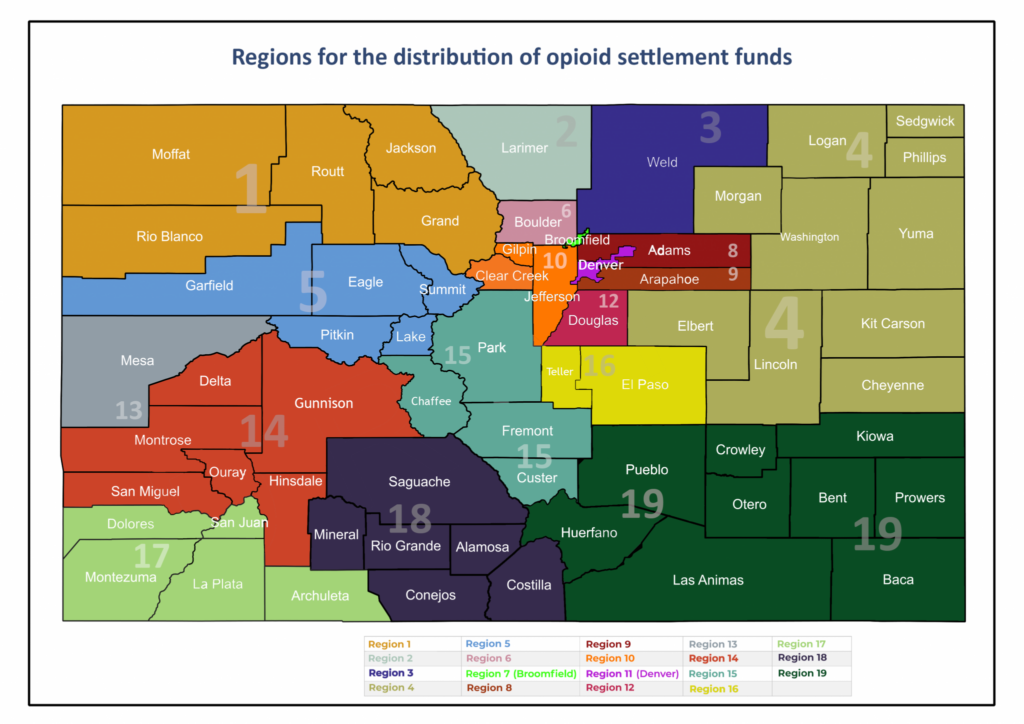
Some states do it differently. Pennsylvania considers "opioid-related hospitalizations and first responders’ administration of naloxone, an overdose reversal medication," Kaiser reports. "When that formula left 11 rural counties without 'enough money to make an impact,' the state decided each county would receive a minimum of $1 million over the 18-year settlement period, said Glenn Sterner, an assistant professor at Penn State who helped develop the state formula and co-authored a paper on it. In Colorado, pooling funds is built into the state’s model for managing opioid settlement money. The lion’s share of funds is going to 19 newly formed regions, about half of which comprise multiple counties."

Many rural communities are grateful for any financial assistance and are working creatively to make the most of what they do receive, Pattani and Bichell write. "But others worry such an approach misses an opportunity to use that money to make a difference in rural communities that have been disproportionately affected for decades."

Drought stifles barges, and railroads can't meet demand

A towboat in Vicksburg, Mississippi, in 2022. Low water levels have caused some barges to
get stuck in the muddy river bottom. (Photo by Rogelio V. Solis, The Associated Press)

Beginning in the 1930s, the Mississippi River has been the main shipping method for U.S. commodities. "From the Waterhead in Minnesota down to the port in New Orleans, barges deliver over 60 percent of corn and soybean exports and around $100 billion worth of cargo every year," writes Luke Goldstein of The American Prospect. Now facing extreme drought, the river's transport power has been bottlenecked, "leaving farmers and other shippers searching for alternative options to get their goods to port before winter."

With the Mississippi congested, shippers pivoted to move goods by rail; however, Goldstein writes: "The railroads don’t have adequate capacity to serve these shippers, in large part because of recent downsizing measures, including worker layoffs. . . . Consolidation in rail has provided windfalls for financiers at the expense of nationwide rail service. Under relentless pressure from Wall Street to maximize short-term profits, the railroads have turned to the management regime known by the perversely Orwellian term 'precision scheduled railroading.' PSR entails cutting operating budgets and reducing service lines to charge monopoly prices on shippers."

For shippers, time is running out. Illinois farmer Ken Hartman, former chairman of the National Corn Growers Association, told Goldstein, “Many of our farmers are between a rock and a hard place, either faced with taking losses or paying storage at elevators until the water rises back up."

"The Mississippi River drought is yet another example of the need for rebuilding rail capacity in preparing for the climate crisis," Goldstein reports. "Transportation flexibility can certainly help mitigate the economic havoc of droughts, floods or other extreme weather conditions. Fortifying our national rail system would also help curb the overreliance on trucking, a major greenhouse gas emitter."

Using a calculation from the Millennium Institute, a nonprofit focused on energy and climate modeling, Goldstein writes, "A fairly modest investment in electrifying freight railroads could reduce carbon emissions by 39 percent."

USDA funds 71 climate-related projects at less than $5 million, many of them to 'figure out what works,' Vilsack says

The Department of Agriculture has funded 71 more five-year "projects to develop climate-smart commodities and a money-making market for them," reports Chuck Abbott of Successful Farming. The $325 million is the second round of funding in its Partnerships for Climate-Smart Commodities program, which now totals 141 projects and $3.1 billion, a USDA press release said.

The latest round of grants were for less than $5 million each, to focus on "small and under-served producers and work by minority-serving institutions to measure, monitor, report, and verify the results of climate-smart practices," Abbott reports. Agriculture Secretary Tom Vilsack said, "We believe that this program will allow us to figure out what works and, frankly, what doesn't work. . . . There are some amazing projects here." For a list of the first- and second-round projects, click here.

"Republicans in Congress say the White House exceeded its authority in creating such a large program on its own, and some critics in the scientific community say more detail is needed to judge the value of the projects," Abbott notes. Republicans don't like that the money comes from "a $30 billion reserve at USDA that also pays for crop subsidies," the Commodity Credit Corp. "Vilsack tripled the size of the program in September after USDA was deluged with proposals, all of which promised private-sector funding."

The 71 projects include agroforestry in New York, hemp in Tennessee, organic eggs in Ohio and Kentucky, specialty crops in California, cattle in Virginia and West Virginia, removing nuisance seaweed from Puget Sound for use as fertilizer, and cover crops for orchards in and near food deserts. There is also "a test of buffalo to mitigate global warming and to market buffalo meat as a climate-smart food," involving 79 tribes and 20,000 head of bison, Abbott reports. "They are the original climate regulator," said Troy Heinert of the InterTribal Buffalo Council. The grant's "funding ceiling," USDA says, is $4,950,000.

Vilsack announced the grants at Tuskegee Institute in Alabama, which will get a grant with a funding ceiling of $4,999,999 "to support small-scale and other under-served producers . . . transform their traditional production into a multi-pronged agroforestry-based climate-smart, sustainable production system," USDA says. Identical amounts were allocated to the University of Illinois, which will work with Tuskegee and other partners "to scale up robotic cover crop planting and verification of soil carbon" in Alabama, Illinois, Indiana, Missouri and Iowa; University of Maryland Eastern Shore to "promote climate-smart cover crops as a feedstock" for anaerobic digesters that process chicken litter; Foodshed Inc. and other partners for "incentives to small and socially disadvantaged specialty crop farmers in San Diego County" in California; the University of Guam "to market climate-smart commodities and achieve greenhouse gas emission reductions in Pacific Island agriculture and forestry systems while improving affordable food and nutrition security of disadvantaged, at-risk, island communities;" and Whitaker Grain "to provide a market platform for rice growers producing premium rice that is certified sustainably grown" in Arkansas.

Getting an allocation of $2 less than those, The Nature Conservancy is in line for $4,999,997 to "grow a set of climate-adapted tree species resilient to the projected climate futures of Minnesota’s Midwest Broadleaf Forest." Other grants near the limit: $4,999,900 to the Coalition for Food Security "to implement climate-smart practices related to indoor hydroponic vertical farming;" the same amount to Regeneration International; the Regenerative Agriculture Alliance to support poultry producers who follow diversified regenerative climate-smart grain production methods" in the Midwest; the same to Working Landscapes and other North Carolina partners to promote climate-smart practices "among small and underserved producers, including tribal producers, principally by equipping food hubs to finance and advise on-farm climate-smart practice implementation and marketing to wholesale and direct-to-consumer channels;" $4,999,800 to Chico State University to launch a "food hub for climate-smart agriculture" in the northern Sacramento River valley; and the same to Western Landowners Alliance "to empower New Mexico Latino and under-served beef and pork producers and their trusted partners to collectively develop, implement, monitor, quantify and broker climate-smart livestock projects."

Electric cars threaten future of AM radio and maybe local radio news, but overcoming interference is possible

Rush hour in Chicago. Many AM radio listeners tune in during
commutes. (Photo by Alyssa Schukar, The New York Times)

Amplitude modulation transmissions, or AM radio, may be on its way out, which is bad news for local news in places that still have local radio news. "An increasing number of electric models have dropped AM radio in what broadcasters call a worrisome shift that could spell trouble for the stations and deprive drivers of a crucial source of news in emergencies," reports Michael Levenson of The New York Times.

"Carmakers say that electric vehicles generate more electromagnetic interference than gas-powered cars, which can disrupt the reception of AM signals and cause static, noise and a high-frequency hum," Levenson writes. AM and electricity are similar forms of electromagnetism. "Tesla, Audi, Porsche and Volvo have also removed AM radio from their electric vehicles, as has Volkswagen from its electric S.U.V., ID.4, according to the carmakers and the National Association of Broadcasters."

It is possible to overcome the interference issues, Levenson reports: "Such changes require money and effort, and it’s not clear whether carmakers are willing to spend more in the service of AM radio fans. . . . If more electric vehicles drop AM radio, some broadcasters say they could lose a connection to their core listeners."

AM stations have a healthy percentage of the U.S. radio market. "About 47 million Americans listen to AM radio, representing about 20 percent of the radio-listening public, according to the Nielsen Co., the media tracking firm," Levenson reports.

"Brian Winnekins, the owner of WRDN in Durand, Wis., which has seven hours of farm-related programming every weekday on AM and FM, told Levenson he has been urging listeners to tell carmakers not to drop AM, noting that it can reach farmers in remote areas. “If you can make a vehicle drive by itself,” Mr. Winnekins said to Levenson, referring to the driver-assistance systems in Teslas and other vehicles, “you can make a decent radio receiver."

Monday, December 12, 2022

Substation attacks focus attention on grid's vulnerabilities

A string of attacks with at least two involving gunfire occurred at substations and other power
facilities since mid-October in the U.S. South and Pacific. (Photo by Claudine Hellmuth, E&E News)
Last week's disruptive shooting attacks on two substations in North Carolina, have focused attention on the vulnerabilities of the electric grid. "The incidents in the Carolinas followed attacks at six substations in Oregon and Washington in October and November," reports Miranda Willson of Energy Wire. "Grid security experts said it’s too early to tell whether the incidents were related or unusual in number, but said they showcase a need for the energy industry to be vigilant and prepared."

“It remains troubling and highlights how vulnerable is our critical infrastructure,” Richard Mroz, a senior adviser at the grid security advocacy group Protect Our Power, told Willson in an email. Ross Johnson, a security and intelligence specialist at Bridgehead Security Consulting, told Willson, "It’s a signal-to-noise problem: substation incidents are common, gunfire less so but not unheard of, and until arrests are made we are unlikely to know the motivation."

Willson reports, "There are more than 55,000 substations nationwide ... a key component of the power grid. The incidents come at a time when energy regulators and others say that threats to the power system — be they physical or cyber in nature — are becoming more serious and common."

There have been no identified motives or suspects for the recent attacks. "While some of the incidents involved gunfire," Wilson notes. "It’s unclear if guns were involved in all of the events.

In Oregon, two substations near Portland were targeted in what utilities described as deliberate attacks," Willson reports. "At least four substations in Washington have also been vandalized or targeted."

FEMA's flawed hazard maps are unable to predict pluvial flooding driven by climate change, Washington Post reports

Water reached the tops of cars in South Dallas,
Texas, in August. (Photo by Dkamreen Jones)
Destructive flooding ambushed sections of the U.S. throughout 2022, leaving areas waterlogged and people homeless. The Washington Post has completed an "analysis of videos taken by people who endured destruction from flooding pinpoints how federal maps are failing to reflect the growing peril that Americans face," Samuel Oakford, John Muyskens, Sarah Cahlan, and Joyce Sohyun Lee report. "Government flood-insurance maps often left residents unprepared for the threat."

In July 2022, "Brandon Jones’s St. Louis home was hit by major flooding for the second time since 2008. Cars were barely visible under several feet of turgid storm water, as record rainfall fell on the city. . . . Two days later, the area flooded all over again."

The flooding took Jones by surprise: "Jones’s Penrose neighborhood isn’t designated as a high-risk location on the Federal Emergency Management Agency’s flood maps," the Post reports. "These high-risk zones, which lie in what’s called the Special Flood Hazard Area, cover properties that the agency considers to have at least a 1 percent annual chance of flooding. This 100-year flood plain designation requires property owners with federally backed mortgages to buy flood insurance, and it influences how communities regulate development."

The Post reports that part of the reason Jones was not prepared is that FEMA's maps need an overhaul: "They capture river and coastal flooding, not inundation caused by intense bursts of rainfall, known as pluvial flooding — a particularly dangerous problem in cities, where many porous surfaces have been paved over. This makes FEMA’s designated flood hazard zones a bad match for the intense weather events that scientists say U.S. communities will face."

Daniel Swain, climate scientist at UCLA, told the Post, “It is precisely that type of flooding, urban flooding and flash flooding from shortish duration but very high-intensity downpours, that is expected to increase the most in a warming climate."

For 7 deadly years, feds flubbed fentanyl fight, Post reports, naming DEA, DHS, HHS, CDC, White House drug office

Photos of fentanyl victims in the lobby of DEA headquarters (Photo by Salwan Georges, The Washington Post)
"During the past seven years, as soaring quantities of fentanyl flooded into the United States, strategic blunders and cascading mistakes by successive U.S. administrations allowed the most lethal drug crisis in American history to become significantly worse," The Washington Post reports in a long story that begins a massive package on the problem.

"Presidents from both parties failed to take effective action in the face of one of the most urgent threats to the nation’s security, one that claims more lives each year than car accidents, suicides or gun violence," Nick Miroff, Scott Higham, Steven Rich, Salwan Georges and Erin Patrick O'Connor write. "Fentanyl is now the leading cause of death for Americans ages 18 to 49, according to a Post analysis."

Fentanyl and other synthetic opioids are primarily the responsibility of the Drug Enforcement Administration, which "stumbled through a series of missteps as it confronted the biggest challenge in its 50-year history," the Post reports. "The agency was slow to respond as Mexican cartels supplanted Chinese producers, creating a massive illicit pharmaceutical industry that is now producing more fentanyl than ever. . . . The DEA said it is now taking direct aim at the Mexican cartels and the fentanyl epidemic" but "acknowledged that the government remained too focused on heroin at the onset of the crisis."

Other agencies also fell short. The Department of Homeland Security "failed to ramp up scanning and inspection technology at official crossings, instead channeling $11 billion toward the construction of a border wall that does little to stop fentanyl traffickers," the Post reports. "The White House Office of National Drug Control Policy, the executive branch office headed by the 'drug czar' and tasked with coordinating the government’s response, spent years fending off elimination and struggled to create an effective strategy to combat the scourge. The office lost its seat in the White House Cabinet and remains sidelined." David King, who runs a federal drug task force in San Diego, told the Post, “Law enforcement did the best it could. We can only do so much. But in Washington, they have been very slow to respond to this and now we are at the confluence of paralysis.”

Another bureaucratic failure: While "Narcotics agents say street-level demand for fentanyl is rising fast because so many new users are getting hooked," the Department of Health and Human Services "has not tracked the rise of fentanyl and does not know how many Americans are using it," the Post reports. That could stem from the fact that fentanyl is being added to other drugs, and is now involved in most overdoses. HHH's Centers for Disease Control and Prevention "is unable to track overdose deaths in real-time," the Post notes. "Its published data is one year behind. . . . There is one federal system that collects both fatal and nonfatal overdose data in real-time in several regions of the country. But the system, called ODMAP, is kept from public view. A database launched by the drug czar’s office last week maps some nonfatal overdoses, which can highlight regions where deaths are likely to follow. Without comprehensive data, the federal government is driving blind." John Walters, drug czar for presidents of both parties, told the Post, “This is like tracking the epidemic by visiting cemeteries.”

The Post also has a story on why fentanyl is so deadly and a collection of earlier stories on the opioid epidemic. It promises five more stories, including how "a DEA agent tracked the source of fentanyl in Mormon country" and "Inside the daunting hunt for the ingredients of fentanyl and meth."

Rural voters stay split on climate change and government action; some in day-to-day trenches can't see big picture

Near the Mississippi River, Tower Rock is now accessible via foot. Rural
voters remain divided on cause of drought. (Photo by Jeff Roberson, AP)
As much of the nation completes a third year of drought, farmers remain conflicted on the degree to which climate change is to blame and whether Washington can be relied on to assist, reports Nuha Dolby of The Associated Press.

Raquel Krach is a rice farmer in the Sacramento Valley who told Dolby she planted considerably less rice because of the drought. Dolby reports, "The 53-year-old Democrat said it’s clear to her that climate change is responsible. But she says that notion is a deeply divisive one in her community." Kraus said, "Everyone is very clear on [the fact] that there’s no water and that there’s a drought. Whether they attribute that to climate change is different.”

An AP poll "shows that despite nationwide climate crises — from hurricanes to wildfires to droughts — there’s varying concern among voters about whether climate change is in their backyards," Dolby reports. "About three-quarters of urban voters are at least somewhat worried about the effects of climate change in their communities, compared to about 6 in 10 suburbanites and about half of small-town and rural voters."

While extreme weather has pummeled agriculture, Johnathan Hladik, the policy director at the Nebraska-based Center for Rural Affairs, told Dolby that the nature of much work rural people do makes looking at the global scale difficult: “Farmers are experiencing climate change in a much different way than many more urban people do. It’s in every part of their job. It’s almost like it’s a day-to-day battle. You’re in the trenches every single day and it’s really hard to step back and look at it big-picture-size."

Sarah Jaynes, executive director of the Rural Democracy Initiative, which provides funding to groups that support progressive policies in rural areas, told Dolby that the overarching urban-rural divide has a lot to do with messaging issues: “People in rural areas and small towns are less likely to think that Democrats are fighting for people like them, so there’s a partisan trust issue.”

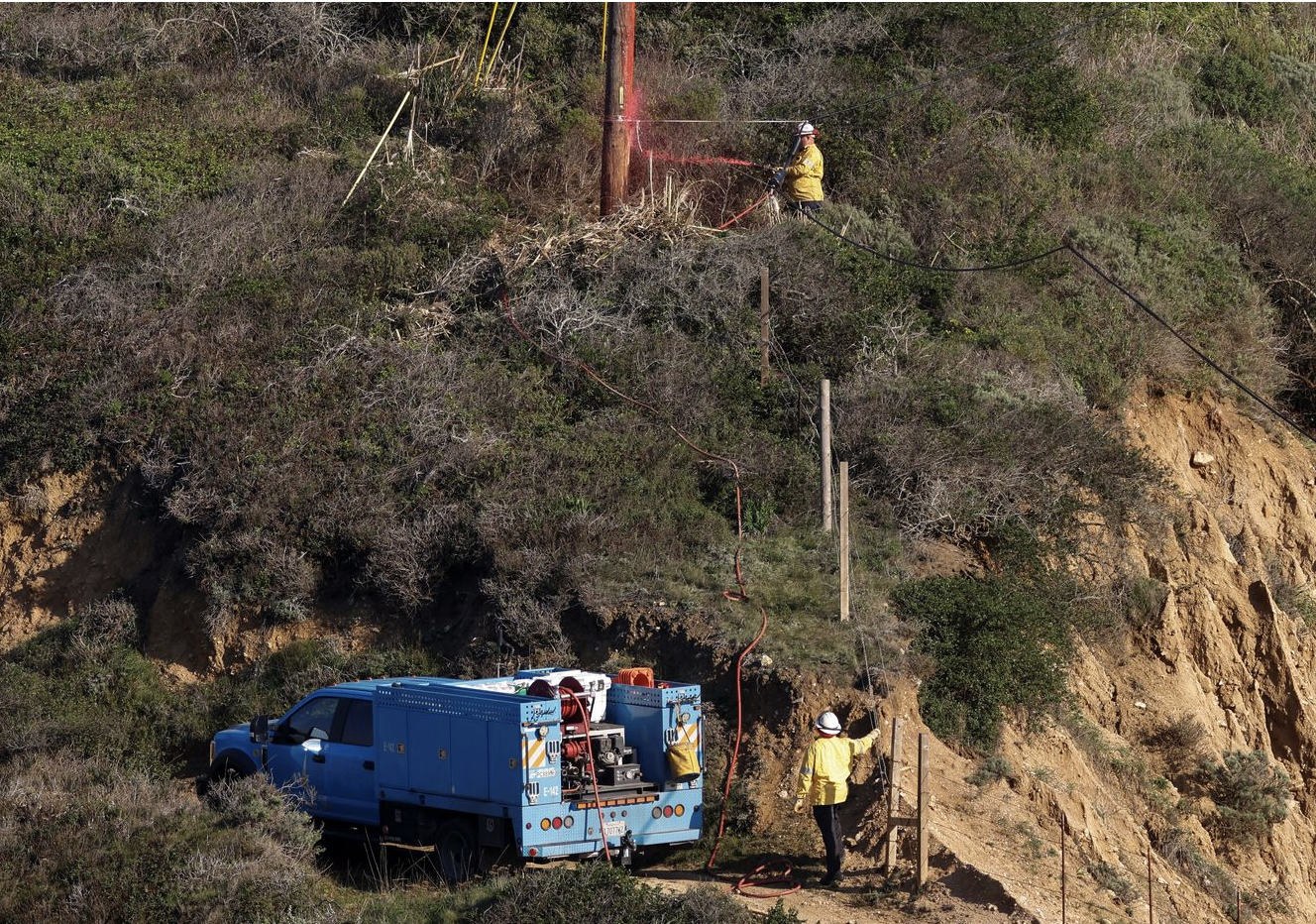
Pacific Gas & Electric needs $50 billion for rural wildfire prevention, but lacks a clear path to financing it

A PG&E crew sprayed retardant on a power pole near Big
Sur, Calif., earlier this year. (Photo by Peter Dasilva, Reuters)

Northern California's Pacific Gas and Electric needs to address the threat its electrical lines pose in sparking rural wildfires. Its prevention plan will cost billions that the company currently does not have, reports Kathrine Blunt of The Wall Street Journal.

In 2019, the company filed for Chapter 11 bankruptcy protection "to sort through an estimated $30 billion in liability costs stemming from a series of major fires. . . . The company’s lines have ignited more than 20 major fires in recent years, and it pleaded guilty to 84 counts of involuntary manslaughter for its role in sparking the 2018 Camp Fire that destroyed the town of Paradise, Calif.," Blunt notes. "Regulations require it to bolster its system."

PG&E's bankruptcy restructuring has made it difficult for the company to make about $50 billion in investments over the next four years. Its first goal is a "10-year plan to bury 10,000 miles of power lines to safeguard them from sparking on contact with trees and other objects. The company has estimated it will cost roughly $20 billion," Blunt reports. "The company’s options are limited without substantially increasing customer rates, which are among the highest in the nation." PG&E provides electricity and natural gas to about 16 million people.

To address the first goal, the utility is seeking creative financing options. Chief Financial Officer Chris Foster told Blunt, "The company is considering ways to leverage federal funding available for energy and climate investments, including some allocated through the bipartisan infrastructure bill passed late last year.  . . . A quantitative constraint in our plan is how quickly we can get back to investment grade because it will make the debt that we have much cheaper for our customers."

Blunt writes, "The company doesn’t need to raise billions of dollars immediately. In the near term, analysts and investors say, it can likely rely on revenue from operations alongside its creative financing efforts." Joe Shaver, managing partner and chief investment officer at Electron Capital, an investment adviser focused on utility and energy companies, told Blunt that he expects PG&E’s share price to keep rising as it makes the investments needed to reduce wildfire risk. Shave said, “They’re not out of the woods yet, and there’s a lot more wood to chop."

Sunday, December 11, 2022

As Democrats turn away from Iowa, some in party see ways to get more rural votes: show up, be humble, value work

Chart shows examples of Third Way analysis that found "most Democratic candidates improved on President Biden's 2020 performance in rural America — with some notable exceptions," such as Black nominees, Josh Kraushaar of Axios reports.

One step forward, two steps back, rural Democrats might say. The midterm elections showed that Democrats can still win elections with rural votes if they show up and ask for them, but the party's plan to end the Iowa caucuses' first place in the presidential nomination process "is not a great way to mend fences in rural America, where the Democratic brand has become virtually unmarketable," Storm Lake Times Pilot Editor Art Cullen writes in The New York Times, essentially rewriting a column that appeared in his weekly.

Art Cullen
For the locals, Cullen accepts some of the Democrats' rationale, but not "two frauds cooked up to put the caucuses to rest," one that the state party "messed up reporting results" in 2020. In both columns, he blames that on a cellphone app suggested by national Democrats, who rejected Iowa Democrats' plan.

For the national audience, Cullen seems to accept that "We are too white. . . . But diversity did have a chance here. Barack Obama was vaulted to the White House" in 2008 by a strong showing in rural caucuses, with the help of rural newspapers. "Iowa had no problem giving a gay man, Pete Buttigieg, and a Jewish democratic socialist, Bernie Sanders, the two top tickets out to New Hampshire last cycle."

Caucuses have virtues: "Candidates were forced to meet actual voters in village diners across the state. We took our vetting role seriously; you had better be ready to analyze Social Security’s actuarial prospects. . . . We did a decent, if imperfect, job of winnowing the field. Along with New Hampshire, we set things up so South Carolina could often become definitive, which it will be no longer." Cullen says "It's OK that South Carolina goes first," because having the first presidential voting hasn't paid off for Iowa: "Nothing really happened to stop the long decline as the state’s Main Streets withered, farmers disappeared and the undocumented dwell in the shadows."

Another view: Froma Harrop, whose column appears in some rural papers, says the change will be more democratic because most South Carolina Democrats are Black, and Black voters haven't had a big voice in the nomination process; and because the caucus process "favors activists who are not deterred by snow, cold or the dark and have the luxury of free evening hours. These folks are skilled in working the intricacies of the caucus process and often aggressive. Not favored are Democrats who work nights at Walmart, drive an Uber after hours and have little children to care for."

In a piece for The Hill, William S. Becker sees "signs that Democrats can build a more substantial base in rural America before 2024. All they have to do is think differently, talk differently and act differently." he cites a report from the Rural-Urban Bridge Initiative, "a group of experts brought together in 2021 by Appalachian farmer and author Anthony Flaccavento and several colleagues." They point out that "more than 40 percent of voters are rural in many battleground states," Becker writes. "Since 2006, their partisan allegiances have depended on which party pays more attention to them. Winning as little as 2 to 3 percent of their votes can change election outcomes."

Becker adds, "RUBI interviewed 50 rural candidates and researched recent studies on what makes candidates successful in rural areas. It distilled the results into 11 recommendations that seem more about respect and common courtesy than political strategy. They include listening more and talking less; respecting the local people’s knowledge and history; being humble and mission-driven rather than ego-driven; focusing on problem-solving; emphasizing involvement in local activities; treating voters of color as individuals rather than voting blocs, as well as not pandering to racism or gratuitously antagonizing white voters."

Becker also cites a piece in The American Prospect, in which Robert Kuttner writes, “Just showing up turns out to be hugely important, as a sign of respect and commitment;” and a post from Bryce Oates and farmer Jake Davis in The Pulse, a nonpartisan blog focused on North Carolina: “If Democrats truly want to increase their competitiveness in rural America, they should start now by putting working people at the center of their narrative while supporting bold, popular policies that would allow those people to live a good life.”

UPDATE: On NBC's "Meet the Press," Sen. Jon Tester said Democrats should focus their messaging “more on the things we’re doing for rural America,” such as infrastructure. The Montana Democrat "pointed to bills he’s working on that deal with big packers and meat consolidation, which he said would help cow and calf operators make a better living."

Friday, December 09, 2022

N.C. county in turmoil over sheriff who made racist remarks, was suspended and re-elected; state investigating election

UPDATE, Dec. 29: "Almost immediately after he was sworn in Thursday morning for what is supposed to be a four-year term, the local district attorney filed a petition in court seeking — for the second time — to have Greene permanently removed from office, the Durham Herald-Sun reports. Greene's swearing-in was "delayed by post-election protests and clouded by state and federal investigations," notes The News Reporter, which published the DA's petition.


Columbus County in North Carolina
Columbus County, North Carolina, continues its heated debate over Sheriff Jody Greene. The conflict began in September, "when a phone recording from 2019 was released to the media. During the call, Greene called deputies 'Black bastards' and threatened to fire those he believed were aligned with the previous sheriff who contested his 2018 win," reports Ivey Schofield of the Border Belt Independent, a nonprofit started by Les High, former owner of The News Reporter, a weekly in the county.

The anger at Greene, the county's first Republican sheriff, is not limited to his racist statement. Jon David, a Republican and prosecutor in Columbus County, "filed an amended petition to the court on Oct. 21 outlining several other allegations against Greene," Schofield writes. "They include having an affair with a detective in the sheriff’s office, firing a Black sergeant, trying to influence county commissioners and failing to ensure proper supervision at the jail." A judge suspended Greene, who resigned but was re-elected shortly thereafter.

The latest grind is the "election board’s ruling to deny two protests" requesting a hearing to determine if Greene was qualified to seek re-election. "Greene, who was suspended and then resigned in October as the county’s first Republican sheriff, won another term with 54% of the vote." The two residents have filed an appeal with the State Board of Elections.

The board "is investigating two complaints of potential intimidation of poll workers," Schofield reports. "Three precincts on Election Day had malfunctioning equipment and subsequently turned away voters. In response, the state board decided to keep one precinct open late."

Schofield writes, "The local NAACP held a meeting to discuss next steps. The meeting was advertised as a public event by the Columbus County Democratic Party, but a Border Belt Independent reporter who tried to attend was asked to leave by one of the greeters." She writes that Rev. Andy Anderson, who attended the meeting, told her "that the group discussed strategies to engage Columbus County residents across racial and economic divides."

News-media roundup: Kansas' Hayneses sell their papers; Gannett sells Iowa paper that's challenged by a startup; Cherry Road sells editor paper it bought from Rust in March

Cynthia and Steve Haynes tell their staff about the sale of their newspapers in a video
conference call with one of the buyers, Jesse Mullen, at left. (Photo from The Oberlin Herald)

Brothers Jesse and Lloyd Mullen of Mullen Newspapers have bought six community newspapers in northwestern Kansas from Steve and Cynthia Haynes, longtime industry leaders who are retiring at 74: The Oberlin Herald, the Colby Free Press, the Bird City Times, The Goodland Star-News, The Norton Star-Telegram and The St. Francis Herald, as well as The Country Advocate shopper. Steve Haynes was a nephew of William Allen White, the renowned publisher of The Emporia Gazette. He and Cynthia reflect on 42 years of community newspapering here.

Gannett Co.
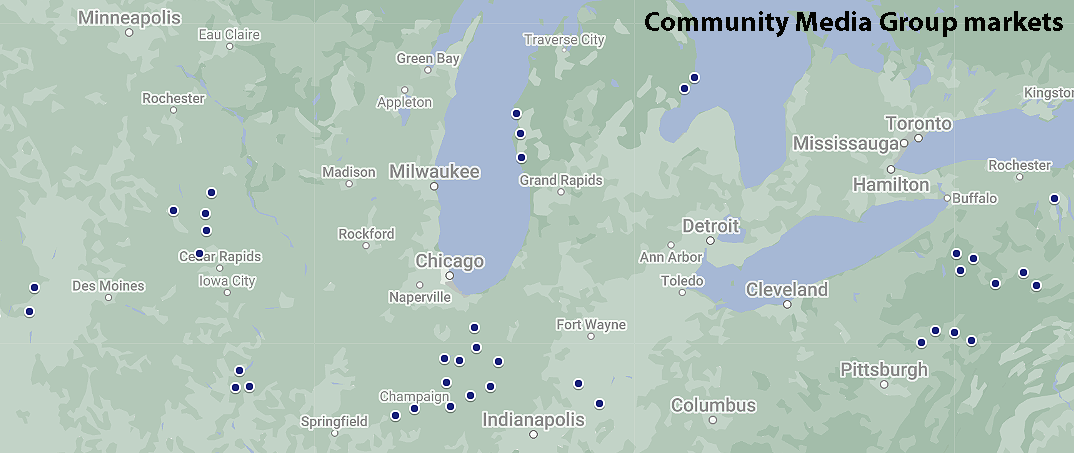
has sold the Burlington Hawk Eye to an affiliate of Community Media Group of West Frankfort, Ill., which has about 40 papers, stretching from Iowa to western New York, including nearby Fort Madison and Keokuk, Iowa, and Carthage, Ill. As the Hawk Eye declined under Gannett, the Burlington Beacon started up, and owner Jeff Allen tells The Rural Blog that its print circulation "is 2,500 and growing each week. We continue to sell out on the newsstand, and we're looking at adding days of publication." UPDATE, March 4: The Hawk Eye hawks itself.

Meanwhile, the decline continues at Gannett's St. Cloud Times, reports Axios Twin Cities: "As of Wednesday, the Times listed just three journalists — all reporters — on its staff page. As recently as 2014, the newsroom had 36 employees, and just a few months ago it listed nine staff." The St. Cloud metropolitan area has 200,000 people but no TV stations, limited radio news and two small weeklies, said St. Cloud University Department of Mass Communication Chair Dale Zacher, who called the Times a "ghost newspaper . . . a shell of its former self." He told Axios that there is little coverage of local government meetings and features about the community.

Kyle, Elizabeth, Olivia and Jordan Troutman (Prairie Photography)
Cherry Road Media
, which has bought several Gannett papers, is selling The Cassville Democrat in Missouri to its editor, Kyle Troutman, and his wife Jordan, a reporter and a native of the area. "The Cassville Democrat has been corporately owned since 2004, and on Jan. 1, 2023, the 151-year-old publication will once again be locally owned," it announced. Cape Girardeau-based Rust Communications had owned it until March, when it was sold to CherryRoad. CEO Jeremy Gulban, said that when heard a young couple in Nebraska describe buying their hometown paper, “I realized that local ownership, when possible, is really the right answer for small community newspapers. Traditionally, this had been the model but it has not been utilized lately because of a lack of motivated, younger people who are willing to take on the challenge. I looked around our portfolio of newspapers and saw that the Cassville Democrat was a good fit for this model with Kyle and Jordan.”

UPDATE, Dec. 29: Cherry Road sold two other former Rust papers in the Ozarks to local owners: the Carroll County News and the Lovely County Citizen in northern Arkansas. The latter will be online only. The buyers are Managing Editor Scott Loftis, photogtrapher David Bell and former Berryville Chamber of Commerce director Bruce Johnson.

Western Kentucky newspapers are publishing special editions to mark the one-year anniversary of the deadly tornadoes that devastated several towns, the Kentucky Press Association reports. And KPA has scheduled a session at its convention on Jan. 27 on planning for disasters.

Longtime Kentucky sportswriter Keith Taylor became news editor of The Berea Citizen, then the weekly's publisher, and now he's the local volunteer of the year. He reflects on his recent career. 

A survey in Great Britain suggests that people don't trust the news industry because they don't understand it. About half said they didn't trust the news media, and only 39% trusted journalists. But that result was correlated with ow levels of news literacy: the ability to critically process, analyze and evaluate news. Respondents were especially unsure about how decisions are made in newsrooms, how editorial standards are applied and how regulation works," Aisha Majid reports for the Press Gazette.

Also from the U.K.: Five tips for increasing reader engagement and loyalty.

If you have a sliver of land, you can build a wildlife habitat

Photo by Andrea Lightfoot, Unsplash
Anyone with a bit of land and a can-do attitude can help Mother Nature and humankind. "When farmland is healthy, there is a balanced ecosystem with plenty of native plants and habitat for wildlife," reports Jodi Henke of Successful Farming. "This is called biodiversity, and all landowners can do something to improve it."

Jo Ann Baumgarten is director of Wild Farm Alliance, an organization that promotes a healthy, viable agriculture through the protection and restoration of nature. She told Henke that when there’s a lot of biodiversity, the benefits multiply: “Farmers can attract pollinators that help pollinate their crops, and they can attract beneficial insects that help to control pest insects. There are beneficial birds that eat pest insects, weed seeds, and even rodents. Bats are eating insects, and four-footed creatures are eating rodents.”

Before making any changes, take inventory. If you need help figuring out what is good and what isn't, "Extension services, resource conservation districts, and other local groups can offer technical assistance and get you started," Henke writes.

Baumgarten told Henke, "First, you need to look at the climate, the drainage, and soil conditions. If there are problem areas like erosion and invasive species, they should be dealt with first. One of the best things to do is to go someplace wild nearby, look at what’s growing there, and then try to emulate that."

Other substantial tips from Henke include: building a game bird preserve, creating a wild duck habitat, or building brush pile for smaller animals to enjoy.

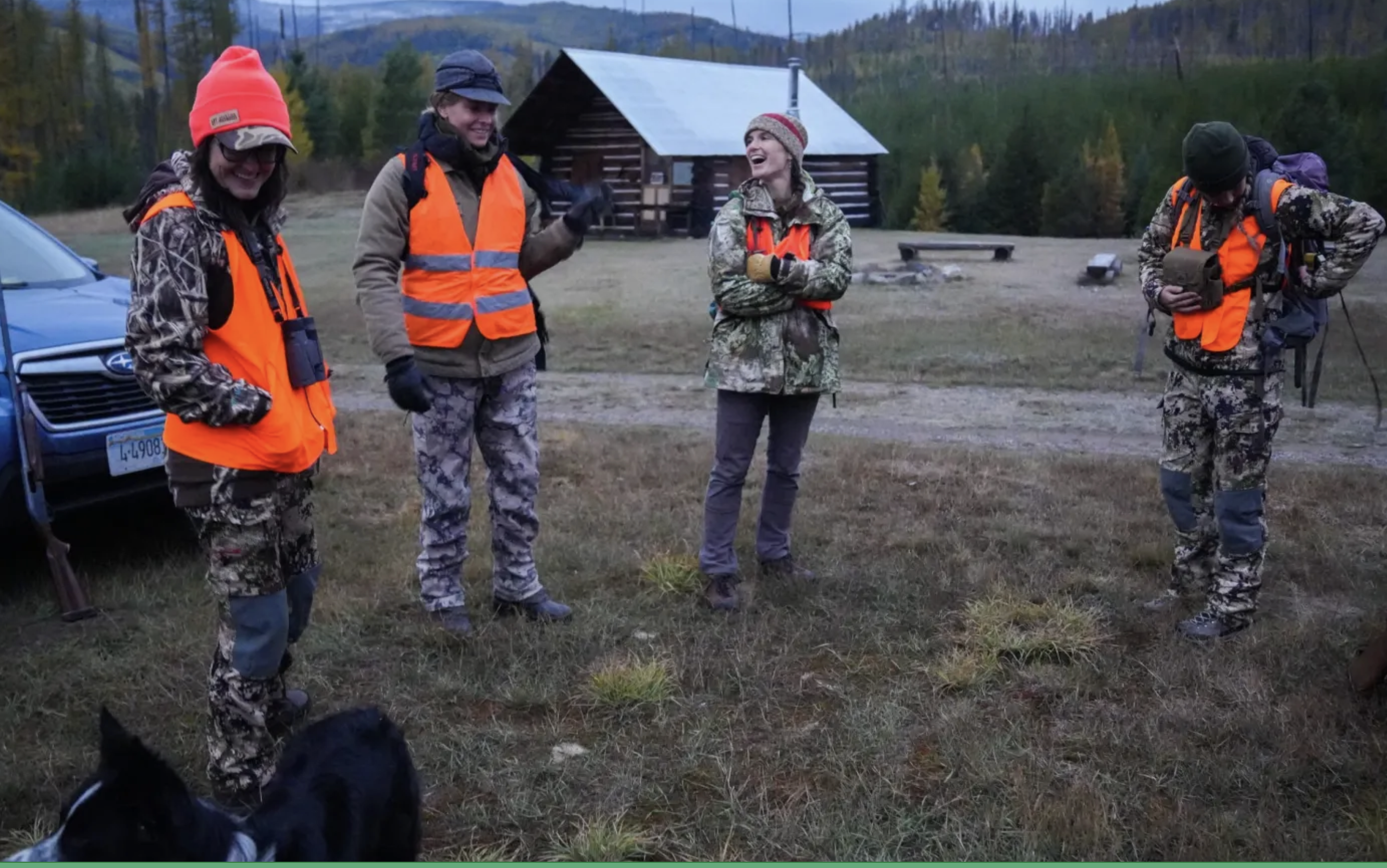
More women and minorities are hunting, but community support is 'critical' to grow their ranks, study finds

A women hunting group gathers for 'Ladies Hunting
Weekend' in Ninemile, Mont. (Photo by Aj Williams)
As state wildlife officials worry that the decline in hunting is reducing the license fees on which they depend, a new study "examines the role of confidence in introducing and retaining hunters from historically underrepresented backgrounds to the sport," Aj Williams reports for The Daily Yonder.

Conducted at the University of Montana and published in the Journal of Outdoor Recreation and Tourism, "The study concluded that attending community-building programs fosters confidence, also known as self-efficacy, while lowering barriers through forming connections with fellow hunters."

Researcher Ada Smith told Williams that most "hunter recruitment and retention programs have been focused on skill building, but our study shows that it is just as critical for efforts aimed at female hunters to also be geared toward fostering meaningful connections and community.” Women make up only 10% to 11% of all licensed hunters in the U.S.

Smith began hunting in 2019 and is in her third year hosting other female hunters on her family’s land. Williams writes, "Smith hopes to fast-track what many hunters gain through the years: a group of ‘buddies’ that can share hunting tips, resources such as gear and help each other through the process of learning to hunt and harvest."

“I feel equally excited about it [the research] because it resonates with things I’ve been dealing with as a beginner hunter, myself," Smith told Williams. "So, to look at the data then is pretty interesting."

Introducing new groups to hunting helps the sport in two ways: "The majority of federal funding for conservation efforts comes from taxes on guns and ammo. With a long-term trend of decreased hunting across the country, that money is dwindling as well." Williams reports. "For Smith and Metcalf [study researchers], this is why advocacy and outreach efforts have the potential to be impactful even beyond the sport, but to more people who have a stake in sustaining the environments in which they hunt."

Thursday, December 08, 2022

Proponents of journalism-competition bill still voice hope; others say it's probably dead, prefer tax-credit idea

The Journalism Competition and Preservation Act, which would let news outlets collectively bargain with Big Tech platforms for compensation for news content and set up an arbitration panel to resolve an deadlock, appears dead for this session of Congress, and with the House and Senate divided between the parties next session, it is probably dead, period.

“I think it looks pretty grim for the JCPA,” Report for America President Steven Waldman told the New England Newspaper and Press Association Thursday, the day after the JCPA was pulled from a must-pass defense bill. “I think that  was the best shot. . . . My focus right now is on the payroll tax credit, which I think has a better shot.”

Northeastern University journalism professor Dan Kennedy mentioned that alternative in the Dec. 7 edition of his Media Nation newsletter, writing, “I’m going to guess that that’s the last we’re going to hear about the JCPA because House Republicans oppose it, and time is running out for the Democratic majority to push it through. Maybe this will carve out space for a better bill, the Local Journalism Sustainability Act, which would bolster local news by creating temporary tax credits for subscribers, advertisers and publishers.”

Advocates of the JCPA "remained hopeful that Congress might muster the political will to reintroduce it," Gretchen Peck reports for Editor & Publisher, quoting America’s Newspapers CEO Dean Ridings: "America's Newspapers appreciates the efforts of Senators Amy Klobuchar, John Kennedy and so many others to pass legislation that would enable the family and independently owned newspapers to collectively negotiate for the value of their content. We hope that other members of Congress will reconsider this important legislation that would balance the playing field and compensate our members for the incredible work they do, which is important to virtually every community in the U.S."

HD Media Vice President of News and Executive Editor Lee Wolverton told E&P, “I don’t know what the future of this legislation is, but I do know that the real answer is the one we are pursuing — a remedy in court that will snap Google and Facebook’s anti-competitive stranglehold on digital advertising revenue.” Peck notes, In January 2021, the West Virginia publisher filed an anti-trust lawsuit against Google and Facebook, charging them with monopolizing digital advertising.

Report for America picks several rural newsrooms to get reporters, and some other newsrooms for rural coverage

Report for America
has picked 30 additional host newsrooms and opened applications for dozens of new reporting and photojournalism positions — with a wide variety of beats, including rural issues.
 
“We were blown away by the breadth of applications we received, and only wish we had the ability to bring on even more newsrooms this year,” said Kim Kleman, RFA's senior vice president.
 
When RFA asked newsrooms to define the most compelling gaps in their coverage, rural areas and issues were a big topic, along with local government, health care, climate and the environment, communities of color, and education and vocational training.

Among newsrooms selected were the twice-weekly Uvalde Leader-News, serving a Texas town still recovering from a school massacre; the Texas Tribune, for coverage of communities in the Permian Basin, a leading oil and gas field; the Acadiana Advocate, for coverage of rural communities in southern Louisiana; the Mississippi Free Press, for coverage of "educational equity across Mississippi;" The People Sentinel of Barnwell, S.C., for coverage of rural communities in the Low Country; WVIA, the public TV station in Scranton, Pa., for coverage of rural governments; WRMA and Virginia Public Media for coverage of rural health care; and the Cape Gazette of Lewes, Del., for coverage of the town of Milford.

With the newsroom selections made, RFA says it is seeking "talented, service-minded reporters and photographers" for a two-year program (with an option for three years) with a wide range of benefits, including training and mentoring. RFA pays half the salary and gives the newsroom three to six candidates to choose from. 

RFA President Steven Waldman told the New England Newspaper and Press Association Thursday that a fourth of all slots in the last round went to rural newsrooms. "That is a high priority for Report for America," he said, adding that rural America needs more philanthropic interest to back such efforts.

Charles Sennott, founder and editor-in-chief of the Ground Truth Project, chief sponsor of RFA, said in his weekly report, "If you know someone who can benefit from this opportunity, invite them to apply here. Little by little we are bringing reporters back to rural areas and restoring the news ecosystem for millions of Americans, but we can’t do it without your support. Help us make the map of news deserts in America a thing of the past."