Tuesday, September 24, 2024

A huge U.S. lithium mine needed for EV battery production vs. a flower found nowhere else in the world

Rhyolite Ridge lithium mine site (ioneer photo)
Step by step, the Biden administration inches closer to green-lighting ioneer's Rhyolite Ridge lithium mine in Nevada, reports Ernest Scheyder of Reuters. Last week, it "published a key environmental report [which is] the last step needed before approving what would become one of the largest U.S. sources of the electric vehicle battery metal." But some conservationists are adamantly against the mine opening despite its cleaner energy purpose.

Ioneer's path to opening has been ongoing for at least six years while the project was reviewed. "The Bureau of Land Management published a final environmental impact statement, that sets in motion a review period of at least 30 days before a record of decision -- essentially a mine's permit -- can be issued," Scheyder explains. "BLM also published an opinion on how a rare flower at the mine site can best be protected."

The rare Tiehm's buckwheat flower (CBD photo)
The site is home to Tiehm's buckwheat flower, "which is found nowhere else on the planet and was declared an endangered species in 2022," Scheyder reports. "The Center for Biological Diversity and some other conservation groups thus oppose ioneer's project." Patrick Donnelly of CBD called Tiehm's buckwheat flower a "linchpin of the local ecosystem, harboring a highly diverse pollinator community."

It's hoped the mine's lithium production can help the U.S. combat Chinese metal production. Scheyder writes, "The U.S. Geological Survey has labeled lithium a critical mineral vital for the U.S. economy and national security. The proposed mine, roughly 225 miles north of Las Vegas, contains enough lithium to power roughly 370,000 EVs each year."

The deployment of broadband from coast to coast gets mixed reviews at a U.S. House subcommittee hearing

More rural states like Montana have struggled with
broadband deployment rules. (Adobe Stock photo)
Part of the bipartisan infrastructure law aims to expand access to high-speed internet for all Americans. The rollout and the millions of dollars attached are overseen by the National Telecommunications and Information Administration through the Broadband Equity Access and Deployment, or BEAD, program.

NTIA was under the scope last week during a House subcommittee hearing on how BEAD was faring, reports Chris Teale of Route Fifty. The hearing included testimony about positive progress alongside criticisms. "The program said it has approved initial plans for 48 of the states and territories that are eligible to receive funding. . . . GOP subcommittee members argued that the program is too complex, not technology neutral, and has onerous pricing and workforce mandates" that make it harder for states to succeed.

Even though NTIA announced the approval of Montana’s plan in early August, Misty Giles, the state's chief operating officer and director of the state Department of Administration "said in her written testimony that NTIA’s requests and shifts in its guidance to states 'are akin to building a plane while flying it without having the necessary instructions to be successful,'" Teale writes. "She said the 'litany' of requirements place an undue burden on states looking to implement BEAD.'"

U.S. Rep. Cathy McMorris Rodgers, a Republican from Washington state and the chair of the House Energy and Commerce Committee, "said the 'burdensome red tape' from NTIA has created continued delays in the approval process," Teale reports. "NTIA rejected the House subcommittee’s criticism. According to a fact sheet the agency shared, the federal government has made more than $20 billion available in funding and met or exceeded all deadlines imposed by the infrastructure law to keep the program on track."

The hearing hashed out other issues, including technology-neutral needs for some states, and low-cost requirements on internet service providers, which some committee members felt was government overreach. Still, many praised the program's planning and acknowledged its broad challenge. “Subcommittee members gave NTIA credit for recently announcing it would seek comment on the use of alternative technologies in BEAD," Teale reports. "Giles said, 'I understand that trying to have all states and territories swimming in the same direction in the same lane is no small task.'"

American suicide rates continue to climb, with some rural states seeing double the number of deaths. Why?

When it comes to suicide prevention, what works where
hasn't been found. (Photo by A. Nath, Unsplash)
After decades of suicide prevention funding and plan roll-outs, the number of self-inflicted deaths in the United States has only increased, with some rural states shouldering double the number of deaths compared to their urban counterparts, reports Cheryl Platzman Weinstock of KFF Health News.

"From 2001 through 2021 suicide rates increased most years, according to the Centers for Disease Control and Prevention. Provisional data for 2022, the most recent numbers available, shows deaths by suicide grew an additional 3% over the previous year. CDC officials project the final number of suicides in 2022 will be higher," Weinstock adds. "Suicide rates in rural states such as Alaska, Montana, North Dakota, and Wyoming have been about double those in urban areas."

Meanwhile, mental health experts maintain that the ideas and educational programs aren't to blame for the results. Instead, they say, "the policies simply aren’t being funded, adopted, and used," Weinstock reports. "That slow uptake was compounded by the Covid-19 pandemic, which had a broad, negative impact on mental health. National experts and government officials agree the strategies simply haven’t been embraced widely."

How suicide data is determined and reported isn't uniform yet either. "Without accurate statistics, researchers can’t figure out who dies most often by suicide, what prevention strategies are working, and where prevention money is needed most," Weinstock writes. Without more clarity, deciding on the best preventative practices can become impossible. Interventions that work in sparsely populated Wyoming, may not work in the more populated farming towns of southern Indiana.

Other means to prevent or address suicide attempts also have gaps. "The fledgling 988 Suicide & Crisis Lifeline [also] faces serious problems," Weinstock reports. "Only 23% of Americans are familiar with 988 and there’s a significant knowledge gap about the situations people should call 988 for, according to a recent poll. . . . Most states, territories, and tribes have also not yet permanently funded 988, which was launched nationwide in July 2022."

While some regions are introducing 988 awareness campaigns, several states, including Colorado, are trying something new. Weinstock explains, "State officials installed financial incentives for implementing suicide prevention efforts, among other patient safety measures, through the state’s Hospital Quality Incentive Payment Program. . . .The program hands out about $150 million a year to hospitals for good performance. . . . Experts hope other states will follow Colorado’s lead."

Virologists are worried about a human 'bird flu' pandemic; wastewater testing in Texas signals the disease's spread

Bird flu transmits from wild birds to other animals, including dairy
cows. At least 14 people have been infected. (Adobe Stock photo)
As bird flu continues to spread among U.S. dairy cows, the disease has become more adaptable, with 14 human cases reported since March. "Both are worrying developments, say virologists, who fear that the country’s meager response to the virus is putting the entire world at risk of another pandemic, reports Jessica Hamzelou of MIT Technology Review. "Infections in dairy cattle, first reported back in March, brought us a step closer to human spread. Since then, the situation has only deteriorated." Researchers have even found evidence of bird flu, or H5N1, in wastewater in 10 cities.

Even though H5N1 spreads stably in global bird populations, the disease has also infected their predators. "The list of affected mammals includes bears, foxes, skunks, otters, dolphins, whales, sea lions. . . . Some of these animals appear to be able to pass the virus to other members of their species," Hamzelou explains. "This is bad news — not just for the affected animals, but for people, too. It’s not just a bird flu anymore. And when a virus can spread in other mammals, it’s a step closer to being able to spread in humans."

How dangerous the virus can become depends on how it mutates, which isn't predictable. Scientists do know that the virus is effectively circulating and evolving. Hamzelou reports, "So far, it's clear that the virus has mutated but hasn’t yet acquired any of these more dangerous mutations, says Michael Tisza, a bioinformatics scientist at Baylor College of Medicine in Texas. That being said, Tisza and his colleagues have been looking for the virus in wastewater from 10 cities in Texas—and they have found H5N1 in all of them."

For now, Tisza and his colleagues "don’t know where this virus is coming from — whether it’s coming from birds, milk, or infected people, Hamzelou adds. "But the team didn’t find any signal of the virus in wastewater during 2022 or 2023, when there were outbreaks in migratory birds and poultry." Tisza said, “In 2024, it’s been a different story. We’ve seen it a lot. . . . This virus is not causing a human pandemic right now, which is great. But it is a virus of pandemic potential."

Renewables helped some states breeze through this summer's punishing heat and energy demands

Renewable energy has helped some states meet
or exceed energy needs. (Adobe Stock photo)
This summer's extreme heat forced energy operators to rely on solar and wind electricity to keep the U.S. grid humming, even as Americans "cranked their air conditioning," report Katherine Blunt and Jennifer Hiller of The Wall Street Journal. "Extreme heat pushed electricity demand to new highs . . . . States such as California and Texas that in recent years have bet big on renewable energy and battery storage easily met electricity demand."

California and Texas residents in some areas had "experienced rolling blackouts in 2020 and 2021, respectively. In 2022, grid operators in both states called on residents to conserve electricity during extremely hot weather and almost resorted to rolling blackouts as supply margins shrank," the Journal reports. "Since then, California. . . has built one of the world’s largest fleets of batteries that store solar power during the day and discharge it in the evening. Texas, meanwhile, now rivals California in storage capacity."

Even during this summer's extreme heat, the flow of energy in California was markedly different. "As extreme heat blanketed much of the West this summer, regional power demand reached a record high of nearly 168,000 megawatts on July 10," Blunt and Hiller explain. "Yet California, which has historically imported large amounts of electricity from other states during heat waves, had surplus to send elsewhere. . . . Temperatures also surged in Texas, [where] there was plenty of solar to meet peak demand around 4 p.m. to 5 p.m., and adequate wind power in the evening."

States that don't yet house the energy storage of Texas or California have tighter margins to manage. "Lanny Nickell, chief operating officer of the Southwest Power Pool, which operates part of the grid and a regional power market stretching from the Texas Panhandle to North Dakota, said his organization this summer had its smallest-ever seasonal cushion of electricity reserves," the Journal reports. "He said it is working to encourage investments in a range of new resources, as well as new means of importing power from other areas when supplies are tight."

Friday, September 20, 2024

Public water is tested for toxins, but private well-water is not; some residents push for required testing to save lives

Well water that looks and tastes clean isn't always
contaminant free. (Photo by A. Sikdar, Unsplash)
Water used by public utilities is subject to testing and contaminant limits, but well water from private wells is not. Around 43 million Americans drink, bathe and cook with water from private wells that have never been tested, which often leaves them unaware of what's in their water, reports Silvia Foster-Frau of The Washington Post. "The levels and pervasiveness of some contaminants in [private] wells are increasing, studies show."

Public drinking water is regulated by the Environmental Protection Agency, which sets ceilings for toxins; however, water from private wells is excluded from the agency's oversight. "The agency doesn’t regulate the drinking water of the more than 1 in 10 people who get their water from their own private wells," Foster-Frau writes. Private well owners often believe that their water is fresher and purer than "city water" because it's drawn directly from the earth, but that's often not the case. "Experts say private wells can be a breeding ground for a host of toxins, from dangerous bacteria to known carcinogens."

Especially in rural areas, where residents often want more independence from regulation, conflicts have grown as some individuals want required water well testing and others want it to be their choice. In the case of Cathy Cochrane, a resident in Toutle, Washington, who is struggling with cancer, she would have preferred the county had required private well testing. Foster-Frau reports, "Cochrane discovered that the water she had been drinking for nearly a decade contained 638 parts per billion of arsenic, a toxin that can cause cancer and increase the risk of diabetes and heart disease. . . . There is no reliable way to tell if cancer is caused by arsenic versus other factors."

Arsenic occurs naturally in soil, so many residents don't give it a second thought -- or they don't realize it's there to begin with. Cochrane told Foster-Frau, "Arsenic is the perfect murder weapon. You can’t detect it.” After Cochrane spoke at a Toutle commission meeting, "The commissioners agreed to extend a public water supply line from the town of Toutle to Cochrane’s neighborhood, less than a mile away."

Cochrane's presentation spurred further inquiry. "Central Washington University graduate student William Hays has taken up the issue as his thesis project," Foster-Frau adds. "He has been knocking on doors in the Toutle area where Cochrane lives and requesting samples of water from private wells. He wants to understand just how far the naturally occurring arsenic is spread throughout the county, which would provide insight into the scope of the contaminated water problem."

Community newspapers can benefit from more effective promotion and marketing

Benjy Hamm
By Benjy Hamm
Director, Institute for Rural Journalism

ESPN has long promoted itself as the “worldwide leader in sports.” You can forgive its audience if they don’t realize that ESPN has been losing millions of customers who have been “cutting the cord” from cable and satellite TV.

ESPN’s long-time business model -- and that of cable TV -- has been collapsing in recent years, even though it remains profitable and has retained a loyal audience. Sound familiar? But in the face of many difficulties, ESPN has never stopped relentlessly and effectively promoting its shows, content, employees and overall brand.

When I talk to my students and community groups, most people have a highly favorable opinion of ESPN and overestimate its average audience and business outlook.

Compared to ESPN and most TV and radio stations, newspapers are reticent to promote themselves, outside of an occasional story about awards they’ve won, a house ad during National Newspaper Week or subscription flyers. That approach is grounded in a news philosophy 200 years old that valued the anonymity of journalists – emphasizing that the stories are more important. And it has continued for other reasons, too, including the fact that many newspaper journalists don’t see the need for promotion, and some even find it unseemly.

Our modesty – and in many cases silence – about the value of what journalists do and the importance of strong community newspapers might have worked OK when the media world was less competitive and newspapers were flourishing. But in this era of an attention economy and endless demands on people’s time, a lack of marketing and promotion is damaging.

That vacuum also has allowed others to define us, and frequently in extremely negative terms. When I speak to community groups or at events, even loyal newspaper readers express concerns that “no one reads a newspaper” anymore, that newspapers are dying and that “everyone gets their news on their phone.” You know that’s not true. A lot of people read your stories, your great journalism changes lives and changes laws, and the cell phones people use are simply another way news and information is delivered.

When I ask community members how well their phone covers local council meetings, they are often confused by the question. But we know the answer. It doesn’t. The local community newspaper journalist is frequently the only person covering those meetings. Even much of the discussion about community news on social media is commentary on facts reported by journalists, not original reporting by social media sources.

We probably all know what it’s like to be the only person – not just journalist – in the audience at a local meeting, budget session or court hearing. Community newspapers produce a significant amount of original, exclusive content in their communities. Yet, few people realize those facts.

If we don’t promote our work, who will? If we don’t develop marketing campaigns for our news organizations, staff and products (Ex. special sections), then residents won’t fully value what the newspaper means to that community.

Allowing other people to define community newspapers hurts in other ways, too. Large foundations that plan to spend hundreds of millions of dollars to support journalism in the United States are proposing spending millions on digital start-ups or giving large sums of money to urban news organizations to increase their coverage of rural areas. There’s little talk about helping the thousands of newspapers already in existence in these communities. I have heard these large funders speak at conferences, and they do not seem to know much about the strengths and importance of community newspapers.

Not all of these problems are new. When I worked at a newspaper in South Carolina, we were surprised to see the results of a study that measured the most trusted sources for news in our region. The TV stations ranked highest in every category, even though local newspapers produced many more stories overall and were responsible for nearly all of the major investigative and enterprise coverage.

The researcher said the results were similar in every region where he conducted surveys, and he attributed it to how often TV stations promoted their work and their journalists – in addition to that personal “connection” of seeing someone on TV. He said newspapers did little or no promotion and took for granted that residents would understand their value and recognize their outstanding qualities.

I have seen examples of newspapers that effectively promote what they do – in print, online, through social media and at community events. In many cases, the ones that do well with promotion and marketing are in competitive markets.

At the Institute for Rural Journalism, we would like to learn more about the ways that community newspapers are successfully promoting themselves and the overall importance of good journalism in local communities.

If you have examples that have proved successful, please send them to me at benjy.hamm@uky.edu. I will follow up in a future column with your ideas. In the meantime, if you’re not doing much promotion, consider ways your newspaper can help residents realize that you’re the leader in local news coverage for that area and that what you do is of huge value to the community. Feel free to reach out if you are unsure of what to do.

Benjy Hamm is director of the Institute for Rural Journalism, which is based at the University of Kentucky. He previously served as editorial director for Landmark Community Newspapers, as an editor for The New York Times Regional Newspaper Group and as a reporter and editor for The Associated Press.

Opinion: Appalachian 'diggers' are not the main cause of wild ginseng's decline, but they could be part of the solution

Wild ginseng plants (Va. Ag photo)

Appalachian "diggers" have harvested wild ginseng roots for medicine or sale since the late 1700s, but recently, wild ginseng populations have shrunk and Appalachian diggers have been accused of overharvesting the plant and put under governmental scrutiny. In her opinion for The Conversation, Justine Law, an ecology and environmental studies professor, maintains that local harvesters are not to blame for wild ginseng's decline, but they can be part of the solution.

"I’m an environmental geographer who studies rural livelihoods and conservation in North American forests. As I see it, large-scale threats to ginseng, including mining and climate change, are bigger concerns than small-scale harvesting by negligent diggers. I believe many diggers can be valuable conservation partners," Law writes. "Ginseng was listed in Appendix II of the Convention on International Trade in Endangered Species of Wild Fauna and Flora in 1975. This indicated that the plant was not threatened at the time. . . .Today, ginseng is classified as vulnerable in 13 of the 19 states that allow its harvest and sale, subject to state regulations."

The tap roots of wild ginseng plants will fetch thousands of dollars per pound in Asian markets as well as hefty prices in the United States. As the wild ginseng populations declined, "state and federal agencies have tightened ginseng regulations and ramped up enforcement," Law explains. "In 2018, West Virginia increased fines for illegal ginseng harvesting from . . . $100 to between $500 and $1,000 for a first offense. That same year, Ohio began using K-9 dogs to detect ginseng held by people suspected of illegal digging."

Historically, wild ginseng diggers have been blamed for the plant's scarcity since the late 1800s. Law writes, "But diggers are not, and never have been, the only reason for small ginseng populations. Starting in the late 1800s, forests across virtually all of the eastern United States were logged for farming, fuel, and industry."

Most local diggers know the plant's needs for continued growth and harvest it with that in mind. "I have interviewed dozens of ginseng diggers. Nearly all of them harvest only a portion of the plants in a patch, and they will wait until a plant’s berries are ripe before they dig it up and replant the berries," Law adds. "Other researchers have also highlighted diggers’ conservation practices, the complex pressures on ginseng populations and the injustice of excluding Appalachians from their historical forest commons. Still, the 'crooked digger' narrative persists."

Opening up opportunities to Appalachian ginseng harvesters could also help the plant thrive. Law explains, "There’s already a robust movement to plant ginseng seeds under existing forest canopy on private land, but most diggers don’t own land. A complementary effort might distribute seeds to them for planting in designated zones. . . . Participating could be a way to earn ginseng harvesting permits in state or national forests."

To find out more about wild ginseng's history in Appalachia, click here. Watch the video below for a more global view of the plant's history.


Drought causes transportation headaches along the Mississippi River for the third year in a row

Bridge near Vicksburg, Miss., and a pusher tug headed up
the Mississippi River. (Photo by Justin Wilkens, Unsplash)
A drying Mississippi River is causing transportation headaches and delays for the third year running in what scientists suggest could be a long-lasting change. "Extreme drought conditions in the Midwest are drawing down water levels on the Mississippi River, raising prices for companies that transport goods downstream and forcing governments and business owners to seek alternative solutions," reports Kristoffer Tigue of Inside Climate News. "The situation could signal an emerging reality for the region, scientists say, as climate change alters the planet’s weather patterns."

Despite Hurricane Francine's water dump in the Ohio Valley, Mississippi River levels have dipped since mid-July, which slows traffic. "Load restrictions force barge operators to limit their hauls, which squeezes their profit margin," Tigue explains. "Barge rates from St. Louis reached $24.62 a ton in late August and $27.49 per ton by the following week, according to the Department of Agriculture."

Moving cargo via the Mississippi River is more "efficient pound for pound than ground transportation, business groups say, and gives the U.S. an edge in a competitive global market," Tigue reports. "According to the Waterways Council, a trade association for businesses that use the Mississippi River, a standard 15-barge load is equivalent to 1,050 semi trucks or 216 train cars—meaning domestic farmers and other producers can save significant time and money moving their goods by boat."

Too much rainfall or not enough causes river transportation backups, and over the past several years, weather fluctuations in the Midwest have swung between the two. Drought conditions at harvest time are particularly troublesome. Tigue writes, "While it’s typical for water levels on the Mississippi to drop during the fall months, Mike Steenhoek, executive director of the Soy Transportation Coalition, said the recent years of drought have been a real wake-up call for farmers to diversify their supply chains."

If there's a little good news, it's that this year's drought headaches are not as extreme as those from 2023, when the Mississippi dipped to record lows. Tigue reports, "Deb Calhoun, senior vice president of the Waterways Council, chalks that up to proactive efforts this year by companies and federal agencies, like the Army Corps of Engineers, to mitigate transportation disruptions."

NASA offers environmental and science journalists a 'cool tool' and free graphics with its 'Worldview' database

NASA's Worldview offers seemingly endless data and free graphics. (NASA Worldview photo)

Part of NASA began with Caltech students blowing up part of their dorm room while experimenting with rockets. From those extraordinary-sounding beginnings, the space agency has combined its data-gathering satellites with analysis powerhouses and offers "unimaginably huge" troves of data, some of which is open to the public and journalists, reports Joseph A. Davis for the Society of Environmental Journalists.

While the sheer vastness of information may seem daunting, don't worry, "there is a system (or a system of systems) for handling it," Davis explains. "It goes by the acronym EOSDIS, for Earth Observing System Data and Information System. . . . . Meanwhile, NASA’s query site, called 'Worldview,' translates some of the most meaningful data into graphic form. You can access the Worldview landing page, which is also the query engine, here."

The Worldview database is a "cool tool" for environmental journalists and their production teams to use. Davis adds, "It’s not simply data; it’s free graphics." That's a huge upside. The downside to Worldview is that it's not easy to use. "Some important parts of it just don’t work. . . . . On the other hand, the number of choices you have about what to look at is very large."

The options are virtually endless and the data and graphics are "right in the strike zone of stories environmental journalists often cover," Davis writes. "You can request many different time spans, you can compare views from one time period against another, and you can choose particular places, zooming in and out almost at will. You can find out about wildfires, floods, dust storms, smoke plumes, drought, vegetation cover, human built-up areas and settlement areas, and even dams. And more."

Worldview also covers climate. Davis explains, "It tells you many details about albedo, sea-ice cover, surface temperature, etc."

Tuesday, September 17, 2024

Rural jail offers newly released prisoners with addiction disorders a long-lasting drug to prevent relapse

Cost is a major barrier to using Sublocade as an
addiction treatment for prisoners. (Adobe Stock photo)
In rural Maine, a county jail began giving a long-lasting form of buprenorphine to inmates with drug addictions before they left incarceration. The medicine, which curbs opioid cravings for 28 days, helps past inmates avoid "withdrawal, relapse and overdose — dangers that newly released prisoners confront nationwide," reports Jan Hoffman of The New York Times.

Once out of jail, addiction sufferers can face several obstacles to staying in recovery while re-entering their communities. Maine's Somerset County sheriff, Dale P. Lancaster, was discouraged by the number of inmates who would leave prison and die from overdoses. Lancaster pushed for the extended-release medical treatment. Hoffman writes, "According to a recent analysis in Health and Justice, the switch had a remarkable effect. The long-acting injection afforded newly released prisoners a crucial buffer period after they were discharged, with more time to set up continuing addiction treatment and stabilize their lives."

People suffering from drug addictions are more likely to end up on the wrong end of the judicial system. "Of the more than 1.2 million prisoners in the United States, up to 65 percent of prisoners have active substance use disorders, according to some studies," Hoffman explains. And while those institutions have an opportunity to treat the addicted, few have the resources or staffing. In the case of extended-release shots of buprenorphine, known as Sublocade, the treatment's cost remains a big barrier, with the list price for a monthly injection about $2,000, while a month's supply of pills ranges from $90 to $360.

But the success of Maine's program may help turn the tide. "After being released, the Somerset County prisoners who got the shot were three times as likely to continue treatment as those at another rural Maine jail who received the daily pills" [which are discontinued upon release], Hoffman adds. "Between September 2022 and September 2023, three prisoners from the jail where the pills were dispensed died from overdoses within three months of being released; a fourth died by suicide. None of the former Somerset prisoners who had received the injections died."

Dr. Alane O’Connor, co-chair of Maine's Opioid Response Clinical Advisory Committee, said that "as word of the Somerset program spreads, she is getting inquiries from other county sheriffs about how to bring the shots on board," Hoffman reports. "She is also hearing from former prisoners." O'Connor told Hoffman, "Many wanted to stay on the shots, so they would come back to the jail asking our help in finding a provider."

The sale of U.S. Steel to Nippon Steel has politicians up in arms, but some workers think sale might save their jobs

Wikipedia map
The fear of foreign control and the possible loss of jobs has many U.S. politicians and United Steelworkers’ leaders stoking opposition against the sale of U.S. Steel to Japanese-based Nippon Steel, but many of the industry's workers see the sale differently.

"Outside Pittsburgh, in Monongahela River valley towns where steel is still made, some workers and officials say the rhetoric is disconnected from what is happening on the ground," report Kris Maher, Bob Tita and Aaron Zitner of The Wall Street Journal. "Some say fears of foreign ownership are overblown and that the deal with deep-pocketed Nippon Steel offers the best chance to keep steel industry jobs in the region, and communities from being erased."

The voices against the $14.1 billion sale are big names, including President Joe Biden, both presidential candidates and "all four senators from Pennsylvania and Ohio, including Sen. John Fetterman," the Journal reports. However, West Mifflin Mayor Chris Kelly told the Journal: "I would bet that none of the national politicians have seen what I’ve seen and have not talked to these local workers. . . . This is nothing but politics." West Mifflin's U.S. Steel mill employs about 800 workers.

Both sides have cranked up their lobbying machines. "Kelly and other local officials are asking Pennsylvania Gov. Josh Shapiro to get the Biden administration to hear their concerns. . . . A spokesman said the governor said his priority is protecting Pennsylvania workers," the Journal reports "Nippon Vice Chairman Takahiro Mori recently met with U.S. regulators. Ads running in Pittsburgh urge they 'keep steel jobs in steel city.'"

In Braddock, the Edgar Thomson plant "is among the world’s oldest mills, producing steel from liquid iron heated in blast furnaces. Active since 1875, it hums day and night," Maher, Tita and Zitner write.
"Braddock Mayor Delia Lennon-Winstead backs the deal and said presidential candidates who oppose it should provide another solution. 'Do they actually walk these streets and live in this area?” she said. 'Do they know the devastation of closing the mill, what it would do to this area?'"

Opinion: New farmers with 'can-do' attitudes learn the trade from older farmers and agriculture support systems

Josh Pearson and Esme Martinson
(Turner Road Farm photo)
The life of U.S. farmers is often depicted by some "experts" as difficult, solitary and lacking many services, but that view only offers one slice of the profession. For many farmers, especially those new to farming, the career is full of learning, abundance and people helping people, writes Jason Maloney in his opinion piece for Agri-View.

Commentators and politicians often "talk of young people leaving rural areas, saying those rural areas have poverty and unemployment, and lack emergency services and nutritious food," Maloney adds. "But in the countryside of far-northern Wisconsin, where broadband and cellular service can be spotty. . .the outlook can be quite different. . . . There’s a sense of optimism that comes from building community and having a can-do attitude. . . . There are young people on the land who are making remarkable progress."

In northern Bayfield County, Wisconsin, Josh Pearson and Esme Martinson, who own Turner Road Farm, are learning how to be food and animal farmers, and they enjoy sharing their knowledge. Pearson told Maloney, "Esme and I are first generation; we didn’t grow up on farms. We read. A lot is possible if you put your mind to it.. . . . People have an experience coming up to our farm. We bring a lot of school groups to our farm – kindergartners, high schoolers, and even some college classes come out. It’s fun to see them react to the animals."

Location of Bayfield in Wisconsin
(Wikipedia map)
Turner Road Farm slowly purchased its livestock from a nearby cattle ranching family who wanted to retire. Part of Pearson's approach to the "generational transition of agriculture" is to learn from those leaving the profession. Pearson told Maloney, "Now they are done with their beef herd, and their beef herd is here on our farm. . . . I’m making hay in Port Wing, Wisconsin, with Dale Peacock of Red Hoof Farm. I’m helping him as he’s getting out of the business, and he’s mentoring me as I am going in."

Pearson and Martinson credit the USDA’s Natural Resource Conservation Service and Farm Service Agency as great support sources. Pearson told Mahoney, "My first suggestion to [new homesteaders] is to develop a relationship with the FSA office. There are programs out there to help us. We didn’t do this all on our own."

Right now, there are "things happening in places that aren’t seen by 'experts,'" Mahoney adds. "The important work that solves problems like hunger, environmental disasters, dying communities. . . is happening all around us. . . . Young people are grabbing hold and pulling us forward. If that doesn’t provide one with optimism, nothing else will."

Rural co-ops are slated for a $7.3B federal cash infusion to help them shift from coal to cleaner energy

Map indicating the wide geographic reach of the co-ops awarded funding.
(Map by Jeremy Fisher, Sierra Club Law)

Creating cleaner energy sources for communities in the more remote parts of the United States means helping rural co-ops afford the switch from coal to renewables. To help make the change possible, the Biden Administration "announced $7.3 billion in financing for 16 rural co-ops serving about 5 million households across 23 states, reports Jeff St. John of Canary Media. The Department of Agriculture will manage the funds, which "will also be matched by more than $29 billion in private investments."

The $7.3 billion infusion won't all go toward moving sparsely populated areas to renewables. Instead, some of it will cover the costs of closing coal plants, which are a "particularly thorny financial challenge for co-ops, which can’t raise financing the same way that investor-owned utilities can," St. John explains. For the Tri-State Generation and Transmission Association, [the funds] "will help accelerate the closing of 1,100 MW of coal-fired generation in Arizona, Colorado, and New Mexico."

The federal assistance means more rural cooperatives can afford to drastically shrink their energy reliance on coal. St. John reports, "A 2023 analysis by researchers at the Sierra Club, Energy Innovation, and the Department of Energy found that federal funding could help co-ops secure enough wind, solar, and battery resources to retire their entire coal capacity by 2032. . . . That would be a huge shift."

Much of the federal money deal-making is still in process. Of the 16 awards announced last week, "only one has been finalized by USDA — nearly $573 million to Dairyland Power Cooperative, which serves 24 distribution cooperatives and 27 municipal utilities in Wisconsin, Illinois, Iowa, and Minnesota. . . . Dairyland will use the funding to back a total investment of $2.1 billion to build and contract for 1,080 megawatts of clean power."

A celestial trifecta -- including a supermoon and partial lunar eclipse -- will fill up tonight's sky


Tonight's full moon sky will offer an unusual trifecta of celestial delights. "September’s harvest moon will not only coincide with a supermoon, but also with a blood moon and partial lunar eclipse," reports Chandelis Duster of NPR. "While harvest moons happen each year close to the start of fall and supermoons three to four times a year, all three events taking place at the same time are 'quite rare,' astrophysicist Teresa Monsue of NASA's Goddard Space Flight Center told NPR. . . . The moon is considered 'super' when it is full and its orbit is at the closest point to Earth."

The best time to view the three events depends on where you live and the weather. "The lunar eclipse will peak at 10:44 p.m. E.T., according to NASA. All of North and South America will have a chance to see the partial lunar eclipse and harvest supermoon," Duster adds. "This lunar eclipse will be a partial one, with only the upper portion of the moon [known as the umbra] being plunged into the darkest part of the Earth's shadow."

No special protective viewing glasses are required for tonight's cosmic viewing. "Unlike a solar eclipse, where you must wear special glasses to protect your eyesight when looking at it, skygazers can see the lunar eclipse with ease and without eye protection," Duster reports. "The eclipse should also be a good chance for views of contrast on craters and other features on the lunar surface if you use a telescope or binoculars, Monsue said."

If you miss tonight's eclipse and supermoon, you'll have to wait awhile for another chance. "The next one will not happen until Oct. 8, 2033, according to Monsue," Duster adds. "But you will be able to see another full supermoon on Oct. 17 and a total lunar eclipse on March 14, 2025."

Friday, September 13, 2024

In rural Leeds, Alabama, a family hanger business continues to fight foreign competition and 'unfair' international trade

Milton Magnus and his son, Mack, share their family
business story. (M&B Hangers photo)
With their super-cheap product prices and ubiquitous presence in U.S. chain stores, Chinese companies began wiping out small U.S. business manufacturers beginning in the 1990s. But not every business decided closing was the only option. Milton Magnus, an American steel wire hanger maker from rural Leeds, Alabama, decided fighting back was the only way his family business, M&B Hangers, might survive, reports Chao Deng of The Wall Street Journal. "Magnus [has been] waging a 22-year war against what he sees as unfair trade by firms on the other side of the world."

Deng explains, "He helped persuade the Commerce Department in 2008 to impose duties of up to 187% on imports of Chinese hangers, after arguing that China was selling its products at unfairly cheap prices. He has alleged U.S. tariff evasion in cases involving several American importers. . . "

His efforts have also led to investigations and suits against other Asian countries, which were often entangled with Chinese businesses. "Magnus and his lawyers filed trade cases in 2011 against Taiwan and Vietnam. The Commerce Department imposed tariffs," Deng reports. "Then, hangers from Thailand, Malaysia, India and Sri Lanka started popping up."

Despite his participation in legislative wins, such as the Enforce and Protect Act, "which ultimately passed in 2016, [and] allowed Magnus to file claims of tariff evasion with U.S. Customs and Border Protection against a host of American hanger importers," Deng writes, "the overall effect was like a Band-Aid on a bigger problem." Magnus told Deng, "It’s like a roller coaster. We file a trade case, demand for us goes way up, then there’s a new way of circumvention and demand goes down."

Magnus' fight is not over. He "feels that Washington has finally come around to his view that China is the U.S.’s largest economic threat, although he thinks more protection for businesses like his is needed," Deng reports. "Magnus says he spends about a third of his time on his own legal battles. He sees tariffs as worth the trouble if they help save his Alabama factory, which now employs 50 people. . . . M&B Hangers is one of the last remaining U.S.-based manufacturers of its type."

High school students help to run this rural grocery store in Nebraska; 'It's a symbol of small-town grit'

Student Ariel Shields doing work-based learning class
at Circle C. (Courtesy photo via Flatwater Free Press)

Small-town grocery stores have closed at an alarming rate over the past two decades. "Teachers in Cody-Kilgore, a small district nestled in the Nebraska Sandhills, were determined not to let that be their town's story," reports Heidi Beguin of the Flatwater Free Press. They wondered if a student-run grocery store could be the answer.

If necessity is indeed the mother of invention, teachers, administrators, parents and the project's workhorses -- students -- all got on board to support the idea. "Nearly two decades after the idea first surfaced, the Circle C Market – a student-run grocery store . . . continues to serve Cody and the nearby areas," Beguin writes. The store is open six days a week and "represents far more than groceries. It’s a symbol of small-town grit, of neighbors helping neighbors."

Community tenacity is great, but so are the hands-on labor and management skills students learn running the market. And the village "gets a local option in what would otherwise be a grocery desert, with the nearest option being a 40-mile drive down U.S. Highway 20 to Valentine," Beguin explains. "Enrollment in the district has ticked up slightly from 140 students in the 2013-14 school year to 156 currently. Earlier this summer, voters approved a bond to build a new school."

Stacey Adamson was one of the original teachers who floated the idea of a student-run grocery, and she has watched the people and students grow through the project's development. She "believes the learning experience for the students, some of whom come from hard home lives, is worth the challenge. 'By the end of their time there … they will look you in the eye. They’ll say ‘good afternoon.’ They’ll say, ‘thank you. Can I carry your groceries to the car? It’s a game changer for a lot of kids.' Circle C has persisted during a tough time for Nebraska’s rural grocery stores."

Extreme weather is causing U.S. bridges to age prematurely, and there's no simple answer to the problem.

In Lewiston, Maine, a bridge was closed when
pavement started to buckle. (WMTM, Maine photo)
Climate change and extreme weather are destroying U.S. bridges in what is quickly becoming a national crisis. "America’s bridges, a quarter of which were built before 1960, were already in need of repair," reports Coral Davenport of The New York Times. "But now, extreme heat and increased flooding linked to climate change are accelerating the disintegration of the nation’s bridges."

This summer's debacles include flooding that caused a Midwestern bridge to collapse into the Big Sioux River and a bridge's closure in Lewiston, Maine when the "pavement buckled from fluctuating temperatures," Davenport writes. Urban areas aren't exempt from bridge problems either. During scorching heat, "New York City’s Third Avenue Bridge, connecting the Bronx and Manhattan, got stuck in the open position for hours."

In most cases, bridges age slowly. But Paul Chinowsky, a professor of civil engineering at the University of Colorado, who researches the effects of climate change on infrastructure, told Davenport, "We have a bridge crisis that is specifically tied to extreme weather events. . . . It’s getting so hot that the pieces that hold the concrete and steel, those bridges can literally fall apart like Tinkertoys."

When U.S. bridges become unsafe or worse, collapse, and require closure, a supply chain domino effect begins. "In 2022, a 30-foot section of the bridge on the California-Arizona border of Interstate 10, along a major trucking route from Phoenix to the port of Los Angeles, was swept away during record rainfall," Davenport reports. "That washout followed a 2015 collapse of another Interstate 10 span. . . . Each closure added an estimated $2.5 million per day to trucking costs because of delays and additional fuel."

Many states have started planning climate-resilient bridges, but they are already running behind schedule. Jim Tymon, executive director of the American Association of State Highway and Transportation Officials, told Davenport, "We’re learning from the events that are being thrown at us, and trying to change and build for what climate change throws next, but it’s a moving target."

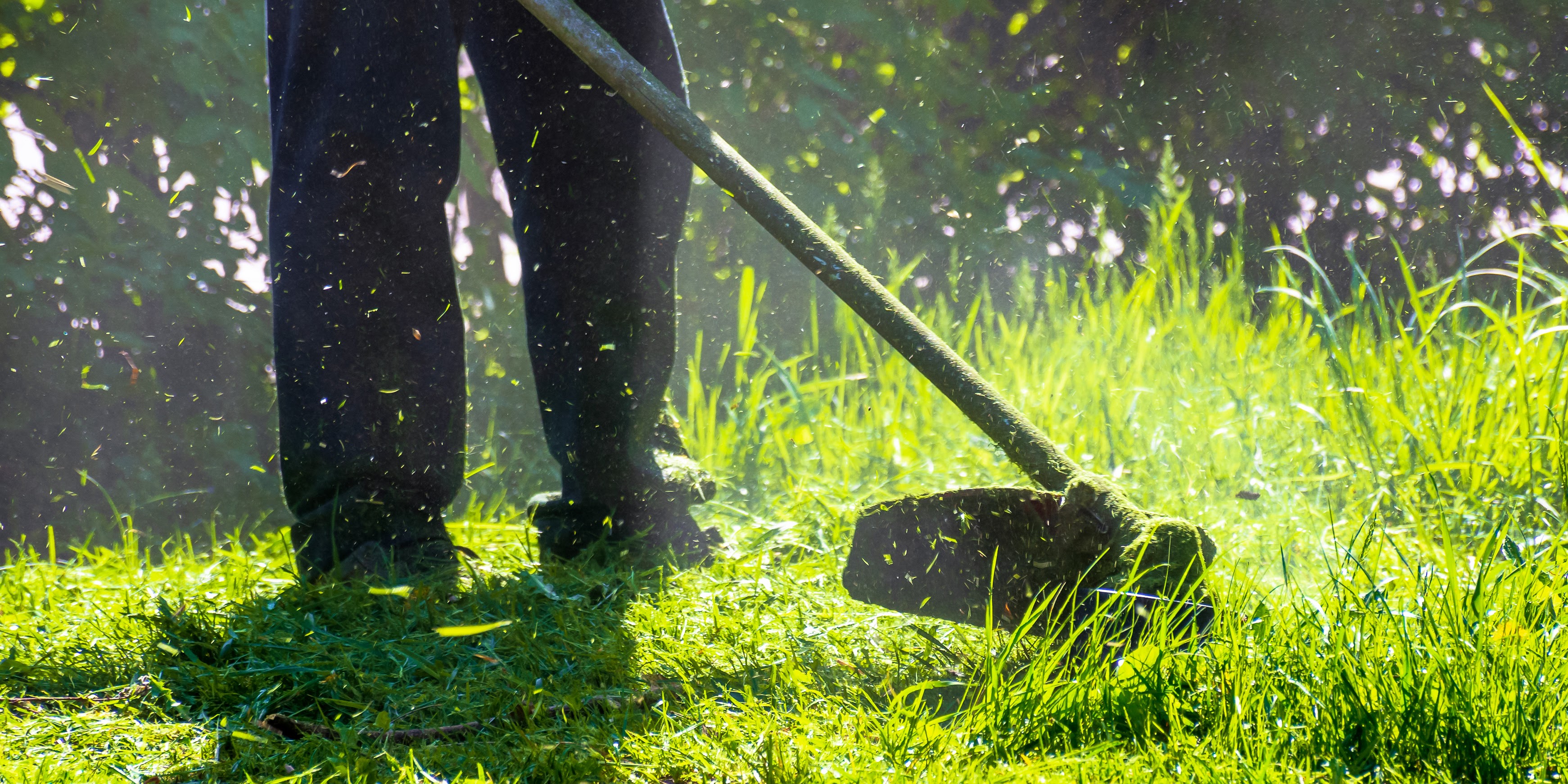
Plenty of stories can be found when local journalists dig into their community's lawn-care practices

Examining community lawn-care habits can yield
rich stories. (Adobe Stock photo)
If you're a local environmental journalist, you need to go no further than examining your community's lawn care for possible stories. "Let’s be real: Green lawns are anything but natural," writes Joseph A. Davis for the Society of Environmental Journalists. "Not only does the perfect green lawn require laborious mowing — and watering, and fertilizer, and weed killers and bug killers. But a lot of those chemicals may run off the lawn and into water bodies where they may do harm."

The more manicured the lawn, the greater the chances of heavy, inorganic treatment. Some residents have little choice but to use chemicals because homeowner associations and zoning laws dictate lawn care. Still, other individuals rebel against their local “lawn police," Davis adds, "That might be a story. Can you keep bees or raise chickens? What does that mean for the turf? . . . Sometimes the streetward side of a yard may be a municipal easement, rather than the owner’s property. This can sometimes spark conflict, too."

For community reporters, if there's land and people around you, there's likely some nature-center story to be found. Some of Davis' reporting resources are shared below. For his full list of ideas, click here.
  • National Wildlife Federation: A national membership organization for wildlife conservation. It has local chapters. And it is the one to certify home yard wildlife habitats.
  • Xerces Society: A broad group whose membership includes scientists and landscape managers, and is devoted to invertebrate conservation. It has pollinator-friendly plant lists by region.
  • Local nurseries: Gardeners visit these local treasures often. Talk to senior staff.
  • County extension: All-purpose helpers with expertise. Here is a good directory.
  • Ecological Landscape Alliance: A professional organization whose members include landscape architects and others. Its directory is a gold mine.
  • Planning and zoning boards: They usually have lots of staff. They can help you find out what’s legal in your area.
  • Garden clubs: There is likely one in your neighborhood. Go to a meeting. And bring cookies.

Tuesday, September 10, 2024

A rural town in Virginia highlights the economic stress and uncertainty that unfolds when its biggest employer closes

The CornerStone Crossroads mart used to serve about 100
Boar's Head employees a day. (CornerStone ad photo)

Update: On Sept. 13, the Boar's Head website announced the indefinite closure of its Jarratt, Virginia plant. The company also included their decision to permanently discontinue making liverwurst. Christina Jewett and Teddy Rosenbluth of The New York Times report, "Union officials said the plant’s 500 workers would be given severance and offered relocation."

The Boar's Head plant in rural Jarratt, Virginia, remains closed after a national listeria outbreak, including nine deaths, was linked to the facility. "For years, the plant was seen as a stable, albeit difficult, place to make a living in the town of roughly 600," reports Eduardo Medina of The New York Times. Jennifer Blake of WWBT News in Virginia reports, "The Boar’s Head production facility [was] the largest and most common source of income for [Jarratt] residents."

The financial domino effect isn't limited to Boar's Head employees. "CornerStone Crossroads, a convenience store and restaurant, has had a drastic decline in customers," Medina reports. "When the plant was fully operating, CornerStone Crossroads would serve. . . about 100 plant workers every day. . . Now, it’s mostly just a handful of construction workers who stop by."

Some Jarratt residents "expressed remorse that a major employer in town had sickened so many people in several states," Medina writes. Russell Lewis, whose mother worked for Boar’s Head decades ago, told Medina, "I’m surprised, I’m disappointed, I’m sad so many people died from it . . . . From what I know from people who have worked there, it’s hard work. You’re basically in a refrigerator."

Other residents are simply anxious for the plant to reopen. Blake reports, "Despite the unhealthy findings, one resident says having that plant open is necessary." He told Blake, "People depend on Boar’s Head. I wish they could get it together and find out (what) the situation is that created the problem because a lot of people depend on it. I mean look around, there are only farmlands. It’s the only productive place in Jarratt as far as employment wise.”

In total, Boar's Head recalled seven million pounds of product and "says it won't reopen until they are 'confident that it meets the standards our customers expect and deserve,'" reports Cameron Thompson of WTVR News in Virginia. "It added employees are undergoing additional training and they are partnering with global food safety experts." Meanwhile, the residents of Jarratt await the plant's reopening and hopefully, a return to lines at the CornerStone Crossroads eatery.

Some U.S. lawmakers want to change methadone treatment availability, but their plan's success seems unlikely

When it comes to substance abuse disorder, perhaps
there is 'no cure.' (Adobe Stock photo)
Solving the U.S. fentanyl overdose crisis has led to political discussions about decreasing methadone treatment restrictions. A recent proposal by a bipartisan group of U.S. senators seeks to save lives by "allowing addiction specialists to prescribe [methadone] outside of the clinics now permitted to dispense it," reports Carmen Paun of Politico. But the bill faces opposition from methadone clinic directors who maintain "that allowing prescribing outside of clinics is risky without their strict safeguards. Methadone is an addictive opioid that’s deadly if abused."

If passed, the bill "would reshape not only how methadone is prescribed but also dispensed — patients could pick up their prescription at the pharmacy," Paun explains. "Now, most have to go in person every day to a clinic to receive their dose under supervision." The additional time and expense of daily travel to and from treatment clinics can make recovery more difficult.

Conflicts over methadone are like a catch-22: "Proponents of making methadone easier to get say that [fentanly's death] toll is ample reason to rethink treatment rules that are now decades old," Paun reports. "The clinics fear it’s a bad idea that could make the overdose problem worse. Thus far, they’re winning the debate in the only forum that matters: Congress."

As the legislation stands now, it is not likely to become law, but the opioid problem remains. "The clinics have succeeded in convincing enough Republicans that expanded access comes with significant risks," Paun writes. "Advocates of broader prescribing say the clinics are more interested in protecting their turf than in saving lives. . . "

Even if methadone could be dispensed through the pharmacy model, the drug isn't a panacea. "Many of those who start methadone treatment drop out within the first year," Paun reports. "Only 34% of a sample of 39,000 patients at BayMark Health Services, one of the nation’s largest methadone treatment providers, were still in treatment one year after they started . . .The reality of opioid use disorder is that, for many, there is no cure, experts in the condition say. Rather, it’s a chronic condition needing lifelong medication and management."

As seasons change, mosquitoes will still be busy spreading deadly diseases. Awareness and precautions can help.

Aedes aegypti, aka  'tiger mosquitos' bite
during the daytime. (Wikipedia photo)
During an average day, many people never think about mosquitoes, but perhaps the tiny arthropod deserves more consideration. Weighing in at a mere 2.5 milligrams (about 180,000 mosquitoes equal a pound), a female mosquito is considered the most deadly animal on earth. Lacking venom or any toxin, mosquitos kill by spreading diseases with alarming effectiveness -- around a million people die a year from illnesses caused by mosquito bites.

"Mosquitoes carry malaria, dengue, yellow fever, chikungunya, West Nile virus and eastern equine encephalitis," reports Alice Park of Time magazine. "Different species of mosquitoes are adept at spreading different viruses." This summer, mosquitoes along the East Coast have been making news. "Towns in Massachusetts are shutting down public parks and other outdoor areas after officials learned that mosquitoes in the region are carrying eastern equine encephalitis, a rare but deadly virus."

Mosquito-borne illnesses will keep increasing as climate change continues to warm the planet. Jonathan Oliver, associate professor at the University of Minnesota, told Park, "With climate change, we see the [habitat] ranges for concerning species like Aedes (which transmits most of the world’s malaria, dengue, yellow fever, West Nile and Zika) spreading northward. . . all predictions indicate that they are going to spread throughout the Southeast and up the Eastern Seaboard, and fairly high north in the Midwest." The more mosquitoes there are, the more bites and ranges of diseases they spread.

While working or playing outdoors is more often associated with mosquito encounters, urban populations are more at risk. "Growing urbanization and densely packed cities — with less-than-ideal sewage and sanitation systems — also provide more and fertile environments for mosquitoes to lay eggs and proliferate."

No matter where humans live, respecting mosquitoes and avoiding bites is key to disease prevention. "That means wearing long-sleeved clothing when outdoors and spraying yourself with insect repellent. You can also eliminate mosquito-breeding grounds by getting rid of any standing water around your home, since mosquitoes just need a little bit of water in which to lay their eggs."

Meanwhile, scientists are trying to depopulate mosquitoes with varied approaches. "Another strategy that appears encouraging is infecting mosquitoes with a bacterium that kills the viruses they may carry," Park adds. "This approach has been used in Southeast Asia and Australia to lower the rates of dengue transmission."

In rural towns with shrinking populations, residents can help seniors age at home by teaming together to serve

Kyla Sanders wears many hats serving Glen Ullin's
aging population. (Photo by Tim Evans, NPR)

Glen Ullin, North Dakota, was once a bustling railway town, but as the town aged, its population steadily declined, leaving many older residents in need of extra help from fewer people. "Adults age 65 and older make up a third of Glen Ullin's roughly 700 residents," report Juliana Kim and Tim Evans of NPR. "The town's retired teachers, accountants and health care workers are making every effort to age at home, but one big obstacle for them is the ability to access medical care — without it, they are often forced to move to a larger city."

While rural populations skew older, the number of citizens available to help each other varies. Glen Ullin residents are working together, so the town's seniors get care without moving. Kim and Evans explain, "Each person plays a separate role — from keeping lonely older adults company to springing into action when a health emergency arises. In rural towns experiencing a loss of people, jobs and resources, this network of support can make a big difference."

The state's new pilot program "Aging in Community" is helping Glen Ullin and other towns address seniors' needs. Kyla Sanders is the program coordinator and her job is actually a lot of jobs. NPR reports, "Her list of responsibilities changes every day — from setting up internet at an older person's home to leading a flower arrangement class for a group of seniors to helping an older adult apply for Medicaid."

Location of Glen Ullin, N.D.
(Wikipedia map)


Glen Ullin's local nurse practitioner, Rhonda Schmidt, and EMT volunteers are also dedicated to helping the town's older residents live healthy, full lives at home. "On a regular day, Schmidt sees somewhere between 15 and 20 patients," Kim and Evans write. Lori Kottre "may work 9 to 5 as the office manager at Glen Ullin's nursing home, but she serves around the clock as the town's emergency responder."

For rural areas, having enough medical workers isn't the only barrier to helping seniors thrive at home. "Loneliness can have detrimental effects on physical health, including increased risk of heart disease, stroke and dementia, according to a report from the U.S. surgeon general," NPR reports. In Glen Ullin, the Rev. Gary Benz "spends his weekdays traveling to the homes of his aging parishioners who are too ill or weak to attend services. . . . Initially, the purpose was to bring them Holy Communion, but he quickly learned that they needed something else — connection."


'On the Front Porch' conversation will explore rural clean energy transitions and how communities can benefit

Tony Pipa and Sarah Mills will discuss energy transitions
in rural America. (Brookings photos)
"On the Front Porch" host Tony Pipa will discuss the ways, means and challenges of energy transitions in rural America with Sarah Mills, an energy policy and land-use expert from the University of Michigan. The event is on Sept. 18 at 4 p.m., E.T. Register here to watch online.

To take an "on the ground look" at rural energy decisions in action, Pipa and Mills will examine the benefits and pitfalls of a wind farming venture led by a small group of farmers in rural Michigan. Their conversation also will examine:

  • The centrality of rural America in the country's transition to clean energy
  • Trade-offs rural communities face when considering energy projects
  • How community-centered approaches can help rural places maximize the community and economic development benefits

This event is a part of Election ’24: Issues at Stake, a Brookings initiative aimed to bring public attention to consequential policy issues confronting voters and policymakers in the run-up to the 2024 election.

Earlier conversations from On the Front Porch can be found here.