Wednesday, September 28, 2011

Residents of rural towns come together to keep local, independent groceries open

As rural America's population continues to shrink, so does the number of local businesses. Many, including local grocery stores, are forced to close when large chain stores like Wal-Mart move nearby. (Kansas City Star photo by Rich Sug)

The loss of local groceries leaves many senior citizens and poor residents living in food deserts, meaning they often have no transportation and live far from chain groceries, Richard Mertens of the Christian Science Monitor reports. 87 rural groceries have closed in Kansas since 2007 and over half of Iowa's groceries were closed from 1976 to 2000. The U.S. Department of Agriculture reports that over 1 million rural households live in food deserts.

Some people in small towns are determined to keep their groceries open. When the grocery in Onaga, Kan. burned, the town rebuilt the store itself and persuaded a grocer from Kansas City to locate there, Mertens reports. The grocer agreed to stay 20 years in exchange for the new building. In Leeton, Mo., local high-school students decided to keep their store open by running it themselves. Entrepreneurship and agriculture students earn class credit for operating The Bulldog Express. In other places, like Walsh, Colo., local residents bought their grocery after it closed five years ago and turned it into a thriving business. A similar story comes from Washburn, Ill., where townspeople bought shares in their store for $50 apiece. (Read more)

Alabama publisher 1st rural community newspaper person to win award given by Ohio University

H. Brandt "Brandy" Ayers, longtime publisher of The Anniston Star in Alabama, was awarded the Carr Van Anda Award by the E.W. Scripps School of Journalism at Ohio University in a ceremony and public lecture Monday at the campus in rural Ohio.

The school's faculty gives the award to high-profile journalists to recognize decades of professional excellence. Recipients have included Bob Woodward of The Washington Post and Nina Totenberg of National Public Radio. Ayers was the 72nd recipient of the award, which was launched in 1968 and named for the legendary New York Times managing editor who studied at Ohio U. in the late 1800s. It is the first time the award has gone to a journalist for a lifetime of work at a rural community newspaper, although many of the previous winners worked in community-level media earlier in their careers.

In a report journalism student Michelle Doe wrote for The Star, the liberal Ayers commented: "I thought I could hear the choir humming ‘Nearer my God to thee.' ... It’s awfully nice to have somebody say well done, and with my views and my area, you don’t get somebody saying well done very often.”

Ohio U. journalism professor Michael Sweeney said he nominated Ayers to recognize not only Ayers' many achievements but also to promote excellence at the thousands of community newspapers throughout the United States. "I like the way [he] is determined to produce high-quality journalism in a small market," Sweeney told Doe. "I have seen some awful, family-owned, small-town papers. Everyone could take a lesson from The Star." (Read more)

Former Eastern Livestock employees indicted on charges of theft and organized crime

Four men who used to work for the defunct Eastern Livestock, LLC have been indicted in Kentucky  for their alleged involvement in what state Attorney General Jack Conway calls a "check-kiting" scheme that cost 172 Kentucky cattle producers over $840,000 in 2010.

Thomas "Tommy" Gibson, 71; Steve McDonald, 59; and Grant Gibson, 48, all of Lanesville, Ind., and Darren Brangers, 43, of Louisville, allegedly took part in organized crime between 2009 and 2010 by collaborating in a criminal syndicate in order to commit theft. They were also indicted on 17 counts of theft by deception over $10,000, 144 counts of theft by deception over $500 and under $10,000 and 11 counts of theft by deception under $500.

According to a press release from Conway's office, this investigation has been ongoing since December 2010. At the time, Eastern Livestock was one of the largest cattle brokerages in America. Conway's office set up a hotline for victims of the scheme and received many complaints from producers saying they received bad checks for livestock sales from the company. Eastern Livestock owes about $130 million. The investigation revealed that over 280 of the almost 800 victims live in Kentucky. The indictment was returned in Metcalfe County, site of an Eastern facility.

Rural-journalism institute boss wins top internal award from Society of Professional Journalists

Institute for Rural Journalism and Community Issues Director Al Cross received the 2011 Wells Memorial Key, the Society of Professional Journalists’ highest honor, in recognition for his outstanding service to the society. Cross covered elections and state government as a reporter for The Courier-Journal for over 26 years and has served as permanent director of the Institute since 2005. He served as SPJ national president in 2001, served on several SPJ national committees and is a director of SPJ's Sigma Delta Chi Foundation. (The Working Press photo by Kevin Zansler)

“Al Cross rises to the challenges of our profession, and has done so consistently throughout his career,” Sue Porter, a Sigma Delta Chi Foundation board member and vice president of programs for the Scripps Howard Foundation, told Olivia Ingle of The Working Press, the SPJ convention newspaper. “Most recently, as director of the rural journalism institute, his leadership is fulfilling a need that would otherwise go unanswered.”

The award was presented by SPJ’s Immediate Past President Hagit Limor at the SPJ President’s Installation Banquet in New Orleans. To see a full list of the 2011 SPJ award recipients, click here.

Caregivers of wounded soldiers find their lives are also changed; getting compensation

The wars in Iraq and Afghanistan disproportionately affect rural areas, which provide more than the average number of recruits. The soldiers who make it home alive come back changed, with traumatic brain damage, post-traumatic stress syndrome or other injuries that require full-time care. Mostly wives and older parents are left bearing the burden.

Catrin Einhorn of The New York Times reports that many caregivers have to quit their jobs and are forced to spend their savings and retirement funds to pay for treatment. A growing number of caregivers suffer from anxiety, depression and exhaustion as a result of their new routines. Rosie Babin, 51-year-old mother of a severely wounded 22-year-old son, was managing an accounting office before her son's injury. Though she's happy to have her son home alive, she now has to take blood-pressure medicine and sleeping pills. "I felt like I went from this high-energy, force-to-be-reckoned-with businesswoman to a casualty of war," Babin told Einhorn. "And I was working furiously at not feeling like a victim of war."

According to research by Joan Griffin, a research investigator with the Minneapolis Veterans Affairs Health Care System, most of the injured are in their 20s and 30s, making this the first time since Vietnam the V.A. has seen such an influx of youth, which extending the length of care to years and sometimes decades. On average, Griffin found that family members spend more than 40 hours a week providing care, making it nearly impossible for them to keep a job.

Organizations like the Wounded Warrior Project have tried to ease the financial burden on these families by lobbying Congress to provide direct compensation and other benefits to caregivers and their families. In 2010, the veteran's agency approved 1,222 applications and awarded monthly stipends of $1,600 to $1,800 to caregivers. Along with the money, they can receive health insurance and counseling, Einhorn reports. This law only applies to caregivers of service members injured after Sept. 11, 2001, and it's uncertain who will qualify and how compensation will be determined. (Read more)

Energy Department says Central Appalachian coal production is rapidly declining

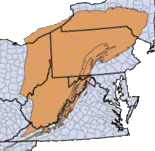
The U.S. Department of Energycontinues to project that Central Appalachia is running out of coal. The department estimates that in just over three years, production will drop from 234 million tons to 112 million. From 2000 to 2009, production in both surface and underground mines in the region dropped by 25 percent. Coal companies blame the Obama Administration and stricter Environmental Protection Agency regulations, saying they are slowing production and reducing jobs. But they admit that coal seams in Appalachia are getting thinner, making them harder and more costly to mine.

Dylan Lovan of The Associated Press reports that losing half its coal production would have a "devastating effect" on Central Appalachia economies dependent by coal mining. A report by Downstream Strategies, a consulting firm in Morgantown, W.Va., estimates that 37,000 coal-industry employees in the region in 2008 accounted for up to to 40 percent of the workforce in some counties. Rory McIlmoil, who helped draft the report, told AP that job losses would happen rapidly during this decline and that West Virginia could expect to lose over $100 million in taxes paid by coal operators.

Industry supporters and politicians from the area are attacking the federal government and the EPA for enacting regulations they say "kill jobs," Lovan reports. Senate Republican Leader Mitch McConnell of Kentucky, Gov. Steve Beshear and West Virginia Sen. Joe Manchin have openly said the EPA has started a "war on coal." On a recent visit with President Obama, Beshear asked him to reduce regulation of the industry. A national study found that regulations have little effect on jobs, and Robert Ukeiley, an environmental lawyer in Berea, Ky., told Lovan that political and industry leaders are ignoring facts: "They'll blame it on Obama and climate change, rather than just acknowledge that geology trumps economics."

The Energy Information Administration, the statistical arm of the Energy Department, said in an outlook statement released in 2011 that Central Appalachia coal is "extensively mined" and said that because the region's coal costs more, it will eventually be replaced by cheaper coal from regions like the Powder River Basin in Wyoming, which produced about 417 million tons in 2009. (Read more)

Tuesday, September 27, 2011

Marcellus Shale states are dealing with hydraulic fracturing in a variety of ways

As the debate over hydraulic fracturing, or fracking, rages on, several states atop the Marcellus Shale are trying to draft legislation or regulations on the natural-gas drilling and production technique, reports Jim Malewitz of Stateline.

In New York, where the industry has just began to locate, drilling could create 6,000 to 24,000 permanent jobs, but Malewitz reports that residents have mixed feelings. In spite of their concern, the state's Department of Environmental Conservation is planning to lift a ban on fracking, with exceptions for two watersheds. Many, including a group of scientists who wrote Gov. Andrew Cuomo about the impacts of fracking, think the method endangers human health. The Department of Energy has suggested companies disclose what chemicals are used in fracking, but only five states have chemical disclosure laws.

Elsewhere, laws concerning gas drilling have been drafted or passed. In New Jersey, legislators passed a bill to permanently ban fracking. Malewitz reports the bill was later vetoed by Gov. Chris Christie, who instead started a one-year moratorium on drilling and asked lawmakers to come up with new regulations. There's a three-year moratorium in Maryland right now so officials can study drilling's impact on human health and the environment.

Malewitz reports that in West Virginia and Pennsylvania, the industry moved fast and has developed quickly as a result. An industry-funded report released this summer found that drilling in these states could generate an economic impact of over $633 million in 2011. Though the U.S. Geological Survey recently found that Marcellus shale contains 326 trillion tons less natural gas than the Energy Information Agency previously estimated, Ohio Gov. John Kasich has labeled the gas deposits "a gift from heaven" for his state. Malewitz reports that he is constructing an energy policy that will likely involve natural gas. (Read more)

Census data show 12% of gay couples are rural

Even though gay couples tend to concentrate in urban areas, large numbers of gay couples live in rural areas, too, the Daily Yonder reports. Census data reveals that rural counties have 12 percent of the nation's gay couples and 16 percent of the overall population. Seven percent live in exurban counties, or those that are part of large metropolitan areas, but have at least half of their residents living in rural settings. (Yonder map)

The number of gay couples nationwide has doubled over the past decade to 901,997, reports the Yonder's Bill Bishop. This data comes from demographer Gary Gates of the University of California at Los Angeles, who has been tracking same-sex couples for years. Bishop found that rural counties with high numbers of gay couples are all over the country, from East Texas to Alabama and Kentucky. New England states and North Carolina have very large numbers of rural same-sex couples, with Sussex County, Delaware, having the highest concentration. The increase in gay couples in rural America can be attributed to higher reporting rates that increase as social stigma surrounding sexual orientation decreases.

UPDATE, Sept. 28: The Census Bureau revised the total number of gay couples to 646,464, citing inconsistencies on response forms for the previous inflated number.

Bishop also found that female same-sex couples are more likely to live in rural areas than male couples. Nearly 69 percent of female couples live in rural counties, and 70 percent live in exurban, compared to just over 57 percent that live in urban areas. Gates told Bishop that this data reflects wage gaps and child-rearing. Women are less likely to be able to afford living in urban areas, and female couples are more likely to have children and want to raise them in rural areas than male couples.

FCC rules keep near-local stations off satellite

Some Dish Network or Direct TV subscribers living in rural counties do not have access to nearby television stations, often making them the last to know when breaking weather alerts or school closings happen.

When satellite companies broadcast local channels, they chose which stations to broadcast in which places based upon designated marketing areas that are determined by Nielsenand its ratings. The Federal Communications Commission prohibits satellite companies from broadcasting local TV signals outside those Designated Market Areas. This leaves residents in some counties receiving news from larger stations that often don't feature news about their local area.

Jenna Mink of the Bowling Green Daily News in Kentucky reports that people living in Logan County do not receive signal from WBKO-TV, the station located in Bowling Green, about 12 miles from their county, because they are part of the Nashville DMA. The station manager for WBKO told Mink that residents would only be able to watch their local news with the use of an antenna, which most residents got rid of when the FCC mandated digital TV in 2009. (Read more)

EPA southeast regional administrator defends agency's concern for environmental justice

The Southeast regional administrator of the Environmental Protection Agency defended her concern for environmental justice at the annual Governor's Energy and Environment Conference in Kentucky on Monday.

Gwen Keyes Fleming said she was striving to find mutual respect and understanding between industries and the communities where they operate in order to find the best way to craft a solution for those communities, by combining environmental stewardship with economic good sense. "With all of these challenges, it's important for us to turn to each other and not on each other," she said. "It's important for us to listen and to include the community and their views in those discussions about energy and extraction."

EPA has come under attack from officials and political candidates in the region and beyond for such actions as tighter controls on mountaintop-removal strip mining of coal. Recently Fleming took a tour of Eastern Kentucky with opponents of the practice.

Fleming said one of her main goals as Region 4 administrator is environmental justice, reaching out to communities that are unserved and underserved. "People ask: Why is the EPA delving into this? First and foremost, it's the morally right thing to do. If you look at the statutes, it is a constitutional right that they apply to everybody equally. It doesn't say clean water for some or clean air for others."

She added that environmental justice is also important for economic development, saying that as long as certain communities were dealing with undue burdens of pollution, sustainable businesses that could strengthen the economy would not want to locate in those areas. (Read more)

Jesse Jackson advocates for rural poor at rural campus in Appalachian Ohio

The Rev. Jesse Jackson held a rally against rural poverty at Ohio University's flagship campus Monday, evoking the "War on Poverty" launched by President Lyndon B. Johnson in 1964. Meanwhile, two student organizations on campus passed out fliers denouncing Jackson's call for "A Great Society" and advocating for more libertarian, free-market approaches to helping America's rural poor.

Jackson told the campus student newspaper, The Post, that Appalachia is "ground zero" for the problem of American poverty. The university is based in Athens, Ohio, and has branch campuses that serve all of Appalachian Ohio.

“We are more able today than ever before to wipe out poverty,” Jackson told the newspaper. “Given how pervasive the issue is, there’s no place for us to start than at ground zero for American poverty and that’s Appalachia.”

An estimated 500 students and staff attended the rally, as did top administrators from Ohio University. A few dozen students representing libertarian organizations passed out fliers arguing "help the poor; reject Jackson's ideas." One of the organizers of the protest told The Post, "We heard Jackson was coming to speak, and we thought, ‘Well, he’s kind of wrong about everything."

Jackson challenged Ohio University to become a center for combatting rural poverty, and also urged students to make the university a national headquarters for a student-focused branch of his Rainbow PUSH organization. “The whitest, poorest and hardest working people in America are in Appalachia,” Jackson said at a press conference. “It’s time for a change, and you are that change.”

Athens County is in the southeastern corner of Ohio, a state that has 23 32 counties that are in Appalachia along the Ohio River Valley. According to a recent report from the Athens County Job & Family Services, about 30 percent of families in the county live at or below the federal poverty level. The county has the highest percentage of people living below the poverty level in all of Ohio, despite the relative affluence in and around the small town of Athens from the university.

Monday, September 26, 2011

English learners more prevalent in rural schools, many of which lack resources to teach them

About 9 percent of U.S. students have limited proficiency in English, but in rural schools the figure is 11 percent, according to the National Center for Education Statistics. The number of English-language learners is quite large in some rural districts such as Columbus Community Schools, in the southeast corner of Iowa, where the Hispanic population is 66 percent, Sally Holland of CNN reports.

There is "a difference between a child who can speak general English and one who has the academic English skills required to get through school," Columbus Supt. Rich Bridenstine told Holland. "The English language learners don't have vocabularies big enough to learn at the rate and speed they need to."

Employers like Tyson Fresh Meats' pork processing plant in Columbus Junction employ large numbers of Hispanics. The increase in English-language learners puts a strain on school systems, with rural schools facing the most difficulty, Elena Silva of Education Sector, a think tank in Washington, D.C. told Holland: "They simply don't have the resources, training, funding and infrastructure to support English language learners." (Read more)

Farmers' markets boost local economies, but sometimes there are too many too close

Over 1,000 new farmers' markets have been added to the U.S. Department of Agriculture's 2011 national directory, reports Cara Bayles of Houma Today in Louisiana. The 17 percent increase from last year is attributed to state initiatives and incentive programs like "Louisiana Grown," Bayles reports. (New York Times photo by Matthew Cavanaugh)

Louisiana Grown is a marketing campaign, similar to those in other states, to promote local specialty crops. As a part of the state's initiatives, the Louisiana Buy Local Purchase Incentive Program gives local restaurants a 4 percent rebate on purchases of local produce, dairy and seafood, Bayles reports.

Farmers' markets are good for local economies, according to a Mississippi State University study that suggests farmers' markets keep money flowing in the state. "For every dollar spent at a Mississippi farmers' market, the study states, 41.33 cents stayed in the region for a second transaction," Bayles reports.

Some farmers say "new markets have lured away loyal customers and cut into profits" or cost them more time and money because "they must add markets to their weekly rotation to earn the same money they did a few years ago," Katie Zezima of The New York Times reports.

A study by Oregon State University found that 32 of the 62 farmers' markets that opened in Oregon from 1998 to 2005 failed. Stacy Miller, executive director of the Farmers' Market Coalition, a nonprofit organization that supports the markets, says they can become over-saturated due to insufficient "planning to ensure the demand is keeping up with the supply." (Read more)

Ky. regulators propose record fine for coal company, but environmentalists are unhappy

Nally and Hamilton Enterprises Inc. may face a record $507,000 fine for "shoddy record-keeping and laboratory problems" relating to water-quality sampling downstream from its coal mines in Eastern Kentucky, Manuel Quinones of Greenwire reports. The Kentucky Energy and Environment Cabinet proposed the fine after an environmental group revealed that the company apparently falsified the reports it submitted to the state, by re-entering virtually the same data from month to month.

Environmentalists say that the company should pay millions in damages, and that tougher pollution controls should be included in any agreement. "For the cabinet to just wag its finger at Nally and metaphorically stamp its foot and say we mean it . . . shows that they aren't really serious about enforcement," said Donna Liseby, water program director for Appalachian Voices.

The cabinet's Office of Administrative Hearings has given Appalachian Voices, Kentuckians for the Commonwealth, Kentucky Riverkeeper and Waterkeeper Alliance a chance to submit comments before the final decision is made next month. (Read more)

National Newspaper Week kit available

A kit for promoting National Newspaper Week Oct. 2-8 is available online through the observance's password-protected website and the Tennessee Press Association's website. The kit contains a logo (right), a crossword puzzle, editorial cartoons, columns, and ads for newspapers to use in print and online.

This year's theme, "Newspapers: The number one source for local news," is a great way for newspapers to celebrate their unique role in the communities they serve, even as the media landscape keeps changing.

Website tracks states' humane animal handling bills

Animal Ag Alliance, a non-profit coalition of individual farmers, ranchers, producer organizations, suppliers, packer-processors, scientists, veterinarians and retailers established in 1987 to make animal agriculture's case to consumers, has launched a new interactive website to track state legislation on animal ag, especially bills dealing with humane handling of animals, AgClips reports.

Sunday, September 25, 2011

Rural journalists accept Sigma Delta Chi Awards

Journalists covering rural topics were much in evidence last night in New Orleans as the Society of Professional Journalists and its Sigma Delta Chi Foundation presented its annual Sigma Delta Chi Awards.

This photo by Al Malpa of The Chronicle in Willimantic, Conn., won for breaking news photography in small newspapers. David Wahlberg of the Wisconsin State Journal won the award for non-deadline reporting by newspapers with circulation of 50,000 to 100,000 for perhaps the greatest series on rural health care ever in an American paper. The series can be a road map for reporting on rural health in any state, and SPJ has put PDFs of the pages here.

Paula Horton of the Tri-City Herald in southern Washington won the award for under-50,000 papers for a two-part series on domestic violence in the Pasco-Kennewick-Richland area. The PDFs are here. Emily Parkhurst of The Forecaster, a weekly newspaper in Maine, won the non-daily investigative reporting award for reporting on use of restraints on children in public schools. The story is available in online segments; links appear after the award's listing on an SPJ web page, here.

The Times of Gainesville, Ga., won the small-daily award for public-service journalism for a series on the Chattahoochee River. Ashley Fielding and Sara Guevara did the series on the Chattahoochee, which can be read here. The award for investigative reporting by daily newspapers of less than 50,000 circulation went to Kirsti Mahron and Britt Johnsen of the St. Cloud Times for a series by "the public cost of Central Minnesota's housing boom and bust." Its pages are here.

Mike Tyree and David Miller of Northern Michigan's Traverse City Record-Eagle were tops in editorial writing at small dailies, for editorials about police misconduct. The PDFs are here. Mike Lester of the Rome News-Tribune in Georgia won a second time for editorial cartooning in small papers, above. (Click image for larger version)

Among broadcasters, the small-market award for public service in television journalism went to Rhonda McBride, Jonathan Hartford and Amy Modig of KTUU-TV in Anchorage for "Pandora's Bottle," about the effects of alcohol on the unborn. Jason Lamb and Dan Carpenter of the same station won the feature-reporting award for a "Jacob's Christmas," about a young boy with many health problems. Boyd Huppert of KARE-TV in Minneapolis won the large-market award for the third year in a row with "Land of 10,000 Stories," which are often rural.

There was another sort of rural winner, in a newspaper that is rarely thought of as rural but probably has the best rural coverage of any American paper, because it devotes staff and space to it. Dan Barry of The New York Times won the big-paper award for column writing, for "This Land," a column that often visits rural places. Only one of the columns he entered was rural, but we note the award in order to recognize the good work that he does. Some other rural coverage earned awards, but the recipients were not on hand to receive their awards. For our earlier item on those and other awards, click here.

Among other award-winning work of use to rural journalists was that of FactCheck.org, which exposed myths and clarified facts about the fedreal health-care reform law; and online investigative reporting on deaths and injuries of military veterans, which are disproportionately rural. The award to an independent source went to ProPublica and National Public Radio, here; the award to an affiliated website went to The Bay Citizen and New America Media, here.

Friday, September 23, 2011

Grant will help rural journalists in South Dakota collaborate on coverage of rural issues

The nation's largest journalism foundation has given a South Dakota group $242,000 to "create an alliance of rural journalists to provide in-depth reporting on topics vital to rural South Dakota," the John S. and James L. Knight Foundation said in a news release.

The money will go to the South Dakota Community Foundation to create Dakotafire Media, which will connect rural journalists "through online meetings, social networking and collaborative writing software – allowing them to cover topics they couldn’t meaningfully address alone," the release says. The grant is for three years.

"The journalists, many of whom come from newspapers with staffs of three or fewer people, will also be able to exchange ideas and learn from each other. As some of these newspapers don’t have websites, Dakotafire will offer an online presence for them. The funding comes at a time of great change in the rural Dakotas, where the population is declining and aging, and metro newspapers are retreating to urban centers."

The editor and program administrator of Dakotafire is Heidi Marttila-Losure, right, most recently a copy editor at the Center for Independent Media and previously the chief copy editor and Facets editor at the Ames Tribune in Iowa. She has long been interested in rural issues, and in 2005 was a participant in "Rural America, Community Issues," a week-long program of the Institute for Rural Journalism and Community Issues and the Knight Center for Specialized Journalism at the University of Maryland.

Rural/urban poverty gap smallest since 1950's but overall poverty report looks bleak

Rural poverty rates increased less than 0.1 percent from 2009 to 2010, while the urban poverty rate rose one percent, a new report from the Economic Research Service, a division of the U.S. Department of Agriculture shows. (ERS graphic) As a result, the gap between rural and urban poverty rates is the smallest it has been since the 1950"s, the Daily Yonder reports. (Read more)While the percentage of people living in poverty — household income below $22,350 for a family of four — has remained relatively constant in rural America, the U.S. Census Bureau report shows a 20 percent increase poverty from 2007 to 2010 in 20 states. The report also shows median household income fell more than 7 percent in 16 states, Carla Uriona, Mary Mahling, Evan Potler and Pamela Prah of Stateline report. To see whether your state was among those with a rise in poverty or drop in median income, see the Stateline infographic below. (Click on the image to enlarge.)

Pa. court will decide if Marcellus gas should be redefined as a mineral, voiding leases

Marcellus shale gas drillers and landowners must wait for a lower court to determine whether thousands of drilling leases are legitimate, following the Pennsylvania Superior Court's ruling that oil and gas ownership rights are unclear, Jim Polson and Mike Lee of Bloomberg report.

This ruling comes following a legal dispute in which the defendants argue shale gas is contained within rocks and should be considered part of the mineral rights, despite the state's century-old practice of considering oil and gas rights separate, Bloomberg reports.

"The case may take as long as two years" to make its way through the lower court, Davide Fine, attorney for K&L Gates LLP said in a phone interview. Meanwhile, many gas and oil companies "may need to check the title to thousands of oil and gas properties they've leased," David Poole, general counsel of Range Resources Corp. told Bloomberg.

Ken Komoroski, attorney with Fulbright & Jaworski LLP in Pittsburgh, suggests a trade association or gas producer petition the Supreme Court to expedite the appeal process, Bloomberg reports.

Federal nutrition program may mean higher lunch prices for most school districts

Schools may have to raise lunch prices as a result of the child nutrition bill signed last December after President Obama's latest attempt to provide free meals to school children in poor areas failed. The bill, calling for more fresh produce and less whole milk in school cafeterias, requires districts to raise prices to cover the cost of meal preparation. The changes will happen next school year and will make the national average paid for lunch $2.46, Fernanda Santos of The New York Times reports.

This increase marks the first time since 1946, when the school lunch program started, that the federal government has involved itself with lunch prices. Under the $10 billion program, the government reimburses districts $2.72 for free meals, $2.32 for reduced-price meals and 26 cents for the full-price version. Along with proceeds from meal and snack sales, this money is put into a larger pot, but the range of what schools across the country charge for lunch varies greatly in order to make meals affordable for all students.

The undersecretary of agriculture for food, nutrition and consumer service, Kevin Concannon, oversees the school lunch program. He told Santos the price increase will allow districts to make adjustments in order to serve kids healthier meals. Some school officials see it differently. Eric Goldstien, who is in charge of New York City Schools' food program, said the bill might make more parents completely skip paying lunch fees, already a problem for districts that have to absorb the unpaid fees, which can reach into the millions of dollars.

There's also a worry that families whose income is just above a threshold for their children to receive free or reduced-price meals may be saddled with a larger financial burden in order to pay higher lunch prices, Santos reports. Diane Pratt-Heavener, a spokeswoman for the School Nutrition Association, which represents cafeteria administrators, told Santos: “We could be shooting ourselves in the foot here if we’re not setting prices at a level that parents are able or willing to pay." (Read more)

Rural residents unhappy with president's endorsement of ending Saturday mail delivery

President Obama's endorsement of the U.S. Postal Service's wish to end Saturday mail delivery will affect rural areas the most, Todd Kleffman of The Advocate-Messenger in Danville, Ky., reports.

Local resident Holly Henson told Kleffman people living in the Kentucky town of about 16,000 rely on Saturday mail delivery. She receives prescriptions and vitamins for cancer treatment through the mail and worries delivery could be delayed if the post office is closed on Saturday.

Carolyn Smith, postmistress in Hustonville, a very small town near Danville, told Kleffman that the two hours her post office is open on Saturday morning are busy because people who don't have time to come in during the week do so then. She said if the post office wasn't open on Saturday, "it would make people unhappy." (Read more)

Thursday, September 22, 2011

Education Dept. will offer to waive No Child Left Behind Act in return for states' policy changes

President Obama and Education Secretary Arne Duncan will announce tomorrow that they will waive major parts of the No Child Left Behind Act if states "adopt changes that could include the expansion of charter schools, linking teacher evaluation to student performance and upgrading academic standards," Lyndsey Layton reports for The Washington Post. "As many as 45 states are expected to seek waivers."

Many rural schools and districts have had difficulty complying with key components of the law, a bipartisan measure passed early in the presidential term of George W. Bush. Duncan, senators and representatives had been discussing legislation to change the act, but Duncan recently said "There’s a level of dysfunction in Congress that’s paralyzing." Now the administration is effectively rewriting the law on its own, Jack Jennings, president of the nonpartisan Center on Education Policy, told Layton: “It’s a momentous development.”

Republicans question Duncan's authority to grant waivers in return for changes, and one of those who had been working on legislation with him, Sen. Lamar Alexander, R-Tenn., has "filed a bill to restrict Duncan’s ability to issue waivers," Layton reports.

UPDATE, Sept. 23
: The Obama Administration said it will approve waivers for "specific NCLB mandates that are stifling reform." They will be granted only if states can prove they are moving schools toward college and career-ready standards, developing new accountability standards and making reforms supporting instruction and school leadership. These factors will be determined based upon an overall index score that tallied through a set list of indicators including things like assessment, yearly progress and teacher and principal readiness.
For the administration statement, click here. For a report from Stateline Daily, go here.

On a conference call with Duncan, Kentucky Education Secretary Terry Holiday and Georgia Schools Superintendent John Barge,
Duncan said these reforms are intended to "encourage local solutions," and will allow states to decide what is best for their students. He said if he hadn't seen leadership from states like Kentucky and Georgia these reforms would not have happened.

The impact this change will have on rural schools was not discussed during the call, though much was said about identifying "low-achieving" schools, typically those in rural and urban areas where resources are limited, so funding needed to improve achievement could be funneled to them. Duncan said he anticipated the first waivers to be approved late this year and early next. Congressional authorization of more in-depth reforms to the Elementary and Secondary Education Act are pending.

Ohio-based webinar will tell farmers fracking risks

The controversial method of gas-well completion known as hydraulic fracturing continues to draw attention in rural America. The Ohio Ecological Food and Farm Association thinks farmers who may lease their land for natural gas and oil should be made aware of the risks involved in fracking. The group will present a free webinar for farmers Tuesday, Sept. 27 at 6 p.m. It will feature analysis from the Ohio Environmental Council about fracking and its impact on the environment. For more information, click here.

Experts on both sides say environmental regulations have little overall effect on jobs

Despite much political rhetoric about "job-killing regulations," they do little overall damage and in some cases create jobs, according to experts, including some with ties to regulated industries. While there are many examples of regulations hurting particular businsses or industries, regulations mostly force jobs to be shifted, reports Marian Wang of ProPublica, an online investigative news service run by Paul Steiger, former managing editor of The Wall Street Journal.

Richard Morgenstern, who was with the Environmental Protection Agency during the Reagan and Clinton administrations and now works for Resources for the Future, a nonpartisan think tank, directed research 10 years ago which found "higher production costs pushed up prices, resulting in lost sales for businesses and some lost jobs, but the job losses were also offset by new jobs created in pollution abatement," Wang writes.

She reports that data from the Bureau of Labor Statistics shows in the first half of 2011, employers reported regulations caused them to layoff 0.2 to 0.3 percent of their employees, but the data don't factor in the number of jobs created as a result of regulation. This is a very narrow way to determine whether or not a regulation is good or bad, Wang writes, noting that the real measure of a successful regulations is "whether it improves waterways or lengthens lives or protects the public as promised."

Cutting through "job-killing" rhetoric is key to understanding that. As Roger Noll, co-director of the Program on Regulatory Policy at the Stanford Institute for Economic Policy Research, told Wang: "The effect of regulation on jobs has nothing to do with the mess we’re in. The current rhetoric about regulation killing jobs is nothing more than not letting a good crisis go to waste." (Read more)

Why new roads take years: environmental and historical concerns, politics, economics and more

It took Kentucky 14 years to replace this road.
Ever wonder why it takes so long to build a new highway? Sean Slone of The Lane Report in Kentucky takes almost 4,000 words to tell us, but he makes it an easy read. It's the first part of the magazine's look at the state's "complex and labyrinthine road construction process." Next month's will be about the "dozens of revenue sources" that can be used to build roads. Outside the money, the process differs relatively little from state to state, especially if federal funds are involved, so Slone's report is a good reference for those not familiar with the details of highway planning, design and construction.

The process "is composed of at least six smaller processes, each with its own challenges, requirements and procedures," Slone writes. "Each contributes to the lengthy overall timeframe, some more than others. Projects all must follow a similar linear progression of required milestones (particularly when federal funds are used), but each also is unique and subject to an array of delays, setbacks, renegotiations, unexpected discoveries and changing priorities."

One of the most time-consuming elements is the study process required by the National Environmental Policy Act of 1970. "The linear nature of the NEPA process takes projects that could otherwise be approved in two or three years and makes them be approved in seven or 10 years, or sometimes never,” Phil Logsdon, assistant director for environmental analysis at the Kentucky Transportation Cabinet, told Slone.

“The NEPA process is an incredibly burdensome process that is so slow and so costly that for 20, 25 or 30 years public officials at all levels of government, Republicans and Democrats, urban and rural, everyone has tried to determine how the NEPA process can be made more efficient. And I suspect 20 years from now we’ll be talking about it as well. We need to be able to do more things simultaneously.” (Read more)

UPDATE, Oct. 25: The second part of the series "explores the maze of requirements attached to federal money and issues created by dozens of tightly restricted revenue source. Part 2 also presents reform options being considered," The Lane Report says.

Congress will end direct payments to grain and cotton farmers, USDA economist says

Farmers are enjoyng record exports and high prices, but those successes make them more vulnerable to cuts to agriculture subsidies, reports veteran congressional correspondent David Rogers of Politico. Direct cash subsidies from taxpayers total about $5 billion a year, much of it going to households earning more than $100,000 a year, making them an easy target that Congress will eliminate, a Department of Agriculture economist told Rogers.

Last April's 10-year House Republican budget called for agriculture cuts of $30 billion. On Monday, President Obama proposed a 22 percent cut, including an end to direct payments and an $8 billion cut in crop insurance. Rogers says those two proposals mean that change will happen, and agriculture's challenge will be to transition smoothly and maintain a "safety net." The going in Congress may not be so smooth; Rogers notes clashes have already occurred between leaders of the House and Senate agriculture committees on one side and the 12-member deficit "super committee," who Rogers says are not "equipped to write agriculture policy."

Advocates for subsidized crops are showing up at political fundraisers, trying to earn support for their industry. Some, such as the National Cotton Council, have written plans that doen't include direct payments. Corn interests have written a plan relying on insurance-premium subsidies. One thing is sure, USDA economist Keith Collins told Rogers: "The argument for direct payments is their economic neutrality . . . but their downside is the same as their upside: They are unrelated to price and production, and thus income. They get made even in boom times. In this budget environment, they are going to be eliminated." (Read more)

Wednesday, September 21, 2011

Students who need funding are less appealing to some financially squeezed universities

As tuition at higher education institutions continues to climb, Tamar Lewin of the New York Times reports on a survey by Inside Higher Ed, an online resource for higher-education professionals, that reveals college admissions officers are now actively avoiding recruiting students who require financial aid, thus excluding many from poor and middle-class homes.

More than a third of the 462 admissions and enrollment directors at four-year colleges and universities said they worked harder the previous year to enroll students who could pay full price without assistance. Many admitted the poor economy was driving their decisions. Meanwhile, one-fourth said they felt pressure from trustees or development officers to admit certain applicants. “We certainly have standards, but there needs to be awareness that when the economy starts to crumble, the standards may start to go out the window,” David Hawkins, director of public policy and research at the National Association for College Admission Counseling, told Lewin.

The top priority for admissions officers at four-year institutions was to recruit international students who pay higher tuition, but at community colleges, officers reported being most concerned with providing financial aid to low and middle-income students, and were more focused on cuts to state funding than whether or not students can pay without financial aid, Lewin reports. (Read more)

Feds' money for tutoring required by NCLB seems ineffective; schools want to spend it differently

School districts across the country are finding that taxpayer-funded tutoring required by the federal No Child Left Behind Act has not helped their schools, and in rural areas where tutoring services are not readily available, districts have found it consistently difficult to comply with NCLB standards.

Julie Hubbard of The Tennessean reports that the tutoring provision was added to NCLB as a way to help low-income students in schools that fail to meet testing benchmarks for three or more years. This forced districts to set aside 20 percent of federal funding for tutoring services. Jack Jennings, president and CEO of the Center on Education Policy, told Hubbard that only about a fifth of students qualifying for tutoring actually apply to receive it, and what tutors teach doesn't line up with what students encounter in the classroom. Only one of four research studies showed tutoring had a positive effect.

Tennessee is one of three states whose education departments are asking the federal Department of Education to let them use money set aside for tutoring services in other ways that have been proven to help students, such as instituting longer days. Education Secretary Arne Duncan has written a draft waiver proposal that would give districts discretion in how they spend this money, but House Republicans oppose the plan because they say parents should have options and tutoring allows private industry to be involved in schools. (Read more)

Breaking down Obama's deficit-reduction speech: Parts were misleading and confusing

Glenn Kessler of The Washington Post believes certain statements from President Obama's speech about taxes and spending on Monday may be "misleading and probably confusing" for many Americans, so he breaks down major points from the speech and examines the facts behind them.

Obama claimed his plan would cut $2 in spending for every $1 gained in revenue. Kessler says that depends upon how you define the "baseline for spending." He reports that Obama is including $1.09 trillion in savings from ending the wars in Afghanistan and Iraq, but this same measure was included in Obama's February budget and he never intended to spend this money in the first place. An unnamed administration official argued to Kessler the earlier budget was never enacted, so this still counts as a cut.

The president also said the American Jobs Act would not add to the national debt, but that is untrue in the short-term. Kessler found the bill would add $303 billion to the deficit, but would slowly start to decrease it around 2013 and pick up speed in subsequent years. Kessler notes that those future numbers are all estimates and would depend on decisions of future Congresses. (Read more)

Severe drought in the Southern Plains could stretch into a multi-year event

La Nina, the weather phenomenon that cools the Pacific and warms the center of North America, is causing a year-long drought in the Southern Plains, and its return could prolong the toughest season farmers say they've ever seen.

The National Oceanic and Atmospheric Administration says the drought could become a multi-year event. Brian Fuchs, a climatologist with the National Drought Mitigation Center, told Tiffany Stecker of Environment & Energy News that recovering from severe droughts is a slow process, and the fear is that a multi-year drought would have dire consequences on farmers in the Southern Plains. Here's an interactive map illustrating the drought:

The drought has already caused damage in several states and is keeping farmfor the year ers from planting crops at the proper time. Stecker reports that Texas agriculture has already suffered $8.7 billion in losses, with $2.3 billion in the state's leading cash crop, cotton. Growers in Oklahoma report being 15 to 20 inches short of rain for the year and wheat farmers are finding it difficult to plant at all. (Read more)

Telemedicine helps rural hospitals use drug to prevent death and disability from strokes

Telemedicine may be a cost-effective way for rural hospitals without adequate neurology staff to gain the ability to treat stroke patients with a clot-busting drug that is little used in rural areas, a new study in the peer-reviewed journal Neurology suggests.

By comparing the costs and quality-adjusted life years of patients who were treated with telestroke, a new telemedicine technique for strokes, with those treated through standard care, researchers found "the cost of telestroke over a person's lifetime was less than $2,500 per quality-adjusted life year," WIAT-TV CBS 42 in Birmingham, Ala. reports.

Only 2 to 4 percent of stroke patients now get tPA, a clot-busting drug that can prevent death and disability if administered in the first few hours following a stroke, "with the lowest percentages in rural areas largely because there aren't enough stroke experts with experience using tPa," Jennifer J. Majersik, researcher at the University of Utah School of Medicine, said in an interview. If reimbursement rates and high equipment costs improve, "Telestroke has the potential to greatly diminish the striking disparity in stroke care for rural America," Majerik added. (Read more)

Tuesday, September 20, 2011

Topix seems to enjoy dragging small towns into the gutter; here's our invitation for it to get out

We reported early this year that local forums run by Topix were both revealing and creating problems for rural places; today The New York Times picked up on the story and got down to the nitty-gritty, with examples from several small towns. Kansas City-based reporter A.G. Sulzberger, son of publisher Arthur Sulzberger, went to the Ozark town of Mountain Grove and Dee's Place, a local hangout where "people are not happy" about Topix:
A waitress, Pheobe Best, said that the site had provoked fights and caused divorces. The diner’s owner, Jim Deverell, called Topix a “cesspool of character assassination.” And hearing the conversation, Shane James, the cook, wandered out of the kitchen tense with anger. His wife, Jennifer, had been the target in a post titled “freak,” he said, which described the mother of two as, among other things, “a methed-out, doped-out whore with AIDS.” Not a word was true, Mr. and Ms. James said, but the consequences were real enough. Friends and relatives stopped speaking to them. Trips to the grocery store brought a crushing barrage of knowing glances. She wept constantly and even considered suicide. Now, the couple has resolved to move.
Sulzberger writes that the concerns about Internet bullying and privacy are familiar, "but in small towns there are complications. The same Web sites created as places for candid talk about local news and politics are also hubs of unsubstantiated gossip, stirring widespread resentment in communities where ties run deep, memories run long and anonymity is something of a novel concept."

UPDATE: The story quotes Christian Sandvig, an associate professor in communication and media at the University of Illinois, as saying “Something about rural culture seems to make people want to have conversations in public.” But on the Huffington Post, Sandvig writes, “There are problems. Yet it's not clear to me that these are rural problems.” And the Daily Yonder says the Times should have noted Speak Your Piece, a feature of The Mountain Eagle in Whitesburg, Ky., in which anonymous, phoned-in comments are published after being filtered by the weekly's staff.

Topix has found "an unexpected niche in communities of a few hundred or few thousand people — particularly in what Chris Tolles, Topix’s chief executive, calls 'the feud states.' One of the most heavily trafficked forums, he noted, is Pikeville, Ky., once the staging ground for the Hatfield and McCoy rivalry."

That's about enough, Mr. Tolles. You and your newspaper paymasters (Gannett Co., the McClatchy Co. and Tribune Co.) are hereby invited to take your foul product out of rural America. And perhaps newspapers in towns where Topix draws many readers should ask themselves if that's partly because they don't turn over enough rocks and/or run vigorous editorial pages that inspire responsible debate.

Illinois officials are out to get the Asian carp, and hunger, simultaneously

Asian carp keep swimming to the surface of the news, as people along the Great Lakes and the Illinois River try to decide how to deal with the invasive fish. To keep them out of the lakes, perhaps ruining their fisheries, officials have tried to use electric shock; now others are placing the fish on "invasivore" dinner menus. In Illinois, the state Department of Natural Resources hopes the fish can be removed from the Mississippi, Illinois and Ohio rivers and served in food banks and kitchens across the state.

Pamela King of Greenwire reports that the campaign, Target Hunger Now, builds off the 30-year-old Illinois Sportsmen Against Hunger program in which hunters donate a portion of their venison harvest to poor families through independent processors and distributors. Through Target Hunger Now, the state agency contracts anglers to catch Asian carp and handles processing and distribution.

Tracy Smith, director of a partner organization to Target Hunger Now, Feeding Illinois, told King the public has been receptive to the idea of eating Asian carp. The fish are rich in protein, a nutrient often overlooked by struggling families during hard times. However, a spokesman for the agency told King this solution is a short-term one; they are looking for a way to completely eradicate the fish.

CNN discovers that rural communities rely on themselves to help students achieve

Rural schools face issues and problems that their urban counterparts don't, pushing schools in rural areas to rely on community support to help students achieve, reports Sally Holland, education producer for CNN. (Photo: East Hickman School in Tennessee, from the Hickman County Times)

Though less than a fourth of Americans are now classified as rural, Department of Education data shows that over a third of U.S. public schools are in rural areas and they have about a fourth of the nation's students. But those numbers mean rural schools tend to have fewer students, and funding usually depends upon enrollment numbers. And low funding can mean low pay that complicates teacher recruitment and retention.

On the other hand, "One of the advantages of a rural area, is that everybody knows everybody and helps support everybody," Greg Ray, superintendent of the Mediapolis School District in southeast Iowa, told Holland. While the district has too few students to have a class in Chinese, Ray found a local Chinese native to teach an online course for it and other small districts.

Despite their challenges, Holland reports that rural high schools match the graduation rates of suburban high schools. Kris Amundson of Education Sector, a nonprofit that says it is working to change education policy to benefit students, told Holland that high graduation rates in rural areas are due largely to a "tremendous commitment" from the community to encourage students to get through high school. But that doesn't necessarily mean more rural kids are going to college, Amundson said. Only 17 percent of adults in rural areas have a college degree. Holland reports that students with college-educated parents are more likely to attend college themselves. (Read more)

Activists in college towns hope to make them 1st Ky. places with fairness laws outside major cities

There are two Kentuckys: rural, where very few gay and lesbian people live; and urban, where 2010 Census found more than 10 same-sex couples per 1,000 households, compared to the state average of 7, reports Jacalyn Carfagno of WEKU News in her two-part series about the state's lesbian, gay, bisexual and transgender community.

LGBT people living in rural areas are obvious targets, Carfagno reports, citing an incident in Hazard in which two gay men were asked to leave a public pool, and one in Harlan where a lesbian couple reported being beaten by a group of men because of their sexual orientation. The latter incident caused the Kentucky Equality Federation, a non-profit promoting equality for LGBT people, to designate seven mountain counties in southeastern Kentucky a "special operating region" in which to "raise awareness about hate crimes based on sexual orientation and the group’s mission, intercede on behalf of victims of discrimination and hate crimes," Ralph Davis reports in the Hazard Herald.

Gays and lesbians in rural Kentucky lack protections of anti-discrimination "fairness" ordinances passed in urban centers of the state. In Berea, a college town of 13,000 where the state's Bluegrass region meets Appalachia, the city council has rebuffed activists' request to include LGBT people in a broader human-rights ordinance that is awaiting passage. Peter Smith of The Courier-Journal reports the activists have planned a rally today to urge the council to add sexual orientation to the list of protected minorities. If they prevail, Berea would be the only Kentucky city outside Northern Kentucky, Lexington and Louisville to have such an ordinance. (Read more) UPDATE, Sept. 21: The council voted last night for a human rights ordinance and commission to enforce it, but not to include sexual-orientation discrimination. Some council members said that would be considered later. For Smith's update, click here. For an on-the-scene report from Greg Kocher of the Lexington Herald-Leader, go here. (Herald-Leader photo of protesters by Mark Cornelison)

Berea is in Madison County; the county seat of Richmond, a larger town and home to Eastern Kentucky University, has declined to pass a fairness ordinance. This Friday 17 businesses on or near Main Street will "show support for local anti-discrimination protections in employment, housing, and public accommodations based on perceived sexual orientation and gender identity," Business Lexington reports.

Monday, September 19, 2011

Obama deficit plan would cut farm subsidies, let Postal Service end Saturday mail delivery

President Obama's deficit-reduction plan includes major cuts in agriculture programs, $33 billion over 10 years. It would eliminate direct payments to farmers and reduce subsidies to crop-insurance companies. It would also authorize the U.S. Postal Service to deliver mail only five days a week; USPS wants to eliminate Saturday delivery, an idea opposed by rural interests and newspapers.

While his overall proposal to the joint congressional committee formed to reduce the national debt is unlikely to pass, Obama's proposal sets markers for the negotiations and his re-election campaign. "The proposals provide a road map for cutting farm spending," writes Philip Brasher of the Gannett Washington Bureau. Obama said he "remains committed to a strong safety net for farmers, one that protects them from revenue losses that result from low yields or price declines, and strong crop insurance programs. But there are programs and places where funding is unnecessary or too generous."

On direct payments to grain and cotton farmers, recently been targeted by budget cutters, Obama said taxpayers continue to subsidize "farmers who are experiencing record yields and prices," and noted that "more than 50 percent of direct payments go to farmers with more than $100,000 in income." He added, "Economists have shown that direct payments have priced young Americans out of renting or owning the land needed to enter into farming."

Obama also proposes to cut conservation funding by $2 billion over 10 years, citing "the dramatic increase in funding (roughly 500 percent since enactment of the Farm Security and Rural Investments Act of 2002)," which he said has created redundancies and "difficulties in program administration." The agricultural cuts are on Pages 17 and 18 of the PDF proposal.

In addition to authorizing five-day mail delivery, on Page 23, Obama would address the USPS deficit by restructuring the funding of its its retiree health benefits, refund almost $7 billion it has paid into the system recently, allow the service "to offer non-postal products and increase collaboration with state and local governments" and allow it "to better align the costs of postage with the costs of mail delivery while still operating within the current price cap, and permit USPS to seek the modest one-time increase in postage rates it proposed a year ago." For opposing statements from Sen. Susan Collins, R-Maine, and a mailers' lobby, click here. For a story from The Associated Press, click here.

At the Interior Department, money would be gained with a fee on non-producing oil and gas leases, reform hardrock-mining leases and other measures, listed on Pages 31-32. For the White House summary sheet of the entire plan, click here.

Drug-induced deaths, fueled by prescription-drug abuse, exceeded traffic fatalities in 2009

For the first time since such data were compiled, drug-induced deaths outnumbered traffic fatalities in the United States in 2009, largely due to the increase in prescription-drug abuse, the Los Angeles Times reports today.

Using Centers for Disease Control and Prevention data, reporters Lisa Girion, Scott Glover and Doug Smith found that drug deaths totaled 37,485 in 2009, the last year for which the data are available. They calculated that deaths from pain and anxiety drugs have increased 284 and 256 percent, respectively, since 2000.

Prescriptions can help those who need the medicine, but can also fuel a black market of drug trafficking. The Times reports that the most commonly prescribed medication in the nation is hydrocodone, or Vicodin, which has been prescribed more than top cholesterol drugs and antibiotics.  The other most commonly abused prescription drugs are OxyContin, Xanax, Soma and a newcomer to the list, Fentanyl, 100 times more powerful than morphine.

The reporters write that these drugs are now causing more deaths than heroin and cocaine combined, and their analysis found the types of people dying from overdoses constitutes a wide range: from teenagers to working men and women who become addicted after taking the medication for job-related injuries. Public health officials are using this report to call attention to the growing prescription drug abuse problem, which those officials label an epidemic. To view an interactive map illustrating the rise in drug deaths by state, click here. New Mexico topped the list, followed closely by West Virginia. (Read more)

Scientists say water systems probably can't filter fracking chemicals; pattern of illness found

A group of scientists has determined that municipal water systems cannot filter chemicals used in hydraulic fracturing of natural-gas wells, or "fracking." In a letter to New York Gov. Andrew Cuomo, the scientists said "It will be practically impossible" for drinking-water systems to protect against the chemicals, which include benzene, toxic metals, radioactive materials and surfactants and organic biocides.

Brian Nearing of the Albany Times Union reports that 59 experts from 18 states and seven other countries signed the letter. The state has proposed to ban fracking near watersheds that provide drinking water to New York City and Syracuse, but other watersheds would not have such protection. Cornell University ecology professor and letter signer Robert Howarth told Nearing that if the risk for watersheds providing water to New York City was too high, so was the risk for any watershed in the state. The NYC watershed, in the Catskill Mountains, is especially pristine.

In the wake of the letter's release, Abraham Lustgarten and Nicholas Kusnetz of ProPublica completed a review of government environmental reports, private lawsuits and interviews with many residents, physicians and toxicologists in four big gas-drilling states and found that cases of respiratory infections, headaches, neurological impairment, nausea and skin rashes, all believed to be caused by some aspect of fracking, have been occuring for the last decade in Colorado and Wyoming. Similar cases are just beginning to pop up in Pennsylvania, where drilling of the Marcellus Shale has recently increased. However, Lustgarten and Kusnetz write that the extent and cause of the problems is unknown, as neither states nor the federal government have tracked reports of such illnesses or investigated how drilling can affect human health. They also looked at Texas. (Read more)

Miner takes on coal company to protect the safety of himself and his fellow miners

Charles Scott Howard is an underground coal miner who earned the reputation of "whistleblower" in Letcher County, Kentucky, for his refusal to allow any activity that might endanger himself and his fellow miners while underground to go unchecked. For this conviction, the 30-year mining veteran has been disciplined, fired and "branded a troublemaker" for going above his superior's heads to report safety violations.

Perhaps his most famous safety violation report came four years ago when he testified to the federal Mine Safety and Health Administration, reports Dave Jamieson of the Huffington Post. This particular hearing concerned mine seals which were intended to avoid explosions. Howard showed the panel of MSHA officials a video of mine seals from the mine in which he was working at the time, owned by Cumberland River Coal Co. The video showed mine seals that were cracked to the point where water was coming through them. MSHA immediately sent inspectors to the mine. (Photo by Jamieson)

Jamieson reports that Howard abides by his personal code of "safety first" at great personal risk. He has filed five whistleblower-discrimination complaints against his company in five years. He's lost his job twice allegedly because of his safety complaints and had to be reinstated to work by a federal judge both times. However, he never loses his lawsuits, Jamieson writes; he either wins or settles, and only the latter reluctantly. (Read more)

Removing dams benefits environment and spawning fish; also creates tourism jobs


More deteriorating dams are being removed from streams in most of teh nation, Juliet Eilperin of The Washington Post reports. The main reaosns are aging infrastructure and declining fish stocks, and most see the rivers as more economically viable without the dams are gone, hoping tourism will increase.

Eilperin writes that 241 dams were removed between 2006 and 2010, a 40 percent increase over the previous five years. Most were in the East and Midwest, and had been major power sources in communities supported by textile and paper mills. Many state and local governments are trying to decide what to do with old dams. Most of America's 80,000 dams were built more than 50 years ago. It's often cheaper for local governments to remove dams than restore them.

Some detractors say taxpayers shouldn't have to pay for removing dams they do not own, but removal can bring benefits for both wildlife and humans, Eilperin reports. Not only can spawning fish better navigate their way upstream, but in some cases, like in Clarksburg, Mass., dam removal saved the town from flooding during Hurricane Irene. Previously, the Briggsville Dam had raised a river's level to the overflow point during heavy rains.  and others - mostly in the Pacific Northwest - who consider dams viable hydroelectric energy producers. (Read more)

Sunday, September 18, 2011

Down economy hits small, rural libraries; conference teaches them how to garner money

Small, rural libraries have an advantage over larger libraries and it has everything to do with their size. They enjoy strong connections to the people, including local government officials, of the communities in which they operate, and are oftentimes the center of these communities. This was the overarching theme at the Association for Rural and Small Libraries annual conference this month.

The conference emphasized the importance of rural libraries to their respective communities, and focused on the economic concerns many small libraries across the country are currently facing. Advocacy and funding have become central concerns, reported Miguel Figueroa of American Libraries Magazine. As a result, some programs at the conference included grant writing, endowment building and working with boards of trustees.

The conference also made technology a focus, introducing a program called "Pushing the Limits," which the National Science Foundation is trying to bring to 100 small libraries across the country. Attendees of the conference were also encouraged to make their libraries community-centered by building partnerships with local organizations, schools and workforce commissions.