Monday, May 04, 2020

Nominations sought for Tom and Pat Gish Award for courage, integrity and tenacity in rural journalism by May 15

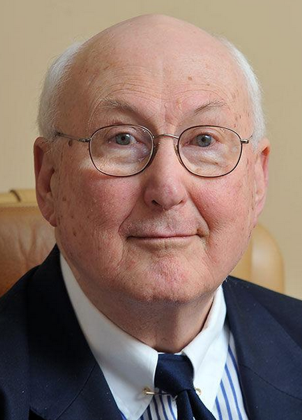
Tom and Pat Gish
Each year the Institute for Rural Journalism and Community Issues presents the Tom and Pat Gish Award for courage, tenacity and integrity in rural journalism, named for the couple who exemplified those qualities as publishers of The Mountain Eagle in Whitesburg, Ky., for 51 years.

Nominations for the Gish Award may be made at any time, but the deadline to be considered for this year's award is May 15, having been extended from May 1. To nominate a candidate, send a detailed letter explaining how the nominee shows the kind of courage, tenacity and integrity that Tom and Pat Gish demonstrated at their weekly newspaper in the Central Appalachian coalfield. Documentation does not have to accompany the nomination, but is helpful in choosing finalists, and additional documentation may be requested or required. Send your nominating letter, initial documentation and any questions to Al.Cross@uky.edu.

The Gishes withstood advertiser boycotts, business competition, declining population, personal attacks, and even the burning of their office to give their readers the kind of journalism often lacking in rural areas, and were the first winners of the award named for them. Tom and Pat died in 2008 and 2014, respectively. Their son Ben is editor and publisher of the Eagle and serves on the award selection committee. 

The Institute seeks nominations that measure up, at least in major respects, to the records of the Gishes and other previous winners. After the Gishes, winners have been the Ezzell family of The Canadian Record in the Texas panhandle; Jim Prince and Stanley Dearman, current and late publishers of The Neshoba Democrat in Philadelphia, Miss.; Samantha Swindler of The Oregonian for her work at The Times-Tribune in Corbin, Ky., and Jacksonville Daily Progress in Texas; Stanley Nelson and the Concordia Sentinel in Ferriday, La.; Jonathan and Susan Austin of the now-defunct Yancey County News in western North Carolina; the late Landon Wills of the McLean County News in Kentucky; the Trapp family of the Rio Grande Sun in northern New Mexico; Ivan Foley of the Platte County Landmark in western Missouri; the Cullen family of the Storm Lake Times in northwest Iowa; Les Zaitz of The Malheur Enterprise in eastern Oregon; an
d last year, three reporters whose outstanding careers have revealed much about the coal industry in Central Appalachia: Howard Berkes, retired from NPR; Ken Ward Jr., then with the Charleston Gazette-Mail; and his mentor at the Gazette, the late Paul Nyden. For a report on last year's award presentation, click here.

County-level study shows impact of pandemic is growing faster in rural areas, which are probably more vulnerable

Rate of increase in coronavirus cases and deaths. Kaiser Family Foundation chart; click the image to enlarge it.
Kaiser Family Foundation analysis compares coronavirus cases and covid-19 deaths in metropolitan and non-metropolitan counties. "While metro counties still have significantly higher cases and deaths per capita, non-metro counties are experiencing faster growth rates, potentially signaling challenges ahead," KFF reports. "Some counties with the highest rates of cases and deaths are located in Georgia, where the state has moved to significantly ease social distancing measures."

Metro counties had about three times as many confirmed coronavirus cases and about four times as many covid-19 deaths as non-metro counties, as of April 27. Because the confirmed death rate is only slightly higher in metro counties, the differences in deaths are mostly due to differences in infection rates, KFF reports.

"Less densely populated rural areas initially saw slower spread of the new coronavirus, and both cases and deaths remain lower in non-metro areas than metro areas," KFF reports. "However, there are troubling signs that the rates of growth in both cases and deaths are increasing more rapidly in rural areas, where the population tends to be older, younger people are more likely to have-risk health conditions, and hospitals have fewer ICU beds per capita."

In trade-war bailout, biggest farms gained advantage, and millions, by exploiting loopholes, '60 Minutes' reports

As the federal government prepares to distribute $19 billion to farmers hurt by the coronavirus pandemic, "60 Minutes" looked back at the past two years of trade bailouts to see where that $28 billion went and whether it helped. "As it turns out, most of it bypassed the country's traditional small and medium-sized farms that were battered by the loss of their export market and which are now being hit with severe losses from the coronavirus pandemic," Lesley Stahl reports for CBS News.

So far, one-third of the Market Facilitation Program aid has gone to about 4 percent of farms. That's because the aid is based on production and planted acres, Agriculture Secretary Sonny Perdue told Stahl. But that's not the whole story, according to the Environmental Working Group, a green advocacy nonprofit. The largest farms were only meant to be eligible for $250,000 per person or farm, but many doubled down by taking advantage of statutory language that allows anyone with a financial interest in the farm to collect trade aid, even if that person is an an urban farm investor or a farmer's relative living in a city.

EWG President Ken Cook told Stahl: "If you're a very large farm operation and you're eligible for these payments, the most important tool as a farmer is not what's in your machine shed. It's the lawyer you hire to set up a paper farm that's designed to absorb as much federal money, as much Trump payment, as possible." Stahl interviewed an Arkansas lawyer known as "Mr. Loophole" who helps farmers accomplish that.

Doug Sombke and Bob Kuylen, two South Dakota farmers who oversee farmers' unions in the Dakotas, told Stahl that MFP aid helped them survive the past two years, but "didn't come close to covering most of their members' losses or their own." Meanwhile, "with restaurants and schools closed across the country, their markets are shrinking. It's adding to already rising debt and farm bankruptcies aggravated by the trade war with China."

Sombke told Stahl that his farm lost between $125,000 and $200,000 a year for the last three years. When Stahl asked Sombke if the two rounds of bailout money helped, he said: "Well, it made the banker happy. It didn't do anything for me."

17 states sue EPA over weakened 'waters of the U.S.' rule

"A coalition of 17 Democratic-leaning states sued the Trump administration on Friday for rolling back Obama-era protections for waterways, arguing the move ignores science on the interconnectivity of water," Rebecca Beitsch reports for The Hill. The states suing are California, Connecticut, Illinois, Maine, Maryland, Massachusetts, Michigan, New Jersey, New Mexico, New York, North Carolina, Oregon, Rhode Island, Vermont, Virginia, Washington and Wisconsin.

The "waters of the United States" rule defines what is covered by the Clean Water Act. The Obama administration redefined it to include seasonal or intermittent waterways, many around farms, partly out of concern that fertilizer and pesticide runoff from such streams would pollute lakes and rivers that are obviously covered by the law. The Trump administration officially rolled back the Obama-era redefinition in January, replacing it with the more limited "Navigable Waters Protection Rule."

Because the new rule allows states to set their own protections for smaller waterways, polluting industries would have an incentive to open in states with weaker protections, which would hurt states downriver, New York Attorney General Letitia James told reporters last week.

"The scientific claims raised by the states have been likewise raised by EPA’s independent Science Advisory Board, which reviewed the rule when it was first proposed, writing in a draft report that 'aspects of the proposed rule are in conflict with established science ... and the objectives of the Clean Water Act,'" Beitsch reports.

H.B. 'Brandy' Ayers, standout small-daily publisher, dies

Brandy Ayers
H. Brandt "Brandy" Ayers, a newspaper publisher who was courageous, colorful and in the end controversial, died in his hometown of Anniston, Ala., Sunday. He was 85.

Ayers was publisher of The Anniston Star, which "long attracted young reporters interested in launching a career in Alabama," notes Amy Yurkanin of AL.com. "It took liberal positions on integration in the 1960s and 1970s and endorsed Democratic candidates for president despite their unpopularity in the state." His company, Consolidated Publishing, also has The Talladega Daily Home and three weeklies: The News-Journal, in Jacksonville; The Cleburne News, and the St. Clair Times.

"Ayers won the Editorial Leadership Award from the American Society of Newspaper Editors after he helped create an institute for community journalism at the University of Alabama. The program places second-year graduate students in internships at the Star, WVUA-23 or Alabama Public Radio," Yurkanin reports. He was “instrumental in creating the Alabama Press Association Journalism Foundation in the 1960s, and supported the efforts of the foundation through the years,” APA Executive Director Felicia Mason told Yurkanin.

Ayers was "a National Public Radio commentator and a well-known voice of Southern liberalism," the Star's Tim Lockette writes. "Much of his fame transformed into notoriety in recent years, as former employees came forward with stories of sexual harassment by Ayers in the 1970s." That led to his replacement as publisher by his wife, Josie, who survives him. 

Friday, May 01, 2020

Rural counties lost many jobs in Mar.; see county-level data

Job changes, Feb. to March 2020. Daily Yonder map; click the image to enlarge it or click here for the interactive version
Rural counties lost about 300,000 jobs from February to March, according to an analysis of the latest Bureau of Labor Statistics report, the first solid measure of the pandemic's effect on jobs.

"Rural employment declined from 20.3 million jobs in February to about 20 million in March, a 1.2 percent drop in employment, Bill Bishop and Tim Marema report for The Daily Yonder. Employment dropped 1.9% in metropolitan counties, a loss of 2.6 million jobs. About three-quarters of those losses came from cities with more than 1 million residents. Nationwide, employment dropped 1.8%.

Jobs grew in 20 percent of rural counties gained jobs in March, but that was true in only 6.5% of urban counties. "Rural counties were much slower to add jobs following the 2008 Great Recession. Now rural counties seem to be slower losing jobs in response to the pandemic, at least for now," Bishop and Marema report. They note that the social distancing and lockdowns that caused the job losses didn't really start until halfway into March.

Hard-hit Native American tribes waiting for promised aid, delayed by dispute with Alaska Native corporations

"Tribal governments were supposed to get $8 billion in direct emergency relief from the CARES Act, the $2 trillion covid-19 stimulus bill that became law on March 27. More than a month later, they haven’t gotten any of it," Jennifer Bendery reports for HuffPost. "Part of the reason is that the Treasury Department, which is charged with distributing that money, has been flailing in its dealings with tribes."

Aid was also slowed down because of a legal dispute over how the money was to be distributed. The Trump administration intended to give some of the money to for-profit Alaska Native corporations, but tribal governments filed suit, arguing that they could lose millions of dollars if they had to share the money with ANCs. On Monday, a federal judge ruled that ANCs don't qualify as tribal governments and can't get the aid money, Zoe Tillman reports for Buzzfeed News.

The pandemic has hit many rural Native American communities hard, often exacerbated by inadequate infrastructure, overcrowded housing, lack of access to health care, and underlying health conditions, Simon Romero reports for The New York Times.

The delay in distributing the funds violates the 30-day requirement in the CARES Act, as well as a deadline the Treasury imposed on itself: department representatives had told the court that they would begin distributing the money as soon as this past Tuesday, Acee Agoyo reports for Indianz, a news website operated by the Winnebago Tribe. The Trump administration has made no move to appeal the court decision.

Joe Biden ramps up his rural campaign

Much has been made of Hillary Clinton's failure to connect with rural and blue-collar America, and how that disconnect likely cost her the election. Presumptive Democratic presidential nominee Joe Biden seems to have taken the lesson to heart, and is ramping up his campaign efforts in rural areas with advisers who helped Obama win in many rural areas in 2008.

Biden's rural advisory committee "will be co-chaired by Phil Karsting, a former administrator of USDA’s Foreign Agricultural Service under Barack Obama. The second co-chair hasn’t been named yet, but it’s likely to be a female agriculture leader," Philip Brasher reports for Agri-Pulse. "Larry Strickling, who was the Commerce Department’s assistant secretary for communications and information and administrator of the National Telecommunications and Information Administration during the Obama administration, is overseeing the selection of the rural committee and other advisory panels." Former Agriculture Secretary Tom Vilsack will also likely play a role in the campaign's rural outreach.

Marshall Matz, a nutrition and agriculture policy lobbyist who chaired Obama's rural advisory committee in 2008, told Brasher that the Democratic Party knows it has to do a better job of reaching out to rural America: "It is not just on farm issues that Democrats need to show up, but on all issues, starting with health care. Most rural hospitals don't have even one ventilator, and that is a concern for rural Americans."

CNHI closes weeklies in NE Ky., will send subscribers daily once a week; university town 55 miles away has no paper

UPDATE, May 14: Kentucky News Group, which publishes weeklies in the three counties on Rowan County's western border, started publishing The Rowan County News today. (The county's name is pronounced "RAU-un.")
UPDATE, July 17: Former employees of the other two shuttered papers have started their own, Amanda Page reports for The Daily Yonder.

By Al Cross, director and professor
Institute for Rural Journalism and Community Issues, University of Kentucky

One of the largest chains of community newspapers, Community Newspaper Holdings Inc., has undertaken an unusual consolidation of its northeastern Kentucky weeklies into a daily.

"Welcome to a change," read the April 29 headline in The Morehead News, over a message from Group Publisher Patty Bennett, informing readers that the paper "will merge with our sister newspaper, The Daily Independent in Ashland," because of lack of advertising during the pandemic. "The Daily Independent will undertake coverage of Morehead." In other words, Morehead, a university town of 7,000 in a county of 25,000, no longer has a local newspaper.

A similar message appeared in the Grayson Journal-Enquirer and the Olive Hill Times, essentially the same paper with slightly different content, in Carter County, between Morehead and Ashland. CHNI also killed off the Greenup County News-Times, a weekly in another county adjoining Ashland and Boyd County; it's in the metropolitan area of Ashland and Huntington, W.Va.; Carter County is not, though it is oriented to Ashland. Rowan County is neither; Morehead is 55 miles from Ashland, and 65 miles from downtown Lexington.

Many dailies have swallowed up sister weeklies, but it's unusual if not unprecedented for such a consolidation over such a distance. It dismayed people in Morehead, home to Morehead State University and some recent economic developments, including a huge complex of greenhouses intended to provide vegetables to the Eastern U.S.

"This county has been booming," said Keith Kappes, a former MSU spokesman who was publisher of the News for six years. He said a local economic developer told him, "I can't say to a prospect, we've got everything you want in a small town, except a newspaper."

"There's kind of a shock effect," Kappes told The Rural Blog. "How are we gonna follow our schools, our athletics? How are we gonna be informed about what's going on in the community, how are we gonna know the good things and the needs?... If you don't have a newspaper in your community, how backward are you?"

Kappes said that when he became the paper's publisher in 2010, it was making nearly $500,000 a year, a figure that gradually declined to $180,000 by the time he left three years ago. "Even at this low ebb, The Morehead News was still profitable," he said. "I know that from the people who work there." He said the other papers were not. Bennett didn't respond to an email seeking comment said she couldn't comment, but said she would pass along the request to company headquarters in Montgomery, Ala. CNHI is owned by the Retirement Systems of Alabama.

Bennett told subscribers that they would receive each Wednesday's Independent "and a special offer to subscribe. They will also be able to sample local, regional and state news about the covid-19 pandemic and other news and sports on The Daily Independent’s website, dailyindependent.com. We hope this experience will result in your subscribing to the merged newspaper and its robust website." She said subscribers who wanted refunds could ask for them by email, and invited readers to ask her questions "about our restructuring plan."

Kappes said he is talking to people in Morehead who want the town to have its own newspaper. "Its a source of pride," he said. "I think we're gonna end up with a 24/7 online newspaper that may publish once a week" in order to qualify for public-notice advertising, he said. Under Kentucky law, the newspaper with the largest bona fide circulation in a county gets the "legal ads," but if a county does not have a paper, only those in adjoining counties qualify, so the Daily Independent does not. The Kentucky Press Association explains the details and reports on newspaper frequency changes.

Quick hits: How to deal with conspiracy theories in the pandemic; a program to help rural sexual-assault survivors

Here's a roundup of stories with rural resonance; if you do or see similar work that should be shared on The Rural Blog, email us at heather.chapman@uky.edu.

How can local officials deal with conspiracy theories during the pandemic? Read it here.

Genetic engineering could bring back the American chestnut tree. Here's the latest update.

A Penn State program aims to better help rural sexual assault survivors through telehealth and more. Read about it here.

An energy analyst with the Union of Concerned Scientists discusses what coal communities need to recover from the pandemic. Read it here.

Pandemic hurts rural mass transit agencies. Read more here.

Thursday, April 30, 2020

Epicenter of pandemic has shifted to rural areas, especially those with meatpacking plants and prisons

Daily Yonder chart; click the image to enlarge it.
Though major urban areas are seeing the most covid-19 cases, the infection rate is spiking in rural areas, which are less equipped to deal with it, Lous Parshley reports for Vox.

"The epicenter of this outbreak really has shifted into the smaller rural areas," Angela Hewlett, associate professor in infectious disease at the University of Nebraska Medical Center, said in a recent Infectious Diseases Society of America briefing. Parshley writes, "Testing in many less-populous areas has lagged even further behind the already-low national average, obscuring the extent of transmission in more sparsely populated areas."

Rural residents are, on average, more vulnerable to the pandemic because of health-care and health inequalities, plus the prevalence of jobs where social distancing is all but impossible. Parshley notes that farmworkers and meatpacking workers, who are often undocumented immigrants, are particularly vulnerable since they don't have much access to personal protective equipment or paid sick leave, yet are often required to work in close quarters.

Rural counties with meatpacking plants or prisons are "major hotspots" for the pandemic in rural America. "Meanwhile, counties where farming or mining undergird the economy have the lowest rates of infection," Tim Marema reports for The Daily Yonder.

Rural editor writes: Journalists' search for truth is imperfect, but they protect us from an authoritarian future

Steven Doyle
The editor of a small-town daily newspaper makes an impassioned case for the importance of a free press in a recent editorial. The nation's basic principles "start with the freedom of the press, the right to hold people accountable for their bald-face lies, their little untruths, their obfuscations, their obstructions and their sleights-of-hand, Steven Doyle writes for the Martinsville Bulletin in Virginia.

Journalists are often criticized, though, and that smarts, Doyle acknowledges, though reporters aren't perfect. He uses an interesting analogy: "Journalists are phlebotomists of truth, tapping around with our questions until we find a hidden, plump vein. We are humans and make mistakes. Not every 'tap' is with perfect touch and sensitivity," he writes. "But those of us who work for conscientious and non-ideological news organizations tap with unrelenting purpose – all the while facing that fusillade of snide disrespect and ridicule."

Doyle asks readers to beware of biased parties' attempts to slander the news media with cries of "fake news," and asserts—using a vivid image from the Hulu series The Handmaid's Tale—that the absence of a free press is the fastest route to an authoritarian future.

Reporters Committee offers guidance for journalists on dealing with HIPAA when reporting on covid-19 cases

Reporters Committee for Freedom of the Press chart; click the image to enlarge it.
The federal Health Insurance Portability and Accountability Act guarantees Americans the right to keep their medical records private. Reporters must be mindful of this when writing about covid-19 cases, but it is sometimes difficult to know the scope of the law. That gets even more confusing when public officials or private health-care providers incorrectly assert that HIPAA prevents them from releasing certain information.

"HIPAA’s applicability and scope are often misunderstood, resulting in the public being deprived of important information about the pandemic, including state and local governments’ preparedness and responses," Adam Marshall and Gunita Singh write for the Reporters Committee for Freedom of the Press. "Reporters, government agencies, and private entities should be aware of both the limited scope of the Privacy Rule and its exceptions that may allow — or require — information related to COVID-19 to be released."

Marshall and Singh have created a handy guide, including a flow chart, to help reporters better understand HIPAA. Read more here.

NC poultry plants sell chicken cheap out of the backs of trucks

Some North Carolina poultry processors are selling chicken directly to consumers; they say it's their way of being good corporate citizens during the pandemic, but it also helps them avoid packaging chicken for individual sale. "State agricultural officials say the chicken is safe, and the Centers for Disease Control and Prevention say there is no evidence that the coronavirus has affected poultry, pork or beef," Greg Barnes ;reports for North Carolina Health News.

Rob Handfield, a North Carolina State University professor who studies supply chain management, told Barnes that shifting processing plant supply chains from bulk sales to individual sales is time-consuming, and is probably part of the reason for the current shortage of meat in grocery stores.

Panic buying may also be to blame, since the nation has enough frozen meat stores to last a little while yet. But shortages could be coming. More and more meat processors have been obliged to close because of sickened employees, but even in plants that remain open, some employees have been reluctant to come back because they worry they'll get sick, Barnes reports.

Pandemic could cripple rural police agencies

"As the coronavirus pandemic depletes urban police departments in cities like New York and Detroit, little attention has been paid to their rural counterparts, where even a handful of positive cases could wallop an entire police force," Kristine Phillips reports for USA Today. "The impact on rural police – which made up more than two-thirds of all local police departments in the country in 2016 – could be critical."

Rural law enforcement agencies don't have a deep bench, and can't afford to have many employees out sick. Without police or sheriffs, rural areas would have to police themselves and might not follow social distancing guidelines, said Dwight Henninger, chief of police in Vail, Colorado, a rural skiing mecca with one of the nation's highest infection rates. "This virus is affecting all portions of our society. In a small, rural community, we all interact with each other. … We know the person whose business is closed. We know the kids who are out of school. We know the hospital folks who work long hours," Henninger told Phillips. "The police department is really the fabric of a small community in a lot of ways."

Rural law enforcement agencies must frequently interact with the public, but they're having a hard time finding and paying for enough disinfectant and personal protective equipment to stay safe, Phillips reports. Crime rates have mostly gone down during the pandemic, but some crimes like domestic violence seem to be increasing. Officers have tried to limit their contact with the public and only make arrests when necessary.

Wednesday, April 29, 2020

Program to train future community newspaper owners picks first five fellows for its new online master's degree program

Left to right: Andrew Weiler, Tony Baranowski, Miles Layton, Becky Pallack and Crystal Good.
NewStart, a program that aims to find, train and support buyers for community newspapers, has given fellowships to five journalists for a new one-year online master's degree program at West Virginia University's Reed College of Media, according to a WVU press release.

Jim Iovino, director


"Current events and economic conditions have created an environment conducive for learning and growing as a media entrepreneur," said NewStart director Jim Iovino. "There is still a great need for credible local news outlets in this country, and the coming year will likely see a lot of innovation in the media industry."

The degree is in media solutions and innovation. "This new online master’s program examines new business models during this time of forced innovation, and the NewStart fellows are diverse in geography and professional experience, allowing for a rich educational atmosphere," Iovino said.

The inaugural NewStart fellows are:
  • Tony Baranowski, local media director for the daily Times Citizen in Iowa Falls, Iowa.
  • Crystal Good, founder and CEO of Mixxed Media in Charleston, W.Va.
  • Miles Layton, editor of the Perquimans Weekly in Hertford, N.C.
  • Becky Pallack, product manager at the Arizona Daily Star in Tucson.
  • Andrew Weiler, an entrepreneur and digital media producer from Wahkiakum County, Washington.
NewStart is a partnership of WVU and the West Virginia Press Association, which was prompted by older members who want to sell their weekly newspapers but can't find buyers. The Knight Foundation funded the fellowships; applications are still open for the degree program.

Democrats, Republicans in Congress ask administration to help local news outlets with advertising during pandemic

Senators and representatives from both sides of the aisle sent the White House letters last week asking for direct government aid through advertising for local newspapers and broadcasters during the pandemic, Paul Boyle reports for the News Media Alliance, an industry lobbying group.

Reps. Debbie Dingell, D-Mich.; Fred Upton, R-Mich.; Bill Flores, R-Texas; and Marc Veasey, D-Texas, got more than 240 signatures for the House letter sent April 20. "To get America moving again and strengthen our communities in the midst of this evolving crisis, we must be creative and use all available tools," it said. "Advertising plays an incredible role in local economies, and its importance to the sustainability of local broadcast stations and newspapers cannot be overstated."

Sens. Steve Daines, R-Mont; Joe Manchin, D-W.Va.; John Barrasso, R-Wyo.; and Gary Peters, D-Mich., organized the April 23 Senate letter, which garnered 74 signatures. "Local newspapers and broadcasters have been particularly hit hard financially due to decreased revenue typically derived from advertising sales," the letter noted. "This comes at a time when they have increased coverage of daily news, alerts and educational programs. As congress and the administration continue to work to keep small businesses operating and employees on the payroll through the Paycheck Protection Program, we believe there is an opportunity for the federal government to provide relief to our local newspapers and broadcasters.”

Pandemic coverage can take emotional toll on journalists; conflict-resolution expert has suggestions for coping

"Being a witness to history can be both a privilege and a burden," Cynthya Gluck writes for Navigator, the newsletter of The Groundtruth Project, which says it funds young journalists "in under-covered areas of the United States and the world."

"In their pursuit of a story, journalists often find themselves in stressful situations that take an emotional or mental toll," Gluck writes. "Typically, those who cover conflict and crime are the most affected, but with a story as universal as the covid-19 outbreak, which carries tangible risks for reporters and sources alike, many in the industry are feeling anxious or worried, affecting their mental health and their ability to do their work safely."

There are some things journalists and newsrooms can do to boost mental health during unpredictable times such as this, Gluck was told by conflict resolution expert Mike Niconchuk, director of research and development at Beyond Conflict, which pursues conflict resolution and social-change solutions informed by neuroscience, behavioral science, and real-world experience. Read more here.

Court orders Mo. meatpacking plant to better protect workers from coronavirus; more lawsuits could be coming

A federal judge has ordered Smithfield Foods "to comply with public-health guidelines at a meatpacking plant in Milan, Mo., after a whistleblower argued that workers are not being protected from the coronavirus," Liz Crampton reports for Politico. "The lawsuit, filed by a local nonprofit advocating for worker rights and an anonymous longtime plant employee, is the first of its kind seeking to use the courts to force companies to abide by federal guidelines to protect workers operating in dangerous conditions."

The lawsuit, filed by Public Justice, accuses Smithfield of not sufficiently protecting workers from coronavirus transmission by not providing personal protective equipment, allowing for social distancing, and discouraging workers from taking sick days, Crampton reports. The group said it will sue other meatpackers on the same grounds, Ryan McCrimmon reports for Politico's "Morning Agriculture" newsletter.

Many meatpacking plants have been forced to shutter in recent weeks after employees tested positive for covid-19, prompting fears of meat shortages for consumers and causing headaches for farmers who have nowhere to sell their livestock.

Tuesday, April 28, 2020

Small New England daily raises $155,000 for its covid-19 support fund, after initial $50,000 goal was met in 5 days

Valley News logo
The Valley News of West Lebanon, N.H., and White River Junction, Vt., reports tremendous success in its efforts to seek donations to subsidize the small daily paper during the pandemic: "The response to our Valley News Covid-19 Support Fund has been overwhelming. We hit our initial goal of raising $50,000 to support our operations, which have been drastically undermined by the economic crisis caused by the pandemic, in less than five days. Almost 600 people donated."

UPDATE:
The final total was $150,000, from about 1,500 donors, News Editor John Gregg said on "Success Stories in Rural Journalism," a July 30 webinar of the Institute for Rural Journalism and Community Issues, which publishes The Rural Blog. "We were pretty astounded," he said. The latest total, as of 4 p.m. Tuesday, was $135,234, with 1,363 donors. The effort "was boosted by an outfit called Vital Communities of the Upper Valley, a non-profit that promotes local agriculture, conducts transportation studies and the like" in the Upper Connecticut River Valley, former New Hampshire agriculture commissioner Steve Taylor tells The Rural Blog.

The paper's plea began, "The Valley News is asking for financial support from the Upper Valley community to continue producing trusted local journalism during the Covid-19 pandemic, which has wreaked an unprecedented economic crisis that threatens our ability to serve our readers and region. Our business depends on revenue from advertisers, but the coronavirus crisis has brought the local economy — and many of the advertisers who support our work — to a near standstill. We have rigorously reported on the local impacts of this worldwide pandemic in words and photos and made all of our local coronavirus coverage free online since early March."

Washington Post refutes Trump claim that Postal Service loses money on every e-commerce package it delivers

On April 24, President Trump told reporters that the U.S. Postal Service "is a joke because they’re handing out packages for Amazon and other internet companies. And every time they bring a package, they lose money on it."

That's not true, writes Glenn Kessler, editor of The Washington Post's Fact Checker column. Unlike most of the president's many inaccurate statements, it could matter, because "Trump is threatening to veto financial aid for the beleaguered U.S. Postal Service unless it hikes the price it charges for delivering packages — which he said should be quadrupled."

USPS is losing money overall, mostly because more people send emails than snail mail these days, and because Congress requires it to prepay pension and health benefits for its employees, Kessler writes. The service is also at a disadvantage because it can't charge extra postage for first-class mail sent to remote (and therefore more expensive to deliver) locations.

Package delivery has been an increasing share of USPS volume and revenue over the past three years. "Of course, revenue is not profit. And we do not know the details of the contracts between USPS and Internet retailers," Kessler reports. "But USPS says it has been raising prices." Amazon contracts with USPS instead of developing its own "last mile" delivery service, but USPS said in a 2019 report that Amazon and other big shippers are testing and implementing their own last-mile services.

The emergence of competitors is significant since, under a 2006 law, USPS is prohibited from losing money on competitive service deliveries. If USPS were losing money to Amazon or another carrier on package deliveries, it would essentially be required to raise its prices to cover costs. But its most recent revenue filing shows that first-class package service revenue was 148 percent of costs associated with such deliveries, while ground parcel post covered 189% of costs.

Kessler asked the Treasury Department for a clarification of Trump's remarks. "Essentially, Treasury’s answer is that USPS’s calculation methods are off-kilter and provide a misleading picture of profits and losses — even as it concedes that USPS is following the law," Kessler writes. He gives Trump four Pinocchios, the most that The Fact Checker hands out in a single case. The Post is owned by Jeff Bezos, who owns Amazon, a fact to which Trump has alluded.

Volunteer fire departments struggle with lack of personal protective gear, inability to hold needed fundraisers

While the pandemic has complicated plans for fighting large wildfires, it has also hurt small-town fire departments' ability to function.

"Across the country, fire departments are adjusting to the coronavirus pandemic, changing protocols to try to reduce the risk of exposure among first responders, coping with a shortage of personal protective equipment and figuring out the potential budget challenges facing many local government agencies," Kate Queram reports for Route Fifty. "For small departments, there are additional dilemmas, starting with fewer volunteers willing or able to work. Departments also have been forced to cancel fundraising events, a vital source of revenue for rural companies."

More than 80 percent of the nation's fire departments are all or mostly comprised of volunteers, Queram reports. Some have been able to adapt, including one in a small town in New York that operated its annual barbecue chicken dinner as a drive-through event, but other departments have had to cancel events, and told Queram they're not sure how they'll make up the deficit.

As Southern governors push to re-open businesses, pandemic is becoming a 'silent disaster' in the rural South

Covid-19 cases and deaths in rural vs. metropolitan (labeled "urban") counties as of April 26.
Daily Yonder map; click on the image to enlarge it; click here for the interactive version.
The coronavirus pandemic "is becoming a silent disaster" in the rural South because of health-care and health inequalities and more, even as some governors push to reopen businesses, Ann Cafer and Meagan Rosenhal report for The Daily Yonder.

"As University of Mississippi sociologists who work with rural communities on a range of resilience issues, especially health, we are concerned about the economic and health consequences of returning to business before the region is prepared to protect its residents," Cafer and Rosenhal write.

A group of experts from the Infectious Diseases Society of America voiced much the same opinions in a recent online panel discussion, Christopher Cheney reports for HealthLeaders Media.

Rural industries tend to be deemed essential and don't typically allow for telecommuting (think mining, meatpacking, factory work, power plants, etc.). And since small towns are often close-knit, big community gatherings can be tempting, but can be a major transmittal space for the virus, Cheney reports. Poor, rural communities are particularly susceptible to the pandemic, owing to a greater incidence of underlying health problems and less access to health insurance.

The pandemic exposes rural-urban health care resource disparities, experts said in the webinar. Rural areas have smaller hospitals with fewer employees (including infectious-disease specialists), limited intensive-care capability and smaller supplies of personal protective equipment and ventilators, Cheney reports. And, smaller local health departments don't always have the resources to carry out essential pandemic responses like contact tracing. Air-ambulance transport to larger hospitals is also a potential challenge, since flight crews could catch the virus during long flights in enclosed cabins.

The discussion comes in the wake of Georgia's move to reopen many businesses last week, even though rural African-Americans in the state worry it's too soon.

#GivingNewsday is next week; Poynter to give donation tips for publications in webinar at 3:30 p.m. ET today

The Poynter Institute will host a free webinar at 3:30 p.m. ET today to help news organizations maximize donations on May 5 for #GivingNewsday.

Giving Tuesday traditionally promotes charitable donations the week after Thanksgiving, but the organizers have announced an extra May 5 observance this year: #GivingTuesdayNow, meant to help those who have been economically impacted by covid-19.

Many in the news media have capitalized on that by calling it #GivingNewsday, in order to call attention to the pandemic's affect on advertising revenue and hopefully attract new subscribers, donors, and financial supporters of local news. Click here for more information about the webinar, and click here to register.

April 30 webinar, part of a series on future of democracy, to discuss 'flattening the curve' of pandemic misinformation

Vision, a new weekly webinar series from the John S. and James L. Knight Foundation, explores the "trends, ideas and disruptions affecting the future of our democracy." 

This Thursday, April 30, at 1 p.m. ET, Dr. Joan Donovan will discuss disinformation about the covid-19 pandemic. Donovan is the director of the Technology and Social Change Research Project at Harvard University's Shorenstein Center, and is an authority on internet and technology studies, online extremism, media manipulation, and disinformation campaigns. Click here to register.

Donovan wrote in a recent thinkpiece for Nature: "The pandemic lays bare how tech companies’ reluctance to act recursively worsens our world. In times of uncertainty, the vicious cycle is more potent than ever. Scientific debates that are typically confined to a small community of experts become fodder for mountebanks of all kinds."

Click here for a recording of last week's webinar and information on upcoming episodes.

Monday, April 27, 2020

USDA dithered for a month before making big purchases of farm products for food banks, even as need soared

A Florida farmer plows under his cabbage crop.
(Politico photo by M. Scott Mahaskey)
"Tens of millions of pounds of American-grown produce is rotting in fields as food banks across the country scramble to meet a massive surge in demand, a two-pronged disaster that has deprived farmers of billions of dollars in revenue while millions of newly jobless Americans struggle to feed their families," Helen Bottemiller Evich reports for Politico: "While other federal agencies quickly adapted their programs to the coronavirus crisis, the U.S. Department of Agriculture took more than a month to make its first significant move to buy up surplus fruits and vegetables — despite repeated entreaties."

Farmers and ranchers have been struggling for weeks as shifting supply chains often left them without a feasible way to sell their crops or livestock, while demand at food banks has increased an average of 70 percent. The USDA said in mid-April that it will spend $3 billion to buy fresh produce, meat and dairy to distribute to food banks. But purchasing has apparently not increased in the past six weeks, Evich reports. Federal officials predicted it would take about a month before the food could be bought, packed and shipped, but by then, it will be too late for product that needs to sell now.

"Images of farmers destroying tomatoes, piling up squash, burying onions and dumping milk shocked many Americans who remain fearful of supply shortages," Evich reports. "At the same time, people who recently lost their jobs lined up for miles outside some food banks, raising questions about why there has been no coordinated response at the federal level to get the surplus of perishable food to more people in need, even as commodity groups, state leaders and lawmakers repeatedly urged the Agriculture Department to step in."

Evich writes, "The Agriculture Department said it has moved expeditiously to respond to the crisis," but "Department officials declined requests to discuss the government’s approach to capturing the perishable food glut."
Today, New York Gov. Andrew Cuomo announced he would make an effort to find users for milk that his state's dairy farmers are dumping, largely because the pandemic has lowered demand from restaurants and schools.

Anonymized county-level cellphone data shows a drop in social distancing in recent weeks

Screenshot from MTI database shows county-by-county social-
distancing index for April 24. Click on the image to enlarge it.
Using anonymized cellphone data, researchers in the Maryland Transportation Institute at the University of Maryland have assembled a state- and county-level picture of the nation's social-distancing habits, and how those have changed over time. View the database here.

The interactive database allows users to view results by an overall social distancing index, the percentage of people staying home, the number of trips per person (both work trips and non-work trips), the percentage of out-of-county trips, and the miles traveled per person.

Each variable can be viewed over time; that insulates the data from making rural residents appear less compliant with social distancing than they actually are simply because they often have to drive further away to access work or groceries. 

However, the data show that social distancing is decreasing in some states and counties over time, even as covid-19 cases increase. Some people are worried about the economy, and some are simply tired of staying home, Katherine Shaver reports for The Washington Post

"We saw something we hoped wasn’t happening, but it’s there," Lei Zhang, lead researcher and MTI director told Shaver. "It seems collectively we’re getting a little tired. It looks like people are loosening up on their own to travel more."

Business experts to discuss reopening economy, invite news-media questions in webinar at 2 p.m. ET Wednesday

Newswise, a site for news releases about research, will host an online panel discussion from 2 to 3:30 p.m. ET Wednesday, April 29, to discuss the pros and cons of reopening the economy amid the pandemic, from a business perspective. 

Experts from institutions including Stanford University, the University of Virginia Darden School of Business, Johns Hopkins University, and the University of Pennsylvania's Wharton School will debate the issue and invite questions from the news media. 

The discussion will take place on Zoom, and a recorded version will be made available afterwards. Click here to register.

Rural African-Americans in Ga. fear reopenings will leave them more vulnerable; pattern could show up in other states

Washington Post map; click on it to enlarge.
Georgia Gov. Brian Kemp allowed some businesses to reopen Friday, but African-Americans in hard-hit rural areas say it's too soon, and worry they will suffer the worst fallout, since they appear to be more susceptible to the coronavirus. "They fear the restart will spike new infections, particularly in the southwest region, with some of the highest death rates in the nation," report Reis Thebault, Andrew Ba Tran and Vanessa Williams of The Washington Post. "In these small, interconnected towns, where everyone seems to know everyone else, each death reverberates."

Jeff Zeleny reports for CNN, "The reopening of some Georgia businesses, which started including restaurants on Monday, was at odds with White House Task Force guidance for states to first have a 14-day decline in coronavirus cases. After initially signaling his support for Kemp, Trump criticized the move after his medical advisers voiced strong concern."

Though African-Americans make up about 30 percent of Georgia's population, they account for more than half of its covid-19 deaths. The death rate is especially high in rural counties with majority-black populations, the Post reports. Part of that is because of systemic inequalities: Georgia did not expand Medicaid under the Patient Protection and Affordable Care Act, so its low-income residents are less likely to have health insurance; African Americans are more likely to have underlying health conditions that make them more vulnerable to the virus, and ate more likely to work in industries with a greater risk of virus exposure, the Post reports.

Rural areas have less access to nearby hospital care, and rural health-care providers have a harder time accessing testing and personal protective equipment, the Post reports. Georgia, as a whole, ranks 40th in terms of how many tests are available per person.

Two funerals in Albany turned southwest Georgia into a pandemic hot spot in early March. City Commissioner Demetrius Young told the Post that residents will continue to die at disproportionate rates without better testing and virus tracking, and worries that reopening businesses will be disastrous. "To open up businesses where it’s impossible to practice social distancing — hair salons, nail salons, theaters — people are like, what? You want to put everybody in a closed room, and that’s supposed to be okay?" Young said. "For black folks, it’s like a setup: Are you trying to kill us?"

Andrew Pavia, head of the pediatric infectious diseases division at the University of Utah School of Medicine, told the Post that Georgia's rural death-rate disparity, especially among African-Americans, may be happening in other states: "It’s a perfect storm for risk of death when the virus lands in these poor, more rural communities."

Meat shortages feared 'dangerously close' as more meatpacking plants shut down amid outbreaks of covid-19

Meat shortages in the U.S. could be "dangerously close" as more meatpacking plants are forced to shutter during the pandemic, Michael Hitrtzer and Tatiana Freitas write for Bloomberg News.

U.S. pork capacity is down almost a third, big poultry plants have started to close, and Brazil and Canada—the other two biggest meat exporters—are also seeing plant closures, Keith Good reports in  a roundup of stories for Farm Policy News at the University of Illinois.

Meanwhile, wholesale beef and pork prices are soaring and milk prices have dropped to their lowest point in 12 years. The U.S. Department of Agriculture promised Friday to help pork producers find new processors or dispose of the thousands of pigs clogging up their feedlots with nowhere to go.

An investigation published last week by USA Today and the Midwest Center for Investigative Reporting (along with a frequently updated database) revealed that the scale of covid-19 cases among meatpacking plants was worse than had been publicly known.

Friday, April 24, 2020

Probe reveals more coronavirus outbreaks in meat plants than previously thought, offers database and seeks tips

Coronavirus outbreaks among meatpacking workers are far more extensive than previously thought, and it could get worse, according to an investigation by USA Today and the Midwest Center for Investigative Reporting. See the database for updated information. The reporters seek tips from meatpacking workers, saying "Visit our page on how to contact us securely."

"More than 150 of America’s largest meat processing plants operate in counties where the rate of coronavirus infection is already among the nation’s highest, based on the media outlets' analysis of slaughterhouse locations and county-level covid-19 infection rates," Kyle Bagenstose, Sky Chadde and Matt Wynn report. "These facilities represent more than 1 in 3 of the nation’s biggest beef, pork and poultry processing plants. Rates of infection around these plants are higher than those of 75 percent of other U.S. counties, the analysis found."

There aren't any shortages yet, because the nation still has plenty of meat in storage, but meatpackers are operating at 60 percent of capacity, the reporters found. Shortages could come if workers continue to sicken and plants continue to close, they write, "but experts say there's little risk of a dwindling protein supply because, given the choice between worker safety and keeping meat on grocery shelves, the nation’s slaughterhouses will choose to produce food."

The meatpacking plant outbreaks shed an uncomfortable light on working conditions that can encourage the spread of infectious diseases, especially among undocumented immigrant workers who are loathe to report safety violations for fear of losing their jobs, Bagenstose, Chadde and Wynn report: "The meatpacking industry already has been notorious for poor working conditions even before the coronavirus pandemic. Meat and poultry employees have among the highest illness rates of all manufacturing employees and are less likely to report injuries and illness than any other type of worker, federal watchdog reports have found. And the plants have been called out numerous times for refusing to let their employees use the bathroom, even to wash their hands – one of the biggest ways to reduce the spread of the coronavirus."

Lax state and federal oversight hasn't helped. "Amplifying the danger is that, in many places, meat processing companies are largely on their own to ensure an outbreak doesn’t spread across their factory floors," the reporters write. "Factory workers, unions, and even managers say the federal government – including the U.S. Centers for Disease Control and Prevention and the Occupational Safety and Health Administration – has done little more than issue non-enforceable guidance. On its website, for example, the CDC has released safety guidelines for critical workers and businesses, which primarily promote common-sense measures of sanitization and personal distancing. State health departments have also taken a backseat role in all but a few places."

Appalachian community leaders' response to pandemic to be explored in webinar at 6 p.m. ET Tuesday, April 28

On April 28 at 6 p.m. ET, Appalachian Leadership Institute fellows from the Appalachian Regional Commission will host a live roundtable to discuss the challenges Appalachian communities are facing during the pandemic, and the strategies some are using to address them.

The webinar will be livestreamed on ARC's Facebook page. A recording will be available afterward.

ARC says the institute is a comprehensive leadership and economic development training opportunity for people who live and/or work in Appalachia and are passionate about helping their communities thrive. It is implemented with its regional partners: The University of Tennessee, Knoxville; The Howard H. Baker Jr. Center for Public Policy; Tuskegee University; and Collective Impact.

Quick hits: Op-ed says USDA subsidizes jails at expense of rural health care; USPS collapse could hurt rural areas

Here's a roundup of stories with rural resonance; if you do or see similar work that should be shared on The Rural Blog, email us at heather.chapman@uky.edu.

Rising rural frustration over pandemic shutdowns a symptom of a larger problem, says op-ed. Read more here.

Postal Service collapse could devastate seniors, small businesses and rural areas. Read more here.

Op-ed says the USDA subsidizes jails at the expense of rural health care. Read more here.

News media-bashing from Trump rallies is creeping into coronavirus briefings. Read more here.

Sewage sludge spreading leads to farm groundwater PFAS contamination in Vermont. Read more here.

Pandemic stress boosts popularity of "good news" outlets. Read more here.

Of possible interest to your own readers: the publisher of The Aspen Times has an excellent layman's description of a publisher's role in the newsroom. Read more here.

Op-ed: Rural Americans need more support to battle pandemic

Jennifer Olsen is the executive
director of the Rosalynn Carter
Institute for Caregiving in
Americus, Georgia.
Rural folks take pride in being able to take care of themselves and their neighbors, but the reality of the pandemic is that outside help is needed, Jennifer Olsen writes for Time. Olsen is an epidemiologist living in rural Georgia.

"This trademark self-sufficiency, coupled with an anemic public health infrastructure and limited access to essentials like fresh food and medicine, pose unique threats to rural America as covid-19 marches relentlessly across the U.S.," Olsen writes. "Without novel approaches to reaching rural residents with information on how to stay healthy and a rapid scaling of public health systems, the disease may hit even harder in rural areas than it has in cities."

Another problem is that rural areas have fewer local news and information sources, and many people distrust the news media and hospitals, Olsen writes. That makes it harder for rural residents to get reliable facts on how to protect themselves and their families and find out what's going on.

Olsen recommends actions rural leaders can take, including boosting reliable rural information sources.

Thursday, April 23, 2020

Tired of virus news? Readers must be, too; here's an idea

John McGary, editor of The Woodford Sun in Versailles, Ky., starts his weekly column this way:

A Dear Reader recently challenged us essential employees at The Woodford Sun to make sure to include stories and photos that don’t concern you know what.

It’s a worthy challenge and one we accept, starting on the front page this week, which has a front page story about alleged problems with Metronet contractors. Oh, there’s a bit about you know what in the story, but plenty of non-related stuff as well. Overall, as we gather important information about you know what, we’re looking for positive bits, too, such as the photo of the toilet paper person you’ll find on the back page.

I’ll do my part on this slice of Page 2 by sharing a few recent insights mostly unrelated to you know what. . . .

Pandemic complicates disaster-response tactics

After a rash of tornadoes killed dozens in the South this week, "officials from Texas to South Carolina were left to grapple with an urgent question: How do we respond to natural disasters during a pandemic without exposing even more people to a deadly virus?" Tara Law reports for Time.

Mississippi Gov. Tate Reeves acknowledged the conundrum: "The fact that the coronavirus exists is complicating the recovery from the tornado, while the tornadoes are complicating our efforts to make sure that we do everything in our power to stop the spread of the virus."

Many emergency management services were already under-supplied before the pandemic; finding enough supplies now to respond to natural disasters could be difficult, said Samantha Montano, an assistant professor of emergency management and disaster science at the University of Nebraska, Omaha. Another problem, she told Law, is that disaster-response efforts often require people to violate social-distancing protocols, actions that can further spread the virus.

The virus is affecting other disaster responses. Federal and state officials are trying to figure out how to fight wildfires. "With the 2020 fire season poised to be severe, numerous questions remain unanswered about how large crews of firefighters will move around the country when some states require quarantines, and how firefighters will be housed when fighting large blazes," Bobby Magill reports for Bloomberg Law.

Firefighters are often housed in camps of more than 1,000 when fighting big fires, but officials aren't sure how to test or quarantine those units if a firefighter falls ill with covid-19. However, it's clear that traditional firefighting strategies will need adjustment. "Plans for how federal and state agencies will fight fires amid the pandemic are scheduled to be finalized by the end of April, according to an April 9 National Multi-Agency Coordinating Group memo," Magill reports. "The group coordinates wildfire fighting strategy among Interior Department agencies, the U.S. Forest Service, the Federal Emergency Management Agency and members of the National Association of State Foresters."

Rural Tenn. hospital reopens; new owner blames hospital closures on Southern states' refusal to expand Medicaid

Cumberland River Hospital in Celina, Tenn. (Cookeville Herald-Citizen photo by Ben Wheeler)
Rural hospitals have been closing at alarming rates over the past decade, so it's always good news when one reopens. That's what happened this week in Celina, Tenn., where Cumberland River Hospital reopened, a year after it was forced to close for lack of a buyer. But it's been a rocky road.

Cookeville Regional Medical Center, two counties away, owned the hospital, which served as a major employer for the county of 8,000. Johnny Presley, a physician assistant who owns three health clinics, recently purchased the hospital and has already opened the emergency room and a daytime clinic, Ben Wheeler reports for the Herald-Citizen in Cookeville.

Celina in Clay County, Tennessee
(Wikipedia map)
Presley said he is trying to find more staff so the hospital can start treating more serious cases, but it's difficult to find employees for a rural hospital. He said it has also been hard to bring in money during the pandemic when hospitals aren't doing many elective procedures and the cost of supplies has increased greatly. "It's a double-edged sword," he told Wheeler. "Unless the government steps in and bails out hospitals in general, I don't see how any facility overcomes this."

Presley, who is running an uphill campaign for U.S. senator in the Aug. 6 Republican primary, "blamed hospital closures across the South on the refusal by members of his party in states like Tennessee to expand Medicaid insurance coverage, an option under the Affordable Care Act," Richard Fausset and Rick Rojas reported April 9 for The New York Times. Rural hospitals in such states are far more likely to close, according to a 2018 Government Accountability Office report.

"The governors of the Southern states did not take this seriously enough," Presley told the Times. "I think we’re really going to suffer through this pandemic." Last year The Daily Yonder and Kentucky Health News contrasted the fate of the hospital with its neighbor in Kentucky, which expanded Medicaid.

Trump temporary immigration order exempts farmworkers

President Trump signed an executive order Wednesday temporarily banning some immigration to the U.S., saying that it would ensure that Americans would have more access to jobs and health care. The order doesn't apply to those seeking temporary visas, such as farm workers or college students.

"Other exceptions include health care professionals and their families as well as people in the EB-5 program, who invest hundreds of thousands of dollars in programs that create jobs," Zolan Kanno-Youngs reports for The New York Times. "The policy could, however, be expanded; Mr. Trump’s top cabinet officials will convene in at least 30 days to review any restrictions on “nonimmigrant visas,” including visas for seasonal workers."

Feds to give $165 million to boost telehealth and help rural hospitals buy PPE and more testing equipment

The federal government "is awarding rural hospitals and telehealth resource centers nearly $165 million to combat the covid-19 pandemic," Susan Morse reports for Healthcare Finance. The money is meant to help hospitals purchase more personal protective equipment and boost testing capacity.

The funds are on top of the $100 billion allotted for hospitals and telehealth in the $2.1 trillion CARES Act. The new funding will go to 1,779 small, rural hospitals and 14 telehealth centers already funded by the Health Resources and Services Administration, Morse reports.

On a recent call with reporters, Department for Health and Human Services "officials said that there could be variability from state to state, but on average each rural hospital will get about $84,000," Robert King reports for Fierce Healthcare. During the call, HHS also announced a new website aimed at helping health-care providers use telehealth and educate patients on how to use it.

HHS has already distributed $30 billion of the $100 billion promised in the CARES Act, prioritizing providers that had higher historical shares of revenue from Medicare reimbursements, not according to their covid-19 patient load, Kaiser Health News reports.  That tended to disproportionately help areas with more seniors, including rural areas. But Bruce Siegel, CEO of America’s Essential Hospitals, a group of systems serving the poor and vulnerable, told KHN that distributing the funds by Medicare income "could tilt the playing field" against hospitals serving mostly Medicaid patients.

Meanwhile, many rural hospitals are cash-strapped because they've been obliged to cancel elective procedures but don't have many covid-19 patients. "More money for hospitals is likely on the way. Congressional leaders have reached a deal for a $484 billion aid package that includes $75 billion for hospitals and another $25 billion for testing capacity," King reports.

April 30 webinar aims to help state and local leaders increase cybersecurity, resist and recover from hacks

Route Fifty will host a free webinar April 30 to help state and local leaders better protect themselves and their governments from cybersecurity threats and respond to them. Rural governments, utilities and hospitals are increasingly getting hit with cyberattacks because many have older systems and less tech-savvy workers, so hackers see them as easy targets.

The webinar starts at 2 p.m. ET and will take about an hour. Click here to register and to see a list of the speakers.