Tuesday, March 01, 2022

Rural newspaper companies in California, Kansas and Okla. make Editor and Publisher's latest list of '10 That Do It Right'

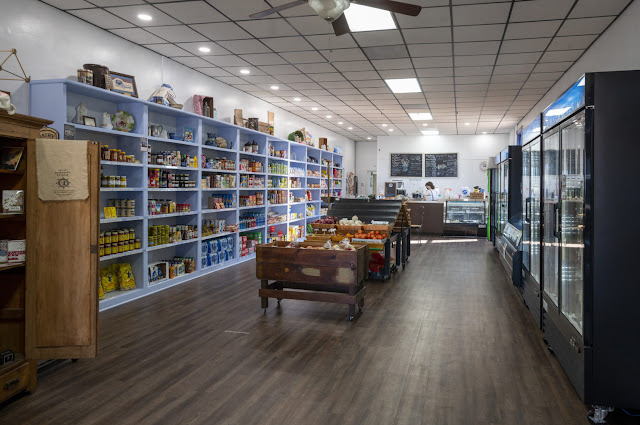
MaryLee and J.D. Meisner are renovating a building to house their Oklahoma newspaper company.
Three rural newspaper companies, two 170 miles apart in the Great Plains, are among this year's edition of "10 That Do It Right" picked by Editor & Publisher and reported by Editor Robin Blinder:

Cimarron Valley Communications of Cushing, Okla., publishes the Cushing Citizen, the Drumright Gusher and the Yale News. J.D. and MaryLee Meisner bought the Citizen in February 2020, and a month later, the pandemic hit. But they quickly bought the struggling papers in nearby towns. "They added pages and color to their products, and their rack sales took off. The Drumright Gusher was given an additional boost with the decision to expand its coverage area and report news from an adjacent community that had lost its newspaper a decade ago. They also returned the Yale News to its roots and began reporting micro-community news and sports." Yale's population is 1,059.

At the Gusher, "A student reporter program gives English students a chance to write, get credit and be published in the paper. And art students have the opportunity to work as photographers at events, like galas and banquets that they usually wouldn't attend, and get credit for their work. The paper has started a scholarship program for the student reporters because they can't be paid, since they receive school credit." When schools in the area went to remote learning, Cimarron created Smartypants, a weekly kids' page that is so popular it appears in more than 50 U.S. newspapers and one in Ireland. "The Meisners also gave another publication, Okie Charmed, new life by restarting the glossy print magazine in 2021. It now prints six times a year and is the only magazine in the state that covers Oklahoma women, women-owned businesses and fashion for the Oklahoma woman."

Left to right: Editor Adam Strunk, "marketing dude"
Bruce Behymer, owners Joey and Lindsey Young
Kansas Publishing Ventures
was bought by Joey and Lindsey Young, who first purchased Lindsey’s hometown paper, The Clarion in Andale, in 2012, when they were 27 "and fresh from a handful of years in community papers." They bought KSP, which had the free-circulation Hillsboro (Kansas) Free Press and a book-publishing company, and now have Harvey County Now (formerly Newton Now), circulation 4,000; the McPherson News-Ledger, circ. 1,700; a custom printing and promotional products business and a tech services division.

In the pandemic, "They gave away advertising to local businesses who were hurting" and got other businesses to sponsor listings of those businesses. "They have websites and a social media presence, but they focus on engagement and conversion to paid readers." They host candidate forums and have an annual “Blues, Brews and Barbecue” event that draws more 1,000 people and an event beer, Off the Record Ale, locally brewed.

Gazette Editor Nicole W. Little
At the Mariposa Gazette, “Our philosophy is if we don’t support community, why should they support the paper,” said Greg Little, editor and co-owner. California’s oldest weekly newspaper began in 1854 in the Sierra Nevada foothills, some of which became Yosemite National Park. Little and his wife Nicole bought the paper four years ago "and haven’t stopped growing, expanding this last year to include a new region to their east — eastern Madera County," which "had all but lost their coverage when their corporate-owned newspaper went down to four pages and stopped covering local news."

Print circulation and ad revenues are up "even though they have lost two special publications during the pandemic — a fair book and a visitor’s guide," since resumed. They "were instrumental in getting a veteran’s memorial constructed at their county courthouse — donating all the advertising and promotion over the two years it took to fund and erect the monument. . . . The Littles encourage their employees to join community groups and pay their membership fees to help their employees be a part of the community. They also sponsor and host community endeavors such as political debates for local and congressional races, local sports team sponsorships, various promotional contests and even a float in parades."

The other seven "news publishers that do it right" on this year's list are The Atlanta Journal-Constitution, the Nashville Tennessean, the Salt Lake Tribune, the Las Vegas Review-Journal, the Community Journals of Greenville, S.C.; Pioneer Publishing of Omaha, and Oahu Publications, new owners of the Honolulu Star-Advertiser.

White House council calls one-third of nation's census tracts 'disadvantaged' and thus candidates for more funding

Screenshot: Draft of Climate and Economic Justice Screening Tool (Click image to enlarge or here for interactive version)

"In a significant step toward changing how federal funds are distributed, the Biden administration has preliminarily identified nearly a third of the nation’s census tracts as 'disadvantaged' and in line for more help from the federal government," Kery Murakami reports for Route Fifty.

The White House Council on Environmental Quality identified 23,410 tracts as disadvantaged and noted how each is disadvantaged; you can see the results in the draft of its Climate and Economic Justice Screening Tool. Some are in major metro areas, and some are in "rural areas like Mason County, Washington, which has seen a decline in the timber industry after protections were put in place decades ago to preserve the spotted owl," Murakami reports. "The administration considered a wide range of factors, from the expected loss of agriculture and population due to climate change, to traffic volume and diesel particulate exposure, to the cost of housing, to the rate of asthma, diabetes and heart disease."

If your area isn't listed but you believe it should be, the council has posted a notice in the Federal Register inviting stakeholders to suggest ways to improve the database by April 15, Murakami reports.

Half of rural U.S. still not vaxed for Covid; up 0.8% in Feb.

Vaccination rates as of Feb. 24, compared to national average and adjusted to account for vaccinations not assigned to specific counties. Map by The Daily Yonder; click the image to enlarge it or click here for the interactive version.

The rural coronavirus vaccination rate grew by 0.8 percentage points over the past month, and was at 49.8% as of Feb. 24, Tim Murphy and Tim Marema report for The Daily Yonder. The rural-urban gap grew; the metropolitan rate increased by 1.2 percentage points in the same time frame to 63.7%.

For the second month in a row, the rural rate was higher than the metro rate in Alaska, Arizona, Massachusetts and New Hampshire. "Massachusetts led the nation in rural vaccinations, with 80% of its rural residents fully vaccinated," Murphy and Marema report. "Arizona had the largest growth in rural vaccinations in the last month. The state increased its rural vaccination rate by 4.2 percentage points, reaching 78.4% of the rural population."

Click here for more charts, regional analysis, and county-level interactive maps from the Yonder.

Some states and counties are yanking Russian-made liquor from stores; what about your local bars and stores?

"At least 11 states, including Oregon, North Carolina and West Virginia, have banned the sale of Russian-made alcohol to denounce Russia’s invasion of Ukraine," Joseph Pisani reports for The Wall Street Journal. Local bans are cropping up too, such as in Montgomery County, Maryland. All the states and counties with such bans control liquor sales or have government-owned liquor stores.

Most states have been careful to specify the removal of specific brands such as Russian Standard, Hammer & Sickle, and Ustianochka. That's because Russian vodka sales in the U.S. have plummeted nearly 79% since 2011, and now account for about 1% of sales nationwide, Jordan Valinsky reports for CNN. Other brands with Russian names, like Smirnoff and Stolichnaya, are actually produced elsewhere, Pisani reports. Smirnoff is owned by a British company and manufactured in Illinois, while Stoli is made in Latvia and headquartered in Luxembourg.

However, some bars are pouring out Smirnoff and/or Stoli as a gesture of solidarity. Terry Compton, co-owner of Uncorked Wine & Spirits in Shawnee, Okla., pulled Stoli and Russian Standard from the shelves on Saturday. Though he's aware that Stoli is manufactured and bottled in Latvia, Compton "said he removed it because Stoli’s labels say it uses wheat from Russia, where it’s distilled, and then taken to Latvia," Pisani reports. "A spokeswoman for Stoli said a small amount of wheat comes from Russian farmers, which it plans to stop doing."

Compton said he's replacing the Stoli and Russian Standard with Ukrainian-made Khor. "We want to do everything we can, even if it’s a small part, to support the Ukrainian people," he told Pisani.

Farm life is hard, but 'one of the greatest privileges and sweetest blessings I've ever known,' writes N.C. farmer

Meredith Bernard
(Photo from This Farm Wife)
Running a farm is difficult and exhausting, but is worth it in the end because it "gives so much more than it takes," writes North Carolina farmer Meredith Bernard for DTN/The Progressive Farmer

"To love a farm is not for the faint of heart, though some days it takes all we've got to keep our hearts strong, minds focused and feet moving. It's the hard days of farming that make the good days all the more worth it," she writes. "To love a farm is to push past fears, embrace change for the promise change can bring and learn from the mistakes of yesterday to make tomorrow better."

Read the rest here; read more from Bernard on her blog, This Farm Wife.

Leaky gas system and major meat processors more issues than cows' methane, says livestock farmer and dairy expert

Cows at O'Daniel's Foxhollow Farm (Photo by Kendra Lynne)
People are more concerned than ever about climate change and greenhouse-gas emissions. Much of that comes from the oil and gas industries, but some stakeholders worry about cow burps. That's silly, Kris O'Daniel writes for the Louisville Courier Journal. O'Daniel, a Denmark native who operates a farm with her husband near Springfield, Ky., has a master's degree in dairy science and engineering and worked for the United Nations Food and Agricultural Organization.

"Natural gas made up 37 percent of U.S. electricity generation in 2021, but there are no reliability standards for pipelines moving energy," O'Daniel writes. "That’s because the fossil fuel industry, supported by congressional conservatives, is opposed to legislation directing the Federal Energy and Regulatory Commission to develop reliability and cybersecurity standards for natural gas and other pipelines. The Transportation Security Administration oversees it. The Fossil fuel industry finds any regulation a waste of taxpayers’ money. Contrary to natural gas leaks, cattle’s methane belching is accounted for. But their unique ruminating ability to digest feed from which humans cannot benefit adds value and turns simple forage into high-quality human food. The methane and manure from grazing livestock are sequestered and part of the carbon cycle. That’s how nature is designed."

Also, O'Daniel notes, grazing animals, including cattle, can contribute to healthy ecosystems. "Byproducts from processing food for humans are part of livestock forage, thereby reducing what is going to landfills. Landfills are the third-largest emitter of methane, so taking away ruminating livestock would dramatically increase methane from landfills," she writes. "Incorporating alternative industrial by-products like 'spent grain from distilleries' with high sugar and protein content reduces methane belching. It is a valuable feed input and a win-win as it further reduces waste going to landfills."

O'Daniel says cattle only hurt the environment when they're finished in concentrated animal feeding operations, which benefit big meat processors but can hurt farming communities and farmers.

"A conversation on improving agriculture is needed, but it’s not beef versus beans or cheese versus corn," O'Daniel writes. "We need a transformation based on bio-diverse farming principles, restoring and regenerating soil as we use it. Cropped lands producing corn and soybeans would benefit from livestock eating crop spills, reducing hazardous fertilizers and restoring the soil."

Monday, February 28, 2022

Roanoke Times refugees find success with digital news startup that aims to cover a broad swath of rural Virginia

Cardinal's Megan Schnabel interviews Supervisor Trey Adkins of
Buchanan County, in Southwest Virginia. (Photo by Lakin Keene)
Last September, a group of veteran journalists launched a digital news startup aimed at covering the largely rural Southwest and Southside parts of Virginia, broadly defined. Now Cardinal News is thriving, growing, and making a difference, media columnist Margaret Sullivan reports for The Washington Post. The publication has no paywall or ads, and relies entirely on donations.

"Like many similar start-ups around the nation, Cardinal — named for Virginia’s state bird — is helping to fill the gap left by the shrinking of traditional local news organizations, particularly newspapers," Sullivan reports. Most of the staff came from the Roanoke Times, including Cardinal Editor Dwayne Yancey, and one of the two reporters, Megan Schnabel. The other reporter, Markus Schmidt, wrote about state politics for the Richmond Times-Dispatch, also now a Lee Enterprises newspaper.

The publication's ties to the Times don't end there: "Cardinal’s executive director and chief development officer, Luanne Rife, was a longtime health reporter there," Sullivan reports. "Cardinal’s board of directors includes a former Roanoke Times publisher, Debbie Meade. The paper’s former chief financial officer, Tonya Hart, has helped with finance and budget matters."

Frustrated and burned out, Rife accepted a Lee buyout and started the Cardinal after she was told to scale back on in-depth health beat stories. "When a foundation approached her about a reporting project it wanted to fund, it lit a spark of inspiration for her — and she started exploring whether she could start her own project, one that would be more ambitious and permanent," Sullivan writes. "Yancey made the move after watching the Times scale back its staff in recent years, especially after its sale by longtime owner Landmark Communications in 2013."

Cardinal is already making a difference: The Federal Emergency Management Agency had refused to cover flood and mudslide damages in the community of Hurley last summer, but Cardinal's in-depth reporting and photos of the devastation "brought much-needed attention to Hurley’s suffering residents — and may help them get $11 million of state aid," Sullivan reports.

And, the publication is growing. "A new grant will allow Cardinal to add a reporter soon in Danville, along the North Carolina border; Rife also would like to hire an education reporter and one dedicated to health coverage," Sullivan reports.

Cardinal is also geographically ambitious. Yancey told Sullivan that its mission is to cover Southwest and Southside Virginia, or what he calls “Cumberland County to the Cumberland Gap.” Cumberland County, which lies east of the state's geographic center, is more often defined as lying in Central Virginia, but the Weldon Cooper Center for Public Service at the University of Virginia puts it and Buckingham (which has the center) in Southside. Yancey is based in Botetourt ("Bot-e-tot") County, just outside Roanoke. It and much of the Cardinal coverage counties are in Appalachia, "an easy part of the state to stereotype," he notes.

University of Virginia map, adapted by The Rural Blog; click on it to enlarge.

Trade wars etc. already have fertilizer prices sky high; sanctions on Russia and Belarus could boost them more

"In the past year and a half, the fertilizer industry has seen a multitude of challenges. Impacts stemming from winter freezes, Hurricane Ida, Covid-19, production costs, trade sanctions on various countries, and supply chain disruptions have hoisted the price of fertilizer up. On top of all those factors, producers are looking at potential price impacts from Russia’s invasion of Ukraine," Madelyn Ostendorf reports for Successful Farming.

Trade disputes with major exporters are mostly blame for sky-high fertilizer prices, one industry stakeholder said last week. "Brooke McMullin, vice president of International Raw Materials Ltd., said while agriculture groups, Midwest lawmakers, governors and others are calling for investigations into fertilizer prices, they need to look no further than ongoing trade disputes with major fertilizer-exporting countries," Todd Neeley reports for DTN/The Progressive Farmer. "A combination of consolidation in U.S. fertilizer production capacity and countervailing duties slapped on fertilizer imports from Russia, Morocco, Trinidad and Tobago have contributed to higher fertilizer prices, he said."

Meanwhile, Russia's invasion of Ukraine could take prices even higher. "With its most fervent ally in Europe, Belarus, Russia has a 40 percent market share in global production and export of potash fertilizer. The two autocracies form an informal cartel in the potash market, made up of Uralkali and Belaruskali, with the Belarusian Potash Company being the latter’s export arm," Garphil Julien reports for The Washington Monthly. The U.S. imposed sanctions on Belarus last year for a migrant crisis on the Polish border. 

"U.S. sanctions on Belarus are likely to exacerbate the issue, with Belaruskali announcing last week that it wouldn’t be able to meet its contracts. One of the world’s largest fertilizer companies, Yara International, headquartered in Norway, announced it would reduce its sourcing of Belarusian potash by April. Other corporations in the potash industry are not planning on increasing production and would face challenges in their attempts."

Oil and gas industries release far more greenhouse gases than government data accounts for, investigation finds

University of Arizona photo
U.S. oil and gas operators release much more greenhouse gas than previous data suggests, a new investigation shows.

"Over much of the last decade, oil and gas operators in Texas and a dozen other U.S. states have flared, or burned off, at least 3.5 trillion cubic feet of natural gas, according to an analysis of satellite data by the Howard Center for Investigative Journalism" at Arizona State University, Laura Kraegel, Mollie Jamison and Aydali Campa report for Inside Climate News. "That’s the greenhouse gas emissions equivalent of nearly 42 million cars driving for a year. The industry has also directly released unknown amounts of gas into the atmosphere through a process called venting. Between them, flaring and venting release a noxious cocktail of carbon dioxide, methane and other pollutants."

Government auditors have warned for nearly two decades that inadequate data collection has obscured the amount of greenhouse gases released by flaring and venting, "but regulators are largely unaware of the amount of gas being flared and vented, the Howard Center found. It’s a blind spot that’s developed under limited federal oversight and a patchwork of state regulations, lax enforcement and inconsistent data collection," Kraegel, Jamison and Campa report. "The satellite flaring volumes calculated by the Howard Center, with the guidance of scientists who pioneered and used the methodology, far exceed the total reported to regulatory agencies in the 13 states designated by the U.S. Energy Department as having the most active flaring. They also far surpassed the total published by the Energy Information Administration, the U.S. Energy Department analytics agency that says it gets its data from the states."

The story is the first in a four-part series by the Howard Center about the flaring and venting of natural gas by oil and gas companies in more than a dozen states across the country.

EPA chlorpyrifos ban goes into effect; glyphosate may be in short supply because of manufacturing problem

The Environmental Protection Agency's ban on using the insecticide chlorpyrifos on food crops went into effect Monday.

"The EPA in August decided to ban nearly all uses of the pesticide, which has been widely used to grow crops like fruits, vegetables, nuts, corn and wheat, but was also linked to neurological problems in children. The August order set the pesticide on track to be phased out from usage on food crops after six months, making Feb. 28 the official cutoff date," Ximena Bustillo reports for Politico's Weekly Agriculture. "Worker advocates and environmental groups, who have been calling for a ban for over a decade, hailed the move. But numerous agriculture industry groups ultimately sued the EPA over the restrictions — the objections that the agency just denied."

Meanwhile, "Agrichemical giant Bayer is alerting retail partners the company may not be able to fill some glyphosate contracts this spring, due to a supplier's manufacturing problem," Emily Unglesbee reports for DTN/The Progressive Farmer. "According to letters sent from the company that DTN has obtained, Bayer is declaring this a 'force majeure' event, a term used to describe an uncontrollable event that prevents a party from fulfilling a contract. The situation could leave some farmers who are awaiting glyphosate deliveries on shaky ground."

Sunday, February 27, 2022

'60 Minutes' report on crisis in local journalism gives local media opportunity to elaborate and reinforce the message

Five Report for America reporters were interviewed by CBS for a "60 Minutes" story on the crisis in local newspapering. Back row: ChrisAnna Mink and Camalot Todd; front row: Chris Jones, Gracyn Doctor and Amelia Ferrell Knisely.

By Al Cross
, Director and Professor
Institute for Rural Journalism and Community Issues, University of Kentucky

The local news crisis got its biggest play yet to an American audience Sunday night, as CBS's "60 Minutes" did a story that reached perhaps 9 million viewers. It didn't make the best case ever for local journalism, but as the show usually does, it told the tale through some compelling personal stories.

Most of those stories, and the belief that "Journalism is essential for the survival of American democracy," as one former reporter put it, are familiar to readers of The Rural Blog. But they are not well known by many Americans, so for local news media, the network report is an opportunity to reinforce the message, and elaborate on it.

The story's only evidence of "increased corruption by local officials," was a rather old story: the 2010 revelation by the Los Angeles Times (uncredited by CBS) that officials in the small L.A. County city of Bell were paying themselves exorbitant salaries after "the local newspaper there shut down," as CBS put it. Actually, the area had a paper, but it was covering so many municipalities that Bell got little attention.

There's plenty of other evidence that lack of local journalism is bad for taxpayers, such as studies showing higher interest rates for bond issues, fewer candidates for local office, and more straight-ticket voting and political polarization. But those points didn't have compelling video, like the footage "60 Minutes" used, showing enraged citizens at a meeting of the Bell City Council.

Beyond academic studies, in other places with shriveled journalism we have seen the election of bigoted but unprofiled candidates, parroting of politicians' press releases, and use of disaster funds with little oversight. And lawsuits to get public records are no longer filed mainly by the news media. Meanwhile, partisan websites, often masquerading as news media, fill the vacuum. Even some politicians have voiced concern about reduced coverage of elections.

At the same time, local reporters have also exposed such evils as pharmacies' role in the opioid epidemic and ripoffs by contractors, forced resignation of corrupt officials, and there are examples of newspapers that have improved their bottom lines through accountability reporting. So, there's a much larger story to tell about local news than CBS did, but its report tees up the ball for local news media to remind their audiences of their value to their communities.

Steven Waldman
For some of us in journalism, the headline on the story could have been what Steven Waldman of Report for America said near the end of the report: "We need a dramatic increase in the commitment of foundations, and philanthropists, and donors like you and me, to actually supporting local news."

Waldman elaborates on that in a two-part essay for Columbia Journalism Review, in which he writes, "Our goal should be to create a better local news system than we had in the past, including far better service for communities of color and for rural areas. To make that local news system a reality, I believe that we need to add 50,000 local reporters." He also calls for better business models, enlightened public policy and creating new methods of financing news operations, such as tax credits for organizations that take over local newspapers.

The more philanthropy the better, from big grants to small donations, reader memberships and so on. That said, grants have a way of running out, so they are more likely to be bridges to transformed business models for newspapers as they shift to an online existence -- gradually, so they can still enjoy the revenue generated by print, their main revenue source, as print fans gradually leave the scene. And that's a reality of the newspaper business that papers need to explain to their readers -- and potential readers, using social media.

For those who didn't see "60 Minutes," here are a few excerpts:

The first protagonist was Evan Brandt, sole reporter at the Pottstown Mercury, which has won two Pulitzer Prizes and "at one time had dozens of reporters;" anyone in the town of 23,000 could walk into the newsroom and give a tip for a story to hold local officials and institutions accountable. Now Brandt covers 21 eastern Pennsylvania towns and nine school districts from home.

Evan Brandt of the Pottstown Mercury works from home.

"He says the worst culprit is the hedge fund, Alden Global Capital," the second largest owner of U.S. newspapers, which "has been called a vulture, bleeding newspapers dry." Brandt said he went to Alden CEO Heath Freeman's home on Long Island to ask "What value do you place on local news? And I'm not talking about money." But Freeman walked off before Brandt could pose the question.

As the industry shrinks, correspondent Jon Wertheim asked, "to what extend does democracy shrink with it?" 

Former Chicago Tribune reporter Gary Marx said, "This is an attack on our democracy," which papers serve by "holding our leaders accountable." He and colleague David Jackson investigated Alden before it bought the paper and found profit margins as high as 30 percent in one market. "We felt that Alden didn't realize the civic trust that's embedded in this profit-making machine," Jackson said. 

CBS paraphrased Freeman as saying that "Alden is committed to providing robust, independently minded local journalism and that it's time for tech giants to start paying for the 'billions of dollars' they're making off of news publishers' content."

The story had five RFA reporters in a group interview, including Chris Jones of 100 Days in Appalachia, who covered the Jan. 6 riot because he had developed sources among extremists. The former Marine has a community journalism ethic: "These are our neighbors, you know? We're not writing about someone I'm never gonna talk to again. They're people before they're interview subjects."

Friday, February 25, 2022

Nominations for Gish Award for courage, integrity and tenacity in rural journalism will be accepted until April 1

Tom and Pat Gish in 2005, when the award named for
them was started and they became the first recipients.
Each year the Institute for Rural Journalism and Community Issues presents the Tom and Pat Gish Award for courage, tenacity and integrity in rural journalism, named for the couple who exemplified those qualities as publishers of The Mountain Eagle in Whitesburg, Ky., for 52 years.

Nominations for the Gish Award may be made at any time, but the deadline for new nominations to be considered for this year's award is April 1. To make a nomination, send a detailed letter explaining how the nominee shows the kind of courage, tenacity and integrity that Tom and Pat Gish demonstrated at their weekly newspaper in the Central Appalachian coalfield. They withstood advertiser boycotts, business competition, declining population, personal attacks, and even the burning of their office to give their readers the kind of journalism often lacking in rural areas, and were the first winners of the award named for them. Tom died in 2008 and Pat in 2014; their son Ben is editor and publisher of the Eagle and serves on the award selection committee.

Documentation can be submitted after the nomination, and additional documentation may be requested or required. Send your nominating letter, initial documentation and any questions to Institute Director Al Cross at al.cross@uky.edu.

The Institute seeks nominations that measure up, at least in major respects, to the records of the Gishes and other previous winners. Other winners have been the Ezzell family of The Canadian Record in the Texas panhandle; Jim Prince and Stanley Dearman, current and late publishers of The Neshoba Democrat in Philadelphia, Miss.; Samantha Swindler of The Oregonian for her work at The Times-Tribune in Corbin, Ky., and Jacksonville Daily Progress in Texas; Stanley Nelson and the Concordia Sentinel in Ferriday, La.; Jonathan and Susan Austin of the now-defunct Yancey County News in western North Carolina; the late Landon Wills of the McLean County News in Kentucky; the Trapp family of the Rio Grande Sun in northern New Mexico; Ivan Foley of the Platte County Landmark in northweste Missouri; the Cullen family of the Storm Lake Times in northwest Iowa; Les Zaitz of the Malheur Enterprise in eastern Oregon; in 2019, three reporters whose outstanding careers have revealed much about the coal industry in Central Appalachia: Howard Berkes, retired from NPR; Ken Ward Jr., then with the Charleston Gazette-Mail; and his mentor at the Gazette, the late Paul Nyden. In 2020 the award went to the late Tim Crews of the Sacramento Valley Mirror, and in 2021 to the Thompson-High Family of The News Reporter and the Border Belt Independent in Whiteville, N.C.

Russian invasion of Ukraine sends wheat and crude oil prices soaring, disrupts trade; impact on fertilizer unclear

Russia's invasion of Ukraine has disrupted regional export shipments, sent grain futures and crude-oil prices soaring, and may trigger higher fertilizer prices.

Russia and Ukraine together account for a third of global wheat exports, a fifth of corn exports and more than three-quarters of sunflower oil, Keith Good reports for the University of Illinois' Farm Policy News. Russia is also a major exporter of fertilizer components nitrogen, phosphorus and potash.

Though sanctions against Russia haven't banned food or agricultural exports, "that hasn’t stopped global grain prices from soaring," Politico reports. "Wheat futures prices at the Chicago Board of Trade, the global benchmark, surged 6 percent earlier this week, to about $9.34 a bushel, the highest in nine years. Wheat futures are up 10 percent since the start of the year."

Even without trade sanctions, farm exports from those countries have slowed to a trickle, since Russia and Ukraine have suspended most commercial railways and ports near the conflict, Good reports. And many ships will be reluctant to trade there for fear of getting caught in the conflict.

"It is not clear if the West would hit Russia's fertilizer industry with sanctions, but it is possible. Ukraine's neighbor Belarus is the world's second-largest exporter of potash fertilizer and was hit with sanctions from Europe and the U.S. in 2021," Chris Clayton reports for Progressive Farmer/DTN. "Because of ethanol and biodiesel, crop prices are also influenced by swings in energy prices. Crude oil prices have surged to their highest levels in seven years as Russian troops threaten Ukraine. The main concern is Russia may hold back oil production as a lever against any punitive response from the West."

Local community foundations create funds for local news

Report for America has issued a report that identified what it called "a major new trend – the creation of 'Community News Funds' – and outlined how the new funds can be created," Sam Kille reports for Report for America. "The new strategy involves community foundations working in conjunction with local news leaders in creating a single, permanent fund that draws upon donations from multiple sources, to support local news for years to come."

Several case studies in the report show how such funds are making a difference in communities. That matters more than ever when the pandemic has accelerated rural newsroom closures. The seven communities in the report that use variations on the community news fund model have raised $15 million in three years, Kille reports.

In addition to a specifically rural example—the Traverse City Record-Eagle in Michigan—the paper highlights a newsroom that covers statewide issues in Pennsylvania, and one that covers the state's Lancaster County (which has a substantial Amish population).

Are we polarized? Or just isolated, disoriented and reacting with 'flight or fight' responses? New report argues the latter

Rich Harwood discussed his "civic virus" theory on "Meet the Press Daily" on Feb. 15. To watch it, click here.
It's become conventional wisdom that American society has become polarized, politically and culturally, but is that the whole truth? Richard C. Harwood, whose business is helping communities improve their civic life, doesn't think so; he explains his view in a new report, Civic Virus: Why Polarization Is a Misdiagnosis, from his Harwood Institute for Public Innovation and the Kettering Foundation. News media have an essential role to play in fostering civic life, and the report could be good fodder for commentary that serves your community.

Harwood says polarization is a misguided assumption. Instead, he says, we are isolated, disoriented, and reacting with "fight or flight" responses. He bases this on 16 in-depth focus groups he held across the country, asking these questions: How do people describe the nation today? Who are the individuals, groups, institutions, or leaders whom people believe and trust? Where do people get their information and news about what’s happening around them and in the larger world? What community actions did people see in response to Covid-19, and what, if any, lessons might these hold for the country moving forward? And what does it mean to be an American?

The report on these conversations offers some thoughts on how to combat what Harwood calls "the civic virus" and inoculate the nation moving forward, and local journalism has roles to play. To download a free copy, click here.

Free online class trains locals to do community journalism

Many rural newspapers struggling to stay afloat must rely on untrained volunteers to report the news, often going for presence and quantity rather than quality and professionalism.

"Enter the University of Vermont. Building on a 3-year-old journalism program for undergraduates, in February the school launched a series of free online classes for anyone interested in learning how to write for local newspapers," Anne Wallace Allen reports for Seven Days. "Participants who follow through and volunteer at a local media outlet can get free coaching and editing help from the experienced editors employed by the UVM program."

Richard Watts, director of UVM's Center for Research on Vermont, began an undergraduate program for reporting and documentary storytelling in 2019, which has "grown quickly into a de facto journalism school with the companion purpose of bolstering local news reporting in Vermont," Allen reports. "With a team of professional editors to guide them, students are deployed to selectboard and school board meetings for about a dozen local newspapers, including the Hardwick Gazette, the Barton Chronicle and the Shelburne News. The program known as the Community News Service . . . is expected to have 40 students this semester [and] produces an online newspaper devoted to Winooski news."

Watts expanded the class to an online offering after the publisher of a rural paper said she and her editor, neither of whom had formal journalism training, had been unable to get a spot in the class. "There's clearly an interest," Allen reports. "A few hours after registration opened for the first class, News Fundamentals + Intro, all 20 slots were filled with teachers, librarians and volunteer journalists. Another two dozen or so people were on a waiting list for the next six weekly sessions, which will include instruction on such basics as interviewing techniques, how to write a news story, working a beat and journalism ethics."

Quick hits: Rural hospital guide updated; we keep sorting ourselves into places we find more politically sympathetic

Here's a roundup of stories with rural resonance; if you do or see similar work that should be shared on The Rural Blog, email us at heather.chapman@uky.edu.

The Rural Health Information Hub has an updated resource guide on rural hospitals. Read it here.

Most small towns in Vermont are limiting big spending this year, partly because they voting by mail-in ballots rather than at their traditional town meetings. Read more here.

Hemp-farm neighbors in Navajo country complain about smell, lights, and water use. Read more here.

The Big Sort continues: Red political districts are getting redder and blue districts are getting bluer; part of that trend comes from people moving to places that align more closely with their political views. Read more here.

Immigrants and refugees are a growing part of small communities across the U.S. Read more here.

Agri-Pulse will host a webinar on March 2 to discuss how data is driving innovation in crop insurance and conservation. Read more here.

A recent podcast discusses young Americans' renewed interest in agriculture in a post-pandemic world. Listen to it here.

Thursday, February 24, 2022

Digital startup spurred by local newspaper's conflicts of interest failed, maybe because it saw ad sales as conflict

Sierra County, New Mexico
(Wikipedia map)
The rise and fall of the Sierra County Sun, a nonprofit news start-up in a New Mexico county of 12,000, illustrates the struggles many such news organizations must contend with, Anandita Bhalerao reports for Northwestern University's Medill Local News Initiative.

When magazine journalist and author Diana Tittle and her husband retired to Sierra County in 2012, there were two newspapers: the Sierra County Sentinel and the Sierra County Herald. The family-owned Herald closed in 2018, citing a decline in advertising. The Sentinel owner Frances Luna has also been a county and city commissioner, which Tittle considered a conflict of interest, Bhalerao reports.

The Herald's investigative reporter, Kathleen Sloan, who had left to work in Iowa and Florida before the Herald's closure, returned to launch the Sun as an online-only publication in October 2019. From the beginning, the Sun was overwhelmed and underfunded. Tittle, impressed with Sloan's reporting, stepped in as a reader and launched a "Save the Sun" fundraising campaign, Bhalerao reports. The paper survived and was reborn as a nonprofit. That wasn't the only change: Tittle, a journalism graduate of Northwestern, became the editor (as well as reporter and grant wrangler). And fellow retiree Deb Nichols, a scientist, joined as a reporter to cover the county beat, allowing Sloan focus on long-form stories.

Kathleen Sloan
But even with Tittle working for free, the publication still wasn't sustainable, even after scoring a $12,000 grant that the New Mexico Local News Fund gave them in order to have six months to figure out a solution. The Sun relied on donations and a few subscriptions from wealthy families, but Sierra County is a poor county in a poor state.

"In an unusual move for a news organization, Sloan said she never considered advertising as a business model for The Sun because it was too big a conflict of interest in a county as small as Sierra County, with limited local businesses," Bhalerao reports. "Tittle said as a very small newsroom they could either focus on the news or sell advertisements, and they chose the former." Besides, Tittle told Bhalerao: "There are only so many advertising dollars, and [The Sentinel has] a lock on it, so we were never really able — or even interested — in selling advertising."

After a fruitless nationwide search for a new operator—no one wanted to work for free—the Sun shuttered in December 2021. Mark Glaser, innovation consultant at the Local News Fund, said many emerging newsrooms must contend with the same financial realities. "The issue with startups is that it’s very easy to start putting content out in the world," Glaser told Bhalerao. "It’s a lot harder to figure out the business part of it."

Clamor to cap travel-nurse pay could keep rural nurses at local hospitals

Many registered nurses, feeling overwhelmed and underpaid during the pandemic, have jumped at the chance to double or triple their salaries as travel nurses. Cash-strapped rural hospitals are having a hard time retaining them. "In a nationwide survey late last year, 99% said they were experiencing staffing shortages," Melissa Phillip reports for the Houston Chronicle.

But some lobbyists and legislators are calling for an investigation in hopes of capping travel nurses' compensation; if successful, that could help stanch the flow of rural nurses to wealthier urban hospitals that can better afford to pay travel nurses' higher salaries.

"In the last few months, several groups, including the American Hospital Association, the American Health Care Association/National Center for Assisted Living and 200 members of Congress, have called for an investigation into claims that agencies that place travel nurses around the country have been 'price gouging' hospitals in need of staff," Chabeli Carrazana reports for The 19th. "The AHA has requested the Federal Trade Commission investigate the agencies, and late last month, a letter signed by a bipartisan group of legislators also asked the White House to investigate the claims."

Two representatives from largely rural districts—Democrat Peter Welch of Vermont and Republican Morgan Griffith of Virginia—"wrote that they have received reports saying staffing agencies have inflated prices by 'two, three or more times pre-pandemic rates' while taking 40 percent or more being charged to hospitals in profit," Carrazana reports. "At least eight private-equity firms have bought at least seven staffing agencies since early 2021, according to a report in STAT News."

"The White House did not comment on whether it was responding to the contents of the letter, and the Federal Trade Commission also declined to comment on whether an investigation was underway," Carrazana reports.

New rural coronavirus infections fell 35% last week and 75% over past month, but 80% of rural counties still in 'red zone'

New coronavirus infections, in ranges by county, Feb. 13-19
Map by The Daily Yonder; click the image to enlarge it or click here for the interactive version.

The rate of new infections in rural America fell 35 percent during the week of Feb. 13-19, "the third consecutive week of significant declines. Since the second half of January, new infections in rural counties have dropped by more than 75%. The metropolitan infection rate fell by a similar amount," Tim Marema reports for The Daily Yonder.

"Despite the dramatic gains of the last month, more than 80% of the nation’s rural counties remain in the red zone, meaning they have weekly infection rates of at least 100 new cases per 100,000," Marema reports, but things look a lot better than they did a month ago: "The percentage of rural counties with very high rates of infection (defined as 500 or more cases per 100,000 for the week) has fallen from 94% the week of Jan. 22 to just 14% last week."

Rural counties reported 2,744 deaths related to Covid-19 last week, an increase of less than 1% from the week before. "The rural death rate was 50% higher than the metropolitan death rate last week (5.96 vs. 3.92 deaths per 100,000 residents)," Marema reports. "The rural death rate has been higher than the metropolitan death rate for 76 of the last 81 weeks."

Click here for more charts, regional analysis, and county-level interactive maps from the Yonder.

Local meteorologists are trusted sources on climate issue

Many Americans don't believe in anthropogenic (human-caused) climate change, or in climate change, period, but local TV meteorologists ae uniquely placed to help educate them. 

Nearly one-third of American adults say they don't worry much or at all about climate change. Many of them—disproportionately older, white Republican men—are drawn to conservative news media that firms up such opinions, Dan Schwartz reports for The Atlantic.

"These Americans, among others, are stuck in what researchers have called 'reinforcing spirals.' Social scientists have long assumed that most of the Americans misinformed about climate change were protecting a constructed reality, but that view is shifting," Schwartz reports. "A more recent study suggests that many in this cohort, which could include the 'dismissive,' are sincerely interested in the truth. These people aren’t suspicious of the evidence because it contradicts their view of the crisis, but because they don’t trust the available messengers—namely the scientific community and the mainstream media." 

But local news media are more trusted than nationwide news, so in 2010, scientists and journalists formed a nonprofit called Climate Central that aims to better educate meteorologists, and through them Americans, about climate change, Schwartz reports.

"By 2012, Climate Central was working with 10 weathercasters. By the end of 2013, it was working with 100, and it had quadrupled its production of localized reports. The number of participating weathercasters continued to grow, and with more exposure to trusted climate-change information, they began to see climate change for what it was. By 2017, 95 percent of TV weathercasters agreed that the climate was indeed changing," Schwartz reports. "By 2020, 80% acknowledged that human activity was a major reason.

"    The facts here did what facts sometimes do when people are actually searching for the truth: They changed minds. Now weathercasters, with their eyes open to the crisis, are better positioned than anyone else to guide the remaining Americans through the same transition. One 2013 study, frequently cited, found that the more people liked a TV weathercaster, the more likely they were to be positively influenced by that weathercaster’s discussion of climate change."

"We never looked at it like, 'We’re the ones in charge'," Program Director Bernadette Woods Placky told Schwartz. "It was a relationship. It was a partnership."

Research: Meat alternatives gaining in popularity but not denting beef sales; poultry and fish may be another story

Plant-based meat alternatives have been growing in popularity for years, with global sales expected to top $30 billion by 2026. That has meat and poultry producers and processors nervous, spurring bills and laws to segregate such products in the grocery store.

But, a recently published study shows, beef and pork producers don't have to worry—at least not yet. Poultry and fish producers may have cause for concern though. Researchers analyzed Nielsen sales data from U.S. grocery and convenience stores from 2017-2020 and found that only a small percentage of consumers have tried meat analogues. They also found that "consumers were often purchasing plant-based meat alternatives alongside beef and pork and instead used the plant-based meat alternatives as a substitute for chicken, turkey and fish," Katie Pratt reports for the University of Kentucky's College of Agriculture, Food and Environment.

Though meat analogue sales have grown more than 200% since the beginning of the pandemic, one of the researchers told Pratt that such foods only make up 0.5% of the fresh meat market share. The study, which was funded by the National Institutes of Health’s National Center for Advancing Translational Sciences, was recently published in Applied Economics Perspectives and Policy; read it here.

Wednesday, February 23, 2022

Rural U.S. lost population for first time ever in 2010-20, but some rural areas grew, mostly through adult people of color

Population change in nonmetropolitan counties from 2010 to 2020
(University of New Hampshire Carsey School map; click the image to enlarge it)

We've known that most rural areas lost population in the last decade, but a new analysis of Census data found that rural America overall lost population for the first time in history, and the trend could continue, according to new analysis of 2020 census data by the University of New Hampshire's Carsey School of Public Policy. But some rural areas are gaining population, mostly from adult people of color, according to an analysis by The Daily Yonder.

Nonmetropolitan counties lost 289,000 residents out of about 46 million from 2010 to 2020, Kenneth Johnson reports for the Carsey School. In the previous decade, rural America gained 1.5 million new residents and in the 1990s grew by nearly 3.4 million.

"If rural outmigration is ongoing, and deaths continue to exceed births in many rural areas due to low fertility and higher mortality among the aging rural population, then population losses are likely to continue in much of rural America," Johnson reports. "And the onset of Covid-19, which generated additional social, economic, and epidemiological turbulence, is likely to contribute to more rural population loss because it significantly increased rural deaths and discouraged births. Rural counties with sustained population loss face significant challenges maintaining critical infrastructure needed to provide quality health care, education, and a viable economy for the remaining residents."

Though rural America as a whole has fewer people, "Parts of rural America are adding population, and some segments of the rural population — especially adults, people of color, and Hispanics — are growing," Sarah Melotte reports for The Daily Yonder. "Rural America’s adult population (ages 18 and up) increased 1.2%, according to a Daily Yonder analysis. During the same period, the share of the adult rural population composed of people of color and Hispanics grew by 22%, from 17.1% in 2010 to 20.8% in 2020. Diversity in the adult population increased in over 95% of the nation's rural counties since the last census -- about the same percentage as urban counties."
Percentage change in non-white and Hispanic population by metro status, 2010-2020
(Daily Yonder map; click the image to enlarge it or click here for the interactive version)

Holy Hereford! Bull survives being swept 49 miles down a river and over a 33-foot waterfall after a New Zealand flood

The bull was built Hereford tough. (Photo provided to Stuff.com)
"A young bull that was swept into a surging river during flooding on New Zealand’s West Coast has miraculously survived the ordeal, turning up unharmed a week later, 80 kilometres (49 miles) downstream, snuffling about in a blackberry bush," Eva Corlett reports for The Guardian.

Owner Tony Peacock said the 18-month-old bull and two others were swept away—along with hundreds more in the surrounding area—after the biggest rainfall he'd ever seen on his farm, Corlett reports. He assumed his bulls were gone for good, but a farmer in the oceanfront town of Westport called him a week later after spying a bull with an unfamiliar ear tag in the brush.

"It’s a fairly long trip and amazing he survived," Peacock told Corlett. "I was quite happy when I got the call he was alive. I think he will get legend status now and be put in a paddock to retire with some cows."

As rural areas lose grocery stores, some towns have responded by opening cooperative groceries

The interior of Market on the Hill in Mount Pulaski, Illinois (Investigate Midwest photo by Darrell Hoemann)

Rural towns "have lost grocery stores while dollar-store chains have been on the rise, according to the U.S. Department of Agriculture. The departure of food stores leaves residents, especially those in areas with high poverty rates and dwindling population, with fewer options to buy food," Amanda Perez Pintado reports for Investigate Midwest and Report for America. "With the closure of grocery stores, rural populations are forced to drive longer distances to purchase food. This may be a larger issue for low-income residents who are not able to afford transportation to get groceries. In 2015, according to a USDA report, about 5 million people who lived in rural areas had to drive 10 miles or more to reach the nearest food store."

The story explores the trend with a portrait of Mount Pulaski, Illinois. The town of 1,500 lost its last grocery store in 2016, and locals found it so difficult to continue that a local farmer spearheaded the creation of a grocery cooperative. Market on the Hill, which opened in June 2020, has "fresh produce, meat and deli items. Many of the goods in stock are locally sourced," Pintado reports.

Tuesday, February 22, 2022

Magazine's 'short, selective biography' of Berry has lines from forthcoming book, which will 'offend most everyone'

Wendell Berry (Guy Mendes photo)
Wendell Berry, advocate of the largely rural fundamentals that formed humanity before the Industrial Revolution, gets a big write-up in the Feb. 28 issue of The New Yorker, from none other than the magazine's executive editor, Dorothy Wickenden. For her, it completes a cycle of nearly 60 years.

The daughter of Berry's first commercial editor, Wickenden draws on his and Berry's correspondence from 1964 to 1977, when the writer, as he acknowledged then, was still discovering himself. But it also offers glimpses of his next book and looks at his legacy, which includes The Berry Center, which promotes “prosperous, well-tended farms serving and supporting healthy local communities” and the Wendell Berry Farming Program of Vermont's Sterling College, which offers a tuition-free college degree in sustainable family farming.

Wickenden's expansive, 9,384-word article amounts to a short, selective biography of one of America's most loved and yet also scoffed-at writers. She sums up what we know: "Berry’s admirers call him an Isaiah-like prophet. . . . Critics see him as a utopian or a crank, a Luddite who never met a technological innovation he admired." But this is not just history; it offers insight into the land, culture and neighbors that made Wendell Berry, now 87, who he is -- and why he is what he is.
 
After visiting Berry at his Kentucky farm, Wickenden wrote, "From this sliver of vanishing America, Berry cultivates the unfashionable virtues of neighborliness and compassion. He divides his time between writing and farmwork, continuing his vocation of championing sustainable agriculture in a country fueled by industrial behemoths, while striving to insure that rural Americans—a mocked, despised, and ever-dwindling minority—do not perish altogether."

Berry let Wickenden read, and quote from, his forthcoming book, due this summer: The Need to Be Whole, in which "He argues that the problem of race is inextricable from the violent abuse of our natural resources, and that 'White people’s part in slavery and all the other outcomes of race prejudice, so damaging to its victims,' has also been 'gravely damaging to white people.'"

Wickenden says the book "contains something to offend almost everyone," and her major example is a man Berry calls “one of the great tragic figures of our history,” Confederate Gen. Robert E. Lee. "He presents Lee as a white supremacist and a slaveholder, but also as a reluctant soldier who opposed secession and was forced to choose between conflicting loyalties: his country and his people." She quotes from the book: “Lee said, ‘I cannot raise my hand against my birthplace, my home, my children.’ For him, the words ‘birthplace’ and ‘home’ and even ‘children’ had a complexity and vibrance of meaning that at present most of us have lost.”

Wickenden writes, "If readers were incredulous about Berry’s [1977] claim that a pencil was a better tool than a computer, it’s not hard to imagine how many will react to his plea that we extend sympathy to a general whose army fought to perpetuate slavery in America. Several of Berry’s friends urged him to abandon the book, anticipating Twitter eruptions and withering reviews."

“My friends, I think, were afraid, now that I am old, that I am at risk of some dire breach of political etiquette by feebleness of mind or some fit of ill-advised candor,” Berry writes. “They are asking me to lay aside my old effort to tell the truth, as it is given to me by my own knowledge and judgment, in order to take up another art, which is that of public relations.”

Berry's politically incorrect truth-telling does not extend to his Trump-voting neighbors, 30 miles northeast of Metro Louisville, because that wouldn't be neighborly. He writes, “If two neighbors know that they may seriously disagree, but that either of them, given even a small change of circumstances, may desperately need the other, should they not keep between them a sort of pre-paid forgiveness? They ought to keep it ready to hand, like a fire extinguisher. . . . A society with an absurdly attenuated sense of sin starts talking then of civil war or holy war.”

Wickenden probably didn't realize it, but for some readers those lines will echo in another part of her story, about Berry's connections to Appalachia and the town of Whitesburg, including Tom and Pat Gish, who published The Mountain Eagle every week for 52 years, even after their office was firebombed by a local policeman who state police said was hired by coal operators. But even as the Gishes revealed the Tennessee Valley Authority's role in strip mining and helped visiting journalists explore the region's ills, they were always careful not to publish demeaning pictures of local residents like those that typically illustrate such national stories.

That's community journalism. Berry once defined "community" this way: “A community is the mental and spiritual condition of knowing that the place is shared, and that the people who share the place define and limit the possibilities of each other's lives. It is the knowledge that people have of each other, their concern for each other, their trust in each other, the freedom with which they come and go among themselves.”

The nation's electric grid is becoming less reliable as its sources change; see where your state gets its power

Power production by source, by state. (Wall Street Journal map; click the image to enlarge it.)

Age and climate change are driving the nation's power grid to become less reliable even as Americans become more dependent on it in an increasingly digital world.

"Large, sustained outages have occurred with increasing frequency in the U.S. over the past two decades, according to a Wall Street Journal review of federal data. In 2000, there were fewer than two dozen major disruptions, the data shows. In 2020, the number surpassed 180," Katherine Blunt reports for The Wall Street Journal. "Utility customers on average experienced just over eight hours of power interruptions in 2020, more than double the amount in 2013, when the government began tracking outage lengths. The data doesn’t include 2021, but those numbers are certain to follow the trend after a freak freeze in Texas, a major hurricane in New Orleans, wildfires in California and a heat wave in the Pacific Northwest left millions in the dark for days."

Meanwhile, "the grid is undergoing the largest transformation in its history. In many parts of the U.S., utilities are no longer the dominant producers of electricity following the creation of a patchwork of regional wholesale markets in which suppliers compete to build power plants and sell their output at the lowest price," Blunt reports. "Within the past decade, natural gas-fired plants began displacing pricier coal-fired and nuclear generators as fracking unlocked cheap gas supplies. Since then, wind and solar technologies have become increasingly cost-competitive and now rival coal, nuclear and, in some places, gas-fired plants."

Some experts worry that the transition could cause old power plants to "retire more quickly than they can be replaced, creating new strain on the grid at a time when other factors are converging to weaken it," Blunt reports.

Aging power lines are also a concern, with 70% nearing their expected 50-year lifespan, according to a 2021 American Society of Civil Engineers report. "Utilities across the country are ramping up spending on line maintenance and upgrades. Still, the ASCE report anticipates that by 2029, the U.S. will face a gap of about $200 billion in funding to strengthen the grid and meet renewable energy goals," Blunt reports.

Ukraine conflict raises grain, energy prices; fertilizer next?

Russia's recognition of two separatist Ukraine provinces as independent countries, and its military move into the region, could presage a full-scale war that is already affecting world markets for grain, energy and fertilizer.

"With the two countries accounting for around 29 percent of global wheat exports, 19% of world corn supplies, and 80% of world sunflower-oil exports, traders worried that any military engagement could impact crop movement and trigger a mass scramble by importers to replace supplies from the Black Sea region," report Naveen Thukral and Gavin Maguire of Reuters, "Chicago wheat futures jumped more than 2% on Tuesday, corn hit a seven-month high and soybeans also gained ground." 

Reuters quoted an unnamed trader as saying that ships are avoiding the Black Sea, but Bloomberg reported that "Cargoes are flowing freely and there's no indication of significant disruptions."

Fertilizer prices, already at record highs and threatening farmers' profit margins, may increase even more because Russia is a major exporter of fertilizer. "If Russia invades Ukraine, and the U.S. and other North Atlantic Treaty Organization countries retaliate with trade sanctions, that could cause shortages and drive up prices," Andrew Ozaki reports for Omaha's KETV.

The Associated Press reports that Agriculture Secretary Tom Vilsack said Saturday that "American wheat farmers will boost production and prevent supply chain problems in the event that a possible Russian invasion of Ukraine chokes off agricultural exports from the global grains powerhouse."

AT&T shuts down 3G service tomorrow; transition will hurt rural Americans most, especially vulnerable populations

"Starting on Wednesday, phones and other devices connected to AT&T’s 3G cellular network won’t work anymore. The company is the first major U.S. telecom provider to shut down its 3G service to free up space for faster 5G networks," Savannah Maher reports for Marketplace. T-Mobile will shut down its 3G networks on March 31 and Verizon will follow on Dec. 31.

That will disproportionately hurt rural America, it seems. More remote areas are less likely to have 4G or 5G network coverage, and even in areas that do, many rural residents don't have the money or tech-savvy to get newer devices that can catch a 4G signal. Some older 4G phones that don't support Voice over LTE will also be affected, Kristi Eaton reports for The Daily Yonder.

Some rural populations will be particularly hard-hit: the poor, the elderly, people of color, and those living on reservations. Domestic violence survivors may also be affected: "They may soon not have a working phone to be able to call 911 and ankle monitors for perpetrators may not work sufficiently because they are also on the 3G network and smaller communities may not have the resources to upgrade them," Eaton reports.

Wireless providers have warned about the change for years, and have tried to smooth the way by offering free phone upgrades, but the pandemic has complicated those efforts. Seniors, who often need technical support the most, have been leery of admitting service technicians from wireless carriers or home-alarm companies, and backed-up supply chains and a computer-chip shortage have made it difficult to replace old devices, Cat Zakrzewski reports for The Washington Post.

Phones and tablets won't be the only thing affected. Some farming and industrial equipment relies on 3G networks. "You might use it to monitor what’s going on with an oil rig or a wind turbine or an irrigation system," Carri Bennet of the Rural Wireless Association told Maher. Also affected: some cars, life-alert systems, school bus trackers, court-ordered breathalyzers, and more, Zakrewski reports. It's unclear how many Americans still rely on 3G networks; the most recent data show that nearly 20% of Americans were still on 3G networks as of 2018.