Showing posts with label animal welfare. Show all posts

Friday, February 06, 2026

Flora & Fauna: Newborn calf cuddles; coast martens recovery; smoke-resistant potatoes; Puppy Bowl XXII

This newborn calf was struggling in the deep freeze until she was brought indoors to curl up on couch.
(Photo by Macey Sorrell via WKYT-27)

Frigid temperatures left a newborn calf struggling for survival until her farming family in Mount Sterling, Kentucky, brought her indoors to warm. up. "The calf was born outdoors in single-digit temperatures. Macey Sorrell said her husband, Tanner, went outside to check on the pregnant mother and found the calf, suffering in the cold," reports Dylan Lovan of The Associated Press. Macey Sorrell told reporters, "When we brought her in, she had ice on her. The afterbirth was still on her. I had to wipe all that off. I took out the blow dryer and warmed her up, and got her all fluffed out."

During autumn, leaves change into vibrant shades of yellow, orange and red, then tumble to the ground, where they brown and return to nature. But not all leaves fall. "Even in the height of winter, a curious number of oak and beech trees refuse to let go of their brown, brittle foliage," write Kasha Patel, Emily Wright and Marvin Joseph of The Washington Post. Scientists are investigating why some plants don't seal off dead leaves, causing them to fall. "They found a surprising number of species hold onto their papery remains — but the explanations are anything but cut and dried."

Humboldt martens are known for their inquisitive 
expressions. (Photo by Ben Wymer via Popular Science)
Having once ranged all about the Pacific Northwest, coastal martens, also known as Humboldt martens, were believed to have been hunted into extinction by fur traders "until a U.S. Forest Service biologist discovered a small population in the coastal woods of northern California in 1996," reports Laura Baisas for Popular Science. Coastal martens, known for their cute, inquisitive furry faces, are "related to weasels, otters, mink, wolverines, and fetters are making a slow recovery in the forests of the Pacific Northwest. . . . They are currently listed as threatened under the Endangered Species Act, and are at risk due to habitat loss, rodenticides, vehicles, and disease."

Current rules only allow mules to compete as jumpers.
(Photo by Amy Heartfield via The Chronicle of the Horse)
Horses aren't the only four-legged animals that can be trained for hunting competitions -- mules can too. But current U.S. Equestrian Federation rules only allow mules to show in equine jumping competitions. Sport horse breeder Kimmy Risser and Holly Fox, who are both mule enthusiasts, are pushing to have the rules changed, reports Sarah K. Susa for The Chronicle of the Horse. According to Risser and Fox, "There’s just no reason mules can’t compete against horses. Hunter classes have clear standards, and mules can be held to those same standards and judged equally alongside their horse competitors."

Wildfire smoke in the West can spread for miles from a fire site and harm crops in its path. "Similar to how it affects humans, smoke can block out sunlight and inhibit photosynthesis," reports Shelby Vittek for Offrange. Idaho researchers have been working with different potato varieties to identify the most smoke-tolerant. "The current study is focused on three French fry cultivars: Russet Burbank, which makes up almost half of all plantings in the state; Clearwater Russet, a new variety that’s popular for its heat resistance; and Alturas Russets, a late-maturing and high-yielding potato. Preliminary results already show that certain varieties might fare better than others." 
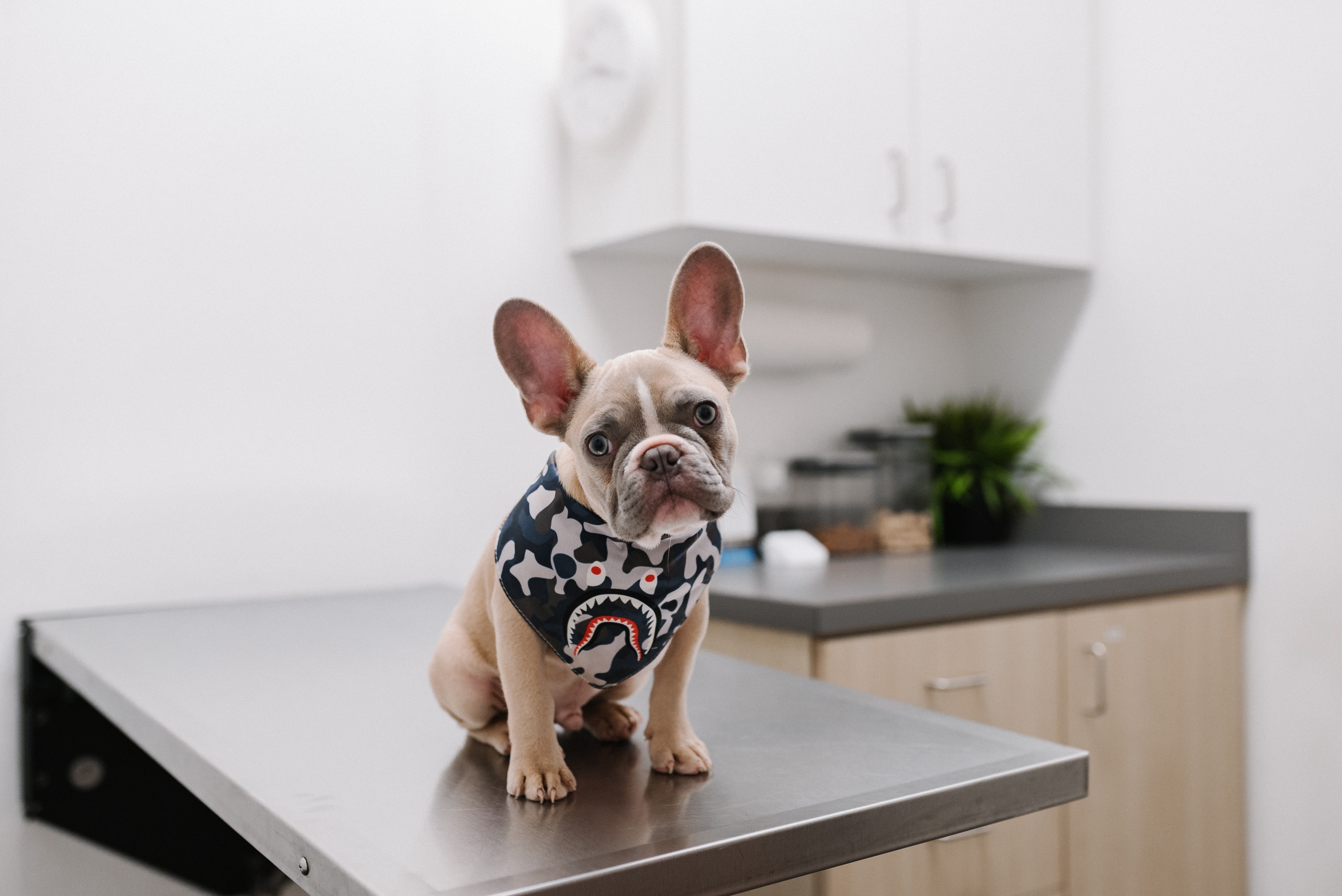
                   The Puppy Bowl's fine flying canine promoters soar to an epic Styx song.  

Puppy Bowl XXII returns to screens on Sunday, Feb. 8, beginning at 2 p.m. EST. The furry competition between Team Ruff and Team Fluff is sure to feature penalty flags, squeaky toys, Hail Mary catches, adorable side-eyes, fumbles, speedy paws and touchdowns. This Animal Planet tradition is one of the country's biggest rallies for pet adoption. This year's teams boast a highfalutin lineup, including puppies like "Button," who has soft ears and a hard game. Or "Lobster Roll" from Westbrook, Maine. She's 30 pounds of muscle. . .not the seafood kind. . . It's football, only better.  

Friday, February 14, 2025

Fur-ever love between animals that are just wild about each other. Barn owls, eagles, beavers and more mate for life.

Barn owls woo their mate with snacks. 
(Unsplash image)
Barn owls find a mate and fly with them for their entire lifespan. When finding their bird of a feather, males will bring a tasty treat to their mate to win them over. These birds spend extra time on this practice, according to an article by the British Columbia Society for the Prevention of Cruelty to Animals. It might not be a bad idea to take a page out of the Barn owl's book.

Coyotes, along with many other animals, breed in the winter. Once they find their mate, they stick with them for life, never straying far. “[They work] together to hunt, den and raise their pups each year,” writes the BC SPCA.

When it comes to beavers, the whole family is involved.
(Unspash image)
Beavers mate for life and embrace fortified family units. The BC SPCA wrote that a Beaver couple will live in a den together and raise their offspring, known as kits, together. Their kits will stay with them for two years, learning the way of the world and helping to raise their younger siblings before going out on their own. These beavers sure do love their family.

Canadian geese show love through acts of service. Staying together for life, they take turns with their responsibilities. The BC SPCA wrote, “The male and female take turns with all their parenting duties, including protecting their nest, incubating the eggs, finding food, and co-parent the young goslings.” Experts in parenting, these birds will occasionally help out other families and raise their offspring together, even adopting orphans from time to time.

Bald eagles symbolize their love and strength
through their nest. (Unsplash image)
The bald eagle love story might be the most romantic. These birds can live up to 30 years in the wild and will stay with their mate as long as they both shall live. Each year the couple will fly back to the same nest, continuously building together. The BC SPCA said, “The ever-growing nest is truly the symbol of a strong partnership.”

One set of Magellanic penguins were together for 16 years. An Ocean Conservancy article, written by Marja Diaz, said it was "one of the longest recorded love affairs" between two of these penguins. Diaz wrote that penguins will impress each other with song and dance, and of course they are always dressed to impress. Magellanic penguins will also take turns protecting their eggs and hunting to provide for each other and their young.

Tuesday, December 10, 2024

Flora & Fauna: Joyrides for rats; feral pigs forage through Hawaii; serviceberry tree history; a unique "comeback" bird

Rats learned to love driving and would opt to take longer routes to get to their destination.
(Photo by Kelly Lambert, CC BY-ND)

People aren't the only ones who love to go for a drive. Rats do, too. "I’m a neuroscientist who taught rats to drive − their joy suggests how anticipating fun can enrich human life," writes Kelly Lambert for The Conversation. "My colleagues and I found that rats could learn to drive forward by grasping a small wire that acted like a gas pedal. Before long, they were steering with surprising precision to reach a Froot Loop treat. . . . Unexpectedly, we found that the rats had an intense motivation for their driving training, often jumping into the car and revving the 'lever engine' before their vehicle hit the road. Why was that?" Read the research here.

In the lowlands of Hawaii, things are going to pigs. Feral pigs have invaded six of the state's islands with shocking efficiency and left a path of overwhelmed ecosystems in their wake. "Their impact is profound on Kaua‘i. Its mountains are home to 255 unique native plant species and 208 native birds, including 11 found nowhere else on Earth," reports Brendan Borrell of Hakai magazine. "Their wallows breed mosquitoes that spread avian malaria, contributing to 10 of Kaua‘i’s 16 native honeycreepers [birds] going extinct. . . . Despite the damage that feral pigs are causing, you can’t just shoot them on sight . . ."

Serviceberry trees are smaller trees native to North
America. (The Spruce graphic)
Like humans, a tree species has a history. The serviceberry tree was once common in the United States, particularly in colonial New England, where its bloom cycle indicated when the soil was soft enough to begin digging graves for the many settlers who didn't make it through the winter. "Preachers then went from settlement to settlement to perform funeral services," writes Jessica Damiano of The Associated Press. "Because it’s one of the earliest spring bloomers, the serviceberry is an important food source for bees, butterflies and other pollinators. Later, its berries sustain dozens of bird species and mammals. . . .There are more than 20 species of the North American native tree, which is sadly underused." Here are four favorites.

Whether it's that hefty frozen turkey, a delectable ham or ground lamb ready to be transformed into meatballs, the holidays can be a special time to be thankful for the meat on our tables. As an act of gratefulness for farm animals, a donation to an animal charity that works to make the lives of factory animals better may be in order. "Animal Charity Evaluators, a California-based nonprofit, puts out an annual guide for recommended animal charities," report Sigal Samuel and Kenny Torrella of Vox. "ACE researches and promotes the most high-impact, effective ways to help animals." Find this year's list here.
Red-cockaded woodpeckers nest in family units.
(Adobe Stock photo)

Americans love a comeback, especially when the returning member is cute, social and unique. "The red-cockaded woodpecker, an iconic bird in southeastern forests, has recovered enough of its population to be downlisted from an endangered species to a threatened one," reports Christina Larson of The Associated Press. Will Harlan of the nonprofit Center for Biological Diversity, told Larson, "It’s an amazing bird that has an unusual communal nesting structure. All nests usually cluster in the same tree, and the birds stick together as a family unit.”

Hazelnut trees are poised to flourish where they once died by the thousands. "Bullied by blight, the filbert has long failed to find a home on farms in the eastern U.S.," reports Ben Seal of Ambrook Research. "All across the eastern United States, hazelnuts had been cut down by Eastern filbert blight, or EFB, an endemic disease that chokes life from a tree. . . .But now, after nearly three decades of developing a way for farmers to overcome EFB. . . . A collection of four cultivars, [was] released in 2020, that can withstand even the intense pressure on [a] New Jersey research farm, where numerous strains of the blight are present."
AI is helping wolf trackers without using radio collars.
(Photo by ML, Unsplash)

New AI tracking technology is making it easier for wolves and ranchers near Yellowstone Park to coexist. "After 30 years of using traditional boots-on-the-ground observations, researchers are collecting wolf calls in hopes of honing population estimates, tracking wolves without using radio collars, and reducing conflict between the animals and ranchers," reports Devin Farmiloe of The Washington Post. "Learning more about how wolves communicate from a young age can shed light on pack dynamics that wildlife managers can use to better track and protect the species."

Tuesday, June 25, 2024

Opinion: Farmers are working to bridge the producer-consumer divide. Here are ideas on how to do it.

GMO crops still make some Americans leery. Explaining what
they are can help create understanding. (Adobe Stock photo)
Some Americans believe chocolate milk comes from brown cows. Some think Genetically Modified Organism crops, also known as GMOs, can cause autism. While neither of these ideas is true, they are examples of how removed many Americans are from their food sources, which is something U.S. farmers are working to change, writes Holly Spangler in her opinion piece for Prairie Farmer.

Since the early 2000s, U.S. farmers have invested millions of dollars "to help consumers understand where their food comes from and how modern ag helps feed the world," Spangler explains. "To fight the agriculture disconnect, the Illinois Farm Families Coalition has produced two Super Bowl commercials, bussed moms to farms, bussed farmers to Chicago, and reminded Illinoisians that farm families own and operate 96% of all farms in Illinois, via the We Are the 96 campaign."

But as long as Americans remain uncertain about where and how their food is produced, there will be a significant degree of distrust between farmers and consumers. "A 2022 University of Minnesota study revealed that just 24% of U.S. adults have a high degree of trust in the information they receive about food production," Spangler writes. "Only 27% of all survey respondents said they had a 'very favorable' impression of U.S. agriculture and food production. . . . It’s no surprise that farmers feel misunderstood or even under attack."

How can the farmer-to-consumer information breakdown be repaired? Through connection. Spangler explains, "What really connects with consumers? Shared values. When you share that you worry about the safety of your drinking water the same way they do, they will pay attention. And when you share that you want your family to eat healthy and safe food the way they do, they will listen."

When farmers share their values, such as humane animal
treatment, they can reconnect with consumers. (AS photo)
Even when connections can't be immediately forged, Spangler says, "There's still plenty to talk about. . . . Like, explaining the science behind GMO crops and how they don’t cause cancer, autism, allergies or gluten intolerance. . . . Arm yourself with good news. I often think back to farmer Mike Martz telling a group of Chicago women about the healthy and unhealthy fats in steak. 'The fat in the marbling is actually monounsaturated fat. That’s the healthy fat, like olive oil. We call those flecks of flavor!' Martz said. The unhealthy fat? That’s the thick white stuff on the outside that you usually cut off."

Bring the facts and be ready to have a conversation. Spangler adds, "Statistics don’t change people’s minds. People change people’s minds."

Monday, November 27, 2023

A lack of rural veterinarians puts farms and animals at risk; Congress is considering a plan to address the problem

Student loan burdens can keep new veterinarians
from choosing a rural practice. (AVMA photo)
This narrative appeared in Farm Progress: "445-2511. Long ago, I committed that number to memory," recalls Holly Spangler. "Those were the days well before phones in pockets, when I was a kid with fast legs who could be sent from the lower barn back up the hill to the house with a mission: Call the veterinarian. Near 35 years later, the feel of that number washes over me like an old friend. It's never good when you need a vet. But when they get there? Relief. They'll know what to do."

The "relief" that only a knowledgeable rural veterinarian can give is being threatened for rural areas nationwide. "Rural kids simply aren't applying to vet school," Spangler writes. "Most farm kids dream of being a vet, at least until the reality of biochemistry and eight years of school sets in. . . . At the same time, fewer young people from rural areas want to be large-animal vets. The University of Illinois may be graduating twice as many vet students compared to 30 years ago, but the majority go into small-animal practice instead of large-animal or rural mixed practice."

Besides tough hours and dangerous work, research has found that finances, particularly the burden of student loans, prevent young veterinarians from practicing in rural areas, reports the American Veterinarian Medical Association. "There are veterinarians who want to work in rural areas of America but are unable to do so — for financial reasons. The great news is that legislation pending in Congress would make it more feasible for them," through the Rural Veterinary Workforce Act bill.

If passed, the bill includes "legislation that would extend the reach of the popular Veterinary Medicine Loan Repayment Program to help more food animal and public health veterinarians relocate to rural areas facing veterinary shortages," AVMA reports. 

Currently, the program "helps veterinarians set up practice in locations designated as veterinary shortage areas by the Department of Agriculture. It does this by promising to pay off up to $75,000 of each veterinarian's student loans if they practice in the shortage area for three years," AVMA reports. But despite its benefits, there are still not enough rural vets. "The bipartisan Rural Veterinary Workforce Act would go a long way to rectify the situation. By treating VMLRP awards the same as equivalent awards made to physicians and other human health care providers, it would free up significant funds for new recipients."

To read Spangler's complete essay, "Long live the rural veterinarian," click here. To find out more about the Rural Veterinary Workforce Act, including other options, click here

Thursday, October 19, 2023

Flora and Fauna: Reconsider rats; farm-to-school lunches; spawning salmon; a 7,000 mile migration; give up raking

Illustration by Sarah Gilman, Hakai
Many people describe rats as dirty, disease-carrying rodents. But do they deserve the bad rap? "Rats are less pestilent and more lovable than we think," writes J.B. MacKinnon of Hakai magazine. "Can we learn to live with them?"

Hey, kids! What's for lunch? Farm fresh potatoes? How does that work? Some states have launched "Farm-to-school programs that prioritize getting locally produced, minimally processed products onto students’ plates in states like Maine, Minnesota, and New York," reports Shea Swenson of Ambrook Research. "Now, Oklahoma has launched its own Local Food for Schools program — but with a twist." Link here to find out more.

A trip to Salmon River offers a breathtaking experience: "I visited Salmon River in Mount Hood National Forest hoping to see my favorite Pacific Northwest inhabitants, Coho and Chinook salmon, on their way home to spawn, Claire Carlson of The Daily Yonder writes. "This is a long, difficult, and always deadly undertaking – a hero’s journey, through and through, and it’s absolutely worth seeing if you can."

A male humpback whale swims off Maui, Hawaii.
(Photo by Ralph Pace, Whale Trust)
His name is Frodo, but he's not trekking through Middle-earth to Mordor. "He's a battle-scarred male humpback whale who completed the longest-known movement for his species," reports Ralph Pace of National Geographic. "Between 2017 and 2018, the animal swam nearly 7,000 miles from Saipan, in the Mariana Islands, to Sayulita, Mexico, according to a new study published in Endangered Species Research. . . . It shows that whale migration patterns are more complex than we thought."

Hikers and animal lovers alike take heed -- it's flea-borne typhus season. FBT still lives in humid pockets of the South, California, Texas and Hawaii, reports Claire Panosian Dunavan for MedPage Today. "In fact, just last month, a letter to local physicians cited Los Angeles County's record-high count of 171 verified cases and three deaths in 2022."

Photo by Matt McClain, The Washington Post
Dread raking leaves? Don't. This year, leave the leaves, advises Allyson Chiu of The Washington Post. David Mizejewski, a naturalist with the National Wildlife Federation, told Chieu: "The fallen leaf layer is actually really important wildlife habitat. All sorts of creatures rely on that for their survival as a place where they can find food and cover. . . and even complete their life cycle.”

Tuesday, October 17, 2023

Veterinarians face pet owners who reject vaccinations; research shows fewer vaccinations could be dangerous

Forty percent of dog owners distrust vaccines, new research
shows. (Photo by Karsten Winegeart, Unsplash)


New research shows that more pet owners are resisting traditional vaccines, which could cause disease outbreaks in animals and people. "Researchers who have studied vaccine hesitancy since the onset of the Covid-19 pandemic say a growing body of evidence shows a surprisingly high level of mistrust among pet owners over vaccines for cats and dogs," reports Stephanie Armour of The Wall Street Journal. "Almost 40% of dog owners believe that canine vaccines are unsafe, more than 20% believe these vaccines are ineffective and 30% consider them to be medically unnecessary, according to a new study published in the journal Vaccine."

Commenting on the study's anti-vax skew, its lead author, Matthew Motta, an assistant professor of health law, policy and management at Boston University, told Armour, "We were shocked. In a world where mandates are being dialed back, and more pets go unvaccinated. . . .That’s a threat to our pets but also a public health threat to you and me.”

If fewer animals are vaccinated, the chance for previously controlled diseases such as rabies to return dramatically increases. Rena Carlson, a veterinarian and president of the American Veterinary Medical Association, told Armour, "We’re going to see more and more disease as we see vaccine compliance drop. . . . Vaccines can really prevent severe disease.” Armour reports, "Seventy percent of dogs in a population should be vaccinated against rabies to prevent outbreaks, according to the World Health Organization."

Social media postings about the potential harm vaccines "could do" has contributed to the anti-vaccine movement. Armour writes, "A pet owner in California with a Chihuahua said she always takes her dogs 'off the system' because she said vaccines can cause cancer, seizures or death. . . . Misinformation and misperceptions are driving a lot of the skepticism, veterinarians say. Thirty-seven percent of dog owners believe vaccines could cause cognitive problems such as autism, according to the study in Vaccine. No scientific data exists that validates the risk for people or animals."

Wednesday, October 04, 2023

Pheasant hunting offers a chance for shared camaraderie among rural and urban sportsmen and women

Nick Jorgensen and family host about 500 hunters in
Ideal, S.D. (Photo by Ariana Schumacher, Agweek)
A farming family in Ideal, South Dakota, is using its hunting lodge as a venue to teach urban hunters about food and farming. Over a weekend, barriers come down, and both sides enjoy the hunt and find some surprisingly common ground, reports Ariana Schumacher of Agweek.

The Jorgensens family owns the Lazysee Lazy J Grand Lodge and Jorgensen Land and Cattle, which hosts about 500 pheasant hunters a year. One of the appeals of pheasant hunting is camaraderie built on the challenge finding the sneaky quarry; pheasants can cleverly avoid becoming prey by circling just behind hunters.

Beyond the hunt, the Jorgensens "see the hunting lodge as an opportunity to teach visitors about agriculture and where their food comes from," Schumacher writes. Nick Jorgensen, CEO of Jorgensen Land and Cattle, told Schumacher, "We view this as an opportunity for our business to do what we call agriculture advocacy. . . . [Guests come] from large metro areas, on the coast, Nashville, Houston, California ... and they are very disconnected from agriculture."

A farm tour is a required part of the hunting experience, Jorgensen told Schumacher. "So, we load them on a bus. We drive them 4 miles away to the feedlot. We go drive through the pens. We go show them a farm field that maybe has some cover crop growing in it. We stop and look at the cows out in the grass, and it’s just an opportunity for us to tell our story on how food is made."

"While many guests come in thinking this operation is a far cry from the business world they know, they soon learn that there is common ground to be found," Schumacher reports. Jorgensen told her: "They get to our operation where we farm 15,000 acres, we have a large feedlot, we have a large cow-calf herd, we are the largest seedstock producer in the United States ... and they think, 'Wow, this is a big business, and these are largely business people. We can talk about how raising food really is a business."

Pheasants came to America from China in the 1880s.
(Photo via Meadowbrook Game Farm, Tenn.)
Because the lodge is a hunting preserve, each pheasant taken on a hunt is replaced. "They want guests to have success without diminishing the wild population," Schumacher explains. "Operating this way allows hunters to take between 4,000 to 5,000 roosters a season. . . . They hope that with this experience, their guests walk away with some agricultural knowledge while enjoying the South Dakota landscape and one of the state’s most popular pastimes: hunting."


Tuesday, October 03, 2023

There aren't enough rural veterinarians; new legislation sets out a plan to attract new graduates

Rural America needs more veterinarians.
(Farm Journal photo)
Forty years ago, there were plenty of country veterinarians to care for livestock and other food animals. That's no longer the case and lawmakers are working to address the issue. "New legislation has been introduced to address the critical shortage of veterinarians practicing in rural America," reports Rhonda Brooks of Farm Journal. The bipartisan legislation, the Rural Veterinary Workforce Act S.2829, was introduced this past week as a plan to address the steep decline of veterinarians practicing in rural areas. "A report commissioned by Farm Journal Foundation in 2022, noted that more than 500 counties across the U.S. have shortages of food animal veterinarians." 

The act would provide student loan tax benefits for graduates who choose  rural practice. The break helps "give more veterinarians the opportunity to practice in small, rural communities where their services are needed most," Brooks reports. "This change would reflect similar exemptions provided to medical doctors and other human health practitioners."

The lack of food animal veterinarians isn't just about farmers and animals; it can affect the public's food supply. Cornell University's Dr. Clinton Neill told Brooks, "The decline in food animal veterinarians in rural areas heightens concerns for several risks, including food safety threats, animal disease outbreaks, the potential passing of animal diseases to human populations, and decreasing rural economic growth. In essence, veterinarians protect the whole of the human and animal population, so it is critical that we have a strong pipeline of practitioners to work in rural areas."

Reasons new vet school graduates steer away from rural practice include "high levels of education debt that have outpaced potential earnings, especially in the rural U.S.," Brooks explains. "[The legislation] is encouraging more veterinarians to pursue companion animal practices and work in urban and suburban areas where incomes are often higher."

Legislation sponsors: Debbie Stabenow (D), John Boozman (R), Susan Collins (R), Mike Crapo (R), Kirsten Gillibrand (D), Cindy Hyde-Smith (R), Angus King (I), Amy Klobuchar (D), Jerry Moran (R), Lisa Murkowski (R), Patty Murray (D), James Risch (R), Tina Smith (D)

Friday, September 22, 2023

Will lab-grown chicken ever be able to compete? A perilous, steep climb faces the industry.

Upside Foods cell cultivators (Photo by Carolyn Fong,
The Washington Post)
Plant-based meat had hype and money and then fizzled. Now, lab-grown chicken offers a different method for a more humane, environmentally conscious meat; however, the industry faces a steep climb to feed millions, reports Tim Carman of The Washington Post. "Proponents say cell-cultivated chicken, beef and the like could dramatically cut back the amount of land and water that goes into producing the meat that will feed a growing population along with its growing appetite for animal proteins. . . . Cultivated meat could eliminate the inhumane treatment of animals raised for food. . . They could even reduce the 7.1 gigatons of carbon dioxide released into the atmosphere every year by the livestock industry, representing 14.5 percent of all human-related greenhouse gas emissions."

What's the catch? "To date, the two companies approved in the United States to sell cultivated meat can grow only hundreds of thousands of pounds per year, a microscopic fraction of the hundreds of millions of metric tons of meat produced annually around the world," Carman reports. "In the near future, dozens of other tech companies hope to join Good Meat and Upside, but even if they do, critics and industry executives say it's no sure bet that cell-cultured meat can ever scale up and compete, in quantity or price, with traditional animal agriculture."

Industry obstacles include a financial and scientific balancing act, persuading the public to eat vat-grown meat and building a "never been done before" market to a competitive scale. Josh Tetrick, co-founder and chief executive of Eat Just, which includes the cell-cultivated division Good Meat, told Carman, "My want is sometime, hopefully before I die, where the majority of meat that is produced in a given day is cultivated, not slaughtered. I think that is a massive challenge. I think it's highly uncertain. I think that it requires tens of millions of dollars in capital. It will require innovative new approaches to production that we and other companies haven't thought of yet."

For now, there is precious little cell-cultured chicken available to purchase. "At Bar Crenn in San Francisco, once a month, chef Dominique Crenn features an approximately one-ounce portion of Upside chicken as part of her six-course, $150 tasting menu," Carman writes. "The Upside bird at Bar Crenn is composed of 99 percent chicken cells: It's a dense, meaty nugget. . . . The resulting chicken is undeniable: It tastes like the kind of bird that once was common in America before the poultry industry sacrificed flavor for rapid growth. It may be the most chicken-y chicken I've tasted in a long time."

Feeding the country is a big challenge no matter who "grows" the meat. "Whether Upside, Good Meat and other companies can fix the problems of industrial animal agriculture is an open question. For years, the cultivated-meat industry has been an object of great hope — and substantial doubt," Carman writes. "It's a tension that has played out between company executives who promise that the era of guilt-free meat is just around the corner and critics who say that the industry will never compete with large-scale animal agriculture."

Thursday, August 24, 2023

'Natural beekeepers' have changed their practices with less intervention and more bee-friendly conditions

The Western honey bee, Apis mellifera, is millions of years old.
(Shutterstock photo)
There’s more than one way to keep bees, including one that focuses more on leaving the bees alone. Common apiary practice includes human intervention focused on honey production, but another way exists called “natural beekeeping,” writes Sam Knight of The New Yorker in an article titled "Is Beekeeping Wrong?" “Natural beekeepers leave their bees alone. They seldom treat for disease—allowing the weaker colonies to fail—and they raise the survivors in conditions that are as close as possible to tree cavities.”

Mananged bees are kept in boxes, “as opposed to a snug nest high in a hollow tree. Most beekeepers’ colonies are much larger than those which occur in the wild, and rival colonies might be separated by only a few yards, rather than by half a mile,” Knight explains. “Much of the bees’ honey, which is supposed to get them through the winter, is taken before they have a chance to eat it.”

On balance, natural beekeeping’s foundation reflects deep respect for the Western honey bee, “which, as a species, Apis mellifera, is millions of years old. (It was introduced to North America by European settlers in the 1620s.) Although people have harvested its honey and wax—sweetness and light—for thousands of years, the honeybee has not been tamed," Knight writes. Gareth John, a natural beekeeper, told Knight: "Domestication is a mutual process. You could never domesticate a robin. Bees are the same as robins. They will quite happily live in a nest box that you give them. But they’re not dependent on you. They don’t need you.”

Natural beekeepers find joy in the mystery of bees. "They treasure the bees for their own sake—like a goldfinch that nests in the yard—and have an evangelical spirit, as if they have stumbled on a great secret. They are disdainful of conventional beekeepers," Knight recounts. Some natural keepers don't sell or even take bee honey. John told Knight, “It’s not my honey to sell." Knight adds, “Another natural beekeeper, who abstains from taking honey altogether, referenced ‘When Harry Met Sally’ to explain his position: ‘There was this line, Sex always gets in the way of friendship. I think honey always gets in the way of us appreciating bees.”

Wednesday, July 05, 2023

Calif. law giving sows more room takes effect; state delays enforcement until Jan. 1; U.S. pork industry must adjust

Piglets and a sow in a farrowing crate on a farm in Walsh, Illinois, that meets
California’s new standards. 
(Photo by Jeff Roberson, The Associated Press)
"It seemed for a while that California’s controversial pork law would take effect only when pigs fly," but went into effect Saturday, July 1, and will have an impact far beyond the state's borders, reports Noah Goldberg of the Los Angeles Times.

Now, pork sold in California must have come from pigs raised in farrowing crates that have at least 24 square feet of floor space, "allowing them to fully turn around in their living area," Goldberg notes. The law, passed in a 2018 referendum and cleared May 11 by the U.S. Supreme Court, "targeted the practice among some farmers of keeping sows in cramped stalls separate from other pigs. . . . While the law went into effect Saturday, the state allowed for pork killed before that date to be sold in California through the end of the year."

As the court case proceeded, the Biden administration sided with pork producers, who "argued that California, which consumes around 15% of pork nationwide but only produces a marginal amount, should not be allowed to dictate the rules of pig farming to farmers outside of the state. Opponents of the law said it would be a massive burden on producers and that the costs of the changes would be passed on to consumers." They also warned of a slippery slope in regulation of animal agriculture.

Thursday, June 22, 2023

Administration moves to restore some blanket protections for threatened plants and wildlife; arguments ensue

Two northern spotted owls peer at a photojournalist. (Apache-Sitgreaves
National Forest/Flickr photo, CC by NC ND 2.0, via Audubon)

The Biden administration has moved to reinstate some plant and animal protections the Trump administration had nixed or weakened in 2019, report Matthew Brown and John Flesher of The Associated Press. "The Fish and Wildlife Service said it would reinstate a decades-old regulation that mandates blanket protections for species newly classified as threatened." The protections were removed "as part of a suite of changes to the application of the species law that were encouraged by industry, even as extinctions accelerate globally due to habitat loss and other pressures."

Along with the restored protections, "Officials also would no longer consider economic impacts when deciding if animals and plants need protection. And the rules make it easier to designate areas as critical for a species' survival, even if it is no longer found in those locations," Brown and Flesher write. "That could help with the recovery of imperiled fish and freshwater mussels in the Southeast, where the aquatic animals in many cases are absent from portions of their historical range, said Fish and Wildlife Service Assistant Director Gary Frazer. . . . He said [the] proposal would restore 'baseline' protections so species don't get pushed further toward extinction."

The move will meet pushback from Republican lawmakers "who say President Joe Biden's Democratic administration has hampered oil, gas and coal development, and favors conservation over development," AP reports. "Industry groups have long viewed the 1973 Endangered Species Act as an impediment. Under Trump, they successfully lobbied to weaken the law's regulations as part of a broad dismantling of environmental safeguards. Trump officials rolled back endangered species rules and protections for the northern spotted owl, gray wolves and other species."

AP reports, "Fish and Wildlife Service Director Martha Williams said in a statement that the changes reaffirm our commitment to conserving America's wildlife and ensuring the Endangered Species Act works for both species and people.'" Some Western states may disagree. "Jonathan Wood with the Property and Environment Research Center, a free-market policy group based in Bozeman, Montana, said the Biden proposal could hurt state and private landowner efforts to recover species by imposing more punitive regulations that undermine voluntary conservation incentives."

While the Biden administration's changes will reverse some of what the Trump era dropped, some "environmentalists complained that some Trump-era changes would remain intact. . . . One requires agencies to protect living spaces for imperiled species only when development would harm an entire habitat and not just part of it. That could remove obligations to fix damage from logging trees that are needed by spotted owls unless all of their 9-million-acre habitat zones were affected, said Stephanie Kurose at the Center for Biological Diversity. . . . Biden's proposal also retains a Trump change allowing agencies to approve projects without guarantees habitat harms will be reduced." McCrystie Adams, with Defenders of Wildlife, told AP: "This makes it easier to authorize piecemeal destruction of critical habitat."

Friday, May 19, 2023

Iowa editor reminds pork producers: 'The customer comes first' and Calif. voters say sows need room to turn around

By Art Cullen
Storm Lake (Iowa) Times Pilot

The U.S. Supreme Court cut sows some slack last week, which caused a lot of squealing around Iowa where we forget that the customer comes first.

The high court on a 5-4 vote last Thursday upheld Proposition 12, a 2018 California ballot initiative that drew 63% voter support, demanding that gestating sows be allowed room to turn around. Prop. 12 also called for cage-free poultry production and more space for veal calves.

The lawsuit was brought by the American Farm Bureau Federation and the National Pork Producers Council of Ankeny. They said they would evaluate their next steps.

Next steps should be getting with the program and responding to consumer concerns. . . . The poultry industry largely adapted to cage-free production years ago when McDonald’s demanded it based on consumer preference. The pork industry failed to heed the warnings and chose instead to fight the will of the people of California.

Art Cullen
Iowa is the leading purveyor of pork in the giant California market. The pork complex generally claims the costs of 24-foot gestation stalls will be catastrophic. Meatpackers were somewhat restrained. Hormel, for one, reported that complying with California production standards will have no material effect on the company’s bottom line. Tyson said it will comply.

The California electorate is not 63% liberal. It is a bellwether because of the sheer size of the Golden State economy. Voters were well aware potentially higher pork costs, and they were equally cognizant of threats to animal and human health from piling more livestock on top of more livestock.

Iowans are similarly aware, consistently voting for cleaner water while being rebuffed by legislators and agri-industry. The legislature continues to pass "ag gag" laws because they don’t like the picture of hogs jammed into confinement. They know what their nose tells them — that this is about enough, already. Yet more hogs keep coming.

The court’s ruling will require retrofitting of old sow facilities and will reduce throughput at the margins. It will not put swine feeders on the rocks. It will force the industry to change with consumer demand. We were told that we needed consistent, lean hogs of a certain structure because of consumer taste, when in fact it was to standardize the carcass for more efficient processing.

This is real consumer action at the ballot box. The court challenges the notion that the livestock industry can sneer at regulations and rationalize its excesses.

Not a single independent pork producer will be affected. Whatever is left of them. They did not depend on locking a sow down. They performed husbandry in the farrowing house. That costs more. Lord forbid that a producer with 30 sows might gain a foothold. . . .

Eventually, when the industry gets off its arrogance hangover, it will figure out that the customer is always right. Or, at least, that the Supreme Court has ruled. Let’s get on with raising hogs the way our customers actually want.

Friday, May 12, 2023

By 5-4, Supreme Court OKs Calif. ban on tight confinement of sows; ruling has broad implications for animal agriculture

Sows in gestation crates that are illegal in California
(Photo by vinsenssandy/Shutterstock)
The U.S. Supreme Court has "preserved a California law banning the sale of pork in America's most populous state from pigs kept in tightly confined spaces, rejecting an industry challenge claiming that the voter-backed animal welfare measure impermissibly regulates out-of-state farmers," reports Nate Raymond of Reuters. Pork producers contended that California's Proposition 12 tells out-of-state pork producers that if they want to tap into California's pork market, California voters can indirectly tell them how to raise their pigs. And that might not be all. The decision "was met with disappointment by many in U.S. agriculture, claiming it sets a dangerous precedent for animal agriculture moving forward," Morning AgClips reports.

"The justices voted 5-4 to uphold a lower court's dismissal of a lawsuit by the National Pork Producers Council and the American Farm Bureau Federation seeking to invalidate the law," Raymond reports. The lobbies argued that the Constitution's commerce clause, which gives the federal government the power to regulate interstate commerce, keeps the states from doing so in this case. NPPC President Scott Hays of Missouri told Raymond, "Allowing state overreach will increase prices for consumers and drive small farms out of business, leading to more consolidation."

Conservative Justice Neil Gorsuch, wrote in the decision, "While the Constitution addresses many weighty issues, the type of pork chops California merchants may sell is not on that list." Chief Justice John Roberts and fellow conservatives Samuel Alito and Brett Kavanaugh, and liberal Justice Ketanji Brown Jackson, "said they would have allowed the challengers to the California law to pursue their claim in the lower courts," Raymond reports.

"California farms collectively are only a small part of the $26 billion-a-year U.S. pork industry. The size of cages used at American pig farms is humane and necessary for animal safety, according to the industry, which asserts that California's law gives the state unwarranted influence over the pork sector. President Joe Biden's administration sided with the pork producers in the case, saying that states cannot ban products that pose no threat to public health or safety due to philosophical objections."

Wednesday, May 03, 2023

Court axes regulatory exception for mid-sized factory farms; hundreds of them will need environmental assessments

A beef-cattle feedlot (Photo via Northern Ag Network)
A federal court has thrown out an environmental examption for some concentrated animal feeding operations. "Medium-sized CAFOs receiving Department of Agriculture loans will be required to have an environmental assessment after a federal court vacated part of a 2016 Farm Service Agency rule," reports Todd Neeley of Progressive Farmer. "The court's ruling is likely to affect hundreds of CAFOs across the country. . . . FSA adopted a rule in 2016 that exempted from environmental review livestock facilities that confine up to 2,500 pigs, 1,000 beef cattle, 700 dairy cows, 125,000 chickens or 55,000 turkeys."

FSA's 2016 exemption sped up USDA loan approvals, which one individual called an "onerous impediment to obtaining financing for operations that will often include young or beginning farmers," Needley reports. Judge Colleen Kollar-Kotelly of the District Court for the District of Columbia said the FSA had violated the National Environmental Policy Act. "USDA admitted the FSA failed to provide notice and comment before creating the exemption," Neeley notes. "During the five years that the case has been pending, the agency failed to offer mechanisms for community feedback or evidence that medium-sized CAFOs lack environmental impact."

Poor environmental outcomes and insufficient evidence supporting the exemption have made factory farms controversial. "CAFOs have been a point of contention between the livestock industry and environmental activists since they began to proliferate in the 1990s, overtaking small, pasture-feeding operations as the dominant form of animal agriculture in the U.S.," reports Madison McVan of the Midwest Center for Investigative Reporting. "One large CAFO can easily produce more than one million tons of manure per year — more than the yearly waste of a large city." 

An exact count of how many CAFOs will be affected is not available, but the animal-welfare groups that filed the lawsuit found through the Freedom of Information Act that "The FSA made 130 direct loans of more than $100,000 or guaranteed loans of more than $300,000 each to animal facilities in Indiana alone from August 2016 to August 2018," Neeley reports. "The FSA did a review of its loan decisions for 2010 and 2011, finding there were more than 650 loans issued to broiler chicken medium-sized CAFOs alone."

"The ruling makes no mention of the economic impact, including shortages and price increases that might result from the newly added environmental hurdles," reports Dan Flynn of the Food Safety Network. However, the judge's opinion noted, "Although FSA admitted error in September 2019, to date, it appears that FSA has taken no action to correct its error . . . More importantly, however, there is nothing in the record to confirm FSA's insistence that it will be able to substantiate the challenged (exemption) on remand."

Monday, May 01, 2023

Animal-welfare activists may be actively surveying small beef farmers; N.Y. farmers on alert for trespassing and theft

Newfane, N.Y. (Wikipedia map)
Herd protection is on the minds of several small, New York-based beef farmers, but not because the animals are sick — because they might be stolen, reports Tom Venesky of Successful Farming. On a recent mid-April morning, "Paul Strobel, who operates a small market on his family beef farm in Newfane, N.Y., pop. 9,700, saw two people — a man and a woman — standing in his driveway with cellphones. They appeared to be taking video of his cattle, barns, gates and locks. Strobel ran to confront the intruders, but they jumped into a car and fled. . . . The Niagara County Sheriff's Office documented the incident, and Strobel learned that another farmer in the area reported two people with the same vehicle description."

The surveillance may stem from an April meeting of animal-welfare activists. "The day before the incident at Strobel's farm, the group Project Vegan 716 held a meeting at its Vegan Center in Tonawanda, which is 20 miles southwest of Newfane. California-based attorney Wayne Hsiung, who moderated a panel discussion at the meeting, said the event was held to promote 'open rescue,' which he said is 'the act of openly giving aid to animals who are suffering from neglect or abuse'," Venesky reports. "Newfane has been in the spotlight before for animal welfare activity. Last year, Tracy Murphy, owner of Asha’s Farm Sanctuary, was charged with larceny after two beef cattle from a nearby farm ended up on her property. Murphy refused to return the cattle and was charged."

Strobel and other area farmers are on high alert. He told Venensky, "We’re a small farm that raises beef, pork and vegetables for our retail market. It’s very unsettling to see people on your property taking video of your animals and buildings. . . . I’ve barely slept since this started. . . .  go out and patrol my farm at night because I don’t know what these people are going to do.” Niagara County Sheriff Mike Filicetti told Venesky, "Any illegal action taken by these individuals will be treated as criminal activity. The entering of private property, entering of buildings or stealing of livestock is a crime." Venesky reports, "Niagara County legislator Shawn Foti, whose district includes Newfane, called the surveillance and 'open rescue' discussion a 'real threat.' . . . Foti described the farms in his district as small, family-run operations that take pride in caring for livestock. Farmers don’t deserve the threats posed by the groups. . . .The entire concept of surveilling farms and conducting rescues presents a dangerous situation."

New York Sen. Rob Ortt (R) and Sen. George Borrello held a press conference at Strobel’s farm to condemn the 'open rescue' activity. . . . Ortt announced plans to introduce legislation to amend the law related to burglary in the second degree to include unlawfully entering or remaining on farmland with intent to commit a crime. . . . This would target those who enter farmland to steal livestock and create severe penalties for stealing livestock. . . . Ortt said, 'Let’s be clear. These are not advocates. These are extremists who believe they have a right to steal from our hard-working local farmers. . . .Our farmers have every right to protect their families, their businesses and their property.'" Strobel told Venesky, "These people are radicalized, and many came here from out of the area. It’s extremely dangerous. If this could happen in Newfane, it can happen to any farming community."

Thursday, March 09, 2023

Flora/fauna quickies: Holding a baby goat can cheer you; corvid birds can 'ponder the content of their own minds'

Baby goats (Photo by Rachel Schlegel)
"Holding a baby goat is very therapeutic. It calms you and brings you so much joy. It does wonders for coping with anxiety and depression.,” says Friends of the Pennsylvania Farm Show Foundation. And baby goats aren’t cranky and stubborn like their elders!

To the south, pigs "play in the mud, run around the large field they’re sectioned off in, and enjoy the nutritious food given to them daily. Eventually, they will be sold to fine dining restaurants and artisan butcher houses throughout the D.C., Maryland and Virginia area," reports Paula Phounsavath of The News Virginian of Waynesboro, where "a family-owned pig farm has created a sustainable pork production."

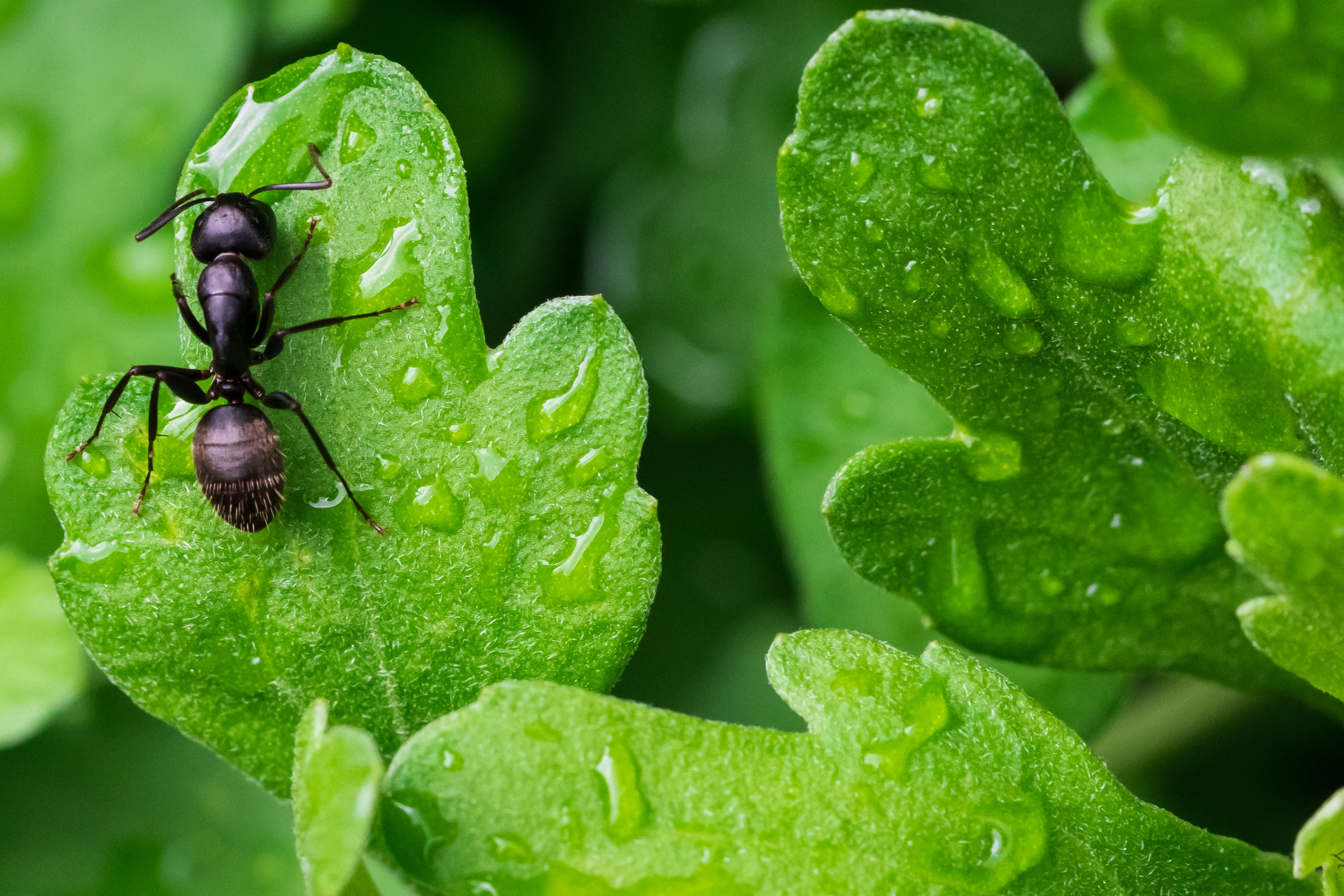
An ant at work (Photo by Shannon Potter, Unsplash)
Dogs, worms and ants have an amazing thing in common: They can be trained to detect markers of illness, from Covid-19 to tuberculosis. "Next time you’re irritated that ants have gotten into your kitchen, you might take a moment to consider their extraordinary powers of perception," reports Liz Langley of National Geographic.

What can bring your hope for humanity back? A horse show. The Horse World Expo returned to Pennsylvania for nickers, neighs and whole lot of horsing around.

Time to cook cabbage. Rumor is that cauliflower and Brussels sprouts may have been ousted. "Cooked the right way, cabbage can more than rise to the occasion." We agree.

Virginia is expecting its best oyster harvest in 35 years, the Richmond Times-Dispatch reports.

The rare Steller's sea eagle has returned to Maine.
(Photo by Zachary Holderby, The Associated Press)
Enjoy the Great Backyard Bird Count? Here's some more fun. "A rare Steller’s sea eagle native to the eastern coast of Asia, which caused a birding frenzy last winter, has returned to Maine. . . . If you're taking a specific trip, like to Japan in the winter, going out on a boat to some ice floes, that’s kind of your only chance to see one . . . But now, it’s just hanging out in Midcoast Maine.”

Of woods and men. Sounds more exciting than mice. The Conversation discusses the reintroduction of wolves in Colorado. "Aldo Leopold, the famed conservationist and professor of game management at the University of Wisconsin, believed that moral beliefs evolve over time to become more inclusive of the natural world. And what’s happening in Colorado suggests Leopold was right."

Crows are more intelligent than we thought. "New research shows that crows and other corvids "know what they know and can ponder the content of their own minds . . . This is considered a cornerstone of self-awareness and shared by just a handful of animal species besides humans."

With extra work and a little green thumb, you can make money from your garden. Consider growing perennial crops as a side hustle.

The glorious night sky! Eleven fantastic things to write on your calendar. "In the coming year, planetary alignments, perfectly timed meteor showers, and a pair of solar eclipses will delight stargazers around the world."