Showing posts with label misinformation. Show all posts

Friday, May 23, 2025

What's so appealing about fake health information and how can people combat it?

Stopping to check the facts helps stem the spread of misinformation.
(World Health Organization adaptation via The Converation)
People from all walks of life can get sucked into believing and sharing fake health information from the internet. In his article for The Conversation, global health communication scholar Angshuman K. Kashyap explains why false health data can be so believable and how people can combat it.

Fake health information is written to appeal to human nature. Whether it's a sensationalized problem, more juicy details on a controversial issue, or a simple answer to a complicated problem, many people will keep reading. Kashyap writes, "Fake health information often appears to be true because it mixes a grain of truth with misleading claims."

False health information often looks professional. "In 2019, an article with the false headline 'Ginger is 10,000x more effective at killing cancer than chemo' was shared more than 800,000 times on Facebook," Kashyap explains. "The article contained several factors that make people feel an urgency to react and share without checking the facts: compelling visuals, emotional stories, misleading graphs. . ."

Not only will individuals read and not question data from a fake health story, they will share it, which "has real-world consequences," Kashyap adds. "For example, studies have found that Covid-19-related fake information reduces people’s trust in the government and in health care systems, making people less likely to use or seek out health services."

To detect false health information, researchers and public health organizations have developed three strategies to help health consumers verify health information:
  • Double-check health claims with an additional search. Kashyap adds, "Never rely on a single source. Instead, enter the health claim into a reputable search engine like Google and see what trusted sources have to say. . . . Reliable fact-checking websites such as FactCheck.org and Snopes can also help root out fake information."
  • Research your information source. Look at a site's "About Us" page, search for information about the author and check dates on cited research and the date of the information's publication. Kashyap writes, "Information on the internet keeps circulating for years and may not be the most accurate or relevant."
  • Still don't know what's what? "Don’t share," Kashyap advises. "Forwarding unverified information can unintentionally contribute to the spread of misinformation and potentially cause harm, especially when it comes to health."

Tuesday, May 13, 2025

Opinion: The ongoing measles outbreak was 'avoidable.' Now what?

Map by Sarah Milotte, The Rural Index via The Daily Yonder

As measles cases in the U.S. top more than 1,000 diagnosed infections, medical experts Richard Hughes and Anna Larson call the ongoing outbreak "an avoidable public health failure," in their opinion for MedPage Today.

Measles was declared "eliminated" in the United States in 2000, but its status is evolving. The most recent eruption of the highly contagious disease began in rural Texas and "continues to unfold with additional deaths in Texas and New Mexico, an exposure at a major U.S. airport following an identified case in Maryland, and expanding to over half of U.S. states," Hughes and Larson write.

The newly appointed Secretary of Health and Human Services, Robert F. Kennedy Jr., has added to the confusion about the measles, mumps and rubella (MMR) vaccine by endorsing "unproven treatments for measles and emphasizing vaccination as a personal choice rather than a public good," they write. When "he finally recommended measles vaccination to address the snowballing case count, he then ordered the search for new measles treatments instead of promoting vaccination."

Searching for a new measles "cure" won't stop the continuing spread of the disease, but beefing up MMR vaccine rates could. Instead, the administration "has canceled research related to vaccine hesitancy and misinformation," Hughes and Larson add, "and announced a requirement that all new vaccine products undergo placebo-controlled clinical trials prior to licensure."

What is likely to happen? "We can expect vaccination challenges to compound, immunization rates to decline, and vaccine-preventable diseases to rise," Hughes and Larson write. "A comprehensive U.S. approach to shore up our measles defenses and preserve elimination status is imperative, but unlikely."

What can be done to slow the current measles outbreak down? "Consistent application of proven public health measures -- expanded vaccine access, particularly in underserved populations, and improved disease and vaccine surveillance systems," according to Hughes and Larson. "The need to combat misinformation and instill public trust in vaccines is obvious, but bears repeating. . . . Now is not the time for complacency; it's time for action."

Wednesday, November 15, 2023

Facebook, Instagram allow ads saying election was stolen; AP allows weeklies to use its story debunking the claim

Meta Platforms is letting ads on Facebook and Instagram question the legitimacy of the 2020 election, The Wall Street Journal reports. "Meta made the change last year, but it hasn’t gained wide attention," the Journal's Salvador Rodriguez writes. "The company decided to allow political advertisers to say past elections were 'rigged' or 'stolen' but prevented them from questioning the legitimacy of ongoing and coming elections."

The change was one of several "the social-media company and other platforms have made to loosen constraints on campaign advertising," Rodriguez reports. "Executives at Meta made the decision based on free-speech considerations after weighing past U.S. elections in which the results might have been contested by a portion of the electorate, according to people familiar with the issue."

"An Associated Press review of every potential case of voter fraud in the six battleground states disputed by former President Donald Trump has found fewer than 475 — a number that would have made no difference," AP's Christina Cassidy reported in December 2021. At the request of the Institute for Rural Journalism at the University of Kentucky, AP agreed in 2021 to allow weekly newspapers that are not AP subscribers to republish the story and its sidebars with details on individual states, if they alos include links to it and the sidebar. (The institute publishes The Rural Blog; if you have republished the AP material, please email al.cross@uky.edu.)

"Some candidates already appear to have questioned elections in ads," Rodriguez reports, noting that Trump ran a Facebook ad in August saying “We had a rigged election.” Rodriguez writes, "Katie Harbath, a former Facebook public-policy director who wasn’t involved in the decision, said it would be challenging for social-media companies to preach free speech yet ban politicians from questioning the results of the 2020 election, which has become such a significant part of the public discourse." Harbath leads the elections program at the Integrity Institute, which studies and addresses the social harms of internet platforms.

Wednesday, July 05, 2023

Without print journalism, communities will be fragmented and uninformed, award-winning Minnesota editor says

Reed Anfinson holds a freshly printed copy of the Swift County Monitor-News. (Associated Press photo by David Goldman)
By Reed Anfinson
Swift County Monitor-News, Benson, Minn.

This column is based on the speech given on acceptance of the Eugene Cervi Award at the annual meeting of the International Society of Weekly Newspaper Editors in Reno, Nevada, June 24.

There is no doubt that if print journalism disappears, so will a citizen’s focus on and knowledge of local civic news. Left to self-motivation to seek out news on the internet, many will put it aside for later, never to return to it.

Their news consumption will become infrequent, scattered to those times when they may be directly affected by the action of a council, county board, zoning committee, or school district. But then putting it aside won’t matter because it won’t exist – no one will be left covering local news.

In America, 76% of the communities are under 5,000 population – more than 14,600. These communities most likely cannot sustain a news operation based on digital revenue alone. We don’t have the views or advertising to generate anywhere near the income needed.

Despite the loss of nearly 2,500 newspapers in America, despite the loss of tens of thousands of reporters, and despite the inability of many quality internet news sites to make a profit leading them to cut staff or close, we still hear and read the overly optimistic promises of a rich journalistic internet world.

The lies are exposed in the reality of steadily declining coverage of public bodies and life in our communities. 

We’ve been told that it can be folly to “romanticize print as somehow superior to digital-only” news. We subscribe more to a famous quote often attributed to Albert Einstein: “The definition of insanity is doing the same thing over and over and expecting different results.”

For two decades, we’ve been promised a revolution of civic participation built on the broad, deep knowledge citizens will gain from online reporting, that it will be a participatory process where we educate one another. The reality of the past two decades has exposed the faults in this thinking.

What we have experienced is an internet world that has fractured society into warring social and political groups no longer willing agree to disagree, but viciously attacking one another. Death threats, shunning, misinformation, and ridicule are more common than harmony, compromise, and enlightenment.

Lies gain power, and the truth is harder to find. With the coming explosion of artificial intelligence software that allows anyone to craft eye-catching and reasonably sounding internet stories and videos that are entirely false or misleading, our ability to sort truth from lie will become increasingly challenging.

Print’s loss matters; the impact of its absence visible. Rather than a representative democracy strengthened by more knowledge on the internet, we find wherever a newspaper has disappeared the opposite is happening. Where a newspaper closes fewer people vote, fewer people run for office, more incumbents are re-elected, people become more rigid in their voting, sticking to one party or the other, and malfeasance in office increases.

It is visible in the empty reporter desks in newsrooms where the print product has declined as newspapers transition to digital only. What isn’t visible, at first, is the impact of the lost reporting.

Five underlying qualities of journalism give community newspapers equal standing with the government, business, and social powers that make up a community:
  • Survey after survey shows that the local community newspaper is the most trusted news source. We are trusted because people know us and feel they can give us direct feedback if they think we are unfair or slanted in the news we write.
  • Our financial strength, now significantly weakened, gave us the resources to challenge power when it would frustrate the public’s right to know. Individuals lack the interest and finances to challenge government officials and attorneys.
  • We show up – day after day, month after month, year after year. The public officials know that we will write stories about their actions or inaction at every meeting. We will follow up, reminding citizens of past successes and misdeeds.
  • Our knowledge of the laws that govern public officials, such as the Minnesota Open Meeting law, ensures transparency and accountability. Citizens lack this knowledge allowing them to be deceived in their efforts to attend meetings or gather public information.
  • Perhaps our most powerful attribute today is our physical presence.  Newspapers have a deep reach among citizens in their communities. Elected leaders know that a story printed in the newspaper will circulate throughout the towns and rural areas. It is found on the store counter, around the house, in the library, and in the café every day of the week – its headlines, advertising, and photos catch your eye. Headlines in print reach out to everyone who passes by. People who don’t subscribe still see what is happening in their community at no charge. Without the print newspaper, many would never see those headlines or stories.
Nothing replaces the community newspaper’s ability to hold those in power accountable. But as our financial strength, staff with knowledge of laws protecting citizen rights, persistent coverage, and physical presence erode, American representative democracy is weakened.

As they have lost print subscribers and advertising dollars, some newspapers increasingly focus on their digital products. They put up paywalls and, in the process, exclude most of their local residents from the news of their community.

If the news that binds us together in common purpose is gone, if the stories we share about our fellow citizens disappear, our sense of community weakens. When we don’t feel shared responsibility, the vital work that improves our schools, healthcare, public safety, recreational facilities, and cultural experiences fades. These aren’t exaggerations; they are realities based on what happens in communities that lost their newspaper.

At 95% of the public meetings we cover, we are the only person in the room who isn’t an elected official or staff. Though there is an online link to the meeting, no one tunes in. Without a community journalist in the room, the stories of your local government won’t be told.

A newspaper’s physical presence is a constant reminder that there is news you should be paying attention to in your community.

When you sit down with a print newspaper, you are more focused than you are online, where you suddenly find yourself on social media, shopping, or skimming sites for entertainment.

Print is patient. It is present. It is a physical reminder of community. It is community pride and spirit. Online, it loses those unique qualities that unite us with a common identity. Print is local.

Newspapers are a public good that deserves public support. Urge your members of Congress and the Minnesota Legislature to support legislation that helps finance their future.

Tuesday, June 27, 2023

TV critic says how we cover lies is the biggest media issue; Poynter writer says it's lack of resources to cover local news

Media writer Tom Jones speaks as TV critic Eric Deggans
listens Tuesday. (Poynter Institute photo by Mel Grau)
"How journalists cover lies is the most important issue in news media," the Poynter Institute headlines over a story about an event at its St. Petersburg, Fla., campus Tuesday. "More politicians are taking advantage of people’s willingness to believe based on gut rather than fact. Solutions for journalists are sparse."

The headlines were based on remarks by NPR TV critic Eric Deggans, who said “Donald Trump took that to the extremes and challenged how journalists cover someone. Typically, when someone is lying, journalists report that they’re lying and then they get embarrassed and stop doing it. That stopped happening.”

"Deggans cited the challenges to fact-based truth as the No. 1 problem that journalists face today," Poynter's Ren LaForme reports. "Solutions are sparse. CNN anchor Kaitlan Collins attempted to fact-check Trump live during the network’s infamous town hall in May, only for Trump to steamroll her, leveraging the audience of supporters for momentum. 

“People think it’s a magic act, where you can fact-check someone the minute they say something,” but that’s not true, Deggans said.

LaForme writes, "As the 2024 presidential election cycle ramps up, news media aren’t doing themselves any favors by covering politics in the same broken ways they have in the past, Poynter senior media writer and event co-speaker Tom Jones said. . . . From his point of view, dwindling resources in local news is the most pernicious issue in news media."

“What’s going on at school boards? City councils? There are fewer and fewer reporters to cover them,” Jones said. “We’re trying to do the same things with a lot less. … These are hard-working journalists, but we can’t cover everything. And it affects each and every one of us.”

Wednesday, May 31, 2023

A rural teen's death was a talking point in national politics for 10 days last fall, but then the facts told a non-political story

Buck’s n Doe’s Bar, site of the killing.
(Photo by Lewis Ableidinger, The New York Times)
In the wee hours of a September night in 2022, Shannon Brandt and 18-year-old Cayler Ellingson, both of McHenry, N.D., population 64, were alone in a bar's parking lot, drunk and arguing. Brandt decided to leave the conflict, got into his Ford Explorer, and ran over Ellingson, who later died, report Charles Homans and Ken Bensinger of The New York Times. Brandt's motivation for killing Ellingson was not immediately clear beyond "a state highway patrol officer's report, which suggested Brandt killed Ellingson because he believed he was a 'Republican extremist.'" Like many initial investigation reports, this idea changed within a few days.

Despite sparse facts from a few initial reports, right-wing supporters looking at mid-term elections took the story and began a narrative of a deranged, white Democrat who ran over and killed a teenager because he was Republican. "Former President Donald J. Trump and Rep. Marjorie Taylor Greene of Georgia were among a chorus of Republican politicians — including several members of Congress and the attorney general of North Dakota — who rushed to condemn Brandt. . . . The episode quickly became an example of another media phenomenon: the distortion of complex, painful events to fit an opportune political narrative."

The facts supporting Brandt as politically active or a Democrat do not seem to exist, but the narrative persisted. "Although evidence in the case suggests the two men argued about politics that night, law-enforcement officials concluded quickly that the killing was not politically motivated," Homans and Bensinger write. "Gateway Pundit, a right-wing site that regularly seeds stories in the conservative media, wrote its own version under the headline 'Crazed North Dakota man runs over and kills teen for "extremist" Republican views'."

For 10 days, "The case was discussed on at least seven Fox News shows. The coverage continued well after law-enforcement officials had said the killing was not politically motivated, a point that was only occasionally mentioned on air," the Times reports. "Eleven days after Ellingson's death, the county prosecutor, Kara Brinster, dropped the initial charge of vehicular homicide. . . for a new one: intentional homicide, which carries a sentence of up to life in prison. . . . Then, as quickly as it swelled, the media frenzy receded. . . . Fox News's hosts did not mention the case on-air again after Sept. 30."

It seemed the midterms talking point had lost its steam. "Earlier this month, after Brinster dismissed the intentional homicide charge, the decision merited little more attention than a front-page story in The Foster County Independent and an article by The Associated Press," the Times reports. "As Brandt agreed to plead guilty, Jack Posobiec, a right-wing podcaster, took up the story again. . . . He singled out the prosecutor, claiming she had gone soft on Brandt. . . . . He posted her photograph and phone number online and told listeners to call her to complain. Posobiec told his listeners, "Maybe Kara Brinster should be prosecuted. Maybe we should look into her."

Sunday, April 16, 2023

N.Y. Times needs to do more to understand the country between the coasts, executive editor says at conference

New York Times Executive Editor Joe Kahn replies to a question from moderator Evan Smith at the conference in Texas.
The New York Times needs to do more to understand and report on the whole United States, its top editor said Saturday at the 23rd annual International Symposium on Online Journalism in Austin.

"We have too many people on the coasts," Executive Editor Joe Kahn said. "We want to invest more in understanding what's happening around the country."

That includes hiring people from diverse geographies, Kahn added later. "We want to have a newsroom that looks like the country and increasingly like the world," because the Times is a global enterprise, he said. It has 10 million digital subscribers and is aiming for 15 million.

A questioner in the audience at the University of Texas asked how important ideological diversity is to the Times newsroom. "It's very important," Kahn replied, not by asking applicants about their political opinions, but seeking them "from a variety of geographies" where they are exposed to a wider range of views than on the coasts. He mentioned "places like Ohio" and hiring of people from "evangelical backgrounds," as well as military veterans.

Kahn said the Times continues to pursue journalism with a sense of objectivity, but in support of democracy, saying that in a non-democratic system, "The New York Times does not exist. . . . We are on the side of democracy" and against misinformation and manipulation of elections.

He said the paper is "going hard" after threats to democracy, "trying to understand the political motives of a rising class of Republicans," but doesn't want to "preach" about it. "I think we probably contributed to the results we saw in the midterm election," he said. "The people who were the most virulent election deniers tended to lose." He said that was not a motive for the coverage.

Wednesday, March 22, 2023

Pro-Russian Twitter accounts spread false information preying on 'legitimate concerns' after Ohio train disaster

Drone photograph of Feb. 6 Norfolk Southern freight train derailment in
East Palestine, Ohio (Photo by Gene Puskar, The Associated Press)
Something strange and noteworthy followed the Feb. 6 train disaster in East Palestine, Ohio. "Soon after the derailment, anonymous pro-Russian accounts started spreading misleading claims and anti-American propaganda about it on Twitter, using Elon Musk's new verification system to expand their reach while creating the illusion of credibility," reports David Klepper of The Associated Press. "The accounts claimed without evidence that authorities in Ohio were lying about the true impact of the chemical spill. The accounts spread fearmongering posts that preyed on legitimate concerns about pollution and health effects and compared the response to the derailment with America's support for Ukraine following its invasion by Russia."

One posting cried, "'Biden offers food, water, medicine, shelter, payouts of pension and social services to Ukraine! Ohio first! Offer and deliver to Ohio!' [The account] boasts 25,000 followers and features an anonymous location and a profile photo of a dog," reports Klepper. "One video features ex-President Donald Trump's remarks about the train derailment, complete with Russian subtitles."

"The accounts were identified by Reset, a London-based nonprofit that studies social media's impact on democracy, and shared with AP, " Klepper explains. After the accounts were identified, "Zignal Labs, a media intelligence firm, conducted a study. . . . At first, the derailment received little attention online, but mentions grew steadily; Zignal found a time lag that gave pro-Russia voices time to try to shape the conversation. . . . the accounts received an extra boost from Twitter itself. . . . . Musk replaced it [Twitter's Blue check mark verification system] with Twitter Blue. Under the program, Twitter Blue users can write and send longer tweets and videos. Their replies are also given higher priority on other posts."

Felix Kartte, a senior advisor at Reset, told Klepper, "With no one at home in Twitter's product safety department, Russia will continue to meddle in U.S. elections and in democracies around the world." Kartte noted Reset's "findings indicate Twitter is allowing Russia to use its platform like a bullhorn."

Saturday, March 18, 2023

Election-conspiracy movement still going; more states leave anti-fraud group after it won't drop pro-registration rule

About 250 people attended a meeting in Nashville March 11 that promoted doubts about election procedures. (AP photo) 

"As the nation barrels toward the next presidential election, the election conspiracy movement that mushroomed after the last one shows no signs of slowing down," reports Christina Cassidy of The Associated Press. "Millions have been convinced that any election in which their preferred candidate loses has been somehow rigged against them, a belief that has fed efforts among conservatives to ditch voting machines and to halt or delay certification of election results."

Cassidy's story reports on groups and individuals spreading doubt and disinformation. The delusion seems to have spread to election officials, who are withdrawing their states from a bipartisan group that was created to ensure that voter lists are accurate. Two more say they will leave since the group "decided Friday against making rule changes that had been pushed by Republicans amid conspiracy theories targeting the group," Cassidy and AP's Julie Smyth Carr report in another story.

The Electronic Registration Information Center, supported by 32 states, "has a record of combating voter fraud by identifying those who have died or moved between states. Yet it also has drawn suspicion among some Republican state leaders after a series of online stories surfaced last year questioning the center’s funding and purpose," AP reports. "Earlier this month, Republican election officials from Florida, Missouri and West Virginia said they planned to withdraw from the group, joining Louisiana and Alabama. Former President Trump, on social media, has called on every Republican-led state to leave, characterizing it, without evidence, as a 'terrible voter registration system that "pumps the rolls" for Democrats and does nothing to clean them up'."

Republicans want ERIC to drop a rule that member states "mail notices to people who are eligible but not registered to vote," AP reports. When election officials in the group declined, "Republican secretaries of state in Iowa and Ohio became the latest to say they would pull out. . . . The states’ departures threaten to undermine a voluntary effort that has stood for more than a decade as the only national system that helps states identify voters who are not eligible to cast a ballot."

Another change Republicans sought "was removing what they characterize as partisan influences within ERIC," AP reports. "They had targeted David Becker, a former U.S. Justice Department lawyer who served in both the Clinton and George W. Bush administrations. Becker, who was involved in developing the ERIC system . . .  has held one of two nonvoting seats on the board," both of which the board decided Friday to eliminate. "The other has been vacant. A group of Republicans, including Georgia Secretary of State Brad Raffensperger and former Kentucky Secretary of State Trey Grayson, defended Becker in a public letter, decrying attacks on him as disinformation."

AP notes, "There has been no evidence of widespread fraud or manipulation of voting machines in the U.S., and multiple reviews in the battleground states where Trump disputed his loss confirmed the election results were accurate. State and local election officials have spent more than two years explaining the many layers of protection that surround voting systems, and last year’s midterm election was largely uneventful."

Friday, March 17, 2023

News-media roundup: A.I. journalism arrives; a Sunshine Week victory; hope for the future in a volunteer writer . . .

Community journalism produced by artificial intelligence has arrived, and it's scary, warns Reed Anfinson of Minnesota's Swift Coutny Monitor-News. He cites a Poynter Institute article by Alex Mahadevan and writes, "Deceiving the reader is going to become A.I.-assisted child’s play. Where does that leave citizens of a representative democracy who depend on trusted information to assess those elected to serve their needs?"

The Trust Project announces that its seal of approval has been added to several more news sites "as need for trustworthy news reaches crisis." They include its first tribal-nation site, Osage News; its first entirely health-focused site, MindSite News, which focuses on mental health; and Eye on Ohio, Investigate Midwest and the Texas Tribune.

Kirsten Lane
When high-school junior Kirsten Lane volunteered to write for the weekly Hickman County Times in Centerville, Tenn., Editor and Publisher Brad Martin welcomed her, "because folks who like to write are few." He reports that Lane "is polite, a good speller, writes clean sentences, can ask a question, makes focused photographs, meets deadline requirements and offers to go above and beyond. . . . Even if she doesn't go into a writing field, she will know about newspaper writing ... a cousin to efficiency, attentiveness and the ability to analyze. You may not think those abilities are important, and that this nation's future will simply develop on the sentence-by-sentence creations entered into hand-held devices every few seconds. I must say, good luck with that."

Sunshine Week, the annual promotion of open government, saw "a huge victory" in Arkansas, reports Arkansas Publisher Weekly, from the Arkansas Press Association. A bill to ease less-than-quorum meetings of boards "was rejected in a voice vote at the end of an all-day hearing," before and after the House's floor session. "After testimony from eight FOIA advocates representing APA, the Arkansas FOIA Coalition, the legislature-appointed FOIA Task Force and other groups and individuals, several lawmakers asked [the sponsor] to pull the bill down and negotiate an agreement with the APA and other FOIA groups. She adamantly refused, and the House panel rejected the measure as several FOIA advocates cheered." The Arkansas Advocate has details.

Editor Tammy Shaw
When Paxton Media Group eliminated a reporter's position at The Sentinel-News in Shelbyville, Ky., James Mulcahy quit as editor and reporter Tammy Shaw was named to replace him. In her first column as editor, she writes, "Last week I talked to an official at a local meeting, and they asked if the company was winding down the paper, one employee at a time. Not in the least. . . . This paper is more than one or two people, no matter how great the loss. It has lasted a very long time and will continue as long as there is support in the community."

Muckrack's "State of Journalism 2023" reports after surveying more than 2,200 journalists: Two-thirds say their work has been affected by economic uncertainty; about half considered leaving Twitter, but only 28% say they plan to spend less time on the social network this year; they also say they plan to spend more time on YouTube, LinkedIn and TikTok.

Tuesday, February 21, 2023

Push for renewable energy gets rural resistance, which is sometimes driven by misinformation from outside activists

UPDATE, March 2: Peter Sinclair of Yale Climate Connections reports on protests and rejections of renewable-energy projects: "Some of these protests appear to have ties to fossil fuel interests. A major player in the renewable energy opposition in rural Michigan is Kevon Martis, who works for E&E Legal, a D.C.-based lobbying firm that gets funding from the fossil fuel industry."

A project site in Virginia (Photo by Ryan Kellman, NPR)
Ten years ago, the price of developing renewable energy was restrictive. Now that technology has caught up, another formidable form of resistance has moved in: people. "Across the country, a big backlash to new renewables is mounting," reports Robert Zullo of Successful Farming. "In Crawford County, Ohio, Apex Clean Energy had been signing leases with locals for a proposed 300-megawatt wind farm. . . .It was the most contentious thing [County Commissioner] Doug Weisenauer had ever seen.”

“The anti-wind people started converging on our weekly commissioners’ meetings and demanding that we do something,” said Weisenauer, who was in the minority when the commission voted 2-1 last year for a 10-year ban on wind projects. “I said all along I am not telling people what they can and can’t do on their property,” he told Zillo. “It got ugly. Our families have been split, friendships broken. It was bad for our community.”

"Crawford County, of course, is far from an isolated case,” Zullo writes. “Across the country — from suburban Virginia, rural Michigan, southern Tennessee, and the sugar-cane fields of Louisiana to the coasts of Maine and New Jersey and the deserts of Nevada — new renewable energy development has drawn heated opposition that has birthed, in many cases, bans, moratoriums, and other restrictions. . . . With states, corporations, utilities, and the federal government setting aggressive renewable energy goals, as well as big tax incentives . . . Wind and solar developers have been pushing projects that are igniting fierce battles over property rights, loss of farmland, climate change, aesthetics, the merits of renewable power, and a host of other concerns."

It isn't just about being told what you can or cannot do on your own land. Zullo reports, "Debates are often happening in a miasma of misinformation and skewed by political polarization. However, some who have seen the backlash to renewable development up close and personal also say developers need to do a better job of being upfront with communities and convincing them of the benefits of their projects."
Page County, Virginia (Wikipedia map)
In Virginia, a misinformation campaign quashed a solar projects in Page County. "Roger Houser's ranching business was getting squeezed. But Houser found another use for his 500 acres. . . . An energy company offered to lease Houser's property to build a solar plant that could power about 25,000 homes," reports Miranda Green of National Public Radio. "It was a good offer, Houser says. . . . But soon after he got the offer, organized opposition began a four-year battle against solar development in the county. A group of locals eventually joined forces with a nonprofit called Citizens for Responsible Solar to stop the project on Houser's land and pass restrictions effectively banning big solar plants from being built in the area."

CRS founder Susan Ralston "told NPR that Citizens for Responsible Solar is a grassroots organization that helps other activists on a volunteer basis," Green reports. "But her group's rhetoric points to a broader agenda of undermining public support for solar. Analysts who follow the industry say Citizens for Responsible Solar stokes opposition to solar projects by spreading misinformation online about health and environmental risks. The group's website says solar requires too much land for 'unreliable energy,' ignoring data showing power grids can run dependably on lots of renewables. And it claims large solar projects in rural areas wreck the land and contribute to climate change, despite evidence to the contrary."

Thursday, February 16, 2023

Dismal report on public trust in news is not so bad for local news, but has many warning signs – and some guidance


By Al Cross
, Director and Professor
Institute for Rural Journalism and Community Issues, University of Kentucky

The national headline on stories about the latest poll on the news media and democracy were about its finding that half of Americans believe national news organizations deliberately "mislead, misinform or persuade the public to adopt a particular point of view through their reporting," as Associated Press media writer David Bauder put it. "In one small consolation," Bauder reports, "Americans had more trust in local news."

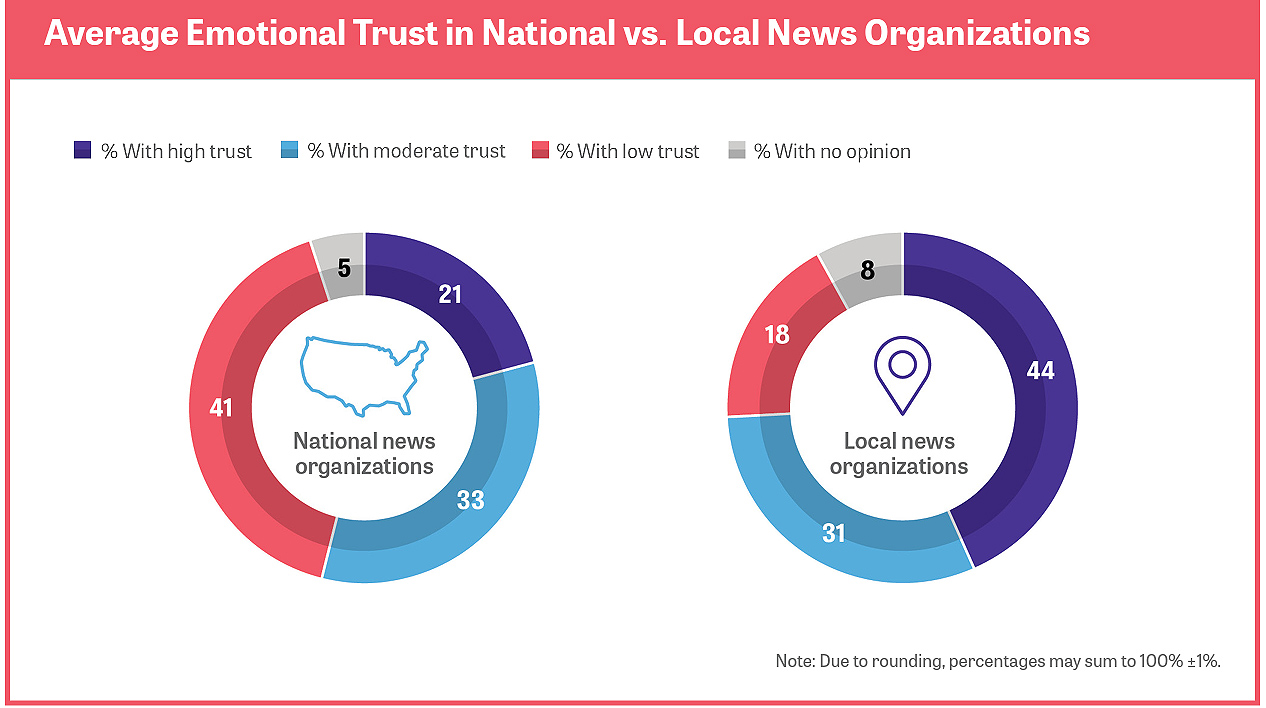
For people in local news, it's not a small consolation. The survey by Gallup and the Knight Foundation, of 5,593 Americans aged 18 and older between May 31 and July 21, 2022, shows a much higher level of trust in local news organizations, driven in large measure by a belief that they care about the impact of their reporting; 53% agreed with that statement and 19% disagreed with it. "The biggest differentiator is that the public feels local news organizations care about the impact of their reporting while national news does not," Knight says in its report.

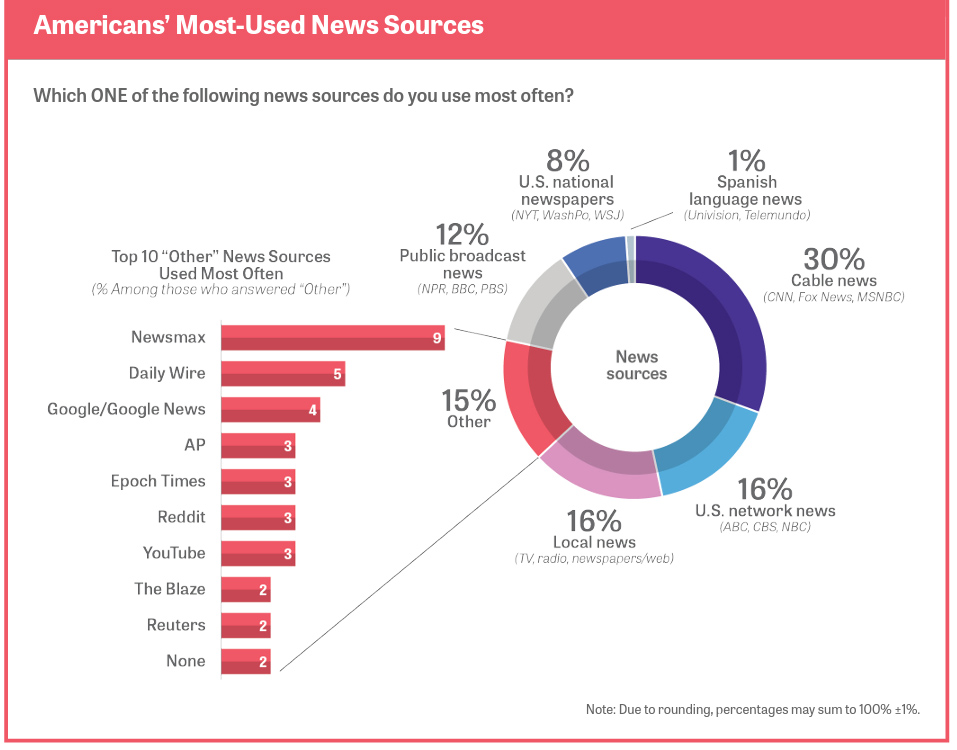
Graphs by Gallup Inc. from Knight Foundation report; click any image to enlarge
"While past investigation of trust in news has focused on issues of transparency and credibility, recent research has emphasized the affective or emotional aspects of trust — that is, how trust in news is related to how people feel about news outlets," Knight repots. "Emotional trust in news is driven by the belief that news organizations care, report with honest intentions and are reliable. More than twice as many Americans report high emotional trust in local news than in national news; 44% have high emotional trust in local news organizations, compared with 21% who have high emotional trust in national news organizations. . . . Greater emotional trust in local news is consistent across various demographic groups. Variation in levels of emotional trust in local news organizations is less pronounced across demographic groups. For example, 31% of Republicans and 58% of Democrats express high levels of emotional trust in local news — a narrower gap than with emotional trust in national news. This finding is consistent with findings from previous Gallup/Knight studies."

So, Americans trust their local news organizations, but do they really know them? The poll found that 65% agreed with the statement "In general. most local news organizations have the resources and opportunity to report the news accurately and fairly to the public," but the question left much to be desired. Most Americans are not familiar with "most local news organizations," and many if not most of those organizations are having difficulty reporting as much news as they once did or would like to do. Accuracy and fairness are essential, but audiences notice gaps in coverage, and that could have been measured, too.

Bauder describes one other hopeful finding: "If Americans believed local news organizations didn’t have the resources or opportunities to cover the news, they would be more likely to pay for it." Knight reports, "Americans who think local news organizations lack the resources and opportunity to report the news accurately and fairly are more likely to pay for news. . . . Among those who agree, 23% report having paid for news in the past. This percentage nearly doubles (45%) among those who disagree. Those who say local news organizations do not have the resources and opportunity to report the news accurately and fairly are more than twice as likely to be willing to pay for news in the future as those who agree (32% vs. 14%, respectively). These findings mirror previous Gallup/Knight research on local news, which found that Americans who are exposed to information about the financial challenges of local newspapers are more likely to donate to a nonprofit organization that supports local journalism."

Knight says journalists need to go beyond emphasizing transparency and accuracy to show the impact of their reporting on the public. That recommendation is directed to national news organizations, but it's good advice for local news organizations, too. And the study reaffirms that they need to do that online, because that's where most of the audience is. The poll found that 58% of Americans in mid-2022 reported getting most of their news online, up from 46% in 2019. Television was named by 31%, down 10 points from 2019. Only 3% named printed newspapers or magazines, down from 5%.

Another interesting finding, described by Bauder: "The ability of many people to instantly learn news from a device they hold in their hand, the rapid pace of the news cycle and an increased number of news sources would indicate that more Americans are on top of the news than ever before. Instead, an information overload appears to have had the opposite effect. The survey said 61% of Americans believe these factors make it harder to stay informed, while 37% said it’s easier." That finding doesn't differentiate between national and local news, but the poll seems to confirm a trend pointed out by many observers, that people are paying less attention to local news than they once did. Local news providers must give them reasons to seek it out, make it easy to do so, and make clear its value.

Friday, February 10, 2023

News-media roundup: Chart gauges outlets' bias, reliability; a fake paper in minutes; Paxton Media buys Camden Media

Screenshot of AdFontes news-media bias graph; to enlarge, click on it; for the interactive version, click here.

The Alliance for Audited Media (formerly the Audit Bureau of Circulations) and Ad Fontes Media, which calls itself "a leader in media-bias intelligence," have created an interactive graph with political-bias and reliability ratings for newspapers and magazines audited by AAM. "Ad Fontes selects a sample of a news source’s content over various news cycles," it says. "Each piece is rated individually by a panel of analysts representing right, left and center political viewpoints. The ratings are discussed by the panel and averaged to generate scores for both reliability and political bias. Learn more about the chart’s methodology here.

Trusting News offers six ways to answer anticipated questions about your journalism in order to make it more transparent. 

The artifical-intelligence program ChatGPT can create a fake newspaper in minutes, The Poynter Institute's Alex Mahadevam reports.

How to help your newspaper grow: Give readers what they want, and to attract younger yeaders, have a younger staff, consultant Kevin Slimp writes in his latest column after meeting with a focus group for the Standard Banner in Jefferson City, Tennessee.

Paxton Media Group is acquiring the Chronicle-Independent, the Lee County Observer, the Blythewood Country Chronicle, the Winnsboro/Fairfield County Country Chronicle, the Fort Jackson Leader, The Shaw News and "assorted glossy magazines and websites" from Camden Media Co., a long-time partnership of Mike Mischner of Camden, S.C., and Charles H. Morris of Savannah, reports Cribb, Cope & Potts, which brokered the sale. Terms were undisclosed. 

El Rito Media, a startup that raised eyebrows when it bought the Rio Grande Sun in northern New Mexico last year, buys a second paper: bought the Artesia Daily Press in southeast New Mexico from the Green family, which founded it in 1954 and had sold its other newspapers, reports newspaper broker Dirks, Van Essen and April, which handled the sale. Terms were undisclosed.

Thursday, February 02, 2023

Expert opinion: 'The new normal cannot fall back to a pre-Covid normal; we must be bigger, better and smarter'

By Katelyn Jetelina
Your Local Epidemiologist

On Monday the World Health Organization’s Emergency Committee gave official word that they voted to renew the Public Health Emergency of International Concern. They are likely teeing up for “the end” in 2023. The U.S. is far more confident in “the end” of the national emergency. On Monday, the White House announced that they are ending it in mid-May.

An inflection point is clearly on the horizon, albeit with uncertainty. This leads to legitimate questions: Are we still in an emergency? What will the future hold? What happens next?

Are we still in an emergency? There is no “level of disease” that defines a pandemic or emergency. Even if there was an objective metric, the reality is that this isn’t determined through epidemiology alone. Where we, as a society, place SARS-CoV-2 in our repertoire of threats is a collective decision—a psychological, cultural, and political decision. Every day we consciously (or subconsciously) decide how much risk and suffering we are willing to accept: How many people get the booster? How many people wear a mask? How many people order free antigen tests? How many deaths, and among whom, are we willing to accept?

This has sparked an intense tug-of-war among scientists, leaders, and the public throughout the pandemic: a push towards “normalcy” from some and push back towards “urgency” from others. All individuals and societies fit somewhere on this spectrum. And one’s position may (and perhaps should) change with time.

How did winter play out? How we fared this winter gives us a good idea as to whether we are still in “emergency” phase in the U.S. We essentially had two tests:

How well did our immunity hold up against a constantly changing Omicron? According to varying hospitalization models from early fall, the 2022-23 winter played out as a best-case scenario for Covid-19. Even the best-case scenario, though, led to a peak of 48,000 hospitalizations.
Projections of hospitalizations, from CDC's Advisory Committee on Immunization Practices meeting on Sept. 1, 2022

Could our hospital systems handle the stress of a novel virus on top of the “normal” respiratory viruses? We hadn’t previously seen the impact of all of them at the same time. In addition, health-care workers are increasingly burnt out, and hospitals are increasingly understaffed. Given all of this, hospitals did okay this winter. Pediatricians were drowning, particularly because of a massive RSV wave. Emergency rooms were overcrowded with sickness. But a Covid-19 emergency declaration wouldn’t necessarily help with either of these. Hospitals were not overwhelmed with adults because of our immunity wall, and I’m increasingly convinced there was viral to viral interaction—in other words, we didn’t see all three viruses peak at the same time.

Given this, I agree that we are not in an emergency phase in the U.S. An emergency declaration was appropriate when we had rational hope that transmission could be interrupted on a population level and when we needed extreme measures to prevent collapse of healthcare systems. We are past this. Continuing the emergency would not be constructive given public sentiment and lack of funding anyway. As one epidemiologist told me, “If it’s always an emergency, nothing’s an emergency.”
What will the future hold?

If we end the emergency, it begs the question: What phase are we in?

I don’t believe we are in an endemic phase— a state of predictability. I think we are on our way, and Covid-19 will eventually fall into seasonal patterns. But this will likely take years. Until then, we will be in an awkward space between pandemic and endemic. Epidemiologists don’t have an official word for this phase. WHO flu risk management people would probably call this the “transition” phase.
Graph from World Health Organization pandemic risk management guide

We will continue to see the virus ebb and flow—it will mutate, we will get waves, people will continue to miss work and daycare, and people will continue to be hospitalized and die, particularly those over 65 years and immunocompromised. The end of an emergency does not mean the end of disruption or suffering.

Deaths from Covid-19 are projected for 2023; data from CDC, here

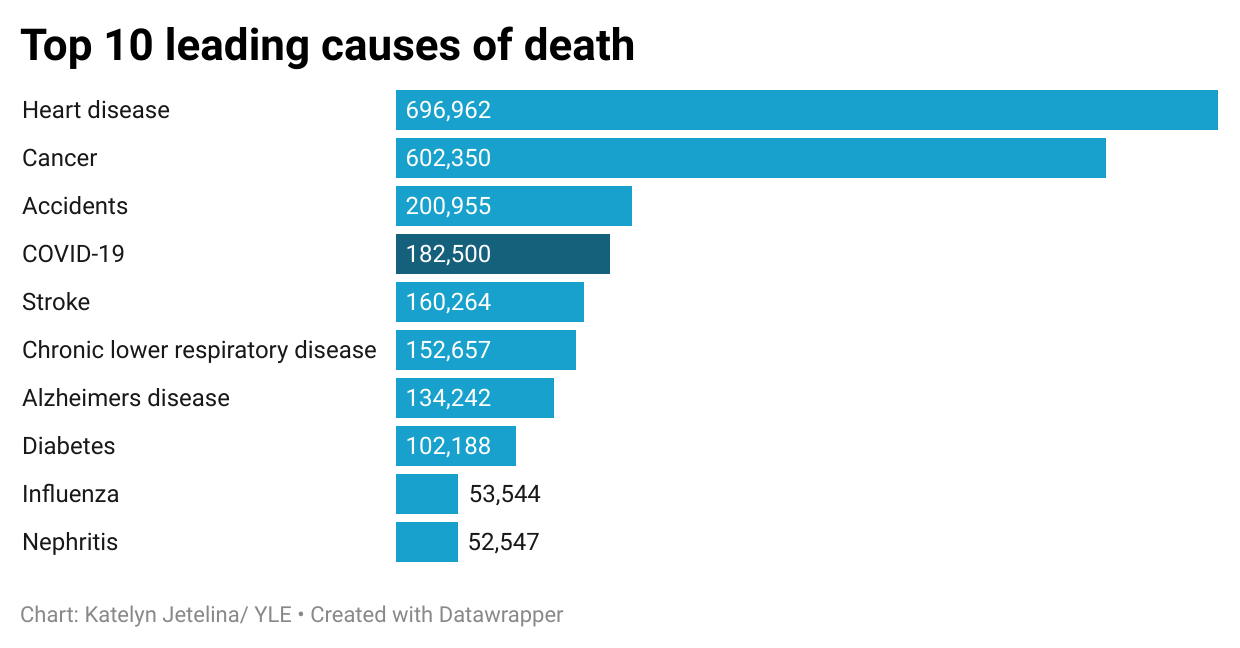
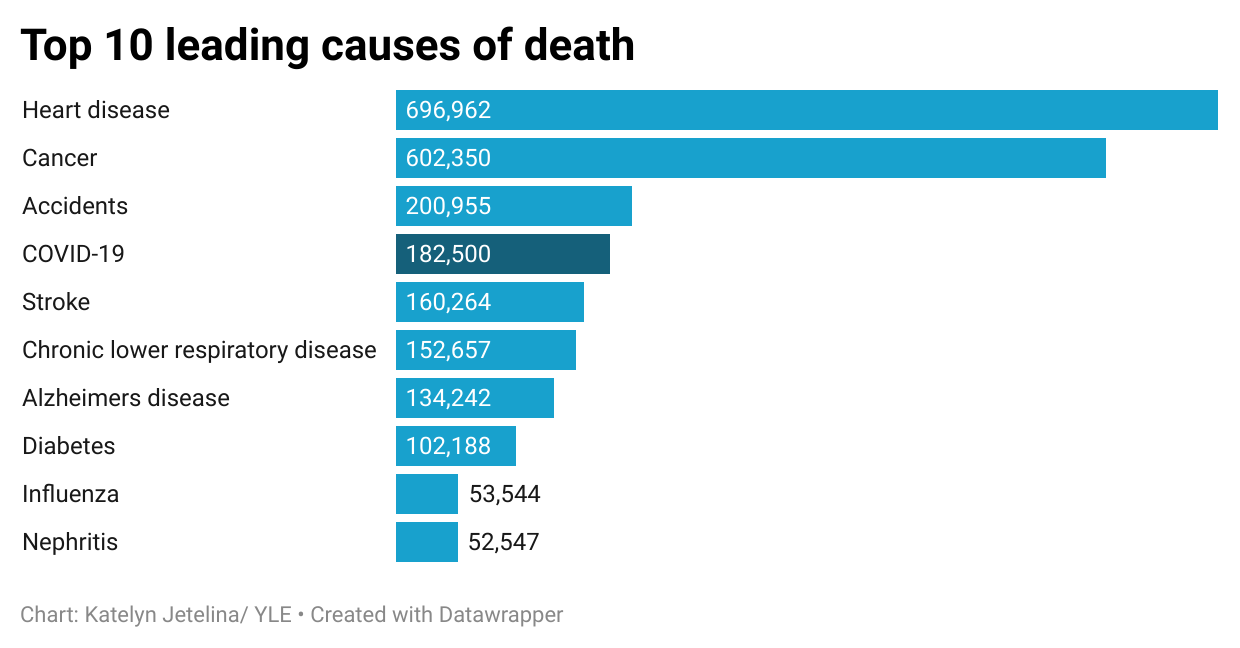
Today, roughly 500 Americans are dying each day from Covid-19. At this rate, SARS-CoV-2 will be the fourth leading cause of death in the U.S. in 2023—about triple the threat of influenza.

What happens next?

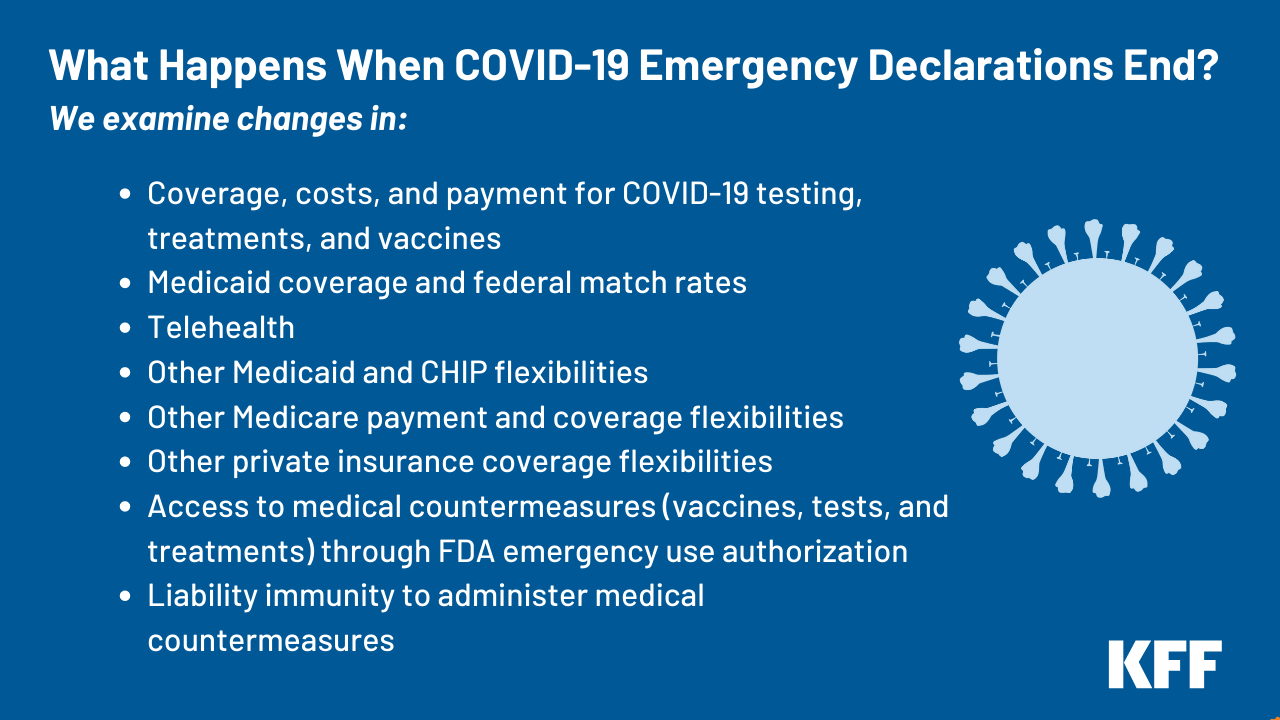
Unraveling the public-health emergency may get messy. It will certainly take time (hence the 3 month lag time). The Kaiser Family Foundation outlined the implications nicely:


This does not impact the Emergency Use Authorization of vaccines and therapeutics from the FDA. In other words, these will still be available.

HOWEVER, the ending of funding for testing and vaccines is a real cause for concern. Once our free supply is out, everything will be privatized. Pfizer announced its vaccine will cost $130 per dose. Insurance will have to cover it, like the flu vaccine. This will, no doubt, fuel deep inequities in the U.S. And it is part of a much larger, deeply flawed system of pharmaceutical profiteering that this country hasn’t got the ethical fortitude to address yet.

Our work is not done: Most importantly, the end of the emergency doesn’t mean our work is done. There is no infectious disease more insidious or with greater impact on global mortality, morbidity, and health care systems than Covid-19.

As individuals, we still need to get vaccinated. We still need to leverage antigen tests. We need to invest in better filtration and ventilation. We still need to protect the most vulnerable.

As public-health officials, we must decide the minimum structure needed moving forward. Invest in wastewater monitoring. Continue to report hospitalizations (and get better at it). Commit to transparent and effective communication. Vaccine innovation is needed.

As a society, we MUST put real energy, innovation, and investment into repairing and strengthening our health and public health systems. The new normal cannot fall back to a pre-Covid normal. We must be bigger, better, and smarter. This means the very notion of for-profit healthcare needs to be fixed. In public health, we must figure out how to get out of the cycle of panic and neglect through preparation. We are LESS prepared for the next pandemic, given loss of trust, polarization, changing information echo-systems, and mis/disinformation.

Sadly, I’m starting to see denial and wishful thinking. I hope this changes as it will definitely not be another 100 years before the next pandemic emerges to grip the globe in a choke hold.

Bottom line: In the U.S., the end of the emergency is coming. I agree with this decision, but this certainly isn’t the end of Covid-19 or public health threats. In fact, this end is the beginning. We have our work cut out for us.

Katelyn Jetelina is a California epidemiologist and biostatistician who says she writes her newsletter on Substack as a way to translate public-health science for everyday use, helping people to make evidence-based decisions. She is a consultant to several organizations, including the CDC.

Tuesday, January 31, 2023

Appalachian nonprofit's sex education was too sexy for some; sort of harassment that stopped it is seen nationwide

Education group's logo
Sex education in Appalachia has traditionally focused on abstinence and when one group sought to change that approach, it had to stop hosting booths and workshops due to a harassment campaign, reports Maria Godoy of National Public Radio, who says the push against sexual educators is being felt nationwide.

In 2012, a sex-education group called Sexy sex ed began offering workshops to Appalachian youth that focused on a comprehensive sex-education approach. Godoy visited with an educator who was hosting a table at a community art festival in Big Stone Gap, Virginia, pop. 5,206. The table was filled with educational materials and condoms with the group's theme of "CONSENT" emboldened on products. The non-profit group touts a "cheeky, irreverent" approach to sex ed among young people. But this was Sexy sex ed's last event for the foreseeable future:

"The barrage of harassment started in March when conservative activist Christopher Rufo criticized the group on Twitter, among other platforms. He accused the group of offering summer workshop courses for children that discussed graphic sexual practices. Other conservative activists also weighed in." The educator, whom Godoy identified only as Shaylan, said those attacks misrepresented what they taught and to whom: "They put their own spin on it to make it seem as if we were posting an in-person summer camp with five-year-olds, when in reality, the summer camp was virtual. And nobody under the age of 16 attended the summer camp." 

Rufo told NPR in an email that the group was “doing something that was 'way outside the mainstream' and "Sixteen-year-olds are still minors and that the group has a very different definition of age appropriate than most parents."

Nora Gilperin of Advocates for Youth, a national health-rights nonprofit, told Goday that it has seen a surge in harassment and disinformation campaigns against sex education providers since last spring. Gilperin said, “One strategy is to take what is being taught out of context. . . Now many sex educators are afraid to share even basic information like where to get contraception."

Harvard University physician Rebecca Ralston, a native of Appalachian Tennessee who has studied sex education, told Ralston, "The more serious implications here are that people are not going to be using birth control appropriately or at all. . . so for those who do not want to become pregnant. . . they will have very few options."

Wednesday, January 04, 2023

On this Friday, Jan. 6, it might be good to remember a speech on another Jan. 6 that defined America's purpose

Friday, Jan. 6, is the second anniversary of the greatest attack on American democracy since the Civil War. Some apparently want to forget about it, but the news media have a moral obligation to remind them and to explain its importance, Michael Bugeja writes for The Poynter Institute.

Michael Bugeja
Bugeja, distinguished professor of journalism and former communications dean at Iowa State University, notes that a year ago, The Associated Press reported that “about 4 in 10 Republicans recall the attack — in which five people died — as violent, while 9 in 10 Democrats do,” and that The Washington Post said in an editorial last May that Jan. 6 “should have been a turning point in our politics.”

"It hasn't," Bugeja writes, reminding us of another Jan. 6, in 1941, when "President Franklin D. Roosevelt reminded Congress about its obligation to uphold democracy. The United States at the time was isolationist, even during Nazi attacks in the Battle of Britain. As the FDR Library notes, Roosevelt wanted to alert citizens that fascism not only threatened Europe but also our moral values. In helping Britain defend itself, America was advocating for universal freedoms everywhere.

"Excerpts from Roosevelt’s speech are eerily reminiscent of the dangers we face today, from emergent sectarianism in the U.S.; to the billionaire class of the privileged few; to dictatorial regimes of Russia, China and North Korea; and, finally, to the criminal desolation of the Ukrainian war. Democracy was being assailed, Roosevelt said, “either by arms, or by secret spreading of poisonous propaganda by those who seek to destroy unity and promote discord.” Bugeja notes that Donald Trump raised about $250 million "to 'Stop the Steal' and combat election fraud, but the bulk of that reportedly was diverted to other uses, including $40 million to Make America Great Again Inc., a super PAC allied with Trump’s election bid.

Roosevelt's State of the Union address is best known for the Four Freedoms that he said the U.S. wanted to see all over the world: the freedoms of expression the worship, and freedom from want and fear of military aggression. "This is how Jan. 6 should be commemorated, a day when journalists remind the public about the greatness of democratic ideals and the necessary commitment required from the electorate to sustain them," Bugeja writes. "On Jan. 6, 2021, America lost its moral order and nearly its democracy. Unless journalists remind the world about our 'unity of purpose' — in commentary, articles, documentaries, podcasts and more — fears about 'the forgotten episode' will come true."

Thursday, December 29, 2022

Long Island weekly revealed George Santos as a fake when he was a candidate, but no other news media took heed

Rep.-elect George Santos
(Photo via North Shore Leader)
Local journalism, which often struggles to prove its worth to an information-drenched public, may have hit the jackpot with an I-told-you-so tale from the story that is dominating national news right now.

"Months before the New York Times published a December article suggesting Rep.-elect George Santos (R-N.Y.) had fabricated much of his résumé and biography, a tiny publication on Long Island was ringing alarm bells about its local candidate," reports Sara Ellison of The Washington Post.

Maureen Daly, managing editor of the Republican-oriented paper North Shore Leaderreported in September: "Controversial U.S. congressional candidate George Santos has finally filed his Personal Financial Disclosure Report on Sept. 6, 20 months late, and he is claiming an inexplicable rise in his alleged net worth to $11 million. Two years ago, in 2020, Santos' personal financial disclosures claimed that he had no assets over $5,000: no bank accounts, no stock accounts, no real property. A net worth barely above zero. And his income was only just over $50,000 for the prior year, derived from a venture fund called Harbor Hill Capital, that was closed and seized in 2020 by U.S. federal prosecutors as a 'Ponzi scheme.' Santos was the New York director of that 'fund'."

Daly pointed out conflicts between the document and some Santos statements: “Interestingly, Santos shows no U.S. real property in his financial disclosure, although he has repeatedly claimed to own ‘a mansion in Oyster Bay Cove’ on Tiffany Road and ‘a mansion in the Hamptons’ on Dune Road. . . . The house is owned by someone else having nothing to do with Santos, and has a market value of less than $2 million. For a man of such alleged wealth, campaign records show that Santos and his husband live in a rented apartment, in an attached rowhouse in Queens.”

3rd District, with Leader office marked (Wikipedia map, adapted)
After more details, Daly noted, "It is a federal felony to make false filings in federal disclosures."

In October, the Leader said in an editorial, “This newspaper would like to endorse a Republican for U.S. Congress, but the GOP nominee, George Santos, is so bizarre, unprincipled and sketchy that we cannot. … He boasts like an insecure child — but he’s most likely just a fabulist — a fake.” The endorsment went to Democrat Robert Zimmerman, who promised a bipartisan approach like that of retiring Democratic Rep. Tom Suozzi, who lost in this year's primary for governor.

The Post's Ellison writes, "It was the stuff national headlines are supposed to be built on: A hyperlocal outlet like the Leader does the leg work, regional papers verify and amplify the story, and before long an emerging political scandal is being broadcast coast-to-coast. But that system, which has atrophied for decades amid the destruction of news economies, appears to have failed completely this time. Despite a well-heeled and well-connected readership — the Leader’s publisher says it counts among its subscribers Fox News hosts Sean Hannity and Jesse Watters and several senior people at Newsday, a once-mighty Long Island-based tabloid that has won 19 Pulitzers — no one followed its story before Election Day."

“We expected it to pop a lot more than it did,” owner Grant Lally (who had run for the seat in 1994, 1996 and 2014) told Ellison, adding that Zimmerman didn't make enough of the endorsement and failed to push the Leader's revelations into Newsday or the Times. Zimmerman told Ellison that there were “many red flags that were brought to the attention of many folks in the media” but that “frankly a lot of folks in the media are saying they didn’t have the personnel, time or money to delve further” into the story. “This experience has shown me just how important it is for everyone to support local media.”

The Leader bills itself as "The leading news source for Long Island's Gold Coast," but Ellison reports most of its staff "works part time and holds down other jobs to pay the bills." Lally told her, “Nobody can survive on local papers alone.”