Showing posts with label invasive species. Show all posts

Tuesday, June 09, 2026

Flora & Fauna: Sentinel gardens; bats do good work; beavers saving ecosystems; firefly delights; seashore reporting

Sentinel gardens help save North American trees.
(Photo by Sophia Simoes, Unsplash)
Planting "sentinel gardens" in different places around the globe helps scientists protect native North American trees. "Scientists have planted American trees in China, Korea and elsewhere to attract hungry insects, reports Sachi Kitajima Mulkey of The New York Times. "These gardens are plots of foreign trees that researchers closely monitor to figure out what local bugs and diseases can damage them. The goal is to learn as much as possible about these potential threats before they cross the ocean and become a problem at home."

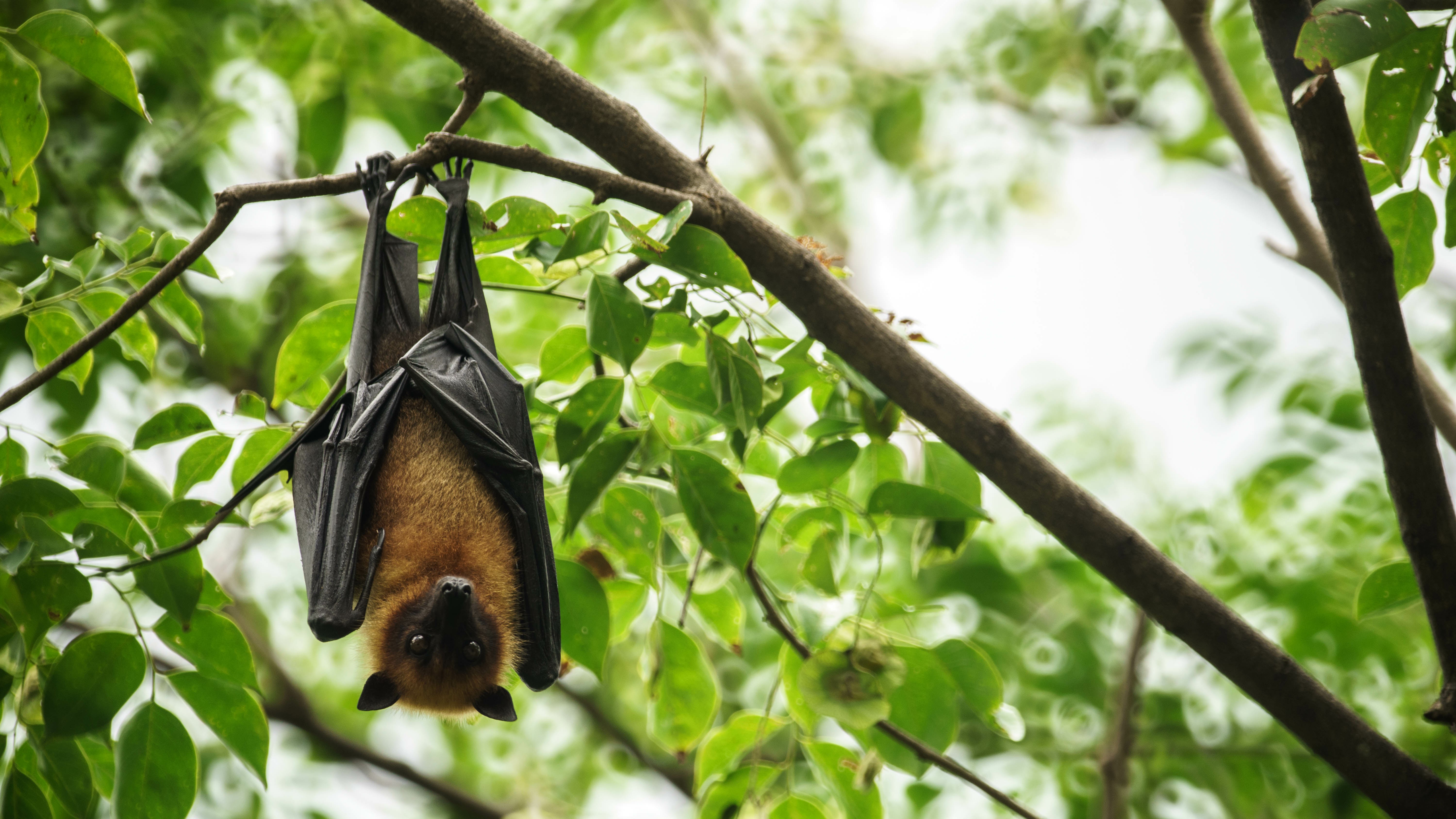
For the many Americans who consider bats an animal oddity that flies like a bird but kind of looks like a mouse, they are selling the furry echolocation-using creatures short. Bats do tremendous work, helping U.S. farmers and the economy. "Bats pollinate plants, including many important food crops, when they stop by flowers to drink nectar," write Dale Manning, Anya Nakhmurina and Eli Fenichel for The Conversation. "Their guano is mined from caves for fertilizer. And they eat a lot of bugs – the kinds that bother people (think mosquitoes) and others that destroy crops that humans depend on for food." Read about the impacts of bat population decline on economic markets and how humans are trying to address bat health here.

Beavers to the rescue.
(Drawing by Adam Dixon, Offrange)
In Utah, beavers that trappers would have killed for their fur are being spared and relocated from areas where they are a nuisance to locations where they help local ecosystems recover. "To maximize on their potential to restore ecosystems, the Beaver Ecology & Relocation Collaborative (BERC) at Utah State University started offering trappers a $100 surrender fee to catch beavers alive to transport them to private lands in need of hydrological TLC," reports Karen Fischer for Offrange. "The success of the project could be replicated elsewhere, with sweeping ramifications throughout the American West."

They light up forest floors and the air with their bioluminescence beauty, casting sparkle and wonder all around. Fireflies are among nature's most delightful creatures, and some campers are fascinated. Great Smoky Mountains National Park is not only America’s most-visited national park, but it is also "home to 19 firefly species," reports Jacob Passy of The Wall Street Journal. "Photinus carolinus, also known as the Smokies synchronous firefly, produces dazzlingly coordinated displays that rival even the most extravagant Christmas light installation. . . .Their annual emergence in the Great Smoky Mountains has become so popular that campsites sell out months in advance."

A polluted farm in the United Kingdom "let nature back in," providing a stunning example of how nature can heal itself, reports Jasmin Sykes of CNN. The Knepp Estate is a place where turtle doves "seem to be bouncing back. A recently published, two-decade review of wildlife on the estate found that the number of singing males rose from just two in 2008, to 22 in 2024. Isabella Tree, who owns the 3,500-acre estate in West Sussex, told CNN, “We never thought that in 20 years we could have gone from being this depleted, polluted, dysfunctional post-industrial farmland, to being one of the most significant biodiversity hotspots in Britain."

The famous Assateague wild ponies offer great photos and stories that feature the 
wonders found on our national seashores. (Photo by Sara Cottle, Unsplash)

For reporters who live anywhere near the seashore, there's an ocean of stories to uncover and discuss. "If national parks are 'America’s best idea,' then our national seashores may be America’s best-kept secret," writes Joseph A. Davis for the Society of Environmental Journalists. "For summer getaways, they are a treasure. . . . For example, Assateague Island National Seashore, established in 1965, is a beautiful barrier island running between Ocean City, Maryland, and Chincoteague, Virginia. You can swim or surf or splash in clean waves. You can study how land is built by dune ecosystems. You can see the famous wild ponies. You can go into town and eat oysters." Davis provides a list of national seashores to visit along with story ideas here

Tuesday, April 14, 2026

Boaters are wearing helmets for protection against 'flying fish'

Asian carp are invading the Mississippi River and
boaters' personal space. (Photo by Megs Harrison, Unsplash)
Asian carp, or "flying fish," are injuring boaters throughout the Midwest and eating up the food supply of native fish in the Mississippi River, reports Jeanne Whalen of The Wall Street Journal.

Able to jump as high as 10 feet out of the water, these carp are easily spooked by motors and have given boaters black eyes
and broken noses, Whalen reports.

Asian carp came to the U.S. from China and Russia in the ‘70s to regulate algae blooms in ponds and wastewater treatment plants, Whalen explains. Due to flooding, they escaped confinement, spread into the Mississippi River Basin, and exponentially reproduced into dozens of rivers.

If they breach the Great Lakes, they threaten the region’s walleye, bass and trout, which provide the fishing industry $5 billion annually, Whalen adds.

The governors of Michigan and Illinois are urging the federal government to unfreeze the funding for a river barrier to keep the fish out of Lake Michigan, reports Whalen. An additional deterrent could be blaring speakers underwater to distract the carp.

While the public waits for federal help to detain the carp, they have been creating their own solutions such as wearing helmets while boating, competing in contests to catch the jumping fish, or creating new recipes to eat them, explains Whalen.

The Illinois Department of Natural Resources has officially rebranded the fish as Copi, short for copious, in hopes consumers find them more appealing. “Fisherman and chefs report that Asian carp are actually delicious, though they are so bony they don’t make good filets. Chefs often grind them up and turn them into fish cakes,” Whalen adds.

Tuesday, July 01, 2025

Flora & Fauna: Axolotl is the 'comeback king;' corn seed miracle; big snake haul; two-note song; tracking butterflies

Known for their regenerative powers, scientists are learning
from the 'adorable' axolotl. (Photo by TK, Unsplash)
Limb regeneration may sound like an 'X-Files' episode, but U.S. scientists are working on it. "With a silly smile and frilly gills, the axolotl has wriggled its way into the hearts of millions," reports Dino Grandoni of The Washington Post. "But this adorable species of salamander is also helping researchers investigate a serious medical mystery: Could the human body be coaxed to regrow a severed arm or leg? Scientists are turning to the axolotl because it is an expert at regeneration. . . .The species is also a comeback king, able to regrow not only lost limbs but also tissue in the heart, lungs and even the brain."

It's hot and humid, and corn tasseling season is almost here. "If someone writes a book about the 'seven great wonders of agriculture,' tasseling and pollination must be on the list," reports Tom J. Bechman of Farm Progress. "The process of producing hundreds of new corn kernels per plant, all from one original seed, is simple yet complex at the same time." Read how the miracle of corn happens here.
135lb female Burmese python found while radio-tracking 
a male scout snake. (Conservancy of Southwest Florida photo)

'Snakes on a Plane' might be a good summer movie fun, but in Florida, hundreds of people drop the film drama and eradicate snakes on land. "It was a milestone moment in Florida’s 25-year war on invasive Burmese pythons: an eye-popping announcement that biologists had removed 20 tons of the slithering invaders from waters in and around the Everglades in little more than a decade, as well as shattering their previous record for a single-season haul," reports Richard Luscombe of The Guardian. "The successes of the team at the Conservancy of Southwest Florida showcase the progress that has been made in efforts to reverse the snakes’ takeover of the state’s natural wilderness."

The only thing sharks can regenerate is their teeth.
That's probably enough. (Photo by Wai Siew, Unsplash)
Two notes + Razor-sharp teeth = One summer blockbuster. “Da, duh. E and F have become synonymous with tension, fear and sharks, representing the primal dread of being stalked by a predator," writes media history scholar Jared Bahir Browsh for The Conversation. "Fifty years ago, Steven Spielberg’s blockbuster film – along with its spooky score composed by John Williams – convinced generations of swimmers to think twice before going in the water. . . . I decided to take a deeper dive into the staying power of these two notes. . . "

Pollen is a way to track butterflies.
(Jozsef Szabo photo, Unsplash)
If you want to help the world be a better place for all creatures, then do one small thing to help insects: Provide an insect-friendly habitat. "This includes supporting a variety of native plants that can provide both nectar and leaves, which are food for many herbivorous insects throughout their lives. A good habitat also provides places for insects to nest, such as bare ground or leaf litter. Bigger patches are better, but even small gardens can be helpful," write Christopher Halsch and Eliza Grames for The Conversation. "At the same time, limiting exposure to other threats is important. Actions such as dimming artificial lights at night and reducing the use of pesticides can help."

How can the fluttering trails and migrations of butterflies be traced and mapped? With pollen. "Those tiny pollen grains are helping researchers study a process that until now has been largely inscrutable: the migratory patterns of insects as they move around the globe," reports Saugat Bolakhe for Knowable magazine. "Analyzing pollen collected from 264 butterflies from 10 different countries . . researchers identified 398 different plants they could use to track the butterflies’ movements."

Friday, March 21, 2025

Job cuts at USDA reduced staff dedicated to stopping noxious plants and invasive species from entering U.S.

Sniffing dog at work.
(USDA photo)
The federal "Department of Government Efficiency" has eliminated agricultural jobs it considers unnecessary, but the cuts could allow noxious plants and invasive bugs from foreign countries to gain a foothold in the United States. The U.S. Department of Agriculture's National Dog Detection Training Center is one area that received significant cuts, which could prove troublesome.

Derek Copeland, who lost his job during DOGE's cuts, worked to "prepare beagles and Labrador retrievers to sniff out plants and animals that are invasive or vectors for zoonotic diseases, like swine fever," reports Kate Knibbs for Wired. "Copeland estimates the NDDTC lost about a fifth of its trainers and a number of other support staff when 6,000 employees were let go."

Before his termination notice, "Copeland had just spent several months training the only dog stationed in Florida capable of detecting the Giant African land snail, an invasive mollusk that poses a significant threat to Florida agriculture," Knibbs writes. He told her, “We have dogs for spotted and lantern flies, Asian longhorn beetles. I don’t think the American people realize how much [stuff] people bring into the United States.”

The staffing cuts translate into years of lost education and training to protect American crops from invasive pests. Mike Lahar, the regulatory affairs manager at U.S. customs broker Deringer, told Knibbs, “These aren’t your average people. These were highly trained individuals — inspectors, entomologists, taxonomists.”

Allowing potentially harmful bugs and plants into the U.S. could be one harmful after-effect of DOGE's massive staffing cuts, and ports teaming with rotting food could soon be another. "Supply chain experts warn that the losses could cause food to go rotten while waiting in ports and could lead to even higher grocery prices," Knibbs explains. U.S. grocery supply chains are already suffering from tariff whiplash and persistent food inflation woes.

Kit Johnson, the director of trade compliance at the U.S. customs broker John S. James, "predicts prices and waste to increase. But what raises the most alarms for him is the increased likelihood of invasive species slipping through inspection cracks," Knibbs reports "He says the price of missing a threatening pest is 'wiping out an entire agricultural commodity,' an event that could have 'not just economic but national security impacts.'"

Tuesday, March 18, 2025

Scientists and technical staff who inspect imported items for invasive pests have been fired from USDA

The firing of plant protection workers can lead to economic
 consequences. (Photo by Ante Hamersmit, Unsplash)
Nearly 6,000 workers were recently cut from the USDA, including highly trained scientists and technical staff who screen imported items.

According to Suzy Khimm’s article for NBC News, “the firings have dealt a serious blow to the federal inspection process required for imported food, plants and other organic matter — a program that the agency calls “essential” to preventing infestations and disease outbreaks from crippling America’s trillion-dollar agricultural economy.”

Jonah Ulmer, who was the “government's foremost authority on tiny invasive pests,” was among the 145 people fired from plant protection.

Ulmer told NBC News about the importance of the job. “The one that you identify as a nonquarantine pest, and it comes in the country and wreaks havoc? The impacts of that could be millions or billions of dollars in economic damage.”

Khimm wrote that this effort could lead to economic consequences for farmers and consumers.
To read more about the potential impacts visit NBC News.

Thursday, August 22, 2024

Flora & Fauna: World's oldest whale; all about potatoes; farming extracted land; everlasting lice; why play?

The humpback whale Old Timer in Frederick Sound in southeast Alaska.
(Photo by Adam Pack, NOAA Research Permit 26953 via NYT)

Sometimes seeing an old friend can warm the heart and encourage the spirit. "When Adam A. Pack, a marine mammal researcher, was photographing whales in Alaska’s Frederick Sound this July, he instantly recognized the flukes of an old friend," writes Emily Anthes of The New York Times. "The tail — mostly black, with a wash of white speckles near the edge — belongs to a whale named Old Timer. First spotted in 1972, Old Timer is now a male of at least 53 years, making him “the oldest known humpback whale in the world. . . The last time he had seen the whale, in 2015, was in the middle of a record-breaking, yearslong heat wave. . ."

Where would this country be without potatoes? It's a loaded question. Fluffed, whipped, baked, fried, scalloped, mashed, au gratin. . . Americans do love their taters. But U.S. scientists said, "It's not enough. . . Potatoes deserve more!" Jacob Bunge and Victor Stefanescu of The Wall Street Journal report, "Agriculture companies are applying cutting-edge genetic technology to the dusty brown tubers, aiming to grow bigger piles of spuds that could make for healthier potato chips and french fries. . .while grappling with storage and shelf life."
Ashford Farm has been cultivating lavender for five
years. (Photo by K. Thacker, Ambrook Research)

Not long ago, a coal mine sat on a blown-off mountaintop in West Virginia. The mine extracted that land's wealth and left it barren, but that is not the story's end. "The prospect of putting a farm on a former coal site is highly ambitious and pretty rare — at least in the mountainous Central Appalachian Coal Basin," report Even Andrew and Kristian Thacker of Ambrook Research. "Lavender, however, is a good match for mined terrain because it’s a relatively low-maintenance crop that thrives in dry, rocky soils. . . . But growing something, especially on reclaimed mine land, is a significant challenge."

What's grosser than gross? Lice. "We are in peak lice season, and the lice seem to arrive, always, at the moment when we are least equipped to deal with them. If you’ve endured them even once, odds are you still have at least a touch of lingering paranoia and phantom itching," reports Caitlin Gibson of The Washington Post. "They were there when Hannibal and his army crossed the Alps. They were there when both World Wars were fought. Now it is 2024, and we have Mars rovers and artificial intelligence and, still, lice. We can’t change the reality of them. Should we try to change the way we think about them?"

Like everything Mother Nature imbues, play has purpose.
(Adobe Stock photo)
It's the Puppy Bowl! The Kitten Bowl! The Turtle Bowl. OK. May there's no turtle bowl -- yet. But humans do love to watch animals play. Why? As David Toomey writes for The Conversation, "Play has a role in Darwin’s theory of natural selection. As I explain in my new book, Kingdom of Play: What Ball-bouncing Octopuses, Belly-flopping Monkeys, and Mud-sliding Elephants Reveal about Life Itself, there are many similarities – so many that if you could distill the processes of natural selection into a single behavior, that behavior would be play, Animals forage and hunt in specific ways that don’t typically change. But an animal at play is far more likely to innovate – and some of its innovations may in time be adapted into new ways to forage and hunt."

While the Florida Everglades are home to an abundance of animal diversity, including 360 different species of birds and countless insect species, Burmese pythons are not a welcome addition. The state has battled to control the invasive, nonnative snake's spread with multiple approaches, including capture and kill contests. The state just wrapped up its annual Florida Python Challenge "during which time participants caught and killed the nonvenomous constrictors, which feed on the state's native fauna," reports Joe Hernandez of NPR. Florida offers more opportunities to remove pythons year-round.

Tuesday, June 25, 2024

Flora & Fauna: Canine pals help veterans with PTSD; finding rice paddies in Appalachia; welcoming bats; go fish!

Psychiatric service dogs can help veterans cope with
PTSD. (Adobe Stock photo)
U.S. veterans or military workers who have post-traumatic stress disorder (PTSD) can feel and function better with the help of a psychiatric service dog, according to a study published in JAMA Network Open. Veterans with a canine pal "endured less severe symptoms and experienced significantly less depression and anxiety." This is the first NIH-funded study — and the largest ever — to focus on service dogs for military-related PTSD. It’s also the first study on this topic to use blind ratings, meaning that clinicians who assessed patients’ outcomes didn’t know whether they had a dog or not." Read the study and findings here.

Colorful, savory and full of history are a few ways to describe this heritage rice. "Black shell, red, purple, white and green. The Laotian rice that thrives in the North Carolina foothills is a treasure to Hmong farmers – and a revelation to others," writes Sheri Castle for The Bitter Southerner. "I never figured I’d be in a rice paddy at all, much less one in the Appalachian foothills of Western North Carolina. I was about an hour from where I’d grown up, but a world away. It was like finding a pearl in a potato."

When you go fishing, you can make memories and dinner. Having fun while snagging fish is what the group "Let's Go Fishing" aims to do through fishing boat tours for seniors, veterans, disabled adults and children. "We’re always looking for new communities to serve. If there’s a lake, we can help you put a pontoon on it and bring the joy of fishing to more people." Find out about starting a chapter.

Purple coneflowers are now common in
home gardens. (Adode Stock photo)
Once called weeds, native prairie plants are returning to their natural habitats through gardening education. "We find ourselves in the age of the pollinator plant, and the pollinator garden, and interest keeps growing. But it wasn’t always so," reports Margaret Roach of The New York Times. Expert gardener Neil Diboll remembers when purple coneflowers weren't welcome, but around 1989, sentiment changed. Diboll told Roach, “Purple coneflower was elevated from wildflower to quote-unquote perennial, and it was allowed inside the garden gate. . . . It paved the way for other native flowers and grasses to enter."

Hedge parsley is sometimes called
'Burn it.' (Nativetexaspark photo)
Gardening delight can go sour when it turns out those lovely white buds are invaders. "Torilis arvensis, known as hedge parsley has reedy stalks with tops that explode in tiny white flowers come springtime. It grows quickly and can be found in most regions of Texas, but it’s not native to the state or even the country," reports Amanda O’Donnell for Texas Monthly. "The plant has seeds that present as minuscule, stubborn burrs after a bloom, notorious for embedding themselves in clothes, animal fur, leg hair, and absolutely anything else that can aid in their proliferation." Hedge parsley isn't the only invader. "Many Texans have added bastard cabbage, or Rapistrum rugosum, to their list of vegetal enemies." To read how to remove or burn these interlopers, click here.

Bats are picky about their real estate options.
(Adobe Stock photo)

Bats are a farmer's best friend when eradicating crop-destroying bugs such as codling moth larvae -- but there's a catch. "Scientists have discovered significant effectiveness of bats for orchard pests. But the nighttime hunters are fickle about where they settle down," reports Sarah Derouin of Ambrook Research. To get bats to live and breed in an orchard area means creating spaces that are as bat-friendly as possible. "Agroforestry practices of incorporating trees into agricultural landscapes can go a long way for farm biodiversity and bat support. Treelines or patches of trees can provide bats with alternate places to forage while different cycles of pests emerge throughout the season."

Tuesday, May 07, 2024

Flora & fauna: Pigzilla vs. Jaws; daring emperor penguin chicks; growing baby ginger; what's great about limpkins?

Graphic by Lori Hays, Farm Journal
Most humans have a healthy fear of apex predators, which makes sense, but there's another animal that needs to be on the human "danger" list -- wild pigs. "More humans are killed annually by wild pigs than by sharks, a startling new study reveals. By slice, puncture, hook, and gouge, the global number of fatalities from wild pig attacks is rising by the decade," reports Chris Bennett of Farm Journal. John J. Mayer, lead author of the study and wild pig research pioneer, told Bennett, "It's not sharks, wolves, or bears that kill the most people — it's wild pigs, and the numbers are consistently trending up."

There's no explaining the gifts Mother Nature bestows on some creatures. Consider the adaptability of spiders. They can spin fancy and shockingly strong webs for nabbing prey. Their versatility includes living in barns, cabinets, mailboxes, old shoes and even water. Yes, water. "Some spiders make their homes near or, more rarely, in water: tucking into the base of kelp stalks, spinning watertight cocoons in ponds or lakes, hiding under pebbles at the seaside or along a creek bank," reports Amber Dance for Knowable Magazine. "It's not clear what would induce successful land-dwelling critters to move to watery habitats."
Location of Weddell Sea (Wikipedia)

Emperor penguin chicks were hungry and decided to face a 50-foot plunge. "Filmmakers producing a documentary series called Secrets of the Penguins, which will debut on Earth Day 2025 on National Geographic and Disney+, captured the extraordinarily rare scene by drone in January 2024, in Atka Bay, on the edge of the Weddell Sea in West Antarctica," reports Rene Ebersole of National Geographic. "It's the first video footage of emperor penguin chicks leaping from such high cliff, according to scientists."

Baby ginger fetches a good price.
(Photo by W. Errickson via LF)

You don't need to hail from an Asian country to grow baby ginger. "The continental United States imports most of its ginger from other countries — or from Hawaii — but baby ginger can also be grown in the Mid-Atlantic using high tunnels," reports William Errickson for Lancaster Farming. "Baby ginger is harvested at an immature stage before it develops its tough outer skin. It is usually more tender and can be sold at a premium price compared to mature ginger." Learn how to grow and harvest baby ginger here.

If fighting invasive plant species sounds like farmers' work, think again. Anyone near a forest, prairie or even urban sprawl can do their part by learning about invasive plants and eating them. "Foraging for invasive plants with your family can get kids outside and teach them about protecting the planet," writes Jenny L. Bird of National Geographic. Conservation biologist Joe Roman, who runs Eat the Invaders, told Bird, "It's about getting people outside in nature to learn about the history of the area and the potential damage that invasive species can cause." For four invasive species to look for — and how to entice kids to eat them, click here.

Limpkins learned about Louisiana's apple snails and
moved in. (Photo by Jane Patterson via Nola.com)
If Sandhill Cranes and Northern Flickers had babies, they might sound like this bird, unfortunately, named the "Limpkin." And while limpkins have a "call" more like a horror flick sound effect, they have another gift they are willing to share -- their love of Louisiana's invasive apple snails, reports Tristan Baurick for Nola.com. "The limpkin's first appearance in Louisiana a few years ago was cause for celebration. That's because this gangly, shrieking bird from Florida is the mortal enemy of a foreign snail that's been wreaking havoc in Louisiana's farms and wetlands. . . . The vociferous bird gorges on invasive apple snails, helping wetlands and crawfish farms."

Friday, January 26, 2024

Chestnut trees were possibly on the cusp of revival, but a lab error undermined that project; future success is unclear

Few chestnuts ever reach maturity.
(Graphic by Adam Dixon, Ambrook Research)
A blight-resistant American chestnut seems a long way off despite years of dedicated scientific research and work to revive it.

The first epic chestnut loss goes back to the early 1900s when a deadly fungus, Cryphonectria parasitica, wiped out "5 billion trees and their 2 billion tons of biomass," reports Lela Nargi of Ambrook Research. But scientists at the State University of New York's College of Environmental Science and Forestry had been working to develop a genetically altered chestnut that could survive the blight, and their work showed progress until a lab blunder set the entire project into a tailspin.

Nargi explains, "This past December, SUNY admitted a major error with a variant known as Darling 58. This caused its research and financial partner, The American Chestnut Foundation, to pull its support of D58. . . ."

Not all chestnut tree supporters agree that genetic modification is the path to the trees' revival, but despite the controversy, SUNY put its first trees in the soil in 2006 and, by 2019, filed a petition with the Department of Agriculture to have D58 deregulated.

Things looked to be going well until the lab gaffe was aired. Nargi reports, "SUNY had goofed up variations of its breeding line. Instead of using D58 to pollinate trees in its research plots, it had accidentally used D54. . . .TACF withdrew its support of the petition and the trees themselves, saying they'd already noticed 'disappointing performance results.'"

Besides using genetic modification trees to bring back the chestnut, two other methods are in the works. "The American Chestnut Cooperators' Foundation seeks to breed resistance into 100 percent American chestnut trees," Nargi adds. "Another, undertaken by the American Chestnut Foundation, is a backcross in which American chestnuts are cross-bred repeatedly with Chinese chestnuts to impart the latter's blight tolerance into a hybrid tree." All the methods have problems, and while millions of wild chestnuts exist, few will reach maturity.

Donald Davis, author of The American Chestnut, told Nargi: "Even people who used to be fans of the American chestnut would say it had its chance, it had its place in history. They say now we need to move on to species that are going to be more likely to survive in new environmental conditions."

Thursday, October 26, 2023

Fauna Thursday: Sheep are lawn care experts; learn more about this invasive bug; beavers get their own conference


Sheep on the White House lawn in 1919. (Photo by Harris & Ewing, Library of Congress via The Washington Post)

Tired of mowing your grass? Consider this: Sheep are lawn care experts. They are gentler grazers than goats or horses, clipping grass tops and nibbling weeds homeowners would like removed. They leave about four inches of the blade: just the right height, says Michigan State University Extension, to maximize root growth and shade out weeds. Any lower, as some lawn companies mow, and the grass will grow even faster to reach the sun, necessitating more mowing.

Michael J. Coren of The Washington Post reports: "'Sheep love the sweet tips of grass, and biodiverse diets like the weeds in your yard' including bittercress, chickweed and onion grass, says Cory Suter, owner of Lamb Mowers, who grew up farming on a Mennonite homestead in the Shenandoah Valley of Virginia. 'That’s a perfect buffet for our sheep.'”

Scientists working to prevent another devasting global avian flu outbreak have found a possible solution. They "used gene editing to identify and change parts of chicken DNA that could limit the spread of the bird flu virus in the animals," reports Norrie Russell of Lancaster Farming. "Researchers were able to restrict — but not completely block — the virus from infecting chickens by altering a small section of their DNA. The birds showed no signs that the change in their DNA had any impact on their health or well-being."
A spotted lanternfly egg mass and
an adult. (USDA photo)

The spotted lanternfly, Lycorma delicatula, has indeed been spotted in multiple states. The invasive pest is a rapacious feeder that can severely affect crops. The insect "feeds on a wide range of fruit, ornamental and woody trees, with tree-of-heaven being one of the preferred hosts," according to the Department of Agriculture. To learn how to spot, report, and prevent infestations, click here.
 

Photo by Braedon McLeod, Unsplash
Busy beavers will be the focus of an upcoming global conservation effort in Oregon, a.k.a, "The Beaver State." Robert Leo Heilman of The Daily Yonder reports: "So, it is appropriate that Canyonville, Oregon, a small town with a population of 1,660 located in the Klamath Mountains of Southern Oregon, is the global locus of efforts to restore beavers throughout their traditional range in the wild. The 2023 State of the Beaver conference (November 13-15, 2023) will draw up to 300 beaver restoration advocates and re-wilding movement activists from all over North America and Europe."

Gerkin-colored sea cucumber
(Nautilus Minerals photo via Hakai)
Just how many undiscovered creatures live in our oceans? Countless as the stars? Maybe. "Nautilus Minerals, a seabed mining company, is tight-lipped about whether Neptune’s expedition across nearly 15 square kilometers of remote seabed revealed the bounty of desirable metals it sought," reports Chris Baraniuk of Hakai magazine. "But the 4,000 photographs, likely the first ever taken in the region, did uncover something else: an array of colorful sea life including a big gray octopus with Dumbo-like ears, pale white anemones, bright orange prawns, and sea cucumbers an appropriate gherkin-shade."


Monday, September 11, 2023

Scourge of invasive plants and animals is an 'extinction event on par with the asteroid that killed the dinosaurs'

Brown tree snakes were accidentally introduced in Guam. It ate
many native birds into extinction. (Photo by David Clode, Unsplash)
Black rats, brown tree snakes and water hyacinth are only a few of the more than 3,500 invasive species "wreaking havoc across the planet, destroying crops, disseminating pathogens, depleting fish people rely on for food and driving native plants and animals toward extinction, according to a major report backed by the United Nations," reports Dino Grandoni of The Washington Post. "The landmark assessment found harmful invasive species cost society more than $423 billion a year. . . .A tally only expected to grow as the modern age of global trade and travel continues. . . . The result is a great scrambling of the planet's flora and fauna, with dire implications for humans and the ecosystems they depend on."

Continental globe-trotting "is one of the main causes of Earth's ongoing biodiversity crisis, an extinction event on par with the asteroid that killed the dinosaurs," Grandoni explains. Invasive species are playing a role in 60 percent of extinctions, according to the report, which was created by the Intergovernmental Science-Policy Platform on Biodiversity and Ecosystem Services, a body made up of more than 140 countries that provide policymakers with scientific assessments to help protect Earth's biodiversity and prevent extinctions. Aníbal Pauchard, a professor at the University of Concepción in Chile who co-chaired the group behind the report, told Grandoni: "It's normal that species move. It's not normal that a species crosses the Atlantic. . . . Not normal that it goes from Australia to Chile."

The report names the black rat as "most widespread invasive animal, which spread by stowing away on ships and scurried its way not only into dense cities but onto far-flung islands as well, where it has decimated ground-nesting seabirds and other animals," Gradoni reports. "The impact of land-dwelling rats on islands is so profound that even nearby reef fish can feel it after the rodents alter the flow of nutrients into the ocean. . . . . On the island of Guam, the voracious brown tree snake has already driven several native birds to extinction."
An innocent-looking water hyacinth floats in a pond at the
Memphis Zoo, Tenn. (Photo by Joshua J. Cotten, Unsplash)

Aquatic systems are facing epic invasions with dire outcomes. "In the Caribbean, venomous lionfish are driving down the numbers of native fish. In the Great Lakes, zebra mussels are clogging the intake pipes of drinking water systems and power plants," Grandino writes. "But one of the most devastating aquatic invaders is a delicate-looking flower," a free-floating plant that spreads so aggressively, "it can cover entire ponds and lakes, leaving a matted mess that impedes boat traffic and fishing. . . . The plants suck up so much water that they render lakes dry and leave communities without drinking water. The report lists the water hyacinth, "which is popping up everywhere from Africa to Australia, the most widespread invasive plant on Earth."

Researchers list prevention as the best solution "through border monitoring and import control," Grandino reports. "In December, nations agreed to try to reduce the spread of harmful invasive species by at least half by 2030 as part of an international agreement."

Friday, August 11, 2023

Preventing invasive plant species expense and harm starts with early detection; state governments can help

Japanese knotweed can grow 8 inches
a day. (Photo: Jack Ranney, U of Tenn.)
What can prevent the damage and expense that an invasive plant species can cause? Early detection and action. "By leveraging innovative detection and monitoring tools, state and local land managers can get ahead of the environmental and fiscal consequences of the aggressive spread of non-native plants," reports Kaitlyn Levinson of Route Fifty.

For example, "Japanese knotweed, an invasive plant commonly found in the Northeast . . . can damage highway and water infrastructure, according to a 2021 report from the Transportation Department. It can grow up to 8 inches per day and quickly block lines of sight at intersections and stop signs. When the plant's roots expand, they can weaken the integrity of or even cause fractures in road pavement and concrete on bridges. Stormwater and septic systems are also vulnerable."

Bromus tectorum or cheatgrass
(Wikipedia)
Cheatgrass is an invader spreading in the Great Basin. The grass is "notorious for being flammable, worsening the spread of fires," Levinson writes. "Nevada recently felt the fiery effects of cheatgrass when California's York Fire crossed state lines, burning more than 80,000 acres last week."

Knowledge of where non-native plants are growing or may return to grow is helpful. Bethany Bradley, a professor of biogeography and spatial ecology at the University of Massachusetts, told Levinson, "You can translate that [data] back onto a map of what the future climate conditions are likely to be, and that can give you a sense of [invasive species] risk right now, and what risk looks like 20 years, 50 years [or] 100 years, which, from a management perspective, can help with advanced planning."

Non-native phragmite in Utah
(Photo via Utah State University)
Utah is using plant management strategies to fight "an invasive reed called phragmite that has taken over the Utah Lake shoreline," Levinson explains. "Phragmites create a fire-prone landscape and often impede recreation and rescue efforts. . . .To better identify where treatment is needed and to track treatment progress, the Utah Division of Forestry, Fire and State Lands uses geographic information systems to map the phragmite landscape. . . . . Last year, phragmite coverage was reduced by 74% with improved monitoring, herbicide treatments, revegetation and other efforts."

Levison reports, "The state is also exploring how drone imagery and artificial intelligence could be used to enhance the identification management of invasive species in wetland areas, FFSL Senior GIS Analyst Gabriel Svobodny said."

Wednesday, June 14, 2023

Flora and fauna: Bat researchers won respect; senators fight the lanternfly; writer tends her garden; fireflies at risk ...

Flying fox bats rest in trees in Tamworth, Australia.
(Photo by Kathleen Flynn, Propublica)
Tenacious bat researchers like Australian Peggy Eby found a way to predict pandemics, but first, they had to overcome a lack of scientific support. "Eby found like-minded scientists, and the team, led by women, persisted. They cobbled together grant after grant, battled burnout and kept impatient funders at bay," reports Caroline Chen of ProPublica. "A decade after Eby’s government grant proposal was shot down, they published a groundbreaking paper in the journal Nature that demonstrated it was not only possible to predict" spillover of a virus from bats to humans, "but it might be preventable. Only then did it become obvious just how important Eby’s quiet fieldwork truly was."
A spotted lanternfly
(Photo by Ted Shaffrey, AP)

Not all polka dots are cute and harmless. Meet the spotted lanternfly. "A bipartisan group of senators unveiled a proposal aimed at addressing the spread of the spotted lanternfly, an invasive species they warn poses 'a significant threat to the U.S. agricultural economy,'" reports Julia Mueller of The Hill. "'Spotted lanternflies ravage crops that are critical to Pennsylvania’s economy including grapevines, apples, peaches, hops, and more,'” said Sen. John Fetterman (D-Pa.)."
"Swastika Mountain needed a new name. It wasn’t a nod to the Nazis, but that didn’t make the Oregon peak any less controversial. This is how—and why—wild places get renamed in the U.S.," reports Joel Mathish of National Geographic.

Like human lives, gardens evolve and change over time. Sometimes they have to be moved to thrive, but if tended, they will grow and change with the seasons. "A garden, of course, is made up of living things, changing all the time. But it's been fun to every year change the space itself, too, every year finding ways to make things just a little better," writes Jenny Schlecht of Agweek. "Radishes, peas and lettuce already have started poking their heads through the soil, and most of the tomato and pepper plants are hearty and healthy. It'll all continue to grow and change day by day, and I can't wait to be outside to watch it."

Introducing "Sheep Shorts!" Pants for sheep! BAaaaah! Not really. Sheep shorts are clips of good times raising lambs and sheep and enjoying rural life in Eastern Kentucky. 
Check them out here. 
Fireflies are one of nature's most delightful insects. But they are struggling to survive. "Experts offer tips on how to make a home for the beloved bioluminescent insects in your own backyard—from creating a microhabitat to keeping your off," reports Amy McKeever of National Geographic.

(Firefly photo by Taylor Kennedy, Sitka Productions, Nat Geo Image Collection)