Showing posts with label fish. Show all posts

Tuesday, July 21, 2026

'Harm' under Endangared Species Act now means direct harm, not indirect, such as habitat loss; many states object

Protection of northern spotted owls in the Pacific Northwest
under the Endangered Species Act led to the end of logging
in their habitat. (U.S. Fish and Wildlife Service photo by Tom Kogut)
"The Trump administration is removing protections from the key places where endangered species live, saying states can keep the areas safe, but experts say states aren’t equipped for the task," Alex Brown reports for Stateline.

On July 10, the administration finalized regulations redefinng the word "harm" in the Endangered Species Act, to make it cover only cases where endangered animals are directly harmed. That ruled out such actvities as "logging projects that would cut old-growth trees where owls build their nests, and agriculture operations that diverted water from streams where salmon return to spawn," Brown explains.

A 2019 study of animals added to the Endangered Species List from 1975 to 2017 "found that only 17 percent of them faced threats from direct killing, while 81 percent faced habitat loss," Brown reports. The change means “You can destroy the resources a species requires as long as you don’t do it when the species is at home,” Karrigan Börk, a law professor and director of the Center for Watershed Sciences at the University of California Davis Institute of the Environment, told Brown.

"In public comments after the rule was initially proposed, wildlife agency leaders from both liberal and conservative states said the change would be a blow to their conservation efforts," Brown reports. "Wildlife officials in Arizona, Georgia, Louisiana, New Mexico, New Jersey, Vermont and Wyoming also expressed concern about the loss of habitat protections, as did the Association of Fish & Wildlife Agencies, a nonprofit that represents state wildlife managers. Of the public comments reviewed by Stateline, only Alaska’s wildlife agency leader offered wholehearted support for the change. . . . Even if states were to pass laws and invest in programs to protect wildlife habitat, they would be unable to enforce those measures on federal land."

Federal officials said the change would let states "manage wildlife without burdensome federal regulations," Brown writes.  "But legal experts and wildlife veterans say that almost no states have endangered-species laws on the books that allow state officials to prevent habitat destruction in the name of saving wildlife. . . . Many wildlife experts also noted that state wildlife agencies are already underfunded as it is. Taking on the massive regulatory system that prevents developers and extractive industries from destroying critical habitat would require far more resources than those agencies have available. A coalition of environmental groups and tribal nations have filed lawsuits challenging the federal rollback."

Tuesday, May 12, 2026

Flora & Fauna: Wildlife and people agree on best mating sounds; eat your oats; 5.6 million bees found underground

Male zebra finch calls attract mates. Female zebra finches and human study participants
agreed on which males had the best calls. (Photo by Raina Fan via The Conversation)

When researchers compared which animal sounds, such as bird calls, frog croaks or cricket chirps, wildlife seemed to like best alongside which ones people preferred, 
the "results were striking," writes animal behavior expert Logan S. James for The Conversation. "Across our dataset, including animals separated from human beings by hundreds of millions of years of evolution, people tended to agree with the animals about which sound was more pleasant. . . . People particularly agreed with animals when it came to what researchers call 'adornments': the extra trills, chucks, clicks and flourishes that animals can add to their calls. These sounds were more appealing to both animal and human listeners alike." 

When a snow avalanche pummels an outdoor recreationist's spot, there's little people can do to find those buried under heavy piles of snow. That's when avalanche dogs are called to the scene. "Dogs play an essential role when an avalanche strikes," reports Christine Chung of The New York Times. "Their powerful noses help guide rescuers to people buried in the snow, saving critical moments that can mean life or death." Potential avalanche dogs are chosen for a very specific set of interests, skills and breed stamina, and their training starts when they're just a few months old. For avalanche dog handlers, training takes years. Click here to read about "Baggs," a golden retriever puppy from Wyoming who was once the runt of her litter. She's now a rockstar avalanche-dog-in-training.

Beta-glucan is what makes oats especially 
healthy. (Photo by Roman Matveev, Unsplash)

Among all the whole grains commonly eaten, oats may offer the most benefits. "Many studies have found that oats lower LDL cholesterol, or the 'bad' cholesterol that increases your risk of heart attack and stroke," reports Simar Bajaj of The New York Times. "Much of this effect comes from beta-glucan, a type of fiber that thickens the contents inside the gut, trapping cholesterol-rich bile acids and carrying them out of the body." Oat fiber also helps people maintain normal blood sugar levels, which "can be particularly beneficial for people with Type 2 diabetes."

What's not to like about bitter greens? For many people, pretty much everything, because bitter and astringent foods taste gross. But humans didn't always avoid bitter fruits and vegetables; in fact, they were once a regular part of our ancestors' diet. "Much of the produce on grocery store shelves has grown mild or sweet in flavor, designed to appeal to a mass consumer palate," reports Joti Heir of Offrange. "That sits in high contrast to the complex tastes of wild, ancestral crops." Emerging food science reveals how bitter foods contain "compounds that provide a small challenge to the brain, and with that, activate neural pathways that result in enhanced cognition." There's even research "showing the potential of using bitter compounds to treat Alzheimer’s Disease."

Rebounding salmon populations along the Golden Coast are good news for commercial fishing operations and seafood lovers. "Federal fishery managers voted to open waters off the coast of California to commercial salmon fishing for the first time since 2022," reports Sophie Austine of The Associated Press. More recent drought-ending wet winters have helped salmon populations recover. "The federal council has said forecasts for Chinook and coho salmon off the West Coast look promising this year, though the season will open with some restrictions."


Miner bees are important pollinators that live in 
underground nests. (Photo by C. Lewallen via USFS)
Bees are commonly known for their constant busyness and for living in outdoor hives. But in fact, 70% of native bees don't live in outdoor hives; they live in underground nests. Researchers recently discovered 5.6 million burrowing bees "revealing just how abundant some understudied pollinators are," reports Margherita Bassi for Smithsonian magazine. "The team estimated that in 2023, between 3.1 million and 8 million of the bees emerged from the ground in the Ithaca cemetery, with the average estimate being 5.56 million. For comparison, Manhattan’s population is about 1.7 million people." 

Tuesday, April 14, 2026

Boaters are wearing helmets for protection against 'flying fish'

Asian carp are invading the Mississippi River and
boaters' personal space. (Photo by Megs Harrison, Unsplash)
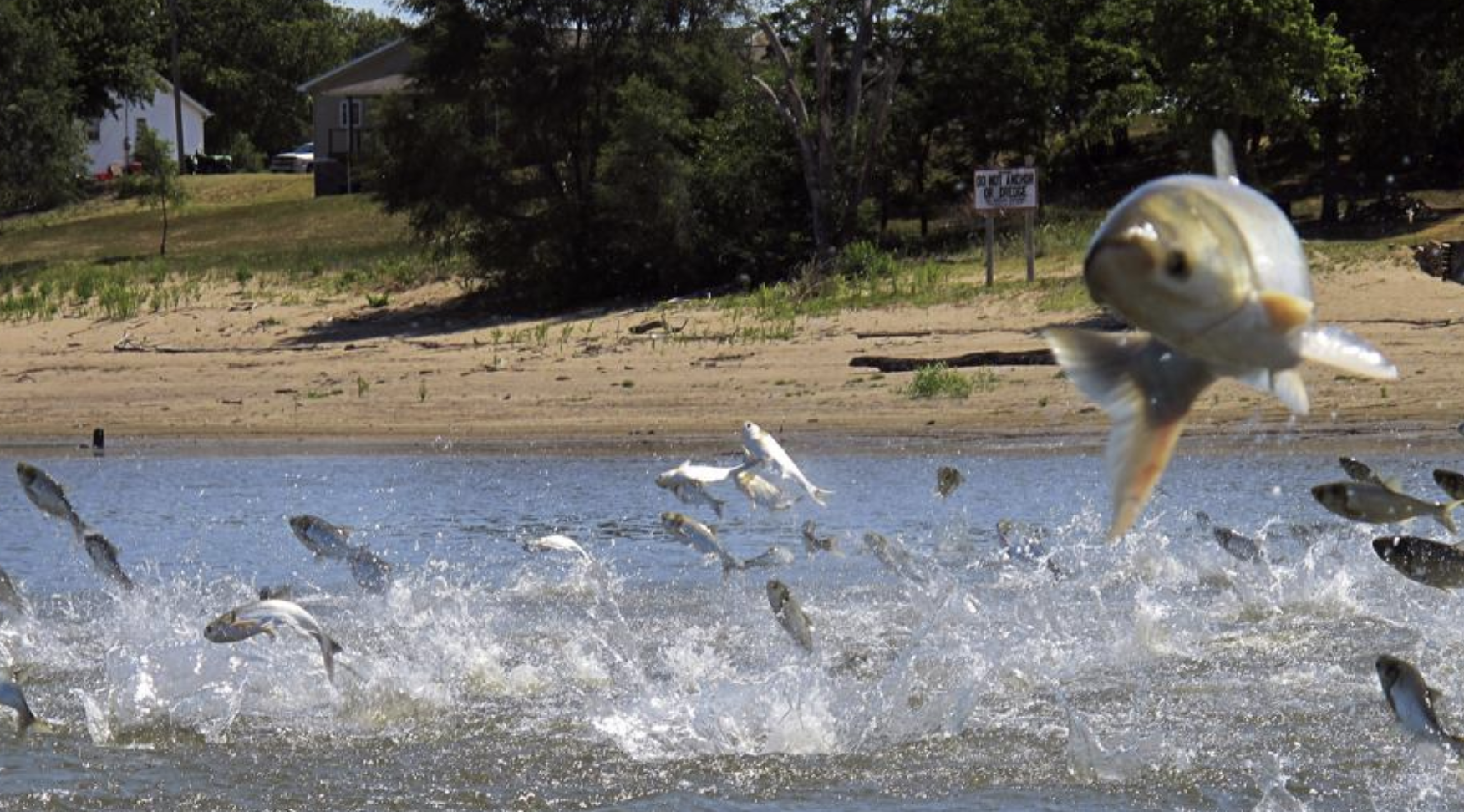
Asian carp, or "flying fish," are injuring boaters throughout the Midwest and eating up the food supply of native fish in the Mississippi River, reports Jeanne Whalen of The Wall Street Journal.

Able to jump as high as 10 feet out of the water, these carp are easily spooked by motors and have given boaters black eyes
and broken noses, Whalen reports.

Asian carp came to the U.S. from China and Russia in the ‘70s to regulate algae blooms in ponds and wastewater treatment plants, Whalen explains. Due to flooding, they escaped confinement, spread into the Mississippi River Basin, and exponentially reproduced into dozens of rivers.

If they breach the Great Lakes, they threaten the region’s walleye, bass and trout, which provide the fishing industry $5 billion annually, Whalen adds.

The governors of Michigan and Illinois are urging the federal government to unfreeze the funding for a river barrier to keep the fish out of Lake Michigan, reports Whalen. An additional deterrent could be blaring speakers underwater to distract the carp.

While the public waits for federal help to detain the carp, they have been creating their own solutions such as wearing helmets while boating, competing in contests to catch the jumping fish, or creating new recipes to eat them, explains Whalen.

The Illinois Department of Natural Resources has officially rebranded the fish as Copi, short for copious, in hopes consumers find them more appealing. “Fisherman and chefs report that Asian carp are actually delicious, though they are so bony they don’t make good filets. Chefs often grind them up and turn them into fish cakes,” Whalen adds.

Friday, August 16, 2024

A true fish story: Bringing the brook trout back to a New Hampshire stream took time and collaboration to succeed

Handsome brook trout (Adobe Stock photo)
Bringing brook trout back to a New Hampshire stream took planning, patience and lots of collaboration by Michael and Kathy Nerrie, reports Caroline Tremblay for The Daily Yonder

The couple had always sought to improve and share their land known as Distant Hill Gardens and Nature Trail, but reviving the brook trout was a unique challenge. Michael noticed that trout visited the stream at times, but heavy rains interfered. Tremblay explains, "Observing the region’s increasingly extreme weather events, he contacted the Natural Resources Conservation Service and the national non-profit Trout Unlimited. . . . What he discovered was that his plan would only be effective if conducted along a larger section of brook."

Getting access to that larger section took years. Tremblay reports, "Logistical barriers stood in the way. For instance, one abutting parcel had been donated to the Boy Scouts of America, and questions about who in the organization could approve the project hindered progress. Another lot had been passed down by a grandfather and none of the owners lived locally. Nerrie eventually had to track them down on Facebook."
Pool formed by in-stream wood addition
(Photo by John Magee, NHF&G via The Daily Yonder)

Once the land permissions were granted, the "trout welcoming" stream structures were installed. Tremblay writes, "The actual execution entails the strategic placement of logs and debris to slow the stream in key places. 'The whole idea is to create lots of pools and eddies for fish and aquatic life, Michael said. . . . During restoration, Distant Hill held a workshop with the New Hampshire Fish and Game Department for people interested in the project."

The trout tale is one of many emerging stories of "people having a positive impact on nature," Tremblay adds. "Whether focused on environmental impacts, land value, or sheer personal enjoyment, rural landowners like the Nerries are recognizing the myriad benefits of preserving their land’s unique natural qualities. And an increasing number have realized the greatest impact comes from collaboration."

Friday, July 12, 2024

The UN pledged to reduce global production of plastic; companies prefer better recycling efforts

Adobe Stock photo
Is it possible to create a planet where plastic production and waste aren't a constant problem? Maybe. In March 2022, the United Nations "pledged to negotiate a treaty to 'end plastic pollution,' with the goal of delivering a final draft by 2025," reports Joseph Winters of Grist. One proposed solution was to negotiate with plastic makers to produce less, which hasn't happened. But, what Grist found out by motoring through petrochemical trade and industry group public statements and policies were various levels of the "industry’s desired pathway to a 'world without waste.'"

Among the various players that Grist contacted, "only two agreed to answer questions about the policies they support," Winters writes. "What we found is that, although they fall far short. . . . the industry groups’ proposals to bolster recycling and waste collection could cause a significant reduction in mismanaged plastic waste — even in the absence of a cap on plastic production."

When their proposals were entered into a policy analysis tool developed at the University of California, "the elements of the treaty that industry groups support, cobbled together, could cut global plastic pollution by 43 million metric tons annually by 2050 — a 36% reduction below business-as-usual estimates," Winters adds. "Meanwhile, a realistic production cap could cut annual pollution by 48 million metric tons all by itself."

When it comes to global garbage, the plastics industry is economically influential. Unsurprisingly, the industry does not think that the solution to plastic waste reduction is making less plastic. Instead, industry groups support a concept called "plastics circularity," which "seeks to keep the material in use for as long as possible before it’s thrown away. Generally, this means more recycling," Winters reports. 

But that can be challenging. "The world only recycles about 9 percent of all plastic it produces; the rest gets sent to landfills or incinerators, or winds up as litter," Winters explains. Given the problem, the industry is promoting more and better recycling by supporting policies that build recycling infrastructure and placing some of the onus for recycling costs on companies that use it.

Even as the plastic waste reduction agreement takes shape, "it’s clear that self-preservation is at the heart of the petrochemical industry’s agenda for the treaty," Winters reports. "The policies it supports could have a positive impact on plastic pollution."

Friday, January 05, 2024

When freshwater fish are contaminated by 'forever chemicals,' some are no longer safe to eat

PFAS exposure means some freshwater fish are
labeled 'do not eat.' Photo by Andy Wang, Unsplash
A freshwater fish fry may sound like a delectable dinner, but it may no longer be healthy because substances known as PFAS or 'forever chemicals' have polluted many freshwater fish populations. While the Environmental Protection Agency has been working on PFAS drinking water standards, "Some scientists worry that regulations for freshwater fish are lagging," reports Hannah Norman of KFF Health News. "A recent study from The Environmental Working Group found that just one serving of fish can be equivalent to a month of drinking water contaminated with 48 parts per trillion of the common chemical PFOS."

PFOS and PFOA are part of the PFAS family of synthetic chemicals, which were used to make everything from Teflon to fire-fighting foam. Their chemical structure resists environmental breakdown by nature or the human body, which means they "accumulate in the soil, water, fish and our bodies," Norman explains. According to a report from the National Academies of Sciences, Engineering and Medicine, human PFAS exposure is "associated to cancer, low birth weight and decreased responses to vaccines. . . . At least 17 states have issued PFAS-related fish consumption advisories, KFF Health News found, with some warning residents not to eat any fish caught in particular lakes or rivers."

When it comes to PFAS levels in fish, the federal government hasn't provided any dietary guidance. Instead, states are setting limits with alarming variations. Norman reports, "'Do not eat' thresholds for the general population range from 25.7 parts per billion in New Hampshire to 800 ppb in Alabama. . . . While the EPA has tested hundreds of fish for PFAS and found some samples with concerningly high concentrations, it has no plans to provide national fish consumption advisories."

There is a bit of good news. Norman reports, "The Food and Drug Administration tested saltwater fish and shellfish sold in grocery stores — including Atlantic salmon and canned tuna — and generally found far lower levels of PFAS contamination."

Thursday, November 30, 2023

Nature bits 'n bites: Unearthly fish; plant memories; forest tardigrades; gray wolves return; a very hungry beetle

(Photo by Dante Fenolio,
Science Photo Library via Hakai)
Creatures that dwell in the deep ocean may look like inedible Star Wars characters, but fish industry experts are looking into their potential. Scientists are also studying these fish in an attempt to protect them. "Mesopelagic fish are not yet commercially exploited, though projects are underway to investigate the marketability of the species and the best methods for harvesting them," reports Moira Donovan for Hakai magazine. "Scientists working in this area are, therefore, in the rare position of being able to assess potential impacts from fishing before they happen. But with so many unknowns, the question remains: can they do it in time — for the fish's sake and our own?" The telescopefish, above right,  has large tubular eyes to maximize light collection and a highly extensible jaw with needle-sharp teeth that ensure a firm grip on prey.

Plants aren't normally considered "learners," but maybe they should be. "In the study of the plant kingdom, a slow revolution is under way. Scientists are beginning to understand that plants have abilities, previously unnoticed and unimagined, that we've only ever associated with animals. In their own ways, plants can see, smell, feel, hear, and know where they are in the world," reports Sarah Laskow for Atlas Obscura. "Of the possible plant talents that have gone under-recognized, memory is one of the most intriguing."

Do dairy calves need more love to keep them from unhealthy oral habits? A new Florida study suggests that more pets can keep young calves happier and less likely to chew on everything out of boredom or frustration, reports Shea Swenson for Ambrook Research. "The presence of somebody scratching and having some contact with them reduced the duration of those pen-directed sucking behaviors, particularly for the individual housed calves."

Tardigrades are part of a forest's dynamic life forms.
(
Photo by Oliver Meckes and Nicole Ottowa, Nat Geo)
Mary, Mary, quite contrary, what makes a forest grow? Tardigrades! "A photographer and biologist put microscopic fungi, roots, and slime molds from Germany's Black Forest under a scanning electron microscope—and found creatures like this astounding tardigrade among the forest's essential, and often overlooked, life forms," report Oliver Meckes and Nicole Ottowa for National Geographic. "This discovery in the moss on a tree trunk, magnified 2,400 times, marked a newfound species among the 1,300 known types of tardigrades."

Next month, Colorado will begin its planned reintroduction of gray wolves, with the release of about 50 wolves captured in Oregon, reports Trevor Hughes of USA Today. "The exact [release] locations will be kept secret, but the wolves will generally be released on state or private land in a rural area of west-central Colorado. . . . Backers of Colorado's reintroduction plan say that wolves are a natural and important part of the ecosystem. . . . They argue that safety concerns are wildly overblown, and that ranchers and farmers who lose livestock will be fairly compensated by taxpayers. . . . But farmers and ranchers consider wolves a dangerous threat to wildlife and stock alike."

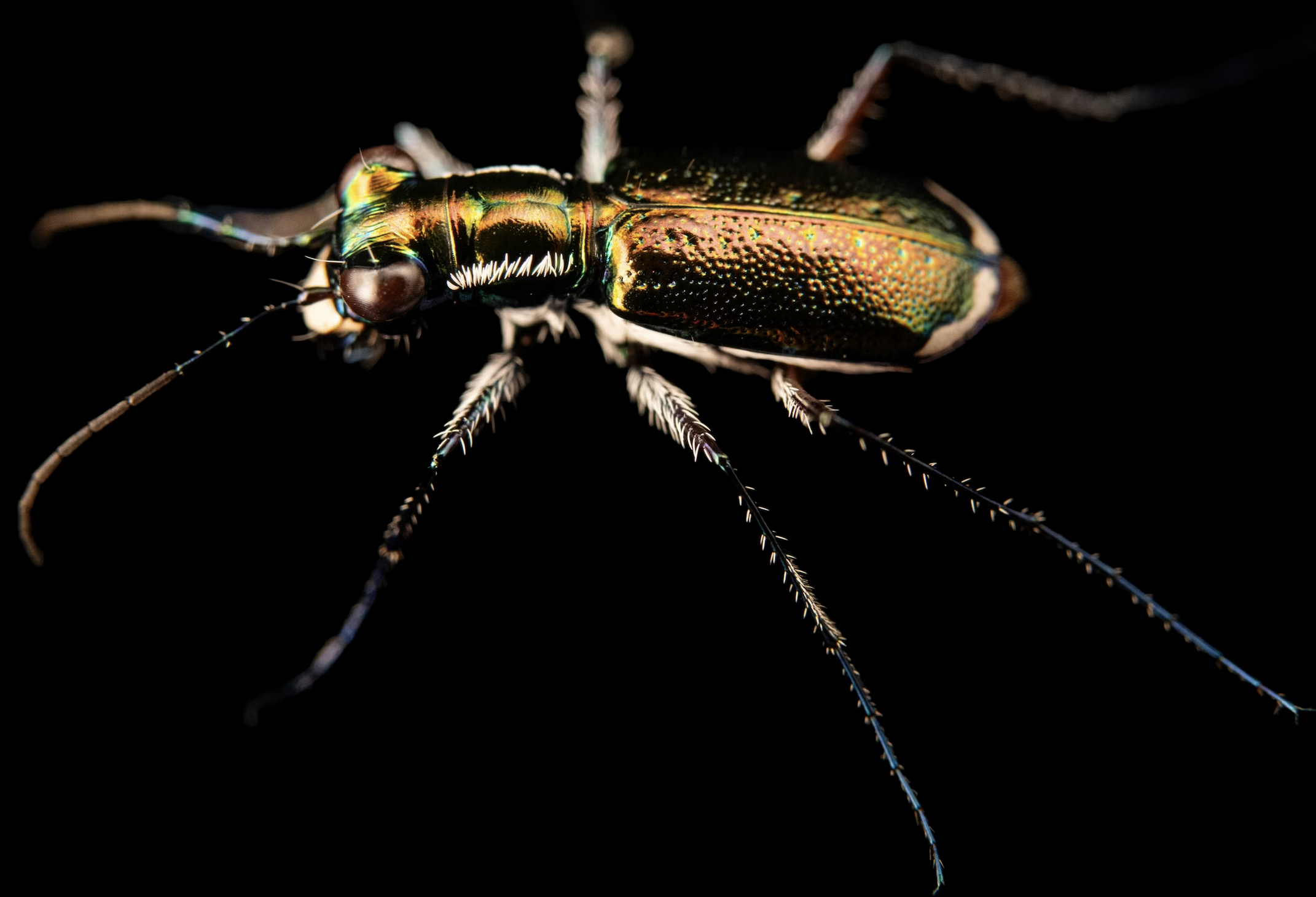
The Miami tiger beetle has 'big, serrated mandibles.'
(Photo by Joel Sartore, National Geographic, Photo Ark)
Meet the Miami tiger beetle, named for its 'highly voracious predatory behaviors, it's the 15,000th species in National Geographic's Photo Ark. "The beetle was rediscovered in 2007 after a more than 60-year absence," reports Rachel Fobar. "With its iridescent blue-green exterior and round, expressive eyes, some would call the Miami tiger beetle beautiful. . . . But when photographer Joel Sartore looks at one, he also sees carnage. . ."


Friday, November 17, 2023

Finally Friday flora and fauna: Traffic-stopping turkey; wonderful olives; meet a hero; the glory of monarchs

This turkey crosses the road when he wants to.
(Photo by Jill Weiss, The Washington Post)
Why did the turkey cross the road? And keep crossing the road? "This was just another rush hour in West Orange, N.J., where the apparently fearless turkey has claimed a hillside along Pleasant Valley Way, tormenting drivers and pedestrians ceaselessly on one of the community's busiest thoroughfares," reports Ronda Kaysen of The Washington Post. "Efforts to capture and move it (including the attempt with a tranquilizer dart) have so far failed."

Johnny Carson famously said, "Happiness is. . . finding two olives in your martini when you're hungry." Carson was onto something. "No food or medicine can do what olive oil can do," reports Meryl Davids Landau of National Geographic. "Scientists say adding more olive oil to your diet can positively impact your health in many ways, from alleviating high blood pressure to helping with weight loss."

Maverick visits students and inspires learning.
(K. Brownfield, American Humane photo via WP)

The world can sometimes feel like a topsy-turvy, sad mess. In dark times, it's good to have a hero. Meet Maverick, a 6-year-old European Blue Great Dane who won the 2023 American Humane Hero Dog Award. "Maverick's job as a therapy dog is to comfort military members and their families from across the country. His go-to move is placing his paw on the person he's seeking to soothe," reports Sydney Page of The Washington Post. "When service members die, Maverick escorts their children to their funerals, and he also visits with service members after unexpected deaths in their units. Each week, he spends time with students at schools and focuses mostly on children struggling with their classes."

Amelia, the Bluefin tuna, began life in the warm waters of the Mediterranean. "Sometime between her birth and 2004, she accomplished her first feat of long-distance swimming, crossing the Atlantic Ocean's entire breadth before arriving off the coast of western Rhode Island," reports Karen Pinchin of Hakai magazine. Read about Amelia's exceptional "catch" by an unusual fishing charter business and its owner, Al Anderson.

A "roost" of migrating monarchs in Mexico.
(Photo by Jaime Rojo, National Geographic)
In many parts of the country, glorious orange, soft red, and brown hues still abound in trees and brush foliage. But perhaps an even greater delight is the migration of monarch butterflies and their fanfare of fall colors once they reach their winter resting grounds.

When considering a hobby farm for goats, cows or sheep, a lot of planning is needed to get started on the right hoof. Chelsea Hill, an adult livestock and 4-H animal science educator, started by "outlining equipment needs, types of shelters, livestock handling systems, health care and water quality," reports Lisa Z. Leighton for Lancaster Farming. "She said having a health-care kit ready is important for day-to-day use, to assist with births, and in the case of parasite issues." Leighton outlines the basic needs and toolboxes for an excellent start here.

Friday, June 02, 2023

All creatures quick hits: Salmon in the sky; a terrifyingly huge spider; bird songs are good for you; survive the wild

The Salmon Thirty Salmon (Simply Flying photo)

Was that a salmon in the sky? "Alaska Airlines' 'Salmon Thirty Salmon' Boeing 737 is destined to be repainted, but first, "To celebrate one of the iconic livery's last flights, the carrier deployed the aircraft on a ceremonial milk-run service from Seattle to Anchorage," reports Steven Walker for Simply Flying. Susan Orlean of The New Yorker looks deeper at the plane's design: "At a glance, the jet didn't look like a plane at all but like a huge flying fish. The surreality continued when you boarded because the overhead bins were decorated with large pictures of Alaskan seafood as if you were entering the digestive tract of the salmon."

A group of flamingos is called a "flamboyance."
(Photo by Joe Sartore, National Geographic)
National Geographic's photo ark will leave you awestruck, amazed, and amused—fur, feather, fin and much more.

Birds can be good company, but their songs can also be good for our mental health, reports Richard Sima of The Washington Post. "Birds are a way to connect with nature, which is associated with better body and brain health, research shows. . . . And even if they are hidden in trees or in the underbrush, we can still revel in their songs."

Mosquitoes are a summer menace. They are also unfair--they munch away on some people while leaving other people completely un-bitten. Why? Read here to discover why mosquitos might find you delicious, while your neighbor gets a jolly flyby.

How do you survive a rattlesnake meeting or other encounters in the wild? Read here.

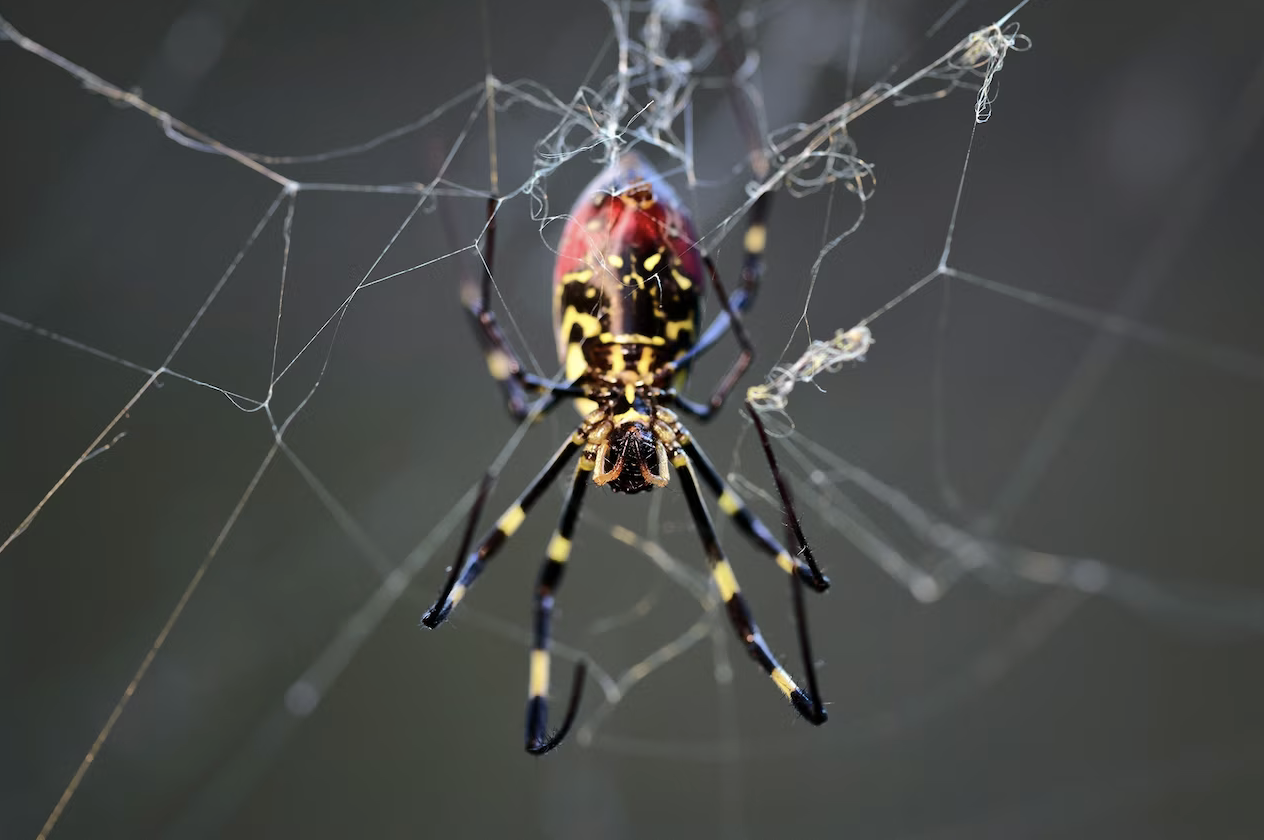
The Jorō spider, Trichonephila clavata
(Photo by Tony Wu, Nature Picture Library)
"It freaks people out. . . . It's a scary-looking spider that makes giant webs on your back porch," Andy Davis, a research scientist at the University of Georgia, told Jason Bittel of National Geographic. Bittel reports, "The invasive Jorō spider has made headlines for its gigantic size; striking colors; and plentiful webs, which can stretch six feet long and are strong enough to support a bird's weight. . . . It is also incredibly shy."

Wednesday, April 19, 2023

As offshore wind sails forward, fish habitats will suffer, and fishers fear getting 'squeezed out' of their livelihoods

A construction area for Vineyard Wind in New Bedford, Mass.
(Photo by Tony Luong, ProPublica)
Corporations seeking approval for offshore wind farms must move through government channels, and it's complicated. In the process, East Coast wind farm developers have created a "revolving door between the government workers and offshore-wind promoters," report Will Sennott and Anastasia Lennon of The New Bedford Light in Massachusetts, in cooperation with ProPublica. "In recent years, at least 90 people have shuttled between federal, state or local government and the offshore wind industry. . . . . Left out of this cozy relationship is one keenly affected group: more than 1 million people in the U.S. who work in the seafood industry, including 158,811 commercial fishermen."

Government authorities who determine building licensing and environmental concerns overlap. The Light explains, "Federal scientists, the commercial fishing industry and industry regulators each have sounded the alarm about potential harm to fish spawning habits and the lack of compensation for losses suffered by fishermen. . . . The Interior Department has ignored or downplayed those warnings. . . . The Bureau of Ocean Energy Management, which is part of the Interior Department, and the National Marine Fisheries Service, which is part of the Commerce Department, have conflicting authority over the same stretches of federal waters. BOEM oversees permitting and leasing for offshore wind development, from which the federal government reaped more than $5 billion last year. NMFS is supposed to protect marine habitat and ensure the fishing industry is sustainable and economically viable."

The Light reports, "'We are very concerned about the cumulative impacts of multiple wind energy projects on the fisheries we manage,' directors of three federally established regional councils that advise NMFS wrote last fall to Amanda Lefton, then the head of BOEM. . . . Lefton said last October that she wants to ensure that 'not only can the commercial fishing industry and offshore wind coexist but that both industries can thrive." Case and point for the revolving door: "In January, Lefton left BOEM to join Foley Hoag, a law firm that has represented Vineyard Wind. There, she said in a press release, she will 'leverage' her 'experience in policy and regulation at the state and federal levels with the private sector to help businesses get projects built.'"

"The components to build turbines for Vineyard Wind, which started offshore construction last November, will be shipped from the Port of New Bedford, which is also the top-earning commercial fishing port in the nation," the Light reports. "It supports almost 15,000 jobs and moves between 390 and 544 million pounds of seafood a year from its waterfront to consumers around the world." Scott Lang, a former mayor of New Bedford and an attorney who has represented many of the city's commercial fishermen for four decades, told the Light, "The great majority of the people who rely on going out to fish will be squeezed out of the industry. This is going to be the final nail."

Another wind farm, South Fork Wind, has received a green light to build off New York's coast. "BOEM approved the projects despite repeated warnings from the NMFS about damage to the environment and the fishing industry," the Light explains, "Environmental laws require BOEM to consult with the fisheries service on projects taking place in 'essential fish habitat,' which encompasses all offshore wind projects within 200 miles of the coast. . . . Fisheries regulators have been warning BOEM since 2018 about the impact of offshore wind projects. . . . The three regional fishery councils on the East Coast wrote in last summer’s letter to the head of BOEM. They added that the 'effects will increase in magnitude as more projects are built.'"

Monday, February 06, 2023

Sturgeon outlived dinosaurs and the Chicxulub asteroid; now they must contend with mankind, will they survive?

Atlantic sturgeon were once plentiful, but now may face extinction.
(Photograph by Joel Sartore, National Geographic Photo Ark)
Atlantic sturgeon have been swimming in North American waters for the past 10 to 15 million years. Sixty-six million years ago, when the Chicxulub asteroid hit, eliminating about 70 percent of species on Earth, Acipenser oxyrinchus oxyrinchus survived, reports Andrew S. Lewis of The New York Times. "Last year, however, the International Union for the Conservation of Nature called sturgeon "the animal group most at risk of extinction in the world," adding, "Humanity has reduced this ancient and enduring fish to such a fragile state speaks to the force of the latest impact event to remake the Earth — our own presence."

The North Atlantic sturgeon's demise began on the lower Delaware River estuary in the mid-1800s: "During the spring spawn, an estimated 360,000 adults thronged the reach that marked the brackish threshold between bay and river," Lewis writes. "Theirs was the roe prized by the Russian czars, whose brokers at one point paid more than $1,400 in today’s dollars for a single female Atlantic sturgeon. During the fishery’s peak, in 1888, 16,500 Atlantic sturgeon — they can live 60 years and grow to 14 feet and 800 pounds — were 'harvested,' or killed. Most were female, and the millions of eggs that each could produce during a spawn never made it into the water within which they were meant to hatch."

Lewis reports: "Because individuals from different rivers do not commonly interbreed, their homing instinct has produced populations whose genetics are unique to the waterways of their birth. In 2012, the species became protected under the Endangered Species Act. At the time, researchers estimated that the Delaware population consisted of 300 or fewer spawning adults per year."

In the Delaware estuary, "strikes by vessel hulls and propellers are a threat to Atlantic sturgeon across their range but responsible for half of all adult deaths . . . dredging is known to be especially harmful for Atlantic sturgeon," Lewis reports. A study by Dewayne Fox, a fisheries biologist at Delaware State University used Delaware’s data on vessel strikes to "calculate how many additional fatalities were going unnoticed," and his estimates were unsettling.
  
"In a population with so few adults, it signaled an alarmingly high rate of deaths," Lewis writes, adding that the study results were held for review by the Northeast Fisheries Science Center: In June 2021, a National Marine Fisheries Service biologist who was writing the biological opinion on proposed port projects "said he was considering using Fox’s study as part of the best available information on vessel strikes. . . . . but when the BiOps were released, Fox learned that NMFS had instead relied on a decade-old study from the James River in Virginia."

Meanwhile, dredging began for a "wind port" to serve turbines planned off the coast, "and would continue to do so for several months," Lewis writes. "While there were no reports of sturgeon killed during the work, the new port would mean more ship traffic for years to come."

Friday, December 16, 2022

Friday flora/fauna: Invasive black carp thrive in mid-America; homes found for L.A. ponies, ousted as city ends rides

Black carp (U.S. Geological Survey photo)
Invasive and damaging black carp have established themselves in the Mississippi, Ohio and Illinois rivers, according to a study that is "the first to identify an established population, or one that is naturally reproducing and living to adulthood, anywhere in the U.S.," reports Meredith Howard of the Belleville News-Democrat in Illinois. The study was done by Southern Illinois University, the U.S. Geological Survey, the U.S. Fish and Wildlife ServiceMissouri State University and the Missouri Department of Conservation.

USGS said the carp “prey on species such as snails and mussels and pose a risk to many already imperiled native mussels in this region.” Howard notes, "Mussels improve water quality by filtering out algae, bacteria and pollutants and they also provide nutrition for other species." The carp, native to east Asia, were imported to control vegetation in Southern fish farms. Senate Majority Leader Mitch McConnell said the recently passed water-resources appropriation expands federal efforts to control Asian carp.

Alessia Del Val, 4, on a Griffith Park pony. (LAT/Christina House)
Since 1948, pony rides have been available in Griffith Park in Los Angeles, but under pressure from animal-welfare activists who said (sometimes yelling at children during rides) that the horses were overworked, the city didn't renew the contract for the petting zoo, which expires Dec. 21. A veterinary inspection "did not show any outright signs of neglect or animal abuse, the expert found some animals were in need of help for saddle sores, as well as hoof and dental care," the Los Angeles Times reports. "The expert recommended better shelter and amenities, such as easier access to lower water troughs."

Owner Stephen Weeks worried that he wouldn't be able to find homes for more than 30 ponies, but he said he got 50 calls a day, and by Wednesday 25 had homes. Weeks told the Times the rest will probably go to a sanctuary so they can get medical care, and he chose not to sell any for auction or to another horse-ride business. “Some ponies are obviously capable of working, but as far as commercially working, it’s just my preference,” he said. “They’ve done that, and now they should experience something new in life, less work. ... It's almost like saying goodbye to a family pet.”

Photo from The Notebook by Poplar Terrace and Friends
Bradford pear trees were once a popular landscape planting, but they turned out to have several problems, including being invasive and hurting other species. It got so bad in Kentucky that the University of Kentucky is offering a bounty (seedlings of better species) for proof of destruction of Bradfords, a cultivar of the callery pear. In Louisville, "Bradford pears were aggressively growing into a field of white flowering trees on River Road, resulting in the destruction of the much-needed native species and the surrounding forest land," so they were removed, local philanthropist Christy Brown reports in her latest Poplar Terrace newsletter. "Ultimately, while it may be alarming to see so many trees uprooted, bear in mind that removing invasive species helps protect the biodiversity our River City relies on. In order to protect the resilience of our environment, we must protect the wild lands which enrich our health, culture, and economy."

Thursday, October 06, 2022

The snail darter, a small fish that became focus of big conservation fight, goes off the threatened-species list

A snail darter (Tennessee Valley Authority photo)
The snail darter, a small fish native to the Southeast that was the focus of an initial major battle over the Endangered Species Act, is no longer considered imperiled by federal authorities.

In the 1970s, the new law was put to the test when the last known habitat for the endangered fish was determined to be on a portion of the Little Tennessee River that was about to be flooded by a new Tennessee Valley Authority dam.

A lawsuit followed and construction of the Tellico Dam stopped as the case made its way to the Supreme Court, which sided with advocates for the fish, reports Travis Loller of The Associated Press. The conflict "was portrayed as environmental extremists versus economic realists; in reality, the Tellico Dam was quite small and unneeded to generate electricity." It was eventually built after Congress exempted the dam from the law with a rider on an appropriations bill. But prior to construction, biologists collected the fish and transplanted them to other rivers, and later they were discovered in other streams. Three years ago, biologists petitioned for the fish's removal from federal protection since its population has adequately recovered. It left the list Tuesday.

Snail darters are members of the perch family, and grow to be about 3.5 inches long while eating mainly snails. The Department of the Interior said the snail darter is the fifth fish species, and first in the eastern U.S., to be delisted because of population recovery.   

“There are a lot of people who don’t believe in the Endangered Species Act,” said Jim Williams, the U.S. Fish and Wildlife Service biologist who first listed the fish as endangered. “That say, ‘You know, this is like 'Hotel California'; you can check in, but you can never leave.’ And it’s like, ‘No, you can leave. You just got to get recovered before you leave. And the Endangered Species Act is a vehicle to do that.”

Wednesday, July 06, 2022

Midwestern fish farms face marketing, processing obstacles

Food costs are going up, and so is fish and seafood consumption in the U.S. That sounds like a good omen for Midwestern aquaculture farms, but "Many fish producers say they face challenges getting their produce to consumers in the region," reports Casey Smith  of The Associated Press.

Experts say the Midwest could be an aquaculture powerhouse, but the number of fish farms in the region fell from 336 to 271 over the past decade. "This could be because the region has historically relied on wild-caught seafood, said Amy Shambach, an aquaculture marketing outreach associate with the Illinois-Indiana Sea Grant. Seafood produced in the Midwest also must compete with cheaper, imported seafood," Smith reports. Higher production costs might also be to blame. 

"Stagnant fish farming in the Midwest aquaculture industry has national implications, Shambach said. With global seafood consumption expected to increase by 100-170 billion pounds by 2030, the growing seafood trade deficit means more fish will need to be farm-raised, opening the door for Midwestern farmers to meet demand," Smith reports. There is plenty of local demand, restauranteurs say, but the lack of local fish processors is a problem, Smith reports.

Thursday, June 23, 2022

Invasive Asian carp get a new name, 'copi', to entice diners, but will they bite? And will the FDA approve the name?

Asian carp jump from the Illinois River after being jolted by an electric current. (Associated Press photo by John Flesher)

You may have seen Chilean sea bass on the menu at a fancy restaurant. But the now-prized fish only landed on high-dollar menus after an enterprising fish wholesaler changed its name from the Patagonian toothfish and pitched it as a delicacy.

The State of Illinois is trying to do the same thing with Asian carp, an invasive fish that threatens ecosystems in the Mississippi River watershed. The state and partner organizations "kicked off a market-tested campaign Wednesday to rechristen as 'copi' four species previously known collectively as Asian carp, hoping the new label will make them more attractive to U.S. consumers," John Flesher reports for The Associated Press. "The federal Great Lakes Restoration Initiative is funding the five-year, $600,000 project to rebrand the carp and make them widely available. More than two dozen distributors, processors, restaurants and retailers have signed on. Most are in Illinois, but some deliver to multiple states or nationwide."

The name comes from "copious." State and federal officials have tried everything from fishing tournaments to bubbles and noisemakers to get invasive Asian carp out of U.S. waterways, but what to do with the captured fish has been an enduring problem. The fish show promise as pet food or fertilizer, and a processing plant in Western Kentucky exports carp to Asian audiences, where it's a popular food. It could be an easy and abundant food source in the U.S., too, if more people were willing to try them. Flesher reports. "Officials estimate up to 50 million pounds (22.7 million kilograms) could be netted annually in the Illinois River between the Mississippi and Lake Michigan. Even more are available from the Midwest to the Gulf Coast."

The state will seek approval from the Food and Drug Administration, "which says 'coined or fanciful' fish labels can be used if not misleading or confusing," Flesher notes. "Other regulatory agencies and scientific groups have their own policies and might not make the switch. The American Society of Ichthyologists and Herpetologists and the American Fisheries Society have a committee that lists fish titles, including scientific names in Latin and long-accepted common names. The panel never adopted 'Asian carp' as an umbrella term for the invasive species. The U.S. Fish and Wildlife Service plans to stick with 'invasive carp' and the four individual names, as its focus is on managing and controlling their spread."

Friday, April 29, 2022

Quick hits: Sterile super-Romeo trout may help curb invasive species; tools for rural electric co-ops transitioning to renewable energy; federal aid fuels pickleball boom

Brook trout have been outcompeting native trout for years.
(NPL photo by Nick Hawkins)
Here's a roundup of stories with rural resonance; if you do or see similar work that should be shared on The Rural Blog, email us at heather.chapman@uky.edu.

People of color and low-income communities are at a disproportionate risk of being harmed by pesticide exposure, according to a newly released study. Read more here.

A non-profit has a page full of tools and guidelines to help rural electric cooperatives transition to renewable energy. Read more here.

To save an underdog fish species out West, scientists are turning some invasive trout into sterile super-Romeos and setting them loose. Since they're taking the bulk of female trout's attention during mating season, that helps reduce births among the species. Read more here.

Federal Covid-19 aid is funding a pickleball court construction boom. Read more here.

Tick bites are causing an increasing number of people to become allergic to meat. Read more here.

Thursday, February 24, 2022

Research: Meat alternatives gaining in popularity but not denting beef sales; poultry and fish may be another story

Plant-based meat alternatives have been growing in popularity for years, with global sales expected to top $30 billion by 2026. That has meat and poultry producers and processors nervous, spurring bills and laws to segregate such products in the grocery store.

But, a recently published study shows, beef and pork producers don't have to worry—at least not yet. Poultry and fish producers may have cause for concern though. Researchers analyzed Nielsen sales data from U.S. grocery and convenience stores from 2017-2020 and found that only a small percentage of consumers have tried meat analogues. They also found that "consumers were often purchasing plant-based meat alternatives alongside beef and pork and instead used the plant-based meat alternatives as a substitute for chicken, turkey and fish," Katie Pratt reports for the University of Kentucky's College of Agriculture, Food and Environment.

Though meat analogue sales have grown more than 200% since the beginning of the pandemic, one of the researchers told Pratt that such foods only make up 0.5% of the fresh meat market share. The study, which was funded by the National Institutes of Health’s National Center for Advancing Translational Sciences, was recently published in Applied Economics Perspectives and Policy; read it here.

Thursday, September 30, 2021

23 species to be declared extinct, including ivory-billed woodpecker, Bachman's warbler and eight mussels

Bachman's warbler (Whatbird.com)
Ivory-billed woodpecker (Getty Images)
The U.S. Fish and Wildlife Service proposed Wednesday that 23 species should be declared extinct and taken off the endangered species list. The delisting would include:
  • The ivory-billed woodpecker, one of North America's largest woodpeckers, which briefly brought tourists trying to find it in rural Arkansas.
  • Bachman's warbler, a songbird that once lived in the Southeast but fell prey to habitat destruction.
  • The San Marcos gambusia, a tiny fish in Central Texas killed off from dry weather, pesticide runoff, and factory pollution.
  • A catfish species native to Ohio, thought to be highly intolerant of water pollution.
  • Eight freshwater mussels. It's not known why they went extinct, but freshwater mussels are among the most-endangered species in North America, possibly because of habitat destruction or disease.
  • Eight Hawaiian bird species due to invasive predators.
"Many of them were likely extinct, or almost so, by the time the Endangered Species Act passed in 1973, officials and advocates said, so perhaps no amount of conservation would have been able to save them," Catrin Einhorn reports for The New York Times. However, "without conservation, scientists say, many more species would have disappeared. Eleven species have been declared extinct since the Endangered Species Act became law in 1973, but 48 have recovered enough to be listed as threatened rather than endangered, and 54 species were removed from the list altogether.

The announcement offers a possible "glimpse of the future. It comes amid a worsening global biodiversity crisis that threatens a million species with extinction, many within decades," Einhorn reports. "Human activities like farming, logging, mining and damming take habitat from animals and pollute much of what’s left. People poach and overfish. Climate change adds new peril."

Starting today, FWS will accept public comments on the proposal for 60 days before making a final ruling.

Thursday, November 26, 2020

Corps denies permit for huge mine in Bristol Bay watershed after GOP division, surreptitious recordings of executives

New York Times map
The Army Corps of Engineers "denied a permit for the Pebble Mine in Alaska on Wednesday, effectively killing plans to build the massive copper and gold project that opponents had warned could wipe out the world's largest sockeye salmon fishery" in Bristol Bay, report Anthony Adranga and Annie Snider of Politico. "The decision from the Trump administration, which had reversed course several times on the issue, comes just weeks before President-elect Joe Biden takes office. Biden has said he opposed the project."

Pebble Limited Partnership, said it would appeal. the U.S. subsidiary of Canadian mining firm Northern Dynasty Minerals said it was dismayed because it had revised its plan in recent months to mitigate issues raised by environmentalists. But this time the enviros had unusual allies, and the developers talked too much, dooming their case.

The project "divided Republicans and Alaska politicians normally in favor of expanding domestic mineral production," Politico notes. "President Donald Trump faced a public pressure campaign from Republicans, including mega-donor Andy Sabin, Bass Pro Shops CEO Johnny Morris, Fox News commentator Tucker Carlson and his eldest son, Donald Trump Jr., to block the project."

Then, secret recordings of Pebble's CEO at the time revealed him "boasting about how he would influence Alaskan politicians," prompting Republican Sens. Lisa Murkowski and Dan Sullivan to "affirm their outright opposition to the projection after sending mixed signals up until that point," Politico reports. 

In the recording, Pebble executives also "suggested that they were planning for a much larger mine, and one that would operate far longer, than what had been proposed to the Corps," The New York Times reports. "The recordings were obtained by an environmental advocacy group, with two members who were posing as potential investors in the project meeting by video with two project executives. The executives described how the mine could operate for 160 years or more beyond the proposed 20 years, and how its output could double after the first two decades."

Monday, November 09, 2020

Purina to launch pet food with protein from bugs, Asian carp

Nestle Purina PetCare is launching a new line of cat food and dog food made with larvae of black soldier flies, and plans to offer other lines soon based on Asian carp. It's all part of a push to find protein from cheaper, more sustainable sources.

The Beyond Nature's Protein line will hit stores in Switzerland this month, and the company plans to expand to other European markets, Jaclyn Diaz reports for NPR. Purina spokesperson Lorie Westhoff said the company will offer U.S. customers an insect-based dry dog food in January, sold online only, along with several other formulas using protein alternatives such as Asian carp, an invasive species.

Purina "is embracing what the company views as a growing trend among consumers seeking protein alternatives for their cats and dogs, company representatives told NPR," Diaz reports. "A desire to be more environmentally conscious drives the consumer change, as does a perceived health benefit from a diet that substitutes meat."

The United Nations has warned that it will be increasingly difficult to find cheap, reliable protein sources as the world's population grows and resources are stretched, and recommends insects as a meat alternative. That could help with global warming too, the UN says, since meat production is responsible for releasing large quantities of the greenhouse gas methane, Diaz reports.

Scientists have had their eyes on fly larvae for a while now. "That’s because of the black soldier fly larva’s remarkable ability to transform nearly any kind of organic waste — cafeteria refuse, manure, even toxic algae — into high-quality protein, all while leaving a smaller carbon footprint than it found," Christopher Ingraham reports for The Washington Post. "In one week, a soldier fly colony of modest size can turn a ton of waste into 100 pounds of protein and 400 pounds of compost . . . In one year, a single acre of black soldier fly larvae can produce more protein than 3,000 acres of cattle or 130 acres of soybeans."

Asian carp could be a promising source for pet-food protein too. State and federal agencies have spent more than $600 million since 2004 trying to halt the spread of the invasive species, but they're having a hard time figuring out what to do with all the fish. A pioneering public-private program in Kentucky pays anglers for carp and auctions the catches online, mostly to Chinese buyers.