Showing posts with label censorship. Show all posts

Tuesday, March 05, 2024

Next week is Sunshine Week. Get ready to showcase how journalism works to preserve open government.

Sunshine Week begins this Sunday, March 10, with multiple ways to highlight how journalists support open government as watchdogs and First Amendment advocates. As Americans face another election cycle, it's an impactful time to remind all citizens that good reporting dynamically supports our democratic process.

Among Sunshine Week's tools, are a social media kit, logos, and timely promotions. If you are writing a news story, editorial or column about freedom of information, tips from the Society of Professional Journalists are also available.

The week's offerings include in-person and online events and activities, including a Sunshine kick-off by the Department of Justice and a panel discussion to raise awareness of Sunshine Laws sponsored by the League of Women Voters of Kansas City/Jackson-Clay-Platte Counties.

Sunshine Week was launched in 2005 by the American Society of News Editors, now the News Leaders Association. This year's events are supported by a growing list of partners, including Brechner Freedom of Information Project, Muckrock, the Society of Professional Journalists and the Radio Television Digital News Association.

Tuesday, February 20, 2024

In a surprising move, giant publisher Penguin Random House is actively fighting book bans

A wall of banned Penguin Random House books.
(Photo by Nate Langston Palmer, WSJ)
When it comes to fighting book bans, book publishers have hugged the sidelines and quietly funded industry groups that champion First Amendment rights. But for one publishing giant, stepping into the book boxing ring has meant standing up for free speech and its authors, reports Jeffrey A. Trachtenberg of The Wall Street Journal. Penguin Random House "now fully embraces the fight against book bans, entering a sensitive debate that is playing out in school boards and statehouses across the country. At risk: potentially alienating a large chunk of customers on an issue at the crux of culture wars that have polarized the nation in ways not seen in decades."

Those who push for book bans often "believe they are targeting titles that are pornographic or otherwise inappropriate for young people," Trachtenberg writes. "The publisher's stance is that teachers, librarians and school administrators, as expert educators, already make decisions about what is appropriate for young readers, and should be left to do their jobs. . . . Despite the risks, Penguin Random House's leadership said that failing to act had moral and financial costs."

To that end, Penguin Random House has used its media might to resist bans, educate consumers and share "censored" content. "Penguin Random House has started hosting anti-book-banning events, giving away several thousand copies of its most-frequently banned titles," Trachtenberg reports. "School boards and school districts removed more than 1,500 book titles from an assortment of publishers from public school classrooms and libraries in the 12 months through June 2023, according to a recent study by PEN America, a literary and free-speech organization that has been vocal in opposing bans."

Trachtenberg reports, "When Dan Novack, Penguin Random House's associate general counsel, learned the law firm Ballard Spahr was working on a book-banning lawsuit against Escambia County School District in Florida with PEN America, he called an attorney there and asked, 'Can we get in? . . . In an early victory, a federal judge ruled the plaintiffs in the Florida case can pursue their lawsuit on First Amendment grounds."

Taking a hard line against book bans has opened Penguin Random House to deeper probes by media and well-funded book ban advocates. Despite the added scrutiny, the company's leadership feels their position supports educators. Penguin Random House CEO Nihar Malaviya told Trachtenberg: "There is always the potential for people to misinterpret our actions. We aren't pushing anything on anyone. We're supporting the experts who make decisions about books."

Friday, October 06, 2023

Saturday is "Let Freedom Read Day," and organizers are promoting efforts to defend library books from censorship

Public libraries should have materials for everyone in the community, but with the increase in book bans, it can feel like the freedom to find "your thing" to read could be pulled from the shelf.

Tomorrow, Oct. 7, is Let Freedom Read Day. In the spirit of civic engagement, advocacy groups are asking Americans to stand up for library staff, educators, writers, publishers and booksellers who make the wide variety of books available to readers.

The organizers of Banned Books Week promote several ways for people to support the efforts:

Call a decision maker: Call school and library administrators, school board and library board members, city councilpersons, and elected representatives to ask them to support the right to read a variety of books. Find and Contact Elected Officials (usa.gov)

Support an advocacy organization:
The Banned Books Week Coalition includes organizations that fight against efforts to ban books. Learn more about the members of the Coalition here.

Buy a "banned" book: Censorship doesn’t just harm libraries and schools; it also impacts writers, publishers and booksellers. Writers have had school visits canceled. Publishers and booksellers are encountering more obstacles to working with schools and libraries. One way to support the people who make and sell books is to buy them.

Do you want to help others access banned books? You can donate the books you purchase to:
  • Public and school libraries: Contact your local library or school to find out what they need and how to donate.
  • Little Free Library: Use the free LFL mobile app to find a Little Free Library book-sharing box in your area.
  • Fundraisers: Many public libraries have friends of the library groups that use donated books to raise money for the library.
  • A banned book giveaway or bookmobile: Call your local bookstore to see if they may be hosting a giveaway or supporting a bookmobile. 

More ideas are here.


Thursday, October 05, 2023

It's Banned Book Week, and First Amendment advocates push back by training citizens how to fight bans

Photo via PEN America
Banned Book Week is this week, and First Amendment advocates are pushing to stem the tide of books removed from library shelves. "In the last few years, there has been an unprecedented wave of book bans and censorship spurred by parents and conservative groups to target books that center the LGBTQ+ community, Black history and diverse stories," reports Ariana Figueroa of The Kentucky Lantern. "During the 2022-23 school year, book bans occurred in 153 districts across 33 states, according to the PEN America report."

According to PEN, 3,300 books were banned during the 2022-2023 school year, up 33% from the prior year. To counter the dramatic increase, PEN "launched online training for students to fight book bans, and more recently, teamed up with bestselling authors to fight against book bans in Florida and across the country," Figueroa writes. "Some of those authors include Judy Blume, Ruby Bridges, Suzanne Collins, Michael Connelly, Gillian Flynn, Amanda Gorman, Nikki Grimes, Daniel Handler, Khaled Hosseini, Casey McQuiston, James Patterson, Jodi Picoult and Nora Roberts, among others."

Lawmakers have also entered the fray, with some supporting bans and others criticizing bans as free speech violations. In September, the U.S. Senate Judiciary Committee "held a hearing to discuss the consequences of book bans, but senators ultimately decided it was not Congress' role to intervene," Figueroa reports. "The White House in June announced that the Department of Education Office for Civil Rights would appoint a coordinator to counter the massive wave of book bans across the country.. . . However, the department has not responded to multiple requests from States Newsroom asking about the hiring status of the new coordinator. . . . One state, Illinois, became the first state to pass a law outlawing the banning of books."

Moms for Liberty, an organization formed in 2021, is often the force behind many book bans, Figueroa explains. The group generally "'targets local school board meetings, school board members, administrators, and teachers to push right-wing policies,' as reported by Media Matters. Moms for Liberty has about 300 chapters across 47 states."

States and the number of books they have banned from July 2022 – June 2023 include:
Arkansas - 4 books; California - 1 book; Colorado - 8 books; Florida - 1,406 books; Georgia - 4 books;
Idaho - 25 books; Indiana - 3 books; Iowa - 6 books; Kansas - 7 books; Kentucky - 3 books; Maine - 13 books; Massachusetts - 1 book; Michigan - 39 books; Minnesota - 1 book; Missouri - 333 books; Nebraska - 6 books; New Hampshire - 1 book; New Jersey - 3 books; New York - 6 books; North Carolina - 58 books; North Dakota - 27 books; Oklahoma - 2 books; Oregon - 38 books; Pennsylvania -
186 books; South Carolina - 127 books; South Dakota - 2 books; Tennessee - 11 books; Texas - 625 books; Utah - 281 books; Virginia - 75 books; West Virginia - 2 books; Wisconsin - 43 books
Wyoming - 15 books

Monday, October 02, 2023

Opinion: Appointed county school board grants itself 'sole authority' over library content; some residents push back

A sign on a road in Hanover County, where a battle is underway over a
push for an elected school board. (Photo by Greg Sargent, Washington Post)
America is no stranger to censorship, with the first U.S. book ban dating back to 1637. Some counties, such as Hanover County, Virginia, have a long history of the practice, writes Greg Sargent in his opinion for The Washington Post. In 1966, its school board removed To Kill a Mockingbird from shelves, and this year, it "removed at least 20 books after granting itself sole authority over library content. Last spring, it renamed a school christened after a Black historical figure," but some residents are resisting the bans in what is shaping up to be "A nasty fight in a rural Virginia school district."

In response, the "Hanover Citizens for an Elected School Board" is campaigning to "take away county officials' power to appoint school board members, who are otherwise insulated from public accountability. Unelected boards are rooted in the state's Jim Crow past, as they were sometimes used to keep Black residents out," Sargent writes. "The case for an elected board in Hanover County, which stretches from Richmond's suburbs into outlying rural areas and backed Donald Trump in 2020 by 26 points, is strong. . . . It is one of only a dozen school boards in the state that are still appointed — and it's the largest among those."

"More residents started joining the push for elected boards last spring. First, the board voted to give itself sole authority over book-banning decisions for school libraries — and then promptly started nixing books from circulation, including several with LGBTQ+ themes," Sargent adds. "Liberal-leaning Kelly Merrill, a University of Richmond professor with a transgender teenager, said she was angered when the school board voted against accommodations for trans students."

"This saga goes back a century. At the Virginia Constitutional Convention of 1901-1902, delegates shut down a proposal for elected school boards after opponents made clear they believed that would give too much 'negro' control over the schools. . . . In the 1950s, the General Assembly retaliated against Arlington County's board (the only one at the time that was permitted to elect members) by revoking that status in favor of appointments. This ratified the idea of appointed boards as a bulwark defending segregation," Sargent writes. 

Historian Peyton McCrary told Sargent, "Appointed boards were part and parcel of how the Jim Crow system operated in Virginia." Sargent adds, "In Hanover, liberals and even some conservatives are mindful of that dark past. This fall, if residents vote to give themselves the power to hold school board members accountable moving forward, it will be another step toward repudiating it."

Friday, September 22, 2023

Book-banning zeal almost closed this library; it would have been the first in the nation

The Dayton Library will remain open after initiative
was barred. (Photo by Dean Rutz, The Seattle Times)

Many public libraries are facing increasing pressure to remove targeted books from shelves or even more extreme measures, such as asking voters to close the library, which almost happened to Dayton Library in Columbia County, Washington. "The library —  which was on the verge of becoming the first library in the country to shutter over disputes about what books it offers — will remain open," reports David Gutman of The Seattle Times, "after a Columbia County court Wednesday barred an initiative to close the library from appearing on the November ballot."

The Dayton Library is the only library in Columbia County, pop. 4,000, and the town of Dayton, where the conflict has wrangled residents for over a year, is "a one-stoplight farming town where wheat prices are displayed on Main Street," Gutman writes. "The library's opponents, led by Jessica Ruffcorn, a mother of two and the leader of the movement to shut the library. . . objected to the placement of books concerning gender, sexuality and race in the kids and young adult sections of the library. Initially, the complaints centered on one book, What's the T?: The Guide to All Things Trans and/or Nonbinary, but they quickly spread to a dozen others and now well over 100 books. . . . All the contested books are found in 'hundreds if not thousands of libraries across the country,' according to the Washington Libraries Association."

Columbia County, Washington
(Wikipedia)
In response, two Columbia County residents and Neighbors United for Progress filed a lawsuit against Jessica Ruffcorn to prevent the issue from appearing on the ballot. Gutman reports the filing said: "The initiative seeks to punish every single person in Columbia County by shuttering the Library in its entirety and depriving the community of its many vital resources. The loss of the Library would result in a loss of access to information, the loss of history, a decline in public resources, and the loss of one of the most beautiful buildings in the County."

If the initiative passed, "all of the library's books and materials would have been moved to the state library near Olympia, and the library's building and other property would return to the city of Dayton, which, prior to the formation of the rural library district, had been unable to fund the library," Gutman notes. "Columbia County Superior Court Commissioner Julie Karl ruled for the library's supporters, barring the county from placing the initiative on the November ballot. The initiative, Karl said from the bench. . .was unconstitutional, procedurally invalid and the signature gathering was marred by 'potential criminal acts.'"

Tuesday, September 19, 2023

She taught about race, was made to stop and now wonders how she will continue to teach with trust and 'authenticity'

Mary Wood's students reported her for a lesson on racism.
(Photo by Will Crooks, The Washington Post)

Seeking to have her all-white class understand more about racial history and identities, teacher Mary Wood of Chapin, South Carolina, had her students read a book "that dissects what it means to be Black in America. . . . Her students reported her for "[making] them ashamed to be White, violating a South Carolina proviso that forbids teachers from making students' feel discomfort, guilt, anguish, or any other form of psychological distress' on account of their race," reports Hannah Natanson for The Washington Post.

The book was Ta-Nehisi Coates' Between the World and Me, which Wood paired with educational videos. Natanson writes, "Reading Coates' book felt like 'reading hate propaganda towards white people,' one student wrote. . . . At least two parents complained. . . . Within days, school administrators ordered Wood to stop teaching the lesson. They placed a formal letter of reprimand in her file. It instructed her to keep teaching 'without discussing this issue with your students.'" Wood completed the semester "feeling defeated and betrayed — not only by her students but also by the school system that raised her. The high school Wood teaches at is the same one she attended."

Chapin is about 25 miles northwest
of Columbia, S.C.  (Wikipedia map)
A local newspaper reported Wood's censure, and the conflict spread. "At school board meetings and online Facebook groups, the citizens of wealthy, White and conservative Chapin debated whether Wood should be fired," Natanson reports. "Republican state representatives showed up to a June meeting to blast her as a lawbreaker. The next month, a county NAACP leader declared her an 'advocate for the education of all students.'"

South Carolina is one of 18 states "to restrict education on race since 2021, according to an Education Week tally. And at least half the country has passed laws that limit instruction on race, history, sex or gender identity, per a Washington Post analysis. Wood is not the first teacher to get caught in the crossfire: The Post previously reported that at least 160 educators have lost their positions since the pandemic due to political debates," Natanson adds.

Wood now wonders if she can trust her students and the system that told her to teach an authentic curriculum that helps young adults enter a challenging world. "And for Wood, teaching authentically means assigning writers like Coates—voices unfamiliar, even disconcerting, to students in her lakeside town," Natanson writes. "Because of what happened last year, though, Wood now worried anything, from the most provocative essay to the least interesting comment about her weekend, might be resisted, recorded and reported by the children she's supposed to teach."

Thursday, September 07, 2023

The Color Purple book remains one of the most frequently challenged books more than 40 years after its release

In 2022, the ALA  documented over 1,200 attempts to ban or
restrict library materials. (Thought Catalog photo, Unsplash)
In 1982, Alice Walker's The Color Purple became a critically acclaimed bestseller. But alongside the accolades, the story stirred up enough controversy to became "one of the most challenged books in the nation, withstanding criticisms aimed at its depictions of race and sex, its portrayal of abuse and agony, and even its spelling and style," reports Erin Blakemore of National Geographic. The novel was praised for "its portrayals of both the brutality and sorrow of racism and sexual violence and its celebration of Black women. . . . Though educators recognized the book's potential as a teaching tool, some parents and community members objected to its presence in school curriculums and libraries.

"The first major attempt to ban the book occurred in 1984, when a parent petitioned against its use in an Oakland, California classroom," Blakemore writes. "In a 1985 essay, Walker recalled reading frequent updates on 'how the banning was coming along' and watching the book's sales skyrocket. . . Though the Oakland schools ultimately decided not to remove the book from classrooms, the book has consistently been challenged nationwide since its publication, repeatedly making it on the American Library Association's list of most frequently challenged books."

Why? "Walker's use of slang and profanity, the book's portrayal of brutal Black men, a same-sex encounter between the two main characters, and its depiction of sexual violence in its first pages," Blakemore explains. "'One can eat from a cafeteria or a dumpster…but one would hope those placed in charge of our children would have exercised better oversight,' wrote one parent in a characteristic 2013 challenge in Brunswick County, N.C. (The book has survived multiple attempted bans in the Brunswick County school district.)"

A decade later, the book still faces challenges, but it is not alone. "In 2022, the American Library Association documented over 1,200 attempts to ban or restrict library materials—double the number of challenges from the previous year—and most of which attempted to remove multiple titles from shelves," Blakemore adds. "The Color Purple . . . was removed from library shelves in Florida's Indian County School District at the request of a parent group that objected to 156 of the books on school shelves, claiming the books contain everything from pornography to critical race theory."

The movie adaptation of The Color Purple musical is set for release in December, and once again, the book will be in the public spotlight. "Only time will tell if the movie will spark more challenges—but for now, the legacy of a book one 1982 reviewer called 'indelibly affecting' is secure," Blakemore writes. "To date, the book has sold over 5 million copies."

Wednesday, July 19, 2023

CMT drops Aldean's 'Try That in a Small Town', which suggests gun-control supporters want to confiscate firearms

Jason Aldean in Nashville last month (Photo by
Monica Murray, Variety, via Getty Images and Axios)
Country Music Television has stopped airing Jason Aldean's music video for "Try That in a Small Town," which suggests that gun-control supporters want to confiscate firearms, something very few of them advocate. Almost all the media play about it has been about its alleged racism, with hardly any attention to the misleading lyric about guns.

Aldean signs, "Got a gun that my granddad gave me. They say one day they're gonna round up. Well, that s--t might fly in the city, good luck. Try that in a small town. See how far you make it down the road. Around here, we take care of our own. You cross that line, it won't take long for you to find out. I recommend you don't."

A CMT spokesperson confirmed the decision to Adam Tamburin of Axios Nashville, who reports, "Critics say the song strikes a threatening tone while criticizing gun control and protests against police. The video, which was released Friday, splices videos of fires, crimes and burning flags with protest images. Aldean, one of the biggest stars in country music, defended the song on social media Tuesday, saying he's been unfairly accused of releasing 'a pro-lynching song' that was critical of the Black Lives Matter movement." He did not mention the gun-control aspect of the song.

CNN notes that Aldean, an outspoken conservative, "was performing at the Route 91 Music Harvest Festival in Las Vegas in 2017 when a gunman shot repeatedly into the crowd, killing 58 people and injuring hundreds more. The incident is the deadliest mass shooting in American history."

Aldean's wife Brittany is a "right-wing influencer," Emily Nussbaum reports for The New Yorker in a long story about Nashville and the country-music industry being divided by politics. When singer Maren Morris called Brittany Aldean 'Insurrection Barbie,' Jason Aldean "encouraged a concert audience to boo Morris’s name. Both sides had sold merch off the clash. The Aldeans hawked Barbie shirts reading 'don’t tread on our kids.' Morris fans could buy a shirt that read 'lunatic country-music person' — Tucker Carlson’s nickname for her — and another bearing the slogan 'you have a seat at this table.' She donated the proceeds to LGBTQ charities."

UPDATE, July 25: Black Lives Matter images in the video have been removed

Friday, June 16, 2023

Along party lines, Illinois denies state funding to libraries that restrict or ban books for partisan or doctrinal reasons

Shutterstock photo illustration
As localities across the nation debate book bans, one state has put itself athwart. "Illinois public libraries that restrict or ban materials because of 'partisan or doctrinal' disapproval will be ineligible for state funding as of Jan. 1, 2024," reports Claire Savage of The Associated Press. "The American Library Association in March announced that attempts to censor books in schools and public libraries reached a 20-year high in 2022 — twice as many as 2021, the previous record."

Deborah Caldwell-Stone, director of the ALA's Office for Intellectual Freedom, told Savage: "Illinois legislation responds to disturbing circumstances of censorship and an environment of suspicion." Savage reports, "To be eligible for state funds, Illinois public libraries must adopt the ALA's Library Bill of Rights, which holds that 'materials should not be excluded because of the origin, background, or views of those contributing to their creation,' or subscribe to a similar pledge."

Rep. Anne Stava-Murray (D) sponsored the legislation "after a school board in her district was subject to pressure to ban certain content from school libraries," Savage reports. Stava-Murray told her, "While it's true that kids need guidance and that some ideas can be objectionable, trying to weaponize local government to force one-size-fits-all standards onto the entire community for reasons of bigotry, or as a substitute for active and involved parenting, is wrong."

Secretary of State Alexi Giannoulias pointed out to Savage that Illinois taxpayers pay librarians who are experienced and educated to decide "what books should be in circulation," adding, "We are not saying that every book should be in every single library." 

House Minority Leader Tony McCombie (R), who voted against the measure, told Savage, "Our caucus does not believe in banning books, but we do believe that the content of books should be considered in their placement on the shelves." Savage reports, "Despite Giannoulias' assertion that 'this should not be a Democrat or Republican issue,' lawmakers' approval of the bill splintered across party lines, with Republicans in opposition."

Monday, April 17, 2023

Amid calls to ban books, rural Texas county votes to keep libraries open while lawsuit over book removal continues

A crowd gathered for the county commission meeting in Llano County, Texas. (Photo by Phil Reynolds, The Highlander)

Photo: Aaron E. Hernandez, American-Statesman
Not all big decisions are made in big places. Here's one from the Texas Hill Country. "When commissioners in Llano County, population 21,000, voted Thursday to keep its three-branch library system open, the moment was closely monitored by the biggest news organizations in the country," write Paul Waldman and Greg Sargent of The Washington Post. Technically, commissioners voted "to remove an item from their agenda to consider whether to 'continue or cease operations' of the Llano County Library System “pending further guidance'," The Highlander of Marble Falls reports, under a heading saying the commissioners voted to "postpone" the vote. But other stories cast the idea as dead.

Niki Griswold of the Austin American-Statesman reports that county officials made the decision "despite an ongoing push by some residents to close the facilities if certain books they claim are sexually explicit remain available for check out." There's a lawsuit, which "is part of an ongoing legal, political and cultural battle over what books children should have access to in public and school libraries, especially content that touches on race, LGBTQ+ issues and sexuality."

The Post explains, "Like many other similar conflicts, this one was triggered by a single Llano resident, Bonnie Wallace, who objected in 2021 to library books she pronounced 'pornographic filth.'. . . One of the big surprises of these sagas has been outbreaks of resistance to book purges in the reddest places, and here again, some locals dissented" and filed suit. Griswold reports, "A federal district judge in Austin issued a preliminary injunction in the case at the end of March, ordering the county to replace the books it had removed from libraries and prohibiting officials from taking away any other books while the court case is pending."

Llano County (Wikipedia map)
"Thursday's meeting drew dozens of residents from both sides of the issue," Griswold reports. "Michael McDavid, 60, who held a sign that read 'We love our library,' has lived in Llano County for 35 years. He said that closing the library system would cripple the community: "Our little library is our community center. . . . That's where everything goes on, from internet access to exercise classes, books, DVDs, and without our library, we're kind of a rudderless community."

Griswold reports, "Fifteen people addressed the Commissioners Court during public testimony with more than half vehemently against closing the county's libraries . . . Speakers included former teachers and librarians who defended libraries as "safe spaces for gathering" for children and adults. . . . Other speakers read explicit passages from select books. . . . one resident asked the commissioners, 'Does Llano, Texas, want to be known as the town that closed the public library?' Joanie Castleman, who attended the meeting but did not testify before the commissioners, told Griswold, "I'd like to see the library closed if they're going to leave those books in the library. It's not about banning books or burning them. It's about protecting our children."

Once the agenda item was dropped, administrative County Judge Ron Cunningham "read a two-page statement, condemning the ongoing litigation and its cost to the county and acknowledging the division the debate has brought to the community. He said, "This has been a very contentious situation. This is not what Llano County is about, ladies and gentlemen; we're better than this. . . . The library will remain open. We will try this in the courts, not through social media or the news media."

Thursday, March 09, 2023

Huckleberry Finn, ‘Slavery was wrong' and other material teachers have dropped out of fear, or on superiors' orders

Writings by Christopher Columbus, Mary Wollstonecraft and a police data set have been cut from lesson plans. (Photos by Michael Robinson Chávez, The Washington Post; Hannah Natanson, The Washington Post; Bing Guan, Reuters)

"I took some of the natives by force. They would make fine servants. … With fifty men we could subjugate them all and make them do whatever we want."
 --A Christopher Columbus journal entry in 1492, from Howard Zinn’s A People’s History of the United States.

Under parental pressure and administrative criticism, many public-school teachers have removed texts like Zinn's book from their lessons, reports Hannah Natanson of The Washington Post. Other nixed pieces have included "Excerpts from Mary Wollstonecraft’s A Vindication of the Rights of Woman and a data set on the New York Police Department’s use of force, analyzed by race."

National politics and divisions have moved into the classroom. Natanson writes, "The quiet censorship comes as debates over whether and how to instruct children about race, racism, U.S. history, gender identity and sexuality inflame politics . . . At the same time, an ascendant parents’ rights movement born of the pandemic is seeking — and winning — greater control over how schools select, evaluate and offer children access to both classroom lessons and library books. . . .In response, teachers are changing how they teach."

Natanson reports, "The Washington Post asked teachers across the country about how and why they are changing the materials, concepts and lessons they use in the classroom, garnering responses from dozens of educators in 20 states." From the Post's survey, here are six things some teachers have removed from their lessons along with brief examples, both paraphrased and quoted here:

Slavery was wrong: Iowa school Superintendent Laurie Noll told Greg Wickenkamp, a middle-school teacher, not to use that phrase. She told Wickenkamp, "'Slavery was wrong,' that’s not a fact, that’s a stance." Wickenkamp is no longer a teacher.

Columbus’s journal: For 14 years, a North Carolina teacher used Zinn's book as a platform to discuss slavery and Indigenous people. Last year a parent complained that "her white son had been made to feel guilty." The school system admonished the teacher and ordered her to halt the lesson on Columbus.

Data on police use of force: A Northern Virginia teacher used the data set to get her students of color more engaged with math as it relates to events. She also used it to show differences between association and causation. The teacher asked higher-ups if she should stop teaching her lesson on the police use of force. She was told yes, because it might make children uncomfortable' because of their race or if their parents are police officers, the teacher recalled.

Mary Wollstonecraft’s book: An Arkansas high-school English teacher offered students six optional passages from this piece. The school's assistant principal started questioning the teacher with different variations of the same question: “What is the purpose of using it?” “How is it connected to what you are doing?” “Is it connected by skills?” “Is it connected by theme?” The teacher eventually dropped the optional lessons.

The Adventures of Huckleberry Finn and Of Mice and Men: A Missouri English teacher and the English department removed both books from their rosters over parental social media comments about teachers. "In the 2021-2022 school year, right before she [the teacher] was slated to start teaching Huckleberry Finn, the teacher met with colleagues at her high school. They discussed how parents in the district had begun sharing on social media details of teacher behavior they disliked, sometimes naming the educators involved. The teachers decided to cut Huckleberry Finn. Also nixed was John Steinbeck’s Of Mice and Men, which had drawn similar objections over profane language — again from white parents."

A Library of Congress video of a ‘cakewalk': For three years, a North Carolina teacher used videos "of 'cakewalks,' dances that Black Americans began performing in the antebellum era partly to mock the formal dances held by their White, wealthy enslavers . . . But things changed this fall when the video was paired with an essay by bell hooks — “Is Paris Burning?” — in which the Black feminist and social critic dissects drag ball culture in 1980s-era New York. . . . [The teacher] received a flurry of emails from four parents contending broadly that the cakewalk video and the bell hooks text were irrelevant to social studies . . . Overall, she felt she got insufficient support from the district, she said. And the parent complaints just kept coming. . . . This semester, she skipped the three-day lesson on subversion, the cakewalk video, the bell hooks text. (The author did not capitalize her name.)

Tuesday, February 21, 2023

School libraries' content is hotly debated in some places; study finds disputes related to local politcal environments

School libraries are supposed to be quiet oases of reading and study. But when it comes to deciding what books are on the shelves, they have become a hotbed of cultural debate. "School libraries have become a key battleground in contemporary culture wars over public education," reports Kirsten Slungaard Mumma, a postdoctoral fellow at Wheelock Educational Policy Center of the Brookings Institution. "In the 2021-22 school year, PEN America reported a record-setting 2,532 book challenges affecting 1,648 different titles in 138 school districts. Many of the challenged titles contain content related to LGBTQ+ issues or race/racism, topics that have also been the concern of state legislative efforts."

Photo from Brookings Institution
Mumma did a study: "I assembled data on hundreds of titles in public school libraries across the country. The list of titles across controversial topics includes both fictionalized stories and nonfiction titles. . . . My school library sample consists of 5,240 elementary/middle and 1,391 high schools in 48 states. This sample includes schools in rural and urban areas, schools in counties with conservative and liberal political leanings, and schools that serve students of very different backgrounds. I use these data to identify patterns in library resources and content, especially as they relate to political preferences, state laws, and book bans."

She shares some of the main findings from that work:
Finding #1: Libraries in low-income areas have lower staffing levels and less up-to-date collections. Compared to school libraries in low-income areas, school libraries in high-income areas have higher book acquisition rates (2.05 vs. 1.40) and employ more full-time equivalent librarians (1.12 vs. 0.80 per school). School libraries in high-income neighborhoods also have nearly twice as many recent best-sellers in their catalogues for young adults (18.58 vs. 9.44 titles) and middle grades (8.43 vs. 4.02 titles)

Finding #2: Access to controversial content is related to local political environments.
School libraries in the most conservative areas have fewer LGBTQ+ titles and fewer books that deal with race/racism or abortion than libraries in the most liberal areas. Libraries in conservative areas also have more Christian fiction titles and more Dr. Seuss titles that were discontinued from publication in 2021 because of racist imagery.

Controversial content is also associated with state laws that restrict curricular content. Libraries in states with anti-Critical Race Theory laws are 3.5 percentage points (46%) less likely to have The 1619 Project, a particularly contentious publication that reframes American history around slavery and its legacy. 

Finding #3: Book challenges may have chilling effects on the acquisition of LGBTQ+ content.
I find that schools in districts that were subject to book challenges over the last school year were less likely to have added recently published LGBTQ+ titles this fall. Specifically, libraries in districts subject to challenges were 0.55 percentage points less likely to have a recent LGBTQ+ title, a 55% decrease relative to the sample mean. I interpret this as suggestive evidence that book challenges are having “chilling effects” on the acquisition of LGBTQ+ content, leading librarians to avoid purchasing content that parents or politicians could find objectionable. 

Tuesday, October 18, 2022

Post and Courier columnist wins prize for commentary in smaller papers; editor in Columbus, Ind., places second

Cindi Scoppe
Cindi Scoppe, columnist and editorial writer for The Post and Courier in Charleston, S.C., is the winner of this year's Carmage Walls Commentary Prize for opinion journalism in newspapers of less than 50,000 circulation.

Scoppe dived into the messy culture war over election access and integrity, "working to keep lawmakers and the public focused on actual problems that need to be solved," says America's Newspapers, which presents the award. "Her deep institutional knowledge and straight-forward style provided critical insight and context to the debate, and helped create the middle ground that allowed South Carolina lawmakers from both parties to come together and unanimously pass legislation to expand voting options, eliminate actual problems with our election system and reject the sorts of extreme changes that legislators have been passing in both red and blue states." Click here to read her editorials.

Dave Stafford
Second place went to Dave Stafford, opinion-page editor of The Republic in Columbus, Ind., whose warnings of "authoritarian censorship" in schools and libraries helped prompt "an unprecedented coalition of local education and civic leaders . . . opposing bills that had the support of local lawmakers," America's Newspapers says. "As a result of the paper's editorial leadership and the pressure Hoosiers put on lawmakers, these bills were withdrawn from the General Assembly. Judges commented that his editorials were among the shortest overall, but also the sharpest — very powerful."

Honorable mentions went to David Bloom, managing editor of The Baytown Sun in Texas, for editorials promoting dialogue about open government; Jeff Gerritt, editor of the Sharon Herald in Pennsylvania, for editorials opposing the death penalty; and Eric Hartley, opinion editor of The Desert Sun in Palm Springs, Calif., for deeply reported editorials about a long-promised college campus. The winner for work in newspapers over 50,000 circulation was Bridget Grumet, metro columnist for the Austin American-Statesman; second place went to Brian Colliogan of The Virginian-Pilot in Norfolk; Lee Wolverton of the Charleston Gazette-Mail in West Virginia got an honorable mention.

The prize is named for the late Benjamin Carmage Walls of Southern Newspapers, who owned primarily community papers and advocated strong, courageous and positive editorial leadership.

Friday, September 23, 2022

National, regional groups help drive book bans across the country; more than 1,600 titles were banned last school year

PEN America map, not adjusted for population; for a larger version, click on it.
The drive to ban certain books in public schools is not simply fueled by small pockets of disconcerted parents but is also driven by organized groups that operate at national, state and local levels, says a recent report from PEN America, a nonprofit for writers committed to protecting free expression.  

PEN America identified 50 groups nationwide involved in pushing for book bans and of "those 50 groups, eight have local or regional chapters that, between them, number at least 300 in total; some of these operate predominantly through social media," the report says. More than 70 percent of these regional groups were formed since 2021 and those regional groups played a role in at least half of the 2,532 book bans that the nonprofit recorded during the 2021-2022 school year. 

"These groups share lists of books to challenge, and they employ tactics such as swarming school board meetings, demanding newfangled rating systems for libraries, using inflammatory language about 'grooming' and 'pornography,' and even filing criminal complaints against school officials, teachers, and librarians," the report says.

The report cites Moms for Liberty, a nonprofit with more than 200 chapters aimed at banning specific literature, and MassResistance, designated as a hate group by the Southern Poverty Law Center, which also claims nationwide membership and has taken credit for book bans around the country.

State legislators have also applied pressure to local school districts. PEN America says a Republican lawmaker in Texas sent a list of 850 books to school districts across the state and asked them to report which of the titles they had in their libraries and classrooms. 

The book bans spanned 32 states and more than 5,000 schools. Texas led the way with 801 bans across 22 school districts, while PEN America recorded 566 bans in Florida.

The nonprofit's index of banned books includes 1,648 unique titles 41% of which addressed LGBTQ+ themes and 40% included prominent characters of color. Three-fourths of the banned titles are fiction.

Graph by PEN America; for a larger version, click on it.

Sunday, July 24, 2022

Iowa weekly has two of the 12 winners, including No. 1, in International Society of Weekly Newspaper Editors contest

Two writers for the same newspaper won editorial-writing awards in the International Society of Weekly Newspaper Editors' Golden Dozen competition Saturday night, and one of them won the top prize, the Golden Quill award. The contest had 117 entries.

Scott Campbell
Scott Campbell, editor of The North Scott Press in Eldridge, Iowa, won the Golden Quill for "Voter suppression is alive and well, even in Eldridge," his account of the maddening obstacles his disabled, 80-year-old mother-in-law faced when trying to vote in the 2021 election because of some of "the new voting laws that have taken effect across our country since the 2020 presidential election, an election where there was found to be no evidence of fraud." He punctuated his 1,589-word report three times with this line: "Have I mentioned she’s 80, in a wheelchair, and in constant pain?" Campbell wrote for ISWNE's Grassroots Editor, "My reason for writing it was simple. In a nutshell, I was pissed."

North Scott Press Assistant Editor Mark Ridolfi joined the Golden Dozen for an editorial questioning how North Scott School Board members could finance the state school board association's lobbying against state funding for charter schools while contributing to lawmakers who voted for the funding. Both editorials were "a bit edgy," NSP Publisher Bill Tubbs said in accepting the awards. He said the paper "paid a price" for the school editorial, as the superintendent withheld funds from a project in which the paper and the school district had partnered.

Editor Chip Rowe of The Highlands Current in Cold Spring, N.Y., won for "The meeting before the meeting," an editorial criticizing the practice of the eight Republican members of the nine-member Putnam County Legislature for meeting in secret before official meetings, a huge loophole in the state open-meetings law. "Nothing is more infuriating to a journalist than attempts by public officials to hide their discussions from their constituents," wrote John Nelson, former executive editor of Landmark Community Newspapers, who judged the contest.

Editor Peter Weinschenk of The Record-Review in Abbotsford, Wis., won for "Stand up for local control," which Nelson called "a powerful editorial making the case for lawmakers to leave school curriculums to educators." It criticized a state legislator from the area for supporting "a handful of unfunded local school mandates, including one that bans the teaching of Critical Race Theory." Weinschenk said in accepting the award, "The life of a country editor is often solitary . . . even a little lonely," when taking on a popular bill from a local legislator.

New ISWNE President Gordon Cameron of the Ancaster News in Ontario won for an editorial about the burning of a Catholic church he once attended in Morinville, Alberta, apparently in reaction to the revelation of 215 children's graves on the grounds of an Indian school in British Columbia, and the council of the local First Nation expressing sadness, which he said sets a good example for Canada. Pope Francis arrived in Canada to today to apologize for his church's abuses at the schools.

Publisher Paul MacNeill, winner of ISWNE's latest Eugene Cervi Award for editorial leadership, won for an editorial that was part of his Eastern Graphic's 40,000-word examination of poor mental-health services on Prince Edward Island. It began: "Common sense is often lost in the siloed, bureaucratic halls of Health PEI, like its inexplicable decision to use health-care dollars to fund armed, non-uniformed police to attend every mobile mental-health call across the Island. On every level – fiscal, need, policy direction, evidence and, most importantly, benefit to those living with mental illness – it is wrong."

The international flavor of the organization was further reflected by the winning editorial from Patrick Grubb of the All Point Bulletin in Point Roberts, Wash., an exclave reachable by land only through Canada. He wrote "An open letter to Prime Minister Trudeau's mom," actually three letters seeking the opening of the border for his town. Nelson wrote, "Humor – or, across the border, humour – is an important tool not often skillfully used. This time it was."

News Editor Geoffrey Woehlk of The Maryville Forum in Missouri won for an editorial about local school officials' effectively secret meeting, "a willful deception of the public," that led to the postponement and censorship of a high-school musical, "Legally Blonde," that included some material the superintendent didn't think was appropriate. "Evidently," Woehlk wrote, "when school board members were told about it, all they could see were short dresses, words like 'slut' and a song that was just a little too gay for comfort. If only there were some way to demonstrate the idea that just because someone dresses, talks or acts in a way you aren’t familiar with, or that makes you uncomfortable, that doesn’t mean they aren’t worth listening to. Maybe a musical."

Also in Missouri, Editor Kyle Troutman of The Monett Times won for an editorial suggesting that the Barry County sheriff's office needed a special tax because it is short-staffed and has difficulty finding employees. It was titled "If you call, will they come?" and spurred for a referendum that approved the tax. It concluded, "Can you live without an extra few cents on the dollar when shopping to help take a bite out of area crime? Or, can you live with deputies not always coming immediately when you call?"

Editor-Publisher Reed Anfinson of the Swift County Monitor-News in Benson, Minn., won for an editorial shaming locals for profane flags about President Biden: "Civility is tied to feeling a part of a community – not on the internet but with your immediate neighbors and the people of your town. While respect for neighbors once dampened the worst behaviors of people, that control has faded as we turned our lives inward. Whereas houses were once built with front porches, and people socialized with those in the neighborhood, now they isolate themselves inside with their televisions and computers, and too often hardly know their neighbors. . . . At the heart of our problems is also the fact that we live in separate news universes. . . . When we don’t have that shared reality, we become bitterly divided, warring camps, where civility isn’t due to those who don’t think like us." He called on neighbors to approach their neighbors, and for employers to explain to employees "how those signs and flags potentially damage the reputation of those they work for and with."

Publisher Kendra Breitsprecher of The Dayton Leader in Iowa won for "Coffee Break," a column that began, "Last month, a transgendered teen male went swimming at the public pool in Pella. The world may never recover. Why? Because he wore swim trunks. Since he was assigned female at birth, that meant there were boobies on display. These boobies have caused quite a bit of uproar in Iowa." Nelson wrote, "She may not be sure exactly what to make of the subject of her column, but Kendra Breitsprecher knows exactly how to write a lede."

Editor-Publisher David Peck of The Lovell Chronicle in Wyoming won for his call for continued publication of public-notice advertising in newspapers. Nelson wrote, "Sometimes our industry needs to be self-serving, especially in today’s climate. Newspapers all across the country are hurting financially, and rural newspapers are especially dependent upon public-notice advertising. . . . They should all read David Peck’s masterful explanation of why this issue is important."

Jennifer Greenlee, a recent graduate of Weber State University in Utah, won first place in the college division for an editorial in The Signpost objecting to proposed legislation proposed that would provide firearms instruction in high schools. Nelson wrote, "There are few professional journalists with the skill to use satire effectively. Jennifer Greenlee displays that uncommon ability."

The editorials and columns are published in Grassroots Editor, which is available here.

Wednesday, April 27, 2022

Rural Texans file federal lawsuit against Hill Country county that banned books and fired a librarian

As The Rural Blog recently shared, a rural Texas county has been in an uproar since last fall, when conservative activists got local leaders to censor library books and fire a librarian who objected to it. What happened next illustrates how similar efforts to ban books could go.

"A citizens group in Llano County, Tex., has filed a lawsuit in federal court alleging that county officials violated their constitutional rights when they unilaterally removed 'award-winning books' from the public libraries 'because they disagree with the ideas within them,'" Annie Gowen reports for The Washington Post. "In the 31-page filing in U.S. District Court for the Western District of Texas in San Antonio, a group of anti-censorship activists say that county officials violated the First Amendment when they removed the books, and that they did so again when they 'permanently terminated access to over 17,000 digital books' they could not censor, affecting the elderly and people with disabilities who find it hard to travel to the physical library. Commissioners also voted to close library board meetings to the public, a move that also denied these citizens equal protection under the law, the suit argues."

Experts say such lawsuits will likely happen in other places that have attempted to ban books on the basis of LGBTQ or racial content. Some rural residents may feel a lawsuit is the only recourse possible when other actions at the local level don't bring change. Leila Green Little, a board member for the Llano library system's fundraising group, told Gowen a lawsuit was necessary "because we had no other remaining avenue to pursue change. We attended meetings, made comments, wrote letters and pleaded with the county to stop the censorship, and they never changed course."

Wednesday, April 20, 2022

Library flap in Texas reflects increased local efforts to censor content; 37% of challenges to books in U.S. are in libraries

One of the March front pages of The Llano News
Conservative citizens and politicians are increasingly mounting efforts to remove from school and public libraries books they deem objectionable, as well as working to gain control of library boards to have more say. In Llano Cunty, a community of about 21,000 in the center of the Texas, Bonnie Wallace, a 54-year-old church volunteer, emailed administrative County Judge Ron Cunningham a list of 60 books she called "pornographic filth" and urged him to move the books to the adult section of the county's public libraries, Annie Gowen reports for The Washington Post.

Wallace stopped short of recommending the books be yanked entirely because she worried liberals would counter by censoring books such as the Bible. The list made its way to the county's chief librarian, who told Suzette Baker, head of one of the town's three branches, to consider putting the books behind the counter. Baker said that was censorship, created a display of banned books such as To Kill a Mockingbird, and was fired. Cunningham questioned in an email to Wallace whether public libraries were even necessary, and noted that the county wasn't required to provide one. 

Llano has since "taken works as seemingly innocuous as the popular children’s picture book In the Night Kitchen by Maurice Sendak off the shelves, closed library board meetings to the public and named Wallace the vice chair of a new library board stacked with conservative appointees — some of whom did not even have library cards," Gowen reports. "With these actions, Llano joins a growing number of communities across America where conservatives have mounted challenges to books and other content related to race, sex, gender and other subjects they deem inappropriate. A movement that started in schools has rapidly expanded to public libraries, accounting for 37 percent of book challenges last year, according to the American Library Association. Conservative activists in several states, including Texas, Montana and Louisiana have joined forces with like-minded officials to dissolve libraries’ governing bodies, rewrite or delete censorship protections, and remove books outside of official challenge procedures."

Nationwide political action committee EveryLibrary said there have been "dozens of new attacks" on libraries in 2022. "In some cases, the challengers are being assisted by growing national networks such as the parental rights group Moms for Liberty or spurred on by conservative public policy organizations like Heritage Action for America, the ALA has said," Gowen reports.

In Llano, the library board voted to suspend the county's e-book lending system on the grounds that it didn't have sufficient parental controls, and also closed the libraries for several days before Christmas to review and organize youth books. One board member asked in an email for continued prayers for the librarians' discernment and said the library closure would be "entirely devoted to removing books that contain pornographic content," Gowen reports.

Some books were apparently removed for ideological reasons, such as one about systemic racism by Pulitzer Prize-winning author and journalist Isabel Wilkerson. Wallace's initial list of books she wanted removed was heavily populated with books concerning racism, homosexuality, and other themes unpopular with conservatives.

The new library board, which is overwhelmingly white, female and Republican (a local man was denied a seat on the board despite the fact that he has a master's degree in library science) voted to close meetings to the public. The county says that doesn't violate the state open-meetings law because the board, which now must approve all new library book purchases, is operating in an "advisory capacity." However, legal experts say that if Cunningham and the county commission consistently rubber-stamps the board's recommendations, a case could be made for the board falling under the law.

On his website The Bulwark, conservative commentator Charlie Sykes characterized the nationwide trend as "smut-hunting illiterati across the country [who] have risen up against public libraries." But, he wrote, some liberal Americans have also favored censorship with efforts to "cancel" authors such as J.K. Rowling for her anti-transgender views.

Thursday, March 03, 2022

Challenges to books some find objectionable are at 'levels not seen in decades' and have prompted counter-efforts

One of the top 10 targets
"Book challenges and bans have reached levels not seen in decades, according to officials at the American Library Association, the National Coalition Against Censorship and other advocates for free expression," report Heather Hollingsworth and Hillel Italie of The Associated Press.

Yael Levin, a spokeswoman for No Left Turn in Education, a national group opposed to what it calls a "Leftist agenda" for public schools, told AP, "There are some books with pornography and pedophilia that should absolutely be removed from K-through-12 school libraries." 

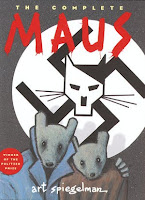
AP mentions several efforts in states and localities, including a Tennessee school board's banning of Art Spiegelman's Maus, a graphic novel about the Holocaust; a Missouri school district's effort to remove such books as Gender Queer, Nobel laureate Toni Morrison's The Bluest Eye and Keise Laymon's memoir Heavy." 

Such efforts have prompted counter-efforts, AP reports: "Two anti-banning initiatives were launched in Pennsylvania," AP reports. "In Kutztown, eighth grader Joslyn Diffenbaugh formed a banned book club last fall that began with a reading of George Orwell's Animal Farm. The Pennridge Improvement Project has started a drive to purchase books that have been removed from schools, including Leslea Newman's Heather has Two Mommies and Kim Johnson's This is My America, and place them in small free libraries around the district."

The AP story concludes with a pictorial list of the top 10 books people wanted removed from schools and libraries in 2020. They include Sherman Aexie's The Absolutely True Diary of a Part-Time Indian, about a Native American teenager; Of Mice and Men, John Steinbeck's novel about migrant farm workers in the Depression, which has been “banned and challenged for racial slurs and racist stereotypes,” showing that intolerance comes from both sides; and Harper Lee's To Kill a Mockingbird, which has caught similar flak.

Tuesday, February 01, 2022

Rural Tenn. advocate says, don't paint locals with a broad brush; support our fight against book banning, she writes

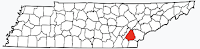
McMinn County, Tennessee, is in the nationwide spotlight after the local school board voted to ban "Maus", a Pulitzer Prize-winning graphic novel about the Holocaust. The school board has been broadly denounced, but so too has the county as a whole. That's unjust, since many locals also object to the ban and are trying to reverse it, writes lifelong McMinn County resident Whitney Kimball Coe for The Daily Yonder. Social media and the mainstream media jumped on the issue after the Jan. 26 vote, and Coe gave an interview with CNN. expressing how many locals were angry about the decision. But many posts still painted Tennesseans with a broad brush.

"Do they think we’re not outraged, too, here in East Tennessee? Do they think we can’t speak up and respond for ourselves? Because let me tell you, I lay awake the night before the CNN interview indulging my own outrage and constructing a commentary that would eviscerate all book ban supporters and signal to the rest of the world that I, too, am pissed off. It would feel good to give into the outrage, the indignation, the snark," Coe writes. "But I let the outrage pass over and through me because I live here. We live here. These are our people, our schools, our kids. We spend our days relying on the trust and goodwill of our neighbors to make a life here. Neil Gaiman doesn’t shop at the Food City downtown. Trevor Noah doesn’t volunteer with the local United Way. CNN isn’t interested in solutions journalism and outrage is where relationships go to die."

McMinn County, Tenn.
(Wikipedia map)
Opportunistic commentary only alienates Tennesseans and makes them more likely to dig their heels in, Coe writes. "If you must write about us, at least give a damn about us. Outrage is the quick and easy response if you’re not committed to the sum of us; that is, if you’re only committed to signaling which side you’re on and don’t really care about communities outside your bubble."

She also notes that book banning, or attempts to do so, are not limited to Tennessee. "The American Library Association says the number of attempts to ban school library books was 67% higher in September 2021 than in September 2020, fueled in large part by conservative activists organizing at a national level with an eye toward influencing local politics," Coe writes. "This isn’t a McMinn County problem or a rural problem. We aren’t a novelty. We sure as hell shouldn’t be the scapegoats for deeper rifts in our national and global fabric."

Coe is vice president of is vice president of national programs for the Center for Rural Strategies, which publishes the Daily Yonder. She also directs the Rural Assembly, a national coalition that supports better policy and more opportunity for rural Americans.