Showing posts with label editorials. Show all posts

Wednesday, March 06, 2024

Rural Texas legislators who opposed governor's push for school vouchers fall to big-spending campaign against them

Texas House roll call board (Texas Tribune/Eddie Gasper)
Texas Gov. Greg Abbott and his Republican allies succeeded in purging at least seven members from the state House in Tuesday's primary elections. Their main targets were rural Republicans who helped defeat Abbott's legislation that would have provided taxpayer support for private education. Now the House will "become more receptive to school vouchers," report Zach Despart and Renzo Downey of the Texas Tribune. But "It was not clear on Tuesday if that effort had paid off," writes David Goodman, Texas bureau chief of The New York Times. Some race are in runoffs.

Abbott's campaign was funded by huge contributions from right-wing interests inside Texas and out of it. Former president Donald Trump and Lt. Gov, Dan Patrick "endorsed challengers in dozens of races citing the incumbents’ disloyalty to the party," the Tribune reports.

The anti-voucher incumbents were targets of heavy advertising that put them in "Wanted" posters and called them "liberals" but rarely if ever mentioned the school issue. One of them, Rep. Glenn Rogers, said in a column in The Community News of Aledo that "Abbott has defiled the Office of Governor by creating and repeating blatant lies about me and my House colleagues, those who took a stand for our public schools. I stood by the governor on all his legislative priorities but just one, school vouchers. For just one disagreement, and for a $6 million check from Jeff Yass, a Pennsylvanian TikTok investor, and voucher vendor, Abbott went scorched earth against rural Texas and the representatives who did their jobs -- representing their districts."

Before the election, The Community News published an interview with Rogers, and said it had twice given opponent Michael Olcott the same opportunity but received no response. The weekly didn't endorse in the race, but in a Feb. 21 column, Editor-Publisher Randy Keck said anti-Rogers mailers lied about his voting record. "You may be reading this thinking I am advocating to vote for Rogers, but I’m not," he wrote. "You should vote based on who you think would best represent you in the Texas House of Representatives. But you should not vote based on the character assassination of a good man."

Thursday, October 19, 2023

Berkshire Eagle, Seven Days, Vermont Standard, Nantucket paper big rural winners in New England newspaper awards

Slide from awards presentation

The Berkshire Eagle
scored big in the New England Newspaper and Press Association awards, which were announced Thursday during the group's semiannual online conference.

The Eagle, of Pittsfield, Mass., was judged the best small daily (less than 9,000 print circulation), with The Keene Sentinel of New Hampshire and the Record Journal of Meriden, Conn., as runners-up. 

The Eagle was judged to have the best editorial, "chastising the Catholic diocese in western Massachusetts for trying to subpoena a reporter's notes which would reveal confidential sources" and calling on legislators to pass a shield law like most other states have to protect reporters. 

And the Eagle won two of NENPA's Publick Occurrences awards, named for America's first newspaper and honoring 13 pieces that were judged to be the best in New England journalism in the past year. The rural or rural-impact winners included the Eagle's reports on nursing homes and hazardous-materials shipments on trains that go through its region; projects by Seven Days of Burlington, Vermont, on child care and the pandemic's impact on housing in the largely rural state; the Lewiston Sun Journal's "Homeless in Maine" series; the Concord Monitor's series on police spending and policies all over New Hampshire; and CT Mirror's "Elder Care Reckoning" series that prompted reforms in Connecticut.

The best small weekly newspaper in New England was judged to be the Vermont Standard of Woodstock, with runners-up the Milton Times of Massachusetts and the St. Albans Messenger of Vermont. The best large weekly (over 4,000 circ.) was the Inquirer and Mirror of Nantucket, Mass.; runners-up were the Martha's Vineyard Times and sister papers in Maine, the Mt. Desert Islander of Bar Harbor the Ellsworth American. The best mid-size daily (circ. 9,000-20,000) was The Day of New London, Conn., with Massachusetts' Daily Hampshire Gazette of Northampton and the Greenfield Recorder runners-up. The Concord Monitor was judged best small Sunday paper.

Wednesday, August 30, 2023

Call for proposals focusing on 'Strengthening Community News' from Intl. Society of Weekly Newspaper Editors

The International Society of Weekly Newspaper Editors is accepting proposals for its 2024 ISWNE/Huck Boyd Competition focused on “Strengthening Community News.” Proposals should provide "insight and guidance on general issues and/or everyday problems that confront community newspapers and their newsrooms, with particular reference to weekly general-interest publications with circulations under 10,000." Proposal submissions are due via email on Nov. 2. 

This competition builds on the Huck Boyd Center’s former “Newspapers and Community-Building Symposium,” co-sponsored for 20 years by the National Newspaper Association and its foundation. According to information from ISWNE and the Huck Boyd Center, "the competition’s ultimate goal is to engage academicians and community newspaper journalists in productive conversations about community journalism.”

ISWNE hotline access is available for society members and non-members. Non-members may request temporary access by contacting Executive Director Chad Stebbins at stebbins-c@mssu.edu. Hotline discussions feature topics of interest to weekly newsrooms and could be used to focus potential proposals.

Possible topics "could include legal, political, or ethical issues; alternative print/digital integration models; or surveys to determine successful techniques for staff recruitment/retention, for boosting online presence, or to elicit best practices for special editions," according to the ISWNE and Huck Boyd Center information. 

One paper will be selected by a panel of working and retired community journalists for presentation at the 2024 ISWNE conference scheduled for June or July 2024 in Toronto, Canada.  ISWNE and the ISWNE Foundation will provide the author with a complementary conference registration and a partial subsidy for travel. 

Thursday, August 03, 2023

'We often stopped bad things from happening . . . not because we're so powerful. Information is powerful.'

Canadian Record Publisher Laurie Ezell Brown talked with Judy Woodruff of PBS. (PBS image)
By Al Cross
Director and Professor, Institute for Rural Journalism and Community Issues, University of Kentucky

One of the best broadcast reports about the struggles of rural news media appeared Wednesday night on the PBS NewsHour, as senior correspondent Judy Woodruff used The Canadian Record of Texas as her object example. The 13½-minute story provided an update on Publisher Laurie Ezzell Brown's efforts to keep the paper alive after she stopped printing in March, but more importantly, it delivered some deep, often personal insights into the value of reliable local news.

On its website and Facebook, the Record "is a shell of what it was . . . something residents say had held them together through good times and bad," Woodruff reports. Brown told Woodruff, "We're sort of checking that pulse, I think, trying to decide what's the best way to communcate. That said, it's not a great revenue model, and I've got people working here who are not getting paychecks right now. I'm not getting a paycheck."

But as Brown keeps looking for a new owner, doing local journalism is no longer about making money, if it ever was: "Information is the key to our democracy: facts, truth, good information. And also just that conversation that we, I think, enable. It's essential. So I worry all the time about it. I want deeply to continue the life of The Canadian Record. I am just not sure how to do it."

The story doesn't mention the Record's investigative reporting that has won it awards, other than this quote from Brown: "We have sometimes helped good things happen and we often stopped bad things from happening. And it's not because we're so powerful. It's because information is powerful."

The testimonials of the newspaper's readers say, explicitly and implicitly, what has been lost. Rancher Steve Rader told Woodruff, "It's almost like a death in the family. We don't talk about it a lot. . . . They celebrated our successes and our tough times." Rader choked up as he said that, then told Woodruff that he didn't always agree with Brown's editorials, but "She always made me think. . . . We need to have other opinions. That's our strength of America. Thank God for that."

City Council Member Wendie Cook noted that Canadian, population 2,300, is about to have a referendum on a bond issue, and "I have a concern about who is telling the critical pieces of information. . . . Without The Canadian Record, I fear that our voter information is coming from our stuffed mailboxes, from candidates or from PACs, who by their very nature are providing biased material."

Water-well driller John Julian put the lie to the notion that in a county of 3,400 people, everyone knows everyone else: "If there's a name pops up on the ballot for one of the elections, and you don't know them, you really don't have a means of finding out. . . . I don't like to be in that position. If I make a vote, I want it to be an informed, educated vote." He said that Hemphill County, without the Record, "It's just got kind of a hole in it, kind of a vacancy right now."

Woodruff got national perspective from Johanna Dunaway, director of the Institute for Democracy, Journalism and Citizenship at Syracuse University, who told her, "Local news is sort of what reminds people what they have in common, both their challenges and their shared identities, their shared culture, their shared community."

Brown said at last month's National Summit on Journalism in Rural America that she doesn't really like Facebook, but "We've gotten more and more requests from businesses to advertise, to put ads on our web page and Facebook page, because they see the traffic it's getting," and the limited publication is filling a need: "Things happen. There have been storms here and tornadoes and events like that that you just can't ignore. They're happening. We need to cover them. People look to us for information."

The Record published its annual high-school graduation edition, with photos of graduates, as a PDF. But news comes in "shorter stories, less artfully written, with sparser detail," Brown said. "Our reach grows daily and kind of startlingly, but we turn out news with less substance and with far less satisfaction." She said residents are "getting the essential news. What they're not getting is the heart and soul of a newspaper, and they miss it, and I don't know how to fill that void right now." Brown said at the June 7 summit that she had written only one online-only editorial, soon after she stopped printing, and "I have some things to say. We also find that we're pretty busy just cobbling together the news right now." For more on the Record, click here.

Wednesday, August 02, 2023

Opinion: Russia vs. Ukraine has become 'a war over food'; Ukraine's Danube port is attacked, raising more food worries

By Art Cullen
Storm Lake (Iowa) Times Pilot

Russia’s reprehensible attacks on Ukraine’s food and agriculture systems will backfire, as they will create even more misery among the world’s poor and hungry. Russia pulled out of an agreement brokered by Turkey through the United Nations to allow grain shipments to sail the Black Sea undisturbed. It followed by bombing grain stocks, the port city of Odesa and ports along the Danube near Romania.

UPDATE: Russia attacked Ukraine's Danube River port of Izmail and destroyed port facilities and a grain silo, "raising further concerns over global food supplies," The Financial Times reports.

Art Cullen
Ukraine is a major grain and oilseed exporter to Europe, the Middle East, Africa and China. The attacks immediately drove wheat prices up 17%, and other commodities followed. Russia claimed that it would provide grain to nations in need, but markets obviously know better.

If Russia thought it could deny Ukraine revenue, it already is a welfare state of NATO. Bordering nations like Romania, whose farmers were getting edgy over Ukraine grain flooding their markets, will steel their resolve to unite against Russia. It’s yet another miscalculation by the Kremlin.

It will increase commodity prices for U.S. farmers and complicate efforts to keep inflation in check.

China must be watching this warily. Beset by drought and short wheat yields, it can scarcely afford far higher grain prices. Russian attempts to hurt Ukraine will hurt China, Moscow’s main benefactor. This could be what it takes for China to put brakes on Russia’s lunacy.

The whole episode should remind us how food and agriculture play a critical role in security and geopolitics. We underestimate the issue’s importance at our peril. Russia has become a major grain exporter alongside Ukraine over the past 25 years. One reason for the war is for Russia to consolidate its hold over food exports as its leverage with fossil fuels rapidly declines. The United States should recognize it and be in a position to organize a response that actually fights world hunger. We should be urgently engaging with those affected by Russia’s ill-conceived attacks on food. If we were, it likely would bring an end to the war. We continue to pretend that it is about something else as we ship more cluster bombs. It is not about pride or sentimentality for a lost empire. It is about food. They are attacking grain elevators. Can we not see that?

Tuesday, August 01, 2023

Uvalde Leader-News Publisher Craig Garnett wins Gish Award for courage, integrity and tenacity in rural journalism

Uvalde Leader-News Publisher Craig Garnett (OPA photo)
Craig Garnett, publisher of the Uvalde Leader-News in southwest Texas, is the winner of the 2023 Tom and Pat Gish Award presented by the Institute for Rural Journalism and Community Issues at the University of Kentucky.

Garnett owns the twice-weekly newspaper that continues to cover, and contend with, the aftermath of the May 2022 school shooting in which 19 children and two teachers died.

“The award recognizes not only Craig’s courageous coverage and commentary about the tragedy, but his longtime willingness to tell hard truths about things that matter in Uvalde County,” said Al Cross, director of the Institute and extension professor of journalism.
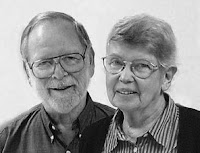
Tom and Pat Gish
The award is named for the couple who published The Mountain Eagle in Whitesburg, Kentucky, for more than 50 years. Their son and successor, Ben Gish, is on the award selection committee. He said of Garnett and the Leader-News, “It’s one thing to read national news accounts about law enforcement not moving quickly enough to save the lives of many of the victims, but it’s entirely something else to read the local newspaper’s far deeper accounts of that continuing controversy. . . . The Leader-News does not hesitate when it comes to letting family members of the victims have their say, nor does it shy away from printing the responses of those whose actions, or lack thereof, are being questioned.”

In a column shortly after the shooting, Garnett wrote that a regional police official "could not answer why it took an hour to end the attack" and quoted him: "It is a complex situation. They are measuring; they are measuring." He wrote, "The question is how much measuring is permissible, while children are being murdered. Or perhaps they were already gone. It pains to write these words of criticism about law enforcement, but parents and the community have the right to know. They must be told why police, whom parents at the scene begged to go in and save their children, failed to act. They have to know, to ever begin to heal."

He concluded, "There is a final question that no one will ever adequately answer. It came on Thursday in the form of a text message from our reporter, Kimberly Rubio, whose fourth-grader Lexi did not come home that day: 'Why would someone hurt my baby, Craig?'"

Rubio, now in the newspaper’s advertising department, praised Garnett for the paper’s family atmosphere and encouraging environment: “He is gifted in seeing a person’s potential. He is a teacher, able to guide us as we harness that potential. He believes in us, and we learn to believe in ourselves. I have the same faith in him and his writing staff.”

Garnett spent hours “sitting with families who lost children, siblings, friends; interviewing survivors, teachers and students, about their experience,” Leader-News Managing Editor Meghann Garcia said in nominating him. She said he has made a “dogged pursuit to learn how so many things went wrong that day, how every single fail-safe failed. . . . He has done all of this without a break from the office, from the work.”

In an editorial a month after the shooting, Garnett named names and was blunt: “No mass school shooting in the United States has ended with such glaring failures in both the law enforcement response and school district security. . . . Neither [school] Police Chief Pete Arredondo, acting city chief Mariano Pargas, Uvalde County Sheriff Ruben Nolasco nor any state or federal officer among the 376 responders to the scene was willing to take the helm of what was clearly a rudderless ship cast into a hurricane.”

A week later, another Garnett piece endorsing more gun control concluded: “I am not about to surrender my guns, and they are many, but I challenge you to give me one good reason (and please not the “slippery slope” argument that did not come to pass when assault weapons were banned) why a teenager should have the firepower to stand down 376 lawmen. If disturbed young men are going to commit horrific crimes with firearms, why not take the most devastating amplifier out of the mass shooting equation?”
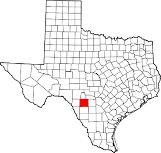
Uvalde County (Wikipedia map)
Criticism of local law enforcement and support for more gun control didn’t sit well with some people in the town of 15,000 and county of 25,000. Garnett said at a meeting of the newspaper association in Oklahoma, his native state, that by the end of the day of the shooting, “The school and police agencies that the newspaper had a good relationship with all clammed up. A year later we still can’t get answers. We have filed about 10 to 15 requests with the school district and still can’t get any answers.”

Garcia began her nomination of Garnett with the story of a call from a reader who objected to a picture of “a local pediatrician, outspoken in the shooting aftermath, at the White House, in a commanding photo with President Joe Biden and Vice President Kamala Harris.” The caller said Garnett had “better not acknowledge Biden's presidency again if he wanted to keep the caller's subscription,” Garcia wrote. “The call was mild compared to what the newspaper staff had fielded over previous weeks . . . . Craig immediately turned to his typewriter to work on a subscription refund check and your-wish-is-now-granted letter.”

Garcia continued, “It wasn't the first time our coverage, or Craig's politics, went against the grain.” Garnett had editorialized against the Iraq War, and opposed “a water pipeline that would take local water, dearly needed for agriculture, a mainstay of the area economy, and funnel it to San Antonio,” she wrote. And four years before the shooting, he opposed the idea of a separate school police force, which botched the response to the shooting. The next year, the paper a guest-written series of stories about the local Ku Klux Klan chapter of 100 years before.

“Craig has never been afraid of taking a stand or telling the news, despite how unpopular it might be with subscribers and advertisers, who are also often his friends,” Garcia wrote. And he has used his own family’s troubling experience as an example to give hope to others.

His wife, Melissa Garnett, told the Gish Award selection committee, “One of his best columns was about our son’s process of recovery from drugs and alcohol. That took courage. He must have hit all the right notes, as the response was great – he had taken the bold step of using his pain of an addicted child to remove the stigma of talking about addiction.”

The column celebrated their son’s year-plus of sobriety and concluded, “Far too many addicts today, especially those in thrall to opioids, don’t get Logan’s chance at recovery. The steps that will lead them from a world of pain and failure remain stubbornly distant and daily receding until hope is lost. We should do all we can to help them discover a path because inside every addict lives someone’s treasured child, father, husband, brother or friend.”

Garnett “and his paper have been a continuing source of strength in that community and beyond,” said selection committee member Bill Bishop, founding editor of The Daily Yonder, a national rural-news publication and a former weekly editor in Bastrop, Texas, and columnist for the Austin American-Statesman.

Garnett, who earned an economics degree from Southern Methodist University, joined the Fort Worth Star-Telegram in 1977, moved to the Kansas City Star in 1978, became general manager of the Leader-News in 1982 and owner and publisher in 1989. Under his ownership, the newspaper has won many awards.

“I am extremely honored to receive the Gish Award,” Garnett said. “And I am deeply humbled by the support from coworkers and friends in the industry who thought my work worthy of such recognition.”

The Institute for Rural Journalism (publisher of The Rural Blog) will present the Gish Award to Craig Garnett in Texas, at a time and place to be determined. UPDATE, Dec. 17: The award will be presented Feb. 29 at the University of Texas during a symposium, "Courage, Tenacity, Integrity and Innovation in Rural Journalism," sponsored by the Institute, the Texas Center for Community Journalism at Tarleton State University and The Center for Ethical Leadership in Media in the UT School of Journalism and Media.

Garnett will be recognized Oct. 26 in Lexington, Ky., at the Institute’s annual Al Smith Awards Dinner, with USA Today Washington Bureau Chief Susan Page as the keynote speaker. At that event, Ben Gish and Mountain Eagle reporter Sam Adams will receive the Al Smith Award for public service through community journalism by Kentuckians.

Friday, July 28, 2023

Warren Wheat, who showed how and why small daily newspapers can make political endorsements, dies at 83

Warren Wheat, who helped start USA Today and ended his career as editor of a small daily newspaper that took the unusual step of endorsing candidates in almost every local election, died Sunday in Lexington, Ky. He was 83.

He retired as editor of The News-Enterprise in Elizabethtown, Ky., in 2009 after 55 years as a reporter and editor at newspapers in Kentucky, Ohio, Washington, D.C., and South Carolina. He was Columbus bureau chief for The Cincinnati Enquirer, worked in the Enquirer's and Gannett News Service's Washington bureaus, and was part of the initial team that launched USA Today in 1982, serving as deputy Washington editor and later reader editor for the editorial page. He was governance and national editor at The State in Columbia, S.C., before becoming editor in Elizabethtown in 2002.

The page on which Wheat began election endorsements; click to enlarge
Soon after he arrived, Wheat concluded that the newspaper should make endorsements in local elections, because growth in Hardin County had limited citizens' personal contact with candidates and created more partisan competition. He told readers, “It would be a lot more comfortable to avoid controversy by sitting on the sidelines during this election season. But members of the editorial board felt it is this newspaper’s duty and responsibility to fulfill its role as a voice in the community we serve by providing leadership and guidance for our readers.” The News-Enterprise gradually expanded the number of races in which it made endorsements, including even those with small constituencies, such as school-board member. But as its staff shrank after he left, it was less able to do that, and finally stopped.

A brief service for Wheat will be held at 11 a.m. Saturday, July 29, at First United Methodist Church in downtown Lexington. Pictures will be on display at 10:30 a.m. The family requests that instead of flowers, donations be made to the scholarship established in Wheat's honor at the journalism school of his alma mater, the University of Kentucky, at this site, or by checks to College of Communication and Information, Attn: Director of Philanthropy, 308 Lucille Little Library, Lexington KY 40506.

Monday, July 10, 2023

Taos News, N'West Iowa Review, Antelope County News of Nebraska are top winners in NNA news-editorial contest

Current print edition of the Taos News
The Taos News of New Mexico, the N'West Iowa Review of Sheldon and the Antelope County News of Nebraska were among winners of awards for general editorial excellence in the National Newspaper Association Foundation's annual Better Newspaper Contest, announced Monday.

The Taos News won among weeklies with circulations of 6,000 to 9,999. The Review won the 3,000-5,999 class, and the Antelope County News won among those with circulation under 3,000. The Park Cities People of Dallas won the 10,000-and-up class and the Sioux City Journal won the daily class. The Wyoming Tribune Eagle of Cheyenne won second place among dailies. Other second placers were the Idaho Mountain Express of Ketchum, 10,000 and up; the Jackson Hole News & Guide of Jackson, Wyo., 6,000-9,999; The Highlands Current of Cold Spring, N,Y. (a reader-funded nonprofit), 3,000-5,999; and the News Letter Journal of Newcastle, Wyo., under 3,000.

The Highlands Current won NNA''s Civic-Community Service Award for the second year in a row, for a five-part series on the history of African Americans in the Hudson Highlands; the Taos News was runner-up.

The Tribune Eagle won first place among dailies for best local-government reporting. Weekly winners were Preston Hollow People of Dallas, 15,000 and up; the News & Guide, 6,000-14,999; The Standard Banner of Jefferson City, Tenn., 4,000-5,999; The Ark of Tiburon, Calif., which won first, second and third places in the 2,000-3,999 class; and the Southwest Ledger of Elgin, Okla., under 2,000.

The Uvalde Leader-News of Texas won Best Editorial among 2,000-3,999-circulation weeklies, for "Delay may be darkest hour," about law-enforcement officers' delay in dealing with the shooter who killed 19 children at Robb Elementary School last May. Other weekly editorial first places were The Examiner of Beaumont, Texas, 10,000-14,999; the Taos News, 6,000-9,999; the Review, 4,000-5,999; and the Marietta Monitor of Oklahoma, under 2,000.

The Wyoming Truth of Laramie won among dailies for best investigative or in-depth story or series. Weekly winners were The Maine Monitor, 10,000 circ. and up; The Highlands Current, 3,000-9,999; and the Manchester Cricket of Massachusetts, under 3,000.

The Taos News was judged to have the best website. The News & Guide won first place in social-media journalism, and the Casa Grade Dispatch of Arizona was second. The Antelope County News won first prize for best use of social media for breaking news, and the Cedar County News of Hartington, Neb., was second.

The winners will be recognized at a ceremony Sept. 30 during NNA’s annual convention in Washington, D.C. Registration to to attend the awards is here. NNA said the contest received 1,312 entries.

Wednesday, July 05, 2023

Without print journalism, communities will be fragmented and uninformed, award-winning Minnesota editor says

Reed Anfinson holds a freshly printed copy of the Swift County Monitor-News. (Associated Press photo by David Goldman)
By Reed Anfinson
Swift County Monitor-News, Benson, Minn.

This column is based on the speech given on acceptance of the Eugene Cervi Award at the annual meeting of the International Society of Weekly Newspaper Editors in Reno, Nevada, June 24.

There is no doubt that if print journalism disappears, so will a citizen’s focus on and knowledge of local civic news. Left to self-motivation to seek out news on the internet, many will put it aside for later, never to return to it.

Their news consumption will become infrequent, scattered to those times when they may be directly affected by the action of a council, county board, zoning committee, or school district. But then putting it aside won’t matter because it won’t exist – no one will be left covering local news.

In America, 76% of the communities are under 5,000 population – more than 14,600. These communities most likely cannot sustain a news operation based on digital revenue alone. We don’t have the views or advertising to generate anywhere near the income needed.

Despite the loss of nearly 2,500 newspapers in America, despite the loss of tens of thousands of reporters, and despite the inability of many quality internet news sites to make a profit leading them to cut staff or close, we still hear and read the overly optimistic promises of a rich journalistic internet world.

The lies are exposed in the reality of steadily declining coverage of public bodies and life in our communities. 

We’ve been told that it can be folly to “romanticize print as somehow superior to digital-only” news. We subscribe more to a famous quote often attributed to Albert Einstein: “The definition of insanity is doing the same thing over and over and expecting different results.”

For two decades, we’ve been promised a revolution of civic participation built on the broad, deep knowledge citizens will gain from online reporting, that it will be a participatory process where we educate one another. The reality of the past two decades has exposed the faults in this thinking.

What we have experienced is an internet world that has fractured society into warring social and political groups no longer willing agree to disagree, but viciously attacking one another. Death threats, shunning, misinformation, and ridicule are more common than harmony, compromise, and enlightenment.

Lies gain power, and the truth is harder to find. With the coming explosion of artificial intelligence software that allows anyone to craft eye-catching and reasonably sounding internet stories and videos that are entirely false or misleading, our ability to sort truth from lie will become increasingly challenging.

Print’s loss matters; the impact of its absence visible. Rather than a representative democracy strengthened by more knowledge on the internet, we find wherever a newspaper has disappeared the opposite is happening. Where a newspaper closes fewer people vote, fewer people run for office, more incumbents are re-elected, people become more rigid in their voting, sticking to one party or the other, and malfeasance in office increases.

It is visible in the empty reporter desks in newsrooms where the print product has declined as newspapers transition to digital only. What isn’t visible, at first, is the impact of the lost reporting.

Five underlying qualities of journalism give community newspapers equal standing with the government, business, and social powers that make up a community:
  • Survey after survey shows that the local community newspaper is the most trusted news source. We are trusted because people know us and feel they can give us direct feedback if they think we are unfair or slanted in the news we write.
  • Our financial strength, now significantly weakened, gave us the resources to challenge power when it would frustrate the public’s right to know. Individuals lack the interest and finances to challenge government officials and attorneys.
  • We show up – day after day, month after month, year after year. The public officials know that we will write stories about their actions or inaction at every meeting. We will follow up, reminding citizens of past successes and misdeeds.
  • Our knowledge of the laws that govern public officials, such as the Minnesota Open Meeting law, ensures transparency and accountability. Citizens lack this knowledge allowing them to be deceived in their efforts to attend meetings or gather public information.
  • Perhaps our most powerful attribute today is our physical presence.  Newspapers have a deep reach among citizens in their communities. Elected leaders know that a story printed in the newspaper will circulate throughout the towns and rural areas. It is found on the store counter, around the house, in the library, and in the café every day of the week – its headlines, advertising, and photos catch your eye. Headlines in print reach out to everyone who passes by. People who don’t subscribe still see what is happening in their community at no charge. Without the print newspaper, many would never see those headlines or stories.
Nothing replaces the community newspaper’s ability to hold those in power accountable. But as our financial strength, staff with knowledge of laws protecting citizen rights, persistent coverage, and physical presence erode, American representative democracy is weakened.

As they have lost print subscribers and advertising dollars, some newspapers increasingly focus on their digital products. They put up paywalls and, in the process, exclude most of their local residents from the news of their community.

If the news that binds us together in common purpose is gone, if the stories we share about our fellow citizens disappear, our sense of community weakens. When we don’t feel shared responsibility, the vital work that improves our schools, healthcare, public safety, recreational facilities, and cultural experiences fades. These aren’t exaggerations; they are realities based on what happens in communities that lost their newspaper.

At 95% of the public meetings we cover, we are the only person in the room who isn’t an elected official or staff. Though there is an online link to the meeting, no one tunes in. Without a community journalist in the room, the stories of your local government won’t be told.

A newspaper’s physical presence is a constant reminder that there is news you should be paying attention to in your community.

When you sit down with a print newspaper, you are more focused than you are online, where you suddenly find yourself on social media, shopping, or skimming sites for entertainment.

Print is patient. It is present. It is a physical reminder of community. It is community pride and spirit. Online, it loses those unique qualities that unite us with a common identity. Print is local.

Newspapers are a public good that deserves public support. Urge your members of Congress and the Minnesota Legislature to support legislation that helps finance their future.

Wednesday, June 28, 2023

News-media news: Future Journalists of America in Oregon; Community Newspaper Week in Nebraska; a job posting . . .

Senior Adri Jolie: “FJA has given me the opportunity
to become a better journalist and to find self-expression
while self-reflecting on the type of media I consume.” 
High-school students in central Oregon have completed their first year in the Future Journalists of America program hosted by The Bulletin in Bend and created by the Fund for Oregon Rural Journalism, a nonprofit founded by EO Media Group, the newspaper's parent company. "The nonprofit’s mission is to stem the decline in Oregon journalism through innovative programming and advocacy," the Bulletin's Jody Lawrence-Turner reports. The teens "learned how to practice quality journalism in rural and metro newsrooms," and gained media literacy through lessons provided by The News Literacy Project, "and designed and launched a digital publication where they’ve published dozens of stories and podcasts," the Bulletin reports. "The two-year program not only inspires youth to pursue a career in journalism, it’s also a path to increasing newsroom diversity and sharing skills for sustaining a digital publication. It demonstrates journalism is evolving to adapt to the digital age, not dying, and there are multiple paths to a career in journalism." The three graduating seniors in the program will study journalism in college. Of the 16 active in the program, four were students of color.

This is Community Newspaper Week in Nebraska, and the McCook Gazette took the opportunity to remind its readers why local journalism is important: "Newspapers provide small communities with a dedicated source of local news, promote community engagement and unity, preserve local history, support local businesses, and ensure that information reaches all residents. Their role in keeping communities informed, connected, and empowered cannot be overstated."

The bipartisan Protect Reporters from Exploitive State Spying (PRESS) Act has been reintroduced in Congress, CNN reports: "The legislation, which passed the House last year but did not get a vote in the Senate, would safeguard journalists in two important ways. First, it would prevent the government from compelling reporters from being forced to disclose their sources. Second, it would ensure that important data held by a third party, such as a phone or internet company, cannot be seized without notice and providing the ability to challenge the move in court."

Foothills Forum, the foundation that supports reporting at the Rappahannock News in northern Virginia, is seeking a full-time general-assignment reporter, "which will be a significant addition to their current small group of part-time contributors," News Publisher Dennis Brack tells The Rural Blog. Click here for the job posting. Here's a profile of the weekly's new editor.

Tuesday, June 27, 2023

Oregon editor wins weekly editors' top writing award; other winners' topics include secrecy, guns, books, Covid, racism

Steve Bagwell
Steve Bagwell, editorial-page editor of The News-Register in McMinnville, Oregon, won the 2023 Golden Quill Award for editorial writing from the International Society of Weekly Newspaper Editors, which held its annual conference at the University of Nevada, Reno, last week.

Bagwell's editorial hoisted Yamhill County Commissioner Lindsay Berschauer by her own petard: words she used to get elected in 2020, promising to make “helping working families” and “protecting working-class families” her top priorities. She and her mentor on the three-member commission, Mary Starrett, refused to accept $68,644 from the state for substance-abuse prevention, rural health care and vaccinations, objecting to a standard clause that "commits Oregon counties to supporting life- and health-saving vaccinations, most of which target dangerous diseases like polio and diphtheria," Bagwell wrote. "The counties are left to decide for themselves how deeply that commitment needs to run."

Immunization services "would seem to most benefit working-class families from rural areas where private health services may not be as affordable and accessible," Bagwell wrote. "But Berschauer and Starrett have displayed almost cult-like devotion to the unorthodox beliefs of the far-right fringe, leading them to repeatedly honor personal ideological purity over the broader interests of ordinary citizens. . . . We take vehement exception to their repeated efforts to impose their alarmist screeds on the rest of us, particularly when those views lack any vestige of factual or scientific grounding. We find it even more objectionable when they prove willing to incur materially harmful collateral damage on their self-proclaimed rural working-class constituency in the process, by thwarting aid having nothing to do with immunization against communicable disease.

To close the editorial, Bagwell quoted a post-election statement from Bershauer: “Too often, those in government operate in a bubble. They fail to understand the impact of their decisions on working families, and that erodes taxpayer trust.” He concluded, “Well, we certainly have to agree with her there. We couldn’t have said it better.”

Bagwell headed the "Golden Dozen" of editorial awards from ISWNE. Two of the 11 others won for editorials about government secrecy. Outgoing ISWNE President Gordon Cameron, group managing editor of the Ancaster News in Hamilton, Ontario, won for an editorial lampooning a local school board for keepign secret why it had sanctioned a trustee for the thid time in the current term; and Bill Schanen III of the Ozaukee Press in Port Washington, Wis., for an editorial taking the city council to task for keeping secret the identity of a developer who was making a controversial proposal.

Other winners in the Golden Dozen and their topics, in alphabetical order, were:

  • Tamara Botting of The Sachem in Hamilton, Ontario, who held the local health department accountable with a deeply reported column about how and why it had given her the wrong information about self-isolation after she was exposed to a person with Covid: "People could have been putting off getting tested ... because of misinformation."
  • Melissa Hale-Spencer of The Altamont Enterprise in New York, for a long piece about the history of racism in local schools, prompted by the latest incident, ending with "an appeal toward healing. This is empathetic local journalism at its best," wrote the judge, KUNR Manager Brian Duggan, former executive editor of the Reno Gazette-Journal.
  • Molly McRoberts of the Potter County News in Gettysburg, S.D., for a short editorial about the Texas school shooting, with this line: "There’s talk after these shootings happen, but rarely change. Some say it’s a mental-health issue. Others say it’s a gun-accessibility issue. It looks like there’s a chance it could be both. And again, it does seem like there could be some discussion."
  • Leonard Sparks of The Highland Current in Cold Spring, New York, for a piece titled "The Covid shrug," reflecting on how the pandemic had changed him, his neighbors and their attitudes, and how it had entered a new phase with vaccines that prevent hospitalization for the disease.
  • Lisha Van Nieuwenhove of The Uxbridge Cosmos in Ontario, for an editorial titled "Share the freakin' road," about the need to be patient with farming equipment at harvest time, sparked by an accident in front of her husband's family farm.
  • Alan Wartes of the Gunnison Country Times in Colorado, for an editorial about citizen's plea to move a sexually themed book from the young-adult section of the libary to the adult section, and the reaction. "Book banning is a bad idea. Period," he wrote. "But so is attacking the motives and character of someone who simply sees an issue differently than you do with harsh and unfounded rhetoric."
  • Peter Weinschenk of The Record-Review in Abbotsford, Wis., for an editorial driving home the findings of the newspaper's investigation of the Marathon County court system, which found that the courts are overwhelmed by poor people largely arrested by Wausau police "and without enough public defenders to represent them. . . . Let us drive on slushy, potholed roads. Let us check out ragged, old books from the library. Let our park buildings go unpainted. Let zoning requests gather dust. But don’t make us live without justice. That is the bedrock of our civilization and should be our first priority."
  • Brian Wilson, news editor of The Star News in Medford, Wis., for a column urging readers to look past the sensational murder of a 10-year-old girl and think about the need for mental-health services that may have prevented it.
  • Geoffrey Woehlk, news editor of The Maryville Forum in Missouri, for a column admonishing local citizens who harshly criticize public officials at meetings: "Why do school board members even want to be school board members? Who would want to be a superintendent? Or a tourism committee member? Or a city manager? Or a teacher? Why subject yourself to the abuse?"

Sunday, June 18, 2023

North Country Public Radio wins 3 Sigma Delta Chi awards; coverage of wildfires, prisons, Uvalde shooting also win

A disabled mother and daughter in northern New York lived
in this tent and in their car. (North Country Public Radio)
Several of the Sigma Delta Chi Awards for excellence in journalism, announced Saturday night by the Society of Professional Journalists, had rural resonance.

The rural media standout was North Country Public Radio, based in Canton, the seat of St. Lawrence County, New York. Its report on affordable housing, or the lack of it, won the award for public service in radio, and its report on uninspected housing for dairy workers won the award for small-market radio feature reporting. NCPR also won the contest's new award for regional political reporting with its profile of U.S. Rep. Elise Stefanik, chair of the House Republican Conference, whose district coves most of NCPR's coverage area, where it has 33 transmitters.

A prison in rural Illinois was the topic of "How the newest federal prison became one of the deadliest," a two-part story by NPR and The Marshall Project, which advocates criminal-justice reform. The package won the award for radio investigative reporting. The Intercept's five-part report on the effect of global warming and climate change on prisons and inmates won the award for science, environment or climate reporting.

Coverage of two major wildfires won awards. CBS's "60 Minutes" won the award for television investgative reporting for “What Happened at Grizzly Flats,” a California town destroyed by a mismanaged forest ifre; and KUSA-TV of Denver won the award for TV documentaries in large markets for “The story behind the Marshall Fire” near Boulder. 

Also in broadcasting, Virginia Public Media won the award for small-market television feature reporting for its story on black descendants of Thomas Jefferson; Scripps News and the Center for Investigative Reporting won the award for narrative podcast or radio documentary for their six-part "Inside the global fight for white power;" and NPR won the radio feature reporting award for interviews with the mother of one of the victims of the 2012 Sandy Hook, Conn., school shooting.

Journalism about the mass shooting at Robb Elementary School in Uvalde, Texas, last spring, received two SDX awards. KPRC-TV in Houston won for deadline reporting, and the San Antonio Express-News won the large-market editorial award for its "Standing with Uvalde" series. David Plazas of The Tennessean won the smaller-market award for a collection of editorials. Jake May of the Flint Journal was a double winner for feature photo and small-circulation breaking-news photo.

Other awards of general interest included:
Fact checking: Glenn Kessler of The Washington Post for "The truth about Hunter Biden."
Washington correspondence: Nick Grube of Honolulu Civil Beat, for coverage of Hawaii's congressional delegation.
Editorial cartooning: Michael Ramirez, Las Vegas Review-Journal (small markets), and Gary Markstein, Creators Syndicate.
Magazine writing: Lizzie Presser of ProPublica and The New York Times Magazine for "I was never ready for this," a profile of a teenager from Copperas Cove, Texas, who became the mother of twins after a judge refused to let her get an abortion.
General column writing: Melinda Henneberger of The Sacramento Bee, for five columns.

Monday, May 22, 2023

In upstate N.Y., people favor solar power but see influx of solar farms as another case of downstate domination

This photo of a solar farm accompanied The Altamont Enterprise's story about the study.

"Upstate New Yorkers, who are otherwise broadly in favor of renewable energy development," oppose utility-scale solar developments in their own communities, reports Noah Zweifel of The Altamont Enterprise, citing a study by the state's Cornell University. The study was published in the journal Rural Sociology.

A survey of more than 400 Upstate residents found that "The factors most correlated with stance on solar development were those that related in some way to sense of place, such as how secure people felt in their own community, how strongly they identify with an upstate point-of-view, and whether they feel their area can compete fairly against other areas for its own interests," Zweifel reports. "In other words, people — in this case mostly older, politically moderate, rural residents — were most reactive to a sense that upstate New York wasn’t getting a fair shake, and that the proliferation of solar facilities in their area is yet another example of upstaters shouldering the burden of downstaters’ needs."

The award-winning Albany County weekly followed up last week with an editorial headlined "Urban and rural: We are one state and must find common ground." After noting the long history of conflicts between Upstate and New York City, it notes, "There is little local benefit from utility-scale solar facilities as they are designed to feed directly into a centralized grid, rather than being redistributed locally to lower local energy bills. The usual benefit a municipality receives from a utility — through tax payments — is circumvented for solar facilities because the state, wanting to encourage solar, has lifted that requirement, letting developers pay far less in payments in lieu of taxes." But the editorial points out that some local governments have required "full tax payments, as they would for any other facility. Further, and more importantly, municipalities can gauge the desires of their own residents to see what resources — whether it be rich farmland or scenic vistas — are commonly viewed as worth preserving and zone accordingly, thus dictating the most suitable places for solar facilities to be built."

Friday, May 19, 2023

Iowa editor reminds pork producers: 'The customer comes first' and Calif. voters say sows need room to turn around

By Art Cullen
Storm Lake (Iowa) Times Pilot

The U.S. Supreme Court cut sows some slack last week, which caused a lot of squealing around Iowa where we forget that the customer comes first.

The high court on a 5-4 vote last Thursday upheld Proposition 12, a 2018 California ballot initiative that drew 63% voter support, demanding that gestating sows be allowed room to turn around. Prop. 12 also called for cage-free poultry production and more space for veal calves.

The lawsuit was brought by the American Farm Bureau Federation and the National Pork Producers Council of Ankeny. They said they would evaluate their next steps.

Next steps should be getting with the program and responding to consumer concerns. . . . The poultry industry largely adapted to cage-free production years ago when McDonald’s demanded it based on consumer preference. The pork industry failed to heed the warnings and chose instead to fight the will of the people of California.

Art Cullen
Iowa is the leading purveyor of pork in the giant California market. The pork complex generally claims the costs of 24-foot gestation stalls will be catastrophic. Meatpackers were somewhat restrained. Hormel, for one, reported that complying with California production standards will have no material effect on the company’s bottom line. Tyson said it will comply.

The California electorate is not 63% liberal. It is a bellwether because of the sheer size of the Golden State economy. Voters were well aware potentially higher pork costs, and they were equally cognizant of threats to animal and human health from piling more livestock on top of more livestock.

Iowans are similarly aware, consistently voting for cleaner water while being rebuffed by legislators and agri-industry. The legislature continues to pass "ag gag" laws because they don’t like the picture of hogs jammed into confinement. They know what their nose tells them — that this is about enough, already. Yet more hogs keep coming.

The court’s ruling will require retrofitting of old sow facilities and will reduce throughput at the margins. It will not put swine feeders on the rocks. It will force the industry to change with consumer demand. We were told that we needed consistent, lean hogs of a certain structure because of consumer taste, when in fact it was to standardize the carcass for more efficient processing.

This is real consumer action at the ballot box. The court challenges the notion that the livestock industry can sneer at regulations and rationalize its excesses.

Not a single independent pork producer will be affected. Whatever is left of them. They did not depend on locking a sow down. They performed husbandry in the farrowing house. That costs more. Lord forbid that a producer with 30 sows might gain a foothold. . . .

Eventually, when the industry gets off its arrogance hangover, it will figure out that the customer is always right. Or, at least, that the Supreme Court has ruled. Let’s get on with raising hogs the way our customers actually want.

Wednesday, April 12, 2023

Opinion: 'The devil is working overtime,' but where, exactly?

"Children are dying from gunfire in school. Waves of refugees uprooted by drought and famine are knocking at the door. And we find ourselves obsessed with drag queens and legislative decorum," Storm Lake Times Pilot Editor Art Cullen writes -- mainly about Iowa's Legislature but with references to smiliar goings-on in other states, in an editorial titled "The devil is working overtime."

Art Cullen
On the day "the Tennessee House expelled two Black representatives for staging a protest from the House well over a refusal by Republicans to consider gun safety laws following a mass shooting in Nashville," Cullen was invited to appear on "The 11th Hour" on MSNBC. Host Stpehanie Rhule "wanted to talk about the crazy things going on in state legislatures in Florida, Iowa and Idaho. The Iowa Legislature has been busy bashing gays and the Pulitzer Prize-winning work of Waterloo native Nikole Hannah-Jones on the history of Blacks in America, The 1619 Project. . . . Pope Francis recently said that gays are not criminals, so why do we have to pass a law to preserve our moral order?"

Cullen writes that he "had just returned from a trip across the Great Plains, where the future of food production is under assault from decades of heat and drought. That’s the issue that nobody really wants to talk about. It cannot get a hearing in Iowa. Although transsexual rights had never been a political issue in Iowa, all the sudden I am on TV talking about it. . . . We did not have the chance to talk about how climate is driving a world food crisis, which drives refugee migration. That’s why Cubans and El Salvadorans are coming to Storm Lake, not because they are protected from being in the presence of gays."

Thursday, March 09, 2023

Sunshine Week begins Sunday; it's a good time to promote journalism as the public's watchdog on governments

Sunshine Week, which promotes open government and the role of the news media in preserving it, begins Sunday, March 12. At a time when trust in news has faded, it's an opportunity for journalists and their paymasters to promote journalism's role as the public's watchdog on government.
 
Sunshine Week was launched in 2005 by the American Society of News Editors, now the News Leaders Association. This year, it has a new partner, the Society of Professional Journalists.

SPJ has long promoted March 16 (a Thursday this year) as Freedom of Information Day because it is the birthday of James Madison, chief author of the First Amendment: "Congress shall make no law respecting an establishment of religion, or prohibiting the free exercise thereof; or abridging the freedom of speech, or of the press; or the right of the people peaceably to assemble, and to petition the government for redress of grievances."

Most of the First Amendment was written to keep government accountable to the people through speech, publication, assembly and petition. Accountability requires transparency, so we can know what government is doing. States and the federal government do that through open-records and open-meetings laws, and those laws are used as much or more by the general public as by journalists.

To deliver such knowledge to the public, NLA and SPJ want as many journalists and news organizations as possible to participate in Sunshine week by doing news stories, editorials, columns, cartoons and graphics and sharing them with contact@sunshineweek.org. You can participate on social media by tweeting @SunshineWeek or using #SunshineWeek.

News stories can explain open-government laws and how to use them, and point out other stories that were made possible by those laws. Editorials and columns can argue for open government but also address citizens' concerns about the news media and encourage letters to the editor, social-media discussions and other dialogue and engagement with the public.

Sunshine Week also encourages news organizations to hold Freedom of Information Day or Sunshine Week events, and has an events calendar for them. If your organization is holding an event and you would like it to appear on the calendar, fill out the interactive form on the Sunshine Week website.

Friday, February 24, 2023

Iowa editor sees a coalition to pass Farm Bill that has more for conservation and avoids cuts in nutrition programs

By Art Cullen
Storm Lake (Iowa) Times Pilot

A new five-year Farm Bill could be one of the rare accomplishments this year from an otherwise deadlocked Congress. Talks are just beginning as House Republicans and Senate Democrats organize their respective agriculture committees. They are starting amicably enough.

Art Cullen
It was not so last time around, when the bill was delayed a couple of years, mainly by House radicals trying to burn down the food-stamp program [officially the Supplemental Nutrition Assistance Program, or SNAP]. House Agriculture Committee Chair G.T. Thompson, R-Pa., and Ranking Member David Scott, D-Ga., both come from purple districts. Thompson is defending nutrition programs against Republican assaults, and last week brushed off suggestions of new restrictions on SNAP benefits. He did criticize a Biden administration expansion of benefits.

Thompson said his priority is to strengthen crop insurance, as half the corn growers in his state don’t buy in. He’s looking to sweeten that pot.

Senate Ag Committee Chair Debbie Stabenow, D-Mich., puts conservation at the center of the discussion and, of course, defending nutrition program from cuts. Their common interests may result in one of the best farm bills in history for conservation and food security.

The main rap on Agriculture Secretary Tom Vilsack is that he is too cozy with agribusiness. But he managed to assemble a “climate-smart ag” coalition that includes titans like Cargill, ADM and Tyson alongside the Farmers Union and Practical Farmers of Iowa. Vilsack doled out several billion last year in pilot projects designed to promote sustainable production and resiliency, with many of those corporate players leading projects.

Critics call it greenwashing. Call it what you will. You could call it smart politics. The ag supply chain understands that change is underfoot. Farmers get that the climate is changing — if you’re growing corn in Western Kansas, you should be highly interested in how you can convert to grassland grazing.

Vilsack bringing in the corporate players helps reminds House Republicans that conservation programs might play a role in sweetening crop insurance — for example, a generous spiff for planting cover crops that actually could get something seeded.

There will be money for carbon pipelines to protect the ethanol industry, for manure digesters that interest the livestock industry, and “smart fertilizer” programs to keep Koch Industries at bay.

In return, Thompson makes kind remarks about nutrition programs. Of course, there will be a lot of rhetoric about welfare queens feeding at the USDA trough. There also will be whispers to keep a rein on it if you want to keep the climate spigot open to the big boys.

This will be Stabenow’s legacy bill, as she intends to retire. She also wields tremendous influence in energy legislation that draws the interest of these same corporate players. Michigan’s interests are in many ways Pennsylvania’s.

Vilsack has claimed that the next Farm Bill could be “transformative” for rural America through conservation and renewable energy. Armed with $20 billion for climate and agriculture in the Inflation Reduction Act, Vilsack has been deferential to Congress in marching forward. So far, the administration has taken baby steps in addressing food security and sustainable agriculture in a rapidly changing environment. You would have to squint hard to see transformation.

There is unquestionably an openness to conservation agriculture that there was not before. Thompson and his colleagues insist on voluntary programs. Regulation is their red line, as it is with the corporate lobby. Vilsack has enough sugar cubes in his pocket to keep the horses from nipping. The Farm Bill is supposed to be finished by September. It may get held up a couple months, but not a couple years. It should be good for crop insurance and conservation, and food stamps [SNAP] will get protected.

The coalition has been assembled. It’s hard to fight the most powerful players in world food markets. It is better politics at the moment to dance with them. As Thompson said, “The Farm Bill is always bipartisan, always bipartisan. At the end of the day, final votes are fairly bipartisan, and my goal is to keep it that way from the very beginning.” Go along to get along.

Wednesday, February 08, 2023

Opinion: Legislators in Iowa [and other states] deny human nature with bills aimed at children who aren't like others

By Art Cullen
Storm Lake (Iowa) Times Pilot

If there were one thing Iowa could agree on, you would hope it would be compassion for everyone. This life is complicated and confusing. Some boys like to play with GI Joe. Some like to play with Barbie. The discerning parent or teacher leaves them be and makes certain they do their arithmetic homework. They advise the boys with the GI Joes to be nice to the boys playing with the Barbies. Don’t bully them. People are different.

Art Cullen
Iowa Republicans controlling the legislature are in a mood to hassle people who may be different from them. All sorts of bills float around. This week, a legislator had to tell parents of transgender children that he doesn’t agree that this is right. Queer has no place in the classroom, the committee voted.

Under this law, a teacher would not be able to tell the boys that the boy in the corner is different, it is not his choice or the choice of his parents, and that people have been different from each other for time immemorial. The art teacher might remind the legislature to look up those Italian sculptors and their heroic nude males — hello in there! Or, the art teacher might remind us that the greatest artist in Iowa history, Grant Wood, hung out with other great artists and writers whose sexuality would draw rebuke from the morality police then and now. That’s why they hung out in Stone City. The bankers in Cedar Rapids looked the other way, thank goodness.

The reality is, and always has been, that human beings are not strictly heterosexual. Some people view reality through a moral prism predicated on the shame of St. Augustine or some other tortured soul. Recall that Augustine lived a playboy’s life of debauchery, saw the shallowness of it, and went on to saddle Catholic moral theology with an obsessive sexual predilection. Unfortunately, it finds its way into the legislature, where people forget the New Commandment: to love your neighbor as yourself.

If you loathe yourself, in a Calvinist sort of way, you are compelled to heap it on your neighbor. A little bit of that is going on in Des Moines. Iowa should be a place where we can approach each other with an attempt at understanding — especially in the classroom, where children need every bit of support as they sort out a confusing and mean world. Don’t lock Grant Wood in the closet. Don’t rebuke the goodwill that writer Tennessee Williams brought to the University of Iowa. Don’t shun that boy to the corner and deny his reality. It is possible to take a different point of view without being a heretic against God.

Too bad that this is how we have to learn. A lot of innocent children take the lumps. A lot of lives get traumatized. Eventually, we will appreciate the reality of a reckoning for cruelty. That’s a sin in anybody’s book.

Thursday, January 19, 2023

Editorial: The consequences of an uninformed electorate

By Reed Anfinson
Excerpted from the Swift County Monitor-News, Benson, Minn.
    Republican voters duped into casting their ballots for a congressional candidate whose entire resume was a lie are outraged. How could someone make it through a whole campaign season without the falsehoods being revealed? It was too late for them to take back their votes, and George Santos now serves as the U.S. representative from New York’s 3rd District for the next two years. ...
    “This would all have been exposed before the election if local newspapers were not running on fumes,” former Democratic U.S. Sen. Claire McCaskill of Missouri tweeted. Across the country, those fumes consist of decimated reporting staff -- if a newspaper still exists.
Reed Anfinson
    
Before you feel comfortable in that this deception took place in a faraway East Coast city, consider the following story.
    As the two-person mayoral race we were reporting on a decade ago got underway, we talked with a citizen questioning the background of one of the candidates. The candidate had posted campaign flyers around the community claiming to have a doctorate in substance abuse and a master’s degree in psychology from St. Cloud State University. He claimed to have a Bachelor of Arts degree in education.
    A call to St. Cloud State found it did not offer doctoral or master’s degrees in psychology. When questioned about his degrees, he insisted they were real. Further, he said he was working on master’s degrees in K-12 education and special education at St. Cloud. “I wanted to teach in college, but that didn’t pan out,” he told us.
    His story became more convoluted as we pointed out the facts didn’t support his claims. He said he first attended Ridgewater College in Willmar and then studied at St. Cloud State University. But now he claimed his doctoral and master’s degrees were later earned at the University of Minnesota, Morris.
    A call to the U of M in Morris established it didn’t offer either doctoral or master’s degree programs in any subject. We again met with the candidate. He finally admitted not having a Ph.D. but continued to claim he possessed a master’s degree.
    In the end, it was established he hadn’t even graduated from high school. The county attorney charged him with violations of the state’s Fair Campaign Practices law with our reporting cited in the complaint.
    If the community newspaper didn’t exist, who would do this research to inform citizens and report to them the facts about candidates?
    Is a candidate or public official a resident of the district in which he or she is running for office? Has the candidate moved since winning the election?
Without the community newspaper to dig into these claims, a dishonest official can deceive constituents, and a good representative is maligned.
    When state District 12 Republican state Sen. Torrey Westrom was accused of not being a district resident last summer, the Grant County Herald, The Stevens County Times and the Swift County Monitor-News dug into the story.
    Before last November’s election, a panel of the Minnesota Supreme Court ruled while Westrom’s proof of residency was less than “overwhelming,” he had met the requirements of the law. The short time between the creation of the new state legislative districts based on the 2020 U.S. Census and the very tight housing market were two reasons cited for the challenge faced in establishing his new residency.
    Again, the community newspapers educated the public on the claims and findings.
    Some say that Santos’ election is a failure in opposition research by the New York Democratic Party. But political parties also rely on community newspapers to provide leads on which they build. Big city media rely on us, but their outstate news coverage has been gutted. At The Associated Press, the staff has been thinned, narrowing its coverage of rural Minnesota.
    “One consequence of this hollowing out is that voters have little to no information on which to base their choices in local elections,” writes Steve Waldman, who runs Report for America. “This would seem to be a fairly significant problem for, you know, democracy. And ironically, the more local the election, the worse the coverage is likely to be.”
    It isn’t only the backgrounds of political candidates that are important to citizens, but also the histories of people we hire as our superintendents, county administrators, and city managers. There are many other positions of trust and responsibility in our communities where the local press informs and educates the public on the quality of those who serve us. . . . 
    When local newspapers close or are so weakened by staff cuts, they no longer report the stories citizens need to make important decisions, protect their finances, or keep their families safe, we all suffer. When the newspaper is gone, the void is filled by internet sites with local-sounding names but content that is deceptive, outright false, and believable to too many people. Twisted information misshapes our beliefs and motivates us to act for misguided causes.
    Newspapers are a public good and demand support to protect citizens and the information essential to them in our representative democracy.