Showing posts with label recycling. Show all posts

Friday, March 13, 2026

America's critical mineral shortage problem could be solved if new extraction method works

Electronic waste could provide needed minerals.
(Photo by Nathan Cima, Unsplash)
Despite rich geological stores and landfills piled with used tech equipment, the U.S. doesn't have the domestic supply of critical minerals it needs to build tech equipment. The country has lacked an economically viable way to "extract metals like copper, silver and rare-earth elements from the country’s abundant ores and heaps of old electronics," reports Ryan Dezember of The Wall Street Journal. But a new metallurgy company with innovative scientists says it has found a solution.

The company, Valor, is working "to commercialize a breakthrough in metallurgy called electrochemical liquid-liquid extraction," Dezember explains. According to scientists, the new process "can separate metals and rare earths from electronic waste and mined ores without the massive amounts of energy and chemicals" used by smelting or other refining methods.

The cutting-edge science starts with molecular magnets, called ligands, that scientists make to bind and release specific elements. Dezember explains. "To pluck the silver from a slurry of ground-up computer chips, the ligand made to bind to the precious metal is activated with a current of electricity and then turned off to release the silver for reuse."

Critical and rare-earth minerals are essential for producing the most advanced technologies, including defense systems, magnets, semiconductors, medical equipment and consumer electronics; however, China has always dominated the global sector. Unleashing a new way for the U.S. to harness its rare earth stores could change that dynamic.

For now, Valor will open its first plant in Houston, Texas. The company plans to "eventually build refineries of various sizes across the country, near lithium brine fields in Arkansas, Arizona’s copper mines and big cities where loads of recycled cellphones and computers can be gathered."

Friday, April 25, 2025

Earth-friendly tips help build awareness about sustainable consumerism

Recycling may not be as
sustainable as it's advertised.
(Photo by No Revisions, Unsplash)
People might think sustainability means recycling, growing your own food, composting, not using plastic, and buying more sustainable products.

However, Joel Hartter, a professor in the environmental studies department at the University of Colorado, told CNN that a “common misconception is that reducing plastic is just about swapping disposables for reusables,” but that most waste comes from “packaging and how products are designed and distributed.”

Carolina Gazal wrote in the article for CNN that Hartter also said many materials that are considered recyclable often end up in landfills anyway and when they are recycled it still requires “energy, water and infrastructure.”

After interviewing multiple experts on the issue, Gazal wrote that the message is clear, “Sustainability is about thoughtful, systemic change that values durability, reduction and a smarter use of what we already have.”

To start living more sustainably, Hartter told Gazal, “Look for packaging made from paper, glass, aluminum or other materials that are widely recyclable and don’t degrade in quality after one use. Skip the vague marketing language. Words like ‘eco-friendly’ or ‘green’ aren’t regulated. Instead, read the materials list and look for specific attributes: ‘100% postconsumer recycled paper,’ for example. Bulk refills, concentrates and solid-form products (like bar soaps or detergent tablets) are typically lower waste.”

Gazal said that buying in bulk can be applied to food (as in buying one container of yogurt and putting single servings in to-go containers instead of buying single servings), hygiene items and cleaning supplies. In her article, she listed these and other items she uses with links to where to find them.

Wednesday, April 23, 2025

Many 'recycled' items go to a landfill instead; here's how to improve your recycling efforts, particularly involving plastics

Consumers who pay attention to recycling details can help their local program succeed.
(Photo by A.V. Loarca, Newsday RM, Getty Images via The Conversation)
Sometimes items Americans toss into recycling cans get a second life, but all too often, they end up in the landfill. In his column for The Conversation, Alex Jordan, an associate professor of Plastics Engineering at the University of Wisconsin, explains how single-stream recycling works, gives examples of which items work best for recycling, and details what U.S. consumers can do to improve their recycling habits. He includes a handy video that illustrates the single-stream recycling process from start to finish.

Single-stream recycling means that consumers can put all their recyclable items in one bin for pick up, which are taken to a facility that sorts and divides the items. "While single-stream recycling is convenient, it has downsides," Jordan explains. "Contamination, such as food residue, plastic bags and items that can’t be recycled, can degrade the quality of the remaining material, making it more difficult to reuse. That lowers its value."

While every recycling program has its own rules, there are some fairly universal guides regarding what can be recycled, which means many items tossed into recycling bins will never be repurposed. "A large percentage of material never gets a second life," Jordan notes. "Reports in recent years have found 15% to 25% of all the materials picked up from recycling bins end up in landfills instead. Plastics are among the biggest challenges."

Which plastics are recyclable? The recycling code stamp on the plastic next to the recycling icon will let you know. In general, products stamped with symbols 3, 4 or six are not recyclable. Jordan adds, "That leaves three plastics that can be recycled in many facilities." Those include:

  • Symbol 1 – Soda bottles are often made of Polyethylene terephthalate or PET.
  • Symbol 2 – This plastic, known as high-density polyethylene, or HDPE, is found in most milk jugs and laundry detergent bottles,
  • Symbol 5 – Polypropylene, PP, is used in products such as pill bottles, yogurt cups and plastic utensils.

Researchers are working on ways to make "recycled materials more versatile and valuable and move products closer to a goal of a circular economy without waste," Jordan explains. "However, improving recycling also requires better recycling habits. Consumers can help the recycling process by: 

  • Taking a few minutes to wash off food waste.
  • Avoiding putting plastic bags in your recycling bin.
  • Paying attention to what can and cannot be recycled in your area.

A single-stream recycling system. (Van Dyk Recycling Solutions video via The Conversation)
 

Friday, July 12, 2024

The UN pledged to reduce global production of plastic; companies prefer better recycling efforts

Adobe Stock photo
Is it possible to create a planet where plastic production and waste aren't a constant problem? Maybe. In March 2022, the United Nations "pledged to negotiate a treaty to 'end plastic pollution,' with the goal of delivering a final draft by 2025," reports Joseph Winters of Grist. One proposed solution was to negotiate with plastic makers to produce less, which hasn't happened. But, what Grist found out by motoring through petrochemical trade and industry group public statements and policies were various levels of the "industry’s desired pathway to a 'world without waste.'"

Among the various players that Grist contacted, "only two agreed to answer questions about the policies they support," Winters writes. "What we found is that, although they fall far short. . . . the industry groups’ proposals to bolster recycling and waste collection could cause a significant reduction in mismanaged plastic waste — even in the absence of a cap on plastic production."

When their proposals were entered into a policy analysis tool developed at the University of California, "the elements of the treaty that industry groups support, cobbled together, could cut global plastic pollution by 43 million metric tons annually by 2050 — a 36% reduction below business-as-usual estimates," Winters adds. "Meanwhile, a realistic production cap could cut annual pollution by 48 million metric tons all by itself."

When it comes to global garbage, the plastics industry is economically influential. Unsurprisingly, the industry does not think that the solution to plastic waste reduction is making less plastic. Instead, industry groups support a concept called "plastics circularity," which "seeks to keep the material in use for as long as possible before it’s thrown away. Generally, this means more recycling," Winters reports. 

But that can be challenging. "The world only recycles about 9 percent of all plastic it produces; the rest gets sent to landfills or incinerators, or winds up as litter," Winters explains. Given the problem, the industry is promoting more and better recycling by supporting policies that build recycling infrastructure and placing some of the onus for recycling costs on companies that use it.

Even as the plastic waste reduction agreement takes shape, "it’s clear that self-preservation is at the heart of the petrochemical industry’s agenda for the treaty," Winters reports. "The policies it supports could have a positive impact on plastic pollution."

Wednesday, November 15, 2023

Wednesday quick hits: Oreo scandal; dead solar panels; photos of the year; the nurse shortage; food inflation dips

Is there less creme filling?
(Wall Street Journal photo)
Sometimes less is more, but sometimes less is just less, especially if you're talking about less filling in your delightfully creamed Oreo. "Oreo fans think there's less filing, but the Snack maker says it hasn't tinkered with creme ratio," reports Jesse Newman of The Wall Street Journal. "But suspicious consumers are on high alert."

Inquiring minds want to know: Where do dead solar panels end up? "The majority end up in landfills," reports Izzy Ross of Grist. "But there are no federal requirements for recycling solar panels, and states have different regulations for what to do with them. Panels can also contain small amounts of heavy metals like lead, which makes getting rid of them more complicated. The vast majority of panels are thrown away in landfills — only about 10 percent are recycled."
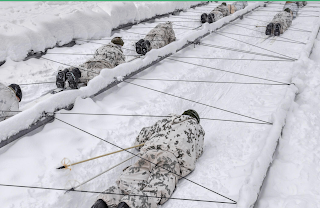
Photo by Louie Palu, National Geographic
It's finally time for the National Geographic photos of the year. A diverse and beautiful world awaits. In the photo, left, Finnish and U.S. soldiers train for winter warfare by navigating an obstacle course while on skis. The exercise took place two months before Finland — which shares an 800-mile border with Russia — joined NATO. The training was arranged in response to the war in Ukraine.

Is there a nursing shortage? That depends. "In 2022, the American Hospital Association quoted an estimate that half a million nurses would leave the field by the end of that year, bringing the total shortage to 1.1 million," reports Brittany Trang of STAT. "At the same time, National Nurses United insists there isn't a nurse shortage at all. There are plenty enough nurses for the country, they say — merely a shortage of nurses who want to work under current conditions."

Bill Watterson comic via
Mental Floss

When life gets too heavy, lift yourself up with some comics like Calvin and Hobbes. The wacky duo gets up to all kinds of shenanigans. The cartoon strip's artist was also a bit of a card himself.

After two years of stubborn food inflation, Americans can expect a slow drop in at-home food costs. "According to economists with the Department of Agriculture, while food prices are expected to remain higher in 2024, the rampant inflation rates experienced in 2022 and 2023 are anticipated to return to more 'normal' levels in the upcoming fiscal year, reports Charlsie McKay, RFD-TV News, which covers rural America.

Photo by M. Zilses, Unsplash
As the the holiday season approaches, it's time to consider how to eat all the treats you love without looking like you ate all the things you love. "What if the best way to curb sugar cravings is just to eat as much as you want? That is the core of an idea gaining traction among dietitians," reports Alina Dizik of The Wall Street Journal. "Who say that letting ourselves graze unfettered on a cache of Halloween fun-size Snickers can reduce our sugar lust in the long run."

Thursday, April 13, 2023

Quick hits: Every crisis needs a bird; Black gospel pioneer honored; 'How to thrive when everything feels terrible' . . .

Photo by Salwan Georges, The Washington Post
In a world full of crisis, what can help? "From time to time, I read or hear reports that the world's birds are in crisis. . . . There's a cardinal outside my kitchen window, and I'm not sure how to feel about it. For a passing moment, mine were the only eyes and this was the only bird. My heart swelled, and I smiled at the bright red jacket and jet-black mask as if seeing them for the first time. Nature is such a snappy dresser. . . . One imagines all creatures in this violent world must be scrambling for camouflage or cowering in bunkers, then along comes this guy, flashy and unafraid," opines David Von Drehle of The Washington Post. "Here's where that cardinal finally lands: One cannot usefully address a threat to birds if they do not delight in individual birds. (Maybe not all of them, but some.) One cannot meaningfully answer the climate crisis if they lack excitement about the human capacity for invention and reinvention. One cannot make progress toward equality and inclusion if they don't see and love the potential of humankind — enemies included — and one cannot build the future if one fears the future."

Associated Press photo via University of Pittsburgh
"I didn't know it was going to be a legacy," Pace Barnes told Jessie Wardarski of The Associated Press. Her father was one of the nation's first African American composers of gospel music, "and the owner of one of the country's first independent, Black gospel music publishing companies," Wadarski reports. "Today, the University of Pittsburgh is restoring his work from the 1920s to the 1950s and cementing his place in the genre's history."

Meet David Mas Masumoto, a Japanese American peach farmer planning a world without him. "The legacy he'll leave behind, as a father and pioneering organic farmer, and all of the legacies that have quietly guided him here, to his family's 80-acre stone fruit and raisin farm is preserved in his book, Secret Harvests: A Hidden Story of Separation and the Resilience of a Family Farm," reports Caroline Hatano of Civil Eats. "He explores the depths of his family history, uncovering long-held secrets and grappling with impossible decisions made when his family was imprisoned during World War II."

Oreo cow (Belted Galloway) with calf (Photo by Doug Young via Riversmith Farms)
Did you know that Belted Galloway is a breed of cow that looks like an Oreo cookie? And while the Oreo cookie is not a rural thing, American farmers help make them. Now American scientists have uncovered the best technique for getting to its delightful, creamy center. "MIT researchers twisted apart hundreds of Oreos to find the perfect method," reports Stacey Leasca for Food & Wine. "Who says science can't be fun?"

Rural life poses stresses and hazards that urban dwellers don't experience. This article, "How to Thrive When Everything Feels Terrible," by Christine Porath and Mike Porath in Harvard Business Review, hits the mark for people from all walks of life, particularly those in more isolated areas. "Research shows that we can protect ourselves from the damaging effects of toxicity by taking steps to ensure we are 'thriving' — a psychological term to describe the state in which people experience a sense of both vitality and learning."

In a shocking discovery, Superglue is more super than we originally thought. "Researchers turned superglue into a recyclable, cheap, oil-free plastic alternative," report Allison Christy and Scott Phillips for The Conversation, a platform for journalism by academics. "Unlike most traditional plastics, this new plastic can be easily converted back to its starting materials, even when combined with unwashed municipal plastic waste." It's a game-changer.

"Going, Going, Gone! One email to this Montana-based auction school later, I was connected with auctioneering instructor Nick Bennett," reports Caroline Carlson of The Daily Yonder. "A 2012 Western College of Auctioneering graduate, Bennett works as a professional auctioneer and appears to be the most decorated faculty member at the school. He's the 2021 International Auctioneer Champion, the 2017 U.S. Bid Calling Champion, and the 2014 Montana State Auctioneer Champion. . . . I talked to this industry legend about his rural roots, going to auction school, pre-auction nerves, and the first auction he ever called. Enjoy our conversation."

Thursday, January 06, 2022

Maine paper mill seeks local donations of cardboard, an example of supply-chain woes

Here's how dire supply-chain shortages are getting for some manufacturers: A paper mill in Old Town, Maine, says raw materials are so expensive that it's asking locals to donate used cardboard and other paper products, Robbie Feinberg reports for Maine Public Radio.

ND Paper makes mostly pulp and tissue paper, and has been in business for more than 150 years. But demand for old corrugated cardboard has skyrocketed because more people are shopping online. "You think about how many Amazon delivery boxes you get on a daily or weekly basis, you think about the conversion — transformation away from, you know, traditional plastic packaging at your local grocery store to paper bags," mill spokesman Brennan Burks told Feinberg.

So the mill set up a bin nearby and is asking residents from four nearby towns to donate their used cardboard. It's a win/win situation, the mill says. "Besides the financial advantage for the company, the mill is also touting the environmental benefits, too. Less than 40 percent of Maine's municipal waste was recycled in 2019. The mill hopes that by collecting pizza and cereal boxes, fewer will end up in the dump," Feinberg reports.

Online retail sales in the U.S. are expected to have hit about $920 billion in 2021, up from $792 billion in 2020, and are predicted to outstrip other retail sales growth in the next few years, Shelley Kohan reports for Forbes. That's a lot of boxes.

Tuesday, July 30, 2019

Company brings recycling to rural areas by using independent contractors with pickup trucks, a la Uber

A company that uses independent contractors to collect from its recycling customers has diverted 4 million pounds of waste from landfills and recycled nearly 2,000 tons of material since its inception in 2014, briniging more recycling to rural areas, Jeff Kart of Forbes magazine reports.

(Recyclops photo)
"With the cost of recycling increasing due to the Chinese ban, small towns have had their (already small) recycling budgets slashed or eliminated, forcing many of them to take such actions as reduce what materials are considered 'recyclable,' discontinue local drop-off locations and some have completely ended their curbside programs," Recyclops’s founder and CEO Ryan Smith told the magazine. "A lack of options has resulted in previously recycled materials—cardboard, paper, aluminum and more—ending up in landfills."

Recyclops and other companies like it have been compared to Uber because of the reliance on independent contractors with pickup trucks.

The company charges $10 a month for twice-monthly collection. The independent haulers gross $25 an hour, according to Smith. "To compare that to other curbside recycling services, urban recycling programs can be as cheap as $1-3 monthly and in rural areas, recycling programs prices can range from $10- $25 a month," he said, noting that in the remote city of Moab, Utah, curbside pickup costs $12 a month.

Recyclops operates in Utah, Idaho, Colorado and Arizona. Smith said he plans to expand to Texas.

"In 2018, Recyclops conducted an independent survey that included an analysis of 1,000 towns and cities across the U.S. and found that 34 million rural and peri-urban homes lack access to convenient affordable recycling,” Smith told Forbes. "The current problems with our recycling system as a whole will not be solved until recycling is made accessible and affordable to rural towns and communities in this country, in addition to large urban cities."

Wednesday, January 09, 2019

Rural recycling programs in U.S. are squeezed by China's tougher standards for imports of paper and other waste

"Big cities have shielded their residents from the impact of China’s decision last year to curtail the solid waste it will accept from other countries. But rural and small-town residents are starting to get squeezed by a change that is wreaking havoc on the global recycling market," Rebecca Beitsch reports for Stateline.

China was the world's largest importer of waste paper, used plastic and scrap metal for decades, but last year stopped accepting some kinds of recyclables and tightened its standards for the purity of what it accepts. It wants less non-recyclable waste, hazardous waste, or incorrectly sorted recyclables mixed in with recyclables) The recycling industry generally tolerates between 1 percent to 5 percent impurity in recyclables, but China's new standard is 0.5 percent.

Normally, communities or their contractors can recoup some or all of the cost of their recycling programs by selling the scrap, but China's policy shift has rendered some types of recyclables worthless. While some cities have been able to absorb the financial hit, many small towns can't.

"Small-town recycling programs already are more expensive than those in bigger cities," Beitsch reports. "Houses tend to be farther apart, making collection more expensive. Rural communities spend more to transport their recyclables to centers that can find markets. And they cannot produce the volume of material that buyers want." That's why many use private contractors.

As a result of the policy shift, many small towns and rural areas have had to curtail or end recycling programs or pay more to dump scrap at nearby recycling centers. 

Brittany Prischak, the environmental sustainability coordinator for Erie County, Pennsylvania, told Beitsch that the squeeze will make it harder to keep the county recycling program going, though state law mandates such programs in communities with more than 10,000 residents. China's decision is highlighting and widening a rural-urban divide in terms of recycling opportunities, Prischak told Beitsch: "Before the changes even started to happen you could see the difference of where recycling was most convenient in urban areas versus where it’s difficult like rural areas to recycle even if they want to recycle."

Wednesday, June 18, 2014

Recycling remains rural problem; W.Va. chemical spill sent millions of plastic bottles to landfills

Recycling bottles during West Virginia spill.
Photo: Chip Ellis, The Charleston Gazette
The January chemical spill that tainted drinking water in much of West Virginia, forcing residents to rely on bottled water, illustrated the lack of recycling in much of rural America. The vast majority of the millions of plastic bottles used after the spill ended up in landfills, Valerie Bauerlein reports for The Wall Street Journal.

Only 36 percent of West Virginia residents have curbside recycling, and in 2011 the Charleston area recycled less than 1 percent of its eligible plastic, compared to 30 percent nationally. "Many small towns and rural counties struggle to offer recycling services, especially with tight government budgets, limited access to recycling processors and wide fluctuation in the market for recyclable materials," Bauerlein writes. "Only half the population of Mississippi has access to drop-off or curbside programs. Some small cities, such as Lynn Haven, Fla., eliminated recycling programs because there were no nearby processing centers." (WSJ graphic)

The main reason rural areas lack access to recycling is that dumping trash is quicker and easier than recycling. "Shawn Lindsey, a recycling expert who advises the not-for-profit Center for Rural Strategies, said some towns cannot get vendors to bring in recycling containers because it takes weeks to fill a bin, tying up a company asset and providing an insufficient return," Bauerlein writes. Meanwhile, Lindsey said dumping trash in a place like Athens, Tenn., where he works, costs about $20 a ton, while it can cost more than $100 a ton in some urban areas.

Some people are optimistic that rural recycling has a bright future, with technological advances like automated bin-lifting trucks and optical sorters that will make it cheaper, Bauerlein writes. Mississippi was recently "awarded $1 million in grants to four communities seeking to build 'hub-and-spoke' networks, which could pool their collection to make recycling financially viable, according to the Mississippi Department of Environmental Quality." But the best solution, advocates say, is to make recycling free and easy for everyone. (Read more)

Tuesday, March 04, 2014

Some rural recycling centers struggle to stay open

Recycling can be problematic in rural America because it lacks the population density to make pickup practical, and in many areas there is a tradition of disposing of trash on your own land. Some rural recycling centers in states like Indiana are losing money and struggling to remain open, Laura Lane reports for the Bloomington Herald Times: "Despite hard work, years of promotion and increased citizen participation, money continues to leach from many small-town recycling ventures."

In Owen County (orange on map), where the center has been losing money for four years, the 2013 budget was $100,000, but income was onlky $40,000, Lane reports. In Brown County, budget cutbacks have forced solid-waste facilities to close on Mondays. A recycling center in Greene County has lost money five straight years, and could run out of money before the end of the year. Employee Tony Thomas told Lane, "We used to, years ago, be able to break even, but not anymore." (Greene County is directly below Owen County. Brown County is two counties west of Owen.)

The problem is that recycling just doesn't bring in much money, with newspapers going for a penny a pound, and businesses that collect trash charging $1 or $2 per bag, Lane writes. The solution, some say, is to stop the service. That's not good news for people like Owen County Interim director John Reeves, who lives in a remote rural area, who has no trash service at his home, and takes his trash to recycling centers. He told Lane, "I don't know what will happen. We are taking it a week and a month at a time. Nobody wants to close the recycling center, but it doesn't look like there is anything we can do to keep it open. But we keep trying." (Read more) The Herald Times is subscription only, but some stories can be accessed by clicking here.

Tuesday, October 22, 2013

Lack of recycling in rural areas is a big reason 14 percent of Americans still don't have it

"Industry experts agree that rural areas, which make up 16 percent of the population, are a big reason why 14 percent of all Americans still lack access to recycling, according to Environmental Protection Agency estimates," writes Brian Eason for the Asbury Park (N.J.) Press.

In some rural areas, people would need to drive over 100 miles just to recycle paper and plastic. In Mississippi, only half the citizens have access to a recycling program. Mark Williams, an administrator for the Mississippi Department of Environmental Quality, says the problem stems mainly from spread-out populations and long distances. "It is difficult for a rural state," he told Eason. "And I tell people we have to work harder to be successful."

Fewer than 20 percent of Mississippians participate in a local recycling program," Eason writes. "Wyoming, the second-least-densely populated state in the country, diverts only 15 percent of its waste to recycling or compost, half of the national average of 30 percent," Eason writes.

The reluctance to participate in drop-off programs may be a result of its inconvenience, but curbside programs haven't been much more successful. In Columbus and West Point, Ga., only 354 households out of 14,000 signed up for the service. The route would have been 571 miles long, Philip Crossley, a district manager for Waste Pro USA, told Eason. The program ended in September, after two years.

One strategy to encourage rural people to participate in recycling programs is showing that "recycling and jobs go hand in hand," Eason writes. "Recycling generates four to five times as many jobs as landfills does because you're using the materials over and over again," Williams said.

Wednesday, July 24, 2013

Small business travels the country recycling lead from shotgun pellets at firing ranges

Cleaning up all the shotgun pellets at firing ranges might not seem like the most glamorous or interesting job in the world, but one company has made a killing getting the lead out. Rocky Mountain Shot Recovery, out of Utah, takes to the road, hitting 48 states and traveling 50,000 to 60,000 miles a year to clean up firing ranges, Brett French reports for the Billings Gazette. (French photo: Anthony Fuller shows how lead shot is sifted out of gun-range soil and separated into 50-gallon barrels)

The company spends about one month working at Billings Rod and Gun Club in Saddleback Trail, Mont., where RMSR owner Anthony Fuller said they should recover about 400,000 pounds of lead on just the skeet range, French writes.

"A front-end loader scrapes the topsoil into a pile, then hauls full buckets that are dumped into a rotating hopper. The company has a proprietary piece of specially built equipment that sifts the dirt, screens out the lead into 50-gallon barrels and kicks out the remaining dirt," French writes. "Once the shot is separated into 50-gallon barrels that weigh about 3,000 pounds each, the lead is dumped into a rotating buffer — not unlike one that polishes rocks — to be shined for resale. Fuller either ships the recycled shot to Louisiana, where it is reused, or sells it back to the gun club where he’s working." (Read more)

Monday, June 10, 2013

Backyard chicken coops are a popular trend

It has become increasingly more common to find live chickens running around people's backyards. The Richmond Times-Dispatch takes a look at a pair of chicken farmers in Goochland County, just outside Richmond, Va., who promote backyard chicken coops and the importance of chicken as a sustainable food source. (Associated Press photo: Pat Foreman, left, and Lisa Dearden on Dearden's farm)

Pat Foreman and Lisa Dearden teach classes and hold workshops, and are starting something called Coop Corps America that will provide chicken coops for residents who need help starting their backyard flocks, reports Bill Lohmann for the Times-Dispatch. Foreman told Lohmann, "The chicken movement hasn’t even begun to crest. Every single community and town is talking about chickens. It’s really gone nationwide.” She said chickens eat insects and create rich compost. Also, she said concerns about odors, loud noise, and disease are not as big as most people think. (Read more)

Wednesday, March 02, 2011

Recycling wastewater from hydraulic fracturing presents its own set of challenges

Natural-gas drilling companies began recycling wastewater from hydraulic fracturing operations after facing mounting criticism as the process became more prevalent over the last decade, but recycling hasn't alleviated many of the industry's problems. The "win-win" that drilling companies say results from waste water recycling "comes with significant asterisks," Ian Urbina of The New York Times reports as part of a series about fracking. "In Pennsylvania, for example, natural-gas companies recycled less than half of the wastewater they produced during the 18 months that ended in December, according to state records."

Even recycled water may not eliminate all the environmental risks associated with fracking, Urbina writes. "Some methods can leave behind salts or sludge highly concentrated with radioactive material and other contaminants that can be dangerous to people and aquatic life if they get into waterways," he reports. Some well operators sell their wastewater to communities who spread it on roads for melting ice during the winter and controlling dust during the summer. In Pennsylvania "such waste remains exempt from federal and state oversight, even when turned into salts and spread on roads," Urbina writes.

"No one wants to admit it, but at some point, even with reuse of this water, you have to confront the disposal question," Brent Halldorson, chief operating officer of Aqua-Pure/Fountain Quail Water Management, told Urbina. Halldorson added that he believes in the benefits wastewater recycling brings, including reducing waste produced by fracking, reducing water used and facilitating the shift to cleaner natural gas as a electricity source, but "there still needs to be a candid discussion, and there needs to be accountability about where even the recycled wastewater is going." (Read more)

Friday, July 30, 2010

Kentucky entrepreneur to showcase recycled materials construction system at world horse games

A Southern Kentucky entrepreneur is being recognized for making concrete from recycled materials and will have a chance to showcase his product at the World Equestrian Games in Lexington this fall. Steve Pfoff, owner and founder of Monumental Builders in Jamestown, is building a horse barn at the Kentucky Horse Park, which will host the games, Derek Aaron of The Times Journal of Russell Springs reports. The barn will be constructed from Pfoff's patented "cultured stone" concrete block system, which uses 90 percent recycled material.

Earlier this week Pfoff's system was awarded a $1,000 prize, based on a one-page outline of the idea and business model, from the Kentucky Highlands Investment Corporation's Big Idea Competition. Pfoff will move onto the second phase of judging where he will be eligible for an additional $2,500. If he makes it to the third phase, Pfoff could win as much as $10,000 and 12 months of free rent in the Kentucky Highlands Business Innovation and Growth Center. "Literally what we can do is go in, crush an existing building down grind it up and put all the materials from that building back into the stone and rebuild a building in place of it," he said. "The buildings have a shelf life of hundreds of years," Pfoff told Aaron. "We went to the landfill owners and took some state people and told them that we've got a product that can stop a lot of the landfill fills."

"It is unlimited in what it can be utilized for," he added. "For LEED and recyclable purposes it has just a huge potential profit." LEED is an internationally recognized "green building" certification system. The Horse Park gave Pfoff a lot to display his barn during the games, which run Sept. 25-Oct. 10. It was only after beginning construction on the barn that Pfoff learned of the Kentucky Highlands competition. "It is larger than I am and we are all aware of this," he said. "Every landfill in this nation could implement a program where they take the infrastructure that is being demoed in their local area and it be ground up, recycled and put back in my stone to rebuild their infrastructure locally and that material would not end up in a landfill." (Read more)

Thursday, February 11, 2010

Ky. county trying to set example for sustainable development in rural America

A small, rural county in Central Kentucky is hoping to strengthen its reputation as the greenest, most sustainable county in the state and set an example for other rural areas. The government of Washington County (Wikipedia map) cleaned up 27 illegal dumps in 2001, which led the state to declare it the state's first Certified Clean County, Carol Spence of the University of Kentucky reports. Now the county has a master plan that focuses on farmland preservation but still encourages growth.

In the county seat of Springfield, "Residents take advantage of a free curbside-pickup recycling program; farmers participate in study groups about sustainability; children bring home free energy-efficient light bulbs from school; and leaders of a local non-profit organization are focusing their current efforts on local food and making homes more energy efficient," Spence reports. "They have worked on this a small part at a time. They've done little steps," Lori Garkovich, UK professor of community and leadership development, told Spence.

Achieving sustainablility in a rural county was eased by a shared vision of what could be and the ability to break up the big picture into smaller pieces, Spence reports. "We're doing our little bit," said Sister Claire McGowan, a Dominican nun and leader of the grassroots organization New Pioneers for a Sustainable Future. "And we're hoping that we can provide some light to other rural communities in Kentucky. Yes, it is hard work, but you can have fun while you're doing it, and it really will end up making a big difference, not just for us, but also for the future generations who will live in and love this place." (Read more)

Thursday, January 14, 2010

Coal ash recyclers predict doom if EPA labels ash as hazardous; proponents claim scare tactics used

We reported in December that the Environmental Protection Agency had delayed a decision on new rules for the disposal of coal ash waste. One holdup in that decision appears to be the effect a hazardous waste designation would have on ash recycling efforts. "Slapping a hazardous label on coal ash and other coal byproducts would trigger the writing of a federal disposal standard to replace a patchwork of state regulations," Patrick Reis of Greenwire reports for The New York Times.

Industry officials say a hazardous designation would cripple the ash-recycling enterprise that the Electric Power Research Institute says generates $5 to $10 billion a year in revenue for coal-burning utilities, Reis reports. The American Coal Ash Association says about 60 million tons, 45 percent of the total ash generated in 2008, was used to fill abandoned mines, make concrete and shore up eroding highway embankments. The American Society for Testing and Materials International, a coalition that sets material and building standards, said last month it would not support the use of coal ash in concrete if the ash is declared a hazardous waste.

Supporters of the hazardous designation say fears about the death of the recycling industry are unfounded and just a scare tactic from industry officials. "I have never seen the first study or piece of data to substantiate the claim that there would be this stigma that would stop recycling of coal ash," Jeff Stant, director of the Environmental Integrity Project's campaign for federal regulation of coal-combustion waste, told Reis. "It's important to note that the people who have been making that claim are the ones who have a financial interest in not having the designation." EPA could issue a hybrid ruling that declared ash as waste hazardous ash put toward beneficial use as OK. (Read more)

Friday, September 04, 2009

Texas newspaper puzzle writer finds new calling: Building homes for the poor from recycled stuff

A former writer of BrainSqueeze and CryptoGrapple puzzles for the Huntsville Item in Texas has found success in a new career building homes for the poor out of recyled materials. Dan Phillips, owner of Phoenix Commotion, began building the recycled homes in 1997 and has finished 14 homes in Huntsville, reports Kate Murphy of The New York Times. (Times photo by Michael Stravato)

Phillips has built roofs from used license plates and picture frames, windows from crystal platters, and floors from wine corks. As long the material allows him to meet building codes, Phillips will use it, Murphy reports. Each home is designated for a low-income family that helps with construction, much like Habitat for Humanity, but even with monthly payments between $99 and $300, Murphy reports that half the original residents have lost the homes to foreclosure. "You can put someone in a new home, but you can’t give them a new mindset," Phillips said.

Huntsville officials worked with Phillips to create a recycled-materials wharehouse where construction companies could donate leftover items for no charge and a tax deduction. Murphy reports officials in several other Texas towns have asked Phillips how to build similar warehouses. Phoenix Commotion is not a non-profit; Phillips tells Murphy that he hopes to prove there is money to be made in low-income housing construction. (Read more)

The Item first reported Phillips' switch from puzzle-builder to home-builder in November. “My fondest dream is that our low-income housing project would be replicated around the country, and we’re getting there,” Phillips told reporter Kristin Edwards. “A group in Houston is already starting an initiative modeled after this one in Huntsville, and there are also initiatives developing in Georgia and Oklahoma.” (Read more)

Monday, July 27, 2009

Alaska towns ban plastic bags, Styrofoam vessels

Alaska's largest rural town has voted to ban plastic bags and Styrofoam takeout containers, hoping to put an end to the thousands of “white birds” that sweep across the state’s tundra on any given day. Restaurants and grocery stores targeted by the ban will offer reusable bags and recyclable plastic, Kyle Hopkins reports for the Anchorage Daily News. (Wilson Naneng photo)

Advocates of the ban in Bethel (pop. 5,700) say education about plastic waste has earned the support of many since a first attempt was overturned eight years ago. The waste often ends up on the ocean floor and last spring, Hopkins writes, “the spongy tundra around the dump looked like a tossed-plastic salad.” The local Alaska Commercial Co. in Bethel estimates that the average 1,700 sales a day use two bags each.

Bethel is the latest Alaska town to ban plastic bags, joining other remote villages like Hooper Bay. The ban will take effect in September 2010, but the opposition argues that the environmental benefits are still unclear and the ban will drive up the cost of groceries. But advocates, like Bethel’s recycling center manager David Stovner, are simply fed up with the tundra covered in plastic snow. "It looks like white geese out there. Eight million of them," he said. (Read more)