Showing posts with label Great Lakes. Show all posts

Friday, May 22, 2026

Quick hits: SS Edmund Fitzgerald mystery remains; internet carriers team up; complex beef pricing; what to wear for extreme-weather reporting

At 729-feet, the SS Edmund Fitzgerald was the longest ship traveling through the Great Lakes
before it was 'swallowed' by Lake Superior. (Wikipedia photo) 

It's still a story investigative reporters are exploring: What caused the massive SS Edmund Fitzgerald to sink 17 miles from the safety of Whitefish Bay, Wisconsin? "On November 9, 1975, the ship left Superior, Wisconsin, with more than 26,000 tons of taconite pellets aboard. By the next evening, Lake Superior had swallowed the Edmund Fitzgerald whole," reports Andrew Daniels of Popular Mechanics. "One answer may be the ship’s cargo hatches. Ric Mixter, who visited the Fitzgerald wreck in the 1990s, said that if he could return, he would take photos of every hatch clamp and investigate where the taconite ended up." Read Pop Mech's deep dive on the famous ship's final voyage here. Listen to Gordon Lightfoot's haunting ballad about the fate of the Edmund Fitzgerald and its 29-member crew here

It's expensive for U.S. ranchers to increase their herds.
(Photo by Daniel Quiceno M, Unsplash)
Why can't farmers just raise more cattle so the price of beef will come down? "Ranchers say it's not that simple," reports Jack Dura of The Associated Press. "It’s never been so expensive for Americans to buy a steak or hamburger. … The dwindling number of cattle is a key reason the average price of all uncooked ground beef in the U.S. was $6.86 per pound in March." Even with high beef demand and high prices, ranchers still have to consider the cost of adding to their herd. Livestock owners are already paying more for the cattle they do have because drought and wildfires have left ranchers no choice but to pay for additional feed and water to be delivered to herd sites. 

Despite efforts to get the entire country online, many U.S. residents still live in areas without internet access, but that problem could soon change. AT&T, T-Mobile and Verizon Communications announced that they are "setting aside their differences and forming a joint venture that will help end wireless dead zones across the U.S., especially in rural and underserved areas," reports Connor Hart of The Wall Street Journal. "The companies said the initiative will help the U.S. extend its global leadership in wireless communications technology … "

Handwritting letters is good for the human brain.
(Photo by T.D. Aran, Unsplash)
Handwriting letters may seem more than a trifle old-fashioned, but revisiting the aged tradition of letter, pen and stamp can reap benefits. Elizabeth Passarella of The New York Times writes, "Research shows that writing by hand lights up multiple parts of your brain — areas that are associated with creativity, memory and your senses — in a way that emailing does not. … Unlike chatting, writing makes you slow down and decide which details of your life are meaningful enough to share." Readers interested in tips to get started with a letter-writing habit can click here.

Whether it's tornado, wildfire or hurricane season, journalists need to be ready to hit the natural disaster beat. But first, preparations need to be made, and extreme-weather reporter Judson Jones is here to help reporters look good no matter what Mother Nature blasts. "Shortly after returning from a trip to chase hailstorms, Jones gave me a rundown of his core outfit packing list that keeps him ready for any assignment," reports Kyle Fitzgerald of Wirecutter. "We talked about why the way he unpacks is as important as the way he packs, as well as the need to bring multiple hats." After years of trial and error, Jones has even found a jacket that keeps him dry during hurricane rain and winds and is stylish enough to wear to dinner post-storm reporting. Read his picks and tips here

The world loves American cheese and butterfat products.
(Photo by Edward Howell, Unsplash)
Global cheese and butterfat demand continues to climb, helping American dairy farmers slice off profits even as milk production continues to increase. Cheese exports in March broke records with "over 63,435 metric tons exported, which is an all-time high for single-month exports," reports Sarah Jungman of Dairy Herd Management. The 2026 gain represents a 29% jump in cheese exports over March of 2025. "Butterfat and anhydrous milk fat exports also set a single-month record at 17,074 metric tons shipped, 109.9% higher than March of 2025." During the first quarter of 2026, Mexico exported the largest chunk of American dairy products. 

Tuesday, March 21, 2023

Campaign to rebrand invasive Asian carp as 'copi' to attract diners and cooks is working, advocates in Illinois say

Invasive species of Asian carp
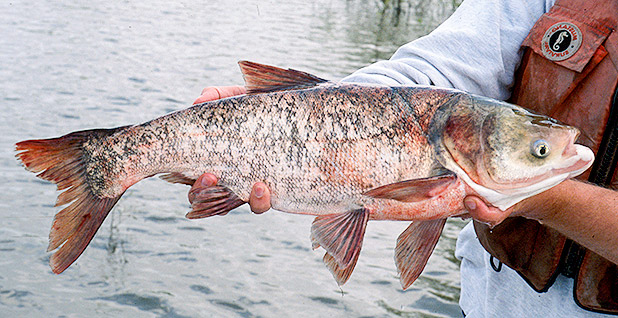
Adaptable, hearty and ugly are a few words to describe fish known as carp that advocateds are renaming "copi" to make them more attractive to cooks and diners. "It's technically a grouping of four separate [fish] species: bighead carp, grass carp, black carp, and silver carp," reports Kate Knibbs of Wired. "In the U.S., this fish is often seen as a threat, particularly to the Great Lakes," which are connected by canals to the Mississippi River system, where the species have flourished, hurting native species and warping the ecosystem, Knibbs writes. "But it's also a viable and abundant potential food source."

Amy Yang of Chicago, who fishes for copi in the Cumberland River and runs an Instagram account devoted to showcasing different ways to eat it, told Knibbs, "I grew up in China, so the fact that people weren't eating them didn't make sense to me." Knibbs writes, "She remembers seeing it on the dinner table as a child; the fish has been eaten there for thousands of years and remains popular to this day. . . . She tells everyone she meets about copi. . . . There's a growing movement of scientists, chefs, and the U.S. freshwater fishing industry working to convince Americans that it's an underrated, affordable, and eco-friendly protein."

The fish, generally known as Asian carp, came to the U.S. as grazers of grass that choked fish-farm ponds, They escapes to waterways and flourished, to detriment of other species. "Copi eat plankton and algae—so much plankton that other fish get bupkis and native populations dwindle or die out. . . . If they reach the Great Lakes, they could destroy their ecosystem," Knibbs notes. "Since 2010, Illinois Department of Natural Resources ecologist Kevin Irons has been working to promote the IDNR's preferred way to deal with copi: 'eat them'." Irons told Knibbs, "The name was a barrier. The association between Asian carp and environmental menace was too strong."

IDNR worked with an environmental tech group to rebrand "carp" into "copi," which is "a play on the word 'copious'," Knibbs reports. The rebranding has worked, she reports: "In central Illinois, distributors and fishers are jubilant that the fish is gaining traction as a food source. . . . Irons is already seeing this campaign make a difference in how many copi fill the local rivers. In the upper Illinois River, the population went down a whopping 97 percent. . . . Farther down south, where the numbers are much larger, they're already removing millions of pounds a year; as the fishing and processing infrastructure builds back up, the industry will be able to take an even more aggressive approach."

But there are reservations. "Daniel Simberloff, an ecologist at the University of Tennessee, has concerns that creating a commercial industry around copi will incentivize people to keep it around rather than kill it," Knibbs writes. "Commodification is a reasonable concern in theory, but regulations that are already in place prevent farming or otherwise raising these fish; they can only legally be caught in the wild, and anyone who tries to move them to new areas risks heavy fines. What’s more, the sheer size of the population makes eradication through commercial fishing highly unlikely."

Thursday, February 13, 2020

Southern states, feds step up campaign against Asian carp

Photo from Asian Carp Regional Coordinating Committee
State and federal fish and wildlife agencies have spent about $607 million altogether to stop the spread of Asian carp since 2004. As more Southern states try to stop the invasive species, that total is expected to hit about $1.5 billion over the next decade.

"That’s more than five times the amount predicted in 2007 when a national carp management plan was crafted, and no end is in sight. Programs aim to reduce established populations and prevent further spreading, but wildlife officials concede they may never be able to eradicate the prolific fish," Travis Loller and John Flesher report for ABC News.

The invaders reproduce rapidly, and can kill off native species by eating or outcompeting them. That endangers fishing industries, habitats and tourism. Most of the money so far has been spent on apparently successful efforts at keeping them out of the Great Lakes, but "less money and attention have been paid to the carp’s virtually unchecked spread east and west into the Missouri and Ohio rivers, among others," Loller and Flesher report. But as the fish become increasingly well-established in the Mississippi River watershed, more Southern states are trying to keep them out of lakes.

In late November, state and federal officials began testing some creative tactics to keep carp out of Lake Barkley and nearby Kentucky Lake, including using electric pulses and huge nets to capture them, along with flashing white lights, low-level noises and streams of bubbles to scare the fish away.
Kentucky officials have been especially proactive in trying to get the carp out of the twin lakes, a major tourist destination near the Mississippi River. Last year the state partnered with a processor, Two Rivers Fisheries, to sell Asian carp abroad since the species are popular menu items in China. The program pays local fishers for their Asian carp catches. Kentucky anglers brought in 6 million pounds last year, Loller and Flesher report.

Selling the fish has had limited success, since Chinese buyers like them fresh. Angie Yu, president of Two Rivers, said she's trying to sell in Europe and the Middle East, Loller and Flesher report.

Monday, January 27, 2020

Fertilizer use poses environmental risks, even climate change, but state-based regulation hasn't proven effective

Orange area is annual "dead zone" in the Gulf of Mexico,
caused mainly by fertilizer in Mississippi River watershed.

(Image from four-minute video by Grist)
Fertilizer has caused more environmental problems in recent years, and regulation by states has been ineffective, Joe Wertz reports for The Center for Public Integrity's nonprofit newsroom.

"In America’s Corn Belt and around the world, some of the fertilizer applied to fields escapes the soil in new forms that contaminate and warm the planet. Some of these compounds enter the atmosphere as a potent greenhouse gas that’s now at its highest concentration in the last 800,000 years, helping fuel climate problems like the flooding that upended farmers’ lives last spring," Wertz reports. "Other fertilizer byproducts contaminate water wells, especially in agricultural areas, where the U.S. Geological Survey says one in five has levels exceeding federal health limits. These contaminants also wash into streams, rivers and lakes, where they become what the U.S. Environmental Protection Agency calls 'one of America’s most widespread, costly and challenging environmental problems.'"

Farmers are using 40 times more nitrogen than they did 75 years ago, and though EPA has advised limiting its use for years, states have most of the authority and have preferred to depend on voluntary cooperation instead of laws that enforce compliance. "An investigation by the Center for Public Integrity, Grist and The World found that when states do try to regulate farms and reduce pollution linked to fertilizer, rules are often derailed or softened after industry pushback and political pressure," Wertz reports.

The video with the report emphasizes one solution: cover crops that keep rain and snow from hitting bare soil and leaching its nutrients into streams. It says only 4 percent of U.S. cropland is planted in cover crops after harvests. It cites a cover-crop experiment in the small watershed of the William Baker Ditch in northern Indiana, which reduced runoff by half, nitrates 20% and phosphorus 70%.

Monday, November 18, 2019

Ohio farmers support new state program to reduce fertilizer runoff into Lake Erie that causes toxic algae blooms

A July 30, 2019, satellite photo of Maumee Bay shows a toxic
algae bloom at the western end of Lake Erie. (NASA photo)
"Ohio farmers say they're on board with the state's plans to slow agricultural runoff into Lake Erie, which Gov. Mike DeWine has said is the biggest contributor to toxic algae blooms," Karen Kasler reports for the Statehouse News Bureau, which reports on state government and statewide issues.

Much of the $172 million allocated by the new "H2Ohio" fund will cover startup costs for farmers who agree to start using certain science-based practices that will reduce phosphorus runoff, including soil testing, crop rotation, using cover crops, and allowing buffers at the edge of fields, Kasler reports.

The program is notable because farmers and other agribusiness interests like the Ohio Farm Bureau, which tend to oppose government intervention into agricultural practices, are joining environmental activists and conservationists in supporting the plan. "Farmers had pushed back on an attempt to toughen regulations on agriculture in an executive order from former Gov. John Kasich last year," Kasler reports. "That led to Kasich's decision to fire Agriculture Director David Daniels just before Kasich left office."

Scott Higgins, CEO of the Ohio Dairy Producers Association, said this program is different. "By recognizing the needs to have the financial support to implement some of those best management practices, we now have a much better chance of even coming close to achieving the stated goal that the state of Ohio has set," Higgins told Kasler.

Tuesday, June 18, 2019

Great Lakes near or at record high levels; scientists say climate change driving extreme swings in water levels

A pier on Lake Ontario is partially inundated by rising water and wind-driven waves. (Buffalo News photo)
Water levels in the Great Lakes have been high since 2014 and these days are at or near record highs. "In May, new high water level records were set on Lakes Erie and Superior, and there has been widespread flooding across Lake Ontario for the second time in three years. These events coincide with persistent precipitation and severe flooding across much of central North America, Drew Gronewold and Richard Rood write on The Conversation. Gronewold and Rood are professors at the University of Michigan who specialize in hydrology and climate science.

What happens to the Great Lakes matters; they contain about one-fifth of the world's surface fresh water, and more than 30 million people live in the Great Lakes basin, many of whom rely on the lakes for drinking water, industrial use, shipping and recreation, Gronewold and Rood report.

High water levels pose several problems for those who live near or depend on the Great Lakes, "including shoreline erosion, property damage, displacement of families and delays in planting spring crops. New York Gov. Andrew Cuomo recently declared a state of emergency in response to the flooding around Lake Ontario while calling for better planning decisions in light of climate change," Gronewold and Rood report.

Based on their research, Gronewold and Rood say climate change is causing rapid fluctuations between too-high and too-low water levels in the Great Lakes, and that this will be the new normal. Water levels in most Great Lakes were very low as recently as 2013, but began surging in 2014 after the "polar vortex" froze much of the lakes and caused evaporation to drop, even as regional precipitation began increasing.

Water levels are influenced by three main factors: rain and snowfall over the lakes, evaporation, and runoff that enters the lakes from tributaries and rivers. Runoff is affected by rain over land, snow and soil moisture. Warmer weather increases evaporation, but also causes snow to melt and runoff to increase. That makes for bigger swings in water level, especially considering that spring is coming earlier these days. Gronewold and Rood call for government agencies and weather forecasters to develop new tools to assess how future climate conditions could affect the Great Lakes' water levels, since current tools aren't capturing the whole picture.

Friday, May 24, 2019

Corps OKs plan for keeping Asian carp out of Great Lakes; it's more expensive than first draft and might not be effective

Milwaukee Journal Sentinel maps show drainage near Chicago, including the Little Calumet River, where an adult Asian carp was found in June 2017, and Lake Calumet, where environmental DNA of two Asian carp species was found recently.
The Army Corps of Engineers will ask Congress for $778 million for its latest plan to keep Asian carp out of the Great Lakes. "The strategy calls for installing devices such as noisemakers, air bubbles and an electric barrier to deter the fish," The Associated Press reports. "Scientists say if Asian carp become established in the Great Lakes, they could out-compete native fish."

The devices would be installed at the Brandon Road Lock and Dam on the Des Plaines River near Joliet, Illinois, AP reports: "It's considered a chokepoint where Asian carp and other invasive species could be prevented from migrating into Lake Michigan." The Corps already has an electric barrier farther upstream, past the northernmost set of locks on the canals connecting to Lake Michigan.

Silver carp (top) and bighead carp, species whose DNA was
found. (Asian Carp Regional Coordinating Committee photo)
The plan is much more expensive than a $275 million draft plan that the Corps announced last year, and it might not be effective. Brandon Road is 140 miles south of Lake Michigan, but the fish may already be on their way to getting established between the dam and the lake. "Researchers with the U.S. Fish and Wildlife Service have found environmental DNA of two species of carp in a lake that's just a few miles from Lake Michigan," Tracy Samilton reports for Michigan Radio.

"Environmental DNA comes from things like fish scales. It's an indicator that the fish could be present," Samilton reports. "The eDNA that was recently found came from samples from Lake Calumet." In June 2017, an adult carp was found in the Little Calumet River, in the same area.

Tuesday, November 13, 2018

More women are fishing the Upper Great Lakes

Kristy Taylor takes a steelhead fishing class from the Michigan
Department of Natural Resources
(NPR photo)
Fewer Americans are going fishing, but one place is bucking the trend, and in a surprising way. "In 2016, about 14 percent of Americans fished, and most of them were men. But a recent study on the Upper Great Lakes indicates female participation is on the rise," Morgan Springer reports for NPR. "It found that fishing-license sales increased among female anglers by about 4.5 percent between 2000 and 2015. That's an additional 43,000 female anglers."

Fly fishing is particularly popular among women, who now make up about 31 percent of the 6.5 million Americans who enjoy that sport.

Women's increased interest in fishing is good news for the Great Lakes, which have seen increasing algae blooms in recent years, possibly hurting recreation income. It's also good for conservation programs that depend on hunting and fishing license revenues for funding, Springer reports.

The population of new female anglers skews young: "Young women today are about two times more likely than women born in 1960 to buy a fishing license," said Richelle Winkler, the principal researcher in the Great Lakes fishing study and an associate professor at Michigan Technological University.

Winkler said she doesn't know why more women are fishing, but told Springer she has a hunch: "I think it's part of a broader cultural pattern of the world opening up a bit to women's participation in activities that have traditionally been seen as more masculine."

Thursday, August 30, 2018

Algae problem plaguing Great Lakes in recent summers shows up in Lake Superior; warming, fertilizer blamed

An unusually large algae bloom in Lake Superior has locals worried about its impact on recreation revenue. In early August scientists began hearing reports of a thick carpet of algae along a 50-mile stretch of the lake's southern shore popular with tourists, between Duluth and the Apostle Islands. Robert Sterner, director of the Large Lakes Observatory at the University of Minnesota Duluth, said he and his team think it's the largest, most intense bloom yet," and that, while the algae in Lake Superior can become toxic, tests haven't found any toxins in dangerous concentrations, Christine Hunter reports for The New York Times.

Lake Erie has faced the same summertime problem for several years. Last week the National Oceanic and Atmospheric Administration warned that parts of th lake aren't suitable for recreation because of algae. In 2014 the bloom got so bad that Toledo had to shut down its water plant after toxic algae formed over the water-intake pipe in the lake, Hunter reports.

Algae blooms have been getting worse and more widespread in recent years, fed by climate change and fertilizer runoff from farms. Recent high-profile examples include blooms off the Louisiana coast, in the Finger Lakes in New York, in Utah Lake south of Salt Lake City, off the West Coast in 2015 and off the southwest coast of Florida this summer. Some blooms turn toxic, stinking up the beaches and killing wildlife.

Donald Anderson, a senior scientist at the Woods Hole Oceanographic Institute in Massachusetts, told Hunter that algae blooms in fresh water have "exploded" and salt-water blooms are increasing. He told the Senate Committee on Commerce, Science and Transportation this week that algae blooms are a "national problem" and that "their increasing frequency and intensity are impacting the economics and environmental health of communities, states, tribes and regions around the nation."

Here's a map of current temperatures in the Great Lakes, with Duluth and the Apostle Islands labeled:

Thursday, April 26, 2018

Lake Michigan states help each other maintain fish populations by shipping each other fish and eggs

Some fish travel from one Great Lake to another the natural way (through connecting rivers and streams) but these days some are traveling to Lake Michigan in unexpected ways: by road, air and even mail.

"States around Lake Michigan trade fish eggs and stock on an ongoing basis, part of a long-term effort to maintain population levels and to regulate the balance of predator and prey species in the lake," Kate Elizabeth Queram reports for Route Fifty. Biologists and natural resource managers in Michigan, Indiana, Wisconsin, and Illinois maintain an informal network wherein they send each other fish or eggs when there's an area shortage, at no cost. The network, which has no governing or regulatory body, has been going strong for at least a century.

"Over the years, as we’ve seen the fish populations make these tremendous swings in different directions, we all realize that if we don’t work together we don’t stand a chance of managing the fisheries in the Great Lakes,” said Ed Eisch, fish production program manager for the Michigan Department of Natural Resources. "There has to be a cooperative spirit or it just flat-out won’t work. Everybody has a stake in seeing it be successful—for our constituents, for our recreational opportunities and for the economic benefit each state sees as a result of a healthy ecosystem. If we don’t work together, we can’t get anything done."

The Lake Michigan group is one illustration of how hard fisheries experts work to maintain the fish populations in the Great Lakes, and how devastating an invasion of Asian carp could be.

Friday, March 09, 2018

Survey shows Americans divided on protecting environment, but many more rate it a priority than they did in 2010

Pew chart; for larger, clearer version, click on the image.
A recent national survey by the Pew Research Center showed deep fractures in Americans' views on protecting the environment, but an increasing concern about it.

Partisan sentiment was a big indicator of differing opinions: "Although 81 percent of Democrats said protecting the environment should be a top priority, only 37 percent of Republicans agreed," Dave Rosenthal reports for Great Lakes Today. "And though 68 percent of Democrats said dealing with climate change should be a top priority, just 18 percent of Republicans agreed."

Among the 19 issues listed in the survey, Americans' top priorities were defending the country against terrorism, improving schools and strengthening the economy. But protecting the environment has become more important to Americans, especially Democrats, in recent years: the share of respondents who said protecting the environment was a top priority jumped from 44 percent in 2010 to 62 percent in the recent survey, "and seven points in the last year alone," Pew reports.

Addressing climate change is more important to younger people. In the Pew survey, 56 percent of people under age 30 said climate change was a top priority, compared to 37 percent of respondents age 65 and over, Rosenthal reports.

Rosenthal notes that there has been "significant" bipartisan support in the Great Lakes region for environmental protections. Last year Republicans and Democrats from Great Lakes states united to restore $300 million in federal funding that President Trump proposed eliminating. The funds pay for pollution cleanups, wetlands restoration, and other initiatives. The same bipartisan crew is vowing to fully fund those programs after President Trump's 2019 budget proposes eliminating $30 million for Great Lakes environmental programs.

Friday, February 02, 2018

3 states and a province back plan to keep carp out of Great Lakes; key site is in Illinois, which isn't on board yet

Michigan, Ohio, Wisconsin and the Canadian province of Ontario are teaming up to help keep invasive Asian carp from getting into the Great Lakes. Other states and provinces on the lakes (Illinois, Indiana, Minnesota, New York, Pennsylvania and Quebec) have not joined.

"The initiative would support upgrades to the Brandon Road Lock and Dam near Joliet, Ill., a key choke point between the carp-infested Mississippi River watershed and Lake Michigan," John Flesher reports for The Associated Press. "A $275 million draft plan released last year by the U.S. Army Corps of Engineers would attempt to block the carps' path toward the lake with a gauntlet of devices, including an electric barrier, noisemakers, and water jets." Illinois has resisted the plan, fearing that it would disrupt freight shipping.

If the carp make it into the lakes, they could out-compete native species and destroy a $7 billion fishing industry. One adult carp was found last June in the Little Calumet River in Chicago, just nine miles from Lake Michigan.

The Brandon Road plan could begin construction as soon as 2022 and be completed three years later. It calls for the federal government to pay for 65 percent of the $270 million projected cost of the project and for "partners outside the federal government to pay about $8 million a year for operation and maintenance once the system is up and running. Coalition members would share those costs for five years while seeking other long-term sources," Flesher reports. Each state and province's contribution would be proportional to the amount of Great Lakes area it contains. Michigan has more than 40 percent of the lakes' surface area so it would pay the most, followed by Ontario with 36 percent, Wisconsin with 10 percent and Ohio with 4 percent.

Tuesday, December 12, 2017

Bipartisan groups of lawmakers, state attorneys general urge Army Corps to act on Asian carp

Milwaukee Journal Sentinel maps; click on the image to enlarge it.
"A bipartisan group of lawmakers is urging the U.S. Army Corps of Engineers not to further delay its study on how to upgrade a waterway choke point near Lake Michigan to deter Asian carp from reaching the Great Lakes," Melissa Burke reports for The Detroit News.

The Corps of Engineers released a draft in August that detailed a $275 million plan to keep the invasive species from getting into Lake Michigan by using electric barriers and other deterrents at the Brandon Road lock and dam near Joliet, Ill. The original timeline for the project calls for the final version of the report to be done by February 2019.

The Dec. 7 letter co-signed by 26 members of the House urges the Corps to stick to that original timeline, saying more delays will increase the likelihood that the carp will reach the Great Lakes. The letter also echoed a similar letter sent to the Corps by the senators of Michigan, saying that the process is taking far too long. "Current estimates indicate it will take as long as eight years to have a barrier installed at the Brandon Road Lock and Dam," wrote U.S. Sens. Debbie Stabenow, co-chair of the Senate Great Lakes Task Force, and Gary Peters. "This timeframe is simply unacceptable with Asian carp having been discovered closer and closer to the Great Lakes, including an adult Asian carp captured above the electric barrier, just nine miles from Lake Michigan" in June.

"Construction of the full upgrades for Brandon Road is likely years away," Burke reports. First, the Corps must conduct a feasibility study, then federal and state agencies must review it, then the chief of engineers will issue the final report. If Congress authorizes and funds the project, it could be constructed about four years after authorization.

The attorneys general in three Great Lakes states are urging a faster solution: shut down the Brandon Road lock and dam entirely and put up a big concrete wall. Republican Bill Schuette of Michigan and Democrats Lori Swanson of Minnesota and Josh Shapiro of Pennsylvania sent a letter to the Army Corps proposing the plan, which they say would cost about $5.9 million.

"The group cites an analysis co-authored by Wayne State University supply-chain management professor John C. Taylor and East Lansing transportation consultant James Roach that concludes the Corps overstates the economic impact of closing the dam, which the Corps determined would hit shippers and bulk producers with about $318 million in "lost transportation cost savings," Garret Ellison reports for Michigan Live.

Tuesday, August 08, 2017

Long-delayed Army Corps report outlines plan to stop Asian carp from infesting Great Lakes

Great Lakes Asian carp. Photo credit: Wisconsin Department of Natural Resources
Asian carp (Wisconsin Department
of Natural Resources photo)
The U.S. Army Corps of Engineers released a draft report Aug. 7 detailing a $275 million plan to keep invasive Asian carp from entering the Great Lakes via Chicago-area canals that lead to Lake Michigan. "The best way to keep invasive Asian carp from entering and wreaking havoc on the Great Lakes would involve a series of water jets, flushing locks and electrical barriers on the Illinois River," Cecelia Smith-Schoenwalder reports for Environment & Energy News.

The 488-page study focuses on the Brandon Road Lock and Dam in Joliet, Ill., which occupies a critical strategic point in the Illinois River system. The plan entails a series of physical and nonphysical barriers, some using experimental technology, to keep the fish from passing through. Proposed barriers include water cannons, noise obstacles, electrical barriers, boat launches, and more. Marc Smith, the conservation director for the National Wildlife Federation, says the NWF likes the concepts, but "we also know that this is not enough." Some barriers are not completely effective on their own, but the effects of so many working in tandem have not been studied. Would the combination of barriers increase effectiveness or could they cancel each other out sometimes and let a few fish through?
Milwaukee Journal Sentinel maps; click on the image to view a larger version
The complexity of all these factors together is one reason the Corps says the report, which was due in February, was delayed so long. Lawmakers and environmental groups complained that the delay wasted time and put the Great Lakes in danger, and introduced several bills to demand that the report be released. A dozen Democratic senators from eight Great Lakes states sent a letter to the Trump administration on April 10 requesting the release of the plan. The request took on added urgency after a live carp was discovered just nine miles from Lake Michigan, 34 miles closer to the Great Lakes than ever before, and far past an electric barrier designed to keep them out.

Now the Army's old slogan "hurry up and wait" comes into play. The Corps will accept comments from the public about the plan until Sept. 21, and will schedule several public meetings to discuss the report. "After a feasibility study and series of federal and state reviews, a final report is scheduled for release in August 2019, John Flesher of The Associated Press reports. 'Congressional approval and funding would be required to get construction underway."

The major players all know that every carp that makes it into a Great Lake is a problem. Marc Gaden of the Great Lakes Fishery Commission said as few as 10 males and 10 females could establish an Asian carp population in the Great Lakes. They would directly compete with bass and walleye for habitat, and would "completely disrupt the food chain. Asian carp would dine on the plankton and small plant materials at the bottom of the food chain, causing population declines in forage fish," Smith-Schoenwalder reports.

Wednesday, April 12, 2017

Democrats from Great Lakes states urge Trump to release Army Corps plan to stop Asian carp

Asian carp (AP photo by John Flesher)
A dozen Democratic senators from eight Great Lakes states sent a letter Monday, April 10, "to Trump administration officials urging them to move ahead with a plan to stop Asian carp from entering the Great Lakes by stopping them at a Chicago-area lock and dam," John Myers reports for the Duluth News Tribune.

"The carp project, which was supposed to be outlined in a February study released by the U.S. Army Corps of Engineers, was held back by the Trump administration at the last minute with no set date for release," Myers writes. "The study was supposed to outline a plan to stop the migration at the Brandon Road Lock and Dam, a crucial chokepoint near Joliet, Ill., in the Chicago waterway system."

The dam is 286 miles above the confluence of the Illinois River and the Mississippi River, Melissa Nann Burke notes for The Detroit News. "Federal agencies have spent hundreds of millions of dollars on stopgap measures, including placing electric barriers for the destructive fish in the Chicago area waterway system. But parties in Illinois and Indiana have raised concerns, prompting lawmakers from those states to request the delay earlier this year."

The senators wrote: “We request the administration release the U.S. Army Corps of Engineers’ draft proposal to prevent Asian carp from reaching and severely harming the Great Lakes. We are concerned by what we understand to be a White House decision to delay and potentially modify this report that has been under development for years. When taken together with the proposal to eliminate all funding for the Great Lakes Restoration Initiative in the fiscal year 2018 budget, delaying the release of this plan to address Asian carp only raises further questions about the Administration’s commitment to protecting our Great Lakes.”

Tuesday, April 11, 2017

Salt used on icy roads is contaminating lakes; 44% of 371 lakes studied showed salinization

North American lakes are at risk of long-term salinization from salt used on icy roads, says a study from researchers at multiple universities and agencies, published in Proceedings of the Natural Academy of the Sciences. Researchers found that "most urban lakes and rural lakes that are surrounded by more than one percent impervious land cover show increasing chloride trends." (Chloride trends for North American freshwater lakes)
Researchers studied 371 North American lakes, finding that 44 percent showed signs of long-term salinization, Ben Guarino reports for The Washington Post. They estimated that at least 7,770 lakes are at risk of elevated sale levels. Scientists, who said they could not directly measure how much of the chloride came from road salt, said that "if at least 1 percent of the surface circling a lake was impervious, the lake was at risk of high chloride concentrations."

Distribution of impervious land cover within a 500-m
buffer of all lakes >4 ha in the lower 48 U.S.
One problem is that "no federal body tracks how much salt gets spread on roadways or makes its way into our lakes," Guarino writes. "Impervious surfaces, critically, allow dissolved salt to slide into lakes rather than soaking into soil."

"Each lake in the report had chloride measurements going back 10 years or more, was at least four hectares in size (about nine football fields or larger) and was in a state that regularly salted its roads during winter," Guarino writes. "The study authors also analyzed what percentage of the lake was surrounded by an impervious surface. This could be any combination of roadways, sidewalk pavement, boat launches or other hard surfaces."

"Across all lakes, chloride concentrations ranged from 0.18 to 240 milligrams per liter, with a median of 6 milligrams per liter. (Seawater, by contrast, is much saltier — an average of about 35 grams per liter.)," Guarino writes. "The Environmental Protection Agency recommends that salt in drinking water exceed no more than 250 milligrams per liter, at which point water tastes salty."

Tuesday, June 21, 2016

Waukesha, Wis., outside Great Lakes basin, gets approval to draw water from Lake Michigan

Delegates for governors of eight Great Lakes states unanimously voted on Tuesday to allow Waukesha, Wisconsin, to pump 8 million of gallons of water per day from Lake Michigan.

Absent any legal challenges, the city will become the first U.S. community located entirely outside the Great Lakes drainage basin to receive a diversion of lake water under the Great Lakes Compact, an agreement among states.

The compact was approved in 2008 to protect the largest source of fresh water in the world from diversions outside the basin. Waukesha County straddles the subcontinental divide between the Great Lakes and Mississippi River basins, making the city eligible to apply for lake water.

Waukesha asked for 10 million gallons per day of Lake Michigan water several years ago after its water supply became contaminated by naturally occurring radium, The Cleveland Plain Dealer reported. In addition to limiting daily withdrawal to 8 million gallons, Waukesha must also restrict its water service area to the city's borders, submit to performance audits and return an equal amount of the water pumped from the lake. It will return as fully treated wastewater discharged to the Root River, a tributary of the lake, the Milwaukee Journal Sentinel reported.

In the months leading up to the historic vote, 38,000 citizens from around the Great Lakes basin offered their opinions on the request, 99 percent of whom opposed Waukesha's request, The Plain Dealer noted. In addition, 11 of Michigan's members of Congress urged Gov. Rick Snyder to veto the diversion request.

To qualify for an exception to the compact, Waukesha had to prove it had no feasible alternative to Great Lakes water to meet its needs. Some environmental groups argued that the city failed to meet that standard, contending that Waukesha could update its water treatment plant to remove radium from its deep groundwater wells like some of its neighboring communities have done. The environmental groups fear approval will set a dangerous precedent for future diversions, leaving it vulnerable to water-thirsty areas in the Southwest. Waukesha Mayor Shawn Reilly disputed that in an op-ed piece in the Journal Sentinel.

Thursday, March 10, 2016

Flame retardants in Lake Erie smallmouth bass can cause cancer, contaminate breast milk, study finds

Flame retardants commonly used in furniture, electronics, construction materials and textiles are contaminating smallmouth bass in Lake Erie and posing health concerns for people that consume the fish, says a report published in Science Direct, Morgan Linn reports for the Great Lakes Echo, a project of the journalism department at Michigan State University. Despite being discontinued in 2013, polybrominated diphenyl ethers (PBDEs) are still in Lake Erie water and sediment, says the study. PBDE dust particles spread through the air and contaminated the lakes, said Michael Murray, a staff scientist for National Wildlife Federation’s Great Lakes office in Michigan.

The study found that some people who consume the contaminated smallmouth bass "now have elevated levels of PBDEs, a chemical linked to hypothyroidism, neurotoxic damage and cancer," Linn writes. If pregnant women are exposed to the chemicals it can go into their breast milk, Murray said. He told Linn, “The big issue with PBDEs is that they can block thyroid receptors. Your body thinks it’s producing too much thyroid hormone, but in reality it’s just these PBDEs that are mimicking that, and it makes your body stop (producing the hormone)." He said eating one smallmouth bass might not be bad, but having bass a couple times in one month could be." He told Linn, "You’re going to start bioaccumulating these PBDEs yourself and then keeping them in your system and blocking these thyroid receptors." (Read more)

Tuesday, February 02, 2016

Asian carp would hurt Lake Erie than any other Great Lake, and they may have a way to get there

A study published in the journal of the American Fisheries Society found that if Asian carp invaded Lake Erie they "would disrupt the food web and decimate native species like walleye," Kevin Duffy reports for the Great Lakes Echo, a project of the journalism department at Michigan State University. "Invasive silver and bighead carp are already abundant in nearby Great Lakes watersheds. They devour microscopic plants called phytoplankton and animals called zooplankton, the first food of popular fish like walleye and Chinook salmon."

While a $300 million dollar federal effort has kept invasive carp out of the Great Lakes, it appears stymied. Almost all the effort has focused in canals in and near Chicago, but researchers also worry that during floods carp could cross a marshy divide between the Lake Erie watershed and the Wabash River, part of the Mississippi River watershed, where Asian carp have been found, Duffy reports. (To view a larger version of the map below, click on it)
If the species enter the lake, “One-third of Lake Erie’s total biomass would be Asian carp,” Duffy reports, noting that the lake is the shallowest of the Great Lakes and "also the most productive, meaning a constant influx of nutrients like phosphorous promote plankton growth—and harmful algal blooms." That means Asian carp would likely be more abundant in Lake Erie than in any other of the Great Lakes and "even during a massive algal bloom, silver carp would thrive, targeting and feeding on surface water algae but not suppressing it," said fisheries biologist and co-author Ed Rutherford.

Rutherford said "silver and bighead carp would wreak havoc on the current ecosystem," Duffy writes. Invasive carp could reach 34 percent of the total fish weight, twice the size as gizzard shad, the lake's most common plankton-eating fish. Asian carp would lead to sharp declines in shad and other fish that eat zooplankton and algae "as the carp ate up much of their food. ­And the impact cascades. These fish, including alewife and shiner, are important food for gamefish like walleye and perch. The model suggests carp could force more than a 10-percent decline in walleye and as much as a 15-percent decline in burbot and rainbow trout."

Tuesday, January 05, 2016

Little known pipeline ships 540,000 barrels of oil and natural gas per day beneath Great Lakes

Few people seem to be aware that 540,000 barrels of light crude oil and natural gas liquids are transported every day through a pipeline underneath the Straits of Mackinac, which connect Michigan to Lake Michigan and Lake Huron, Steve Friess reports for The Washington Post. Oil and natural gas are being transported from Alberta in Western Canada to refineries in Detroit and Sarnia, Ontario. (Straits of Mackinac Shipwreck Preserve map)

While the pipeline has never had a spill or even a repair, according to its owner, the fact that it was built in 1953 has some concerned about its durability, Friess writes. Michigan Attorney General Bill Schuette, a conservative seen as a GOP front-runner for governor in 2018, seemed to condemn the line in a July report, saying, “You wouldn’t site, and you wouldn’t build and construct pipelines underneath the Straits today. And so, if you wouldn’t do it today, how many more tomorrows will the pipelines be operational?”

Friess writes, "Still, Enbridge has received a reprieve because Schuette has declined to order an immediate shutdown, as he could under the terms of the state’s agreement with Enbridge regarding the easement. Instead, he established a Pipeline Safety Advisory Board to study all of the state’s spaghetti tangle of pipelines and make recommendations as to what to do. That committee, which has met twice, is ordering up a comprehensive report on how Enbridge would transport the oil and gas in Line 5 to refineries if it could no longer pump it through the Straits."

"The company itself already has an answer: It would be expensive, dirty and, ultimately, riskier to the environment than continuing to use, monitor and maintain Line 5," Friess writes. "They’d need to send the petroleum via truck, train and perhaps tanker ship across the Great Lakes, all modes of transport that have much bleaker safety records than pipelines, Enbridge publicist Jason Manshum said." Meanwhile, the pipeline continues to be operated with little awareness or concern from the general public. (Read more)