Showing posts with label fishing. Show all posts

Tuesday, May 12, 2026

Flora & Fauna: Wildlife and people agree on best mating sounds; eat your oats; 5.6 million bees found underground

Male zebra finch calls attract mates. Female zebra finches and human study participants
agreed on which males had the best calls. (Photo by Raina Fan via The Conversation)

When researchers compared which animal sounds, such as bird calls, frog croaks or cricket chirps, wildlife seemed to like best alongside which ones people preferred, 
the "results were striking," writes animal behavior expert Logan S. James for The Conversation. "Across our dataset, including animals separated from human beings by hundreds of millions of years of evolution, people tended to agree with the animals about which sound was more pleasant. . . . People particularly agreed with animals when it came to what researchers call 'adornments': the extra trills, chucks, clicks and flourishes that animals can add to their calls. These sounds were more appealing to both animal and human listeners alike." 

When a snow avalanche pummels an outdoor recreationist's spot, there's little people can do to find those buried under heavy piles of snow. That's when avalanche dogs are called to the scene. "Dogs play an essential role when an avalanche strikes," reports Christine Chung of The New York Times. "Their powerful noses help guide rescuers to people buried in the snow, saving critical moments that can mean life or death." Potential avalanche dogs are chosen for a very specific set of interests, skills and breed stamina, and their training starts when they're just a few months old. For avalanche dog handlers, training takes years. Click here to read about "Baggs," a golden retriever puppy from Wyoming who was once the runt of her litter. She's now a rockstar avalanche-dog-in-training.

Beta-glucan is what makes oats especially 
healthy. (Photo by Roman Matveev, Unsplash)

Among all the whole grains commonly eaten, oats may offer the most benefits. "Many studies have found that oats lower LDL cholesterol, or the 'bad' cholesterol that increases your risk of heart attack and stroke," reports Simar Bajaj of The New York Times. "Much of this effect comes from beta-glucan, a type of fiber that thickens the contents inside the gut, trapping cholesterol-rich bile acids and carrying them out of the body." Oat fiber also helps people maintain normal blood sugar levels, which "can be particularly beneficial for people with Type 2 diabetes."

What's not to like about bitter greens? For many people, pretty much everything, because bitter and astringent foods taste gross. But humans didn't always avoid bitter fruits and vegetables; in fact, they were once a regular part of our ancestors' diet. "Much of the produce on grocery store shelves has grown mild or sweet in flavor, designed to appeal to a mass consumer palate," reports Joti Heir of Offrange. "That sits in high contrast to the complex tastes of wild, ancestral crops." Emerging food science reveals how bitter foods contain "compounds that provide a small challenge to the brain, and with that, activate neural pathways that result in enhanced cognition." There's even research "showing the potential of using bitter compounds to treat Alzheimer’s Disease."

Rebounding salmon populations along the Golden Coast are good news for commercial fishing operations and seafood lovers. "Federal fishery managers voted to open waters off the coast of California to commercial salmon fishing for the first time since 2022," reports Sophie Austine of The Associated Press. More recent drought-ending wet winters have helped salmon populations recover. "The federal council has said forecasts for Chinook and coho salmon off the West Coast look promising this year, though the season will open with some restrictions."


Miner bees are important pollinators that live in 
underground nests. (Photo by C. Lewallen via USFS)
Bees are commonly known for their constant busyness and for living in outdoor hives. But in fact, 70% of native bees don't live in outdoor hives; they live in underground nests. Researchers recently discovered 5.6 million burrowing bees "revealing just how abundant some understudied pollinators are," reports Margherita Bassi for Smithsonian magazine. "The team estimated that in 2023, between 3.1 million and 8 million of the bees emerged from the ground in the Ithaca cemetery, with the average estimate being 5.56 million. For comparison, Manhattan’s population is about 1.7 million people." 

Tuesday, April 14, 2026

Boaters are wearing helmets for protection against 'flying fish'

Asian carp are invading the Mississippi River and
boaters' personal space. (Photo by Megs Harrison, Unsplash)
Asian carp, or "flying fish," are injuring boaters throughout the Midwest and eating up the food supply of native fish in the Mississippi River, reports Jeanne Whalen of The Wall Street Journal.

Able to jump as high as 10 feet out of the water, these carp are easily spooked by motors and have given boaters black eyes
and broken noses, Whalen reports.

Asian carp came to the U.S. from China and Russia in the ‘70s to regulate algae blooms in ponds and wastewater treatment plants, Whalen explains. Due to flooding, they escaped confinement, spread into the Mississippi River Basin, and exponentially reproduced into dozens of rivers.

If they breach the Great Lakes, they threaten the region’s walleye, bass and trout, which provide the fishing industry $5 billion annually, Whalen adds.

The governors of Michigan and Illinois are urging the federal government to unfreeze the funding for a river barrier to keep the fish out of Lake Michigan, reports Whalen. An additional deterrent could be blaring speakers underwater to distract the carp.

While the public waits for federal help to detain the carp, they have been creating their own solutions such as wearing helmets while boating, competing in contests to catch the jumping fish, or creating new recipes to eat them, explains Whalen.

The Illinois Department of Natural Resources has officially rebranded the fish as Copi, short for copious, in hopes consumers find them more appealing. “Fisherman and chefs report that Asian carp are actually delicious, though they are so bony they don’t make good filets. Chefs often grind them up and turn them into fish cakes,” Whalen adds.

Friday, August 22, 2025

Gulf Coast shrimpers have seen their profits go from jumbo to tiny over the past four decades

A shrimper weighs his catch in Buras, Louisiana. He now makes about $3 less per pound (adjusted for inflation) than he made in the mid 1980s. (Civil Eats photo)

As the U.S. shrimping industry limps along, shrimping advocates are asking for government controls and consumer support to help change their fortunes.

"Shrimpers along the Gulf Coast have struggled to compete with cheaper imported shrimp. . . and dealt with rising fuel costs," report Jake Price and Olivia Shaffett of Civil Eats. "In the 1980s, shrimpers could sell a pound of shrimp for about $4.50 (adjusted for inflation). In recent years, they have been lucky to get $1.50."

Industry experts say Louisiana shrimping's survival depends on the U.S. government establishing guardrails, "whether [through] quotas, import caps, or higher tariffs to curtail the high volume of imported shrimp," Price and Shaffett write. Consumer education on how to spot U.S. shrimp can also help the industry.

Rocky Ditcharo, a seafood wholesaler in Buras, Louisiana, believes government intervention is needed. He told Civil Eats, "If we can’t cap imports, if there is no solution. . . .Then this industry dies in 20 years."

Ditcharo also sees smart consumerism as an equally important piece. "Consumers should inspect the back of the pack to find the country of origin, method of production, and manufacturer," Price and Shaffett explain. "Descriptions such as 'wild-caught,' 'wild,' and 'Atlantic' usually indicate that the shrimp is a product of the U.S."

Eating imported shrimp means the Food and Drug Administration doesn't have authority over product testing before it lands on U.S. shelves. Earlier this week, the FDA issued an urgent recall for Indonesian shrimp sold at Walmart that could be radioactive. "Certain Great Value raw frozen shrimp products sold at Walmart are being recalled due to possible contamination with Cesium-137, a radioactive isotope," reports Erin Keller of the Independent. The shrimp recall details are here.

Beginning in August, the Trump administration "increased tariffs on top shrimp importers, including Vietnam (20%) and Indonesia (19%) . . . India, which accounts for roughly one-third of all shrimp imports in the U.S., faces the highest tariffs of 50%," Price and Shaffet add. 

Friday, April 11, 2025

Even with tariff pause, plans to increase costs for shrimp imports give small coastal communities hope

Last year most U.S. shrimpers lost money.
(Adobe Stock photo)

Despite shrimp's jumbo appeal to U.S. consumers, American shrimpers have struggled to compete with imported, farmed shrimp. Tariffs and renewed trade negotiations with foreign shrimp importers may help revive American shrimping.

As this week began, shrimpers in tiny Bayou La Batre, Alabama, celebrated President Trump’s new round of tariffs, which "included countries that export most of shrimp Americans consume," reports Rachel Wolfe of The Wall Street Journal. "That included rates of around 26% on India, 10% on Ecuador, 32% on Indonesia and 46% on Vietnam. . . . More than 90% of the millions of pounds of shrimp consumed annually in the U.S. is imported."

The decline of U.S. shrimping came bit by bit as more imported shrimp entered the U.S. market. "Fishermen unable to sell their shrimp to break even on gas, labor and supplies have had to tie up their boats," Wolfe explains. "Supply shops, seafood processors, marine technicians and others in the industry have suffered, too."

For small coastal communities like Bayou La Batre, the loss of shrimping incomes has "cratered" local economics. Wolfe reports, "Income and sales-tax revenue in Bayou La Batre plummeted around 40% between 2021 and 2024 alone, according to Mayor Henry D. Barnes." Barnes told her, "People were looking to me for answers, and I didn’t have them. The city can’t put tariffs on foreign seafood.”

Over the past 20 years, the wholesale price of shrimp in the U.S. declined, but American shrimpers were still able to eke out a small profit. "In 2021, that changed as import prices dropped sharply, making it much more difficult for domestic shrimpers to turn a profit," Wolfe explains. "In 2023, domestic shrimpers operated at a net 3.7% loss on average."

Although the tariffs may help some shrimpers clear profits again, U.S. levies on marine goods could present new challenges. "Shrimpers rely on imports for a lot of their supplies," Wolfe explains. "Jeremy Zirlott, a commercial shrimper from Bayou La Batre, buys some of the webbing for his nets from India — which runs around $22,000 each year for each of his boats."

Even as Trump set a 90-day pause on the sweeping tariffs, the Southern Shrimp Alliance's response was positive. SSA Executive Director John Williams, echoed the hope some smaller coastal towns now have: "It is encouraging that the Trump Administration’s tariffs have prompted countries to show a new willingness to address trade policies disadvantaging American producers."

Friday, July 12, 2024

The UN pledged to reduce global production of plastic; companies prefer better recycling efforts

Adobe Stock photo
Is it possible to create a planet where plastic production and waste aren't a constant problem? Maybe. In March 2022, the United Nations "pledged to negotiate a treaty to 'end plastic pollution,' with the goal of delivering a final draft by 2025," reports Joseph Winters of Grist. One proposed solution was to negotiate with plastic makers to produce less, which hasn't happened. But, what Grist found out by motoring through petrochemical trade and industry group public statements and policies were various levels of the "industry’s desired pathway to a 'world without waste.'"

Among the various players that Grist contacted, "only two agreed to answer questions about the policies they support," Winters writes. "What we found is that, although they fall far short. . . . the industry groups’ proposals to bolster recycling and waste collection could cause a significant reduction in mismanaged plastic waste — even in the absence of a cap on plastic production."

When their proposals were entered into a policy analysis tool developed at the University of California, "the elements of the treaty that industry groups support, cobbled together, could cut global plastic pollution by 43 million metric tons annually by 2050 — a 36% reduction below business-as-usual estimates," Winters adds. "Meanwhile, a realistic production cap could cut annual pollution by 48 million metric tons all by itself."

When it comes to global garbage, the plastics industry is economically influential. Unsurprisingly, the industry does not think that the solution to plastic waste reduction is making less plastic. Instead, industry groups support a concept called "plastics circularity," which "seeks to keep the material in use for as long as possible before it’s thrown away. Generally, this means more recycling," Winters reports. 

But that can be challenging. "The world only recycles about 9 percent of all plastic it produces; the rest gets sent to landfills or incinerators, or winds up as litter," Winters explains. Given the problem, the industry is promoting more and better recycling by supporting policies that build recycling infrastructure and placing some of the onus for recycling costs on companies that use it.

Even as the plastic waste reduction agreement takes shape, "it’s clear that self-preservation is at the heart of the petrochemical industry’s agenda for the treaty," Winters reports. "The policies it supports could have a positive impact on plastic pollution."

Tuesday, July 09, 2024

Conservation farming practices could help reduce the Gulf of Mexico's 'dead zone' that harms marine life and fishing

Agriculture's use of fertilizers without run-off prevention means chemicals along with nitrogen and phosphorus flow down the Mississippi River and into the Gulf of Mexico. (Adobe Stock photo)

When Midwestern farming states steer around conservation practices and use more synthetic fertilizer and manure, their crops' run-off flows into the Mississippi River and contributes to the Gulf of Mexico's 'dead zone,' reports Erin Jordan of The Gazette, which serves Cedar Rapids, Iowa. "There are thousands of U.S. farmers not growing cover crops or using other conservation practices shown to reduce runoff. . . thwarting plans to slash nitrogen and phosphorus washing down the Mississippi River to the Gulf of Mexico, where excess nutrients threaten wildlife and fishing industries." Encouraging or requiring farmers to use more conservation practices could change this trend.

What is the dead zone and why should farmers care? The zone is produced by chemicals and element run-offs of nitrogen and phosphorus that flow down the Mississippi and into the gulf. Once in the gulf, "these nutrients are required for plant and crop growth, trigger algae blooms that choke off oxygen in water and make it difficult, if not impossible, for marine life to survive," reports The Nature Conservancy. "The National Oceanic and Atmospheric Administration estimates that the dead zone costs U.S. seafood and tourism industries $82 million a year. The impact could be devastating to the gulf’s seafood industry."

Originally, the United States pegged 2025 as the year for nitrogen and phosphorus flows into the gulf to be reduced by 20%. But the country is far from reaching this goal. 

Despite government subsidies for conservation projects, "many farmers just don’t want to risk reducing their short-term yields — money they use to feed their families and pay down debt," Jordan reports. "While the Midwest has seen boosts in farming practices that reduce runoff, there’s also been an increase in practices that make the problem worse."

Some states are reconsidering "the strategy of paying farmers to implement voluntary practices to reduce nutrient loss," Jordan writes, including some lawmakers in Minnesota who "pushed for a 40-cent-per-ton fertilizer tax that would raise an estimated $1.2 million a year to be used to help southeast Minnesota residents whose drinking water wells are contaminated with nitrate, which has been linked to some forms of cancer."

Tuesday, June 25, 2024

Flora & Fauna: Canine pals help veterans with PTSD; finding rice paddies in Appalachia; welcoming bats; go fish!

Psychiatric service dogs can help veterans cope with
PTSD. (Adobe Stock photo)
U.S. veterans or military workers who have post-traumatic stress disorder (PTSD) can feel and function better with the help of a psychiatric service dog, according to a study published in JAMA Network Open. Veterans with a canine pal "endured less severe symptoms and experienced significantly less depression and anxiety." This is the first NIH-funded study — and the largest ever — to focus on service dogs for military-related PTSD. It’s also the first study on this topic to use blind ratings, meaning that clinicians who assessed patients’ outcomes didn’t know whether they had a dog or not." Read the study and findings here.

Colorful, savory and full of history are a few ways to describe this heritage rice. "Black shell, red, purple, white and green. The Laotian rice that thrives in the North Carolina foothills is a treasure to Hmong farmers – and a revelation to others," writes Sheri Castle for The Bitter Southerner. "I never figured I’d be in a rice paddy at all, much less one in the Appalachian foothills of Western North Carolina. I was about an hour from where I’d grown up, but a world away. It was like finding a pearl in a potato."

When you go fishing, you can make memories and dinner. Having fun while snagging fish is what the group "Let's Go Fishing" aims to do through fishing boat tours for seniors, veterans, disabled adults and children. "We’re always looking for new communities to serve. If there’s a lake, we can help you put a pontoon on it and bring the joy of fishing to more people." Find out about starting a chapter.

Purple coneflowers are now common in
home gardens. (Adode Stock photo)
Once called weeds, native prairie plants are returning to their natural habitats through gardening education. "We find ourselves in the age of the pollinator plant, and the pollinator garden, and interest keeps growing. But it wasn’t always so," reports Margaret Roach of The New York Times. Expert gardener Neil Diboll remembers when purple coneflowers weren't welcome, but around 1989, sentiment changed. Diboll told Roach, “Purple coneflower was elevated from wildflower to quote-unquote perennial, and it was allowed inside the garden gate. . . . It paved the way for other native flowers and grasses to enter."

Hedge parsley is sometimes called
'Burn it.' (Nativetexaspark photo)
Gardening delight can go sour when it turns out those lovely white buds are invaders. "Torilis arvensis, known as hedge parsley has reedy stalks with tops that explode in tiny white flowers come springtime. It grows quickly and can be found in most regions of Texas, but it’s not native to the state or even the country," reports Amanda O’Donnell for Texas Monthly. "The plant has seeds that present as minuscule, stubborn burrs after a bloom, notorious for embedding themselves in clothes, animal fur, leg hair, and absolutely anything else that can aid in their proliferation." Hedge parsley isn't the only invader. "Many Texans have added bastard cabbage, or Rapistrum rugosum, to their list of vegetal enemies." To read how to remove or burn these interlopers, click here.

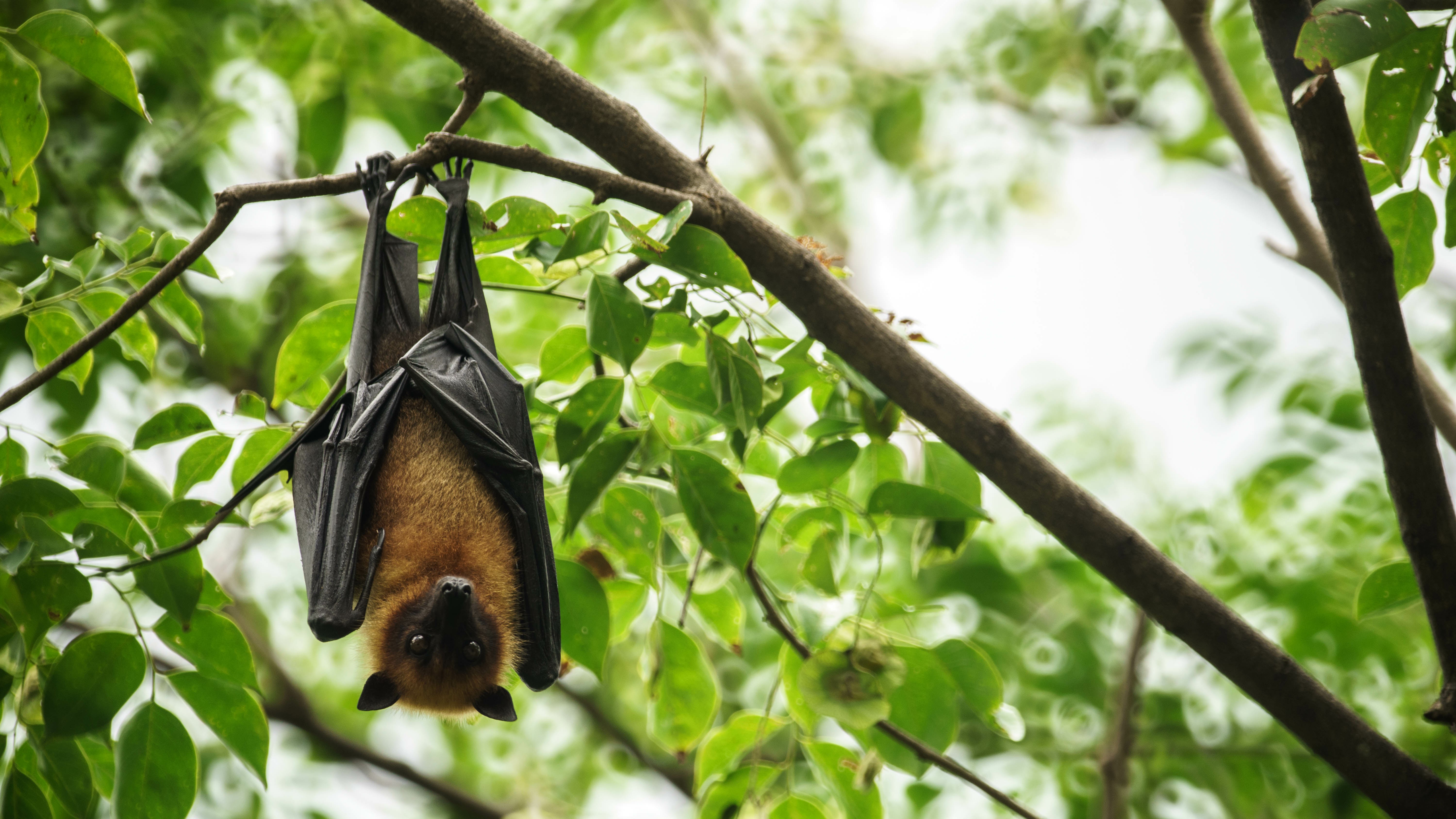
Bats are picky about their real estate options.
(Adobe Stock photo)

Bats are a farmer's best friend when eradicating crop-destroying bugs such as codling moth larvae -- but there's a catch. "Scientists have discovered significant effectiveness of bats for orchard pests. But the nighttime hunters are fickle about where they settle down," reports Sarah Derouin of Ambrook Research. To get bats to live and breed in an orchard area means creating spaces that are as bat-friendly as possible. "Agroforestry practices of incorporating trees into agricultural landscapes can go a long way for farm biodiversity and bat support. Treelines or patches of trees can provide bats with alternate places to forage while different cycles of pests emerge throughout the season."

Friday, January 05, 2024

When freshwater fish are contaminated by 'forever chemicals,' some are no longer safe to eat

PFAS exposure means some freshwater fish are
labeled 'do not eat.' Photo by Andy Wang, Unsplash
A freshwater fish fry may sound like a delectable dinner, but it may no longer be healthy because substances known as PFAS or 'forever chemicals' have polluted many freshwater fish populations. While the Environmental Protection Agency has been working on PFAS drinking water standards, "Some scientists worry that regulations for freshwater fish are lagging," reports Hannah Norman of KFF Health News. "A recent study from The Environmental Working Group found that just one serving of fish can be equivalent to a month of drinking water contaminated with 48 parts per trillion of the common chemical PFOS."

PFOS and PFOA are part of the PFAS family of synthetic chemicals, which were used to make everything from Teflon to fire-fighting foam. Their chemical structure resists environmental breakdown by nature or the human body, which means they "accumulate in the soil, water, fish and our bodies," Norman explains. According to a report from the National Academies of Sciences, Engineering and Medicine, human PFAS exposure is "associated to cancer, low birth weight and decreased responses to vaccines. . . . At least 17 states have issued PFAS-related fish consumption advisories, KFF Health News found, with some warning residents not to eat any fish caught in particular lakes or rivers."

When it comes to PFAS levels in fish, the federal government hasn't provided any dietary guidance. Instead, states are setting limits with alarming variations. Norman reports, "'Do not eat' thresholds for the general population range from 25.7 parts per billion in New Hampshire to 800 ppb in Alabama. . . . While the EPA has tested hundreds of fish for PFAS and found some samples with concerningly high concentrations, it has no plans to provide national fish consumption advisories."

There is a bit of good news. Norman reports, "The Food and Drug Administration tested saltwater fish and shellfish sold in grocery stores — including Atlantic salmon and canned tuna — and generally found far lower levels of PFAS contamination."

Thursday, November 30, 2023

Nature bits 'n bites: Unearthly fish; plant memories; forest tardigrades; gray wolves return; a very hungry beetle

(Photo by Dante Fenolio,
Science Photo Library via Hakai)
Creatures that dwell in the deep ocean may look like inedible Star Wars characters, but fish industry experts are looking into their potential. Scientists are also studying these fish in an attempt to protect them. "Mesopelagic fish are not yet commercially exploited, though projects are underway to investigate the marketability of the species and the best methods for harvesting them," reports Moira Donovan for Hakai magazine. "Scientists working in this area are, therefore, in the rare position of being able to assess potential impacts from fishing before they happen. But with so many unknowns, the question remains: can they do it in time — for the fish's sake and our own?" The telescopefish, above right,  has large tubular eyes to maximize light collection and a highly extensible jaw with needle-sharp teeth that ensure a firm grip on prey.

Plants aren't normally considered "learners," but maybe they should be. "In the study of the plant kingdom, a slow revolution is under way. Scientists are beginning to understand that plants have abilities, previously unnoticed and unimagined, that we've only ever associated with animals. In their own ways, plants can see, smell, feel, hear, and know where they are in the world," reports Sarah Laskow for Atlas Obscura. "Of the possible plant talents that have gone under-recognized, memory is one of the most intriguing."

Do dairy calves need more love to keep them from unhealthy oral habits? A new Florida study suggests that more pets can keep young calves happier and less likely to chew on everything out of boredom or frustration, reports Shea Swenson for Ambrook Research. "The presence of somebody scratching and having some contact with them reduced the duration of those pen-directed sucking behaviors, particularly for the individual housed calves."

Tardigrades are part of a forest's dynamic life forms.
(
Photo by Oliver Meckes and Nicole Ottowa, Nat Geo)
Mary, Mary, quite contrary, what makes a forest grow? Tardigrades! "A photographer and biologist put microscopic fungi, roots, and slime molds from Germany's Black Forest under a scanning electron microscope—and found creatures like this astounding tardigrade among the forest's essential, and often overlooked, life forms," report Oliver Meckes and Nicole Ottowa for National Geographic. "This discovery in the moss on a tree trunk, magnified 2,400 times, marked a newfound species among the 1,300 known types of tardigrades."

Next month, Colorado will begin its planned reintroduction of gray wolves, with the release of about 50 wolves captured in Oregon, reports Trevor Hughes of USA Today. "The exact [release] locations will be kept secret, but the wolves will generally be released on state or private land in a rural area of west-central Colorado. . . . Backers of Colorado's reintroduction plan say that wolves are a natural and important part of the ecosystem. . . . They argue that safety concerns are wildly overblown, and that ranchers and farmers who lose livestock will be fairly compensated by taxpayers. . . . But farmers and ranchers consider wolves a dangerous threat to wildlife and stock alike."

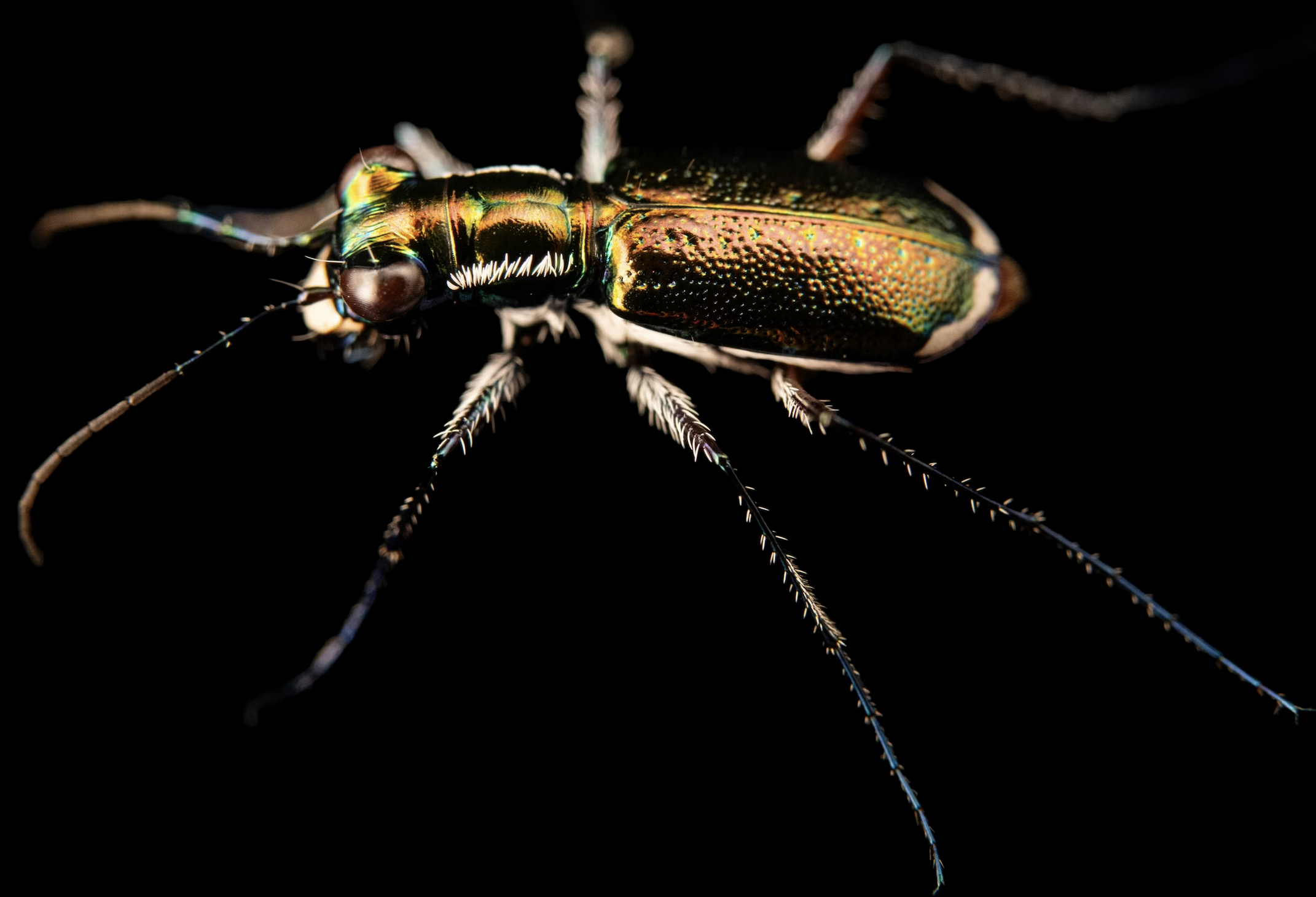
The Miami tiger beetle has 'big, serrated mandibles.'
(Photo by Joel Sartore, National Geographic, Photo Ark)
Meet the Miami tiger beetle, named for its 'highly voracious predatory behaviors, it's the 15,000th species in National Geographic's Photo Ark. "The beetle was rediscovered in 2007 after a more than 60-year absence," reports Rachel Fobar. "With its iridescent blue-green exterior and round, expressive eyes, some would call the Miami tiger beetle beautiful. . . . But when photographer Joel Sartore looks at one, he also sees carnage. . ."


Friday, November 17, 2023

Finally Friday flora and fauna: Traffic-stopping turkey; wonderful olives; meet a hero; the glory of monarchs

This turkey crosses the road when he wants to.
(Photo by Jill Weiss, The Washington Post)
Why did the turkey cross the road? And keep crossing the road? "This was just another rush hour in West Orange, N.J., where the apparently fearless turkey has claimed a hillside along Pleasant Valley Way, tormenting drivers and pedestrians ceaselessly on one of the community's busiest thoroughfares," reports Ronda Kaysen of The Washington Post. "Efforts to capture and move it (including the attempt with a tranquilizer dart) have so far failed."

Johnny Carson famously said, "Happiness is. . . finding two olives in your martini when you're hungry." Carson was onto something. "No food or medicine can do what olive oil can do," reports Meryl Davids Landau of National Geographic. "Scientists say adding more olive oil to your diet can positively impact your health in many ways, from alleviating high blood pressure to helping with weight loss."

Maverick visits students and inspires learning.
(K. Brownfield, American Humane photo via WP)

The world can sometimes feel like a topsy-turvy, sad mess. In dark times, it's good to have a hero. Meet Maverick, a 6-year-old European Blue Great Dane who won the 2023 American Humane Hero Dog Award. "Maverick's job as a therapy dog is to comfort military members and their families from across the country. His go-to move is placing his paw on the person he's seeking to soothe," reports Sydney Page of The Washington Post. "When service members die, Maverick escorts their children to their funerals, and he also visits with service members after unexpected deaths in their units. Each week, he spends time with students at schools and focuses mostly on children struggling with their classes."

Amelia, the Bluefin tuna, began life in the warm waters of the Mediterranean. "Sometime between her birth and 2004, she accomplished her first feat of long-distance swimming, crossing the Atlantic Ocean's entire breadth before arriving off the coast of western Rhode Island," reports Karen Pinchin of Hakai magazine. Read about Amelia's exceptional "catch" by an unusual fishing charter business and its owner, Al Anderson.

A "roost" of migrating monarchs in Mexico.
(Photo by Jaime Rojo, National Geographic)
In many parts of the country, glorious orange, soft red, and brown hues still abound in trees and brush foliage. But perhaps an even greater delight is the migration of monarch butterflies and their fanfare of fall colors once they reach their winter resting grounds.

When considering a hobby farm for goats, cows or sheep, a lot of planning is needed to get started on the right hoof. Chelsea Hill, an adult livestock and 4-H animal science educator, started by "outlining equipment needs, types of shelters, livestock handling systems, health care and water quality," reports Lisa Z. Leighton for Lancaster Farming. "She said having a health-care kit ready is important for day-to-day use, to assist with births, and in the case of parasite issues." Leighton outlines the basic needs and toolboxes for an excellent start here.

Monday, September 11, 2023

Scourge of invasive plants and animals is an 'extinction event on par with the asteroid that killed the dinosaurs'

Brown tree snakes were accidentally introduced in Guam. It ate
many native birds into extinction. (Photo by David Clode, Unsplash)
Black rats, brown tree snakes and water hyacinth are only a few of the more than 3,500 invasive species "wreaking havoc across the planet, destroying crops, disseminating pathogens, depleting fish people rely on for food and driving native plants and animals toward extinction, according to a major report backed by the United Nations," reports Dino Grandoni of The Washington Post. "The landmark assessment found harmful invasive species cost society more than $423 billion a year. . . .A tally only expected to grow as the modern age of global trade and travel continues. . . . The result is a great scrambling of the planet's flora and fauna, with dire implications for humans and the ecosystems they depend on."

Continental globe-trotting "is one of the main causes of Earth's ongoing biodiversity crisis, an extinction event on par with the asteroid that killed the dinosaurs," Grandoni explains. Invasive species are playing a role in 60 percent of extinctions, according to the report, which was created by the Intergovernmental Science-Policy Platform on Biodiversity and Ecosystem Services, a body made up of more than 140 countries that provide policymakers with scientific assessments to help protect Earth's biodiversity and prevent extinctions. Aníbal Pauchard, a professor at the University of Concepción in Chile who co-chaired the group behind the report, told Grandoni: "It's normal that species move. It's not normal that a species crosses the Atlantic. . . . Not normal that it goes from Australia to Chile."

The report names the black rat as "most widespread invasive animal, which spread by stowing away on ships and scurried its way not only into dense cities but onto far-flung islands as well, where it has decimated ground-nesting seabirds and other animals," Gradoni reports. "The impact of land-dwelling rats on islands is so profound that even nearby reef fish can feel it after the rodents alter the flow of nutrients into the ocean. . . . . On the island of Guam, the voracious brown tree snake has already driven several native birds to extinction."
An innocent-looking water hyacinth floats in a pond at the
Memphis Zoo, Tenn. (Photo by Joshua J. Cotten, Unsplash)

Aquatic systems are facing epic invasions with dire outcomes. "In the Caribbean, venomous lionfish are driving down the numbers of native fish. In the Great Lakes, zebra mussels are clogging the intake pipes of drinking water systems and power plants," Grandino writes. "But one of the most devastating aquatic invaders is a delicate-looking flower," a free-floating plant that spreads so aggressively, "it can cover entire ponds and lakes, leaving a matted mess that impedes boat traffic and fishing. . . . The plants suck up so much water that they render lakes dry and leave communities without drinking water. The report lists the water hyacinth, "which is popping up everywhere from Africa to Australia, the most widespread invasive plant on Earth."

Researchers list prevention as the best solution "through border monitoring and import control," Grandino reports. "In December, nations agreed to try to reduce the spread of harmful invasive species by at least half by 2030 as part of an international agreement."

Wednesday, August 02, 2023

Chumash tribe's marine sanctuary proposal is progressing

Part of the California coast seen from Tajiguas.
(Photo by Karla Gachet, The Washington Post)
More than 150 miles of central California coastline with an expanding reach into the Pacific Ocean once belonged to the Chumash tribe; they have applied to make that land, all 7,000 square miles of it, a federally protected marine sanctuary with the Chumash people its steward, reports Silvia Foster-Frau of The Washington Post. Should the Northern Chumash Tribal Council's proposal be approved, "Chumash tribes would gain a unique leadership role over an expansive marine sanctuary, including the ability to block unwanted commercial development on the land and water within its bounds. . . . The Biden administration has spoken in favor of a Chumash marine sanctuary proposal."

The proposed boundary used to initiate the designation process.
(Map by Szu Yu Chen, The Washington Post, from NOAA data)
The sanctuary plan is part of the tribe's efforts "to revive and restore its heritage, culture and land," Foster-Frau writes. The campaign goes back  40 years, "as tribal members struggled to raise the money and political support needed for the huge endeavor. . . . They also faced resistance from some local fishermen who expressed concerns that the sanctuary could harm their businesses." Their initial request was made in 2013, and in 2015, the National Oceanic and Atmospheric Administration accepted their application, but it sat idle during the Trump administration years. Under the Biden administration, the proposal has "moved into the next bureaucratic phase, designation, and NOAA began outlining the terms of the potential sanctuary. . . Now the clock is ticking as the tribe "aims to get the hard-fought designation in place before the 2024 presidential election when a new administration could take over and force them to restart their decades-long effort."

Should the proposal be approved, "NOAA could begin bringing the sanctuary to life in the next couple of years. That would come with increased government resources for ecological research, public education and outreach, and operating a visitors' center to teach the public about the importance of conserving ocean waters, said Paul Michel, regional policy coordinator for NOAA sanctuaries' West Coast region," Foster-Frau adds. "NOAA is also looking for unique ways to incorporate the tribe into its efforts, he said, including having Chumash translations on sanctuary signage and including tribal history in educational programming.The significance of the proposed sanctuary would be told 'through the eyes of the stewards of this coast for 10,000 years,' Michel said. 'You put it in that perspective, and it gets people's attention.'"

Wednesday, June 21, 2023

Fur/feather/fin quick hits: Red knots gain from crab-harvest ban; overfishing hurts sharks; rabbits eat gardens and trees

Red knots are shorebirds that like to eat crabs and shrimp.
(Joe Austin Photography, Alamy, via The New York Times)

"Red knots are plump, neatly proportioned sandpipers that in summer sport brilliant terracotta-orange underparts and intricate gold, buff, rufous, and black upperparts," Cornell  University's bird lab says. The species took a population nosedive, but seems to be recovering, reports Jon Hurdle of The New York Times: "The count, by land and boat, tallied about 22,000 of the robin-sized birds, an encouraging sign for a shorebird that is listed as federally threatened . . . a sharp increase from a record low of 6,880 in 2021. . . . Crab harvesting bans were partly credited for the rise."

A tiger shark is a type of reef shark.
(Photo by Gerald Schömbs, Unsplashed)
"Sharks have been around for hundreds of millions of years, appearing in the fossil record before trees even existed," reports Josh Davis for The Natural History Museum in London. They even survived five mass extinctions, but may not survive the Anthropocene Epoch. Dino Grandoni of The Washington Post reports, "A massive new survey of nearly 400 coral reefs around the world reveals sharks once common in those waters are vanishing, a troubling sign that the fearsome fish are at a much greater risk of going extinct than previously thought. . . . The ocean, simply put, isn't as healthy without sharks. . . . The culprit behind the declines, the researchers say, is rampant overfishing."

Seaweed may be a climate-saving game-changer, reports Bridget Huber of National Geographic. "A bold experiment to use seaweed as part of a solution to climate change is underway in Iceland, where millions of small buoys made of wood and limestone, some bearing seaweed, will be dropped into the ocean in the coming months. . . . [A system will] sink the buoys, festooned with long locks of seaweed, to the deep ocean floor, where the carbon they contain will remain sequestered for 800 years or more."

Photo by John Tlumacki, The Boston Globe
Gardeners and tree lovers, beware of bunnies. In Boston, they are nibbling down flowers and mowing through veggie rows, reports Alex Koller for The Boston Globe: Massachusetts bunnies "have an appetite for the entire menu: from beans and lettuce to kale and cabbage. Even onions." Mary Lahr Schier, a Minnesota gardener, noted their area's bunnies spent the winter munching on trees and bushes, and now some people wonder if their "tree can be saved?" She gives some helpful "rabbit prevention" advice for all.
 
Container gardens grow neatly on trellises.
(Photo by Vaivirga via Lancaster Farming)
Sometimes there isn't space or the time for a full garden. Container gardening can help. "As long as you have a big enough container and a sunny spot, it's possible to grow almost any vegetable," writes Therese Ciesinski of Lancaster Farming. "Between the hundreds of regular-sized varieties and the growing number of dwarf offerings, you'll have more choices than you have pots." It might be mid-June, but considering starter plants are often available, there's still time to plant in many regions of the U.S. And thne there are fall crops!

Don't have time for a garden this year? Try this site to plan next year's garden.

Another wonderful fresh food option is visiting a local farmers' market.

Wednesday, May 24, 2023

Flora/fauna nibbles: Time to bake with rhubarb; bison hunters; it's okay to feed the birds; eat more beans

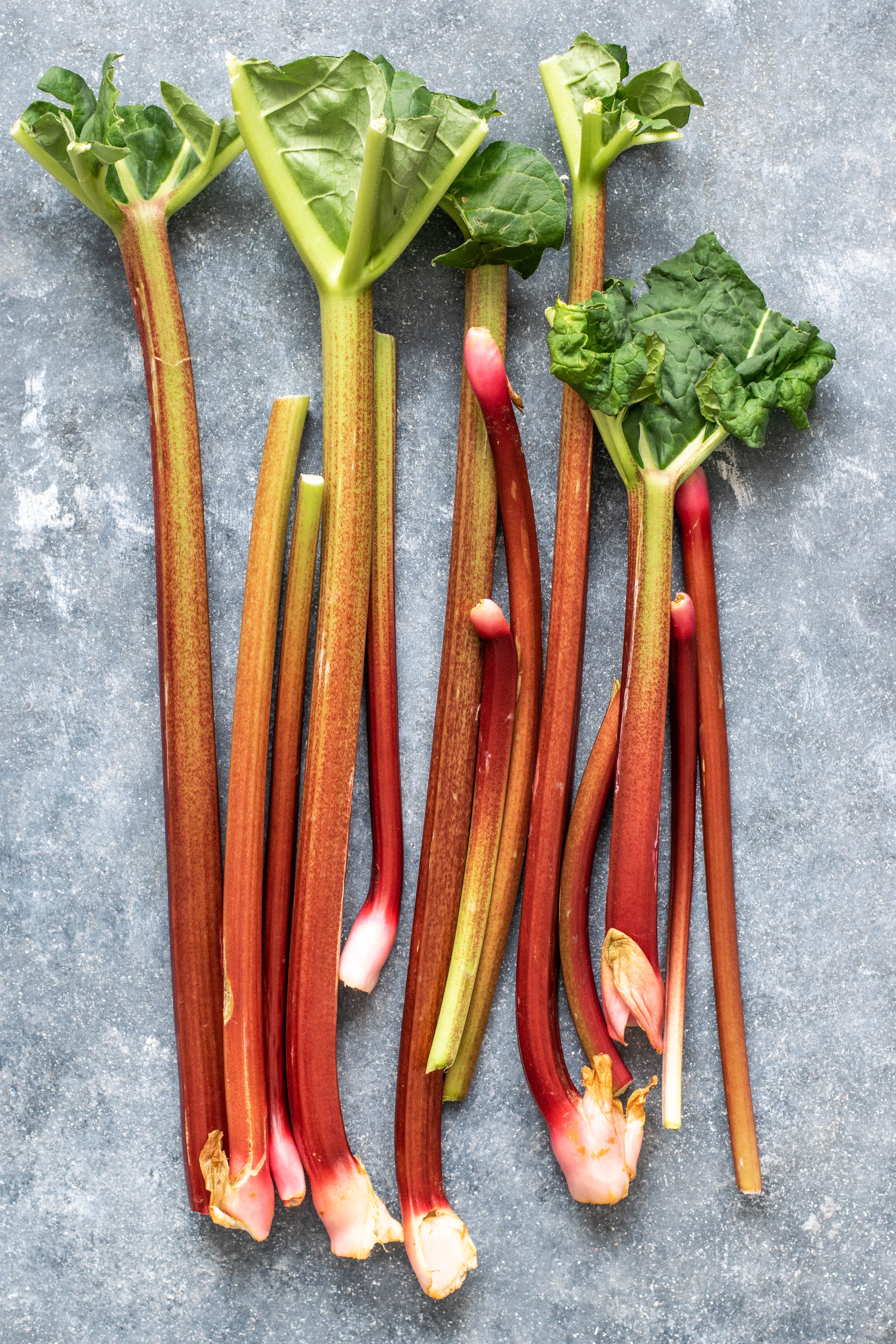
Photo by Monika Grabkowska, Unsplash
Spring produce is here, and it's time to celebrate that tart, celery-like stalk that blends with strawberries and apples like they're best friends. Chopped and sugared into delicious jam, pie or puddings. . . . go to the market or out into your yard and gather some rhubarb! Here are 10 recipes to get your sweet and sour taste buds singing.

Turtles can be tricky. "We thought we knew turtles, but this newfound behavior may offer a clue to how these reptiles will respond to a warming planet," reports Jessica Taylor Price of National Geographic. "On a warm spring night . . .two scientists settled into a canoe . . . they made their way through the water. . . . . They noticed something odd: Krefft's river turtles basking in the moonlight, just as they do during the day. But when they asked around after that evening in 2017, they found that other scientists hadn't heard of turtles basking at night, and there were no studies on the behavior."

A crab (Mississippi Dept. of Marine Resources image)

Would you like a used crab trap? Not really. "Derelict crab traps harm wildlife and disrupt other fishers, especially shrimpers. Bulky crab traps get caught in shrimping nets, tearing them open or blocking them from catching shrimp. Frustrated shrimpers, with nowhere to put the smelly traps, generally just throw them back, continuing the cycle," reports Ilima Loomis of Haiki magazine. "A group in Mississippi has found a solution: paying shrimpers a U.S. $5 bounty to collect and recycle derelict crab traps. In just three years, the program has removed almost 3,000 crab traps from Mississippi waters."

Beans can be the last thing left on a child's plate and the brunt of jokes, but they pack nutritional power. "Beans are high in protein, efficient to grow, and can even improve soil health. They cost less than conventional or new plant-based meats, and they're increasingly getting attention among foodies," reports Julieta Cardenas for Vox. "As one global campaign to double bean consumption by 2028 frames it, the answer to the question of how we can get inexpensive protein without sacrificing animals or the planet is simple: 'Beans is how.'"

Summer heat is coming, and along with it comes an increased likelihood of walking by a pet stuck in a heating car. The feeling of worry and then stress over your next move has a solution, "See a dog locked in a hot car? Here's what you can do," reports Rachel Fobar of National Geographic. "Several U.S. states allow bystanders to intervene when animals are trapped inside hot vehicles."

Photo by Louis Johns, The Washington Post
"A group of Yakama hunters gave us a rare glimpse into their yearly ritual. . . . Deer and elk were no problem for Kashius Gleason. The 19-year-old member of the Yakama Nation had hunted plenty. . . Standing in freezing temperatures at the doorstep of Yellowstone at daybreak, he was nervous as a herd of bison trekked out of the park. He had driven 16 hours with his family to get to this snowy basin and didn't want to miss. . . . Now Gleason's people are among a handful of tribes hunting bison again. By exercising hunting rights enumerated in an 1855 treaty, the Yakama are able to maintain an ancient cultural relationship with the animals," reports Dino Grandoni of The Washington Post.

Do North Atlantic right whales sniff out their meals? Maybe. Elizabeth Preston of Hakai magazine reports, "Right whales are baleen whales, which means they fuel their massive bodies with minute crustaceans that they filter from gulps of seawater. We know what they eat, says David Wiley, a marine ecologist." He told Preston, "We don't really know how whales find their food." Preston explains, "Wiley says his preliminary data from this and other recent experiments show that right whales—as well as another species called sei whales—are more likely to turn up in areas with higher DMS [molecule made by phytoplankton], suggesting they sniff the chemical out.

Photo by Julian Avery for The Conversation
"Millions of Americans feed wild birds, especially in winter and spring. Studies show that this can influence birds' health and behavior in surprising ways," reports Julian Avery for The Conversation, a platform for journalism by academics. "There is still much to learn about the risks and benefits of feeding birds, particularly through large integrated national citizen science networks like Project FeederWatch. But we now have enough information to promote healthy interactions that can inspire future generations to care about conservation." 

Wednesday, April 19, 2023

As offshore wind sails forward, fish habitats will suffer, and fishers fear getting 'squeezed out' of their livelihoods

A construction area for Vineyard Wind in New Bedford, Mass.
(Photo by Tony Luong, ProPublica)
Corporations seeking approval for offshore wind farms must move through government channels, and it's complicated. In the process, East Coast wind farm developers have created a "revolving door between the government workers and offshore-wind promoters," report Will Sennott and Anastasia Lennon of The New Bedford Light in Massachusetts, in cooperation with ProPublica. "In recent years, at least 90 people have shuttled between federal, state or local government and the offshore wind industry. . . . . Left out of this cozy relationship is one keenly affected group: more than 1 million people in the U.S. who work in the seafood industry, including 158,811 commercial fishermen."

Government authorities who determine building licensing and environmental concerns overlap. The Light explains, "Federal scientists, the commercial fishing industry and industry regulators each have sounded the alarm about potential harm to fish spawning habits and the lack of compensation for losses suffered by fishermen. . . . The Interior Department has ignored or downplayed those warnings. . . . The Bureau of Ocean Energy Management, which is part of the Interior Department, and the National Marine Fisheries Service, which is part of the Commerce Department, have conflicting authority over the same stretches of federal waters. BOEM oversees permitting and leasing for offshore wind development, from which the federal government reaped more than $5 billion last year. NMFS is supposed to protect marine habitat and ensure the fishing industry is sustainable and economically viable."

The Light reports, "'We are very concerned about the cumulative impacts of multiple wind energy projects on the fisheries we manage,' directors of three federally established regional councils that advise NMFS wrote last fall to Amanda Lefton, then the head of BOEM. . . . Lefton said last October that she wants to ensure that 'not only can the commercial fishing industry and offshore wind coexist but that both industries can thrive." Case and point for the revolving door: "In January, Lefton left BOEM to join Foley Hoag, a law firm that has represented Vineyard Wind. There, she said in a press release, she will 'leverage' her 'experience in policy and regulation at the state and federal levels with the private sector to help businesses get projects built.'"

"The components to build turbines for Vineyard Wind, which started offshore construction last November, will be shipped from the Port of New Bedford, which is also the top-earning commercial fishing port in the nation," the Light reports. "It supports almost 15,000 jobs and moves between 390 and 544 million pounds of seafood a year from its waterfront to consumers around the world." Scott Lang, a former mayor of New Bedford and an attorney who has represented many of the city's commercial fishermen for four decades, told the Light, "The great majority of the people who rely on going out to fish will be squeezed out of the industry. This is going to be the final nail."

Another wind farm, South Fork Wind, has received a green light to build off New York's coast. "BOEM approved the projects despite repeated warnings from the NMFS about damage to the environment and the fishing industry," the Light explains, "Environmental laws require BOEM to consult with the fisheries service on projects taking place in 'essential fish habitat,' which encompasses all offshore wind projects within 200 miles of the coast. . . . Fisheries regulators have been warning BOEM since 2018 about the impact of offshore wind projects. . . . The three regional fishery councils on the East Coast wrote in last summer’s letter to the head of BOEM. They added that the 'effects will increase in magnitude as more projects are built.'"