Showing posts with label law. Show all posts

Tuesday, May 05, 2026

Should the world's most widely used weedkiller have a warning label for possibly causing cancer?

Thousands of customers are suing Bayer for its
weedkiller, Roundup, allegedly causing cancer.
Bayer is battling thousands of lawsuits from customers alleging the world’s most widely used weedkiller, Roundup, is causing cancer, report Patrick Thomas and Lydia Wheeler for The Wall Street Journal.

The U.S. Supreme Court must decide whether Bayer’s failure to provide a warning label on their product is illegal.

The federal government and Environmental Protection Agency determined Roundup is safe for use, and the Federal Insecticide, Fungicide, and Rodenticide Act (FIFRA) “prohibits states from imposing different or additional warnings from those required under the federal law,” the reporters explain.

The World Health Organization’s International Agency for Research on Cancer classified glyphosate, the main ingredient in Roundup, as “probably carcinogenic to humans” in 2015, though the EPA and federal government claim it isn’t.

The plaintiffs argue that Bayer should take extra steps to warn consumers of the risks the herbicide might pose, the reporters add.

While states can pull products from the market, Justice Neil Gorsuch questioned why they can’t hold companies liable for failure to warn customers, the Journal reports.

Bayer continues to argue that federal law is created to provide uniformity in the labeling of herbicides. The reporters add that Justice Brett Kavanaugh asked, “If the label is illegal in one state and legal in another state, that’s uniformity?”

Friday, March 06, 2026

Virtual Crisis Care connects rural law enforcement with mental health resources during emergencies

Virtual Crisis Care programs, expanding from South Dakota into Wyoming, are helping law enforcement in rural communities gain on-demand access to mental health professionals to de-escalate emergency situations, reports Madeline de Figueiredo for The Daily Yonder.

Officers connect with the telemedicine network Avel eCare in real-time, effectively helping about 80% of individuals across the country to receive care safely at home rather than being unnecessarily hospitalized or incarcerated, Figueiredo explains.

A clinician from Avel eCare specifically assigned to an individual “conducts a risk evaluation, creates a safety plan, and works with officers on next steps,” Figueiredo reports. Because Virtual Crisis Care isn’t just for an emergency response, these next steps always include connecting the individuals with local community health centers for follow-up care.

This program, funded by the Helmsley Charitable Trust, has been used in South Dakota for over five years by more than 30 rural law enforcement departments. Last year, the program was introduced to the Wyoming Association of Sheriffs and Chiefs of Police (WASCOP), with about 25% of law enforcement agencies participating so far.

“I think if you look at serving in rural America, not only on the criminal side but on the mental health side, you deal with the same people over years and decades. If you can get someone struggling with addiction or mental health into treatment and help them change their life, then we’re not seeing them anymore on the law enforcement side of things,” the executive director of WASCOP, Allen Thompson, told Figueiredo.

Tuesday, April 29, 2025

A lack of attorneys leaves rural Nebraskans without representation; 12 counties have no attorneys

Twelve Nebraskan counties don't have an active
attorney. (Photo by Irene North, Flatwater Free Press)
 
As many older lawyers retire from rural-serving practices and fewer graduating law students opt to replace them, many rural Americans have found securing legal representation almost impossible. In rural Nebraska, the lack of attorneys has some residents navigating legal paperwork and proceedings alone while their lack of representation causes a domino effect of stressors for courts.

"About a third of Nebraska’s 93 counties have three or fewer active attorneys residing and practicing in them. Twelve counties don’t have a single one, according to the Nebraska State Bar Association," reports Shelby Rickert for the Flatwater Free Press. "For attorneys, this means heavier caseloads and longer travel times. Judges must take on extra duties to streamline an already complicated process."

Even as advocates work to solve the problem, law training takes time. "Nonprofits and other programs are trying to fill the gaps," Rickert writes. "The state bar has several incentive programs, and a newly approved program at the University of Nebraska College of Law is working to train future attorneys in juvenile law, an area with a dire shortage of attorneys in rural Nebraska."

Criminal or child/minor proceedings often require legal representation, so the lawyer shortage leaves practicing attorneys shouldering heavy caseloads with extensive travel. Rickert explains, "Heavy workloads for the few attorneys in an area can affect the quality of representation in court, especially when defendants are entitled to legal representation."

Madeline Smith, an attorney in Broken Bow, Nebraska, is a court-appointed child advocate who struggles to stay on top of cases that are hours from her home base. Rickert writes, "Cherry County, where Smith has cases, is more than 100 miles from Broken Bow. In one of those cases, children were placed in Douglas County, nearly 200 miles from Broken Bow. The extended days add to her struggles balancing work and life balance. . . . Attorneys in smaller communities also struggle to access the same services their clients may seek, such as mental health care."

Tuesday, February 20, 2024

Rural sheriff and prosecutor offices in Texas are awarded $125 million to bolster staffing and equipment needs

Map of criminal legal deserts in Texas.
(SMU Dedman School of Law map)

To address law enforcement and prosecutorial staffing and pay shortages, Texas has awarded $125 million to rural offices that need more trained professionals, increased wages and new equipment to serve their communities, reports Carlos Nogueras Ramos of the Texas Tribune. Commenting on the funds, Texas Comptroller Glenn Hegar said, "These rural grant programs will help law enforcement offices across this state get the additional financial tools they need."

The grant was made available to communities with populations less than 300,000, and once offered, "94% of eligible sheriff's offices applied for money. Nearly 86% of eligible prosecutor's officers applied, the comptroller said. The comptroller awarded grants to 224 sheriff's offices and 138 prosecutors' offices," Ramos writes. "Rural law enforcement can apply for the grant again in 2025."

In rural Texas, prosecutors' offices have struggled to compete with metro areas to recruit and retain attorneys. "The money is a start to reverse a long-term decline of prosecutors in rural Texas counties, said Pamela Metzger, executive director at the Southern Methodist University Dedman School of Law," Ramos reports. "Less than one percent of lawyers practiced criminal defense law in rural parts of Texas."

The lack of attorneys means rural defendants wait longer to see a public defender, which can lead to more time sitting in jail. "Metzger said that an individual accused of a crime in a major city typically has a guaranteed public defender representing them in court within a day." She told Ramos, "If you live anywhere else, you'll have to wait 72 hours or maybe a weekend, just because of where you live."

Reeves County, pop. 14, 800, will
continue to face staffing shortfalls.
(Wikipedia map)
For law enforcement offices, the added funds will help but not solve their staffing woes. Michael Lazcano, a chief deputy at Reeves County, said, "Money is one part of the equation. He said that law enforcement agencies, especially rural ones, will continue to grapple with recruitment," Ramos reports.

A 2022 study by the Department of Justice "found that recruiting has been a persisting challenge for sheriff’s offices. The number of full-time, sworn officers — 174,000 — has not increased since 1997."

Monday, October 16, 2023

Opinion: The case for the death penalty's 'nearly perfect method of execution'

Kenneth Smith's Alabama execution failed in 2022.
(Alabama Dept. of Corrections photo via Newsweek)
While the death penalty is a contentious topic, it's a fact that some executions have been botched by methods that promise to render the convicted unconscious and then induce death, only to have the person still living in extreme pain at the end of a failed termination. Stuart A. Creque explores Kenneth Eugene Smith's case in Alabama and the death penalty's new "painless drug" in his opinion for The Wall Street Journal.

Kenneth Eugene Smith was convicted and sentenced to death for the murder-for-hire slaying of 45-year-old Elizabeth Sennett, whom Smith and another man, John Forrest Parker, beat to death with the promise of payment from her husband of $1,000 apiece. Parker was also convicted in the killing and was executed in 2010.

On Aug. 25, Alabama Attorney General Steve Marshall "filed a request with the state Supreme Court for a date to execute Mr. Smith. If the state does so, it may mark a fundamental shift in the method of capital punishment in the U.S.

"In 2007, Smith amended his 2006 appeal of his capital sentence to object to lethal injection as his method of execution, alleging that it could subject him to substantial pain. As if to prove his point, Smith’s scheduled execution on Nov. 17, 2022, had to be cancelled after technicians failed to place intravenous needles into his veins before his death warrant expired.

"Smith’s lawsuit demanded that the state use a different method: nitrogen anoxia. . . .The 2018, Alabama law approved this method. . . . Nitrogen anoxia is painless. It requires no drugs, poisons or medical procedures, and its effects are well-understood, consistent and reliable. Its first symptom is loss of consciousness.

"The electric chair, the gas chamber and lethal injection were all invented with the goal of making executions more humane by instantly inducing unconsciousness. The hope was that the condemned wouldn’t feel pain. But none of those methods reliably cause unconsciousness as an initial effect.

"Marshall has stated in his Supreme Court filing that Alabama intends to execute Smith by nitrogen anoxia. Smith’s lawyers have already filed an appeal based on their argument that using this method is 'human experimentation.' . . . Inevitably, there will be delays due to this and other litigation, but the method’s first use may come as early as 2024.

"Society doesn’t view it as morally acceptable to inflict the same suffering on a murderer that he inflicted on his victim. Nitrogen anoxia will inflict no physical pain; a murderer such as Smith will merely forfeit the balance of his natural life span." 

Tuesday, October 10, 2023

Shortage of rural attorneys leaves judges and citizens to wade through proceedings together

Judge Lori Bolton Fleming, top, helps some citizens complete
legal paperwork. (Photo by Dominick Williams, WSJ)
With a dwindling number of rural attorneys, many judges have lawyerless courtrooms and need to help some citizens navigate the civil court proceedings and paperwork, reports Shannon Najmabadi of The Wall Street Journal. Kansas is among the states facing a shortage. "Eighteen of the 105 counties in Kansas have two active attorneys or fewer, according to recent data from a Kansas Supreme Court committee addressing rural lawyer shortages. Two of those counties have no active attorneys. . . . Organizations such as Kansas Legal Services receive federal funding to represent low-income people in civil matters but say they are overstretched."

In civil matters, people can opt to self-represent, but only some citizens can navigate complex legal processes and paperwork, which leads to delays and judges spending time they don't have to assist. "Some litigants reference documents they have, such as pay stubs, but fail to admit them as evidence. Others leave out key facts," Najmabadi writes. "Recent studies estimate that in civil and family law cases, more than 70% that go to court have at least one party self-represented, according to the Institute for the Advancement of the American Legal System."

Not all civil cases require attorney know-how; many districts have online forms and instructions. Kansas courts have set up self-help centers and made legal records accessible online. Bolton Fleming, who is chief judge of Kansas's 11th Judicial District, "has begun helping pro-se litigants fill out divorce decrees in court in the last five years, even though they are supposed to bring completed copies to hearings," Najmabadi reports. "Others want to encourage lawyers to move to less-served areas by reducing higher education costs so law-school graduates don't feel pressure to take high-paying corporate positions. Courts have also experimented with allowing non-lawyers to practice, similar to how some areas let physician assistants and nurses provide medical care typically provided by doctors."

Forty years ago, there were enough "attorneys to take on cases, said Glenn Braun, chief judge of Kansas' largely rural 23rd Judicial District, but the lack of attorneys in rural areas has long been a problem without a realistic solution," Najmabadi writes, "The Kansas Supreme Court recently convened a committee focused on finding ways to address a rural attorney shortage."

Tuesday, October 03, 2023

$2.25 million in new funding will increase statehouse reporting; awards are designed to 'fill gaps' in coverage

Wyoming Public Media received a CPB
statehouse reporting grant. (WPM logo)
Americans need fact-based statehouse coverage with consistent, insightful and informative reporting by well-trained journalists. But amid newspaper closings and journalist layoffs, that type of reporting is in short supply. To address staffing needs, the "Corporation for Public Broadcasting is providing $2.25 million to assist seven public media newsrooms and NPR with statehouse reporting," Tyler Faulk reports for Current. "The grant program responds to a 'drop in the overall number of full-time statehouse reporters across the country,' CPB said in a press release announcing the grants."

In the release, CPB President Patricia Harrison said the grants will “address an urgent need as we increase the number of journalists at public media stations reporting statehouse news and policy decisions. Their coverage will be made available to all citizens in those seven states.”

The two-year funding grants will go to:

  • Alaska Public Media in Anchorage — $196,588 for a full-time, year-round state government reporter.
  • Connecticut Public in Hartford — $217,775 for a full-time, year-round state government reporter.
  • WHYY in Philadelphia — $300,000 to provide multimedia enterprise coverage of the state government in Delaware.
  • Louisville Public Media in Kentucky — $294,727 to expand its state government news team to four journalists.
  • KOSU in Stillwater, Okla. — $250,000 to add a full-time journalist to report on state government and public policy issues.
  • Wyoming Public Media in Laramie — $360,999 to partner with Jackson Hole Community Radio in hiring a multi-platform journalist covering state government and a full-time digital content coordinator.
  • KERA in Dallas — $250,000 to support one editor and one reporter focused on investigative reporting for the Texas Newsroom.
  • NPR in Washington, D.C. — $380,577 to add a second state government editor who will work with station reporters to identify trends in legislation and governance across states and to provide training for state government reporters.

    The grants require the stations to "share their state government coverage with public media and other outlets across the state," Faulk reports. "In Connecticut, for example, the reporting will be shared with WSHU in Fairfield, Conn.; public media stations in the New England News Collaborative; Spanish-language news outlets; and the nonprofit digital news organization CT Mirror."

    "Recipients were chosen from 20 proposals and 'fill gaps' in state government coverage that were identified in CPB’s 2022 study of public media’s statehouse coverage."

Wednesday, September 20, 2023

Why are so many Americans behind bars? It's complicated.


In a country known as "the land of the free," it's hard to reconcile how so many people end up behind bars. "The U.S. continues to imprison a higher percentage of its population than almost every other country. The U.S. incarcerates 530 people for every 100,000 in its population, making it one of the world's biggest jailers," reports Jeffrey Bellin for The Conversation, a platform for journalism by academics.

"As a former prosecutor and a researcher who studies the criminal justice system, I have found that understanding how the U.S. incarceration rate grew over the last few decades is the key to understanding its root causes," Bellin explains. "I think the public debate can improve if people develop a better understanding of how mass incarceration arose and its tenuous connection to crime."

Incarceration rates intertwine with spikes in serious crimes such as homicides and longer sentences, Bellin notes. "Over time, this led to today's aging prison population and many people being held long past the time they would have been released at other times in this country's history. . . . The number of people incarcerated in state prisons for homicide increased by over 300% between 1980 and 2010. . . . But the scale of the increases for other offenses, like drug crimes, is even larger – rising 1,147% over this time frame.

"Substantially reducing prison and jail populations will require a better understanding of the link between incarceration and crime. It is not simply the case that incarceration goes up because people commit crime; instead, the story is much more complicated," Bellin explains. "That is because we use incarceration for two purposes: to obtain justice on behalf of victims and to try to change people's behavior."

Bellin points out two types of cases in the nation's criminal courts. The first type involves violent crimes such as murder or sexual assault. The second type "are cases like drug offenses and weapons possession, which are not typically about obtaining justice for victims but are supposed to further policy goals like preventing drug use." Over the last several decades, courts have increased sentence years and the number of actions that can lead to prison time. The result is massive incarceration.

Is there a solution? Bellin writes, "Substantial progress at reducing the incarcerated population will require reversing both trends. First, returning sentence lengths for all offenses, including serious violent crimes, to their historical norms. And second, resisting this country's growing habit of relying on incarceration as a tool for achieving policy goals."

Monday, August 21, 2023

Kansas newspaper and police chief disagree over how a journalist obtained documents that led to raid

Wikipedia map, adapted
“The police chief who led the raid of a Kansas newspaper alleged in previously unreleased court documents a reporter either impersonated someone else or lied about her intentions when she obtained the driving records of a local business owner,” according to an Associated Press report.

The records were obtained through a state website. Bernie Rhodes, an attorney representing the Marion County Record, and newspaper reporter Phyllis Zorn deny doing anything illegal.

The AP reported that Marion Police Chief Gideon Cody wrote in an affidavit that “downloading the document involved either impersonating the victim or lying about the reasons the record was being sought.” Zorn said she obtained the information from the website. “Not to my knowledge was anything illegal or wrong,” she said, according to the AP.

Cody led an Aug. 11 raid on the newspaper that seized computers, personal cellphones and a router, according to the AP. The items were released last Wednesday after a prosecutor determined there wasn’t sufficient evidence to justify the seizure.

The raid led to widespread criticism from journalists and news organizations.

According to the AP report, “Some legal experts believe the Aug. 11 raid violates a federal privacy law that protects journalists from having their newsrooms searched.”

UPDATE: The state Revenue Department said Zorn's search was legal, the Kansas City Star reports, quoting spokesman Zach Denney: “As long as the requestor has the required information, this information is public record and available online.” Zorn said her tipster provided that information.

Thursday, June 29, 2023

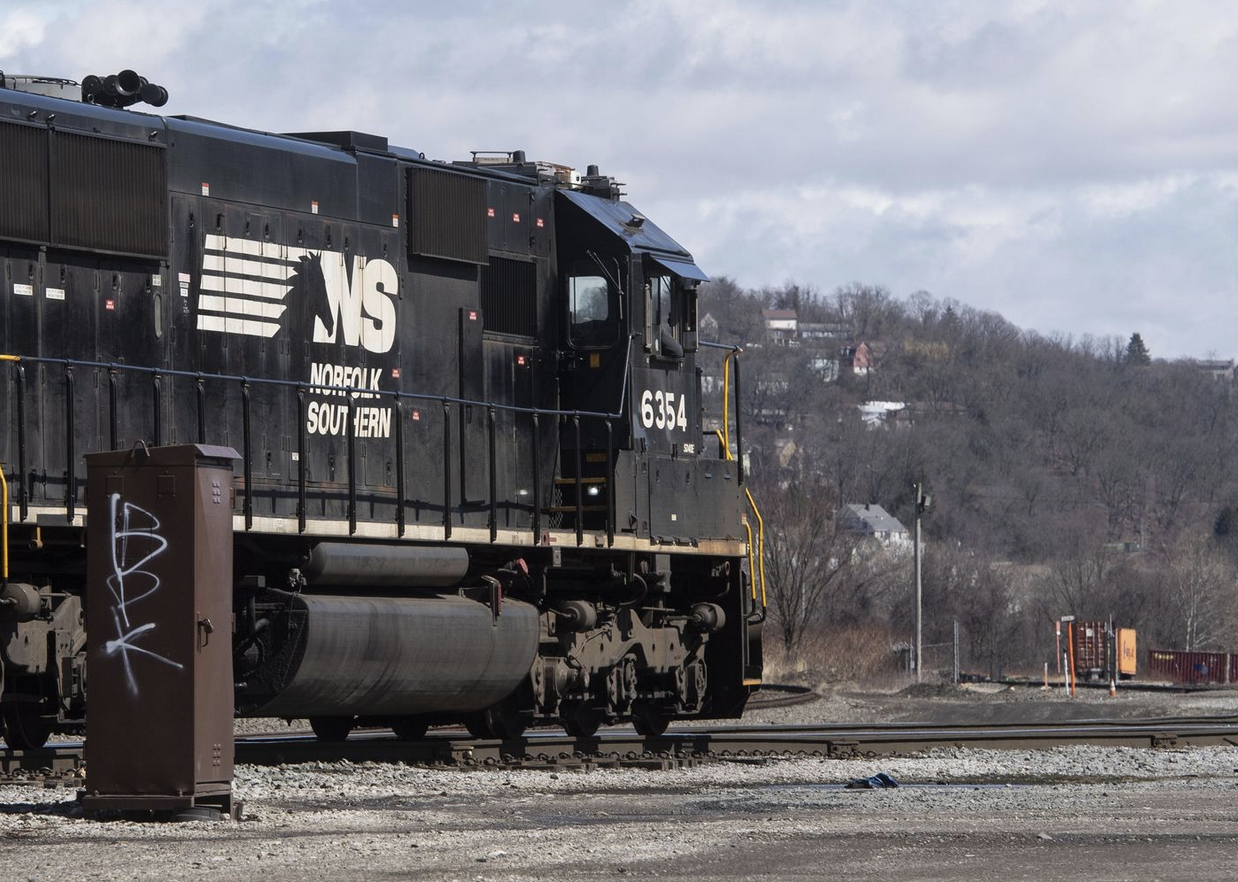
Norfolk Southern loses bid to protect itself from state-court action; Supreme Court justice alludes to recent derailment

A Norfolk Southern employee sued in Pennsylvania but claims
exposure in two other states. (Photo by Nate Smallwood, WSJ)
In a loss for Norfolk Southern Corp., the Supreme Court ruled "that states can require companies to submit to their courts' jurisdiction as a condition of doing business within their borders," reports Jess Bravin of The Washington Post. "Norfolk Southern had sought to limit its state-court liability in states where it does relatively little business. . . . At issue was a Pennsylvania law requiring that companies operating within the state consent to lawsuits filed in Pennsylvania courts—even if the allegations involve conduct that took place elsewhere. Norfolk Southern argued that imposing such liability on the railroad. . . violated the Constitution's due-process clause."

Justice Neil Gorsuch wrote for the majority, "Its cargo? Hazardous chemicals." That suggested "that under the railroad's argument, the Constitution could, in theory, shield the company from some state-court lawsuits while leaving its employees exposed to liability," the Journal reports. "Norfolk Southern's safety practices came under new scrutiny after the February derailment in East Palestine, Ohio, released more than 1 million gallons of hazardous chemicals into the environment. The company is facing multiple lawsuits from the incident."

The case at issue was "a workplace lawsuit filed by a retired railway employee from Virginia, Robert Mallory. . . who alleged he developed colon cancer from workplace exposure to carcinogens. . . while working in Ohio and Virginia but filed suit in Pennsylvania state court in 2017," Bravin reports. "The Mallory case was of interest to businesses nationwide for its potential to limit a practice called forum-shopping, in which litigants try to steer cases into courts they hope will be more sympathetic to their claim. . . . Pennsylvania law authorizes lawsuits against any company registered to do business within the state."

Norfolk Southern "argued it was unconstitutional to give Pennsylvania state courts blanket jurisdiction over any potential claim against the company," Bravin reports. "Not so, Gorsuch wrote. . . . The court had resolved the matter in a 1917 case when it upheld a lawsuit that an Arizona mining company filed in Missouri against its Pennsylvania-based insurance company for fire damage to a smelter near Cripple Creek, Colo. . . . States began adopting such laws, in response to the explosive growth of corporations in the 19th century. States required consent to liability 'in exchange for the rights to exploit the local market and to receive the full range of benefits enjoyed by in-state corporations.'. . . Norfolk Southern, Gorsuch said, had complied with the Pennsylvania requirement for decades."

Thursday, March 02, 2023

In states where abortion is illegal, some physicians are afraid to say the word; women struggle to get needed care

Lauren Miller traveled Colorado for medical care that is
now illegal in Texas. (Photo by Nitashia Johnson, NPR)

Hormone changes, nutritional deficits, and mental worry make pregnancy stressful for women and their bodies. When things go wrong, such as in the case of fetal fatality or an abnormality that prevents viability, women face an entirely new set of stressors. In some states, needed medical care may be illegal -- so illegal that physicians don't even want to say the word "abortion," reports Selena Simmons-Duffin of NPR.

The case of a woman in Dallas is an example of a state with tough abortion laws and no exceptions. "This past fall, when Lauren Miller was 13 weeks pregnant with twins, she got horrible news. One of the twins had trisomy 18, a genetic abnormality that causes about 90% of fetuses to die before birth. The other twin was healthy," Simmons-Duffin explains. "She learned from a genetic counselor that continuing to carry both fetuses could put the healthy one at risk. She saw a doctor who specializes in high-risk pregnancies who told her: 'You can't do anything in Texas and I can't tell you anything further in Texas, but you need to get out of state.'. . .That's exactly what she did. Miller traveled to Colorado and, at 15 weeks pregnant, she had a 'selective reduction' procedure to help ensure her pregnancy with her healthy twin could continue." In Miller's case, she was able to afford to go to another state, but many women do not have the means.

Once Miller had the procedure, she encountered another barrier. "When she returned and continued her prenatal care, she found herself navigating silence around abortion. She wondered if the ultrasound technician knew she'd traveled out of state for an abortion, could she get reported? Miller told Simmons-Duffin, "You don't know where anybody stands, so it feels like we're all kind of talking in code."

"What Miller did does not violate current abortion laws in Texas, legal experts say," Simmons-Duffin writes. "But the fear among doctors and patients in the new legal landscape in Texas is extreme, to the point where some doctors won't say the word 'abortion' in the exam room. Elizabeth Sepper, professor of law at the University of Texas, told Simmon-Duffin, "Physicians have independent speech rights, to speak to their patients openly," she says. "Physicians should not be scared to say the 'a-word.'" Simmons-Duffin adds, "Many doctors in Texas who treat pregnant patients are extremely scared. Especially of language in one of the state's abortion bans that allow people to take civil action against anyone who 'aids or abets' abortion." 

While some many states have abortion exceptions, the exceptions are rarely granted, reports Amy Schoenfeld Walker of The New York Times. "But in the months since the court’s decision, very few exceptions to these new abortion bans have been granted." In Kentucky, the only exception is threat to the woman's life; Alex Acquisto of the Lexington Herald-Leader wrote about two women who had to go out of state because Kentucky laws banning abortion "do not legally permit the standard-of-care treatment for a nonviable pregnancy."

Some think Texas physicians are over-reading that state's law. Amy O'Donnell of the Texas Alliance for Life, an anti-abortion rights group, told Simmons-Duffin that its attorneys "believe there is a constitutional right to interstate travel," but courts have yet to rule on the law and without precedent, it seems physicians will remain fearful. Dr. Andrea Palmer, an obstetrician-gynecologist in Fort Worth, told NPR, "People are scared to talk . . . The law's vague – it's really poorly written. . . . Nobody wants to be defendant number one on this."

Thursday, February 09, 2023

Newspaper publisher 'knew it was wrong,' used the law to be her own attorney and won her case

Darla Downs of the Northern Plains Independent in Wolf
Point, Montana. (Photo by Darrell Ehrlick, Daily Montanan)
Follow the law. Seems pretty straightforward, but in many cases, systems need astute citizens to get that job done. Darla Downs, owner and publisher of Montana's Northern Plains Independent, is a determined journalist who "took on the election of now-former Roosevelt County Attorney Frank Piocos. She couldn’t afford an attorney, so she filed a lawsuit pro se," reports Darrell Ehrlick of the Daily Montanan. "After both parties presented their cases, Judge Katherine Bidegaray ruled that Piocos was not a resident of the county when he ran for election in 2022, and therefore, he was ineligible for the office. She also ordered a new special election."

“This was outside my normal wheelhouse," Downs told Ehrlick. "I knew the law was on my side, and I had the help of plenty of county residents who were on my side. I believe in watchdog journalism, and people knew it was wrong and wanted me to do something.”

Ehrlick explains the conflict: "Piocos had previously been an assistant county attorney, which is not elected. Bidegaray’s decision said under the law, a qualified elector meant a person who has residence in a particular county. Residency is determined largely by where the person lives. . . . . Piocos had even rented office space in the county, but the judge said renting space is not the same as establishing residency, and therefore Piocos was not qualified to run for office in 2022. . . . . Piocos defended his win by claiming that Downs had not challenged his election properly. . . . the judge did not find that point persuasive."

Roosevelt County will now plan its special election, but meanwhile, "Roosevelt County Commission Chairman Gordon Oelkers said he’s been surprised at the number of people coming forward to either help in the interim, or consider running." Oelkers told Ehrlick, "There are not a lot of lawyers up here in this corner of the state. But I’m pleasantly surprised by the number who are willing to help provide guidance and move us in a positive direction."

Ehrlick noted that Downs presented and won her case as her own attorney. Downs told Ehrlick, "I wasn’t not surprised. I was relieved."

The Northern Plains Independent's main office is in Wolf Point, Montana, pop., 2,500. The paper reaches Roosevelt, Daniels, Mc-Cone, Valley, Sheridan or Richland counties.

Wednesday, December 14, 2022

Kansas chief justice creates initiative to address the need for more rural lawyers, as other Plains states have done

Chief Justice Marla Luckert said the lack of attorneys in rural Kansas
areas was at a crisis point. (Photo by Rachel Mipro, Kansas Reflector)

Kansas needs more lawyers. Not just any kind of lawyers; rural lawyers. It's a problem that other Great Plains states have tried to address, and now Kansas Chief Justice Marla Luckert has tackled it, reports Rachel Mipro of Kansas Reflector. "Eighty percent of all active Kansas attorneys live in six urban counties, leaving Kansas rural communities struggling to find legal help." The coal of the Rural Justice Initiative Committee is "attracting attorneys to practices in rural areas."

“We have to recognize that there is not access to justice, and the system of seeking redress for those grievances is unbalanced because it’s financially inaccessible," Luckert told Mipro. "The lack of attorneys constitutes a crisis, damaging the lives of rural residents."

To attract younger attorneys to rural areas, committee members told Mipro, "they would have to address social factors that prevent young attorneys from moving to rural areas, such as the lack of shopping centers, activities and fewer romantic prospects."

"The 35-member committee will collect data on the legal needs of rural populations, make recommendations about existing Kansas rural attorney recruitment projects and study demographic trends," Mipro. reports "At the end of 18 months, the committee will report back to the Supreme Court with its initial recommendations." Luckert told the new committee: "Good luck. It's a big task."

Thursday, April 07, 2022

Supreme Court reinstates, for now, Trump-era rule limiting states' authority over projects that could pollute water

"Conservatives on the Supreme Court on Wednesday reinstated for now a Trump-era environmental rule that limited the ability of states to block projects that could pollute rivers and streams, a decision more notable because Chief Justice John G. Roberts Jr. joined liberals in calling it an abuse of the court’s emergency powers," Robert Barnes reports for The Washington Post. "The fight is over a rule put forward by the Environmental Protection Agency during the Trump administration. It limited objecting states’ ability to stop pipeline and other projects that could pollute navigable waters regulated by the Clean Water Act, reacting to complaints that some states and Native American tribes were abusing their discretion."

In the decision, Justice Elena Kagan criticized the use of the court's emergency docket for what she argued was not an emergency case, a maneuver many call the court's "shadow docket." "The applicants have given us no good reason to think that in the remaining time needed to decide the appeal, they will suffer irreparable harm," Kagan wrote. "By nonetheless granting relief, the court goes astray." Instead, she argued, the case should have had the chance for full briefings and arguments so the court could make a more informed decision.

"Democratic members of Congress have been increasingly critical of the court’s use of the emergency docket, which has expanded since Justice Amy Coney Barrett joined the court to provide a more consistent conservative majority," Barnes reports. "Stephen Vladeck, a University of Texas law professor who has documented the court’s use of the shadow docket, said Wednesday’s order was significant for what it says about the chief justice’s role on the court."

"This is the ninth time that Chief Justice Roberts has publicly been on the short side of a 5-4 ruling since Justice Barrett’s confirmation," Vladeck told Barnes. "Seven of the nine have been from shadow docket rulings. This is the first time, though, that he’s endorsed criticism of the shadow docket itself."

"The high court’s action does not interfere with the Biden administration’s plan to rewrite the rule," Jessica Gresko reports for The Associated Press. "Work on a revision has begun, but the administration has said a final rule is not expected until the spring of 2023. The Trump-era rule will remain in effect in the meantime."

Friday, February 04, 2022

Quick hits: Church sues town over new limits on days for feeding hungry; new resources on rural hunger for journalists

Here's a roundup of stories with rural resonance; if you do or see similar work that should be shared on The Rural Blog, email heather.chapman@uky.edu.

A church in rural Oregon is suing the town over a new local ordinance restricting how many times a week the church can give free meals to the needy. Read more here.

The Rural Health Information Hub has updated its resource guide for journalists for rural hunger and access to healthy food. Read more here.

The chief justice of the Iowa Supreme Court says she'd like to see more programs encouraging lawyers to live and practice in rural Iowa. Student loan debt is an impediment to that, she noted. Read more here.

Mayfield, Ky., faces long-term psychological damage from the recent tornado. Read more here.

Rural adults are more likely to be pessimistic about cancer and feel overwhelmed by information about cancer prevention, a new study shows. Read more here.

Wednesday, August 04, 2021

Lawsuits from conservative groups drive up price tag, timing of Biden minority-farmer relief program, now at risk

"A string of legal defeats for a groundbreaking program to forgive the debts of minority farmers is presenting the Biden administration with a stark choice. It can continue the fight and risk further setbacks or give up and disappoint activists and lawmakers who have championed the cause," Josh Gerstein and Ximena Bustillo report for Politico. "The estimated $4 billion program is under siege by conservative legal groups — including one founded by close aides to former President Donald Trump — who have filed at least 13 lawsuits arguing the debt relief effort unconstitutionally discriminates on the basis of race."

Preliminary injunctions from three judges have blocked the program nationwide until the lawsuits are resolved. The Justice Department usually appeals in such cases, but hasn't yet. "Legal experts say the Biden administration’s best move at the moment might be to huddle with congressional allies and come up with a program more likely to pass muster," Gerstein and Bustillo report. "Otherwise, they say, there’s a danger of provoking court rulings that might undermine other programs aimed at remedying past discrimination." Several legal experts told Politico the program would be overturned if a case reached the Supreme Court.

Friday, April 02, 2021

Study: many legal-aid programs don't work in rural areas because they're designed for cities

"Many legal-aid programs don’t work in rural areas because they are designed to serve large cities, a new research study says. The result is that low-income rural residents aren’t getting equal access to justice, according to a new paper published in the paper in the Georgetown Journal on Poverty Law Policy," Olivia Weeks reports for The Daily Yonder.

The report, based on case studies in northern Minnesota and Wisconsin, found that such programs fail the rural poor in three ways: they don't account for the lack of broadband access, they incorrectly presume that anyone in crisis can competently serve as their own attorney, and their standards for justice don't line up with rural Americans' expectations, Weeks reports.

Northern Minnesota and Wisconsin have high poverty rates, low employment, an economy mostly reliant on mining, and "an absence of large legal firms, limited social services, and rural lawyer shortages that are accelerated by a graying pool of local attorneys. 'Legal deserts' like this one significantly reduce the efficacy of state and federal legal aid funding. Even if the cash support is there, the practitioners aren’t around to take advantage of it," Weeks reports. "In rural areas, only 14 percent of civil litigants receive legal assistance. The other 86% are left to defend themselves in court. This rate of civil representation is less than half the national average." The authors say defendants in rural Wisconsin can wait as long as four months for a public defender. 

The authors write that lawmakers' access-to-justice solutions are often inaccessible to rural defendants: "Most simply, the initiatives touted as advancing 'equal administration of justice for all' often prove to be the very same self-help forms, helplines, and online resources that low-income rural residents identify as barriers to justice." 

Lack of broadband access, lower tech literacy, and too little legal guidance also make a just legal result less likely for the rural poor, they write: "Without addressing the rural digital divide, the ability of technology to close rural civil justice gaps remains limited."

Friday, August 21, 2020

Ark. papers honor legislator who sponsored law requiring governing bodies to record their meetings, keep recordings

Arkansas Rep. Vivian Flowers
The Arkansas Press Association is giving its Freedom of Information Award to the legislator who sponsored a law requiring governing bodies to make audio recordings of all their meetings and keep them for a year. The legislation "is one of few substantive improvements" to the state open-records law in an era when "legislators most often have tried to claw back transparency provisions in the bill, APA reports.

"Flowers filed the bill . . . after a constituent raised concerns to her about inaccuracies in the meeting minutes of one local governmental entity," APA reports, noting that minutes "may describe in a few words what government leaders took two hours to debate, not to mention that sometimes important comments get cut from minutes entirely, Flowers said."

Flowers introduced the measure during the final days of the 2019 session, but it got 18 co-sponsors, including “both arch conservatives and arch liberals,” Flowers noted. She said the bill would be of particular help to journalists who are unable to attend meetings.

Quick hits: baby chicks DOA because of mail delays; rural legal deserts a critical health determinant, study finds

Here's a roundup of stories with rural resonance; if you do or see similar work that should be shared on The Rural Blog, email us at heather.chapman@uky.edu.

Legal experts question move that leaves William Pendley in power at the Bureau of Land Management. Read more here.

Mail delays cause chicks, ducklings and seedlings to be delivered dead, and "Replacement parts for farm machines are late in coming. Prescription refills are taking a week or more to reach mailboxes, a particular threat because rural communities are older than most of America," The New York Times reports.

Rural legal deserts are a critical health determinant, study finds. Read more here.

Traditional farming releases carbon from the soil into the air; a practice known as "regenerative agriculture" could help put it back. Read more here.

Wednesday, July 01, 2020

Part of Roundup settlement could help some Midwestern row-crop farmers hit by dicamba drift stay afloat

"Largely overlooked in Bayer’s $10.5 billion Roundup settlement last week was a $400 million agreement to settle claims of crop damage from dicamba drift, a deal that could help some struggling farmers stay afloat," Ryan McCrimmon reports for Politico's Morning Agriculture. "Claims from the 2015 to 2020 growing seasons will be covered by the settlement, and farmers not involved in the litigation are still able to submit claims if they provide proof of damage to crop yields and evidence that it was due to dicamba, according to a Bayer spokesperson."