Showing posts with label restaurants. Show all posts

Friday, November 07, 2025

Quick hits: The American baked potato; rural deputies get EMS training; 6 states ban lab-grown meat sales; building homes in small town Vermont

American-grown potatoes are still affordable and 
delicious. (Idaho Potato Commission photo)
In a time when going to the grocery store can be both expensive and discouraging, it's good for Americans to reignite their love for the humble, versatile and still affordable baked potato. "The baked potato has always been big and great," writes Eric Kim of The New York Times. "These days, a long Idaho tuber, split down the middle like a hot dog bun to reveal fluffy white starch, a pat of butter nestled into the left side, is still big and — more important — great, with its perfect creamy-crunchy-fresh combo of sour cream, chives, cheese and bacon." Find recipes here

A rural sheriff in Montana is working to help the region's emergency responders by using "some of his department’s budget to restart a first responder medical training and certification program for deputies to be able to supplement emergency medical providers and help provide care when they are first to the scene of an incident," reports Blair Miller of the Helena Independent Record. Often, when accidents occur in rural Montana, law enforcement arrives well before medical emergency teams. In his announcement, Sheriff Tom Grim said he believes that if deputies could provide medical assistance to victims before an ambulance arrives, their additional training could save lives. 

Six states have passed laws banning cultivated meat.
(Graphic by Adam Dixon, Offrange)
Where's the meat? According to several states, only animals are meat. "Livestock powerhouse Nebraska became the sixth state to preemptively ban the sale of cultivated meat," reports Jaclyn De Candio for Offrange. Nebraska joined the "beef with cultivated meat" by joining states that already ban the sale of lab-grown meat, including Florida, Alabama, Mississippi, Montana and Indiana. "Florida was the first to pass such a law, and in several cases, companies like UPSIDE Foods already filed lawsuits challenging these restrictions on constitutional and commerce grounds. . . . While laboratory meat products are indeed made from real cattle cells, they give pause to many."

Power grids across the country need upgrades, and areas of the Midwest will get them. "The Department of Energy closed a $1.6 billion loan guarantee for transmission upgrades in the middle of the country — a move that comes as the Trump administration slashes funding for other grid improvements, including a separate transmission megaproject in the Midwest," reports Alexander C. Kaufman of Canary Media. The financing will enable a subsidiary of American Electric Power to "overhaul around 5,000 miles of power lines across Indiana, Michigan, Ohio, Oklahoma, and West Virginia."

A bucket of Kentucky Fried Chicken may be a game-day crowd-pleaser, but the chain has been struggling against competitors that offer on-the-go chicken. "Consumers eat 26% of their fast-food orders in their cars," reports Heather Haddon of The Wall Street Journal. To recapture its market share, the company is revamping its menu to compete with newcomers like Chick-fil-A and Canes. "KFC this month brought back its Original Honey BBQ sandwich, introduced in the late 1990s, at a discounted $3.99 price. The announcement swiped at Chick-fil-A while championing its own sandwich: 'bigger than Chick-fil-A’s AND available on Sundays.'"
Jonah Richard’s first development project was once home to a post office. It now consists of eight apartments and a coffee shop. (Photo by David Littlefield, Vermont Public Media)

Despite the daunting challenges of building affordable housing in New England, a homegrown Vermonter found a way to get it done. "Not so long ago, Jonah Richard spent his days working for a white-collar consulting firm in New York City. Now, he fills his time bopping between construction sites in the corner of Vermont where he grew up," reports Carly Berlin of vtdigger. "His philosophy of trying to squeeze more housing into any possible nook and cranny in a building, and in a town – guides all of the projects that Richard takes on through his small construction company and development business. . . . State officials want to clone Jonah Richard."

Tuesday, August 26, 2025

Cracker Barrel faces backlash after logo rebrand

The old logo was first used in 1977. 
(Cracker Barrel image)
Since its launch in 1977, Cracker Barrel's signature logo, with its rustic charm, bib-overall-clad farmer and barrel, has symbolized a cozy place where weary travelers could eat a hearty meal, shop in the old-timey store and hit the road refreshed. When the company released its logo update last week without the farmer or the barrel, an uproar ensued.

The chain replaced its nearly 50-year-old logo with a "streamlined version featuring just the chain’s name," reports Heather Haddon of The Wall Street Journal. "The move engulfed the restaurant in a culture-war firestorm, with commentators online and some customers accusing Cracker Barrel of eschewing its country charm and heritage for a sanitized image."

The heated dust-up has "shaved tens of millions of dollars from the public company’s market value, spawned calls for boycotts and risked the casual-dining chain’s turnaround plan," Haddon explains.

Cracker Barrel hasn't made any move to step back from the logo update, but released a statement saying, "We could’ve done a better job sharing who we are and who we’ll always be. . . .We know we won’t get everything right the first time, but we’ll keep testing, learning and listening to our guests and employees.”

The new logo is part of the company's 3-year rebranding plan aimed at addressing declining sales and mediocre scores by remodeling stores and updating menu options. Haddon reports, "After catering to retirees and families on road trips, Cracker Barrel now aspired to court younger guests."

Meanwhile, online forums have continued to push Cracker Barrel to ditch the new logo and store changes. Haddon adds, "Others wondered why the controversy was occurring in the first place."

Tuesday, June 17, 2025

Trump pauses raids on farms, service businesses, but many sweeps continue

Strawberry pickers in Plant City, FL. (Adobe Stock photo)
Some immigrants who have continued work at farms, restaurants, hotels and meatpacking plants have been swept up during Immigration and Customs Enforcement raids, report Ted Hesson and Marisa Taylor of Reuters. A senior Trump official familiar with the situation said President Donald Trump "was not aware of the extent of the enforcement push and 'once it hit him, he pulled it back.'"

"Trump's administration has directed immigration officials to largely pause raids," Hesson and Taylor write. "The order to scale back came from Trump himself … and appears to rein in a late-May demand by top White House aide Stephen Miller for more aggressive sweeps."

Last week's instructions limiting raids "still allows for investigations into serious crimes such as human trafficking," Reuters reports. Democrats called on the White House to pull back on ICE's "aggressive tactics. … Some Republican lawmakers have called on the administration to focus on criminal offenders."

Most American agriculture, including dairy and farm animal care, is supported by migrant workers. Hesson and Taylor add, "U.S. farm industry groups have long wanted Trump to spare their sector from mass deportations, which could upend a food supply chain dependent on immigrants."

The United Farm Workers union remains "skeptical the new directive will help workers without legal status," Reuters reports. "The group said it had calls from members about immigration arrests even after the new directive was issued."

On Friday, UFW issued a stern response to Trump's Thursday order to pause farm raids: "Many companies stayed closed today due to the presence of roving federal agents, especially Border Patrol. … As long as Border Patrol and ICE are allowed to sweep through farm worker communities making chaotic arrests … they are still hunting down farm workers."

Friday, January 17, 2025

Quick hits: Fast food's big-priced burgers; last-mile broadband; mapping the universe; the 'Siberian Express'

Once upon a time, fast food burgers were budget-
friendly. (Adobe Stock photo)

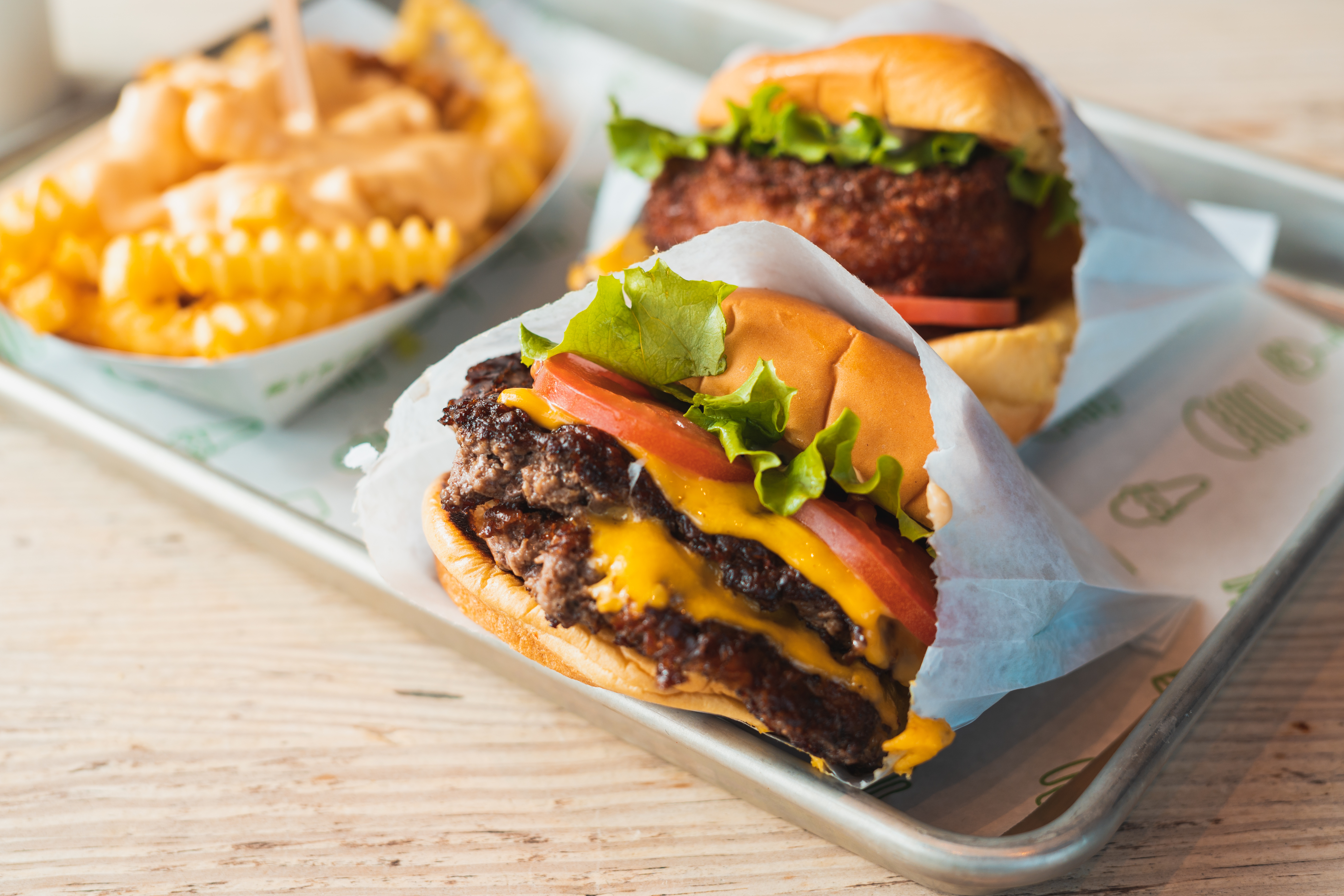
Fast food: reliable, tasty, cheap and right around the corner... or so you thought. While fast food is readily available, your bank account might not be prepared for the ever-increasing prices for the simplest of meals. "Late last year, customers labeled several popular restaurants as "overpriced," "expensive," and a "rip-off" in a national survey," said Megan Schaltegger for Delish. With the most expensive fast food basic burger ringing in at $12.89, the idea of cheap may have gone out the drive-through window.

U.S. farmers have the stinky and expensive job of managing "the hundreds of billions of pounds of waste produced by America’s dairy cows," reports Kenny Torrella of Vox. "Biodigesters," also known as "biogas," are the so-called panacea some farmers are using to turn cow poop into energy profits. However, "biodigester critics say that, at best, the process is a costly and inefficient use of America’s precious climate funding."

E-BRIDGE will help last-
mile projects. (A.S. photo)

Attract new business, support what already exists, and broaden the economic scope for communities. These are what are to come with increased broadband access in rural areas that was recently signed into law. “The E-BRIDGE Act removes hurdles for broadband projects under Economic Development Administration grants, including difficult last-mile efforts that often delay rural broadband deployment,” wrote Justin Harclerode in the Transportation and Infrastructure Committee’s press release. Luckily the Act has been gaining support since its introduction on March 23, 2023. “In some cases, just completing that ‘last mile’ is what stands in the way of connecting people to a job they need. The E-BRIDGE Act will help spur projects that attract jobs and businesses to expand economic development and opportunity in rural and poor communities,” said Chairman Sam Graves.

Siberia is vast and frigid.
(Wikipedia photo)
A blast from "the coldest place on earth is set to blanket much of the U.S. . . temperatures could fall even lower than the previous round of cold," reports Tyne Morgan of Farm Journal. "We’re bracing for what’s called the 'Siberian Express.' What exactly is the Siberian Express? It’s when arctic air spills into the U.S., and it can have multiple sources, including Arctic Canada, Alaska, and in this case, Russia’s Siberia region, which is home to the coldest place on earth.

During his presidential term, Jimmy Carter had solar panels installed on the White House roof. He wanted the country to embrace a national energy plan based on conservation. While his vision did not come to pass -- Ronald Reagan had the panels removed in 1986 -- the life of the solar panels continued, reports Austyn Gaffney of The New York Times. "They were picked up at a bargain price by a small college in Maine, where they continued to generate power for years, and eventually ended up scattered around the United States and China. . ." 

It may look like a giant trumpet, but NASA's SPHEREx will create a colorful and dynamic
map of the universe. (NASA photo via The Conversation)

Space exploration fans around the globe will be treated to "a slate of exciting space missions in 2025," reports Zhenbo Wang for The Conversation. "NASA’s Commercial Lunar Payload Services initiative aims to deliver science and technology payloads to the Moon using commercial landers. . . . .NASA has several CLPS missions planned, including deliveries by companies Astrobotic, Intuitive Machines and Firefly Aerospace. In February 2025, NASA plans to launch SPHEREx. . . . [It] will create a comprehensive map of the universe by surveying and collecting data on more than 450 million galaxies along with over 100 million stars in the Milky Way."

Tuesday, October 22, 2024

Rural Main Street businesses have struggled, but some entrepreneurs have taken on the challenge with success

Over the past two decades, rural Main Street rehabs have proved challenging to create and sustain, but some entrepreneurs have seen "the blight as an enticement — not a deterrent," reports Lori Ioannou of The Wall Street Journal. "Many Main Streets are riddled with shuttered storefronts and struggling businesses. Here is a look at three entrepreneurs who challenged the odds on Main Street, and how they fared."
Harvey and his "Delta Dirt" family


Harvey Williams Jr. moved his family from the big city of Dallas to rural Helena-West Helena, Ark., where he grew up. Williams was an agricultural engineer, and as he explored business potentials in his hometown "he was inspired to create Delta Dirt Distillery at 430 Cherry St., making sweet-potato vodka from produce harvested on his family’s farm," Ioannou writes. "The distillery opened in April 2021, and locals began spreading the word on social media. . . . The distillery has become a tourist attraction, and many also take a tour of the Williams farm to learn about the history of Black farmers in America."

While on vacation, Jennifer Jones and her husband Brian fell in love with Big Stone Gap, a former coal town of about 5,300 people "nestled in the Appalachian Mountains," Ioannou reports. The couple closed their California business and moved to the western Virginia town. "In April 2022, they bought a struggling vegan pizzeria and its building on 215 Wood Avenue East. At the time, Wood Ave. East was a shadow of its former glory, lined with failed and struggling businesses."

The Jones family helped revive Big Stone Gap's
Main Street businesses.
The Jones' efforts were rewarded by an outpouring of community support. "The town manager and other local small-business owners and residents pitched in to help get the business up and running," Ioannou writes. "For their part, the Joneses have supported community events and hosted local festivals that have helped market the business. That pay-it-forward mentality among civic leaders and small-business owners has ignited a small-business revival in Big Stone Gap."

Not every Main Street venture is a success. For Bill Waterhouse and his partner, Sonja Olbert, being able to pursue their passions and help their small community meant adapting. Read their story here.

Tuesday, August 06, 2024

Some U.S. consumers 'ditched' restaurants and brand products over prices, but companies aim to win them back

More than 70% of consumers believe they are being
overcharged for food. (Adobe Stock photo)

Eating out or buying groceries has gotten so expensive that some Americans have crossed restaurants and brand food items off their lists. In response to consumer rejection, food makers and restaurants are hawking special prices, improved quality and novel product packaging to woo customers back "to brands they ditched as prices skyrocketed," report Jesse Newman and Heather Haddon of The Wall Street Journal. "Restaurant chains are promoting deals . . . . Food manufacturers are rolling out more discounts and introducing new products, such as 'Star Wars'-themed Oreos."

Efforts by food companies to maintain past revenue gains while lowering prices is a corporate balancing act. Meanwhile, increasing food prices has become a political hot button. "Many consumers and politicians have said they are angry about growing corporate profits while household budgets don’t go as far as they used to," the Journal reports. "Moderators opened June’s presidential debate with a question about sharply higher costs for groceries and housing."

Food executives have repeatedly said U.S. consumers will eventually adjust to higher prices, and emphasized that despite profit increases "they did not gouge consumers and are working to keep prices as low as possible," Newman and Haddon write. "They have said that they need to maintain their profit margins to fund new products and that a number of expenses. . . surged in recent years and have remained high. . . . Still, more than 70% of consumers believe that restaurants, supermarkets and food manufacturers are overcharging. . ."

The word "value" has become restaurants' new mantra. The Journal reports, "Restaurant Brands International’s Burger King and McDonald’s kicked off limited-time $5 meal deals. Inspire Brands’ Sonic sought to one-up its burger competitors by launching a permanent $1.99 menu in July."

While some food companies opt to use lower prices to attract purchases, others are using coupons or product enhancements, such as "fudgier brownies," to get consumers to try their brand again. The Journal adds, "some food executives and analysts have warned that wooing consumers back will be a slow process or require more investments than companies anticipate."

Friday, May 10, 2024

Many Americans have had enough of high food prices. Restaurants and food manufacturers report slow sales.

Some consumers have given up their iced lattes to
save cash. (Adobe Stock photo)
Americans are exasperated by grocery prices that have remained high despite U.S. inflation numbers trending down. Besides shopping sales and driving from store to store for deals, many citizens are ditching more brand names and drive-up habits to save money. "Some consumers are hitting their limits," report Heather Haddon and Jesse Newman of The Wall Street Journal. "Restaurant chains and some food manufacturers are reporting sliding sales or slowing growth that they attribute to consumers' inability— or refusal — to pay prices that are in some cases a third higher than pre-pandemic times."

Starbucks, McDonald's, Wendy's and Nabisco are a few corporations that reported or are predicting sliding U.S. sales. "Coffee drinkers are leaving Starbucks's loyalty program. Chips Ahoy cookies are lingering longer on grocery-store shelves. Fewer customers are ordering at fast-food drive-throughs and kiosks," Haddon and Newman write. "U.S. fast-food traffic declined 3.5% in the first three months of this year compared with the same period in 2023, according to market-research firm Revenue Management Solutions."

Historically, American shoppers have resigned themselves to higher food and staple prices, and some grocery store executives say that today's consumers will eventually make a similar adjustment. But that's not happening for restaurants. "McDonald’s and other restaurant chains have warned for months that consumers are reining in spending, particularly low-income diners," the Journal reports. "But the depth of their recent pullback still caught some U.S. restaurant executives by surprise, they said last week."

In response to the consumer rebellion, companies are offering deals, sales and snack sizes to increase foot traffic. "McDonald’s and Starbucks plan to launch more promotions and communicate them more clearly to consumers. Mondelez [Nabisco parent company] said it would offer pricing specials and smaller pack sizes, and Kraft Heinz is rolling out new mac & cheese products," Haddon and Newman add. For the first time in its history, Starbucks "will open up deals limited to its app to customers who aren’t loyalty members."

To read how some Americans use creative ways to tamp down their grocery bills, click here.

Friday, November 03, 2023

Finally Friday quick hits: Top rural restaurants, the 70-ingredient sandwich; farmer side hustles, Snoopy therapy

Amano’s in Caldwell, Idaho. L.A. Birria Tacos, left,
(braised beef & quesillo); right: Chef Salvador Alamilla
What's for dinner tonight? Consider one of these gems, or take a peek at their menus for inspiration. Here's the 13 Best Restaurants in Rural America 2023.

To help fill in money gaps, many farmers find creative ways to bring in additional income. "Many turn to the online resale market to buy items for cheaper prices or a place to sell quality items for extra money when economic times are uncertain," reports Marion Kirkpatrick of RFD-TV News, which covers rural America. "While it takes hard work and dedication to pick up this 'side hustle,' it can be a great outlet for farmers and rural Americans to help make ends meet." Here are six things farmers can sell online.

While research into beef consumption isn't always encouraging for meat eaters, it can be good to stay informed on what science is telling us now. Even if we're still going to have steak tonight.
Illustration by TCD, Prod.DB, Alamy via The Atlantic

If you're overwhelmed by extreme weather, war, corruption, elections and life in general, reading Snoopy can help, advises Elise Hannum of The Atlantic. "Snoopy can’t help but feel overwhelmed in a tumultuous world. Sound familiar?"

As the world’s beaches and oceans have become one giant ashtray, research has accelerated on what many are calling a global crisis: cigarette butts, reports Jude Isabella of Hakai magazine. "Researchers have published a number of studies in 2023 on the problem of cigarette butt littering, from a review of studies on environmental contamination to a global analysis of the crisis. In fact, the number of studies is on the rise, with researchers publishing twice as many in 2022 compared with 2021."

Yes, it’s back. It always comes back. (McDonald's photo)
The strange and surprising journey of McDonald's McRib begins in a Nebraska lab and ends with a 70-ingredient sandwich. "Roger Mandigo is an emeritus University of Nebraska animal science professor credited with the technology that made the McRib possible," reports Peggy Lowe of NPR. "And here's its story, straight from the meat scientist's mouth." For fans, the McRib is coming back to select restaurants in November 2023, reports Mary Walrath-Holdridge of USA Today.

Thursday, June 23, 2022

Invasive Asian carp get a new name, 'copi', to entice diners, but will they bite? And will the FDA approve the name?

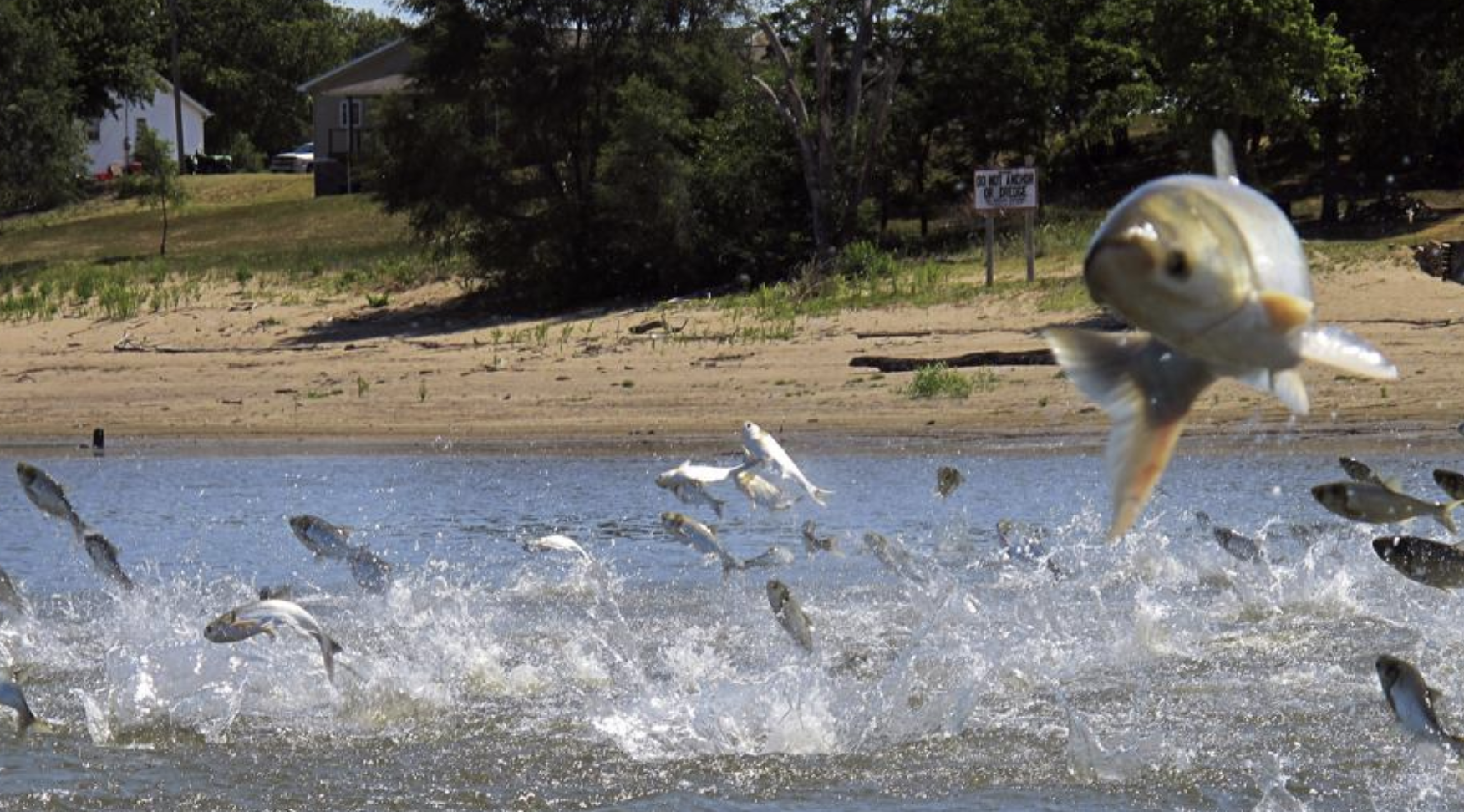
Asian carp jump from the Illinois River after being jolted by an electric current. (Associated Press photo by John Flesher)

You may have seen Chilean sea bass on the menu at a fancy restaurant. But the now-prized fish only landed on high-dollar menus after an enterprising fish wholesaler changed its name from the Patagonian toothfish and pitched it as a delicacy.

The State of Illinois is trying to do the same thing with Asian carp, an invasive fish that threatens ecosystems in the Mississippi River watershed. The state and partner organizations "kicked off a market-tested campaign Wednesday to rechristen as 'copi' four species previously known collectively as Asian carp, hoping the new label will make them more attractive to U.S. consumers," John Flesher reports for The Associated Press. "The federal Great Lakes Restoration Initiative is funding the five-year, $600,000 project to rebrand the carp and make them widely available. More than two dozen distributors, processors, restaurants and retailers have signed on. Most are in Illinois, but some deliver to multiple states or nationwide."

The name comes from "copious." State and federal officials have tried everything from fishing tournaments to bubbles and noisemakers to get invasive Asian carp out of U.S. waterways, but what to do with the captured fish has been an enduring problem. The fish show promise as pet food or fertilizer, and a processing plant in Western Kentucky exports carp to Asian audiences, where it's a popular food. It could be an easy and abundant food source in the U.S., too, if more people were willing to try them. Flesher reports. "Officials estimate up to 50 million pounds (22.7 million kilograms) could be netted annually in the Illinois River between the Mississippi and Lake Michigan. Even more are available from the Midwest to the Gulf Coast."

The state will seek approval from the Food and Drug Administration, "which says 'coined or fanciful' fish labels can be used if not misleading or confusing," Flesher notes. "Other regulatory agencies and scientific groups have their own policies and might not make the switch. The American Society of Ichthyologists and Herpetologists and the American Fisheries Society have a committee that lists fish titles, including scientific names in Latin and long-accepted common names. The panel never adopted 'Asian carp' as an umbrella term for the invasive species. The U.S. Fish and Wildlife Service plans to stick with 'invasive carp' and the four individual names, as its focus is on managing and controlling their spread."

Friday, April 08, 2022

Five-star restaurant and boutique hotel dominates a rural Virginia town, even the county, and it plans to get bigger

The new Patty O's replaced a local cafe. "A contractor floated the idea of saving money by installing painted Styrofoam beams," Tim Carrington reports. The idea was "waved away derisively" by the owner. (Luke Christopher, Foothills Forum)

About 225 people work at The Inn at Little Washington, a boutique hotel with a five-star restaurant in the county seat of Rappahannock County, Virginia, which was created before Washington, D.C., which lies 90 miles to the west and provides much of the enterprise's business. IT's the county's largest private employer, and it wants to get even bigger and "translate its dazzling culinary success to a broadened hospitality and retail enterprise," Tim Carrington reports for the Rappahannock News and the Foothills Forum, a local philanthropy that bolsters the weekly newspaper's coverage.

Rappahannock County (Wikipedia map)
The story is not just a news feature. Carrington writes, "In a county marked by divisive fights over new structures and new ideas, the Inn’s inventions might be expected to ignite the next culture war. In the 1990s, some local residents railed against the Inn’s postcard-perfect renovations and its parade of glitzy visitors. And the more recent displacement of the humble Country Cafe to make room for the upscale Patty O’s stirred resentful notes on the county’s RappNet listserv. But Washington residents have become accustomed to living in a company town, aware that the Inn generates as much as $600,000 in meals and lodging taxes for Washington’s coffers. A back-of-the-envelope calculation suggests that another 10 rooms would harvest an additional $100,000 in taxes for the town."

That's a lot of money for a town of only 130 people. The inn owns 25 structures in Washington, and has only 23 rooms, most of which cost over $1,000 a night. It wants to add as many as 10, plus an event space, pool, fitness center and spa, and maybe cottages "for guests seeking regular access with few maintenance burdens," Carrington reports. "A meal for two at the Inn – after a bottle of wine and payment of state and county taxes – tops $600."

The proprietor and chef is Patrick O'Connell, 76. Carrington writes, "A recent documentary features O’Connell about to sample an offering from a nervous sous-chef seeking approval; the fork poised mid-air, a smiling O’Connell says, 'It’s either art or it’s garbage.'" The restaurant is the world's longest-tenured Forbes Travel Guide five-star eatery, one of 14 Michelin Star restaurants in the U.S. and the only one on the East Coast outside New York City. The hotel is the longest-tenured American Automobile Association 5 Diamond Award winner for combined accommodation and restaurant.

Friday, March 04, 2022

Quick hits: Appalachian businesses sought for local food guide; webinar covers public transit's role in rural health-care access; exposé prompts Ala. police chief resignation

Here's a roundup of stories with rural resonance; if you do or see similar work that should be shared on The Rural Blog, email us at heather.chapman@uky.edu.

The Agriculture Department has announced 11 regional positions, including three Farm Service Agency state executive directors and eight Rural Development state directors. Read more here.

Here's a great example of a metro paper doing due diligence in rural accountability reporting: In Brookside, Ala., pop. 1,253, a police chief hired in 2018 spearheaded an effort to bring in more revenue through fines and civil forfeitures. Revenue from such tactics increased by 640% from 2018 to 2020. Meanwhile, the town's part-time municipal judge and prosecutor also got outsized pay raises. The police chief resigned in January after AL.com published the first story about the issue. Read more here.

Appalachian Sustainable Development is seeking farmers, food producers, breweries, wineries, restaurants, farmer's markets, food pantries, small businesses, and more to add a free listing to its Local Food Guide. Read more here.

A recent Rural Health Information Hub webinar explored the role of public transportation in rural health-care access, especially for seniors and those with disabilities. Listen to the recording here.

Tuesday, March 01, 2022

Some states and counties are yanking Russian-made liquor from stores; what about your local bars and stores?

"At least 11 states, including Oregon, North Carolina and West Virginia, have banned the sale of Russian-made alcohol to denounce Russia’s invasion of Ukraine," Joseph Pisani reports for The Wall Street Journal. Local bans are cropping up too, such as in Montgomery County, Maryland. All the states and counties with such bans control liquor sales or have government-owned liquor stores.

Most states have been careful to specify the removal of specific brands such as Russian Standard, Hammer & Sickle, and Ustianochka. That's because Russian vodka sales in the U.S. have plummeted nearly 79% since 2011, and now account for about 1% of sales nationwide, Jordan Valinsky reports for CNN. Other brands with Russian names, like Smirnoff and Stolichnaya, are actually produced elsewhere, Pisani reports. Smirnoff is owned by a British company and manufactured in Illinois, while Stoli is made in Latvia and headquartered in Luxembourg.

However, some bars are pouring out Smirnoff and/or Stoli as a gesture of solidarity. Terry Compton, co-owner of Uncorked Wine & Spirits in Shawnee, Okla., pulled Stoli and Russian Standard from the shelves on Saturday. Though he's aware that Stoli is manufactured and bottled in Latvia, Compton "said he removed it because Stoli’s labels say it uses wheat from Russia, where it’s distilled, and then taken to Latvia," Pisani reports. "A spokeswoman for Stoli said a small amount of wheat comes from Russian farmers, which it plans to stop doing."

Compton said he's replacing the Stoli and Russian Standard with Ukrainian-made Khor. "We want to do everything we can, even if it’s a small part, to support the Ukrainian people," he told Pisani.

Friday, September 17, 2021

Quick hits: Firefly tourism; gray wolves; potty-trained cows; right-to-repair laws; are hospitals publishing their prices?

Fireflies at Grandfather Mountain in North Carolina. (Washington Post photo by Travis Dove)

Here's a roundup of stories with rural resonance; if you do or see similar work that should be shared on The Rural Blog, email heather.chapman@uky.edu.

Researchers released the first-ever comprehensive study of firefly tourism this year. They found that about 1 million tourists across the globe travel to witness firefly-related phenomena each year. That includes the famous synchronous fireflies in the Great Smoky Mountains; that's been getting increasingly popular for years, but the pandemic may have boosted its popularity even more this year as cooped-up tourists flocked to outdoor spots felt to be safer than indoors. Read more here.

The gorgeous but unwelcome spotted lanternfly
(Associated Press photo by Matt Rourke)
However, in news of less-desirable insects: A boy's bug collection at the Kansas State Fair last week
included a spotted lanternfly, which has triggered a federal investigation. The invasive species has been devastating trees and crops throughout the Mid-Atlantic states for years, but Kansas is more than 850 miles west from its nearest known location. Read more here.

Few hospitals in Maine, the most rural state by percentage of population, are complying with a federal rule requiring them to publish detailed prices of medical procedures for insured and uninsured patients. Are your local hospitals complying? Read more here.

The U.S. Fish and Wildlife Service administration may restore federal protections for gray wolves in the western U.S. after laws in some states have made it much easier to kill the predators. USFW has begun a year-long biological review to determine if such a step is necessary. Read more here.

In its first meeting last week, the White House Competition Council discussed advancing right-to-repair laws that would bar companies such as John Deere from blocking customers or independent repair shops from fixing tractors and other machinery. President Biden called for the formation of the council in a July order aimed at increasing economic competition. Read more here.

The Agriculture Department "accepted offers for more than 2.5 million acres from agricultural producers and private landowners for enrollment through this year’s Grassland Conservation Reserve Program signup," Ximena Bustillo reports for Politico's Weekly Agriculture. "This is double last year’s enrollment and brings the total acres enrolled across all CRP sign ups in 2021 to more than 5.3 million acres, surpassing USDA’s 4-million-acre goal. Producers and landowners submitted offers for nearly 4 million acres in Grassland CRP, the highest in the signup’s history. The top submitters included Colorado, South Dakota, Nebraska, Montana, and New Mexico." Read more here.

Restaurants and businesses are asking Congress for more pandemic aid, but it could be a long shot since Congress is mostly occupied on hashing out the infrastructure package and a Democratic health-care, education and climate bill. Read more here.

As Republican lawmakers in Ohio work to limit drop boxes and early voting, rural voters in Ohio—and likely elsewhere—said in a poll that they want expanded voting options. Read more here.

Appalachian musicians are tackling the complicated topic of coal—and trying to inspire change—through song. Read more here.

Many rural regions that rely on tourism and drive-through visitors are finding it beneficial to install charging stations for electric vehicles. Read more here.

With 1.4 billion cows on earth, cow waste—from both ends—adds up to become a significant driver of climate change. But scientists in Germany and New Zealand have an innovative solution: potty-trained cows. A German herd has been successfully taught to relieve themselves only in a designated area nicknamed the "MooLoo." Read more here.

Friday, August 13, 2021

Quick hits: Tips for using drones in journalism; book shows how urban-based news leaves rural residents behind

Here's a roundup of stories with rural resonance; if you do or see similar work that should be shared on The Rural Blog, email heather.chapman@uky.edu.

Most journalists for nationwide publications work in large cities and produce news with similar audiences in mind. Media scholar Nikki Usher writes about how that alienates rural audiences in her new book News for the Rich, White, and Blue: How Place and Power Distort American Journalism (Columbia University Press, $30). Read more here.

Why the South is the epicenter of anti-abortion sentiment. Read more here.

Housing was already scarce in the Lake Tahoe-area town of Truckee, California; the pandemic-driven remote worker boom made it worse. Read more here.

Here's some tips on using drones for multimedia journalism. Read more here.

Noted Appalachian author Gurney Norman sat down for a chat with Dee Davis of The Daily Yonder after learning that a Kentucky town is naming a new neighborhood after him. Read more here.

A "cookie cutter" nationwide plan to reach Democratic voters won't help rural Democrats, writes a rural political strategist. Read more here.

New Agriculture Department market reports could help cattle producers make more money. Read more here.

For the first time, the average pay for supermarket and restaurant workers nationwide tops $15 an hour, but not everywhere. As competition for workers heats up, large retailers and other major employers are boosting their starting wages. That could help rural employees, where wages tend to be lower, but could hurt smaller local competitors who will feel obliged to follow suit. Read more here.

A soon-to-be-released documentary tells the story of hunger in rural Wisconsin during the first year of the pandemic through the eyes and voices of five rural food pantry directors. Read more here.

Thursday, May 06, 2021

Rural chef is 'queen of the food scene' in Kentucky and recognized nationally; webinar tonight to discuss cookbook

Ouita Michel
Ouita Michel (Photo by Rob Bolson)
One might expect to head to a major city for nationally recognized restaurant food, but Central Kentuckians are lucky enough to have Ouita Michel nearby. Michel, who owns eight restaurants in and around Lexington, has been nominated multiple times for James Beard Foundation awards ("Oscars of the food world")for Outstanding Restauranteur and Best Chef in the Southeast.

She earned those nominations by serving up locally sourced cuisine with home-cooked flair, reflecting her childhood in rural Wyoming and New Orleans and her life in Kentucky since 1972, Rob Bolson reports for Kentucky Monthly. Using local products has a dual purpose, hen reports: "As stated on her website, her use of local foods helps sustain Bluegrass-area family farms and provides her customers with the freshest, best-tasting fine cuisine. Her restaurants reportedly have purchased more than $3 million of Kentucky-grown meats, dairy products, fruits and vegetables over the past 20 years."

Cover of 'Just a Few Miles South'
Michel gives back in other ways. "She is a board member of Lexington’s FoodChain, a nonprofit food incubator, and founder of FEAST (Food Equity and Access Sustains Tomorrow), a fundraiser for FoodChain that celebrates women chefs. FoodChain’s mission is to forge links between the community and fresh food through education and demonstration of sustainable food systems," Bolson reports. "Michel also is an alumna of the James Beard Chefs Boot Camp for Policy and Change, a collaborative for chefs who work to improve the world’s food systems. She was recognized earlier this year on Nation’s Restaurant News’ 2021 'Power List' for how she is building community among businesswomen in the industry."

Michel will discuss her newest cookbook, Just a Few Miles South, in a free webinar tonight hosted by the Kentucky Book Festival. The hour-long event will begin at 7 p.m. ET. Click here to read more or register.

Wednesday, May 05, 2021

Finalists announced for Livingston Awards for outstanding work by young reporters; four have rural resonance

The University of Michigan has announced the finalists for its 2021 Livingston Awards, which honor outstanding reporting and storytelling by young journalists. Here are some with rural resonance:

U.S. chicken shortage due to pandemic and fast-food demand

You may have difficulty getting chicken in grocery stores and restaurants these days; pandemic supply-chain problems and a nationwide craze for fast-food fried chicken have caused a nationwide shortage.

"Chicken has for years been the most popular meat in the United States, and experts and analysts have cited several reasons for the current deficit," Reis Thebault reports for The Washington Post. "Some are related to the coronavirus — pandemic-spurred disruptions in the market and supply chain and an increased demand for a comfort food that is takeout- or delivery-friendly. Others, industry watchers say, include increased competition, volatile feed prices and even the deadly winter storms that swept over the South in February, halting the work of chicken processors."

Fast-food trends are partly responsible for the shortage, after some major chains increased their chicken-sandwich offerings in 2019. But pandemic pressures on meatpacking plants are another major cause. "Nearly 60,000 meatpacking workers have tested positive for the coronavirus and at least 291 have died, according to data compiled by the Food and Environment Reporting Network," Thebault reports. Industry lobbying kept poultry plants open, but increased line-speed limits meant to boost production made social-distancing more difficult for workers and appears to have accelerated coronavirus spread.

Tuesday, March 09, 2021

USDA: Supermarket prices spiked in 2020 but might go back down some in 2021

The average cost of prices at grocery stores and in restaurants spiked in 2020 but might go back down some in 2021, according to a new report by the Agriculture Department's Economic Research Service

"According to USDA data released last week, the Consumer Price Index for grocery store or supermarket food purchases last year was up 3.5 percent: That's not only a significant jump from 2019, where these retail "food-at-home" prices were up only 0.9% from the year before, but also well above the 20 year annual average of 2.0% and the highest annual increase since 2011," Mike Pomranz reports for Food & Wine. "Meanwhile, the cost of restaurant purchases saw a similar spike, up 3.4% over the past year, meaning Americans were likely paying more for food wherever they went."

The price increases were driven partly by the pandemic's affect on supply chains and labor, but also by changes in consumer habits. "Stay-at-home mandates in 2020 increased demand for several food products in retail stores, rather than at restaurants and schools," said the report. "Supply chains struggled to adapt to this transition, which put upward pressure on retail prices."

Meat prices showed an especially dramatic increase, though almost all other food categories went up in price except fruit, the report says. Meatpacking plants were hard-hit during the pandemic and were often obliged to temporarily close or reduce production for safety reasons, Pomranz reports.

Friday, February 12, 2021

Pandemic roundup: anxiety and depression skyrocketing, why reopening restaurants is a terrible idea, and more

Here's a roundup of some of the pandemic and vaccine-related news stories we've seen this week:

Millions of counterfeit N95 masks have been distributed to health-care workers. Read more here.

A sluggish vaccination program could delay a return to normal and invite vaccine-resistant coronavirus variants to emerge. Read more here.

Many rural clinics are having a hard time coping with the increased demands of mass vaccinations. Read more here.

What if we never reach herd immunity? Vaccines can still help. Read more here.

Why re-opening restaurants is a terrible idea. Read more here.

South Texas lawmakers want a vaccine hub for underserved rural border communities. Read more here.

Online vaccination signups cater to the tech-savvy, leaving out many. Read more here.

Depression and anxiety have skyrocketed during the pandemic. Read more here.

Snug-fitting and double-layered masks can help reduce coronavirus transmission. Read more here.

Monday, February 08, 2021

Many businesses quietly charging pandemic fees to make up for lost profits; attorneys general say that may be illegal

"Nearly a year into the pandemic’s gutting of the economy, businesses across the country are increasingly charging coronavirus-related fees, ranging from a $5 disinfection charge in a hair salon to $1,200 for extra food and cleaning in a senior living center, which are often undisclosed until the customer gets a bill," Hannah Denham reports for The Washington Post. "Adding surcharges as a temporary Band-Aid to help cover store closures, employee salaries and health benefits, personal protective equipment for staff, and increased sanitation, utilities and reopening costs is one approach some small businesses and franchises have taken to offset financial losses and stay open during the pandemic."

Though it's unclear how widespread the practice is, it seems to be most common among health-care providers and residential facilities. Many restaurants appear to be doing it, too. "Small businesses and franchises have had to get creative out of desperation when gift card drives, individual tipping and fundraising by local chambers of commerce aren’t enough to pay the bills," Denham reports. Dental offices have some of the highest number of complaints about hidden fees.

Hidden fees are a legitimate concern for consumers, especially for economically vulnerable Americans or senior citizens without much income, but not every state protects consumers from them. While medical insurance law in some states requires health-care providers to offer refunds to patients who have been unfairly charged for personal protective equipment, other states allow for businesses to tack on extra fees, as long as they’re disclosed upfront," Denham reports. "Starting in August, a handful of state officials — in New York, Connecticut, Arizona, Michigan and Massachusetts — issued guidance warning residents of hidden fees and businesses and insurers of the consequences of violating consumer protection and insurance laws."