Showing posts with label immunization. Show all posts

Friday, June 16, 2023

FDA panel advises updating Covid-19 vaccines; here's why

The Food and Drug Administration's external scientific committee unanimously recommended Thursday that Covid-19 vaccines be updated to thwart new versions of the virus, which is mutating about twice as fast as the flu, vaccines for which are updated annually, Katelyn Jetelina reports in Your Local Epidemiologist, her Substack newsletter.

Also, "The current Omicron variant (XBB) circulating is meaningfully different than other Omicron variants," Jetelina writes. "Covid-19 vaccines are waning in protection against hospitalization (62% effectiveness has dropped to 24%) and ICU admission, albeit with a smaller decline (69% to 52%). This is happening faster when exposed to XBB virus compared to other Omicron variants."

Hospitals aren't filling up with Covid patients "because vaccine effectiveness now represents the incremental benefit above and beyond the baseline protection in the general population. This is different than when we first introduced vaccines and the general population had a very low immunity wall." In other words, natural immuiity (not just antibodies but other features of the immune system) combined with vaccines provide a relatively high immunity wall.

What's next? "Pfizer, Moderna, and Novavax will start manufacturing millions of vaccines. Once they’re ready, the FDA will approve the updated vaccine," Jeteline writes. Then the committee "will determine who should get the vaccines. Expect this to happen in late summer or early fall."

"Everyone’s curious to see how this year plays out," Jetelina says of her community of interest. "The rest of the year will be very telling as to whether Covid-19 has settled into a seasonal, predictable pattern. Comparing Covid-19 to the flu is helpful, but the viruses, and thus processes, are different. This needs to be communicated better."

She adds, "Don’t let anyone tell you there are no human data on these vaccines. All vaccine manufacturers presented preliminary data on humans and animals. What we do not have yet is the safety of these vaccines when combined with RSV and flu vaccines." RSV is respiratory syncytial virus, which targets mainly the young and the elderly. 

Monday, February 06, 2023

Covid-19 death rates in rural and urban America seem to be reaching 'tentative equilibrium', Daily Yonder reports

Percentage difference between rural and urban death rates, by week
(Graph by The Daily Yonder)

As the pandemic moves into its fourth year, its ultimate impact on rural America seems to be leveling off.  "Weekly death rates are still higher in rural America than in metropolitan America, but the difference is nothing like it was in earlier phases of the pandemic," reports Sarah Melotte of The Daily Yonder. "Rural America has borne a disproportionately large share of the Covid-19 deaths. . . . But after years of sharply divergent death rates, rural and urban America have reached a tentative equilibrium."

In rural areas, surges of infection were often to blame for "the large gap between the cumulative death rates in rural and urban areas," Melotte writes. "Earlier in the pandemic, the weekly rural death rate was more than two times higher than the urban rate for months. In the last year, however, the gap – while still significant – has stabilized. . . . . Health experts say, the smaller gap between urban and rural death rates is reassuring because it means the nationwide death rate is relatively stable."

The cumulative impact of Covid in rural America tells a story. "By the first week of December 2020, rural and metropolitan counties had about the same number of cumulative deaths proportionately. . . . Since the initial coronavirus surge, which concentrated in New York, the rural death rate has been higher than the metro death rate during every single surge, including the current small surge."

That's explained partly by lower vaccination rates, Melotte reports: "Only 56% of rural residents are fully vaccinated today, compared to 67% of their urban counterparts. . . . Rural areas are, on average, poorer, older, and sicker than their urban counterparts."

Dr. Randy Wykoff, dean of the College of Public Health at East Tennessee State University, told Melotte: “For two years we saw massive spikes. But for the last 10 months, we haven’t. The question everybody is asking is, are we going to keep seeing the spikes?" Wykoff noted the prospect of annual vaccinations "that are targeted at the currently dominant strains of the coronavirus, similar to the way flu vaccines are developed," Melotte reports.

Thursday, February 02, 2023

Expert opinion: 'The new normal cannot fall back to a pre-Covid normal; we must be bigger, better and smarter'

By Katelyn Jetelina
Your Local Epidemiologist

On Monday the World Health Organization’s Emergency Committee gave official word that they voted to renew the Public Health Emergency of International Concern. They are likely teeing up for “the end” in 2023. The U.S. is far more confident in “the end” of the national emergency. On Monday, the White House announced that they are ending it in mid-May.

An inflection point is clearly on the horizon, albeit with uncertainty. This leads to legitimate questions: Are we still in an emergency? What will the future hold? What happens next?

Are we still in an emergency? There is no “level of disease” that defines a pandemic or emergency. Even if there was an objective metric, the reality is that this isn’t determined through epidemiology alone. Where we, as a society, place SARS-CoV-2 in our repertoire of threats is a collective decision—a psychological, cultural, and political decision. Every day we consciously (or subconsciously) decide how much risk and suffering we are willing to accept: How many people get the booster? How many people wear a mask? How many people order free antigen tests? How many deaths, and among whom, are we willing to accept?

This has sparked an intense tug-of-war among scientists, leaders, and the public throughout the pandemic: a push towards “normalcy” from some and push back towards “urgency” from others. All individuals and societies fit somewhere on this spectrum. And one’s position may (and perhaps should) change with time.

How did winter play out? How we fared this winter gives us a good idea as to whether we are still in “emergency” phase in the U.S. We essentially had two tests:

How well did our immunity hold up against a constantly changing Omicron? According to varying hospitalization models from early fall, the 2022-23 winter played out as a best-case scenario for Covid-19. Even the best-case scenario, though, led to a peak of 48,000 hospitalizations.
Projections of hospitalizations, from CDC's Advisory Committee on Immunization Practices meeting on Sept. 1, 2022

Could our hospital systems handle the stress of a novel virus on top of the “normal” respiratory viruses? We hadn’t previously seen the impact of all of them at the same time. In addition, health-care workers are increasingly burnt out, and hospitals are increasingly understaffed. Given all of this, hospitals did okay this winter. Pediatricians were drowning, particularly because of a massive RSV wave. Emergency rooms were overcrowded with sickness. But a Covid-19 emergency declaration wouldn’t necessarily help with either of these. Hospitals were not overwhelmed with adults because of our immunity wall, and I’m increasingly convinced there was viral to viral interaction—in other words, we didn’t see all three viruses peak at the same time.

Given this, I agree that we are not in an emergency phase in the U.S. An emergency declaration was appropriate when we had rational hope that transmission could be interrupted on a population level and when we needed extreme measures to prevent collapse of healthcare systems. We are past this. Continuing the emergency would not be constructive given public sentiment and lack of funding anyway. As one epidemiologist told me, “If it’s always an emergency, nothing’s an emergency.”
What will the future hold?

If we end the emergency, it begs the question: What phase are we in?

I don’t believe we are in an endemic phase— a state of predictability. I think we are on our way, and Covid-19 will eventually fall into seasonal patterns. But this will likely take years. Until then, we will be in an awkward space between pandemic and endemic. Epidemiologists don’t have an official word for this phase. WHO flu risk management people would probably call this the “transition” phase.
Graph from World Health Organization pandemic risk management guide

We will continue to see the virus ebb and flow—it will mutate, we will get waves, people will continue to miss work and daycare, and people will continue to be hospitalized and die, particularly those over 65 years and immunocompromised. The end of an emergency does not mean the end of disruption or suffering.
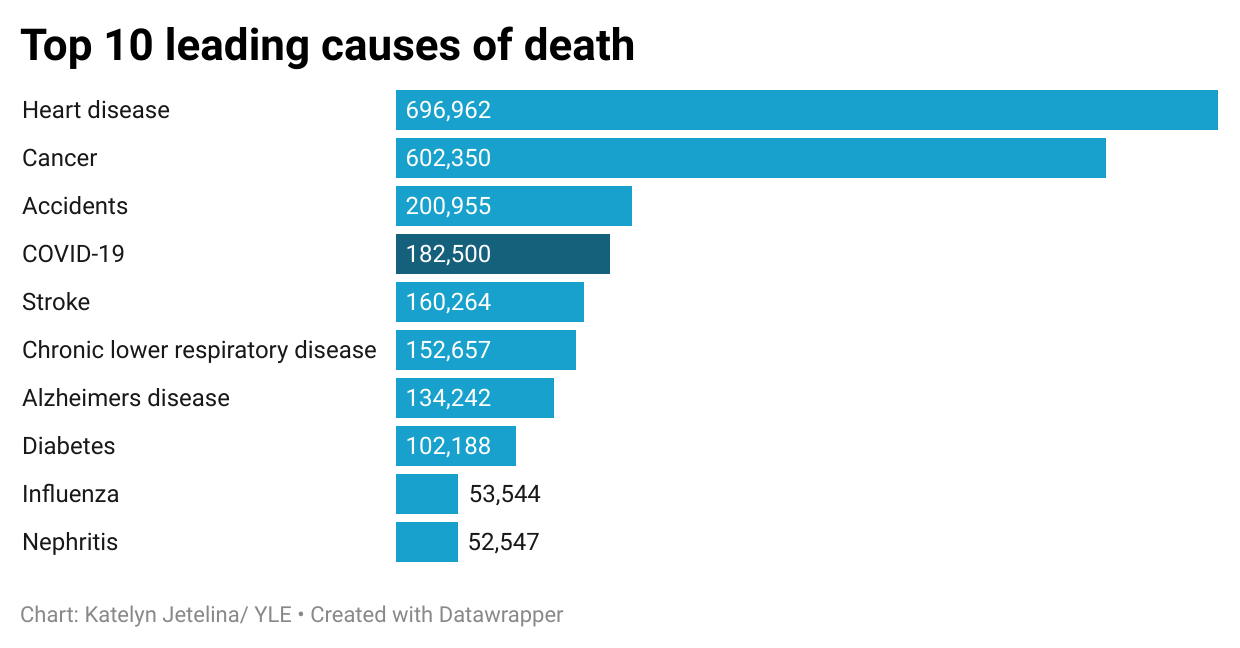
Deaths from Covid-19 are projected for 2023; data from CDC, here

Today, roughly 500 Americans are dying each day from Covid-19. At this rate, SARS-CoV-2 will be the fourth leading cause of death in the U.S. in 2023—about triple the threat of influenza.

What happens next?

Unraveling the public-health emergency may get messy. It will certainly take time (hence the 3 month lag time). The Kaiser Family Foundation outlined the implications nicely:
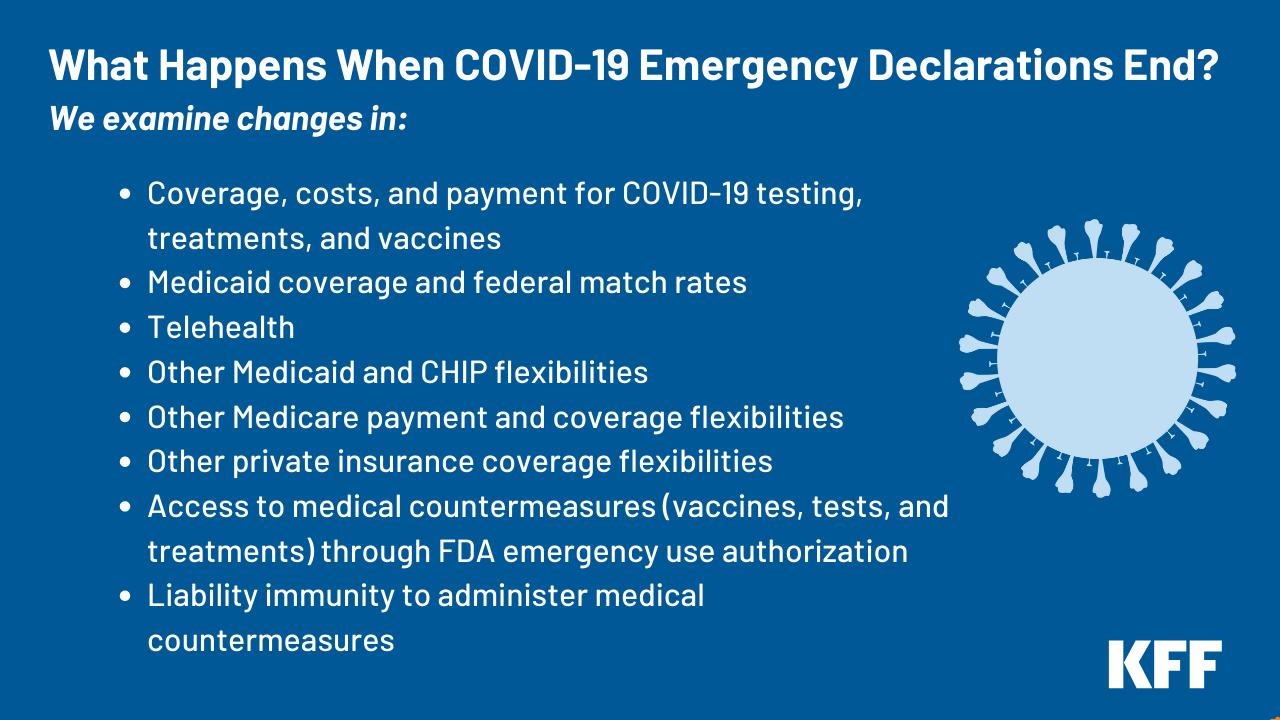

This does not impact the Emergency Use Authorization of vaccines and therapeutics from the FDA. In other words, these will still be available.

HOWEVER, the ending of funding for testing and vaccines is a real cause for concern. Once our free supply is out, everything will be privatized. Pfizer announced its vaccine will cost $130 per dose. Insurance will have to cover it, like the flu vaccine. This will, no doubt, fuel deep inequities in the U.S. And it is part of a much larger, deeply flawed system of pharmaceutical profiteering that this country hasn’t got the ethical fortitude to address yet.

Our work is not done: Most importantly, the end of the emergency doesn’t mean our work is done. There is no infectious disease more insidious or with greater impact on global mortality, morbidity, and health care systems than Covid-19.

As individuals, we still need to get vaccinated. We still need to leverage antigen tests. We need to invest in better filtration and ventilation. We still need to protect the most vulnerable.

As public-health officials, we must decide the minimum structure needed moving forward. Invest in wastewater monitoring. Continue to report hospitalizations (and get better at it). Commit to transparent and effective communication. Vaccine innovation is needed.

As a society, we MUST put real energy, innovation, and investment into repairing and strengthening our health and public health systems. The new normal cannot fall back to a pre-Covid normal. We must be bigger, better, and smarter. This means the very notion of for-profit healthcare needs to be fixed. In public health, we must figure out how to get out of the cycle of panic and neglect through preparation. We are LESS prepared for the next pandemic, given loss of trust, polarization, changing information echo-systems, and mis/disinformation.

Sadly, I’m starting to see denial and wishful thinking. I hope this changes as it will definitely not be another 100 years before the next pandemic emerges to grip the globe in a choke hold.

Bottom line: In the U.S., the end of the emergency is coming. I agree with this decision, but this certainly isn’t the end of Covid-19 or public health threats. In fact, this end is the beginning. We have our work cut out for us.

Katelyn Jetelina is a California epidemiologist and biostatistician who says she writes her newsletter on Substack as a way to translate public-health science for everyday use, helping people to make evidence-based decisions. She is a consultant to several organizations, including the CDC.

Thursday, July 14, 2022

Pandemic roundup: 10 states sue to overturn vaccine mandate for health-care workers, citing rural challenges

Here's a roundup of recent news stories about the pandemic and vaccination efforts:

Citing rural workforce challenges, 10 states with large rural populations have filed a lawsuit against the Biden administration challenging the federal mandate that health-care workers be vaccinated against the coronavirus in order for their employers to participate in Medicaid and Medicare, Dave Muoio reports for Fierce Healthcare. The states filing suit are Alaska, Arkansas, Iowa, Kansas, Missouri, Nebraska, New Hampshire, North Dakota, South Dakota and Wyoming.

Some rural hospital administrators say they're skeptical about the Rural Emergency Hospital program, a proposed rule meant to help struggling rural hospitals stay afloat by no longer requiring them to maintain expensive in-patient beds in order to participate in Medicare and Medicaid. Read more here.

The Food and Drug Administration has authorized the Novavax coronavirus vaccine. Because it's not a messenger RNA vaccine, some who objected to the newer technology might be persuaded to take the more traditional vaccine. Read more here.

Wednesday, February 16, 2022

Rural residents, Republicans and white evangelicals report being less vaccinated than their counterparts

Pew Research Center graphs; click any image  to enlarge.
Rural Americans are significantly less vaccinated against Covid-19 than other Americans, according to the latest Pew Research Center poll.

Only 68 percent of rural residents in the Jan. 24-30 online survey said they were vaccinated, compared to 80% of suburbanites and 82% of urbanites.

White evangelical Protestants, who live disproportionately in rural areas, show a similar pattern; only 62% of them reported being vaccinated. The figure was 77% for non-evangelical white protestants, 80% for the religiously unaffiliated and 85% for Roman Catholics.

Rural residents are disproportionately Republican, and another big difference in the results was seen by party affiliation. "Democrats and those who lean to the Democratic Party are 26 percentage points more likely than Republicans and Republican leaners to say they’ve received a Covid-19 vaccine (90% vs. 64%)," Pew reports. Among Democrats, ruralites are only slightly less vaccinated; among Republicans, the differences are similar to the overall sample. (See bottom of chart.)

Wednesday, December 22, 2021

How to close rural vaccine gap? Facts, teamwork, respect and patience, with no politics or confrontation, experts say


Rural Virginia couple Everett and Kristin Jiles got Covid-19 in July, but only she was vaccinated. After he had a much harder time recovering, the conservative Christian couple became crusaders for vaccination. Here, they talk about their story. (Assn. of American Medical Colleges video)

"Many people in rural and conservative areas remain frustratingly resistant to vaccination, challenging public health officials to come up with more convincing — and sensitive — approaches to promoting greater vaccine uptake," Beth Howard reports for the Association of American Medical Colleges. "It’s not enough to refute misinformation, experts say. To reach the vaccine-hesitant, public-health officials urge a combination of approaches, from connecting with local physicians to having respectful conversations."

The problem is persistent. A recent University of Pittsburgh study shows that, although overall vaccine confidence rates have increased nationwide since Covid-19 vaccines became available early this year, the same percentage of people who strongly opposed vaccination in January felt the same way in May. Even after adjusting for factors like age, sex, race, employment status and education, people in very rural counties were 23 percent more likely to be vaccine-hesitant than urbanites.

Partisanship is also strongly correlated with attitudes toward coronavirus vaccination. "People in counties with the highest support for former President Donald Trump in the 2020 presidential election were 44% more likely to be vaccine-hesitant," Howard reports. "Those living in a state with a Republican governor were 34% more likely to be hesitant than people living in a state with a Democratic governor."

Rural emergency medicine doctor Edwin Leap, who grew up in West Virginia, told Howard that the pandemic has exposed cultural rifts that go back generations. Because of that, mandates won't work, he said: "People in rural America are a culture. They tend to be fiercely independent. . . . The very last way you’ll get them to comply is by telling them they better do what’s right. They’re not going to have you tell them what to do."

Health and communications experts suggest the following approaches to increase coronavirus vaccination rates in rural areas:
  • Just provide the facts. Rural Americans resist mandates because they want to make their own decisions. So providing unbiased, basic information that will help them make an informed decision is the way to go.
  • Leave politics at the door. The coronavirus has been deeply politicized, so it's important to avoid saying anything even remotely political in discussion vaccination. One expert told Howard that, if the subject of politics comes up, the best way to respond is something along the lines of "This virus does not care who you are or what you believe." That removes the discussion from politics and enables you to address the other person's concerns.
  • Team up with community influencers. Rural Americans trust local health-care professionals much more than outsiders, so they're more likely to listen to fact-based vaccine recommendations from a community doctor, nurse, pharmacist or community health worker.
  • Don't refute false claims about the vaccines. By bringing up misinformation, even if you do so to disprove it, you end up reinforcing the belief in the person's mind. So don't repeat falsehoods when providing vaccine information. "For instance, if someone says that vaccines give you Covid-19, you don’t have to say they don’t give you Covid-19," Howard reports. "Instead, provide an answer that addresses the vaccine’s overall safety — why and how they’re safe."
  • Treat people with care and respect. Regardless of what someone believes, take their concerns seriously and treat them with respect. Don't talk down to people or make them feel judged or shamed.
  • Be prepared to play the long game. It will likely take more than one conversation to change someone's mind about vaccination. When you're wrapping up a discussion about vaccination, "give them a call to action, such as offering additional resources to learn about the efficacy of the vaccine and inviting them to come back and talk about it more so that you can answer any other questions," Howard reports.

Monday, November 08, 2021

Portrait of Washington hospital illustrates rural health-care workers' deeply held resistance to coronavirus vaccination

Dayton, in Columbia County,
Washington (Wikipedia map)
President Biden's coronavirus vaccine mandate for health-care workers has not, by and large, resulted in widespread staff shortages from workers quitting instead of getting vaccinated. But vaccine mandates are far less popular in rural America, as illustrated by an in-depth look at a hospital in rural Washington state, Eli Saslow reports for The Washington Post.

Gov. Jay Inslee, a Democrat, issued one of the nation's first vaccine mandates for health-care workers in August. With days to go before the deadline, the issue was far from settled at Dayton General Hospital, according to CEO Shane McGuire. "Dozens of McGuire’s employees were still marked as unvaccinated. At least 15 were in the process of applying for religious or medical exemptions, a few had already quit in protest, and many more were facing termination unless they decided to vaccinate against the coronavirus in the next five days before the mandate went into effect," Saslow reports. "McGuire liked to refer to his small staff as a family, and many in fact were family, but it had been splitting in two since the beginning of the year, when exactly 50 percent of the hospital’s few hundred employees chose to be vaccinated and 50 percent refused."

The story recounts McGuire's struggle to educate staffers about vaccines and make it more palatable to skeptical staff while making staff feel that their concerns were heard. Saslow also profiles Katie Roughton, the hospital's director of nursing, who quit rather than get vaccinated. "Regardless of scientific facts or the vaccine data, she believed what she was hearing on her TV, her computer, the local grocery store, her own family dinner table: The vaccines were rushed and oversold, and worse yet, the state mandate signaled the government’s latest attempt to seize greater control," Saslow reports. "It was an infringement on individual rights. It was socialism. Her father-in-law had taken an experimental anthrax vaccine before deploying for the Gulf War, and he blamed the side effects for making him permanently disabled. Four of her family members were being forced to quit their jobs over vaccine mandates, and they were encouraging her to do the same."

Roughton snapped when one of the hospital's doctors called her to ask how she believed they could further control the spread of the virus, Saslow reports: "'Do you want my personal or professional opinion?' she asked, and before long she was prodding him about the breakthrough infection and the science of vaccines, and he was calling her 'stupid,' and they were screaming at each other — doctor against nurse, liberal against conservative, no longer partners in patient care but adversaries staking out opposite sides in an ideological battle that Roughton had been fighting since."

Friday, May 21, 2021

Covid-19 vaccination gaps mainly in South and rural areas; health experts say that leaves room for variants to develop

Washington Post map shows vaccination rates; to enlarge, click on it.
A month after every American adult became eligible to get a coronavirus vaccine, "a distinct geographic pattern has emerged," The Associated Press reports. "The highest vaccination rates are concentrated in the Northeast, while the lowest ones are mostly in the South. "The divides aren’t just limited to states — there are marked differences between urban and rural places, from county to county and from one neighborhood to another."

The disparities are even more glaring when looking at individual places around the U.S.," Collin Binkley, Jay Reeves and John Seewer report. "Vermont has four counties where 75% of the residents have had at least one dose, while there are 11 Mississippi counties with under 25% vaccinated. . . . Experts say the gap reflects a multitude of factors, including political leanings, religious beliefs, and education and income levels."

The gaps leave openings for the virus, and mutated variants that could be more contagious or deadly, experts say. “Low vaccination rates will leave room for the virus to circulate, re-emerge and possibly form new variants,” Tara Kirk Sell, a senior scholar at the Johns Hopkins Center for Health Security, told AP. “High vaccination rates are critical to keeping the disease under control, especially when we get back to the fall and winter.”

The story notes a recent Centers for Disease Control and Prevention report that 39% of adults in rural counties had received at least one dose of vaccine, compared with 46% in urban counties as of April 10.

Thursday, May 20, 2021

Covid roundup: J&J delivery pause hurt vaccine confidence

Here's a roundup of recent news about the pandemic and immunization efforts:

Many rural residents don't want to get the coronavirus vaccine. A health expert with rural roots offers his perspective on why the phenomenon persists, why it's important for people to get their shots, and how to convince more to do it. Read more here.

The pause in use of the Johnson & Johnson vaccine did hurt overall vaccine acceptance, a poll found. Now shipments of the vaccine have been suspended for a second week due to production problems. Read more here

The federal government has an Office of Rural Health, but Sen. Cindy Hyde-Smith of Mississippi wants one in the Centers for Disease Control and Prevention. Read more here.

The fact that kids can't be vaccinated complicates the new masks-off guidance. Read more here.

Only 12 people are behind most vaccine hoaxes on social media, research shows. Read more here.

Here's a profile of Hamilton, N.Y., a tiny, rural county with one of the highest vaccination rates in the nation. Read more here.

Heads up on some pandemic reporting resources: The Agriculture Department maintains and regularly updates pages with data on the pandemic's effect on the meatpacking industry and rural America in general.

Thursday, December 10, 2020

Dry-ice supply could complicate coronavirus vaccine distribution in rural areas; see your state's plan

The Pfizer Inc. coronavirus vaccine could be authorized for emergency use tonight, and states are rushing to get ready to distribute it, Stephanie Kelly, Lisa Baertlein and Carl O'Donnell report for Reuters. Pfizer's vaccine must be transported and stored at -70 degrees Celsius, -94 Fahrenheit, so states are scrambling to get enough dry ice (frozen carbon dioxide) to get the job done. 

The dry ice is needed not only for transport, but for storage in rural areas and other places that can't afford pricey ultra-cold freezers. "More than a dozen U.S. states, including Washington, New Mexico, Mississippi, Louisiana and Indiana, told Reuters they are rushing to secure dry ice to replenish suitcase-sized shipping containers from Pfizer," the reporters write. Once opened, if used in temporary storage, the vaccines can last 30 days if re-iced every five days, Pfizer said. "The company said it believes there is sufficient dry ice supplies to serve the needs of all 50 states without serious constraints."

Distribution plans vary widely by state, Elizabeth Weise reports for USA Today (click here to see your state's plan). This CNN video explores how vaccines will be distributed in the rural U.S.

Wednesday, November 11, 2020

Fact check: Trump makes false claims about vaccine

President Trump has made several false claims about a coronavirus vaccine from Pfizer Inc., Hope Yen, Lauran Neergaard and Linda A. Johnson report for The Associated Press. Here's a summary:

Trump falsely tried to take full credit for Pfizer's announcement that its vaccine might be 90 percent effective. In a tweet Tuesday, Trump quoted Fox Business anchor Maria Bartiromo to imply he should get credit for the vaccine. However, his suggestion "that he stood alone in saying a covid-19 vaccine was possible by year’s end is incorrect," AP reports. "Actually, top health experts said they considered that possible, though far from certain, and were more skeptical of Trump’s claim that a coronavirus vaccine would become available before the Nov. 3 election. The vaccine isn’t expected to become widely available to the general public before 2021."

Dr. Anthony Fauci, the government's top infectious-diseases expert and head of the National Institute of Allergy and Infectious Diseases, had previously said he was "cautiously optimistic" that a vaccine would be ready by late 2020 or early 2021. On Monday, he lauded Pfizer's news, but cautioned that it didn't mean an immediate cure-all for the coronavirus, AP notes.

Pfizer says it will apply to the Food and Drug Administration for "emergency use authorization" to allow limited distribution later this month, then seek approval for wider use, and neither request is guaranteed to be granted, AP reports. Fauci told CNN that there are still questions about the vaccine's effectiveness and durability; it requires two doses, 21 days apart, and must be kept at 94 below zero.

In several tweets, Trump also claimed that Pfizer and the FDA withheld vaccine information until after the election, implying that it was done to harm him politically. That's false, the AP reports: "The company itself learned of the interim results on Sunday, and the FDA was not involved in Pfizer’s decision to announce its early results."

All vaccine studies such as the one Pfizer is conducting are overseen by independent data and safety monitoring boards. DSMBs "include scientists and statisticians who have no ties to the vaccine makers," AP reports. "Before a study is complete, only the DSMB has the power to unlock the code of who got a real vaccine and who got a placebo, and to recommend if the shots are working well enough to stop testing early. Those boards take sneak peeks at predetermined times agreed to by the manufacturer and the FDA. It provided the first interim analysis for Pfizer on Sunday." Several Pfizer officials, including CEO Albert Bourla, have asserted that the announcement's timing had nothing to do with the election.

Vice President Mike Pence and Congressman-elect Ronny Jackson (R-Texas), Trump's former White House physician, sent tweets crediting the president for the vaccine; Trump retweeted them. However, Trump and Pence "are wrongly seeking full credit for forging the partnership that made the potential breakthrough possible. Pfizer notably did not accept government money to develop, test or expand manufacturing capacity under Trump’s Operation Warp Speed initiative to quickly find a vaccine and treatments for the disease sweeping the country," AP notes. "In fact, Pfizer partnered with the vaccine’s original developer, Germany’s BioNTech, in March," before Warp Speed was announced.

Though Pfizer hasn't accepted Warp Speed funding, it must follow the same vaccine-development requirements as competitors that did take government money. "The company says it has risked $2 billion of its own money on vaccine development and won’t get anything from Washington unless the effort is successful," the AP reports. But Pfizer signed an agreement with the U.S. government in July to supply 100 million doses for $1.95 billion if the vaccine works and gains FDA approval.

Monday, December 02, 2019

Community pharmacies could be a key to getting more rural teens vaccinated for virus that causes sex-related cancers

Alabama Department of Public Health
There's a vaccine for a virus that causes sex-related cancer, but rural teens are less likely to get it or know about it. Rural pharmacies could help improve vaccination rates, writes Casey Daniel, a Ph.D. pharmacist who teaches in the family medicine department at the University of South Alabama.

"Human papillomavirus (HPV) is the most common sexually transmitted infection, with 80 million Americans currently infected and 14 million new cases of infection each year," Daniel notes, but only about two-thirds of 13-to-17-year-olds start the HPV vaccine series, and fewer than half have up-to-date vaccinations. Rural HPV vaccination rates are 11 percent lower than urban rates, partly because rural areas have fewer health-care providers, Daniel writes in the Journal of Rural Health.

He says that gap could be filled by pharmacies, which are more widespread than doctors' offices and open longer hours. "In the 2018 President's Cancer Panel report on HPV vaccination for cancer prevention, pharmacies were specifically recommended as a way to increase vaccine accessibility," he writes. "Most pharmacies are also ideally suited for immunizations because of their inherent infrastructure and storage capacity for various medications. Many pharmacies offer vaccines such as flu, pneumonia, and shingles, and therefore, they have established immunization protocols that can be easily adapted to HPV."

Convenience is important for HPV immunization "because this vaccination is a multi-dose series requiring subsequent visits," Daniel writes. "While large chain pharmacies have a broad, mass market appeal, there is a considerable case to be made for collaborating with 'community pharmacies' as alternative settings for HPV vaccination, particularly in rural and small-town settings. In these areas, independent community pharmacies are often an established part of the community. Community pharmacists frequently have personal relationships with their patients, knowing them both within and outside the bounds of the pharmacy, and have a unique, established trust. They are trusted providers within the community, acting as the first line of health care and consultation for many patients."

That's also important for HPV immunization because research has shown that rural parents are less likely to be aware of HPV and the vaccine. Community pharmacists "frequently have personal relationships with many local individuals," Daniel writes. "Therefore, they can function in both education and reinforcement regarding the importance of HPV vaccination. . . . In the exploration of alternative settings to increase HPV vaccination, community pharmacies have been significantly overlooked. Particularly in rural settings, these pharmacies have vast potential to reach under-served, disparate populations and serve crucial roles in addressing community health care needs and filling resource gaps."

Friday, May 25, 2018

Rural seniors are less likely to be vaccinated for pneumonia; rural pharmacists could play a major role in closing that gap

Seniors in rural areas are less likely to be vaccinated for pneumonia, and those that do get immunized are more likely to get the vaccine from a pharmacist than seniors in urban areas. That suggests that rural pharmacists could play a major role in filling the vaccination gap, Melissa Patrick reports for Kentucky Health News.

A national study by the Rural and Underserved Health Research Center at the University of Kentucky found that vaccination rates for pneumonia among Medicare patients are 40 percent lower in rural communities than in urban areas: 2.81 percent and 4.66 percent, respectively. It found that 72.5 percent of seniors vaccinated for pneumonia got the shot from a primary-care provider and 22.2 percent got it from their pharmacist. In rural areas, the pharmacists' share was 29.4 percent; in urban areas, it was 21.1 percent.

Rosemary Smith, a co-owner of six Jordan Drug stores in Eastern Kentucky, told Patrick that the vaccination rate in rural areas is probably lower because they have fewer health-care providers and most of "our people" are not "wellness oriented" -- but almost every community has access to a pharmacist. "They may go to their physician two or three times a year," she said, "but we see them two or three times a month sometimes."

The researchers note that the death rate from pneumonia for seniors doubles, from 20 percent to 40 percent, between the ages of 65 and 85, and despite the recommendation that everyone 65 and older get vaccinated for the disease, fewer than two-thirds do. Smith told Patrick, "The opportunities are there to really move the needle on these vaccinations. . . . I had no idea there was such a difference in the vaccination rate between urban and rural. So I think we can do more and I think as an independent pharmacy group across the state, being the most accessible health-care provider, that we will do more and we will take this study to heart."

Wednesday, February 04, 2015

State of vaccinations: 45 states allow exemptions for religious beliefs, 18 for personal beliefs

To vaccinate or not to vaccinate children has become a major issue among Americans, some of whom fear side effects or don't trust the government when it comes to vaccinations. The anti-vaccine movement has been spreading, despite scientific research that supports vaccinations and verified reports that misinformation—mostly in the form of a discredited paper and the belief of ill-informed celebrities—has furthered Americans fear in vaccinations.

While every state requires kindergarten children to be vaccinated, all but five states—California, Louisiana, Minnesota, Mississippi and West Virginia—allow religious exemptions, and 18 states allow exemptions for personal beliefs, Niraj Chokshi reports for The Washington Post. (This Post map was compiled from data by the Immunization Action Coalition, which is funded in part by the Centers for Disease Control & Prevention. Map is from 2014, but all data is up to date)

Tuesday, February 03, 2015

Misinformation has spurred anti-vaccine movement; non-compliance is a health concern

The anti-vaccine movement continues to flourish in the U.S. Many people say they fear side effects or don't trust the government. A recent survey by the American Association for the Advancement of Science and Pew Research Center found that only 68 percent of the general public believes parents should be required to vaccinate children, compared to 86 percent of scientists.

Refusing to vaccinate children is unnecessarily spreading preventable diseases and costing the health sector thousands of dollars spent on cases that could have prevented with a vaccine, John Wihbey reports for Journalist's Resource.

The Centers for Disease Control estimates that among children born between 1994 to 2013, vaccinations will prevent 322 million illnesses, 21 million hospitalizations and 732,000 deaths. Wihbey writes. But some children are not being vaccinated. Overall, between 92-94 percent of U.S. children are vaccinated with MMR—measles, mumps and rubella—but numbers drop in some states, as low as 81.7 percent in Colorado, 85.3 percent in Pennsylvania, 86.5 percent in Arkansas and 86.9 percent in Kansas. (CDC graphic)
While those numbers might still seem high, it is estimated that measles outbreaks cost $10,000 or more per case, Wihbey writes. But because of the potential for measles to spread, outbreaks cost "$25,000 or more because of a single case in Kentucky; more than $140,000 and 2,500 hours of public health workers’ time for three cases in Iowa; and an estimated $800,000 to investigate 14 cases in Arizona, all related to a single contagious traveler from Switzerland in 2008."

Why non-compliance? A 2014 report from the American Academy of Arts and Sciences says: "Over the past two decades, a combination of fraudulent scientific studies, irresponsible reporting and well-meaning but misinformed citizen activists has led to a steady increase in the proportion of parents who have concerns about the recommended childhood vaccine schedule. While overall vaccine uptake rates in the United States remain high, these concerns have resulted in a significant expansion in the number of parents who are delaying—and in extreme cases even refusing—vaccines for their children."

Researchers say the misinformation problem began in 1998, "when a now-discredited scientific paper was published in Britain linking vaccines to autism, a link that was proven entirely false and even labeled 'fraudulent,'" Wihbey writes. "A number of activists and some celebrities have adopted prominent anti-vaccine positions, and media and entertainment outlets have provided a platform for some of their views." (Read more)

Tuesday, April 08, 2014

Anti-vaccine movement may be allowing the return of pertussis, meningitis, measles, other diseases

The anti-vaccination movement has gained momentum over the past decade, because some people do not want to risk side effects or simply do not trust governments or drug companies, Yamiche Alcindor writes for USA Today. "People assume this will never happen to them until it happens to them," said Paul Offit, chief of infectious diseases at Children's Hospital of Philadelphia. "It's a shame that's the way we have to learn the lesson. There's a human price for that lesson."

Most vulnerable are babies who might be too young for vaccination, young children who do not have strong immune systems and people who cannot be vaccinated because of medical issues, according to scientists. Kathryn Riffenburg's son died of whooping cough (pertussis). Though she was inoculated long before his birth, she later learned that a booster shot during the pregnancy could have saved her son's life. Two other preventable diseases that have recently made a comeback, perhaps because of the anti-immunization movement are measles and meningitis.

Outbreaks of measles in New York, California and Texas are warning signs of a bigger spread that could happen if more people refuse vaccinations. Officials said in 2000 that measles shouldn't be a problem anymore, but this year the disease is expected to affect three times as many people as it did in 2009. "Vaccination rates against most diseases are about 90 percent," said Anne Schuchat, the CDC's director of immunizations and respiratory diseases.

When 10-year-old Jeremiah Mitchell was 6, he was infected with meningitis, and doctors had to remove his arms and legs and parts of his eyelids, jaw and ears to get rid of the disease. He caught meningitis at school, where two children died and four others also got the illness. His mother, Michaela Mitchell, said that her son was not vaccinated against meningitis because the school didn't require it for children his age.

Some doctors have taken their own measures to safeguard their patients from people who refuse vaccinations. For example, doctors working at Old Towne Pediatrics in Mannassas, Va., will not accept new patients if the parents will not vaccinate their children. "We don't want to put our patients at risk because people for their own personal reasons don't want to vaccinate," said Anastasia Williams, a managing partner of the practice. "We are doing our due diligence to protect our children who wait in our waiting room." In Colorado, 4 percent of kindergarteners did not get vaccinated for non-medical reasons. State Rep. Dan Pabon sponsored a proposed bill necessitating parents to either get a doctor's note or view a video about risks before deciding against vaccination, Alcindor writes.

Sarah Pope decided against vaccinating her three children. All of them got whooping cough in 2006, but they recovered through treatments from a holistic doctor and natural supplements. "People only see the bad in infectious diseases," said Pope, who runs a health living website and blogs about vaccines. "But infectious diseases do help children strengthen their bodies." She says she knows vaccines are not 100 percent effective and doesn't want to be pressured into vaccinating her children (Read more)